

Submitted:
20 September 2026
Posted:
21 September 2026
You are already at the latest version
Abstract
Highly regulated banking institutions continue to experience governance breakdowns, accountability gaps, compliance failures, and large-scale regulatory remediation programs despite substantial investments in risk management, artificial intelligence (AI), and control frameworks. This paper makes two contributions. First, it presents an exploratory qualitative research design for studying how governance structures, accountability mechanisms, organizational change management, and workforce effectiveness influence regulatory remediation outcomes in large financial institutions. Second, it synthesizes recent AI-driven Regulatory Technology (RegTech) architectures from the literature into a unified six-layer reference architecture that integrates data ingestion, AI/ML processing, RegTech automation, governance and accountability, organizational change management, and outcome feedback. The proposed architecture is grounded in recent studies of AI-enabled compliance in banking and is evaluated against key performance indicators including detection rate, false positive rate, compliance cost reduction, remediation cycle time, regulatory findings, workforce effectiveness, and governance maturity. The proposed research design employs semi-structured interviews with banking professionals and analysis of publicly available regulatory documents, using purposive sampling and thematic analysis. The paper proposes a conceptual framework, a technical architecture, and a research methodology that together bridge established business administration theory with applied managerial practice in highly regulated banking environments.
Keywords:
artificial intelligence
; RegTech
; governance
; accountability
; regulatory remediation
; banking
; compliance automation
; organizational change management
; workforce effectiveness
; qualitative research
; six-layer architecture
1. Introduction
The banking industry continues to experience significant regulatory enforcement actions, remediation programs, audit findings, compliance failures, and governance challenges despite substantial investments in risk management, artificial intelligence (AI), and control frameworks [1,2]. These recurring issues suggest that technology and technical controls alone may not be sufficient. Organizational factors such as leadership accountability, governance structures, change management practices, and workforce engagement may play an equally important role in achieving sustainable regulatory compliance and operational effectiveness.
This paper reviews the emerging landscape of AI-driven Regulatory Technology (RegTech) for regulatory compliance and governance in banking. The review focuses on how banking institutions can strategically deploy AI to enhance governance, accountability, organizational change management, and workforce effectiveness within highly regulated environments. The paper addresses a significant challenge facing the banking industry: despite substantial investments in compliance programs, AI technologies, and control frameworks, financial institutions continue to face regulatory enforcement actions, consent orders, audit findings, and large-scale remediation programs.
The review makes three contributions. First, it synthesizes recent AI-driven RegTech architectures from the literature into a unified six-layer reference architecture. Second, it examines research methods used to study governance, accountability, and remediation effectiveness in banking. Third, it identifies open challenges and future research directions for AI-enabled compliance and governance.
The remainder of this paper is organized as follows. The background and foundational knowledge are presented first, followed by the business administration problem and the value of exploratory research. The research question and objectives are then articulated. Next, the preferred research method and data collection plan are discussed. The conceptual framework and the proposed six-layer architecture are presented, followed by expected contributions and implications. The paper concludes with a summary of findings and directions for future work.
2. Background, Foundation, and Previous Knowledge
The foundation of this project is being developed through a review of academic literature on governance, organizational change management, accountability systems, workforce effectiveness, and emerging technologies. This is combined with an analysis of publicly available regulatory enforcement actions, consent orders, regulatory examination reports, and industry case studies. Professional experience within banking and risk management environments also plays a critical role in shaping the foundation of this research, providing practitioner insight into how organizations respond to regulatory findings, remediation efforts, governance challenges, and the growing impact of AI-driven processes on organizational decision-making.
Azad and Pandya [3] emphasize that a strong doctoral study should be grounded in both practical experience and existing knowledge to clearly define and address a meaningful business problem. The problem identified in this study is that many highly regulated banking institutions continue to experience governance breakdowns, accountability gaps, and remediation challenges despite significant investments in people, processes, and technology. Assche et al. [4] further suggest that governance research benefits from examining organizational context, processes, and stakeholder interactions, which aligns with the study of governance effectiveness, organizational change management, and workforce performance in banking organizations.
Existing research and classical management theories have established that effective governance structures, ethical leadership, and accountability mechanisms are critical to organizational performance and compliance outcomes. Organizational change management literature similarly emphasizes the importance of leadership support, communication, and employee engagement during large-scale transformations [5,6]. However, there appears to be limited practitioner-focused research examining how governance, accountability, organizational change management, workforce effectiveness, and the increasing adoption of AI collectively influence the success of remediation programs and regulatory outcomes within highly regulated banking institutions.
Research methods serve as bridging devices that connect theoretical frameworks with practical organizational contexts [4]. The scholar-practitioner model emphasizes the importance of generating knowledge that is both academically rigorous and practically relevant [7]. This study adopts this model by examining how AI can be systematically applied to operationalize established business administration theories related to organizational behavior, governance, workforce effectiveness, and organizational renewal [5].
Maduka [8] highlights the theoretical, methodological, and ethical problems involved in conflict research efforts in indigenous communities, noting that choice of theory, methodology, and ethical considerations are cardinal issues. Similarly, this study must navigate ethical considerations related to researching organizational governance and accountability practices in highly regulated environments. The study must ensure participant confidentiality, protect proprietary information, and maintain the trust of participants who may be discussing sensitive organizational practices.
Saxena [9] argues that many introductory research methods textbooks divide research paradigms into positivist/quantitative/deductive and interpretive/qualitative/inductive approaches. However, this bifurcation does not do justice to the philosophical and methodological pluralism present within business research. This study adopts a qualitative approach that recognizes the complexity of organizational phenomena and the importance of understanding mechanisms underpinning empirically observed events [9].
Venter [10] demonstrates that collaborative academic research adds value to both academia and industry. The study successfully bridged the theory-practice gap by resolving a real-world problem and adding to the body of knowledge. Similarly, this proposed study aims to identify underlying social root causes of governance and remediation challenges, define actions for improvement, and realize generalizable theoretical and applied knowledge to improve both theory and practice [10].
3. Business Administration Problem and Value of Exploratory Research
3.1. Problem Statement
The business administration problem is that while banks are rapidly investing in AI technologies, there is limited understanding of how AI can be systematically applied to operationalize established business administration theories related to organizational behavior, governance, workforce effectiveness, and organizational renewal. Most of the current focus has been on regulation and automation rather than on broader organizational effectiveness [2,11].
Most existing research examines AI from a technical, governance, compliance, or ethical perspective, while the remainder focuses on automation-based implementation or the replacement of tasks [11]. However, significantly less research examines how AI can be used as a practical managerial tool to bridge the gap between established business administration theories and organizational decision-making, strategic management, and organizational behavior. This scholar-practitioner emphasis reflects the broader shift toward business research that connects academic theory with applied managerial practice [7,12].
As a result, executives often lack evidence-based frameworks that demonstrate how AI can improve employee motivation, collaboration, leadership effectiveness, governance processes, organizational culture, and strategic transformation initiatives while also contributing to measurable business outcomes. For example, within financial crime and anti-money laundering (AML) functions, AI technologies have the potential to enhance decision-making, knowledge management, employee productivity, risk identification, and organizational learning [2]. However, there is limited empirical research examining these benefits from a comprehensive business administration perspective.
3.2. Value of Exploratory Research
Exploratory research provides significant value at this stage of the study because the topic is still evolving and lacks a clearly established theoretical framework. According to Azad and Pandya [3], exploratory research helps refine the research problem, identify knowledge gaps, and establish a foundation for future empirical investigation. Additionally, exploratory research allows for a better understanding of how organizations are currently using AI and helps identify emerging patterns before developing formal hypotheses or causal models. This approach aligns well with the objective of understanding how AI can be integrated across multiple business administration domains, including models for understanding its impact and successful deployment and change, rather than examining a single technical application or implementation [5,9].
Table 1 summarizes the key research gaps that motivate this study.
4. Research Question and Objectives
4.1. Research Objective
The objective of this study is to examine the evolving factors that influence governance effectiveness, accountability, organizational change management, workforce effectiveness, and the responsible adoption of AI in highly regulated banking organizations.
4.2. Research Question
The primary research question guiding this study is:
What factors influence effective governance, accountability, organizational change management, workforce effectiveness, and the use of AI in highly regulated banking organizations for business administration?
This research seeks to provide practical recommendations for banking leaders and risk management professionals responsible for governance, regulatory remediation, organizational transformation, workforce effectiveness, and AI-enabled business processes.
4.3. Rationale and Research Status
The rationale for selecting this topic stems from the direct intersection of professional experience with academic preparation in business administration. This topic is important because it connects directly to professional interest in how organizations can use technology to improve business administration practices. As Kueenzi [7] notes, students’ engagement with business research methods is strengthened when research addresses practical professional problems and demonstrates clear task value.
Further research is necessary because much of the existing literature has focused either on individual AI applications or on AI governance and ethical oversight with very less discussion on profitability and outcomes of AI implementation [11]. Comparatively little research has explored how AI can be integrated into a comprehensive business administration strategy from a scholar-practitioner perspective. Specifically, there is limited research examining how AI can be used to operationalize established business administration theories and frameworks in banking environments with clear projections on how this will affect profitability and help achieve strategic goals.
5. Preferred Research Method and Data Collection Plan
5.1. Research Design
For the proposed study, a pilot study combined with exploratory qualitative research would be more appropriate than relying solely on secondary data analysis. Although secondary data analysis can provide valuable insights into existing AI adoption trends in banking, it may not adequately capture how managers, employees, and leaders perceive AI’s impact on organizational behavior, governance, leadership effectiveness, and strategic decision-making [13]. Much of the information needed for the study involves organizational experiences, managerial practices, and perceptions that are not readily available in public datasets. This challenge is central to what the study seeks to explore.
A pilot study would allow for preliminary surveys and semi-structured interviews with banking professionals involved in risk management, compliance, governance, financial crime, and operational leadership. The pilot study would help validate research instruments, identify key themes, refine interview questions, and uncover emerging issues that may not be well represented in the current literature [5]. Because the study seeks to explore a relatively new intersection between AI and business administration theory, a pilot study provides the flexibility to refine research questions while generating practitioner-driven insights [4].
Ultimately, a mixed exploratory approach using a literature review, pilot surveys, and interviews would be the most effective strategy because it allows both scholarly and practitioner perspectives to shape the future direction of the study. This approach ensures that the study addresses both theoretical gaps and practical business challenges faced by modern banking organizations [7].
5.2. Data Collection Plan
The research question examines how governance structures, accountability mechanisms, organizational change management, and workforce effectiveness influence regulatory remediation outcomes within large financial institutions. More specifically, the study explores how banks can leverage AI to enhance governance, accountability, organizational change management, and workforce effectiveness in highly regulated environments.
Because the study focuses on understanding experiences, processes, and organizational practices, data will be collected primarily through semi-structured interviews with professionals who have participated in regulatory remediation programs. This may be the most challenging part of the project, as obtaining access to individuals directly involved in these activities can be difficult. Potential participants include risk managers, compliance officers, financial crimes professionals, audit personnel, regulatory issue managers, and executives involved in consent orders, MRA/MRIA remediation, and regulatory examinations [6].
Participants will be recruited using purposive sampling through professional networks and industry contacts within the banking sector. This represents the ideal scenario; however, the extent to which it can be achieved remains to be explored.
5.3. Measuring Techniques and Sampling Process
The study will also utilize publicly available documents, including regulatory enforcement actions, consent orders, annual reports, and regulatory guidance issued by agencies such as the Federal Reserve, OCC, and FDIC. These documents will provide additional context and support data triangulation [5,6].
The sampling process will use purposive sampling because participants must possess direct experience with regulatory remediation activities. An initial target of approximately 10 to 15 participants is appropriate, with recruitment continuing until data saturation is achieved [13]. This approach allows the study to collect information from individuals who have firsthand knowledge of governance practices, accountability structures, and organizational change initiatives.
Semi-structured interviews will serve as the primary measurement technique because they allow participants to describe their experiences while ensuring consistency across interviews [13]. Interview questions will focus on governance oversight, accountability frameworks, leadership involvement, issue-management processes, and organizational change efforts during remediation activities. Interview transcripts will be coded using thematic analysis to identify recurring themes and patterns [9].
This approach is practical because the required data are accessible through industry professionals and publicly available regulatory documents. It is also cost-effective and aligns well with the qualitative nature of the research objectives [2].
Table 2 summarizes the data collection strategy.
6. Value of the Research Question in Planning the Research Design
The research question directly influenced the selection of a qualitative research design. Since the study seeks to understand how governance structures, accountability mechanisms, and organizational change management affect remediation effectiveness, it requires detailed insights from practitioners rather than solely quantitative measurements. This approach aligns with the objectives of applied business research, where the intention is to bridge the gap between academic theory and professional practice [7,10].
A qualitative design provides the flexibility needed to explore experiences, perceptions, and organizational practices that may not be visible through numerical data alone. The research question focuses on processes and organizational behavior, making interviews and thematic analysis appropriate methods for data collection and analysis [6,13].
Additionally, the research question helps maintain a focused scope. Rather than attempting to solve all regulatory remediation challenges within financial institutions, the study concentrates on understanding which governance and accountability practices participants perceive as contributing to successful remediation outcomes. This alignment among the problem statement, research question, and research design strengthens the overall study and improves its ability to generate meaningful findings [5].
Venter [10] demonstrates that collaborative academic research adds value to both academia and industry. The study successfully bridged the theory-practice gap by resolving a real-world problem and adding to the body of knowledge. Similarly, this proposed study aims to identify underlying social root causes of governance and remediation challenges, define actions for improvement, and realize generalizable theoretical and applied knowledge to improve both theory and practice [10].
7. Proposed Conceptual Framework
Based on the literature review and research objectives, Figure 1 presents the proposed conceptual framework guiding this study. The framework illustrates the relationships among AI deployment, governance, accountability, organizational change management, and workforce effectiveness in highly regulated banking environments.
The framework posits that AI deployment acts as an enabler that strengthens governance structures and accountability mechanisms. These, in turn, facilitate organizational change management, which mediates the relationship between governance/accountability and workforce effectiveness. Ultimately, workforce effectiveness drives regulatory remediation outcomes. This model will be refined through the pilot study and subsequent data collection.
Figure 2 presents the research methodology flowchart, illustrating the sequential steps of the proposed study.
8. Proposed Architecture for AI-Enabled Regulatory Compliance and Governance
This section presents a unified architectural framework that synthesizes the AI-driven RegTech architectures reviewed in the literature [14,15,16,17]. The proposed architecture integrates governance, accountability, organizational change management, and workforce effectiveness into a layered, technically grounded model for highly regulated banking environments.
8.1. Architectural Overview
The proposed architecture consists of six interconnected layers, illustrated in Figure 3. Each layer addresses a specific domain of the compliance and governance ecosystem:
- 1.
- Data Ingestion Layer — captures structured and unstructured data from transaction systems, customer records, regulatory feeds, and communication channels [16].
- 2.
- 3.
- 4.
- 5.
- Organizational Change Management Layer — supports workforce training, communication, and adoption of AI-driven processes [16].
- 6.
8.2. Data Ingestion Layer
The data ingestion layer forms the foundation of the architecture. It aggregates heterogeneous data sources including:
- Transactional data from core banking systems
- Customer onboarding and KYC records
- Regulatory feeds from the Federal Reserve, OCC, FDIC, and international bodies
- Communication data (email, chat, voice) for compliance monitoring
- External risk indicators (sanctions lists, adverse media, market data)
8.3. AI/ML Processing Layer
The AI/ML processing layer applies advanced computational techniques to transform raw data into actionable compliance intelligence. Table 3 summarizes the key techniques and their applications.
8.4. RegTech Automation Layer
The RegTech automation layer operationalizes compliance processes through intelligent workflow automation. Key components include:
- Intelligent Workflow Automation — translates regulatory obligations into automated checklists, task assignments, and timelines [17].
- Dynamic Policy Management — monitors regulatory changes and automatically updates compliance protocols [17].
- KYC and AML Automation — uses NLP and OCR to automate customer verification and suspicious activity detection [14].
8.5. Governance and Accountability Layer
This layer ensures that AI-driven compliance systems operate within ethical, legal, and organizational boundaries. It includes:
8.6. Organizational Change Management Layer
The organizational change management layer addresses the human and cultural dimensions of AI adoption. It includes:
- Workforce Training — upskilling compliance teams to work alongside AI systems [16].
- Communication Strategy — transparent communication about AI’s role in compliance [16].
- Adoption Support — change champions, feedback mechanisms, and continuous improvement [15].
- Culture of Accountability — embedding ethical AI practices into organizational culture [14].
8.7. Outcome and Feedback Layer
The final layer measures the effectiveness of the architecture through key performance indicators (KPIs) and feeds insights back into the system for continuous improvement. Table 4 summarizes the proposed KPIs.
8.8. Integration with Governance and Accountability
Figure 6 illustrates how the proposed architecture integrates governance, accountability, organizational change management, and workforce effectiveness into a unified model.
8.9. Implementation Roadmap
Table 5 presents a proposed implementation roadmap for the architecture, organized into four phases.
8.10. Technical Considerations
The proposed architecture must address several technical considerations:
- Scalability — ability to handle increasing data volumes and transaction loads [16].
- Interoperability — integration with legacy banking systems and third-party RegTech solutions [16].
- Data Privacy — compliance with GDPR, CCPA, and other data protection regulations [14].
- Security — protection against cyber threats and data breaches [16].
- Regulatory Adaptability — ability to quickly adapt to changing regulatory requirements [17].
8.11. Expected Benefits
The proposed architecture is expected to deliver the following benefits:
- Improved Detection Rates — AI-powered monitoring achieves up to 95% detection rates compared to 60% for manual systems [17].
- Cost Reduction — automation reduces compliance operational costs by up to 20% [14].
- Enhanced Governance — human-in-the-loop protocols and XAI ensure accountability [15].
- Better Remediation Outcomes — faster issue identification and resolution [16].
- Workforce Effectiveness — compliance teams focus on strategic activities rather than routine tasks [16].
9. Expected Contributions and Implications
This study is expected to make several contributions to both academic literature and practitioner knowledge. First, it will provide empirical insights into how AI can be leveraged to enhance governance and accountability in highly regulated banking environments, addressing a gap identified in the literature [2,11]. Second, it will offer a conceptual framework that integrates AI deployment with organizational change management and workforce effectiveness, providing a foundation for future quantitative research [5]. Third, it will generate practical recommendations for banking leaders and risk management professionals responsible for regulatory remediation and organizational transformation [10].
The findings may also inform regulatory policy discussions by highlighting organizational factors that contribute to successful remediation outcomes. As Maduka [8] notes, caution and prudence are required when making research findings available to communities, governments, and policymakers. This study will adhere to ethical guidelines and ensure that findings are presented responsibly.
10. Conclusion
This paper has addressed a persistent problem in highly regulated banking: despite substantial investments in risk management, artificial intelligence, and control frameworks, financial institutions continue to experience governance breakdowns, accountability gaps, and large-scale regulatory remediation programs. The paper makes three proposals.
First, it proposes an exploratory qualitative research design for studying how governance structures, accountability mechanisms, organizational change management, and workforce effectiveness influence regulatory remediation outcomes. The design employs semi-structured interviews with banking professionals and analysis of publicly available regulatory documents, using purposive sampling and thematic analysis to identify recurring themes and patterns.
Second, it proposes synthesizes of recent AI-driven RegTech architectures from the literature into a unified six-layer reference architecture. The architecture comprises a data ingestion layer, an AI/ML processing layer, a RegTech automation layer, a governance and accountability layer, an organizational change management layer, and an outcome and feedback layer. Each layer is grounded in recent empirical and review-based studies of AI-enabled compliance in banking and is mapped to specific technical components including machine learning, natural language processing, predictive analytics, robotic process automation, explainable AI, and human-in-the-loop protocols.
Third, it proposes a set of key performance indicators for evaluating the architecture, including detection rate, false positive rate, compliance cost reduction, remediation cycle time, regulatory findings, workforce effectiveness, and governance maturity. The paper also presents an implementation roadmap organized into four phases: foundation, automation, governance, and optimization.
The proposed architecture is expected to deliver measurable benefits, including improved detection rates (up to 95% compared to 60% for manual systems), cost reduction (up to 20% in compliance operational costs), enhanced governance through explainable AI and human-in-the-loop protocols, faster remediation outcomes, and improved workforce effectiveness as compliance teams shift from routine tasks to strategic activities. These are conceptual numbers which needs validation.
The proposed findings of this implementation have implications for both academic research and practitioner communities. For researchers, the paper provides a conceptual framework and a technical architecture that can be tested empirically and refined through future quantitative studies. For practitioners, it offers a structured approach to deploying AI in regulatory compliance that balances automation with governance, accountability, and organizational change management.
Future work will involve refining the conceptual framework through pilot testing, expanding data collection to include a broader range of banking institutions and regulatory contexts, and validating the architecture against real-world remediation programs. Additional research is needed to examine the long-term efficacy of AI-driven compliance systems, to develop robust integration strategies for legacy banking infrastructure, and to investigate the ethical and privacy implications of AI deployment in highly regulated environments.
In summary, this paper proposes that AI-enabled RegTech is not merely a tool for compliance automation but a catalyst for transforming governance, accountability, and organizational effectiveness in highly regulated banking institutions. By bridging established business administration theory with applied managerial practice, the proposed architecture and research design offer a foundation for building more resilient, transparent, and effective compliance systems.
References
- Alshare, K.; Sewailem, M.F. A Gap Analysis of Business Students Skills In the 21st Century A Case Study of Qatar. 22, 1–22.
- Mitchell, A.; Rich, M. Business School Teaching of Research Methods – A Review of Literature and Initial Data Collection for Undergraduate Business School Students. 18, pp100-114–pp100-114. [CrossRef]
- Azad, A.; Pandya, S. A Four-Stage Framework for the Development of a Research Problem Statement in Doctoral Dissertations. 16, 469–485. [CrossRef] [PubMed]
- Assche, K.V.; Beunen, R.; Gruezmacher, M.; Duineveld, M.; Deacon, L.; Summers, R.; Hallstrom, L.; Jones, K. Research Methods as Bridging Devices: Path and Context Mapping in Governance. 34, 729–746. [CrossRef]
- Ridder, H.G. The Theory Contribution of Case Study Research Designs. 10, 281–305. [CrossRef]
- Varela, M.; Lopes, P.; Rodrigues, R. Rigour in the Management Case Study Method: A Study on Master’s Dissertations 19, pp1–13. [CrossRef]
- Kueenzi, S. Towards a Better Conceptual Understanding of How Students Learn Business Research Methods. 6, 415–431. [CrossRef]
- Maduka, C. Theoretical, Methodological and Ethical Problems Involved in Conflict Research Efforts in African Indigenous Communities. 21, 1–7.
- Saxena, D. The Search for Mechanisms in Business Research: Reflections on Retroductive Analysis in a Multilevel Critical Realist Case Study 17, pp17-27–pp17-27.
- Venter, C. A Reflection on SSM as a Critical Social Action Research Method: Towards Improvement of Project Governance. 18, pp142-152–pp142-152. [CrossRef]
- Measuring Corporate Social Responsibility and Impact: Enhancing Quantitative Research Design and Methods in Business and Society Research - Andrew Crane, Irene Henriques, Bryan W. Husted, Dirk Matten, 2017. Available online: https://journals.sagepub.com/doi/full/10.1177/0007650317713267.
- Things to Do Before You Run a Business Experiment. Available online: https://hbr.org/2019/02/8-things-to-do-before-you-run-a-business-experiment.
- Chali, M.; Eshete, S.; Debela, K. Learning How Research Design Methods Work: A Review of Creswell’s Research Design: Qualitative, Quantitative and Mixed Methods Approaches. 27, 2956–2960. [CrossRef]
- Orji, S. Implementing AI Powered Solutions for Regulatory Compliance in Digital Banking to Foster Financial Inclusion. 13, 3115–3119. [CrossRef]
- Kothandapani, H.P. Automating Financial Compliance with AI: A New Era in Regulatory Technology (RegTech). 11, 2646–2659. [CrossRef]
- Olaiya, O.P.; Adesoga, T.O.; Pieterson, K.; Obani, O.Q.; Adebayo, J.O.; Ajayi, O.O. RegTech Solutions: Enhancing Compliance and Risk Management in the Financial Industry. 20, 008–015. [CrossRef]
- Pappil, H. Automating Financial Compliance with AI: A New Era in Regulatory Technology (RegTech). 11, 2646–2659. [CrossRef]
Figure 1.
Proposed conceptual framework for AI-enabled governance and remediation effectiveness.
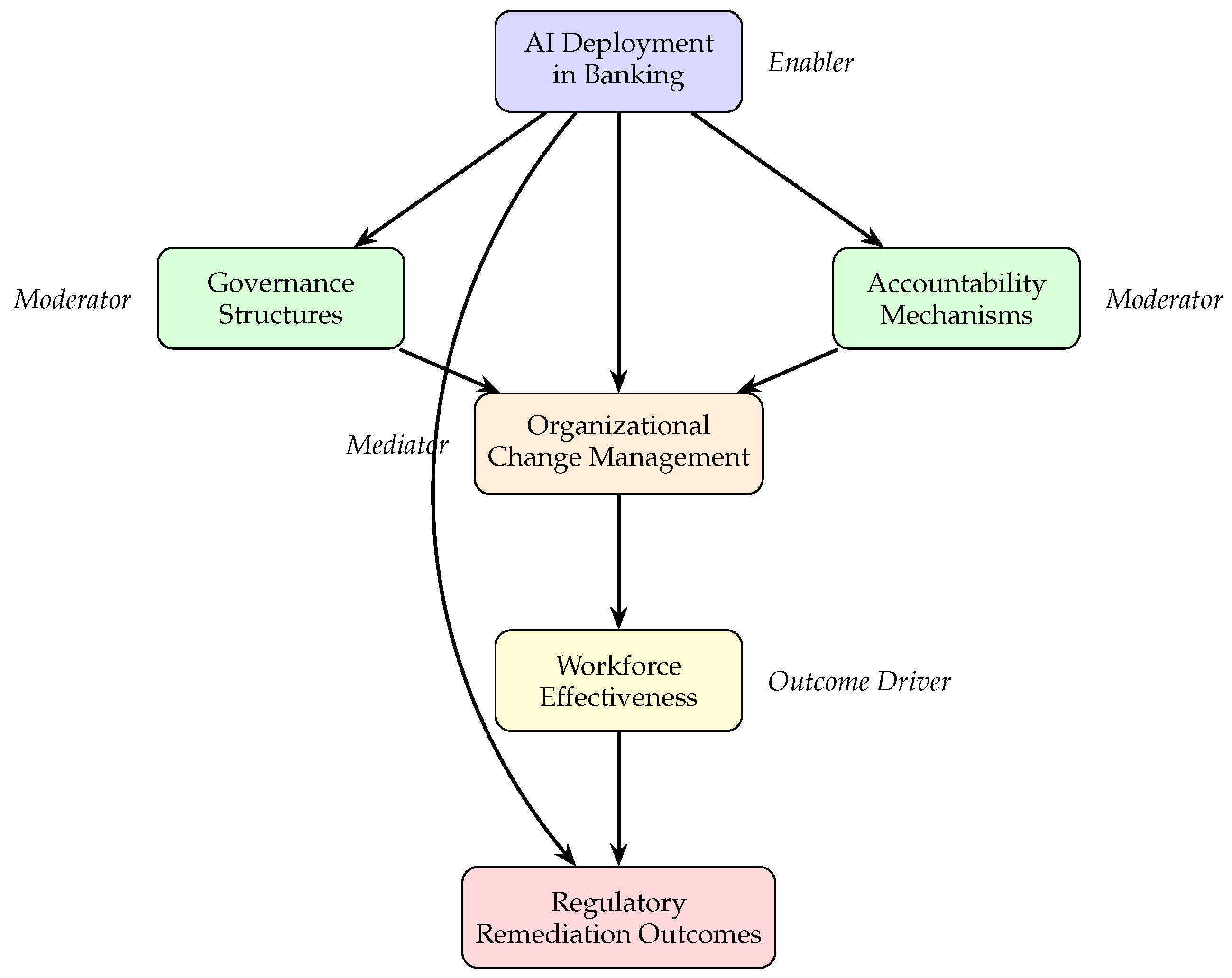
Figure 2.
Research methodology flowchart.
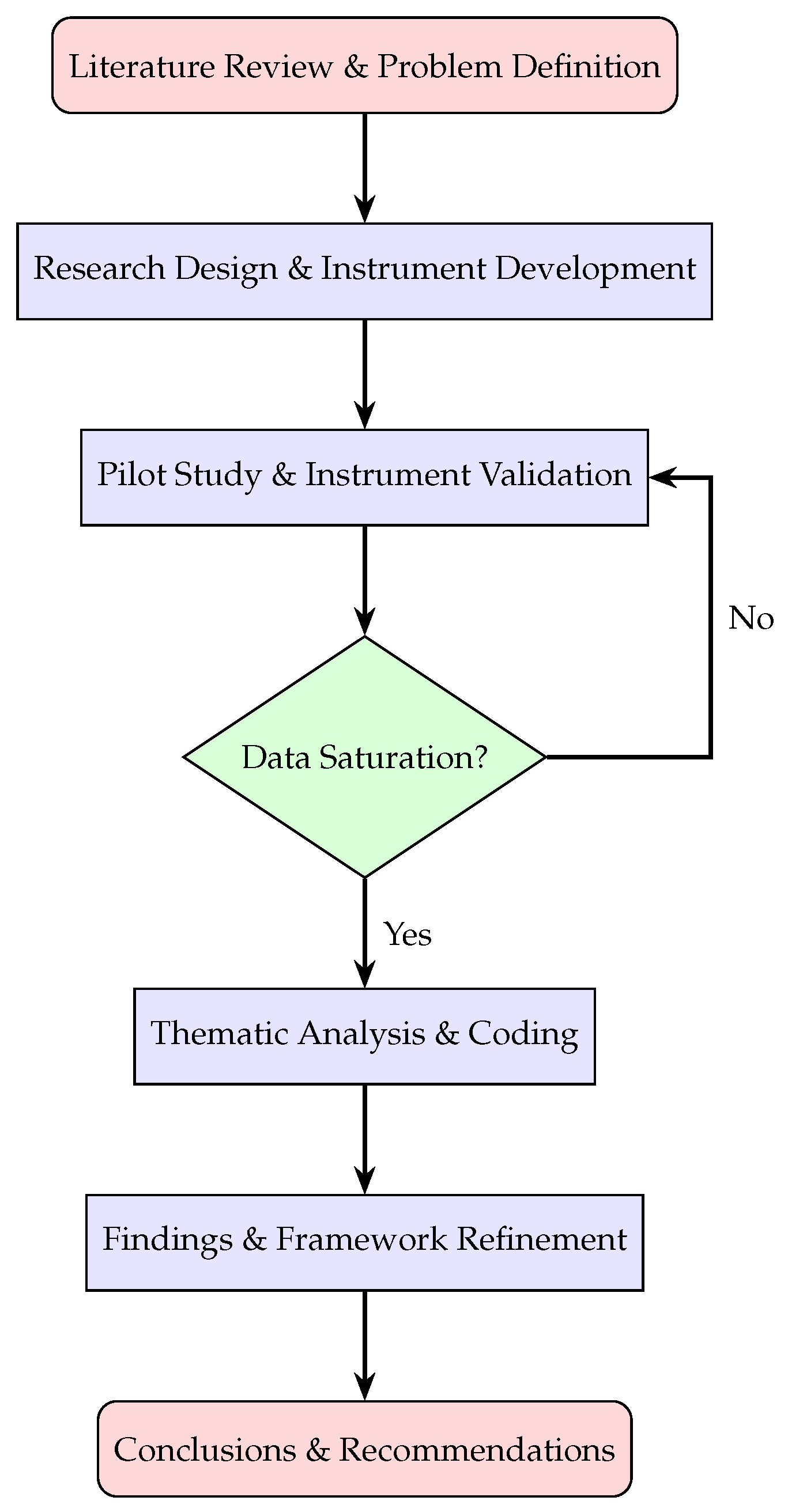
Figure 3.
Proposed six-layer architecture for AI-enabled regulatory compliance and governance.
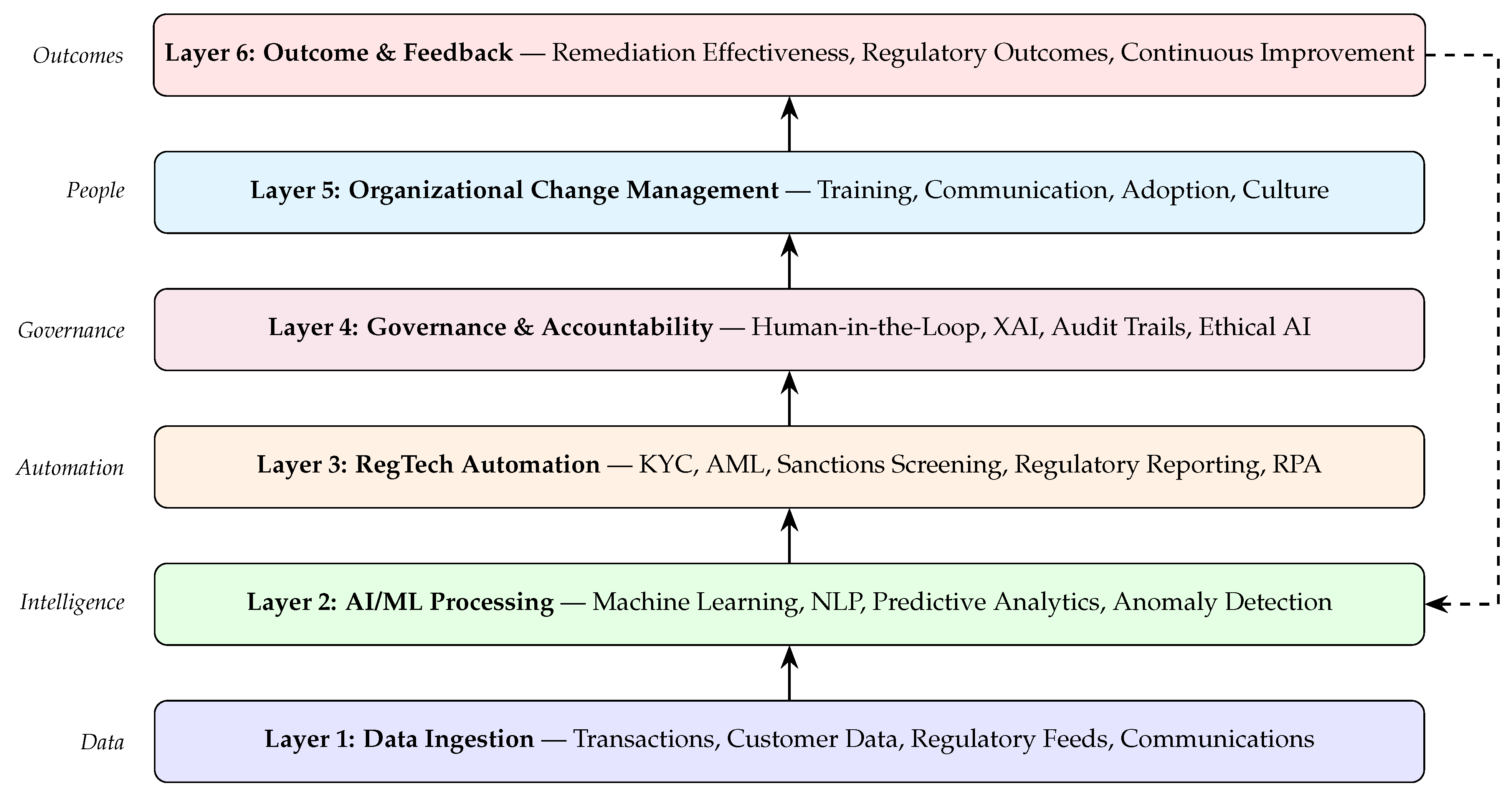
Figure 4.
Detection rate of suspicious activities: manual vs. AI-powered monitoring (adapted from [17]).
Figure 4.
Detection rate of suspicious activities: manual vs. AI-powered monitoring (adapted from [17]).
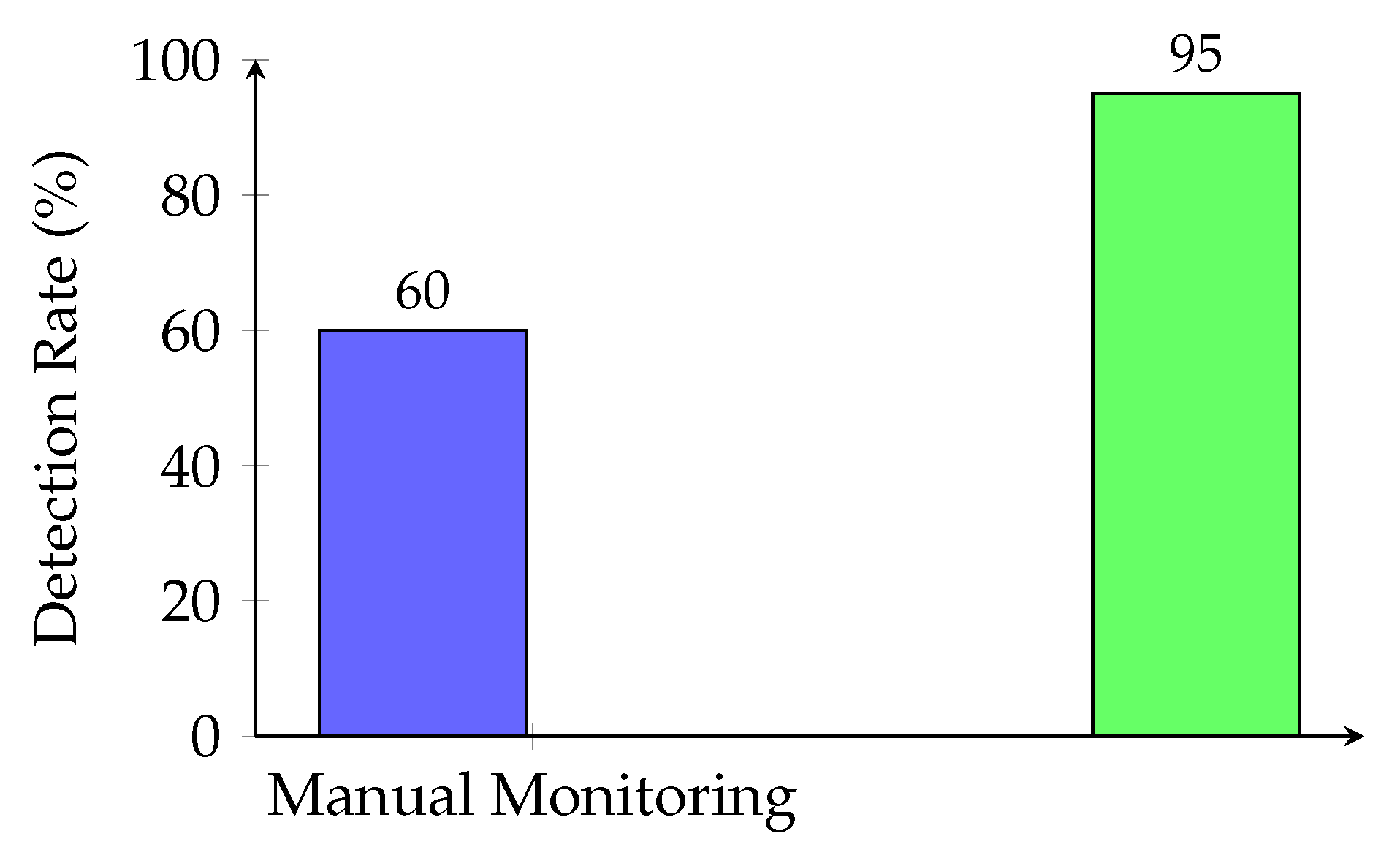
Figure 5.
Intersection of AI governance, auditing of AI, and auditing procedures (adapted from [15]).
Figure 5.
Intersection of AI governance, auditing of AI, and auditing procedures (adapted from [15]).
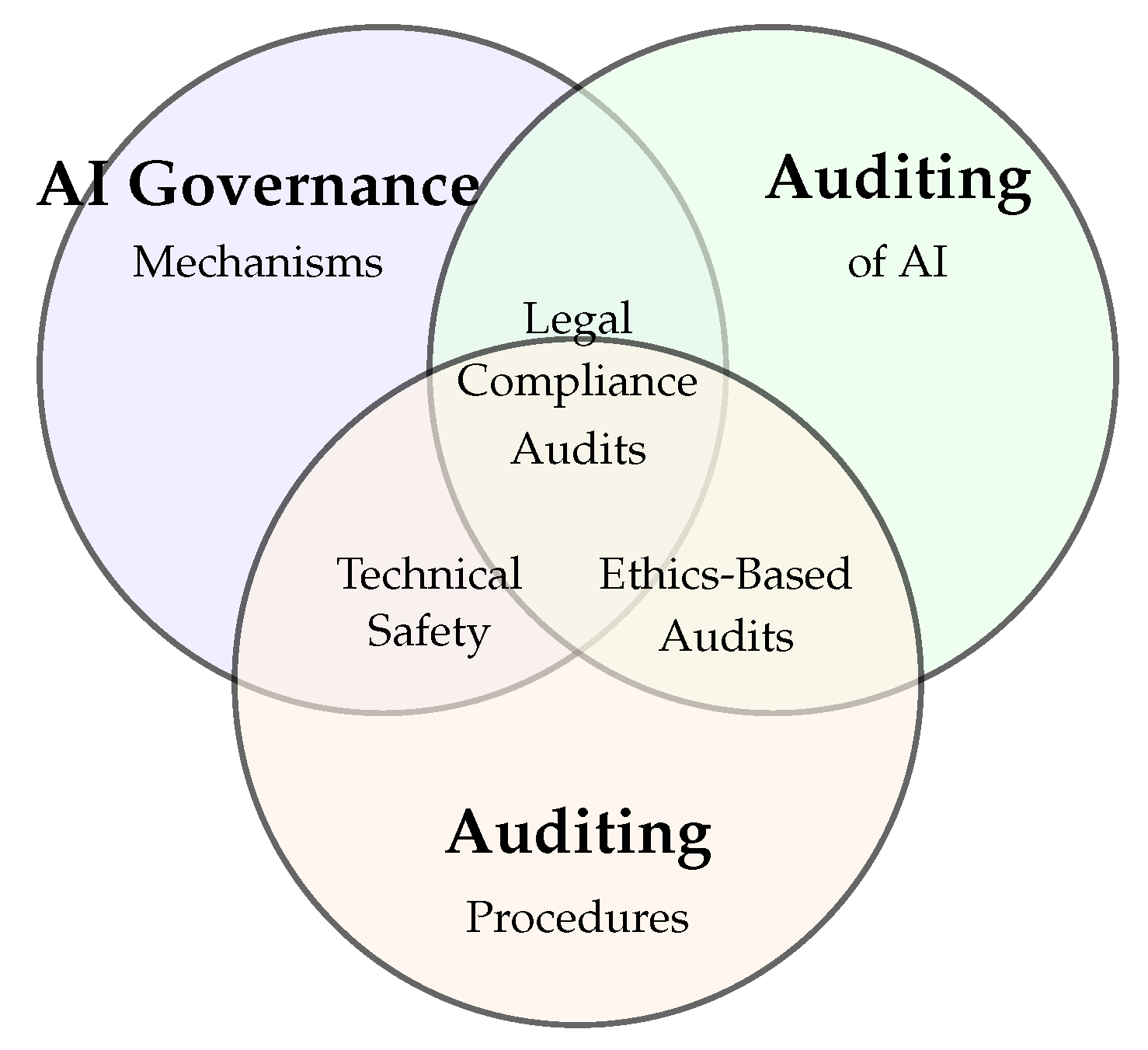
Figure 6.
Integration of governance, accountability, organizational change management, and workforce effectiveness with AI-enabled RegTech architecture.
Figure 6.
Integration of governance, accountability, organizational change management, and workforce effectiveness with AI-enabled RegTech architecture.
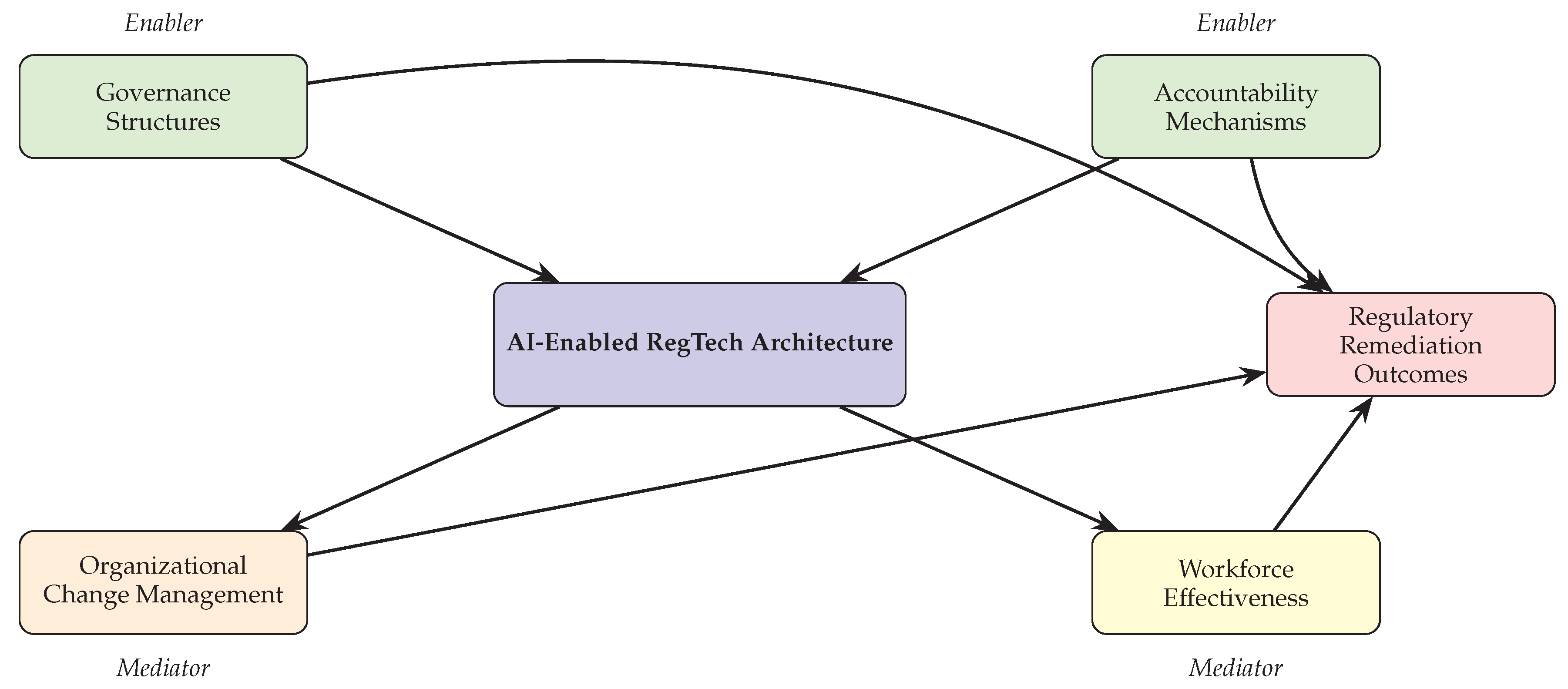

Table 1.
Summary of Key Research Gaps
| Research Area | Identified Gap |
|---|---|
| AI in banking | Focus on technical implementation, not managerial application |
| Governance research | Limited practitioner-focused studies on remediation effectiveness |
| Organizational change | Insufficient integration with AI-enabled processes |
| Workforce effectiveness | Lack of empirical studies in regulated banking contexts |
| Scholar-practitioner bridge | Minimal research connecting theory to applied practice |
Table 2.
Data Collection Strategy Summary
| Data Source | Type | Purpose |
|---|---|---|
| Semi-structured interviews | Primary | Capture practitioner experiences and perceptions |
| Regulatory enforcement actions | Secondary | Provide context on remediation outcomes |
| Consent orders | Secondary | Document governance and accountability requirements |
| Annual reports | Secondary | Track AI investment and organizational change trends |
| Regulatory guidance | Secondary | Establish compliance framework context |
Table 3.
AI/ML Techniques and Compliance Applications
| Technique | Application | Source |
|---|---|---|
| Supervised Learning | Fraud detection, AML transaction monitoring | [15,17] |
| Unsupervised Learning | Anomaly detection, novel fraud pattern discovery | [17] |
| Natural Language Processing | Regulatory text analysis, KYC document extraction, communication monitoring | [14,16] |
| Predictive Analytics | Risk forecasting, proactive compliance intervention | [15] |
| Deep Learning | Complex pattern recognition in unstructured data | [17] |
| Robotic Process Automation | Repetitive task automation (data entry, reporting) | [16] |
Table 4.
Key Performance Indicators for Architecture Effectiveness
| KPI | Description |
|---|---|
| Detection Rate | Percentage of suspicious activities identified |
| False Positive Rate | Percentage of legitimate activities incorrectly flagged |
| Compliance Cost Reduction | Reduction in operational compliance costs |
| Remediation Cycle Time | Time from issue identification to resolution |
| Regulatory Findings | Number of MRA/MRIA findings and consent orders |
| Workforce Effectiveness | Employee productivity and engagement metrics |
| Governance Maturity | Assessment of governance and accountability practices |
Table 5.
Proposed Implementation Roadmap
| Phase | Focus | Key Activities |
|---|---|---|
| Phase 1 | Foundation | Data ingestion setup, AI/ML model development, baseline assessment |
| Phase 2 | Automation | RegTech workflow automation, KYC/AML deployment, pilot testing |
| Phase 3 | Governance | Human-in-the-loop protocols, XAI implementation, audit trail integration |
| Phase 4 | Optimization | Organizational change management, workforce training, continuous improvement |
Disclaimer/Publisher’s Note: The statements, opinions and data contained in all publications are solely those of the individual author(s) and contributor(s) and not of MDPI and/or the editor(s). MDPI and/or the editor(s) disclaim responsibility for any injury to people or property resulting from any ideas, methods, instructions or products referred to in the content. |
© 2026 by the author. Licensee MDPI, Basel, Switzerland. This article is an open access article distributed under the terms and conditions of the Creative Commons Attribution (CC BY) license (http://creativecommons.org/licenses/by/4.0/).
Copyright: This open access article is published under a Creative Commons CC BY 4.0 license, which permit the free download, distribution, and reuse, provided that the author and preprint are cited in any reuse.