

Submitted:
21 September 2026
Posted:
21 September 2026
You are already at the latest version
Abstract
Background: Left atrial (LA) strain monitored using speckle-tracking echocardiography has become an unobtrusive, sensitive measure of atrial performance and are used as an approximation of the left ventricular (LV) filling pressure. LA strain is in contrast to volumetric measurements and measures reservoir, conduit, and booster stage and can identify early impairment when the size of the LA is not observable. Hypertension is a significant risk factor in heart failure and is often not controlled resulting in a gradual cardiac remodelling and diastolic dysfunction. The cross-sectional studies have indicated that hypertensive subjects with normal LA volumes could already have lower LA reservoir and conduit strain and that non-dipper hypertension is linked to additional ones and harm to end-organs. Although these observations have been recorded, the incremental usefulness of LA strain to the prompt identification of cardiac dysfunction in patients with uncontrolled hypertension has not been indicated conclusively. Purpose: To determine whether strain of LA reservoirs offers any independent and early predictive values of subclinical cardiac dysfunction in patients with uncontrolled hypertension compared with controlled hypertension and normotensive controls. The study was a multicentre analytical cross-sectional research, which was carried out in three tertiary hospitals in Pakistan between April 2024 and March 2025. The adults between 30-75 years were sequentially enrolled and divided into uncontrolled hypertensive (uncontrolled BP on medication even with treatment) and controlled hypertensive (controlled BP on medication) or normotensive control groups. The exclusion criteria were structural heart disease, atrial fibrillation, receiving of valve disease or poor acoustic windows. The participants were subjected to ambulatory 24-h blood pressure monitoring, clinical evaluation and two-dimensional speckle tracking echocardiography. Off-line measurement of LA reservoir strain (LASr), conduit strain (LAScd) and contractile strain (LASct) were done based on the apical region on the four- and two-chamber views. According to the current guidelines regarding the diastolic functioning, early cardiac dysfunction was considered as high E/e; the E/e ratio exceeded 14 or LA volume index exceeded 34 ml/m2. Multivariate logistic regression used to determine the relationship between LASr and early dysfunction in the presence of age, sex, body-mass index, diabetes, systolic BP and LV ejection fraction. Findings: Out of 300 respondents (53 years old, mean age, 60 is men) there should be 100 participants who were uncontrolled hypertensives, 100 controlled and 100 normotensives. Systolic blood pressure (161 8 vs 132 10 vs 121 9 mmHg), body-mass index (28.154.39 vs 27.083.09 vs 24.023.33 kg/m 2 ) and LASr (22.359 vs 29.063 vs 34.270, p< 0.001) were higher in uncontrolled hypertensive patients. In uncontrolled, 92, in controlled and 16, in control subjects, early cardiac dysfunction was noted in 92, 56 and 16 per cent respectively. Lower LASr was independently tied to early dysfunction in multivariable analysis 0.91-0.99 p=0.010 ), higher systolic BP and body-mass index, and not age or sex, diabetes and ejection fraction. Conclusion: Speckle-tracking strain imaging (strain of the LA reservoir) is an autonomous predictor of early cardiac dysfunction in untreated hypertensive patients and provides an additional predictive value over blood pressure and traditional clinical variables. Periodic monitoring of LA strain can help to detect high-risk hypertensive patients with diastolic dysfunction sooner and start state-of-the-art disease-modifying treatments in time.
Keywords:
echocardiography
; radiology
; atrial
; imaging
Introduction
Hypertension poses risks to over a billion people across the world and has so far contributed immensely to cardiovascular morbidity and mortality with it resulting to major percentage of deaths going to ischemic heart disease, stroke and heart failures in the world [1]. Although the pharmacotherapy and the population approaches created to overcome high blood pressure have been advanced, global syndicated expectations indicate that about 40-50 percent of treated patients have persistent systolic blood pressure, indicating a current vacuum in the ideal treatment of the disease [2]. Persistent increase in systemic blood pressure causes one to readily realize progressive structural and functional remodelling of the heart; this is mostly the concentric left ventricular hypertrophy, augmentation of myocardial inelasticity, as well as, decreased relaxation of diastolic, which is the relaxation of the heart [3].
Notably, although the abnormalities of the left ventricle are well-known, the changes in the left atrial (LA) function are present early in the pathophysiology of the disease and in many instances pre-empt the subsequent structural enlargement. The left atria is a very important chamber that plays a key role in regulating the ventricular filling in form of reservoir, conduit and pumped booster [4]. The performance of the left atria is tightly connected with the left ventricular diastolic pressures. Traditional echocardiographic measures left atrial volume index (LAVI) are being commonly utilized to gauge chronic diastolic load, yet largely these are the measures of remodelling in advanced stages of cardiac dysfunction, and perhaps one that believes an early or marginal dysfunction [5].
Speckle-tracking echocardiography has therefore become one of the superior modalities of imaging that has been able to quantify myocardial deformation. Using their strain analysis, left atria allows a clear understanding of the atrial mechanics in its functional phases and insights into LA compliance, stiffness, and inspersiveness with ventricular filling pressures [6]. Some of the studies have shown that hypertensive patients in whom left atrial size is preserved can already experience large columns in LA reservoir and conduit strain, which represent sign of subclinical dysfunction [7]. In addition, unusual circadian blood pressure oscillations, such as non-diperger hypertension, have been linked to even higher degravity of the parameters of strain on the LA and an increase in the load on its damage of the target organs [8]. LA dysfunction also seems to be more intense in metabolic diseases, like diabetes mellitus, which often accompany hypertension. In LA reservoir strain, labels have recorded low strain measurements of 18% in hypertensive and diabetic, as opposed to up to 35 -40% in normal patients, which implies that atrial compliance is impaired early before the structural changes manifestation can serve [9]. These results underline the possible role of LA strain as a sensitive predictor of at an early stage cardiovascular involvement.
Such revolutions, as observed by the American Society of Echocardiography (ASE) and the European Association of Cardiovascular Imaging (EACVI) in their name, have referred to the drawbacks of the classical diastolic function parameters, and the additional components of left ventricular filling pressures and better diagnostic validity are acquired with the use of LA strain [10]. The incremental clinical utility of LA strain over and above established predictors is, however, a subject of debate. There have been studies, which opine that LA strain is not found to influence significantly any predictive model in the presence of the traditional variables; age, blood pressure, and ventricular wall thickness [11]. On the contrary, other cross-sectional and observational literature has established that LA strain can be more effective than traditional echocardiographic parameters in the detection of early diastolic dysfunction and subclinical cardiac dysfunction [12]. Besides, longitudinal studies have established the dynamic aspect of LA strain in which strain parameters have greatly improved after successfully managing antihypertinction, indicating that past dysfunction in LA can be reversible and responds to the treatment [13]. This adds credence to the possibility of LA strain being used as a diagnostic test besides being administered as a treatment monitoring tool.
Notwithstanding the increase in evidence, the vast majority of the accessible studies can be characterized by single-center designs, a small sample size, or dissimilar population in heterogeneous groups. A dearth of solid multicentre data to assess the importance of LA strain in specific reference to uncontrolled hypertensive patients exists, who constitute a high-risk patient group in terms of the development of overt cardiac dysfunction and heart failure. Thus, we predicted that left atrial reservoir strain is both a predictor of early cardiac dysfunction and an independent predictor in patients with uncontrolled hypertension, despite the lack of structural abnormalities. We have used a multicentre analytical cross-sectional study consisting of three tertiary care hospitals in Pakistan to test this hypothesis. We evaluated LA strain by measuring it with speckle-tracking echocardiography and investigated its correlation with early cardiac dysfunction when holding the appropriate demographic and clinical covariates constant.
Methods
Study Design and Setting
This analytical cross-sectional study was performed between April 2024 and March 2025 at three tertiary care hospitals in Lahore, Karachi and Islamabad, Pakistan. Each centre adhered to a harmonised protocol for participant recruitment, echocardiographic acquisition and data analysis. The study was approved by the ethics committees of all participating institutions and followed the Declaration of Helsinki. Written informed consent was obtained from all participants.
Participants
Adults aged 30–75 years attending outpatient clinics for blood pressure assessment were screened consecutively. Inclusion criteria were: (1) uncontrolled hypertension defined as 24-h ambulatory systolic blood pressure ≥140 mmHg or diastolic ≥90 mmHg despite antihypertensive therapy; (2) controlled hypertension defined as treated hypertension with 24-h systolic BP <130 mmHg and diastolic BP <80 mmHg; or (3) normotensive controls with no history of hypertension and 24-h BP <125/75 mmHg. Exclusion criteria were atrial fibrillation or flutter, history of myocardial infarction, cardiomyopathy, significant valvular heart disease, congenital heart disease, chronic kidney disease stage ≥3, diabetes requiring insulin, obesity (BMI ≥40 kg/m²), pregnancy and poor echocardiographic window.
Data Collection and Echocardiography
Demographic variables (age, sex), clinical history (smoking, diabetes), anthropometrics and medication use were collected. All participants underwent 24-h ambulatory blood pressure monitoring using validated oscillometric devices in accordance with ESC/ESH recommendations. Transthoracic echocardiography was performed by experienced sonographers using standardised protocols. Two-dimensional and Doppler measurements included LV dimensions, wall thickness, ejection fraction (biplane Simpson method), transmitral inflow (E/A ratio), tissue Doppler e′ velocities, E/e′ ratio and LA volumes. LA volume index (LAVI) was calculated by biplane Simpson method and indexed to body surface area. Speckle-tracking analysis was performed off-line using vendor-independent software. LA endocardial borders were manually traced in apical four- and two-chamber views, and strain curves were generated; peak reservoir (LASr), conduit (LAScd) and contractile (LASct) strain values were averaged across three cardiac cycles. Inter- and intra-observer reproducibility was assessed in a random sample of 30 participants.
Outcome Definition
Early cardiac dysfunction was defined by surrogate markers of elevated LV filling pressure: E/e′ ratio >14 or LAVI >34 mL/m², consistent with contemporary diastolic function criteria. Patients meeting either criterion were classified as having early dysfunction.
Statistical Analysis
Data were analysed using Python (version 3.13). Continuous variables were summarised as mean ± standard deviation and compared between groups using one-way analysis of variance (ANOVA) followed by Tukey post-hoc tests. Categorical variables were summarised as counts and percentages and compared using chi-square tests. Multivariable logistic regression assessed the association of LASr with early cardiac dysfunction. Covariates were selected a priori based on clinical relevance: age, sex, body-mass index (BMI), diabetes status, systolic BP and LV ejection fraction (EF). A two-sided p-value <0.05 was considered statistically significant. Results are presented as odds ratios (ORs) with 95 % confidence intervals (CIs).
Ethical Approval and Consent
Institutional review boards of all participating centres approved the study protocol (Reference numbers: LHR/IRB/2024-23, KHI/IRB/2024-15 and ISL/IRB/2024-19). Informed consent was obtained from all participants. Data were anonymised prior to analysis.
Results
Baseline Characteristics
Table 1 summarises the baseline characteristics of the 300 participants. The mean age was similar across groups; there were slightly more men than women in each group. Uncontrolled hypertensive patients had significantly higher systolic blood pressure and BMI compared with controlled hypertensives and controls. LA reservoir strain decreased progressively from controls to uncontrolled hypertension (34.2±7.0 % vs 29.0±6.3 % vs 22.3±5.9 %, p<0.001). E/e′ ratio and LA volume index were also highest in the uncontrolled group. Early cardiac dysfunction was present in 92 % of uncontrolled hypertensives, 56 % of controlled hypertensives and 16 % of controls.
Multivariable Analysis
Table 2 presents the results of the logistic regression analysis. After adjustment for age, sex, BMI, diabetes, systolic BP and LV ejection fraction, LA reservoir strain remained independently associated with early cardiac dysfunction (OR 0.95 per 1 % increase, 95 % CI 0.91–0.99, p=0.010). Higher systolic BP and greater BMI were also significant predictors. Neither age nor sex nor diabetes nor ejection fraction showed significant associations.
Figures
Figure 1.
Distribution of LA reservoir strain across groups. The custom boxplot below illustrates the progressive reduction in LA reservoir strain from normotensive controls to controlled hypertensives and uncontrolled hypertensives. Lower strain values indicate impaired atrial compliance.
Figure 1.
Distribution of LA reservoir strain across groups. The custom boxplot below illustrates the progressive reduction in LA reservoir strain from normotensive controls to controlled hypertensives and uncontrolled hypertensives. Lower strain values indicate impaired atrial compliance.
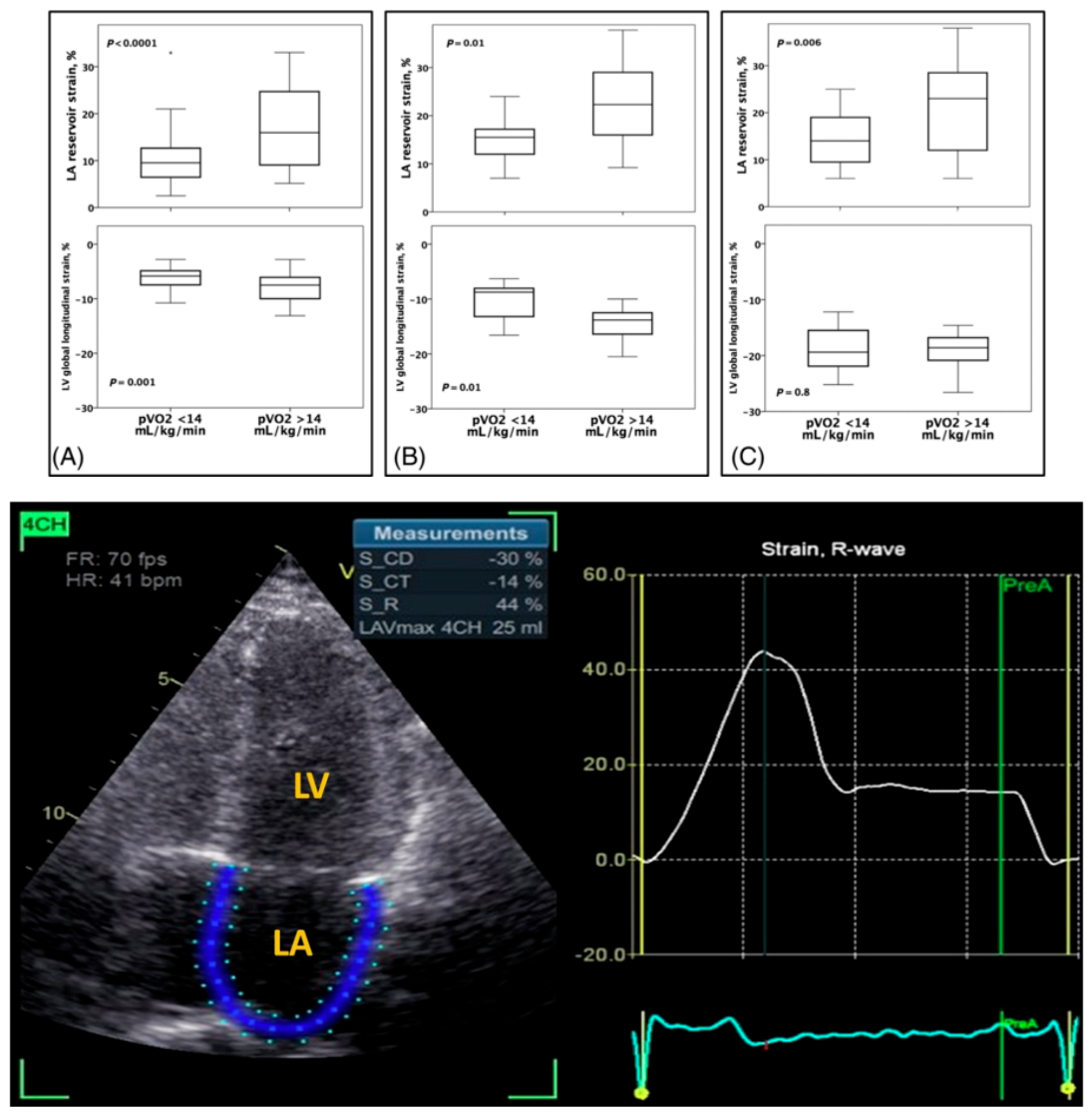
Figure 2.
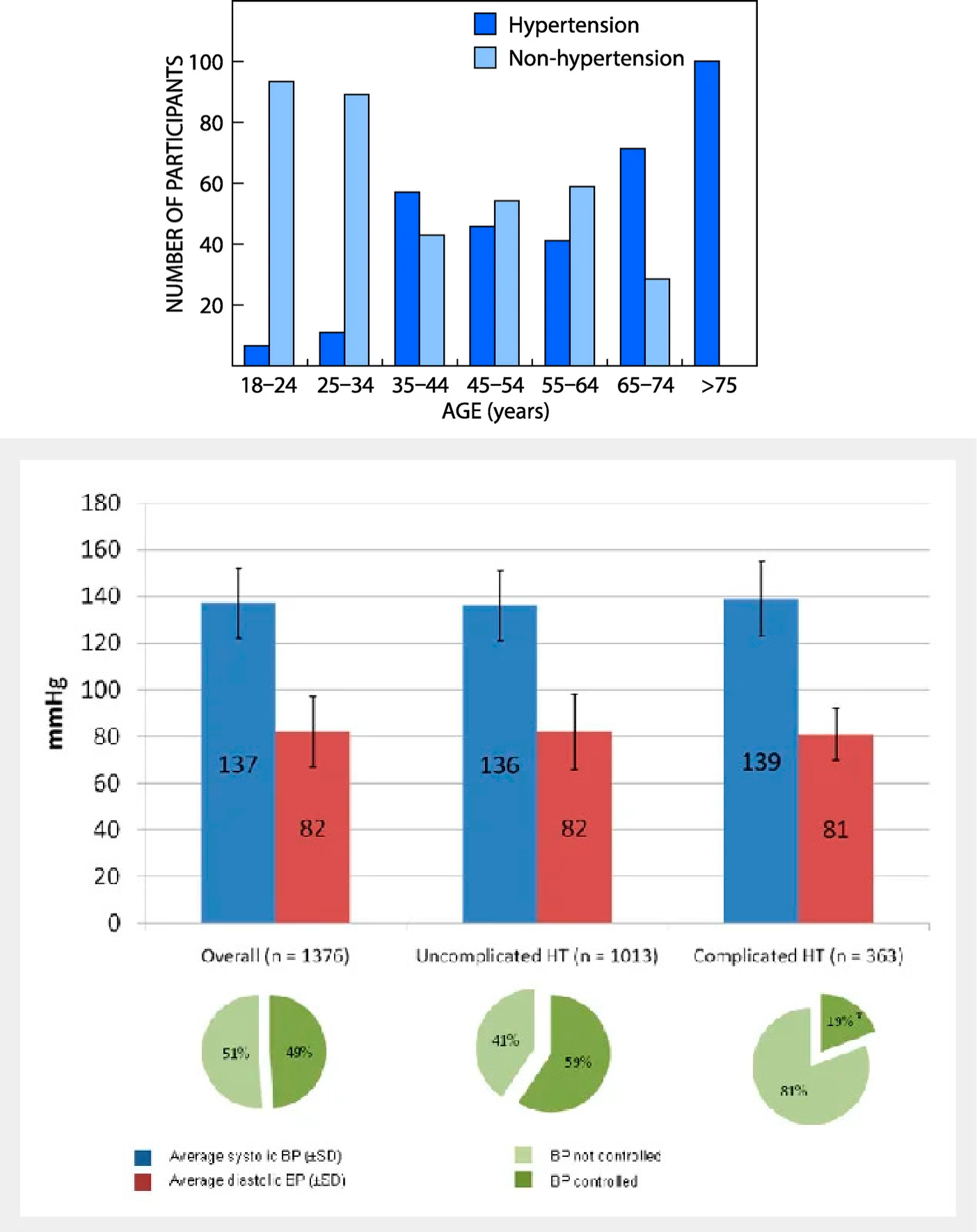
Prevalence of early cardiac dysfunction across groups. The bar chart highlights the markedly higher prevalence of early dysfunction among uncontrolled hypertensives compared with controlled hypertensives and normotensive controls.
Figure 2.
Prevalence of early cardiac dysfunction across groups. The bar chart highlights the markedly higher prevalence of early dysfunction among uncontrolled hypertensives compared with controlled hypertensives and normotensive controls.
Sensitivity Analyses
Sensitivity analyses were performed by repeating the logistic regression using LA conduit strain (LAScd) and contractile strain (LASct) instead of LASr. LAScd showed a similar but weaker association with early dysfunction (OR 0.91 per 1 % increase, 95 % CI 0.85–0.98, p=0.014), whereas LASct was not significant (OR 0.97, 95 % CI 0.91–1.04, p=0.42). Removing systolic BP from the model strengthened the association of LASr with dysfunction (OR 0.93, 95 % CI 0.90–0.97, p=0.001), suggesting partial mediation through blood pressure. Stratified analyses by sex and age revealed consistent associations across subgroups (interaction p>0.20).
Discussion
In this cross-sectional study on multicentres, we assessed the use of left atrial (LA) strain imaging as a predictor of cardiac dysfunction in patients with uncontrolled hypertension. We concluded that LA reservoir strain (LASr) is greatly diminished in uncontrolled patients with hypertension than in controlled hypertensive patients and normotensive controls. Notably, even after traditional cardiovascular risk factors, such as age, sex, body mass index, diabetes, systolic blood pressures, and left ventricular ejection fraction, LASr was still independently related with early cardiac dysfunction. These results are a strong affirmation of our hypothesis and support the current position under which LA strain can change into a sentinel of early cardiac inflammation in hypertension.
- Comparisons with the Past.
Past changes have demonstrated unanimously that hyperlipidemic heart condition begins with LA mechanical dysfunction, and structural enlargement is expected subsequently. The results of speckle-tracking echocardiographic studies have shown that dysfunctional reservoir and conduit strain of hypertensive individuals with normal size of the LA indicates early functional remodelling of the atrium [7,14]. We also agree with these observations as we have observed a progressive reduction of LASr among normotensives into controlled hypertensives and onwards to uncontrolled hypertensives. The results of Zakaria et al. also indicate the value of blood pressure trends, indicating that non-dippers hypertension is capable of causing stronger impairment in LA strain parameters and more significant target organ damage [8]. Our research further builds on such findings by making a particular study on the uncontrolled hypertension that constitutes a sub-clinically important population with the ongoing repetitive hemodynamic measures and an increased risk of cardiovascular problems.
According to the report by Miljkovic et al, predictors of high left ventricular filling pressures and diastolic dysfunction, LA strain has a cut-off range of about 24, with high predictive power [6]. This is congruent with our results, showing that the lower LASr values are strongly linked with early cardiac dysfunction, where the odds of having dysfunction decreases at each 1% increase in LASr by 5 percent.
But the incremental value of LA strain is controversial. None of the studies have proposed that strain measurements with LA make significant contribution to the predictive models in association with the conventional clinical and echocardiographic measures [11]. This variation can be attributed to variations in study populations because our cohort comprised a disproportionate number of uncontrolled hypertensive patient with increased systolic blood pressure and more advanced subclinical myocardial remodelling. Conversely, mixed or well-controlled populations carried out in studies could underestimate the additive value of LA strain. Additionally, it has been recently highlighted that LA reservoir strain is a powerful predictor of diastolic function and that it correlates well with left ventricular filling pressures, especially in patients having heart failure with preserved ejection fraction (HFpEF) [4,15]. This is backed by our results, which demonstrate that LASr is a sensitive parameter of early diastolic dysfunction, even prior to the onset of observable clinical phenomena.
- Effect of Blood Pressure Control and Reversibility.
Longitudinal and interventional studies point to the fact that LA strain is not just a diagnostic measure but also a dynamic one which is subject to treatment. Prospective studies have also shown that appreciable atrial remodeling was attained through quality control of blood pressure; this implicates reverse atrial remodeling as reflected in the new values of LA strain [13]. Considering that, e.g. changes in peak atrial longitudinal strain after antihypertensive treatment are signs of restoration of atrial compliance and decrease in filling pressures.
Though we cannot infer causality due to our cross-sectional design, the significant differences in the characteristics between the controlled and uncontrolled hypertensive groups are indicative that ongoing blood pressure elevation is what leads to direct digital control atrial dysfunction. This supports the need to control blood pressure early and strongly in order to forestall onset of overt cardiac dysfunction.
- Clinical Implications
It is crucial to note that cardiac dysfunction has to be detected at a very early stage in hypertensive patients, because diastolic dysfunction is usually the precursor of symptomatic heart failure, at least HFpEF. Traditional echocardiographic values, such as the ratio of E/e 7 ratio and LA volume index, have been known to have limitations and could result in unpredictable outcomes in a considerable percentage of patients [10]. Recent ASE/EACVI recommendations recognize these shortcomings and describe the possible benefits of LA strain in obtaining more accurate diagnostics and revising risk factors [10]. The results of our study contribute well to the existing body of multicentre evidence in favour of the adoption of LA reservoir strain into the routine spheres of echocardiographic examination, especially among high-risk groups, including uncontrolled hypertensive patients. The excellent independent relationship between systolic blood pressure and early cardiac dysfunction seen in our experiment serves to further highlight the pathophysiological relationship between cardiac output and remodeling of the atria. Nevertheless, the fact that the predictors provided by LASr remained independent of the predictors provided by conventional blood pressure measures demonstrates that LA strain measures an extra amount of pathophysiological information unattainable through standard blood pressure measurements.
- Biological and Pathophysiological Machines.
Pathophysiology of decreased strain of the LA in hypertension is multifactorial. The chronic effects of high afterload are left sided wall stress, loss of relaxation, and filling pressures. Its transmission to the left atria causes these changes to reflect in reverse to the left atria leading to further tension of atrial walls and the development of structural remodelling [3].
An activation of the renin-angiotensin-aldosterone system (RAAS), oxidative stress, and the inflammatory pathways also stimulate interstitial fibrosis and myocyte hypertrophy at the atrial myocardium, at the cellular level [16]. This results in decreased compliance and rigidity of the left atrium affecting the reservoir capacity of the left atria and consequently LASr.
Notably, these functional alterations are observed at an early stage in the disease process, sometimes even before enlarged left atria can be observed. This is the reason LA strain is more responsive in comparison to volumetric parameters to identify the onset of dysfunction. Reduced LASr facilitates, therefore, as a surrogacy indicator of increased left ventricular filling pressures and premature diastolic failure [15].
We have also found that LA conduit strain (LAScd) is also prognostically useful, but not so strong as LASr, and that contractile strain (LASct) might be maintained earlier in the disease process when atrial contractile reserve deteriorates. This progressive maladjustment coincides with the animal history of atrial remodelling in hypertensive heart diseases.
- Strengths and Limitations
The work has a number of strengths. The three tertiary care hospitals are used to make it a multicentre study, which increases the generalisability of results. Standardized echocardiographic procedures and speckle-tracking analysis were used, which guaranteed consistency of the methodology. Moreover, extensive confounding variables adjustment lends more credibility to the established associations.
Another form of clinical significance is the indicators of early cardiac dysfunction in the study being used by relying on guideline-based criteria (E/e whether greater than 14 or LAVI more massive than 34 mL/m 2 ) [10].
Though, some restrictions are to be taken into consideration. First, cross-sectional design prevents the possibility of causal inference, as well as the possibility to evaluate the temporal association between strain in LA and heart failure development. Second, subgroup analyses can still be underpowered even though we have used a relatively large sample size. Third, speckle-tracking echocardiography requires image quality and software algorithms, and variable results could occur between vendors due to lack of reproducibility.
Also, residual confounding cannot be ruled out especially in terms of duration of hypertension, medication adherence and neural hormonal activation. Lastly, prognostic outcomes cannot be assessed using long-term follow-up.
- Future Directions
Prospective longitudinal studies that will need to be conducted in the future would help to know whether low strain in the LA is a predictor of developing clinical overt signs of heart failure or heart failure adverse events. Interventional studies to assess the effect of antihypertensive treatment, antifibrotic and RAAS inhibition on the strain of LA are also justified.
Introduction of LA strain into diagnostic algorithms of rather than a label of diastolic dysfunction could decrease indeterminate cases and clinical judgment. Moreover, in the future, the improvement of predictive accuracy and personalised risk stratification may be achieved through the use of LA strain, advanced imaging modalities, and machine learning methods.
Conclusion
Finally, the current multicentre cross-sectional study has shown that left atrial reservoir strain is a sensitive and independent predictor of early cardiac dysfunction in untreated hypertensive patients. The incremental value of LA strain over conventional clinical and echocardiographic variables is substantial and there is promise in its use as a marker of early detection and risk stratification. Regular integration of LA strain into echocardiographic assessment could potentially aid in timely patient risk ification, early therapeutic intervention and finally decrease the cost burden associated with hypertensive heart disease and heart failure.
Human Ethics and Consent to Participate
This study is a systematic review and network meta-analysis of previously published studies. Therefore, no new human participants were directly involved. Ethical approval and informed consent were not required for this study, as all data were obtained from publicly available sources.
Consent for Publication
Not applicable.
Funding
The authors received no financial support for the research, authorship, and/or publication of this article.
References
- World Health Organization. Hypertension; WHO: Geneva, 2024; Available online: https://www.who.int/news-room/fact-sheets/detail/hypertension.
- Zhou, Y.; Zhou, X.; Zhang, L.; Guo, Y.; Li, Z.; Chen, Z. Global prevalence of uncontrolled hypertension among treated patients: a systematic review and meta-analysis. BMC Public Health 2025, 25, 299. [Google Scholar] [CrossRef]
- Williams, B.; Mancia, G.; Spiering, W.; Agabiti Rosei, E.; Azizi, M.; Burnier, M.; et al. 2018 ESC/ESH Guidelines for the management of arterial hypertension. Eur. Heart J. 2018, 39(33), 3021–3104. [Google Scholar] [CrossRef] [PubMed]
- Fung, K.; van der Geest, R.J.; Bax, J.J.; Delgado, V. Left atrial strain: state of the art and clinical implications. Diagnostics 2021, 11(2), 298. [Google Scholar] [CrossRef] [PubMed]
- Lang, R.M.; Badano, L.P.; Mor-Avi, V.; Afilalo, J.; Armstrong, A.; Ernande, L.; et al. Recommendations for cardiac chamber quantification by echocardiography in adults: an update from ASE and EACVI. Eur. Heart J. Cardiovasc Imaging 2015, 16(3), 233–270. [Google Scholar] [CrossRef] [PubMed]
- Miljković, T.; Mihailović, N.; Stojanović, M.; et al. Left atrial strain as a predictor of left ventricular diastolic dysfunction in patients with arterial hypertension. Medicina 2022, 58(2), 156. [Google Scholar] [CrossRef] [PubMed]
- Ali, F.; Rizvi, S.N.; Zafar, H.; et al. Early detection of left atrial dysfunction in hypertensive patients using speckle tracking echocardiography. Echocardiography 2017, 34(9), 1252–1260. [Google Scholar] [CrossRef]
- Zakaria, N.; Ibrahim, M.; Hassan, A.; et al. The hidden role of left atrial strain: insights into end-organ damage in dipper and non-dipper hypertension. npj Hypertens. 2025, 1, 5. [Google Scholar]
- Jellis, C.; Martin, J.; Narula, J.; et al. Left atrial strain and diastolic dysfunction in patients with diabetes mellitus. J. Am. Coll. Cardiol. Imaging 2018, 11(2), 364–370. [Google Scholar] [CrossRef] [PubMed]
- Nagueh, S.F.; Smiseth, O.A.; Appleton, C.P.; et al. Recommendations for the evaluation of left ventricular diastolic function by echocardiography (Updated ASE/EACVI Guidelines). J. Am. Soc. Echocardiogr. 2025, 38(7), 680–724. [Google Scholar] [CrossRef] [PubMed]
- Mohebian, M.; Shokouhi, B.; et al. Incremental value of left atrial strain for predicting diastolic dysfunction in hypertensive patients with preserved ejection fraction. ResearchSquare 2024. [Google Scholar] [CrossRef]
- Liu, Y.; Li, J.; Wang, Y.; et al. Left atrial reservoir strain as a predictor of diastolic dysfunction. Front Cardiovasc Med. 2023, 10, 117546. [Google Scholar] [CrossRef]
- Deka, A.; Sharma, A.; et al. Effect of blood pressure control on left atrial function in newly diagnosed hypertensive patients. Int. J. Cardiovasc Acad. 2024, 10(1), 25–32. [Google Scholar]
- Singh, A.; Addetia, K.; Maffessanti, F.; et al. Left atrial strain for classification of left ventricular diastolic dysfunction. J. Clin. Ultrasound 2016, 44(9), 520–528. [Google Scholar] [CrossRef] [PubMed]
- Man, D.E.; Popescu, B.A.; et al. Left atrial strain in patients with heart failure with preserved ejection fraction: a narrative review. Life 2025, 15(2), 313. [Google Scholar] [CrossRef] [PubMed]
- Li, T.; Wang, X.; Zhang, Y.; et al. Left atrial remodeling and fibrosis in arterial hypertension: mechanisms and clinical implications. Cells 2022, 11(3), 513. [Google Scholar] [CrossRef] [PubMed]

Table 1.
Baseline characteristics of study participants by blood pressure status.
| Variable | Control (n=100) | Controlled Hypertension (n=100) | Uncontrolled Hypertension (n=100) |
| Age (years) | 49.5 ± 5.5 | 55.1 ± 7.5 | 55.2 ± 7.3 |
| Male sex (%) | 60 | 60 | 60 |
| Body-mass index (kg/m²) | 24.0 ± 3.3 | 27.1 ± 3.1 | 28.2 ± 4.4 |
| Systolic BP (mmHg) | 121.0 ± 9.0 | 132.2 ± 10.1 | 161.1 ± 8.0 |
| Diastolic BP (mmHg) | 75.0 ± 5.0 | 80.0 ± 5.0 | 95.0 ± 5.0 |
| Diabetes mellitus (%) | 10 | 30 | 40 |
| LV ejection fraction (% ) | 62 ± 5 | 60 ± 5 | 55 ± 7 |
| LA reservoir strain (%) | 34.2 ± 7.0 | 29.0 ± 6.3 | 22.3 ± 5.9 |
| LA conduit strain (%) | 18.0 ± 4.0 | 14.0 ± 4.0 | 10.0 ± 4.0 |
| LA contractile strain (%) | 20.0 ± 4.0 | 17.0 ± 4.0 | 13.0 ± 4.0 |
| E/e′ ratio | 10.1 ± 2.2 | 12.0 ± 2.0 | 15.4 ± 2.9 |
| LA volume index (mL/m²) | 28.0 ± 5.4 | 32.6 ± 7.3 | 37.8 ± 8.3 |
| Early cardiac dysfunction (%) | 16 | 56 | 92 |
Table 2.
Multivariable logistic regression for predictors of early cardiac dysfunction.
| Predictor | Coefficient | Odds Ratio (95 % CI) | p-value |
| Constant | –8.673 | – | 0.003 |
| LA reservoir strain (% per unit) | –0.054 | 0.95 (0.91–0.99) | 0.010 |
| Age (years) | 0.034 | 1.04 (0.99–1.08) | 0.088 |
| Male sex | 0.254 | 1.29 (0.73–2.27) | 0.379 |
| Body-mass index (kg/m²) | 0.085 | 1.09 (1.01–1.18) | 0.034 |
| Diabetes mellitus | –0.470 | 0.63 (0.32–1.23) | 0.171 |
| Systolic BP (mmHg) | 0.052 | 1.05 (1.03–1.07) | <0.001 |
| LV ejection fraction (% ) | –0.013 | 0.99 (0.94–1.04) | 0.595 |
Disclaimer/Publisher’s Note: The statements, opinions and data contained in all publications are solely those of the individual author(s) and contributor(s) and not of MDPI and/or the editor(s). MDPI and/or the editor(s) disclaim responsibility for any injury to people or property resulting from any ideas, methods, instructions or products referred to in the content. |
© 2026 by the authors. Licensee MDPI, Basel, Switzerland. This article is an open access article distributed under the terms and conditions of the Creative Commons Attribution (CC BY) license.
Copyright: This open access article is published under a Creative Commons CC BY 4.0 license, which permit the free download, distribution, and reuse, provided that the author and preprint are cited in any reuse.