
Submitted:
19 September 2026
Posted:
20 September 2026
You are already at the latest version
Abstract
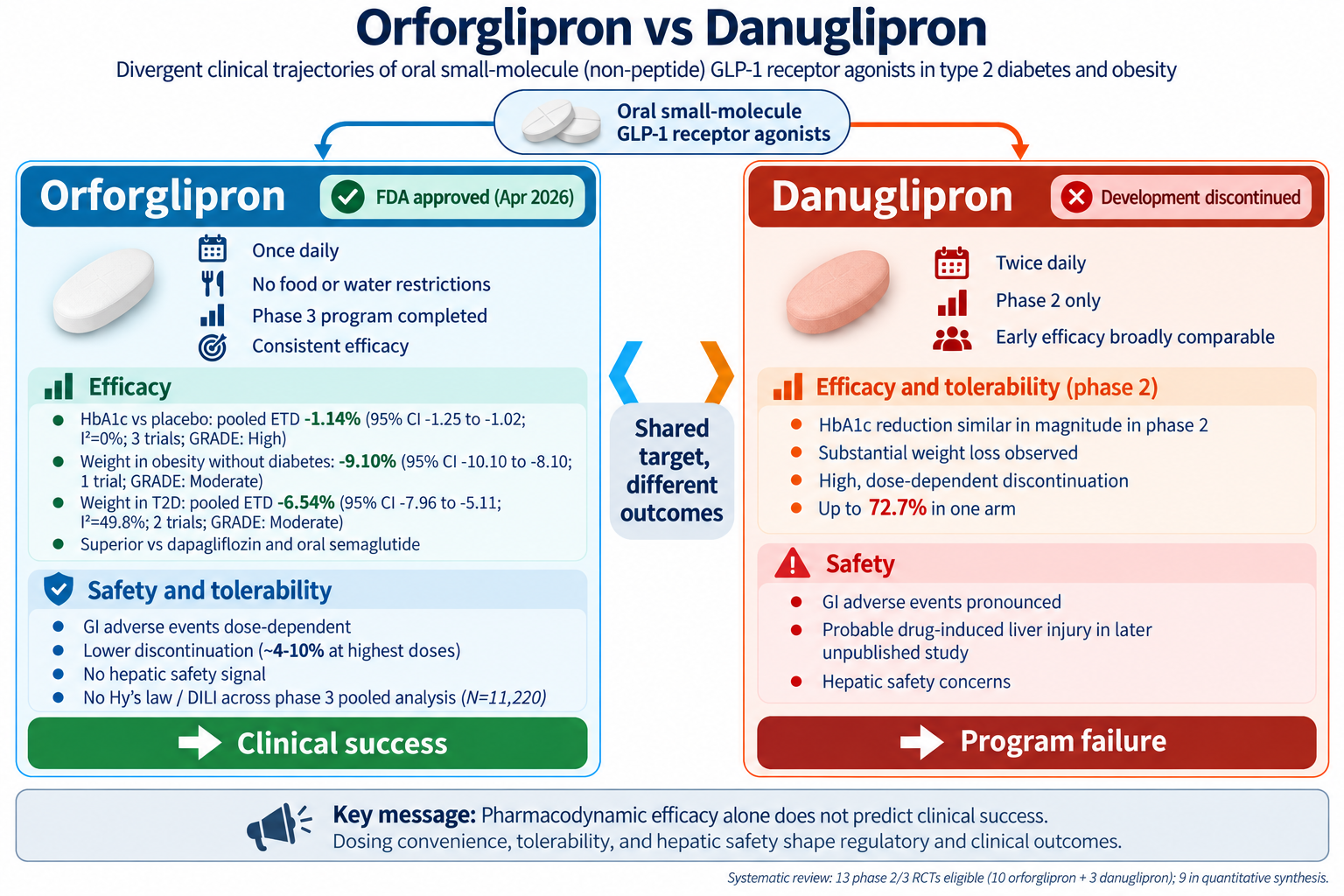
Background/Objectives: Orforglipron and danuglipron are the two most clinically advanced oral small-molecule (non-peptide) GLP-1 receptor agonists, sharing a common mechanism of action but markedly different regulatory outcomes — approval versus discontinuation. No existing review synthesizes their complete registrational evidence. Methods: We systematically searched PubMed, Embase, Cochrane CENTRAL, and Web of Science (inception to September 2026; PROSPERO-registered protocol) for phase 2/3 randomized controlled trials of orforglipron or danuglipron in adults with type 2 diabetes and/or obesity. Risk of bias was assessed with Cochrane RoB 2. Comparable trials were pooled using random-effects meta-analysis; clinically heterogeneous or non-comparable trials were synthesized narratively. Results: Of 505 records identified (286 after deduplication), 13 phase 2/3 randomized controlled trials met the registered eligibility criteria (10 orforglipron, 3 danuglipron); a further 17 reports (phase 1, mechanistic, or post hoc analyses of these trials) were retained only as contextual evidence. Of the 13 eligible trials, 9 (6 orforglipron phase 3, 3 danuglipron phase 2; N=9,693) were included in the quantitative synthesis, of which subsets sharing a common comparator were combined by random-effects meta-analysis (3 trials for HbA1c, 2 for body weight in type 2 diabetes); the remainder are reported as standalone estimates. Orforglipron produced a pooled HbA1c reduction of −1.14 percentage points versus placebo (95% CI −1.25 to −1.02; I²=0%) and superior glycemic control versus dapagliflozin and oral semaglutide. Weight loss varied by population: −9.10% in obesity without diabetes (single trial) and a pooled −6.54% in type 2 diabetes (95% CI −7.96 to −5.11; I²=49.8%, explained by background therapy). No hepatic safety signal was observed across 11,220 pooled orforglipron participants. Danuglipron showed comparable glycemic and weight efficacy but substantially higher, dose-dependent discontinuation (up to 72.7% in one arm), and its development was discontinued after a probable drug-induced liver injury case identified in a later, unpublished study. Conclusions: Despite a shared molecular target, orforglipron and danuglipron followed divergent clinical trajectories driven by differences in dosing regimen, tolerability, and hepatic safety rather than by pharmacodynamic efficacy, which was broadly comparable between the two molecules. These findings underscore that efficacy alone is an incomplete predictor of clinical success for oral small-molecule GLP-1 receptor agonists.
Keywords:
orforglipron
; danuglipron
; GLP-1 receptor agonist
; type 2 diabetes
; obesity
; small-molecule drugs
; systematic review
1. Introduction
Type 2 diabetes and obesity affect a substantial and growing proportion of the global population and frequently coexist, compounding cardiometabolic risk [25,26]. Glucagon-like peptide-1 (GLP-1) receptor agonists are established, effective therapies for both conditions, but nearly all currently available agents are peptides that require subcutaneous injection; the one approved oral peptide formulation, semaglutide, requires strict fasting conditions before and after administration to ensure adequate absorption [28]. These administration requirements are associated with reduced treatment persistence and adherence in real-world settings [27], and have motivated the development of oral small-molecule GLP-1 receptor agonists that, being non-peptides, are not subject to gastrointestinal proteolytic degradation and can in principle be formulated for simple, unrestricted oral dosing [16].
Two oral small-molecule GLP-1 receptor agonists have reached the most advanced stages of clinical development: orforglipron and danuglipron. Despite sharing a common mechanism of action and a similar overall developmental rationale, the two molecules have followed markedly different trajectories. Orforglipron completed a full phase 3 registrational program spanning both type 2 diabetes and obesity, including head-to-head comparisons against an SGLT2 inhibitor and against oral semaglutide, and received regulatory approval [29]. Danuglipron's clinical development, by contrast, did not progress beyond phase 2 and was discontinued by its manufacturer in April 2025, following tolerability concerns and a probable hepatic safety signal identified in an unpublished study [19].
This divergence, arising from a shared molecular target, raises questions that are not fully addressed by the existing literature. Several systematic reviews and network meta-analyses of oral GLP-1 receptor agonists have recently been registered on PROSPERO, addressing dosing strategies for weight loss (CRD420261490084), comparative efficacy in type 2 diabetes (CRD420261484384), and peptide-versus-non-peptide comparisons (CRD420261469734) [22,23,24]; these reviews are designed to rank treatment strategies or molecules within the broader oral GLP-1 receptor agonist class using network meta-analysis. None, to our knowledge, synthesizes the complete registrational evidence for orforglipron and danuglipron specifically, nor uses their contrasting regulatory outcomes as a lens for comparing efficacy, safety, and the developmental trajectory of the two leading oral small-molecule candidates.
We therefore conducted this systematic review to evaluate and compare the efficacy and safety of orforglipron and danuglipron in adults with type 2 diabetes and/or obesity, based on the complete available phase 2 and phase 3 randomized controlled trial evidence for each molecule. Specific objectives were: (1) to quantify treatment effects on glycated hemoglobin and body weight across the orforglipron phase 3 program and the danuglipron phase 2 program; (2) to characterize and compare safety and tolerability profiles, including gastrointestinal adverse events, treatment discontinuation, and hepatic safety signals; and (3) to contextualize the divergent clinical development trajectories of these two molecules within the broader landscape of oral, small-molecule incretin-based therapies.
2. Methods
This systematic review was conducted in accordance with the Preferred Reporting Items for Systematic Reviews and Meta-Analyses (PRISMA) 2020 statement [13] and was prospectively registered on PROSPERO (registration number CRD420261508176).
2.1. Eligibility Criteria
We included phase 2 or phase 3 randomized controlled trials evaluating oral small-molecule (non-peptide) GLP-1 receptor agonists — orforglipron or danuglipron, at any dose or formulation, administered as monotherapy or add-on therapy — in adults (≥18 years) with type 2 diabetes mellitus and/or obesity/overweight (BMI ≥25 kg/m²). Comparators included placebo, active pharmacological comparators (dapagliflozin, oral semaglutide, insulin glargine), or no treatment. We excluded studies in participants with type 1 diabetes, pregnant or lactating women, pediatric populations, non-randomized or observational studies, and studies evaluating injectable (peptide-based) GLP-1 receptor agonists as the sole intervention. Phase 1 trials did not meet these eligibility criteria and were excluded from the review population entirely; they, along with mechanistic/pharmacokinetic reports and post hoc or pooled-safety analyses of already-counted trials, were catalogued separately as contextual/supporting evidence and cited only where relevant to interpretation, not as independently eligible studies (Section 3.1).
2.2. Information Sources and Search Strategy
We systematically searched PubMed, Embase, Cochrane Central Register of Controlled Trials (CENTRAL), and Web of Science (Science Citation Index Expanded) from inception to September 2026, with no language restrictions. The search strategy combined free-text and controlled-vocabulary terms for "orforglipron", "danuglipron", their development codes (LY3502970, PF-06882961), and generic terms for oral small-molecule/non-peptide GLP-1 receptor agonists, combined with terms for type 2 diabetes and obesity (full search strings in Supplementary Table S1). We additionally searched ClinicalTrials.gov and checked reference lists of included studies and relevant systematic reviews (citation searching) to identify unpublished or topline-only trial results, notably ACHIEVE-4, an orforglipron cardiovascular outcomes trial not yet indexed in bibliographic databases at the time of search.
2.3. Study Selection and Data Extraction
Records were screened by title and abstract by one reviewer, with a second reviewer independently checking included and excluded records to verify consistency; disagreements were resolved by discussion. Data were extracted by one reviewer and checked by a second, using a piloted extraction form capturing trial identifiers, population characteristics, intervention and comparator details, sample sizes, efficacy outcomes (HbA1c and body weight change from baseline, with treatment effect estimates and 95% or 90% confidence intervals as reported), and safety outcomes (treatment discontinuation due to adverse events, gastrointestinal adverse events, hepatic safety signals, and major adverse cardiovascular events).
2.4. Risk of Bias Assessment
Risk of bias was assessed independently for each included randomized controlled trial using the Cochrane Risk of Bias 2 (RoB 2) tool [14] across its five domains (bias arising from the randomization process; deviations from intended interventions; missing outcome data; measurement of the outcome; and selection of the reported result), with an overall judgment of low risk, some concerns, or high risk per trial.
2.5. Data Synthesis
Given the distinct evidence maturity of the two molecules — orforglipron with a completed phase 3 registrational program and danuglipron limited to phase 2 evidence — data were synthesized separately by molecule and, where clinically heterogeneous comparators or populations were present, stratified accordingly. Where two or more clinically comparable trials reported an estimated treatment difference (ETD) with an extractable measure of precision, we performed random-effects meta-analysis using the DerSimonian–Laird method [15], with heterogeneity quantified using the I² statistic and Cochran's Q test. Trials with a single available estimate, non-placebo/non-standard comparators precluding pooling with other trials, or non-comparable outcome definitions (e.g., percentage of weight maintained rather than percent change from baseline) were synthesized narratively rather than pooled. This approach reflects a systematic review with a narrative synthesis as its primary analytic frame, supported by a targeted quantitative synthesis where the evidence base permitted it, rather than a full network or pairwise meta-analysis. Two early-phase orforglipron phase 2 trials that preceded the phase 3 program [30,31] were identified as core-eligible but were excluded from quantitative pooling with the phase 3 trials on clinical and methodological grounds: they used non-confirmatory, exploratory dose-finding designs with broader dose ranges and different population selection stringency than the subsequent phase 3 program, and the type 2 diabetes trial [31] additionally included an active comparator (dulaglutide) not used elsewhere in the orforglipron program, precluding a clinically meaningful common-comparator pooled estimate. Both trials are therefore synthesized narratively rather than pooled (Section 3.1). Consistent with the registered protocol, certainty of evidence was assessed using the GRADE approach [18] for the two primary efficacy outcomes (HbA1c and body weight) for which random-effects pooling was performed, considering risk of bias, inconsistency, indirectness, imprecision, and publication bias (Table 3). We did not extend formal GRADE assessment to secondary safety outcomes (discontinuation, gastrointestinal adverse events, hepatic signals) or pool these as risk ratios, because the small number of trials available per comparator stratum (as few as two) and the qualitatively distinct safety profiles between molecules made a single pooled risk ratio potentially misleading; these outcomes are instead reported descriptively and narratively synthesized. This represents a partial, explicitly declared deviation from the registered protocol (which had also envisaged risk-ratio pooling for dichotomous outcomes generally), made for the reasons stated rather than an unexplained omission.
3. Results
3.1. Study Selection
The systematic search identified 505 records (PubMed, n=79; Embase, n=149; Cochrane CENTRAL, n=150; Web of Science, n=127). After removal of 219 duplicates, 286 unique records were screened by title and abstract. One additional record (ACHIEVE-4, an orforglipron cardiovascular outcomes trial vs. insulin glargine, NCT05803421) was identified through ClinicalTrials.gov and citation searching, consistent with the registered protocol's commitment to search for unpublished and topline-only studies. However, the available topline results (Eli Lilly, April 2026) report only cardiovascular and mortality endpoints (MACE-4 hazard ratio 0.84, 95% CI 0.59–1.20; all-cause mortality hazard ratio 0.43) and do not yet include the HbA1c or body weight data required for this review's primary efficacy outcomes. ACHIEVE-4 was therefore identified and considered but could not be extracted for quantitative synthesis given currently available data, and is noted as an identified evidence gap pending fuller disclosure rather than excluded on publication-status grounds. Following screening, 234 records were excluded as clearly irrelevant or as secondary evidence (systematic reviews/meta-analyses retained only for citation-chasing); the remaining 52 records were assessed in detail.
Of these, 13 randomized controlled trials met the pre-specified phase 2/3 eligibility criteria and constitute the core evidence base of this review: 10 orforglipron trials (ATTAIN-1 [2], ATTAIN-2 [3], ACHIEVE-1 [1], ACHIEVE-2 [4], ACHIEVE-3 [5], ACHIEVE-5 [6], ATTAIN-MAINTAIN [7], ACHIEVE-J [8], and two early-phase dose-finding trials that preceded the phase 3 program) and 3 danuglipron trials (DAN-01 [9], DAN-04 [10], DAN-05 [11]). The remaining 17 reports (15 orforglipron, 2 danuglipron) did not independently meet these eligibility criteria — comprising phase 1 pharmacokinetic/pharmacodynamic studies (explicitly excluded per the registered protocol), mechanistic or preclinical reports, and post hoc, subgroup, or pooled-safety analyses of trials already counted among the 13 core studies — and were retained only as contextual/supporting evidence cited where relevant to interpretation (e.g., the pooled hepatic safety analysis discussed in Section 3.7), not as additional independently eligible studies.
Of the 13 core eligible trials, 9 randomized controlled trials were included in the quantitative synthesis: six orforglipron phase 3 trials (ATTAIN-1, ATTAIN-2, ACHIEVE-1, ACHIEVE-2, ACHIEVE-3, ACHIEVE-5) and three danuglipron phase 2 trials (DAN-01, DAN-04, DAN-05). Of these, only trials sharing a common comparator and clinically comparable population were formally combined by random-effects meta-analysis — three trials for HbA1c versus placebo and two trials for body weight in type 2 diabetes versus placebo (Section 3.4 and Section 3.5); the remaining trials (including both active-comparator trials, ACHIEVE-2 and ACHIEVE-3, and all three danuglipron trials) contribute standalone treatment-effect estimates versus their own comparator, as no other core trial shared a directly poolable comparator or population. The remaining 4 core-eligible trials were not pooled: ATTAIN-MAINTAIN and ACHIEVE-J used outcome definitions or designs incompatible with pooling (Section 3.8), and the two early-phase orforglipron phase 2 trials [30,31] were excluded from pooling with the phase 3 trials owing to their non-confirmatory, exploratory dose-finding design and (for the type 2 diabetes trial) an active comparator (dulaglutide) not otherwise used in the program (Section 2.5); both are described narratively only. The study selection process, including this distinction between core and contextual evidence, is summarized in Figure 1.
3.2. Study and Participant Characteristics
Across the nine trials included in quantitative synthesis, orforglipron trials spanned obesity without diabetes (ATTAIN-1, N=3,127), combined obesity and type 2 diabetes (ATTAIN-2, N=1,613), and type 2 diabetes across a range of background therapies, including treatment-naïve/diet-controlled (ACHIEVE-1, N=559), metformin-inadequate with an active comparator (ACHIEVE-2 vs. dapagliflozin, N=962; ACHIEVE-3 vs. oral semaglutide, N=1,698), and insulin glargine add-on (ACHIEVE-5, N=546). Danuglipron trials were smaller and earlier-phase: two evaluated glycemic efficacy in type 2 diabetes (DAN-04, N=411; DAN-05, N=151) and one evaluated weight efficacy in obesity without diabetes (DAN-01, N=626). Two additional core-eligible orforglipron trials — ATTAIN-MAINTAIN (a phase 3b maintenance trial in participants who had completed prior injectable incretin therapy) and ACHIEVE-J (a phase 3 long-term safety trial in Japanese participants) — used outcome definitions or designs that precluded quantitative pooling and are addressed narratively (Section 3.8). Two further core-eligible orforglipron trials were early-phase, non-confirmatory dose-finding studies in obesity (N=272 [30]) and type 2 diabetes (N=383, with an additional active comparator arm, dulaglutide [31]) that preceded and informed the phase 3 program; given their exploratory design, broader dose ranges, and (for the type 2 diabetes trial) a comparator not used elsewhere in the program, they were not pooled with the confirmatory phase 3 trials and are described here only as part of the developmental history of the phase 3 dosing regimen.

Table 1.
Characteristics of the 13 core eligible trials.
| Trial | Molecule | Phase | N | Population | Comparator | Duration | Included in quantitative synthesis |
|---|---|---|---|---|---|---|---|
| ACHIEVE-1 [1] | Orforglipron | 3 | 559 | T2D, treatment-naïve | Placebo | 40 wk | Yes |
| ATTAIN-1 [2] | Orforglipron | 3 | 3,127 | Obesity, no T2D | Placebo | 72 wk | Yes |
| ATTAIN-2 [3] | Orforglipron | 3 | 1,613 | Obesity + T2D | Placebo | 72 wk | Yes |
| ACHIEVE-2 [4] | Orforglipron | 3 | 962 | T2D on metformin | Dapagliflozin | 40 wk | Yes |
| ACHIEVE-3 [5] | Orforglipron | 3 | 1,698 | T2D on metformin | Oral semaglutide | 52 wk | Yes |
| ACHIEVE-5 [6] | Orforglipron | 3 | 546 | T2D on insulin glargine | Placebo | 40 wk | Yes |
| ATTAIN-MAINTAIN [7] | Orforglipron | 3b | 376 | Post-injectable incretin, weight maintenance | Placebo | 52 wk | No (outcome mismatch) |
| ACHIEVE-J [8] | Orforglipron | 3 | Not extracted | T2D, Japanese, long-term safety | None | 52 wk | No (no comparator) |
| Orforglipron phase 2 obesity [30] | Orforglipron | 2 | 272 | Obesity, no T2D | Placebo | 36 wk | No (see Section 2.5) |
| Orforglipron phase 2 T2D [31] | Orforglipron | 2 | 383 | T2D | Placebo + dulaglutide | 26 wk | No (see Section 2.5) |
| DAN-01 [9] | Danuglipron | 2b | 626 | Obesity | Placebo | 26–32 wk | Yes |
| DAN-04 [10] | Danuglipron | 2b | 411 | T2D | Placebo | 16 wk | Yes |
| DAN-05 [11] | Danuglipron | 2a | 151 | T2D (n=123) and obesity without diabetes (n=28), two cohorts | Placebo | 12 wk | Yes |
3.3. Risk of Bias
Four trials were judged overall low risk of bias (ACHIEVE-1 [1], ATTAIN-2 [3], ACHIEVE-5 [6], ATTAIN-MAINTAIN [7]). ATTAIN-1 [2] was judged to have some concerns owing to dose-dependent differential attrition. ACHIEVE-2 [4] and ACHIEVE-3 [5] were open-label with respect to comparator identity (blinding was maintained only for the assigned orforglipron dose) and were judged to have some concerns for deviation- and measurement-related domains, although the objective nature of the primary outcomes (HbA1c, body weight) mitigates this concern. DAN-01 [9] and DAN-05 [11] were judged overall high risk of bias, driven by severe and differential attrition (up to 60% and 72.7% discontinuation, respectively, in the highest-dose arms). DAN-04 [10] was judged to have some concerns, reflecting dose-dependent differential attrition (discontinuation due to adverse events ranging from 3% to 34% across doses versus 8% with placebo). The two early-phase orforglipron phase 2 trials [30,31] were both double-blind and randomized with an adequate allocation procedure, but were judged to have some concerns overall, reflecting less precisely characterized attrition than in the phase 3 program and, for the type 2 diabetes trial, incomplete extraction of discontinuation data by treatment arm. ACHIEVE-J [8] has no placebo or active comparator arm (Section 3.8) and was therefore not amenable to a comparative RoB 2 judgment; it is addressed narratively rather than included in Table 2.
3.4. Efficacy: Glycemic Control (HbA1c)
Random-effects pooling of the three orforglipron trials versus placebo with comparable pivotal-dose (36 mg) estimates (ACHIEVE-1 [1], ATTAIN-2 [3], ACHIEVE-5 [6]) yielded a pooled estimated treatment difference (ETD) of −1.14 percentage points (95% CI −1.25 to −1.02), with no statistical heterogeneity (I²=0.0%; Cochran's Q=1.57, df=2, p=0.457) (Figure 2). Against active comparators, orforglipron 36 mg reduced HbA1c by a further −0.75 percentage points versus dapagliflozin 10 mg (95% CI −0.96 to −0.55; ACHIEVE-2 [4]) and by −0.44 percentage points versus oral semaglutide 14 mg (95% CI −0.62 to −0.26; ACHIEVE-3 [5]), meeting pre-specified non-inferiority and superiority criteria in both trials. For danuglipron, DAN-04 [10] (120 mg twice daily) showed an HbA1c reduction of −1.16 percentage points versus placebo (90% CI −1.47 to −0.86); DAN-05 [11] reported a similar-magnitude effect without a directly extractable point-estimate confidence interval.
3.5. Efficacy: Body Weight
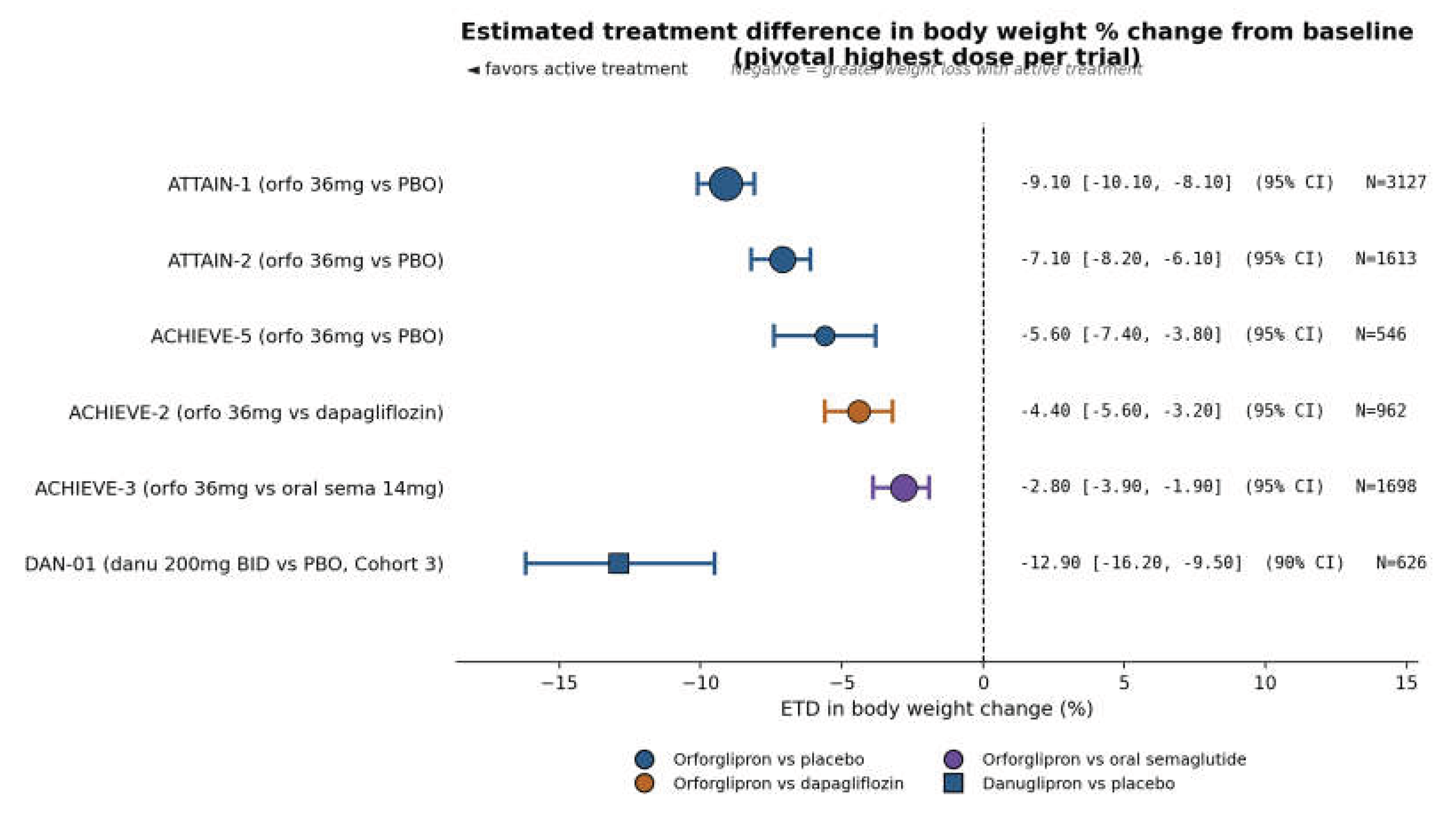
Unstratified pooling of orforglipron trials versus placebo showed substantial heterogeneity (I²=85.7%; Q=13.94, df=2, p=0.001), reflecting genuine clinical heterogeneity across populations. Stratifying by underlying condition clarified this: in obesity without diabetes, orforglipron 36 mg produced the largest effect observed across the program (ATTAIN-1 [2]: ETD −9.10%, 95% CI −10.10 to −8.10; single trial). In type 2 diabetes, pooling of ATTAIN-2 [3] (ETD −7.10%, 95% CI −8.20 to −6.10) and ACHIEVE-5 [6] (ETD −5.60%, 95% CI −7.40 to −3.80) yielded a pooled ETD of −6.54% (95% CI −7.96 to −5.11), with moderate residual heterogeneity (I²=49.8%; Q=1.99, df=1, p=0.158) attributable to differing background therapy. Against active comparators, orforglipron 36 mg produced greater weight loss than dapagliflozin 10 mg (ETD −4.4%, 95% CI −5.6 to −3.2) and than oral semaglutide 14 mg (ETD −2.8%, 95% CI −3.9 to −1.9). For danuglipron, DAN-01 [9] (200 mg twice daily, Cohort 3) showed the largest placebo-adjusted weight reduction observed for either molecule (ETD −12.9%, 90% CI −16.2 to −9.5), though this estimate derives from the arm with the highest attrition in the danuglipron program; DAN-04 [10] showed a smaller, dose-dependent effect reaching significance only at doses ≥80 mg twice daily (ETD −4.17 kg at 120 mg, 90% CI −5.15 to −3.18).
Figure 2b.
Pooled random-effects estimates for HbA1c and stratified body weight outcomes, orforglipron vs. placebo.
Figure 2b.
Pooled random-effects estimates for HbA1c and stratified body weight outcomes, orforglipron vs. placebo.
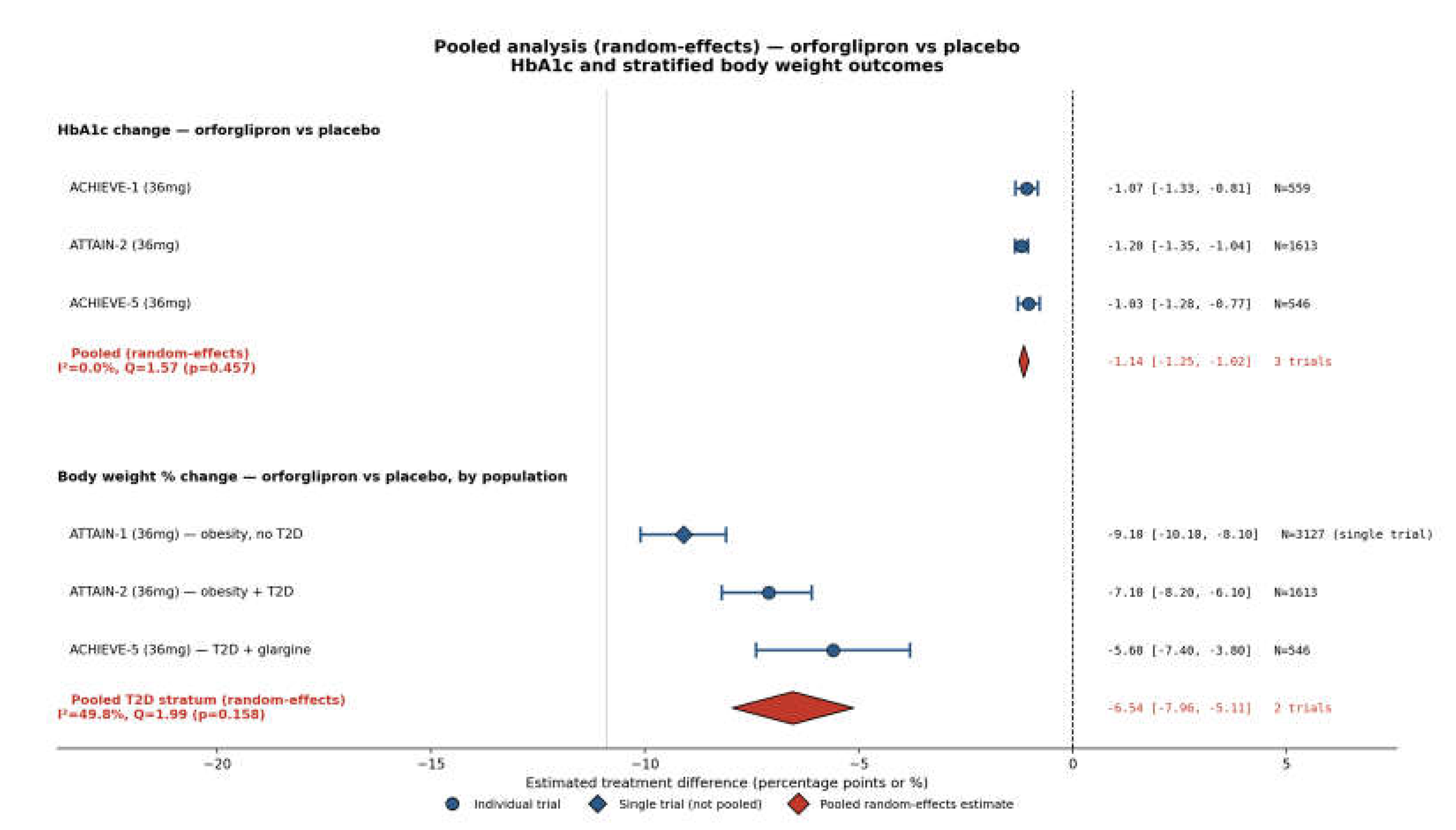
Figure 2c.
Estimated treatment differences in body weight % change from baseline, pivotal highest dose per trial (all comparators).
Figure 2c.
Estimated treatment differences in body weight % change from baseline, pivotal highest dose per trial (all comparators).
3.6. Certainty of Evidence (GRADE)
Certainty of evidence was assessed using GRADE for the three pooled or single-trial estimates of the two primary efficacy outcomes (Table 3). Certainty for the HbA1c pooled estimate (orforglipron vs. placebo, 3 trials) was rated high: all three contributing trials were low risk of bias, heterogeneity was absent (I²=0%), the confidence interval was narrow and well clear of any plausible minimally important difference, and estimates were direct. Certainty for the body weight pooled estimate in type 2 diabetes (2 trials) was downgraded one level for inconsistency, reflecting moderate residual heterogeneity (I²=49.8%) attributable to differing background therapy between the contributing trials, yielding moderate certainty. Certainty for the body weight estimate in obesity without diabetes (ATTAIN-1, single trial) was downgraded one level for risk of bias (some concerns, owing to dose-dependent differential attrition), also yielding moderate certainty; inconsistency was not rateable with a single trial.
Table 3.
GRADE summary of findings for the two primary efficacy outcomes.
| Outcome (comparison) | Trials (N) | Risk of bias | Inconsistency | Indirectness | Imprecision | Certainty |
|---|---|---|---|---|---|---|
| HbA1c, orforglipron vs. placebo | 3 (2,718) | Not serious | Not serious | Not serious | Not serious | High |
| Body weight (%), orforglipron vs. placebo, T2D | 2 (2,159) | Not serious | Serious (I²=49.8%) | Not serious | Not serious | Moderate |
| Body weight (%), orforglipron vs. placebo, obesity | 1 (3,127) | Serious (some concerns) | Not rateable (single trial) | Not serious | Not serious | Moderate |
Note: publication bias was not formally assessed (fewer than 10 trials per comparison, precluding funnel-plot-based methods) but was not suspected given that all contributing trials are large, prospectively registered, industry-sponsored registrational trials with published full-text results.
3.7. Safety and Tolerability
Discontinuation due to adverse events followed a consistent dose-response pattern for orforglipron across all six pooled trials (approximately 4–10% at the highest doses versus 1–7% with placebo or active comparator). Gastrointestinal adverse events were the most frequently reported across all trials and both molecules, generally dose-dependent and concentrated during dose escalation. A pooled hepatic safety analysis of the complete orforglipron phase 3 program [12] (7 trials, N=11,220) found no cases meeting Hy's law criteria and no evidence of drug-induced liver injury. By contrast, danuglipron's clinical development was discontinued by Pfizer in April 2025, principally on the basis of high, dose-dependent discontinuation (exceeding 50% in DAN-01) combined with a case of probable drug-induced liver injury observed in a subsequent, unpublished study — not in any of the three danuglipron trials included in this quantitative synthesis. This divergence in safety profiles despite a shared mechanism of action is examined in the Discussion.
3.8. Trials Not Amenable to Pooling
ATTAIN-MAINTAIN [7] (N=376; cohorts previously treated with tirzepatide or semaglutide to a weight plateau) evaluated maintenance of weight loss using a model-based estimate of percentage weight reduction retained rather than a treatment-naïve percent change from baseline; orforglipron preserved 74.7% (tirzepatide-switch cohort) and 79.3% (semaglutide-switch cohort, versus 37.6% with placebo) of previously achieved weight loss at 52 weeks, with no hepatic safety signal. ACHIEVE-J [8] (Japanese population, 52-week open-label design) was a safety-primary trial without a placebo or active comparator arm and is reported narratively as supportive long-term safety evidence in an Asian population.
4. Discussion
4.1. Principal Findings
This systematic review synthesizes, for the first time, the complete phase 2/3 registrational evidence for both oral small-molecule (non-peptide) GLP-1 receptor agonists in clinical development: orforglipron and danuglipron. Across the six orforglipron phase 3 trials included in this review's quantitative synthesis, orforglipron produced consistent, dose-dependent reductions in HbA1c (pooled ETD −1.14 percentage points vs. placebo among the three placebo-controlled trials with comparable estimates, I²=0%) and clinically meaningful weight loss that varied systematically by population — largest in obesity without diabetes (−9.10%) and more modest, though still substantial, in type 2 diabetes (pooled ETD −6.54%). Orforglipron demonstrated superiority over both an SGLT2 inhibitor and oral semaglutide on both efficacy endpoints, with no hepatic safety signal across 11,220 pooled participants and up to 104 weeks of exposure. Danuglipron, evaluated only in phase 2, showed comparable glycemic and weight efficacy per unit of evidence but at the cost of substantially higher and more variable treatment discontinuation, and its clinical development was ultimately discontinued following a probable drug-induced liver injury case identified in a later, unpublished study.
4.2. Divergent Clinical Trajectories: A Mechanistic and Pharmacological Perspective
Orforglipron and danuglipron share a common target — non-peptide, orally bioavailable agonism of the GLP-1 receptor — yet their developmental fates diverged sharply. Several non-mutually-exclusive explanations emerge from the evidence synthesized here. First, dosing regimen: orforglipron is dosed once daily without food or water restrictions, whereas danuglipron required twice-daily dosing, which may have contributed to its markedly higher discontinuation rates (up to 72.7% in a single arm of DAN-05, versus a maximum of approximately 10% for orforglipron at any dose across the phase 3 program). Second, the tolerability profiles diverged in degree, if not in kind: gastrointestinal adverse events were dose-dependent for both molecules, but their absolute incidence and impact on trial retention were substantially greater for danuglipron. Third, and most consequential for regulatory outcome, danuglipron's discontinuation was precipitated by a hepatic safety signal (a probable drug-induced liver injury case) identified outside the three trials analyzed here, whereas the pooled hepatic safety analysis of the entire orforglipron phase 3 program found no comparable signal. Notably, danuglipron is not unique among oral small-molecule GLP-1 receptor agonists in this respect: lotiglipron, another compound in this class, was also discontinued during phase 2 development citing hepatic safety considerations [20], suggesting that hepatic monitoring may represent a class-relevant, rather than molecule-specific, area of concern warranting continued scrutiny as additional oral small molecules — including aleniglipron, currently in phase 2b development [21] — progress through the pipeline.
4.3. Positioning Relative to Existing and Concurrent Evidence
Three PROSPERO registrations addressing overlapping evidence on oral GLP-1 receptor agonists were identified during protocol development (registered August 2026): a network meta-analysis of oral non-peptide GLP-1 receptor agonist dosing strategies for weight loss in obesity without diabetes (CRD420261490084), a network meta-analysis of oral GLP-1 receptor agonists in type 2 diabetes (CRD420261484384), and a network meta-analysis comparing oral peptide and non-peptide GLP-1 receptor agonists in type 2 diabetes (CRD420261469734). The present review differs from all three in analytic purpose: rather than ranking dosing strategies or molecules within the broader oral GLP-1 receptor agonist class through network meta-analysis, it synthesizes the complete clinical development programs of orforglipron and danuglipron specifically, using their divergent regulatory outcomes — approval versus discontinuation — as an organizing framework for comparing efficacy, safety, and the developmental trajectory itself. This distinction was documented prospectively in the study's PROSPERO record.
4.4. Strengths and Limitations
This review's principal strength is the completeness and primary-source fidelity of its evidence base: all nine trials included in quantitative synthesis were extracted directly from full-text primary publications rather than secondary sources, with independent risk-of-bias assessment and pre-specified handling of clinically heterogeneous comparators through stratification rather than inappropriate pooling.
Several limitations warrant explicit acknowledgment. First, the quantitative synthesis is based on a small number of trials per comparator stratum (as few as two for some analyses), limiting the precision and generalizability of pooled estimates and precluding formal small-study-effects or publication bias assessment; this is reflected in our approach of favoring narrative synthesis over meta-analysis as the primary analytic frame, consistent with the Synthesis without Meta-analysis (SWiM) reporting guideline [17]. Second, two orforglipron trials (ATTAIN-MAINTAIN, ACHIEVE-J) could not be pooled owing to non-comparable outcome definitions or the absence of a comparator arm; their exclusion from quantitative synthesis does not reflect lower evidentiary value but a structural mismatch with the pooling framework, and both are discussed narratively. Third, the danuglipron evidence base is limited to phase 2 trials with generally small samples and, in two of three pooled trials, high and differential attrition, which was reflected in high or moderate risk-of-bias judgments; findings for this molecule should be interpreted as hypothesis-generating rather than confirmatory. Fourth, two trials (ACHIEVE-2, ACHIEVE-3) were open-label with respect to comparator identity, introducing some risk of bias for subjectively assessed outcomes, although the primary efficacy endpoints (HbA1c, body weight) are objectively measured and less susceptible to this concern. Fifth, consistent with the registered protocol, four bibliographic databases were searched (PubMed, Embase, Cochrane CENTRAL, Web of Science); although this represents a comprehensive multi-database strategy, the absence of grey literature databases beyond ClinicalTrials.gov may have limited capture of additional unpublished data, particularly for ACHIEVE-4, which remains available only as topline results at the time of writing. Sixth, as noted in Section 2.5, formal GRADE certainty assessment (Table 3) was performed only for the two primary efficacy outcomes with pooled estimates (HbA1c, body weight); dichotomous safety outcomes were described narratively rather than pooled as risk ratios, a partial deviation from the registered protocol reflecting the small number of trials available per comparator stratum rather than an oversight.
5. Conclusions
Across the complete phase 2/3 clinical development programs synthesized in this review, orforglipron demonstrated consistent, clinically meaningful improvements in glycemic control and body weight across diverse type 2 diabetes and obesity populations, with a hepatic and overall safety profile that supported regulatory approval. Danuglipron demonstrated comparable pharmacodynamic efficacy in early-phase evidence but was ultimately discontinued following tolerability and hepatic safety concerns. These divergent trajectories, arising from a shared molecular target, illustrate that pharmacodynamic efficacy alone is an incomplete predictor of clinical success for oral small-molecule GLP-1 receptor agonists, and that dosing regimen, tolerability, and long-term hepatic surveillance warrant continued attention as additional molecules in this class advance through development.
Supplementary Materials
The following supporting information can be downloaded at the website of this paper posted on Preprints.org. Table S1: full electronic search strategies; Dataset S2: trial-level extraction data and synthesis inputs. The PRISMA 2020 checklist will be submitted separately as a non-published reporting checklist.
Author Contributions
Conceptualization, A.M.L. and E.C.; methodology, A.M.L. and O.A.O.; investigation and literature search, A.M.L.; data curation and extraction, A.M.L. and P.V.; formal analysis, P.V., L.G. and B.A.; validation, P.V. and L.G.; writing—original draft preparation, A.M.L.; writing—review and editing, P.V.; visualization, B.A.; supervision, E.C., O.A.O. and B.A.; project administration, E.C. All authors have read and agreed to the published version of the manuscript.
Funding
This research received no external funding.
Institutional Review Board Statement
Not applicable. This systematic review used previously published and publicly available trial-level evidence and involved no new recruitment of participants.
Informed Consent Statement
Not applicable.
Data Availability Statement
The trial-level extracted data and synthesis inputs supporting the findings of this systematic review are provided in the Supplementary Materials accompanying the article. The underlying trial reports are cited in the reference list.
Acknowledgments
During the preparation of this manuscript, the authors used ChatGPT (OpenAI; specific model version not recorded) to assist with extraction of data from randomized controlled trial reports, preparation of scientific tables and figures, creation of the graphical abstract, and language and grammar editing. The authors have reviewed and edited the outputs and take full responsibility for the content of this publication.
Conflicts of Interest
The authors declare no conflicts of interest.
References
- Rosenstock, J.; Hsia, S.; Nevarez Ruiz, L. ACHIEVE-1 Trial Investigators. Orforglipron, an oral small-molecule GLP-1 receptor agonist, in early type 2 diabetes. N Engl. J. Med. 2025, 393(11), 1065–1076. [Google Scholar] [CrossRef] [PubMed]
- Wharton, S.; Aronne, L.J.; Stefanski, A. ATTAIN-1 Trial Investigators. Orforglipron, an oral small-molecule GLP-1 receptor agonist for obesity treatment. N Engl. J. Med. 2025, 393(18), 1796–1806. [Google Scholar] [CrossRef] [PubMed]
- Horn, D.B.; Ryan, D.H.; Giljanovic Kis, S. ATTAIN-2 Trial Investigators. Orforglipron, an oral small-molecule GLP-1 receptor agonist, for the treatment of obesity in people with type 2 diabetes (ATTAIN-2): a phase 3, double-blind, randomised, multicentre, placebo-controlled trial. Lancet 2025, 406, 2927–2944. [Google Scholar] [CrossRef] [PubMed]
- Welch, M.; Forst, T.; Jia, W.; et al. Orforglipron compared with dapagliflozin in adults with type 2 diabetes and inadequate glycaemic control with metformin (ACHIEVE-2): a multicentre, randomised, non-inferiority, open-label, phase 3 trial. Lancet 2026, 408. [Google Scholar] [CrossRef] [PubMed]
- Rosenstock, J.; Yabe, D.; et al. Efficacy and safety of once-daily oral orforglipron compared with oral semaglutide in adults with type 2 diabetes (ACHIEVE-3): a multinational, multicentre, non-inferiority, open-label, randomised, phase 3 trial. Lancet 2026. [Google Scholar] [CrossRef] [PubMed]
- Giorgino, F.; D'Souza, S.; Ludwig, L.; et al. Orforglipron added to titrated insulin glargine in type 2 diabetes: the ACHIEVE-5 randomized clinical trial. JAMA 2026, 336(5), 389–399. [Google Scholar] [CrossRef] [PubMed]
- Aronne, L.J.; Horn, D.B.; le Roux, C.W.; et al. Orforglipron for maintenance of body weight reduction: the double-blind, randomized phase 3b ATTAIN-MAINTAIN trial. Nat. Med. 2026. [Google Scholar] [CrossRef] [PubMed]
- Yabe, D.; Shiraiwa, T.; Ugai, H.; Takeuchi, M.; Suzuki, R. Long-term safety of oral orforglipron in Japanese participants with type 2 diabetes (ACHIEVE-J): a multicentre, randomised, open-label, parallel-group phase 3 trial. Lancet Diabetes Endocrinol. 2026. [Google Scholar] [CrossRef] [PubMed]
- Buckeridge, C.; Cobain, S.; Bays, H.E.; et al. Efficacy and safety of danuglipron (PF-06882961) in adults with obesity: a randomized, placebo-controlled, dose-ranging phase 2b study. Diabetes Obes. Metab. 2025, 27(9), 4915–4926. [Google Scholar] [CrossRef] [PubMed]
- Saxena, A.R.; Frias, J.P.; Brown, L.S.; Gorman, D.N.; Vasas, S.; Tsamandouras, N.; Birnbaum, M.J. Efficacy and safety of oral small molecule glucagon-like peptide 1 receptor agonist danuglipron for glycemic control among patients with type 2 diabetes: a randomized clinical trial. JAMA Netw. Open 2023, 6(5), e2314493. [Google Scholar] [CrossRef] [PubMed]
- Saxena, A.R.; Frias, J.P.; Gorman, D.N.; Lopez, R.N.; Andrawis, N.; Tsamandouras, N.; Birnbaum, M.J. Tolerability, safety and pharmacodynamics of oral, small-molecule glucagon-like peptide-1 receptor agonist danuglipron for type 2 diabetes: a 12-week, randomized, placebo-controlled, Phase 2 study comparing different dose-escalation schemes. Diabetes Obes. Metab. 2023, 25(10), 2805–2814. [Google Scholar] [CrossRef] [PubMed]
- Wharton, S.; Stefanski, A.; Chen, J.; Rao, G.; Twum, E.A.; Denning, M. Hepatic safety of orforglipron in adults with obesity or overweight and/or type 2 diabetes: a pooled analysis of the orforglipron phase 3 clinical trials. Diabetes Obes. Metab. 2026, 28(9), 8347–8358. [Google Scholar] [CrossRef] [PubMed]
- Page, M.J.; McKenzie, J.E.; Bossuyt, P.M.; et al. The PRISMA 2020 statement: an updated guideline for reporting systematic reviews. BMJ 2021, 372, n71. [Google Scholar] [CrossRef] [PubMed]
- Sterne, J.A.C.; Savović, J.; Page, M.J.; et al. RoB 2: a revised tool for assessing risk of bias in randomised trials. BMJ 2019, 366, l4898. [Google Scholar] [CrossRef] [PubMed]
- DerSimonian, R.; Laird, N. Meta-analysis in clinical trials. Control Clin. Trials 1986, 7(3), 177–188. [Google Scholar] [CrossRef] [PubMed]
- Drucker, D.J. Mechanisms of action and therapeutic application of glucagon-like peptide-1. Cell Metab. 2018, 27(4), 740–756. [Google Scholar] [CrossRef] [PubMed]
- Campbell, M.; McKenzie, J.E.; Sowden, A.; et al. Synthesis without meta-analysis (SWiM) in systematic reviews: reporting guideline. BMJ 2020, 368, l6890. [Google Scholar] [CrossRef] [PubMed]
- Guyatt, G.H.; Oxman, A.D.; Vist, G.E.; et al. GRADE: an emerging consensus on rating quality of evidence and strength of recommendations. BMJ. 2008, 336(7650), 924–926. [Google Scholar] [CrossRef] [PubMed]
- Pfizer Inc. Pfizer provides update on oral GLP-1 receptor agonist danuglipron [press release]; Pfizer: New York, 14 April 2025. [Google Scholar]
- Amin, N.B.; Frederich, R.; Tsamandouras, N.; et al. Evaluation of an oral small-molecule glucagon-like peptide-1 receptor agonist, lotiglipron, for type 2 diabetes and obesity: a dose-ranging, phase 2, randomized, placebo-controlled study. Diabetes Obes. Metab. 2025, 27, 215–227. [Google Scholar] [CrossRef] [PubMed]
- Rosenstock, J.; Lingvay, I.; Ryan, D.; et al. Oral small molecule GLP-1 receptor agonist aleniglipron in people with overweight or obesity: a randomized, double-blind, placebo-controlled phase 2b trial. Nat. Med. 2026. [Google Scholar] [CrossRef] [PubMed]
- PROSPERO CRD420261490084; Comparative 36-week efficacy and tolerability of oral nonpeptide small-molecule GLP-1 receptor agonists in adults with overweight or obesity without type 2 diabetes: a systematic review and network meta-analysis. Available online: https://www.crd.york.ac.uk/PROSPERO/.
- PROSPERO CRD420261484384; Oral GLP-1 Receptor Agonists in Type 2 Diabetes: A Systematic Review and Network Meta-analysis of Efficacy and Safety. Available online: https://www.crd.york.ac.uk/PROSPERO/.
- PROSPERO CRD420261469734; Comparative Efficacy and Safety of Oral Peptide Versus Non-Peptide GLP-1 Receptor Agonists in Adults With Type 2 Diabetes Mellitus: A Systematic Review and Network Meta-analysis of Randomized Controlled Trials. Available online: https://www.crd.york.ac.uk/PROSPERO/.
- World Health Organization. Obesity and overweight [fact sheet]; WHO: Geneva, 7 May 2025. [Google Scholar]
- American Diabetes Association Professional Practice Committee. Pharmacologic approaches to glycemic treatment: standards of care in diabetes—2025. Diabetes Care 2025, 48((1) suppl 1, S181–S206. [Google Scholar] [CrossRef] [PubMed]
- Cooke, C.E.; Lee, H.Y.; Tong, Y.P.; Haines, S.T. Persistence with injectable antidiabetic agents in members with type 2 diabetes in a commercial managed care organization. Curr. Med. Res. Opin. 2010, 26(1), 231–238. [Google Scholar] [CrossRef] [PubMed]
- Bækdal, T.A.; Breitschaft, A.; Donsmark, M.; Maarbjerg, S.J.; Søndergaard, F.L.; Borregaard, J. Effect of various dosing conditions on the pharmacokinetics of oral semaglutide, a human glucagon-like peptide-1 analogue in a tablet formulation. Diabetes Ther. 2021, 12(7), 1915–1927. [Google Scholar] [CrossRef] [PubMed]
- Eli Lilly and Company. FDA approves Lilly's Foundayo™ (orforglipron), the only GLP-1 pill for weight loss that can be taken any time of day without food or water restrictions [press release]; Eli Lilly and Company: Indianapolis, 1 April 2026. [Google Scholar]
- Wharton, S.; Blevins, T.; Connery, L.; Rosenstock, J.; Raha, S.; Liu, R.; Ma, X.; Mather, K.J.; Haupt, A.; Robins, D.; Pratt, E.; Kazda, C.; Konig, M.; GZGI Investigators. Daily oral GLP-1 receptor agonist orforglipron for adults with obesity. N Engl. J. Med. 2023, 389(10), 877–888. [Google Scholar] [CrossRef] [PubMed]
- Frias, J.P.; Hsia, S.; Eyde, S.; Liu, R.; Ma, X.; Konig, M.; Kazda, C.; Mather, K.J.; Haupt, A.; Pratt, E.; Robins, D. Efficacy and safety of oral orforglipron in patients with type 2 diabetes: a multicentre, randomised, dose-response, phase 2 study. Lancet 2023, 402(10400), 472–483. [Google Scholar] [CrossRef] [PubMed]
Figure 1.
PRISMA 2020 flow diagram of study identification, screening, and inclusion.
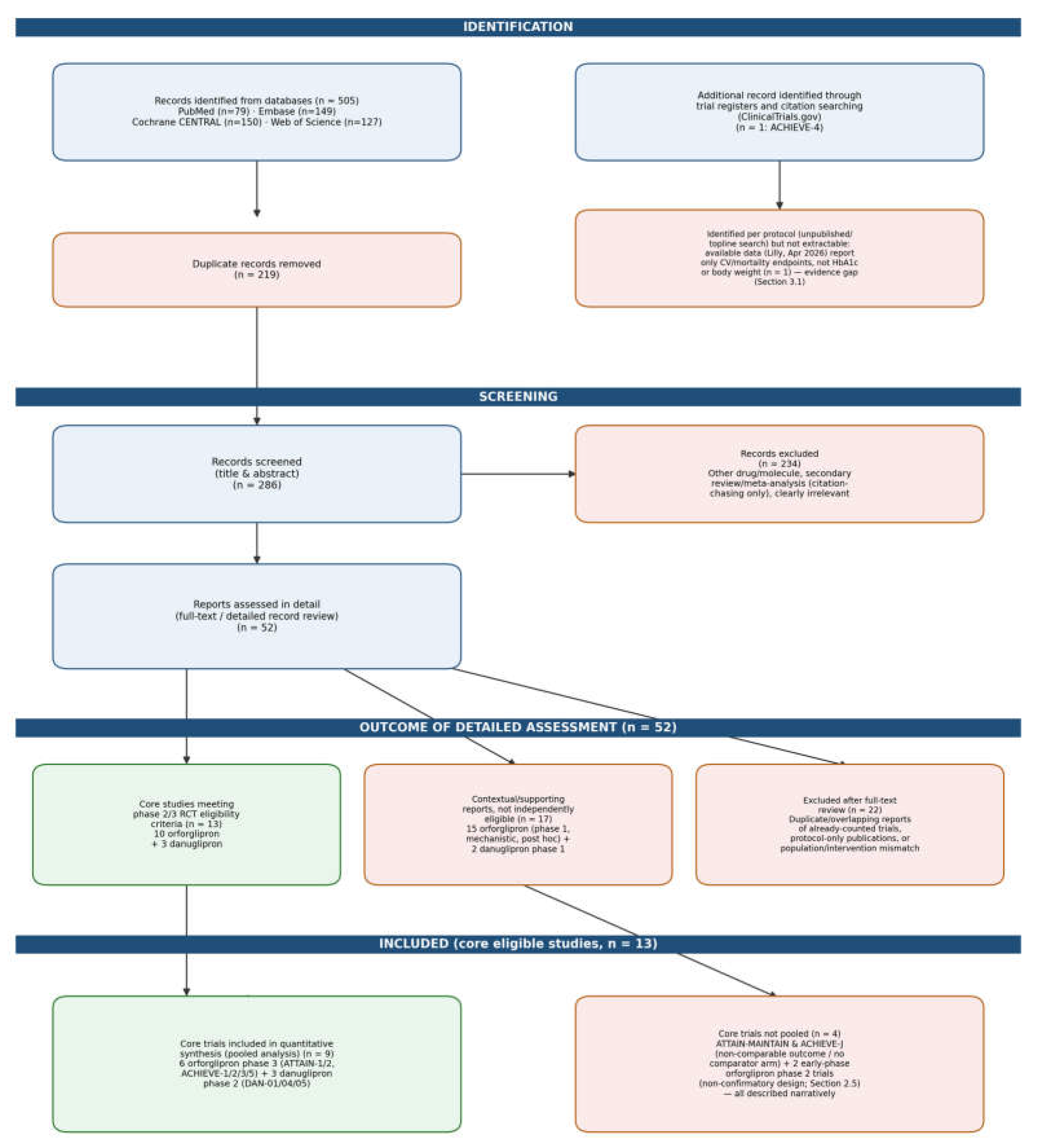
Figure 2a.
Estimated treatment differences in HbA1c change from baseline, pivotal highest dose per trial.
Figure 2a.
Estimated treatment differences in HbA1c change from baseline, pivotal highest dose per trial.
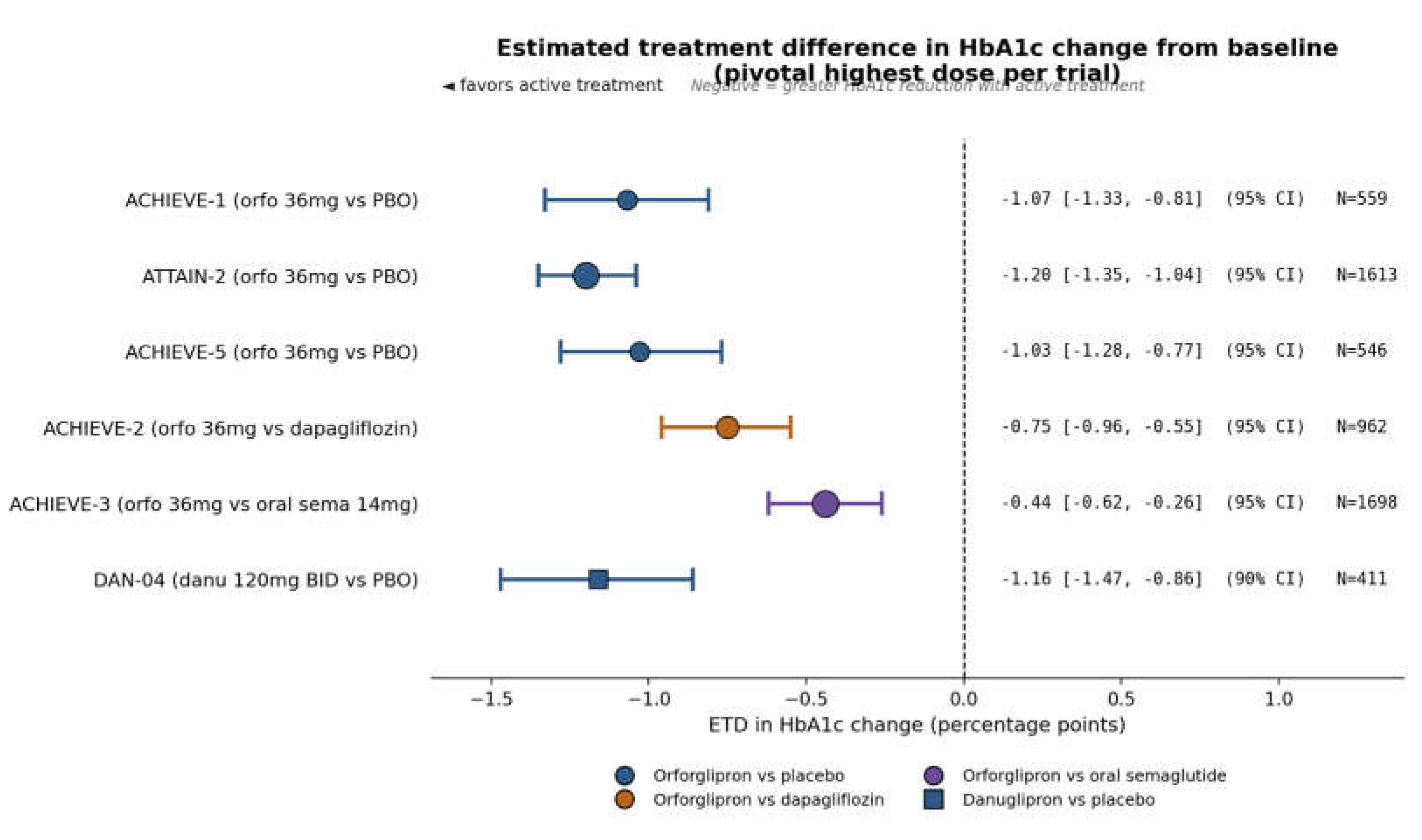
Table 2.
Cochrane RoB 2 domain-level judgments for the 12 core trials with a placebo or active comparator arm.
Table 2.
Cochrane RoB 2 domain-level judgments for the 12 core trials with a placebo or active comparator arm.
| Trial | D1 Randomization | D2 Deviations | D3 Missing data | D4 Measurement | D5 Reporting | Overall |
|---|---|---|---|---|---|---|
| ACHIEVE-1 | Low | Low | Low | Low | Low | Low |
| ATTAIN-1 | Low | Low | Some | Low | Low | Some concerns |
| ATTAIN-2 | Low | Low | Low | Low | Low | Low |
| ACHIEVE-2 | Low | Some | Low | Some | Low | Some concerns |
| ACHIEVE-3 | Low | Some | Low | Some | Low | Some concerns |
| ACHIEVE-5 | Low | Low | Low | Low | Low | Low |
| ATTAIN-MAINTAIN | Low | Low | Low | Low | Low | Low |
| Orfo phase 2 obesity [30] | Low | Low | Some | Low | Low | Some concerns |
| Orfo phase 2 T2D [31] | Low | Low | Some | Low | Low | Some concerns |
| DAN-01 | Low | Low | High | Low | Low | High |
| DAN-04 | Low | Some | Some | Low | Some | Some concerns |
| DAN-05 | Low | Low | High | Low | Low | High |
Note: ACHIEVE-J is excluded from this table because it has no placebo or active comparator arm and is therefore not amenable to a RoB 2 judgment of comparative effect; its internal conduct is addressed narratively inSection 3.8.
Disclaimer/Publisher’s Note: The statements, opinions and data contained in all publications are solely those of the individual author(s) and contributor(s) and not of MDPI and/or the editor(s). MDPI and/or the editor(s) disclaim responsibility for any injury to people or property resulting from any ideas, methods, instructions or products referred to in the content. |
© 2026 by the authors. Licensee MDPI, Basel, Switzerland. This article is an open access article distributed under the terms and conditions of the Creative Commons Attribution (CC BY) license.
Copyright: This open access article is published under a Creative Commons CC BY 4.0 license, which permit the free download, distribution, and reuse, provided that the author and preprint are cited in any reuse.