
Submitted:
16 September 2026
Posted:
17 September 2026
You are already at the latest version
Abstract
The development of photochemical techniques represents one of the possible ways to achieve green chemistry. The control of stereochemical behavior of photochemical reactions is a crucial problem to be solved. Two possible solutions of this problem, where the formation of hydrogen bonds in supramolecular structures on heterocyclic compounds is considered, has been discussed.
Keywords:
photochemistry
; stereoselectivity
; hydrogen bond
1. Introduction
Photochemistry is a relatively young science because its history starts from the beginning of the twentieth century [1]. If a lecture reads the review of Paternò on the state of art of organic photochemistry at 1909 [2], or the contribution of Ciamician to the development of the first photochemical reactions [3], it is possible to see the incredible amount of knowledge we have collected in just a century.
One of the problems connected to the development of modern organic synthesis was the possibility to have not only thermal stereoselective processes but also photochemical stereoselective processes. The answer to this question until some years ago was negative on the basis of the following assumption: photochemistry needs for high energy excited states. On the contrary, the complete stereodifferentiation of a reaction needs a few kilocalories for moles. In general, weak inter- or intramolecular interactions are controlled with difficulty in high energy and short life excited states. The energy involved in the formation of an excited state is very much higher than the energy difference between two enantiomers or diastereoisomers. On the basis of this consideration most researchers considered it is impossible to have a stereoselective photochemical reaction. This statement does not consider that stereoselective behavior can be obtained as a result of a selection of a stereotopical face of an intermediate, and, in this case, the energy of the excited states involved in the reaction does not play a role.
In the last few years some general approaches to stereochemical control have been reported. Specialized publications describe these approaches [4]. In this review we will consider the results obtained in two significant cases, where an important role is played by the presence of both heterocyclic compounds and hydrogen bonds.
2. Piperidin-2-One Derivatives
Some years ago, Thorsten Bach reported that the irradiation at .60 °C of the quinolone derivative 1 in the presence 2.6 equivalents of the chiral host (-)-2 allowed to obtain the product deriving from a [2+2]-cycloaddition, (+)-3, in 77% yield and ee -93% (Scheme 1) [5,6]. Chiral hosts containing alkynes or triazolines in the structure have been reported [7]. Similar results were obtained on isoquinolones [8].
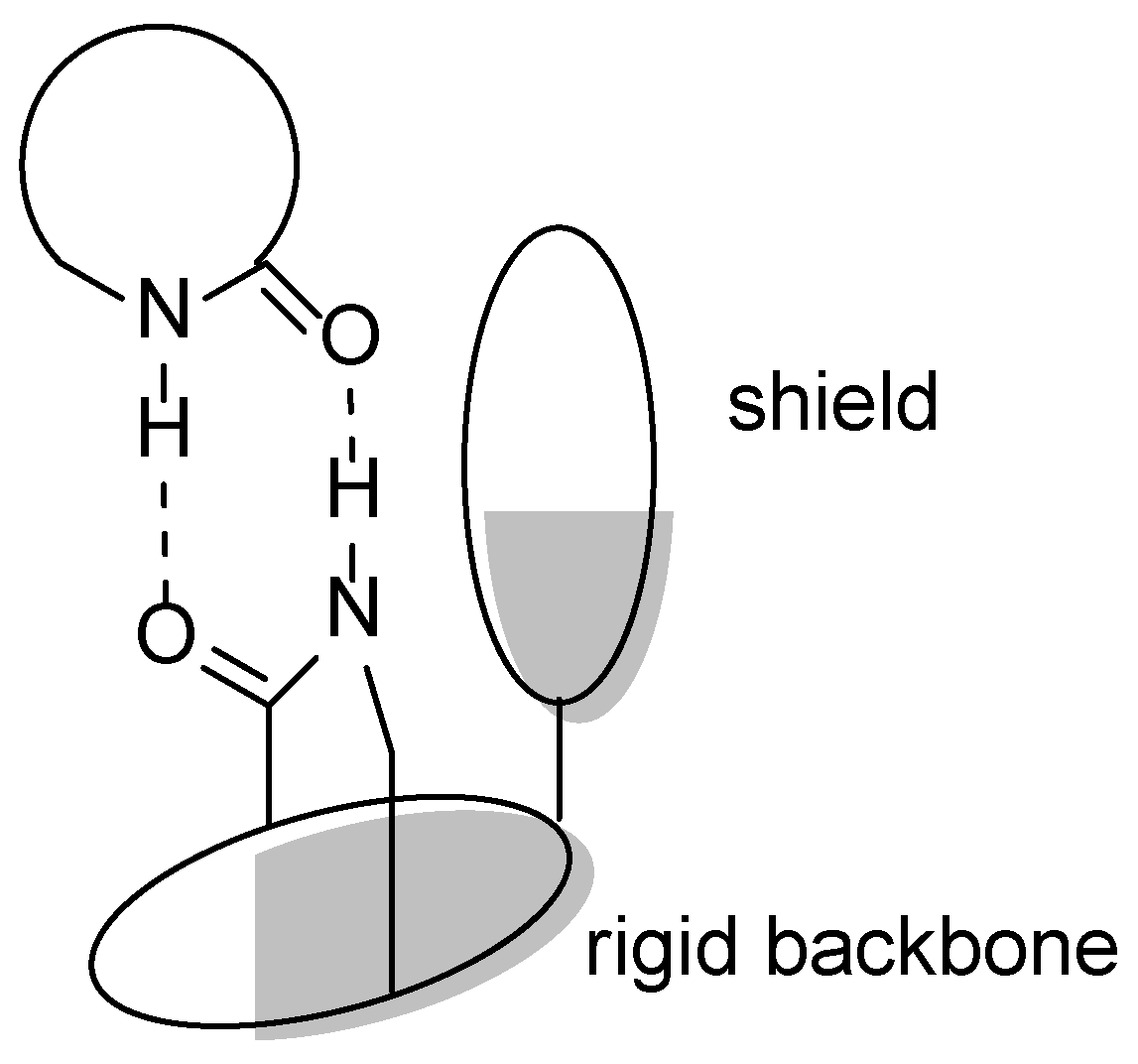
The observed reactivity can be explained by assuming the formation of the host-guest complex able to shield one of a face of the reagent. The interaction between the host and the reagent is due to the possible formation of hydrogen bonds (Figure 1).
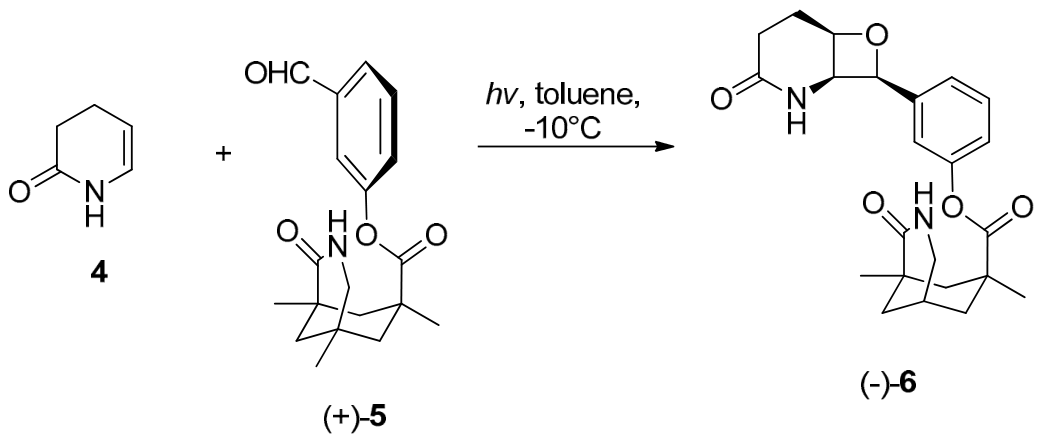
A reaction where the host is directly involved has been described. The irradiation of 3,4-dihydro-1H-pyridin-2-one 4 with chiral (+)-5 in toluene at -10 °C gave the corresponding oxetane (-)-6 in 56% yield and ee>95% (Scheme 2) [9,10,11,12].
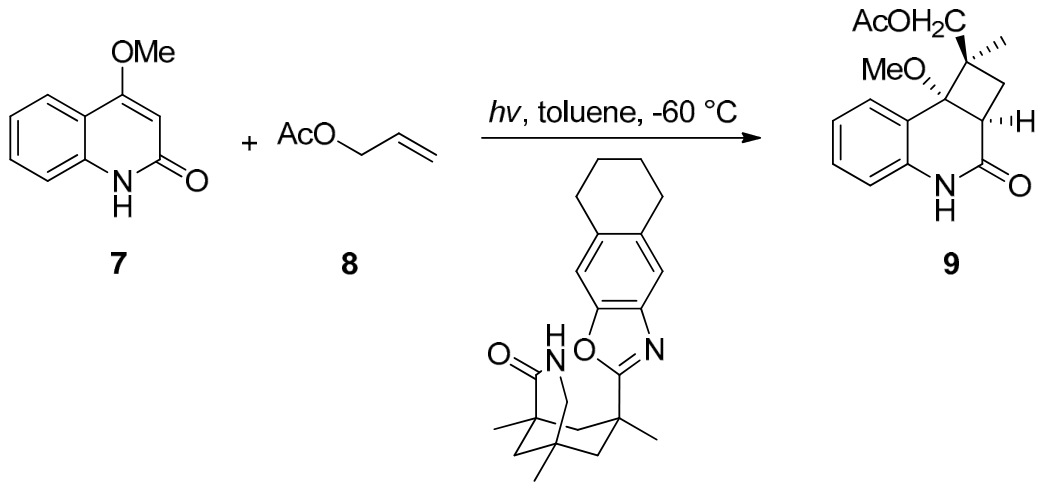
This approach has been tested on several photochemical reactions. Thus, [2+2]-cycloaddition of alkenes to 2-quinolones 7 gave the corresponding adducts 9 in 80 % yields and ee 92% (Scheme 3) [13,14]. Excellent yields and enantiomeric excess were found in the reaction of isoquinolones with alkenes bearing electron withdrawing groups [15,16]. Quinolones were used as substrates in a photocycloaddition with bicyclo[1.1.0]butanes [17].
This approach has been used in the synthesis of (-)-pinolinone, a naturally occurring quinolinone isolated from Boronia pinnata Sm. (Rutacee) (Scheme 4) [18].
Intramolecular [2+2]-cycloaddition reaction showed in Scheme 1 has been extended to 3-alkenyl and 3-alkenykoxy-5,6-dihydro-1H-pyridin-2-ones 10 and 12 (Scheme 5) [19]. In this case, when (-)-2 was used as host, the yields of the products 11 and 13 were observed in the range 61-83%, with ee in the range 40-69%. Furthermore, the recovery of the host was in the range 76-88%. When the host (+)-14 was used (Figure 2), the yields of 11 were 74% with ee 50%, those of 13 were 70% with ee 56%, but the recovery of host was, 95 and 100%, respectively.
An interesting application of these procedures has been developed for the synthesis of pyridocyclobutaquinoline derivatives. Both inter- and intra-molecular procedures have been described (Scheme 6) [20].
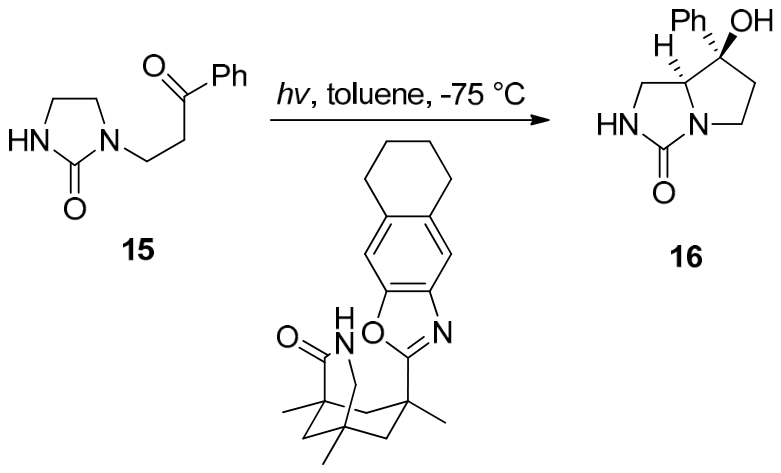
Photochemical isomerization was also studied by using (-)-2 as host. 4-Methoxy-2-pyridone gave the corresponding Dewar isomer when irradiated at 30 °C with 75% yields but low ee [21]. 2-Pyridone reacted with cyclopentadiene at -50 °C to give the corresponding [4+4]-photoadducts in 35% and 41% yields and excellent ee (84-87%) [21]. The irradiation of the imidazolidinone 15 in toluene at -45 °C in the presence of (-)-2 gave 16 in 70% yields, ee 60% and 80:20 exo/endo ratio (Scheme 7) [22,23].
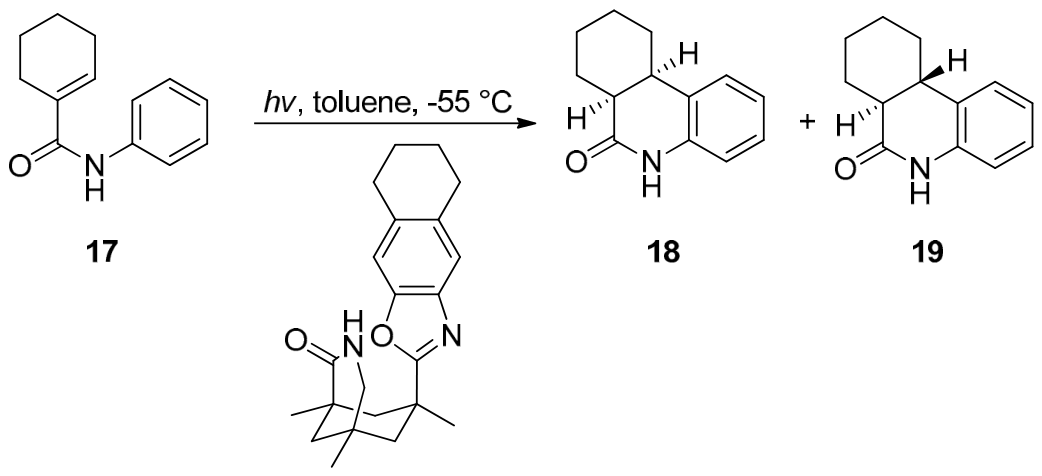
The use of a chiral host acting through the formation of hydrogen bonds has been also extended to [6π]-cycloaddition (Scheme 8) [24]. The irradiation in toluene of 17 at -55 °C gave the products 18 and 19 in 86% yields as a 27/73 diastereoisomeric mixture where 18 showed ee 30% and 19 an ee of 56%. The reaction occurred through a conrotatory ring closure, and deuteration experiments showed that the host acted also as Brønsted acid, donating a proton to the substrate.
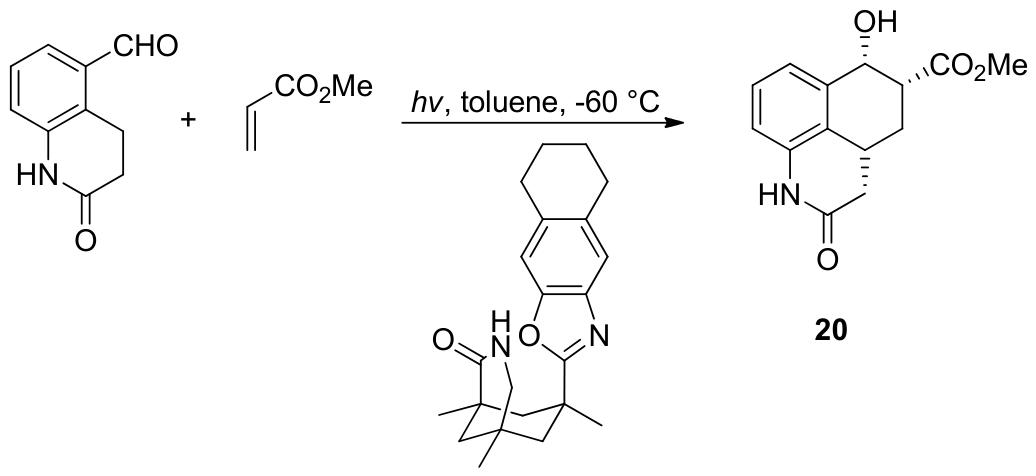
The same approach can be used to perform photo-Diels-Alder reaction on ortho-quinodimethane derivatives (Scheme 9) [25,26]. The reaction allowed to obtain 20 in 68% yields and ee 97%.
The same approach can be used in radical reductive cyclization reaction of iododerivatives (Scheme 10). The reaction was performed in the presence of Bu3SnH and BEt3 as initiator at -78 °C and allowed to obtain the cyclized product in 71% yields and ee 79% [27,28,29,30,31].
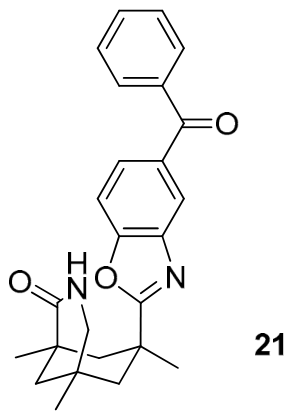
Photoelectron transfer reactions have been performed by using a different host containing benzophenone 21 (Figure 3). Irradiation of 22 in toluene at -60 °C gave 23 in 64% yields and ee 70% (Scheme 11) [32].
The use of functionalized hosts can be used also to use the host as sensitizer of [2+2]-cycloaddition reaction where the irradiation was performed on the host, and the following energy transfer allowed the reaction to occur (Scheme 12) [33,34,35,36]. Thus, compound 24 reacted in trifluorotoluene at -25 °C in the presence of the host 25 to give 26 and 27 in 79/21 regioisomeric ratio and ee 94%.
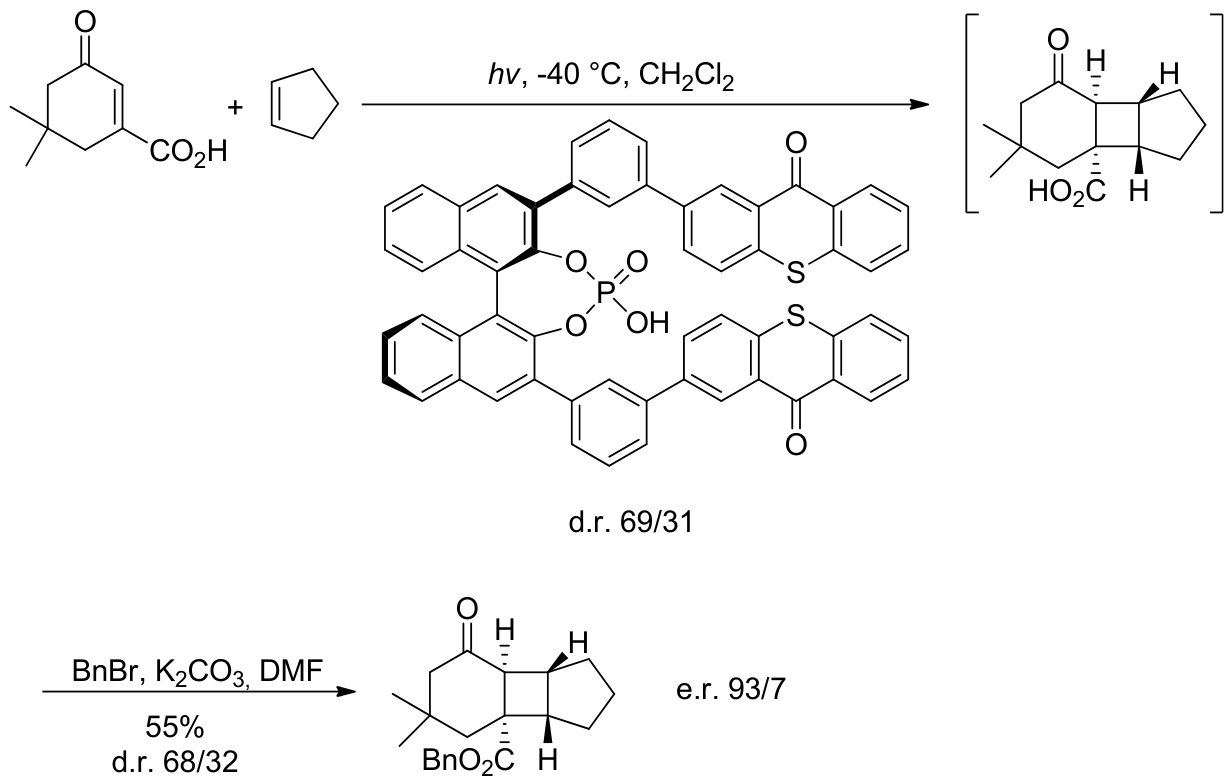
The same reaction has been used to obtain cyclobutene derivatives in the intermolecular coupling of pyridine substrates with alkynes (Scheme 13) [37]. Solar irradiation can allow the [2+2]-cycloaddition on quinolone derivatives when they react with alkenes in the presence of a chiral host containing tioxanthone moiety (Scheme 13) [38].
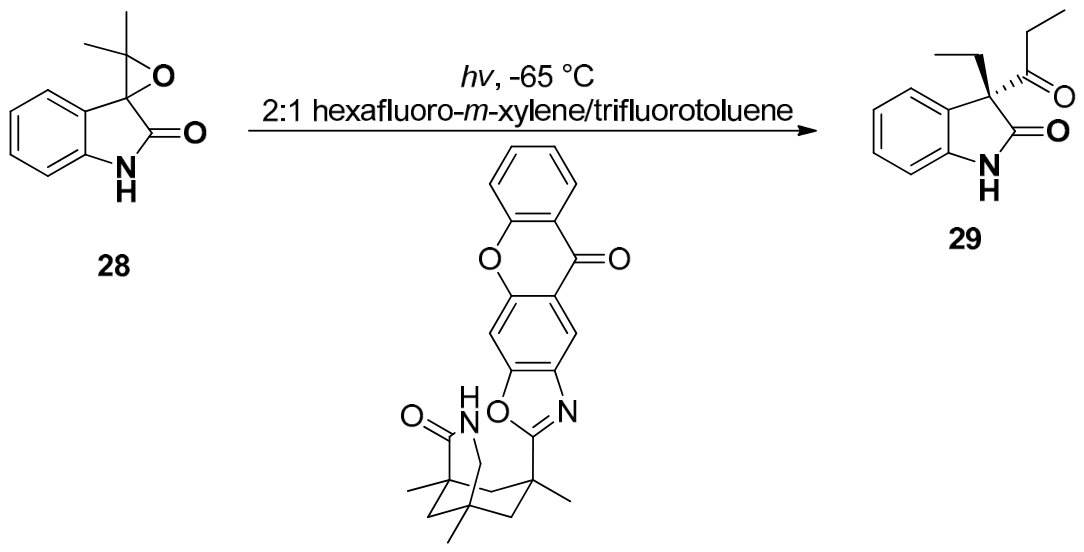
The irradiation of the spirooxyindole derivative 28 in hexafluoro-m-xylene and trifluorotoluene at -65 °C in the presence of the chiral host 25 gave 29 in good yields (94%), but low ee (33%) (Scheme 14) [39].
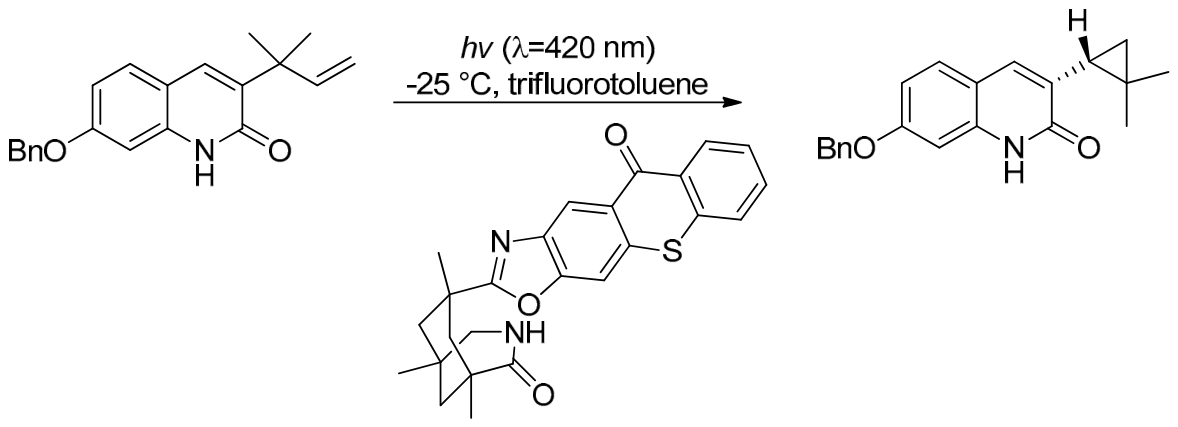
Thioxanthone triplet sensitizer inserted into a chiral host was utilized in the synthesis of cyclopropane derivatives through a di-π-methane rearrangement (Scheme 15) [40]. The reaction allowed products with yields near 90% and ee in the range 30-55%.
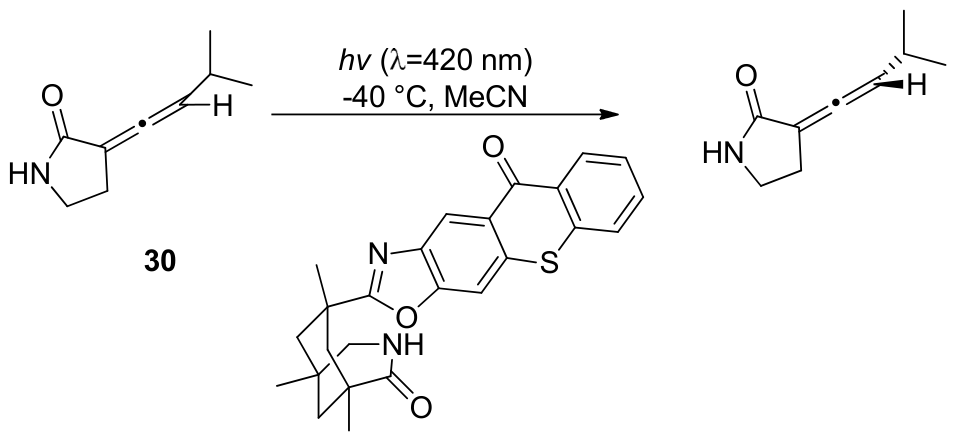
Thioxanthone contained in the chiral host was able to induce also an aza-Paternò-Büchi reaction on quinoxalinone derivatives when they reacted with arylalkenes at -25 °C in dichloroetane. The authors reported yields in the range 90-98% and ee in the range 91-96% [41]. The same chiral host allowed the deracemization of racemic chiral allenes. Thus, compound 30 reacted to give only one enantiomer in 95% yields and ee 96% (Scheme 16) [42,43,44]. The use of chiral host to induce deracemization has been described also in the case of sulfoxides [45], 3-substituted oxindoles [46], spirocycloproyloxindoles [47], hydantoins [48], 2,5-diketopiperazines [49], 4,7-diaza-1-isoindolinones [50], and N-carboxyanhydrides [51].
Other chiral templates have been tested in order to assess their attitude to induce chiral photochemical reactions. The chiral host 30 reacted with anthracene-2,6-dicarboxylic acid in methylene chloride at room temperature under visible light irradiation to give the corresponding dimer. However, both chemical yields and ee were low (35 and 16%, respectively) (Scheme 17) [52].
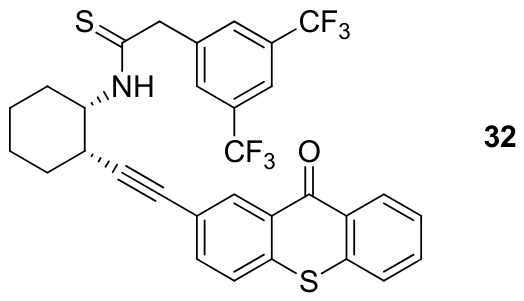
Another attempt to find active structures has been described in 2017. In this case, a structure (32) containing thioxanthone was described (Figure 4) [53]. However, an attempt to use this catalyst in a cyclization reaction gave poor result (26% yield, ee 12%).
3. Pentatomic Aromatic Heterocyclic Carbinols
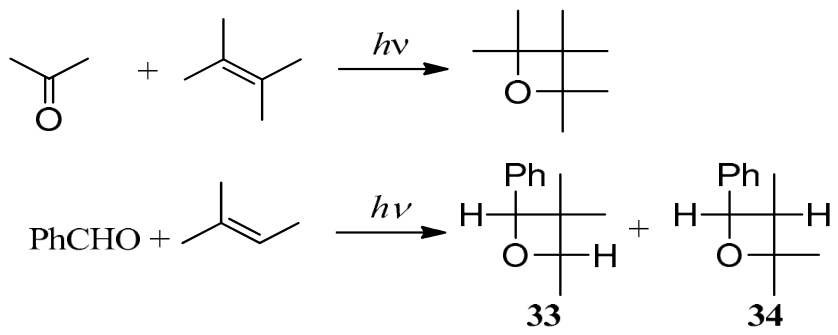
Between [2+2]-cycloaddition the Paternò-Büchi reaction occurs between a carbonyl compound and an alkene (Scheme 20). The regiochemistry of this reaction was a problem from the first. Paternò performed a reaction between 2-methyl-2-butene and benzaldehyde, and he could not assign the exact structure of the product. He was not able to distinguish between 33 and 34 (Scheme 20) [56].
Büchi solved the problem showing that 33 was the actual product [57]. However, in this first reaction several stereoisomers could be obtained.
Regio- and stereochemical behavior of the Paternò-Büchi reaction was not always understood. The Paternò-Büchi reaction is a photocycloaddition of a n,π* carbonyl compound to an alkene in the ground state from either the S1 or the T1 state. In a theoretical study the authors showed that there are two conical intersection points located near the C-C and C-O bonded biradical regions of the ground state. Furthermore, for C-O attack, the triplet surface must cross the singlet to reach a diradicaloid minimum. For C-C attack, the triplet biradical minimum is located at the same geometry as the conical intersection between the two singlet states, and the efficiency of the intersystem crossing will be determined by the nature of the spin-orbit coupling. Thus, for the triplet, the reaction path can be predicted by the most stable biradical rule [58]. The biradical intermediate in the reaction between benzophenone and electron-rich alkene has been determined by using laser flash photolysis [58,59,60].
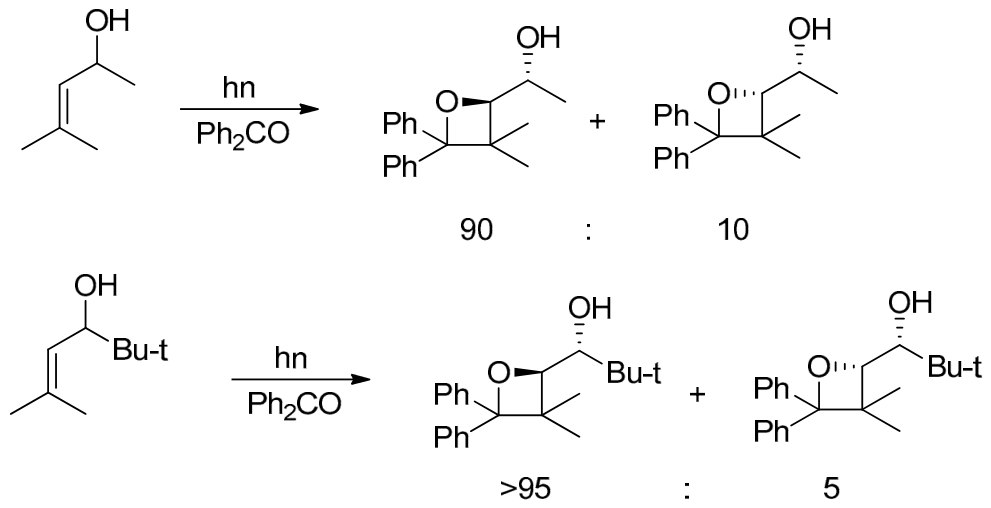
In 1990 Griesbeck found that benzaldehyde reacted with homoallylic alcohols without diastereoselectivity.61 Ten years later Adam showed that allylic alcohols and benzophenone gave the corresponding adducts with high regio- and diastereoselectivity (Scheme 21) [62].
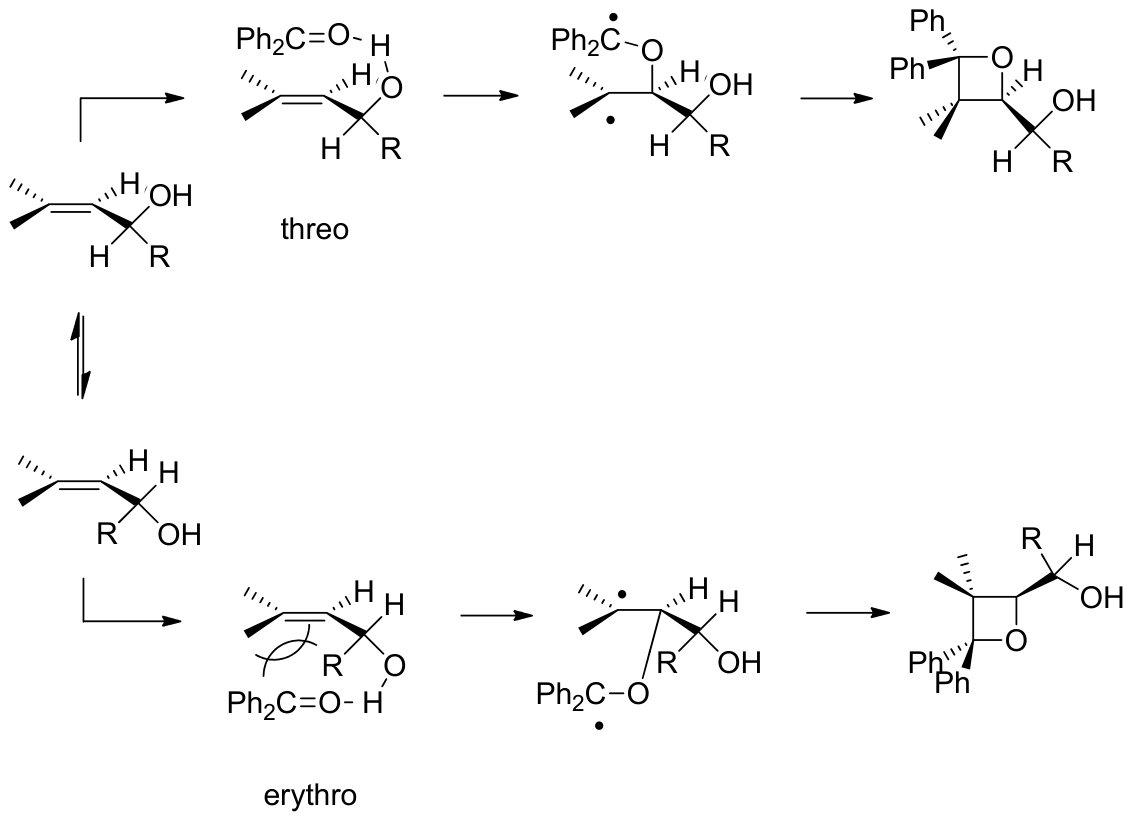
These results can be explained considering the presence of a hydroxy directing effect in the Paternò-Büchi reaction. The formation of a hydrogen bond between triplet excited benzophenone and the substrate in the exciplex favored the formation of threo stereoisomer, because erythro stereoisomer was less favored due to allylic strain (Scheme 22). The use of unsymmetrical carbonyl compounds such as acetophenone or benzaldehyde allowed to obtain high diastereoselectivity to give the corresponding cis isomer, while high regioselectivity was observed when acetophenone was used and low regioselectivity when benzaldehyde was used [63].
Griesbeck rule can explain observed cis diastereoselectivity on the possible triplet biradicals formed in the reaction, because steric interactions are minimized when the biradical assumes the optimal conformation and this conformation is in agreement with the formation of the observed stereoisomer [64].
Cis diastereoisomers were obtained with optically active allylic alcohols, showing also a pronounced threo diastereoselectivity, in agreement with a less pronounced hydroxy directing effect when acetophenone and benzaldehyde were used [62,64,65,66]. Chiral allyl ether gave the corresponding adduct with high diastereoselectivity [67].
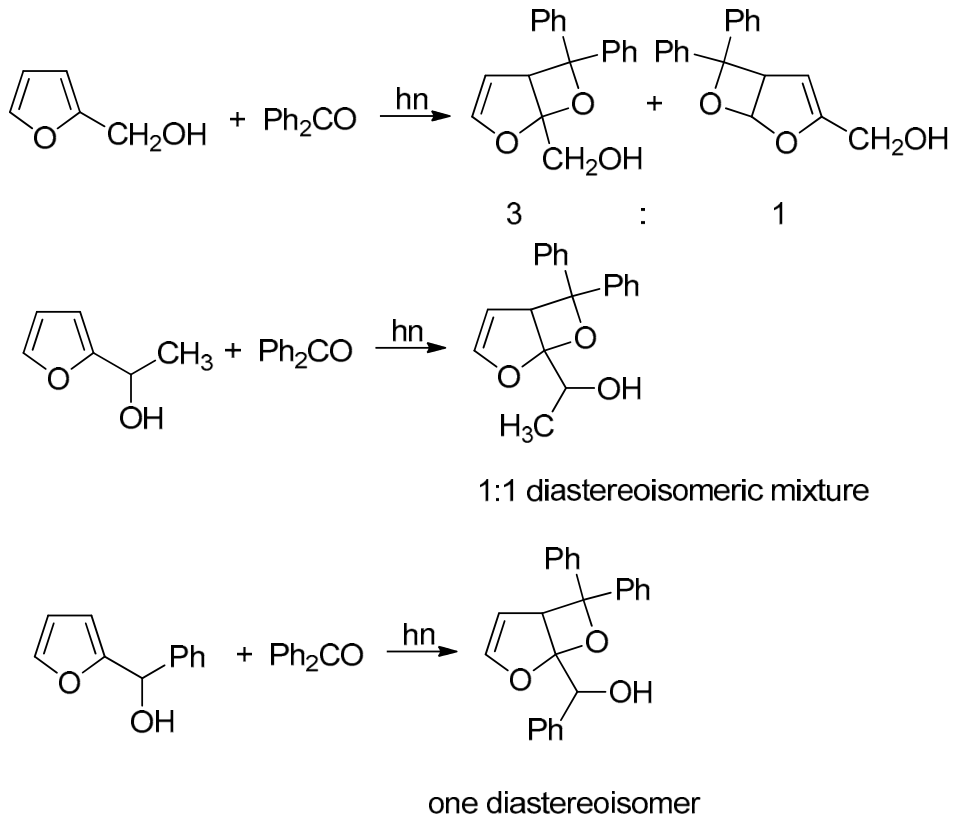
The reaction of allylic alcohols with carbonyl compounds was tested also on a particular type of allylic alcohol such as the 2-furylmethanol derivatives. Both regio- and stereoselective behavior in Paternò-Büchi reaction on furan derivatives have been described [68,69]. 2-Furylmethanol reacted with benzophenone showing low regioselectivity, while larger substituents on the carbon bearing the alcoholic function allowed a high regioselectivity (Scheme 23) [70]. Thus, 2-furylethanol gave a 1:1 mixture of stereoisomers, while, 1-(2-furyl)-benzylic alcohol allowed to obtain only one diastereoisomer (Scheme 23) [70].
The use of 5-methyl-2-furyl derivatives as substrates showed a different regioselectivity. Phenyl-(5-methyl-2-furyl)methanol gave a 1:1 mixture of regioisomers, if it is irradiated in the presence of benzophenone, while the reaction in the presence of benzaldehyde gave a single regioisomer [71]. In agreement with the results obtained with unsubstituted furan derivatives, when the reaction occurred on the side bearing the alcoholic function a single diastereoisomer was obtained as, while, when the reaction occurred on the side bearing the methyl group as a mixture of diastereoisomers was obtained.
2-Furylmethanol derivatives reacted also with aliphatic aldehydes and ketones. However, in this case, the corresponding adducts were obtained with high regioselectivity but no diastereoselectivity [72].
The relative stability of the biradical intermediates can be used to explain the regioselectivity of the reaction. DFT calculations showed that the most stable biradical intermediate was obtained on the most hindered side of the molecule [71]. The nature of the intermediate was in agreement with the observed ρ value in a Hammett free energy correlation.
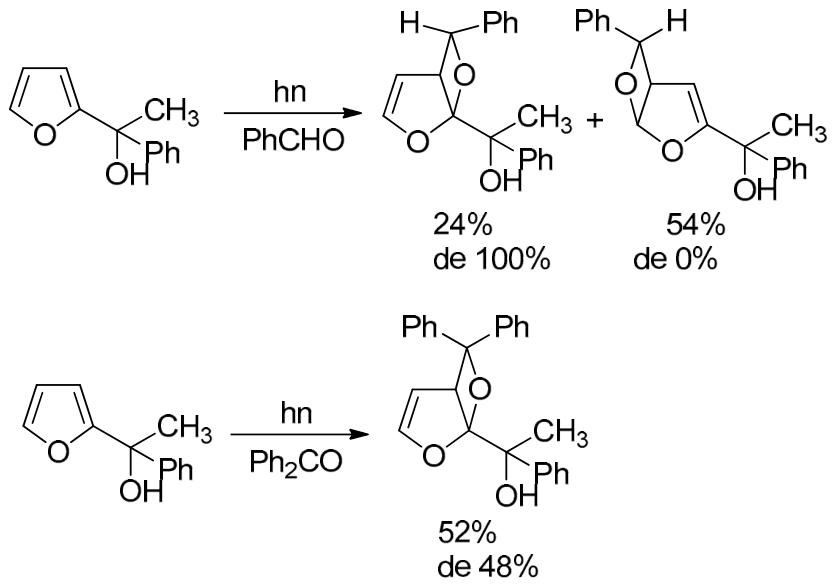
Two regioisomeric products were the products obtained in the photochemical reaction of 1-methyl-1-phenyl-1-(2-furyl)methanol with benzaldehyde [73]. The regioisomer on the most hindered side of the molecule was obtained in low yield but it showed a complete diastereoisomeric control. On the contrary, the main product was a mixture of four diastereoisomeric products (Scheme 24). When benzophenone was used as carbonyl compound in the same reaction, only the product deriving from the attack on the most hindered side of molecule was observed.
1-Methyl-1-t-butyl-1-(2-furyl)methanol reacted with benzaldehyde and benzophenone and the resulting adducts showed complete regioselectivity giving only the products deriving from the attack on the most hindered side of the substrate (Scheme 25).
The regioselectivity was explained, considering that the biradical obtained on the less hindered side was more stable than the other one by 18.03 kJ mol-1 (reaction of 1-t-butyl-1-(2.furyl)ethanol with benzaldehyde).
1-Methyl-1-phenyl-1-(2-furyl)methanol showed three conformations (Figure 5). All three conformers were in the range of 1.97 kJ mol-1 and, then, a preferential conformation did not exist.
The directing effect due to the hydroxyl group can derive from the formation of a hydrogen bond between the hydroxyl group and the oxygen of the excited carbonyl compound. This type of interaction could favor the formation of a preferential conformation in the biradical intermediate where the hydroxyl group and the oxygen of the carbonyl compound are nearby. These conformations could have different energies for different diastereoisomeric biradicals, giving an explanation of the observed behavior. The above described hypothesis requires that the biradical intermediates have a very short life enabling them to equilibrate to the most stable one. In the case of 1-methyl-1-phenyl-1-(2-furyl)methanol, the conformations of the biradical intermediate represented in Figure 6 can be obtained.
B and D are the preferential conformations: calculations on these conformations showed that there is a difference of 13.26 kJ mol-1 between the energies of these two conformations. This difference can explain the observed complete diastereoselectivity of the reaction. In the reaction with benzophenone, the conformers B and D show a difference energy of 7.79 kJ mol-1 and this difference is in agreement with the observed diastereoselectivity.
Figure 7 reports the possible conformations of 1-methyl-1-t-butyl-1-(2-furyl)methanol.
If the excited carbonyl compound attaks on the same side of the hydroxyl group, the conformers described in Figure 8 can be obtained. These conformers differ by 6.90 kJ mol-1, in agreement with the observed diastereoisomeric excess.
2-Furylphenylmethanol, when it reacted with benzophenone, gave complete diastereoisomeric control [70]. The conformers of this substrate are reported in Figure 9.
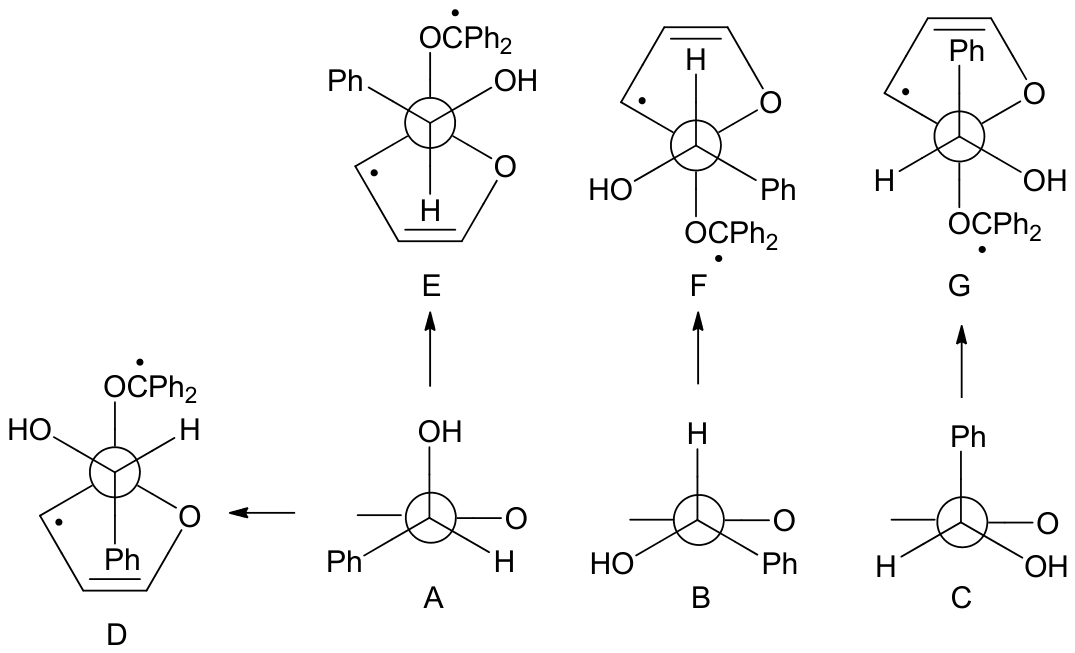
The attack of the excited carbonyl compound on the side of the hydroxyl group afforded the conformers described in Figure 10.
Conformer D is the most stable one for the formation of (RR)* biradical, while conformer F is the most stable for the formation of (RS)* biradical. The conformer F is more stable than D by 16.57 kJ mol-1, in agreement with the observed high diastereoselectivity. Furthermore, the same compound reacted with acetone to give the corresponding adduct without diastereoselectivity. Also in this case, conformers D and F are those showing lowest energy but the difference between them is 1.09 kJ mol-1, in agreement with the observed lack of diastereoselectivity.
The same approach can be used to justify the stereochemical behavior of the reaction of allylic alcohols with benzophenone [74].
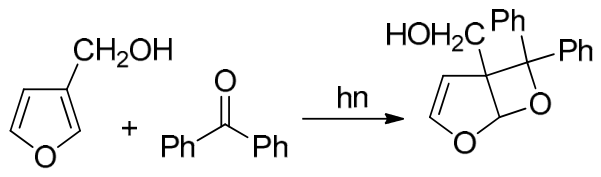
The irradiation of 3-furylmethanol in the presence of benzophenone gave the corresponding adduct (Scheme 26): the reaction occurs only at the C2/C3 double bond [75]. The regioselectivity of the reaction depended on the relative stability of the biradical intermediate.
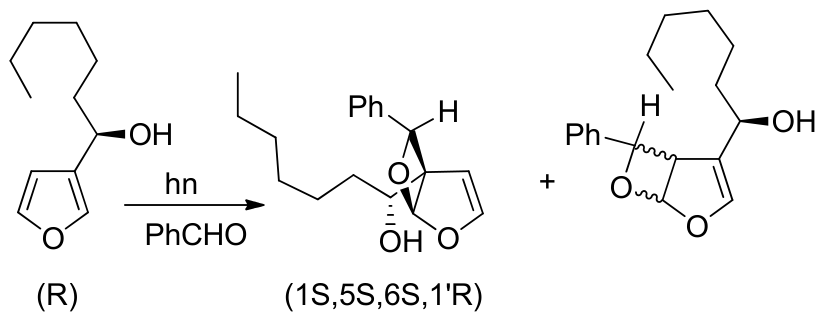
The reaction of 1-(3-furyl)-n-heptanol with benzaldehyde gave the corresponding adducts (Scheme 27).
The irradiation of the 3-furylphenylmethanol in the presence of benzophenone gave the corresponding adduct (Scheme 28).
In this case, we have only two conformers of the starting material, A and B. A is more stable than the other one for 1.18 kcal mol-1 (Figure 11). The conformations of the biradical intermediate are reported in Figure 12.
The conformations of 3-furylphenylmethanol, if hydrogen bond is formed between the reagents, can give the biradical intermediate conformation described in Figure 13. The conformation of the biradical intermediate induces the observed stereoselectivity.
In the case of the compound (R)-1-(3-furyl)-n-heptanol, two conformers A and B (Figure 14) can be present. Six conformers of the biradical intermediates could be obtained (Figure 15).
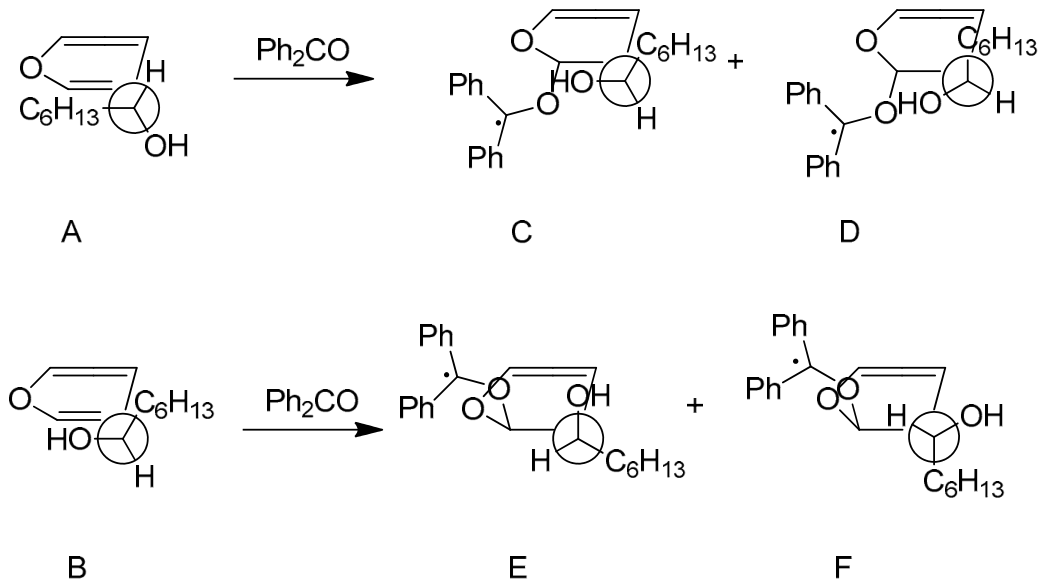
Benzophenone can give only four conformers of the biradical intermediates if hydrogen bond is formed, two of them are RS conformers (C, D) while the other two are RR ones (E, F) (Figure 16).
RS conformers are more stable than the RR ones. Furthermore, the energy difference between the most stable RS conformer (C) and the most stable RR conformer (E) is 10.88 kcal mol-1. This energy difference is in agreement with the observed diastereoisomeric excess.
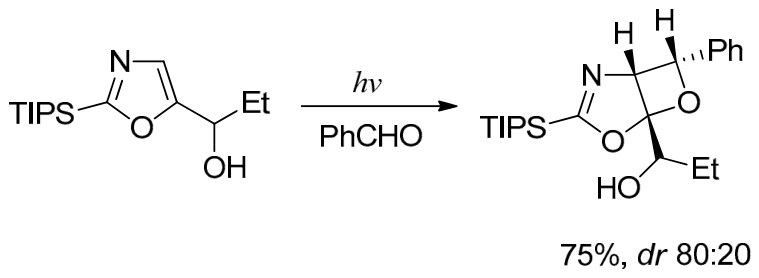
Finally, the photochemical behavior of oxazolyl carbinols has been studied [76]. 5-(2-Triisopropylsilyloxazolyl)methanol derivatives reacted with benzaldehyde (they do not react with benzophenone) to give the corresponding adducts (Scheme 29).
Also in this case, the analysis of the possible conformers of the biradical intermediates obtained after the attach of triplet benzaldehyde and in the presence of hydrogen bond allowed the justification of the observes diastereoselectivity.
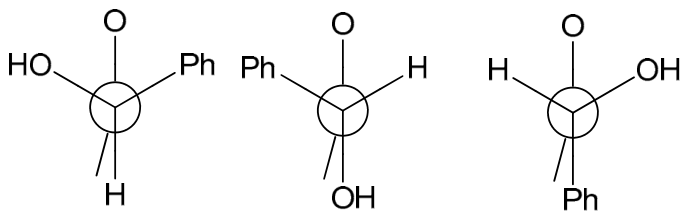
More recently a DFT study on the reaction of phenyl-(2-furyl)methanol with benzophenone (Scheme 23) has been performed [77]. The reaction allowed the formation of only one diastereoisomer. Calculations have been performed at B3LYP-aug-ccpVDZ level of theory on Gaussian 16. (R)-Phenyl-(2-furyl)methanol showed the presence of three conformers (Scheme 30).
Calculations allowed to determine the energy of the complexes deriving from the formation of hydrogen bonds between hydroxyl groups of the furan derivative and the carbonyl of triplet benzophenone. With these hydrogen bonds the above reported conformers can give the triplet radical intermediates reported in Scheme 31. The energy of the transition states obtained from the complexes to the biradical intermediates are reported in Table 1. The results are in agreement with the formation of R,R-biradical intermediate.
Funding
This research received no external funding.
Conflicts of Interest
The authors declare no conflicts of interest.
References
- D’Auria, M. Nascita della fotochimica in Italia; Aracne Editrice: Roma, 2017. [Google Scholar]
- Paternò, E. Sintesi in chimica organica per mezzo della luce. Nota I. Introduzione. Gazz. Chim. Ital. 1909, 39, 237–250. [Google Scholar]
- Ciamician, G. The photochemistry of the future. Science 1912, 36, 385–416. [Google Scholar] [CrossRef] [PubMed]
- Inoue, Y.; Ramamurthy, V. (Eds.) Chiral Photochemistry; Marcel Dekker: New York, NY, 2004. [Google Scholar]
- Bach, T.; Bergmann, H.; Harms, K. Enantioselective Intramolecular [2+2]-Photocycloaddition Reactions in Solution. Angew. Chem. Int. Ed. 2000, 39, 2302–2304. [Google Scholar] [CrossRef] [PubMed]
- Li, X.; Jandl, C.; Bach, T. Visible-Light-Mediated Enantioselective Photoreactions of 3-Alkylquinolones with 4-O-Tethered Alkenes and Allenes. Org. Lett. 2020, 22, 3618–3622. [Google Scholar] [CrossRef] [PubMed]
- Voss, F.; Bach, T. An Ethynyl-Substituted 1,5,7-Trimethyl-3-azabicyclo[3.3.1]nonan-2-one as a Versatile Precursor for Chiral Templates and Chiral Photocatalysts. Synlett 2010, 1493–1496. [Google Scholar] [CrossRef]
- Austin, K. A. B.; Herdtweck, E.; Bach, T. Intramolecular [2+2] Photocycloaddition of Substituted Isoquinolones: Enantioselectivity and Kinetic Resolution Induced by a Chiral Template. Angew. Chem. Int. Ed. 2011, 50, 8416–8419. [Google Scholar] [CrossRef] [PubMed]
- Bach, T.; Bergmann, H.; Harms, H. High Facial Diastereoselectivity in the Photocycloaddition of a Chiral Aromatic Aldehyde and an Enamide Induced by Intermolecular Hydrogen Bonding. J. Am. Chem. Soc. 1999, 121, 10650–10651. [Google Scholar] [CrossRef]
- Bach, T.; Bergmann, H.; Brummerhop, H.; Lewis, W.; Harms, K. The [2+2]-Photocycloaddition of Aromatic Aldehydes and Ketones to 3,4-Dihydro-2-pyridones: Regioselectivity, Diastereoselectivity, and Reductive Ring Opening of the Product Oxetanes. Chem. Eur. J. 2001, 7, 4512–4521. [Google Scholar] [CrossRef] [PubMed]
- D’Auria, M. The Paternò-Büchi reaction - a comprehensive review. Photochem. Photobiol. Sci. 2019, 18, 2297–2362. [Google Scholar] [CrossRef] [PubMed]
- D’Auria, M. The Paternò-Büchi reaction. In Comprehensive Organic Synthesis; Molander, G., Knochel, P., Eds.; Elsevier: Amsterdam, 2025; Vol. 5, pp. 284–339. [Google Scholar]
- Bach, T.; Bergmann, H.; Grosch, B.; Harms, K. Highly Enantioselective Intra- and Intermolecular [2 + 2] Photocycloaddition Reactions of 2-Quinolones Mediated by a Chiral Lactam Host: Host−Guest Interactions, Product Configuration, and the Origin of the Stereoselectivity in Solution. J. Am. Chem. Soc. 2002, 124, 7982–7990. [Google Scholar] [CrossRef] [PubMed]
- Bach, T.; Bergmann, H. Enantioselective Intermolecular [2 + 2]-Photocycloaddition Reactions of Alkenes and a 2-Quinolone in Solution. J. Am. Chem. Soc. 2000, 122, 11525–11526. [Google Scholar] [CrossRef]
- Coote, S. C.; Bach, T. Enantioselective intermolecular [2+2] photocycloadditions of isoquinolone mediated by a chiral hydrogen-bonding template. J. Am. Chem. Soc. 2013, 135, 14948–14951. [Google Scholar] [CrossRef] [PubMed]
- Coote, S. C.; Pöthig, A.; Bach, T. Template-Directed Enantioselective [2+2] Photocycloadditions of Isoquinolones: Scope, Mechanism and Synthetic Applications. Chem. Eur. J. 2015, 21, 6906–6912. [Google Scholar] [CrossRef] [PubMed]
- de Robichon, M.; Kratz, T.; Beyer, F.; Zuber, J.; Merten, C.; Bach, T. Enantioselective, Intermolecular [π2+σ2] Photocycloaddition Reactions of 2(1 H)-Quinolones and Bicyclo[1.1.0]butanes. J. Am. Chem. Soc. 2023, 145, 24466–24470. [Google Scholar] [CrossRef] [PubMed]
- Mayr, F.; Wiegand, C.; Bach, T. Enantioselective, intermolecular [2+2] photocycloaddition reactions of 3-acetoxyquinolone: total synthesis of (-)-pinolinone. Chem. Commun. 2014, 50, 3353–3355. [Google Scholar] [CrossRef] [PubMed]
- Albrecht, D.; Vogt, F.; Bach, T. Diastereo- and Enantioselective Intramolecular [2+2] Photocycloaddition Reactions of 3-(ω′-Alkenyl)- and 3-(ω′-Alkenyloxy)-Substituted 5,6-Dihydro-1H-pyridin-2-ones. Chem. Eur. J. 2010, 16, 4284–4296. [Google Scholar] [CrossRef] [PubMed]
- Selig, P.; Bach, T. Photochemistry of 4-(2‘-Aminoethyl)quinolones: Enantioselective Synthesis of Tetracyclic Tetrahydro-1aH-pyrido[4‘,3‘:2,3]- cyclobuta[1,2-c] Quinoline-2,11(3H,8H)-diones by Intra- and Intermolecular [2 + 2]-Photocycloaddition Reactions in Solution. J. Org. Chem. 2006, 71, 5662–5673. [Google Scholar] [CrossRef] [PubMed]
- Bach, T.; Bergmann, H.; Harms, K. Enantioselective photochemical reactions of 2-pyridones in solution. Org. Lett. 2001, 3, 601–603. [Google Scholar] [CrossRef] [PubMed]
- Bach, T.; Aechtner, T.; Neumüller, B. Intermolecular hydrogen binding of a chiral host and a prochiral imidazolidinone: enantioselective Norrish–Yang cyclisationin solution. Chem. Commun. 2001, 607–608. [Google Scholar] [CrossRef]
- Bach, T.; Aechtner, T.; Neumüller, B. Enantioselective Norrish–Yang Cyclization Reactions of N-(ω-Oxo- ω-phenylalkyl)-Substituted Imidazolidinones in Solution and in the Solid State. Chem. Eur. J. 2002, 8, 2464–2475. [Google Scholar] [CrossRef] [PubMed]
- Bach, T.; Grosch, B.; Strassner, T.; Herdtweck, E. Enantioselective [6π]-Photocyclization Reaction of an Acrylanilide Mediated by a Chiral Host. Interplay between Enantioselective Ring Closure and Enantioselective Protonation. J. Org. Chem. 2003, 68, 1107–1116. [Google Scholar] [CrossRef] [PubMed]
- Grosch, B.; Orlebar, C. N.; Herdtweck, E.; Massa, W.; Bach, T. Highly Enantioselective Diels–Alder Reaction of a Photochemically Generated o-Quinodimethane with Olefins. Angew. Chem. Int. Ed. 2003, 42, 3693–3696. [Google Scholar] [CrossRef] [PubMed]
- Grosch, B.; Orlebar, C. N.; Herdtweck, E.; Kaneda, M.; Wada, T.; Inoue, Y.; Bach, T. Enantioselective [4+2]-Cycloaddition Reaction of a Photochemically Generated o-Quinodimethane: Mechanistic Details, Association Studies, and Pressure Effects. Chem. Eur. J. 2004, 10, 2179–2189. [Google Scholar] [CrossRef] [PubMed]
- Aechtner, T.; Dressel, M.; Bach, T. Hydrogen Bond Mediated Enantioselectivity of Radical Reactions. Angew. Chem. Int. Ed. 2004, 43, 5849–5851. [Google Scholar] [CrossRef] [PubMed]
- Dressel, M.; Aechtner, T.; Bach, T. Enantioselectivity and Diastereoselectivity in Reductive Radical Cyclization Reactions of 3-(ω-Iodoalkylidene)-piperidin-2-ones. Synthesis 2006, 2206–2214. [Google Scholar] [CrossRef]
- Kapitán, P.; Bach, T. Template-Induced Enantioselectivity in the Reductive Radical Cyclization of 3-(3-Iodopropoxy)propenoic Acid Derivatives Depending on the Binding Motif. Synthesis 2008, 1559–1564. [Google Scholar] [CrossRef]
- Dressel, M.; Bach, T. Chirality Multiplication and Efficient Chirality Transfer in exo- and endo-Radical Cyclization Reactions of 4-(4‘-Iodobutyl)quinolones. Org. Lett. 2006, 8, 3145–3147. [Google Scholar] [CrossRef] [PubMed]
- Bakowski, A.; Dressel, M.; Bauer, A.; Bach, T. Enantioselective radical cyclisation reactions of 4-substituted quinolones mediated by a chiral template. Org. Biomol. Chem. 2011, 9, 3516–3529. [Google Scholar] [CrossRef] [PubMed]
- Bauer, A.; Westkämper, F.; Grimme, S.; Bach, T. Catalytic enantioselective reactions driven by photoinduced electron transfer. Nature 2005, 436, 1139–1140. [Google Scholar] [CrossRef] [PubMed]
- Müller, C.; Bauer, A.; Bach, T. Light-Driven Enantioselective Organocatalysis. Angew. Chem. Int. Ed. 2009, 48, 6640–6642. [Google Scholar] [CrossRef] [PubMed]
- Müller, C.; Bauer, A.; Maturi, M. M.; Cuquerella, M. C.; Miranda, M. A.; Bach, T. Enantioselective Intramolecular [2 + 2]-Photocycloaddition Reactions of 4-Substituted Quinolones Catalyzed by a Chiral Sensitizer with a Hydrogen-Bonding Motif. J. Am. Chem. Soc. 2011, 133, 16689–16697. [Google Scholar] [CrossRef] [PubMed]
- Maturi, M. M.; Wenninger, M.; Alonso, R.; Bauer, A.; Pöthig, A.; Riedle, E.; Bach, T. Intramolecular [2+2] Photocycloaddition of 3- and 4-(But-3-enyl)oxyquinolones: Influence of the Alkene Substitution Pattern, Photophysical Studies, and Enantioselective Catalysis by a Chiral Sensitizer. Chem. Eur. J. 2013, 19, 7461–7472. [Google Scholar] [CrossRef] [PubMed]
- Alonso, R.; Bach, T. A chiral thioxanthone as an organocatalyst for enantioselective [2+2] photocycloaddition reactions induced by visible light. Angew. Chem. Int. Ed. 2014, 53, 4368–4371. [Google Scholar] [CrossRef] [PubMed]
- Maturi, M. M.; Bach, T. Enantioselective Catalysis of the Intermolecular [2+2] Photocycloaddition between 2-Pyridones and Acetylenedicarboxylates. Angew. Chem. Int. Ed. 2014, 53, 7661–7664. [Google Scholar] [CrossRef] [PubMed]
- Tröster, A.; Alonso, R.; Bauer, A.; Bach, T. Enantioselective Intermolecular [2+2] Photocycloaddition Reactions of 2 (1H)-Quinolones Induced by Visible Light Irradiation. J. Am. Chem. Soc. 2016, 138, 7808–7811. [Google Scholar] [CrossRef] [PubMed]
- Maturi, M. M.; Pöthig, A.; Bach, T. Enantioselective Photochemical Rearrangements of Spirooxindole Epoxides Catalyzed by a Chiral Bifunctional Xanthone. Aust. J. Chem. 2015, 68, 1682–1692. [Google Scholar] [CrossRef]
- Tröster, A.; Bauer, A.; Jandl, C.; Bach, T. Enantioselective Visible-Light-Mediated Formation of 3-Cyclopropylquinolones by Triplet-Sensitized Deracemization. Angew. Chem. Int. Ed. 2019, 58, 3538–3541. [Google Scholar] [CrossRef] [PubMed]
- Li, X.; Groẞkopf, J.; Jandl, C.; Bach, T. Enantioselective, Visible Light Mediated Aza Patern–Bchi Reactions of Quinoxalinones. Angew. Chem. Int. Ed. 2021, 60, 2684–2688. [Google Scholar] [CrossRef] [PubMed]
- Hölz-Hobmeier, A.; Bauer, A.; Vieira Silva, A.; Huber, S. M.; Bannwarth, C.; Bach, T. Catalytic deracemization of chiral allenes by sensitized excitation with visible light. Nature 2018, 564, 240–243. [Google Scholar] [CrossRef] [PubMed]
- Plaza, M.; Jandl, C.; Bach, T. Photochemical Deracemization of Allenes and Subsequent Chirality Transfer. Angew. Chem. Int. Ed. 2020, 59, 12785–12788. [Google Scholar] [CrossRef] [PubMed]
- Plaza, M.; Groẞkopf, J.; Breitenlechener, S.; Bannwarth, C.; Bach, T. Photochemical Deracemization of Primary Allene Amides by Triplet Energy Transfer: A Combined Synthetic and Theoretical Study. J. Am. Chem. Soc. 2021, 143, 11209–11217. [Google Scholar] [CrossRef] [PubMed]
- Wimberger, L.; Kratz, T.; Bach, T. Photochemical Deracemization of Chiral Sulfoxides Catalyzed by a Hydrogen-Bonding Xanthone Sensitizer. Synthesis 2019, 51, 4416–4417. [Google Scholar] [CrossRef]
- Groẞkopf, J.; Heidecker, A. A.; Bach, T. Photochemical Deracemization of 3-Substituted Oxindoles. Angew. Chem. Int. Ed. 2023, 62, e2023305274. [Google Scholar] [CrossRef] [PubMed]
- Li, X.; Kutta, R. J.; Jandl, C.; Bauer, A.; Nuernberger, P.; Bach, T. Photochemically Induced Ring Opening of Spirocyclopropyl Oxindoles: Evidence for a Triplet 1,3-Diradical Intermediate and Deracemization by a Chiral Sensitizer. Angew. Chem. Int. Ed. 2020, 59, 21640–21647. [Google Scholar] [CrossRef] [PubMed]
- Kutta, R. J.; Groẞkopf, J.; van Staalduinen, N.; Seitz, A.; Pracht, P.; Breitenlechner, S.; Bannwarth, C.; Nuernberger, P.; Bach, T. Multifaceted View on the Mechanism of a Photochemical Deracemization Reaction. J. Am. Chem. Soc. 2023, 145, 2354–2363. [Google Scholar] [CrossRef] [PubMed]
- Groẞkopf, J.; Plaza, M.; Kutta, R. J.; Nuernberger, P.; Bach, T. Creating a defined chirality in amino acids and cyclic dipeptides by photochemical deracemization. Angew. Chem. Int. Ed. 2023, 62, e202313606. [Google Scholar] [CrossRef] [PubMed]
- Freund, P.; Pauls, M.; Babushkina, D.; Pickl, T.; Bannwarth, C.; Bach, T. Photochemical Deracemization of 4,7-Diaza-1-isoindolinones by Unidirectional Hydrogen Atom Shuttling. J. Am. Chem. Soc. 2025, 147, 1434–1439. [Google Scholar] [CrossRef] [PubMed]
- Iglhaut, M.; Freund, P.; Bach, T. Photochemical Deracemization of N-Carboxyanhydrides En Route to Chiral α-Amino Acid Derivatives. Angew. Chem. Int. Ed. 2025, 64, e2024418873. [Google Scholar] [CrossRef] [PubMed]
- Maturi, M. M.; Fukuhara, G.; Tanaka, K.; Kawanami, Y.; Mori, T.; Inoue, Y.; Bach, T. Enantioselective [4+4] photodimerization of anthracene-2,6-dicarboxylic acid mediated by a C2-symmetric chiral template. Chem. Commun. 2016, 52, 1032–1035. [Google Scholar] [CrossRef] [PubMed]
- Mayr, F.; Mohr, L. -M.; Rodriguez, E.; Bach, T. Synthesis of Chiral Thiourea-Thioxanthone Hybrids. Synthesis 2017, 49, 5238–5350. [Google Scholar] [CrossRef]
- Pecho, F.; Zou, Y. -Q.; Gramüller, J.; Mori, T.; Huber, S. M.; Bauer, A.; Gschwind, R. M.; Bach, T. A Thioxanthone Sensitizer with a Chiral Phosphoric Acid Binding Site: Properties and Applications in Visible Light-Mediated Cycloaddition. Chem. Eur. J. 2020, 26, 5190–5194. [Google Scholar] [CrossRef] [PubMed]
- Ahmed, H.; Ghosh, B.; Breitenlechner, S.; Feẞner, M.; Merten, C.; Bach, T. Intermolecular enantioselective amination reactions mediated by visible light and a chiral iron porphyrin complex. Angew. Chem. Int. Ed. 2024, 63, e2024407003. [Google Scholar] [CrossRef] [PubMed]
- Paternò, E.; Chieffi, G. Sintesi in chimica organica per mezzo della luce. Nota II. Composti degli idrocarburi non saturi con adeidi e chetoni. Gazz. Chim. Ital. 1909, 39(I), 341–361. [Google Scholar]
- Büchi, G.; Inman, C. G.; Lipinsky, E. S. Light-catalyzed Organic Reactions. I. The Reaction of Carbonyl Compounds with 2-Methyl-2-butene in the Presence of Ultraviolet Light. J. Am. Chem. Soc. 1954, 76, 4327–4331. [Google Scholar] [CrossRef]
- Palmer, I. J.; Ragazos, I. N.; Bernardi, F.; Olivucci, M.; Robb, M. A. An MC-SCF Study of the (Photochemical) Paterno-Buchi Reaction. J. Am. Chem. Soc. 1994, 116, 2121–2132. [Google Scholar] [CrossRef]
- Freilich, S. C.; Peters, K. S. Observation of the 1,4 biradical in the Paterno-Buchi reaction. J. Am. Chem. Soc. 1981, 103, 6255–6257. [Google Scholar] [CrossRef]
- Freilich, S. C.; Peters, K. S. Picosecond dynamics of the Paterno-Buechi reaction. J. Am. Chem. Soc. 1985, 107, 3819–3822. [Google Scholar] [CrossRef]
- Griesbeck, A.G.; Stadtmüller, S. Photocycloaddition of benzaldehyde to cyclic olefins: electronic control of endo stereoselectivity. J. Am. Chem. Soc. 1990, 112, 1281–1283. [Google Scholar] [CrossRef]
- Adam, W.; Stegmann, V. R. Hydroxy-Group Directivity in the Regioselective and Diastereoselective [2+2] Photocycloaddition (Paternò-Büchi Reaction) of Aromatic Carbonyl Compounds to Chiral and Achiral Allylic Substrates: The Preparation of Oxetanes with up to Three Stereogenic Centers as Synthetic Building Blocks. Synthesis 2001, 1203–1214. [Google Scholar] [CrossRef]
- Yokoyama, A.; Mizuno, K. Stereoselective Photocycloaddition of Alkenes to Naphthalene Rings Assisted by Hydrogen Bonding. Org. Lett. 2000, 2, 3457–3459. [Google Scholar] [CrossRef] [PubMed]
- Griesbeck, A. G.; Bondock, S. Paterno‘-Bu1chi Reactions of Allylic Alcohols and Acetates with Aldehydes: Hydrogen-Bond Interaction in the Excited Singlet and Triplet States? J. Am. Chem. Soc. 2001, 123, 6191–6192. [Google Scholar] [CrossRef] [PubMed]
- D’Auria, M.; Racioppi, R.; Viggiani, L. Paternò-Büchi reaction between furan and heterocyclic aldehydes: oxetane formation vs. metathesis. Photochem. Photobiol. Sci. 2010, 9, 1134–1138. [Google Scholar] [CrossRef] [PubMed]
- D’Auria, M.; Racioppi, R. A DFT study of 1,4-biradical intermediates involved in stereoselective Paternò-Büchi reactions. Eur. J. Org. Chem. 2010, 3831–3836. [Google Scholar] [CrossRef]
- Bach, T. The Paternò-Büchi Reaction of 3-Heteroatom-Substituted Alkenes as A Stereoselective Entry to Polyfunctional Cyclic and Acyclic Molecules. Liebigs Ann. 1997, 1627–1634. [Google Scholar] [CrossRef]
- D’Auria, M.; Emanuele, L.; Racioppi, R. 1,2-Cycloaddition reaction of carbonyl compounds and pentaatomic heterocyclic compounds. Adv. Photochem. 2005, 28, 81–128. [Google Scholar] [CrossRef]
- Abe, M.; Kawakami, T.; Chata, S.; Ohata, S.; Nozaki, K.; Nojima, M. Mechanism of Stereo- and Regioselectivity in the Paternò−Büchi Reaction of Furan Derivatives with Aromatic Carbonyl Compounds: Importance of the Conformational Distribution in the Intermediary Triplet 1,4-Diradicals. J. Am. Chem. Soc. 2004, 126, 2838–2846. [Google Scholar] [CrossRef] [PubMed]
- D’Auria, M.; Racioppi, R.; Romaniello, G. The Paternò-Büchi Reaction on 2-furylmethanols. Eur. J. Org. Chem. 2000, 3265–3272. [Google Scholar] [CrossRef]
- D’Auria, M.; Racioppi, R. Paternò-Büchi reaction on 5-methyl-2-furylmethanol derivatives. Arkivoc 2000, 1, 133–140. [Google Scholar] [CrossRef]
- D’Auria, M.; Emanuele, L.; Poggi, G.; Racioppi, R.; Romaniello, G. On the stereoselectivity of the Paternò-Büchi reaction between carbonyl compounds and 2-furylmethanol derivatives. The case of aliphatic aldehydes and ketones. Tetrahedron 2002, 58, 5045–5051. [Google Scholar] [CrossRef]
- D’Auria, M.; Emanuele, L.; Racioppi, R. The stereoselectivity of the Paternò-Büchi reaction between tertiary 2-furylmethanol derivatives and aromatic carbonyl compounds. On the nature of the hydroxy directing effect. Photochem. Photobiol. Sci. 2004, 3, 927–932. [Google Scholar] [PubMed]
- D’Auria, M.; Emanuele, L.; Racioppi, R. Stereoselectivity in the Paternò-Büchi reaction on chiral allylic alcohol, for a discussion of the hydroxy directing effect. Lett. Org. Chem. 2005, 2, 132–135. [Google Scholar] [CrossRef]
- D’Auria, M.; Emanuele, L.; Racioppi, R.; Valente, A. Paternò-Büchi reaction between aromatic carbonyl compounds and 1-(3-furyl)alkanols. Photochem. Photobiol. Sci. 2008, 7, 98–103. [Google Scholar] [CrossRef] [PubMed]
- D’Auria, M.; Racioppi, R.; Rofrano, F.; Stoia, S.; Viggiani, L. Investigation of the hydroxyl directing effect on the Paternò-Büchi reaction on 5-(2-triisopropylsilyloxazolyl)methanol derivatives. Tetrahedron 2016, 72, 5142–5148. [Google Scholar] [CrossRef]
- Emanuele, L.; Racioppi, R.; D’Auria, M. On the stereoselective behavior in the photochemical Paternò-Büchi reaction of benzophenone with phenyl-(2-furyl)methanol. ChemistrySelect 2026, 11, e74122. [Google Scholar] [CrossRef]
Scheme 1.
Intramolecular [2+2]-cycloaddition of quinolone derivatives in the presence of chiral host.
Scheme 1.
Intramolecular [2+2]-cycloaddition of quinolone derivatives in the presence of chiral host.
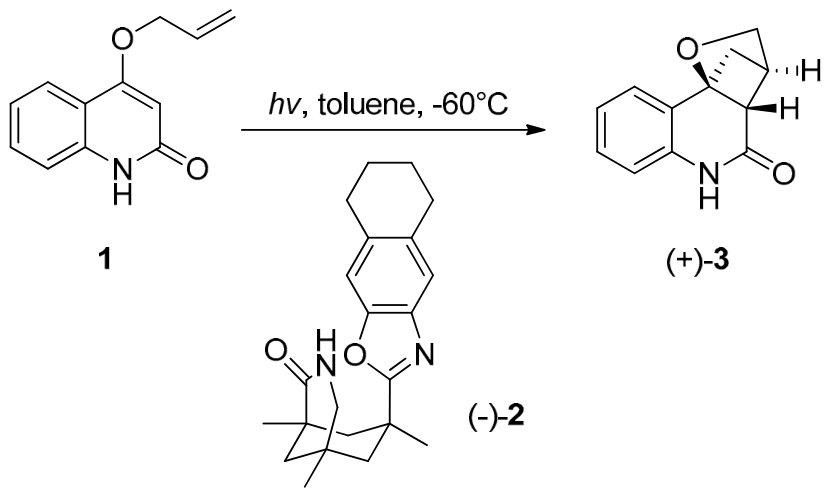
Figure 1.
Host-guest complex formation through hydrogen bonds.
Scheme 2.
Paternò-Büchi reaction on (+)-5.
Scheme 3.
[2+2]-cycloaddition of 2-quinolones to alkenes in the presence of (-)-2.
Scheme 4.
Synthesis of (-)-pinolinone.
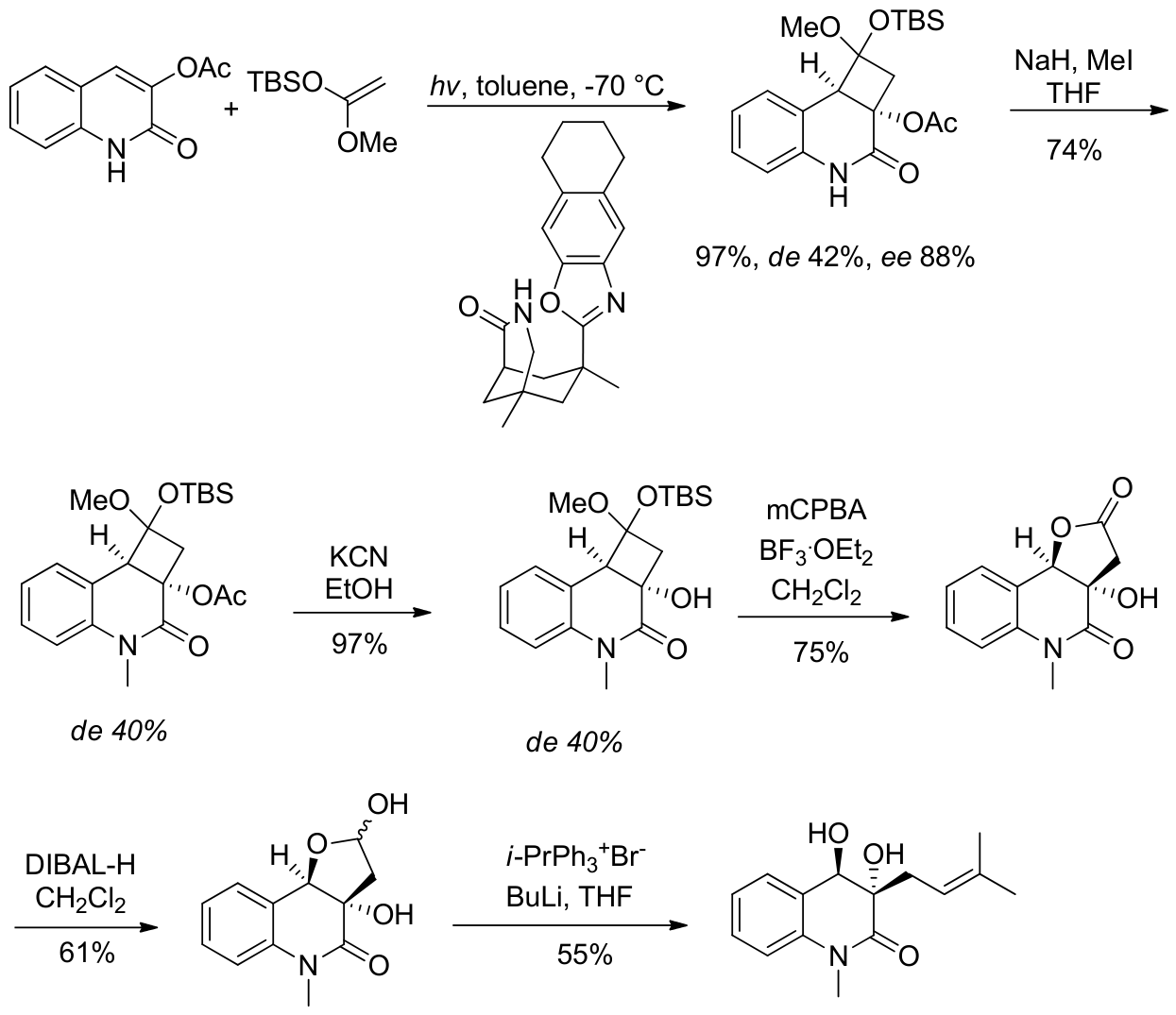
Scheme 5.
Intramolecular [2+2]-cycloadditions on dihydropyridine-2-one derivatives.
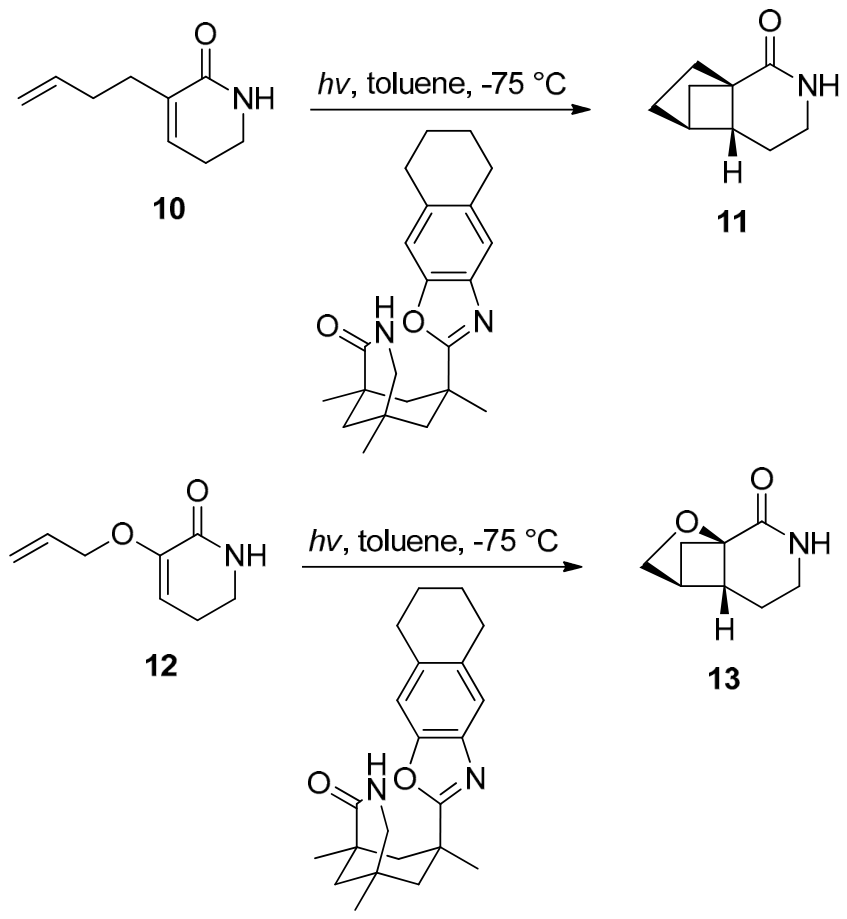
Figure 2.
The host (+)-14.
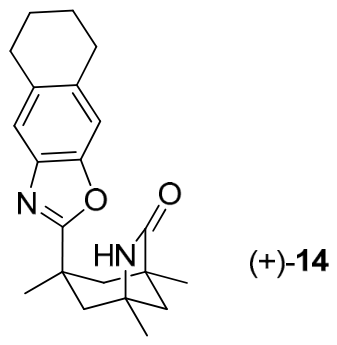
Scheme 6.
[2+2]-Cycloadition reactions.
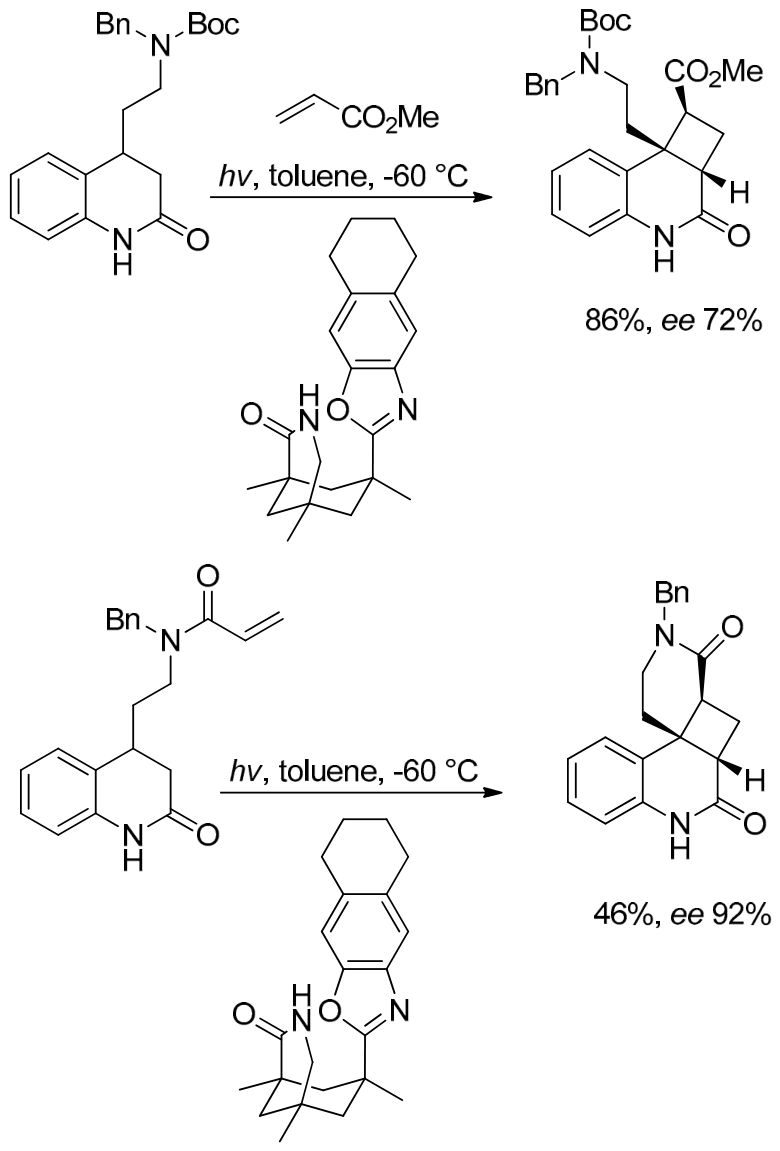
Scheme 7.
Norrish-Yang reaction in the presence of (-)-2.
Scheme 8.
[6π]-Cycloaddition reaction in the presence of (-)-2.
Scheme 9.
Photo-Diels-Alder in the presence of (-)-2.
Scheme 10.
Reductive radical cyclization.
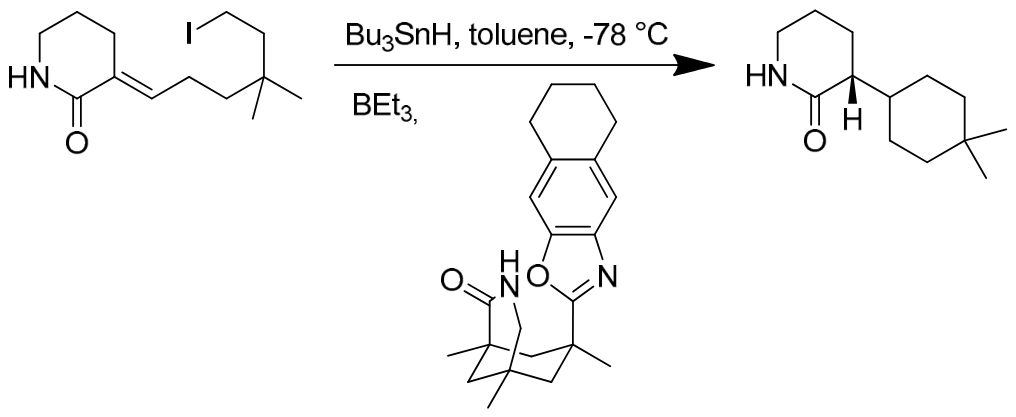
Figure 3.
Chiral host containing benzophenone mojety.
Scheme 11.
Photoinduced electron transfer reaction.
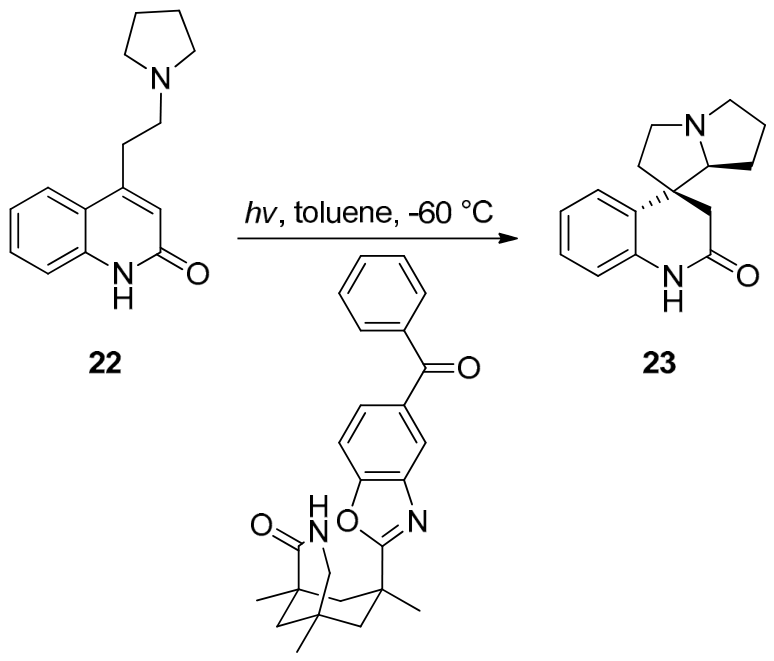
Scheme 12.
Photosensitized [2+2]-cycloaddition.
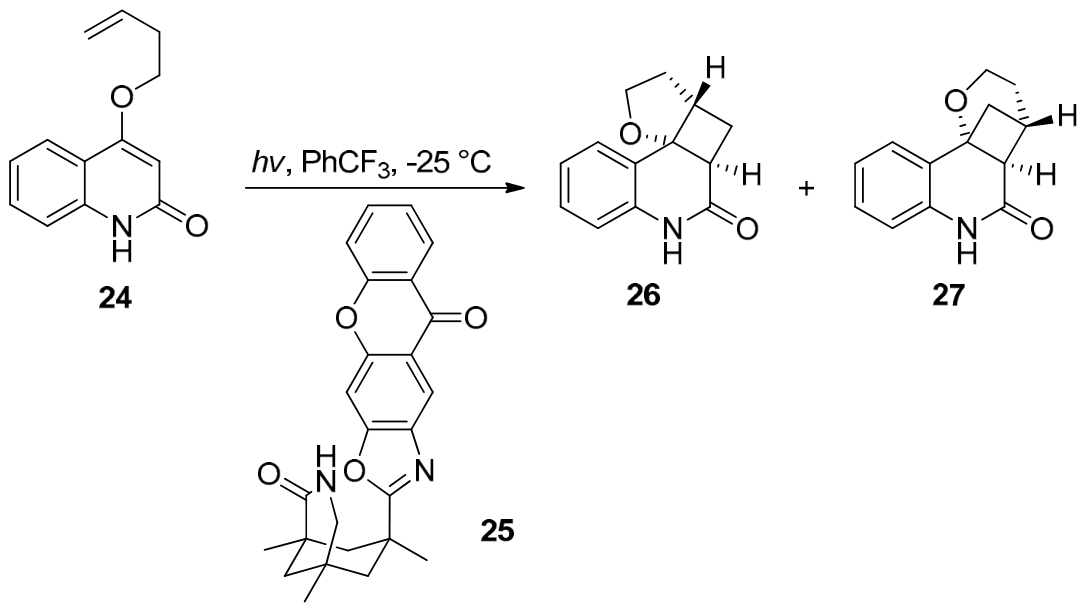
Scheme 13.
Reaction of pyridine and quinolone derivatives with alkynes and alkenes.
Scheme 14.
Reaction with spirooxyindoles.
Scheme 15.
Synthesis of cyclopropane derivatives.
Scheme 16.
Deracemization of allenes.
Scheme 17.
Dimerization af anthracene.
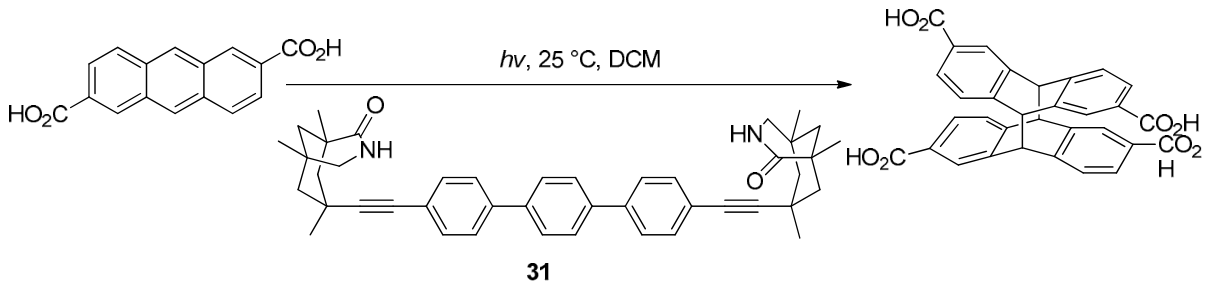
Figure 4.
A thioxanthone contained in a chiral host.
Scheme 18.
Cycloaddition reaction using thioxanthone linked in chiral phosphoric acid compound.
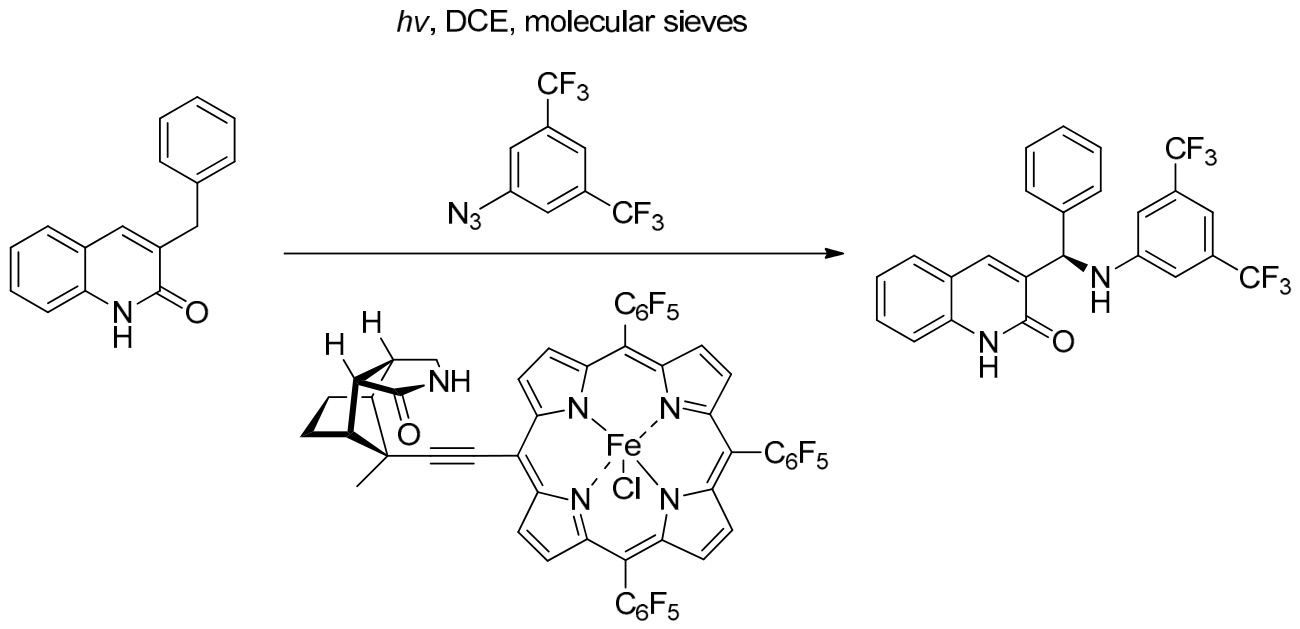
Scheme 19.
Chiral amination of quinolones.
Scheme 20.
The Paternò-Büchi reaction.
Scheme 21.
The reaction of allylic alcohols with benzophenone.
Scheme 22.
Allylic strain in the reaction of allylic alcohols.
Scheme 23.
The reaction of 2-furylmethanol derivatives with benzophenone.
Scheme 24.
The reaction of 1-phenyl-1-(2-furyl)-ethanol with benzophenone and benzaldehyde.
Scheme 25.
The reaction 1-t-butyl-1-(2-furyl)ethanol with benzophenone and benzaldehyde.
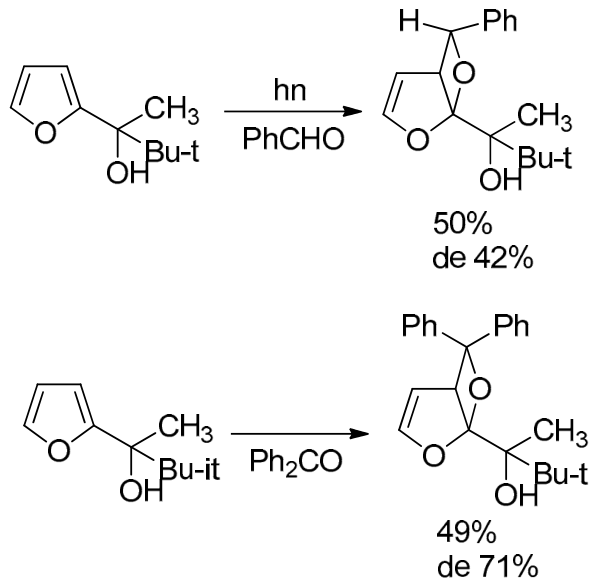
Figure 5.
Conformers of 1-phenyl-1-(2-furyl)ethanol.
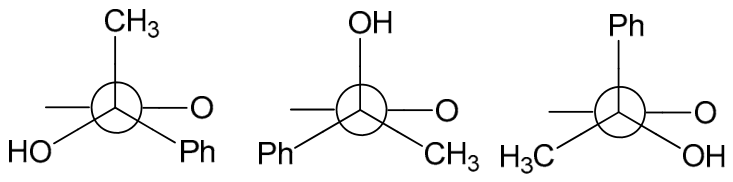
Figure 6.
Possible conformations of the biradical intermediate from the reaction of 1-phenyl-1-(2-furyl)ethanol with benzaldehyde.
Figure 6.
Possible conformations of the biradical intermediate from the reaction of 1-phenyl-1-(2-furyl)ethanol with benzaldehyde.
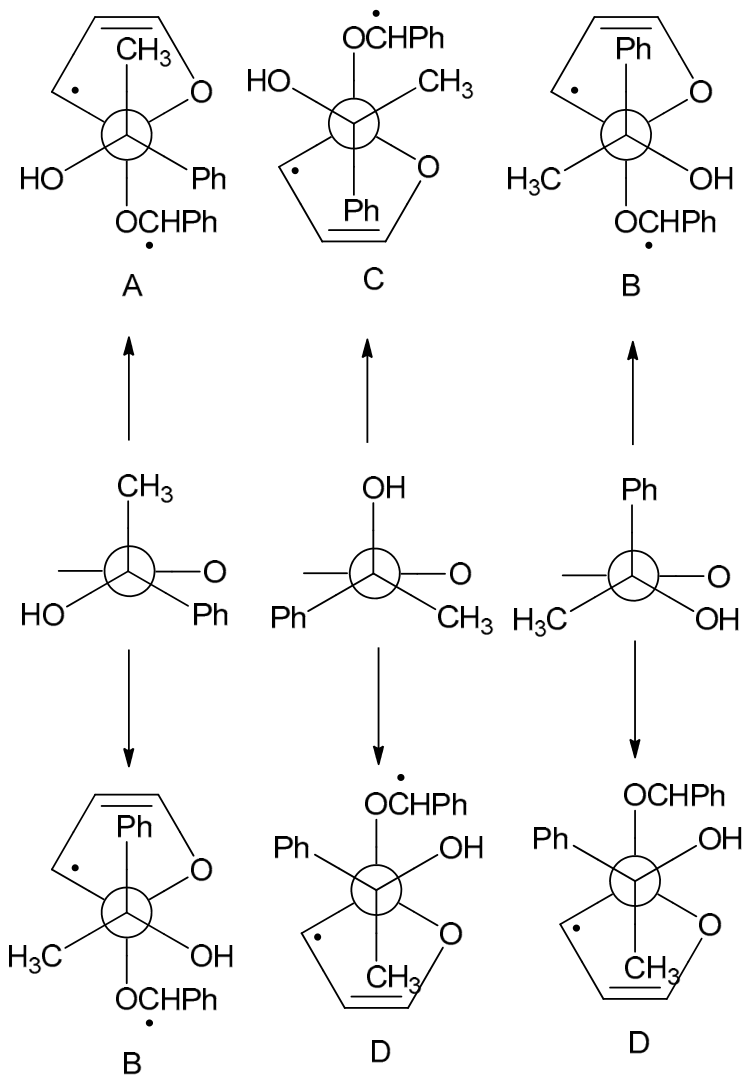
Figure 7.
Conformers of 1-t-butyl-1-(2-furyl)ethanol.
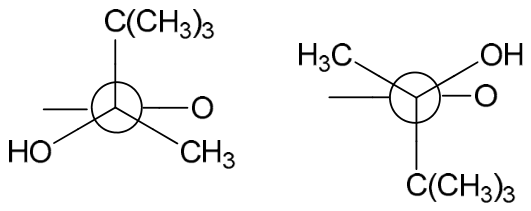
Figure 8.
Possible conformations of the biradical intermediate from the reaction of 1-t-butyl-1-(2-furyl)ethanol with benzaldehyde.
Figure 8.
Possible conformations of the biradical intermediate from the reaction of 1-t-butyl-1-(2-furyl)ethanol with benzaldehyde.
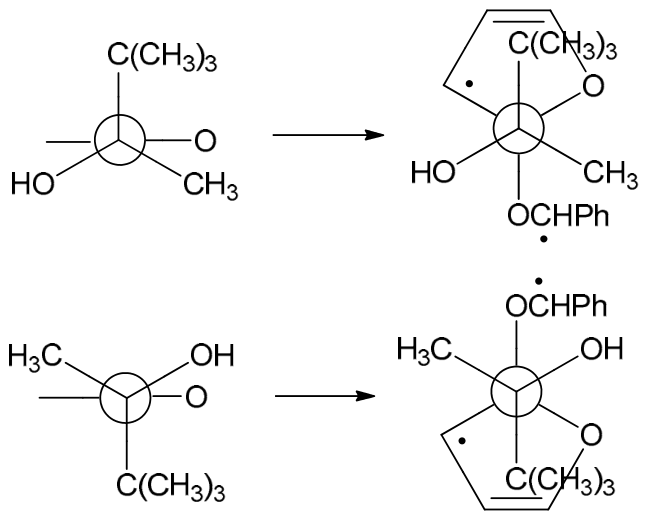
Figure 9.
Conformations of 2-furylphenylmethanol.
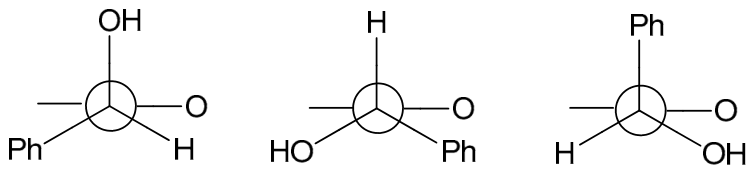
Figure 10.
Possible conformations of the biradical intermediate from the reaction of 2-furylphenylmethanol with benzophenone.
Figure 10.
Possible conformations of the biradical intermediate from the reaction of 2-furylphenylmethanol with benzophenone.
Scheme 26.
Reaction of 3-furylmethanol with benzophenone.
Scheme 27.
Reaction of 1-(3-furyl)-n-heptanol with benzaldehyde.
Scheme 28.
Reaction of 3-furylphenylmethanol with benzophenone.
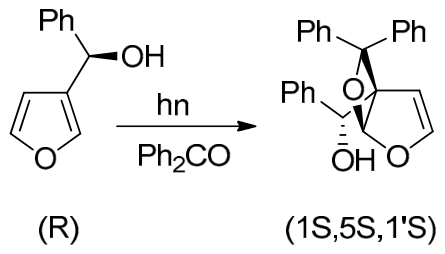
Figure 11.
Conformers of 3-furylphenylmethanol.
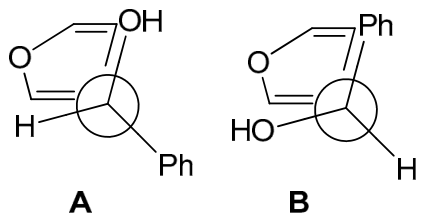
Figure 12.
Calculated conformations of the biradical intermediate obtained in the reaction between 3-furylphenylmethanol and benzophenone.
Figure 12.
Calculated conformations of the biradical intermediate obtained in the reaction between 3-furylphenylmethanol and benzophenone.
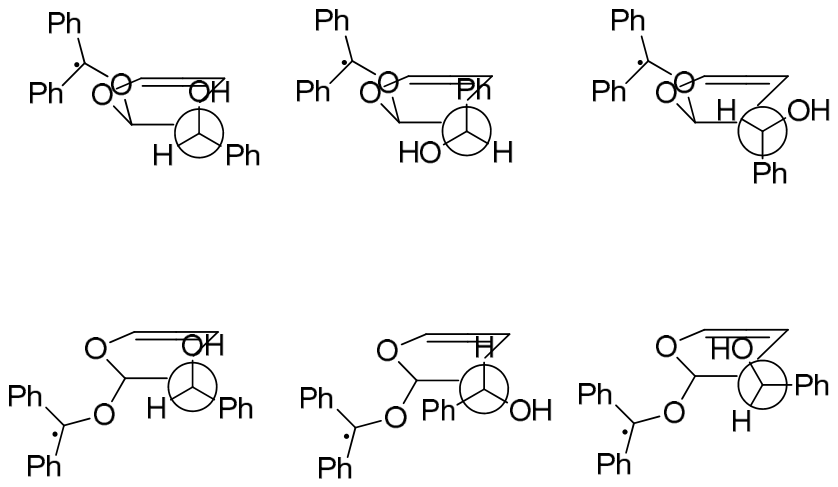
Figure 13.
Biradical intermediate obtained from the calculated conformations of 3-furylphenylmethanol.
Figure 13.
Biradical intermediate obtained from the calculated conformations of 3-furylphenylmethanol.
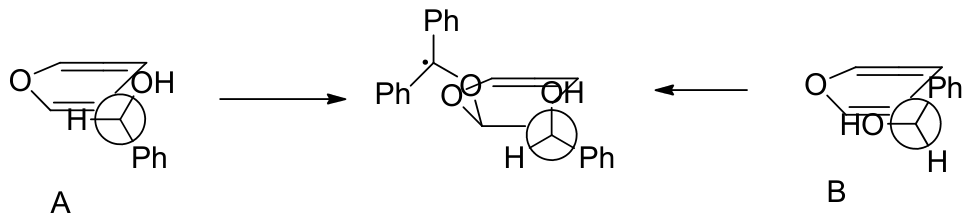
Figure 14.
Conformers of 1-(3-furyl)-n-heptanol.
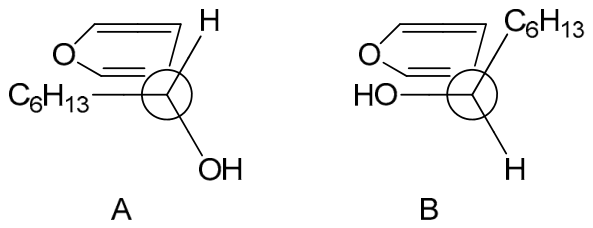
Figure 15.
Calculated conformations of the biradical intermediate obtained in the reaction between 1-(3-furyl)-n-heptanol and benzophenone.
Figure 15.
Calculated conformations of the biradical intermediate obtained in the reaction between 1-(3-furyl)-n-heptanol and benzophenone.
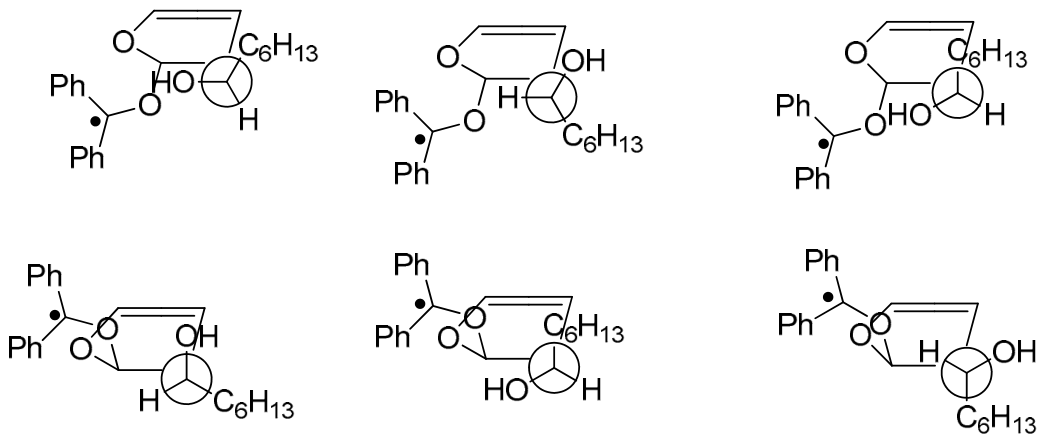
Figure 16.
Conformers of the possible biradical intermediates from 1-(3-furyl)-n-heptanol and benzophenone.
Figure 16.
Conformers of the possible biradical intermediates from 1-(3-furyl)-n-heptanol and benzophenone.
Scheme 29.
Reaction of 5-(2-triisopropylsilylozaxolyl)methanol derivatives with benzaldehyde.
Scheme 30.
Conformers of (R)-phenyl-(2-furyl)methanol.
Scheme 31.
Biradical intermediates from (R)-phenyl-(2-furyl)methanol.
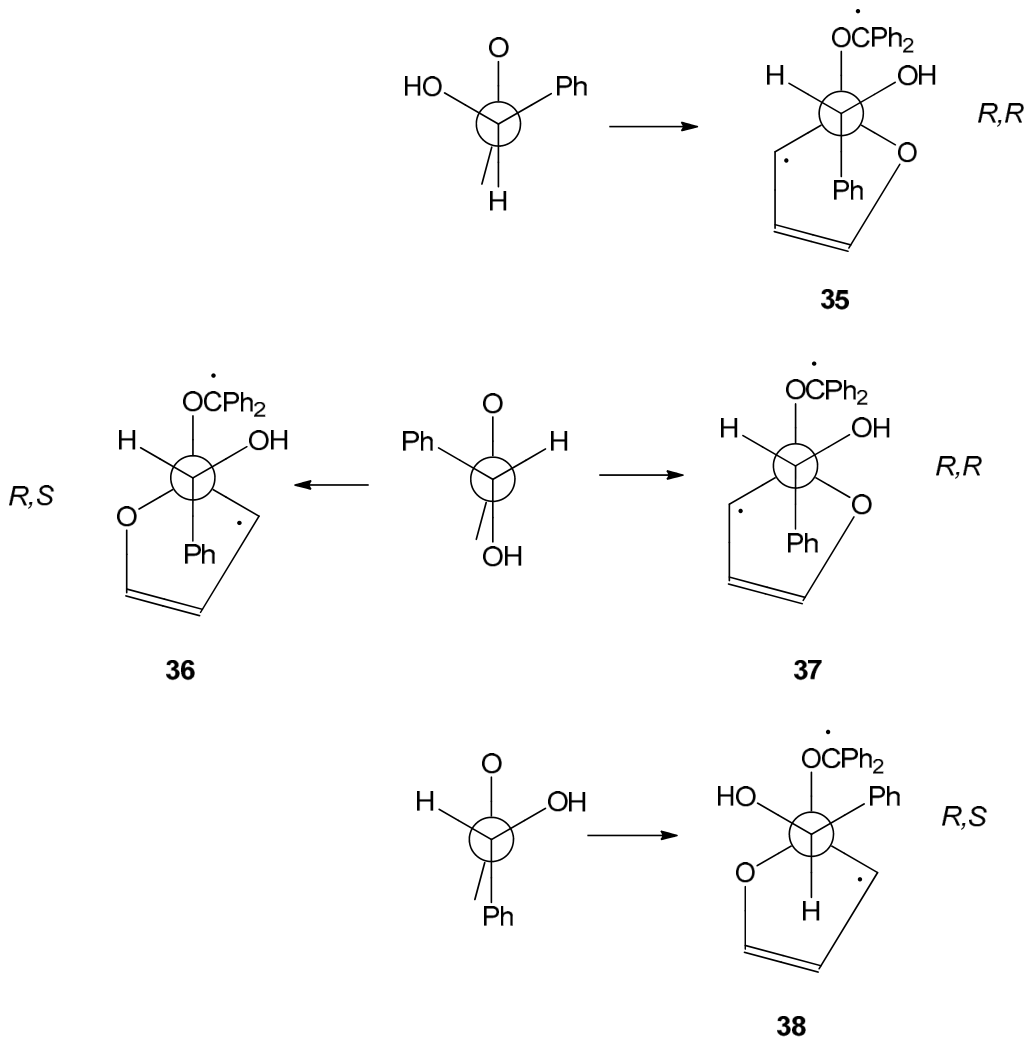

Table 1.
This is a table.
| Biradical intermediate | Stereochemistry | ΔE [eV] |
|---|---|---|
| 35 | R,R | 0 |
| 36 | R,S | 0.20 |
| 37 | R,R | 0.04 |
| 38 | R,S | 0.10 |
Disclaimer/Publisher’s Note: The statements, opinions and data contained in all publications are solely those of the individual author(s) and contributor(s) and not of MDPI and/or the editor(s). MDPI and/or the editor(s) disclaim responsibility for any injury to people or property resulting from any ideas, methods, instructions or products referred to in the content. |
© 2026 by the authors. Licensee MDPI, Basel, Switzerland. This article is an open access article distributed under the terms and conditions of the Creative Commons Attribution (CC BY) license.
Copyright: This open access article is published under a Creative Commons CC BY 4.0 license, which permit the free download, distribution, and reuse, provided that the author and preprint are cited in any reuse.