

Submitted:
15 September 2026
Posted:
16 September 2026
You are already at the latest version
Abstract
Biologic therapies are highly efficacious for pediatric atopic dermatitis (AD) and psori-asis (PsO); however, their expanding use has led to increased reports of phenotype switching—a paradoxical condition where biologics induce new-onset im-mune-mediated dermatoses. To address clinical uncertainty regarding these complex reactions, this review evaluates real-world case reports, case series, and observational studies of pediatric AD and PsO patients who developed phenotypic switching during biologic therapy. Dupilumab is the most frequently implicated agent, commonly in-ducing psoriasiform, pustular, or palmoplantar eruptions in AD patients via a compen-satory shift from Th2- to Th17-predominant immunity. Conversely, phenotype switch-ing from IL-12/23 and TNF-α inhibitors remains rare in pediatric dermatology. For se-vere, refractory cases or AD-PsO overlaps, Janus kinase (JAK) inhibitors demonstrate significant rescue efficacy, provided appropriate baseline and ongoing laboratory mon-itoring is maintained. Pediatric patients experiencing biologic-induced phenotype switching can be successfully managed in clinical practice through early recognition and the implementation of the practical, evidence-based treatment algorithm proposed in this review.
Keywords:
biologic therapy
; phenotype switch
; atopic dermatitis
; psoriasis
; Janus kinase inhibitors
1. Introduction
Phenotype switching represents a challenging category of treatment-emergent adverse events where a biologic agent, typically used to treat a specific immune-mediated inflammatory disease, either triggers the de novo development or the exacerbation of a different inflammatory condition [1,2]. While these reactions were initially identified in adults, they are increasingly recognized in the pediatric population as the use of therapeutic monoclonal antibodies increases [3,4]. In pediatric inflammatory skin diseases, the most common manifestations involve a shift between atopic dermatitis (AD) and psoriasis (PsO), reflecting the complex interplay between different arms of the immune system [1,5,6].
This review synthesizes current evidence on phenotype switching in pediatric cases of AD or PsO treated with biologic therapies, with a focus on epidemiologic patterns, underlying immunopathogenesis, and clinical phenotypes across diverse biologics. An actionable clinical decision-making algorithm (Figure 1) was proposed to guide practice.
2. Materials and Methods
This review includes studies identified through systematic searches of PubMed, Embase, and Semantic Scholar from database inception to July 31, 2026, by searching “(atopic dermatitis OR psoriasis) AND (biologic therapy OR biologics OR monoclonal antibody) AND (phenotype switch OR paradoxical reaction) AND (pediatric OR children OR infant OR adolescent),” as well as pertinent references by manual searching. Eligible studies included pediatric patients (≤18 years) receiving biologic therapy specifically for AD or PsO, who developed phenotype switching during treatment. Biologic agents collected in this literature review included all biologics used for the treatment of pediatric AD and PsO, including dupilumab, tralokinumab, lebrikizumab, nemolizumab, etanercept, ustekinumab, secukinumab, ixekizumab, guselkumab, adalimumab, all of which were included in the search strategy. Real-world case reports, case series and observational studies were included. Studies were excluded if they were clinical or medical trials, if they involved patients older than 18 years without extractable pediatric data, if biologic therapy was prescribed for diseases other than AD or PsO (e.g., inflammatory bowel disease or asthma, or other dermatologic/rheumatologic diseases), or if reported adverse reactions were non-cutaneous, such as systemic hypersensitivity or anaphylaxis.
3. Pathogenesis
AD and PsO are traditionally regarded as immunologically opposing diseases, dominated by Th2 and Th17/IL-23 pathways, respectively; however, increasing molecular and clinical evidence supports partial overlap of immunogenic pathways (Figure 2). The pathogenesis of phenotype switching is rooted in the disruption of the delicate cytokine balance between different T-helper (Th) cell immune axes [1,2].
3.1. T-Cell Polarization Skewing
PsO is primarily a Th1/Th17-driven disorder, while AD is dominated by Th2-mediated immunity [1,7,8], resulting in dysregulation and inflammatory loops in the epithelial immune microenvironment [9]. Inhibiting one pathway can paradoxically upregulate another; for instance, blocking the Th2 pathway with dupilumab can lead to a compensatory shift toward Th1/Th17 predominance, resulting in psoriatic lesions [4,7]. Conversely, blocking the Th17 axis (as seen with IL-17 inhibitors) can skew the immune response toward a Th2 phenotype, inducing eczematous eruptions [5,10].
The widespread use of dupilumab in AD disrupts Th2 signaling by blocking IL-4Rα, a pathway essential for activating STAT6 and maintaining high expression of the master transcription factor GATA3. Because GATA3 actively suppresses alternative lineages—such as by downregulating STAT4 to inhibit Th1 differentiation and repressing Th17-related epigenetic loci—its functional blockade removes critical transcriptional inhibition. this polarization mechanism enforces lineage exclusivity; GATA3 and STAT6 actively silence the expression of Th1 cytokines, strongly suppressing the differentiation of interferon-γ (IFN-γ)-producing Th1 cells while also regulating Th17-driven inflammatory pathways. When biologics such as dupilumab block the IL-4Rα subunit, this Th2-polarizing signaling loop is dismantled and thus disrupting the balance of T-helper cell phenotypes [11]. This enables a compensatory immunological shift toward Th1 and Th17 predominance, mediated by the unopposed actions of T-bet and RORγt, which manifests clinically as psoriasiform or pustular eruptions [12].
IL-4 and IL-13 drive type 2 inflammation via receptor complexes sharing the IL-4Rα subunit. IL-4 acts through Type I and II receptors to promote Th2 differentiation, IgE class switching, and innate cell priming, while IL-13 signals exclusively through Type II receptors to induce tissue-specific pathologies like goblet cell metaplasia [13]. Both cytokines stimulate chemokine release to recruit pathogenic eosinophils. Dupilumab binds the shared IL-4Rα subunit, mechanically blocking both cytokines and halting Type I and Type II receptor signaling. This dual blockade prevents downstream STAT6 phosphorylation, effectively suppressing the type 2 transcriptome and reversing allergic inflammation [14].
3.2. Shared Genetic Susceptibility
AD and PsO share activation of the Th22 axis, with IL-22–mediated epidermal hyperplasia and barrier dysfunction [15], and exhibit convergence at specific genomic loci, including chromosome 5q31.1–q33.1, which contains IL-13 and other immune regulatory genes, a cytokine implicated in the pathogenesis of both diseases [5,16,17]. Baurecht et al. demonstrated that this locus represents a Th2 cytokine regulatory region with opposing risk alleles, conferring susceptibility to either AD or PsO depending on allele orientation [16]. Overall, genetic studies largely support AD and PsO as immunogenetically opposing disorders; however, the presence of overlapping susceptibility loci and shared cytokine pathways suggests partial convergence.
3.3. Ethnic and Age-Related Differences in Disease Phenotypes
The Asian AD phenotype demonstrates concurrent Th2 and enhanced Th17/Th22 polarization [18], resulting in psoriasiform clinical and histologic features, such as acanthosis and parakeratosis, despite high IgE levels. Transcriptomic analyses place Asian AD between European AD and PsO, highlighting a phenotype and immune spectrum rather than strict dichotomy [15]. These shared and intersecting immune pathways provide a biologic basis for phenotype overlap and variable therapeutic responses to targeted biologics, particularly in pediatric patients [19].
Real-world transcriptomic profiling has challenged mutual exclusivity models . For example, Taiwanese plaque psoriasis lesions demonstrate a distinct dual Th17/type 2 (Th2) transcriptomic endotype. These lesions simultaneously upregulate classical Th17 markers (IL-17A, IL-17C, IL-23A) and Th2 markers (IL-4R, STAT6, CCL17, TSLP), proving that tissue-specific microenvironments can support mixed, dual-polarized immune profiles [20].
Additionally, the baseline skin phenotype of new-onset pediatric AD is substantially different from that of adult AD. Although excess Th2 activation remains a shared hallmark, early and concomitant activation of Th9 and Th17 pathways are highly activated at disease initiation of pediatric AD [21]. Upregulation in IL-19 levels might be a potential molecular link bridging Th2 and Th17 activation [21]. Recognition of this Th2–Th17–Th22 immune continuum regarding the ethnic and age-related disease variations is essential for precision-based management and rational therapeutic selection in pediatric dermatology.
4. Epidemiology
Available evidence indicates that phenotype switching reactions to biologic therapies in pediatric dermatology remain rare but increasingly recognized, largely reflecting the growing use of targeted immunomodulatory agents in children. To date, the literature consists predominantly of isolated case reports and small case series, with only 17 well-documented pediatric cases (16 dupilumab cases, 1 ustekinumab case) reported across all biologic classes (Table 1).
Reported pediatric age range from 4 to 18 years, with a concentration in school-aged children and adolescents. Ethnically, East Asian patients are disproportionately represented in dupilumab-associated phenotype switching, especially psoriasiform and pustular phenotypes, while reports from Europe and North America are fewer but include similar clinical patterns. This apparent ethnic skew may reflect genetic susceptibility—the inherently higher baseline Th17 and Th22 axis activation observed in Asian populations—rather than true, intrinsic population-level risk differences, confounded by different environmental exposures, regional health insurance reimbursement policies, and varying healthcare-seeking behaviors.
Among biologics, dupilumab (IL-4/IL-13 receptor blockade) is by far the most frequently reported agent in phenotype switching induced by biologics during treatment for pediatric AD and PsO. Other biologic classes are far less commonly reported in the pediatric population such as IL-12/23 inhibition (ustekinumab).
5. Evidence in Pediatric Patients
5.1. Dupilumab
Among biologic therapies, dupilumab is the most frequently reported agent associated with phenotype switching in pediatric inflammatory skin diseases. To date, only 16 pediatric cases have been documented—predominantly as case reports or small case series—with East Asian patients disproportionately represented. Most cases describe psoriasiform, pustular, or palmoplantar psoriasis–like eruptions emerging despite good control of underlying AD. Reported time to onset ranges from 1 week to 2 years, and 7 of 16 cases involved early-onset, long-standing severe AD.
Parker et al. (2021) presented a retrospective case series of six pediatric patients (aged 4–18 years) with moderate-to-severe AD treated with dupilumab [4]. New-onset psoriasiform dermatitis developed at a median of 8 months after dupilumab initiation, despite substantial AD improvement. Lesions predominantly involved typical psoriatic sites and were manageable with topical corticosteroids, allowing dupilumab continuation in 5 cases (83%). Only one child required treatment discontinuation, while another had pre-existing PsO unmasked by effective AD control [4]. Dupilumab-induced inverse psoriasis was also observed in two 13-year-old heart transplant recipients after 6 months and 2 years of dupilumab, respectively, despite concomitant systemic immunosuppression with tacrolimus and azathioprine [6]. In both patients, phenotype switching reactions were effectively managed using topical corticosteroids and calcineurin inhibitors without the need to discontinue dupilumab [6]. In a case requiring dupilumab discontinuation, a 16-year-old boy with severe AD developed psoriasis plaques on his arms, neck, face, and scalp 4 weeks after starting therapy. Since both his AD and PsO worsened by week 12 despite topical clobetasol, dupilumab was discontinued and replaced with oral cyclosporine (3 mg/kg/day), which successfully cleared the PsO and improved the AD within 4 weeks [23].
Janus kinase (JAK) inhibitors have emerged as an effective therapeutic strategy to resolve these paradoxical and sometimes refractory reactions. A 10-year-old East Asian girl developed psoriasiform plaques one week after the 14th dose of dupilumab; disease was refractory to biologic switching (secukinumab) and cyclosporine but achieved sustained remission with upadacitinib over one year [7] (Figure 3). Two 17-year-old Chinese monozygotic twins developed psoriasiform erythema 20 weeks after dupilumab, despite achieving Eczema Area and Severity Index-75 (EASI-75) earlier; lesions showed marked IL-17A overexpression, and baricitinib led to significant improvement for over 24 weeks [24]. Similarly, a 15-year-old Asian boy who developed widespread psoriasiform dermatitis after 8 months of dupilumab achieved near-complete resolution of PsO and maintained AD control within 4 weeks of switching to abrocitinib, with sustained efficacy over 6 months [25].
Pustular psoriasiform reactions have been described in younger children. A 4-year-old Chinese boy (weighing 26 kg) with severe AD developed pustular PsO one week after an off-label dupilumab loading dose (600 mg), suggesting a dose-dependent rapid onset. The eruption progressed despite drug withdrawal and systemic corticosteroids, but completely resolved within two weeks of oral thiamphenicol (a chloramphenicol-analogue antibiotic empirically used in East Asia for respiratory and genitourinary infections), without recurrence over one year [8]. Similarly, a 13-year-old Asian boy developed acute generalized pustular PsO 10 days after dupilumab (400mg), resolving rapidly with drug discontinuation alone [26]. Palmoplantar involvement remains rare but was reported in a 17-year-old East Asian boy with early-onset severe AD who developed psoriasiform lesions on previously unaffected palms and soles 2 months after starting dupilumab. Symptoms improved following drug withdrawal and a 2-month cyclosporine course [27].
Psoriatic reactions to dupilumab in children are clinically heterogeneous, with onset ranging from days to months and phenotypes spanning psoriasiform, pustular, and palmoplantar disease. While some cases are mild and manageable without drug cessation, severe or refractory presentations—particularly in early-onset, long-standing AD—may require prompt discontinuation and alternative systemic therapy, including JAK inhibition, highlighting the need for early recognition and individualized management.
5.2. Secukinumab
Secukinumab is a biologic that targets the IL-17A cytokine and is approved by the EMA and FDA for psoriasis in children 6 years of age and older. Although pediatric cases have not yet been reported, phenotype switching induced by IL-17 inhibition was documented in a 20-year-old adult with severe PsO who developed generalized eczema two months after biologic therapy [28].
5.3. Ustekinumab
Evidence regarding ustekinumab-induced phenotype switching in pediatric and adolescent inflammatory skin disease remains extremely limited.
In the case reported by Gargiulo et al. (2023), a 12-year-old Italian boy with PsO since early childhood (baseline Psoriasis Area Severity Index [PASI] 10) and concomitant AD (EASI 12) was initially treated with ustekinumab 45 mg for 18 months. Owing to the predominance of AD lesions, therapy was switched to dupilumab. Although AD improved, the patient experienced a relapse of PsO involving the nails and soles approximately 4 months after the phenotype switch. Dupilumab was discontinued, and upadacitinib 15 mg/day was initiated. After 16 weeks of treatment, the patient achieved complete remission of both PsO and AD, showing favorable short-term follow-up outcomes [29].
This represents a case of AD–PsO overlap since early childhood, in which biologic switching alone was insufficient, and highlights upadacitinib after biologic discontinuation as an effective rescue strategy. Notably, this represents one of the 6 pediatric cases identified in our systematic search requiring JAK inhibitor initiation, emphasizing the role of JAK inhibition in refractory overlap phenotypes.
5.4. TNF-α Inhibitor
Reviewing previously reported phenotype switching induced by TNF-α inhibitors in pediatric patients, most reactions manifest as psoriasiform eruptions, despite TNF-α inhibitor (etanercept, adalimumab) being approved therapies for PsO. Notably, in pediatric patients, TNF-α inhibitors are predominantly prescribed for non-dermatologic inflammatory diseases, including juvenile idiopathic arthritis (JIA), inflammatory bowel disease (IBD), and chronic nonbacterial osteomyelitis (CNO) [30,31]. A multicenter retrospective cohort study of 103 pediatric patients receiving TNF-α inhibitor—primarily for IBD—demonstrated that psoriasiform eruptions typically occurred after prolonged exposure (median latency 14.5 months) and often involved multiple anatomical sites. Although 37% discontinued the initial TNF-α inhibitor, the majority (83%) were ultimately able to continue TNF-α inhibitor therapy with adjunctive dermatologic management or intra-class switching [3]. Through literature searching, no pediatric cases of phenotype switching have been identified during TNF-α inhibitor treatment for PsO.
6. Management Strategies
Management strategies for phenotype switching are heterogeneous and individualized, reflecting variations in severity and underlying disease control. In mild to moderate cases—especially dupilumab-associated psoriasiform dermatitis—topical corticosteroids or calcineurin inhibitors are often sufficient. This approach allows for the continuation of the biologic agent with favorable medium-term outcomes [4,6,32]. In contrast, severe, refractory, or pustular/erythrodermic reactions frequently necessitate biologic discontinuation and escalation to systemic immunomodulatory therapy. Cyclosporine, systemic corticosteroids, or antimicrobial therapy, have been used selectively, albeit with variable durability. Given that the majority of reported cases involve AD, a treatment algorithm based on current case evidence and expert opinion is proposed to assist pediatric dermatologists in clinical decision-making when phenotype switching occurs during biologic therapy (Figure 1).
Special considerations are warranted in the management of phenotype switching in pediatric patients. In young children and in cases presenting with pustular or rapidly progressive PsO, heightened vigilance is required. Secondary cutaneous infections should be actively excluded or treated, and prompt withdrawal of dupilumab is recommended. Notably, biologic switching alone (e.g., from dupilumab to ustekinumab or secukinumab) has demonstrated limited efficacy in pediatric AD–associated phenotype switching. JAK inhibitors (e.g., upadacitinib, abrocitinib, baricitinib) have emerged as a consistent and effective rescue strategy for pediatric cases with overlapping AD–PsO phenotypes, achieving rapid improvement and sustained remission over follow-up periods ranging from 16 weeks to 1 year. Furthermore, treatment-emergent eczematous reactions induced by IL-17 and IL12/23 inhibitors have also been successfully be managed with JAK inhibitors [28,33,34,35,36].
Although long-term data remain scarce, available follow-up suggests that most pediatric phenotypic switching is clinically manageable and non-life-threatening, with no reported mortality and limited irreversible sequelae. Recurrence is possible but is often controllable with intermittent therapy, highlighting the importance of early recognition, careful phenotype assessment, and flexible treatment adjustments.
6.1. Upadacitinib
Upadacitinib, a selective inhibitor preferentially targeting JAK1, is approved for both AD and PsA in adolescents and adults. Upadacitinib suppresses IL-6, IL-15, and interferon-α/γ production, and inhibits STAT3 activation, which in turn promotes keratinocyte differentiation and restores filaggrin, loricrin, and natural moisturizing factor expression — addressing barrier dysfunction common to both AD and psoriasis [37]. AD-PsO overlapping phenotypes are distinctly driven by the co-existence of Type 2 (Th2) and Type 3 (Th17) inflammation, intrinsically linked to JAK-STAT signaling pathways. While traditional biologics targeting a single inflammatory axis (either solely AD-targeted or PsO-targeted) are often inadequate for these overlapping phenotypes, JAK1 inhibitors effectively suppress this dual inflammation [38].
In Phase III clinical trial programs involving adolescents, upadacitinib demonstrated high efficacy in reducing the signs and symptoms of AD and improving quality of life, characterized by a rapid onset of action. While the higher dose (30 mg daily) demonstrated the highest efficacy at reducing EASI scores up to 16 weeks—showing superiority to dupilumab in head-to-head clinical trials—the lower dose (15 mg daily) still provides excellent clinical improvement [39]. However, it is crucial to note that pediatric patients exhibit a higher frequency of blood and lymphatic adverse events (particularly cytopenias) and an elevated risk of infectious adverse events when treated with upadacitinib compared to adult populations [40]. Therefore, vigilant patient selection and strict adherence to laboratory monitoring protocols are paramount when utilizing upadacitinib as a rescue therapy for phenotype switching.
6.2. Abrocitinib
Abrocitinib is a selective oral JAK1 inhibitor, EMA- and FDA-approved only for refractory, moderate-to-severe AD in patients ≥12 years old [39]. JAK1 lies downstream not only of the IL-4/IL-13 receptors driving Th2 disease, but also of multiple cytokines involved in Th17/IL-23-mediated inflammation. By blocking JAK1 selectively, abrocitinib interrupts signaling for IL-4, IL-13, IL-31, and TSLP (Th2/pruritus axis driving AD) as well as IFN-γ and IL-22 signaling, cytokines also implicated in psoriasiform inflammation, without inhibiting JAK2-dependent pathways [5,25,41].
Rather than blocking only one arm as dupilumab does, this dual suppression makes abrocitinib a highly rational treatment strategy for patients who develop PsO on dupilumab, since it can control both phenotypes simultaneously.In head-to-head data, abrocitinib 200 mg/day demonstrated greater and more rapid AD clearance and pruritus relief than dupilumab 300 mg, with both treatments converging in efficacy over time [39]. In terms of safety and treatment guidelines, it is crucial to note that the use of abrocitinib should not be combined with other JAK inhibitors or systemic immunosuppressants [39].
6.3. Baricitinib
Baricitinib preferentially inhibits both JAK-1 and JAK-2 and is an effective systemic therapy for AD. In Europe, it is approved for the treatment of moderate-to-severe AD in patients aged 2 years and older. While it is approved and available in the US for other immune-mediated conditions, it is currently used off-label for AD.
Baricitinib’s dual JAK1/JAK2 inhibition simultaneously blocks type 2 (Th2) and type 3 (Th17/Th22-associated) inflammatory pathways, making it effective for AD-PsO overlap and phenotype switching. By inhibiting JAK1/JAK2-dependent cytokines including IL-6 and IFN-γ, as well as JAK1/JAK3, JAK1/TYK2, and JAK2/TYK2-dependent signaling with comparable potencies in human leukocytes [42], baricitinib broadens coverage beyond JAK1-selective agents. This suppresses AD-driving signals (IL-4, IL-13, IL-31, TSLP) and psoriasis-relevant pathways like IFN-γ and Th1/Th17-adjacent axes [41,43].
6.4. Recommended Monitoring for JAK Inhibitors
6.4.1. Baseline and Routine Laboratory Monitoring
The FDA recommends checking a complete blood count (CBC) with differential and liver enzymes at baseline, and again after initiation or dose escalation. Specific monitoring intervals vary by agent—abrocitinib requires re-checking at 4 weeks, whereas upadacitinib monitoring follows routine clinical management after baseline [39]. For upadacitinib, pediatric labels advise checking CBC with differential and liver enzymes at baseline, followed by routine management without a fixed re-check interval specified [39].
Pediatric patients require vigilance regarding blood and lymphatic adverse events, as cytopenias (specifically lymphopenia, neutropenia, and anemia) are more frequently reported in this demographic than in adults [39]. Furthermore, in the pediatric Phase 1 trial for polyarticular-course juvenile idiopathic arthritis (SELECT-YOUTH), laboratory abnormalities were consistent with the known adult safety profile. Hepatic disorders, neutropenia, and elevated creatine phosphokinase (CPK) were among the most common findings associated with upadacitinib, particularly at higher doses [44,45]. Other essential baseline testing for all oral JAK inhibitors includes screening for viral hepatitis, tuberculosis, and pregnancy [39].
Additionally, clinicians should evaluate renal function at baseline, particularly when considering baricitinib, as dose adjustments are required for patients with renal impairment. Population pharmacokinetic data in children show that renal clearance and body weight significantly influence baricitinib exposure, similar to adults, supporting weight- and eGFR-based dosing proposals [47].
6.4.2. Lipid Profiles
Dyslipidemia, including elevated low-density lipoprotein (LDL), occurs commonly enough across the JAK inhibitor class to warrant periodic monitoring. Dose adjustments or medication discontinuation may be required if lipid abnormalities become clinically significant [47]. Lipid panels should be evaluated at baseline and after treatment initiation, specifically at 4 weeks for abrocitinib and 12 weeks for upadacitinib [39].
6.4.3. Infection Risk
Infection risk remains the most consistently reported safety signal for JAK inhibitors across all age groups. Pharmacovigilance data show both pediatric and adult patients have increased reporting of infections and gastrointestinal adverse events [41]. Real-world pharmacovigilance analysis utilizing the FDA Adverse Event Reporting System (FAERS) database revealed distinct, age-dependent infectious adverse event (iAE) profiles: pediatric patients (0–14 years) show an elevated iAE risk with abrocitinib and upadacitinib. The most frequently reported infections include COVID-19, herpes zoster, upper respiratory tract infections, and pneumonia [45,46].
To mitigate these risks, the American Academy of Allergy, Asthma & Immunology (AAAAI/ACAAI) guidelines mandate baseline screening for latent tuberculosis, viral hepatitis, and other chronic infections prior to initiating oral JAK inhibitor therapy [44]. Crucially, pediatric dermatologists must also ensure that all age-appropriate immunizations are up to date prior to JAK inhibitor initiation, keeping in mind that live vaccines are contraindicated during active treatment [47].
6.4.4. Major Adverse Cardiovascular Events (MACE) and Malignancies
While the risk of major adverse cardiovascular events (MACE) and malignancies prompted FDA black box warnings for the JAK inhibitor class, these events remain exceedingly rare in pediatric populations; however, judicious patient selection remains essential. In an analysis of FAERS and Canada Vigilance data, the combined proportion of boxed-warning-associated adverse events (serious infection, mortality, malignancy, adverse cardiovascular events, thrombosis) was lower in children than adults for most agents, though baricitinib showed comparable rates (8.2% pediatric vs 8.8% adult) [40]. A separate pediatric-focused review similarly concludes that existing literature suggests an acceptable safety profile for JAK inhibitors in children, while emphasizing the need for continued long-term vigilance given the limited pediatric dataset [51].
7. Conclusion
Phenotype switching is an increasingly recognized adverse event in pediatric dermatology. It is most frequently triggered by dupilumab, which drives a compensatory Th2- to Th17 immune shift, whereas reactions to IL-12/23 and TNF-α inhibitors remain uncommon. In severe or refractory cases, particularly those with overlapping atopic dermatitis and psoriasis features, JAK inhibitors demonstrate significant rescue efficacy, provided that rigorous laboratory monitoring is maintained. Ultimately, the integration of advanced biomarker characterization with robust prospective and mechanistic studies is essential to refine risk stratification. Together, these efforts will drive the implementation of highly precise, personalized treatment paradigms for the use of targeted therapeutics in pediatric dermatology
Author Contributions
Conceptualization, C.F.T. and Y.Y.; writing—original draft preparation, C.F.T.; writing—review and editing, C.-F.T. and Y.Y.; visualization, C.F.T. and Y.Y.; supervision, Y.Y.. All authors have read and agreed to the published version of the manuscript.
Funding
This research received no external funding.
Institutional Review Board Statement
Not applicable.
Data Availability Statement
No new data were created or analyzed in this study. Data sharing is not applicable to this article.
Acknowledgments
During the preparation of this manuscript, the authors used Gemini (Google) for the purposes of grammar correction and assistance with figure formatting. The authors have reviewed and edited the output and take full responsibility for the content of this publication.
Conflicts of Interest
The authors declare no conflicts of interest.
References
- Miyagawa, F. Pathogenesis of Paradoxical Reactions Associated with Targeted Biologic Agents for Inflammatory Skin Diseases. Biomedicines 2022, 10, 1485. [Google Scholar] [CrossRef] [PubMed]
- Garcovich, S.; De Simone, C.; Genovese, G.; Berti, E.; Cugno, M.; Marzano, A.V. Paradoxical Skin Reactions to Biologics in Patients With Rheumatologic Disorders. Front. Pharmacol. 2019, 10, 282. [Google Scholar] [CrossRef] [PubMed]
- Eickstaedt, J.; Paller, A.S.; Lund, E.; et al. Paradoxical Psoriasiform Eruptions in Children Receiving Tumor Necrosis Factor α Inhibitors. JAMA Dermatol. 2023, 159, 637–642. [Google Scholar] [CrossRef] [PubMed]
- Parker, J.J.; Sugarman, J.L.; Silverberg, N.B.; et al. Psoriasiform Dermatitis During Dupilumab Treatment for Moderate-to-Severe Atopic Dermatitis in Children. Pediatr. Dermatol. 2021, 38, 1500–1505. [Google Scholar] [CrossRef] [PubMed]
- Zhang, Y.; Jiang, G. Application of JAK Inhibitors in Paradoxical Reaction Through Immune-Related Dermatoses. Front. Immunol. 2024, 15, 1341632. [Google Scholar] [CrossRef] [PubMed]
- Lockard, T.; Mullen, S.A.; Lee, E.B.; et al. Dupilumab-Induced Psoriasiform Dermatitis in Two Pediatric Cardiac Transplant Patients. Pediatr. Dermatol. 2024, 41, 508–511. [Google Scholar] [CrossRef] [PubMed]
- Tsai, P.-Y.; Yu, Y. Janus Kinase of All Trades? Treatment of Ixekizumab- and Dupilumab-Related Paradoxical Reactions with Upadacitinib. Dermatol. Sin. 2025. [Google Scholar] [CrossRef]
- Dang, N.; Zheng, H.; Ren, Y. A Pediatric Case of Dupilumab-Induced Pustular Psoriasis. J. Dermatol. Treat. 2024, 35, 2333016. [Google Scholar] [CrossRef] [PubMed]
- Dainichi, T.; Kitoh, A.; Otsuka, A.; et al. The Epithelial Immune Microenvironment in Atopic Dermatitis and Psoriasis. Nat. Immunol. 2018, 19, 1286–1298. [Google Scholar] [CrossRef] [PubMed]
- Murphy, M.J.; Cohen, J.M.; Vesely, M.D.; Damsky, W. Paradoxical Eruptions to Targeted Therapies in Dermatology: A Systematic Review and Analysis. J. Am. Acad. Dermatol. 2022, 86, 1080–1091. [Google Scholar] [CrossRef] [PubMed]
- Bernstein, Z.J.; Shenoy, A.; Chen, A.; et al. Engineering the IL-4/IL-13 Axis for Targeted Immune Modulation. Immunol. Rev. 2023, 320, 29–57. [Google Scholar] [CrossRef] [PubMed]
- Zhu, J.; Yamane, H.; Paul, W.E. Differentiation of Effector CD4 T Cell Populations. Annu. Rev. Immunol. 2010, 28, 445–489. [Google Scholar] [CrossRef] [PubMed]
- Le Floc’h, A.; Allinne, J.; Nagashima, K.; et al. Dual Blockade of IL-4 and IL-13 With Dupilumab, an IL-4Rα Antibody, Is Required to Broadly Inhibit Type 2 Inflammation. Allergy 2020, 75, 1188–1204. [Google Scholar] [CrossRef] [PubMed]
- Hamilton, J.D.; Ferreira, M.A.R.; Lim, W.K.; et al. Type-2-Inflammatory-Diseases Share Comorbidities, Molecular Signatures, IL4/IL13 Genetics, and Response to IL4/IL13 Blockade. Allergy 2026. [Google Scholar] [CrossRef] [PubMed]
- Noda, S.; Suárez-Fariñas, M.; Ungar, B.; et al. The Asian Atopic Dermatitis Phenotype Combines Features of Atopic Dermatitis and Psoriasis with Increased TH17 Polarization. J. Allergy Clin. Immunol. 2015, 136, 1254–1264. [Google Scholar] [CrossRef] [PubMed]
- Baurecht, H.; Hotze, M.; Brand, S.; et al. Genome-Wide Comparative Analysis of Atopic Dermatitis and Psoriasis Gives Insight into Opposing Genetic Mechanisms. Am. J. Hum. Genet. 2015, 96, 104–120. [Google Scholar] [CrossRef] [PubMed]
- Tsai, Y.-C.; Tsai, T.-F. Overlapping Features of Psoriasis and Atopic Dermatitis: From Genetics to Immunopathogenesis to Phenotypes. Int. J. Mol. Sci. 2022, 23, 5518. [Google Scholar] [CrossRef] [PubMed]
- Brunner, P.M.; Guttman-Yassky, E. Racial Differences in Atopic Dermatitis. Ann. Allergy Asthma Immunol. 2019, 122, 449–455. [Google Scholar] [CrossRef] [PubMed]
- Guttman-Yassky, E.; Krueger, J.G. Atopic Dermatitis and Psoriasis: Two Different Immune Diseases or One Spectrum? Curr. Opin. Immunol. 2017, 48, 68–73. [Google Scholar] [CrossRef] [PubMed]
- Chen, C.H.; Lee, M.S.; Chang, W.Y.; et al. Uncovering a Dual T Helper 17/Type 2 Transcriptomic Endotype in Psoriasis. J. Am. Acad. Dermatol. 2026. [Google Scholar] [PubMed]
- Esaki, H.; Brunner, P.M.; Renert-Yuval, Y.; et al. Early-Onset Pediatric Atopic Dermatitis Is TH2 but Also TH17 Polarized in Skin. J. Allergy Clin. Immunol. 2016, 138, 1639–1651. [Google Scholar] [CrossRef] [PubMed]
- Zhao, M.; Zhang, C.; Zhang, X.; et al. The E3 ligases Itch and WWP2 regulate autoimmune neuroinflammation by controlling TH2 to TH17 cell conversion via interleukin-4-STAT5 axis in mice. Nat. Commun. 2026, 17, 952. [Google Scholar] [CrossRef] [PubMed]
- Trave, I.; Salvi, I.; Burlando, M.; Cozzani, E.; Parodi, A. ‘De Novo’ Psoriasis and Relapse of Psoriasis Induced by Dupilumab: Three New Cases and Review of the Literature. J. Clin. Med. 2023, 12, 6291. [Google Scholar] [CrossRef] [PubMed]
- Ali, K.; Wu, L.; Qiu, Y.; Li, M. Clinical and Histopathological Characteristics of Psoriasiform Erythema and De Novo IL-17A Cytokine Expression in Atopic Dermatitis Children Treated with Dupilumab. Front. Med. 2022, 9, 932766. [Google Scholar] [CrossRef] [PubMed]
- Theodosiou, G.; Svensson, Å. Dupilumab-Induced Psoriasis in an Adolescent With Severe Atopic Dermatitis: Successful Management With Abrocitinib. Pediatr. Dermatol. 2026, 1–3. [Google Scholar] [CrossRef] [PubMed]
- Liu, L.; Chen, J.; Tang, K.; Li, F.; Li, S.; Ding, X. Pustular Psoriasis in a Patient Treated with Dupilumab for Atopic Dermatitis: A Case Report. Clin. Cosmet. Investig. Dermatol. 2023, 16, 2217–2221. [Google Scholar] [CrossRef] [PubMed]
- Park, J.W.; Park, S.J.; Koh, Y.G.; Park, K.Y.; Seo, S.J. Dupilumab-Induced Palmoplantar Psoriasis: Is It True Psoriasis? Dermatitis 2022, 33, e33–e35. [Google Scholar] [CrossRef] [PubMed]
- Xiao, Y.; Peng, S.; Li, X.; et al. Treatment of Paradoxical Eczematous Eruption in Psoriasis Treated with Secukinumab: A Case Report. Medicine 2023, 102, e32844. [Google Scholar] [CrossRef] [PubMed]
- Gargiulo, L.; Ibba, L.; Pavia, G.; et al. Upadacitinib for the Treatment of Concomitant Psoriasis and Atopic Dermatitis: A Case Series. J. Dermatol. Treat. 2023, 34, 2183729. [Google Scholar] [CrossRef] [PubMed]
- Rosenwasser, N.; Lee, D.; Sidbury, R.; Zhao, Y. Paradoxical Psoriasis in Children Receiving Anti–TNFα Treatment for Inflammatory or Autoimmune Disease. Paediatr. Drugs 2021, 23, 131–141. [Google Scholar] [CrossRef] [PubMed]
- Cyrenne, B.M.; Parpia, A.S.; Sibbald, C. Paradoxical Psoriasis in Pediatric Patients: A Systematic Review. Pediatr. Dermatol. 2021, 38, 1086–1093. [Google Scholar] [CrossRef] [PubMed]
- Su, S.; Zeng, Y.P. Dupilumab-Associated Psoriasis and Psoriasiform Manifestations: A Scoping Review. Dermatology 2023, 239, 646–657. [Google Scholar] [CrossRef] [PubMed]
- Caldarola, G.; Pirro, F.; Di Stefani, A.; et al. Clinical and Histopathological Characterization of Eczematous Eruptions Occurring in the Course of Anti–IL-17 Treatment: A Case Series and Review of the Literature. Expert Opin. Biol. Ther. 2020, 20, 665–672. [Google Scholar] [CrossRef] [PubMed]
- Al-Janabi, A.; Alabas, O.A.; Yiu, Z.Z.N.; et al. Risk of Paradoxical Eczema in Patients Receiving Biologics for Psoriasis. JAMA Dermatol. 2024, 160, 71–79. [Google Scholar] [CrossRef] [PubMed]
- Fu, J.; Lu, J.; Wu, W.; Wang, P. Successful Treatment of Ixekizumab-Induced Paradoxical Eczematous Reaction with JAK Inhibitors: A Case Report. Clin. Cosmet. Investig. Dermatol. 2025, 18, 2133–2139. [Google Scholar] [CrossRef] [PubMed]
- Al-Janabi, A.; Foulkes, A.C.; Mason, K.; Smith, C.H.; Griffiths, C.E.M.; Warren, R.B. Phenotypic Switch to Eczema in Patients Receiving Biologics for Plaque Psoriasis: A Systematic Review. J. Eur. Acad. Dermatol. Venereol. 2020, 34, 1440–1448. [Google Scholar] [CrossRef] [PubMed]
- Zhao, D.J.; Li, X.; Lin, H.X.; et al. Efficacy and Safety of Upadacitinib in the Treatment of Moderate-to-Severe Atopic Dermatitis: A Systematic Review. PLoS ONE 2024, 19, e0306463. [Google Scholar] [CrossRef] [PubMed]
- Chen, M.; Shen, C.; Chen, C.B.; et al. A Distinct Psoriasis-Atopic Dermatitis Overlapping Phenotype in Adults With Dual Type 2 and Type 3 Immune Features and Favorable Response to Janus Kinase 1 Inhibition. J. Am. Acad. Dermatol. 2026. [Google Scholar] [CrossRef] [PubMed]
- Davis, D.M.R.; Drucker, A.M.; Alikhan, A.; et al. Guidelines of Care for the Management of Atopic Dermatitis in Adults With Phototherapy and Systemic Therapies. J. Am. Acad. Dermatol. 2024, 90, e43–e56. [Google Scholar] [CrossRef] [PubMed]
- Talasila, S.; Lee, E.; Teichner, E.M.; Siegfried, E.C.; Jackson Cullison, S.R. Analysis of Publicly Available Adverse Events Reported for Pediatric Patients Treated with Janus Kinase Inhibitors. Pediatr. Dermatol. 2024, 41, 1040–1046. [Google Scholar] [CrossRef] [PubMed]
- Guttman-Yassky, E.; Renert-Yuval, Y.; Brunner, P.M. Atopic Dermatitis. Lancet 2025, 405, 583–596. [Google Scholar] [PubMed]
- McInnes, I.B.; Byers, N.L.; Higgs, R.E.; et al. Comparison of Baricitinib, Upadacitinib, and Tofacitinib Mediated Regulation of Cytokine Signaling in Human Leukocyte Subpopulations. Arthritis Res. Ther. 2019, 21, 183. [Google Scholar] [CrossRef] [PubMed]
- Bieber, T. Atopic Dermatitis: An Expanding Therapeutic Pipeline for a Complex Disease. Nat. Rev. Drug Discov. 2022, 21, 21–40. [Google Scholar] [CrossRef] [PubMed]
- Brunner, H.I.; Shmagel, A.; Horneff, G.; et al. Pharmacokinetics, Efficacy, and Safety of Upadacitinib in Pediatric Patients With Polyarticular-Course Juvenile Idiopathic Arthritis: An Interim Analysis of an Open-Label, Phase 1 Trial. Arthritis Care Res. 2025, 77, 584–593. [Google Scholar] [CrossRef] [PubMed]
- Zhang, C.; Fu, Z.; Liu, J.; et al. Safety Profile and Dose-Dependent Adverse Events of Upadacitinib in Randomized Clinical Trials: A Systematic Review and Meta-Analysis. Front. Pharmacol. 2025, 16, 1598972. [Google Scholar] [CrossRef] [PubMed]
- Kim, H.; Brooks, K.M.; Tang, C.C.; et al. Pharmacokinetics, Pharmacodynamics, and Proposed Dosing of the Oral JAK1 and JAK2 Inhibitor Baricitinib in Pediatric and Young Adult CANDLE and SAVI Patients. Clin. Pharmacol. Ther. 2018, 104, 364–373. [Google Scholar] [CrossRef] [PubMed]
- AAAAI/ACAAI JTF Atopic Dermatitis Guideline Panel; Chu, D.K.; Schneider, L.; et al. Atopic Dermatitis (Eczema) Guidelines: 2023 American Academy of Allergy, Asthma and Immunology/American College of Allergy, Asthma and Immunology Joint Task Force on Practice Parameters GRADE- and Institute of Medicine-Based Recommendations. Ann. Allergy Asthma Immunol. 2024, 132, 274–312. [Google Scholar] [CrossRef] [PubMed]
- Altınöz Güney, C.; Koç, H.A. Investigation of Infection Risk Associated with Janus Kinase Inhibitors: A Pharmacovigilance Analysis Using the Food and Drug Administration’s Adverse Event Reporting System Database. Clin. Exp. Dermatol. 2026, 51, 226–235. [Google Scholar] [CrossRef] [PubMed]
- Qian, Y.; Raymundo, E.M.; Hao, S.; Unnebrink, K.; Levy, G.F.; Teixeira, H.D.; Chu, A.D.; Zinn, Z.A.; Paller, A.S.; Liu, W.; Mohamed, M.F. Pharmacokinetics, Safety, Tolerability, and Exploratory Efficacy of Upadacitinib in Children with Severe Atopic Dermatitis. Clin. Ther. 2024, 46, 733–741. [Google Scholar] [CrossRef] [PubMed]
- Elaiho, C.R.; Kumar, A.; Barry, K.; Berce, P.; Humphrey, S.R. State-of-the-Art Review: Vaccination in Pediatric Dermatology Patients Receiving Immunosuppressive or Immunomodulatory Therapy: A Review. Pediatr. Dermatol. 2026, 43, 800–809. [Google Scholar] [CrossRef] [PubMed]
- Bagri, N.K.; Chew, C.; Ramanan, A.V. Scope of JAK Inhibitors in Children: Recent Evidence and Way Forward. Paediatr. Drugs 2023, 25, 635–647. [Google Scholar] [CrossRef] [PubMed]
Figure 1.
A proposed treatment algorithm for Phenotype Switching during biologic therapy for Pediatric Atopic Dermatitis. Abbreviations: AD, atopic dermatitis; PS, phenotype switching; AD-PsO overlap: Atopic dermatitis-Psoriasis overlapping; CsA, cyclosporine; MACE, major adverse cardiovascular events. This is a proposed treatment algorithm for phenotype switching occurring during biologic therapy for atopic dermatitis, based on limited case evidence and expert opinion.
Figure 1.
A proposed treatment algorithm for Phenotype Switching during biologic therapy for Pediatric Atopic Dermatitis. Abbreviations: AD, atopic dermatitis; PS, phenotype switching; AD-PsO overlap: Atopic dermatitis-Psoriasis overlapping; CsA, cyclosporine; MACE, major adverse cardiovascular events. This is a proposed treatment algorithm for phenotype switching occurring during biologic therapy for atopic dermatitis, based on limited case evidence and expert opinion.
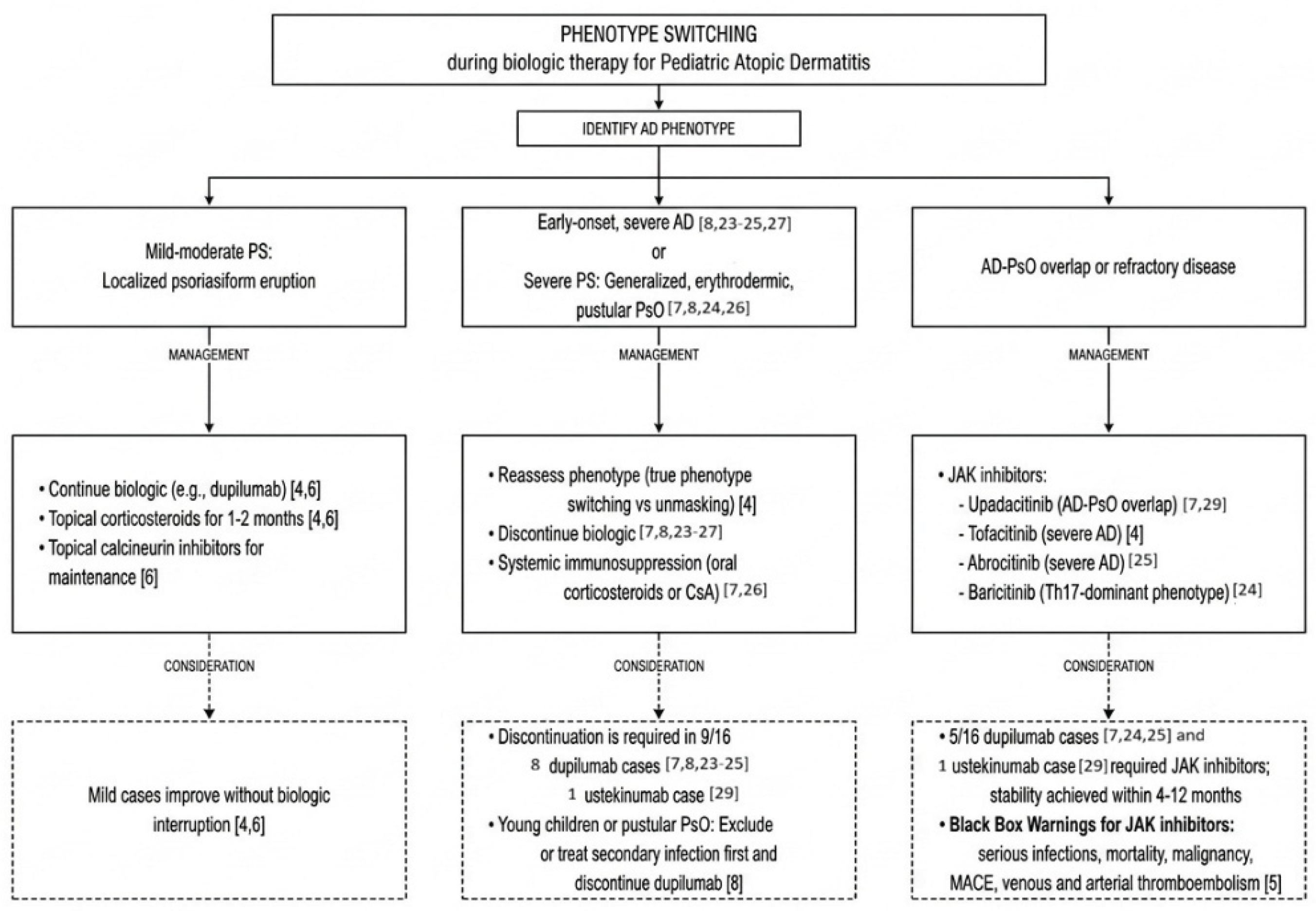
Figure 2.
Shared Th2–Th17–Th22 Immunopathogenesis Underlying Biologic-Induced Phenotype Switching in Pediatric Atopic Dermatitis and Psoriasis. Note that this figure exclusively includes FDA-approved biologics for pediatric atopic dermatitis or psoriasis with documented reports of phenotype switching. This figure is created with BioRender.com.
Figure 2.
Shared Th2–Th17–Th22 Immunopathogenesis Underlying Biologic-Induced Phenotype Switching in Pediatric Atopic Dermatitis and Psoriasis. Note that this figure exclusively includes FDA-approved biologics for pediatric atopic dermatitis or psoriasis with documented reports of phenotype switching. This figure is created with BioRender.com.
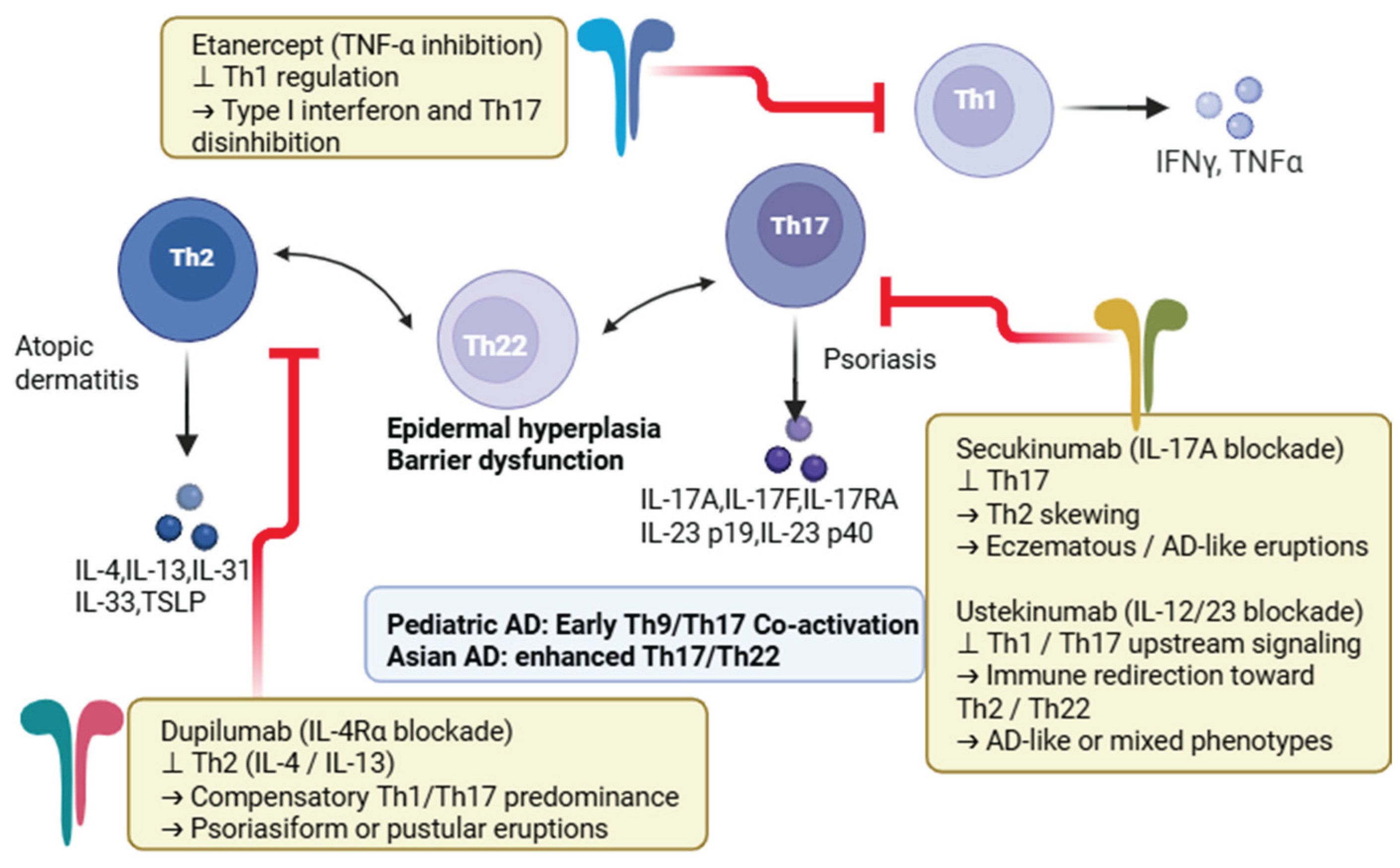
Figure 3.
Dupilumab-Induced Psoriasiform reaction in pediatric atopic dermatitis. (A-C) Cutaneous manifestations of atopic dermatitis before dupilumab therapy. (D-F) Following 14 doses of dupilumab (300mg Q2W), the patient developed diffuse psoriasiform plaques one week after 7 months.
Figure 3.
Dupilumab-Induced Psoriasiform reaction in pediatric atopic dermatitis. (A-C) Cutaneous manifestations of atopic dermatitis before dupilumab therapy. (D-F) Following 14 doses of dupilumab (300mg Q2W), the patient developed diffuse psoriasiform plaques one week after 7 months.
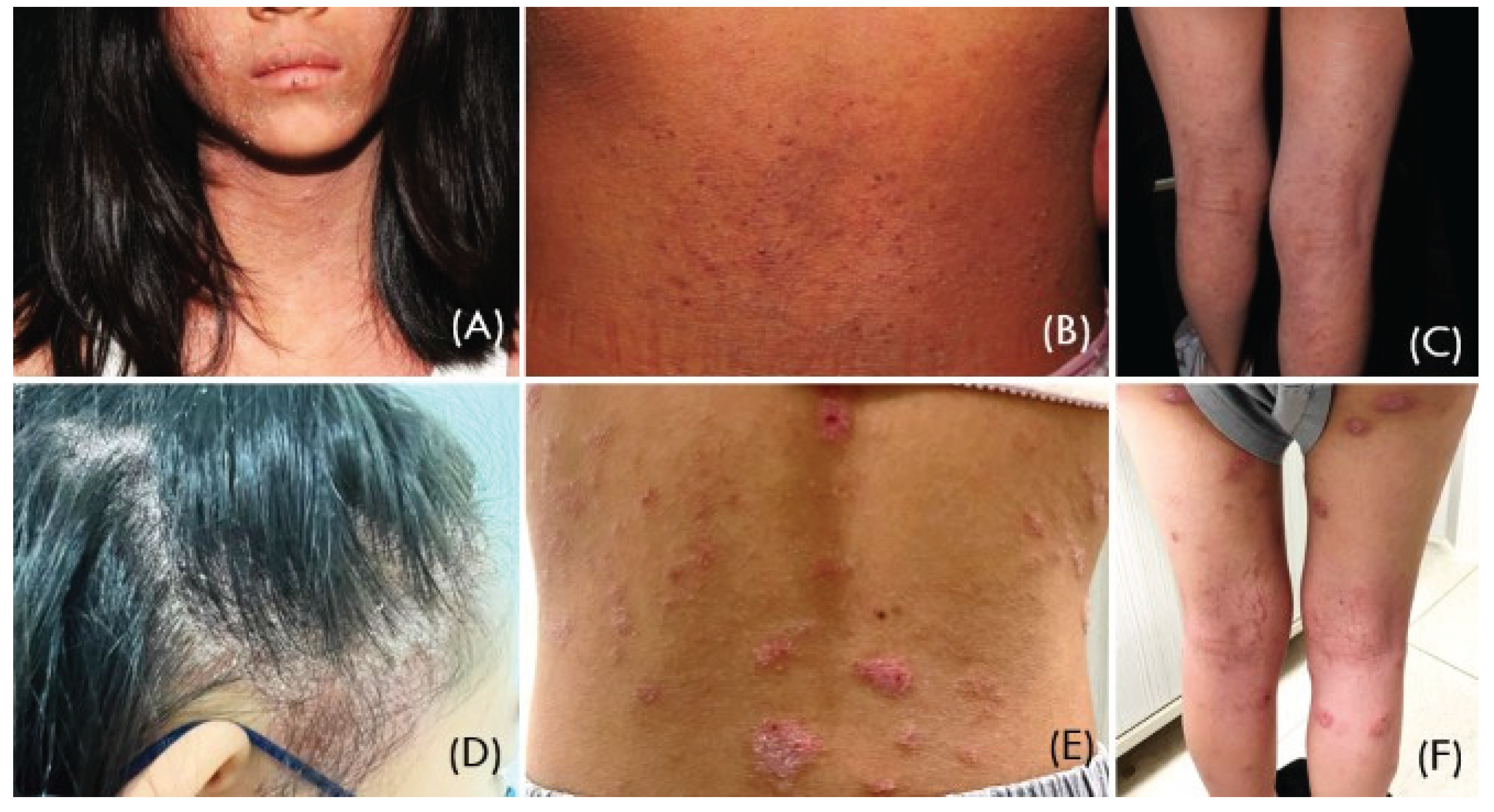

Table 1.
Summary of Phenotype switching following biologic agents in Pediatric Atopic Dermatitis and Psoriasis.
Table 1.
Summary of Phenotype switching following biologic agents in Pediatric Atopic Dermatitis and Psoriasis.
| Author | No. pts. (female) | Age (ethnic group) | Baseline disease entity and duration | Dosing | Phenotype switching (location) | Time to Onset | Drug withdrawal (case number) | Management (case number) | Long-term data (case number) |
| Dupilumab | |||||||||
| Parker et al. (2021) [4] | 6 (3) | 4-18; median 13 (the U.S.) | Moderate-to-severe AD | weight-based dosing 150–300 mg Q2W | PsO (face, scalp, trunk, extensor extremities) | Median 8 months (range 6–12 months) | N (5/6) | Ustekinumab (1, ineffective); Medium- to high-potency topical corticosteroids for 1-2 months (3); dupilumab continued (5); AD later required tofacitinib and IVIG (1) | Clearance or near-clearance (5); some recurrences controlled with intermittent topical corticosteroids up to 8-18 months (5) |
| Lockard et al. (2024) [6] | 2 (0) | 13 (the U.S.) | AD | Not specified | Inverse PsO (penis, groin, axilla, inner thighs) | 6 months (pt 1); 2 yrs (pt 2) | N (2/2) | Topical corticosteroids BID (2); tacrolimus 0.03% ointment for maintenance (2) | Full control (pt 1); nearly complete improvement (pt 2) |
| Tsai and Yu (2025) [7] | 1 (1) | 10 (East Asian) | AD | 300 mg Q2W | PsO (scalp, abdomen, upper back, lower limbs) | 7 months | Y (1/1) | Alternating secukinumab and dupilumab plus CsA 100 mg/day, then upadacitinib 15–30 mg/day | Stable for 1 year with occasional mild flare-ups on upadacitinib |
| Dang et al. (2024) [8] | 1 (0) | 4 (Asian) | Early-onset AD (3-yr history) | 600 mg followed by 300 mg Q4W | Pustular PsO (neck, chest, axillae, groin, buttocks) | 1 week | Y (1/1) | Discontinuation of dupilumab; topical or oral corticosteroids and antihistamines ineffective; oral thiamphenicol 0.25 g BID led to improvement | Near-complete resolution within 2 weeks of thiamphenicol; no recurrence during > 1-year follow-up |
| Trave et al. (2023) [23] | 1 (0) | 16 (Italy) | Early-onset AD | 600 mg followed by 300 mg Q4W | Plaque PsO (arms, neck, face, scalp) | 4 weeks | Y (1/1) | Topical clobetasol initially; later switched to cyclosporine 3 mg/kg/day | Disappearance of PsO and improvement of AD within 4 weeks |
| Ali et al. (2022) [24] | 2 (0) | 17 (Asian) | AD since childhood; positive FH of atopy | 300 mg Q2W | PsO (scalp, face, trunk, abdomen, extensor extremities) | 20 weeks | Y (2/2) | Discontinuation of dupilumab; initiation of baricitinib 2 mg BID | Significant improvement after 16 weeks of baricitinib; no adverse events during 24-week follow-up |
| Theodosiou et al. (2026) [25] | 1 (0) | 15 (Asian) | Severe childhood-onset AD | 600 mg followed by 300 mg Q4W | Plaque PsO (scalp, elbows, torso, knees) | 8 months | Y (1/1) | Discontinuation of dupilumab; initiation of abrocitinib 200 mg QD | Near-complete resolution within 4 weeks; sustained improvement and AD control during 6-month follow-up |
| Liu et al. (2023) [26] | 1 (0) | 13 (East Asian) | Severe AD (3-yr history); AR (6-yr history); positive FH of atopy | 400mg (loading dose) | Pustular PsO (trunk, lower extremities) | 10 days | Y (1/1) | Discontinuation of dupilumab; Supportive therapy with topical emollients and anti-allergic treatment | Clinical improvement of erythema and pruritus; no recurrence of pustules during follow-up |
| Park et al. (2021) [27] | 1 (0) | 17 (East Asian) | Early-onset, severe AD | 600 mg followed by 300mg Q2W | PsO (palms and soles, mostly in previously AD-unaffected sites) | 2 months | Y (1/1) | CsA for 2 months after discontinuation of dupilumab | Not specified |
| Ustekinumab | |||||||||
| Gargiulo et al. (2023) [29] | 1 (0) | 12 (Italy) | AD-PsO overlap since early childhood; PASI 10 | Ustekinumab 45 mg for 18 months; switch to dupilumab 300mg due to predominance of AD (EASI 12) | Improvement in AD but PsO relapse (nails and soles) | After 4 months of dupilumab switch | Y (1/1) | Upadacitinib 15 mg/day for 16 weeks after biologic discontinuation | After 16 weeks, the patient experienced complete remission of both diseases |
Abbreviations: AD, atopic dermatitis; Q2W, every 2 weeks; CsA, cyclosporine; Q4W, every 4 weeks; PsO, Psoriasis; IVIG, Intravenous immunoglobulin; AR, allergic rhinitis; FH, family history; AD-PsO overlap: Atopic dermatitis-Psoriasis overlapping; PASI; Psoriasis Area and Severity Index; EASI, Eczema Area and Severity Index.
Disclaimer/Publisher’s Note: The statements, opinions and data contained in all publications are solely those of the individual author(s) and contributor(s) and not of MDPI and/or the editor(s). MDPI and/or the editor(s) disclaim responsibility for any injury to people or property resulting from any ideas, methods, instructions or products referred to in the content. |
© 2026 by the authors. Licensee MDPI, Basel, Switzerland. This article is an open access article distributed under the terms and conditions of the Creative Commons Attribution (CC BY) license (http://creativecommons.org/licenses/by/4.0/).
Copyright: This open access article is published under a Creative Commons CC BY 4.0 license, which permit the free download, distribution, and reuse, provided that the author and preprint are cited in any reuse.