

Submitted:
14 September 2026
Posted:
15 September 2026
You are already at the latest version
Abstract
Semiconductor manufacturing relies on specialized yellow lighting in lithography fabs to prevent photoresist degradation, but such artificial lighting may raise concerns regarding human health and ESG goals. This study evaluates whether natural light-style candlelight can replace conventional yellow lighting while remaining photoresist- and human-friendly. We compare the two lighting conditions from fabrication, retinal, physiological, psychological, concentration, and visual perspectives. The findings provide seven reasons supporting candlelight: it better prevents photoresist degradation, reduces retinal stress, causes less melatonin suppression, improves reported comfort and psychological well-being, maintains working concentration, and provides favorable viewing clarity and ocular responses. Its chromaticity is also closer to the blackbody radiation locus, supporting a more natural lighting environment. These results indicate that blue-less candlelight-style illumination can satisfy key lithography-lighting requirements while supporting worker well-being. The proposed transition may therefore contribute to healthier and more sustainable semiconductor manufacturing environments and offers broader relevance to healthcare, education, architecture, and interior lighting applications.
Keywords:
semiconductor lithography
; candlelight-style LED
; yellow lighting
; photoresist
; circadian rhythm
; retinal safety
; human-centered lighting
1. Introduction
Semiconductor manufacturing is at the heart of modern technology, underpinning advances from smartphones to cutting-edge artificial intelligence [1]. Central to this industry is the manufacturing process, where precision and environmental control are paramount. A key component in ensuring the quality of semiconductor devices is the use of specialised lighting to protect photoresist materials during lithography. Traditionally, fabs employ yellow lighting to prevent photoresist degradation [2]. However, concerns about the broader implications of artificial lighting, particularly on human health and the environment, have led to a re-evaluation [3].
The use of artificial yellow light in semiconductor fabs, while effective in its primary role, may pose unintended health risks and fail to align with contemporary Environmental, Social, and Governance (ESG) standards [3,4]. Issues such as retinal stress, circadian rhythm disruption, and psychological impacts are increasingly relevant [5,6,7,8,9,10,11,12]. With the industry under growing scrutiny to adopt more sustainable and health-conscious practices, exploring alternative lighting solutions is both timely and significant. This research aims to address these concerns by evaluating a potentially more beneficial lighting option: a natural light-style candlelight. [13] This study investigates the feasibility of using candlelight - a blue-less natural light source - to replace the traditional yellow lighting in semiconductor fabs. We hypothesise that this alternative can not only maintain photoresist performance but also improve worker health and well-being. Our objective is to determine whether candlelight meets the rigorous demands of lithography while fostering a healthier and more sustainable working environment.
Our results show that candlelight outperforms yellow light in several areas: it effectively reduces photoresist degradation, minimises retinal stress, and provides better physiological and psychological well-being. Additionally, it improves working concentration and visual clarity. The integration of natural light in both operational efficiency and employee health, potentially reshaping industry practices on a large scale.
2. Materials and Methods
2.1. Participants
A total of 22 participants (11 male, 11 female; age range: 20-30 years) were recruited for this study. All participants had normal or corrected-to-normal vision. Informed consent was obtained from all participants and the study was approved by the institutional ethics committee.
2.2. Experimental Design
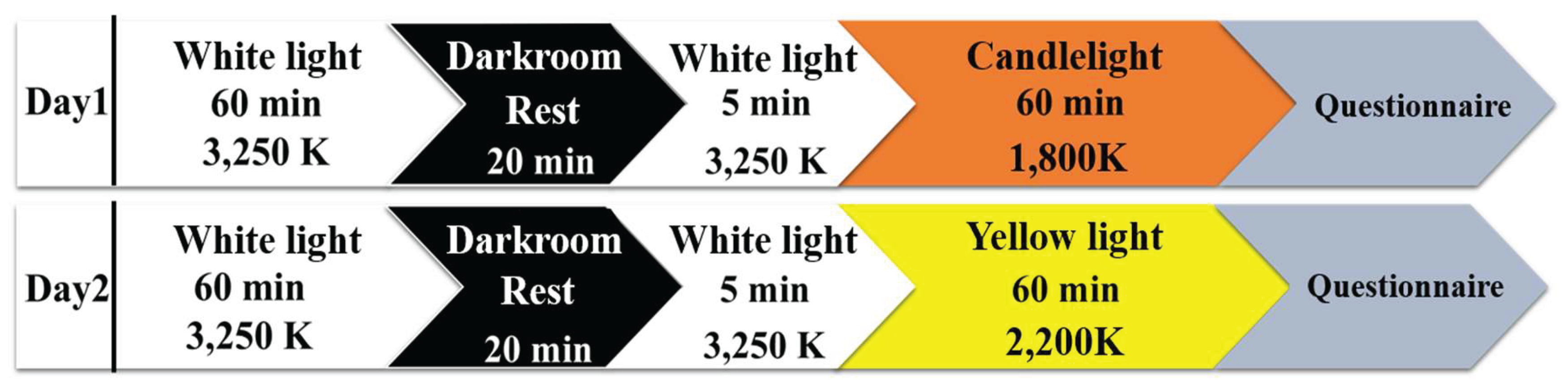
A between-subjects design was used to assess the effects of different lighting conditions on concentration, comfort and psychological well-being. Participants were divided into two groups. On day 1, both groups were exposed to a 60-minute control session under white light, followed by a 20-minute break and a 5-minute adaptation period. One group (group A) was then exposed to yellow light, while the other group (group B) was exposed to orange light. On day 2, the groups switched lighting conditions.
2.3. Lighting Conditions
Three lighting conditions were tested: white light (CCT 3,250K), yellow light (CCT 2,200K) and orange light (CCT 1,800K). Illuminance at the participants' eye level was maintained between 155 and 160 lx using a blue light hazard quantification spectrometer (SRI-100). The SRI-100 was also used to collect spectral data, including CIE coordinates, maximum permissible exposure (MPE), and melatonin suppression sensitivity (MSS).
2.4. Photoresist Degradation Experiment
In a separate experiment, SU-8 2005 negative photoresist was exposed to yellow and orange light at 5,000 lux for 72 hours to simulate lighting conditions in semiconductor manufacturing environments. The viscosity of the photoresist was measured using a rheometer (Anton Paar MR302e) before and after exposure. The change in viscosity was used as a measure of photoresist degradation.
2.5. Concentration Measurement
Concentration levels were assessed using a 9×9 Schulte grid test administered every 20 minutes during each 60-minute session. Participants were instructed to complete the grid as quickly and accurately as possible, and completion time was recorded as a measure of concentration.
2.6. Psychological Assessment
At the end of each day, participants completed a psychological questionnaire assessing comfort, mental state, eye fatigue and lighting preferences. The questionnaire consisted of Likert scale items relating to subjective feelings of comfort, fatigue and psychological well-being under the different lighting conditions.
3. Results
3.1. Candlelight is more Natural and Humane (In Terms of Chromaticity)
In semiconductor lithography, the quality of lighting has a significant impact on both process accuracy and operator comfort. [14,15,16] Traditionally, yellow light has been favoured for its ability to reduce the risk of photoresist degradation, [17] but it deviates significantly from blackbody radiation.
In this study, we propose candlelight as a viable alternative. Figure 1 compares the two lighting options and shows that while yellow light deviates significantly from the blackbody curve, candlelight aligns closely with it. This resemblance suggests that candlelight is more natural and humane, potentially enhancing the overall atmosphere in lithography fabs. By embracing candlelight, we can foster a more harmonious working environment, highlighting the effectiveness of simpler solutions.
3.2. Candlelight is Photoresist Friendlier
Figure 2.
Photoresist degradation, in terms of increasing viscosity, upon exposure to high dosage light for three days, wherein candlelight shows a lower increasing viscosity as comparing with the yellow light.
Figure 2.
Photoresist degradation, in terms of increasing viscosity, upon exposure to high dosage light for three days, wherein candlelight shows a lower increasing viscosity as comparing with the yellow light.
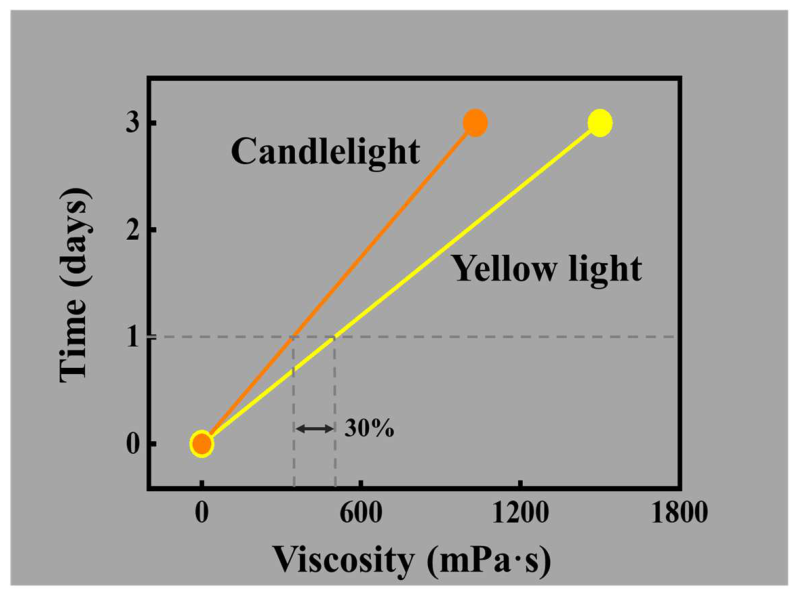
In semiconductor manufacturing, photoresists are essential for defining intricate patterns on silicon wafers, but they are highly sensitive to light exposure, which can lead to degradation. [18,19,20,21] In this study, we investigated how different light sources affected the viscosity of photoresists over three days. Remarkably, candlelight showed a significantly lower increase in viscosity than the yellow light, suggesting that it is more photoresist friendlier. This finding underscore candlelight’s potential as a superior alternative in semiconductor manufacturing, promising improved integrity of materials during lithography. Our results can plausibly position candlelight as a game-changer in the industry, opening up exciting possibilities for the future of semiconductor manufacturing.
3.3. Candlelight is Retina-Friendlier (Longer MPE)
Effective lighting is critical, affecting not only product quality but also the health of workers. [22,23] The commonly used 2,200K yellow light may pose risks to workers' wellbeing, particularly in relation to eye health. To identify a more beneficial alternative, we investigated the spectral irradiance of this yellow light compared to the proposed 1,800K candlelight. As shown in Figure 3, our results show that candlelight significantly reduces mid-wavelength emissions, particularly in the deep green and green spectra, which are sensitive to photoretinitis. In terms of lighting conditions, yellow light measures 156.56 lx at a CCT of 2200K and a maximum permissible exposure (MPE) of 24,502 seconds. In contrast, candlelight measures 155.12 lx with a CCT of 1800K and an MPE of 26,460 seconds. The higher MPE of candlelight, combined with its reduction enhances the eye-friendly properties of candlelight, suggesting that its use in semiconductor fabs could minimise retinal stress and improve worker well-being during prolonged exposure. These findings pave the way for further research into the health benefits of alternative lighting in different industrial settings, an important step towards promoting healthier working environments.
3.4. Candlelight is Physiologically Friendlier (Lower MSS)
Lighting is critical for regulating physiological processes, including circadian rhythms, which are essential for worker health and productivity. [24,25,26] Our melatonin suppression sensitivity (MSS) analysis examines how different colour temperatures affect these rhythms. As shown in Figure 4(a), the results indicate that candlelight, with its lower colour temperature, significantly reduces melatonin suppression compared to yellow light. This finding suggests that candlelight could minimise circadian disruption, which would be particularly beneficial for night shift engineers. By promoting better physiological regulation, candlelight improves worker health and productivity, while aligning with broader ESG goals for sustainable working environments in the semiconductor industry. These findings provide exciting opportunities for optimising lighting strategies to support wellbeing in different industrial settings.
In our study, we explore the intriguing relationship between light and sleep, [27,28,29] particularly how evening light exposure affects melatonin [11,30,31,32] - a hormone essential for regulating our sleep-wake cycle. Figure 4(b) shows our findings on melatonin suppression at night under different lighting conditions, with exposure durations of 1.5 and 6.5 hours. We found that candlelight resulted in less melatonin suppression compared to yellow light. This suggests that candlelight is less likely to disrupt circadian rhythms, offering potential benefits for sleep quality. These results highlight the importance of choosing appropriate lighting conditions to support healthy sleep patterns and circadian alignment. [33,34,35]
3.5. Candlelight is Psychologically Friendlier
Light colour has a significant impact on mood and overall experience, making it crucial in the design of work and relaxation environments. [36,37] Figure 5(a) shows that while white light is the most preferred, candlelight is almost twice as preferred as yellow light. This suggests that candlelight creates a more pleasant atmosphere, ideal for applications such as lithography fabs, enhancing the engagement and productivity of night shift engineers.
The comfort levels reported by the participants, as shown in Figure 5(b), indicate a slight preference for candlelight over yellow light. Specifically, 4% of participants felt very uncomfortable in yellow light, while none reported feeling the same in candlelight. In addition, 4% more participants felt slightly more comfortable with candlelight. Overall, both lighting options were well received, but these results suggest that candlelight creates a more soothing and inviting atmosphere, enhancing the overall ambiance.
The influence of lighting on our psychological state and energy levels is a crucial aspect of environmental design. [38,39,40,41] Figure 5(c) shows the tiredness levels of the participants under different lighting conditions. The results show that 40% of the participants felt tired in yellow light, while only 36% felt tired in candlelight. In addition, almost twice as many participants reported not feeling tired in candlelight than in yellow light. This suggests that the warm, soft quality of candlelight creates a more refreshing atmosphere, promoting greater alertness and reducing tiredness. These findings emphasize the importance of choosing candlelight to create a psychologically friendly environment that enhances overall wellbeing.
Lighting is known to influence emotional and psychological states, with warmer tones often associated with relaxation. [7,12,42] Figure 5(d) illustrates the effect of different lighting conditions on participants' depression levels. Specifically, 36% of participants reported feeling slightly depressed in yellow light, compared to 26% in candlelight. Furthermore, 24% of participants indicated they felt very not depressed under candlelight, while only 8% reported the same in yellow light. The gentle glow of candlelight seems to foster a tranquil environment that enhances emotional resilience and overall psychological health, while yellow light is less effective in promoting such benefits. These findings underscore the significance of lighting choices in influencing mental health, suggesting that candlelight serves as a more effective option for creating an emotionally supportive atmosphere.
3.6. Candlelight Retains Better Working Concentration
Figure 6.
Concentration maintenance of subjects upon reading under a typical white light for one hour, through a recess of 20 minutes, and followed by another hour's reading under illumination of (a) yellow-light and (b) the proposed candlelight.
Figure 6.
Concentration maintenance of subjects upon reading under a typical white light for one hour, through a recess of 20 minutes, and followed by another hour's reading under illumination of (a) yellow-light and (b) the proposed candlelight.
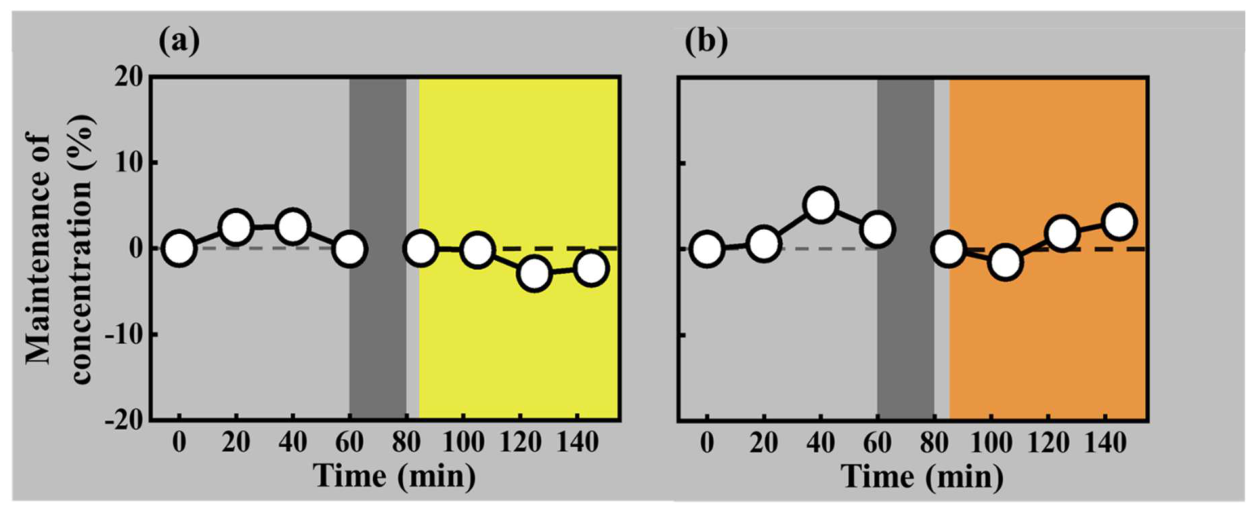
The analysis of concentration maintenance during reading activities under different lighting conditions shows a clear benefit of using candlelight over yellow light. Subjects read under typical white light for one hour, took a 20-minute recess, and then continued reading for another hour under either yellow light or candlelight. Specifically, after reading for 60 minutes under yellow light, subjects experienced a 3% decrease in concentration maintenance, while it increased by 2% under candlelight. The results indicate that the proposed candlelight significantly enhances the maintenance of working concentration compared to yellow light. This suggests that candlelight may be a more effective lighting option for tasks requiring sustained mental focus.
3.7. Candlelight Also Provides Better Viewing Clarity and Induced Lesser IOP than White Light
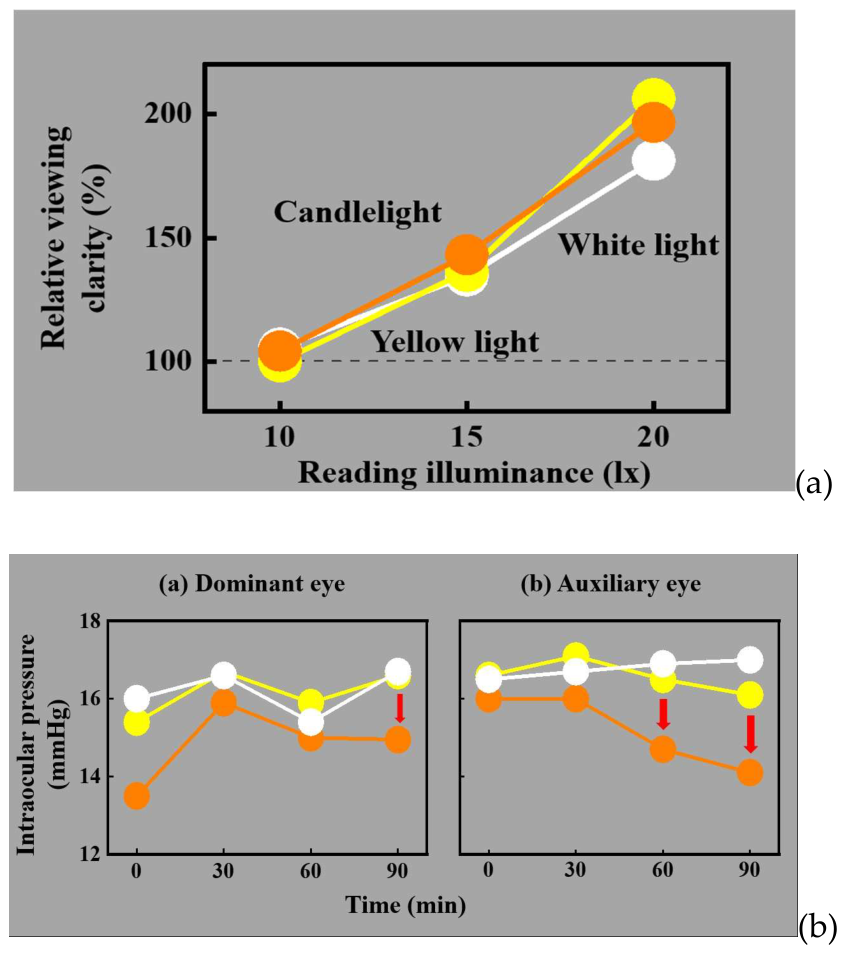
Viewing clarity is crucial in environments that require precision and focus, especially in semiconductor fabrication, where the quality of reading illumination can have a significant impact on visual performance and productivity. [16,43,44] Figure 7(a) illustrates that candlelight, traditional yellow lighting, and white light provide comparable levels of relative viewing clarity. However, the lower colour temperatures associated with candlelight may enhance reading safety by reducing visual strain during prolonged tasks, as shown previously (Figure 3).
The effect of reading light colour on interocular pressure (IOP) was pronounced, particularly highlighting the contrasting effects on the dominant and auxiliary eyes. Notably, reading under blue-emission-free candlelight resulted in lower IOP compared to both white and yellow light, effectively preventing IOP fluctuations in both eye types. This suggests that candlelight may offer superior physiological benefits during extended reading time, emphasizing its potential advantages over traditional lighting conditions.
3.8. Discussion
This study provides compelling evidence for replacing traditional yellow lighting with candlelight in semiconductor lithography fabs, highlighting significant benefits for both manufacturing efficiency and worker health.
Natural and Humane Lighting: Candlelight, with its chromaticity closely resembling natural light, enhances the workplace atmosphere. Its higher Colour Rendering Index (CRI) and Spectral Rendering Index (SRI) contribute to a more humane lighting environment that promotes worker well-being.
Photoresist Compatibility: Our findings demonstrate that candlelight better prevents the degradation of photoresists compared to yellow light. This can help secure their storage prior to lithography, indicating significant benefits for semiconductor manufacturing.
Retinal Health: The eye-friendly properties of candlelight, characterised by lower mid-wavelength emissions, may reduce the risks associated with retinal stress [45,46,47] and intraocular pressure (IOP) fluctuations. The higher Maximum Permissible Exposure (MPE) associated with candlelight underlines its safety for prolonged use in the workplace.
Physiological effects: Our analysis reveals that candlelight significantly reduces melatonin suppression sensitivity compared to yellow light. This reduction is particularly beneficial for night shift workers, as it may help maintain circadian rhythm stability and improve sleep quality. By minimising melatonin suppression, candlelight supports both physiological health and aligns with contemporary ESG goals for creating sustainable working environments.
Psychological Well-Being: Participants reported increased comfort, reduced fatigue, and lower levels of depression with candlelight, consistent with findings from psychological studies of lighting. This suggests that candlelight can enhance overall job satisfaction and mental health in high-stress manufacturing environments.
Concentration and Productivity: Our results indicate that candlelight significantly improves concentration maintenance during tasks requiring sustained focus. This enhancement is critical in precision-driven environments like semiconductor fabrication.
Comparison with Previous Research: These findings contrast with traditional studies on industrial lighting, which often overlook the holistic impacts of light on health and productivity. By prioritising natural lighting options, our research supports existing literature advocating for improved psychological outcomes in workplace design.
Broader Significance: The transition to candlelight in semiconductor fabs not only optimises operational performance but also sets a precedent for future lighting standards across various industries. This approach emphasizes the importance of integrating human-centred design principles into technological processes, aligning with contemporary ESG goals.
4. Conclusions
In this study, we have demonstrated that switching from yellow light to candlelight in semiconductor lithography fabs yields significant benefits in several areas, including photoresist performance, retinal health, and overall well-being. Candlelight not only outperforms yellow light in preventing photoresist degradation, but also promotes better physiological and psychological conditions for workers. Our findings indicate that this more natural lighting option enhances worker concentration, reduces retinal stress, and fosters a supportive environment that aligns with Environmental, Social, and Governance (ESG) goals.
The implications of these findings are profound, suggesting that semiconductor manufacturers can improve working conditions while simultaneously adhering to sustainable practices. The adoption of candlelight could contribute to a healthier working environment, thereby enhancing employee satisfaction and productivity. In addition, candlelight's potential to minimise melatonin suppression and support circadian rhythms underscores its importance for night shift workers, an often-overlooked aspect in industrial lighting design.
Looking ahead, further research is warranted to explore the effects of candlelight in various industrial settings and to investigate its long-term effects on worker health and productivity. Future studies should consider the integration of human-centred and sustainable lighting approaches across high-tech industries, paving the way for broader applications that prioritise both operational efficiency and worker well-being. This shift represents not only a change in lighting strategy but also signifies a move towards a more holistic understanding of the workplace environment and its influence on health and productivity.
Author Contributions
Conceptualization, K.-H.L., P.-T.Y. and J.-H.J.; investigation, D.S.; data curation, D.S.; writing—original draft preparation, D.S.; writing—review and editing, H.-W.Y., X.-Q.H., T.-H.C., P.-C.T., S.-Y.L., K.-H.L., P.-T.Y. and J.-H.J.; supervision, J.-H.J.; project administration, J.-H.J. All authors have read and agreed to the published version of the manuscript.
Funding
This work was financially supported in part by Powerchip Semiconductor Manufacturing Corporation through projects 111A0348 and 112A0343, the National Science and Technology Council under project 112-2622-E-007-021, and National Tsing Hua University and National Taiwan University Hospital Hsin-Chu Branch through a joint project 112-HCH094.
Institutional Review Board Statement
[Please provide the IRB/ethics approval statement and approval number for the human-participant study.].
Informed Consent Statement
[Please confirm and provide the informed-consent statement for all participants.].
Data Availability Statement
The original contributions presented in this study are included in the article. Further inquiries can be directed to the corresponding author.:
Acknowledgments
The authors would also like to thank Shu-Guang Girls' Senior High School for contributing in the visual clarity experiment and Sushanta Lenka for his assistance in reviewing Figure Captions 1 and 3.
Conflicts of Interest
The authors declare no conflicts of interest.
References
- World Semiconductor Trade Statistics. Global Semiconductor Market Report (2023). Accessed August 30, 2024. https://www.wsts.org/market-statistics.
- Wald, P.H. & Jones, J.R. Semiconductor manufacturing: an introduction to processes and hazards. Am. J. Ind. Med. 11, 203–221 (1987). [CrossRef]
- Cho, Y., Ryu, S.H., Lee, B.R., Kim, K.H., Lee, E. & Choi, J. Effects of artificial light at night on human health: A literature review of observational and experimental studies applied to exposure assessment. Chronobiol. Int. 32, 1294–1310 (2015). [CrossRef]
- Cort, T. & Esty, D. ESG standards: Looming challenges and pathways forward. Organ. Environ. 33, 491–510 (2020). [CrossRef]
- Salceda, R. Light pollution and oxidative stress: Effects on retina and human health. Antioxidants 13, 362 (2024). [CrossRef]
- Benke, K.K. & Benke, K.E. Uncertainty in health risks from artificial lighting due to disruption of circadian rhythm and melatonin secretion: a review. Hum. Ecol. Risk Assess. 19, 916–929 (2013). [CrossRef]
- Chen, R., Tsai, M.C. & Tsay, Y.S. Effect of color temperature and illuminance on psychology, physiology, and productivity: An experimental study. Energies 15, 4477 (2022). [CrossRef]
- Scott, H. et al. Circadian-informed lighting improves vigilance, sleep, and subjective sleepiness during simulated night-shift work. Sleep 47, zsae173 (2024). [CrossRef]
- Kretzschmar, J., Rath, N., Romero Starke, K., Seidler, A. & Freiberg, A. The effect of exposure to artificial light at night (ALAN) on sleep disturbance: a systematic review and meta-analysis. Environ. Res. 286, 122862 (2026). [CrossRef]
- Hammond, B.R. & Buch, J. The evidentiary basis and challenges associated with studying the role of light damage on ocular health. J. Optom. 19, 100616 (2026). [CrossRef]
- Piazena, H., Franke, L., Uebelhack, R., Penzel, T. & Fietze, I. The effects of spectrum, irradiance, and duration of exposure on light-induced melatonin suppression in healthy adults. Photochem. Photobiol. Advance online publication (2026). [CrossRef]
- Awada, M., Becerik-Gerber, B., Lucas, G.M. & Roll, S.C. The impact of color correlated temperature and illuminance levels of office lighting on stress and cognitive restoration. J. Environ. Psychol. 104, 102628 (2025). [CrossRef]
- Jou, J.H. et al. Candle light-style organic light-emitting diodes. Adv. Funct. Mater. 23, 2750–2757 (2013). [CrossRef]
- Martinez, V.M. & Edgar, T.F. Control of lithography in semiconductor manufacturing. IEEE Control Syst. Mag. 26, 46–55 (2006). [CrossRef]
- Bellia, L., Diglio, F. & Fragliasso, F. Office workers' performance and satisfaction with the luminous environment under standard and daylight mimicking LEDs. J. Build. Eng. 97, 110942 (2024). [CrossRef]
- Jung, D., An, J. & Hong, T. Exploring the relationship between office lighting, cognitive performance, and psychophysiological responses: A multidimensional approach. Build. Environ. 263, 111863 (2024). [CrossRef]
- Moreau, W.M. Semiconductor Lithography: Principles, Practices, and Materials (Springer Science & Business Media, 2012). [CrossRef]
- Shaw, J.M., Gelorme, J.D., LaBianca, N.C., Conley, W.E. & Holmes, S.J. Negative photoresists for optical lithography. IBM J. Res. Dev. 41, 81–94 (1997). [CrossRef]
- Lorenz, H., Despont, M., Fahrni, N., LaBianca, N., Renaud, P. & Vettiger, P. SU-8: a low-cost negative resist for MEMS. J. Micromech. Microeng. 7, 121–124 (1997). [CrossRef]
- Lorenz, H., Despont, M., Fahrni, N., Brugger, J., Vettiger, P. & Renaud, P. High-aspect-ratio, ultrathick, negative-tone near-UV photoresist and its applications for MEMS. Sens. Actuators A Phys. 64, 33–39 (1998). [CrossRef]
- del Campo, A. & Greiner, C. SU-8: a photoresist for high-aspect-ratio and 3D submicron lithography. J. Micromech. Microeng. 17, R81–R95 (2007). [CrossRef]
- Behar-Cohen, F. et al. Light-emitting diodes (LED) for domestic lighting: any risks for the eye? Prog. Retin. Eye Res. 30, 239–257 (2011). [CrossRef]
- Françon, A., Delaunay, K., Jaworski, T., Lebon, C., Picard, E., Youale, J., Behar-Cohen, F. & Torriglia, A. Phototoxicity of low doses of light and influence of the spectral composition on human RPE cells. Sci. Rep. 14, 6839 (2024). [CrossRef]
- Brainard, G.C. et al. Action spectrum for melatonin regulation in humans: evidence for a novel circadian photoreceptor. J. Neurosci. 21, 6405–6412 (2001). [CrossRef]
- Thapan, K., Arendt, J. & Skene, D.J. An action spectrum for melatonin suppression: evidence for a novel non-rod, non-cone photoreceptor system in humans. J. Physiol. 535, 261–267 (2001). [CrossRef]
- Lucas, R.J. et al. Measuring and using light in the melanopsin age. Trends Neurosci. 37, 1–9 (2014). [CrossRef]
- Cajochen, C. et al. Evening exposure to a light-emitting diodes (LED)-backlit computer screen affects circadian physiology and cognitive performance. J. Appl. Physiol. 110, 1432–1438 (2011). [CrossRef]
- Chang, A.-M., Aeschbach, D., Duffy, J.F. & Czeisler, C.A. Evening use of light-emitting eReaders negatively affects sleep, circadian timing, and next-morning alertness. Proc. Natl. Acad. Sci. USA 112, 1232–1237 (2015). [CrossRef]
- Cajochen, C., Stefani, O., Schöllhorn, I., Lang, D. & Chellappa, S.L. Influence of evening light exposure on polysomnographically assessed night-time sleep: A systematic review with meta-analysis. Light. Res. Technol. 54, 609–624 (2022). [CrossRef]
- Gooley, J.J. et al. Spectral responses of the human circadian system depend on the irradiance and duration of exposure to light. Sci. Transl. Med. 2, 31ra33 (2010). [CrossRef]
- Gooley, J.J. et al. Exposure to room light before bedtime suppresses melatonin onset and shortens melatonin duration in humans. J. Clin. Endocrinol. Metab. 96, E463–E472 (2011). [CrossRef]
- Phillips, A.J.K. et al. High sensitivity and interindividual variability in the response of the human circadian system to evening light. Proc. Natl. Acad. Sci. USA 116, 12019–12024 (2019). [CrossRef]
- Brown, T.M. et al. Recommendations for daytime, evening, and nighttime indoor light exposure to best support physiology, sleep, and wakefulness in healthy adults. PLoS Biol. 20, e3001571 (2022). [CrossRef]
- St Hilaire, M.A. et al. The spectral sensitivity of human circadian phase resetting and melatonin suppression to light changes dynamically with light duration. Proc. Natl. Acad. Sci. USA 119, e2205301119 (2022). [CrossRef]
- Giménez, M.C., Stefani, O., Cajochen, C., Lang, D., Deuring, G. & Schlangen, L.J.M. Predicting melatonin suppression by light in humans: Unifying photoreceptor-based equivalent daylight illuminances, spectral composition, timing and duration of light exposure. J. Pineal Res. 72, e12786 (2022). [CrossRef]
- Knez, I. Effects of indoor lighting on mood and cognition. J. Environ. Psychol. 15, 39–51 (1995). [CrossRef]
- Dick, M., Pohl, W., Lackner, H.K., Weiss, E.M. & Canazei, M. Effects of personalized lighting on subjective ratings, cognitive performance, and physiological stress response in a simulated office environment. LEUKOS 20, 347–366 (2024). [CrossRef]
- Viola, A.U., James, L.M., Schlangen, L.J.M. & Dijk, D.-J. Blue-enriched white light in the workplace improves self-reported alertness, performance and sleep quality. Scand. J. Work Environ. Health 34, 297–306 (2008). [CrossRef]
- Smolders, K.C.H.J., de Kort, Y.A.W. & Cluitmans, P.J.M. A higher illuminance induces alertness even during office hours: findings on subjective measures, task performance and heart rate measures. Physiol. Behav. 107, 7–16 (2012). [CrossRef]
- Lok, R., Smolders, K.C.H.J., Beersma, D.G.M. & de Kort, Y.A.W. Light, alertness, and alerting effects of white light: a literature overview. J. Biol. Rhythms 33, 589–601 (2018). [CrossRef]
- Liu, W., Ma, Y., He, M., Luo, X., Li, S., Ru, T. & Zhou, G. Warm light in a cold environment enhances subjective comfort without improving cognitive performance: A multi-measurement study. Physiol. Behav. 310, 115315 (2026). [CrossRef]
- Bjerrum, L.B., Nordhus, I.H., Sørensen, L., Wulff, K., Bjorvatn, B., Flo-Groeneboom, E. & Visted, E. Acute effects of light during daytime on central aspects of attention and affect: A systematic review. Biol. Psychol. 192, 108845 (2024). [CrossRef]
- Wang, Q., Xu, H., Gong, R. & Cai, J. Investigation of visual fatigue under LED lighting based on reading task. Optik 126, 1433–1438 (2015). [CrossRef]
- Zhao, X., Lin, L., Li, R., Zhang, T., Cao, Y. & Wang, Z. Predictive modeling of office lighting comfort: interactive effects of illuminance and color temperature on EEG and cognitive workload. J. Build. Eng. 118, 115023 (2026). [CrossRef]
- Ham, W.T. Jr, Mueller, H.A. & Sliney, D.H. Retinal sensitivity to damage from short wavelength light. Nature 260, 153–155 (1976). [CrossRef]
- Shang, Y.-M., Wang, G.-S., Sliney, D., Yang, C.-H. & Lee, L.-L. White light-emitting diodes (LEDs) at domestic lighting levels and retinal injury in a rat model. Environ. Health Perspect. 122, 269–276 (2014). [CrossRef]
- Jaadane, I. et al. Retinal damage induced by commercial light emitting diodes (LEDs). Free Radic. Biol. Med. 84, 373–384 (2015). [CrossRef]
Figure 1.
The emission colors of an yellow light and a candlelight, the latter of which is proposed as a replacement for the yellow light currently utilized in the lithography fabs of semiconductor industry. The transition is supported by its closer proximity to the locus of blackbody radiation.
Figure 1.
The emission colors of an yellow light and a candlelight, the latter of which is proposed as a replacement for the yellow light currently utilized in the lithography fabs of semiconductor industry. The transition is supported by its closer proximity to the locus of blackbody radiation.
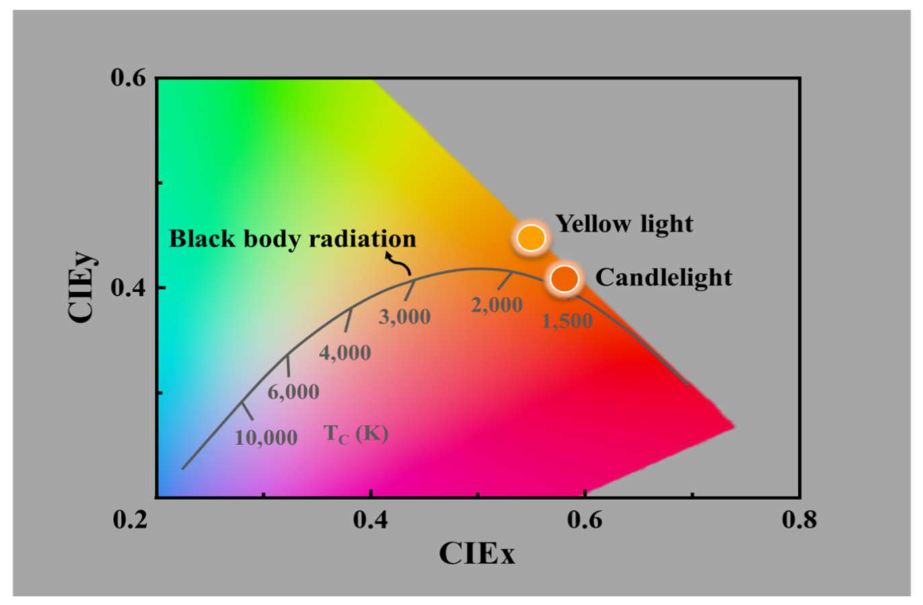
Figure 3.
Spectral irradiance of (a) a 2,200K yellow light and (b) a proposed 1,800K candlelight. The latter of which exhibits reduced emission of photoretinitis-sensitive mid-wavelengths (e.g., deep green and green), which underscores its eye-friendly properties.
Figure 3.
Spectral irradiance of (a) a 2,200K yellow light and (b) a proposed 1,800K candlelight. The latter of which exhibits reduced emission of photoretinitis-sensitive mid-wavelengths (e.g., deep green and green), which underscores its eye-friendly properties.
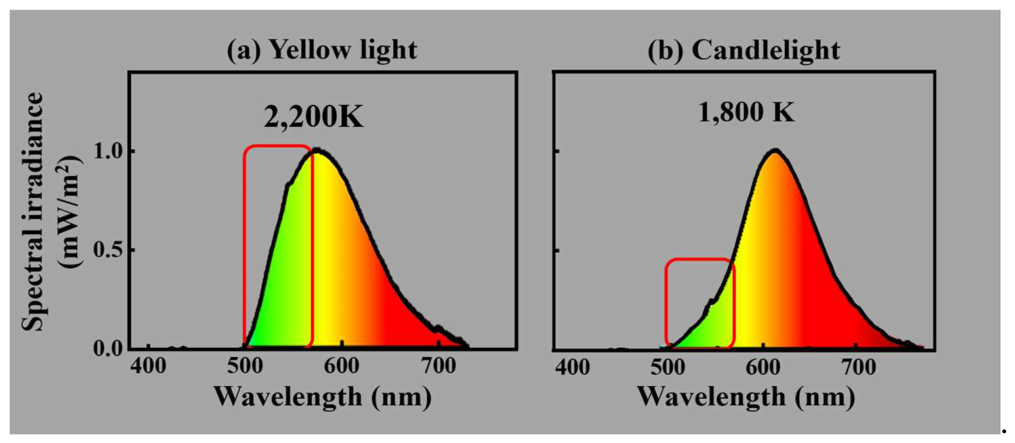
Figure 4.
a). Melatonin suppression sensitivity (MSS) as a function of color temperature. Candlelight, characterized by a lower color temperature, results in significantly less melatonin suppression compared to yellow light. This finding suggests that candlelight would have a lesser impact on circadian rhythm, especially for nightshift engineers. b). Melatonin suppression at night under different lighting conditions with exposure durations of 1.5 and 6.5 hours. Candlelight results in less melatonin suppression, indicating a lower impact on circadian rhythms and potential benefits for sleep quality.
Figure 4.
a). Melatonin suppression sensitivity (MSS) as a function of color temperature. Candlelight, characterized by a lower color temperature, results in significantly less melatonin suppression compared to yellow light. This finding suggests that candlelight would have a lesser impact on circadian rhythm, especially for nightshift engineers. b). Melatonin suppression at night under different lighting conditions with exposure durations of 1.5 and 6.5 hours. Candlelight results in less melatonin suppression, indicating a lower impact on circadian rhythms and potential benefits for sleep quality.
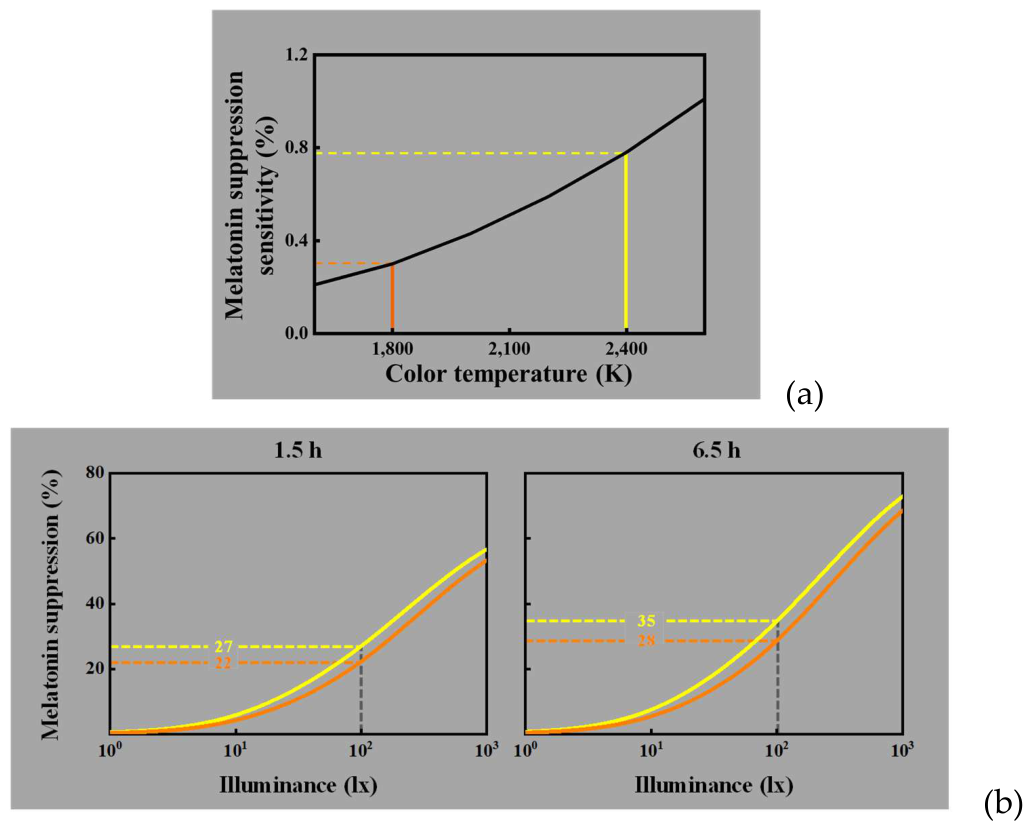
Figure 5.
a). Lighting color preferences of the participants, wherein the testing lights were of white, yellow and orange (candlelight-style). b). Comfort levels of the participants under different lighting conditions, highlighting the superior comfort of candlelight. c). Tiredness levels of the participants under different lighting conditions, highlighting that candlelight is associated with lower levels of tiredness. d). Depression levels of the participants under different lighting conditions, indicating that candlelight results in lower levels of depression.
Figure 5.
a). Lighting color preferences of the participants, wherein the testing lights were of white, yellow and orange (candlelight-style). b). Comfort levels of the participants under different lighting conditions, highlighting the superior comfort of candlelight. c). Tiredness levels of the participants under different lighting conditions, highlighting that candlelight is associated with lower levels of tiredness. d). Depression levels of the participants under different lighting conditions, indicating that candlelight results in lower levels of depression.
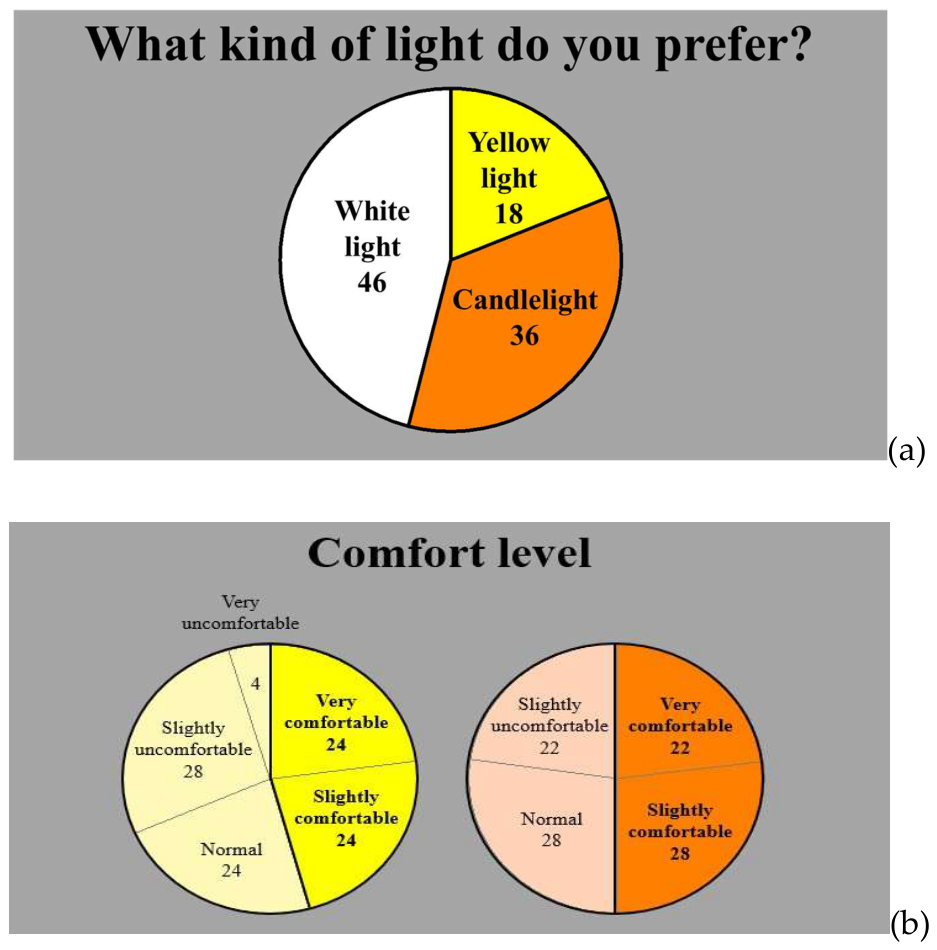
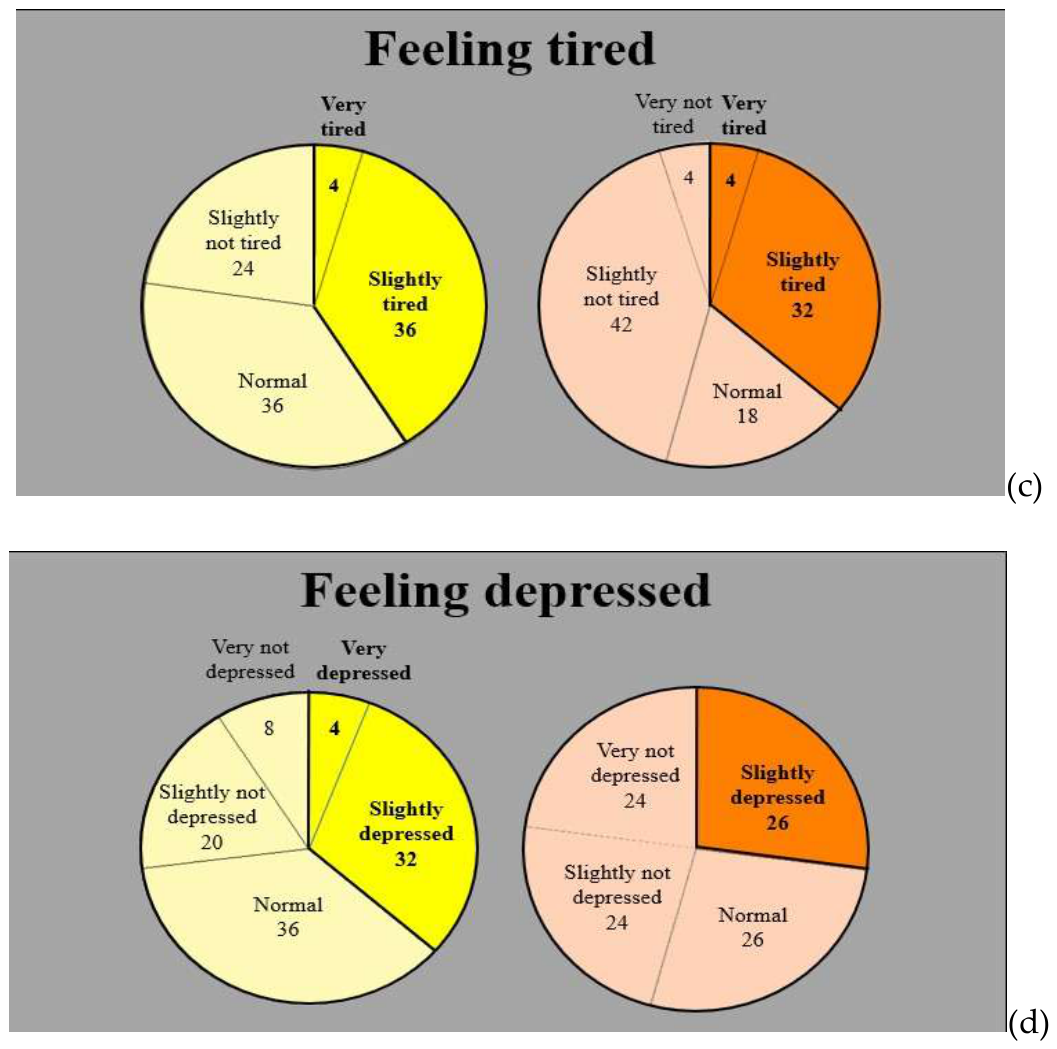
Figure 7.
a). Relative viewing clarity under different reading illumination conditions. All the lighting conditions tested - candlelight, traditional yellow light and white light - show comparable clarity. b). Effects of reading time on the interocular pressure (IOP) of the (a) dominant and (b) auxiliary eyes of subjects under white, yellow light, and candlelight.
Figure 7.
a). Relative viewing clarity under different reading illumination conditions. All the lighting conditions tested - candlelight, traditional yellow light and white light - show comparable clarity. b). Effects of reading time on the interocular pressure (IOP) of the (a) dominant and (b) auxiliary eyes of subjects under white, yellow light, and candlelight.
Disclaimer/Publisher’s Note: The statements, opinions and data contained in all publications are solely those of the individual author(s) and contributor(s) and not of MDPI and/or the editor(s). MDPI and/or the editor(s) disclaim responsibility for any injury to people or property resulting from any ideas, methods, instructions or products referred to in the content. |
© 2026 by the authors. Licensee MDPI, Basel, Switzerland. This article is an open access article distributed under the terms and conditions of the Creative Commons Attribution (CC BY) license (http://creativecommons.org/licenses/by/4.0/).
Copyright: This open access article is published under a Creative Commons CC BY 4.0 license, which permit the free download, distribution, and reuse, provided that the author and preprint are cited in any reuse.