
Submitted:
15 September 2026
Posted:
15 September 2026
You are already at the latest version
Abstract
Background: Human papillomavirus (HPV) vaccination is a major strategy for cervical cancer prevention, but uptake may be affected by misinformation, sociocultural concerns, and distrust. Pakistan’s 2025 national HPV vaccine rollout provided an opportunity to explore how parents experienced and interpreted this new intervention.
Methods: A phenomenological qualitative study explored parental experiences in Islamabad and Rawalpindi through 16 in-depth interviews conducted in Urdu during September and October 2025. Data were transcribed, translated, coded using NVivo-supported procedures, and analysed thematically using Braun and Clarke’s reflexive approach. Interpretation integrated the Socio-Ecological Model and WHO health-system building blocks.
Results: Parents initially described fear, uncertainty, infertility concerns, misinformation, moral concerns, and distrust of institutions. Islamabad participants reported greater exposure to digital information and misinformation and sought formal evidence and professional reassurance. Rawalpindi participants relied more strongly on interpersonal reassurance from Lady Health Workers, teachers, relatives, and other parents. Across settings, confidence increased when concerns were acknowledged, information was communicated clearly, vaccination appeared safe, and trusted community members endorsed the intervention.
Conclusion: HPV vaccine confidence is relational and context-dependent. Successful implementation requires transparent communication, trained frontline workers, community engagement, rapid misinformation response, and visible institutional accountability.
Keywords:
human papillomavirus
; HPV vaccine
; vaccine hesitancy
; parents
; vaccine confidence
; cervical cancer
; Pakistan
; qualitative research
1. Introduction
Cervical cancer remains an important public health problem, particularly in low- and middle-income countries where access to vaccination, screening, diagnosis, and treatment remains uneven. The World Health Organization (WHO) global strategy for cervical cancer elimination identifies HPV vaccination as the first pillar of elimination and sets a target of 90% vaccination coverage among girls by age 15 years.[1] The strategy recognises that elimination cannot be achieved through a single intervention but requires coordinated action across vaccination, screening, treatment, health systems, and communities.[1]
The global expansion of HPV vaccination has increased substantially over the past decade, although important inequities remain between high-income and low- and middle-income countries. Analysis of HPV vaccine introduction worldwide demonstrated considerable variation in program introduction and coverage, with girls in many low- and middle-income countries remaining less likely to receive complete protection.[2] The Immunization Agenda 2030 further emphasises people-centered, country-led, partnership-based and data-driven immunisation programs, recognising that access alone is insufficient when communities do not have confidence in vaccination services.[3]
WHO’s 2022 position paper on HPV vaccines reinforced vaccination as a foundational intervention for cervical cancer prevention and supported simplified dosing approaches based on accumulating evidence.[4] These developments are particularly relevant for countries such as Pakistan, where introducing HPV vaccination into the routine immunisation landscape represents both a major prevention opportunity and a substantial communication challenge.
Pakistan introduced HPV vaccination nationally in September 2025, initially targeting girls aged 9–14 years. The introduction represented an important milestone for cervical cancer prevention and created an opportunity to integrate vaccination with broader efforts in health education, community mobilisation, adolescent health, and cancer prevention. Khalid and Khan described the introduction as a strategic opportunity for multisectoral collaboration involving government, health professionals, schools, communities, and development partners.[5]
However, the introduction of a new vaccine does not occur in a socially neutral environment. Parents interpret health interventions through previous experiences with government programmes, family beliefs, social networks, religious and cultural values, and information obtained from conventional and digital media. In the context of HPV vaccination, these influences may be especially important because HPV is commonly associated with sexual transmission and because vaccination is generally offered before adolescence.
Evidence from Pakistan illustrates the challenge. A cross-sectional study found substantial awareness of HPV and considerable willingness to accept HPV vaccination, but actual vaccination experience remained uncommon.[6] Research among university students in Punjab similarly identified important gaps in HPV and vaccine knowledge despite generally favourable attitudes among informed participants.[7] Among physicians in Karachi, positive attitudes toward HPV vaccination coexisted with gaps in knowledge and practice, highlighting the importance of provider recommendation in vaccine uptake.[8]
These findings are consistent with international evidence showing that parental HPV vaccine decisions are shaped by knowledge, perceived susceptibility and severity, vaccine safety concerns, social norms, trusted information sources, and relationships with health professionals. A qualitative mixed-methods study among migrant parents found that barriers and facilitators operated across multiple levels, including family beliefs, access to information, provider interactions, and the organisation of school-based vaccination.[9] A qualitative study of young people and parents similarly identified information needs, cultural beliefs, communication with healthcare professionals, and trust as important influences on HPV vaccination decisions.[10]
The social context of vaccination has become increasingly important as misinformation circulates through digital platforms. Social media can provide rapid access to credible health information, but it can also amplify rumours and emotionally compelling misinformation. Evidence from a systematic review of social-media and mobile-technology interventions indicates that digital approaches can support HPV vaccine knowledge and attitudes, although their effectiveness depends on intervention design and implementation.[11] More broadly, a 2026 systematic review and meta-analysis of randomized trials found that social-media interventions improved vaccine knowledge, attitudes, confidence, and some measures of hesitancy, but did not produce a statistically significant overall increase in actual vaccination uptake.[12]
Vaccine confidence is therefore not simply an information deficit. WHO’s behavioural and social drivers framework conceptualises vaccination behaviour through interacting domains involving thinking and feeling, social processes, motivation, and practical issues.[13,14] WHO’s human-centred design approach similarly recommends designing immunisation programmes around the needs and experiences of the people they are intended to serve.[15]
The present study explored parents’ lived experiences during the initial introduction of HPV vaccination in Islamabad and Rawalpindi. The study examined how parents encountered information, interpreted concerns about infertility and safety, negotiated vaccination within families, responded to community narratives, interacted with health workers and schools, and developed or resisted confidence in the vaccine.
2. Methods
2.1. Study Design
A phenomenological qualitative design was used to explore parents’ lived experiences of HPV vaccine introduction. The study focused on how parents experienced the vaccine programme, interpreted information and uncertainty, and made decisions within their social and institutional environments.
Reflexive thematic analysis was selected because it provides a systematic but interpretive approach to identifying patterns of meaning within qualitative data.[16,17] The analysis was further informed by the Socio-Ecological Model, allowing influences to be examined at individual, interpersonal, community, institutional, and structural levels. WHO health-system perspectives were used to interpret how service delivery, health workers, information, community engagement, and governance contributed to vaccine confidence.
2.2. Study Setting and Participants
The study was conducted in Islamabad Capital Territory and Rawalpindi District, including the Gujar Khan area. These settings were selected because they represent interconnected but socially and geographically diverse communities in which parents experienced the first phase of HPV vaccine introduction.
Participants were parents of girls aged 9–14 years who were eligible for HPV vaccination. Sixteen parents participated in the study. Interviews were conducted in Urdu during September and October 2025.
Participants were recruited through community and vaccination-related contacts. Eligibility required that participants have a daughter within the target age group, have been exposed to the HPV vaccination programme or its communication activities, and be willing to discuss their experiences.
2.3. Data Collection
Semi-structured, in-depth interviews were conducted in Urdu. The interview guide explored initial awareness of HPV vaccination, perceptions of cervical cancer prevention, sources of information, concerns about vaccine safety and fertility, family decision-making, religious and cultural considerations, experiences with health workers and schools, exposure to social-media information, and perceptions of the vaccination programme.
Interviews were audio-recorded with permission, transcribed verbatim, translated where necessary, and reviewed for consistency. Particular attention was given to preserving participants’ meanings and expressions when discussing sensitive topics such as reproductive health, adolescent girls, sexuality, and fertility.
2.4. Data Analysis
The transcripts were read repeatedly to achieve familiarity with the data. Initial codes were generated from meaningful units of text and subsequently grouped into categories and themes. Themes were reviewed against the transcripts and refined to ensure that they represented recurrent patterns rather than isolated statements.
2.5. Trustworthiness
Credibility was strengthened through repeated transcript review, comparison of emerging themes with original participant accounts, and discussion of thematic interpretation. The research team maintained attention to reflexivity and the possibility that participants’ responses were influenced by the social sensitivity of HPV and adolescent reproductive health.
Reporting was informed by contemporary qualitative reporting guidance, including the consolidated criteria for reporting qualitative research.[18]
2.6. Ethical Considerations
Participants provided informed consent before the interviews. Participation was voluntary, and confidentiality was maintained through participant codes. No personally identifying information is presented in this manuscript.
3. Results
The findings indicated that parental vaccine confidence developed through a process rather than a single decision point. Parents commonly described an initial period of uncertainty, followed by information seeking, family discussion, professional reassurance, observation of vaccinated children, and eventual acceptance or continued hesitation.
Seven interrelated thematic domains were identified: fear and uncertainty; myths and misinformation; social and institutional distrust; cultural and gendered concerns; interpersonal trust; observed safety and social proof; and the transformation of vaccination from a source of concern into an act of protection.

Table 1.
Thematic coding framework: community apprehensions and trust during HPV vaccine introduction.
Table 1.
Thematic coding framework: community apprehensions and trust during HPV vaccine introduction.
| Main theme | Code | Sub-codes | Meaning and participant expressions |
|---|---|---|---|
| 1. Fear and uncertainty | 1.1 Health-related fears | Infertility; side effects; weakness; illness | Parents expressed concern that HPV vaccination could affect fertility or cause future health problems. |
| 1.2 Distrust of a new vaccine | Unfamiliar intervention; foreign intervention; lack of previous experience | Parents questioned why the vaccine was newly introduced and whether it had been sufficiently tested. | |
| 1.3 Emotional hesitation | Anxiety; fear of pain; fear of adverse effects | Parents described nervousness before consenting to vaccination. | |
| 2. Myths and misinformation | 2.1 Social-media rumours | WhatsApp; YouTube; Facebook; short videos | Digital messages were frequently described as sources of contradictory information. |
| 2.2 Religious and moral framing | Moral concerns; religious interpretation | Some parents interpreted HPV vaccination through religious or moral narratives. | |
| 2.3 Fertility and population-control rumours | Infertility; reproductive harm; reduction of future generations | Some parents associated vaccination with deliberate effects on fertility. | |
| 3. Social and institutional distrust | 3.1 Government mistrust | Previous experiences; lack of transparency | Previous vaccination experiences shaped perceptions of the new programme. |
| 3.2 Communication gaps | Poor explanation; inconsistent messages | Parents reported uncertainty when teachers or vaccinators could not answer questions. | |
| 3.3 Gender-related questions | Why girls? Why not boys? | Parents wanted an explanation for the age and sex-specific programme design. | |
| 4. Cultural and gendered barriers | 4.1 Modesty and stigma | Reproductive-health taboo; discomfort discussing HPV | Parents found it difficult to discuss a sexually transmitted infection in relation to unmarried girls. |
| 4.2 Community judgement | Gossip; family pressure; criticism | Fear of social judgement influenced some decisions. | |
| 5. Trust and acceptance | 5.1 Medical trust | Doctors; nurses; Lady Health Workers | Professional explanations increased confidence. |
| 5.2 Peer and family influence | Other mothers; relatives; neighbours | Personal recommendations helped parents interpret conflicting information. | |
| 5.3 Observed safety | Child remained well; other vaccinated girls remained well | Positive experience strengthened confidence. | |
| 6. Empowerment and protection | 6.1 Preventive mindset | Protection; responsibility; future health | Vaccination was eventually framed as responsible parenting. |
| 6.2 National progress | Modern vaccine; national achievement | Some parents viewed the programme positively as a sign of progress. | |
| 6.3 Advocacy | Reassuring others; sharing positive experiences | Vaccinated families could become informal advocates. | |
| 7. Recommendations | 7.1 Clear communication | Parent meetings; expert explanations | Parents requested accessible and transparent information. |
| 7.2 Community engagement | Teachers; health workers; community and religious leaders | Trusted local voices were considered important. | |
| 7.3 Visibility and reassurance | Family stories; testimonials | Real experiences were considered more persuasive than generic posters. |
3.1. Fear, Uncertainty, and Concerns About Fertility
The initial response to HPV vaccination was frequently characterised by uncertainty. Parents described the vaccine as something unfamiliar and therefore requiring careful consideration. Infertility was one of the most emotionally significant concerns.
Parents did not always encounter this concern through formal health information. Instead, it often circulated through relatives, neighbours, social media, and community conversations. Because fertility is closely associated with future marriage, motherhood, family continuity, and social expectations, a rumour about infertility could carry considerable emotional weight.
3.2. Misinformation and Digital Information Environments
Participants described social media as both a source of information and a source of fear. Islamabad participants, in particular, described frequent exposure to WhatsApp messages, online videos, and social-media discussions.
One participant reported:
“People said this vaccine will make girls infertile.”
Another stated:
“A WhatsApp message said it’s part of a foreign plan.”
These accounts demonstrate that misinformation did not necessarily operate by convincing parents of a single alternative explanation. Rather, repeated exposure to conflicting information created uncertainty about whom to trust.
The literature supports this interpretation. Social-media interventions can improve knowledge and confidence, but digital platforms can simultaneously facilitate misinformation.[11,12] Vaccine misinformation can also operate through mechanisms involving confidence, complacency, and convenience, corresponding to the WHO’s earlier 3Cs framework.[20]
The implication is that health authorities should not respond to misinformation merely by producing additional generic information. Communication should provide identifiable and trusted sources, explain the reasoning behind recommendations, acknowledge concerns, and offer parents opportunities to ask questions.
3.3. Cultural, Religious, and Gendered Interpretations
Parents sometimes interpreted HPV vaccination through cultural expectations surrounding adolescent girls. Because HPV is associated with sexual transmission, some parents felt uncomfortable discussing the infection in relation to unmarried daughters.
The issue was not necessarily opposition to cancer prevention. Rather, parents wanted reassurance that vaccination did not imply inappropriate behaviour or undermine cultural values. Similar concerns have been identified in studies of parents and young people in different cultural settings.[10,21]
Gender-specific vaccination also generated questions. Parents asked why girls were the primary target and whether boys were also susceptible to HPV. Such questions illustrate the importance of explaining programme rationale rather than assuming that eligibility criteria will automatically be understood.
International evidence indicates that vaccine decisions are influenced by social trust and the perceived credibility of institutions. The Japanese experience demonstrates how prolonged uncertainty and declining trust can produce substantial reductions in HPV vaccination, even where vaccine availability is established.[22]
3.4. Social and Institutional Distrust
Some parents described a broader lack of trust in government vaccination programs. Questions about why the vaccine was free, why it was offered to girls, and why it had not previously been widely discussed reflected concerns extending beyond the vaccine itself.
The introduction of a new vaccine therefore interacted with parents’ previous experiences of health services. This finding supports the WHO emphasis on people-centered immunisation systems and the need to integrate communication and accountability into program implementation.[3,15]
Trust is particularly important during vaccine introduction because parents cannot independently verify all technical claims about vaccine safety or effectiveness. They must rely on institutions, health professionals, and information systems. The credibility of these sources therefore becomes part of the intervention itself.
3.5. Interpersonal Trust and the Health Workforce
Health workers emerged as important trust brokers. Parents valued explanations provided in simple Urdu and appreciated opportunities to ask questions without embarrassment.
One participant stated:
“Our health worker explained in simple Urdu; I understood and said okay.”
Another described the effect of a health professional’s personal endorsement:
“When the nurse said, ‘My own daughter got this,’ that changed everything.”
These accounts illustrate that the effectiveness of health communication depends not only on what is communicated but also on who communicates it and how the interaction occurs.
Research among migrant parents has similarly demonstrated that provider interactions and accessibility of information can influence HPV vaccine acceptance.[9] Evidence from Pakistan also suggests that physicians have an important role in recommending HPV vaccination, while provider knowledge and practice gaps remain relevant.[8] More recent qualitative research among physicians during Pakistan’s national rollout identified knowledge gaps, misconceptions about infertility and safety, and the need for provider training and community-level communication.[23]
3.6. Schools and Community Delivery
Schools provided an important interface between the health system and families. Parents often received information through teachers and school-based activities, but the experience depended on the preparedness of school personnel.
Some parents reported that teachers could not answer questions about HPV or vaccine safety. Others valued teachers or nurses who were confident and supportive. Evidence from community-based HPV vaccination programs similarly demonstrates that parents and adolescents value accessible delivery arrangements and trusted communication.[24]
The role of schools is therefore broader than simply providing a location for vaccination. Schools become communication institutions during vaccine introduction. Teachers, nurses, and administrators may influence whether parents perceive the program as organised, transparent, and trustworthy.
3.7. Observed Safety and Social Proof
An important transition occurred when parents observed that vaccinated girls remained well. Positive experiences became a form of evidence that was more persuasive than abstract information.
One parent stated:
“After seeing my daughter fine, I told others not to worry.”
Another explained:
“After my sister’s daughter got it and was fine, I felt confident too.”
This process created social proof. Parents who initially hesitated could become sources of reassurance for other families. The effect was particularly important in communities where interpersonal relationships were trusted more than formal institutional messages.
Health-promotion research has demonstrated that accessible, action-oriented interventions combined with multiple communication channels can contribute to improved HPV vaccination uptake.[25] The present findings suggest that community members who have positive vaccination experiences may also form part of this communication network.
3.8. From Fear to Protection
As uncertainty declined, parents increasingly described vaccination as an act of protection. The meaning of HPV vaccination changed from an unfamiliar intervention to a preventive measure intended to protect their daughters’ future health.
One parent stated:
“We’re protecting our daughters’ future health.”
Another described the introduction of HPV vaccination as evidence of national progress:
“It feels good that Pakistan is now giving advanced vaccines.”
This transition is important because it shows that vaccine confidence can develop through experience. Parents do not necessarily need to eliminate every uncertainty before making a decision. Rather, they require sufficient confidence in the vaccine, the provider, and the program to proceed.
Table 2.
Summary of thematic categories.
| Theme cluster | Core insight | Interpretive summary |
|---|---|---|
| Fear and myths | Concerns extended beyond biomedical risk | Infertility and safety fears were embedded in wider social and emotional narratives. |
| Distrust | Institutional experience influenced vaccine perceptions | Parents assessed HPV vaccination partly through previous experiences with health services. |
| Gender and culture | HPV vaccination intersected with social expectations concerning girls | Sexuality, modesty, reproductive health, and gender influenced interpretation. |
| Trust and empowerment | Confidence developed through interpersonal reassurance and experience | Health workers, relatives, teachers, and observed safety helped parents move toward acceptance. |
| Communication and policy | Relational communication was essential | Parents wanted transparent, culturally appropriate, accessible explanations before vaccination. |
3.9. Integrated Socio-Ecological and Health-System Interpretation
The findings demonstrate that parental confidence was generated through interactions across multiple levels. The individual level involved knowledge, emotions, perceived risks, and information exposure. The interpersonal level included family negotiation and trusted relationships. The community level involved rumours, peer influence, and social proof. The institutional level involved schools, health workers, and vaccination services. The structural level included government credibility, national leadership, and broader cultural narratives.
This interpretation is consistent with the WHO behavioural and social drivers framework, which recognises that vaccination decisions emerge through interaction between individual beliefs, social processes, practical considerations, and the broader enabling environment.[13,14]
Table 3.
Meta-thematic synthesis of the integrated framework.
| Socio-ecological level | Health-system alignment | Core mechanism | Interpretation |
|---|---|---|---|
| Individual | Information and communication | Digital information and misinformation | Parents attempted to distinguish credible information from rumours. |
| Interpersonal | Health workforce | Family discussion and professional reassurance | Trust developed through relationships with health workers and family members. |
| Community | Community engagement | Peer influence and observed safety | Positive experiences could counteract rumours. |
| Institutional | Service delivery and information systems | School-health coordination | Prepared school personnel strengthened programme credibility. |
| Structural | Leadership and governance | Government credibility and national programme visibility | Institutional transparency influenced confidence in vaccination. |
Figure 1.
Flow chart of parental transition from uncertainty to vaccine confidence.

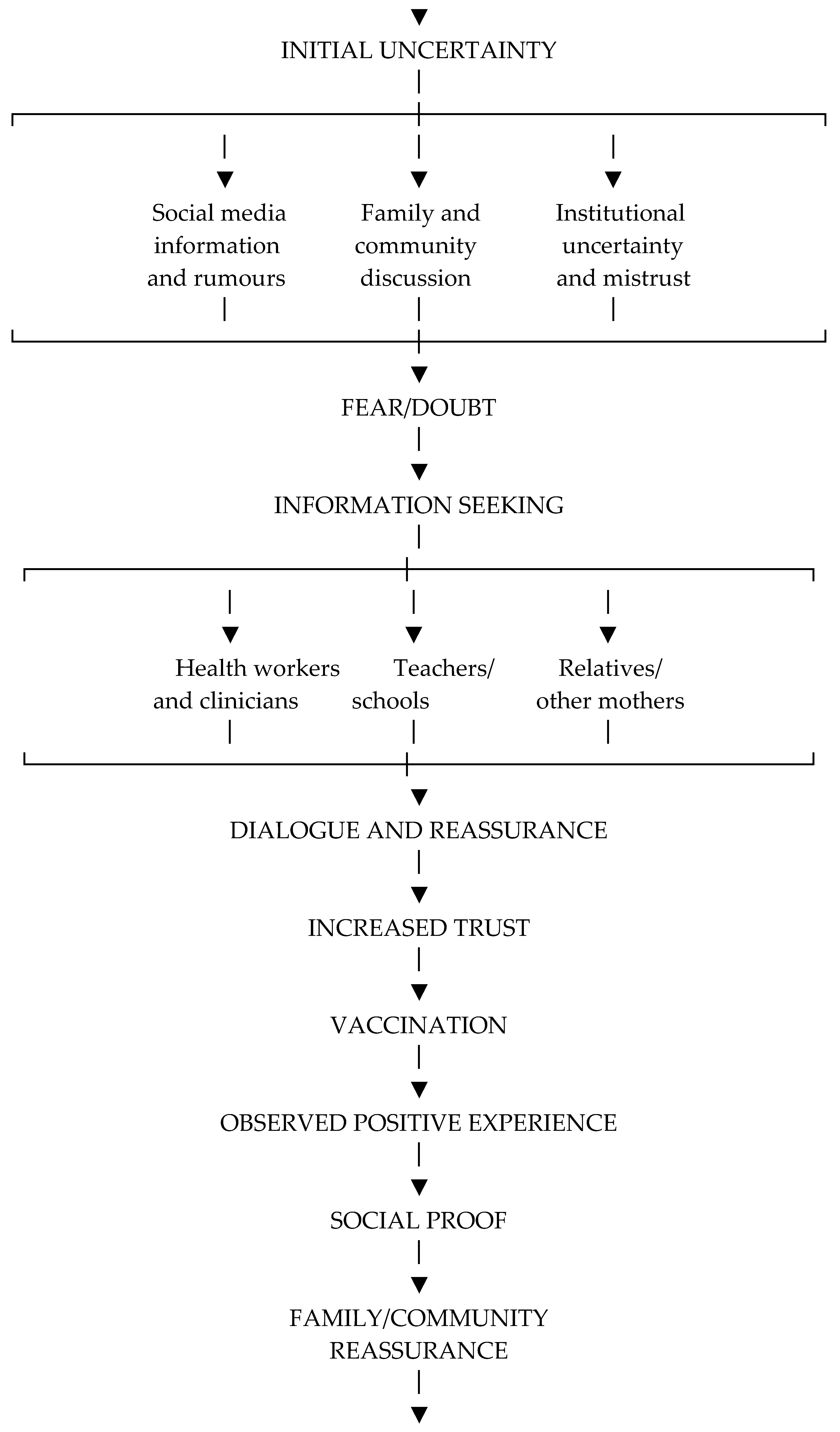
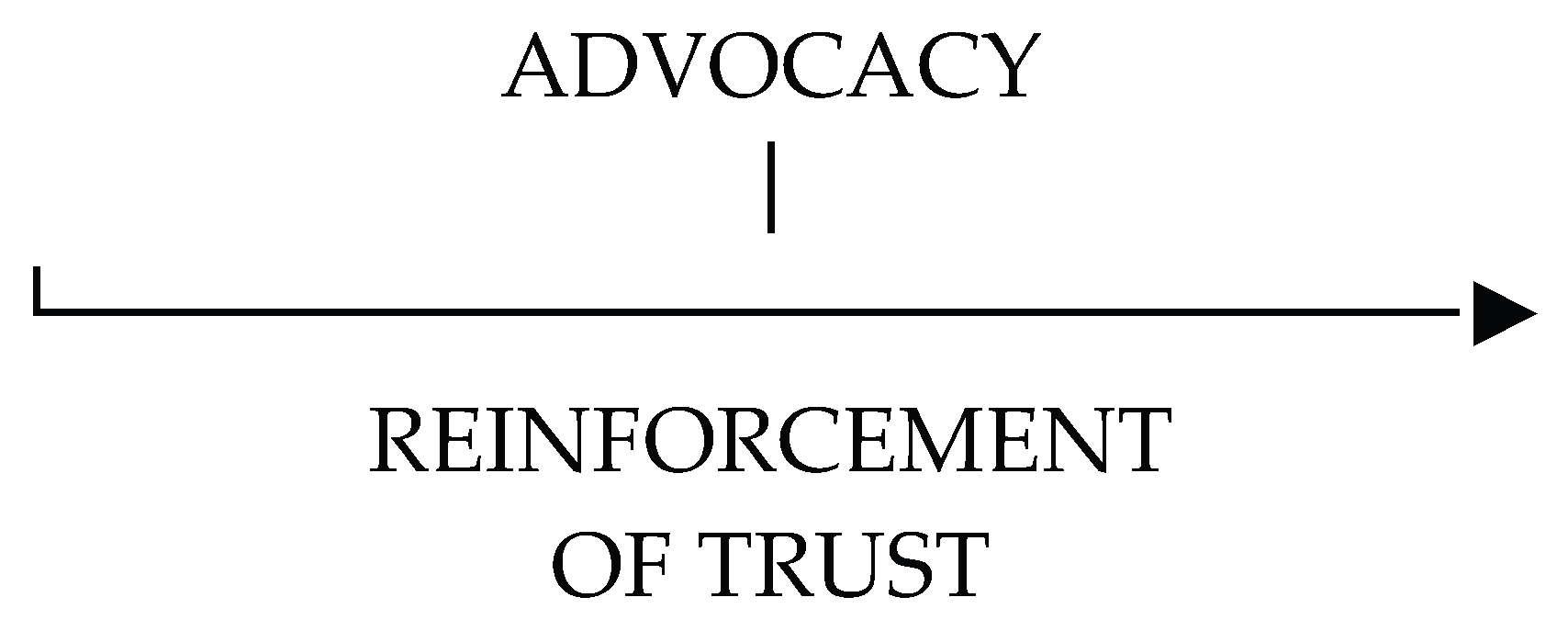
The process was not strictly linear. Parents could move backwards from reassurance to uncertainty when they encountered new rumours or contradictory information. Conversely, positive vaccination experiences could strengthen confidence beyond the individual household and influence other families.
Table 4.
Parents’ perceptions mapped to the Socio-Ecological Model.
| Level | Principal influences | Examples from participants | Programme implication |
|---|---|---|---|
| Individual | Knowledge, fear, perceived risk, digital information | Infertility concerns; social-media exposure | Provide accessible, evidence-based information before vaccination. |
| Interpersonal | Parents, spouses, relatives, health workers | Family discussion; LHW reassurance | Strengthen counselling and family-oriented communication. |
| Community | Neighbours, teachers, community leaders, other mothers | Social proof; rumours; peer reassurance | Engage trusted community networks. |
| Institutional | Schools, health facilities, vaccination teams | Teacher preparedness; professional explanations | Train school and health personnel together. |
| Structural | Government, policy, national communication | Trust in vaccination programme; questions about targeting | Improve transparency and accountability. |
4. Discussion
This study demonstrates that parental HPV vaccine confidence during Pakistan’s first national rollout was a dynamic social process. Parents did not evaluate vaccination exclusively through biomedical information. They interpreted the vaccine through concerns about fertility, adolescent girls, family honour, religion, social expectations, previous experiences with government services, and the credibility of information sources.
The findings reinforce the importance of distinguishing vaccine availability from vaccine acceptance. Global experience shows that introduction of HPV vaccination has expanded considerably, but coverage remains uneven across countries and regions.[2] Pakistan’s introduction therefore represents an important opportunity, but achieving and sustaining high coverage will require attention to the social determinants of vaccination.
The concern about infertility deserves particular attention. It should not simply be labelled irrational misinformation. For parents of adolescent girls, fertility has deep personal and social significance. A rumour that a vaccine may affect future fertility can therefore produce a disproportionate emotional response. Communication strategies that dismiss the concern may unintentionally reinforce mistrust. Parents need clear explanations from trusted professionals and opportunities to discuss their concerns without judgement.
The distinction between digital and interpersonal information environments was another important finding. Islamabad parents described greater exposure to online information and misinformation, while Rawalpindi parents relied more strongly on health workers, relatives, teachers, and other parents. These patterns suggest that vaccine communication should be tailored to local information environments rather than delivered through a uniform national message.
Digital communication remains important. However, the 2026 meta-analysis of social-media interventions found that while such interventions improved vaccine knowledge, attitudes, confidence, and measures of hesitancy, they did not significantly increase actual vaccination uptake overall.[12] This finding supports a blended approach in which digital communication is linked to accessible services, trusted health professionals, community engagement, and practical opportunities for vaccination.
The role of interpersonal trust was particularly prominent. Parents were reassured when health workers communicated in understandable language and when trusted individuals personally endorsed vaccination. Similar findings have been reported among migrant parents, where family, healthcare providers, and community contexts influenced HPV vaccine acceptance.[9] Research among young people and parents has also highlighted the importance of communication between families and healthcare professionals.[10]
The experience of Japan provides an important international lesson. Kunitoki and colleagues demonstrated how loss of social trust contributed to prolonged decline in HPV vaccination uptake.[22] Their analysis suggests that rebuilding confidence requires action by multiple stakeholders rather than relying solely on individual education. Pakistan’s programme can benefit from this lesson during the early stages of introduction by investing in trust before misinformation becomes entrenched.
The findings also highlight the importance of healthcare professionals. Pakistan’s physician literature indicates that positive attitudes do not automatically translate into consistent recommendation practices.[8] The 2026 qualitative study of physicians during the national rollout further identified professional knowledge gaps, cultural and religious misconceptions, infertility concerns, and system-level limitations.[23] These findings align closely with parents’ experiences in the present study.
Health workers should therefore be regarded as part of the vaccine intervention itself. Their ability to listen, explain, acknowledge uncertainty, respond to rumours, and provide consistent messages may influence vaccine confidence as much as the content of written information.
Schools should similarly be considered communication platforms rather than merely vaccination sites. School-based delivery can provide efficient access to adolescent girls, but parents require confidence in teachers, nurses, vaccinators, and the process itself.[24] Coordination between health and education authorities should therefore include joint training, consistent information materials, clear referral mechanisms, and opportunities for parental questions.
The study also identified the importance of social proof. Once parents observed that vaccinated girls remained well, uncertainty could decrease. This suggests an opportunity for programme managers to engage vaccinated families as informal advocates, while ensuring that personal testimonials complement rather than replace scientific evidence.
Pakistan’s national HPV introduction provides a unique opportunity for such an approach. Khalid and Khan highlighted the importance of multisectoral collaboration involving health, education, communities, and other stakeholders.[5] The present study provides empirical support for this approach from the parental perspective.
The concept of human-centred immunisation design is particularly relevant. WHO recommends designing and adapting vaccination programmes around the perspectives and needs of the communities they serve.[15] In the Pakistani context, this means understanding not only whether parents receive information, but whether the information addresses their actual concerns, whether they know whom to trust, whether vaccination services are convenient, and whether they can discuss sensitive issues without stigma.
Health-promotion evidence further suggests that accessible, action-oriented strategies can increase HPV vaccine uptake.[25] The implications for Pakistan are clear: communication should be linked to convenient vaccination opportunities, active community outreach, trained providers, and rapid responses to misinformation.
4.1. Policy and Practice Implications
The first priority should be early and transparent parent communication. Parents should receive information before vaccination rather than encountering HPV vaccination for the first time when a daughter is presented for immunisation.
The second priority should be provider communication training. LHWs, vaccinators, nurses, physicians, teachers, and school administrators should be able to answer questions about HPV infection, cervical cancer, vaccine safety, fertility, eligibility, adverse events, and the rationale for vaccination at 9–14 years.
Third, misinformation monitoring should be integrated into routine programme management. Social-media rumours should be identified rapidly and addressed through credible, locally understandable communication. Digital communication should provide named experts or institutions to whom parents can direct questions.
Fourth, community engagement should involve trusted intermediaries. Teachers, mothers, community representatives, and appropriately engaged religious leaders can help reinforce accurate information when they are adequately trained and supported.
Fifth, vaccinated families can be incorporated into community confidence-building strategies. Parents who have positive experiences may provide powerful reassurance to hesitant families.
Sixth, health and education sectors should communicate consistently. Conflicting messages from schools, vaccinators, physicians, and social-media channels can undermine confidence.
Seventh, programme transparency should be strengthened. Parents should understand why girls in the specified age group are targeted, how vaccines are monitored for safety, how adverse events are managed, and where reliable information can be obtained.
Finally, the programme should be evaluated continuously. Coverage data should be supplemented by qualitative monitoring of rumours, reasons for refusal, parental questions, provider experiences, and community perceptions. This would allow communication and service-delivery strategies to be adapted as the programme expands.
4.2. Strengths and Limitations
A major strength of this study is that it captures parental experiences during the early phase of Pakistan’s national HPV vaccine introduction. The timing allowed the study to document concerns while the intervention was still new and meanings were actively being negotiated. The use of in-depth interviews also allowed participants to describe fears, family discussions, and changes in confidence that may not be captured through structured questionnaires.
The study has several limitations. It was conducted in Islamabad and Rawalpindi and therefore does not represent all provinces or population groups in Pakistan. The sample was relatively small, as expected for a phenomenological study, and the findings should not be interpreted as population prevalence estimates. Interviews were conducted in Urdu and translated for analysis, which may have resulted in some loss of linguistic nuance. The study focused on parents and did not systematically include adolescents, teachers, religious leaders, or vaccination providers. Future studies should examine these perspectives and compare experiences across provinces, rural and urban settings, and different programme delivery models.
The study also represents an early phase of vaccine introduction. Perceptions may change as HPV vaccination becomes more familiar and repeated cohorts receive the vaccine.
5. Conclusion
The introduction of HPV vaccination in Pakistan demonstrates that vaccine confidence is not created by vaccine availability alone. Parents in Islamabad and Rawalpindi encountered the vaccine through a complex social environment characterised by fear, infertility concerns, misinformation, gender expectations, family negotiation, community narratives, and varying levels of institutional trust.
Confidence increased when parents received clear explanations from trusted health professionals, could discuss their concerns openly, observed positive experiences among vaccinated girls, and received reassurance from family and community members. These findings indicate that HPV vaccine acceptance should be understood as a relational and evolving process rather than simply a measure of individual knowledge.
Pakistan’s continuing HPV programme should therefore combine high-quality vaccination delivery with equally strong communication and community-engagement systems. Health workers, schools, parents, community members, professional organisations, and national institutions all have a role in creating a trustworthy vaccination environment.
The central lesson is that trust must be delivered alongside the vaccine. When communities are listened to, their concerns are addressed respectfully, and vaccination services are transparent and responsive, uncertainty can be transformed into confidence, acceptance, and ultimately community advocacy.
References
- World Health Organization. Global strategy to accelerate the elimination of cervical cancer as a public health problem; World Health Organization: Geneva, 2020. [Google Scholar]
- Bruni, L.; Saura-Lázaro, A.; Montoliu, A.; Brotons, M.; Alemany, L.; Diallo, M.S.; et al. HPV vaccination introduction worldwide and WHO and UNICEF estimates of national HPV immunization coverage 2010-2019. Prev. Med. 2021, 144, 106399. [Google Scholar] [CrossRef] [PubMed]
- World Health Organization. Immunization Agenda 2030: a global strategy to leave no one behind; World Health Organization: Geneva, 2020. [Google Scholar]
- World Health Organization. Human papillomavirus vaccines: WHO position paper, December 2022. Wkly. Epidemiol. Rec. 2022, 97, 645–672. [Google Scholar]
- Khalid, S.N.; Khan, J.S. HPV vaccine introduction in Pakistan: a strategic opportunity for multisectoral alliance. Lancet Reg. Health Southeast Asia 2025, 42, 100688. [Google Scholar] [CrossRef] [PubMed]
- Shamsi, U.; Zahid, F.; Abdul Jabbar, A.B.; Musharraf, M.D.; Gauhar, F.; Akbar, I.; et al. Human papillomavirus vaccine awareness and acceptability for primary prevention of cervical cancer in Pakistan: a cross-sectional study. Asian Pac. J. Cancer Prev. 2024, 25(3), 813–820. [Google Scholar] [CrossRef] [PubMed]
- Atif, N.; Hashmi, F.K.; Malik, U.R.; Ghauri, M.A.; Gillani, A.H.; Kadir, M.; et al. From awareness to acceptance: understanding HPV and vaccine knowledge, attitudes and beliefs among university students in Punjab, Pakistan. J. Pharm. Policy Pract. 2025, 18(1), 2473023. [Google Scholar] [CrossRef] [PubMed]
- Memon, S.H.; Tariq, B.S. HPV vaccination knowledge, attitude, and practices among physicians in a teaching hospital, Karachi. J. Fam. Med. Prim. Care 2025, 14(1), 132–138. [Google Scholar] [CrossRef] [PubMed]
- Khan, A.; Abonyi, S.; Neudorf, C.; Galea, S.; Ahmed, S. Barriers to and facilitators of human papillomavirus vaccination in an ethnically diverse group of migrant parents: a qualitative mixed methods study. Hum. Vaccin Immunother. 2023, 19(3), 2269721. [Google Scholar] [CrossRef] [PubMed]
- Çevik, H.S.; Amariutei, A.; Mazur, A.; Peker, G.C.; Görpelioğlu, S.; Vinker, S.; et al. Unlocking the key to HPV prevention: exploring factors influencing HPV vaccination decisions among young people and their parents. Public Health 2025, 238, 214–220. [Google Scholar] [CrossRef] [PubMed]
- Asare, M.; Popelsky, B.; Akowuah, E.; Lanning, B.A.; Montealegre, J.R. Internal and external validity of social media and mobile technology-driven HPV vaccination interventions: systematic review using the RE-AIM framework. Vaccines 2021, 9(3), 197. [Google Scholar] [CrossRef] [PubMed]
- Nazari, A.; Ataei, R.; Heydarifard, Z.; Mousavi, A. Social media-based interventions for improving vaccine uptake, reducing hesitancy, and combating misinformation: a comprehensive systematic review and meta-analysis of randomized controlled trials. BMC Public Health 2026, 26, 1484. [Google Scholar] [CrossRef] [PubMed]
- World Health Organization. Understanding the behavioural and social drivers of vaccine uptake: WHO position paper. Wkly. Epidemiol. Rec. 2022, 97, 209–224. [Google Scholar]
- World Health Organization. Behavioural and social drivers of vaccination: tools and practical guidance for achieving high uptake; World Health Organization: Geneva, 2022. [Google Scholar]
- World Health Organization. Human-centred design for tailoring immunization programmes; World Health Organization: Geneva, 2022. [Google Scholar]
- Braun, V.; Clarke, V. Can I use TA? Should I use TA? Should I not use TA? Comparing reflexive thematic analysis and other pattern-based qualitative analytic approaches. Couns. Psychother. Res. 2021, 21, 37–47. [Google Scholar] [CrossRef]
- Byrne, D. A worked example of Braun and Clarke’s approach to reflexive thematic analysis. Qual. Quant. 2022, 56, 1391–1412. [Google Scholar] [CrossRef]
- Albury, C.; Pope, C.; Shaw, S.; Greenhalgh, T.; Ziebland, S.; Martin, S.; et al. Gender in the consolidated criteria for reporting qualitative research (COREQ) checklist. Int. J. Qual. Health Care 2021, 33(4), mzab123. [Google Scholar] [CrossRef] [PubMed]
- Kotromanovic Simic, I.; Kotromanovic, D.; Lovrincevic Pavlovic, N.; Kovačević, J.; Olujic, M.; Nujic, D.; et al. Parents’ attitudes and beliefs towards human papillomavirus vaccination. Vaccines 2025, 13(11), 1085. [Google Scholar] [CrossRef] [PubMed]
- Frugoli, A.G.; Prado, R.D.S.; Silva, T.M.R.D.; Matozinhos, F.P.; Trapé, C.A.; Lachtim, S.A.F. Vaccine fake news: an analysis under the World Health Organization’s 3Cs model. Rev. Esc. Enferm. USP 2021, 55, e03736. [Google Scholar] [CrossRef]
- Frietze, G.; Padilla, M.; Cordero, J.; Gosselink, K.; Moya, E. Human papillomavirus vaccine acceptance (HPV-VA) and vaccine uptake (HPV-VU): assessing the impact of theory, culture, and trusted sources of information in a Hispanic community. BMC Public Health 2023, 23, 1781. [Google Scholar] [CrossRef] [PubMed]
- Kunitoki, K.; Funato, M.; Mitsunami, M.; Kinoshita, T.; Reich, M.R. Access to HPV vaccination in Japan: increasing social trust to regain vaccine confidence. Vaccine 2021, 39(41), 6104–6110. [Google Scholar] [CrossRef] [PubMed]
- Ahmed, M.; Batool, A.; Khan, M.E.; Abubakar, M.; Nawaz, A.; Dani, D.H.; et al. Physicians’ role in recommending human papillomavirus vaccination: a qualitative study in the context of national immunization rollout. BMC Public Health 2026. [Google Scholar] [CrossRef]
- Ramanadhan, S.; Fontanet, C.; Teixeira, M.; Mahtani, S.; Katz, I. Exploring attitudes of adolescents and caregivers towards community-based delivery of the HPV vaccine: a qualitative study. BMC Public Health 2020, 20, 1531. [Google Scholar] [CrossRef] [PubMed]
- Štrbac, M.; Ukropina, S.; Nikolić, N.; Mašić, K.; Rajčević, S.; Čanković, D.; et al. Impact of health promotion strategies on HPV vaccination uptake: a descriptive epidemiological study (2019-2024). PLoS ONE 2025, 20(9), e0331592. [Google Scholar] [CrossRef] [PubMed]
- Dorji, T.; Nopsopon, T.; Tamang, S.T.; Pongpirul, K. Human papillomavirus vaccination uptake in low- and middle-income countries: a meta-analysis. EClinicalMedicine 2021, 34, 100836. [Google Scholar] [CrossRef] [PubMed]
- Slavkovsky, R.; Callen, E.; Pecenka, C.; Mvundura, M. Costs of human papillomavirus vaccine delivery in low- and middle-income countries: a systematic review. Vaccine 2024, 42(6), 1200–1210. [Google Scholar] [CrossRef] [PubMed]
- Wolynn, T.; Hermann, C.; Hoffman, B.L. Social media and vaccine hesitancy: help us move the needle. Pediatr. Clin. North Am. 2023, 70(2), 329–341. [Google Scholar] [CrossRef] [PubMed]
- Noreen, K.; Khalid, S.N.; Noor, M.; Maryam, S.; Ahmad, A.M.R.; Mohammadi, N. HPV vaccine uptake in Pakistan: a qualitative study to identify barriers and facilitators before the first HPV national rollout. Hum. Vaccin Immunother. 2026, 22(1), 2721105. [Google Scholar] [CrossRef] [PubMed]
Disclaimer/Publisher’s Note: The statements, opinions and data contained in all publications are solely those of the individual author(s) and contributor(s) and not of MDPI and/or the editor(s). MDPI and/or the editor(s) disclaim responsibility for any injury to people or property resulting from any ideas, methods, instructions or products referred to in the content. |
© 2026 by the authors. Licensee MDPI, Basel, Switzerland. This article is an open access article distributed under the terms and conditions of the Creative Commons Attribution (CC BY) license (http://creativecommons.org/licenses/by/4.0/).
Copyright: This open access article is published under a Creative Commons CC BY 4.0 license, which permit the free download, distribution, and reuse, provided that the author and preprint are cited in any reuse.