

Submitted:
14 September 2026
Posted:
15 September 2026
You are already at the latest version
Abstract
Background/Objectives: Late-onset hyponatremia (LOH), often develops after the second week of life in preterm infants and has been associated with poor growth and adverse neurodevelopmental outcomes. Human milk, including pasteurized donor breast milk (DBM), has less sodium content than preterm infants require. There is paucity of studies examining the association between DBM and LOH. We evaluated the association between feeding type and LOH beyond the second week of life.
Methods: This was a single-center retrospective cohort study that included preterm neonates born at gestational age < 32 weeks or birth weight < 1500 grams, between January 2017 and October 2022. Eligible infants had serum sodium levels measured after 14 days of life and after achieving full enteral feeds. Hyponatremia was defined as serum sodium < 135 mEq/L.
Results: Of 373 infants, 43% (n=159) developed LOH. Using multivariable regression analysis, increased DBM intake, lower gestational age, use of chlorothiazide, and mild-moderate bronchopulmonary dysplasia were independently associated with higher odds of developing LOH. The use of furosemide, formula, and patent ductus arteriosus were not associated with LOH.
Conclusion: A higher proportion of DBM intake, lower gestational age, chlorothiazide use, and mild-to-moderate BPD were independently associated with LOH. Preterm infants receiving DBM and long-acting diuretics like chlorothiazide are at increased risk for LOH and should be monitored closely.
Keywords:
preterm neonate
; late-onset hyponatremia
; expressed breast milk
; donor breast milk
1. Introduction
Sodium is a critical element for neonatal nutrition, development, and metabolism. It maintains extracellular fluid volume [1,2], promotes protein synthesis, and plays a vital role in the development of the central nervous system. Furthermore, sodium is a key constituent of bone, cartilage, and connective tissues [3,4].
Hyponatremia is defined as a serum sodium level <135 mEq/L [5,6]. The overall incidence of hyponatremia in preterm infants admitted to the Neonatal Intensive Care Unit (NICU) is approximately 20-30% [5,7]. The incidence of hyponatremia among very low birth weight (VLBW) infants is reported to be as high as 62.5% [8].
Late-onset hyponatremia (LOH), by definition, develops after the second week of life and is associated with poor growth and adverse neurodevelopmental outcomes in preterm infants [9]. It results from decreased sodium intake, impaired gastrointestinal sodium absorption, and immature water and sodium homeostasis in the kidneys [3,5,6,8]. The duration and severity of LOH correlate with prematurity, morbidities such as bronchopulmonary dysplasia (BPD), and renal immaturity. Medications such as caffeine, diuretics, and enteral feeding types have also been linked with LOH [3,10].
Ideally, VLBW infants should be exclusively fed breastmilk. The sodium content of the mother’s own expressed breastmilk (EBM), at a volume of 180ml/kg/day, provides approximately 1-2mEq/kg/day of sodium [7,11], which is significantly lower than the required 3-7 mEq/kg/day [10]. The American Academy of Pediatrics recommends fortifying maternal milk for VLBW infants to provide appropriate nutrient intake [12]. Even with fortification, EBM does not meet the sodium requirement of preterm infants [7,8,11]. If EBM is unavailable, VLBW infants should be fed fortified pasteurized donor breast milk (DBM) [12]. DBM is primarily obtained from mothers of term infants and has a composition similar to mature milk [13]. Compared with preterm milk, DBM is reported to be significantly lower in nutrients such as protein, sodium, chloride, potassium, and zinc [14]. Storage and contact with containers affect human milk components, and heat processing can further affect the nutritional content of DBM [13,15]. Even with fortification, the sodium content of DBM remains below the recommended range for preterm infants [16,17]. Preterm milk formulas also have varying sodium content and fall below the physiological requirements of preterm infants [16].
While previous studies have explored the role of breast milk and formula in sodium homeostasis in preterm infants, there is limited data examining the association between DBM and LOH. This study aims to address this gap by evaluating the relationship between feeding type and LOH in preterm infants after 14 days of life. We also analyzed clinical characteristics, growth outcomes, and other factors commonly associated with LOH, like respiratory distress syndrome (RDS), diuretic use, hemodynamically significant patent ductus arteriosus (hs-PDA), culture-positive sepsis, and BPD.
2. Materials and Methods
2.1. Study Population
This was a retrospective single-center cohort study that included preterm neonates born at gestational age (GA) <32 weeks or BW <1500 grams, between January 2017 and October 2022 at Montefiore Medical Center - Jack D. Weiler NICU. It was approved by the Albert Einstein College of Medicine-Montefiore Medical Center Institutional Review Board.
If EBM was unavailable, DBM was provided after parents consented to DBM usage. Breast milk was fortified to 24 kcal/oz once enteral nutrition reached 80mL/kg/day. Parenteral nutrition or intravenous fluids were discontinued once enteral feed volume reached 120ml/kg/day. The average enteral feeding goal was 160ml/kg/day. Our NICU unit used Similac® human milk fortifier hydrolyzed protein concentrated liquid for fortification. Fortification was adjusted to 26 kcal/oz for infants with suboptimal growth, as per unit policy. Infants were included who had a serum sodium level after 14 days of life and were on full enteral feeds. Full enteral feeds were defined as enteral intake of ≥140ml/kg/day of either EBM, DBM, or preterm formula for at least 5 days, with no parenteral nutrition or intravenous fluids containing sodium.
2.2. Data Collection
The first serum sodium value was considered until the infant reached 36 weeks post-menstrual age (PMA). Infants with genetic syndromes, congenital gastrointestinal anomalies, major gastrointestinal surgery, surgical necrotizing enterocolitis, and major congenital renal anomalies were excluded from the study. BPD is classified at 36 weeks PMA into: Grade 1 or Mild BPD if infant requires ≤2 L/min nasal cannula, Grade 2 or Moderate if >2 L/min nasal cannula or other non-invasive ventilation support, and Grade 3 or severe BPD if receiving invasive mechanical ventilation [18].
2.3. Outcomes
The primary outcome of the study was to evaluate the association of LOH in preterm infants with GA <32 weeks or BW <1500 grams, on full enteral feeds with the following types of feeds - EBM, DBM, or preterm formula.
The secondary outcome was to compare clinical characteristics, growth outcomes, and morbidities associated with prematurity along with their management, including RDS, diuretic use (short-acting such as furosemide and long-acting such as chlorothiazide), hs-PDA, culture-positive sepsis, and BPD.
Clinical characteristics of the study patients were obtained from an electronic health records system. Feeding details five days prior to the documented first serum sodium value were obtained, including type of feed, feeding volume, caloric intake, fortification type, and use of liquid protein (0.5-1g/kg/day) and medium-chain triglyceride (MCT, as 0.5 mL per 30 mL of milk). Additionally, respiratory support details, serum creatinine, sodium supplementation, and packed red blood cell (PRBC) transfusion were also documented.
2.4. Statistical Analysis
The primary predictor variables were milk intake: EBM, DBM, and formula, presented as milliliter/kg/day or as a percentage of total milk intake. The primary outcome measured in the study was the presence of LOH.
Continuous data were summarized using standard descriptive statistics, including means, standard deviations, medians, interquartile ranges, and the discrete variables as absolute and relative frequencies. To compare continuous variables, the Wilcoxon rank-sum test was used; discrete variables were compared using the Pearson Chi-square test or Fisher's exact test, as appropriate.
Univariate and multivariable logistic regression were performed to obtain odds ratios and confidence intervals (CI). Multivariable logistic analysis was adjusted for GA, race, furosemide, chlorothiazide, BPD, and hs-PDA. All statistical tests were two-sided, and significance was indicated by p < 0.05. The statistical analysis was performed using R language version 4.3.1 (R Core Team, 2023).
We included all eligible preterm infants admitted to the NICU between January 2017 and October 2022, with a final cohort of 373 infants. The initial sample size estimate was based on approximately 400 eligible infants and was expected to provide at least 80% power (two-sided α = 0.05) to detect a 14.5-percentage-point difference in LOH between the planned EBM and non-EBM groups. As most infants received a combination of EBM, DBM, and formula, the final analysis used the percentage of DBM intake as a continuous exposure to better reflect actual feeding practices and utilize the available feeding data. Data was complete for all analyzed variables.
3. Results
During the study period, a total of 711 preterm infants were admitted at the Montefiore Medical center. (Figure 1). Overall, 373 infants were included in the final analysis, of which 43% (n=159) had LOH.
Risk factors for hyponatremia
Infants with LOH were born at lower GA and had lower BW than infants without LOH (Table 1).
Serum sodium was measured at a lower mean PMA for infants with LOH than for infants without LOH (Table 2). The average enteral intake was comparable between the two groups. The majority of the infants (n=304, 82%) received 24 kcal/ounce feeds, while 15% (n=56) received 26 kcal/ounce feeds. Among infants with LOH, 31% (n=50) received prior sodium supplements, which increased to 69% (n=110) after serum sodium levels were obtained (Table 2).
As shown in Table 2, infants with LOH received a significantly higher percentage of DBM and a lower percentage of formula compared to those without LOH. Infants with LOH had higher rates of RDS requiring surfactant, hs-PDA, BPD, culture-positive sepsis, increased serum creatinine, increased number of PRBC transfusions, increased use of diuretics such as furosemide and chlorothiazide, higher oxygen requirement, level of respiratory support, and prolonged NICU stay (Table 3).
In terms of growth, infants with LOH had significantly lower Z scores (Fenton 2013 growth charts used) for both length and head circumference (HC) at 36 weeks PMA when compared to infants without LOH. Furthermore, the Z scores for length and head circumference in the LOH group decreased significantly from birth to 36 weeks PMA, compared with infants without LOH (Figure 2). Additional data as described in Table (supplement).
3.1. Univariable Regression Analysis
Univariable regression analysis showed that lower birth GA and BW, lower PMA at the time of serum sodium measurement, lower daily weight, and less formula use were associated with LOH. A higher percentage of DBM use, increased use of furosemide and chlorothiazide, and presence of comorbidities such as BPD and hs-PDA were also associated with LOH (Table 4).
3.2. Multivariable Regression Analysis
Multivariable regression analysis showed that each 10% increase in DBM intake was associated with a 1.08 times higher odds ratio of developing LOH. In addition, LOH was independently associated with lower GA, use of chlorothiazide, mild BPD, and moderate BPD. The use of furosemide, formula, and hs-PDA were not associated with LOH (Table 5) in the multivariable regression analysis.
4. Discussion
This study is among the few to evaluate the association between LOH and different feeding types in preterm infants (breast milk vs. formula), further categorizing breast milk as either EBM or DBM. We have demonstrated a dose-dependent relationship between DBM intake and LOH in preterm infants with GA<32 weeks or BW <1500 grams, making this a novel contribution to the existing literature on the relationship between feeding type and LOH in preterm infants.
Consistent with prior studies reporting a prevalence rate of LOH ranging between 33-70%, 43% of preterm infants in our study population developed LOH [10]. LOH is an important concern in preterm infants due to its association with hearing loss, adverse neurodevelopmental outcomes, and slow weight gain [1,6]. Hence, it is important to maintain serum sodium levels within the normal range in preterm infants. Therefore, our study population is similar to previously studied patient populations.
We observed significantly lower mean birth GA and BW in the LOH group as compared to the no-LOH group. Previous studies have similarly shown that LOH is associated with a lower GA and BW [3,7,8]. Lower GA is associated with LOH [5], likely because of an immature renal system and higher urine sodium loss [19].
In our study population, the mean serum sodium level in the LOH group was 132.6 (±1.6) mEq/L compared to 138.3 (±2.2) in the no-LOH group. The serum sodium level was measured at 33.4 (±11.8) days of life in the LOH group vs. 28.3 (±11.3) days of life in the no-LOH group. In one study, at the time of LOH diagnosis, the mean serum sodium level was 129.3 ±3.4 mEq/L and mean age was 29.6 ±2.2 days [5]
Similar to previous studies, the infants in the LOH group were more likely to be born to mothers with chorioamnionitis (13%) and hypertensive disorders (36%). They also had a lower 5-minute Apgar score compared to those without LOH group. Maternal premature rupture of the membranes and use of prenatal antibiotics have previously been reported to be more common in infants with LOH [3,7].
The day of life of starting feeds (including colostrum care) was delayed in the LOH group (Day 2 compared to 1.6 days in the no-LOH group). This finding is likely related to the lower GA and BW in the LOH group since the degree of prematurity often directly correlates with clinical instability. A study showed similar delay in starting enteral feeds, with an average 6.4 days in the hyponatremia group compared to 5.8 days in the no-LOH group [8].
Infants with LOH in our study had greater illness severity. A higher proportion of the infants with LOH required surfactant administration for RDS in our study and were more likely to be diagnosed with hs-PDA, BPD, and culture-positive sepsis. They also had higher serum creatinine levels, needed PRBC transfusion, were treated with diuretics (furosemide, chlorothiazide), had a higher oxygen requirement, needed more respiratory support, and had longer NICU hospitalization. These findings are similar to other studies, in which factors such as RDS, PDA requiring treatment, postnatal sepsis, and the use of furosemide were significantly more common in the LOH group [3,7]. Another study observed that PDA ligation, sepsis, use of furosemide, and BPD occurred more commonly in the severe hyponatremia group (serum sodium <130 mEq/L) compared to mild LOH [5], indicating that higher illness in preterm infants is linked with more severe LOH.
As expected, infants with LOH had a lower birth GA and BW. At 36 weeks PMA, the LOH group in our study had significantly lower Z scores for length and HC, as well as a significant decrease in Z score change (both length and HC) from birth to 36 weeks PMA, compared to the no-LOH group (Figure 2). Postnatal growth is influenced by multiple nutritional factors including calorie intake as well as macro-and micronutrient intake [20]. Since growth was a secondary outcome for our study, we did not assess protein intake in our study patients. Therefore, we did not perform regression analysis to determine the impact of LOH on growth parameters at 36 weeks PMA. The literature review is variable in this aspect. In some studies, growth parameters are negatively affected when infants receive a majority of DBM feeds [21,22]. Other studies suggested that VLBW infants receiving either EBM or DBM exhibited similar growth velocities [23], and DBM did not significantly affect the average change in the anthropometric parameters in these infants [24]. The impact of feeding type on growth could be attributed to differences in NICU feeding policies and to variability in DBM’s nutritional and caloric status.
In our study, multivariable regression analysis showed higher odds of developing LOH with increased percentage of DBM usage, decreased GA, use of chlorothiazide, and BPD (mild-moderate). Use of furosemide, formula feeds, and hs-PDA were not associated with LOH in our study (furosemide was used for short-term only).
While previous studies have identified risk factors for LOH and evaluated the role of breast milk and formula in the development of LOH, the majority of these studies did not focus on specific breast milk types (i.e. EBM vs. DBM). A recent study found that preterm infants with hyponatremia had received more maternal breast milk compared to DBM [25]. Breastmilk feeding, even with fortification (compared to formula), is an independent factor for hyponatremia [3,6,7,8]. Our results demonstrate that higher DBM intake is an independent risk factor for the LOH in preterm infants. The dose-dependent nature of this association is important. This finding is likely due to the lower sodium content and potential nutritional variability of DBM.
As LOH is associated with adverse outcomes among preterm infants, in infants who are receiving a higher proportion of DBM feeds and treated with diuretics such as chlorothiazide, serum sodium levels should be monitored closely. Recent retrospective studies have suggested that enteral sodium supplementation improves growth parameters in preterm infants [26,27] with reduced time on invasive mechanical ventilation without increased incidence of hypernatremia, hypertension, BPD or NEC [27]. In a randomized controlled study, early sodium supplementation was associated with improved weight gain and linear growth in very preterm infants [28]. This further emphasizes the importance of avoiding hyponatremia in high-risk preterm infants and its associated complications. Current NICU practices regarding routine sodium surveillance and supplementation vary considerably among institutions. Some centers routinely monitor serum sodium or urine sodium concentrations in preterm infants and provide enteral sodium supplementation when deficits are identified.
The major strength of this study is the separation of human milk into EBM and DBM, quantified both volumetrically and as a proportion of total intake, in a reasonably large single-center cohort with detailed feeding and respiratory data.
Our study has several limitations, including its retrospective cohort design. One-third of the infants were excluded because no serum sodium level was available after two weeks of life, introducing possible selection bias, as excluded infants may have been systematically healthier or sicker than those included. A few infants in the LOH group were already receiving enteral sodium supplements based on sodium values in point-of-care expanded blood gas testing. Feeding data were captured only over the five days preceding the sodium measurement, which may not fully reflect cumulative sodium in body.
This is a single-center study, and as such, the results may not be applicable universally, particularly in settings with different feeding protocols and institutions caring for infants with lower illness severity. Despite these limitations, periodic surveillance of serum sodium levels for infants receiving mainly DBM feeds and ongoing diuretics is primarily warranted.
5. Conclusions
In this single-center retrospective cohort of preterm infants born at GA <32 weeks or BW<1500 g, a lower birth GA, increased DBM intake, chlorothiazide use, and mild-moderate BPD are identified as independent risk factors for the development of LOH. Clinicians should monitor serum sodium levels closely in high-risk preterm infants and consider targeted interventions to prevent LOH.
Supplementary Materials
The following supporting information can be downloaded at the website of this paper posted on Preprints.org.
Funding
This research received no external funding.
Author contribution
Conceptualization, S.B. and M.F; methodology, M.K. and M.F.; data curation, S.B. and L.J.; formal analysis, M.K. and C.Z.; writing—original draft preparation, S.B.; writing—review and editing, M.L. and M.F.; supervision, M.L. and M.F. All authors have read and agreed to the published version of the manuscript.
Institutional Review Board Statement
The study protocol was reviewed by the Institutional Review Board of Albert Einstein College of Medicine/Montefiore Medical Center and was determined to be exempt from Institutional Review Board approval (2022-14450, 12/12/2022).
Informed consent statement
Patient consent was waived due to the retrospective nature of the study.
Data Availability Statement
The data presented in this study are available from the corresponding author upon reasonable request and with permission from the Institutional Review Board.
Conflict of interest
The authors declare no conflicts of interest.
Abbreviations
The following abbreviations were used in the manuscript
| LOH | Late onset hyponatremia |
| BW | Birth weight |
| GA | Gestational age |
| NICU | Neonatal Intensive Care Unit |
| PMA | Post-menstrual age |
| EBM | Expressed breastmilk |
| DBM | Donor breastmilk |
| VLBW | Very low birth weight |
| BPD | Bronchopulmonary dysplasia |
| RDS | Respiratory distress syndrome |
| hs-PDA | Hemodynamically significant Patent ductus arteriosus |
| MCT | Medium chain triglyceride |
| PRBC | Packed red blood cells |
References
- Kosmeri, C.; Baltogianni, M.; Dermitzaki, N.; Tsiogka, C.M.; Giapros, V. The Changing Landscape of Sodium Needs in the Preterm Neonate for Optimizing Growth and Development. Nutrients 2026, 18. [Google Scholar] [CrossRef] [PubMed]
- Modi, N. Hyponatraemia in the newborn. Arch. Dis. Child Fetal Neonatal Ed. 1998, 78, F81–84. [Google Scholar] [CrossRef] [PubMed]
- Hao, T.K. Prevalence and Risk Factors for Hyponatremia in Preterm Infants. Open Access Maced. J. Med. Sci. 2019, 7, 3201–3204. [Google Scholar] [CrossRef] [PubMed]
- Marcialis, M.A.; Dessi, A.; Pintus, M.C.; Irmesi, R.; Fanos, V. Neonatal hyponatremia: differential diagnosis and treatment. J. Matern Fetal Neonatal Med. 2011, 24 Suppl 1, 75–79. [Google Scholar] [CrossRef] [PubMed]
- Park, J.S.; Jeong, S.A.; Cho, J.Y.; Seo, J.H.; Lim, J.Y.; Woo, H.O.; Youn, H.S.; Park, C.H. Risk Factors and Effects of Severe Late-Onset Hyponatremia on Long-Term Growth of Prematurely Born Infants. Pediatr. Gastroenterol. Hepatol. Nutr. 2020, 23, 472–483. [Google Scholar] [CrossRef] [PubMed]
- Gokçe, İ.; Oguz, S.S. Late onset hyponatremia in preterm newborns: is the sodium content of human milk fortifier insufficient? J. Matern Fetal Neonatal Med. 2020, 33, 1197–1202. [Google Scholar] [CrossRef] [PubMed]
- Kim, Y.J.; Lee, J.A.; Oh, S.; Choi, C.W.; Kim, E.K.; Kim, H.S.; Kim, B.I.; Choi, J.H. Risk factors for late-onset hyponatremia and its influence on neonatal outcomes in preterm infants. J. Korean Med. Sci. 2015, 30, 456–462. [Google Scholar] [CrossRef] [PubMed]
- Kloiber, L.L.; Winn, N.J.; Shaffer, S.G.; Hassanein, R.S. Late hyponatremia in very-low-birth-weight infants: incidence and associated risk factors. J. Am. Diet. Assoc. 1996, 96, 880–884. [Google Scholar] [CrossRef] [PubMed]
- Moritz, M.L.; Ayus, J.C. Hyponatremia in preterm neonates: not a benign condition. Pediatrics 2009, 124, e1014–1016. [Google Scholar] [CrossRef] [PubMed]
- Isemann, B.; Mueller, E.W.; Narendran, V.; Akinbi, H. Impact of Early Sodium Supplementation on Hyponatremia and Growth in Premature Infants: A Randomized Controlled Trial. JPEN J. Parenter. Enter. Nutr. 2016, 40, 342–349. [Google Scholar] [CrossRef] [PubMed]
- Shaffer, S.; Feretti, D. Neonatal hyponatremia associated with low maternal breast milk sodium content. Clin. Pediatr. (Phila) 1990, 29, 119–121. [Google Scholar] [CrossRef] [PubMed]
- Breastfeeding, S.o. Breastfeeding and the use of human milk. Pediatrics 2012, 129, e827–841. [Google Scholar] [CrossRef] [PubMed]
- Heiman, H.; Schanler, R.J. Benefits of maternal and donor human milk for premature infants. Early Hum. Dev. 2006, 82, 781–787. [Google Scholar] [CrossRef] [PubMed]
- Gates, A.; Hair, A.B.; Salas, A.A.; Thompson, A.B.; Stansfield, B.K. Nutrient Composition of Donor Human Milk and Comparisons to Preterm Human Milk. J. Nutr. 2023, 153, 2622–2630. [Google Scholar] [CrossRef] [PubMed]
- Conboy-Stephenson, R.; Ross, R.P.; Kelly, A.L.; Stanton, C. Donor human milk: the influence of processing technologies on its nutritional and microbial composition. Front Nutr. 2024, 11, 1468886. [Google Scholar] [CrossRef] [PubMed]
- Araya, B.R.; Ziegler, A.A.; Grobe, C.C.; Grobe, J.L.; Segar, J.L. Sodium and Growth in Preterm Infants: A Review. Newborn 2023, 2, 142–147. [Google Scholar] [CrossRef] [PubMed]
- Perrin, M.T.; Friend, L.L.; Sisk, P.M. Fortified Donor Human Milk Frequently Does Not Meet Sodium Recommendations for the Preterm Infant. J. Pediatr. 2022, 244, 219–223.e211. [Google Scholar] [CrossRef] [PubMed]
- Jensen, E.A.; Dysart, K.; Gantz, M.G.; McDonald, S.; Bamat, N.A.; Keszler, M.; Kirpalani, H.; Laughon, M.M.; Poindexter, B.B.; Duncan, A.F.; et al. The Diagnosis of Bronchopulmonary Dysplasia in Very Preterm Infants. An Evidence-based Approach. Am. J. Respir. Crit. Care Med. 2019, 200, 751–759. [Google Scholar] [CrossRef] [PubMed]
- Segar, D.E.; Segar, E.K.; Harshman, L.A.; Dagle, J.M.; Carlson, S.J.; Segar, J.L. Physiological Approach to Sodium Supplementation in Preterm Infants. Am. J. Perinatol. 2018, 35, 994–1000. [Google Scholar] [CrossRef] [PubMed]
- De Rose, D.U.; Maggiora, E.; Maiocco, G.; Morniroli, D.; Vizzari, G.; Tiraferri, V.; Coscia, A.; Cresi, F.; Dotta, A.; Salvatori, G.; et al. Improving growth in preterm infants through nutrition: a practical overview. Front Nutr. 2024, 11, 1449022. [Google Scholar] [CrossRef] [PubMed]
- Montjaux-Régis, N.; Cristini, C.; Arnaud, C.; Glorieux, I.; Vanpee, M.; Casper, C. Improved growth of preterm infants receiving mother's own raw milk compared with pasteurized donor milk. Acta Paediatr. 2011, 100, 1548–1554. [Google Scholar] [CrossRef] [PubMed]
- Soldateli, B.; Parker, M.; Melvin, P.; Gupta, M.; Belfort, M. Human milk feeding and physical growth in very low-birth-weight infants: a multicenter study. J. Perinatol. 2020, 40, 1246–1252. [Google Scholar] [CrossRef] [PubMed]
- Ramirez, C.B.; McCoy, K.L.; Jacob, R.; Lavender, E.; Bonagurio, K.; Guerra, D.A.; Karottakuttu, S.; Gelfond, J.; McCurnin, D.; Blanco, C.L.; et al. Effects of human milk on body composition and growth in very low birthweight infants. Pediatr. Res. 2023, 93, 2028–2035. [Google Scholar] [CrossRef] [PubMed]
- Sanchez-Rosado, M.; Lair, C.S.; Edwards, A.; Jacob, T.; Heyne, R.; Brown, L.S.; Clark, C.; Nelson, D.B.; Wyckoff, M.H.; Kiefaber, I.; et al. Growth after implementing a donor breast milk program in neonates . J. Perinatol. 2023, 43, 608–615. [Google Scholar] [CrossRef] [PubMed]
- Pomar, E.G.; McMasters, H.; Adams, J.; Robertson, M.E. Donor vs Maternal Breast Milk and Factors Associated with Hyponatremia in Preterm Infants. In Newborn; 2025. [Google Scholar]
- Petersen, R.Y.; Clermont, D.; Williams, H.L.; Buchanan, P.; Hillman, N.H. Oral sodium supplementation on growth and hypertension in preterm infants: an observational cohort study. J. Perinatol. 2024, 44, 1515–1522. [Google Scholar] [CrossRef] [PubMed]
- Stalter, E.J.; Verhofste, S.L.; Dagle, J.M.; Steinbach, E.J.; Ten Eyck, P.; Wendt, L.; Segar, J.L.; Harshman, L.A. Somatic growth outcomes in response to an individualized neonatal sodium supplementation protocol. J. Perinatol. 2024. [Google Scholar] [CrossRef] [PubMed]
- Amiti, A.; Balakrishnan, U.; Devi, U.; Amboiram, P.; Salahudeen, A.G. Effect of early sodium supplementation on weight gain of very preterm infants: a randomised controlled trial. BMJ Paediatr. Open 2025, 9. [Google Scholar] [CrossRef] [PubMed]
Figure 1.
Flowchart of infants in the study.
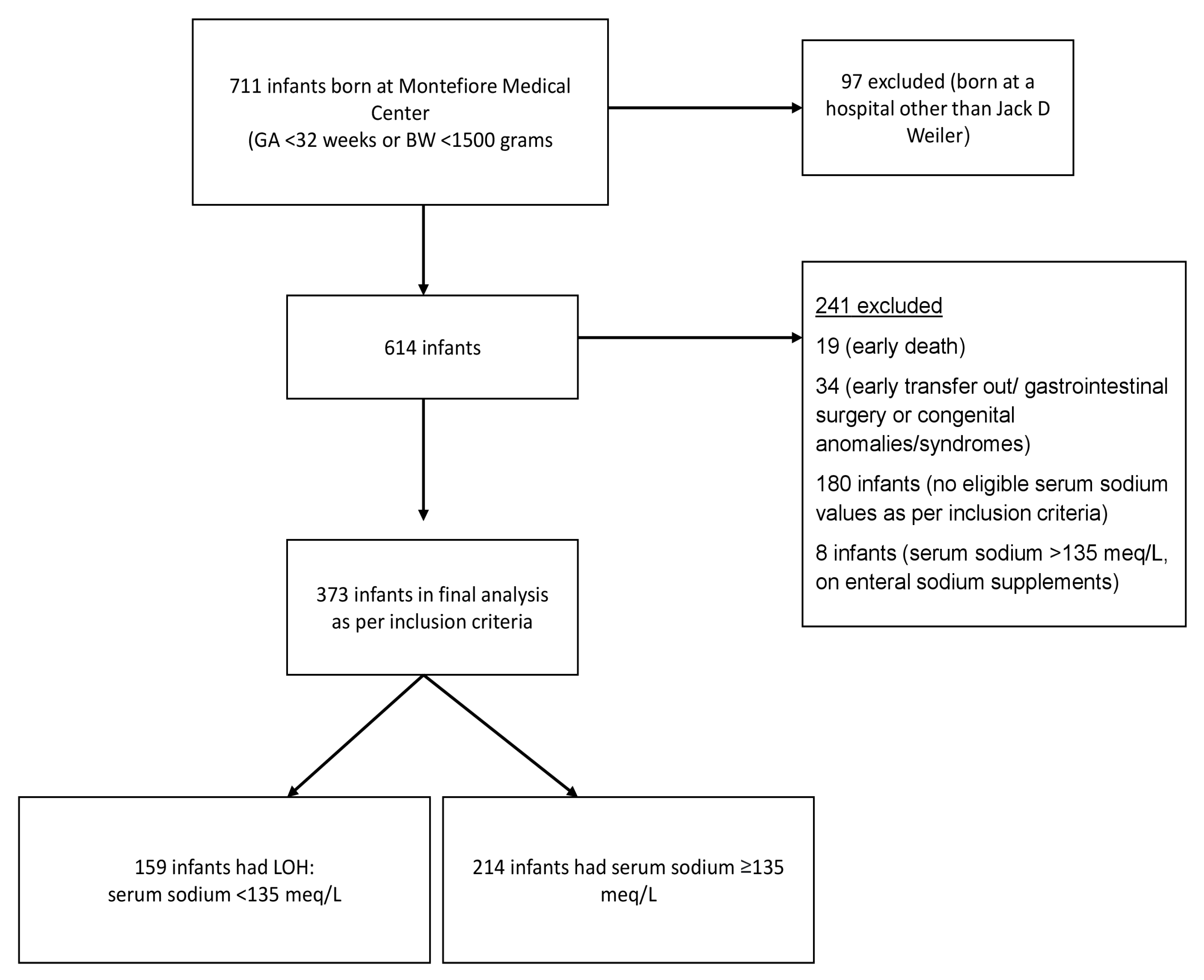
Figure 2.
Weight, length and head circumference (HC) z-scores at birth and at 36 weeks postmenstrual age (PMA) in preterm infants with and without late-onset hyponatremia (LOH).
Figure 2.
Weight, length and head circumference (HC) z-scores at birth and at 36 weeks postmenstrual age (PMA) in preterm infants with and without late-onset hyponatremia (LOH).
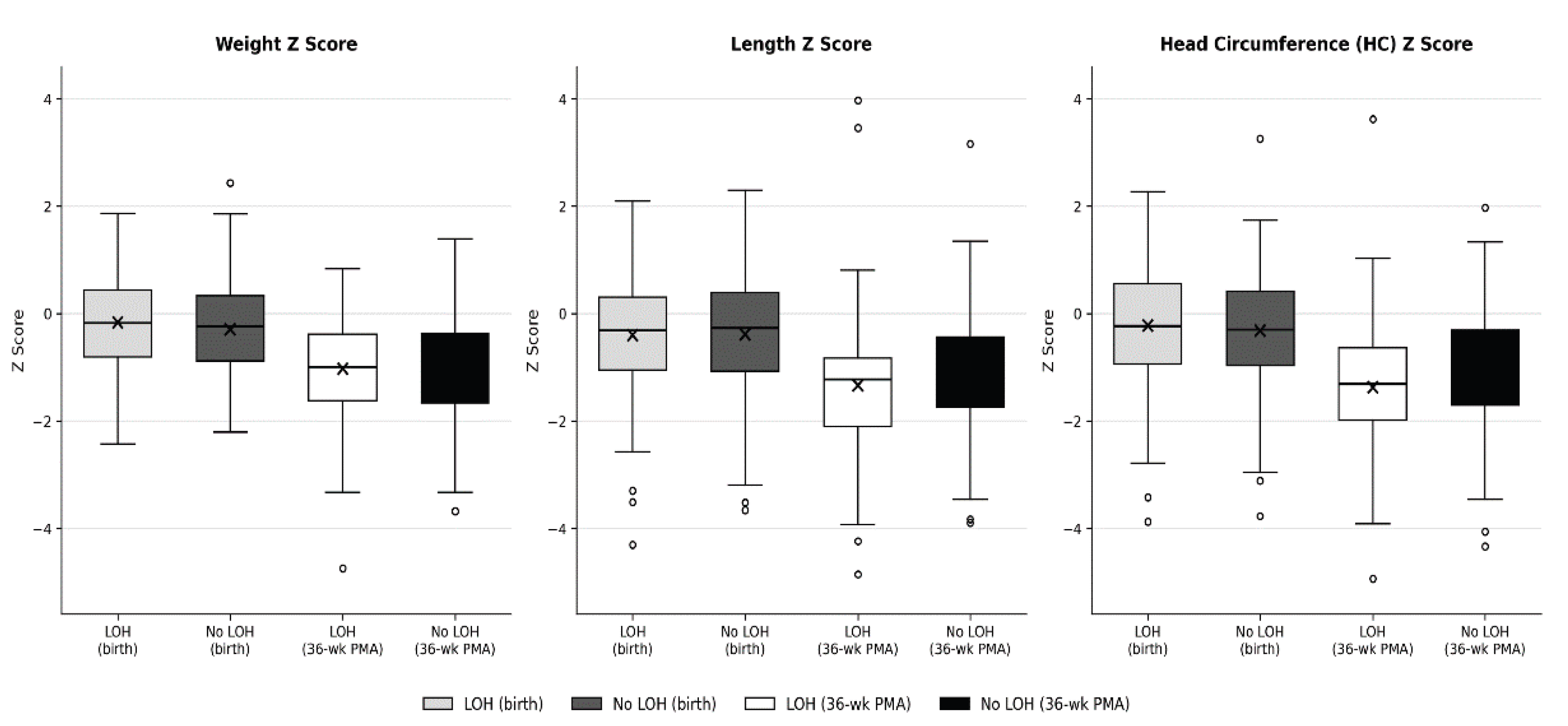

Table 1.
Demographic Characteristics.
| Variables |
Total N = 373 |
No LOH N = 2141 |
LOH N = 1591 |
p-value2 |
| GA at birthMean(±SD) | 28.3 (±2.5) | 29.4 (±2.1) | 26.8 (±2.2) | <0.001 |
| Race | ||||
| White | 34 (9.1%) | 21 (9.8%) | 13 (8.2%) | 0.062 |
| Black | 138 (37%) | 68 (32%) | 70 (44%) | |
| Asian | 13 (3.5%) | 6 (2.8%) | 7 (4.4%) | |
| Other | 188 (50%) | 119 (56%) | 69 (43%) | |
| Ethnicity: Non-Hispanic | 199 (53%) | 107 (50%) | 92 (58%) | 0.12 |
| Gender: Male | 195 (52%) | 106 (50%) | 89 (56%) | 0.22 |
| BW(g)Mean (±SD) | 1,058.2 (±341.3) | 1,185.6 (±325.6) | 886.6 (±282.4) | <0.001 |
| BW percentile (%)Mean(±SD) | 42.3 (±26.8) | 41.1 (±25.8) | 43.8 (±28.0) | 0.41 |
| Caesarian-section delivery | 258 (69%) | 150 (70%) | 108 (68%) | 0.65 |
| Chorioamnionitis | 35 (9.4%) | 14 (6.5%) | 21 (13%) | 0.028 |
| Maternal PPROM | 111 (30%) | 63 (30%) | 48 (31%) | 0.77 |
| Maternal antibiotics received | 193 (52%) | 105 (49%) | 88 (55%) | 0.23 |
| Maternal gestational diabetes | 58 (16%) | 37 (17%) | 21 (13%) | 0.27 |
| Maternal hypertension | 158 (43%) | 101 (47%) | 57 (36%) | 0.029 |
| Antenatal corticosteroids | 286 (77%) | 162 (76%) | 124 (78%) | 0.88 |
| Apgar 5 min Mean (±SD) | 7.7 (±1.3) | 8.1 (±1.1) | 7.3 (±1.3) | <0.001 |
| Day of starting feedsMean(±SD) | 1.8 (±1.2) | 1.6 (±1.0) | 2.0 (±1.4) | 0.029 |
| Type of feeds started | ||||
| EBM | 297 (80%) | 165 (77%) | 132 (83%) | 0.18 |
| DBM | 65 (17%) | 40 (19%) | 25 (16%) | |
| Formula | 11 (2.9%) | 9 (4.2%) | 2 (1.3%) | |
| 1Values are mean (SD), or count (%) | ||||
| 2Wilcoxon rank sum test; Pearson's Chi-squared test; Fisher's exact test | ||||
Table 2.
Nutritional Characteristics of infants at the time of serum sodium.
| Variables |
Total N = 3731 |
No LOH N = 2141 |
LOH N = 1591 |
p-value2 |
| PMA (weeks), Mean (±SD) | 32.6 (±2.0) | 33.5 (±1.5) | 31.5 (±2.0) | <0.001 |
| Day of life at serum sodium measurementMean (±SD) | 30.5 (± 11.8) | 28.4(±11.3) | 33.5 (±11.8) | <0.001 |
|
Serum sodium (meq/L) Mean (±SD) |
135.9 (±3.5) | 138.3 (±2.2) | 132.6 (±1.6) | <0.001 |
| On prior enteral sodium supplement | 50 (13%) | 0 (0%) | 50 (31%) | <0.001 |
| Enteral sodium started afterwards | 110 (29%) | 0 (0%) | 110 (69%) | <0.001 |
| Daily weight (kg) Mean (Range) | 1.47 (0.63, 2.94) | 1.60 (0.79, 2.94) | 1.31 (0.63, 2.32) | <0.001 |
| Milk Fortification | ||||
| 24 calories | 304 (82%) | 178 (83%) | 126 (79%) | 0.020 |
| 22 calories | 13 (3.5%) | 11 (5.1%) | 2 (1.3%) | |
| 26 calories | 56 (15%) | 25 (12%) | 31 (19%) | |
| Liquid Protein | 82 (22%) | 49 (23%) | 33 (21%) | 0.62 |
| MCT Oil | 14 (3.8%) | 8 (3.7%) | 6 (3.8%) | 0.99 |
|
EBM (ml/kg/day) Mean (Range) |
101.8 (0.0, 171.0) | 106.1 (0.0, 171.0) | 95.9 (0.0, 168.2) | 0.11 |
|
DBM (ml/kg/day) Mean (Range) |
34.4 (0.0, 164.8) | 24.65 (0.0, 159.6) | 47.58 (0.0, 164.8) | 0.004 |
|
Formula (ml/kg/day) Mean (Range) |
18.8(0.0, 198.3) | 25.4 (0.0, 198.3) | 9.9(0.0, 160.0) | <0.001 |
|
EBM (%) Mean (Range) |
65.8 (0-100%) | 68.2 (0-100%) | 62.6 (0-100%) | 0.45 |
| DBM (%)Mean (Range) | 22.2 (0-100%) | 15.9 (0-100%) | 30.8 (0-100%) | 0.004 |
| Formula (%)Mean (Range) | 12.0 (0-100%) | 15.9 (0-100%) | 6.6 (0-100%) | <0.001 |
| 1Values are mean (±SD or range), or count (%) | ||||
Table 3.
Clinical characteristics of infants.
| Variables |
Total N = 3731 |
No LOH N = 2141 |
LOH N = 1591 |
p-value2 |
| RDS requiring surfactant | 194 (52%) | 80 (37%) | 114 (72%) | <0.001 |
| hs-PDA | 105 (28%) | 32 (15%) | 73 (46%) | <0.001 |
| PDA treatment | ||||
| Medical | 75 (20%) | 20 (9.3%) | 55 (35%) | <0.001 |
| PICCOLO/Ligation | 19 (5.1%) | 5 (2.3%) | 14 (8.8%) | |
| No treatment | 279 (75%) | 189 (88%) | 90 (57%) | |
| Medical NEC | 18 (4.8%) | 8 (3.7%) | 10 (6.3%) | 0.26 |
| BPD | ||||
| No BPD | 101 (27%) | 92 (43%) | 9 (5.7%) | <0.001 |
| Mild | 142 (38%) | 78 (36%) | 64 (40%) | |
| Moderate | 119 (32%) | 41 (19%) | 78 (49%) | |
| Severe | 11 (2.9%) | 3 (1.4%) | 8 (5.0%) | |
| Serum creatinine:Mean (±SD) | 0.46 (±0.12) | 0.44 (±0.10) | 0.49 (±0.13) | 0.001 |
| PRBC transfusion | 35 (9.4%) | 6 (2.8%) | 29 (18%) | <0.001 |
| Respiratory support | ||||
| HFNC/Nasal Cannula | 37 (9.9%) | 25 (12%) | 12 (7.5%) | <0.001 |
| CPAP | 184 (49%) | 101 (47%) | 83 (52%) | |
| NIV | 40 (11%) | 11 (5.1%) | 29 (18%) | |
| Invasive Ventilation | 33 (8.8%) | 5 (2.3%) | 28 (18%) | |
| Room Air | 79 (21%) | 72 (34%) | 7 (4.4%) | |
| FiO2:Mean (Range) | 23.2 (21.0, 50.0) | 21.4 (21.0, 35.0) | 25.6 (21.0, 50.0) | <0.001 |
| Furosemide received | 29 (7.8%) | 9 (4.2%) | 20 (13%) | 0.003 |
| Chlorothiazide received | 74 (20%) | 15 (7.0%) | 59 (37%) | <0.001 |
| Sepsis (Culture-positive) | 4 (1.1%) | 0 (0%) | 4 (2.5%) | 0.032 |
|
NICU Stay (days) Mean (Range) |
77.9 (20.0, 242.0) | 63.4 (20.0, 147.0) | 97.3 (23.0, 242.0) | <0.001 |
| Infant Disposition | ||||
| Home | 303 (81%) | 194 (91%) | 109 (69%) | <0.001 |
| Transfer to rehab | 61 (16%) | 16 (7.5%) | 45 (28%) | |
| Transfer to another hospital | 9 (2.4%) | 4 (1.9%) | 5 (3.1%) | |
| 1Values are mean (±SD or range), or count (%) | ||||
| 2Wilcoxon rank sum test; Pearson's Chi-squared test; Fisher's exact test | ||||
Table 4.
Univariable Logistic Regression of Late Onset Hyponatremia.
| Characteristic | OR1 | 95% CI1 | p-value |
| GA at birth | 0.58 | 0.52, 0.65 | <0.001 |
| Race | |||
| White | reference | — | |
| Black | 1.66 | 0.78, 3.66 | 0.194 |
| Asian | 1.88 | 0.52, 7.09 | 0.336 |
| Other | 0.94 | 0.45, 2.03 | 0.865 |
| Gender: Female | 0.77 | 0.51, 1.16 | 0.218 |
| BW (g) | 1.00 | 1.00, 1.00 | <0.001 |
| PMA at serum sodium | 0.53 | 0.46, 0.61 | <0.001 |
| Intake | 0.96 | 0.93, 0.98 | 0.002 |
| Daily Weight | 0.10 | 0.05, 0.19 | <0.001 |
| Milk Fortification | |||
| 24 calories | reference | — | |
| 22 calories | 0.26 | 0.04, 0.98 | 0.080 |
| 26 calories | 1.75 | 0.99, 3.13 | 0.056 |
| Liquid Protein used | 0.88 | 0.53, 1.45 | 0.621 |
| MCT Oil Used | 1.01 | 0.33, 2.96 | 0.986 |
| EBM (per ml/kg/day) | 1.00 | 1.0, 1.00 | 0.142 |
| EBM (per 1%) | 1.00 | 0.99, 1.00 | 0.217 |
| EBM (per 10%) | 1.03 | 1.03, 1.04 | 0.217 |
| DBM (per ml/kg/day) | 1.01 | 1.00, 1.01 | <0.001 |
| DBM (per 1%) | 1.01 | 1.00, 1.02 | <0.001 |
| DBM (per 10%) | 1.11 | 1.10, 1.16 | <0.001 |
| Formula (per ml/kg/day) | 0.99 | 0.99, 1.00 | 0.002 |
| Formula (per %) | 0.99 | 0.98, 1.00 | 0.003 |
| Formula (per 10%) | 0.88 | 0.88, 0.89 | 0.003 |
| BPD | |||
| Mild | 8.39 | 4.10, 19.1 | <0.001 |
| Mod | 19.4 | 9.30, 45.1 | <0.001 |
| Severe | 27.3 | 6.67, 143 | <0.001 |
| Sepsis (culture positive)* | NE | 0.00, NA | 0.983 |
| hs-PDA present | 4.83 | 2.99, 7.95 | <0.001 |
| Furosemide received | 3.28 | 1.49, 7.77 | 0.004 |
| Chlorothiazide received | 7.83 | 4.33, 14.9 | <0.001 |
| *Not estimable due to zero event occurring in the no-LOH group | |||
Table 5.
Multivariable Logistic Regression of Late Onset Hyponatremia.
| Characteristic | OR1 | 95% CI1 | p-value |
| DBM (per 1%) | 1.01 | 1.00, 1.02 | 0.022 |
| DBM (per 10%) | 1.08 | 1.08,1.09 | 0.022 |
| Formula (per 1%) | 0.99 | 0.98, 1.00 | 0.26 |
| Formula (per 10%) | 0.94 | 0.93, 0.95 | 0.26 |
| GA at birth | 0.73 | 0.63, 0.85 | <0.001 |
| Race | |||
| White | reference | — | |
| Black | 0.99 | 0.37, 2.74 | 0.98 |
| Asian | 2.18 | 0.43, 11.7 | 0.35 |
| Other | 0.61 | 0.23, 1.65 | 0.32 |
| Furosemide received | 1.38 | 0.53, 3.85 | 0.52 |
| Chlorothiazide received | 3.28 | 1.61, 7.00 | 0.001 |
| BPD | |||
| Mild | 2.91 | 1.26, 7.23 | 0.016 |
| Moderate | 3.82 | 1.47, 10.5 | 0.007 |
| Severe | 2.16 | 0.39, 13.9 | 0.39 |
| hs-PDA | 1.20 | 0.63, 2.28 | 0.57 |
| 1OR = Odds Ratio, CI = Confidence Interval | |||
Disclaimer/Publisher’s Note: The statements, opinions and data contained in all publications are solely those of the individual author(s) and contributor(s) and not of MDPI and/or the editor(s). MDPI and/or the editor(s) disclaim responsibility for any injury to people or property resulting from any ideas, methods, instructions or products referred to in the content. |
© 2026 by the authors. Licensee MDPI, Basel, Switzerland. This article is an open access article distributed under the terms and conditions of the Creative Commons Attribution (CC BY) license.
Copyright: This open access article is published under a Creative Commons CC BY 4.0 license, which permit the free download, distribution, and reuse, provided that the author and preprint are cited in any reuse.