

Submitted:
12 September 2026
Posted:
15 September 2026
You are already at the latest version
Abstract
Introduction Aspirin initially recognized for its anti-inflammatory, antipyretic and analgesic properties hold a prominent role in the treatment of cardiovascular disease. Cyclooxygenase, COX, 1 and 2 activity in cirrhotic liver disease has been studied by several groups and stratified into COX dependent and independent mechanisms. COX2 gene expression has been identified to be significantly increased in cirrhotic liver disease and various other states of chronic hepatic inflammation. Our study investigates the relationship of aspirin use, an established COX inhibitor, and outcomes in patients hospitalized with ascitic cirrhosis. Methodology The National Inpatient Sample, NIS, database from 2017 to 2022 was analyzed for patients age >18 who were hospitalized for ascitic cirrhosis and its decompensations using ICD-10 diagnostic codes. These patients were further partitioned based on their use of aspirin. The principal outcome of this investigation is in-hospital mortality, with secondary outcomes including odds of portal vein thrombosis, septic shock, ICU admission and acute kidney injury. Secondary outcomes also included the odds of developing hepatic decompensations including need for EGD, hepatorenal syndrome, spontaneous bacterial peritonitis, SBP, developing HCC with and without pulmonary metastasis and of undergoing a transjugular intrahepatic portosystemic shunt, TIPS, procedure. Multivariate logistic regression was applied to the outcomes, and the Charlson Comorbidity Index was used to adjust for confounders. A p-value (pv) of <0.05 was considered statistically significant. Results In our analysis of the NIS, 568,990 patients were identified with ascitic cirrhosis and 11.7% (66,572) of this population were identified to use aspirin. Aspirin use was identified to have a significantly reduced odds of in-patient mortality (adjusted odds ratio) [aOR] 0.540, p value <0.001 95% CI (confidence interval): 0.461 – 0.631. Patients with aspirin use demonstrated significantly reduced odds of portal vein thrombosis, septic shock, ICU admission, and acute kidney injury. Those with ascitic cirrhosis and aspirin use also conveyed reduced odds of developing hepatocellular carcinoma, pulmonary metastasis and hepatic decompensations including hepatorenal syndrome and of undergoing TIPS. Discussion Cirrhotic liver disease remains a global health burden with increasing prevalence and mortality in recent years. This mortality increase remains a critical driver for treatment innovation with continual examination of our repertoire of medications for possible repurposed applications. Elevated COX2 expression has been identified to mediate and accelerate acute and chronic inflammatory states therefore driving the onset of cirrhotic liver disease and hepatic decompensation. Aspirin use and its inhibitory action on COX2 demonstrated a significantly reduced risk of in-hospital mortality. These findings reveal that aspirin use is also linked to a significant reduction in odds of in-hospital mortality, of developing major secondary complications and of developing hepatic decompensation known to increase mortality and morbidity in those with cirrhosis as compared to those who do not use aspirin.
Keywords:
aspirin
; cirrhosis
; ascites and decompensation
; cyclooxygenase
1. Introduction
Aspirin, acetylsalicylic acid, initially recognized for its anti-inflammatory, antipyretic and analgesic properties now holds a prominent role in the treatment of acute coronary syndrome and chronic cardiovascular disease [1]. Identification of this substance has led to advances in our mechanistic understanding of antithrombotic physiology, and has driven the development of several other antithrombotic agents including the P2Y12 adenosine diphosphate receptor antagonists and GPIIb/IIIb inhibitors. Despite the clinical success of these medications, aspirin maintains a steady presence in clinical application given its efficacious antithrombotic profile and relatively reduced bleeding risk compared to other antithrombotic agents [2,3]. Its decreased side effect profile, reduced cost and ubiquitous availability render aspirin as an excellent medication choice across a wide variety of indications. Cirrhotic liver disease currently remains the fifth leading cause of adult mortality in the United States with high risk of progression to irreversible hepatic fibrosis along with decompensation and permanent loss of liver function [4]. The total disease burden and worldwide prevalence of chronic liver disease has demonstrated a significant increase in the past 30 years. The global death toll identified in 2019 from chronic liver disease including cirrhosis was measured to be 1,472,011 majorly increased from 1,012,975 in 1990 [5]. Although mortality from viral hepatitis induced cirrhosis has decreased due to widespread use of direct acting antiviral agents, mortality from alcoholic and non-alcoholic liver disease induced cirrhosis has demonstrated a significant surge in the United States [6].
The utility of aspirin in patients with compensated and decompensated liver cirrhosis has been stratified into COX dependent and independent mechanisms [7]. Hepatic expression profiles of COX2 have revealed markedly upregulated COX2 expression in patients with cirrhotic liver disease [8,9,10,11]. COX2 over expression is associated with induction of molecular processes known to accelerate chronic inflammatory states driving the development of cirrhotic liver disease and subsequent decompensation [12,13]. Aspirin also demonstrates several COX independent molecular interactions with key regulators of inflammation and fibrotic tissue remodeling implicated in the development of cirrhosis [7]. These interactions interfere with the normal homeostatic balance of anti and pro inflammatory signaling and create hepatic microenvironments that foster the development of the cirrhotic state [7]. These studies have garnered significant scientific attention with special interest into gaining a mechanistic understanding of how aspirin functions in the treatment of and prevention of cirrhosis. Despite these advances in our understanding of hepatic pathophysiology, the treatment of hepatitis and liver transplantation cirrhosis remains a substantial global health burden with rising rates of mortality. This uncontrolled increase in cirrhosis-associated mortality albeit alarming, serves as a driving force for innovation and development of novel therapeutic treatments. Continual examination of current treatment modalities and our repertoire of medications for possible repurposed applications highlights a potential role for aspirin use in those with compensated and decompensated cirrhosis.
This is of particular interest given its well characterized anti-inflammatory, anti-platelet effects and capacity to modulate endothelial tissue especially those identified in hepatic sinusoids and vasculature. Increasing focus has converged on its potential application beyond cardiovascular disease, especially in pathologies of which chronic inflammatory signaling with progressive fibrosis and microvascular thrombosis remains central to dysregulation. These features embody the underlying pathophysiology of cirrhotic liver disease and therefore indicate the plausibility of examining aspirin as a repurposed therapeutic strategy for those with cirrhosis with and without decompensation. Therefore, we conducted this analysis to measure the effects of aspirin use on the incidence of in-hospital mortality, inpatient outcomes and decompensations in patients with ascitic cirrhosis on a national scale.
2. Materials and Methods
The National Inpatient Sample, NIS, represents the largest deidentified database containing information on various in hospital outcomes and is maintained by the healthcare cost and utilization project, HCUP; all information contained within NIS database files are uniquely represented and validated by HCUP to ensure accuracy of the information’s content and its origin.
Inclusion Criteria, Population of Study and Examined Variables
The primary endpoint of our study are the odds of in hospital mortality with secondary end points including the odds of developing septic shock, portal vein thrombosis, pulmonary embolism, acute kidney injury, need for renal replacement therapy, intensive care unit (ICU) admission and the development of pulmonary, hepatic, gastrointestinal or peritoneal and retroperitoneal metastasis.
The 10th version of the international classification of diseases, ICD 10, diagnostic codes were used to identify patients who are >= 18 years of age who were hospitalized between the years of 2017 to 2022 with a primary diagnosis of cirrhosis with ascites. This subset of patients was further subdivided into two sub populations the presence or absence of long-term aspirin use; this set of inclusion criteria comprised 596,160 cases.
In this study the primary exposure variable was the use of aspirin in patients with cirrhosis and ascites.. Information on variables such as race, gender, age, median income and hospital characteristics including urban versus rural location, bed size and hospital region were also analyzed. The analysis of the comorbidity burden was investigated using the Charleson Comorbidity Index, CCI. The CCI is a well validated clinical index including 19 classes of comorbidities that serves as a clinical prediction tool of a patient's risk of mortality.
Statement of Ethics
All data used in this study was captured from the NIS database which represents completely de-identified information. An IRB approval was not required for this study as all patient information is deidentified.
Statistical Analysis
Hospital-level discharge weights provided by NIS were used to generate national estimates. Categorical variables were compared using the chi-square test, whereas an independent sample t-test was used for continuous variables. To investigate the effect of defined variables on in-hospital outcomes, univariate logistic regression was performed using a p-value threshold of 0.2 for variable selection. Variables meeting this inclusion criterion were subsequently entered into a multivariable logistic regression model for further analysis. Adjusted odds ratios (aORs) were calculated with corresponding 95% confidence intervals (CIs), and statistical significance was defined as a two-tailed p-value < 0.05. All analyses were conducted using Stata/MP version 19.5. Modified Poisson regression models with robust standard errors were used as sensitivity models to evaluate the robustness of the primary multivariable logistic regression findings. This approach was selected as an alternative model specification for evaluation of in-hospital mortality and the secondary outcomes evaluated in our study. Analyses were restricted to adult hospitalizations with decompensated cirrhosis stratified by aspirin use. Modified Poisson regression models were constructed for each adverse in-hospital outcome, including pulmonary embolism, portal vein thrombosis, septic shock, intensive care unit stay, acute kidney failure, gastrointestinal, hepatic, pulmonary and peritoneal/retroperitoneal metastasis. The primary exposure variable was aspirin use. All models adjusted for demographic and comorbidity covariates. Robust variance estimation was applied to account for potential misspecification of the Poisson variance structure when modeling outcomes. Model goodness-of-fit was assessed for the multivariable logistic regression model evaluating in-hospital mortality, and all other secondary outcomes in our study, amongst adults hospitalized with decompensated cirrhosis stratified by aspirin use. Model calibration was evaluated using the Hosmer–Lemeshow goodness-of-fit test. Predicted probabilities of in-hospital mortality and all other secondary outcomes were generated from the multivariable logistic regression model, and observations were grouped into 10 quantiles, or deciles, according to their estimated risk. Within each decile of predicted risk, observed events were compared with the number of events expected by the model. The Hosmer–Lemeshow chi-square statistic was then used to assess whether there was evidence of significant disagreement between observed and expected events across risk strata.
3. Results
Patient Characteristics
Our study interval of 2017 to 2022 contains 205,215,316 hospitalizations of which 568,990 adult patients were diagnosed with cirrhosis and ascites that represent the sub population in our study. Of them 66,572, 11.7%, were identified as using aspirin meanwhile 502,418 88.3% of patients within this subpopulation did not use aspirin. Patients with long-term aspirin use were, on average, older than those without aspirin use (mean age 72 vs 68 years, respectively). Further characterization of baseline patient characteristics categorized by the use of aspirin are presented in Table 1.
Comorbidities
A greater incidence of chronic obstructive pulmonary disease, metabolic disorders including obesity, type 2 diabetes mellitus, dyslipidemia and cardiac arrythmias were observed amongst individuals with aspirin use. Interestingly, individuals with no aspirin use were observed to have greater incidences of cannabis use and alcohol use disorder; see further characterization below in Table 2.
For all primary and secondary outcomes examined in this study statistical significance was measured using multivariate regression analysis with adjustment for demographic factors and comorbidities.
In-Hospital Mortality
Patients with cirrhosis and ascites with aspirin use demonstrated decreased odds of in hospital mortality, adjusted odds ratio, (aOR) 0.540; p value <0.001 95% CI: 0.461 – 0.631 and aOR 1.85; p value <0.001 95% CI: 1.583 – 2.165 in those without aspirin use. The total proportion of mortality amongst patients with cirrhosis and ascites with aspirin use is 2.65% versus 4.75% in non-aspirin users; p: <0.0001
Portal Vein Thrombosis
Patients with cirrhosis and ascites with aspirin use demonstrated decreased odds of portal vein thrombosis, adjusted odds ratio, (aOR) 0.693; p value <0.002 95% CI (confidence interval): 0.601 – 0.799. Those with cirrhosis and ascites with no aspirin use demonstrated increased rates of portal vein thrombosis (aOR) 1.44; p value <0.001 95% CI (confidence interval): 1.25 – 1.66. The total proportion of portal vein thrombosis amongst patients with cirrhosis and ascites with aspirin use is 4.37% versus 5.6% in non-aspirin users; p: <0.0049
Septic Shock
Patients with cirrhosis and ascites with aspirin use demonstrated decreased odds of developing septic shock, adjusted odds ratio, (aOR) 0.513; p value <0.001 95% CI (confidence interval): 0.391 – 0.673. Those with cirrhosis and ascites with no aspirin use demonstrated increased rates of septic shock (aOR) 1.94; p value <0.003 95% CI (confidence interval): 1.48 – 2.55. The total proportion of septic shock amongst patients with cirrhosis and ascites with aspirin use is 0.65% versus 1.8% in non-aspirin users; p: <0.00001
ICU Stay
Patients with cirrhosis and ascites with aspirin use demonstrated decreased odds of admission to the ICU, adjusted odds ratio, (aOR) 0.690; p value <0.003 95% CI (confidence interval): 0.612 – 0.779. Those with cirrhosis and ascites with no aspirin use demonstrated increased rates of ICU admission (aOR) 1.44; p value <0.003 95% CI (confidence interval): 1.28 – 1.63. The total proportion of admission to the ICU amongst patients with cirrhosis and ascites with aspirin use is 3.82% versus 7.08% in non-aspirin users; p: >0.0002
Acute kidney injury, AKI
Patients with cirrhosis and ascites with aspirin use demonstrated decreased odds of acute kidney injury, adjusted odds ratio, (aOR) 0.774; p value <0.002 95% CI (confidence interval): 0.728 – 0.822. Those with cirrhosis and ascites with no aspirin use demonstrated increased rates of acute kidney injury (aOR) 1.29; p value <0.004 95% CI (confidence interval): 1.21 – 1.37. The total proportion of acute kidney injury amongst patients with cirrhosis and ascites with aspirin use is 33.36% versus 34.1% in non-aspirin users; p: 0.4491
Hepatocellular Carcinoma, HCC
Patients with cirrhosis and ascites with aspirin use demonstrated decreased odds of developing HCC, adjusted odds ratio, (aOR) 0.581; p value <0.001 95% CI (confidence interval): 0.505 – 0.667. Those with cirrhosis and ascites with no aspirin use demonstrated increased rates of developing HCC (aOR) 1.72; p value <0.001 95% CI (confidence interval): 1.49 – 1.97. The total proportion of HCC amongst patients with cirrhosis and ascites with aspirin use is 4.74% versus 5.27% in non-aspirin users; p: 0.1909
Pulmonary Metastasis
Patients with cirrhosis, ascites and HCC with aspirin use demonstrated decreased odds of developing pulmonary metastasis, adjusted odds ratio, (aOR) 0.506; p value <0.001 95% CI (confidence interval): 0.302 – 0.847. Those cirrhosis, ascites and HCC with no aspirin use demonstrated increased rates of developing pulmonary metastasis (aOR) 1.97; p value <0.001 95% CI (confidence interval): 1.17 – 3.30. The total proportion of pulmonary metastatic events amongst patients with cirrhosis and ascites with aspirin use is 0.34% versus 0.51% in non-aspirin users; p: 0.1775
Esophagogastroduoedenoscopy, EGD
Patients with cirrhosis and ascites with aspirin use demonstrated decreased odds of undergoing an EGD; aOR 0.838; p <0.002 95% CI: 0.782 – 0.897 and conversely increased odds of undergoing endoscopic evaluation with EGD aOR 1.192 p <0.001 95% CI: 1.113 - 1.277 without aspirin use. The total proportion of EGDs amongst patients with cirrhosis and ascites with aspirin use is 18.85% versus 23.37% in non-aspirin users; p: <0.00001
Hepatorenal Syndrome
Patients with cirrhosis and ascites with aspirin use demonstrated decreased odds of developing hepatorenal syndrome, adjusted odds ratio, (aOR) 0. 741; p <0.001 95% CI: 0.574 – 0.955. Those with cirrhosis and ascites with no aspirin use demonstrated increased rates of developing hepatorenal syndrome aOR 1.78; p <0.001 95% CI: 1.596 - 2.006. The total proportion of hepatorenal syndrome amongst patients with cirrhosis and ascites with aspirin use is 10.26% versus 12.56% in non-aspirin users; p: <0.0002
Spontaneous Bacterial Peritonitis, SBP
Patients with cirrhosis and ascites with aspirin use demonstrated decreased odds of developing SBP, adjusted odds ratio, (aOR) 0.794; p value <0.002 95% CI (confidence interval): 0.692 – 0.912. Those with cirrhosis and ascites with no aspirin use demonstrated increased rates of SBP (aOR) 1.25; p value <0.005 95% CI (confidence interval): 1.09 – 1.44. The total proportion of SBP amongst patients with cirrhosis and ascites with aspirin use is 3.57% versus 4.67% in non-aspirin users; p: <0.0044
Transjugular Intrahepatic Portosystemic Shunt, TIPS
Patients with cirrhosis and ascites with aspirin use demonstrated decreased odds of requiring a TIPS procedure, adjusted odds ratio, (aOR) 0.805; p value <0.023 95% CI (confidence interval): 0.669 – 0.969. Those with cirrhosis and ascites with no aspirin use demonstrated increased rates of undergoing a TIPS procedure (aOR) 1.216; p value <0.037 95% CI (confidence interval): 1.01 – 1.46. The total proportion of TIPS amongst patients with cirrhosis and ascites with aspirin use is 2.0% versus 2.6% in non-aspirin users; p: <0.048.

Table 3.
Multivariate logistic regression analysis examining the relationship of aspirin and no aspirin use on outcomes in ascitic cirrhosis.
Table 3.
Multivariate logistic regression analysis examining the relationship of aspirin and no aspirin use on outcomes in ascitic cirrhosis.
| Outcomes | No Aspirin Use | 95% Confidence Interval |
p-Value | Aspirin Use | 95% Confidence Interval |
p-Value |
|---|---|---|---|---|---|---|
| DIED | 1.85 | 1.583–2.165 | <0.001 | 0.540 | 0.461–0.631 | <0.001 |
| Portal vein thrombosis | 1.44 | 1.25–1.66 | <0.001 | 0.693 | 0.601–0.799 | <0.002 |
| Septic shock | 1.94 | 1.48–2.55 | <0.003 | 0.513 | 0.391–0.673 | <0.001 |
| ICU admission | 1.44 | 1.28–1.63 | <0.003 | 0.690 | 0.612–0.779 | <0.003 |
| Acute kidney injury | 1.29 | 1.21–1.37 | <0.004 | 0.774 | 0.728–0.822 | <0.002 |
| Hepatocellular carcinoma | 1.72 | 1.49–1.97 | <0.001 | 0.581 | 0.505–0.667 | <0.001 |
| Pulmonary metastasis | 1.97 | 1.17–3.30 | <0.001 | 0.506 | 0.302–0.847 | <0.001 |
| Esophagogastroduodenoscopy | 1.192 | 1.113–1.277 | <0.001 | 0.838 | 0.782–0.897 | <0.002 |
| Hepatorenal syndrome | 1.78 | 1.596–2.006 | <0.001 | 0.741 | 0.574–0.955 | <0.001 |
| Spontaneous bacterial peritonitis | 1.25 | 1.09–1.44 | <0.005 | 0.794 | 0.692–0.912 | <0.002 |
| Transjugular intrahepatic portosystemic shunt | 1.216 | 1.01–1.46 | <0.037 | 0.805 | 0.669–0.969 | <0.023 |
4. Discussion
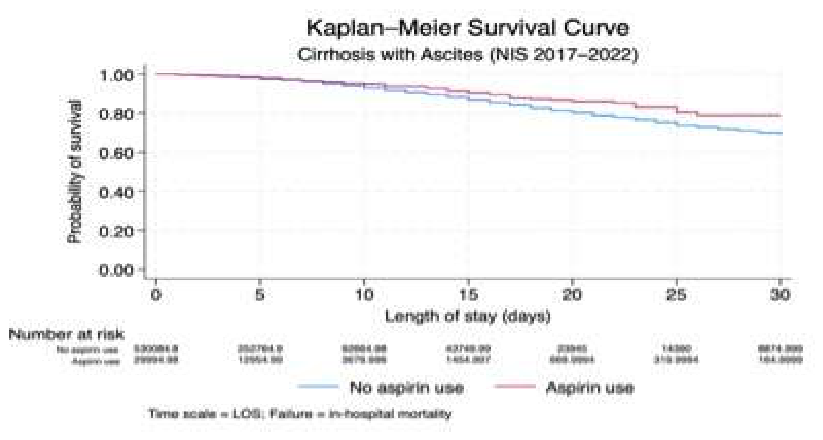
In our evaluation of the effects of aspirin in 568,990 cases of decompensated cirrhosis we have identified a statistically significant independent association with reduction of in hospital mortality amongst patients with long-term use of aspirin as compared to non-aspirin users; aOR 0.540; p value <0.001 95% CI: 0.461 – 0.631 in those with aspirin use and aOR 1.85; p value <0.001 95% CI: 1.583 – 2.165 in those without aspirin use. These findings are supported by several other multicenter analysis which compared rates of mortality in those with cirrhosis stratified by aspirin and no aspirin use. Aspirin use was associated with a significantly reduced likelihood of mortality as compared to those without aspirin use [14,15]. In addition to a potential survival benefit there is emerging evidence that the magnitude of benefit may be duration dependent. A time dependent relationship was observed in patients with cirrhosis and total duration of exposure to aspirin. Specifically, patients with cirrhosis and longer consecutive use of aspirin demonstrated even lower incidences of mortality as compared to non-aspirin users; n=35,898 patients with daily aspirin use for greater than 84 days and median follow-up time of three and five years [15]. Hazards ratio, HR, at both three and five years were 0.43 (0.33-0.57) and 0.51 (0.42-0.63) respectively [15]. Another study reported a similar reduction in rate of cirrhosis related mortality amongst patients with concurrent aspirin use [16]. Other investigations have examined a cohort of 14,205 aspirin users with chronic liver disease who were followed for 10 years and identified that regular aspirin use is significantly associated with decreased liver disease related mortality [17]. We have also investigated in-hospital mortality in relation to duration of hospital stay with and without aspirin use and have identified that aspirin use in those with ascitic cirrhosis is associated with decreased likelihood of mortality as indicated by persistently decreased odds of mortality, or increased odds of survival, throughout an average hospital stay of 30 days: further demonstrated in Figure 1. Differential odds of survival between the aspirin use and no aspirin use group becomes apparent during the ninth day of hospitalization; 92% and 89% amongst aspirin and no aspirin use groups, respectively. As the duration of in hospital, stay continues the difference in odds of survival becomes increasingly pronounced between the aspirin and non-aspirin users with ascitic cirrhosis. The greatest differential odds of survival can be seen in Figure 1 at time 30 days with 80% and 68% probability of survival amongst the aspirin and no aspirin use groups, respectively.
Figure 2.
Effect of aspirin vs. no aspirin use on hepatic decompensation in ascitic cirrhosis.
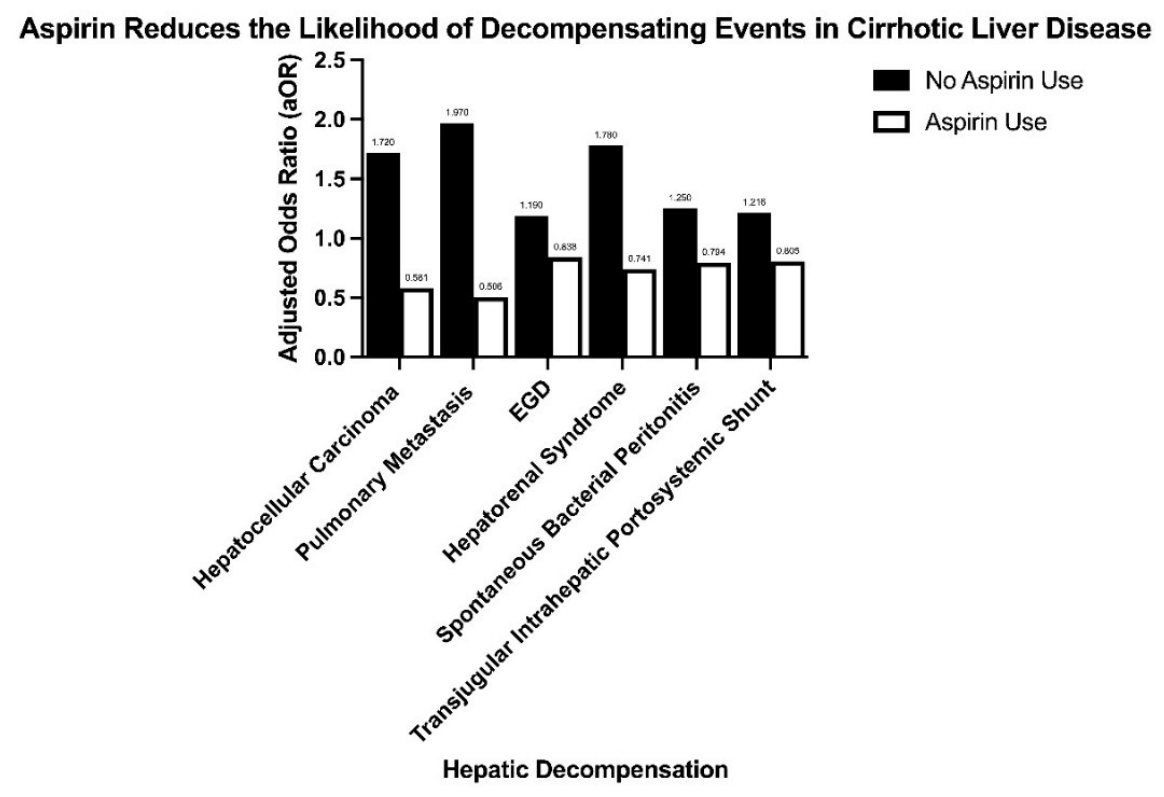
Figure 3.
.
While these findings suggest a survival benefit from aspirin use in cirrhosis the precise mechanisms by which aspirin may exert these protective effects from the molecular events that drive the development and progression of cirrhosis remain largely unknown. Aspirin exerts several of its molecular effects through the irreversible inhibition of COX1 and COX2 [18]. This inhibits the conversion of arachidonic acid to prostaglandin H2 and inhibits downstream platelet thromboxane A2, TXA2, synthesis [18]. An understanding of aspirin's regulation of inflammation and platelet function remains central to its therapeutic applications in cirrhotic liver disease. The capacity of cyclooxygenase to regulate inflammatory signaling cascades has garnered increased scientific attention. The expression of key pro inflammatory cytokines remains under the regulation of nuclear factor kappa beta, NFKB, of which include interleukin 1B, IL1B, IL6, TNFa and IL8 [19]. COX2 regulates inflammatory signaling through several critical mechanisms including the upregulation of NFKB which in turn drives the expression of pro inflammatory cytokines. Aspirin use and its inhibitory effects on COX2 therefore decreases the production of these pro inflammatory cytokines and prostaglandins such as prostaglandin F2A, PGF2A, PGED and PGE2 [20,21]. Beyond the direct inhibition of prostaglandin-mediated proinflammatory signaling aspirin also shifts the metabolic outcome of arachidonic acid. Phospholipase A2 catalytically converts membrane phospholipids to arachidonic acid where it is further acted upon by several enzymes, including COX1, COX2 and the arachidonate lipoxygenase, ALOX, family of enzymes. Aspirin induced inhibition of COX1 and COX2 effectively increases the total pool of available arachidonic acid which increases in vivo synthesis of eicosanoids including 15 epi-lipoxins and 15 hydroxyeicosatetraenoic acid, 15 HETE. These molecules induce the upregulation of immunomodulatory cytokines IL4 and IL13 known to suppress pro inflammatory signaling and drive the anti-inflammatory state [22,23]. This suggests that aspirin-induced COX2 inhibition serves as a molecular switch from downstream COX2 mediated pro-inflammatory signaling towards ALOX upregulated anti-inflammatory eicosanoids. Indeed, recent studies have identified a significant switch in metabolism of arachidonic acid from COX2 mediated TXA2 to markedly increased production of 15 HETE in a concentration-dependent manner [24]. These investigators also identified that in vivo animal models demonstrated increased hepatocyte expression of 15 epi-lipoxins when exposed to aspirin. Aspirin is primarily metabolized in the liver by aspirin esterases and once ingested will concentrate in hepatocytes as gastric venous outflow initially drains into portal venous circulation. Up to three fourths of ingested aspirin is metabolized to acetate and salicylic acid by hepatocytes as a result of first-pass metabolism, and as little as 25% of acetylsalicylic acid will therefore reach peripheral tissues. It remains a reasonable deduction that potentially beneficial effects of aspirin use will be more pronounced in both the liver and extrahepatic tissues in those with cirrhosis due to decreased functional hepatic parenchyma. This reduces the extent of first pass metabolism of aspirin, effectively increasing the half-life of acetylsalicylic acid in both the blood and hepatocytes, leading to increased delivery of unhydrolyzed aspirin to peripheral tissues. Collectively, these alterations of aspirin pharmacokinetics may amplify its anti-inflammatory and antithrombotic effects, particularly within the profoundly altered metabolic framework of cirrhosis. Therefore, the pathologic features that define cirrhosis may, in part, drive the enhanced therapeutic potential of aspirin as it relates to hepatic and extrahepatic outcomes and their effects on mortality in those hospitalized for decompensated cirrhosis.
The progression from cirrhosis to hepatocellular carcinoma, HCC, is mainly driven by a shared spectrum of pathology facilitated by the inflammatory and fibrinogenic hepatic microenvironment of cirrhosis. These persistent repetitive bouts of inflammation characteristic of cirrhosis highlights aspirin's role in the direct modulation of hepatic inflammation and potential effects on oncogenic transformation. The expression profiles of COX1 and COX2 in HCC have been evaluated by several groups, where HCC cells have demonstrated significant elevations of COX2 enzyme levels [25,26]. Increased COX2 expression has been shown to promote tumor cell growth and to affect the structural integrity of hepatic tissue through molecular changes that drive and promote chronic tissue inflammation. COX2 has been identified as an integral promoter of pathophysiology in several malignancies including HCC [25,26,27,28]. Persistent chronic tissue exposure to inflammation is a well-known mediator of malignancy through increased generation of inflammation induced reactive oxygen species, ROS. Persistent proinflammatory signaling therefore induces prolonged states of oxidative stress and DNA mutations both of which directly contribute to tissue carcinogenesis; particularly in cirrhosis and HCC [29,30]. This study demonstrates decreased odds of developing HCC in those with advanced cirrhosis, aOR 0.581; p value <0.001 95% CI: 0.505 – 0.667, with aspirin use and conversely increased odds of developing HCC, aOR 1.72; p value <0.002 95% CI: 1.497 – 1.976 in those with advanced cirrhosis and no aspirin use. These findings suggest that the anti-inflammatory properties, amongst other effects, of aspirin have a shielding effect from the development of HCC, particularly in cirrhotic patients with inherently greater risk for its occurrence.
In addition to the well-known anti-inflammatory effects driven by cyclooxygenase inhibition, aspirin has been demonstrated to exert antineoplastic effects. Several studies of aspirin's potential role in the treatment of hepatocellular cancer have been stratified into COX dependent and independent mechanisms. Loss-of-function, LOF, mutations of TP53, are a known inciting molecular event leading to several malignancies. LOF of TP53 has been characterized to substantially contribute to the carcinogenesis of several malignancies including HCC [31]. p53 mainly functions as a G1-S phase and G2-M phase checkpoint inhibitor [31]. When activated p53 stimulates apoptosis in atypical cells ultimately protecting the organism from the proliferation of cells with damaged DNA and dysregulated cellular growth signaling [31]. Aspirin has been identified to directly acetylate and activate p53 proteins in vivo and vitro in several gastrointestinal malignancies [32]. These molecular and genetic derangements therefore remain targets of interest in the augmentation of HHC prevention and therapeutics. There is a growing number of HCC phenotypes characterized by greater degrees of resistance to current treatments [33,34,35]. This highlights the need for innovation and reevaluation of current treatment regimens in managing this disease. This COX-independent mechanism provides mechanistic support for the observed decreased incidence of HCC and mortality in decompensated cirrhosis in those with aspirin use as represented in our study. However, the clinical application of aspirin and its relationship with rates of metastases remain poorly understood in cirrhosis-induced HCC. Overexpression of COX2 in HCC was identified as a significant predictor of poor prognosis and increased mortality. Various studies have investigated the relationship between overexpression of COX2 and tumorigenesis revealing that COX2 is an important driver of advanced-stage tumor development by regulation of underlying mechanisms involving angiogenesis, proliferation, inhibition of apoptosis and metastasis [36,37,38,39,40,41,42]. A known requisite for tumor progression involves angiogenesis and its regulation of vascular delivery of nutrients, tumor cell growth, secondary tissue invasion and metastasis. Indeed, COX2 activity has been identified as a significant promoter of angiogenesis in various malignancies through the upregulation of critical pro angiogenic factors including vascular endothelial growth factor, VEGF, platelet derived growth factor B, PEGFB, fibroblast growth factor, bFGF, and bFGF receptor, endothelin 1, nitric oxide synthase and transforming growth factor B, TGFB [36,37,38,39,40,41,42]. Collectively these studies identify COX2 overexpression as a substantial regulator of the cellular and molecular processes underlying tumor progression and remains a molecular target of interest in cancer therapeutics. This is of particular interest given recently identified chemotherapy resistance amongst patients with HCC undergoing treatment where recurrence of tumors and decreased treatment effectiveness remain the leading causes of poor prognosis [33,34,35].
Although these findings support the prooncogenic role of upregulated COX2 signaling in cirrhosis and its influence on the development of HCC they also suggest that COX2 inhibition may affect metastatic behavior of HCC through molecular interaction with other biological pathways. New evidence suggests that aspirin exerts antimetastatic properties through modulation of the tumor-immune cell interface identified to be largely driven by platelet mediated TXA2 signaling. Improved survival benefits in those with aspirin use and various malignancies has been identified to occur in relation with expression levels of human leukocyte antigen, HLA, type 1 suggesting an immunologic basis for the anti-metastatic properties of aspirin [43]. This study describes that platelet mediated TXA2 signaling drives a reduction in T cell immunity against cancer metastasis through activation and upregulation of a T lymphocyte specific pathway that requires a guanine exchange, factor protein named ARHGEF1. This was further examined by restricting the total pool of TXA2 through aspirin use and downregulation of COX1 expression which was shown to decrease the rate of metastatic events by a novel mechanism involving downregulated T cell expression levels of ARHGEF1 and signaling levels of TXA2 [43]. Correspondingly they also demonstrated significant suppression of pulmonary metastasis when ARHGEF1 knockout mice were injected with melanoma cell lines bolstering the support of aspirin use in enhancing T cell dependent anti-tumor and anti-metastatic effects [43]. Indeed, our study has identified significantly reduced incidence of pulmonary metastatic disease in those with advanced cirrhosis, HCC and aspirin use, aOR 0.506; p value <0.012 95% CI: 0.302 – 0.667, and conversely increased odds of developing pulmonary metastasis, aOR 1.97; p value <0.011 95% CI: 1.179 – 3.304 in those with advanced cirrhosis, HCC and no aspirin use. These observational findings provide support for the previously described mechanism which in turn augments the observed reduction in incidence of pulmonary metastatic events amongst advanced cirrhotic disease with HCC and aspirin use as identified in our study. Further longitudinal prospective studies are required to further delineate the susceptibility of patients with cirrhosis and HCC that use aspirin in developing metastasis to the lungs.
Alongside the antimalignancy properties of aspirin are the clinically significant benefits of aspirin use in mitigating the occurrence of thromboembolic pathologies, which are associated with significantly enhanced morbidity and mortality. Cirrhosis was thought to be predominantly associated with bleeding risk; however, more recent evaluations reveal greater complexities to hemostatic regulation in the cirrhotic liver. Those with cirrhosis undergo various changes leading to decreased functionality of the coagulation cascade resulting from decreased hepatic synthesis of several coagulation factors [44]. This is counterbalanced by increased expression of factor VIII and Vonwillebrand factor, vWF, by hepatic and vascular sinusoidal endothelial cells. These alterations in combination with decreased hepatic synthesis of the antithrombotic factors C, S and antithrombin III produce major alterations in primary hemostasis that establish a prothrombotic state with increased platelet aggregation despite cirrhosis induced thrombocytopenia [45]. Prothrombosis is further enhanced by decreased hepatic synthesis of disintegrin and metalloprotease with thrombospondin 13 motifs, or ADAMST13, which enzymatically cleaves and inactivates vWF [45]. In light of this understanding, sole reliance on traditional coagulation studies, including INR and PT are clinically, misleading, as they only represent the function of several coagulation factors and fail to capture the full spectrum of cirrhosis-specific hemostatic changes that drive the procoagulable state [46]. The current consensus is that cirrhotic liver disease remains a prothrombotic state in which dysregulated activation and inhibition of vWF precipitates unbalanced activation of platelets that serves as a major driver of thromboembolic events in those with cirrhosis.
Indeed, clinical thrombotic risk is significantly elevated in those with cirrhosis and several studies have identified a twofold increase in risk of developing venous thromboembolism, VTEs, and increased risk of developing portal vein, thrombosis, PVTs [47,48,49,50,51,52]. PVTs represent a specific thrombotic complication involving the hepatic portal vein and are associated with substantially increased mortality [47,48,49,50,51,52]. Those with cirrhosis are substantially predisposed to developing PVTs as its main risk factors include portal hypertension, slow or reversed portal flow and also HCC. Current evidence reveals up to 10% of patients with compensated cirrhosis and up to 30% in cirrhotic patients at the level of decompensation and in those awaiting liver transplant [47,48,49,50,51,52]. Our study demonstrated significantly decreased odds of developing a PVT, aOR 0.693; p value <0.001 95% CI: 0.601 – 0.799, with aspirin use and conversely increased odds of, developing a PVT aOR 1.441; p value <0.002 95% CI: 1.251-1.661. Although aspirin does not demonstrate significant capacity to dissolve an active thrombosis it is, however, able to reduce the incidence of these events. Suppression of COX1 activity reduces platelet production of thromboxane A2, TxA2, a key mediator of platelet activation and aggregation [53,54,55]. TxA2 is catalytically synthesized from COX1 activity on arachidonic acid within platelets. Once synthesized and released by activated platelets, TxA2 serves as a potent secondary messenger bolstering further downstream platelet activation, aggregation and vasoconstriction. Aspirin inhibits COX1 activity and therefore TxA2 synthesis, halting the activation of the TxA2 receptor on other platelets and dampening downstream procoagulant signaling cascade [53,54,55]. Aspirin also facilitates downregulation of tissue factors, the formation of thrombin and by extension thrombin coordinated downstream coagulation reactions; all critical components of a mature and stable thrombus [55]. This suggests aspirin’s potential mitigation of thrombotic disorders and remains especially important given the altered functionality of hemostasis in cirrhosis, dysregulated platelet activity and molecular shift towards prothrombosis. This features a potential prophylactic application of aspirin use in the prevention of a deadly and costly thrombotic complication, such as PVT, with worsening in hospital outcomes.
The natural clinical trajectory of an individual with cirrhosis is defined by the degree of compensation where the compensated stage precedes a decompensated phase characterized by ascites, hepatic encephalopathy, hepatorenal syndrome and various portohypertensive visceral pathologies including variceal hemorrhage [56,57]. The loss of compensation marks a critical prognostic turning point as this clinical event is associated with a substantially increased mortality. Ascites represents the most frequently occurring index decompensating event in those with cirrhosis and signifies progressively worsening portal hypertension and possible liver failure [59]. Recent evaluations indicate that an estimated 5-10% of patients with compensated cirrhosis will develop decompensation with ascites annually and 50-60% of those with cirrhosis will develop ascites within a decade. The onset of ascites marks a stark decline in five-year survival to 20%-30% [60] however it remains important to consider that this significantly increased mortality is driven in part by increased susceptibility to additional complications including spontaneous bacterial peritonitis, SBP, hepatorenal syndrome with resultant circulatory dysfunction and further cirrhosis associated complications. Given this influence on mortality in those who develop ascites we investigated the effect of aspirin use on the likelihood of developing these mortality driving decompensations. We identified significantly decreased odds of developing hepatorenal syndrome, aOR 0.741; p <0.001 95% CI: 0.574 – 0.955, with aspirin use and conversely increased odds of developing hepatorenal syndrome aOR 1.78; p <0.001 95% CI: 1.596 - 2.006. Our group has also identified a decreased incidence of portohypertensive induced pathologies including the development of SBP and a decreased incidence of progression towards refractory esophageal variceal hemorrhaging requiring a transjugular intrahepatic portosystemic shunt, TIPS, procedure; aOR 0.794; p <0.001 95% CI: 0.692 – 0.912, with aspirin and conversely increased odds of developing SBP aOR 1.258 p <0.002 95% CI: 1.095 - 1.444 without aspirin use; aOR 0.805; p <0.002 95% CI: 0.669 – 0.969, with aspirin and conversely increased odds of undergoing a TIPS procedure without aspirin use, aOR 1.241; p <0.003 95% CI: 1.031 - 1.492. Our findings indicate that aspirin use is associated with a decreased incidence of hepatic decompensation known to drive increased mortality in those with decompensated or advanced cirrhosis. Beyond these findings, we have also identified that aspirin use is associated with a decreased endoscopic burden in those with advanced cirrhosis, specifically, a decreased incidence of undergoing esophagogastroduodenoscopy, EGD; aOR 0.838; p <0.004 95% CI: 0.782 – 0.897 with aspirin and conversely increased odds of undergoing endoscopic evaluation with EGD aOR 1.192 p <0.001 95% CI: 1.113 - 1.277 without aspirin use. This corresponds to our previous findings and therefore demonstrates that aspirin use in advanced cirrhosis is not only associated with lower likelihood from major decompensation but also decreases healthcare resource utilization and costs during hospitalizations. These findings demonstrate the potentially protective effects of aspirin use in cirrhotic patients and its effective capacity to decrease rates of hepatic decompensation in cirrhosis. Hepatic cirrhosis is defined as recurrent hepatic inflammatory injury that is followed by repeated deposition of fibrotic connective tissue within the hepatic parenchyma [61,62,63,64]. The primary mediator of hepatic fibrosis in the setting of chronic inflammatory stimuli remains the activation and proliferation of hepatic stellate cells via signaling through the TLR4:NFkB and TGFB1 Smad signaling pathways [61,62,63,64]. Hepatic aspirin exposure has been identified to suppress the activity of hepatic stellate cells through reduced expression of TLR4 reducing the activation of NFkB which leads to reduced expression of proinflammatory cytokines including IL6, TNFA and PDGF [61,62,63,64]. Aspirin also mechanistically decreases downstream signaling through the TGFB1/Smad pathway which leads to decreased extracellular matrix remodeling and repetitive liver damage known to majorly drive the onset of cirrhosis [61,62,63,64]. These mechanistic findings coupled with the effects of aspirin use identified in our study strongly supports a biochemically plausible chemoprotective axis of aspirin use in cirrhosis.
Cirrhosis is associated with several characteristic immune derangements that create the main syndromal abnormalities of immunodeficiency defining cirrhosis associated immune dysfunction, CAID. CAID represents a concerted set of immune abnormalities creating an increased susceptibility towards infections that occur in those with cirrhosis. Chronic cirrhosis induced damage to the hepatic reticuloendothelial system impairs normal immunosurveillance and therefore the liver's ability to identify bacterial entities within the hepatic milieu. This coupled with decreased hepatic synthesis of key immune proteins and persistent activation of systemic inflammation from chronic release of necrotic hepatocytes allows for dampening of the host immune response at both local and systemic scales. Infections impose a significant clinical burden on patients at all clinical phases of cirrhosis ranging from stable compensated cirrhosis to those requiring liver transplantation. This immune dysfunction frequently precipitates infections with severe magnitude leading to systemic hemodynamic compromise driving multiorgan involvement necessitating an ICU level of care. This hemodynamic compromise frequently involves the renal system manifesting as acute kidney injury, AKI, with a significant proportion of advanced cirrhotic patients developing hepatorenal syndrome with progression to overt renal failure, requiring some form of renal replacement therapy and admission to the critical care setting. Acute renal failure in those with cirrhosis is often attributed to the development of hepatorenal syndrome and its associated circulatory dysfunction in combination with minimal intravascular volume due to hypoalbuminemic fluids shifts from the vascular space. Our findings demonstrate that aspirin use was indeed associated with a significantly decreased odds of developing septic shock, hemodynamic decompensation in the setting of any infection, in patients with decompensated cirrhosis. We also demonstrate that aspirin use was associated with a concurrent significantly reduced incidence of requiring an ICU level of care and of developing an AKI. This features another potential application of aspirin use in patients with cirrhosis at varying stages of compensation. These complications are noted to significantly increase both the mortality and morbidity. Our data supports the notion that aspirin use may help prevent further decompensation in patients admitted with clinically significant decompensations of cirrhosis. The impact of these in hospital complications influence short term mortality however extend well beyond this and have longer lasting implications for utilization of healthcare resources and the patient’s quality of life.
Aspirin’s therapeutic potential not only resides in its clinical benefits however also in protecting from major ICU admissions. The ICU, although a lifesaving escalation of care, is not without complications. Several single and multi-center analysis evaluated the factors that influence the development of post intensive care syndrome, PICS [65,66,67,68]. The incidence of septic shock, hypotension, use of vasoactive medications, age at time of admission and infections were identified to significantly increase the risk of PICS and subsequently decrease quality of life [65,66,67,68]. Our findings support that aspirin use in cirrhosis with ascites not only provides inhospital clinical benefit but is also shown to protect patients from severe clinical decompensations with significant likelihood of negatively impacting their quality of life. Aspirin use therefore also serves to minimize healthcare resource utilization, likely further decreasing total hospital length of stay and decreased overall total hospital charges with translation to decreased financial burden on the healthcare system.
Our observations provide compelling support for the multifaceted benefits of aspirin use in patients with ascitic cirrhosis however several limitations must also be considered when evaluating this data. We conducted a retrospective analysis of the NIS where the study population is selected for inclusion by the user and is therefore subject to selection bias. To mitigate this effect standardized selection protocols using the ICD 10 coding system was implemented to identify patients with long term aspirin use and ascitic cirrhosis. The accuracy of which is reliant on correct and consistent entry of appropriate ICD 10 codes during patient encounters. This is subject to varying degrees of fluctuation in different hospital systems with varying policies. Although vast in nature, the NIS database does not capture information on indications for medications, the total duration of therapy or dosage. Unique, ICD 10 codes were used to identify cirrhotic patients with ascites, long-term use of aspirin and the inhospital outcomes in our study. This was performed to maximize the accuracy of data collection, to minimize user error when designing codes and to ensure reproducibility of our study. Our study has successfully investigated the effects of aspirin exposure in patients with ascitic cirrhosis while lso integrating the impact of patient demographic factors and age into the analysis. The findings in our study are supported by high statistical power. Our study utilizes data obtained and maintained by the HCUP over an interval of six years therefore conferring a large enough sample size that counterbalances several of these limitations and supports larger power of our study findings in comparison to several current single center or smaller based multicenter studies.
5. Conclusions
Cirrhotic liver disease remains a substantial threat to global health that incites a significant toll on global disease burden. This highlights the necessity of effective prevention and treatment, particularly treatment strategies that reduce severity and mitigate disease progression. This study fundamentally demonstrates a strong association between the use of aspirin and decreased mortality in those with decompensated cirrhosis and a reduction in incidence of major secondary complications. We have further demonstrated that aspirin use significantly decreases the incidence of hepatic decompensations known to drive mortality including hepatorenal syndrome, portohypertensive pathologies and identified to decrease the incidence of developing HCC in those with cirrhosis a known end stage complication of chronic hepatic inflammation. Given the retrospective nature of NIS analysis, future prospective longitudinal studies must be performed to further investigate and corroborate the findings in our study. Considering the ubiquitous availability and relatively minimal cost of aspirin these findings both reveal and support the multifaceted benefits for its use in these patients and future research needs to be performed to analyze the role of aspirin in both primary prevention of malignancies and as an adjunctive treatment agent.
Author Contributions
All listed authors have significantly contributed to the composition of this manuscript as described in the following: Conceptualization, O.O. and T.A.; methodology, O.O. , EA.O. K.P., T.A. M.T., E.A., J.S. L.T. and J.P.; software, O.O. and T.A., L.T.; validation, O.O., E.A.O. K.P., T.A., J.S. and J.P.; formal analysis, O.O., T.A. and L.T.; investigation, O.O., E.A.O., T.A. E.A., J.S. M.T.; resources, O.O., E.A.O., T.A., K.P., J.S., L.T. M.T., and J.P.; data curation, O.O., T.A. J.P. L.T. and K.P.; writing—original draft preparation, O.O., K.P., E.A.O. J.P, M.T., T.A. and L.T.; writing—review and editing, O.O., E.A.O., T.A., K.P., J.P., M.T. L.T., E.A., and J.S.; visualization, O.O. E.A.O. and T.A.; supervision, O.O., E.A.O., K.P., M.T. and J.S.; project administration, O.O. T.A and J.S.; funding acquisition, O.O., E.A.O., T.A., K.P., J.P., M.T.. All authors have read and agreed to the published version of the manuscript.
Funding
This research received no external funding.
Institutional Review Board Statement
All data used in this study was captured from the NIS database which represents completely de-identified information. An IRB approval was not required for this study as all patient information is de-identified.
Informed Consent Statement
All data used in this study was captured from the NIS database which represents completely de-identified information as such written consent was not required for the analysis performed in this study.
Data Availability Statement
The National Inpatient Sample, NIS, represents the largest de-identified database containing information on various in-hospital outcomes and is maintained by the healthcare cost and utilization project, HCUP; all information contained within NIS database files are uniquely represented and validated by HCUP to ensure accuracy of the information’s content and its origin. Due to privacy and federal regulations governing the maintenance and protected distribution of HCUP data used for analysis in this study direct distribution of this data is federally prohibited. All HCUP data used for analysis in this study is available for access through the following link following engagement with and completion of HCUP mandated registration and HCUP data handling training processes. https://hcup-us.ahrq.gov/team/NationwideDUA.jsp, accessed on 18 April 2025.
Conflicts of Interest
The authors declare no conflicts of interest.
References
- Miret Durazo, C.I.; Zachariah Saji, S.; Rawat, A.; Motiño Villanueva, A.L.; Bhandari, A.; Nurjanah, T.; Ryali, N.; Zepeda Martínez, I.G.; Cruz Santiago, J.A. Exploring Aspirin's Potential in Cancer Prevention: A Comprehensive Review of the Current Evidence. Cureus 2024, 16(9), e70005. [Google Scholar] [CrossRef] [PubMed] [PubMed Central]
- Rezabakhsh, A.; Mahmoodpoor, A.; Soleimanpour, M.; Shahsavarinia, K.; Soleimanpour, H. Clinical Applications of Aspirin as a Multi-potent Drug Beyond Cardiovascular Implications: A Proof of Concept for Anesthesiologists- A Narrative Review. Anesth. Pain Med. 2021, 11(5), e118909. [Google Scholar] [CrossRef] [PubMed] [PubMed Central]
- Kwok, C.S.; Loke, Y.K. Critical Overview on the Benefits and Harms of Aspirin. Pharmaceuticals 2010, 3(5), 1491–1506. [Google Scholar] [CrossRef] [PubMed]
- Shahzad, M.; Bokhari, S.S.S.; Rabia, F.; Khan, A.Z.; Ali, M.A.; Hashim, A.; Shahzad, F.; Tariq, M.; Barkat-Ullah, Z.; Rasheed, M.; Niazi, M.U.K.; Hassan, A.; Khan, A.Y.; Awan, T.M.; Waqas, S.A.; Ahmed, R. Trends and Demographics of Liver Fibrosis and Cirrhosis-Related Mortality Among Adults Living in the United States From 1999 to 2020: A CDC Wonder Analysis. JGH Open 2025, 9(10), e70247. [Google Scholar] [CrossRef] [PubMed] [PubMed Central]
- Wu, X.N.; Xue, F.; Zhang, N.; Zhang, W.; Hou, J.J.; Lv, Y.; Xiang, J.X.; Zhang, X.F. Global burden of liver cirrhosis and other chronic liver diseases caused by specific etiologies from 1990 to 2019. BMC Public Health 2024, 24(1), 363. [Google Scholar] [CrossRef] [PubMed] [PubMed Central]
- Lee, B.P.; Terrault, N.A. Liver-related mortality in the United States: hepatitis C declines, non-alcoholic fatty liver and alcohol rise. Transl. Gastroenterol. Hepatol. 2019, 4, 19. [Google Scholar] [CrossRef] [PubMed] [PubMed Central]
- Elshaer, A.; Lizaola-Mayo, B.C. Evaluating the Role of Aspirin in Liver Disease: Efficacy, Safety, Potential Benefits and Risks. Life 2024, 14(12), 1701. [Google Scholar] [CrossRef] [PubMed] [PubMed Central]
- Mohammed, N.A.; Abd El-Aleem, S.A.; El-Hafiz, H.A.; McMahon, R.F. Distribution of constitutive (COX-1) and inducible (COX-2) cyclooxygenase in postviral human liver cirrhosis: a possible role for COX-2 in the pathogenesis of liver cirrhosis. J. Clin. Pathol. Erratum in: J Clin Pathol. 2004 Oct;57(10):1119. Erratum in: J Clin Pathol. 2004 Sep;57(9):1008. El-Aleem, SA [corrected to Abd El-Aleem, SA]. PMID: 15047734; PMCID: PMC1770276. 2004, 57(4), 350–4. [Google Scholar] [CrossRef] [PubMed]
- Morinaga, S.; Yamamoto, Y.; Noguchi, Y.; Imada, T.; Rino, Y.; Akaike, M.; Sugimasa, Y.; Takemiya, S.; Kameda, Y.; Takanashi, Y. Cyclooxygenase-2 mRNA is up-regulated in cirrhotic or chronic hepatitis liver adjacent to hepatocellular carcinoma. J. Gastroenterol. Hepatol. 2002, 17(10), 1110–6. [Google Scholar] [CrossRef] [PubMed]
- Motoi Kondo, Hirofumi Yamamoto, Hiroaki Nagano, Jiro Okami, Yasuhiro Ito, Junzo Shimizu, Hidetoshi Eguchi, Atsushi Miyamoto, Keizo Dono, Koji Umeshita, Nariaki Matsuura, Ken-ichi Wakasa, Shoji Nakamori, Masato Sakon, Morito Monden; Increased Expression of COX-2 in Nontumor Liver Tissue Is Associated with Shorter Disease-free Survival in Patients with Hepatocellular Carcinoma1. Clin. Cancer Res. 1999, 5(12), 4005–4012. [PubMed]
- Jeong, S.W.; Jang, J.Y.; Lee, S.H.; Kim, S.G.; Cheon, Y.K.; Kim, Y.S.; Cho, Y.D.; Kim, H.S.; Lee, J.S.; Jin, S.Y.; Shim, C.S.; Kim, B.S. Increased expression of cyclooxygenase-2 is associated with the progression to cirrhosis. Korean J. Intern Med. 2010, 25(4), 364–71. [Google Scholar] [CrossRef] [PubMed] [PubMed Central]
- Yang, H.; Xuefeng, Y.; Shandong, W.; Jianhua, X. COX-2 in liver fibrosis. Clin. Chim. Acta Epub. 2020, 506, 196–203. [Google Scholar] [CrossRef] [PubMed]
- Gao, J.H.; Wen, S.L.; Yang, W.J.; Lu, Y.Y.; Tong, H.; et al. Celecoxib Ameliorates Portal Hypertension of the Cirrhotic Rats through the Dual Inhibitory Effects on the Intrahepatic Fibrosis and Angiogenesis. PLoS ONE 2013, 8(7), e69309. [Google Scholar] [CrossRef] [PubMed]
- Simon, T.G.; Duberg, A.S.; Aleman, S.; Chung, R.T.; Chan, A.T.; Ludvigsson, J.F. Association of Aspirin with Hepatocellular Carcinoma and Liver-Related Mortality. N Engl. J. Med. 2020, 382(11), 1018–1028. [Google Scholar] [CrossRef] [PubMed] [PubMed Central]
- Lee, C.-H.; Hsu, C.-Y.; Yen, T.-H.; Wu, T.-H.; Yu, M.-C.; Hsieh, S.-Y. Daily Aspirin Reduced the Incidence of Hepatocellular Carcinoma and Overall Mortality in Patients with Cirrhosis. Cancers 2023, 15(11), 2946. [Google Scholar] [CrossRef] [PubMed]
- Yi, Y.; Chen, Y.; Luo, Y. Aspirin reduces short-term mortality risk in critically ill patients with liver cirrhosis: a propensity-score matched retrospective analysis using the MIMIC-IV database. BMC Gastroenterol. 2025, 26(1), 13. [Google Scholar] [CrossRef] [PubMed] [PubMed Central]
- Simon, Tracey G., Ann-Sofi Duberg, Soo Aleman, Raymond T. Chung, Andrew T. Chan, and Jonas F. Ludvigsson.Association of Aspirin with Hepatocellular Carcinoma and Liver-Related Mortality. N. Engl. J. Med. 2020, 382(no. 11), 1018–1028. [CrossRef] [PubMed]
- Vane, J.; Botting, R. The mechanism of action of aspirin. Thromb. Res. 2003, 110(5-6), 255–258. [Google Scholar] [CrossRef] [PubMed]
- Tak, P.P.; Firestein, G.S. NF-κB: a key role in inflammatory diseases. J. Clin. Invest. 2001, 107(1), 7–11. [Google Scholar] [CrossRef] [PubMed]
- Tacconelli, S.; Contursi, A.; Falcone, L.; Mucci, M.; D'Agostino, I.; Fullone, R.; Sacco, A.; Zucchelli, M.; Bruno, A.; Ballerini, P.; Dovizio, M.; Patrignani, P. Characterization of cyclooxygenase-2 acetylation and prostanoid inhibition by aspirin in cellular systems. Biochem. Pharmacol. 2020, 178, 114094. [Google Scholar] [CrossRef] [PubMed]
- Bjorkman, D. J. The effect of aspirin and nonsteroidal anti-inflammatory drugs on prostaglandins. Am. J. Med. 1998, 105(1), 8S–12S. [Google Scholar] [CrossRef] [PubMed]
- Singh, N. K.; Rao, G. N. Emerging role of 12/15-Lipoxygenase (ALOX15) in human pathologies. Prog. Lipid Res. 2018, 73, 28. [Google Scholar] [CrossRef] [PubMed]
- Kühn, H.; O’Donnell, V. B. Inflammation and immune regulation by 12/15-lipoxygenases. Prog. Lipid Res. 2006, 45(4), 334–356. [Google Scholar] [CrossRef] [PubMed]
- Titos, E.; Chiang, N.; Serhan, C. N.; Romano, M.; Gaya, J.; Pueyo, G.; Clària, J. Hepatocytes are a rich source of novel aspirin-triggered 15-epi-lipoxin A4. American Journal of Physiology-Cell Physiology. https://doi.org/10564079.
- Si Hyun Bae, Eun Sun Jung, Young Min Park, Boo Sung Kim, Byung Kee Kim, Dong Goo Kim, Wang Shick Ryu; Expression of Cyclooxygenase-2 (COX-2) in Hepatocellular Carcinoma and Growth Inhibition of Hepatoma Cell Lines by a COX-2 Inhibitor, NS-3981. Clin. Cancer Res. 2001, 7(5), 1410–1418. [PubMed]
- Chen, H.; Cai, W.; H Chu, E. S.; Tang, J.; Wong, C. C.; Wong, S. H.; Sun, W.; Liang, Q.; Fang, J.; Sun, Z.; Yu, J. Hepatic cyclooxygenase-2 overexpression induced spontaneous hepatocellular carcinoma formation in mice. Oncogene 2017, 36(31), 4415. [Google Scholar] [CrossRef] [PubMed]
- Pang, L. Y.; Hurst, E. A.; Argyle, D. J. Cyclooxygenase-2: A Role in Cancer Stem Cell Survival and Repopulation of Cancer Cells during Therapy. Stem Cells Int. 2016, 2016, 2048731. [Google Scholar] [CrossRef] [PubMed]
- Nagaraju, G. P.; El-Rayes, B. F. Cyclooxygenase-2 in gastrointestinal malignancies. Cancer 2019, 125(8), 1221–1227. [Google Scholar] [CrossRef] [PubMed]
- Ramakrishna, G.; Rastogi, A.; Trehanpati, N.; Sen, B.; Khosla, R.; Sarin, S.K. From cirrhosis to hepatocellular carcinoma: new molecular insights on inflammation and cellular senescence. Liver Cancer 2013, 2(3-4), 367–83. [Google Scholar] [CrossRef] [PubMed] [PubMed Central]
- Qingqing Feng, Hongli Zhang, Xiaobo Nie, Yuanqiang Li, Wei-Dong Chen, Yan-Dong Wang (2020) miR- 149* Suppresses Liver Cancer Progression by Down-Regulating Tumor Necrosis Factor Receptor 1– Associated Death Domain Protein Expression. Am. J. Pathol. 2020, 190(2), 469. [CrossRef] [PubMed]
- Chen, Y.W.; Klimstra, D.S.; Mongeau, M.E.; Tatem, J.L.; Boyartchuk, V.; Lewis, B.C. Loss of p53 and Ink4a/Arf cooperate in a cell autonomous fashion to induce metastasis of hepatocellular carcinoma cells. Cancer Res. 2007, 67(16), 7589–96. [Google Scholar] [CrossRef] [PubMed] [PubMed Central]
- Ai, G.; Dachineni, R.; Kumar, D.R.; Marimuthu, S.; Alfonso, L.F.; Bhat, G.J. Aspirin acetylates wild type and mutant p53 in colon cancer cells: identification of aspirin acetylated sites on recombinant p53. Tumour Biol. 2016, 37(5), 6007–16. [Google Scholar] [CrossRef] [PubMed]
- Qin, Y.; Han, S.; Yu, Y.; Qi, D.; Ran, M.; Yang, M.; Liu, Y.; Li, Y.; Lu, L.; Liu, Y.; Li, Y. Lenvatinib in hepatocellular carcinoma: Resistance mechanisms and strategies for improved efficacy. Liver Int. 2024, 44(8), 1808–1831. [Google Scholar] [CrossRef] [PubMed]
- D Cabral, L. K.; Tiribelli, C.; C Sukowati, C. H. Sorafenib Resistance in Hepatocellular Carcinoma: The Relevance of Genetic Heterogeneity. Cancers 2020, 12(6), 1576. [Google Scholar] [CrossRef] [PubMed]
- Tang, W.; Chen, Z.; Zhang, W.; Cheng, Y.; Zhang, B.; Wu, F.; Wang, Q.; Wang, S.; Rong, D.; Reiter, F. P.; De Toni, E. N.; Wang, X. The mechanisms of sorafenib resistance in hepatocellular carcinoma: Theoretical basis and therapeutic aspects. Signal Transduct. Target. Ther. 2020, 5(1), 87. [Google Scholar] [CrossRef] [PubMed]
- Xu, B.; Wang, Y.; Yang, J.; Zhang, Z.; Zhang, Y.; Du, H. Celecoxib induces apoptosis but up-regulates VEGF via endoplasmic reticulum stress in human colorectal cancer in vitro and in vivo. Cancer Chemother. Pharmacol. View Article: Google Scholar: PubMed/NCBI. 2016, 77, 797–806. [Google Scholar] [CrossRef] [PubMed]
- Chen, H.; Cai, W.; Chu, E. S.; Tang, J.; Wong, C. C.; Wong, S. H.; Sun, W.; Liang, Q.; Fang, J.; Sun, Z.; Yu, J. Hepatic cyclooxygenase-2 overexpression induced spontaneous hepatocellular carcinoma formation in mice. Oncogene 2017, 36(31), 4415–4426. [Google Scholar] [CrossRef] [PubMed]
- Xiao, Y.; Teng, Y.; Zhang, R.; Luo, L. Antitumor effect of the selective COX-2 inhibitor celecoxib on endometrial adenocarcinoma in vitro and in vivo. Oncol. Lett. View Article: Google Scholar: PubMed/NCBI. 2012, 4, 1219–1224. [Google Scholar] [CrossRef] [PubMed]
- Cervello, M.; Montalto, G. Cyclooxygenases in hepatocellular carcinoma. World J. Gastroenterol. 2006, 12(32), 5113–21. [Google Scholar] [CrossRef] [PubMed] [PubMed Central]
- Chen, H.; Cai, W.; H Chu, E. S.; Tang, J.; Wong, C. C.; Wong, S. H.; Sun, W.; Liang, Q.; Fang, J.; Sun, Z.; Yu, J. Hepatic cyclooxygenase-2 overexpression induced spontaneous hepatocellular carcinoma formation in mice. Oncogene 2017, 36(31), 4415. [Google Scholar] [CrossRef] [PubMed]
- Cervello, M.; Montalto, G. Cyclooxygenases in hepatocellular carcinoma. World J. Gastroenterol. WJG 2006, 12(32), 5113. [Google Scholar] [CrossRef] [PubMed]
- Tai, Y.; Zhang, L. H.; Gao, J. H.; Zhao, C.; Tong, H.; Ye, C.; …; Tang, C. W. Suppressing growth and invasion of human hepatocellular carcinoma cells by celecoxib through inhibition of cyclooxygenase-2. Cancer Manag. Res. 2019, 11, 2831–2848. [Google Scholar] [CrossRef] [PubMed]
- Yang, J.; Yamashita-Kanemaru, Y.; Morris, B. I.; Contursi, A.; Trajkovski, D.; Xu, J.; Patrascan, I.; Benson, J.; Evans, A. C.; Conti, A. G.; Al-Deka, A.; Dahmani, L.; Avdic-Belltheus, A.; Zhang, B.; Okkenhaug, H.; Whiteside, S. K.; Imianowski, C. J.; Wesolowski, A. J.; Webb, L. V.; Roychoudhuri, R. Aspirin prevents metastasis by limiting platelet TXA2 suppression of T cell immunity. Nature 2025, 640(8060), 1052–1061. [Google Scholar] [CrossRef] [PubMed]
- Zermatten, M.G.; Fraga, M.; Moradpour, D.; Bertaggia Calderara, D.; Aliotta, A.; Stirnimann, G.; De Gottardi, A.; Alberio, L. Hemostatic Alterations in Patients With Cirrhosis: From Primary Hemostasis to Fibrinolysis. Hepatology 2020, 71(6), 2135–2148. [Google Scholar] [CrossRef] [PubMed]
- Qamar, A.; Vaduganathan, M.; Greenberger, N.J.; Giugliano, R.P. Oral Anticoagulation in Patients With Liver Disease. J. Am. Coll. Cardiol. 2018, 71(19), 2162–2175. [Google Scholar] [CrossRef] [PubMed]
- Lisman, T.; Caldwell, S.H.; Intagliata, N.M. Haemostatic alterations and management of haemostasis in patients with cirrhosis. J. Hepatol. 2022, 76(6), 1291–1305. [Google Scholar] [CrossRef] [PubMed]
- Jepsen, P.; Tapper, E.B.; Deleuran, T.; Kazankov, K.; Askgaard, G.; Sørensen, H.T.; Vilstrup, H.; West, J. Risk and Outcome of Venous and Arterial Thrombosis in Patients With Cirrhosis: A Danish Nation-wide Cohort Study. Hepatology 2021, 74(5), 2725–2734. [Google Scholar] [CrossRef] [PubMed] [PubMed Central]
- Ambrosino, P.; Tarantino, L.; Di Minno, G.; Paternoster, M.; Graziano, V.; Petitto, M.; Nasto, A.; Di Minno, M.N. The risk of venous thromboembolism in patients with cirrhosis. A systematic review and meta-analysis. Thromb. Haemost. 2017, 117(1), 139–148. [Google Scholar] [CrossRef] [PubMed]
- Subhani, M.; Sheth, A.; Ahmed, J.; Wijayasiri, P.; Gardezi, S.A.; Enki, D.; Morling, J.R.; Aithal, G.P.; Ryder, S.D.; Aravinthan, A.D. Incidence and prevalence of venous thromboembolism in chronic liver disease: A systematic review and meta-analysis. Thromb. Res. Epub. 2022, 215, 19–29. [Google Scholar] [CrossRef] [PubMed]
- Northup, Patrick G. *,1; Garcia-Pagan, Juan Carlos2,3,4; Garcia-Tsao, Guadalupe5,6; Intagliata, Nicolas M.1; Superina, Riccardo A.7; Roberts, Lara N.8; Lisman, Ton9; Valla, Dominique C.10,11. Vascular Liver Disorders, Portal Vein Thrombosis, and Procedural Bleeding in Patients With Liver Disease: 2020 Practice Guidance by the American Association for the Study of Liver Diseases. Hepatology 2021, 73(1), 366–413. [Google Scholar] [CrossRef] [PubMed]
- Xian, J.; Tang, Y.; Shao, H.; Wang, X.; Zhang, M.; Xing, T. Effect of portal vein thrombosis on the prognosis of patients with cirrhosis without a liver transplant: A systematic review and meta-analysis. Medicine 2021, 100(16), e25439. [Google Scholar] [CrossRef] [PubMed] [PubMed Central]
- Cool, J.; Rosenblatt, R.; Kumar, S.; Lucero, C.; Fortune, B.; Crawford, C.; Jesudian, A. Portal vein thrombosis prevalence and associated mortality in cirrhosis in a nationally representative inpatient cohort. J. Gastroenterol. Hepatol. 2019, 34(6), 1088–1092. [Google Scholar] [CrossRef] [PubMed]
- Rucker, D.; Dhamoon, A.S. Physiology, Thromboxane A2. In StatPearls [Internet]; StatPearls Publishing: Treasure Island (FL), 12 Sep 2022; Available online: https://www.ncbi.nlm.nih.gov/books/NBK539817/.
- Patrono, C.; Rocca, B. Measurement of Thromboxane Biosynthesis in Health and Disease. Front. Pharmacol. 2019, 10, 476355. [Google Scholar] [CrossRef] [PubMed]
- Undas, A.; Undas, R.; Musiał, J.; Szczeklik, A. A low dose of aspirin (75 mg/day) lowers thrombin generation to a similar extent as a high dose of aspirin (300 mg/day). Blood Coagul. Fibrinolysis 2000, 11(3), 231–4. [Google Scholar] [PubMed]
- D'Amico, G.; Garcia-Tsao, G.; Pagliaro, L. Natural history and prognostic indicators of survival in cirrhosis: a systematic review of 118 studies. J. Hepatol. 2006, 44(1), 217–31. [Google Scholar] [CrossRef] [PubMed]
- D'Amico, G.; Bernardi, M.; Angeli, P. Towards a new definition of decompensated cirrhosis. J. Hepatol. Erratum in: J Hepatol. 2022 Mar;76(3):757. doi: 10.1016/j.jhep.2021.12.023. PMID: 34157322. 2022, 76(1), 202–207. [Google Scholar] [CrossRef] [PubMed]
- European Association for the Study of the Liver. EASL Clinical Practice Guidelines for the management of patients with decompensated cirrhosis. J. Hepatol. Erratum in: J Hepatol. 2018 Nov;69(5):1207. doi: 10.1016/j.jhep.2018.08.009. PMID: 29653741. 2018, 69(2), 406–460. [Google Scholar] [CrossRef] [PubMed]
- Aithal, G.P.; Palaniyappan, N.; China, L.; Härmälä, S.; Macken, L.; Ryan, J.M.; Wilkes, E.A.; Moore, K.; Leithead, J.A.; Hayes, P.C.; O'Brien, A.J.; Verma, S. Guidelines on the management of ascites in cirrhosis. Gut 2021, 70(1), 9–29. [Google Scholar] [CrossRef] [PubMed] [PubMed Central]
- Zaccherini, G.; Tufoni, M.; Iannone, G.; Caraceni, P. Management of Ascites in Patients with Cirrhosis: An Update. J. Clin. Med. 2021, 10(22), 5226. [Google Scholar] [CrossRef] [PubMed] [PubMed Central]
- Bataller, Ramón, and David A. Brenner. Liver Fibrosis. J. Clin. Investig. 2005, vol. 115(no. 2), 209–218. [CrossRef] [PubMed]
- Seki, E.; De Minicis, S.; Österreicher, C. H.; Kluwe, J.; Osawa, Y.; Brenner, D. A.; Schwabe, R. F. TLR4 enhances TGF-β signaling and hepatic fibrosis. Nat. Med. 2007, 13(11), 1324–1332. [Google Scholar] [CrossRef] [PubMed]
- Liu, Y.; Nong, L.; Jia, Y.; Tan, A.; Duan, L.; Lu, Y.; Zhao, J. Aspirin alleviates hepatic fibrosis by suppressing hepatic stellate cells activation via the TLR4/NF-κB pathway. Aging 2020, 12(7), 6058–6066. [Google Scholar] [CrossRef] [PubMed] [PubMed Central]
- Sun, Y.; Liu, B.; Xie, J.; Jiang, X.; Xiao, B.; Hu, X.; Xiang, J. Aspirin attenuates liver fibrosis by suppressing TGF-β1/Smad signaling. Mol. Med. Rep. 2022, 25(5), 181. [Google Scholar] [CrossRef] [PubMed] [PubMed Central]
- Jesus Pereira, I.; Santos, M.; Sganzerla, D.; Robinson, C. C.; De Souza, D.; Kochhann, R.; Falavigna, M.; Azevedo, L.; Bozza, F.; Sharshar, T.; Goulart Rosa, R.; Granja, C.; Teixeira, C. Long term cognitive dysfunction among critical care survivors: Associated factors and quality of life—A multicenter cohort study. Ann. Intensive Care 2024, 14(1), 1–13. [Google Scholar] [CrossRef] [PubMed]
- Yao, L.; Li, Y.; Yin, R.; Yang, L.; Ding, N.; Li, B.; Shen, X.; Zhang, Z. Incidence and influencing factors of post-intensive care cognitive impairment. Intensive Crit. Care Nurs. 2021, 67, 103106. [Google Scholar] [CrossRef] [PubMed]
- Pandharipande, P.P.; Girard, T.D.; Jackson, J.C.; Morandi, A.; Thompson, J.L.; Pun, B.T.; Brummel, N.E.; Hughes, C.G.; Vasilevskis, E.E.; Shintani, A.K.; et al. Long-term cognitive impairment after critical illness. N. Engl. J. Med. 2013, 369, 1306–1316. [Google Scholar] [CrossRef] [PubMed] [PubMed Central]
- Inoue, S.; Nakanishi, N.; Amaya, F.; Fujinami, Y.; Hatakeyama, J.; Hifumi, T.; Iida, Y.; Kawakami, D.; Kawai, Y.; Kondo, Y.; et al. Post-intensive care syndrome: Recent advances and future directions. Acute Med. Surg. 2024, 11, e929. [Google Scholar] [CrossRef] [PubMed]
Figure 1.
Effect of aspirin vs. no aspirin use on in-hospital outcomes in ascitic cirrhosis.
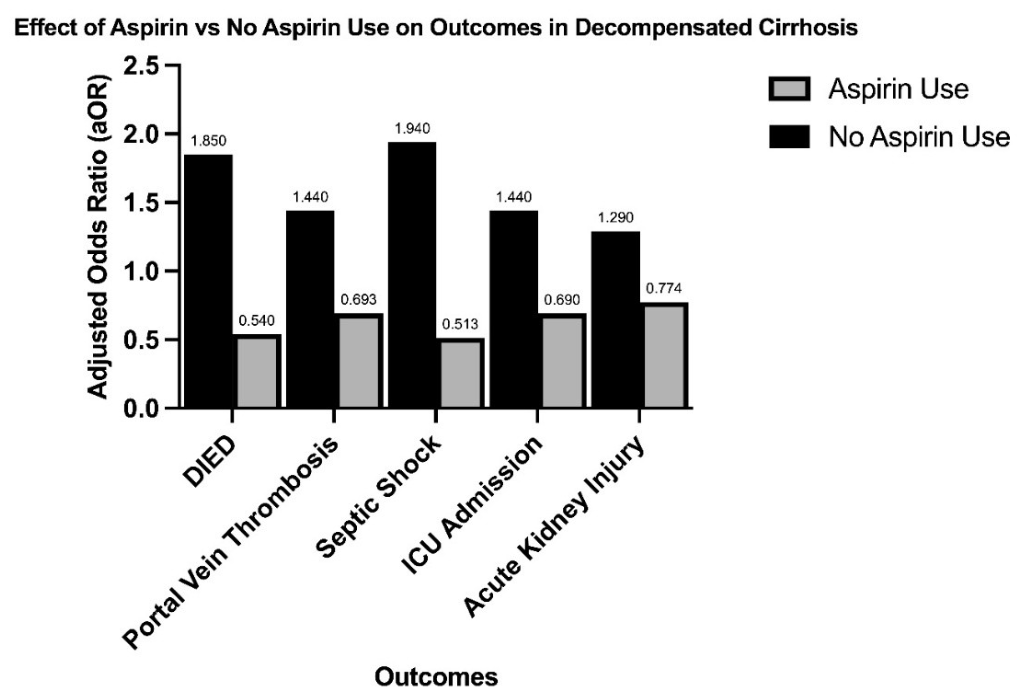
Table 1.
.
| Characteristic | No Aspirin Use | Aspirin Use | p-Value |
|---|---|---|---|
| Age 18–44 | 15.6 | 3.4 | <0.001 |
| Age 45–64 | 58.3 | 46.5 | <0.001 |
| Age >64 | 22.4 | 46.2 | <0.001 |
| Race | <0.001 | ||
| White | 66.3 | 71.6 | |
| Black | 8.0 | 10.1 | |
| Hispanic | 19.0 | 13.2 | |
| Asian or Pacific Islander | 1.7 | 1.7 | |
| Native American | 1.7 | 1.1 | |
| Other | 3.4 | 2.3 | |
| Sex | <0.001 | ||
| Male | 62.7 | 67.1 | |
| Female | 37.3 | 32.9 | |
| Median household income quartile by ZIP code | 0.002 | ||
| Quartile 1, lowest | 33.4 | 35.1 | |
| Quartile 2 | 26.7 | 26.7 | |
| Quartile 3 | 23.1 | 23.2 | |
| Quartile 4, highest | 16.8 | 15.0 | |
| Hospital teaching status | <0.001 | ||
| Non-teaching hospital | 22.8 | 25.1 | |
| Teaching hospital | 77.2 | 75.0 | |
| Hospital location | <0.001 | ||
| Rural | 5.4 | 7.0 | |
| Urban | 94.6 | 93.0 | |
| Hospital region | <0.001 | ||
| Northeast | 17.2 | 14.1 | |
| Midwest | 19.6 | 26.9 | |
| South | 42.7 | 42.7 | |
| West | 20.5 | 16.4 | |
| Hospital bed size | 0.094 | ||
| Small | 18.9 | 20.1 | |
| Medium | 27.9 | 27.5 | |
| Large | 53.2 | 52.3 |
Table 2.
.
| Comorbidity | No Aspirin Use | Aspirin Use | p-Value |
|---|---|---|---|
| COPD | 12.1 | 20.6 | <0.001 |
| Asthma | 4.6 | 4.3 | 0.194 |
| Obesity | 13.9 | 19.2 | <0.001 |
| Type 2 diabetes | 26.9 | 48.0 | <0.001 |
| Hypertension | 49.3 | 77.3 | <0.001 |
| Hypothyroidism | 10.5 | 15.8 | <0.001 |
| Hyperthyroidism | 0.3 | 0.4 | 0.006 |
| Alcohol use disorder | 49.3 | 33.2 | <0.001 |
| HIV | 0.7 | 0.6 | 0.219 |
| Ventricular tachycardia | 1.0 | 1.6 | <0.001 |
| Ventricular fibrillation | 0.08 | 0.10 | 0.558 |
| Atrial fibrillation | 8.1 | 19.1 | <0.001 |
| Malnutrition | 19.0 | 13.7 | <0.001 |
| Cannabis use disorder | 3.0 | 2.1 | <0.001 |
| Dyslipidemia | 17.3 | 45.4 | <0.001 |
| Distal DVT | 0.2 | 0.3 | 0.219 |
| Rheumatoid arthritis | 1.1 | 1.6 | <0.001 |
| Abnormal electrolytes | 58.9 | 49.7 | <0.001 |
| Active malignancy | 9.5 | 11.0 | <0.001 |
| Systolic heart failure | 1.8 | 5.9 | <0.001 |
| Mental disorder | 24.5 | 23.6 | 0.153 |
| Seizure | 3.7 | 2.9 | 0.002 |
| Valvular disease | 2.5 | 5.6 | <0.001 |
Disclaimer/Publisher’s Note: The statements, opinions and data contained in all publications are solely those of the individual author(s) and contributor(s) and not of MDPI and/or the editor(s). MDPI and/or the editor(s) disclaim responsibility for any injury to people or property resulting from any ideas, methods, instructions or products referred to in the content. |
© 2026 by the authors. Licensee MDPI, Basel, Switzerland. This article is an open access article distributed under the terms and conditions of the Creative Commons Attribution (CC BY) license.
Copyright: This open access article is published under a Creative Commons CC BY 4.0 license, which permit the free download, distribution, and reuse, provided that the author and preprint are cited in any reuse.