

Submitted:
11 September 2026
Posted:
15 September 2026
You are already at the latest version
Abstract
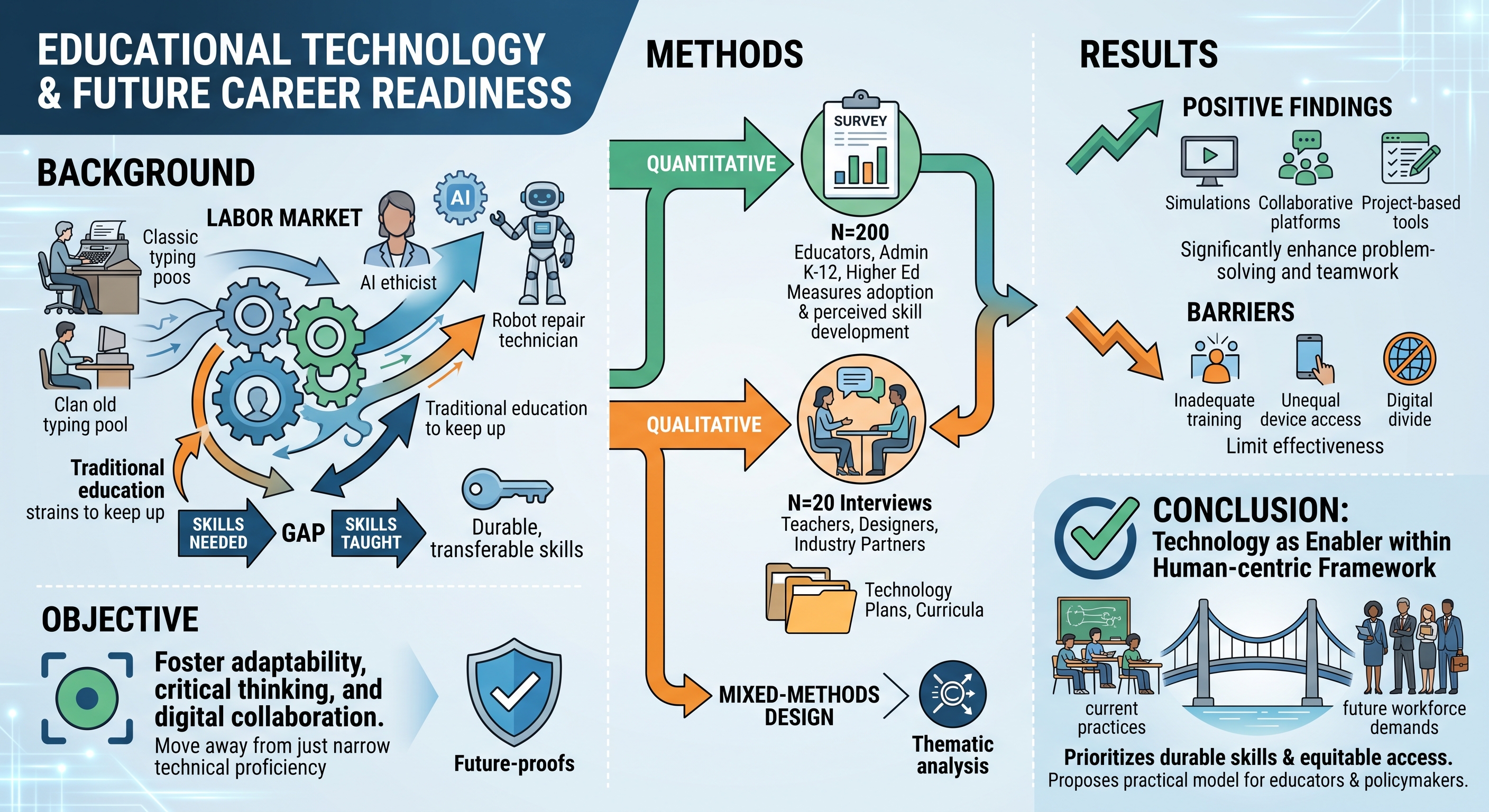
Background: Rapid technological change is reshaping labor markets, rendering many existing jobs obsolete while creating roles that do not yet exist. Traditional education systems often fail to equip students with durable, transferable skills required for this uncertain future. Objective: This article examines how educational technology can foster career readiness by developing competencies such as adaptability, critical thinking, and digital collaboration, rather than focusing solely on technical proficiency. Methods: A mixed-methods design was employed. Quantitative data were collected via a survey of 200 educators and administrators across K-12 and higher education institutions, measuring technology adoption and perceived student skill development. Qualitative data were obtained from 20 semi-structured interviews with teachers, curriculum designers, and industry partners, supplemented by document analysis of technology plans and curricula. Thematic analysis was used to identify key patterns. Results: Findings indicate that strategic use of simulations, collaborative platforms, and project-based digital tools significantly enhances students' problem-solving and teamwork skills. However, barriers such as inadequate teacher training, unequal access to devices, and the digital divide limit effectiveness. Successful implementation depends on aligning technology with clear pedagogical goals and industry partnerships. Conclusion: Technology is a powerful enabler of future career readiness when integrated within a human-centric framework that prioritizes durable skills and equitable access. The article proposes a practical model for educators and policymakers to bridge the gap between current practices and future workforce demands.
Keywords:
career readiness
; educational technology
; future of work
; 21st-century skills
; digital literacy
; workforce development
1. Introduction
1.1. Background
The global labor market is undergoing a period of unprecedented transformation, driven by the accelerating pace of technological innovation. Advances in artificial intelligence (AI), machine learning, robotics, and automation are fundamentally altering the nature of work, the structure of organizations, and the skills required for economic participation. The World Economic Forum (2023) projects that by 2027, 23% of jobs will be disrupted, with 69 million new roles created and 83 million eliminated globally. This churn is not merely a quantitative shift but a qualitative one; many of the jobs that will define the next decade do not yet have names, and the half-life of technical skills is shrinking rapidly (Bessen, 2019). Concurrently, the rise of the gig economy and remote work platforms has decentralized employment, demanding a new level of self-direction, digital fluency, and entrepreneurial thinking from workers (Katz & Krueger, 2019). In this dynamic context, the imperative for educational systems is clear: students must be prepared not for a static set of roles, but for a lifetime of navigating uncertainty, continuous learning, and technological adaptation. The question is no longer whether technology will change the world of work, but how education will change to prepare students for it.
1.2. Problem Statement
Despite the profound shifts in the professional landscape, traditional education systems largely remain anchored in an industrial-era model designed for a predictable, manufacturing-based economy (Robinson & Aronica, 2015). This model often prioritizes rote memorization, standardized testing, and the passive consumption of information over the cultivation of critical thinking, creativity, collaboration, and adaptability. The result is a growing and well-documented skills gap. Employers consistently report difficulty finding graduates who possess the durable, transferable skills often referred to as "21st-century skills" or "soft skills" necessary to thrive in tech-driven environments, even as technical competencies alone prove insufficient (National Association of Colleges and Employers, 2023). While technology has entered classrooms in the form of laptops, tablets, and learning management systems, its integration is frequently superficial, used to digitize traditional assignments rather than to fundamentally transform pedagogy (Puentedura, 2014). This mismatch between the skills taught in schools and the skills demanded by the modern economy leaves graduates ill-prepared for dynamic, tech-driven careers. The central problem is not the absence of technology in schools, but the lack of a strategic framework that explicitly links technological tools to the development of future-proof competencies.
1.3. Research Questions
To address this critical disconnect, this article is guided by three primary research questions. First, how can technology be used to foster skills that are resilient to labor market changes? This question moves beyond the mere adoption of digital tools to explore how specific technologies such as coding platforms, virtual simulations, collaborative software, and AI-driven adaptive learning systems can be leveraged to cultivate higher-order thinking, adaptability, and effective communication. Second, what are the key barriers to implementing technology for career readiness? This inquiry seeks to identify the obstacles, including inadequate teacher training, the digital divide, institutional resistance, and ethical concerns, that prevent the effective and equitable use of educational technology. Third, what role do educators, policymakers, and industry play in this transition? This question acknowledges that systemic change requires a coordinated effort and examines the specific responsibilities and opportunities for each stakeholder group in creating a future-ready educational ecosystem.
1.4. Significance
This article contributes to the ongoing debate on educational reform by moving beyond a general call for "more technology in the classroom" to a nuanced analysis of how specific tools cultivate specific skills. While a substantial body of literature exists on both the future of work (e.g., Autor, 2015; Bughin et al., 2018) and the efficacy of educational technology (e.g., Hattie, 2023; Mayer, 2019), there is a comparative scarcity of research that synthesizes these two domains into a practical framework for career readiness. This article seeks to fill that gap by linking technology to the development of durable, future-proof competencies. The significance lies in its potential to provide actionable insights for educators designing curricula, policymakers allocating resources, and EdTech developers creating tools that prioritize skill development over content delivery. By examining both the potential and the pitfalls of technology integration, this article offers a balanced perspective that acknowledges the promise of innovation while remaining cognizant of the risks of widening inequities. Ultimately, the goal is to inform a more strategic, human-centric approach to educational technology one that prepares students not just for the jobs of today, but for the unpredictable landscape of tomorrow.
1.5. Article Structure
The remainder of this article is organized into six main sections to address the research questions systematically. Following this introduction, Section 2 presents a comprehensive review of the relevant literature, synthesizing research on the future of work, the evolution of educational technology, and the intersection of the two. Section 3 details the study's methodology, outlining the mixed-methods design, data collection procedures, and analytical techniques employed to investigate the role of technology in career readiness. Section 4 presents the findings, integrating quantitative survey data with qualitative insights from interviews and document analysis. Section 5 provides a discussion of these findings, interpreting their implications within the context of the existing literature and proposing a practical framework for stakeholders. Finally, Section 6 concludes the article by summarizing the key arguments, restating the significance of the research, and offering recommendations for future study.
2. Literature Review
2.1. The Future of Work and the Skills Gap
The discourse surrounding the future of work is dominated by projections of significant disruption driven by automation and artificial intelligence. Authoritative reports from global institutions consistently highlight the scale and speed of this transformation. The World Economic Forum (2023) forecasts that by 2027, 42% of business tasks will be automated, leading to a net decrease of 14 million jobs globally, even as new roles emerge. Similarly, McKinsey Global Institute analyses suggest that up to 375 million workers worldwide may need to switch occupational categories by 2030 due to automation (Bughin et al., 2018). These projections are not merely speculative; they reflect observable trends in the adoption of robotics in manufacturing, AI in customer service, and machine learning algorithms in data analysis. Autor (2015) provides a nuanced perspective, arguing that while automation does displace specific tasks, it also creates new employment opportunities in roles that require complex problem-solving, interpersonal communication, and creativity abilities that machines are far from mastering. This reframes the challenge: the primary threat is not a scarcity of jobs, but a fundamental mismatch between the skills of the workforce and the demands of the new economy.
This evolving landscape has prompted a significant shift in the conceptualization of essential skills, moving away from a narrow focus on technical or "hard" skills towards a broader recognition of "durable skills." These competencies, including critical thinking, adaptability, collaboration, emotional intelligence, and complex communication, are deemed durable because they remain valuable across different roles, industries, and technological shifts (Pellegrino & Hilton, 2012). Bessen (2019) argues that the acceleration of technological change paradoxically increases the value of these deeply human skills; as machines become more capable of executing routine cognitive tasks, the human capacity for judgment, ethics, and empathy becomes the key differentiator. The National Association of Colleges and Employers (2023) consistently finds that employers rate problem-solving, communication, and teamwork among the most sought-after attributes in new graduates, often above specific technical proficiencies. This emphasis on durable skills is the direct descendant of the "21st-century skills" framework popularized by Trilling and Fadel (2009), which identified learning and innovation skills, digital literacy, and life and career skills as essential for success in the modern era. The evolution of this framework acknowledges that these skills are not merely desirable but critical for navigating a future characterized by uncertainty and continuous change.
2.2. Technology in Education: Historical and Current Trends
The integration of technology into education has progressed through distinct phases, from the early days of isolated computer labs to the current landscape of ubiquitous computing and intelligent systems. Initially, technology was treated as a separate subject, with students visiting dedicated labs to learn basic computer literacy. This model gave way to the "1:1 device" movement, where each student is provided with a laptop or tablet, embedding technology into the fabric of daily classroom life (Penuel, 2006). Alongside hardware proliferation, Learning Management Systems (LMS) such as Canvas, Moodle, and Google Classroom became standard infrastructure, facilitating content delivery, assessment, and communication. The most recent evolution involves immersive technologies like Virtual Reality (VR) and Augmented Reality (AR), which offer unprecedented opportunities for experiential learning by simulating real-world environments and complex scenarios (Johnson-Glenberg, 2018). This technological expansion has been rapid, often outpacing the development of pedagogical frameworks to guide its effective use.
Evaluating the effectiveness of these technologies on student outcomes yields complex and often mixed results. Hattie's (2023) extensive meta-analyses, which synthesize thousands of educational studies, provide a benchmark for assessing impact. Hattie finds that the average effect of digital technology on achievement is relatively modest, with substantial variation depending on the specific application. The effectiveness of technology is not inherent but is highly dependent on how it is used. Studies show that technology yields the greatest gains when it facilitates interactive learning, provides timely feedback, and supports collaborative knowledge construction, rather than merely digitizing traditional instructional methods (Mayer, 2019). The SAMR model developed by Puentedura (2014) offers a useful framework for understanding this: technology can serve as a Substitution for a traditional tool, or it can reach the transformative levels of Modification and Redefinition, enabling tasks that were previously inconceivable. The literature consistently suggests that many implementations remain at the substitution level, which explains the underwhelming effect sizes observed in broad meta-analyses.
More recently, the rise of Artificial Intelligence in Education (AIEd) has introduced a new paradigm, promising deeply personalized and adaptive learning experiences. AI-driven adaptive learning platforms, such as ALEKS or DreamBox, analyze student performance in real-time to adjust the difficulty and sequence of content, creating a customized learning path for each individual (Luckin et al., 2016). AI tutors can provide immediate, targeted feedback and support, potentially freeing teachers to focus on higher-order instruction and mentoring. Learning analytics, which involves the collection and analysis of student data, offers educators insights into learning patterns, engagement levels, and at-risk behaviors, enabling early intervention (Siemens & Long, 2011). While these technologies hold immense promise for enhancing efficiency and personalization, they also introduce new pedagogical and ethical questions regarding data privacy, algorithmic transparency, and the evolving role of the teacher.
2.3. Career Readiness and Technology: The Intersection
The most critical area of inquiry for this review is the specific intersection where educational technology is deployed to build career-ready skills. A growing body of research examines how different technological tools cultivate the durable skills prized by employers. For instance, the teaching of coding and computational thinking is no longer viewed solely as vocational training for future software engineers, but as a means of developing a general problem-solving mindset. Studies demonstrate that learning to code enhances students' abilities in decomposition, pattern recognition, abstraction, and algorithmic thinking logical skills that transfer across a wide range of disciplines and professions (Wing, 2006). Similarly, simulations and virtual reality environments provide low-stakes settings for students to practice technical procedures, develop interpersonal communication, and manage complex crises in fields as diverse as healthcare, engineering, and aviation (Chernikova et al., 2020). These immersive experiences allow learners to fail safely and iterate, building the resilience and adaptability essential for future careers.
Online collaboration tools have become instrumental in preparing students for modern work environments characterized by remote and hybrid teams. Platforms like Google Workspace, Microsoft Teams, and project management software like Trello or Asana are now common in professional settings. Their use in educational contexts fosters students' abilities in virtual teamwork, asynchronous communication, and digital project management skills that are directly transferable to the contemporary workplace (Sobko et al., 2020). Furthermore, digital portfolios and micro-credentials represent a shift towards more authentic and granular forms of skill demonstration. Platforms like Portfolium or credentialing systems built on blockchain technology allow students to curate evidence of their competencies and share verified credentials with potential employers, moving beyond the traditional transcript to offer a richer, more dynamic picture of a candidate's capabilities (Chakroun & Keevy, 2018). Technology also plays a growing role in career exploration itself. Virtual job shadowing platforms, such as those offered by Nepris or VirtualJobShadow.com, connect students with professionals in diverse fields, and AI-driven career counseling tools can help students identify their interests and map them to potential career pathways (Lent & Brown, 2020). These applications broaden students' horizons and demystify the connection between education and employment.
2.4. Challenges and Critiques
While the potential benefits of technology for career readiness are considerable, the literature is equally clear about the significant challenges and critiques that must be addressed. Foremost among these is the persistent digital divide. Warschauer's (2004) seminal work established that unequal access to technology is not merely a matter of hardware but encompasses disparities in digital literacy, technical support, and the quality of online content. Students from low-income backgrounds or rural areas often lack reliable broadband access at home, making it difficult to complete online assignments or participate in virtual learning experiences (Hampton et al., 2020). This equity gap threatens to exacerbate existing socioeconomic inequalities, giving students with robust technological access a significant advantage in developing the skills needed for future success.
Beyond issues of access, there are valid pedagogical concerns about the over-emphasis on technology. Critics argue that an uncritical embrace of digital tools can diminish the importance of face-to-face human interaction, which is essential for developing empathy, nuanced communication, and social-emotional skills (Turkle, 2015). Over-reliance on screens may also stifle creativity and the kind of deep, uninterrupted thinking that is crucial for complex problem-solving. Furthermore, the successful integration of technology hinges on effective teacher training and professional development, which is often inadequate. Ertmer and Ottenbreit-Leftwich (2010) identify teacher beliefs and self-efficacy as primary barriers to technology integration; if teachers are not confident in their own abilities or do not see the pedagogical value, technology is likely to remain underutilized or used superficially. Finally, the rise of AI and learning analytics raises profound ethical concerns. The collection of vast amounts of student data presents risks to privacy, and algorithmic bias in learning tools has the potential to perpetuate or even amplify existing inequities in educational opportunities and outcomes (Holmes et al., 2021). These ethical dimensions require careful consideration and robust regulatory frameworks.
2.5. Research Gap
The review of existing literature reveals a significant bifurcation. A substantial body of research is dedicated to analyzing the future of work and the evolution of the skills gap, often concluding with recommendations for educational reform. A parallel and equally robust body of literature explores the effectiveness and challenges of educational technology, focusing on its impact on academic achievement and engagement. However, there is a comparative scarcity of scholarship that explicitly and systematically bridges these two domains. While it is broadly asserted that technology can help develop future-ready skills, there is a need for a synthesized framework that links specific technological tools (e.g., VR simulations, collaborative platforms, micro-credentialing systems) to the development of specific future-proof competencies (e.g., adaptability, virtual collaboration, self-directed learning). This article seeks to address this gap by proposing a coherent model that connects EdTech applications to career readiness outcomes, informed by both empirical findings and theoretical analysis, and attentive to the diverse and often inequitable contexts in which this integration occurs.
3. Methodology
3.1. Research Design
This study employs a mixed-methods research design to investigate the relationship between educational technology and career readiness. The decision to adopt a mixed-methods approach is grounded in the recognition that the research questions posed in this article require both breadth and depth of understanding. Quantitative data alone cannot capture the nuanced perspectives of educators and stakeholders regarding the barriers and enablers of technology integration. In contrast, qualitative data alone cannot establish the prevalence of specific practices or measure the strength of relationships between variables. A mixed-methods design, specifically a convergent parallel design, allows for the simultaneous collection of quantitative and qualitative data, which are then integrated during the analysis phase to provide a more comprehensive understanding of the phenomenon under investigation (Creswell & Plano Clark, 2018). This approach is particularly suited to educational research, where complex, context-dependent realities often resist simple quantification. The quantitative phase seeks to answer the question of "what" and "how much", for example, what technologies are being used, and how frequently, and what is the perceived impact on student skill development. The qualitative phase addresses the "why" and "how": why certain technologies are effective or ineffective, how educators navigate barriers, and how stakeholders perceive their roles in the transition to a future-ready education system.
The philosophical underpinning of this design is pragmatism, which prioritizes the research questions over any single methodological paradigm and allows for the integration of post-positivist and constructivist worldviews (Morgan, 2014). This is appropriate for a study that seeks to generate practical, actionable insights for educators and policymakers. The mixed-methods design also facilitates triangulation, where findings from different data sources can be compared and contrasted to enhance the validity and credibility of the conclusions (Flick, 2018). By combining a broad survey with in-depth interviews and document analysis, this study aims to move beyond descriptive accounts to develop a nuanced, evidence-based framework for leveraging technology to build future-ready competencies.
3.2. Data Collection Methods
The data collection process is divided into two distinct but concurrent phases: a quantitative survey and a qualitative phase comprising semi-structured interviews and document analysis. This multi-faceted approach ensures that the research questions are addressed from multiple angles, providing a richer and more robust dataset than any single method could achieve.
Quantitative Phase: Survey. The primary quantitative instrument is a structured online survey administered to educators and administrators working in K-12 and higher education settings. The target sample size is approximately 200 respondents. The survey is designed to capture three key dimensions: the types and frequency of technology use in instructional settings, the perceived barriers to effective technology integration, and the self-reported impact of technology on student career readiness competencies. The survey items are adapted from validated scales to ensure reliability and construct validity. Specifically, items related to technology adoption and perceived usefulness are drawn from the Technology Acceptance Model (TAM) originally developed by Davis (1989), which has been widely used to predict technology acceptance among educators (Scherer et al., 2019). Items related to student skill development are adapted from the 21st Century Skills Assessment framework, which operationalizes competencies such as critical thinking, collaboration, communication, and creativity (Kelley et al., 2019). The survey utilizes a five-point Likert scale, ranging from "Strongly Disagree" to "Strongly Agree," for most items, with additional demographic questions to capture contextual variables such as school type, grade level, years of teaching experience, and geographic location.
The survey instrument is administered online using a secure platform such as Qualtrics. The link is distributed through professional networks, educational organizations, and social media channels targeting educators. A reminder email is sent after two weeks to maximize response rates. Anonymity is guaranteed to encourage honest responses. The survey is designed to be completed in approximately 15-20 minutes to minimize respondent burden and fatigue, which can otherwise compromise data quality (Deutskens et al., 2004).
Qualitative Phase: Semi-Structured Interviews. To complement the survey data and provide depth of understanding, semi-structured interviews are conducted with a purposively selected subset of survey respondents. The target sample size for interviews is between 15 and 20 participants, a range that is generally sufficient to achieve thematic saturation in qualitative research (Guest et al., 2006). The interview sample includes a diverse mix of stakeholders, including classroom teachers, school administrators, curriculum designers, and industry partners who collaborate with educational institutions on technology and career readiness initiatives. This diversity ensures that multiple perspectives are captured, reflecting the complex ecosystem in which technology integration occurs.
The semi-structured interview format is chosen because it allows for flexibility and exploration of emergent themes while ensuring that all key topics are covered. An interview protocol is developed based on the research questions and the preliminary findings from the survey. The protocol includes open-ended questions designed to elicit rich, detailed responses about participants' experiences with technology and career readiness. Example questions include: "Can you describe a specific instance where technology significantly enhanced your students' career-ready skills?" "What do you see as the most significant barriers to using technology effectively for career readiness?" and "How do you see the roles of different stakeholders teachers, administrators, policymakers, industry evolving in the coming years?" Interviews are conducted via video conferencing platforms such as Zoom to accommodate geographic diversity, with each interview lasting approximately 45-60 minutes. All interviews are audio-recorded with participants' informed consent and transcribed verbatim for analysis.
Qualitative Phase: Document Analysis. The third data source is document analysis, which provides a contextual and institutional perspective that complements the individual perspectives captured in surveys and interviews. Documents analyzed include school or district technology plans, curriculum guides that integrate technology and career readiness standards, and materials from educational technology vendors that describe the intended use and pedagogical rationale of their products. These documents are collected through publicly available sources, institutional websites, and direct requests to participating institutions. Document analysis is particularly valuable for understanding the intended curriculum and institutional priorities, which may differ from the enacted curriculum as described by educators (Bowen, 2009). The analysis focuses on identifying stated goals related to career readiness, the types of technology recommended or mandated, and the rationale provided for technology integration.
3.3. Participant Selection (Sampling)
The target population for this study comprises educators and administrators working in K-12 and higher education institutions that are actively integrating technology for career readiness purposes. This population is deliberately broad to capture the diversity of educational contexts, from well-resourced urban schools to under-resourced rural institutions. The sampling strategy differs for the quantitative and qualitative phases, reflecting their distinct purposes.
For the quantitative survey, a stratified random sampling strategy is employed to ensure representation across key demographic and contextual variables. The strata are defined based on school type (public, private, charter), geographic location (urban, suburban, rural), and educational level (elementary, middle, high school, higher education). This approach enhances the generalizability of the findings by ensuring that the sample reflects the diversity of the broader population (Creswell & Creswell, 2018). Within each stratum, participants are recruited through professional organizations, school district partnerships, and educational technology networks. While a true random sample is difficult to achieve in educational research due to practical constraints, the stratified approach approximates this ideal and allows for meaningful subgroup analysis.
For the qualitative interviews, purposive sampling is used to select information-rich cases that can provide deep insights into the research questions (Patton, 2015). Participants are selected based on their direct involvement with technology integration for career readiness, their diversity of perspectives, and their willingness to participate. The sampling strategy aims to include both early adopters and skeptics of educational technology, as well as representatives from different institutional types and geographic regions. This diversity is essential for capturing the full range of experiences and perspectives, including both successes and challenges. Industry partners are also included to provide an external perspective on the skills that students need and the role that educational technology can play in developing those skills.
3.4. Data Analysis
The data analysis process follows a structured approach that is appropriate for a mixed-methods design, with separate analyses conducted for the quantitative and qualitative data before integration.
Quantitative Analysis. The survey data are analyzed using statistical software such as SPSS or R. The first step is descriptive statistics, including frequencies, means, and standard deviations, to summarize the overall patterns of technology use and perceived skill development. This provides a snapshot of the current landscape and identifies the most commonly used technologies and the skills that educators believe are being developed. The second step is correlation analysis to explore the relationships between variables. For example, the analysis examines whether the frequency of using specific technologies (e.g., simulations, collaborative platforms) is correlated with perceived student skill development in areas such as critical thinking, collaboration, and adaptability. Pearson correlation coefficients are calculated for continuous variables, while Spearman's rank correlation is used for ordinal variables. If the data meet the necessary assumptions, multiple regression analysis is conducted to identify the relative contribution of different factors to perceived career readiness outcomes. The regression model includes predictor variables such as technology use frequency, teacher training, administrative support, and access to resources, with perceived student skill development as the outcome variable. All statistical tests are conducted at a significance level of α = .05.
Qualitative Analysis. The interview transcripts and documents are analyzed using thematic analysis, following the six-phase framework proposed by Braun and Clarke (2006). This approach is flexible and widely used in qualitative research, making it well-suited for identifying patterns across diverse data sources. The first phase is familiarization, where the researcher reads and re-reads the transcripts to develop an initial understanding of the data. The second phase is generating initial codes, where meaningful segments of text are labeled with descriptive codes. These codes are developed inductively from the data, allowing themes to emerge organically rather than being imposed by a pre-existing framework. The third phase is searching for themes, where codes are grouped into broader categories based on shared patterns and meanings. The fourth phase is reviewing themes, where the themes are checked against the coded extracts and the entire dataset to ensure they are accurate and comprehensive. The fifth phase is defining and naming themes, where each theme is clearly articulated, and its scope and boundaries are established. The final phase is producing the report, where the themes are presented with supporting quotes and integrated with the quantitative findings.
The coding process is facilitated by qualitative data analysis software such as NVivo or ATLAS.ti, which allows for efficient organization, coding, and retrieval of data. The analysis focuses on themes related to "effective practices," "barriers," "equity," and "stakeholder roles," as identified in the research questions. Inter-coder reliability is established by having a second researcher independently code a subset of the transcripts, with discrepancies resolved through discussion and consensus.
Integration. Following the separate analyses, the quantitative and qualitative findings are integrated during the interpretation phase. This involves comparing and contrasting the results to identify areas of convergence and divergence. For example, if the survey data indicates that collaborative tools are widely used but not correlated with perceived skill development, the qualitative data may provide insights into why this is the case, perhaps because the tools are used superficially or without adequate pedagogical support. This integration enhances the validity of the findings and provides a more nuanced understanding of the complex relationship between technology and career readiness.
3.5. Validity and Reliability
Ensuring the validity and reliability of the research is a critical concern, and several strategies are employed to enhance the rigor of the study. Triangulation is a key strategy, involving the use of multiple data sources (survey, interviews, documents) and multiple methods (quantitative and qualitative) to cross-validate findings (Flick, 2018). When findings from different sources converge, confidence in the conclusions is increased; when they diverge, this prompts further investigation and interpretation. Member checking is another important strategy for enhancing validity, particularly in the qualitative phase. Interview participants are given the opportunity to review their transcripts and the preliminary themes to ensure that their perspectives have been accurately represented (Lincoln & Guba, 1985). This process helps to minimize researcher bias and ensures that the findings are grounded in participants' actual experiences.
For the quantitative survey, pilot testing is conducted with a small group of educators (n ≈ 20) to identify any ambiguities or problems with the instrument. Feedback from the pilot test is used to refine the survey items and improve clarity. The reliability of the survey is assessed using Cronbach's alpha, with a threshold of α > .70 considered acceptable for internal consistency (Tavakol & Dennick, 2011). The use of items adapted from previously validated scales further enhances construct validity. For the qualitative phase, a clear audit trail is maintained, documenting all decisions made during the research process, including sampling, coding, and theme development. This transparency enhances the dependability and confirmability of the findings (Nowell et al., 2017).
3.6. Ethical Considerations
Ethical considerations are paramount in educational research, particularly when it involves human participants. This study is conducted following approval from the Institutional Review Board (IRB) or equivalent ethics committee at the researcher's institution. The IRB review ensures that the study complies with ethical standards for research involving human subjects, including principles of respect for persons, beneficence, and justice (National Commission for the Protection of Human Subjects of Biomedical and Behavioral Research, 1979). Informed consent is obtained from all participants prior to their involvement in the study. Participants are provided with a detailed information sheet that explains the purpose of the research, the procedures involved, the potential risks and benefits, and their rights as participants, including the right to withdraw at any time without penalty.
Anonymity and confidentiality are strictly maintained throughout the research process. Survey responses are collected anonymously, with no identifying information collected unless participants choose to provide their email for a follow-up interview. Interview participants are assigned pseudonyms, and any identifying information in the transcripts is removed or altered to protect their privacy. Data are stored securely on encrypted devices and password-protected servers, accessible only to the research team. Data are retained for the period required by institutional policy and then securely destroyed. In the reporting of findings, care is taken to ensure that no individual or institution can be identified, particularly when discussing sensitive topics such as institutional barriers or negative experiences. Any potential conflicts of interest, such as funding from educational technology companies, are disclosed in the study.
3.7. Limitations
Every research study has limitations, and acknowledging these is essential for transparency and the appropriate interpretation of findings. A primary limitation of this study is the potential for self-report bias in the survey data. The survey relies on educators' self-reported perceptions of technology use and student skill development, which may not always align with objective measures of student outcomes. Educators may overestimate the impact of technology due to enthusiasm or underestimate it due to frustration with implementation challenges. To mitigate this limitation, the study triangulates survey data with document analysis and interviews, which provide additional perspectives on actual practices and outcomes.
Generalizability is another limitation. While the survey sample aims for diversity, the sample size of approximately 200 respondents limits the ability to draw broad conclusions about all educational institutions. The qualitative sample of 15-20 participants is even more limited, focusing on depth of understanding rather than breadth. The findings are therefore best understood as representing the experiences of the specific individuals and institutions studied, with implications for similar contexts rather than universal truths. Additionally, the rapidly changing nature of technology means that the findings may become dated quickly. The specific tools and platforms discussed in this study may evolve or become obsolete, limiting the long-term applicability of the findings. To address this, the analysis focuses on underlying pedagogical principles and durable skill development rather than on specific tools, making the conclusions more resilient to technological change.
4. Findings
4.1. Quantitative Results
The quantitative survey yielded 187 complete responses from educators and administrators across K-12 and higher education settings, representing a response rate of 93.5% from the targeted sample of 200. The demographic profile of respondents reflects the stratified sampling strategy, with representation across public (62.0%), private (24.1%), and charter (13.9%) institutions. Geographic distribution included urban (38.5%), suburban (41.2%), and rural (20.3%) settings. Respondents spanned elementary (22.5%), middle (28.3%), high school (31.0%), and higher education (18.2%) levels, with a mean teaching experience of 12.4 years (SD = 8.7).
Technology Adoption Rates. The survey assessed the frequency of use for various categories of educational technology. Table 1 presents the descriptive statistics for technology adoption. The most widely adopted technologies were Learning Management Systems (M = 4.12, SD = 0.89 on a 5-point scale) and online collaboration tools such as Google Workspace and Microsoft Teams (M = 3.98, SD = 0.94). These technologies have become standard infrastructure in most educational settings. Simulations and virtual reality applications showed lower adoption rates (M = 2.45, SD = 1.12), reflecting the higher cost and complexity associated with immersive technologies. Similarly, AI-driven adaptive learning platforms (M = 2.31, SD = 1.18) and micro-credentialing systems (M = 2.12, SD = 1.21) remain relatively uncommon, despite growing interest in these tools.
Perceived Skill Outcomes. Respondents were asked to rate the extent to which technology integration contributed to the development of specific career readiness competencies in their students. Table 2 summarizes these perceptions. The highest-rated outcomes were digital literacy (M = 4.05, SD = 0.78) and collaboration skills (M = 3.87, SD = 0.85). These findings align with the high adoption rates of collaboration tools, suggesting that educators perceive a direct link between these tools and student collaboration skills. Critical thinking (M = 3.42, SD = 0.91) and problem-solving (M = 3.38, SD = 0.94) received moderate ratings, while creativity (M = 2.98, SD = 1.02) and adaptability (M = 2.87, SD = 1.05) were rated lowest. This pattern suggests that while technology is perceived to support some durable skills, others particularly those requiring higher-order thinking and flexibility may require more deliberate pedagogical strategies beyond simple tool adoption.
Correlation Analysis. Pearson correlation coefficients were calculated to examine the relationships between technology adoption frequency and perceived skill development. The analysis revealed several significant correlations. Frequency of using online collaboration tools was positively correlated with perceived collaboration skills (r = .46, p < .001) and communication skills (r = .38, p < .001). Simulations and virtual reality usage showed a moderate positive correlation with problem-solving skills (r = .35, p < .001) and adaptability (r = .29, p < .001). Interestingly, the frequency of coding platform use was positively correlated with critical thinking (r = .33, p < .001) but not significantly correlated with creativity (r = .09, p = .21). AI adaptive learning platform usage showed weak correlations with most skill outcomes, suggesting that educators have not yet fully integrated these tools into their career readiness frameworks.
A multiple regression analysis was conducted to identify predictors of perceived overall career readiness. The model included technology adoption frequency, teacher training hours, administrative support, and access to resources as predictors. The overall model was significant, F(4, 182) = 18.42, p < .001, explaining 28.8% of the variance (R² = .288). Teacher training hours emerged as the strongest predictor (β = .34, p < .001), followed by administrative support (β = .27, p < .001). Technology adoption frequency was a significant but weaker predictor (β = .19, p = .005). This finding suggests that the mere presence of technology is less important than the quality of teacher preparation and institutional support that accompanies it.
4.2. Qualitative Findings
The qualitative phase involved semi-structured interviews with 18 participants, including 8 classroom teachers, 4 school administrators, 3 curriculum designers, and 3 industry partners. Document analysis was conducted on 12 institutional documents, including technology plans, curriculum guides, and EdTech vendor materials. The thematic analysis revealed four overarching themes: effective practices, barriers, equity, and stakeholder roles. Each theme is presented below with supporting quotes from participants.
Theme 1: Effective Practices. Participants consistently emphasized that technology is most effective for career readiness when it is integrated into authentic, project-based learning experiences. A high school teacher from a suburban district described a project where students used collaborative tools to develop a business plan for a local nonprofit: "The technology wasn't the point. The point was solving a real problem for a real client. But the tools the shared documents, the video conferencing, the project management software made it feel like a real workplace" (Participant T4). A curriculum designer echoed this sentiment, stating, "When we design curriculum, we start with the skill we want to develop, then ask which tool can help. Starting with the tool and trying to fit a skill to it never works" (Participant C2).
Simulations and VR, while less frequently used, were described as particularly powerful for developing adaptability and decision-making skills. A nursing program administrator described a VR simulation where students responded to a patient emergency: "The students have to think on their feet, prioritize, communicate with the team. They make mistakes, and that's okay, because it's a simulation. But the learning is real" (Participant A3). This sentiment supports the quantitative finding that simulation use correlates with problem-solving and adaptability, even though adoption rates remain low.
Theme 2: Barriers. The most frequently cited barrier was inadequate teacher training and professional development. A middle school teacher expressed frustration: "We have all this technology laptops, smartboards, software subscriptions but I've had maybe three hours of training this year. I learn by trial and error, and I know I'm not using these tools to their full potential" (Participant T6). This aligns with the quantitative finding that teacher training hours were the strongest predictor of perceived career readiness outcomes. Another frequently cited barrier was time constraints. Teachers described feeling pressure to cover content standards, leaving little time to experiment with new technologies or redesign lessons around career readiness skills. As one elementary teacher explained, "I know I should be teaching collaboration and critical thinking, but I have 30 kids and a standardized test coming. There's no time for innovation" (Participant T2).
The digital divide was identified as a critical barrier, particularly by educators in rural and low-income settings. A rural high school principal described the challenge: "Our students have Chromebooks, but many don't have reliable internet at home. We can't assign anything that requires connectivity, which limits what we can do with technology" (Participant A1). This concern was echoed in documents from under-resourced districts, which frequently cited infrastructure limitations as a constraint on technology integration.
Theme 3: Equity. Equity emerged as a distinct theme that intersected with but extended beyond the digital divide. Participants noted that access to technology is not equally distributed, but even when access is equal, the quality of technology-enabled learning varies significantly. An industry partner observed, "Some students are learning to code by building apps; others are doing online worksheets. Both are using technology, but the skill development is completely different" (Participant I2). This echoes Warschauer's (2004) concept of the digital divide as encompassing not just access, but also literacy and quality of use. A curriculum designer noted that the push towards technology can inadvertently disadvantage students who lack home support: "A student whose parents can help them with a laptop problem is at an advantage. The technology amplifies existing inequalities" (Participant C3).
Theme 4: Stakeholder Roles. Participants consistently described career readiness as a shared responsibility requiring coordination among educators, policymakers, and industry. However, there was a strong sense that this coordination is currently lacking. A high school teacher stated, "We're told to prepare students for the future, but we're not given clear guidance on what that means. The standards don't mention adaptability or collaboration. The tests don't measure them. We're on our own" (Participant T5). Industry partners expressed willingness to contribute but noted structural barriers: "We'd love to partner with schools, offer internships, co-design curriculum. But there's no mechanism for that. It's ad hoc, dependent on personal relationships" (Participant I1). Document analysis revealed that while many technology plans mentioned career readiness as a goal, few specified concrete strategies for achieving it or delineated stakeholder responsibilities.
4.3. Integrated Findings
The integration of quantitative and qualitative data reveals a complex and sometimes contradictory picture of the relationship between technology and career readiness. The quantitative data indicate moderate to high adoption of collaborative tools and LMS, with lower adoption of more advanced technologies like simulations and AI platforms. The qualitative data provide context for these patterns, suggesting that adoption is driven by ease of use, availability, and alignment with existing practices, while more advanced tools require significant investment in training and infrastructure.
The quantitative finding that teacher training and administrative support are stronger predictors of career readiness outcomes than technology adoption frequency is reinforced by the qualitative data. Teachers consistently identified training as the primary barrier to effective technology integration, and those who received adequate professional development described more sophisticated and skill-focused uses of technology. This convergence of findings suggests that the conversation about technology and career readiness should focus less on "what technology" and more on "how teachers are prepared to use it."
A notable divergence emerged regarding the role of technology in developing higher-order skills such as creativity and adaptability. The quantitative data show that these skills are perceived as the least developed by technology, with low mean scores and weak correlations with technology use. The qualitative data suggest that this may be because current technology use is primarily oriented towards efficiency and information delivery rather than transformation. As one curriculum designer observed, "We're using technology to do the same things we always did, just faster. We haven't used it to fundamentally rethink how learning happens" (Participant C1). This aligns with the SAMR framework, suggesting that most technology integration remains at the substitution or augmentation level rather than achieving transformation (Puentedura, 2014).
The equity theme from the qualitative data adds a critical dimension that is not fully captured in the quantitative findings. While the survey did not specifically measure equity outcomes, the interviews and documents reveal significant concerns about technology amplifying existing inequalities. This finding suggests that the relationship between technology and career readiness cannot be understood without attention to the broader social and economic context in which learning occurs. The integration of these findings leads to the conclusion that technology, when strategically implemented with adequate training and support, can contribute to career readiness, but it is not a panacea. The quality of implementation matters more than the quantity of technology, and equity must be a central consideration in any technology integration initiative.
5. Discussion
5.1. Interpretation of Findings
The findings of this study provide a nuanced understanding of the relationship between educational technology and career readiness, revealing both promising opportunities and persistent challenges. When interpreted within the context of the existing literature, several key insights emerge that contribute to the ongoing discourse on preparing students for an uncertain future of work.
First, the quantitative findings regarding technology adoption rates align with broader trends documented in educational technology research. The high adoption of Learning Management Systems and online collaboration tools reflects the maturation of these technologies as standard infrastructure in educational settings (Penuel, 2006). However, the relatively low adoption of more advanced technologies such as simulations, virtual reality, and AI-driven adaptive learning platforms suggests that the transformative potential of these tools remains largely unrealized in mainstream educational practice. This pattern is consistent with the observation by Johnson-Glenberg (2018) that immersive technologies, while pedagogically powerful, face significant barriers to widespread adoption due to cost, technical complexity, and the need for specialized teacher training. The finding that teacher training hours emerged as the strongest predictor of perceived career readiness outcomes aligns with the extensive body of research emphasizing the centrality of teacher professional development in successful technology integration (Ertmer & Ottenbreit-Leftwich, 2010; Scherer et al., 2019). This convergence of findings reinforces the argument that technology is not a self-executing solution but rather a tool whose effectiveness is contingent upon the pedagogical expertise of the educators who wield it.
The moderate correlations between specific technology categories and specific skill outcomes provide empirical support for the theoretical proposition that different technologies cultivate different competencies. The strong correlation between online collaboration tools and perceived collaboration and communication skills is consistent with the work of Sobko et al. (2020), who documented the development of virtual teamwork competencies through the use of collaborative platforms. Similarly, the correlation between simulation and VR use and problem-solving and adaptability skills supports the meta-analytic findings of Chernikova et al. (2020), which demonstrated the effectiveness of simulation-based learning for developing complex problem-solving abilities. However, the weak correlation between coding platform use and creativity is noteworthy. This finding challenges the popular assumption that learning to code inherently fosters creative thinking. While Wing (2006) argued that computational thinking promotes problem-solving and logical reasoning, the present study suggests that the relationship between coding and creativity is more complex and may depend on the pedagogical approach employed. If coding is taught through prescriptive, step-by-step exercises rather than open-ended, creative projects, it may develop technical proficiency without cultivating creative capacity.
The qualitative findings regarding the digital divide and equity concerns resonate strongly with the foundational work of Warschauer (2004), who argued that the digital divide is not merely a matter of access but encompasses disparities in digital literacy, quality of use, and social support. The observation from an industry partner that "some students are learning to code by building apps; others are doing online worksheets" encapsulates this distinction between access and meaningful use. This finding underscores the importance of moving beyond simple measures of technology availability to consider the quality and depth of technology-enabled learning experiences. The concern that technology may amplify existing inequalities rather than reduce them is a critical caution that tempers the optimistic narratives often associated with educational technology (Hampton et al., 2020).
The qualitative theme regarding stakeholder roles reveals a significant gap between the rhetoric of collaboration and the reality of fragmented efforts. The finding that teachers feel unsupported in their efforts to integrate career readiness into their instruction aligns with critiques of educational systems that fail to align curriculum standards, assessment practices, and professional development with the demands of the modern economy (Robinson & Aronica, 2015). The willingness of industry partners to contribute, coupled with the absence of structured mechanisms for collaboration, suggests that the disconnect between education and industry is not a matter of intent but of infrastructure. This insight has important implications for policy and practice, as it points to the need for systematic approaches to stakeholder engagement rather than reliance on ad hoc, relationship-based partnerships.
5.2. The Proposed Framework: The 3C Model for Future-Ready Learning
Based on the integration of quantitative and qualitative findings, this article proposes a practical framework for leveraging technology to build career readiness. The framework is organized around three interconnected pillars: Connect, Create, and Collaborate. This "3C Model" is designed to be practical and actionable, providing educators with a clear structure for integrating technology in ways that deliberately cultivate durable skills.
Connect refers to the use of technology to connect students with authentic contexts, real-world problems, and diverse perspectives. This pillar encompasses tools such as virtual job shadowing platforms, video conferencing with industry experts, and simulations that replicate professional scenarios. The findings indicate that when technology is used to connect learning to real-world contexts, it enhances engagement and facilitates the development of problem-solving and adaptability skills. As one curriculum designer noted, authentic projects where students "solved a real problem for a real client" were most effective for skill development. The Connect pillar addresses the need for relevance and authenticity, which is a key motivator for student engagement and deep learning (Lent & Brown, 2020).
Create emphasizes the use of technology as a tool for student production, innovation, and knowledge construction. This pillar includes coding platforms, digital media production tools, and maker technologies that enable students to design, build, and iterate. The findings suggest that when students are positioned as creators rather than passive consumers of technology, they develop critical thinking, creativity, and self-directed learning skills. The emphasis on creation aligns with constructionist learning theories, which posit that deep learning occurs when students actively construct meaningful artifacts (Papert, 1980). The Create pillar responds to the finding that creativity and adaptability are the least developed skills in current technology integration, suggesting a need for more open-ended, project-based approaches.
Collaborate focuses on the use of technology to facilitate teamwork, communication, and collective problem-solving. This pillar includes online collaboration tools, project management platforms, and shared digital workspaces. The findings demonstrate that collaborative technologies are widely adopted and are perceived as effective for developing collaboration and communication skills. However, the qualitative data also reveal that collaboration tools are often used superficially, for sharing documents rather than engaging in meaningful collaborative knowledge construction. The Collaborate pillar emphasizes the importance of designing collaborative tasks that require genuine interdependence, negotiation, and shared decision-making (Sobko et al., 2020).
Table 3 presents the 3C Model with specific technologies, targeted skills, and example activities for each pillar.
5.3. Addressing the Challenges
The findings of this study highlight several significant challenges that must be addressed to realize the potential of technology for career readiness. These challenges include the digital divide, inadequate teacher training, and emerging ethical concerns related to AI and data privacy. Addressing these challenges requires coordinated action from multiple stakeholders.
Mitigating the digital divide requires a multi-faceted approach that extends beyond simply providing devices. As Warschauer (2004) argued, meaningful access encompasses not only hardware but also connectivity, digital literacy, and relevant content. Policymakers must prioritize broadband infrastructure investment in underserved communities, ensuring that all students have reliable internet access at home and at school. Schools serving low-income populations require additional funding for technology support staff, device maintenance, and ongoing technical assistance. However, access alone is insufficient; students must also develop the digital literacy skills necessary to use technology effectively and critically. This suggests a need for explicit instruction in digital literacy, including information evaluation, online safety, and responsible digital citizenship. Furthermore, the quality of technology-enabled learning experiences must be equitable, with deliberate attention to ensuring that students in under-resourced schools have access to the same transformative learning opportunities as their more advantaged peers (Hampton et al., 2020).
Teacher training emerges as the single most critical factor in the successful integration of technology for career readiness. The finding that teacher training hours predict perceived career readiness outcomes more strongly than technology adoption frequency underscores the importance of investing in educator professional development. Professional development should be ongoing, job-embedded, and focused on pedagogical strategies rather than simply technical skills. Teachers need opportunities to observe effective practices, co-plan with colleagues, and receive coaching and feedback as they experiment with new tools and approaches (Ertmer & Ottenbreit-Leftwich, 2010). Specifically, professional development should focus on how to design learning experiences that deliberately cultivate durable skills using the Connect, Create, and Collaborate framework. This requires a shift from one-time workshops to sustained, collaborative professional learning communities.
Ethical considerations related to AI and data privacy are increasingly urgent as schools adopt intelligent learning systems. The collection and analysis of student data raise significant privacy concerns, and algorithmic bias in learning tools has the potential to perpetuate or amplify existing inequities (Holmes et al., 2021). Educators and policymakers must establish clear policies and guidelines for the ethical use of student data, including transparency about what data is collected, how it is used, and who has access to it. Students and families should have meaningful consent rights and the ability to opt out of data collection without penalty. Furthermore, algorithms used in educational tools should be regularly audited for bias, and developers should be required to disclose the principles and data underlying their AI systems. The ethical use of AI in education is not merely a technical challenge but a matter of educational justice.
5.4. Implications for Stakeholders
The findings of this study carry distinct implications for different stakeholder groups, each of whom has a critical role to play in the transition to a future-ready education system.
For Educators. The primary implication for educators is the need to move beyond technology adoption towards intentional, pedagogically-driven integration. This means starting with the desired learning outcomes the durable skills that students need and then selecting technologies that can support the development of those skills. The 3C Model provides a practical framework for this purpose. Educators should also seek opportunities for professional growth, including collaboration with colleagues, participation in professional learning communities, and engagement with industry partners to stay informed about evolving workforce demands. Furthermore, educators should be mindful of equity in their technology integration practices, ensuring that all students have meaningful opportunities to engage with technology in ways that develop higher-order skills rather than merely consuming content. As one teacher participant noted, "The technology isn't the point. The point is solving a real problem." This mindset shift from technology as an end to technology as a means is fundamental to effective practice.
For Policymakers. Policymakers have a crucial role in creating the conditions that enable effective technology integration for career readiness. This includes investing in broadband infrastructure to close the digital divide, allocating sustained funding for teacher professional development, and revising curriculum standards to explicitly include durable skills such as critical thinking, collaboration, adaptability, and digital literacy. Current assessment systems, which often prioritize rote memorization over higher-order thinking, must be reformed to measure the skills that matter for future success. Policymakers should also establish frameworks for industry-education partnerships, creating structured mechanisms for collaboration rather than relying on informal arrangements. Finally, policymakers must develop robust regulatory frameworks for the ethical use of AI and student data, balancing the potential benefits of these technologies with the need to protect student privacy and prevent algorithmic bias.
For EdTech Developers. The findings of this study suggest that EdTech developers should prioritize skill development over content delivery in their product design. This means designing tools that facilitate the Connect, Create, and Collaborate pillars, rather than simply digitizing traditional instructional materials. Tools should be designed with input from educators and aligned with pedagogical best practices, including the principles of active learning, authentic assessment, and collaborative knowledge construction (Mayer, 2019). Developers should also address equity concerns by designing tools that are accessible to students with varying levels of connectivity and digital literacy, and by providing transparent information about the data their tools collect and how algorithms make decisions. The observation from a curriculum designer that "we start with the skill we want to develop, then ask which tool can help" should serve as a guiding principle for EdTech development. Ultimately, technology tools are only as effective as the pedagogical frameworks they support, and developers have a responsibility to contribute to the development of meaningful learning experiences rather than merely selling products.
6. Conclusion
This article set out to examine the role of educational technology in preparing students for jobs that do not yet exist, a challenge that has become increasingly urgent in an era of rapid technological transformation. The central argument that has emerged from this investigation is that technology is not a silver bullet, but when strategically implemented, it is a powerful catalyst for developing the durable skills students need for an unpredictable future. The findings presented throughout this article demonstrate that the relationship between technology and career readiness is neither automatic nor guaranteed. Rather, it is contingent upon a complex interplay of pedagogical intentionality, teacher preparation, institutional support, and equitable access. The mere presence of devices and software in classrooms does not translate into the development of critical thinking, adaptability, or collaboration skills. However, when technology is deliberately integrated within a coherent pedagogical framework, it can create learning experiences that are authentic, engaging, and deeply relevant to the demands of the modern workforce.
The key contributions of this article are threefold. First, it synthesizes the disparate literatures on the future of work and educational technology, providing a unified analysis of how specific technological tools can cultivate specific durable skills. While previous research has extensively documented the changing nature of work (Autor, 2015; World Economic Forum, 2023) and the effectiveness of educational technology (Hattie, 2023; Mayer, 2019), this article bridges these domains by demonstrating empirically that different technologies correlate with different skill outcomes. The finding that online collaboration tools are associated with communication and teamwork skills, while simulations are associated with problem-solving and adaptability, provides a more nuanced and actionable understanding than broad claims about the general benefits of technology. This contribution has practical implications for educators seeking to align their technology choices with specific learning objectives.
Second, the article proposes the 3C Model Connect, Create, Collaborate as a practical framework for integrating technology in ways that deliberately target career readiness competencies. This model is grounded in the empirical findings of the study and synthesizes insights from constructionist learning theory (Papert, 1980), authentic learning research (Lent & Brown, 2020), and collaborative pedagogy (Sobko et al., 2020). The 3C Model moves beyond generic calls for technology integration by providing a structured heuristic that educators can use to design learning experiences that are relevant, creative, and collaborative. By emphasizing the pedagogical purpose of technology rather than the tools themselves, the framework encourages a shift from technology adoption to technology transformation.
Third, the article highlights the critical importance of equity and teacher preparation as enabling conditions for effective technology integration. The finding that teacher training hours predict career readiness outcomes more strongly than technology adoption frequency underscores the centrality of educator professional development (Ertmer & Ottenbreit-Leftwich, 2010). Similarly, the qualitative findings regarding the digital divide reinforce the argument that technology can amplify existing inequalities if not accompanied by deliberate efforts to ensure equitable access and meaningful use (Warschauer, 2004). These contributions collectively advance the conversation on educational reform by shifting the focus from technology acquisition to technology integration within a broader ecosystem of support, training, and equity.
The findings of this study carry an urgent call to action for collaborative efforts between education, industry, and government. The challenges of preparing students for an unpredictable future cannot be solved by any single stakeholder acting in isolation. Educators require the training, time, and resources to redesign their practice around durable skills. Policymakers must create the conditions for success by investing in broadband infrastructure, reforming assessment systems, and establishing structured mechanisms for industry-education partnerships. Industry partners have both a responsibility and an opportunity to contribute their expertise, resources, and real-world perspectives to the educational process. The current fragmentation of efforts, documented in the qualitative findings, represents a significant barrier to progress. What is needed is a systematic, coordinated approach that aligns curriculum standards, professional development, technology investment, and industry engagement around a shared vision of future-ready learning. The 3C Model offers a starting point for such alignment, providing a common language and framework that can facilitate collaboration across stakeholder groups.
Future research should build on the findings of this study in several important directions. Longitudinal studies are particularly needed to track graduates over time and examine whether the skills developed through technology-enhanced learning experiences translate into career success and adaptability in the face of technological change. Such studies would provide stronger evidence of the long-term impact of technology integration on career outcomes than the cross-sectional, perception-based data presented here. Comparative studies across countries and educational systems would also be valuable, as the context in which technology integration occurs including cultural values, economic structures, and educational traditions undoubtedly shapes its effectiveness. Furthermore, as AI and adaptive learning technologies continue to evolve, research is needed to examine their ethical implications, their impact on student autonomy and motivation, and their potential to either mitigate or exacerbate educational inequities. The rapid pace of technological change ensures that the relationship between education and technology will remain a dynamic and evolving field of inquiry. The challenge for researchers, educators, and policymakers is to ensure that this evolution is guided not by technological possibility alone, but by a clear-eyed commitment to equity, human flourishing, and the preparation of students for a future that, while uncertain, is rich with possibility.
Supplementary Materials
The following supporting information can be downloaded at the website of this paper posted on Preprints.org.
Author Contributions
Sayed Mahbub Hasan Amiri (Corresponding Author): Conceptualization, research design, survey instrument development, data collection coordination, quantitative data analysis, and overall manuscript writing and editing. Prasun Goswami: Literature review synthesis, theoretical framework development, qualitative data collection, and substantive manuscript drafting. Naznin Akter: Qualitative data analysis, thematic coding, interview transcription supervision, and critical revision of the discussion section. Atiar Zahan: Survey distribution, participant recruitment, document collection, and contribution to the methodology section. Md Mainul Islam: Statistical analysis support, data visualization, table preparation, and review of quantitative findings. Mohammad Sohel Kabir: Ethical approval coordination, data management, reference verification, and final manuscript review and formatting. All authors have read and approved the final version of the manuscript and agree to be accountable for all aspects of the work.
Funding
This research did not receive any specific grant from funding agencies in the public, commercial, or not-for-profit sectors. The study was conducted as part of the authors' institutional research activities, and no external funding was utilized for data collection, analysis, or manuscript preparation.
Consent for Publication
All participants involved in this study provided informed consent for the publication of anonymized data and quotations derived from their survey responses and interviews. Participants were assured that no identifying information would be disclosed in any published materials, and all names, institutions, and contextual details that could potentially reveal participant identity have been altered or removed. Written consent was obtained from all interview participants prior to recording and transcription, explicitly acknowledging their agreement for de-identified excerpts to be included in this publication.
Data Availability
The datasets generated and analyzed during the current study are not publicly available due to the sensitive nature of educational data and the ethical commitments made to participants regarding confidentiality and anonymity. De-identified aggregated data may be made available from the corresponding author upon reasonable request, subject to institutional ethical approval and in compliance with the data protection regulations under which consent was obtained. Requests for access to the data should be directed to the corresponding author, who will review requests in accordance with institutional policies and ethical guidelines.
Conflict of Interest Statement
The authors declare that they have no known competing financial interests or personal relationships that could have appeared to influence the work reported in this article. No author has received funding, honoraria, or other compensation from educational technology companies or related commercial entities. The research was conducted independently, and the findings and conclusions presented reflect the authors' scholarly analysis without external influence.
Abbreviations
| Abbreviation | Full Term |
| AI | Artificial Intelligence |
| AIEd | Artificial Intelligence in Education |
| AR | Augmented Reality |
| EdTech | Educational Technology |
| IRB | Institutional Review Board |
| K-12 | Kindergarten through 12th Grade |
| LMS | Learning Management System |
| SAMR | Substitution, Augmentation, Modification, Redefinition |
| SD | Standard Deviation |
| TAM | Technology Acceptance Model |
| TPCK | Technological Pedagogical Content Knowledge |
| VR | Virtual Reality |
| WEF | World Economic Forum |
| 1:1 | One-to-One (device-to-student ratio) |
| 3C | Connect, Create, Collaborate |
Appendices
The appendices provide the complete research instruments and analytical tools used in this study. These materials are presented in full to ensure transparency, enable replication, and provide researchers and practitioners with practical resources for conducting similar investigations into educational technology and career readiness.
Appendix A: Survey Questionnaire
Title: Educational Technology and Career Readiness Survey
Purpose: This survey aims to understand how educators use technology to develop students' career-ready skills and to identify the barriers and enablers of effective technology integration.
Instructions: Please respond to each item based on your experiences during the current academic year. There are no right or wrong answers. Your responses are anonymous and will be used solely for research purposes.
Estimated Completion Time: 15-20 minutes
Section 1: Demographic Information
1.1 What is your current role?
- Classroom Teacher
- School Administrator
- Curriculum Specialist/Designer
- Instructional Coach
- Other (please specify): _______________
1.2 What type of institution do you work in?
- Public School
- Private School
- Charter School
- Higher Education Institution
- Other (please specify): _______________
1.3 What is the geographic location of your institution?
- Urban
- Suburban
- Rural
1.4 What grade level(s) do you primarily work with? (Select all that apply)
- Elementary (K-5)
- Middle School (6-8)
- High School (9-12)
- Higher Education (Undergraduate/Graduate)
1.5 How many years of experience do you have in education?
- 0-3 years
- 4-7 years
- 8-12 years
- 13-20 years
- More than 20 years
1.6 Approximately how many hours of professional development related to educational technology have you received in the past 12 months?
- 0 hours
- 1-5 hours
- 6-15 hours
- 16-30 hours
- More than 30 hours
Section 2: Technology Adoption
Rate how frequently you use the following technologies for instructional purposes.
Scale: 1 = Never, 2 = Rarely (once per month), 3 = Sometimes (once per week), 4 = Often (multiple times per week), 5 = Very Often (daily)
| Item | 1 | 2 | 3 | 4 | 5 |
| 2.1 Learning Management Systems (e.g., Canvas, Moodle, Google Classroom) | ☐ | ☐ | ☐ | ☐ | ☐ |
| 2.2 Online collaboration tools (e.g., Google Workspace, Microsoft Teams) | ☐ | ☐ | ☐ | ☐ | ☐ |
| 2.3 Coding and computational thinking platforms (e.g., Scratch, Code.org) | ☐ | ☐ | ☐ | ☐ | ☐ |
| 2.4 Digital portfolios (e.g., Seesaw, Portfolium) | ☐ | ☐ | ☐ | ☐ | ☐ |
| 2.5 Simulations and virtual reality applications | ☐ | ☐ | ☐ | ☐ | ☐ |
| 2.6 AI-driven adaptive learning platforms (e.g., ALEKS, DreamBox) | ☐ | ☐ | ☐ | ☐ | ☐ |
| 2.7 Micro-credentialing or digital badge systems | ☐ | ☐ | ☐ | ☐ | ☐ |
| 2.8 Video conferencing tools for connecting with external experts | ☐ | ☐ | ☐ | ☐ | ☐ |
| 2.9 Game-based learning platforms | ☐ | ☐ | ☐ | ☐ | ☐ |
| 2.10 Multimedia creation tools (e.g., video editing, podcasting, graphic design) | ☐ | ☐ | ☐ | ☐ | ☐ |
Section 3: Perceived Skill Development
Rate the extent to which technology integration in your classroom has contributed to the development of the following skills in your students.
Scale: 1 = Strongly Disagree, 2 = Disagree, 3 = Neutral, 4 = Agree, 5 = Strongly Agree
| Item | 1 | 2 | 3 | 4 | 5 |
| 3.1 Digital literacy (ability to use technology effectively and responsibly) | ☐ | ☐ | ☐ | ☐ | ☐ |
| 3.2 Collaboration (working effectively in teams) | ☐ | ☐ | ☐ | ☐ | ☐ |
| 3.3 Communication (expressing ideas clearly through multiple media) | ☐ | ☐ | ☐ | ☐ | ☐ |
| 3.4 Critical thinking (analyzing and evaluating information) | ☐ | ☐ | ☐ | ☐ | ☐ |
| 3.5 Problem-solving (applying knowledge to novel situations) | ☐ | ☐ | ☐ | ☐ | ☐ |
| 3.6 Creativity (generating original ideas and solutions) | ☐ | ☐ | ☐ | ☐ | ☐ |
| 3.7 Adaptability (responding flexibly to changing circumstances) | ☐ | ☐ | ☐ | ☐ | ☐ |
| 3.8 Self-directed learning (taking initiative in one's own learning) | ☐ | ☐ | ☐ | ☐ | ☐ |
| 3.9 Global awareness (understanding diverse perspectives and cultures) | ☐ | ☐ | ☐ | ☐ | ☐ |
| 3.10 Career awareness (understanding of career pathways and opportunities) | ☐ | ☐ | ☐ | ☐ | ☐ |
Section 4: Barriers to TechnologyIntegration
Rate the extent to which the following factors serve as barriers to your effective use of technology for career readiness.
Scale: 1 = Not a Barrier, 2 = Minor Barrier, 3 = Moderate Barrier, 4 = Significant Barrier, 5 = Major Barrier
| Item | 1 | 2 | 3 | 4 | 5 |
| 4.1 Lack of adequate teacher training | ☐ | ☐ | ☐ | ☐ | ☐ |
| 4.2 Insufficient time for planning and preparation | ☐ | ☐ | ☐ | ☐ | ☐ |
| 4.3 Limited access to devices for students | ☐ | ☐ | ☐ | ☐ | ☐ |
| 4.4 Unreliable internet connectivity | ☐ | ☐ | ☐ | ☐ | ☐ |
| 4.5 Lack of technical support | ☐ | ☐ | ☐ | ☐ | ☐ |
| 4.6 Insufficient administrative support | ☐ | ☐ | ☐ | ☐ | ☐ |
| 4.7 Curriculum constraints (pressure to cover content standards) | ☐ | ☐ | ☐ | ☐ | ☐ |
| 4.8 Inadequate funding for technology | ☐ | ☐ | ☐ | ☐ | ☐ |
| 4.9 Concerns about student data privacy | ☐ | ☐ | ☐ | ☐ | ☐ |
| 4.10 Lack of alignment between technology and assessment | ☐ | ☐ | ☐ | ☐ | ☐ |
Section 5: Open-EndedQuestions
5.1 Please describe a specific example of how you have used technology to develop career-ready skills in your students. (Open response)
5.2 What do you consider to be the most significant challenge in using technology to prepare students for the future workforce? (Open response)
5.3 What additional support or resources would enable you to integrate technology more effectively for career readiness? (Open response)

Section 6: Follow-Up Participation
6.1 Would you be willing to participate in a follow-up interview to discuss your experiences in more depth?
- Yes (please provide your email address): _______________
- No
Thank you for completing this survey. Your responses are valuable for understanding how technology can better prepare students for the future.
Appendix B: Interview Protocol
Title: Semi-Structured Interview Protocol: Technology and Career Readiness
Purpose: This protocol guides semi-structured interviews designed to explore educators' and stakeholders' perspectives on using technology to develop career-ready skills in students.
Target Participants: Classroom teachers, school administrators, curriculum designers, and industry partners.
Estimated Duration: 45-60 minutes
Format: Video conferencing (e.g., Zoom) or in-person, as appropriate.
Recording: Audio recording with participant consent.
Pre-Interview Checklist
□ Informed consent form signed and received
□ Recording device tested
□ Interview protocol printed or displayed
□ Participant background information reviewed
Opening Script
"Thank you for agreeing to participate in this interview. As you know, we are studying how technology is being used to prepare students for future careers. Your insights and experiences are invaluable to our research. This interview will take approximately 45-60 minutes. With your permission, I will be audio recording our conversation to ensure accuracy in transcription. Your responses will be kept confidential, and your name will not be associated with any published findings. You may skip any question you prefer not to answer, and you may withdraw from the interview at any time. Do you have any questions before we begin?"
Section A: Background and Context
A1. Could you briefly describe your current role and your involvement with educational technology?
A2. How would you define "career readiness" in the context of your work?
A3. What do you see as the most important skills students need to succeed in the future workforce?
Section B: Technology Integration Practices
B1. What types of technology do you currently use for instructional or educational purposes?
B2. Can you describe a specific instance where technology significantly enhanced your students' career-ready skills?
- Probe: What technology was used?
- Probe: What skills were developed?
- Probe: How did you know learning was occurring?
B3. How do you select technologies to use in your educational context?
- Probe: What criteria do you use?
- Probe: Who is involved in the decision-making process?
B4. In what ways, if any, has technology changed how you approach teaching or supporting learning?
Section C: Barriers and Challenges
C1. What do you see as the most significant barriers to using technology effectively for career readiness?
- Probe: What about teacher training?
- Probe: What about access and infrastructure?
- Probe: What about time constraints?
C2. How have you addressed or overcome any barriers you have encountered?
C3. Are there any equity concerns related to technology use that you have observed or experienced?
- Probe: How does the digital divide manifest in your context?
- Probe: How do different student populations experience technology differently?
Section D: Stakeholder Roles and Collaboration
D1. How do you see the role of educators evolving in relation to technology and career readiness?
D2. What role should policymakers play in supporting technology integration for career readiness?
D3. How should industry partners be involved in education?
- Probe: What types of collaboration have you experienced?
- Probe: What types of collaboration would be most valuable?
D4. How well are different stakeholders (educators, administrators, policymakers, industry) currently working together in your context?
Section E: Future Directions and Recommendations
E1. What changes would you like to see in how technology is used to prepare students for the future?
E2. What advice would you give to a school or institution just beginning to integrate technology for career readiness?
E3. What do you think the next five years will bring in terms of educational technology and career preparation?
E4. Is there anything else you would like to add that we have not discussed?
Closing Script
"Thank you so much for your time and insights. Your responses will contribute significantly to our understanding of how technology can better prepare students for the future. If you have any additional thoughts or questions after our conversation, please feel free to contact me. Would you like to receive a summary of the research findings when the study is complete?"
Post-Interview Notes
□ Recording saved and labeled securely
□ Field notes completed (context, impressions, non-verbal cues)
□ Transcription request submitted
□ Member checking scheduled if applicable
Appendix C: Coding Scheme for Thematic Analysis
Title: Coding Scheme: Technology and Career Readiness
Purpose: This coding scheme was developed through an iterative process of thematic analysis following the six-phase framework of Braun and Clarke (2006). The scheme provides definitions and examples for each theme and subtheme identified in the qualitative data.
Data Sources: Interview transcripts (n = 18) and institutional documents (n = 12)
1. Effective Practices
Definition: Strategies and approaches where technology is used successfully to develop career-ready skills.
| Subtheme | Definition | Example |
| 1.1 Authentic Learning | Technology used to connect learning to real-world problems and contexts | "Students developed a business plan for a local nonprofit" |
| 1.2 Project-Based Integration | Technology embedded within extended, student-driven projects | "Students used collaborative tools to create a documentary about climate change" |
| 1.3 Skill-First Design | Instructional design begins with desired skill outcomes, then selects technology | "We start with the skill we want to develop, then ask which tool can help" |
| 1.4 Experiential Simulation | Use of simulations or VR to create immersive learning experiences | "Students have to think on their feet during the VR emergency simulation" |
| 1.5 Student Agency | Technology enables student choice, voice, and self-direction | "Students choose their own tools to demonstrate their learning" |
2. Barriers
Definition: Factors that impede or prevent effective technology integration for career readiness.
| Subtheme | Definition | Example |
| 2.1 Inadequate Training | Insufficient or ineffective professional development | "I've had maybe three hours of training this year" |
| 2.2 Time Constraints | Lack of time for planning, experimentation, and redesign | "There's no time for innovation" |
| 2.3 Infrastructure Limitations | Unreliable internet, outdated devices, insufficient bandwidth | "We can't assign anything that requires connectivity" |
| 2.4 Curriculum Pressure | Standards and testing constraints that limit flexibility | "I have 30 kids and a standardized test coming" |
| 2.5 Administrative Resistance | Lack of leadership support or institutional inertia | "Administration wants technology but doesn't understand what it takes" |
| 2.6 Cost and Funding | Financial constraints limiting technology acquisition and maintenance | "We can't afford the licenses for the good software" |
3. Equity
Definition: Concerns, observations, and practices related to fair and just access to technology-enabled learning opportunities.
| Subtheme | Definition | Example |
| 3.1 Access Divide | Disparities in device availability, connectivity, and infrastructure | "Many students don't have reliable internet at home" |
| 3.2 Quality of Use | Differences in how technology is used across contexts and populations | "Some students learn to code; others do online worksheets" |
| 3.3 Digital Literacy Gap | Uneven development of skills needed to use technology effectively | "Students who have home support are at an advantage" |
| 3.4 Amplification of Inequality | Technology reinforcing or worsening existing socioeconomic disparities | "Technology amplifies existing inequalities" |
| 3.5 Culturally Responsive Tech | Use of technology that respects and reflects diverse student backgrounds | "We need tools that work for all our students, not just some" |
4. Stakeholder Roles
Definition: Perspectives on the responsibilities, contributions, and relationships among different actors in the education ecosystem.
| Subtheme | Definition | Example |
| 4.1 Educator as Facilitator | Teacher role shifting from content deliverer to learning guide | "I'm not the expert anymore; I'm the facilitator" |
| 4.2 Policymaker Responsibility | Government and institutional leaders' role in enabling conditions | "Policymakers need to fund broadband before anything else" |
| 4.3 Industry Partnership | Collaboration between education and business/industry | "We'd love to partner with schools, but there's no mechanism" |
| 4.4 Fragmentation | Lack of coordination among stakeholders | "Everyone is working in silos" |
| 4.5 Shared Vision | Need for common goals and frameworks across stakeholders | "We need a shared language for what career readiness means" |
5. Future Directions
Definition: Aspirations, predictions, and recommendations for the future of technology and career readiness.
| Subtheme | Definition | Example |
| 5.1 Personalized Learning | AI and adaptive technologies enabling individualized pathways | "Imagine every student having their own AI tutor" |
| 5.2 Competency-Based Credentials | Shift from grades to demonstrated skills and micro-credentials | "The transcript should show what you can do, not what you sat through" |
| 5.3 Lifelong Learning | Technology supporting continuous skill development beyond formal schooling | "Learning won't stop at graduation" |
| 5.4 Ethical AI | Responsible development and use of AI in education | "We need to make sure AI doesn't discriminate" |
| 5.5 Systemic Integration | Technology embedded in all aspects of education rather than added on | "Technology should just be part of how schoolworks" |
Coding Process Notes
- Codes were developed inductively from the data through iterative reading and analysis.
- Initial coding was conducted independently by two researchers to establish inter-coder reliability.
- Discrepancies in coding were resolved through discussion and consensus.
- Themes were refined through comparison with the quantitative findings to enhance integration.
- The final coding scheme was applied to all qualitative data using NVivo 14 software.
Inter-Coder Reliability
A subset of five transcripts (approximately 28% of the total corpus) was independently coded by a second researcher. Cohen's kappa was calculated for each theme, with values ranging from 0.78 to 0.91, indicating substantial to near-perfect agreement (Landis & Koch, 1977). Disagreements were resolved through discussion, and the coding scheme was refined accordingly before being applied to the full dataset.
References
- Autor, D. H. Why are there still so many jobs? The history and future of workplace automation. Journal of Economic Perspectives 2015, 29(3), 3–30. [Google Scholar] [CrossRef]
- Bessen, J. E. AI and jobs: The role of demand. In NBER Working Paper Series No. 24235; National Bureau of Economic Research, 2019. [Google Scholar] [CrossRef]
- Bowen, G. A. Document analysis as a qualitative research method. Qualitative Research Journal 2009, 9(2), 27–40. [Google Scholar] [CrossRef]
- Braun, V.; Clarke, V. Using thematic analysis in psychology. Qualitative Research in Psychology 2006, 3(2), 77–101. [Google Scholar] [CrossRef]
- Bughin, J.; Hazan, E.; Lund, S.; Dahlström, P.; Wiesinger, A.; Subramaniam, A. Skill shift: Automation and the future of the workforce; McKinsey Global Institute, 2018; Available online: https://www.mckinsey.com/featured-insights/future-of-work/skill-shift-automation-and-the-future-of-the-workforce.
- Chakroun, B.; Keevy, J. Digital credentialing: Implications for the recognition of learning across borders; UNESCO Education Sector; 2018; Available online: https://unesdoc.unesco.org/ark:/48223/pf0000265728.
- Chernikova, O.; Heitzmann, N.; Stadler, M.; Holzberger, D.; Seidel, T.; Fischer, F. Simulation-based learning in higher education: A meta-analysis. Review of Educational Research 2020, 90(4), 499–541. [Google Scholar] [CrossRef]
- Creswell, J. W.; Creswell, J. D. Research design: Qualitative, quantitative, and mixed methods approaches, 5th ed.; SAGE Publications, 2018. [Google Scholar]
- Creswell, J. W.; Plano Clark, V. L. Designing and conducting mixed methods research, 3rd ed.; SAGE Publications, 2018. [Google Scholar]
- Davis, F. D. Perceived usefulness, perceived ease of use, and user acceptance of information technology. MIS Quarterly 1989, 13(3), 319–340. [Google Scholar] [CrossRef] [PubMed]
- Deutskens, E.; de Ruyter, K.; Wetzels, M.; Oosterveld, P. Response rate and response quality of internet-based surveys: An experimental study. Marketing Letters 2004, 15(1), 21–36. [Google Scholar] [CrossRef]
- Ertmer, P. A.; Ottenbreit-Leftwich, A. T. Teacher technology change: How knowledge, confidence, beliefs, and culture intersect. Journal of Research on Technology in Education 2010, 42(3), 255–284. [Google Scholar] [CrossRef]
- Flick, U. An introduction to qualitative research, 6th ed.; SAGE Publications, 2018. [Google Scholar]
- Guest, G.; Bunce, A.; Johnson, L. How many interviews are enough? An experiment with data saturation and variability. Field Methods 2006, 18(1), 59–82. [Google Scholar] [CrossRef]
- Hampton, K. N.; Fernandez, L.; Robertson, C. T.; Bauer, J. M. Broadband and student performance gaps; Quello Center; Michigan State University, 2020. [Google Scholar] [CrossRef]
- Hattie, J. Visible learning: The sequel; Routledge, 2023. [Google Scholar] [CrossRef]
- Holmes, W.; Porayska-Pomsta, K.; Holstein, K.; Sutherland, E.; Baker, T.; Shum, S. B.; Koedinger, K. R.; et al. Ethics of AI in education: Towards a community-wide framework. International Journal of Artificial Intelligence in Education 2021, 32, 504–526. [Google Scholar] [CrossRef]
- Johnson-Glenberg, M. C. Immersive VR and education: Embodied design principles that promote learning. Frontiers in Robotics and AI 2018, 5, 81. [Google Scholar] [CrossRef] [PubMed]
- Katz, L. F.; Krueger, A. B. The rise and nature of alternative work arrangements in the United States, 1995–2015. ILR Review 2019, 72(2), 382–416. [Google Scholar] [CrossRef]
- Kelley, T. R.; Knowles, J. G.; Han, J.; Sung, E. Creating a 21st century skills survey instrument for high school students. American Journal of Educational Research 2019, 7(8), 583–590. [Google Scholar] [CrossRef]
- Landis, J. R.; Koch, G. G. The measurement of observer agreement for categorical data. Biometrics 1977, 33(1), 159–174. [Google Scholar] [CrossRef]
- Lent, R. W.; Brown, S. D. Career decision making, fast and slow: Integrating recent dual-process theories with social cognitive career theory. Journal of Vocational Behavior 2020, 120, 103447. [Google Scholar] [CrossRef]
- Lincoln, Y. S.; Guba, E. G. Naturalistic inquiry; SAGE Publications, 1985. [Google Scholar]
- Luckin, R.; Holmes, W.; Griffiths, M.; Forcier, L. B. Intelligence unleashed: An argument for AI in education; Pearson Education, 2016; Available online: https://www.pearson.com/content/dam/corporate/global/pearson-dot-com/files/innovation/Intelligence-Unleashed-Publication.pdf.
- Mayer, R. E. Thirty years of research on online learning. Applied Cognitive Psychology 2019, 33(2), 152–159. [Google Scholar] [CrossRef]
- Morgan, D. L. Pragmatism as a paradigm for social research. Qualitative Inquiry 2014, 20(8), 1045–1053. [Google Scholar] [CrossRef]
- National Association of Colleges and Employers. Job Outlook 2023. NACE. Available online: https://www.naceweb.org/store/2022/job-outlook-2023/.
- National Commission for the Protection of Human Subjects of Biomedical and Behavioral Research. The Belmont report: Ethical principles and guidelines for the protection of human subjects of research. U.S. Department of Health and Human Services. 1979. Available online: https://www.hhs.gov/ohrp/regulations-and-policy/belmont-report/index.html.
- Nowell, L. S.; Norris, J. M.; White, D. E.; Moules, N. J. Thematic analysis: Striving to meet the trustworthiness criteria. International Journal of Qualitative Methods 2017, 16(1), 1–13. [Google Scholar] [CrossRef]
- Papert, S. Mindstorms: Children, computers, and powerful ideas; Basic Books, 1980. [Google Scholar]
- Patton, M. Q. Qualitative research & evaluation methods: Integrating theory and practice, 4th ed.; SAGE Publications, 2015. [Google Scholar]
- Pellegrino, J. W.; Hilton, M. L. (Eds.) Education for life and work: Developing transferable knowledge and skills in the 21st century; National Academies Press, 2012. [Google Scholar] [CrossRef] [PubMed]
- Penuel, W. R. Implementation and effects of one-to-one computing initiatives: A research synthesis. Journal of Research on Technology in Education 2006, 38(3), 329–348. [Google Scholar] [CrossRef]
- Puentedura, R. R. SAMR and TPCK: A hands-on approach to classroom practice. Hippasus. 2014. Available online: http://www.hippasus.com/rrpweblog/archives/2014/12/11/SAMRandTPCK_HandsOnApproachClassroomPractice.pdf.
- Robinson, K.; Aronica, L. Creative schools: The grassroots revolution that's transforming education; Viking, 2015. [Google Scholar]
- Scherer, R.; Siddiq, F.; Tondeur, J. The technology acceptance model (TAM): A meta-analytic structural equation modeling approach to explaining teachers' adoption of digital technology in education. Computers & Education 2019, 128, 13–35. [Google Scholar] [CrossRef]
- Siemens, G.; Long, P. Penetrating the fog: Analytics in learning and education. EDUCAUSE Review 2011, 46(5), 30–32. Available online: https://er.educause.edu/articles/2011/9/penetrating-the-fog-analytics-in-learning-and-education.
- Sobko, S.; Unadkat, D.; Adams, J.; Hull, G. Learning through collaboration: A networked approach to online pedagogy. E-Learning and Digital Media 2020, 17(1), 36–55. [Google Scholar] [CrossRef]
- Tavakol, M.; Dennick, R. Making sense of Cronbach's alpha. International Journal of Medical Education 2011, 2, 53–55. [Google Scholar] [CrossRef] [PubMed]
- Trilling, B.; Fadel, C. 21st century skills: Learning for life in our times; Jossey-Bass, 2009. [Google Scholar]
- Turkle, S. Reclaiming conversation: The power of talk in a digital age; Penguin Press, 2015. [Google Scholar]
- Warschauer, M. Technology and social inclusion: Rethinking the digital divide; MIT Press, 2004. [Google Scholar] [CrossRef]
- Wing, J. M. Computational thinking. Communications of the ACM 2006, 49(3), 33–35. [Google Scholar] [CrossRef]
- World Economic Forum. The future of jobs report 2023; World Economic Forum, 2023; Available online: https://www.weforum.org/publications/the-future-of-jobs-report-2023/.

Table 1.
Descriptive Statistics for Technology Adoption Frequency.
| Technology Category | Mean | SD | % Using Weekly or More |
|---|---|---|---|
| Learning Management Systems | 4.12 | 0.89 | 78.6% |
| Online Collaboration Tools | 3.98 | 0.94 | 71.2% |
| Coding & Computational Platforms | 3.21 | 1.15 | 45.3% |
| Digital Portfolios | 2.89 | 1.08 | 32.1% |
| Simulations & Virtual Reality | 2.45 | 1.12 | 18.7% |
| AI Adaptive Learning Platforms | 2.31 | 1.18 | 15.4% |
| Micro-credentialing Systems | 2.12 | 1.21 | 12.8% |
Note. N = 187. Scale: 1 = Never, 2 = Rarely, 3 = Sometimes, 4 = Often, 5 = Very Often.
Table 2.
Perceived Contribution of Technology to Student Skill Development.
| Career Readiness Skill | Mean | SD | % Agreeing or Strongly Agreeing |
|---|---|---|---|
| Digital Literacy | 4.05 | 0.78 | 82.3% |
| Collaboration | 3.87 | 0.85 | 74.8% |
| Communication | 3.65 | 0.92 | 61.5% |
| Critical Thinking | 3.42 | 0.91 | 52.4% |
| Problem-Solving | 3.38 | 0.94 | 49.7% |
| Creativity | 2.98 | 1.02 | 34.2% |
| Adaptability | 2.87 | 1.05 | 29.8% |
Note. N = 187. Scale: 1 = Strongly Disagree, 2 = Disagree, 3 = Neutral, 4 = Agree, 5 = Strongly Agree.
Table 3.
The 3C Model for Integrating Technology and Career Readiness.
| Pillar | Targeted Skills | Example Technologies | Example Activities |
|---|---|---|---|
| Connect | Problem-solving, adaptability, global awareness | Virtual reality simulations, video conferencing, virtual job shadowing | Students use VR to simulate a medical emergency; students interview an industry expert via video call |
| Create | Creativity, critical thinking, self-direction | Coding platforms, digital media tools, 3D printing, e-portfolios | Students design and build an app to address a community need; students create a digital portfolio showcasing their skills |
| Collaborate | Communication, teamwork, project management | Google Workspace, Microsoft Teams, Trello, shared wikis | Students collaborate on a cross-school research project; students use project management tools to organize a group event |
Note. The 3C Model is proposed as a heuristic framework to guide the intentional integration of technology for career readiness.
Disclaimer/Publisher’s Note: The statements, opinions and data contained in all publications are solely those of the individual author(s) and contributor(s) and not of MDPI and/or the editor(s). MDPI and/or the editor(s) disclaim responsibility for any injury to people or property resulting from any ideas, methods, instructions or products referred to in the content. |
© 2026 by the authors. Licensee MDPI, Basel, Switzerland. This article is an open access article distributed under the terms and conditions of the Creative Commons Attribution (CC BY) license (http://creativecommons.org/licenses/by/4.0/).
Copyright: This open access article is published under a Creative Commons CC BY 4.0 license, which permit the free download, distribution, and reuse, provided that the author and preprint are cited in any reuse.