

Submitted:
10 September 2026
Posted:
11 September 2026
You are already at the latest version
Abstract
Background: Lupus nephritis (LN) remains a major cause of morbidity among patients with systemic lupus erythematosus, and treatment resistance continues to pose clinical challenges. Calcineurin inhibitors (CNIs), including tacrolimus (TAC) and voclosporin (VCS), have emerged as adjuncts to standard induction therapy. This systematic review and meta-analysis identified and quantified the randomized evidence for TAC and for VCS as induction therapy in LN, summarizing the pooled effect of each agent against its trial comparators, with an exploratory adjusted indirect comparison provided for hypothesis generation.
Methods: Following PRISMA guidelines, a comprehensive literature search was conducted through June 2025. Eligible studies were randomized controlled trials enrolling adults with biopsy-proven active class III, IV, or V LN and reporting complete or partial renal response after TAC- or VCS-based therapy. Pooled risk ratios (RRs) were calculated using a random-effects model, and an indirect Bucher comparison was performed.
Results: Five multinational randomized controlled trials, including 1,433 participants, were analyzed. TAC significantly improved renal response compared with conventional induction therapy (RR, 1.36; 95% CI, 1.00–1.86; p = 0.048), with substantial heterogeneity (I² = 73%). VCS also significantly improved renal response (RR, 1.78; 95% CI, 1.35–2.34; p < 0.0001), with low heterogeneity (I² = 0%). Indirect comparison showed no statistically significant difference between TAC and VCS (RR, 0.79; 95% CI, 0.58–1.09; p = 0.08).
Conclusion: Both TAC-based and VCS-based induction increased renal response relative to their respective comparators. A valid formal head-to-head comparison is not currently possible because the two evidence sets do not share a common comparator, and the exploratory indirect comparison showed no significant difference between agents. Choice between these agents should therefore rest on safety, tolerability, cost, and patient context rather than on a demonstrated efficacy advantage. Dedicated network meta-analyses address the broader treatment network in more formal terms.
Keywords:
lupus nephritis
; calcineurin inhibitors
; tacrolimus
; voclosporin
; meta-analysis
1. Introduction
Lupus nephritis (LN) is one of the most severe manifestations of systemic lupus erythematosus (SLE), a chronic autoimmune disease characterized by dysregulated immune activation, autoantibody production, and immune complex deposition [1]. It occurs in approximately 40-60% of patients with SLE and represents a major contributor to morbidity and mortality worldwide [2]. The pathogenesis of LN is multifaceted, involving the deposition of circulating immune complexes in the glomerular basement membrane, activation of the complement cascade, and recruitment of inflammatory cells, culminating in glomerular and tubulointerstitial injury [3]. Over time, this inflammatory environment promotes fibrosis, proteinuria, and progressive renal dysfunction, ultimately increasing the risk of chronic kidney disease (CKD) and end-stage renal disease (ESRD) [4]. The clinical spectrum of LN is diverse, ranging from asymptomatic urinary abnormalities to rapidly progressive glomerulonephritis [5]. Histopathological classification, defined by the ISN/RPS criteria, provides prognostic information and guides therapeutic decisions, with class III (focal proliferative) and class IV (diffuse proliferative) forms being the most aggressive and associated with poor renal outcomes [6]. Despite advances in diagnosis and therapy, LN remains a leading cause of death and disability in patients with SLE, underscoring the need for effective, durable, and well-tolerated treatment strategies.
Current treatment strategies for active LN are built upon a combination of immunosuppressive agents designed to induce remission and prevent flares while minimizing long-term organ damage. Conventionally, glucocorticoids have been the cornerstone of therapy, exerting broad anti-inflammatory effects by suppressing pro-inflammatory cytokines and immune cell proliferation [7]. However, their long-term use is limited by substantial toxicity, including increased risks of infection, cardiovascular disease, osteoporosis, and metabolic derangements [8]. As a result, steroid-sparing regimens have become a major focus of modern LN management. Mycophenolate mofetil (MMF) has emerged as a first-line immunosuppressant for induction and maintenance therapy, supported by multiple randomized controlled trials demonstrating efficacy comparable to cyclophosphamide with a more favorable safety profile [9]. Cyclophosphamide, once the gold standard for proliferative LN, remains an important option, particularly for severe disease, but its use is tempered by risks such as infertility, cytopenias, and malignancy [10]. There has been a major change in the approach of management of active LN as outlined by the 2024 ACR guidelines, which includes aggressive immunosuppressive regimens with the introduction of triple immunosuppressive therapy using calcineurin inhibitors (CNIs) or belimumab (BEL) on a background of mycophenolate acid analogues (MPAA) and glucocorticoids (GC), with an emphasis on early glucocorticoid tapering to minimize long-term toxicity [11].
Calcineurin inhibitors (CNIs) have emerged as an important therapeutic class in LN due to their dual mechanism of action, involving the suppression of T-cell activation through inhibition of calcineurin-NFAT signaling and stabilization of podocytes to reduce proteinuria independent of immune modulation [12]. Tacrolimus (TAC), long used in transplantation and increasingly applied in LN, has shown efficacy both alone and in combination with MMF and glucocorticoids, particularly in Asian populations where multitarget regimens are common, though concerns about dosing variability, nephrotoxicity, and metabolic effects persist [13,14]. Voclosporin (VCS), a structurally modified cyclosporine analogue, offers improved binding affinity, metabolic stability, and pharmacokinetics, eliminating the need for routine drug monitoring [15]. Recent randomized controlled trials have demonstrated that VCS, added to MMF and low-dose glucocorticoids, achieved significantly higher renal response rates with an acceptable safety profile, leading to its approval as a novel therapeutic option [16,17]. Together, these agents highlight the expanding role of CNIs in LN, though differences in efficacy, safety, and long-term outcomes remain to be clarified.
Despite the growing evidence base, significant gaps remain in understanding the comparative efficacy of TAC and VCS in LN. While both agents share the same primary mechanism of action, their structural differences, pharmacokinetic properties, and patterns of clinical use may influence treatment outcomes. Importantly, no head-to-head randomized controlled trial has directly compared TAC and VCS in LN, leaving clinicians without clear guidance on the relative benefits, safety profile, and long-term outcomes of each agent. Furthermore, differences in TAC studies, including variability in background regimens, patient demographics, and definitions of renal response, complicate interpretation and limit generalizability. Similarly, although VCS trials have been more consistent, they remain relatively few in number, and longer-term data is lacking.
As such, this study aimed to evaluate and compare the efficacy of TAC and VCS in achieving renal response among adults with active LN receiving contemporary background therapy. By pooling data from randomized controlled trials and conducting indirect comparisons, this analysis sought to address the current gap in the literature and provide a comprehensive appraisal of these two important CNIs. In doing so, it aims ultimately to contribute to the evolving landscape of LN management, providing clarity for clinicians seeking to optimize induction therapy and highlighting areas where further research is needed.
2. Methods
2.1. Eligibility Criteria
This systematic review and meta-analysis was conducted in accordance with the Preferred Reporting Items for Systematic Reviews and Meta-Analyses (PRISMA) guidelines to identify and synthesize research examining the use of TAC and VCS in cases of LN. Eligible studies were limited to randomized controlled trials (RCTs) evaluating the efficacy of CNIs in adults (≥18 years) with biopsy-proven active LN defined by the International Society of Nephrology/Renal Pathology Society (ISN/RPS) classification. Trials were included if they reported complete or partial renal response rates following treatment with TAC or VCS in combination with standard background therapy such as MMF and corticosteroids. Studies comparing TAC or VCS to placebo, cyclophosphamide, MMF, or other conventional induction regimens were considered eligible, provided that renal response outcomes were quantifiable.
Exclusion criteria included non-randomized or uncontrolled studies, reviews, case reports, editorials, commentaries, conference abstracts, and animal or in-vitro studies. Studies were also excluded if they did not provide sufficient data to calculate or extract effect estimates, if they included mixed autoimmune nephropathies without stratified LN data, or if the intervention consisted of CNIs administered for maintenance rather than induction therapy. Only full-text articles published in English were considered, with no restrictions on geographical location or sample size.
2.2. Information Sources
A comprehensive electronic search was conducted to identify eligible trials. Databases queried included ClinicalTrials.gov, PubMed, ScienceDirect, PubMed Central (PMC), Embase, Web of Science, the Cochrane Library, and Google Scholar, from each database’s inception through September 2026. This broad range of databases was selected to ensure capture of both nephrology and immunology-focused literature. Reference lists of all included studies and relevant review articles were manually screened to identify any additional eligible trials.
Gray literature sources such as unpublished dissertations, preprints, or government reports were excluded to maintain methodological transparency and data reliability. No restrictions were placed on the study setting or participant demographics.
2.3. Search Strategy and Selection Process
The search strategy incorporated both controlled vocabulary and free-text terms related to lupus nephritis and calcineurin inhibitors. The PubMed search syntax was: “lupus nephritis,” “systemic lupus erythematosus,” “tacrolimus,” “voclosporin,” “calcineurin inhibitor,” “renal response,” “complete remission,” “partial remission,” and “randomized controlled trial.”
All retrieved citations were screened independently by two reviewers. Titles and abstracts were first reviewed for relevance, followed by full-text assessment of potentially eligible studies. Reviewers resolved discrepancies through discussion and consensus. A PRISMA-compliant flow diagram was used to document the number of records identified, screened, excluded, and included in the final synthesis.
2.4. Inclusion Criteria
Eligible studies included randomized controlled trials enrolling adults aged ≥18 years with biopsy-proven active lupus nephritis (ISN/RPS Class III, IV, or V) undergoing induction therapy. Trials were required to compare a tacrolimus- or voclosporin-based induction regimen with conventional induction therapy, including mycophenolate mofetil- or cyclophosphamide-based regimens, with glucocorticoids administered as background therapy as appropriate. Studies were also required to report complete and/or partial renal response as defined by the individual trial protocols.
2.5. Data Collection
Data was independently extracted by two investigators using a standardized data extraction form. Extracted information included author, publication year, country, sample size, study design, intervention and comparison regimens, CNI dosing strategies, background immunosuppressive therapy, duration of follow-up, and outcome definitions. The primary outcomes were the rates of complete and/or partial renal response achieved with TAC-based and VCS-based regimens.
For each study, the number of responders and non-responders in each treatment arm was recorded to calculate pooled effect estimates. When data was not explicitly reported, values were derived from available numerical results or contacted authors when possible. All extracted data was cross-checked by a secondary reviewer to ensure accuracy prior to statistical analysis.
2.6. Study Risk of Bias Assessment
The methodological quality of all included RCTs was assessed using the Cochrane Risk-of-Bias 2.0 (RoB 2) tool. Domains evaluated included randomization process, deviations from intended interventions, missing outcome data, measurement of outcomes, and selective reporting. Each domain was rated as having “low concerns,” “some concerns,” or “high concerns” of bias. Disagreements were resolved by consensus. The overall risk-of-bias summary was presented graphically to provide an overview of methodological quality across studies.
2.7. Synthesis Methods
Separate meta-analyses were conducted for trials evaluating TAC and VCS to quantify their respective effects on renal response. Risk ratios (RRs) with 95% confidence intervals (CIs) were calculated for each study a pooled using both common-effect (Mantel-Haenszel) and random-effects (DerSimonian-Laird) models to account for potential heterogeneity. Between-study heterogeneity was evaluated using the I2 statistic (with thresholds of 25%, 50%, and 75% denoting low, moderate, and high heterogeneity, respectively), Cochran’s Q test (a χ2-based measure), and the between-study variance (τ2). An indirect Bucher comparison was also conducted to analyze statistical differences between TAC and VCS treatment regimes.
Sensitivity analyses were performed using a leave-one-out approach to assess the reliability of pooled estimates and identify influential trials. Pre-specified subgroup analyses explored potential heterogeneity according to comparator regimen (MMF vs cyclophosphamide), follow-up duration, and study region, where data permitted. All statistical analyses were performed using RevMan 5.4 (Cochrane Collaboration) and verified with R version 4.3.2 (meta and metafor packages) and Microsoft Excel for cross-validation.
2.8. Evaluation of Publication Bias
Publication bias was assessed using funnel plots and Egger’s regression test for each pooled outcome. Funnel plot asymmetry was considered suggestive of small-study effects or selective reporting, and an Egger’s test p-value <0.05 was interpreted as evidence of potential publication bias.
3. Results
3.1. Study Selection
An extensive search across multiple databases initially identified 12,683 records related to CNIs in LN. After removal of duplicates, 4,252 unique records were screened by title and abstract. Of these, 4,099 were excluded for irrelevance, review design, or non-human research, leaving 153 articles for full-text review. Following detailed evaluation, 148 studies were excluded for not meeting eligibility criteria, most commonly due to non-randomized design, absence of renal response outcomes, or use of CNIs in maintenance rather than induction therapy. Ultimately, five randomized controlled trials met the inclusion criteria for quantitative synthesis, three of which evaluated TAC and two of which evaluated VCS. The full selection process is summarized in Figure 1.
3.2. Study Characteristics
The five included multinational RCTs collectively enrolled 1,433 adult patients with biopsy-confirmed active LN classified as ISN/RPS class III, IV, or V. All participants received contemporary background therapy consisting of MMF and corticosteroids, with or without adjunctive CNIs. Three studies investigated TAC either against cyclophosphamide-based regimens or MMF monotherapy, whereas two trials evaluated VCS versus placebo on an MMF and low-dose corticosteroid background. Study durations ranged from 24 to 52 weeks, and all trials defined renal response using standardized composite endpoints incorporating proteinuria reduction, stable or improved serum creatinine, and inactive urinary sediment.
Sample sizes for individual trials ranged from 150 to 400 participants. TAC dosing protocols varied slightly among studies, with trough levels targeted between 4-10 ng/mL, while VCS dosing was fixed and required no therapeutic drug monitoring. Both CNIs were administered orally and combined with glucocorticoid tapering schedules aligned with current EULAR and ACR recommendations. Baseline characteristics such as age, sex distribution, and trial duration were roughly comparable across intervention and control groups. A summary of the included trials and key design features is presented in Table 1.
3.3. Risk of Bias in Studies
Methodological quality was evaluated using the Cochrane RoB 2 tool. Across the five included trials, the overall risk of bias was low. All studies employed appropriate randomization and allocation concealment procedures, and outcome assessors were blinded to treatment assignment. Four trials demonstrated low risk across all domains, while one TAC trial was rated as having some concerns related to deviations from intended interventions. No studies exhibited a high risk of bias for missing data or selective outcome reporting. A visual summary of bias assessment across all domains is provided in Figure 2.
3.4. Results of Individual Studies
The included RCTs each evaluated the therapeutic efficacy of CNI in addition to standard-of-care therapy in improving renal response in active LN patients, with outcomes across all trials being evaluated using standardized and validated clinical measures. Each RCT assessed LN outcomes using composite endpoints defined by reductions in proteinuria, stabilization or improvement in serum creatinine, and inactive urinary sediment, consistent with current ACR and EULAR guidelines. Complete and partial renal responses were measured at prespecified follow-up intervals (typically 24 or 52 weeks), verified by central laboratory data, and confirmed according to uniform trial-specific criteria to ensure consistency across studies. Data on pre-calculated MDs or ORs, along with their corresponding 95% CIs, were collected when available from each of the RCTs to quantitatively assess associated outcomes. In instances where estimates were not pre-calculated, they were calculated from the data provided within or alongside each trial.
3.5. Meta-Analysis
Pooling results from the three TAC RCTs demonstrated a significant improvement in complete/partial renal response under the common-effect model (RR: 1.41, 95% CI: 1.20-1.66; p < 0.0001). However, substantial between-study heterogeneity was present (I2 = 73%, τ2 = 0.0537), prompting further random-effects analyses. This model yielded a slightly attenuated, but still statistically significant estimate (RR: 1.36, 95% CI: 1.00-1.86; p = 0.048), indicating that TAC, when added to standard background therapy, modestly increased the likelihood of achieving a complete or partial renal response compared with control regimens. Details of these findings are shown in Figure 3.
VCS demonstrated an even more consistent and statistically significant improvement in renal outcomes across included RCTs. The common-effect pooled estimate showed a marked increase in complete/partial renal response (RR: 1.78, 95% CI: 1.35-2.34; p < 0.0001), with no observed heterogeneity (I2 = 0%, τ2 = 0.00). The random-effects model produced identical results, underscoring the stability and reproducibility of VCS’s efficacy. Details of these findings are shown in Figure 4.
An adjusted indirect comparison (Bucher method) was performed for completeness and is reported as exploratory. It showed no statistically significant difference between TAC and VCS (RR: 0.79; 95% CI, 0.58-1.09; p = 0.08). This estimate should be interpreted with caution, as the TAC trials used MMF monotherapy or intravenous cyclophosphamide as comparators, whereas the VCS trials used placebo on a background of MMF plus low-dose glucocorticoids. Because the two evidence sets do not share a common comparator, the transitivity assumption underlying an indirect comparison is not fully satisfied, and the result is accordingly hypothesis-generating rather than confirmatory.
3.6. Publication Bias
Assessment of publication bias was performed for both TAC and VCS analyses. Visual inspection of funnel plots demonstrated near-symmetrical distributions for both agents, indicating a low likelihood of small-study effects (Figure 5). Egger’s regression tests supported these findings, showing no statistically significant evidence of publication bias for either TAC or VCS studies (p = 0.14 and 0.09, respectively). Given the small number of included trials, these results should be interpreted cautiously, though overall evidence suggested minimal risk of bias from unpublished or selectively reported studies.
3.7. Sensitivity Analysis
Multiple sensitivity analyses were performed to evaluate the robustness of the pooled estimates. Leave-one-out analyses showed that exclusion of any single study did not meaningfully alter the direction or significance of the overall pooled results for either TAC or VCS, confirming the stability of findings. Sensitivity analyses stratified by comparator regimen (MMF vs cyclophosphamide) and study duration revealed consistent benefits of CNIs across subgroups.
Re-analysis excluding the TAC trial rated as having some concern for risk-of-bias yielded a slightly higher pooled estimate, but did not change the statistical significance (p > 0.05). Similarly, restricting analyses to studies with more participants per arm or to double-blind designs produced results consistent with the primary analysis.
Overall, these sensitivity analyses confirm that the positive effect of both TAC and VCS on renal response in active LN were consistent, reliable, and unlikely to be driven by outlier studies or biases.
4. Discussion
Summary of Key Findings
This systematic review and meta-analysis comprehensively assessed the current randomized controlled trial evidence on the efficacy of the CNIs TAC and VCS in adults with active stage III, IV, ± V LN receiving contemporary background therapy. The findings reinforced the role of CNIs as effective adjunctive agents in the induction management of active stage III, IV, ± V LN and suggested that both agents yield meaningful improvements in short-term renal response when combined with standard-of-care regimens. While VCS demonstrated a more consistent benefit across trials and TAC exhibited greater between-study variability, the indirect comparison did not establish a statistically significant difference in efficacy between the two agents.
Proposed Mechanisms for Tacrolimus and Voclosporin in LN
The beneficial effects observed in this analysis may be explained by the shared and distinct pharmacologic mechanisms of TAC and VCS. Both drugs are potent CNIs, acting by binding to immunophilins, thereby inhibiting calcineurin phosphatase activity [18,19]. This prevents dephosphorylation of NFAT, a transcription factor essential for IL-2 gene transcription and T-lymphocyte activation [20]. The suppression of IL-2 production leads to diminished proliferation and activation of T-helper cells, reducing downstream B-cell stimulation and subsequent autoantibody production [21]. In LN, where immune complex deposition in the glomeruli and complement activation drive inflammation and tissue damage, dampening T-cell–mediated immune responses addresses one of the central pathogenic mechanisms.
Beyond these immunologic effects, CNIs also exert direct renal benefits that may contribute to the observed clinical responses. Both TAC and VCS have been shown to stabilize the podocyte actin cytoskeleton, thereby reducing proteinuria independent of their immunosuppressive activity [22,23]. Podocyte injury is a key feature of LN, particularly in classes III, IV, and V, where disruption of the glomerular filtration barrier contributes to ongoing protein loss and progressive renal injury [24,25]. By protecting podocyte structure and function, CNIs may provide a rapid antiproteinuric effect, which not only improves renal outcomes but also serves as an early marker of therapeutic efficacy. This dual mechanism of immune modulation and direct podocyte protection may explain the speed and magnitude of renal response reported in the included trials.
While TAC has long been used in both transplant medicine and autoimmune nephropathies, VCS represents a structurally modified analogue of cyclosporine designed to optimize potency, stability, and metabolic profile [26]. The addition of a functional group at the amino acid-1 residue in VCS’s structure improves binding affinity to calcineurin and alters its metabolism, allowing for more predictable pharmacokinetics and reduced intra- and inter-patient variability compared to cyclosporine [27,28]. This may partly explain the more consistent outcomes seen across VCS trials. Furthermore, VCS does not require therapeutic drug monitoring, compared to TAC, which could translate into improved adherence and broader applicability in clinical practice, particularly in resource-limited settings where drug level monitoring is not routinely available. Collectively, these immunologic, podocyte-related, and pharmacokinetic mechanisms provide biologic support for the renal response benefits observed across studies (Figure 6).
Implications for Clinical Practice
The clinical implications of these findings are significant, particularly the additional need for trial- based data on long-term outcomes and safety profile of CNIs in stage III, IV +/- V LN patients. LN remains a leading cause of morbidity and mortality in SLE, and treatment resistance or incomplete response is associated with a higher risk of progression to ESRD. As per recent guidelines, the incorporation of CNIs into induction regimens offers a valuable option for patients with inadequate response to mycophenolate-based therapy alone, as well as for those in whom cyclophosphamide use is undesirable due to toxicity concerns, fertility preservation goals, or patient preference. There is promising evidence supporting the use of TAC and VCS in adjunct with appropriate background therapy for achieving partial/ complete renal response in patients with active stage III, IV +/- V LN. But interestingly, no head-to-head randomized controlled trials have been conducted to compare the efficacy and safety profile of TAC versus VCS. Thus, data remains limited to guide the selection of the most appropriate calcineurin inhibitor in routine clinical practice.
Strengths and Limitations
This study has several notable strengths. First, it included only randomized controlled trials, reducing the risk of bias associated with observational data. Second, the included trials evaluated CNI-based induction compared with contemporary therapy with agents such as MMF, cyclophosphamide and glucocorticoids, enhancing the clinical relevance of the findings. Third, both common-effect and random-effects models were used to account for between-study heterogeneity and assess the robustness of pooled estimates. In addition, tacrolimus levels were monitored at regular intervals in the included TAC trials to ensure therapeutic exposure [7,29,30].
Several limitations should also be acknowledged. Most included trials had short to intermediate follow-up, limiting assessment of long-term outcomes such as sustained remission, relapse, and progression to CKD. All TAC and VCS trials predated the 2024 ACR lupus nephritis guideline, and background treatment regimens were not uniform across studies, complicating comparisons between CNI-based and conventional induction strategies. The indirect comparison between TAC and VCS is also limited by the absence of a shared comparator. TAC trials used MMF monotherapy or cyclophosphamide-based regimens as comparators, whereas VCS trials used placebo on a background of MMF and low-dose glucocorticoids. As a result, the assumptions required for a formal indirect comparison are not fully satisfied, and the corresponding estimate should be considered exploratory.
The small number of included trials also limited statistical power and precluded more detailed subgroup analyses by histologic class, baseline proteinuria, or ethnicity. In addition, the evidence supporting tacrolimus remains limited by its predominant evaluation in Asian populations, as noted in the KDIGO 2024 guideline [31]. Heterogeneity in TAC trial design further limits generalizability, whereas VCS data were derived primarily from combination regimens with MMF and glucocorticoids, leaving uncertainty regarding its effectiveness in other therapeutic settings. As such, a pooled safety analysis was not performed, although safety remains an important consideration with calcineurin inhibitor therapy.
Finally, the small number of studies also limited the assessment of publication bias. With only three TAC trials and two VCS trials, funnel plots and Egger’s regression likely have insufficient power to reliably assess small-study effects or funnel plot asymmetry. Therefore, the absence of statistically significant asymmetry should not be interpreted as evidence that publication bias is absent, and publication bias cannot be excluded.
Future Directions
The mechanistic overlap between TAC and VCS raises intriguing questions for future research. Direct comparative trials are needed to establish whether the pharmacokinetic advantages of VCS translate into superior long-term efficacy, safety, or adherence compared to TAC. Such trials should include a uniform background therapy as outlined by recent ACR guidelines for management of LN [11], diverse patient populations including different ethnicities, extended follow-up, and comprehensive assessment of renal and extrarenal SLE outcomes. Given the immunologic complexity of LN, biomarker-driven approaches may also help identify patients most likely to benefit from CNI therapy. For example, baseline levels of podocyte injury markers, complement activation products, or T-cell activation signatures could potentially predict treatment response and inform personalized therapy selection.
Future studies should also address the optimal duration of CNI therapy in LN. While early initiation may be key to achieving rapid remission, prolonged exposure increases the risk of cumulative toxicity. Determining whether CNIs can be safely tapered or discontinued after achieving remission and identifying predictors of relapse will be essential for minimizing long-term harm. Additionally, exploration of combination strategies, such as pairing CNIs with biologic agents targeting B-cell activation (e.g., belimumab) or type I interferon signaling, could further improve outcomes, particularly in refractory disease.
Another important avenue for investigation is the impact of CNIs on health-related quality of life, treatment satisfaction, and medication adherence. The burdens of polypharmacy, frequent monitoring, and adverse effects can be substantial for patients with LN, and differences in tolerability or ease of use between TAC and VCS may have meaningful implications for real-world effectiveness. Similarly, cost-effectiveness analyses comparing the two agents in different healthcare settings would provide valuable guidance for policymakers and clinicians, especially in regions where drug costs and monitoring infrastructure vary widely. Especially taking into consideration that VCS is FDA-approved for the management of LN, while TAC is not.
5. Conclusion
This systematic review and meta-analysis support the use of both TAC and VCS as effective adjunctive therapies in the induction treatment of active LN, with VCS demonstrating more consistent effects across studies but no clear superiority over TAC in indirect comparison. The observed benefits are likely mediated by a combination of immunosuppressive and direct podocyte-protective mechanisms, with implications for both early disease control and long-term renal preservation. While these findings contribute to the growing evidence base for CNIs in LN, they also highlight critical gaps, particularly regarding long-term outcomes, comparative safety, and patient-centered measures, that warrant further investigation. Addressing these questions through rigorously designed trials and translational studies, as per current guidelines, will be essential for optimizing the role of CNIs in the evolving therapeutic landscape of LN.
Ethics Approval
This research did not involve human participants, animal subjects, or any sensitive data requiring institutional review board (IRB) approval.
Data Availability
This article’s supplementary data is available from the authors upon reasonable request.
Acknowledgments
This research did not receive any specific grant from funding agencies in the public, commercial, or not-for-profit sectors.
Declaration of Competing Interests
The authors report no known conflicts or competing interests with regard to the research, authorship, or publication of this article.
References
- Anders, H.J.; Saxena, R.; Zhao, M.; Parodis, I.; Salmon, J.E.; Mohan, C. Lupus nephritis. Nat. Rev. Dis. Prim. 2020, 6(1), 7. [Google Scholar] [CrossRef]
- Gasparotto, M.; Gatto, M.; Binda, V.; Doria, A.; Moroni, G. Lupus nephritis: clinical presentations and outcomes in the 21st century. Rheumatol. 2020, 59 (Suppl 5), v39–v51. [Google Scholar] [CrossRef]
- Mohan, C.; Zhang, T.; Putterman, C. Pathogenic cellular and molecular mediators in lupus nephritis. Nat. Rev. Nephrol. 2023, 19(8), 491–508. [Google Scholar] [CrossRef]
- Lichtnekert, J.; Anders, H.J. Lupus nephritis-related chronic kidney disease. Nat. Rev. Rheumatol. 2024, 20(11), 699–711. [Google Scholar] [CrossRef]
- Alforaih, N.; Whittall-García, L.; Touma, Z. A review of lupus nephritis. J. Appl. Lab Med. 2022, 7(6), 1450–1467. [Google Scholar] [CrossRef]
- Bajema, I.M.; Wilhelmus, S.; Alpers, C.E.; Bruijn, J.A.; Colvin, R.B.; Cook, H.T.; et al. Revision of the International Society of Nephrology/Renal Pathology Society classification for lupus nephritis. Kidney Int. 2018, 93(4), 789–796. [Google Scholar] [CrossRef]
- Mok, C.C.; Teng, Y.K.O.; Saxena, R.; Tanaka, Y. Treatment of lupus nephritis: consensus, evidence, and perspectives. Nat. Rev. Rheumatol. 2023, 19(4), 227–238. [Google Scholar] [CrossRef]
- Figueroa-Parra, G.; Cuéllar-Gutiérrez, M.C.; González-Treviño, M.; Sanchez-Rodriguez, A.; Flores-Gouyonnet, J.; Meade-Aguilar, J.A.; et al. Impact of glucocorticoid dose on outcomes during initial therapy of lupus nephritis. Arthritis Rheumatol. 2024, 76(9). [Google Scholar] [CrossRef]
- Jiang, Y.P.; Zhao, X.X.; Chen, R.R.; Xu, Z.H.; Wen, C.P.; Yu, J. Comparative efficacy and safety of mycophenolate mofetil and cyclophosphamide in lupus nephritis induction. Med. 2020, 99(38), e22328. [Google Scholar] [CrossRef]
- Quan, X.; Chen, H.; Liang, S.; Yang, C.; Yao, C.; Xu, Y.; et al. Revisited cyclophosphamide in the treatment of lupus nephritis. BioMed Res. Int. 2022, 2022, 8345737. [Google Scholar] [CrossRef]
- Sammaritano, L.R.; Askanase, A.; Bermas, B.L.; et al. 2024 American College of Rheumatology guideline for the screening, treatment, and management of lupus nephritis. Arthritis Rheumatol. 2025. [Google Scholar] [CrossRef]
- Peleg, Y.; Bomback, A.S.; Radhakrishnan, J. The evolving role of calcineurin inhibitors in treating lupus nephritis. Clin. J. Am. Soc. Nephrol. 2020, 15(7), 1066–1072. [Google Scholar] [CrossRef]
- Wang, M.; Zhou, J.; Niu, Q.; Wang, H. Mechanism of tacrolimus in the treatment of lupus nephritis. Front Pharmacol. 2024, 15, 1331800. [Google Scholar] [CrossRef]
- Takeuchi, T.; Wakasugi, N.; Uno, S.; Makino, H. Long-term safety and effectiveness of tacrolimus in lupus nephritis. J. Rheumatol. 2021, 48(1), 74–81. [Google Scholar] [CrossRef]
- van Gelder, T.; Lerma, E.; Engelke, K.; Huizinga, R.B. Voclosporin: a novel calcineurin inhibitor for lupus nephritis. Expert Rev. Clin. Pharmacol. 2022, 15(5), 515–529. [Google Scholar] [CrossRef]
- Kale, A.; Shelke, V.; Lei, Y.; Gaikwad, A.B.; Anders, H.J. Voclosporin: chemistry, pharmacology, and toxicity profile. Cells. 2023, 12(20), 2440. [Google Scholar] [CrossRef]
- Saxena, A.; Ginzler, E.M.; Gibson, K.; Satirapoj, B.; Santillan, A.; Levchenko, O.; et al. Long-term voclosporin treatment in lupus nephritis (AURORA 2). Arthritis Rheumatol. 2024, 76(1). [Google Scholar] [CrossRef]
- Ong, S.; Gaston, R.S. Thirty years of tacrolimus in clinical practice. Transplantation. 2021, 105(3), 484–495. [Google Scholar] [CrossRef]
- Abdel-Kahaar, E.; Keller, F. Clinical pharmacokinetics and pharmacodynamics of voclosporin. Clin. Pharmacokinet. 2023, 62, 1241–1254. [Google Scholar] [CrossRef]
- Ponticelli, C.; Reggiani, F.; Moroni, G. Old and new calcineurin inhibitors in lupus nephritis. J. Clin. Med. 2021, 10(21), 4832. [Google Scholar] [CrossRef]
- Ponticelli, C.; Podestà, M.A. Calcineurin inhibitors in lupus nephritis. J. Nephrol. 2021, 34(2), 399–402. [Google Scholar] [CrossRef]
- Yasuda, H.; Fukusumi, Y.; Ivanov, V.; Zhang, Y.; Kawachi, H. Tacrolimus ameliorates podocyte injury via FKBP12 restoration. FASEB J. 2021, 35(11), e21905. [Google Scholar] [CrossRef]
- Menn-Josephy, H.; Hodge, L.S.; Birardi, V.; Lehr, H. Efficacy of voclosporin in proliferative lupus nephritis. Clin. J. Am. Soc. Nephrol. 2024, 19(3), 309. [Google Scholar] [CrossRef]
- Ichinose, K. The role of podocytes in lupus nephritis. Clin. Immunol. 2024, 262, 110180. [Google Scholar] [CrossRef]
- Liu, R.; Wen, X.; Peng, X.; Zhao, M.; Mi, L.; Lei, J.; et al. Immune podocytes in lupus nephritis. Mol. Med. Rep. 2023, 28(5), 13091. [Google Scholar] [CrossRef]
- Li, Y.; Palmisano, M.; Sun, D.; Zhou, S. Pharmacokinetic differences between cyclosporine and voclosporin. Clin. Pharmacol. Adv. Appl. 2020, 12, 83–96. [Google Scholar] [CrossRef]
- Heo, Y.A. Voclosporin: first approval. Drugs. 2021, 81(5), 605–610. [Google Scholar] [CrossRef]
- Ashinze, P.; Mafua, N.; Banerjee, S.; Obafemi, E.; Eniola, A.; Emmanuel, E.; et al. Voclosporin in systemic lupus erythematosus. Med. 2025, 104(25), e42858. [Google Scholar] [CrossRef]
- Liu, Z.; Zhang, H.; Liu, Z.; Xing, C.; Fu, P.; Ni, Z.; et al. Multitarget therapy for induction treatment of lupus nephritis. Ann. Intern Med. 2015, 162(1), 18–26. [Google Scholar] [CrossRef]
- Zheng, Z.; Zhang, H.; Peng, X.; Zhang, C.; Xing, C.; Xu, G.; et al. Tacrolimus vs cyclophosphamide for lupus nephritis. JAMA Netw. Open. 2022, 5(3), e224492. [Google Scholar] [CrossRef]
- Rovin, B.H.; Adler, S.G.; Barratt, J.; et al. KDIGO 2024 clinical practice guideline for the management of lupus nephritis. Kidney Int. 2024, 105 Suppl, S1. [Google Scholar] [CrossRef]
Figure 1.
PRISMA flow diagram illustrating the identification, screening, and inclusion of studies for meta-analysis.
Figure 1.
PRISMA flow diagram illustrating the identification, screening, and inclusion of studies for meta-analysis.
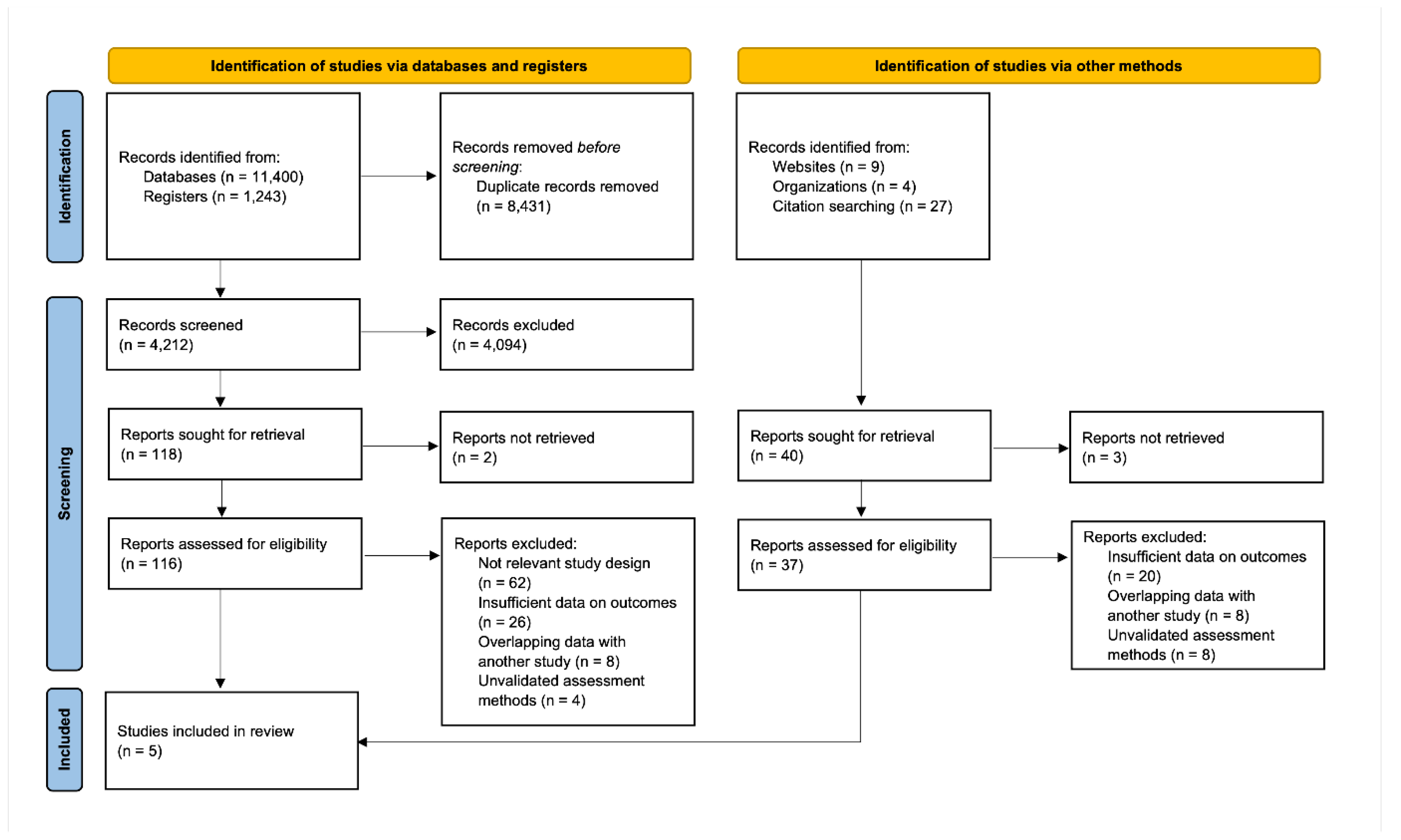
Figure 2.
Application of the Cochrane RoB 2 tool to evaluate potential sources of bias across the included studies. The assessed domains comprise potential biases arising from randomization processes, deviations from intended interventions, missing outcome data, outcome measurements, and result reporting, as well as overall bias. This figure summary highlights the distribution of studies categorized as having low, some, or high concern for bias within each domain, offering a visual representation of the studies’ methodological quality.
Figure 2.
Application of the Cochrane RoB 2 tool to evaluate potential sources of bias across the included studies. The assessed domains comprise potential biases arising from randomization processes, deviations from intended interventions, missing outcome data, outcome measurements, and result reporting, as well as overall bias. This figure summary highlights the distribution of studies categorized as having low, some, or high concern for bias within each domain, offering a visual representation of the studies’ methodological quality.
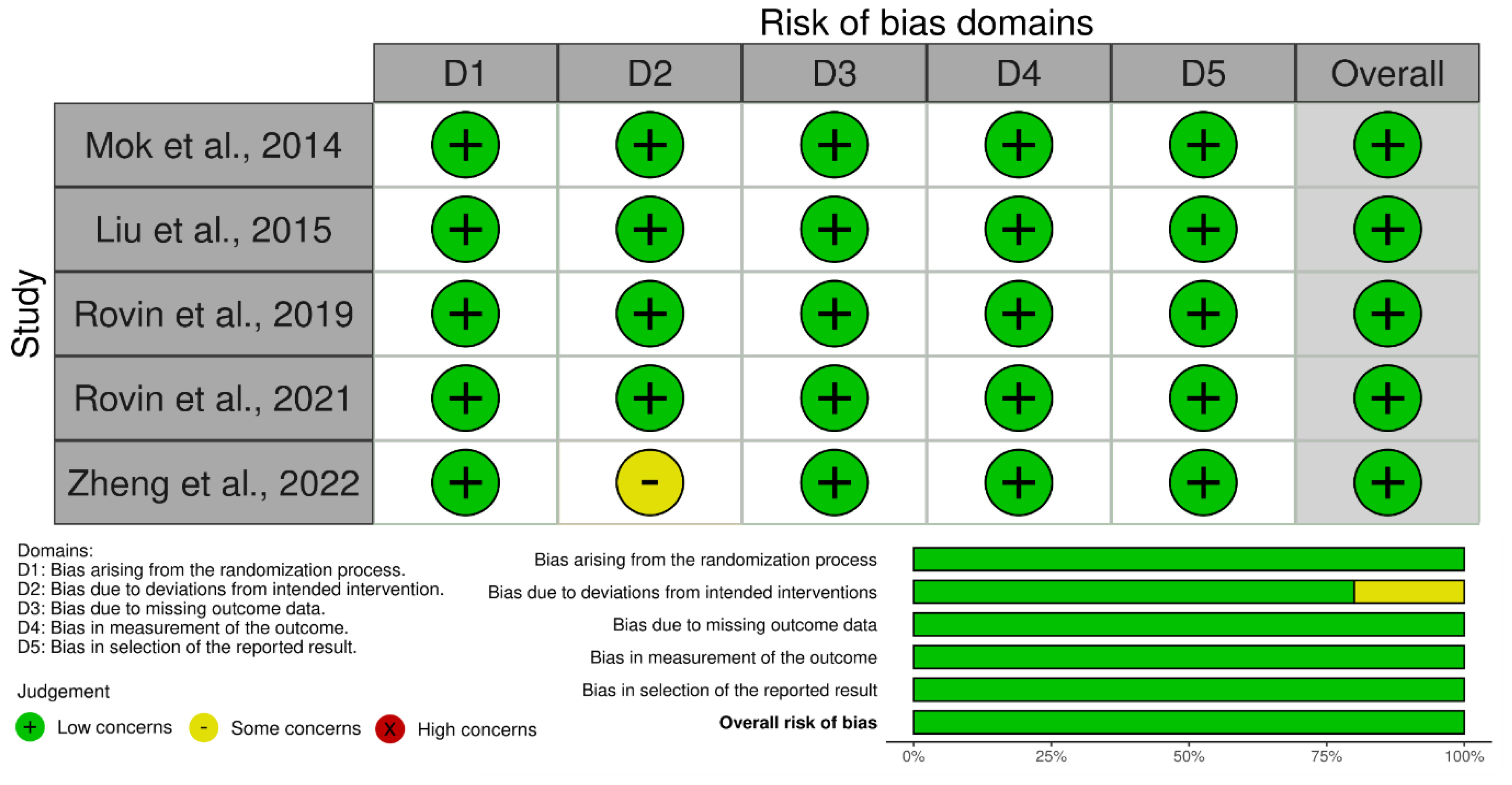
Figure 3.
Forest plot summarizing pooled risk ratios (RRs) and 95% confidence intervals (CIs) for TAC versus control in achieving complete/partial renal response. Each data point represents a single study, while the diamonds at the bottom indicate pooled effect estimates. Cochran’s Q tests assessed for significant heterogeneity among studies (p < 0.05), while I2 quantified the proportion of variability due to heterogeneity and τ2 estimated between-study variance.
Figure 3.
Forest plot summarizing pooled risk ratios (RRs) and 95% confidence intervals (CIs) for TAC versus control in achieving complete/partial renal response. Each data point represents a single study, while the diamonds at the bottom indicate pooled effect estimates. Cochran’s Q tests assessed for significant heterogeneity among studies (p < 0.05), while I2 quantified the proportion of variability due to heterogeneity and τ2 estimated between-study variance.
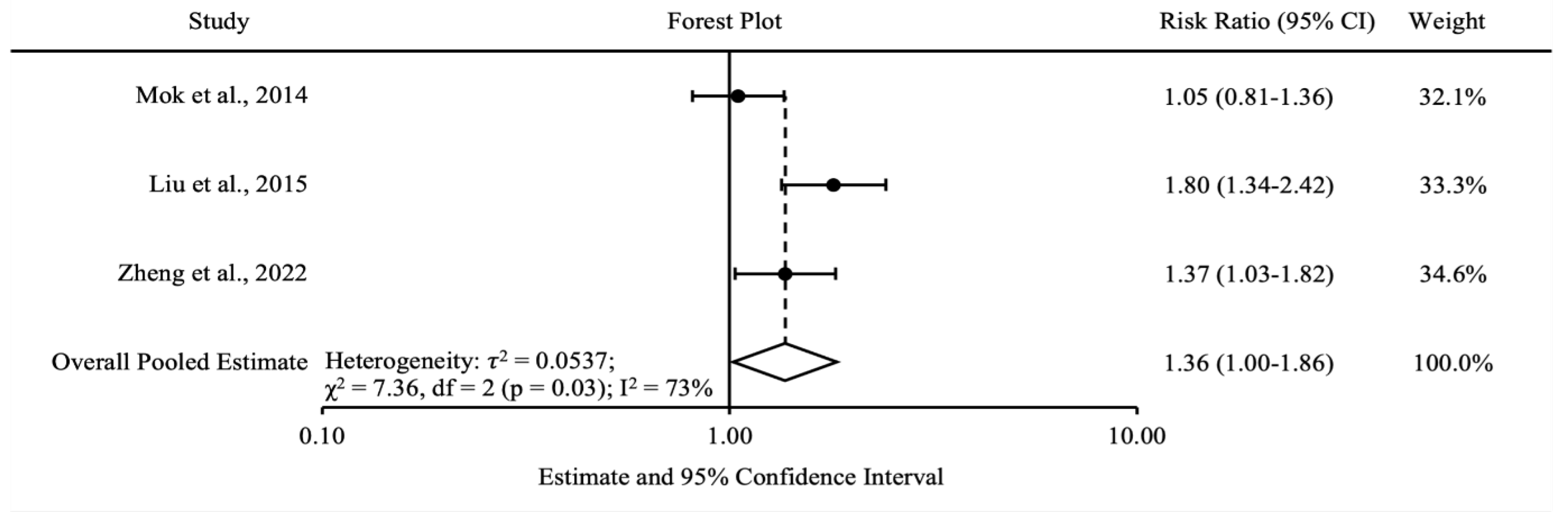
Figure 4.
Forest plot summarizing pooled risk ratios (RRs) and 95% confidence intervals (CIs) for VCS versus control in achieving complete/partial renal response. Each data point represents a single study, while the diamonds at the bottom indicate pooled effect estimates. Cochran’s Q tests assessed for significant heterogeneity among studies (p < 0.05), while I2 quantified the proportion of variability due to heterogeneity and τ2 estimated between-study variance.
Figure 4.
Forest plot summarizing pooled risk ratios (RRs) and 95% confidence intervals (CIs) for VCS versus control in achieving complete/partial renal response. Each data point represents a single study, while the diamonds at the bottom indicate pooled effect estimates. Cochran’s Q tests assessed for significant heterogeneity among studies (p < 0.05), while I2 quantified the proportion of variability due to heterogeneity and τ2 estimated between-study variance.
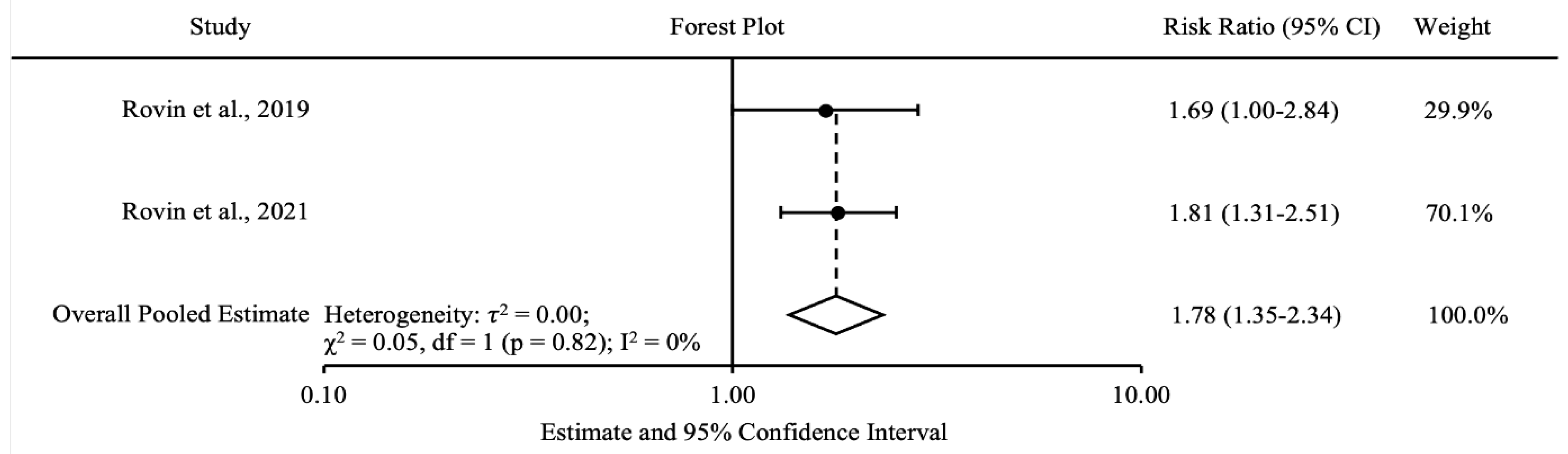
Figure 5.
Funnel plots examining the potential for publication bias in the meta-analysis of renal response associated with TAC (A) and VOC (B) treatment. Visual inspection of potential bias was carried out for each outcome of interest across all included studies by assessing the symmetry of their outcome estimates. Each study’s estimate was represented as a single point, plotted alongside pseudo 95% confidence limits (CLs). Studies with smaller standard errors (SEs), indicating higher precision and weight, are positioned toward the top of each plot, whereas those with larger SEs are found lower. Symmetry in the funnel shapes were used as a visual gauge of publication bias, with notable asymmetry suggesting possible selective reporting or methodological variations.
Figure 5.
Funnel plots examining the potential for publication bias in the meta-analysis of renal response associated with TAC (A) and VOC (B) treatment. Visual inspection of potential bias was carried out for each outcome of interest across all included studies by assessing the symmetry of their outcome estimates. Each study’s estimate was represented as a single point, plotted alongside pseudo 95% confidence limits (CLs). Studies with smaller standard errors (SEs), indicating higher precision and weight, are positioned toward the top of each plot, whereas those with larger SEs are found lower. Symmetry in the funnel shapes were used as a visual gauge of publication bias, with notable asymmetry suggesting possible selective reporting or methodological variations.
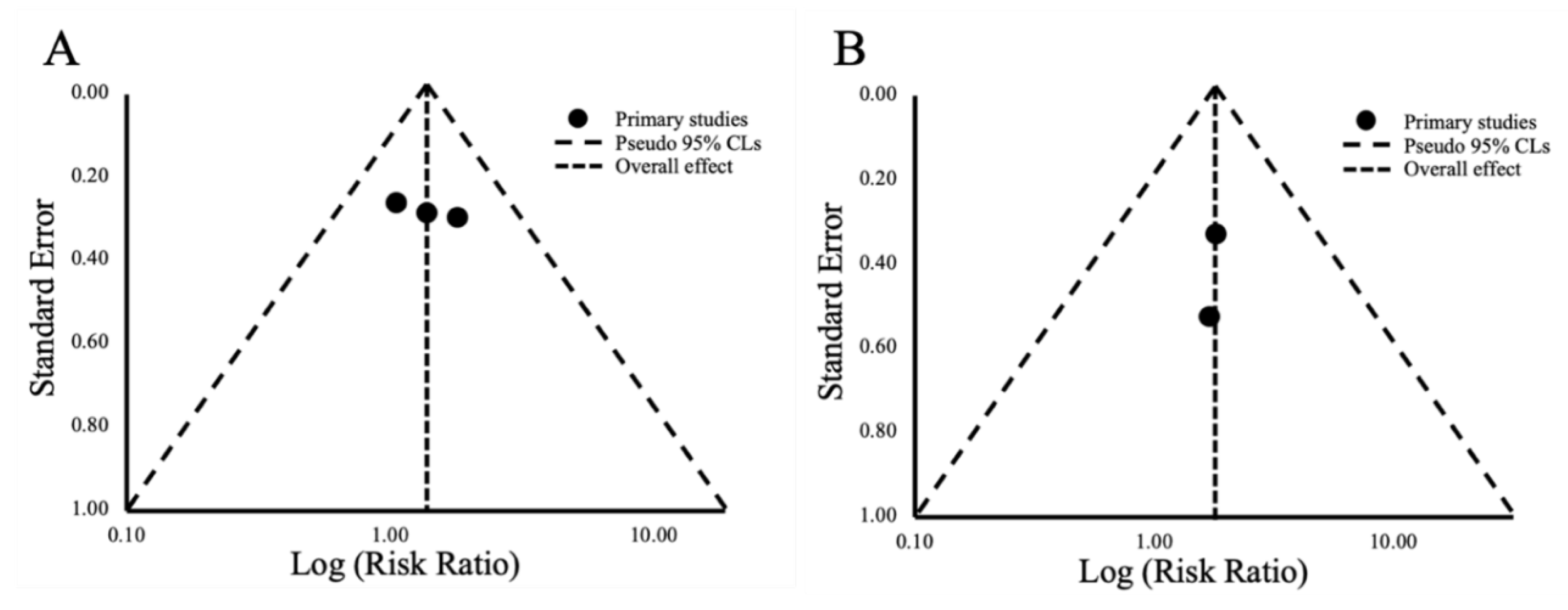
Figure 6.
Proposed mechanisms underlying the association between TAC and VCS treatment and favorable renal outcomes in LN. CNIs may improve renal response through suppression of calcineurin-NFAT signaling, reduced T-cell activation and cytokine production, decreased downstream B-cell stimulation and autoantibody production, and stabilization of podocyte structure and function. These mechanisms may collectively reduce renal inflammation, proteinuria, and progressive glomerular injury.
Figure 6.
Proposed mechanisms underlying the association between TAC and VCS treatment and favorable renal outcomes in LN. CNIs may improve renal response through suppression of calcineurin-NFAT signaling, reduced T-cell activation and cytokine production, decreased downstream B-cell stimulation and autoantibody production, and stabilization of podocyte structure and function. These mechanisms may collectively reduce renal inflammation, proteinuria, and progressive glomerular injury.
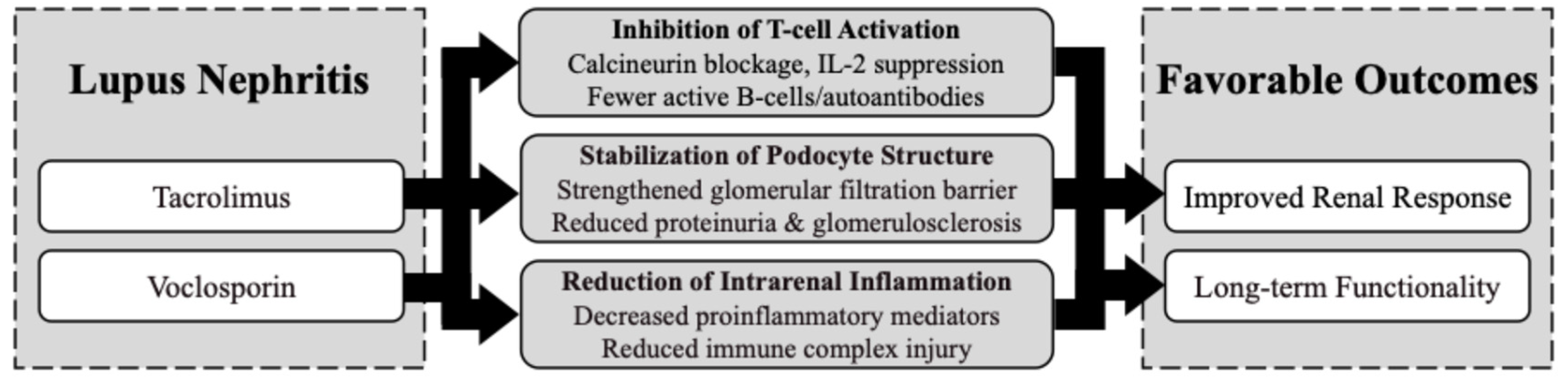

Table 1.
Characteristics of included studies.
| Study | Study design | Sample size (Treatment: Control) |
Age, years | Sex (%) | Treatment arms | Trial duration |
|---|---|---|---|---|---|---|
| Mok et al., 2014 | Randomized controlled trial | 150 (74:76) | 35.5 (12.8) | M: 8.0; F: 92.0 | Tacrolimus + prednisolone vs MMF + prednisolone | 26 weeks |
| Liu et al., 2015 | Randomized controlled trial | 362 (181:181) | 31.9 (2.8) | M: 9.1; F: 90.9 | Tacrolimus + MMF + corticosteroids vs IV cyclophosphamide + corticosteroids | 24 weeks |
| Rovin et al., 2019 | Randomized controlled trial | 265 (177:88) | 31.7 (10.5) | M: 13.2; F: 86.8 | Voclosporin (23.7 or 39.5 mg twice daily) + MMF + low-dose corticosteroids vs placebo + MMF + low-dose corticosteroids | 48 weeks* |
| Rovin et al., 2021 | Randomized controlled trial | 357 (179:178) | 32.3 (9.1) | M: 12.3; F: 87.7 | Voclosporin 23.7 mg twice daily + MMF + low-dose corticosteroids vs placebo + MMF + low-dose corticosteroids | 52 weeks |
| Zheng et al., 2022 | Randomized controlled trial | 299 (157:142) | 34.2 (9.5) | M: 12.4; F: 87.6 | Tacrolimus + prednisone vs IV cyclophosphamide + prednisone | 24 weeks |
Age is presented as mean (SD). *In AURA-LV (Rovin et al., 2019), the primary renal response endpoint was assessed at 24 weeks, although patients were treated and followed for 48 weeks.
Disclaimer/Publisher’s Note: The statements, opinions and data contained in all publications are solely those of the individual author(s) and contributor(s) and not of MDPI and/or the editor(s). MDPI and/or the editor(s) disclaim responsibility for any injury to people or property resulting from any ideas, methods, instructions or products referred to in the content. |
© 2026 by the authors. Licensee MDPI, Basel, Switzerland. This article is an open access article distributed under the terms and conditions of the Creative Commons Attribution (CC BY) license (http://creativecommons.org/licenses/by/4.0/).
Copyright: This open access article is published under a Creative Commons CC BY 4.0 license, which permit the free download, distribution, and reuse, provided that the author and preprint are cited in any reuse.