
Submitted:
09 September 2026
Posted:
10 September 2026
You are already at the latest version
Abstract
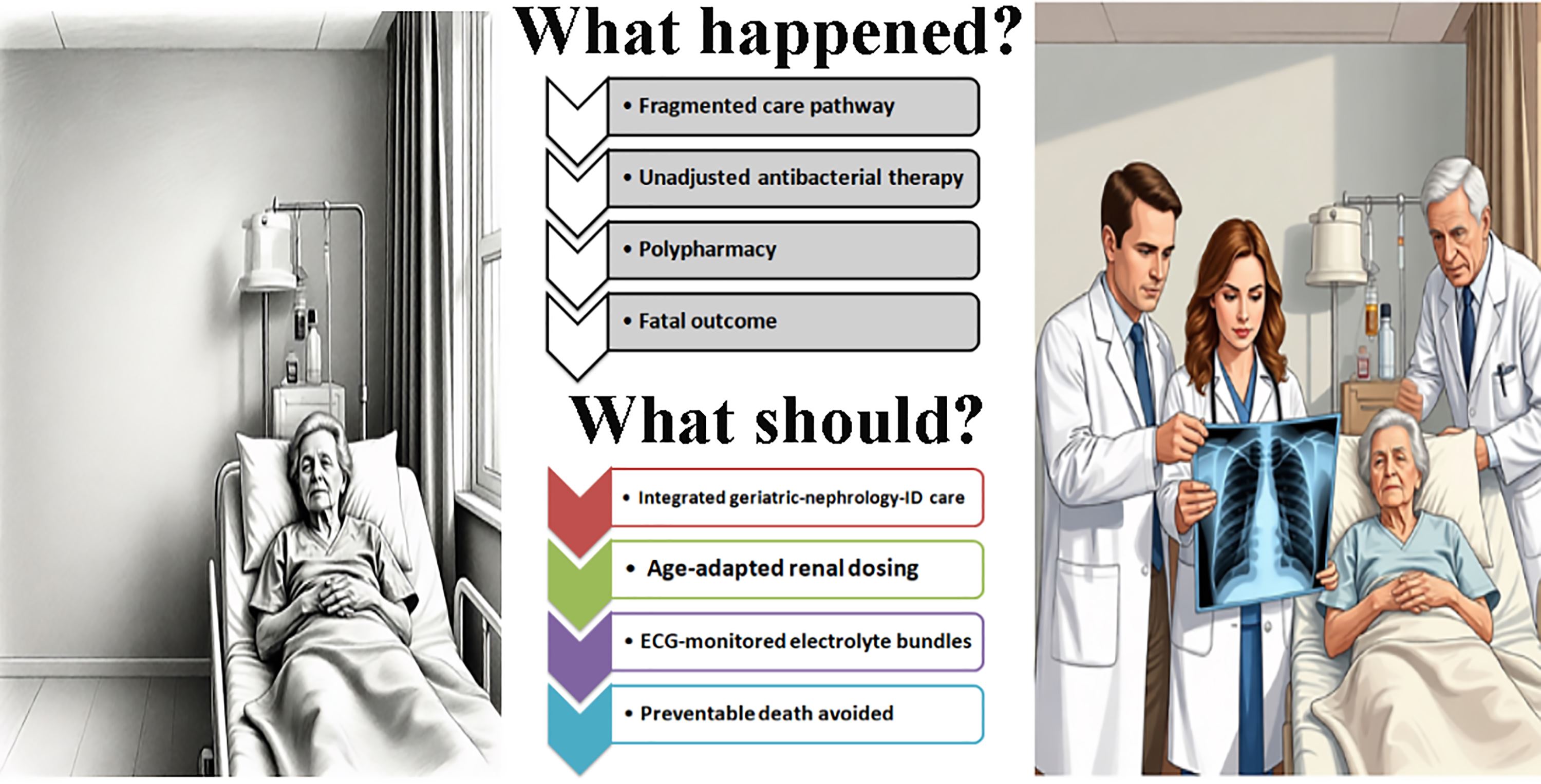
Community-acquired pneumonia carries high mortality in very old adults with multimorbidity, yet preventable medication-related harm is often under-recognised. This case report describes a woman in her late 80s with stage G3a chronic kidney disease who presented with community‑acquired pneumonia to a large multidisciplinary centre. Empiric meropenem was initiated shortly after admission and the dose was increased on day 8 despite persistent renal impairment. Amikacin 1 g once daily was then added. On the same day, the patient received furosemide, intravenous potassium chloride, and glucose infusions as metabolic abnormalities emerged. After temporary stabilisation in the intensive care unit, amikacin was discontinued, linezolid was started, and the patient was transferred to a general ward, where she died four days later. On her final day, life-threatening hyperkalaemia was documented, yet additional potassium was administered, precipitating cardiac arrest. This case illustrates how routine interventions—broad-spectrum antibiotics, aminoglycosides, diuretics, and potassium supplementation—can become iatrogenic in frail older adults when dosing and monitoring are not adjusted for age and kidney function. It underscores the need for strict renal dose adjustment, cautious potassium management, and early geriatric assessment in hospitalised multimorbid older patients.
Keywords:
community-acquired pneumonia
; chronic kidney disease
; hyperkalaemia
; Antimicrobial stewardship
; electrolyte safety bundles
Copyright: This open access article is published under a Creative Commons CC BY 4.0 license, which permit the free download, distribution, and reuse, provided that the author and preprint are cited in any reuse.