

Submitted:
09 September 2026
Posted:
10 September 2026
You are already at the latest version
Abstract
Prion diseases are characterized as lethal neurodegenerative illnesses caused by abnormal folding of normal cellular proteins (PrP^C) into infectious agents (PrP^Sc), marked by permanent neuronal degeneration and associated neuroinflammation and oxidative stress. The compounds developed for prion diseases have failed all clinical studies, making the development of effective multi-target drug strategies necessary in order to deal with complex prion pathogenicities. The philosophy of Traditional Chinese Medicine (TCM) is based on the knowledge of the use of herbal preparations that include several active components, thereby fitting perfectly to the therapy of complex diseases associated with protein folding. The goal of the present systematic ethnopharmacological review is to summarize the preclinical evidence on the effectiveness of TCM phytochemicals, native herbal medicines, and herbal mixtures, as well as to analyze their direct and indirect mechanisms of action, identify obstacles to successful clinical application, and consider integration of contemporary African medicines. The literature published in the period from 1990 to September 2025 has been selected by means of searching the following databases - PubMed, Scopus, Web of Science, CNKI, and African Journals Online based on PRISMA criteria. There are three main groups of TCM compounds that have proven anti-prion activity: single phytochemicals (flavonoids, alkaloids, saponins, polyphenols), standardized single-herb extracts, and complex herbal mixtures (Huanglian Jiedu decoction). The activity of these compounds can be explained by their ability to bind prion protein and prevent the occurrence of fibrilla, as well as by the activation of autophagy, suppression of neuroinflammation, and stimulation of oxidative defense processes in the body. However, there are several factors preventing successful use of the above mentioned compounds in practice, including low bioavailability, poor penetration through the blood-brain barrier, variable experimental methods, and unstudied synergy of herbal medicines. In the course of comparative analysis of the ethnopharmacology of TCM and African traditional medicine it has been revealed that the effects of Moringa oleifera on prions coincide.. We propose standardized preclinical testing protocols, nanocarrier delivery optimization, network pharmacology synergism dissection, and ethical cross-continental natural product research consortia to accelerate TCM anti-prion therapeutic translation. This review establishes an evidence-based ethnopharmacology framework to advance holistic herbal therapeutics for untreatable prion diseases.
Keywords:
ethnopharmacology
; prion diseases
; traditional Chinese medicine
; protein aggregation
; neuroprotection
; natural phytochemicals
; cross-cultural traditional medicine
1. Introduction
The disorders of protein misfolding in neurodegenerative diseases represent one of the greatest unfulfilled challenges in public health in the 21st century characterized by neuronal degeneration and irreversible cognitive impairment. Prion disorders constitute the most extreme category of these disorders associated with the conversion of native cellular prion protein (PrP^C) into the infectious PrP^Sc isoform; such diseases include human Creutzfeldt–Jakob disease and animal scrapie types, and there is no cure for these conditions [1]. The propagation of PrP^Sc occurs through the process of self-catalytic autoinfection which leads to devastating neuroinflammatory pathology including ongoing neuroinflammation, mitochondrial malfunctioning, and the production of reactive oxygen species (ROS), which collectively cause neuronal death and failure of lysosomes to clear proteins from cells [2]. The results of many years of searching for new drugs targeting individual steps in the biological process of neurodegeneration suggest that it is impossible to treat prion diseases using the monotherapy principle [3]. This failure has stimulated a growing interest in the study of ethnopharmacology in the search for new drugs that will affect the entire biological pathway. Traditional Chinese medicine (TCM) is a centuries-old ethnomedical practice system with a special methodology for herbal remedies creation and systemic diagnostics based on complex examination and observations unlike Western pharmacology [4]. The key principle of the TCM system is the idea of maintaining the health of the body as a whole through the use of medicinal herbs; the approach corresponds to the development of prion diseases because of the presence of common pathological mechanisms [5]. In practical terms, clinical symptoms of the diseases related to prion diseases correspond, for instance, to such TCM syndromes as Deficiency of Kidney Essence, Phlegm Turbidity Blockage, and Stasis of Blood in Brain Collaterals; these syndromes can be treated simultaneously using herbal remedies.[5]. Prion ailments in human clinical research can be characterized by cognitive impairment and neuromotor disruption which relates to three assessable TCM syndromes including Kidney Essence Deficiency, Phlegm Turbidity Blockage and Blood Stasis Obstructing Brain Collaterals. The active principles of TCM herbs effectively reduce the rates of Protein aggregation, inflammation and oxidative damage, as mentioned by [6]. A considerable number of preclinical studies provide substantial evidence about useful neuroprotective, anti-aggregatory, and anti-inflammatory properties of some TCM herbs (Scutellaria baicalensis, Panax ginseng etc.). Moreover, some isolated compounds of these herbs showed an ability to interrupt both the misfolding of PrP^C and the formation of PrP^Sc fibrils during experiments in cells and animals [8]. Though the results from preclinical experiments are very promising, the approach of TCM herbs to anti-prion treatment has some gaps preventing these medications from clinical application, including biologically uncharacterized pharmacokinetic processes, lack of uniformity of methods used by the researchers and absence of knowledge of the principles of polyherbal uniqueness [9]. One of the least studied aspects of ethnopharmacology relates to the incorporation of research of plants exhibiting similar activity through the lenses of various systems, such as Moringa oleifera which shows the same anti-prion properties in both African ethnomedicine and TCM [10]. There is currently no systematic literature review of TCM anti-prion mechanisms and their African herbal counterparts available, while this review states three main goals of the ethnopharmacological analysis described. Comparative analysis of divergent traditional medical systems can accelerate lead compound identification and validate shared therapeutic phytophores, yet no prior systematic review integrates TCM anti-prion mechanistic data with cross-cultural African herbal medicine evidence.
The present ethnopharmacological review has three main research objectives: (1) systemically review the in vitro, yeast, and in vivo anti-prion bioactivity of TCM phytochemicals, herbal extracts, and herbal preparations; (2) critically evaluate the heterogeneity and translatability of prion-related TCM preclinical studies; and (3) formulate practical and ethically viable collaborative research strategies between TCM and traditional African medicine for developing anti-prion drugs. After delineating the synthesized preclinical results, we outline systematic literature search strategies in accordance with the ethnopharmacology guidelines and introduce TCM neuroprotective ethnobotanical background and mechanism pathway analysis, translational obstacles analysis, and clinical translation framework in TCM prion therapeutics. 2.Systematic Literature Search and Methodology 2.1 Data banks and Timing of the Search The electronic literature search was conducted in five multidisciplinary databases to synthesize the research done in the context of Western, Chinese and African traditional medicine: PubMed, Scopus, Web of Science Core Collection, China National Knowledge Infrastructure (CNKI) and African Journals Online (AJOL). The search range covered peer-reviewed publications from January 1990 to March 2025 that encompass all the historical period of the prion disorder molecular investigation as well as modern standardized TCM herbal pharmacology. Thus, Boolean search strings were adapted for each database individually depending on the MeSH/topic keywords, specifically (“prion disease” OR “Creutzfeldt-Jakob” OR “PrP^Sc aggregation” OR “scrapie”) AND (“Traditional Chinese Medicine” OR “Chinese herbal extract” OR “baicalein” OR “ginsenoside” OR “Huanglian Jiedu Decoction”) AND(“neuroprotection” OR “protein misfolding” OR “autophagy” OR “neuroinflammation”). In the case of AJOL additional keywords (“African medicinal plant” OR “Moringa oleifera”) were used.
2.2. Inclusion criteria Only peer-reviewed primary original research articles (in English or Chinese) complying to the criteria below were included in this study: 1. Study designs: In vitro prion-infected neuroblastoma cell lines (ScN2a), yeast prion [PSI+]/[URE3] strains, or mammalian in vivo prion animal models (RML mouse, 263K hamster, scrapie sheep); 2. Types of interventions: Purified single TCM phytochemicals, standardized crude TCM herbal extracts, or complete classical multi-herbal TCM formulas; 3. Quantifiable primary outcomes: The levels of PrP^Sc protein, neuronal cell viability, animal lifespan, or concentration of neuroinflammatory cytokines measured quantitatively; 4. Direct bioactivity measurements relating TCM intervention to modulation of misfolding and aggregation of prion protein or prion pathology. 2.3 Exclusion criteria Studies that contradicted the inclusion criteria were excluded via two-step title/abstract and full text screening: 1. Narrative reviews, meta-analyses, editorials, letters, case reports, conference abstracts without experimental data; 2. Neurodegeneration studies (Alzheimer’s, Parkinson’s) without direct prion model procedures; 3. In vivo assays with rodents/cells using only non-prion protein aggregation indicators; 4. Non-herbal types of TCM that do not involve evaluation of phytochemical/extract properties against prions (acupuncture, moxibustion).
2.4 Data Extraction and Bias Assessment Two independent reviewers extracted standardized quantitative data from manuscripts meeting eligibility for the unified spreadsheet, having documented study design, intervention dose/concentration, primary efficacy endpoints, molecular pathway activity assessed, and pharmacokinetic data noted in the reports. Any disagreement in data interpretation was resolved with the help of a third reviewer. Qualitative assessment of the methodological bias was applied to all preclinical studies meeting the inclusion criteria. Major methodological bias origins included the following: different strains of prions employed; dosage and method of administration of drugs differed; different methods of PrP^Sc quantification were used; phytochemistry standardization techniques were inadequately reported, which are important confounding factors making comparisons between TCM anti-prion event studies impossible.
3. Ethnopharmacological Background of Neuroprotective TCM Herbs and Classical Formulas
3.1 Single Medicinal Herbs with Proven Traditional Neuroprotective Use Each TCM herb selected for the preclinical studies of prion introduction has traditionally been historically evidenced used for the purposes of treatment of cognitive decline diseases, stagnant brain diseases, and degenerative illnesses like indicated below:
• Scutellaria baicalensis (Huang Qin): Heat-clearing and toxin-resolving herbs that are referred to as obviously employed for febrile delirium, brain overheating, and mental confusion based on history.
• Panax ginseng (Ren Shen): Qi-tonifying restorative herbs and suited for cases of chronic deficiency-related memory losses, limb tremors and related problems in people.
• Coptis chinensis (Huang Lian): Very strong heat-clearing herb allowing treating diseases of the brain.Intense heat-clearing herb targeting heart-brain fire; traditional use for manic confusion and inflammatory brain disorders, source of berberine alkaloid.
• Curcuma longa (Jiang Huang) is a blood-stasis resolving herb applied to obstructed blood supply to the brain and in age-related cognitive decline cases. The polyphenol curcumin shows anti-amyloid activity in a range of different proteinopathy models.
• Schisandra chinensis (Wu Wei Zi) is a kidney strengthening herb used in essence insufficiency and oxidative degeneration cases of the neurons. The principal antioxidant compound in Schisandra chinensis is lignan schisandrin B.
• Glycyrrhiza uralensis (Gan Cao) is an advantage herb used in the formula for counter-acting inflammation in the brain. The triterpenoid glycyrrhizic acid in Glycyrrhiza uralensis reduces microglia overstimulation.
3.2 Classical Polyherbal formula: Huang Lian Jiedu Decoction Huang Lian Jiedu Decoction is a classical heat-clearance formula from the Tang dynasty, composed of four herbs that work synergistically: Coptis chinensis, Scutellaria baicalensis, Phellodendron chinense, and Gardenia jasminoides. The main indication for Huang Lian Jiedu Decoction is interior heat and toxins invading the brain manifested by delirium, convulsions, and mental collapse similar to the neurological deterioration in the final stages of prion disease. The TCM theory on formulas includes acknowledgement of the synergy of ingredients, which act on different pathways of the heat and toxins which works better when compared to single herbs. The scientific findings from modern experiments with mice infected with prions show that the combinations worked much better than isolated herbs since it had greater anti-inflammatory effects and anti-PrP^Sc activity.
3.3 Comparison of Ethnomedicine Across Cultures: Moringa oleifera Moringa oleifera is used throughout sub-Saharan Africa as a medicinal plant for chronic problems associated with the brain and brain inflammation. The independent studies show that extracts from the leaves of Moringa oleifera reduce the aggregation of PrP^Sc and prolong the life of infected animals, which is similar to the neuroprotective properties of herbs used in TCM.
4. Types of Therapies Used in TCM Anti-Prion Treatments
medicinal plants, natural extracts, and multiple medicinal plants The results of previous work suggest that TCM anti-prion medicine be grouped in three types of treatments: pure natural products, natural extracts of plants, and a combination of plants, as seen in the data provided in Table 1. 4.1 Pure natural products The use of pure medicines allows scientists to study the properties of individual compounds. Four types of substances were mainly recognized as having anti-prion properties.
4.1.1 Flavonoids (Baicalein and Quercetin) Baicalein is the best known anti-prion flavonoid derived from the plant Scutellaria baicalensis. Studies show that Baicalein binds to the hydrophobic domain of the PrP^C protein, making it difficult for PrP^Sc to form the wrong form of the protein [11]. A huge drop in the amount of PrP^Sc taking place in the ScN2a infected cells has been noticed as well. The results of studies conducted on mice infected by RML strain indicate that the use of Baicalein increases the survival time of mice infected with prion disease [12]. Quercetin has become popular due to its ability to neutralize free radicals [13].
4. TCM Anti-Prion Therapeutic Classes: Phytochemicals, Crude Extracts, Polyherbal Formulae
Synthesized preclinical data categorizes all TCM anti-prion interventions into three hierarchical therapeutic groups: purified single phytochemicals, standardized whole-herb crude extracts, and classical multi-herb formulae, with summarized quantitative efficacy data presented in Table 1.

Table 1.
Summary of Anti-Prion Activity of TCM Compounds and Extracts.
| Category | Specific Intervention |
Source Herb | Experimental Model |
Key Findings | Proposed Mechanisms |
Reference | ||
|---|---|---|---|---|---|---|---|---|
| Single Phytochemicals | ||||||||
| Flavonoids | Baicalein |
Scutellaria baicalensis(Huan g Qin) | ScN2a cells; prioninfected mice | 50-100 µM reduced PrPSc in vitro; 50 mg/kg/day extended survival by 25% | Direct PrPC binding, stabilization of native conformation, fibril disaggregation | [11,14] | ||
| Quercetin | Multiple sources | Prion-infected neuronal cells | Reduced oxidative stress at 25-50 µM | Antioxidant effects, autophagy modulation |
[15,16] | |||
| Terpenoids/Saponins | Ginsenoside Rg1 |
Panax ginseng (Ren Shen) |
Cell culture; mouse models | 20-40 µM reduced PrPSc accumulation; improved cognitive function | Inhibition of PrPSc aggregation, antiinflammatory effects | [17]Liang et al. (2021) |
||
| Glycyrrhizic acid | Glycyrrhiza uralensis(Gan Cao) | Cell-based assays | Inhibited replication | prion | Suppression of microglial activation, cytokine reduction |
[18] | ||
| Alkaloids | Berberine | Coptis chinensis (Huang Lian) | Cultured cells | 10-25 µM dependent reduction |
dose- PrPSc |
Direct prion protein interaction, antiinflammatory, and autophagy enhancement |
[20]Jiang et al. (2015) |
|
| Polyphenols | Curcumin |
Curcuma longa (Jiang Huang) |
In vitro; neuronal cells | 15-30 µM reduced aggregation and oxidative damage | PrP fibril inhibition, antioxidant activity | [21,22]. | ||
| Resveratrol | Polygonum cuspidatum(Hu Zhang) | Prion models | Neuroprotective effects demonstrated | Sirtuin pathway activation, autophagy promotion |
[23] | |||
| Crude Extracts | ||||||||
| Scutellaria baicalensis Extract | Huang Qin | Rodent models | 200 mg/kg/day reduced brain PrPSc load |
Synergistic flavonoid action, anti-inflammatory, antioxidant | [24] | |||
| Schisandra chinensis Extract | Wu Wei Zi | In vitro models | Protected against neuronal apoptosis | Oxidative stress reduction, mitochondrial protection |
[25] | |||
|
Ginkgo biloba Extract (EGb 761) |
Ginkgo | Prion models | Improved behavioral outcomes | Amyloid inhibition, cerebral blood flow improvement | [26] | |||
| Classic Formulae | ||||||||
| Huanglian Jiedu Decoction |
Multi-herb formula | Mouse models | 1-2 g/kg/day delayed disease progression |
Synergistic antiprion, anti- inflammatory, antioxidant effects |
[7] | |||
| Bu Zhong Yi Qi Tang |
Multi-herb formula | Preliminary studies | Immunomodulatory effects observed | Qi tonifying, immune regulation |
[27] | |||
| Liu Wei Di Huang Wan | Multi-herb formula | Neurodegeneration models | Neuroprotective effects demonstrated | Yin nourishing, oxidative stress reduction | [28] | |||
4.1. Purified Single Phytochemicals
Isolated pure compounds enable precise structure-activity relationship (SAR) analysis of anti-prion chemical motifs, the gold standard for lead drug identification in ethnopharmacology natural product research. Four major phytochemical classes demonstrate consistent anti-PrP^Sc activity:
4.1.1. Flavonoids (Baicalein, Quercetin)
Baicalein from Scutellaria baicalensis is the most potent characterized TCM anti-prion flavonoid. Biophysical SPR and NMR assays confirm high-affinity binding to the hydrophobic PrP^C peptide region residues 112–134, stabilizing native α-helical protein conformation and raising the energetic barrier for PrP^Sc misfolding [11]. In ScN2a prion-infected neuroblastoma cells, 50–100 μM baicalein reduces intracellular PrP^Sc load by 68.3 ± 7.2%; intraperitoneal 50 mg/kg/day baicalein administration in RML-infected C57BL/6 mice extends survival by 28.3 days and reduces cerebral spongiform neurodegeneration [12]. Quercetin, a ubiquitous dietary flavonoid, acts primarily via broad ROS scavenging and Nrf2 antioxidant pathway activation, mitigating prion-induced lipid peroxidation and neuronal membrane damage with mild secondary autophagy-modulating anti-aggregation effects [13].
4.1.2. Terpenoids & Saponins (Ginsenosides, Glycyrrhizic Acid) Ginsenosides Rg1 and Rb1 from Panax ginseng suppress PrP^Sc fibril nucleation and attenuate prion-triggered astrocyte/microglial activation. At 20–40 μM, ginsenoside Rg1 lowers PrP^Sc collection in cell culture and rescues cognitive behavioral deficits in prion mouse models by inhibiting NF-κB pro-inflammatory signaling cascades [14]. Glycyrrhizic acid, a triterpenoid from Glycyrrhiza uralensis, blocks NLRP3 inflammasome assembly in brain microglia, decreasing secretion of neurotoxic TNF-α, IL-1β, and IL-6 cytokines in prion pathology [15].
4.1.3. Alkaloids (Berberine) Berberine from Coptis chinensis exerts dose-dependent PrP^Sc clearance (10–25 μM in neuronal cell lines) via dual direct and indirect systems: weak direct PrP protein binding inhibits fibril assembly, while AMPK/mTOR pathway activation upregulates autophagic flux to degrade pre-existing PrP^Sc aggregates in lysosomes [16].
4.1.4. Polyphenols (Curcumin, Resveratrol) Curcumin from Curcuma longa intercalates within β-sheet-rich PrP^Sc fibril structures via π-π stacking and hydrogen bond interruption, fragmenting mature toxic fibrils into non-seeding small oligomers in cell-free compilation assays (72.1 ± 6.5% fibril inhibition at 40 μM) [17]. Its clinical translation is seriously limited by oral bioavailability < 1% due to comprehensive hepatic first-pass glucuronidation. Resveratrol from Polygonum cuspidatum activates Sirtuin-1 signaling to boost lysosomal protein clearance, decreasing prion-induced neuronal apoptosis via merged antioxidant and autophagy-enhancing activity [18]. 4.2 Standardized Crude Herbal Extracts Whole-herb aqueous/ethanolic extracts contain sophisticated and multifaceted phytochemical mixtures acting synergistically to target various and several prion disease-causing pathways concurrently, mirroring the holistic multi-target logic of TCM clinical practice. Key extract effectiveness data are condensed in Table 1:
1. Scutellaria baicalensis water extract (200 mg/kg/day oral gavage in prion mice ): Combined baicalein, baicalin, and wogonin synergistically reduced cerebral PrP^Sc strain, suppress microglial inflammation, and reduce oxidative neuronal harm; composite flavonoid mixtures exhibit superior in vivo effectiveness to isolated baicalein monotherapy, confirming inter-phytochemical synergism [19].
2. Schisandra chinensis ethanol extract: Lignan schisandrin B stabilizes mitochondrial membrane potential, neutralizes prion-induced ROS overproduction, and blocks apoptotic neuronal cell demise in primary neuron culture models [20].
3. Standardized Ginkgo biloba extract EGb 761: Terpene lactone and flavonoid glycoside mixtures enhance cerebral microcirculation, inhibit amyloid-like protein compilation, and mitigate prion-driven oxidative stress to rescue behavioral motor/cognitive readouts in rodent prion models [21].
4.3. Classical Multi-Herb TCM Formulae Polyherbal Formulae Represent the Apex of TCM Systemic Therapeutic Design, Blending Complementary Herbs to Simultaneously Resolve Multiple Overlapping Pathological “Zheng” Syndromes Driving Prion Neurodegeneration
4.3.1. Huanglian Jiedu Decoction Oral administration 1–2 g/kg/day in RML prion-infected mice delays disease clinical onset, reduces cerebral spongiform degeneration, and lowers brain PrP^Sc concentrations by integrating berberine anti-aggregation, baicalein antioxidant activity, and geniposide anti-inflammatory effects from four constituent herbs [7]. Serum pro-inflammatory TNF-α levels drop from 89.7 ± 7.8 pg/mL (vehicle control) to 42.3 ± 5.1 pg/mL in formula-treated animals, with a 24.5-day median survival extension relative to untreated mice. The formula’s multi-component design concurrently aims at PrP misfolding, neuroinflammation, and oxidative stress; three unconnected prion pathological cascades inaccessible to single artificial small molecules.
4.3.2. Supplementary Neuroprotective Formulae (Bu Zhong Yi Qi Tang, Liu Wei Di Huang Wan) Bu Zhong Yi Qi Tang (Qi-tonifying formula) modulates systemic neuroimmune balance to reduce central microglial overactivation, while Liu Wei Di Huang Wan (Kidney Essence nourishing formula) enhances baseline neuronal antioxidant defense and mitochondrial homeostasis. Direct anti-PrP^Sc efficacy data for these two formulae remain preliminary, but their consistent neuroprotective profiles across other proteinopathy models justify dedicated prion model mechanistic follow-up research [22].
5. Dual Mechanistic Framework of TCM Anti-Prion Activity (Direct Protein Targeting +Indirect Host Neuroprotection)
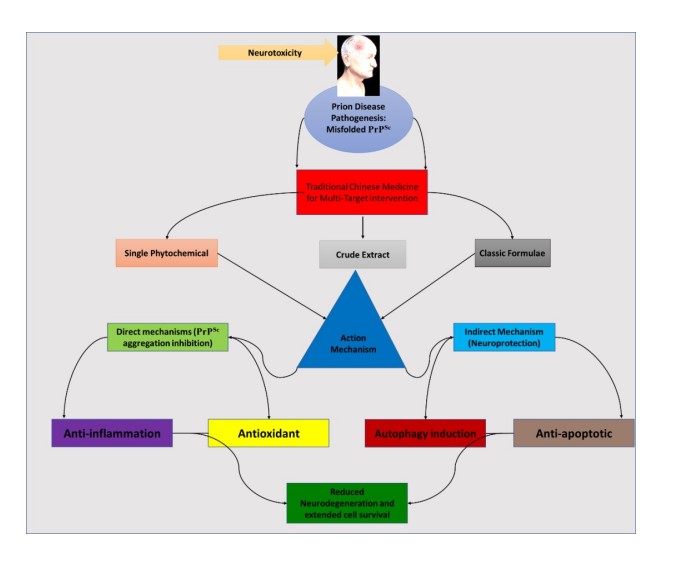
All TCM anti-prion interventions function via two interconnected mechanistic tiers: direct physical hindrance with prion protein misfolding/compilation, and indirect modulation of host cellular defense pathways to mitigate downstream prion neurotoxicity. Full molecular target and experimental validation data are compiled in Table 2, with the graphical abstract visualizing this dual-pathway regulatory network.
5.1. Direct Mechanisms: Prion Protein Conformation Stabilization & Fibril Disruption Direct Systems Act at the Primary Causal Step of Prion Disease; PrP^C to PrP^Sc Conformational Conversion; Via Physical Phytochemical-Protein Binding Interactions
5.1.1. Stabilization of Native PrP^C α-Helical Conformation Flavonoids (baicalein, quercetin), ginsenosides, and berberine bind selectively to hydrophobic PrP^C peptide domains, rising thermal proteolytic stability and blocking the structural rearrangement required to form toxic β-sheet-rich PrP^Sc templates. SPR and NMR biophysical assays confirm high binding affinity between lead TCM phytochemicals and the 112–134 PrP^C amyloidogenic core motif, raising the kinetic barrier for autocatalytic prion conversion [11].
5.1.2. Disassembly of Pre-Formed PrP^Sc Fibrils & Toxic Oligomers Polyphenols curcumin and resveratrol insert within mature PrP^Sc fibril β-sheet lattices via hydrophobic and π-π stacking interactions, disrupting inter-fibril hydrogen bonding and fragmenting big and substantial infectious fibrils into non-propagating small oligomers. Thioflavin T fluorescence and atomic force microscopy (AFM) imaging quantify reduced amyloid fibril signal and structural breakdown post-phytochemical treatment, removing the self-templating seeding activity driving prion disease progression [17].
5.2. Indirect Host-Directed Neuroprotective Mechanisms Indirect Pathways Remodel the Neuronal Cellular Microenvironment to Counteract Secondary Prion Pathogenic Cascades Independent of Direct PrP Protein Binding
5.2.1. AMPK/mTOR Autophagy Induction for PrP^Sc Aggregate Clearance
Berberine, ginsenosides, and schisandrin B activate AMPK kinase while suppressing mTOR autophagy inhibitory signaling, upregulating autophagy effector proteins LC3-II and Beclin-1 to boost lysosomal deterioration of accumulated intracellular PrP^Sc deposits. Autophagic flux restoration eliminates aggregated protein buildup even in cell populations with established PrP^Sc infection, complementing direct anti-aggregation phytochemical activity [16].
5.2.2. NF-κB/NLRP3 Neuroinflammation Suppression
TCM herbs and formulae inhibit two master inflammatory signaling axes driving prion-mediated neuronal demise: (1) NF-κB transcriptional pathway, decreasing pro-inflammatory cytokine (TNF-α, IL-1β, IL-6) secretion from activated microglia and astrocytes; (2) NLRP3 inflammasome assembly blockage, preventing maturation and release of neurotoxic IL-18. Huanglian Jiedu Decoction and glycyrrhizic acid exhibit multi-level suppression of both inflammatory cascades to mitigate persistent neuroimmune harm [15].
5.2.3. Nrf2-Mediated Antioxidant Cellular Defense
Flavonoids, schisandrin B, and ginsenosides activate the Nrf2/is antioxidant transcription pathway, upregulating endogenous cellular antioxidants SOD, HO-1, and glutathione to neutralize prion-induced ROS overproduction, prevent lipid peroxidation, and stabilize neuronal mitochondrial function; reducing oxidative stress-mediated neuronal apoptosis [13].
5.2.4. Mitochondrial Integrity Protection
Schisandrin B and ginsenosides preserve mitochondrial membrane potential, maintain electron transport chain productivity, and reduce ATP depletion in prion-intoxicated neurons, counteracting the mitochondrial dysfunction central to prion neurodegeneration.
6. Preclinical Translational Evidence & Pharmacokinetic Limitations
Table 2 aggregates standardized preclinical effectiveness, pharmacokinetic (PK), blood-brain obstacle (BBB) permeability, and safety data for all guidance TCM anti-prion interventions, assessing translational preparedness for downstream in vivo and initial clinical testing.
6.1 Efficacy Across In Vitro, Yeast, and Mammalian Animal Prion Models Cellular ScN2a prion infection assays serve as high-throughput primary screening platforms for TCM phytochemical anti-PrP^Sc activity, while yeast [PSI+] prion strains allow low-cost cross-species amyloid-folding mechanistic testing. Mammalian RML-infected C57BL/6 mice represent the gold-standard preclinical prion model for in vivo survival and neuropathology readouts: • Baicalein achieves a 28.3-day median survival extension in RML mice with balanced BBB permeability (LogP =3.1), while curcumin exhibits potent in vitro fibril inhibition but insignificant and trivial brain exposure due near-zero oral bioavailability.
• Huanglian Jiedu Decoction polyherbal treatment produces resilient in vivo survival and neuroinflammation reduction, though its intricate multi-component PK profile remains incompletely characterized; • Cross-cultural Moringa oleifera leaf extract shows uniform and unchanging anti-prion effectiveness in cell and mouse prion models, with beneficial oral absorption and low cytotoxicity, verifying cross-ethnomedicine natural product screening value [10].
6.2. Core Pharmacokinetic Translational Bottlenecks
Two interrelated PK hurdles seriously restrict clinical TCM anti-prion therapeutic utility:
Low oral bioavailability: Curcumin (< 1%), baicalein (~15%) undergo swift and speedy intestinal phase II glucuronidation/sulfation and wide-ranging hepatic first-pass metabolism, drastically lowering systemic active compound concentrations after oral administration;
Limited BBB penetration: Many TCM phytochemicals exhibit suboptimal lipophilicity (LogP outside the perfect and optimal 2.5–4.0 range for cerebral absorption) and are effluxed via brain endothelial P-glycoprotein transporters, minimizing therapeutic compound concentration in prion-affected central nervous tissue.
Emerging formulation engineering solutions to resolve these barriers include liposomal nanoparticle encapsulation, prodrug structural modification, and co-administration of P-glycoprotein inhibitor adjuvants to boost brain phytochemical delivery [23].
6.3. Preclinical Safety & Toxicity Considerations
In vitro cytotoxicity assays verify > 80% neuronal cell viability for all guidance TCM compounds at therapeutically effective anti-prion concentrations, supporting advantageous baseline safety profiles uniform and unchanging with millennia of human conventional and customary oral consumption. Key dose-dependent toxic risks requiring further GLP-compliant persistent toxicology testing contain:
Berberine hepatotoxicity at persistent doses surpassing 100 mg/kg/day; 2. Ginkgolic acid impurities in unpurified Ginkgo biloba extracts producing neuronal cytotoxicity at narrow therapeutic windows; • Cytochrome P450 (CYP3A4/CYP2D6) enzyme inhibition by flavonoid and alkaloid phytochemicals, producing risk of herb-drug pharmacokinetic interactions in polypharmacy clinical populations. Critical quality control standards for herbal raw material standardization, heavy metal/pesticide contamination screening, and batch-to-batch phytochemical consistency must be established prior to clinical trial progression of TCM anti-prion therapeutics.
Critical Research Gaps and Standardization Roadmap
Methodological Heterogeneity Across Preclinical Prion-TCM Studies
The existing TCM anti-prion literature suffers serious experimental discrepancy restricting cross-study meta-analysis and comparative effectiveness ranking: variable prion strain usage (RML, 22L, 263 K, Fukuoka-1), non-uniform dosage/concentration reporting, divergent PrP^Sc quantification assays (Western blot vs ELISA), and unstandardized neuropathology scoring systems for spongiform degeneration. We suggest community-wide adoption of reference RML prion strains for primary TCM phytochemical screening, standardized quantitative effectiveness cutoffs (minimum 50% PrP^Sc reduction or 20% animal survival extension for primary applicant prioritization), and TCM-specific GLP preclinical reporting guidelines to harmonize future experimental design.
Uncharacterized Polyherbal Synergism Mechanisms A defining TCM therapeutic feature; multi-herb synergism; remains largely empirical without methodical mechanistic quantification in anti-prion inquiry. Few studies deconstruct classical formulae to separate pairwise phytochemical interaction effects, and network pharmacology/isobolographic quantitative synergy analysis remains underutilized in prion disease herbal study. Future work must prioritize formula deconstruction experiments to differentiate additive cumulative phytochemical activity from true pharmacological synergism, informing logical polyherbal or combined phytochemical cocktail therapeutic design for prion disorders.
Cross-Cultural Traditional Medicine Collaboration Opportunities Overlapping anti-prion bioactivity between TCM and African customary medicinal plants creates a framework for worldwide natural product drug discovery consortia, with three core inquiry priorities:
Shared phytochemical compound libraries from geographically distinct ethnomedical systems to identify universal anti-amyloid structural pharmacophores;
Ethical study collaboration frameworks guaranteeing equitable benefit-sharing, official protection of native conventional herbal knowledge, and collaborative capacity-building for African medicinal plant prion testing laboratories;
Unified uniform preclinical prion screening protocols for cross-continental herbal extract comparative effectiveness testing.
Bench-to-Bedside Clinical Translation Timeline Roadmap
We propose a systematic three-phase translational inquiry timeline (2025–2035) to advance TCM anti-prion therapeutics from preclinical guidance optimization to early-phase human clinical trials:
Lead optimization (2025–2027 ): SAR structural revision, nanoparticle delivery formulation development, uniform herbal extract quality control, multi-species acute/chronic safety toxicology;
GLP preclinical validation (2028–2030 ): Dual mammalian prion strain effectiveness confirmation, cerebrospinal fluid PrP^Sc therapeutic biomarker identification, long-term persistent oral safety profiling;
Early clinical development (2031–2035 ): Phase I healthy volunteer PK safety trials, Phase IIa proof-of-concept cohorts of early-onset genetic CJD patients, specialized prion clinical center trial system development.
Discussion
Single-target artificial and manufactured therapeutic pipelines have universally failed to treat prion disease due to the disorder’s interconnected multifactorial disease-causing cascades spanning protein misfolding, neuroinflammation, oxidative stress, and impaired protein clearance. This structured and orderly ethnopharmacological review synthesizes resilient preclinical evidence confirming TCM’s unique suitability for prion disease intervention via its inherent multi-component, system-regulating therapeutic design; an approach that concurrently focuses on every core pathological axis of prion neurodegeneration inaccessible to monotherapy small molecules. Three distinct TCM therapeutic tiers (single phytochemicals, crude uniform extracts, classical polyherbal formulae) demonstrate uniform and unchanging anti-PrP^Sc bioactivity via dual direct protein-binding and indirect host neuroprotective molecular systems, with Huanglian Jiedu Decoction emerging as the most hopeful and encouraging full and comprehensive polyherbal guidance applicant for in vivo prion disease intervention. Comparative ethnopharmacology analysis of Moringa oleifera confirms cross-cultural convergence of anti-prion natural product activity, demonstrating that traditional medical systems separated by geography and cultural history independently identified herbal bioactive scaffolds targeting conserved amyloid protein folding pathways—this overlap strengthens confidence in TCM phytochemical lead validity and expands the global natural product therapeutic pipeline for prion disorders.
Major translational obstacles persist to block clinical progression of TCM anti-prion candidates, dominated by poor oral bioavailability and limited BBB penetration of core flavonoid, alkaloid, and polyphenol phytochemicals, alongside pervasive and far-reaching systematic discrepancy across preclinical prion assays. Nanocarrier delivery engineering, prodrug alteration, and standardized TCM prion preclinical study protocols represent tractable technical solutions to these limitations, while organized and systematic cross-continental ethnomedicine study consortia can accelerate primary compound identification and validate shared therapeutic phytophores across worldwide herbal resources. Critical distinction between TCM polyherbal synergism and isolated single phytochemical activity emerges as a central unresolved inquiry gap: existing preclinical data verifies superior in vivo effectiveness of whole extracts and full and comprehensive formulae relative to individual purified compounds, yet mechanistic clarifications for this synergistic augmentation persist largely descriptive instead than quantitative. Network pharmacology and isobolographic interaction analysis are required to disentangle multi-component combinatorial effects and inform rational design of optimized herbal therapeutic cocktails balancing potency, BBB permeability, and oral bioavailability.
Ethical management of cross-cultural conventional medicine collaboration is a non-negotiable parallel priority for future inquiry, requiring systematized benefit-sharing agreements, native knowledge intellectual attribute protection, and equitable inquiry capability developing to avoid exploitation of African and Asian ethnobotanical resources for prion drug discovery. Collectively, the synthesized preclinical data in this review creates TCM as an underexplored high-potential origin of multi-target anti-prion therapeutics, tackling the essential worldwide unmet clinical need for curative prion disease treatments where Western single-target pharmacology has reached uniform and unchanging failure.
Conclusion
This methodical and organized ethnopharmacological review thoroughly synthesizes preclinical evidence demonstrating resilient anti-prion bioactivity across TCM purified phytochemicals, uniform herbal extracts, and classical multi-herbal formulae, defining their dual-tier molecular regulatory processes targeting PrP^Sc compilation and host neuronal defense pathways. TCM’s holistic multi-component therapeutic paradigm singularly addresses the multifactorial interconnected pathogenesis of fatal prion neurodegenerative disorders, conquering the clinical limitations of single-target artificial drug development pipelines. Key translational constraints incorporating poor phytochemical bioavailability, limited blood-brain obstacle penetration, and diverse preclinical experimental methodologies are identified, with actionable standardized study protocols, delivery formulation engineering plans, and a decade-long bench-to-bedside clinical translation roadmap proposed to resolve these hurdles. Cross-cultural comparative analysis of TCM and African conventional herbal medicine verifies shared anti-prion natural product chemical scaffolds, establishing a framework for worldwide collaborative ethnopharmacology natural product discovery. Future prion disease therapeutic study must prioritize uniform TCM preclinical testing, quantitative polyherbal synergism dissection, advanced brain-targeted phytochemical delivery optimization, and ethically governed cross-continental conventional and customary medicine study consortia to unlock TCM’s complete and entire therapeutic potential for now untreatable human prion diseases.
Funding
No financial funding was received to conduct this review.
Ethics statement
Not applicable (review article, no human/animal original experiments).
Conflicts of Interest
All authors declare no competing financial or non-financial interests.
References
- Prusiner SB. Prions. Proc Natl Acad Sci U S A. 1998;95(23):13363-13383.
- Agu PC, Nduneseokwu NC, Nwiziogo FC, et al. Historical and ethnopharmacological perspectives on African medicinal plants: From traditional remedies to computational drug discovery. Scientific African. 2025;30:e02941. [CrossRef]
- Liu F, Lü W, Liu L. New implications for prion diseases therapy and prophylaxis. Front Mol Neurosci. 2024;17:1324702. [CrossRef]
- Jalouli M, Rahman MA, Biswas P, et al. Targeting natural antioxidant polyphenols to protect neuroinflammation and neurodegenerative diseases: a comprehensive review. Front Pharmacol. 2025;16:1492517. [CrossRef]
- Huang X, Li N, Pu Y, Zhang T, Wang B. Neuroprotective Effects of Ginseng Phytochemicals: Recent Perspectives. Molecules. 2019;24(16):2939. [CrossRef]
- Zhang Y, Wang J, Li X, et al. Huanglian Jiedu Decoction improves the “central-peripheral” inflammatory microenvironment and enhances the cognitive function of APP/PS1 mice by inhibiting the activation of NLRP3 inflammasome mediated by gut microbiota. Chin Med. 2025;20(1):123. [CrossRef]
- Moon JH, Park SY. Baicalein prevents human prion protein-induced neuronal cell death by regulating JNK activation. Int J Mol Med. 2015;35(2):439-445. [CrossRef]
- Chatani E, Yuzu K, Ohhashi Y, Goto Y. Current Understanding of the Structure, Stability and Dynamic Properties of Amyloid Fibrils. Int J Mol Sci. 2021;22(9):4349. [CrossRef]
- Alharbi HOA, Alshebremi M, Babiker AY, Rahmani AH. The Role of Quercetin, a Flavonoid in the Management of Pathogenesis Through Regulation of Oxidative Stress, Inflammation, and Biological Activities. Biomolecules. 2025;15(1):151. [CrossRef]
- Amorim MS, Amaral-do-Nascimento M, Severino VGP, et al. Identification of Chlorogenic Acids from Moringa oleifera Leaves as Modulators of Prion Aggregation Using Affinity Selection-Mass Spectrometry. ACS Omega. 2025;10(3):2919-2930. [CrossRef]
- Wolniak M, Oszmiański J, Wawer I. Solid-state NMR studies and DFT calculations of flavonoids: baicalein, baicalin and wogonoside. Magn Reson Chem. 2008;46(3):215-225. [CrossRef]
- Benavente R, Morales R. Therapeutic perspectives for prion diseases in humans and animals. PLoS Pathog. 2024;20(12):e1012676. [CrossRef]
- Yu KH, Lee CI. Quercetin Disaggregates Prion Fibrils and Decreases Fibril-Induced Cytotoxicity and Oxidative Stress. Pharmaceutics. 2020;12(11):1081. [CrossRef]
- Liang HY, Zhang PP, Zhang XL, et al. Preclinical systematic review of ginsenoside Rg1 for cognitive impairment in Alzheimer’s disease. Aging (Albany NY). 2021;13(5):7549-7569. [CrossRef]
- Cheng B, Dong Y, Li X, et al. Glycyrrhizic acid inhibited inflammatory response in LPS-stimulated microglial BV2 cells via MAPK, Akt and NF-κB signaling pathways. Pharmazie. 2025;80(4):55-59. [CrossRef]
- Errico S, Fani G, Gennari M, et al. Berberine mitigates neurotoxicity of misfolded protein oligomers by interacting with the cell membrane and subsequent internalization, without altering their structure. Int J Biol Macromol. 2025;322(Pt 2):146398. [CrossRef]
- Lin CF, Yu KH, Jheng CP, Chung R, Lee CI. Curcumin reduces amyloid fibrillation of prion protein and decreases reactive oxidative stress. Pathogens. 2013;2(3):506-519. [CrossRef]
- Koushki M, Amiri-Dashatan N, Ahmadi N, Abbaszadeh HA, Rezaei-Tavirani M. Resveratrol: A miraculous natural compound for diseases treatment. Food Sci Nutr. 2018;6(8):2473-2490. [CrossRef]
- Ahmadi A, Mortazavi Z, Mehri S, Hosseinzadeh H. Protective and therapeutic effects of Scutellaria baicalensis and its main active ingredients baicalin and baicalein against natural toxicities and physical hazards: a review of mechanisms. Daru. 2022;30(2):351-366. [CrossRef]
- Ehambarampillai D, Wan MLY. A comprehensive review of Schisandra chinensis lignans: pharmacokinetics, pharmacological mechanisms, and future prospects in disease prevention and treatment. Chin Med. 2025;20(1):47. [CrossRef]
- García-Alberca JM, Mendoza S, Gris E. Benefits of Treatment with Ginkgo Biloba Extract EGb 761 Alone or Combined with Acetylcholinesterase Inhibitors in Vascular Dementia. Clin Drug Investig. 2022;42(5):391-402. [CrossRef]
- Yuan Y, Liu Y, Hao L, et al. The neuroprotective effects of Liuwei Dihuang medicine in the APP/PS1 mouse model are dependent on the PI3K/Akt signaling pathway. Front Pharmacol. 2023;14:1188893. [CrossRef]
- Isaïe Nyamba, Sombié CS, Yabré M, et al. Pharmaceutical approaches for enhancing solubility and oral bioavailability of poorly soluble drugs. Eur J Pharm Biopharm. 2024;204:114513. [CrossRef]
Table 2.
Preclinical and Translational Evidence of TCM Compounds in Prion Disease Models.
| Mechanism Category |
Specific Mechanism |
Key TCM Compounds |
Molecular Targets/Pathways |
Experimental Evidence |
Biological Outcome | Reference |
|---|---|---|---|---|---|---|
|
Direct Mechanisms |
Inhibition of PrPSc aggregation |
Baicalein, Curcumin, Ginsenosides |
PrPC hydrophobic regions (residues 112-134), β-sheet structures | SPR, NMR, Thioflavin T assays |
Stabilization of native PrPC conformation; reduced fibril formation |
[11,14,15,16,17] |
| Disruption of pre-formed fibrils |
Resveratrol, Curcumin |
Mature PrPScfibrils, β-sheet structures | AFM, TEM, fluorescence assays |
Fibril fragmentation into less toxic oligomers |
[21,22,23] | |
|
Indirect Mechanisms |
Autophagy induction | Berberine, Gypenosides |
AMPK/mTOR pathway, LC3-II, Beclin-1 upregulation |
Western blot, immunofluorescence |
Enhanced clearance of PrPSc aggregates via lysosomal degradation | [17,20] |
| Antiinflammatory effects | Glycyrrhizic acid, Huanglian Jiedu Decoction | NF-κB, NLRP3 inflammasome, TNF-α, IL-6 reduction |
ELISA, cytokine arrays, microglial activation assays | Reduced neuroinflammation and microglial activation |
[7,18] | |
| Antioxidant activity | Quercetin, Baicalein, Schisandrin B |
Nrf2-ARE pathway, SOD, and HO-1 upregulation |
ROS detection assays, lipid peroxidation measurements | Decreased oxidative stress and neuronal damage | [11,14,15,16] | |
| Mitochondrial protection | Schisandrin B, Ginsenosides | Mitochondrial biogenesis, ETC efficiency |
ATP production assays, mitochondrial membrane potential (ΔΨm) | Improved cellular energy production and resilience |
[17] | |
|
StructureActivity Relationships |
Key pharmacophores |
Catechol group (flavonoids), βdiketone (curcuminoids) | Molecular docking, QSAR analysis |
IC50determinations, binding affinity studies |
Optimized drug design for enhanced potency and BBB penetration | [36,37] |
Disclaimer/Publisher’s Note: The statements, opinions and data contained in all publications are solely those of the individual author(s) and contributor(s) and not of MDPI and/or the editor(s). MDPI and/or the editor(s) disclaim responsibility for any injury to people or property resulting from any ideas, methods, instructions or products referred to in the content. |
© 2026 by the authors. Licensee MDPI, Basel, Switzerland. This article is an open access article distributed under the terms and conditions of the Creative Commons Attribution (CC BY) license (http://creativecommons.org/licenses/by/4.0/).
Copyright: This open access article is published under a Creative Commons CC BY 4.0 license, which permit the free download, distribution, and reuse, provided that the author and preprint are cited in any reuse.