

Submitted:
09 September 2026
Posted:
10 September 2026
You are already at the latest version
Abstract
Cobalt-rich ferromanganese (Fe–Mn) crusts from the Magellan Seamount Trail (MST), western Pacific Ocean, record long-lived hydrogenetic mineralization interrupted by dissolution, sedimentation, phosphatization, and renewed crust growth. However, age assignments for phosphatized early crust layers remain uncertain because calcareous nannofossils commonly occur in carbonate fluorapatite (CFA) veinlets, pores, cavities, and fractures rather than in the primary Fe–Mn oxyhydroxide matrix. Here, we combine calcareous nannofossil biostratigraphy with in situ U–Pb LA-ICP-MS dating of CFA to constrain the multistage history of a four-layer Co-rich Fe–Mn crust from the eastern slope of Govorov Guyot. The section comprises, from bottom to top, Layer I-1, sublayer I-2b, Layers II, and III. Calcareous nannofossil assemblages indicate Late Paleocene–Early Eocene fossil-bearing phosphatized carbonate material in Layer I-1, a Late Oligocene–Early Miocene assemblage in sublayer I-2b, Middle Miocene carbonate material in the lower part of Layer II, a Late Miocene–Early Pliocene assemblage in the II–III transition, and Pliocene–Pleistocene assemblages in Layer III. This age sequence in the young part of the crust is consistent with the established MST chronostratigraphic and biostratigraphic scheme. U–Pb dating of CFA reveals additional Late Cretaceous and Miocene phosphatization events. CFA from the phosphatized carbonate substrate beneath Layer I-1 yielded an age of 85.8 ± 4.7 Ma, consistent with the previously documented Turonian–Coniacian phosphatization event involving the oldest known Pacific CFA at Govorov Guyot. CFA veinlets within Layer I-1 yielded ages of 75.3 ± 2.6 Ma and 73.1 ± 4.9 Ma, documenting Late Cretaceous phosphatization of the old Fe-Mn crust section. CFA from the phosphatized sublayer I-2b yielded an age of 15.8 ± 2.3 Ma, recording an additional Early–Middle Miocene phosphatization event. The dated CFA veinlets demonstrate that the Fe–Mn matrix of Layer I-1 predates the 75–73 Ma phosphatization event and is therefore approximately 20 Myr older than the maximum age inferred from calcareous nannofossil biostratigraphy. The chronostratigraphic scheme and generalized section of MST Co-rich Fe–Mn crusts should therefore be complemented by a texturally controlled U–Pb chronology of phosphatization events, particularly for the Late Cretaceous crust succession.
Keywords:
Co-rich Fe–Mn crust
; carbonate fluorapatite
; U–Pb dating
; calcareous nannofossils
; phosphatization events
; Govorov Guyot
; Magellan seamount trail
; western pacific
1. Introduction
Cobalt-rich ferromanganese (Fe–Mn) crusts, hereafter referred to as Fe–Mn crusts or crusts, are hydrogenetic marine deposits that form by extremely slow precipitation of Fe and Mn oxyhydroxides from bottom waters onto exposed surfaces of seamounts, guyots, volcanic rocks, and sedimentary rocks. Owing to the selective scavenging of trace elements by Fe and Mn phases, including Co, Ni, Cu, Mo, W, Zn, Pb, REE + Y, and others, Fe–Mn crusts provide highly informative geochemical archives of long-term paleoceanographic and paleoclimatic changes and are prospective sources of critical metals for future resource development [1,2,3,4,5,6].
The Magellan Seamounts in the western Pacific Ocean are among the best-studied regions hosting Co-rich Fe–Mn crusts. On guyots and seamounts of the Magellan Seamount Trail (MST), crusts precipitate on exposed rocks along summit margins, slopes, and spurs that are free of unconsolidated sediment cover. The generalized section of MST crusts comprises the phosphatized relict Layer R, the old Layers I-1 and I-2, and the phosphatized sublayer I-2b, which represents the basal part of Layer II, as well as the predominantly non-phosphatized Layers II and III of the young crust succession. Most crusts have incomplete sections, reflecting repeated interruptions in Fe–Mn oxyhydroxide deposition, partial dissolution of previously formed ore material, sedimentation, phosphatization, and subsequent resumption of hydrogenetic crust growth [1,6,7,8].
The main minerals of Fe–Mn crusts are poorly crystalline Fe-vernadite and Mn-bearing feroxyhyte. Carbonate fluorapatite (CFA) is an important component of the old Layers R, I-1, I-2, and sublayer I-2b; it fills pores, interlaminar spaces, cavities, and crosscutting veinlets, and replaces biogenic and chemogenic carbonate together with enclosed calcareous nannofossils. Phosphatization is accompanied by redistribution of P, Ca, Sr, Ba, Y, REE, and other elements among Fe–Mn oxyhydroxides, carbonate material, CFA, and accessory phases. Consequently, the composition of the old layers reflects both primary hydrogenetic mineralization and superimposed diagenetic processes [6,9,10,11].
The chronostratigraphic scheme of Fe–Mn crusts from the Magellan Seamounts was established mainly from the identification of calcareous nannoplankton, foraminifera, radiolarians, and macrofossils. According to the generalized section of MST Co-rich Fe–Mn crusts, the old Layers R, I-1, and I-2 formed in shallow-water environments from the Late Cretaceous to the Eocene, whereas sublayer I-2b, Layers II and III belong to the Late Oligocene–Quaternary interval and reflect subsequent subsidence of the guyots to depths favorable for Fe–Mn oxyhydroxide precipitation.
Biostratigraphy is particularly effective for constraining the age of young, relatively weakly altered Layers II and III and for recognizing temporal gaps between successive stages of crust growth. However, age interpretation of the old Fe–Mn crust succession is complicated because calcareous nannofossils are commonly poorly preserved in phosphatized material filling pores, fractures, and veinlets. The ages of nannoplankton assemblages constrain episodes of deposition, burial, or redeposition of biogenic or chemogenic carbonate and often do not correspond to the age of the Fe–Mn crust layers. This issue is especially important for Layers R, I-1, I-2, and sublayer I-2b, which underwent diagenetic alteration during which CFA completely replaced primary carbonate material and enclosed calcareous nannofossils [3,6,11,14,15,16].
Two major Cenozoic phosphogenesis episodes were previously recognized in the equatorial Pacific: the Late Eocene–Early Oligocene and the Late Oligocene–Early Miocene. In the generalized formation model of MST crusts, these events were used to explain phosphatization of the old Layers R, I-1, and I-2, as well as the young sublayer I-2b. However, U–Pb dating of CFA from Fe–Mn crusts has shown that marine phosphatization had a longer and more episodic history. In addition to the classical Cenozoic stages, Late Cretaceous and Late Miocene events of enhanced phosphorus burial and CFA precipitation associated with hiatuses in Fe–Mn crust growth have been identified.
Recent U–Pb LA-ICP-MS dating of the oldest Pacific CFA from Govorov Guyot is particularly relevant to the present study. The age of 88.8 ± 1.9 Ma, obtained for biogenic CFA in phosphatized hyaloclastite, was interpreted as evidence of a previously unknown Turonian–Coniacian phosphatization event at approximately 94–86 Ma. This ancient biogenic CFA occurs on one of the oldest oceanic Fe–Mn crusts, whose age is at least 88–90 Ma. This discovery raises the question of how extensively Late Cretaceous phosphatization is represented in Fe–Mn crusts and phosphatized substrates of MST guyots and how it relates to the existing biostratigraphic scheme of MST Fe–Mn crust formation.
In this study, we investigate a multilayered Co-rich Fe–Mn crust section recovered from the eastern slope of Govorov Guyot. The aim of this study is to refine the sequence of formation of the phosphatized substrate and the old and young parts of the crust section by integrating calcareous nannofossil biostratigraphy with U–Pb LA-ICP-MS dating of texturally characterized CFA domains. This approach allows us to distinguish among the ages of the phosphatized substrate, CFA in veinlets and pores, the timing of burial of fossil-bearing material, and the age constraints on the deposition of Fe–Mn ore material in individual crust layers. The results provide a basis for refining the chronostratigraphy of Co-rich Fe–Mn crusts in the MST and reconstructing the sequence of Late Cretaceous–Cenozoic phosphatization events in the western Pacific Ocean.
2. Geological Background and Co-rich Fe–Mn Crusts of Govorov Guyot
Govorov Guyot is located in the northwestern part of the MST (Figure 1a). It was discovered during the 1987 cruise of R/V Morskoi Geolog and was named in honour of the Russian geologist I.N. Govorov (1920–1997), who made a substantial contribution to Pacific Ocean research. Govorov is the largest guyot in the MST: its base, outlined approximately by the 4700 m isobath, measures about 190 × 180 km, whereas the main edifice is trapezium-shaped, with sides of 70–90 km and a flat summit platform of approximately 79 × 53 km [1,19,20,21,22,23]. The main edifice is accompanied by two satellite volcanic structures to the southwest and southeast and by prominent offshoots to the south and northeast (Figure 1b). The slopes generally dip at 4–8°, locally steepening to 25°. The northern and northeastern flanks are comparatively gentle, with inclinations of 10–15°, whereas steeper slopes occur on the western and eastern sides down to water depths of approximately 4500 m. A chain of small volcanic cones, up to 100 m high and 0.6–2.5 km in basal diameter, occurs along the northeastern margin of the summit platform and the adjacent upper slope [24].
The guyot and its satellite edifices are composed predominantly of volcanic and volcaniclastic rocks. Exposed slope sections include lava and tuff clasts ranging from fine material to boulders, hyaloclastites, pillow lavas, and locally columnar-jointed lava flows. Seawater-altered volcanic and sedimentary debris is commonly cemented by coccolith–foraminiferal carbonate material, forming edaphogenic breccias. The volcanic succession is approximately 1700–1800 m thick on the southwestern flank and may reach about 2900 m on the northeastern flank. Parts of the summit platform and gentle slopes are covered by Aptian to Pliocene carbonate sediments [19,25,26].
Co-rich Fe–Mn crusts occur on sediment-free hard-rock surfaces, especially around the margin of the summit platform and on the upper slopes down to water depths of about 2200–2400 m. The crusts vary from 0.7 to 14.5 cm in thickness and are locally associated with Fe–Mn nodules. Their distribution is controlled by the availability of exposed substrate, bottom-current activity, sediment bypass, and the long-term subsidence history of the guyot. The crust sample investigated in this study, 08D106-1, was recovered by dredging from the eastern part of the main Govorov Guyot edifice at a water depth of 1780 m (Figure 1b). The Co-rich Fe–Mn crusts of Govorov Guyot have precipitated on a range of Late Cretaceous and Early Paleogene substrates, including bioclastic limestones, edaphogenic breccias, volcanic rocks, and volcaniclastic material. Their ore matrix is dominated by poorly crystalline Fe-vernadite and Mn-bearing feroxyhyte in all recognized layers. The older units, especially Layers I-1 and I-2, commonly contain asbolane-buserite and abundant carbonate fluorapatite (CFA), whereas CFA occurs less commonly in Layer II. In these early units, CFA fills pores, interlaminar spaces, and crosscutting veinlets, and may replace biogenic carbonate containing calcareous nannofossils and foraminiferal remains. The distribution, internal architecture, textures, mineral assemblages, and compositional characteristics of Fe–Mn crusts from Govorov Guyot have been described previously [22,23].
3. Materials and Methods
Analyses were performed on polished cut sections of Co-rich Fe–Mn crust samples from Govorov Guyot, prepared using diamond pastes. The texture and mineralogy of the crust were investigated by scanning electron microscopy coupled with energy-dispersive spectrometry (SEM–EDS) at the Center for Isotope-Geochemical Studies (IGC SB RAS, Irkutsk). U–Pb isotopic compositions of CFA were measured by LA-ICP-MS at the Center for Geodynamics and Geochronology (IEC SB RAS, Irkutsk). Nannofossils were detected and identified at the Botanical Institute (St. Petersburg).
3.1. Sampling
Cobalt-rich Fe–Mn crusts were retrieved by dredging during the 2016–2017 cruises of R/V Gelendzhik conducted by JSC Yuzhmorgeologiya (Figure 1b). The most representative crust samples were separated from their volcanic, volcaniclastic, and sedimentary substrates as large fragments weighing >10 kg. The samples were dried in muffle furnaces at 105 °C for at least 24 h and then crushed, quartered, and ground.
3.2. SEM-EDS
Mineral compositions and textural relationships were studied by scanning electron microscopy coupled with energy-dispersive spectrometry (SEM–EDS) using a Tescan Mira-3 LMU high-resolution electron microscope equipped with an Ultim MAX-40 SDD detector. Analyses were performed in scanning mode on carbon-coated polished sections at beam diameters of 1–10 μm, an accelerating voltage of 20 kV, a beam current of 1 nA, and an acquisition time of 30 s, excluding dead time. All calculations and matrix corrections were performed automatically with INCA and Aztec software (Oxford Instruments Nanoanalysis, UK). Detection limits for major elements were 0.2–0.3 wt.%. Average relative random errors depended on element concentration and were approximately ± 0.9% for concentrations >10 wt.%, ± 3.0% for concentrations of 1–10 wt.%, and ± 13% for concentrations of 0.3–1 wt.% [27]. Data quality was assessed using reference materials, including quartz, albite, orthoclase, wollastonite, MgO, Al2O3, CaF2, metals, and synthetic compounds from sets 6316 and 7682 supplied by Microanalysis Consultants Ltd. (Oxford Instruments Ltd., UK).
3.3. U-Pb Dating
The LA-ICP-MS system comprised an Agilent 7900 quadrupole inductively coupled plasma mass spectrometer (Q-ICP-MS) coupled to a solid-state Nd:YAG nanosecond laser-ablation platform (formerly New Wave Research, now Elemental Scientific Lasers, USA) with a HelEx II active double-volume cell (CETAC Teledyne, USA). U-Pb LA-ICP-MS analyses of CFA were conducted using a 50 μm spot size at a repetition rate of 10 Hz for single-spot analysis. The reference materials included NIST SRM 610 as a primary reference material [28], McClure Mountain Syenite (MMS) apatite [29], and Otter Lake apatite [30] as secondary reference materials. Each spot analysis consisted of a 20 s background acquisition and 40 s sample data acquisition, followed by 40 s for cleaning the sample cell and tubing. Every five unknowns analyzed were followed by one measurement of NIST SRM 610, MMS, and Otter Lake apatites. Analytical results were processed using Iolite version 4.10.8 software [31].
The measured U–Pb LA–ICP–MS data required correction for inter-element fractionation affecting 238U/206Pb ratios because of matrix differences between the analyzed CFA and the reference materials (NIST SRM 610, MMS, and Otter Lake apatites). The analytical procedure and subsequent processing of the primary data followed the method described in [32] and references therein. Correction of the ²⁰⁷Pb/²⁰⁶Pb ratio was carried out using NIST SRM 610 glass. The ²³⁸U/²⁰⁶Pb ratio was calibrated using the MMS apatite as a primary matrix-matched standard. Its age was calculated using an initial ²⁰⁷Pb/²⁰⁶Pb ratio of 0.88198, determined by ID-TIMS total U–Pb isochron analysis [29], to account for matrix effects (Figure S1, Table S2). U–Pb ages and their uncertainties were calculated from the lower intercepts of Tera–Wasserburg concordia regression lines using IsoplotR software [33].
3.4. Calcareous Nannofossil Biostratigraphy
Nannofossils were detected and identified in chips of crust fragments using a JEOL JSM-6390LA scanning electron microscope. The rock chips, ≤ 5 mm in size, were mounted on a metal holder, sputter-coated with gold (60–90 Å), and examined at magnifications up to ×20000 with an accelerating voltage of 18 kV. The resulting secondary-electron images were used to classify fossils to genus or species level. The identification of calcareous nannoplankton was based on morphological criteria; the nomenclature, taxonomic status, and synonymy of selected taxa were additionally checked against the online database Nannotax3 [34]. The stratigraphic ranges of the identified calcareous nannofossils were correlated with published biostratigraphic records from oceanic sediments. The age of the respective crust intervals was determined from the identified nannofossil taxa, with a focus on index species of the principal biozones and subzones [35,36,37,38,39,40,41,42,43,44].
4. Results
4.1. U–Pb dating of Carbonate Fluorapatite
U–Pb isotope measurements of CFA were performed by LA-ICP-MS in four domains of the 08D106-1 crust section: Ap1, Ap8, Ap40, and Ap71. The locations of the CFA domains within the crust section and the ablation spots are shown in Figure 2, whereas the U–Pb results are presented in Tera–Wasserburg concordia diagrams (Figure 3) and the Supplementary Materials
Seventeen CFA ablation spots were analyzed in domain Ap1. The discordant lower-intercept age calculated from the regression line on the Tera–Wasserburg concordia is 85.8 ± 4.7 Ma. The initial 207Pb/206Pb ratio calculated from the unanchored upper intercept is 0.8446 ± 0.0054. The regression is characterized by MSWD = 2.4 and p(χ2) = 0.0014 (Figure 3a). For CFA from domain Ap8, 25 ablation spots were analyzed. The discordant U–Pb lower-intercept age is 75.3 ± 2.6 Ma, with an initial 207Pb/206Pb ratio of 0.8360 ± 0.0028. The regression statistics are MSWD = 1.4 and p(χ2) = 0.11(Figure 3b). Twenty-five CFA ablation spots were analyzed in domain Ap40. The lower intercept of the discordia with the concordia corresponds to an age of 73.1 ± 4.9 Ma, with an initial 207Pb/ 206Pb ratio of 0.8392 ± 0.0061. The respective regression statistics are MSWD = 0.99 and p(χ2) = 0.47 (Figure 3c). For CFA from domain Ap71, 25 ablation spots were analyzed. The discordant U–Pb lower-intercept age is 15.8 ± 2.3 Ma, and the initial 207Pb/206Pb ratio calculated from the unanchored upper intercept is 0.8460 ± 0.0021. The regression is characterized by MSWD = 1.1 and p(χ2) = 0.32 (Figure 3d).
4.2. Calcareous Nannofossil Biostratigraphy
Sample 08D106-1 is a four-layer Co-rich Fe–Mn crust containing a small basal fragment of phosphatized biogenic carbonate completely replaced by CFA (the Ap1 U–Pb dating domain). The crust is 15–18 cm thick, with an average thickness of approximately 16.5 cm. Based on structural and textural features, the section comprises, from bottom to top, Layers I-1, sublayer I-2b, Layers II, and III. Material for biostratigraphic investigation was collected from 12 chips prepared from two polished sections (Figure 4). Age-diagnostic calcareous nannofossil assemblages were identified in 10 chips, whereas nannofossils in chips 5 and 7 are too poorly preserved for reliable identification.
The age intervals of the assemblages were determined from index species or from the co-occurrence of diagnostic nannofossils and correlated with the NP/NN [36] and CP/CN [38] zonations. The taxonomic assignments and stratigraphic ranges were further checked against the online Nannotax3 database [34]. The preservation of nannofossils ranges from relatively good to poor. In most cases, calcareous nannofossils occur as imprints or CFA-replaced remains in pores, cavities, and veinlets filled with biogenic–chemogenic carbonate, which is completely replaced by CFA in the old layers. Nannofossils occur much less commonly within Fe–Mn ore laminae.
4.2.1. Layer I-1
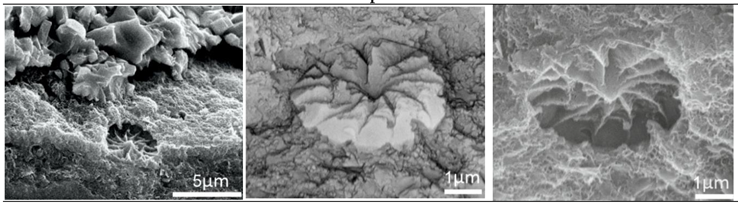
Layer I-1, up to 5–6 cm thick, occurs at the base of the crust section. The black ore material has a compact laminated texture, defined by thin interlaminar and crosscutting veinlets ranging from fractions of a millimetre to 2 mm in thickness. Samples were collected at sites 1 and 2 from areas with the greatest abundance of CFA veinlets (Figure 4). Relicts of primary biomorphic structures and poorly preserved calcareous nannofossils occur locally on the examined chips; some fossils cannot be identified reliably to genus or species level.
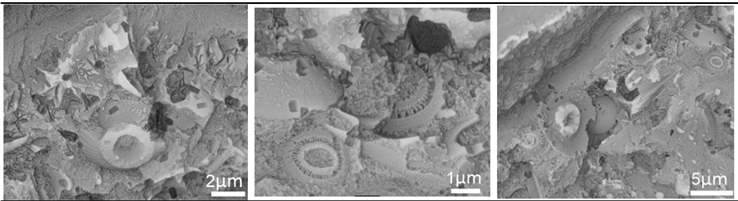
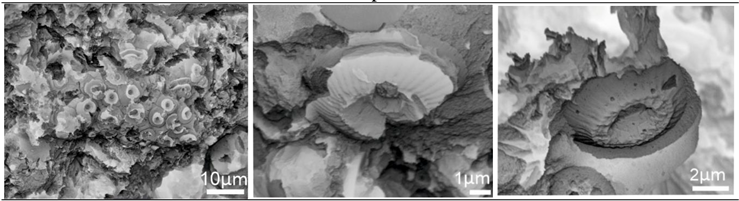
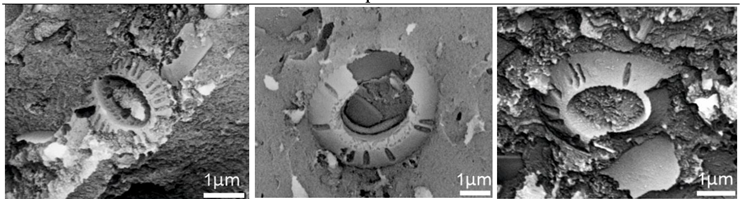
At site 1, an imprint of Discoaster mohleri, a Late Paleocene index species, was identified. Its stratigraphic range corresponds to NP7–NP9 and CP6–CP8b, spanning 55.5–52 Ma (Table 1). At site 2, relatively well-preserved coccoliths include Discoaster multiradiatus, a Late Paleocene index species occurring in NP9–NP11 and CP8a–CP9b, corresponding to 53.5–49.5 Ma. The same sample also contains the long-ranging species Coccolithus pelagicus, known from NP10–NN21 and CP9–CN15 (Table 1). The identified assemblage constrains the age of nannofossils in Layer I-1 to the Late Paleocene–Early Eocene interval, approximately 55.5–49.5 Ma (Figure 3). The U–Pb ages of CFA from the Ap8 and Ap40 domains, obtained from veinlets in Layer I-1, are presented in Figure 3.
4.2.2. Sulayer I-2b
Sublayer I-2b is 1.5–2.0 cm thick and is separated from the underlying Layer I-1 by an angular unconformity. It has a mottled texture produced by carbonate-phosphate inclusions filling interstices between dendritic Fe–Mn ore aggregates. Chips from sites 3 and 7 were collected for biostratigraphic investigation.
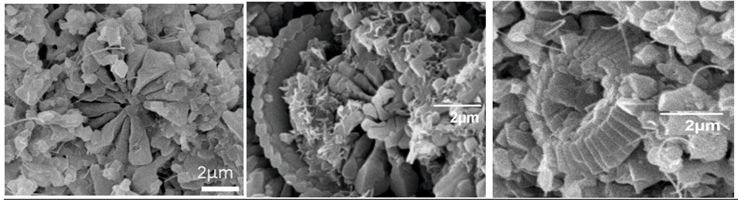
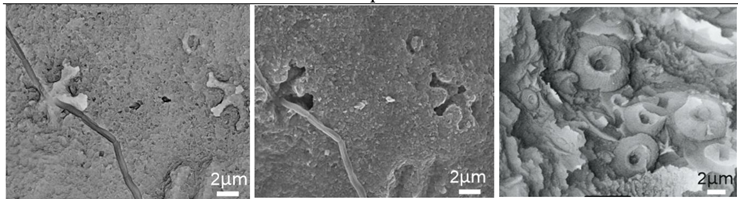
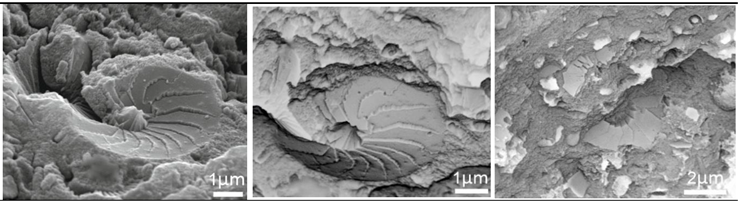
At site 3, a relatively well-preserved assemblage includes Cyclicargolithus abisectus, Reticulofenestra sp. aff. R. lockeri, and Sphenolithus sp. aff. Sph. capricornutus. The stratigraphic ranges of these taxa overlap within NP23–NN1/CP17–CN1a, NP17–NN2/CP14b–CN1c, and NP25–NN1/CP19b–CN1a, respectively (Table 2). Their co-occurrence corresponds to the CP19b–CN1a interval of the Late Oligocene–Early Miocene, approximately 26–18 Ma (Figure 4). Nannofossils at site 7 are too poorly preserved for reliable identification. The U–Pb age of CFA from domain Ap71 is presented in Figure 3.
4.2.3. Layer II
Layer II, up to 6–7 cm thick, has a mottled texture caused by beige phosphate and/or carbonate material in its lower part and clay-rich material in its upper part, filling interstices between Fe–Mn botryoidal aggregates. In some areas, elongate patches of non-ore material account for up to 40–50% of the polished-section area. Samples from sites 4, 8, and 9 were collected for biostratigraphic investigation.
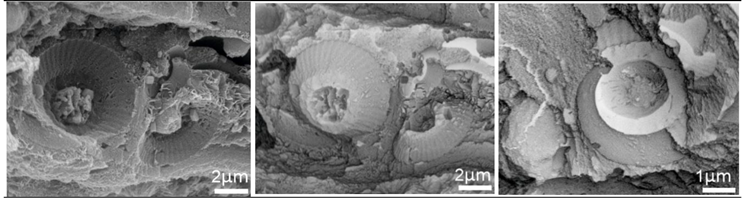
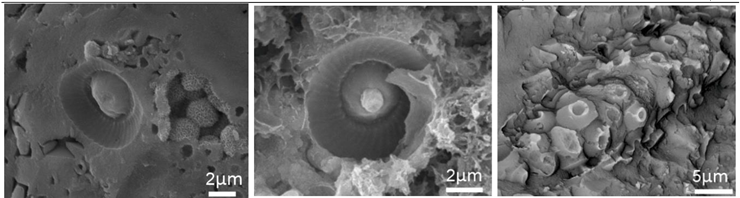
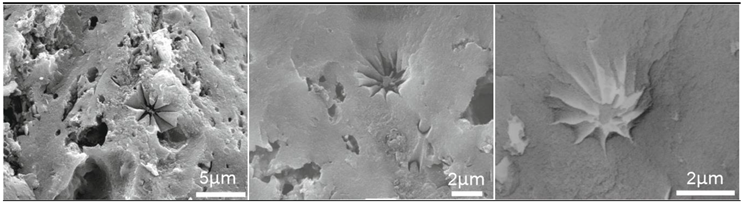
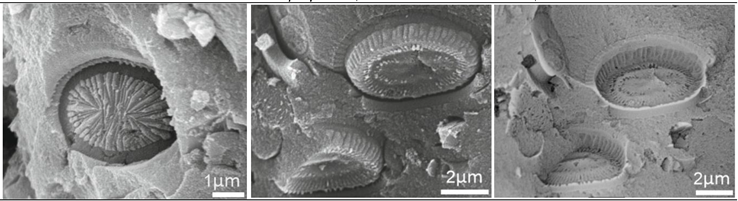
Similar nannofossil assemblages comprising Cyclicargolithus floridanus, Sphenolithus sp., and Coccolithus pelagicus were identified at sites 8 and 9. At site 4, Discoaster variabilis was also identified (Table 3). The stratigraphic ranges of C. floridanus and D. variabilis overlap in CN3–CN5a, corresponding to the Middle Miocene, approximately 17–13 Ma (Figure 4).
4.2.4. Transition between Layers II and III
A denser transitional horizon, up to 1.5 cm thick, occurs above Layer II and separates the mottled Layer II from the massive Layer III. It consists of relatively homogeneous Fe–Mn ore material with vertically oriented, closely packed columnar aggregates. Non-ore inclusions are virtually absent. Samples 5 and 10 were collected for biostratigraphic investigation.
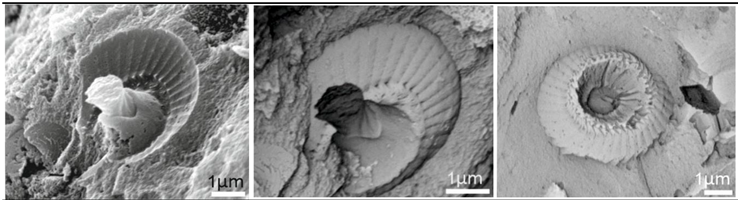
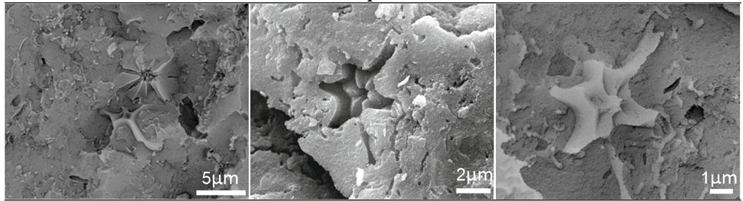
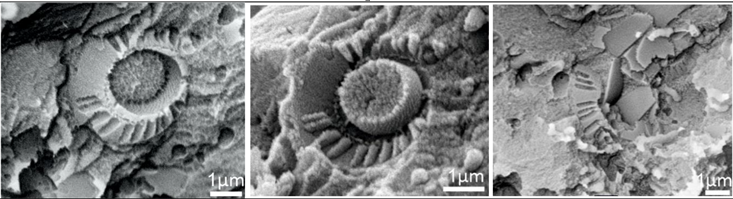
Sample 5 contains poorly preserved nannofossils of uncertain taxonomic affinity. Sample 10 contains an assemblage comprising Sphenolithus sp., Discoaster variabilis, D. surculus, and Sphenolithus sp. aff. Sph. abies (Table 4). The co-occurrence of these taxa corresponds to the CN8–CN10 interval of the Late Miocene–Early Pliocene, approximately 11–4 Ma (Figure 4).
4.2.5. Layer III and Summary of Biostratigraphy
Layer III, approximately 2.0–2.5 cm thick, completes the crust section and consists of dense, massive Fe–Mn ore material with a relatively homogeneous texture. Sample 11 was collected from the base of the layer, whereas samples 6 and 12 were collected from its upper part.
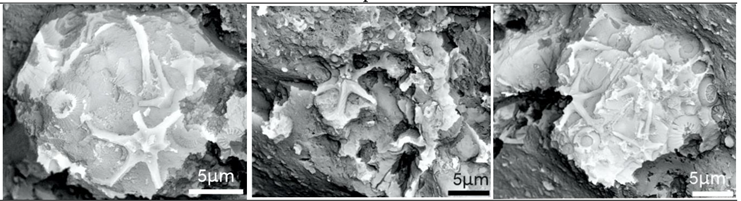
Sample 11 is dominated by Discoaster variabilis and D. asymmetricus. Their co-occurrence constrains the age to CN10c–CN12a, corresponding to the Early–Late Pliocene (Table 5). Samples 6 and 12 contain a younger assemblage comprising Emiliania huxleyi, Pseudoemiliania lacunosa, Calcidiscus leptoporus, Syracosphaera pulchra, Umbilicosphaera sibogae, and Rhabdosphaera clavigera. The co-occurrence of the diagnostic taxa corresponds to CN11b–CN15, spanning the Late Pliocene–Pleistocene interval, approximately from 4 to <0.2 Ma (Figure 4).
Thus, the 08D106-1 crust section contains calcareous nannofossil assemblages corresponding to the following time intervals: Late Paleocene–Early Eocene in Layer I-1; Late Oligocene–Early Miocene in sublayer I-2b; Middle Miocene in the lower part of Layer II; Late Miocene–Early Pliocene in the transitional horizon between Layers II and III; Early–Late Pliocene at the base of Layer III; and Late Pliocene–Pleistocene in the upper part of Layer III (Figure 4).
5. Discussion
5.1. Limitations of Biostratigraphic Dating of Fe–Mn Crusts
Calcareous nannoplankton is one of the most informative indicators of the age of marine deposits and allows the temporal sequence of Fe–Mn crust formation to be constrained, particularly in relatively young and weakly altered layers. However, the long-lived and multistage history of Fe–Mn crust deposition substantially complicates age determination. Biostratigraphic data from Fe–Mn crusts require careful consideration of the textural position of nannofossils. For example, our observations from shallow drill cores on Alba Guyot demonstrate the need for such a texturally controlled approach. Calcareous nannoplankton found in the young Layer III crust, Miocene tuff and tuffite, carbonate inclusions between buried Fe–Mn deposits, and at the contacts between old crust layers records separate Eocene–Oligocene, Miocene, and Pleistocene episodes. However, in each case, the age interpretation refers to a specific phosphatized or carbonate fragment, rather than to a stage of Fe–Mn crust deposition [12,13].
During interruptions in Fe and Mn oxyhydroxide precipitation, previously formed crust surfaces may have undergone partial dissolution of ore material, formation of pores and fractures, deposition of biogenic and chemogenic carbonate, phosphatization, CFA cementation, and subsequent resumption of hydrogenetic crust growth. In the old part of the Magellan Seamount crust succession, including relict Layer R and Layers I-1, I-2, and sublayer I-2b, which is separated from the young crust succession by a prolonged Oligocene hiatus in ore deposition, biogenic and chemogenic carbonate was phosphatized and completely replaced by CFA. Therefore, preserved or fossilized nannoplankton remains in the old section may record the timing of carbonate deposition, redeposition, infiltration, or diagenetic alteration, but not necessarily the time of initial formation of the Fe–Mn crust matrix [1,3,6,8,11].
This limitation is most important for Layer I-1 and sublayer I-2b of the 08D106-1 crust section. In Layer I-1, the index species Discoaster mohleri and D. multiradiatus occur only in CFA veinlets (Figure 4, Table 1). These taxa indicate a Late Paleocene–Early Eocene age of the nannofossils but cannot be used to date Layer I-1 directly. Similarly, the Late Oligocene–Early Miocene assemblage in phosphate material from sublayer I-2b (Figure 4, Table 2) reliably constrains the interval of co-occurrence of nannofossils to 26–18 Ma but does not exclude the presence of older Fe–Mn ore material and later phosphatization within the same layer.
In contrast, assemblages from the lower phosphatized part of Layer II, the II–III transitional horizon, and Layer III form a sequence from the Middle Miocene to the Late Pliocene–Pleistocene (Figure 4). This sequence agrees with the existing chronostratigraphic scheme of Co-rich Fe–Mn crust deposition in the Magellan Seamounts, in which Layers II and III formed during the Miocene–Quaternary after a prolonged Oligocene hiatus in Fe–Mn ore deposition between the old and young crust generations [1,6,7,8,12].
5.2. U–Pb Ages of CFA and the Early History of the Crust Substrate
The oldest U–Pb LA-ICP-MS date from the 08D106-1 crust section was obtained for CFA located in the phosphatized basal substrate on which Layer I-1 was subsequently deposited (Figure 2 and Figure 4). The lower-intercept age is 85.8 ± 4.7 Ma. Within uncertainty, this date overlaps with the recently established age of 88.8 ± 1.9 Ma for the oldest Pacific biogenic CFA from a geode in phosphatized hyaloclastite recovered by dredging at site 08D97 on Govorov Guyot [18]. This dredging site is located only 6 km from site 08D106 (Figure 1b). The agreement, within uncertainty, between the age of CFA from the Ap1 site and that of biogenic CFA from dredge 08D97 indicates that phosphatization of the crust substrate rocks, at least in the eastern part of Govorov Guyot, occurred during the Turonian–Coniacian interval, 94–86 Ma, corresponding to the oldest Pacific phosphatization event [18]. The discovery of CFA of comparable age in the substrate of crust 08D106-1 indicates that the occurrence of the oldest Pacific CFA is not restricted to a single geode in dredge 08D97.
The Late Cretaceous age of substrate phosphatization has important implications for the formation history of the Magellan Seamount Fe–Mn crusts. According to the chronostratigraphic scheme based on calcareous nannofossil biostratigraphy, MST Fe–Mn crust deposition began no earlier than the Late Cretaceous–Paleocene, at 65–60 Ma [1,6,7,8]. New data on the oldest CFA [18] demonstrate that phosphatization of substrate rocks and possibly the earliest history of Fe–Mn crust formation in the MST began substantially earlier than suggested by the traditional chronostratigraphic–biostratigraphic scheme.
In a global context, ages of approximately 86–89 Ma correspond to the Turonian–Coniacian interval of the Cretaceous greenhouse climate, following the Cenomanian–Turonian Oceanic Anoxic Event 2 (OAE2) and preceding the Coniacian–Santonian Oceanic Anoxic Event 3 (OAE3) (Figure 5). This interval was marked by changes in biological productivity, ocean circulation, redox conditions, the dissolved phosphorus inventory, and the preservation of biogenic carbonate in the ocean [47,48,49,50]. Recovery of the marine phosphorus reservoir after OAE2 may have promoted phosphatization of biogenic carbonate on the slopes and plateaus of submarine volcanic edifices under favorable conditions related to the position of the oxygen minimum zone, bottom-water circulation, and upwelling of cold phosphorus-rich bottom waters [14,15,16,17,18].
5.3. Late Cretaceous Phosphatization of Layer I-1
Two statistically robust U–Pb age estimates were obtained for CFA veinlets in the old Layer I-1 (Figure 2 and Figure 4). The CFA age from site Ap8 is 75.3 ± 2.6 Ma, whereas that from site Ap40 is 73.1 ± 4.9 Ma. These ages overlap within uncertainty and indicate CFA formation in Layer I-1 at approximately 75–73 Ma. These results are approximately 20 Ma older than the Late Paleocene ages indicated by the nannoplankton species Discoaster mohleri and D. multiradiatus identified in the same veinlets. U–Pb dating of CFA indicates that Layer I-1 is older than 75 Ma, i.e., older than the phosphatization event itself, whereas the 55–53 Ma interval represented by the nannoplankton records the time when the microfossils were incorporated into the pore–veinlet system of Layer I-1. The U–Pb ages fall within the Late Campanian–Early Maastrichtian interval (Figure 5) and are consistent with U–Pb ages of approximately 72–71 Ma reported for early CFA layers or inclusions in several Co-rich Fe–Mn crusts from the Ita Mai Tai and Nazimov guyots [17]. These guyots are located far from Govorov Guyot on the southeastern flank of the MST.
5.4. Miocene CFA Stage and the Boundary Between the Old and Young Crust Successions
A U–Pb lower-intercept age of 15.8 ± 2.3 Ma was obtained for CFA from crust domain Ap71, located at sublayer I-2b (Figure 2 and Figure 4). This date records a Miocene phase of CFA formation in the phosphatized base of the young part of crust 08D106-1. The U–Pb age of this CFA is consistent with the Miocene nannofossil biostratigraphy. Samples 4, 8, and 9 from overlying portions of the section correspond to the CN3–CN5a Middle Miocene interval, whereas samples 10, 6, 11, and 12 indicate subsequent Late Miocene–Pliocene stages (Figure 4).
According to Hein et al. (1993) [3], sediments of the equatorial Pacific underwent phosphatization during two major Cenozoic episodes: the Late Eocene–Early Oligocene and the Late Oligocene–Early Miocene. In the generalized Magellan Seamount crust succession, these intervals were used to explain phosphatization of Layers R, I-1, and I-2 at 43–39 Ma, and of sublayer I-2b at 27–21 Ma [6]. U–Pb geochronology of CFA from MST crusts has also identified younger phosphatization events at approximately 25–23, 11–10, and 8–7 Ma [17]. The CFA age from site Ap71 in crust 08D106-1 adds a previously unrecognized phosphatization event at approximately 16 Ma. This event occurred after the burial of Late Oligocene–Early Miocene calcareous nannoplankton in sublayer I-2b (Figure 2 and Figure 4).
6. Conclusions
This study refines the sequence of Late Cretaceous–Cenozoic events related to carbonate-substrate phosphatization, CFA formation, and development of individual parts of the Fe–Mn crust succession, based on an integrated investigation of a multilayered Co-rich Fe–Mn crust from the eastern slope of Govorov Guyot. Comparison of calcareous nannofossil biostratigraphy with U–Pb LA-ICP-MS dating of CFA demonstrates that these two approaches record different stages in the complex polygenetic history of crust formation.
The identified calcareous nannofossil assemblages establish an approximate sequence of deposition from the Late Paleocene–Early Eocene in CFA veinlets of Layer I-1, through the Late Oligocene–Early Miocene in phosphatized sublayer I-2b, to the Middle Miocene in the lower part of Layer II, the Late Miocene–Early Pliocene in the II–III transitional horizon, the Early–Late Pliocene at the base of Layer III, and the Late Pliocene–Pleistocene in the upper part of Layer III. This age sequence is consistent with the established chronostratigraphic scheme of MST crusts and supports the existence of a prolonged Oligocene hiatus in Fe–Mn ore deposition.
The oldest U–Pb age, 85.8 ± 4.7 Ma, was obtained for CFA in the phosphatized carbonate substrate beneath Layer I-1. This age overlaps with the previously reported age of 88.8 ± 1.9 Ma for the oldest Pacific biogenic CFA in phosphatized hyaloclastite recovered approximately 6 km from the studied sample on the eastern part of Govorov Guyot. Together, these data support a Turonian–Coniacian phosphatization event affecting carbonate substrates beneath Fe–Mn crusts on the eastern part of Govorov Guyot.
Two U–Pb CFA ages from veinlets in the old lower part of Layer I-1, 75.3 ± 2.6 Ma and 73.1 ± 4.9 Ma, show that CFA during the Late Cretaceous, approximately 20 Ma before the Late Paleocene nannoplankton assemblages identified in the same veinlet system. The CFA ages unambiguously indicate that the Fe–Mn ore material from the base of Layer I-1 formed before its phosphatization at approximately 75–73 Ma. These dates are comparable to the 72–71 Ma ages reported for CFA veinlets and inclusions at the bases of Fe–Mn crust sections from the Ita Mai Tai and Nazimov guyots on the southeastern flank of the MST. CFA from the phosphatized sublayer I-2b has a U–Pb age of 15.8 ± 2.3 Ma. This date identifies a previously unrecognized Miocene stage of phosphatization in the young succession of MST Fe–Mn crusts, occurring after burial of Late Oligocene–Early Miocene nannoplankton in that layer.
The results show that the traditional chronostratigraphic scheme for Co-rich Fe–Mn crust formation in the MST, which is based predominantly on calcareous nannofossil biostratigraphy, should be supplemented by a texturally controlled U–Pb chronology of phosphatization events. For the studied section, this chronology includes Turonian–Coniacian substrate phosphatization at approximately 86 Ma, Late Cretaceous phosphatization of veinlets in Layer I-1 at approximately 75–73 Ma, and Early–Middle Miocene phosphatization in sublayer I-2b at approximately 16 Ma. Biostratigraphic data nevertheless remain essential for correlating the young ore Layers II–III and identifying interruptions in Fe–Mn ore deposition.
Integration of textural observations, biostratigraphy, and CFA U–Pb geochronology provides a necessary basis for further refinement of the ages of old Fe–Mn crusts and the sequence of phosphatization events, both within the MST and in other regions of the World Ocean.
Supplementary Materials
The following supporting information can be downloaded at the website of this paper posted on Preprints.org.
Author Contributions
Conceptualization, investigation, and field sampling, I.S.P.; writing—original draft preparation, review, and editing, all authors; visualization, E.A.S., I.A.P., and E.A.G.; U–Pb isotope measurements, E.A.G. All authors have read and agreed to the published version of the manuscript.
Funding
The study was supported by grant 25–17–00128 from the Russian Science Foundation (RSF).
Data Availability Statement
All data supporting the findings of this study are available in the main text and Supplementary Materials (Figure S1 and Table S1 and Table S2).
Acknowledgments
We would like to thank crew members of R/V Gelendzhik (JSC Yuzhmorgeologiya) for sampling work and support during the cruises of 2016–2017.
Conflicts of Interest
The authors declare no conflict of interest.
References
- Melnikov, M.E. Deposits of Cobalt-Rich Manganese Crusts. In FGUGP GNTs Yuzhmorgeologiya; 230 p. (In Russian). Gelendzhik, Russia, 2005. [Google Scholar]
- Hein, J.R.; Koschinsky, A.; Bau, M.; Manheim, F.T.; Kang, J.-K.; Roberts, L. Cobalt-rich ferromanganese crusts in the Pacific. In Handbook of Marine Mineral Deposits; Cronan, D.S., Ed.; CRC Press: Boca Raton, FL, USA, 2000; pp. 239–279. [Google Scholar]
- Hein, J.R.; Mizell, K.; Koschinsky, A.; Conrad, T.A. Deep-ocean mineral deposits as a source of critical metals for high- and green-technology applications: Comparison with land-based resources. Ore Geol. Rev. 2013, 51, 1–14. [Google Scholar] [CrossRef]
- Hein, J.R.; Koschinsky, A. Deep-ocean ferromanganese crusts and nodules. In Treatise on Geochemistry, 2nd ed.; Holland, H.D., Turekian, K.K., Eds.; Elsevier: Oxford, UK, 2014; Volume 13, pp. 273–291. [Google Scholar] [CrossRef]
- Koschinsky, A.; Hein, J.R. Acquisition of elements from seawater by ferromanganese crusts: Solid phase associations and seawater speciation. Mar. Geol. 2003, 198, 331–351. [Google Scholar] [CrossRef]
- Peretyazhko, I.S.; Savina, E.A.; Pulyaeva, I.A. Cobalt-rich Fe–Mn crusts in the Western Pacific Magellan Seamount Trail: Geochemistry and chronostratigraphy. Geosciences 2025, 15, 411. [Google Scholar] [CrossRef]
- Melnikov, M.E.; Pulyaeva, I.A. Ferromanganese crust deposits of the Marcus–Wake and Magellan seamounts, western Pacific: Structure, composition, and age. Russ. J. Pac. Geol. 1995, 11, 525. [Google Scholar]
- Melnikov, M.E.; Pletnev, S.P. Age and formation conditions of the Co-rich manganese crust on guyots of the Magellan Seamounts. Lithol. Miner. Resour. 2013, 48, 1–13. [Google Scholar] [CrossRef]
- Hein, J.R.; Yeh, H.-W.; Gunn, S.H.; Sliter, W.V.; Benninger, L.M.; Wang, C.-H. Two major Cenozoic episodes of phosphogenesis recorded in equatorial Pacific seamount deposits. Paleoceanography 1993, 8, 293–311. [Google Scholar] [CrossRef]
- Koschinsky, A.; Hein, J.R. Marine ferromanganese encrustations: Archives of changing oceans. Elements 2017, 13, 177–182. [Google Scholar] [CrossRef]
- Jiang, X.D.; Sun, X.M.; Chou, Y.M.; Hein, J.R.; He, G.W.; Fu, Y.; Li, D.F.; Liao, J.L.; Ren, J.B. Geochemistry and origins of carbonate fluorapatite in seamount Fe–Mn crusts from the Pacific Ocean. Mar. Geol. 2020, 423, 106135. [Google Scholar] [CrossRef]
- Peretyazhko, I.S.; Savina, E.A. Miocene petit-spot basanitic volcanoes on Cretaceous Alba Guyot (Magellan Seamount Trail, Pacific Ocean). Geosciences 2024, 14, 252. [Google Scholar] [CrossRef]
- Savina, E.A.; Peretyazhko, I.S.; Pulyaeva, I.A.; Shcherbakov, Y.D.; Gladkochub, E.A. Geochemistry and formation stages of anomalously cobalt-rich ferromanganese crust on the Miocene petit-spot volcanic rocks of Alba Guyot (Magellan Seamounts, Pacific Ocean). Geodyn. Tectonophys. 2026, 17, 0876. [Google Scholar] [CrossRef]
- Föllmi, K.B. The phosphorus cycle, phosphogenesis, and marine phosphate-rich deposits. Earth-Sci. Rev. 1996, 40, 55–124. [Google Scholar] [CrossRef]
- Filippelli, G.M.; Delaney, M.L. Phosphorus geochemistry of equatorial Pacific sediments. Geochim. Cosmochim. Acta 1996, 60, 1479–1495. [Google Scholar] [CrossRef]
- Filippelli, G.M. Phosphate rock formation and marine phosphorus geochemistry: The deep time perspective. Chemosphere 2011, 84, 759–766. [Google Scholar] [CrossRef] [PubMed]
- Peng, J.; Li, D.; Poulton, S.W.; O’Sullivan, G.J.; Chew, D.; Fu, Y.; Sun, X. Episodic intensification of marine phosphorus burial over the last 80 million years. Nat. Commun. 2024, 15, 7446. [Google Scholar] [CrossRef] [PubMed]
- Peretyazhko, I.S.; Savina, E.A.; Gladkochub, E.A. The oldest Pacific carbonate fluorapatite and Fe–Mn crust: A new episode of Turonian–Coniacian phosphatization event. Geosci. Lett. 2026, 13. [Google Scholar] [CrossRef]
- Pletnev, S.P.; Melnikov, M.E.; S’edin, V.T.; Sedysheva, T.E.; Avdonin, V.V.; Anokhin, V.M.; Zakharov, Y.D.; Punina, T.A.; Smirnova, O.L. Geology of Guyots in the Magellan Seamounts (Pacific Ocean); 200 p. (In Russian). Dalnauka: Vladivostok, Russia, 2020. [Google Scholar]
- Peretyazhko, I.S.; Savina, E.A. Chemistry and crystallization conditions of minerals in metasomatized oceanic lithosphere and basaltic rocks of Govorov Guyot, Magellan Seamounts, Pacific Ocean. Minerals 2022, 12, 1305. [Google Scholar] [CrossRef]
- Peretyazhko, I.S.; Savina, E.A. Cretaceous intraplate volcanism of Govorov Guyot and formation models of the Magellan Seamounts, Pacific Ocean. Int. Geol. Rev. 2023, 65, 2479–2505. [Google Scholar] [CrossRef]
- Novikov, G.V.; Melnikov, M.E.; Bogdanova, O.Y.; Drozdova, A.N.; Lobus, N.V. Mineralogy and geochemistry of Co-bearing manganese crusts from the Govorov and Vulkanolog guyots of the Magellan Seamounts (Pacific Ocean). Oceanology 2017, 57, 716–722. [Google Scholar] [CrossRef]
- Novikov, G.V.; Lobkovsky, L.I.; Lobusa, N.V.; Bogdanova, O.Y.; Sedysheva, T.E. Ore content of Co-rich ferromanganese crusts of Govorov Guyot, Magellan Seamounts, Pacific Ocean. Dokl. Earth Sci. 2021, 499, 675–682. [Google Scholar] [CrossRef]
- Melnikov, M.E.; Pletnev, S.P.; Anokhin, V.M.; Sedysheva, T.E.; Ivanov, V.V. Volcanic edifices on guyots of the Magellan Seamounts (Pacific Ocean). Russ. J. Pac. Geol. 2016, 10, 435–445. [Google Scholar] [CrossRef]
- Bogdanov, Y.A.; Gurvich, E.G.; Bogdanova, O.Y.; Dubinin, A.V.; Gorshkov, A.I.; Jansa, L.F. Ferromanganese crusts and nodules from guyots of the northwestern Pacific. Geochem. Int. 1998, 36, 455–466. [Google Scholar]
- Volokhin, Y.G.; Melnikov, M.E.; Shkolnik, E.L.; Vasiliev, B.I.; Govorin, I.N.; Khersberg, L.B.; Zadornov, M.V.; Baturin, G.N.; Mechetin, A.V.; Chudaev, O.V.; et al. Guyots of the Western Pacific and Their Mineralization; 368 p. (In Russian). Nauka: Moscow, Russia, 1995. [Google Scholar]
- Lavrent’ev, Y.G.; Karmanov, N.S.; Usova, L.V. Electron probe microanalysis of minerals: Microprobe or scanning electron microscope? Russ. Geol. Geophys. 2015, 56, 1154–1161. [Google Scholar] [CrossRef]
- Stern, R.A.; Amelin, Y. Assessment of errors in SIMS zircon U–Pb geochronology using a natural zircon standard and NIST SRM 610 glass. Chem. Geol. 2003, 197, 111–142. [Google Scholar] [CrossRef]
- Schoene, B.; Bowring, S.A. U–Pb systematics of the McClure Mountain syenite: Thermochronological constraints on the age of the 40Ar/39Ar standard MMhb. Contrib. Mineral. Petrol. 2006, 51, 615–630. [Google Scholar] [CrossRef]
- Barfod, G.H.; Krogstad, E.J.; Frei, R.; Albarède, F. Lu–Hf and PbSL geochronology of apatites from Proterozoic terranes: A first look at Lu–Hf isotopic closure in metamorphic apatite. Geochim. Cosmochim. Acta 2005, 69, 1847–1859. [Google Scholar] [CrossRef]
- Paton, C.; Hellstrom, J.; Paul, B.; Woodhead, J.; Hergt, J. Iolite: Freeware for the visualisation and processing of mass spectrometric data. J. Anal. At. Spectrom. 2011, 26, 2508–2518. [Google Scholar] [CrossRef]
- Li, Q.; Parrish, R.R.; Horstwood, M.S.A.; McArthur, J.M. U–Pb dating of cements in Mesozoic ammonites. Chem. Geol. 2014, 376, 76–83. [Google Scholar] [CrossRef]
- Vermeesch, P. IsoplotR: A free and open toolbox for geochronology. Geosci. Front. 2018, 9, 1479–1493. [Google Scholar] [CrossRef]
- Young, J.R.; Bown, P.R.; Lees, J.A. Nannotax3: Main database. International Nannoplankton Association. 2026. Available online: https://www.mikrotax.org/Nannotax3/index.php (accessed on 8 September 2026).
- Martini, E.; Worsley, T. Standard Neogene calcareous nannoplankton zonation. Nature 1970, 225, 289–290. [Google Scholar] [CrossRef]
- Martini, E. Standard Tertiary and Quaternary calcareous nannoplankton zonation. In Proceedings of the Second Planktonic Conference, Rome, Italy; Farinacci, A., Ed.; Edizioni Tecnoscienza: Rome, Italy, 1970; Volume 2, pp. 739–785. [Google Scholar]
- Bukry, D. Coccolith stratigraphy, eastern equatorial Pacific, Leg 16, Deep Sea Drilling Project. In Initial Reports of the Deep Sea Drilling Project; Winterer, E.L., Ewing, J.I., et al., Eds.; U.S. Government Printing Office: Washington, DC, USA, 1973; Volume 16, pp. 653–711. [Google Scholar] [CrossRef]
- Okada, H.; Bukry, D. Supplementary modification and introduction of code numbers to the low-latitude coccolith biostratigraphic zonation. Mar. Micropaleontol. 1980, 5, 321–325. [Google Scholar] [CrossRef]
- Perch-Nielsen, K. Cenozoic calcareous nannofossils. In Plankton Stratigraphy; Bolli, H.M., Saunders, J.B., Perch-Nielsen, K., Eds.; Cambridge University Press: Cambridge, UK, 1985; pp. 427–554. [Google Scholar]
- Young, J.R. Neogene. In Calcareous Nannofossil Biostratigraphy; British Micropalaeontological Society Publication Series; Bown, P.R., Ed.; Kluwer Academic Publishers: Dordrecht, The Netherlands, 1998; pp. 225–265. [Google Scholar] [CrossRef]
- Young, J.R.; Geisen, M.; Cros, L.; Kleijne, A.; Probert, I.; Østergaard, J.B. A guide to extant coccolithophore taxonomy. J. Nannoplankton Res. 2003, Special Issue 1, 1–132. [Google Scholar] [CrossRef]
- Raffi, I.; Backman, J.; Fornaciari, E.; Pälike, H.; Rio, D.; Lourens, L.; Hilgen, F. A review of calcareous nannofossil astrochronology encompassing the past 25 million years. Quat. Sci. Rev. 2006, 25, 3113–3137. [Google Scholar] [CrossRef]
- Bergen, J.A.; de Kaenel, E.; Blair, S.A.; Boesiger, T.M.; Browning, E. Oligocene–Pliocene taxonomy and stratigraphy of the genus Sphenolithus in the circum North Atlantic Basin: Gulf of Mexico and ODP Leg 154. J. Nannoplankton Res. 2017, 37, 77–112. [Google Scholar] [CrossRef]
- Bown, P.R.; Dunkley Jones, T. Calcareous nannofossils from the Paleogene equatorial Pacific (IODP Expedition 320 Sites U1331–U1334). J. Nannoplankton Res. 2012, 32, 3–51. [Google Scholar] [CrossRef]
- Stacey, J.S.; Kramers, J.D. Approximation of terrestrial lead isotope evolution by a two-stage model. Earth Planet. Sci. Lett. 1975, 26, 207–221. [Google Scholar] [CrossRef]
- Ben-Israel, M.; Holder, R.M.; Nelson, L.L.; Smith, E.F.; Kylander-Clark, A.R.C.; Ryb, U. Late Paleozoic oxygenation of marine environments supported by dolomite U–Pb dating. Nat. Commun. 2024, 15, 2892. [Google Scholar] [CrossRef] [PubMed]
- Van Cappellen, P.; Ingall, E.D. Redox stabilization of the atmosphere and oceans by phosphorus-limited marine productivity. Science 1996, 271, 493–496. [Google Scholar] [CrossRef] [PubMed]
- Huber, B.T.; MacLeod, K.G.; Watkins, D.K.; Coffin, M.F. The rise and fall of the Cretaceous Hot Greenhouse climate. Glob. Planet. Change 2018, 167, 1–23. [Google Scholar] [CrossRef]
- Gangl, S.K.; Moy, C.M.; Stirling, C.H.; Jenkyns, H.C.; Crampton, J.S.; Clarkson, M.O.; Ohneiser, C.; Porcelli, D. High-resolution records of Oceanic Anoxic Event 2: Insights into the timing, duration and extent of environmental perturbations from the paleo-South Pacific Ocean. Earth Planet. Sci. Lett. 2019, 518, 172–182. [Google Scholar] [CrossRef]
- Mansour, A.; Wagreich, M. Earth system changes during the cooling greenhouse phase of the Late Cretaceous: Coniacian–Santonian OAE3 subevents and fundamental variations in organic carbon deposition. Earth-Sci. Rev. 2022, 229, 104022. [Google Scholar] [CrossRef]
Figure 1.
Regional and local setting of Govorov Guyot, western Pacific. (a) Bathymetric map showing the regional distribution of guyots and seamounts in the central MST. Bathymetric data are from the National Centers for Environmental Information bathymetry database (accessed 9 September 2026; https://www.ncei.noaa.gov/maps/bathymetry/). Guyot and seamount names follow the SCUFN/GEBCO Gazetteer. The black rectangle outlines the area enlarged in panel (b). (b) Bathymetric map of Govorov Guyot; bold contours indicate isobaths at 500 m intervals. Triangles mark the dredging sites 08D106 (17°55.416′ N, 151°14.111′ E; water depth 1780 m) and 08D97 (17°57.8522′ N, 151°12.2433′ E; water depth 1675 m), where the oldest Pacific CFA was discovered [18].
Figure 1.
Regional and local setting of Govorov Guyot, western Pacific. (a) Bathymetric map showing the regional distribution of guyots and seamounts in the central MST. Bathymetric data are from the National Centers for Environmental Information bathymetry database (accessed 9 September 2026; https://www.ncei.noaa.gov/maps/bathymetry/). Guyot and seamount names follow the SCUFN/GEBCO Gazetteer. The black rectangle outlines the area enlarged in panel (b). (b) Bathymetric map of Govorov Guyot; bold contours indicate isobaths at 500 m intervals. Triangles mark the dredging sites 08D106 (17°55.416′ N, 151°14.111′ E; water depth 1780 m) and 08D97 (17°57.8522′ N, 151°12.2433′ E; water depth 1675 m), where the oldest Pacific CFA was discovered [18].
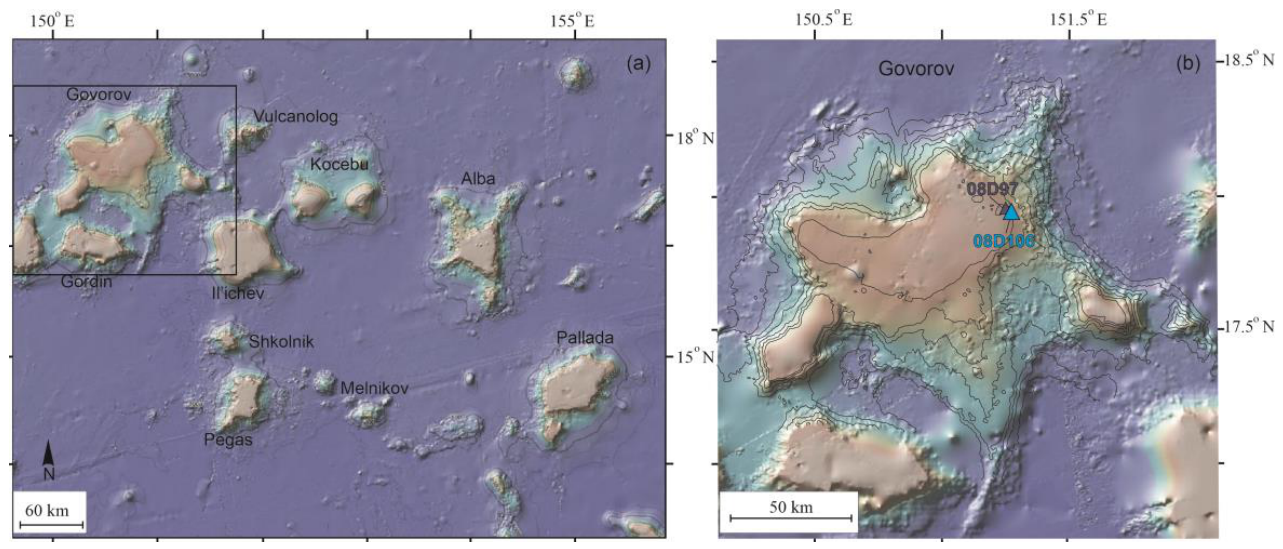
Figure 2.
Polished section of the old phosphatized crust succession, including Layers I-1 and sublayer I-2b, showing the U–Pb LA-ICP-MS sites (small orange dots) used for CFA dating.
Figure 2.
Polished section of the old phosphatized crust succession, including Layers I-1 and sublayer I-2b, showing the U–Pb LA-ICP-MS sites (small orange dots) used for CFA dating.
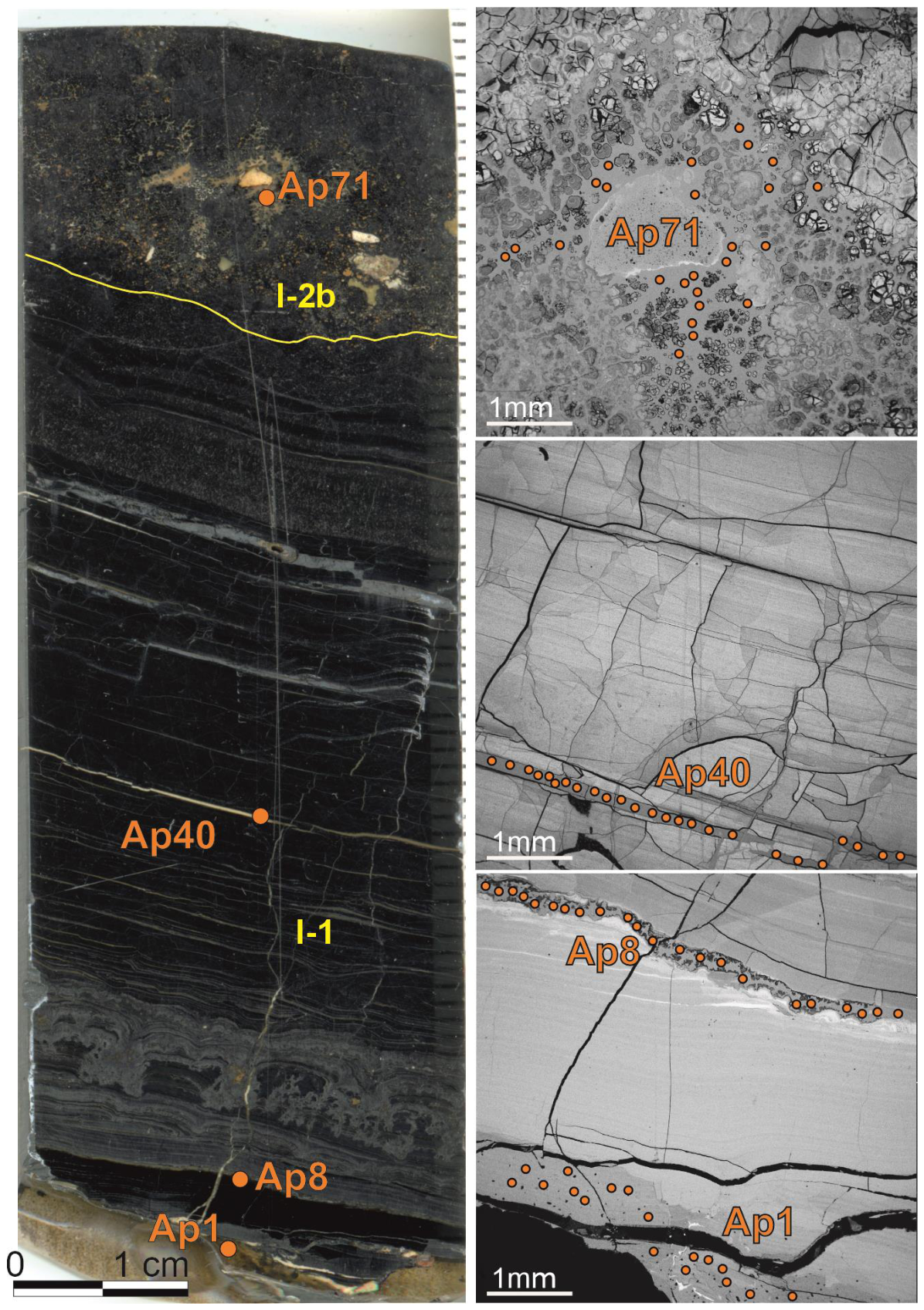
Figure 3.
U–Pb LA-ICP-MS dating of CFA domains Ap1, Ap8, Ap40, and Ap71 in crust sample 08D106-1. Individual isotope measurements are provided in Supplementary Table S2.
Figure 3.
U–Pb LA-ICP-MS dating of CFA domains Ap1, Ap8, Ap40, and Ap71 in crust sample 08D106-1. Individual isotope measurements are provided in Supplementary Table S2.
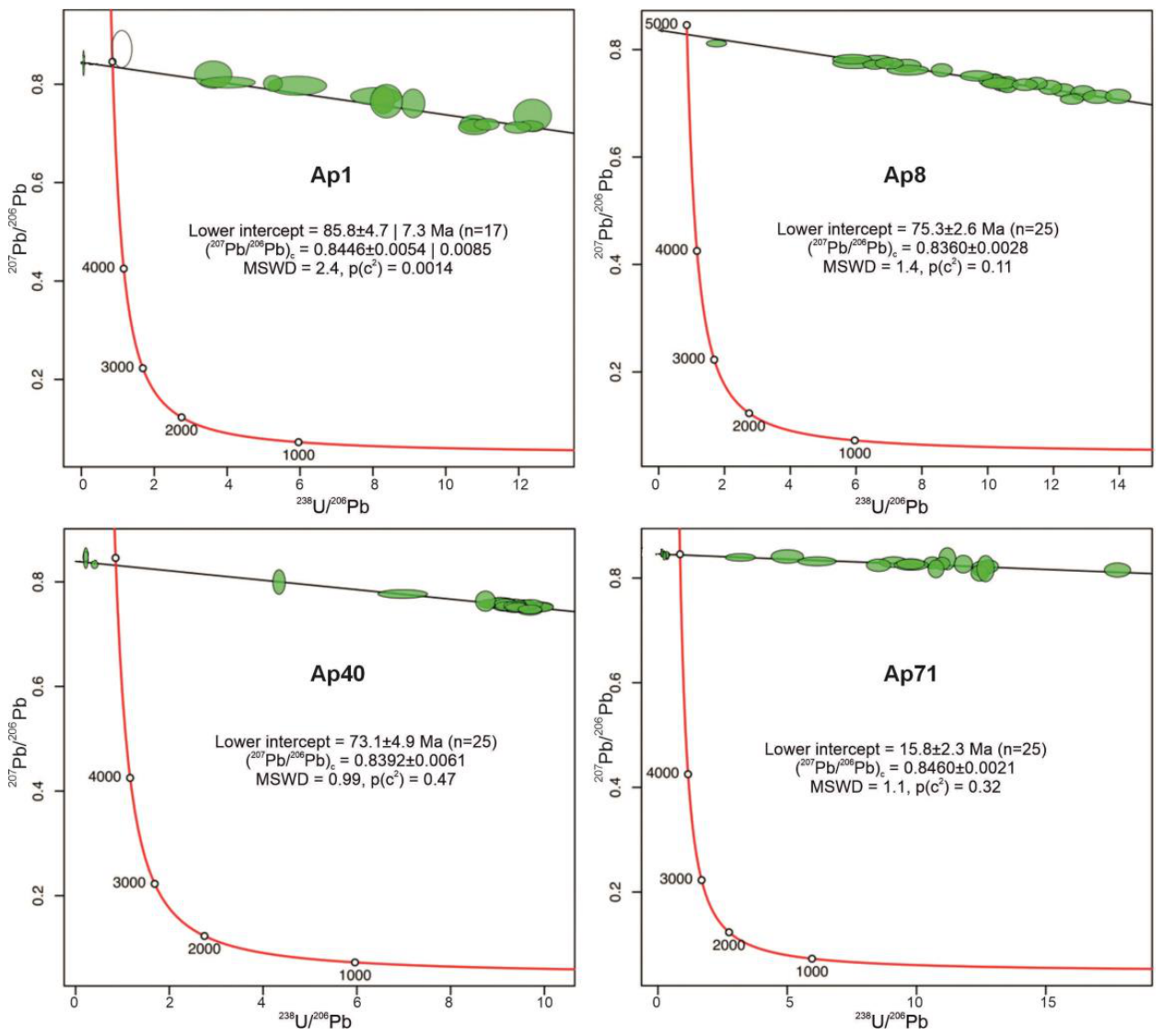
Figure 4.
Cross-sections of the Co-rich Fe–Mn crust sample 08D106-1 showing layer boundaries. Numbers 1–12 in white boxes indicate sampling sites for calcareous nannofossil biostratigraphy. Ap1, Ap8, Ap40, and Ap71 denote CFA domains analyzed by U–Pb LA-ICP-MS. The thick red double-headed arrow indicates the Oligocene hiatus in Fe–Mn ore deposition. Fe–Mn crust zonations are shown according to NN–NP [36] and CN–CP–NC [38].
Figure 4.
Cross-sections of the Co-rich Fe–Mn crust sample 08D106-1 showing layer boundaries. Numbers 1–12 in white boxes indicate sampling sites for calcareous nannofossil biostratigraphy. Ap1, Ap8, Ap40, and Ap71 denote CFA domains analyzed by U–Pb LA-ICP-MS. The thick red double-headed arrow indicates the Oligocene hiatus in Fe–Mn ore deposition. Fe–Mn crust zonations are shown according to NN–NP [36] and CN–CP–NC [38].
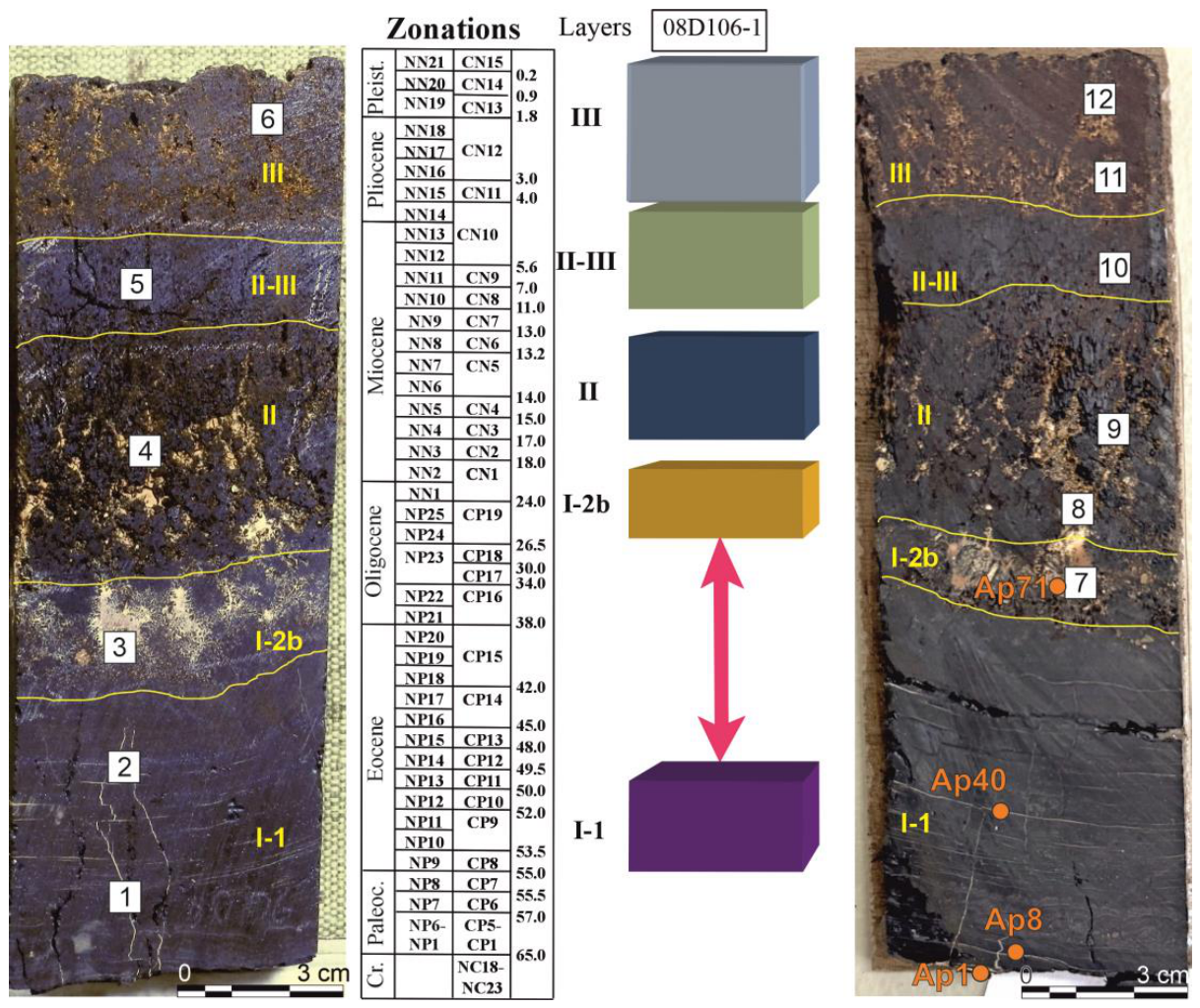
Figure 5.
Cretaceous and Paleogene changes in global climatic states, modified after [48]. The figure shows foraminiferal oxygen-isotope values from southern high-latitude deep-sea drill sites, Oceanic Anoxic Events, and climatic intervals, including the Aptian/Albian Boundary Interval (AABI), Cretaceous Thermal Maximum (CTM), Paleocene/Eocene Thermal Maximum (PETM), and Middle Eocene Climatic Optimum (MECO). Arrows and shaded fields indicate the ages of the oldest documented phosphatization event affecting biogenic carbonate in the 08D97 geode [18] and CFA formation in veinlets in Layer I-1 of crust 08D106-1.
Figure 5.
Cretaceous and Paleogene changes in global climatic states, modified after [48]. The figure shows foraminiferal oxygen-isotope values from southern high-latitude deep-sea drill sites, Oceanic Anoxic Events, and climatic intervals, including the Aptian/Albian Boundary Interval (AABI), Cretaceous Thermal Maximum (CTM), Paleocene/Eocene Thermal Maximum (PETM), and Middle Eocene Climatic Optimum (MECO). Arrows and shaded fields indicate the ages of the oldest documented phosphatization event affecting biogenic carbonate in the 08D97 geode [18] and CFA formation in veinlets in Layer I-1 of crust 08D106-1.
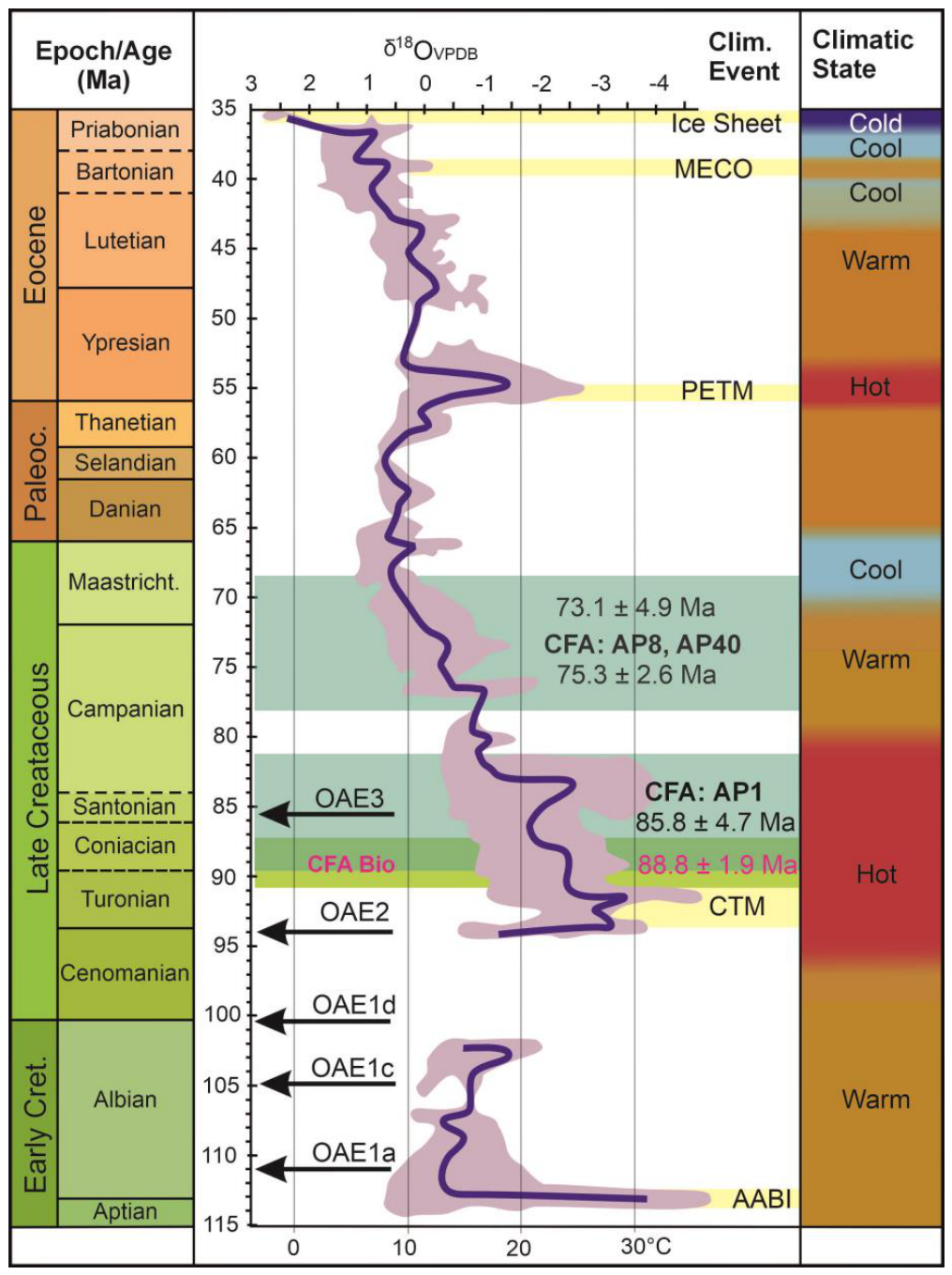

Table 1.
Late Paleocene–Early Eocene calcareous nannofossils and their biozones in Layer I-1.
| Sample 1 | ||
 | ||
| Discoaster mohleri (NP7-NP9, CP6-CP8b) | ||
| Sample 2 | ||
 | ||
| Discoaster multiradiatus (NP9-NP11, CP8a-CP9b) | Coccolithus pelagicus (NP10-NN21, CP9-CN15) | |
Table 2.
Late Oligocene–Early Miocene calcareous nannofossils and their biozones in sublayer I-2b.
| Sample 3 | ||
 | ||
| Cyclicargolithus abisectus (NP23-NN1, CP17-CN1a) | ||
 | ||
| Cyclicargolithus abisectus (NP23-NN1, CP17-CN1a) | Reticulofenestra sp. Aff. R. lockeri (NP17-NN2, CP14b-CN1c) | Sphenolithus sp. Aff. Sph. Capricornutus (NP25-NN1, CP19b-CN1a) |
Table 3.
Middle Miocene calcareous nannofossils and their biozones in Layer II.
| Sample 4 | ||
 | ||
| Discoaster variabilis (NN4-NN16, CN3-CN12a) |
Cyclicargolithus floridanus (NP15-NN6, CP13a-CN5a) |
|
 | ||
| Cyclicargolithus floridanus (NP15-NN6, CP13a-CN5a) | ||
| Sample 8 | ||
 | ||
| Cyclicargolithus floridanus (NP15-NN6, CP13a-CN5a) | ||
| Sample9 | ||
 | ||
| Cyclicargolithus floridanus (NP15-NN6, CP13a-CN5a) | ||
Table 4.
Late Miocene–Early Pliocene calcareous nannofossils and their biozones in the transitional horizon between Layers II and III.
Table 4.
Late Miocene–Early Pliocene calcareous nannofossils and their biozones in the transitional horizon between Layers II and III.
| Sample 10 | ||
 | ||
| Sphenolithus sp., Discoaster sp. | Discoaster surculus (NN11-NN16, CN9a-CN12b) | |
 | ||
| Sphenolithus sp. | Sphenolithus sp. aff. Sph. abies (NN7-NN16, CN5b-CN12b) | |
Table 5.
Late Pliocene–Pleistocene calcareous nannofossils and their biozones in Layer III.
| Sample 11 | ||
 | ||
| Discoaster variabilis (NN4-NN16, CN3-CN12a) | Discoaster variabilis Discoaster asymmetricus (NN13-NN18, CN10c-CN12d) | |
| Sample 12 | ||
 | ||
| Emiliania huxleyi (NN21, CN15) | Pseudoemiliania lacunosa (NN15-NN19, CN11-CN14a) | Emiliania huxleyi (NN21, CN15) |
 | ||
| Calcidiscus leptoporus (NN3-NN21, CN2-CN15) | ||
 | ||
| aff. Syracosphaera lamina (CN8-CN15) | Syracosphaera pulchra (CN8-CN15) | |
| Sample 6 | ||
 | ||
| Pseudoemiliania lacunosa (NN15-NN19, CN11-CN14a) | ||
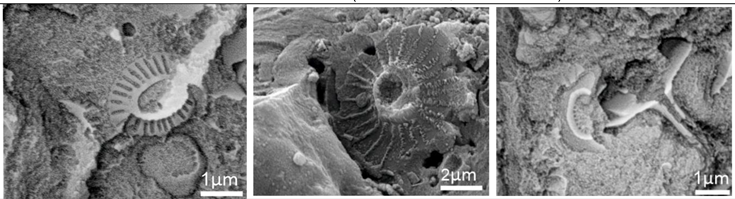 | ||
| Emiliania huxleyi (NN21, CN15) |
Umbelosphaera sibogae (NN10-NN21, CN8-CN15) |
Rhabdosphaera clavgera (NN12-NN21, CN10a-CN15) |
Disclaimer/Publisher’s Note: The statements, opinions and data contained in all publications are solely those of the individual author(s) and contributor(s) and not of MDPI and/or the editor(s). MDPI and/or the editor(s) disclaim responsibility for any injury to people or property resulting from any ideas, methods, instructions or products referred to in the content. |
© 2026 by the authors. Licensee MDPI, Basel, Switzerland. This article is an open access article distributed under the terms and conditions of the Creative Commons Attribution (CC BY) license (http://creativecommons.org/licenses/by/4.0/).
Copyright: This open access article is published under a Creative Commons CC BY 4.0 license, which permit the free download, distribution, and reuse, provided that the author and preprint are cited in any reuse.