
Submitted:
08 September 2026
Posted:
09 September 2026
You are already at the latest version
Abstract
Background: Metabolic dysfunction-associated steatotic liver disease (MASLD) and steatohepatitis (MASH) are central to the cardiovascular-kidney-metabolic (CKM) continuum, where metabolic injury, hepatocellular stress, and systemic inflammation converge. These features represent key markers across the MASLD and CKM continuum. In this context, HTD1801, an ionic complex of berberine and ursodeoxycholic acid (UDCA), has shown improvements in glycemic control, LDL cholesterol, hepatic fat, and liver enzymes in clinical trials. The evidence base remains limited, with trials conducted in China and the United States and no biopsy-confirmed histologic outcomes yet reported. Main body: This review summarizes the mechanistic profile of HTD1801 and examines potential intersections with therapies commonly used in MASLD/MASH and CKM disease. Metformin is currently the only partner supported by Phase 3 randomized data demonstrating efficacy of HTD1801 as add-on therapy. For GLP-1 receptor agonists, statins, and SGLT2 inhibitors, combination rationale is biologically plausible but rests on mechanistic, preclinical, or comparative evidence rather than randomized human combination trials. Combinations with PPAR agonists or resmetirom remain hypothetical pending direct combination data and published biopsy-based efficacy results for HTD1801. Conclusions: HTD1801 occupies an intermediate position between metabolic and liver-directed therapy. Its role is promising but not yet fully defined. Publication of biopsy-based results from the completed CENTRICITY Phase 2b trial, and dedicated combination trials will be the primary requirement to determine whether HTD1801 can bridge metabolic and hepatic treatment strategies within the CKM spectrum, with geographic validation serving as a secondary consideration.
Keywords:
Background
Methods
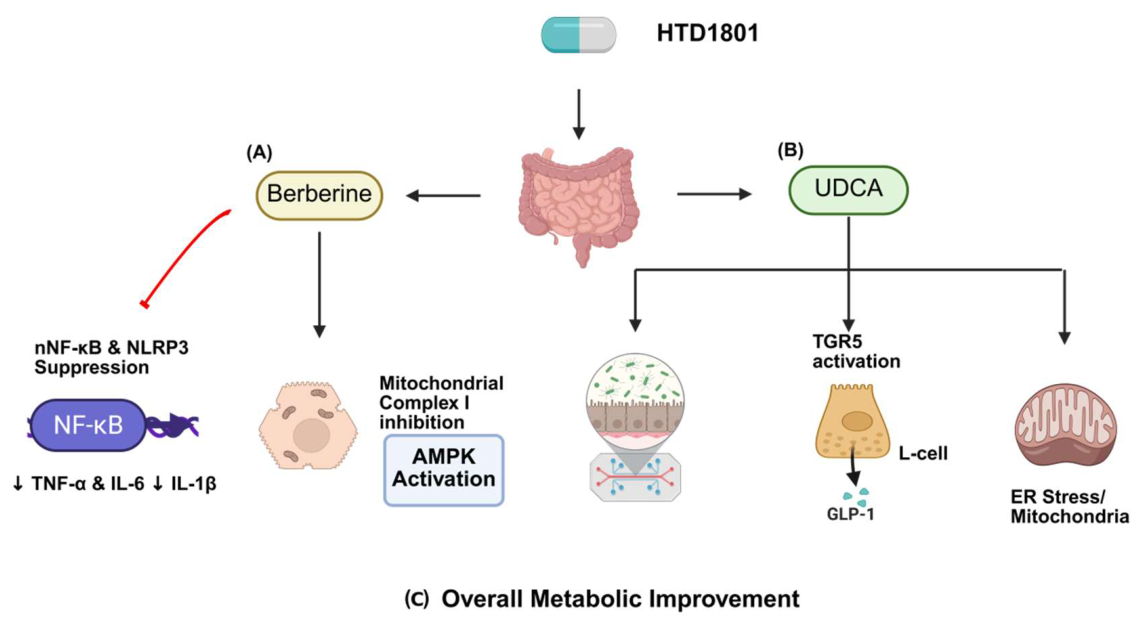
Mechanisms of Action
Combination Potential
Htd1801 Clinical Evidence: an Integrated Summary

| Trial ID / Reference / Evidence Level | Population / Design | N / Duration; nation | Primary endpoint | Key results | Notable secondary findings |
| NCT03656744 (Phase 2a) Harrison et al. [12] Level 1b |
MASH + T2DM; 1:1:1 double-blind (DB): HTD1801 500 mg BID vs 1000 mg BID vs placebo | N=100; 18 wks; USA | MRI-PDFF (magnetic resonance imaging–proton density fat fraction) hepatic fat reduction | 1000 mg: −4.8% vs placebo −2.0% (P=0.011); MRI response 52% vs 24% | ALT/AST improvement; LDL-C reduction; HbA1c improvement; dose-dependent HOMA-IR reduction |
| NCT06411275 (Phase 2) Ji et al. [18] Level 1b |
T2DM inadequately controlled with diet/exercise; 1:1:1 DB RCT: HTD1801 500 mg BID vs 1000 mg BID vs placebo | N=113; 12 wks; China | HbA1c reduction | 500 mg: −0.4% vs placebo (P=0.04); 1000 mg: −0.7% vs placebo (P<0.001); HbA1c <7%: 55.9% vs 15.2% | LDL-C −11.2 mg/dL; ALT/AST improvement; hs-CRP decline not significant (NS) |
| NCT06350890 (Phase 3) SYMPHONY-1, ADA 2025 [26] Level 1b |
T2DM inadequately controlled with diet/exercise; 2:1 DB RCT + OLE: HTD1801 1000 mg BID vs placebo | N≈400; 24 wks + OLE ; China | HbA1c reduction vs placebo | 1000 mg: LS mean −1.26% vs placebo −0.61% (P<0.0001); HbA1c <7%: 42% (placebo % not publicly reported) | LDL-C, hs-CRP improvement; sustained HbA1c reduction at 52 wks |
| NCT06353347 (Phase 3) SYMPHONY-2, NEJM Evid 2026 [27] Level 1b |
T2DM inadequately controlled with metformin; 2:1 DB RCT + OLE: HTD1801 1000 mg BID (add-on to metformin) vs placebo | N=549; 24 wks + OLE ; China | HbA1c reduction vs placebo (add-on to metformin) | 1000 mg: LS mean −1.21% vs placebo −0.68% (P<0.0001); HbA1c <7%: 33% vs 11% | LDL-C/non-HDL-C reduction; GGT improvement; eGFR increase in mild CKD |
|
NCT06415773 (Phase 3) HARMONY, ADA 2026 [28] Level 1b |
T2DM inadequately controlled with metformin; 1:1 DB RCT, head-to-head: HTD1801 | N=369; 24 wks; China | HbA1c non-inferiority vs dapagliflozin (margin 0.4%) | 1000 mg: −1.12% vs dapagliflozin −0.93% (LS mean difference −0.20%; 95% CI −0.37 to −0.03; P<0.001), statistically superior | LDL-C superior; eGFR increase (HTD1801 only); lower statin initiation |
| ChiCTR2500110932 (Phase 1b) Mai et al. [29] Level 2b |
T2DM + MASLD; dose-escalation (treatment-naïve) + metformin add-on cohort; DB RCT | N=48; 4 wks; China | Safety/tolerability; PK of berberine and UDCA | Well tolerated; no SAEs; berberine saturation kinetics, UDCA linear kinetics | Dose-dependent improvement in glucose, lipids, liver enzymes; in metformin cohort (1000 mg) FPG −1.271 vs +0.423 mmol/L, LDL-C −0.623 vs +0.290 mmol/L |
| NCT03381287 (Phase 1b/2a) Di Bisceglie et al. [25] Level 2b |
Hypercholesterolemia (LDL-C >2.59 mmol/L), overweight/obesity; dose-escalation (3:1 active:placebo); DB RCT | N=50; 4 wks; Australia | Safety/tolerability; PK of berberine and UDCA | Well tolerated at all doses incl. 2000 mg/day; no significant AEs; dose-dependent LDL-C reduction | At highest dose (2000 mg/day) vs placebo at day 28: total cholesterol −8.2% (P=0.0004), LDL-C −10.4% (P=0.0006); no significant change in TG or HDL-C |
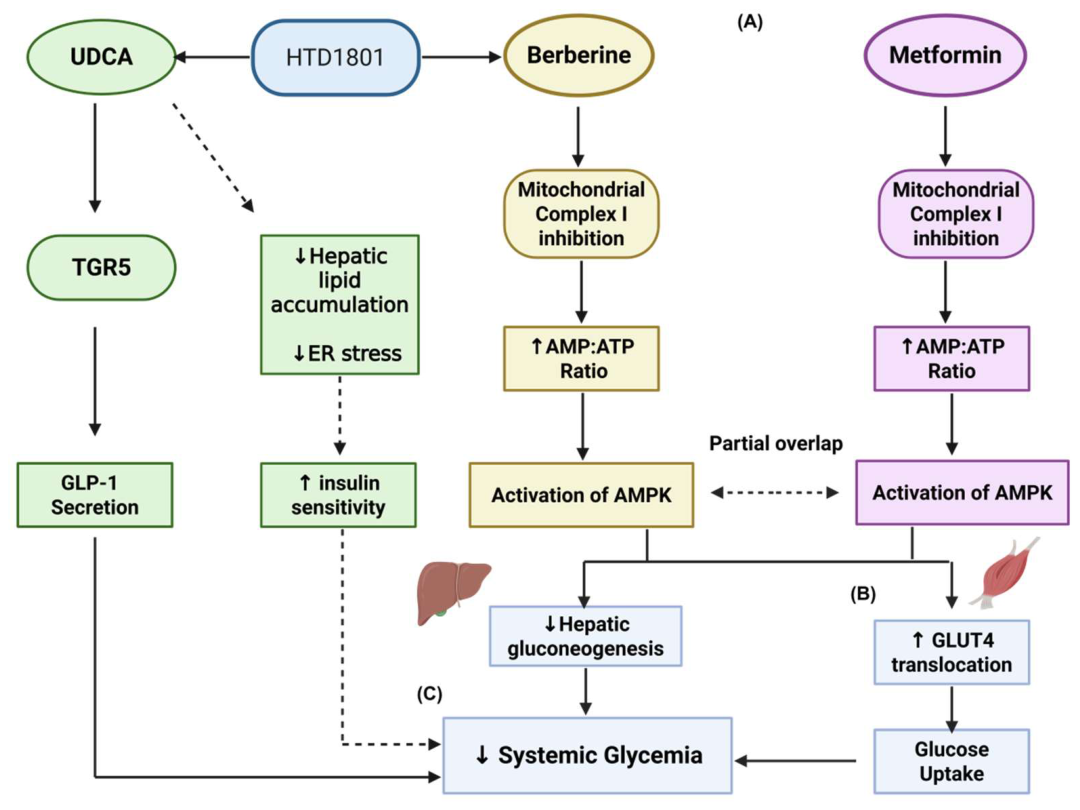
Metformin
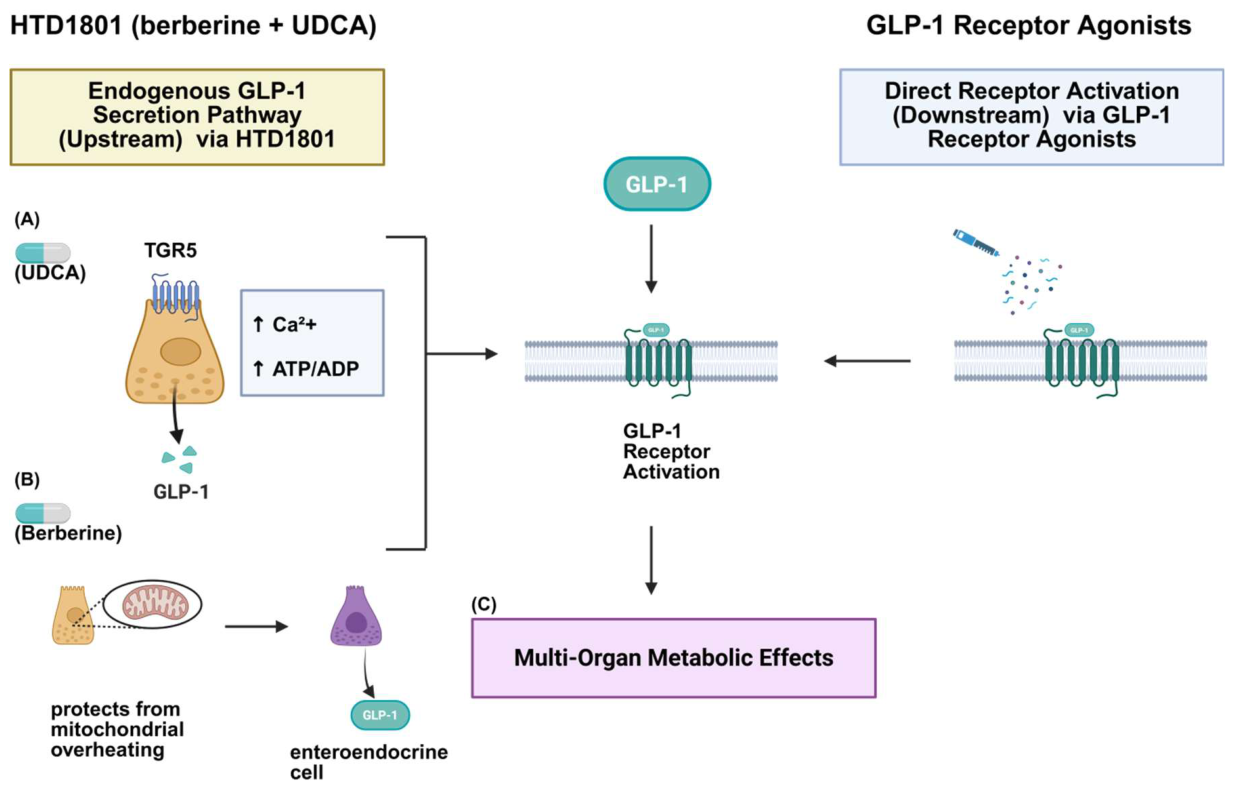
Glp-1 Receptor Agonists
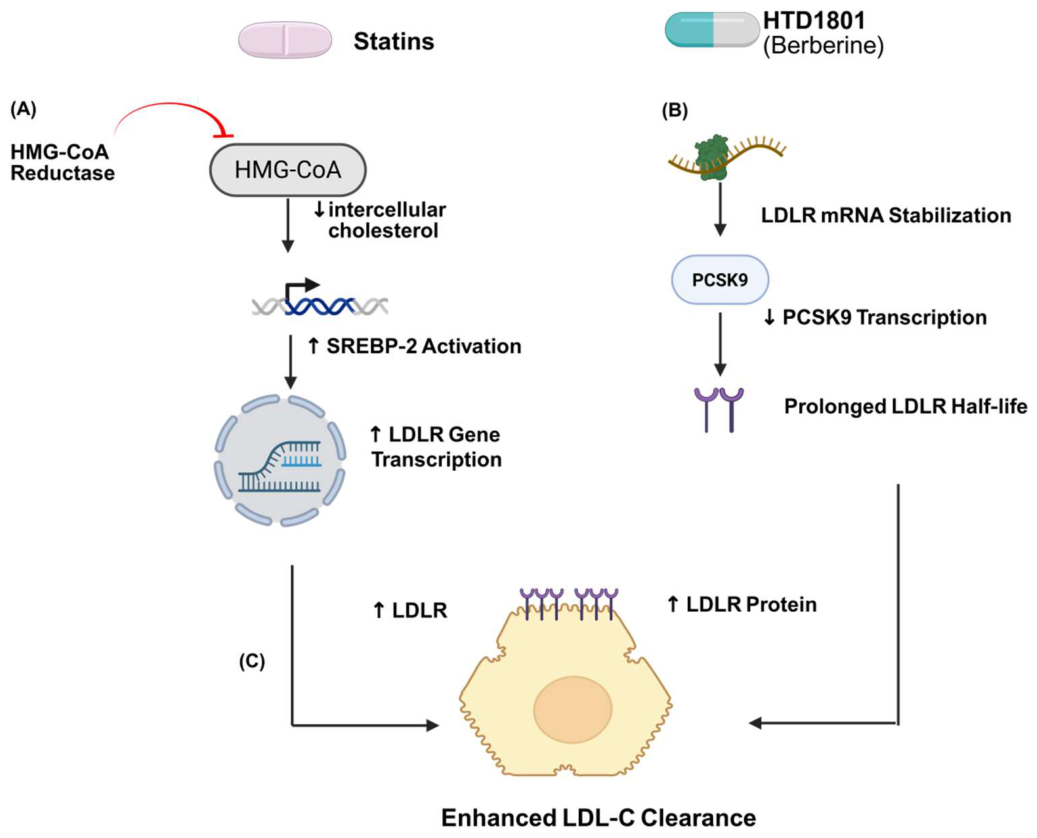
Statins
Sglt2 Inhibitors: Comparative, Not Combination, Evidence
Low-Evidence Candidates: Ppar Agonists and Resmetirom
Discussion
Safety Considerations
Conclusions
Author Contributions
Funding
Institutional Review Board Statement
Informed Consent Statement
Data Availability Statement
Acknowledgments
Conflicts of Interest
Abbreviations
References
- Friedman, S.L.; Neuschwander-Tetri, B.A.; Rinella, M.; Sanyal, A.J. Mechanisms of NAFLD development and therapeutic strategies. Nat. Med. 2018, 24, 908–922. [Google Scholar] [CrossRef] [PubMed]
- Targher, G.; Corey, K.E.; Byrne, C.D.; Roden, M. The complex link between NAFLD and type 2 diabetes mellitus, mechanisms and treatments. Nat. Rev. Gastroenterol. Hepatol. 2021, 18, 599–612. [Google Scholar] [CrossRef] [PubMed]
- Lou, T.W.; Yang, R.X.; Fan, J.G. The global burden of fatty liver disease: the major impact of China. Hepatobiliary Surg. Nutr. 2024, 13, 119–123. [Google Scholar] [CrossRef] [PubMed]
- GBD 2023 MASLD Collaborators. Global burden of metabolic dysfunction-associated steatotic liver disease, 1990-2023, and projections to 2050: a systematic analysis for the Global Burden of Disease Study 2023. Lancet Gastroenterol. Hepatol. 2026, 11, 463–494. [Google Scholar] [CrossRef] [PubMed]
- Ndumele, C.E.; Rangaswami, J.; Chow, S.L.; Neeland, I.J.; Tuttle, K.R.; Khan, S.S.; et al. Cardiovascular-kidney-metabolic health: a presidential advisory from the American Heart Association. Circulation 2023, 148, 1606–1635. [Google Scholar] [CrossRef] [PubMed]
- Cusi, K. Time to include nonalcoholic steatohepatitis in the management of patients with type 2 diabetes. Diabetes Care 2020, 43, 275–279. [Google Scholar] [CrossRef] [PubMed]
- Brown, E.; Heerspink, H.J.L.; Cuthbertson, D.J.; Wilding, J.P.H. SGLT2 inhibitors and GLP-1 receptor agonists: established and emerging indications. Lancet 2021, 398, 262–276. [Google Scholar] [CrossRef] [PubMed]
- Ferrannini, E.; Mark, M.; Mayoux, E. CV protection in the EMPA-REG OUTCOME trial: a thrifty substrate hypothesis. Diabetes Care 2016, 39, 1108–1114. [Google Scholar] [CrossRef] [PubMed]
- Sanyal, A.J.; Newsome, P.N.; Kliers, I.; Østergaard, L.H.; Long, M.T.; Kjær, M.S.; et al. Phase 3 trial of semaglutide in metabolic dysfunction-associated steatohepatitis. N. Engl. J. Med. 2025, 392, 2089–2099. [Google Scholar] [CrossRef] [PubMed]
- Ratziu, V.; Harrison, S.A.; Francque, S.; Bedossa, P.; Lehert, P.; Serfaty, L.; et al. Elafibranor, an agonist of the peroxisome proliferator-activated receptor-α and -δ, induces resolution of nonalcoholic steatohepatitis without fibrosis worsening. Gastroenterology 2016, 150, 1147–1159. [Google Scholar] [CrossRef] [PubMed]
- Harrison, S.A.; Bedossa, P.; Guy, C.D.; Schattenberg, J.M.; Loomba, R.; Taub, R.; et al. A phase 3, randomized, controlled trial of resmetirom in NASH with liver fibrosis. N. Engl. J. Med. 2024, 390, 497–509. [Google Scholar] [CrossRef] [PubMed]
- Harrison, S.A.; Gunn, N.; Neff, G.W.; Kohli, A.; Liu, L.; Flyer, A.; et al. A phase 2, proof of concept, randomised controlled trial of berberine ursodeoxycholate in patients with presumed non-alcoholic steatohepatitis and type 2 diabetes. Nat. Commun. 2021, 12, 5503. [Google Scholar] [CrossRef] [PubMed]
- Turner, N.; Li, J.Y.; Gosby, A.; To, S.W.; Cheng, Z.; Miyoshi, H.; et al. Berberine and its more biologically available derivative, dihydroberberine, inhibit mitochondrial respiratory complex I: a mechanism for the action of berberine to activate AMP-activated protein kinase and improve insulin action. Diabetes 2008, 57, 1414–1418. [Google Scholar] [CrossRef] [PubMed]
- Tian, X.; Chen, Q.; He, Y.; Cheng, Y.; Zhao, M.; Li, Y.; et al. Berberine: a negentropic modulator for multi-system coordination. Int. J. Mol. Sci. 2026, 27, 747. [Google Scholar] [CrossRef] [PubMed]
- Cheng, H.; Li, X.; Wang, Y.; Deng, W.; Sun, G.; Zhang, D.; et al. Berberine pharmacological properties and therapeutic potential across cancer, digestive, metabolic, cardiovascular, and neurological diseases: an update review. EXCLI J. 2025, 24, 1225–1261. [Google Scholar] [CrossRef] [PubMed]
- Kim, J.; Kundu, M.; Viollet, B.; Guan, K.L. AMPK and mTOR regulate autophagy through direct phosphorylation of Ulk1. Nat. Cell Biol. 2011, 13, 132–141. [Google Scholar] [CrossRef] [PubMed]
- Bessone, F.; Hillotte, G.L.; Tamagnone, N.; Arnedillo, D.; Roma, M.G. Ursodeoxycholic acid for the management of drug-induced liver injury: role of hepatoprotective and anti-cholestatic mechanisms. J. Clin. Transl. Hepatol. 2025, 13, 162–168. [Google Scholar] [CrossRef] [PubMed]
- Ji, L.; Ma, J.; Ma, Y.; Cheng, Z.; Gan, S.; Yuan, G.; et al. Berberine ursodeoxycholate for the treatment of type 2 diabetes: a randomized clinical trial. JAMA Netw. Open 2025, 8, e2462185. [Google Scholar] [CrossRef] [PubMed]
- Jiang, Y.; Huang, K.; Lin, X.; Chen, Q.; Lin, S.; Feng, X.; et al. Berberine attenuates NLRP3 inflammasome activation in macrophages to reduce the secretion of interleukin-1β. Ann. Clin. Lab. Sci. 2017, 47, 720–728. [Google Scholar] [PubMed]
- Mai, W.; Xu, Y.; Xu, J.; Zhao, D.; Ye, L.; Yu, G.; et al. Berberine inhibits nod-like receptor family pyrin domain containing 3 inflammasome activation and pyroptosis in nonalcoholic steatohepatitis via the ROS/TXNIP axis. Front. Pharmacol. 2020, 11, 185. [Google Scholar] [CrossRef] [PubMed]
- Mao, Q.; Lin, B.; Zhang, W.; Zhang, Y.; Zhang, Y.; Cao, Q.; et al. Understanding the role of ursodeoxycholic acid and gut microbiome in non-alcoholic fatty liver disease: current evidence and perspectives. Front. Pharmacol. 2024, 15, 1371574. [Google Scholar] [CrossRef] [PubMed]
- Murakami, M.; Une, N.; Nishizawa, M.; Suzuki, S.; Ito, H.; Horiuchi, T. Incretin secretion stimulated by ursodeoxycholic acid in healthy subjects. SpringerPlus 2013, 2, 20. [Google Scholar] [CrossRef] [PubMed]
- Shima, K.R.; Ota, T.; Kato, K.; Takeshita, Y.; Misu, H.; Kaneko, S.; et al. Ursodeoxycholic acid potentiates dipeptidyl peptidase-4 inhibitor sitagliptin by enhancing glucagon-like peptide-1 secretion in patients with type 2 diabetes and chronic liver disease: a pilot randomized controlled and add-on study. BMJ Open Diabetes Res. Care 2018, 6, e000469. [Google Scholar] [CrossRef] [PubMed]
- Sun, Y.; Jin, C.; Zhang, X.; Jia, W.; Le, J.; Ye, J. Restoration of GLP-1 secretion by berberine is associated with protection of colon enterocytes from mitochondrial overheating in diet-induced obese mice. Nutr. Diabetes 2018, 8, 53. [Google Scholar] [CrossRef] [PubMed]
- Di Bisceglie, A.M.; Watts, G.F.; Lavin, P.; Yu, M.; Bai, R.; Liu, L. Pharmacokinetics and pharmacodynamics of HTD1801 (berberine ursodeoxycholate, BUDCA) in patients with hyperlipidemia. Lipids Health Dis. 2020, 19, 239. [Google Scholar] [CrossRef] [PubMed]
- HighTide Therapeutics; Inc. SYMPHONY-1 (NCT06350890): efficacy and safety of HTD1801 in type 2 diabetes mellitus. Presented at the American Diabetes Association (ADA) 2025 Scientific Sessions, San Diego, CA, USA, 2025. [Google Scholar]
- Ji, L.; Cheng, Z.; Ma, J.; Liu, D.; Zhang, X.; Dong, X.; et al. SYMPHONY-2 Investigators. HTD1801 in combination with metformin for type 2 diabetes. NEJM Evid. 2026, 5, EVIDoa2500317. [Google Scholar] [CrossRef] [PubMed]
- HighTide Therapeutics; Inc. HTD1801 achieves greater HbA1c reduction and superior cardiometabolic marker improvement versus dapagliflozin in phase III head-to-head trial (HARMONY). 2 December 2025. Available online: https://www.hightidetx.com (accessed on June 2026).
- Mai, J.; Zhang, H.; Wu, M.; Yu, M.; Liu, K.; Wang, G.; Ding, Y. Safety and metabolic effects of HTD1801 in type 2 diabetes and MASLD: a phase Ib randomized trial. Diabetol. Metab. Syndr. 2026. [Google Scholar] [CrossRef] [PubMed]
- OCEBM Levels of Evidence Working Group; Howick, J.; Chalmers, I.; Glasziou, P.; Greenhalgh, T.; Heneghan, C.; Liberati, A.; Moschetti, I.; Phillips, B.; Thornton, H. The Oxford Levels of Evidence 2. Oxford Centre for Evidence-Based Medicine. Available online: https://www.cebm.ox.ac.uk/resources/levels-of-evidence/ocebm-levels-of-evidence (accessed on 9 August 2026).
- ClinicalTrials.gov. HTD1801 in adults with nonalcoholic steatohepatitis and liver fibrosis who have type 2 diabetes or pre-diabetes (CENTRICITY). NCT05623189. Available online: https://clinicaltrials.gov/study/NCT05623189 (accessed on 9 August 2026).
- Wong, V.W.S.; Neff, G.W.; Di Bisceglie, A.M.; Bai, R.; Cheng, J.; Yu, M.; et al. HTD1801 demonstrates promising potential for histologic improvements in metabolic dysfunction-associated steatohepatitis in both a preclinical and phase 2 study. Clin. Mol. Hepatol. 2025, 31, 1071–1083. [Google Scholar] [CrossRef] [PubMed]
- Lei, Z. Surrogates without substance? Questioning the evidence for histologic improvement with HTD1801: letter to the editor on “HTD1801 demonstrates promising potential for histologic improvements in metabolic dysfunction-associated steatohepatitis in both a preclinical and phase 2 study”. Clin. Mol. Hepatol. 2026, 32, e158–e160. [Google Scholar] [CrossRef] [PubMed]
- Rena, G.; Hardie, D.G.; Pearson, E.R. The mechanisms of action of metformin. Diabetologia 2017, 60, 1577–1585. [Google Scholar] [CrossRef] [PubMed]
- Hardie, D.G. AMPK: a key regulator of energy balance in the single cell and the whole organism. Int. J. Obes. 2008, 32, S7–S12. [Google Scholar] [CrossRef] [PubMed]
- Zhang, Y.; Li, X.; Zou, D.; Liu, W.; Yang, J.; Zhu, N.; et al. Treatment of type 2 diabetes and dyslipidemia with the natural plant alkaloid berberine. J. Clin. Endocrinol. Metab. 2008, 93, 2559–2565. [Google Scholar] [CrossRef] [PubMed]
- Herman, R.; Kravos, N.A.; Jensterle, M.; Janež, A.; Dolžan, V. Metformin and insulin resistance: a review of the underlying mechanisms behind changes in GLUT4-mediated glucose transport. Int. J. Mol. Sci. 2022, 23, 1264. [Google Scholar] [CrossRef] [PubMed]
- Tsuchida, T.; Shiraishi, M.; Ohta, T.; Sakai, K.; Ishii, S. Ursodeoxycholic acid improves insulin sensitivity and hepatic steatosis by inducing the excretion of hepatic lipids in high-fat diet-fed KK-Ay mice. Metabolism 2012, 61, 944–953. [Google Scholar] [CrossRef] [PubMed]
- Li, N.; Chen, Q.W.; Gong, X.L.; Liu, F.; Zhang, B.; Wang, Q.S.; et al. Metformin and berberine synergistically improve NAFLD via the AMPK-SREBP1-FASN signaling pathway. Sci. Rep. 2025, 15, 29400. [Google Scholar] [CrossRef] [PubMed]
- Drucker, D.J. Mechanisms of action and therapeutic application of glucagon-like peptide-1. Cell Metab. 2018, 27, 740–756. [Google Scholar] [CrossRef] [PubMed]
- Holst, J.J. The physiology of glucagon-like peptide 1. Physiol. Rev. 2007, 87, 1409–1439. [Google Scholar] [CrossRef] [PubMed]
- Bai, R.; Liu, L.; Cheng, J.; Yu, M.; MacConell, L.; Surmont, F. Enhanced weight loss when HTD1801 is combined with GLP-1RAs in diet-induced obese mice. Poster 2550-P presented at the 86th Scientific Sessions of the American Diabetes Association, New Orleans, LA, USA, 8 June 2026. [Google Scholar]
- Brown, M.S.; Goldstein, J.L. Receptor-mediated pathway for cholesterol homeostasis. Science 1986, 232, 34–47. [Google Scholar] [CrossRef] [PubMed]
- Brown, M.S.; Goldstein, J.L. Cholesterol feedback: from Schoenheimer’s bottle to Scap’s MELADL. J. Lipid Res. 2009, 50, S15–S27. [Google Scholar] [CrossRef] [PubMed]
- Mach, F.; Koskinas, K.C.; Roeters van Lennep, J.E.; Tokgözöğlu, L.; Badimon, L.; Baigent, C.; et al. 2025 focused update of the 2019 ESC/EAS guidelines for the management of dyslipidaemias. Eur. Heart J. 2025, 46, 4359–4378. [Google Scholar] [CrossRef] [PubMed]
- Kong, W.; Wei, J.; Abidi, P.; Lin, M.; Inaba, S.; Li, C.; et al. Berberine is a novel cholesterol-lowering drug working through a unique mechanism distinct from statins. Nat. Med. 2004, 10, 1344–1351. [Google Scholar] [CrossRef] [PubMed]
- Abidi, P.; Zhou, Y.; Jiang, J.D.; Liu, J. Extracellular signal-regulated kinase-dependent stabilization of hepatic low-density lipoprotein receptor mRNA by herbal medicine berberine. Arterioscler. Thromb. Vasc. Biol. 2005, 25, 2170–2176. [Google Scholar] [CrossRef] [PubMed]
- Cameron, J.; Ranheim, T.; Kulseth, M.A.; Leren, T.P.; Berge, K.E. Berberine decreases PCSK9 expression in HepG2 cells. Atherosclerosis 2008, 201, 266–273. [Google Scholar] [CrossRef] [PubMed]
- Li, H.; Dong, B.; Park, S.W.; Lee, H.S.; Chen, W.; Liu, J. Hepatocyte nuclear factor 1alpha plays a critical role in PCSK9 gene transcription and regulation by the natural hypocholesterolemic compound berberine. J. Biol. Chem. 2009, 284, 28885–28895. [Google Scholar] [CrossRef] [PubMed]
- Dubuc, G.; Chamberland, A.; Wassef, H.; Davignon, J.; Seidah, N.G.; Bernier, L.; Prat, A. Statins upregulate PCSK9, the gene encoding the proprotein convertase neural apoptosis-regulated convertase-1 implicated in familial hypercholesterolemia. Arterioscler. Thromb. Vasc. Biol. 2004, 24, 1454–1459. [Google Scholar] [CrossRef] [PubMed]
- Kong, W.J.; Wei, J.; Zuo, Z.Y.; Wang, Y.M.; Song, D.Q.; You, X.F.; et al. Combination of simvastatin with berberine improves the lipid-lowering efficacy. Metabolism 2008, 57, 1029–1037. [Google Scholar] [CrossRef] [PubMed]
- Chi, L.; Peng, L.; Hu, X.; Pan, N.; Zhang, Y. Berberine combined with atorvastatin downregulates LOX-1 expression through the ET-1 receptor in monocyte/macrophages. Int. J. Mol. Med. 2014, 34, 283–290. [Google Scholar] [CrossRef] [PubMed]
- Abdul-Ghani, M.A.; DeFronzo, R.A.; Norton, L. Novel hypothesis to explain why SGLT2 inhibitors inhibit only 30-50% of filtered glucose load in humans. Diabetes 2013, 62, 3324–3328. [Google Scholar] [CrossRef] [PubMed]
- Vallon, V.; Platt, K.A.; Cunard, R.; Schroth, J.; Whaley, J.; Thomson, S.C.; et al. SGLT2 mediates glucose reabsorption in the early proximal tubule. J. Am. Soc. Nephrol. 2011, 22, 104–112. [Google Scholar] [CrossRef] [PubMed]
- Zinman, B.; Wanner, C.; Lachin, J.M.; Fitchett, D.; Bluhmki, E.; Hantel, S.; et al. EMPA-REG OUTCOME Investigators. Empagliflozin, cardiovascular outcomes, and mortality in type 2 diabetes. N. Engl. J. Med. 2015, 373, 2117–2128. [Google Scholar] [CrossRef] [PubMed]
- Perkovic, V.; Jardine, M.J.; Neal, B.; Bompoint, S.; Heerspink, H.J.L.; Charytan, D.M.; et al. CREDENCE Trial Investigators. Canagliflozin and renal outcomes in type 2 diabetes and nephropathy. N. Engl. J. Med. 2019, 380, 2295–2306. [Google Scholar] [CrossRef] [PubMed]
- American Diabetes Association Professional Practice Committee for Diabetes. Chronic kidney disease and risk management: Standards of Care in Diabetes-2026. Diabetes Care 2026, 49, S246–S260. [Google Scholar] [CrossRef] [PubMed]
- Singh, B.K.; Sinha, R.A.; Tripathi, M.; Mendoza, A.; Ohba, K.; Sy, J.A.C.; et al. Thyroid hormone receptor and ERRα coordinately regulate mitochondrial fission, mitophagy, biogenesis, and function. Sci. Signal. 2018, 11, eaam5855. [Google Scholar] [CrossRef] [PubMed]
- Francque, S.M.; Bedossa, P.; Ratziu, V.; Anstee, Q.M.; Bugianesi, E.; Sanyal, A.J.; et al. A randomized, controlled trial of the pan-PPAR agonist lanifibranor in NASH. N. Engl. J. Med. 2021, 385, 1547–1558. [Google Scholar] [CrossRef] [PubMed]
- Targher, G.; Byrne, C.D.; Tilg, H. NAFLD and increased risk of cardiovascular disease. Gut 2020, 69, 1691–1705. [Google Scholar] [CrossRef] [PubMed]
- HighTide Therapeutics; Inc. HTD1801 attenuates podocyte apoptosis and glomerular injury: mechanistic insights into renoprotection. Pooled post hoc analysis of SYMPHONY-1 (NCT06350890) and SYMPHONY-2 (NCT06353347). Abstract 2243 presented at the 63rd European Renal Association (ERA) Congress, Glasgow, UK, 4 June 2026. [Google Scholar]
- Marso, S.P.; Daniels, G.H.; Brown-Frandsen, K.; Kristensen, P.; Mann, J.F.E.; Nauck, M.A.; et al. Liraglutide and cardiovascular outcomes in type 2 diabetes. N. Engl. J. Med. 2016, 375, 311–322. [Google Scholar] [CrossRef] [PubMed]
- Badve, S.V.; Bilal, A.; Lee, M.M.Y.; Sattar, N.; Gerstein, H.C.; Ruff, C.T.; McMurray, J.J.V.; Rossing, P.; Bakris, G.; Mahaffey, K.W.; et al. Effects of GLP-1 receptor agonists on kidney and cardiovascular disease outcomes: a meta-analysis of randomised controlled trials. Lancet Diabetes Endocrinol. 2025, 13, 15–28. [Google Scholar] [CrossRef] [PubMed]
- HighTide Therapeutics; Inc. HighTide Therapeutics announces acceptance of New Drug Application for HTD1801 by China’s National Medical Products Administration; Press Release. 10 March 2026. Available online: https://www.hightidetx.com/blog/2026/03/10/hightide-therapeutics-announces-acceptance-of-new-drug-application-for-htd1801-by-chinas-national-medical-products-administration/ (accessed on 30 July 2026).
- European Association for the Study of the Liver (EASL); European Association for the Study of Diabetes (EASD); European Association for the Study of Obesity (EASO). EASL-EASD-EASO clinical practice guidelines on the management of metabolic dysfunction-associated steatotic liver disease (MASLD). J. Hepatol. 2024, 81, 492–542. [Google Scholar] [CrossRef] [PubMed]
- American Diabetes Association Professional Practice Committee for Diabetes. Obesity and weight management for the prevention and treatment of diabetes: Standards of Care in Diabetes-2026. Diabetes Care 2026, 49, S166–S182. [Google Scholar] [CrossRef] [PubMed]
- Nauck, M.A.; Quast, D.R.; Wefers, J.; Meier, J.J. GLP-1 receptor agonists in the treatment of type 2 diabetes. Mol. Metab. 2021, 46, 101102. [Google Scholar] [CrossRef] [PubMed]
- Armstrong, M.J.; Gaunt, P.; Aithal, G.P.; Barton, D.; Hull, D.; Parker, R.; et al. Liraglutide safety and efficacy in patients with non-alcoholic steatohepatitis (LEAN): a multicentre, double-blind, randomised, placebo-controlled phase 2 study. Lancet 2016, 387, 679–690. [Google Scholar] [CrossRef] [PubMed]
- Ferrannini, E. Sodium-glucose co-transporters and their inhibition: clinical physiology. Cell Metab. 2017, 26, 27–38. [Google Scholar] [CrossRef] [PubMed]
- Guo, Y.; Chen, Y.; Tan, Z.R.; Klaassen, C.D.; Zhou, H.H. Repeated administration of berberine inhibits cytochromes P450 in humans. Eur. J. Clin. Pharmacol. 2012, 68, 213–217. [Google Scholar] [CrossRef] [PubMed]
- Feng, P.; Zhao, L.; Guo, F.; Zhang, B.; Fang, L.; Zhan, G.; et al. The enhancement of cardiotoxicity that results from inhibition of CYP3A4 activity and hERG channel by berberine in combination with statins. Chem. Biol. Interact. 2018, 293, 115–123. [Google Scholar] [CrossRef] [PubMed]
- Wiggins, B.S.; Saseen, J.J.; Page, R.L., 2nd; Reed, B.N.; Sneed, K.; Kostis, J.B.; et al. Recommendations for management of clinically significant drug-drug interactions with statins and select agents used in patients with cardiovascular disease: a scientific statement from the American Heart Association. Circulation 2016, 134, e468–e495. [Google Scholar] [CrossRef] [PubMed]
| Drug Class |
Mechanistic Rationale |
Clinical Evidence for Combination |
Overall Evidence Level |
Research Priority |
| Metformin | (a) Partial AMPK overlap | (a) Confirmed: SYMPHONY-2 Phase 3 RCT (combination benefit shown) |
Confirmed (Phase 3) | Highest |
| GLP-1RA (semaglutide, tirzepatide) |
(a) TGR5-GLP-1 non-overlap | (b) Preclinical only (ADA 2026); no human combination RCT |
Mechanistic + Preclinical |
High |
| Statins | (a) LDLR/PCSK9 non-overlap | (b) HTD1801 monotherapy signal only; no combination RCT |
Mechanistic + Preclinical |
High |
| SGLT2i (dapagliflozin) |
(b) Downstream convergence | (a) HARMONY head-to-head RCT (comparator only, not combination) |
Comparative only |
Medium |
| PPAR Agonists (lanifibranor) |
(b) Partial AMPK- PPAR overlap | (c) Each has monotherapy data; no combination or head-to-head data |
Mechanistic only |
Low |
| Resmetirom | (b) THRβ-mediated pathway, distinct from AMPK/TGR5 | (c) No combination or head-to-head data exist |
No direct evidence | Lowest |
Disclaimer/Publisher’s Note: The statements, opinions and data contained in all publications are solely those of the individual author(s) and contributor(s) and not of MDPI and/or the editor(s). MDPI and/or the editor(s) disclaim responsibility for any injury to people or property resulting from any ideas, methods, instructions or products referred to in the content. |
© 2026 by the authors. Licensee MDPI, Basel, Switzerland. This article is an open access article distributed under the terms and conditions of the Creative Commons Attribution (CC BY) license.