

Submitted:
09 September 2026
Posted:
09 September 2026
You are already at the latest version
Abstract
Many countries have adopted integrated primary care (IPC) models to combat prevalent mental and behavioural health issues from a biopsychosocial approach. However, its application is not universal and team-based perspectives on its implementation alongside psychologists are scarce. This research employs mixed methods to examine the novel integration of psychologists into a primary care clinic in Canada, where public access to doctoral-level psychologists is limited. Team members in a primary care clinic (N = 8) cross-sectionally reported on IPC attitudes (Mdn = 4.95, IQR = 0.78) and interest levels (Mdn = 5.25, IQR = 1.74) on a 6-point Likert scale, as well as readiness for change in consultation and practice management (Mdn = 4.00, IQR = 0.63) and intervention and knowledge (Mdn = 4.00, IQR = 0.44) on a 5-point Likert scale. Thematic analysis (N = 7) described benefits as: the ability to address the great demand for psychologists in primary care, feasibility through teamwork, improved individualized primary care, and better access. Perceived challenges were minor clinic-level constraints and policy and model-level barriers. This small-sample analysis demonstrates the feasibility of IPC and calls for policy reform to enable sustainable funding of doctoral-trained mental health specialists in primary care.
Keywords:
integrated primary care
; team-based care
; doctoral-level psychologist
; clinical psychology
; health psychology
; implementation science
; mixed methods
1. Introduction
Undoubtedly, poorly managed individual mental and behavioural health (MBH) places significant constraints on broader health, societal, and economic systems [1]. The global prevalence of mental illness is high, carrying devastating consequences; the approximately 1.4 billion people living with a mental health disorder or alcohol use disorder will experience higher mortality rates [2,3,4], and only 9% of people will receive adequate help [4]. Global multimorbidity is widespread and unlikely to improve; a large meta-analysis of 193 studies calculated a 42.4% prevalence rate, with noncommunicable diseases (such as cardiovascular disease, diabetes, and cancer) accounting for a large portion of this trend [1,5]. Canada’s health profile closely mirrors global statistics, with approximately one in five Canadians experiencing a mental health illness each year, and over half of adults living with at least one chronic condition [6,7]. Canadians with either a mental disorder or a comorbidity of both a mental and physical condition use the healthcare system more, report lower health-related quality of life, and experience greater suicidal ideation compared to those with a sole physical disorder [7]. Thus, the present research utilizes the Canadian context to demonstrate internationally applicable research.
MBH challenges cost nations through reduced taxation income and greater expenditures on benefits, yet research shows that expanding publicly delivered access to psychological services yields a large return on investment, ranging anywhere from 100% to over 400% [8,9]. A decline of just 10% in mental health incidence in Canada could produce annual savings in direct health and social costs of $4 billion over 10 years; an efficient health system is required to achieve this [10]. The first point of access to MBH services in many countries, including Canada, is primary care, where up to 70% of visits have a psychosocial element (presenting as mental and/or behavioural health concerns like anxiety, diabetes, and hypertension) [11,12,13]. Thus, many countries have opted to implement integrated care models, such as Integrated Primary Care (IPC). IPC is a collaborative provision of services that adopts mental, behavioural and medical lenses, supported by interprofessional teamwork, aimed at both the prevention and intervention of health issues [14,15]. With care coordination as the ultimate goal, IPC exists on a continuum, spanning from traditional settings to co-location and full integration (characterized by interprofessional sharing of appointments, office spaces, and medical records) [15,16]. A substantial amount of evidence-based first-line treatment recommendations for common mental and behavioural conditions, such as obesity and depression, advise combined treatment approaches (e.g., recommending exercise and psychological treatment in coordination with medications and other medical care) [17,18,19]. IPC can seamlessly implement optimal interventions, whereas siloed care models struggle to do so. Over 30 years of research have demonstrated the efficacy of IPC as a collaborative, interdisciplinary approach to improving biopsychosocial health outcomes, patient-provider experiences, access, continuity of care, and reducing unnecessary healthcare utilization [20,21,22,23]. However, this care model is far from ubiquitous; in general, most Canadians do not have access to MBH as a part of primary care. Primary care physicians (PCPs) serve as gatekeepers for accessing public mental health care. Over 80% of residents rely on their PCP for mental healthcare needs [24,25]. PCPs can refer patients to psychiatry for additional assessment and treatment to manage complex cases; however, a referral to psychiatry can take more than 6 months due to high demand and insufficient supply of psychiatrists [10,26,27,28]. Due to policy- and model-level restrictions, other doctoral-level mental health specialists, such as clinical psychologists, are underutilized in the public health sector. Thus, while psychiatrists are covered medical providers within the public system, unlike many other countries, psychologists are not [28]. As a result, only about 15% of almost 20, 000 psychologists in Canada are in the public sector [27]. Yet, a recent review making the case for psychologists in primary care in Canada demonstrated their utility: psychologists in IPC see more patients than in tertiary settings, their patients show high engagement, experience improved clinical outcomes, and a reduction in mental health symptoms for up to 2–5 years following treatment [25]. Without the inclusion of these doctoral-level mental health specialists, PCPs and their team members (office administrators, medical office assistants, and nurses) are largely left to treat MBH on their own.
Canadian research suggests that physicians in primary care feel ill-equipped to manage mental health problems [24,27,29]. Yet, the willingness of primary care teams to join forces with psychologists remains relatively understudied. Some studies report positive physician perspectives on working with psychologists in IPC; physician satisfaction has been attributed to more expedient diagnoses, improved knowledge of the psychological profession, and better access for patients [16,29,30]. The greater the integration, the more satisfaction providers report with interprofessional collaboration [16]. Yet, other research has demonstrated that professionals, such as psychologists and physicians, differ in attitudes, interests, and knowledge levels of integrated healthcare practices, as well as holistic beliefs [16,31]. Physicians participating in one Canadian demonstration project expressed apprehension about receiving support for treating MBH concerns if services were to be short-term [32]. Other literature notes team-level demands which may negatively impact organizational interest, attitudes and readiness, such as differing professional values and beliefs, policies requiring physicians’ top-down decision-making, role uncertainty, lack of training on IPC, and the need for sufficient workspace, team leadership, and environments that facilitate collaboration [33]. Given the increased focus in recent years on team-based care in British Columbia, Canada, gaining a better understanding of attitudes, interest, and readiness levels among PCPs and other team members, particularly regarding the implementation of IPC with psychologists, is critical.
The current implementation literature rarely defines how various types of mental health clinicians (such as counsellors, social workers, nurses, psychiatrists, and psychologists) can uniquely contribute to IPC; a diversity of professionals is often homogenized into a single research category (e.g., behavioural or mental health clinicians) [30,34,35,36]. This trend is problematic from both empirical and implementation perspectives, as specific information about each profession’s contributions, given differing scopes of practice and unique training, is lost. For example, doctoral-level psychologists, in addition to treatment interventions, can independently conduct diagnostic assessments and diagnoses. These skills are inconsistently applied in professions such as nursing, counselling, and social work in Canada due to limitations on scope of practice, varying policies, or a lack of government regulation [37,38,39,40]. Within single professions, individuals will also vary in their IPC training levels. Some of the most influential Canadian implementation literature on psychologist IPC implementation examined conditions under which neither physicians nor psychologists had prior experience collaborating in primary care [32].
Therefore, the purpose of the present study was to examine a medical team’s experiences in the early integration of a psychologist into the primary care team. Specifically, we explored IPC with a licensed, doctoral-level psychologist with prior training and experience in collaborative care to better understand team-based perspectives on implementing IPC with full psychology integration (e.g., a shared electronic medical chart, a treatment environment, and ongoing curbside consultations). By removing the lack of experience in the incoming psychologist as a potential confounding variable, we asked the following research questions using a mixed-methods approach:
- Were the primary care team members’ attitudes, interest levels, and readiness to implement IPC favourable?
- What did the team perceive as benefits to implementing IPC with a psychologist?
- What did the team perceive as barriers to implementing IPC with a psychologist?
2. Materials and Methods
2.1. Participants
Participants were primary care team members at a Canadian university student health clinic (physicians, registered nurses, nurse practitioners, medical office assistants, and administrative staff). The clinic was already co-located with counselling and shared an electronic medical record (EMR) system; however, counselling was not fully integrated with medical services, with a separate point of entry and treatment environment. Thus, during our study, team members practiced alongside a psychologist, who worked one day per week commencing in January 2024. Physicians, nurses, and the psychologist used the same treatment environment (sharing the same point of entry, exam rooms, and EMRs), with the ability to directly book or refer patients to the psychologist. Only age and occupational roles were collected as demographic data to maintain confidentiality in the small community sample. Those completing the quantitative surveys (N= 8) varied in age (M = 43 years, SD = 9.66). Healthcare providers (either physicians or nurses) comprised 62.5% of the sample, whereas other Staff comprised 37.5%. One less individual participated in the qualitative portion of the research, yielding similar demographics (M = 46.14 years, SD = 7.24). Table 1 illustrates occupational categories of the interviewees.
2.2. Materials
The Attitudes and Interest domains of the Patient-Centered Medical Home-Attitudes, Interest, and Knowledge Scale (PCMH-AIKS; see Appendix A.1) was selected for the current study. The PCMH-AIKS was developed for PCMH evaluations [31,41]. The Attitudes domain possesses 20 items, rated from 1 (Strongly Disagree) to 6 (Strongly Agree), and assesses attitudes towards learning about team-based care, the necessity for integrated care, and aspects of collaboration. The Interest domain addresses aspects of implementing and learning about IPC across 20 items rated from 1 (Not at all) to 6 (Extremely). The scale was later validated using principal components analysis and relabeled as the Interest in Integrated Healthcare Scale and the Integrated Health Attitudes Scale [42].
The Integrated Primary Care Readiness and Behaviours Scale (IPCRBS; see Appendix A.2) was developed from the Transtheoretical Model (TTM) as its foundation. The TTM describes why, when, and how individuals change their behaviour [14,43]. The IPCRBS scale is a 12-item, 2-factor model, constructed using structural equation modelling. Items are rated on a 5-point Likert scale from 1 (Never) to 5 (Very Often), rating the frequency of each characteristic IPC behaviour. The first factor, Consultation and Practice Management (CPM), considers collaborative, consulting, practice-related behaviours. The second factor, Intervention and Knowledge (IK), focuses on behaviours to implement IPC-specific interventions and knowledge. Items can be summed as one higher-order construct, IPC Behaviour, or as two individual factors. The language of the items was adapted to specify that IPC readiness focused on adding a psychologist to the team.
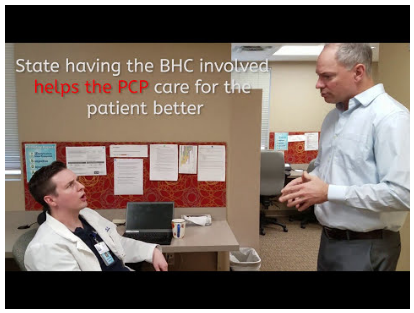
Three IPC demonstration videos created by American expert consultants and licensed clinical psychologists supplemented semi-structured interviews [44]. The videos were selected because they aligned with traditional IPC characteristics. The first video illustrated how a PCP might introduce and refer patients to the psychologist in IPC. The second video demonstrated consultation between a PCP and a psychologist, and the third showed how the two professionals might finalize or “close the loop” on a collaborative treatment effort. The videos with semi-structured interview questions are found in Appendix B. The intention behind including videos (in addition to the participants’ current experiences) was to expand the analysis to a more generalized perspective of IPC with psychologists.
2.3. Procedure
Once this study was approved by the University of British Columbia’s ethics review board (H23-03033), team members were introduced to the research project, and voluntary, informed consent was obtained. Data were collected between April 22, 2024, and April 3, 2025, via surveys on the Qualtrics platform in compliance with the BC Freedom of Information and Protection of Privacy Act (FIPPA).
Instructions were given on accessing quantitative surveys in Qualtrics, using either a QR code or a study link. Within the survey, participants were administered inventories to assess IPC attitudes, interest, and readiness [14,41]. Once the surveys were completed, a separate survey link embedded in the original survey allowed participants to confidentially provide their contact information for remuneration ($20 to a coffee shop) and to express interest in participating in the semi-structured interviews.
Semi-structured interviews were conducted by the first author between February 5th, 2025, and April 3rd, 2025. After participants watched each IPC video, they discussed the pros, cons, and any additional pertinent details regarding their experiences with implementing IPC. The interviewer used open-ended questioning, active listening, and reflective statements to ensure accurate understanding and to offer participants the opportunity to clarify. Interviews were recorded using the university’s Zoom subscription, which was previously deemed FIPPA-compliant.
2.4. Quantitative Analysis
The Statistical Package for the Social Sciences (SPSS), version 29.0.2.0. was used for analysis. Data were inspected for outliers and for correct transfer from the survey tool. It was discovered that one item from the IPCRBS-CPM scale was left out of the survey. Next, the data were inspected for normality. The Shapiro-Wilk test indicated that the PCRBS-IK subscale violated the assumption of normality, W(8) = .710, p = .003. However, visual inspection of histograms and Q-Q plots suggested that each study variable deviated from normality. Missing data for all study variables totalled 12.5%; however, given the small sample size, this level of missingness was not alarming, and an analysis of missingness was not conducted due to violations of normality [45].
To answer the first research question of what IPC attitudes, interest, and readiness levels of team members would be, an average composite score for each case on each study variable was computed for ease of interpretation. To compare values across scales, the medians for each study variable were converted to percentages of the maximum possible score. To explore whether healthcare providers and other staff differed on study variables, a non-parametric test of differences between independent groups was indicated. The Mann-Whitney U-test was selected due to its ability to compute results with data non-normally distributed, as well as with small, unequal group sizes [46,47].
2.5. Qualitative Analysis
To determine what team members viewed as the benefits and barriers to implementing IPC with psychologists, the qualitative descriptive approach was selected to summarize the interviews in colloquial terms [48]. To represent the data thematically, the six phases of reflective thematic analysis, outlined by Braun & Clark [49], were employed in QSR NVivo version 14. Next, recordings were transcribed by both a research assistant and the first author. Some audio data from semi-structured interviews were lost due to ineffective use of the recording software. Thus, in some instances, the researcher’s own reflective interview statements were coded in already developing subthemes.
3. Results
3.1. Quantitative Results
As a group, cross-sectional data suggested that the participants held favourable attitudes, high levels of interest, and IPC readiness behaviours (as seen in Table 2).
The Mann-Whitney U test revealed no statistical differences between the groups (healthcare providers vs other staff; p > .05), suggesting that healthcare providers and other staff did not significantly vary in their attitudes and interests toward delivering IPC with a psychologist, nor did they differ in levels of IPC readiness behaviours (CPM or IK).
3.2. Qualitative Results
3.2.1. Benefits of IPC with Psychologists
The perceived benefits of IPC team members were developed into four themes and subthemes, outlined below. Table S1 in the supplementary materials contains additional excerpts from participants comprising each theme and subtheme.
3.2.1.1. Theme 1: The Large Demand for Psychologists in Primary Care.
Psychologists Add Welcomed Value to Primary Care. The willingness of the primary care team to refer patients to a psychologist was reflected by the perceived value the psychologist added to their environment. P7 explained how “Many different medical conditions have psychological components to [diagnosis] and [treatment] not just mental health issues…” Healthcare providers described an unmet need for treating common medical conditions through a biopsychosocial lens and behaviour-change prescriptions. Evident in every interview was the perception of patient willingness to access psychology, as P7 remarked, “I have yet to have someone decline a referral to a psychologist…”
Psychology Appointments were Quickly Utilized. Another subcode captured how appointments were fully utilized shortly after implementation; team members communicated a desire for greater psychologist availability. P1 joked about providers racing to access available appointments for patients: “Well, I think it’s getting shared with [another professional] now, so whoever gets there first.” With research funding, which constrained the psychologist’s availability to one day per week, these comments suggested that more psychology services would be utilized if greater resources were provided.
3.2.1.2. Theme 2: IPC Is Highly Feasible Through Teamwork
Effective Collaboration Among Independent Practitioners. The first subtheme illustrated independent practitioners working together flexibly, yet effectively, in the pursuit of higher-level care. Collaborative communication was witnessed regularly by supporting staff, and healthcare providers expanded upon this experience by noting that, in-person, it was working well to “…have an easy chat…” (P7), to have “…weekly meetings about what’s been happening…”(P1), or to use the chart as the main communication between providers. Collaboration methods varied with practitioners’ schedules and preferred modes of communication. Due to a shared understanding of each professional’s competence, there was an overarching level of trust among healthcare providers regarding their ability to hand off a patient to the psychologist. As P6 asked rhetorically, “I’m trusting the psychologist is going to implement psychological strategies? Absolutely. I don’t need to know what they are.” Two participants (P1 and P6) described their situation in IPC as beneficial compared with other instances in which they might refer a patient out into the community to access services.
Day-to-Day Teamwork. Regular and ongoing teamwork was developed as another subtheme, which allowed for the feasibility of implementation. P2 appreciated that, “where needed,” they could work with the same patient the same day, back and forth with the psychologist, to provide the most effective treatment to address both medical and psychological concerns (e.g., seeing the psychologist and then re-visiting the healthcare provider for a prescription). Administrators sought methods to integrate student health care benefits into the payment structure to provide a seamless service, and providers ensured regular contact to discuss shared cases, whether through the EMR, weekly meetings, or daily check-ins.
Having Members with the Right Expertise. Providers appreciated having a member of their team with the appropriate level of expertise to either refer to when they felt outside of their scope of training or to access a higher level of care. P6 shared how it could be useful to refer medically, saying “I think it’s medically relevant, but outside my scope, those kind of things, might- would be the more appropriate, or so handing over information.” P7 asserted “Well, I think it frees up time for other primary care issues. It puts the right person with the right problem...” and described how the skills of the psychologist were seen as being unique in comparison to other practitioners in the mental health care field (e.g., social workers or counsellors).
3.2.1.3. Theme 3: Improved Individualized Primary Care
Better Patient Care Collaboration. The first subtheme addresses how care improved through regular communication between the psychologist and healthcare providers. As P1 explained, “And we [the doctor and the psychologist] can have very easy conversations like once a week, chat about our patients.” This model of care differed markedly from treatment as usual, in which a provider would have to refer a patient to another professional in the community, with either sparse or delayed communication (e.g., waiting for a consultation letter). In contrast, the current implementation allowed timelier follow-up.
More Comprehensive Care. The addition of psychology services allowed for wrap-around care, more closely aligned to the biopsychosocial model of healthcare delivery. P6 appreciated that extra time could be spent with patients, noting that “If someone can take the time to do some of the counselling, that just takes time and working with the patient, to understand their barriers and their, like, I think…Yeah, what I would try and do in two minutes, if they could take 10 and do a better job at it, it’s better care.” Overall, the healthcare providers valued handing over issues that were either out of their scope or required additional time. Other staff noticed how patients’ behaviours seemed uplifted after receiving psychological care.
3.2.1.4. Theme 4: Better Access to Psychology
Faster, Easier Access for Patients. Most of the medical team recognized that IPC with a psychologist expedited the usual referral process. P3 commented on shorter wait times, as well as the time to follow up, saying it was “A lot quicker than having to put them through the [community] system; having something in our clinic has definitely been a huge benefit.”
Reduced Financial and Other Barriers. The most considerable barrier overcome was the cost of psychological services incurred by patients. P6 stated that having the cost covered seamlessly was desirable. P1 explained, “It removes a barrier…..so, and it’s covered. So cost, which is a major barrier in the community.” P5 reflected, “Um, I mean I think the [patients] like… the holistic kind of care…. So not pulling from different places. You can get everything all kind of in a one-stop-shop. I feel like, especially in this kind of demographic. And because they don’t always have access to vehicles, that kind of a thing… so that is such a huge barrier...so having something [for] them [here] is really great.”
3.2.2. Barriers of IPC with Psychologists
The perceived barriers of implementation held by IPC team members were developed into two themes, each with subthemes, outlined below. Table S2 in the supplementary materials contains additional excerpts from participants comprising each theme and subtheme.
3.2.2.1. Theme 1: Policy and Model-Level Barriers
Policy Restricts Funding for Public Psychology. At the macroscopic level, participants acknowledged policies which restricted funding for psychological services, whether out in the community or in primary care. P1 commented on funding through the current research project, “It removed a barrier… [as] cost, which is a major barrier in the community,” posed great challenges to both patients who want to access services and professionals who might want to refer out to psychologists. P6 communicated that an “…understanding of what it costs the patient…” is necessary to consider before trying to implement IPC.
The Canadian Model is Less Flexible than Traditional IPC. As participants engaged with IPC media and compared the ideas from the videos with the current IPC implementation at their clinic, they tended to notice disparities. Whereas the video media illustrated longer, more flexible, and spontaneous in-person interactions among professionals, the participants at the clinic felt more bound to their schedules. P5 expressed it was increasingly difficult to have same-day appointments, saying, “… what we’re finding here is that [the psychologist] is so tightly booked that there’s really not a lot of time for that kind of flexibility. So, I know that that’s… what they want. The goal is….flexibility, but in reality, [it] doesn’t really [work]….. unless you make that a real priority, to be flexible.” P2 pondered over logistics, wondering how it might be possible to impose regular flexible time for consultations between the psychologist and the healthcare providers. While many participants agreed that principles of IPC, such as in-the-moment interprofessional collaboration and same-day, multi-professional appointments, were ideal, they also noted that they weren’t always realistic and that, if they aspired to enact such principles, they might fall behind in their schedules.
3.2.2.2. Theme 2: Clinic Specific Constraints
Time, Space, and Methods to Accommodate IPC Practitioners. The high demand for psychological services was, in fact, a double-edged sword, as P7 remarked, “I’ve had no one decline, but yeah, a little bit of [a] barrier to getting into our psychologist because it’s been full or there’s like a long wait list.” Additionally, other staff noted that onboarding an additional practitioner, psychologist or not, added to the volume of tasks such as booking, answering the phone, setting up billing, and scheduling. Practitioners needed to ensure they completed EMR entries in a timely manner. Many team members cited physical space as a challenge. As P7 noted, the “clinic is small, so space is an issue…” Thus, not only was space limiting the ability to book additional appointments, but sharing rooms with little overlap in time could also cause the next practitioner to run behind.
Still Learning the Psychologist’s Scope and Model of Care. As interviews unfolded, it was apparent that team members largely accepted the psychologist into their practices, yet their understanding of the psychologist’s role in an IPC setting was still developing. For example, P6 declared, “I like the language around ‘This will help me care for you’ because they have expertise [and] recognizing what kind of scope of what our expertise and what are other people’s.” Considerable discussion emerged concerning where to include the psychologist in assessment, diagnosis, and the types of conditions to be treated. Some uncertainty surfaced regarding what to expect across the typical trajectory of a patient who visited the clinic and engaged in both medical and psychological services.
4. Discussion
Descriptive results demonstrated that, overall, the primary care team members working at this university student health clinic held highly favourable attitudes, interest, and readiness levels towards implementing IPC with a psychologist. The values obtained for attitudes and interest levels mirror published mean values from a sample of American physicians and psychologists (N=175), of whom 34.3% reported working in primary care [31]. Upon non-statistical, visual comparison, this group’s attitudes were slightly higher (M = 4.99, SD = 0.52) than those of the American group of physicians (M = 4.56, SD = 0.86), as were interest levels (M = 4.95, SD = 1.01 versus M = 4.26, SD = 1.06). However, without larger, more homogeneous samples, statistical comparison is not possible. Regardless, these results may suggest comparable notions held among primary care team members at this Canadian university and by physicians in the United States, where IPC with psychologists is already being implemented.
Among study variables, interest levels were the highest (87.5% of the maximum possible score), but also the most varied. While an exploratory test between groups of physicians and other staff was non-significant (mean rank healthcare providers = 3.50 vs mean rank other staff = 6.17, Mann-Whitney U = 12.50 [3.33], p = .14), larger sample sizes are needed to confirm the similarity in interest levels among IPC team members. Readiness (IPCRBS scale) behaviours were reported to be lower than attitudes and interest (CPM and IK were each at 80% of the possible maximum score). However, given that team members received very little introduction to IPC with a psychologist prior to implementation, these values should not be interpreted as lagging. In one sample of licensed, practicing behavioural health consultants with different experiences in IPC (N = 319), various stages of change to implement IPC behaviours were detected [14]. Using similar guidelines, it appeared that the primary care team members in this study were in the maintenance stage of change (regarding consultation and practice management) and in the precontemplation and preparatory phases of change (regarding intervention and knowledge implementation). Behaviours such as accepting psychological walk-in patients, scheduling, sharing medical appointments, and allowing time and space for the psychologist to onboard and treat patients were in action and being maintained. However, participants were still contemplating how to include the psychologist in educating patients about medical disorders, advising on strategies, and demonstrating an understanding of the links between medical and psychological issues. These inferences gathered from the quantitative data were corroborated within the semi-structured interviews.
Interviews revealed several benefits to implementing IPC with a psychologist. Team members collectively welcomed the psychologist, noting a diverse range of conditions to benefit from psychological intervention. This belief is strongly supported by literature. Indeed, health centers with a psychologist on staff have demonstrated better performance on a variety of clinical outcomes, such as asthma-related therapies, diabetes management, screenings (such as pap testing), and tobacco cessation compared to centers without a psychologist on the team [50]. Acknowledgment of patient willingness to engage in psychological services within the student population was paralleled by previously demonstrated research, whereby university students on the same campus reported a high likelihood to accept referral to a psychologist in IPC compared to a referral out into the community [51]. The effective collaboration and teamwork reported by participants was significantly supported by factors such as co-location, a shared EMR, and the ability to book directly with the psychologist. Consequently, this also improved the individualization of care and access. Collectively, our findings make a strong argument for the integration of care, rather than simply providing co-located services. Indeed, one integrative review of 48 studies (n = 3803) described similar thematic benefits to interprofessional collaborative practice in primary care, such as healthcare team interaction (due to a broadened network of connected professionals) and the value of convenient care (through shared time, space, coordinated care, valuing practitioner roles, and affording care) [52].
Barriers to implementing IPC with a psychologist were also revealed qualitatively through interviews. Team members conveyed an emerging understanding of the psychologist’s role and scope of practice, which was in progress and may have hindered the psychologist from working at full capacity. This finding is warranted, given the trend in the literature to examine mental health clinicians as a homogeneous group, policies which lack professional differentiation, and a lack of public knowledge of the profession [53,54]. In countries (such as Canada) where various mental health clinicians, trained at different academic levels, are competing for the same jobs, this ignorance is likely to endure [54,55]. However, providing medical professionals with the opportunity to work alongside the various professions (such as psychologists) has led to a greater understanding of occupational roles [53].
Clinic-specific constraints, such as time, space, and methods needed to accommodate IPC practitioners, limited the clinic’s ability to implement traditional IPC practices, such as same-day, multi-practitioner appointments, warm handovers, flexible consultations, or last-minute additions to the schedule. These barriers were largely related to outer setting constraints noted in the literature, such as fee-for-service payment mechanisms which limit physicians’ compensation for treatment planning and case conferences [26]. Those involved in advancing sustainable change efforts may need to consider overhead costs associated with larger spaces and administrative resources. Alternatively, teams may wish to utilize telehealth options while maintaining key characteristics for integration success, such as the ability to share EMRs, book appointments, and have protected daily time for communication. Additional considerations for implementing telehealth options are well documented in the medical literature [56]. Early integration efforts that consider the TTM stages of change at the group and individual levels can appropriately match implementation plans to provider readiness; research has shown that early contact, ongoing engagement, and the inclusion of interest holders in co-design were important aspects of implementing healthcare service changes [57]. Policies across countries must adapt to their unique demographic characteristics. In the current project, it was found that the Canadian model was not directly transferable to the traditional (American) model, given differences in payment structures and funding. Others have noted broader implications, such as large land mass, rural areas, and Indigenous populations as key characteristics to consider [58].
The most impactful barrier, from team members’ perspectives, limiting the sustainability of IPC was the restricted availability of psychologists due to funding constraints. In the region of the present study, the majority of psychologists work in the private sector, likely due to large pay disparities between public salaried positions available through health authorities and private practice [59]. Local efforts to improve public psychological access, which commit to payment structures commensurate with doctoral-level qualifications, are yet to be realized [60]. Adequate budgets, complex billing, and appropriate provider compensation remain barriers in the broader international context [26]. Advocacy and research can assist by demonstrating psychologists’ unique, strong empirical skillsets. The profession, often underutilized, is well-suited to take on roles in clinical leadership, including consultation, training, program evaluation, and supervision of other health occupations [14,54,55,61]. As psychologists take on these expanded roles, the burden on other team members is expected to lessen. Thus, policy change as a prerequisite to IPC must allow for payment which is commensurate with doctoral-level training; otherwise, public psychologists will be difficult to retain. Psychologists and their allies are encouraged to continue advocating for patients to have access to evidence-based mental and behavioural health services, while also being open to additional specialized training and working within the public sector as new opportunities arise.
While this study supplements the current literature by investigating team member perspectives in a novel Canadian setting, the present research is limited by its small sample size. Studies with larger sample sizes are needed to replicate and extend our findings, as we were unable to effectively explore the perspectives of various types of interest holders separately (e.g., physicians versus nurses versus administrators). Similarly, another limitation was the lack of inclusion of interest holder views from the co-located counselling clinic. Future research must explore how different types of mental health professionals can collaborate at their full scopes of practice, both uniquely and collectively to deliver evidence-based MBH services.
5. Conclusions
This study supplements the current literature, being one of the few to explore a medical team’s perceptions of integrating psychologists into primary care in a novel Canadian setting, using a mixed methodology. While cross-sectional measurement on validated scales yielded objective estimates of attitudes, interest, and readiness levels, qualitative methods went beyond statistical assumptions, inferences, and pre-determined, structured inventories [48]. The combined evidence, while limited by a small sample size, strongly suggests that IPC with psychologists is perceived by primary care team members as beneficial and feasible, with most barriers being overcome through teamwork and a motivation to enact positive change. These team members were ready and successfully implemented this model, which has now become the standard of care at their clinic. Yet, progress in Canada appears limited by the lack of long-term, sustainable public funding for psychologists. We urge policymakers to increase access to MBH care delivered by psychologists, which can have a significant impact on providers, patients, and downstream savings for the broader economic, health, and social systems. Through implementing IPC with psychologists, we advance together towards evidence-based, tangible solutions.
Supplementary Materials
The following supporting information can be downloaded at: Preprints.org, Table S1: Excerpts from Participants Pertaining to Themes Describing the Benefits of IPC with a Psychologist; Table S2. Excerpts from Participants Pertaining to Themes Describing the Barriers of IPC with a Psychologist.
Author Contributions
E.C.B. and L.D.L both contributed to the conceptualization, methodology, writing, and funding acquisition. E.C.B. individually contributed to formal analysis, data curation, and project administration.
Funding
This research was funded by the University of British Columbia-Okanagan’s campus (UBC-O) 2023 annual Campus as a Living Lab and Vice-President, Students at the University of British Columbia-Okanagan campus (grant # F23-02143 GR027279).
Institutional Review Board Statement
The study was conducted in accordance with the Declaration of Helsinki and approved by the Institutional Review Board (or Ethics Committee) of the University of British Columbia (H23-03033, March 5, 2024).
Informed Consent Statement
Informed consent was obtained from all subjects involved in the study.
Data Availability Statement
Data will be made available upon reasonable request by contacting the corresponding author. Raw transcripts of interviews will not be shared to protect the privacy and confidentiality of the participants.
Acknowledgments
We would like to acknowledge the medical staff and administration at UBC-O for supporting this work as partners, especially Dale Mullings, Associate Vice-President, Students, for collaboration in its early phases. We also recognize Alex Fountaine and Aidan O’Callahan for contributions to ethics applications and Emily Thompson for her assistance with transcription.
Conflicts of Interest
The authors declare no conflicts of interest.
Abbreviations
The following abbreviations are used in this manuscript:
| CPM | Consultation and practice management |
| EMR | Electronic medical record |
| FIPPA | Freedom of Information and Protection of Privacy Act |
| IK | Intervention and knowledge |
| IPC | Integrated primary care |
| IPCRBS | Integrated Primary Care Readiness and Behaviours Scale |
| MBH | Mental and behavioural health |
| PCMH-AIKS | Patient-Centered Medical Home-Attitudes, Interest, and Knowledge Scale |
| PCP | Primary care physician |
Appendix A
Appendix A.1. The Patient-Centered Medical Home-Attitudes, Interest, and Knowledge Scale (PCMH-AIKS)
Domain I: Attitudes. Please rate your response to each statement based on the scale provided below:
| 1 | 2 | 3 | 4 | 5 | 6 |
| Strongly Disagree | Moderately Disagree | Mildly Disagree | Mildly Agree | Moderately Agree | Strongly Agree |
- In today’s healthcare arena, it is important to learn about integrated healthcare practices.
- It is valuable for practitioners to learn about the Patient-Centered Medical Home [Integrated Primary Care].
- Engaging in team meetings can be a waste of valuable time.
- Meeting with my patients’ other healthcare providers will limit my ability to effectively meet my work demands.
- Engaging in team meetings will clearly limit my ability to effectively do my job.
- The interdisciplinary approach to providing healthcare will make the delivery of services more difficult.
- The interdisciplinary approach to providing healthcare will make the delivery of services unnecessarily complicated.
- The interdisciplinary approach to providing healthcare will make the delivery of services unwieldy.
- From my perspective, patients who receive team-based care are better prepared for discharge than are other patients treated in the traditional healthcare model.
- I feel that working in an integrated setting helps providers increase patient access to needed services.
- I feel that providers who work as a part of an interdisciplinary team are more responsive to patient’s financial and emotional needs.
- I feel that the cross-pollination of skills sets will allow me to better collaborate with other healthcare professionals.
- I feel that the biopsychosocial model offers an important perspective on providing effective treatments.
- I feel that working as a part of an integrated treatment team will lead to better treatment outcomes for my patients.
- I perceive that working as a part of an integrated treatment team will lead to reduced staff burnout.
- My sense is that working as a part of an integrated treatment team will increase my patients’ satisfaction with their treatment.
- I value the perspectives offered by other healthcare professionals about the needs of my patients.
- I would feel reassured if my patients had a team of providers who are available if they need immediate care.
- I am positively oriented to team-based care.
- Working with other healthcare professionals keeps most providers interested and enthusiastic about their jobs.
Domain II: Interest. Please rate your response to each statement based on the scale provided below:
| 1 | 2 | 3 | 4 | 5 | 6 |
| Not At All | Slightly | Somewhat | Moderately | Very much | Extremely |
- I am interested in practicing within a Patient-Centered Medical Home [an Integrated Primary Care clinic].
- I am motivated on my own to practice within an integrated healthcare environment.
- I am interested in working as a part of an integrated team of healthcare professionals.
- I am enthusiastic in learning how other healthcare providers treat patients.
- I am positively inclined to learn about integrated behavioral healthcare.
- I am interested in learning about the perspectives of other professionals related to my patients.
- I have a clear interest in working collaboratively with other professionals.
- I am interested in having regular, on-going contact with providers who are also treating my patient.
- I am excited about the prospects of working together with other professionals in a team-based model.
- Collaborative integrated care models fit my interests well.
- I am positively oriented toward efforts that coordinate the treatment of my patients.
- I enjoy creating comprehensive treatment plans that address the biopsychosocial needs of my patients.
- I am positively inclined to learn new approaches to providing care from healthcare providers in a discipline different from my own.
- I am interested in working in a healthcare environment that provides patients with a team of healthcare professionals who are available if they need immediate care.
- I am positively inclined to engage in regular team meetings to discuss the needs of my patients with their other healthcare providers.
- I would enjoy collaborating on comprehensive interdisciplinary treatment plans for my patients.
- I am positively inclined to meet with my patients while other healthcare providers are present.
- I am interested in using electronic medical records to help facilitate the ongoing care of my patients with their other healthcare providers.
- I am interested in working in a healthcare environment that provides more access to care for my patients.
- I have a clear interest in practicing in a model of healthcare service delivery that research has shown leads to enhanced quality of care and patient satisfaction ratings.
- Note: items in square brackets [] reflect an adaptation in instructions.
Appendix A.2. Integrated Primary Care Readiness & Behaviours Scale
Please rate how frequently each of the following [could] occur [if a psychologist were to join your team next week]:
| 1 | 2 | 3 | 4 | 5 |
| Never | Rarely | Sometimes | Often | Very often |
Factor 1: Consultation and Practice Management Subscale.
- Accept [psychology] walk-in patient(s) (aka, warm hand off) from medical staff.
- Schedule [psychology] patient visits [for other practitioners] within the existing medical services process.
- Share medical appointments with [other] medical staff.
- [Allow time for a psychologist to] complete initial patient consultation in 30 min or less.
- [Allow time for a psychologist to] follow a patient for 3-4 sessions or less.
- [Allow the psychologist to] consult in person about patient case with medical staff (e.g., curbside).
Factor 2: Intervention and Knowledge Subscale.
- [Allow time for a psychologist to] educate patients about the medical disorder and advise self-management strategies.
- [Allow time for a psychologist to] discuss medication adherence for disease management.
- [Allow time for a psychologist to] show understanding of the relationship between medical and psychological processes.
- [Allow time for a psychologist to] complete initial patient consultation in 30 minutes or less.
- [Allow time for a psychologist to] provide and encourage patients with health education and information.
- [Allow time for a psychologist to] show knowledge of psychotropic medicines and adherence strategies.
Note: items in square brackets [] reflect an adaptation in instructions.
Appendix B. IPC Videos with Semi-Structured Interview Questions
Referring to a Psychologist. Please watch the first short video discussing strategies for referring patients to an Integrated Primary Care Psychologist for mental and behavioural health services (4:27 minutes):
What are your thought on implmenting similar strategies to assist referrals at the clinic where you work?
What are some potential pros to implementing something similar?
What are some potential cons to implementing something similar?
What might be suggestions, concerns you may have, or other relevant aspects to consider?
Consultation with a Psychologist. Please watch the following short video on consultation between a medical provider and a psychologist (26 seconds):

What are your thought on implmenting similar strategies to assist consultation at the clinic where you work?
What are some potential pros to implementing something similar?
What are some potential cons to implementing something similar?
What might be suggestions, concerns you may have, or other relevant aspects to consider?
Closing the Loop. Finally, please watch the following short video demonstrating “closing the loop” between the medical provider and the psychologist (52 seconds):

What are your thought on implmenting similar strategies, such as closing the loop, at the clinic where you work?
What are some potential pros to implementing something similar?
What are some potential cons to implementing something similar?
What might be suggestions, concerns you may have, or other relevant aspects to consider?
References
- Organization for Economic Co-operation and Development, “The Health and Economic Benefits of Tackling Non-Communicable Diseases,” OECD. Accessed: May 05, 2026. [Online]. Available: https://www.oecd.org/en/publications/the-health-and-economic-benefits-of-tackling-non-communicable-diseases_e20cbbc3-en/full-report/the-growing-ncd-burden-will-escalate-unless-decisive-action-is-taken_5368535a.html.
- S. Ali, D. Santomauro, A. J. Ferrari, and F. Charlson, “Excess mortality in severe mental disorders: A systematic review and meta-regression,” J. Psychiatr. Res., vol. 149, no. Journal Article, pp. 97–105, 2022. [CrossRef]
- J. Holt-Lunstad, T. B. Smith, and J. B. Layton, “Social Relationships and Mortality Risk: A Meta-analytic Review,” PLoS Med., vol. 7, no. 7, p. e1000316, 2010. [CrossRef]
- World Health Organization, “World mental health today: Latest data,” Geneva, 2025. Accessed: May 01, 2025. [Online]. Available: https://iris.who.int/server/api/core/bitstreams/31714489-1345-4439-8b37-6cbdc52e15ca/content#page=9.48.
- S.-S. Ho et al., “Variation in the estimated prevalence of multimorbidity: systematic review and meta-analysis of 193 international studies,” BMJ Open, vol. 12, no. 4, p. e057017, 2022. [CrossRef]
- Canadian Mental Health Association, “Mental Health in the Balance: Ending the Health Care Disparity in Canada,” 2018. Accessed: May 11, 2026. [Online]. Available: https://cmha.ca/wp-content/uploads/2021/07/CMHA-Parity-Paper-Full-Report-EN.pdf.
- H. Dai, Z. Mei, A. An, and J. Wu, “Epidemiology of physical and mental comorbidity in Canada and implications for health-related quality of life, suicidal ideation, and healthcare utilization: A nationwide cross-sectional study,” J. Affect. Disord., vol. 263, no. Journal Article, pp. 209–215, 2020. [CrossRef]
- R. F. Smith, D. M. Clark, G. Hensing, R. Layard, and M. Knapstad, “Cost–benefit of IAPT Norway and effects on work-related outcomes and health care utilization: results from a randomized controlled trial using registry-based data,” Psychol. Med., vol. 55, p. e86, Jan. 2025. [CrossRef]
- H.-M. Vasiliadis, A. Dezetter, E. Latimer, M. Drapeau, and A. Lesage, “Assessing the Costs and Benefits of Insuring Psychological Services as Part of Medicare for Depression in Canada,” Psychiatr. Serv., vol. 68, pp. 899–906, Sep. 2017. [CrossRef]
- Canadian Mental Health Association, “Mental Health for All: Building a Comprehensive System of Care in BC.” Aug. 2024. Accessed: Jul. 06, 2026. [Online]. Available: https://bc.cmha.ca/wp-content/uploads/2024/08/CMHA-BC_Policy-Adovcacy-Roadmap_2024_08_30.pdf#page=12.59.
- P. J. Robinson, J. T. Reiter, Springer Nature - Springer Behavioral Science and Psychology eBooks 2025 English International, and SpringerLink (Online service), Behavioral Consultation and Primary Care: A Guide to Integrating Services, 3rd 2025.;3;Third 2025; Cham: Imprint: Springer, 2025. [CrossRef]
- G. Singer, R. Morkem, and L. Kosowan, “From data to decisions: Supporting mental health solutions in primary care,” Can. Fam. Physician, vol. 71, no. 11–12, pp. 689–691, Nov. 2025. [CrossRef]
- E. Stephenson et al., “Changes in the top 25 reasons for primary care visits during the COVID-19 pandemic in a high-COVID region of Canada,” PloS One, vol. 16, no. 8, p. e0255992, 2021. [CrossRef]
- C. L. Blaney et al., “Integrated Primary Care Readiness and Behaviors Scale: Development and Validation in Behavioral Health Professionals,” Fam. Syst. Health, vol. 36, no. 1, pp. 97–107, 2018. [CrossRef]
- L. K. Kearney et al., “Global approaches to integrated care: Best practices and ongoing innovation,” Am. Psychol., vol. 75, no. 5, pp. 668–682, 2020. [CrossRef]
- J. E. Kaitz and S. Ray, “Psychologist and Physician Inter-Professional Collaborative Experiences in Primary Care Integration,” J. Clin. Psychol. Med. Settings, vol. 28, no. 3, pp. 436–446, 2021. [CrossRef]
- ACP, “ACC recommends medication as first-line treatment for obesity,” I.M. Matters Weekly from ACP. Accessed: May 05, 2026. [Online]. Available: https://www.acpjournals.org/doi/10.7326/acpi-20250624_1.
- National Institute for Health and Care Excellence, “Recommendations | Depression in adults: treatment and management | Guidance | NICE.” Accessed: May 11, 2026. [Online]. Available: https://www.nice.org.uk/guidance/ng222/chapter/Recommendations#treatment-for-a-new-episode-of-less-severe-depression.
- Qaseem et al., “Nonpharmacologic and Pharmacologic Treatments of Adults in the Acute Phase of Major Depressive Disorder: A Living Clinical Guideline From the American College of Physicians (Version 1, Update Alert 3),” Ann. Intern. Med., vol. 178, no. 9, pp. 1–3, 2025. [CrossRef]
- W. Katon et al., “Collaborative Management to Achieve Treatment Guidelines: Impact on Depression in Primary Care,” JAMA J. Am. Med. Assoc., vol. 273, no. 13, pp. 1026–1031, 1995. [CrossRef]
- Patient-Centered Primary Care Collaborative, “Benefits of Implementing the Primary Care Patient-Centered Medical Home: A Review of Cost & Quality Results, 2012.” 2012. [Online]. Available: https://archive.thepcc.org/sites/default/files/media/benefits_of_implementing_the_primary_care_pcmh.pdf.
- J. Unützer et al., “Collaborative Care Management of Late-Life Depression in the Primary Care Setting: A Randomized Controlled Trial,” JAMA J. Am. Med. Assoc., vol. 288, no. 22, pp. 2836–2845, 2002. [CrossRef]
- Y. Zhang, J. Stokes, L. Anselmi, P. Bower, and J. Xu, “Can integrated care interventions strengthen primary care and improve outcomes for patients with chronic diseases? A systematic review and meta-analysis,” Health Res. Policy Syst., vol. 23, no. 1, p. 5, Jan. 2025. [CrossRef]
- Canadian Mental Health Association, “Mental Health in the Balance: Ending the Health Care Disparity in Canada.” Sep. 2018. Accessed: Jul. 06, 2026. [Online]. Available: https://cmha.ca/wp-content/uploads/2021/07/CMHA-Parity-Paper-Full-Report-EN.pdf.
- Begg, M. et al., “Making the Case for Integrating Psychologists Into Primary Care in Canada: A Brief Review,” In press.
- D. Mauer-Vakil, N. Sunderji, D. Webb, D. Rudoler, and S. Allin, “Approaches to Integrate Mental Health Services in Primary Care: A Scoping Review of System-Level Barriers and Enablers to Implementation,” Can. J. Commun. Ment. Health, vol. 42, no. 3, pp. 29–45, 2023. [CrossRef]
- L. Graff et al., “Increasing Access, Reducing Costs and Improving Outcomes...Maximizing Psychologsits’ contributions to Canada’s Publicly funded Health Care Systems.”.
- L. S. Parliament of Canada, “Canada Health Act, RSC 1985, C c-6.” Accessed: Feb. 25, 2026. [Online]. Available: https://laws-lois.justice.gc.ca/eng/acts/C-6/page-1.html.
- M.-H. Chomienne, J. Grenier, I. Gaboury, W. Hogg, P. Ritchie, and E. Farmanova-Haynes, “Family doctors and psychologists working together: doctors’ and patients’ perspectives,” J. Eval. Clin. Pract., vol. 17, no. 2, pp. 282–287, 2011. [CrossRef]
- M. K. Filippi et al., “Integrated Behavioral Health Implementation and Training in Primary Care: A Practice-Based Research Network Study,” J. Am. Board Fam. Med., vol. 36, no. 6, p. 1008, 2024. [CrossRef]
- Mark Cassano, Robert A. DiTomasso, Barbara Golden, and Scott D. Glassman, “The Attitudes, Level of Interest, and Knowledge Held byPhysicians and Psychologists Toward Integrated HealthcarePhysicians and Psychologists Toward Integrated HealthcarePractices and the Patient-Centered Medical Home ModelPractices and the Patient-Centered Medical Home Model,” J. Integr. Prim. Care, vol. 1, no. 2, pp. 1–11, 2023.
- E. Farmanova, J. Grenier, M.-H. Chomienne, W. Hogg, and P. Ritchie, “A demonstration study of collaboration in primary care: Insights from physicians and psychologists,” J. Interprofessional Educ. Pract., vol. 9, no. Journal Article, pp. 27–33, 2017. [CrossRef]
- Grant et al., “Barriers and enablers to implementing interprofessional primary care teams: a narrative review of the literature using the consolidated framework for implementation research,” BMC Fam. Pract., vol. 25, no. 1, pp. 25–16, 2024. [CrossRef]
- Supper, O. Catala, M. Lustman, C. Chemla, Y. Bourgueil, and L. Letrilliart, “Interprofessional collaboration in primary health care: a review of facilitators and barriers perceived by involved actors,” J. Public Health, vol. 37, no. 4, pp. 716–727, Dec. 2015. [CrossRef]
- N. Isaacs and E. K. L. Mitchell, “Mental health integrated care models in primary care and factors that contribute to their effective implementation: a scoping review,” Int. J. Ment. Health Syst., vol. 18, no. 1, pp. 5–16, 2024. [CrossRef]
- D. J. Cohen et al., “Integrating Behavioral Health and Primary Care: Consulting, Coordinating and Collaborating Among Professionals,” J. Am. Board Fam. Med., vol. 28 Suppl 1, no. Journal Article, p. S21, 2015. [CrossRef]
- D. Sur et al., “Examining diagnosis as a component of Social Workers’ scope of practice: a scoping review,” Clin. Soc. Work J., vol. 51, no. 1, pp. 12–23, Mar. 2023. [CrossRef]
- BC Ministry of Health, Health and Care Professionals Regulation, vol. Vol. 68, No. 12. 2025. Accessed: Jul. 13, 2026. [Online]. Available: https://www.bclaws.gov.bc.ca/civix/document/id/lc/bcgaz2/v68n12_131-2025?utm_source=chatgpt.com#part9.
- British Columbia College of Nurses and Midwives, “Scope of practice.” Accessed: Jul. 13, 2026. [Online]. Available: https://www.bccnm.ca/RN/learning/scope/Pages/Default.aspx.
- Canadian Counselling and Psychotherapy Association, “The Profession & Regulation,” Regulatory Landscape of the Counselling and Psychotherapy Profession in Canada. Accessed: Jul. 13, 2026. [Online]. Available: https://www.ccpa-accp.ca/profession-and-regulation/.
- M. Cassano, “The Attitudes, Level of Interest, and Knowledge Held by Physicians and Psychologists Toward Integrated Healthcare Practices and the Patient-Centered Medical Home Model,” 2017. [Online]. Available: https://digitalcommons.pcom.edu/psychology_dissertations/422.
- M. Cassano, R. DiTomasso, B. Golden, and S. Glassman, “Psychometric Development of Scales Measuring Attitudes About and Interest in Integrated Healthcare Clinical Practice,” J. Integr. Prim. Care, vol. 1, no. 4, Jan. 2025, [Online]. Available: https://digitalcommons.pcom.edu/jipc/vol1/iss4/4.
- J. O. Prochaska and W. F. Velicer, “The Transtheoretical Model of Health Behavior Change,” Am. J. Health Promot., vol. 12, no. 1, pp. 38–48, Sep. 1997. [CrossRef]
- Beachy Bauman Consulting, “Primary Care Behavioral Health | Beachy Bauman Consulting | United States,” Beachy Bauman PLLC. Accessed: Jul. 15, 2026. [Online]. Available: https://www.beachybauman.com.
- K. Enders, Applied Missing Data Analysis. Methodology in the Social Sciences Series. Guilford Press, 2010. [Online]. Available: https://go.exlibris.link/lG6kZJZY.
- P. Field, Discovering statistics using SPSS: and sex and drugs and rock “n” roll, 3rd ed. Los Angeles: SAGE, 2009. [Online]. Available: https://go.exlibris.link/zjb5lXT5.
- Y. Park, “Optimal two-stage group sequential designs based on Mann-Whitney-Wilcoxon test,” PLOS ONE, vol. 20, no. 2, p. e0318211, Feb. 2025. [CrossRef]
- M. Sandelowski, “Whatever happened to qualitative description?”, Accessed: Jul. 17, 2026. [Online]. Available: https://onlinelibrary.wiley.com/doi/10.1002/1098-240X(200008)23:43.0.CO;2-G.
- V. Braun and V. Clarke, “Using thematic analysis in psychology,” Qual. Res. Psychol., vol. 3, no. 2, pp. 77–101, Jan. 2006. [CrossRef]
- L. Shi, D.-C. Lee, M. Chung, H. Liang, D. Lock, and A. Sripipatana, “Patient-Centered Medical Home Recognition and Clinical Performance in U.S. Community Health Centers,” Health Serv. Res., vol. 52, no. 3, pp. 984–1004, 2017. [CrossRef]
- R. Fountaine, M. M. Iyar, and L. D. Lutes, “Examining the Utility of a Telehealth Warm Handoff in Integrated Primary Care for Improving Patient Engagement in Mental Health Treatment: Randomized Video Vignette Study,” JMIR Form. Res., vol. 7, no. 1, p. e40274, Jun. 2023. [CrossRef]
- R. Davidson, J. Kelly, L. Ball, M. Morgan, and D. P. Reidlinger, “What do patients experience? Interprofessional collaborative practice for chronic conditions in primary care: an integrative review,” BMC Prim. Care, vol. 23, no. 1, p. 8, Jan. 2022. [CrossRef]
- M.-H. Chomienne, J. Grenier, I. Gaboury, W. Hogg, P. Ritchie, and E. Farmanova-Haynes, “Family doctors and psychologists working together: doctors’ and patients’ perspectives,” J. Eval. Clin. Pract., vol. 17, no. 2, pp. 282–287, 2011. [CrossRef]
- J. H. Bray, “The future of psychology practice and science,” Am. Psychol., vol. 65, no. 5, pp. 355–369, 2010. [CrossRef]
- D. Murdoch, A. Gregory, and J. M. Eggleton, “Why psychology? An investigation of the training in psychological literacy in nursing, medicine, social work, counselling psychology, and clinical psychology,” Can. Psychol. Psychol. Can., vol. 56, no. 1, pp. 136–146, 2015. [CrossRef]
- K. Turner et al., “Health Care Providers’ and Professionals’ Experiences With Telehealth Oncology Implementation During the COVID-19 Pandemic: A Qualitative Study,” J. Med. Internet Res., vol. 24, no. 1, p. e29635, Jan. 2022. [CrossRef]
- Mental Health Commission of Canada, “Stepped Care 2.0© E-Mental Health Demonstration Project: Final Report,” 2019. Accessed: Jul. 17, 2026. [Online]. Available: https://mentalhealthcommission.ca/wp-content/uploads/2021/09/emental_health_report_eng_0.pdf.
- R. Moulding, J. Grenier, G. Blashki, P. Ritchie, J. Pirkis, and M.-H. Chomienne, “Integrating Psychologists into the Canadian Health Care System: The Example of Australia,” Can. J. Public Health., vol. 100, no. 2, pp. 145–147, 2009. [CrossRef]
- ICBC, “ICBC Fee Schedule for Health Care Providers.” May 01, 2025. Accessed: Jul. 17, 2026. [Online]. Available: https://partners.icbc.com/assets/2wSkk2HQZJ9e3xvSXTSIhH/fee-schedule-health-care-providers.pdf#page=7.12.
- BC Green Party Caucus & BC NDP Caucus, “Final agreement: Cooperation and responsible government accord 2025.” 2025. Accessed: Jul. 20, 2026. [Online]. Available: https://bcndpcaucus.ca/wp-content/uploads/sites/5/2025/03/2025-CARGA-Final-Agreement-Signed.pdf.
- Lutes, L.D., Sanchez, T. A., and Fountain, A. R., “Unpacking mental health: Parity between mental and physical healthcare depends on an understanding of mental health problems and disorders and who can treat them.,” vol. 44-4-EN-Web, Psynopsis, 2022. Accessed: Jul. 17, 2026. [Online]. Available: https://cpa.ca/docs/File/Psynopsis/2022-Vol44-4/index.html?fbclid=IwAR32qAqIVjKamrIFvFUOa4P-Qubl2akTe4j9WfN6gGC3DmAc8ouJfkWEXfg#p=17.

Table 1.
Participant Demographics for Qualitative Data.
| Participant Identity | Role at University Health Clinic |
| P1 | Healthcare Provider |
| P2 | Healthcare Provider |
| P3 | Other Staff |
| P4 | Other Staff |
| P5 | Other Staff |
| P6 | Healthcare Provider |
| P7 | Healthcare Provider |
Table 2.
Descriptive Statistics and Percent of Possible Maximum Score for Study Variables.
| Variable | Central Tendency | % of Possible Maximum Score using the Median | |
| Mdn (IQR) | M (SD) | ||
| PCMH-Attitude | 4.95 (0.78) | 4.99 (0.52) | 82.5 |
| PCMH-Interest | 5.25 (1.74) | 4.95 (1.01) | 87.5 |
| IPCRBS-CPM | 4.00 (0.63) | 4.06 (0.49) | 80.0 |
| IPCRBS-IK | 4.00 (0.44) | 4.18 (0.40) | 80.0 |
Note: Mdn = Median; IQR = interquartile range. IPCRBS-IK = Integrated Primary Care Readiness and Behaviours Scale-Intervention and Knowledge, IPCRBS-CPM= Integrated Primary Care Readiness and Behaviours Scale-Consultation and Practice Management, PCMH-Attitudes = Patient-Centered Medical Home-Attitude scale, PCMH-Interest = Patient-Centered Medical Home-Interest scale,.
Disclaimer/Publisher’s Note: The statements, opinions and data contained in all publications are solely those of the individual author(s) and contributor(s) and not of MDPI and/or the editor(s). MDPI and/or the editor(s) disclaim responsibility for any injury to people or property resulting from any ideas, methods, instructions or products referred to in the content. |
© 2026 by the authors. Licensee MDPI, Basel, Switzerland. This article is an open access article distributed under the terms and conditions of the Creative Commons Attribution (CC BY) license (http://creativecommons.org/licenses/by/4.0/).
Copyright: This open access article is published under a Creative Commons CC BY 4.0 license, which permit the free download, distribution, and reuse, provided that the author and preprint are cited in any reuse.