

Submitted:
07 September 2026
Posted:
09 September 2026
You are already at the latest version
Abstract
Background: Worldwide around 50 million people experience severe cognitive impairment. Limited study investigated whether the increased risk of cognitive impairment can be offset by a broad combination of healthy lifestyle behaviors in low- and middle-income countries. This study aims to perform a 10-year nationwide population-based prospective study for examining long-term association between combined multiple modifiable lifestyle factors and cognitive impairment. Method: We used four waves (2008-2018) of the Chinese Longitudinal Healthy Longevity Survey, including 8,321 participants aged ≥65 years with normal cognition at baseline. Exposures include dietary behaviors, single lifestyle behaviors (sleep, housework, exercise and social connection), and combined multiple behaviors. Cognitive impairment was assessed by the Mini Mental State Examination (score< 24). Cox proportional hazards models were performed to examine the long-term association between multiple lifestyle behaviors and cognitive impairment. Results: Of total 8,321 participants, 24.88% (2,070) developed cognitive impairment during a 10-year follow-up. This study showed a significant association of combined multiple behaviors with cognitive impairment [hazard ratio (HR) 0.55, 95%CI: 0.35 - 0.86]. Compared with participants who had unhealthy lifestyle activity and dietary behaviors, HR for cognitive impairment was 0.65 (95% CI: 0.45 - 0.94) and 0.91 (95% CI: 0.82 - 0.99) in those who had good lifestyle activity and dietary behaviors, respectively. Subgroup analyses revealed significant relationships in females and individuals with lowest education. Conclusions: Adherence to a broad range of healthy lifestyle factors was associated with a significantly lower risk of cognitive impairment. Behavioral lifestyle modification through multifactorial approaches should be a priority for prevention and delayed onset of cognitive impairment and dementia.
Keywords:
combined effects
; multiple behaviors
; cognitive impairment
; cohort study
; China
1. Introduction
Population aging is becoming a global problem, particularly acute in China with the world's largest population, and brings the challenges for the elderly care system and medical system. A recent report from the United Nations predicted that the population of people aged 60 years old and above will continue to grow in China, both in absolute ways and as a proportion of the total [1]. By 2050, China's elderly population aged 60 and above will exceed 500 million, accounting for 38.81% of the total, and the proportion of elderly people aged 80 and above will exceed 10% [2] . Dementia and cognitive impairment issues, in general, are major health concerns among older adults. It is estimated by United Nations that the cases of dementia among older adults is expected to reach one billion in 2050 [3,4]. Cognitive disorders are also responsible for millions of deaths every year.
Prevention is the most important strategy to address the challenge of dementia because there is no effective treatment for this disease yet [5]. Cognitive impairment is the early stage of dementia and provides a time-window for taking preventive measures [6]. Therefore, identifying potentially modifiable risk factors for cognitive impairment is of particular importance for effective preventions of dementia and precise public health interventions [7,8].
Several single lifestyle factors have been associated with dementia risk, but the combined impact of multiple unhealthy lifestyle factors on cognitive impairment remains largely unknown in China [9,10]. This study aims to investigate whether the increased risk of cognitive impairment among Chinese adults can be offset by a broad combination of healthy lifestyle behaviors. We performed a prospective study to examine the long-term association between combined multiple modifiable lifestyle factors and cognitive impairment, utilizing a nationwide population-based data from a Chinese cohort survey. Cox proportional hazards models were used to examine the associations between multiple unhealthy lifestyle behaviors and cognitive impairment.
2. Materials and Methods
2.1. Study Design and Participants
We used the newest data from four waves (2008-2018) of the Chinese Longitudinal Healthy Longevity Survey (CLHLS). The CLHLS established in 1998 is a nationwide survey done in a randomly selected half of the counties and cities in 22 of the 31 provinces in China. Trained interviewers did the surveys at participants’homes following a structured questionnaire collecting socio-demographic date lifestyle, cognitive function, psychological status, physical capacity and chronic disease diagnosed. More details on the sampling procedure and assessment of data quality can be found in previous publications [11,12]. This study analysed data in members of the population aged over 65 years old from the fifth wave as baseline, and followed-up data from sixth wave, seventh wave and eighth wave to explore association between co-factors and cognitive impairment.
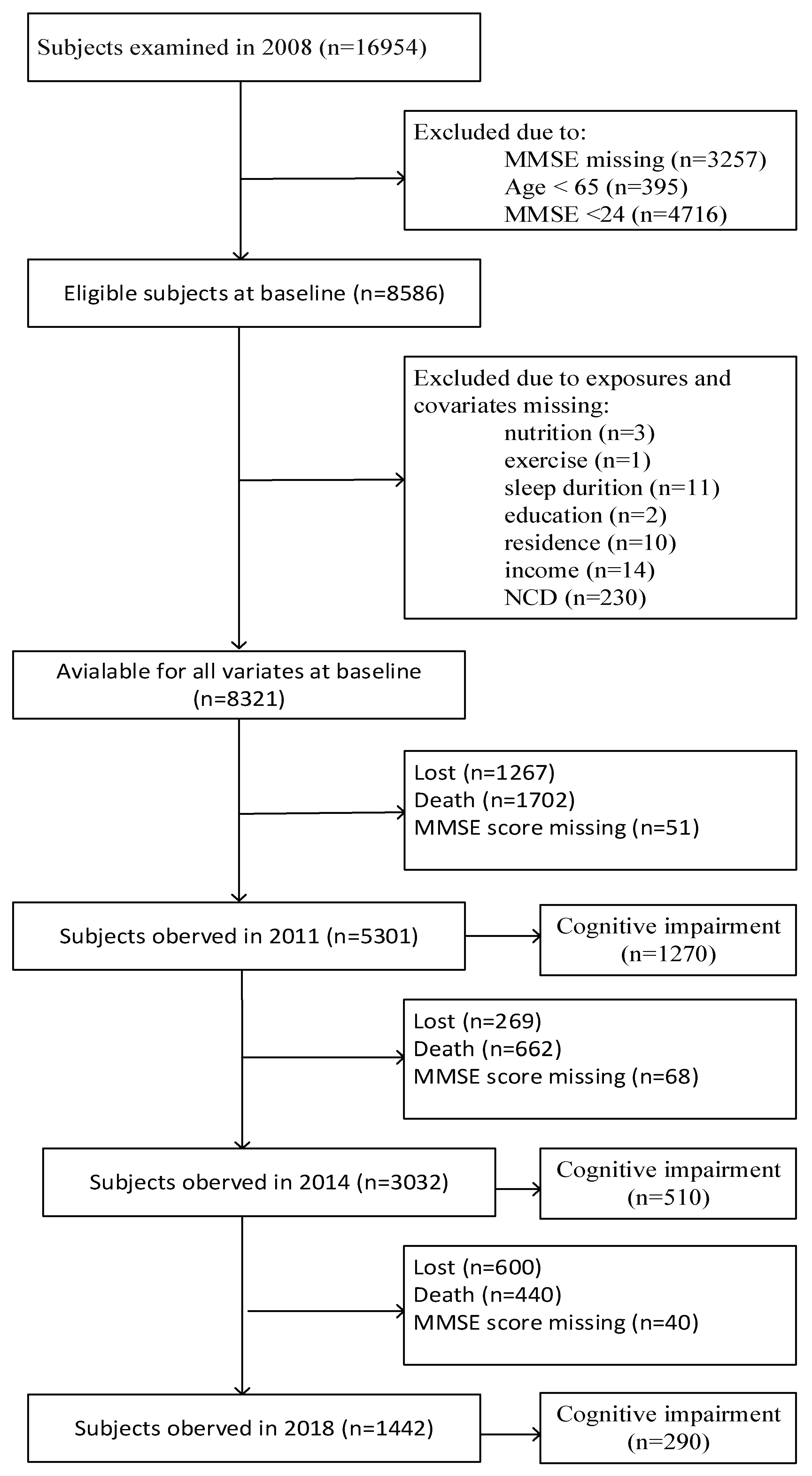
Data collected in 2008/2009 included 16,954 Chinese elderly adults (aged 65 years and above). For the present study, exclusion criteria were (1) cognitive function missing at baseline (n=3,257); (2) age (<65 years old) (n=395); (3) impaired cognitive function at baseline (n = 4,716); (4) key variables and covariables missing (n=265). Total 8,321 participants were included finally. Figure. 1 shows the full process of the inclusion and exclusion of participants in this study.
2.2. Exposures
For single lifestyle activity, this study selected sleep duration, housework. Sleep duration: The individuals were asked to answer “how long do you sleep normally?”. Based on previous literature [13], the study participants were classified into three duration groups: normal (5-10 hours/day) and abnormal (<5 or > 10 hours/day). Housework: The individuals were asked to answer “do you do housework at present?”. Exercise: The individuals were asked to answer “exercise or not at present?”. Finally variable “housework” and “exercise” were aggregated into dichotomies, which were “yes” and “no”. Social connection: “yes” (at least one of the two answers is “yes”, including “do you take part in some social activities at present?” and “do you play cards/mah-jongg at present?”) versus “no” (both “no” for the above two questions).
Figure 1.
Flow chart of the study population.
For the measurement of multiple lifestyle behaviors, this study created dietary behavior, multiple lifestyle activity and combined lifestyle behaviors. 1) Dietary behavior: The individuals were asked to answer “how often eat fish/vegetables/fruits/meat/eggs or drink milk at present?”. Based on the “Dietary Guidelines for Chinese Residents (2022)” [14], we assigned different scores according to different options. The option “every day” was given two points; The option “not everyday, but at least once per week or per month or occasionally” was given one point; The option “rarely or never” was given zero point. The sum of all the above scores were the nutritional score, which was divided into two levels: good (>6 points), and poor (≤6 points). 2). The multiple lifestyle activity integrated “sleep”, “housework”, “exercise” and “social connection”. If the individual preferred “normal” for “sleep”, “yes” for “housework”, “exercise” and “social connection”, “multiple lifestyle activity” was defined as the “favorable” level. If the individuals preferred “abnormal” for sleep, “no” for “housework”, “exercise” and “social connection”, “multiple lifestyle activity” was defined as the “unfavorable” level. Other combinations were defined as the “intermediate” level. 3). The combined multiple behavior was further created by including dietary habits based on multiple lifestyle activity. If the individuals preferred “normal” for “sleep”, both “yes” for “housework”, “exercise” and “social connection”, and “good” for “dietary”, then “multi” was defined as the “favorable” level. If the individual preferred “abnormal” for “sleep”, both “no” for “housework” and “exercise”, and “poor” for “dietary”, then “combined multiple behavior” was defined as the “unfavorable” level. Other combinations were defined as the “intermediate” level.
2.3. Outcome Measurement
Cognitive status was measured according to the Chinese version of the Mini-Mental State Examination (MMSE) at each survey [15], which has been widely used to evaluate cognitive function and turned out to be reliability and validity [16,17]. The total scores on the MMSE ranges from 0 to 30, which included 24 items that assess orientation, naming, registration, attention and calculation, copying a figure, recalling, and language capability, with higher scores representing higher cognitive function. Based on the previous study [18]. We treated responses of “unable to answer” as “wrong”. Individuals with MMSE scores of 24 or higher were considered to have normal cognitive function and MMSE scores of < 24 were considered to suffer cognitive impairment [19].
2.4. Covariates
Sociodemographic variables, including age (“>80” versus “65-80”), sex (“male” versus “female”), marital status (“married” versus “divorced or widowed” versus “never married”), education (“no schooling” versus “1-5 years schooling” versus “>5 years schooling”), residence (“urban” versus “rural”), income (“rich” versus “medium” versus “poor”) was collected and social. Living habits: Three main terms were self-reported: smoking currently (“yes” versus “no”), drinking currently (“yes” versus “no”). Health conditions: The body health status variables were body mass index (BMI) (“underweight (≤18.5 kg/m2”) versus “normal (18.5–23.9 kg/m2) ” versus “overweight or obesity (≥ 24 kg/m2) ”) [20], and self-reported medical diagnoses of non-communicable chronic diseases (NCD) (“yes” (suffering at least one disease of cancer, hypertension, diabetes, heart disease and stroke or cerebrovascular disease) versus “no” (suffering none of the above diseases)).
2.5. Statistical Analysis
Continuous data are presented as mean ± standard deviation, and categorical data are expressed as the count and percentage. One-way ANOVA was applied to compare those continuous respondents, and χ2-tests for categorical variables were conducted to evaluate the differences in sample characteristics according to the status of healthy behaviors in the baseline.
Cox proportional hazards models were performed to assess the relationship between various exposures, including [single lifestyle activity (“sleep duration”, “housework”, “exercise” and “social connection”), multiple lifestyle behaviors (“lifestyle activities”, “dietary behaviors”, and “combined multiple behaviors”] and cognitive impairment in respondents. The crude cumulative incidence rate per 100 person and incidence rate per 100 person-years of cognitive impairment were both estimated. We conducted the unadjusted model and the ultivariable-adjusted model for outcome, adjusting for age, gender, education, martial status, income, residence place, smoking, alcohol drinking, other NCDs, baseline MMSE score and other confounders. The results for associations between exposures and outcomes were presented as hazard ratios (HRs) and 95% CIs.
To comprehensively assess the relationship between sleep duration and cognitive impairment, instead of dividing sleep duration into two groups, we used sleep duration as a continuous variable to evaluate the association by logistic regression, adjusting for sociodemographic characteristics. Restricted cubic spline analysis [21] was performed to examine the pattern of the association between sleep duration (as a continuous variable) and cognitive impairment after adjusting for covariates mentioned above, with 5.0 hours of sleep duration as a reference point. Meanwhile, we also performed the same restricted cubic spline analysis, with nutrition scores as a continuous variable and 6 points as a reference to further understand the relationship between nutrition level and cognitive impairment.
Subgroup analyses were subsequently conducted in different exposure groups, including age, sex, residence, education, NCD and income. To evaluate whether interactions with age, sex, residence, education, NCD and income had an influence on the associations between various exposures and the onset of cognitive impairment, interaction terms were added to ultivariable-adjusted model.
We also conducted sensitivity analyse to evaluate the robustness of our main findings. A competing risk model was performed to assess the relationship between various exposures and cognitive impairment, in which death without cognitive impairment was treated as a competitive event. Data analysis was performed with SAS version 9.3 (SAS Institute, Cary, NC) for Windows (IBM Corp) except for the restricted cubic spline analysis, which was performed using R version 3.4.2 (R Foundation for Statistical Computing). The significance level was set at p < 0.05.
3. Results
Our analysis included 8,321 participants aged 65 years or older without cognitive impairment at baseline (mean age 82.0 [SD 10.5] years). Among the participants, 47.1% of the participants were females, 48.9% were illiterate, 84.8% were residing in rural areas and 24.61% individuals at the baseline reported NCDs. Among Chinese older adults, the proportion of overweight or obesity was 16.6%. The median cognition score of included participants was 29 (IQR: 27–29) in 2008 and 28 (IQR: 25-29) in 2018, respectively. Participants with multiple healthy behaviors, showed a higher value of MMSE score than those with medium and bad behaviors. During a median follow-up of 9.3 years, 2,070 developed all-cause dementia. (Table 1)
Table 2 showed a significant association of combined multiple behaviors with incident cognitive impairment [the hazard ratio (HR) 0.55, 95%CI 0.35 - 0.86]. Among participants with good dietary behaviors, the HR for cognitive impairment comparing poor dietary behaviors was 0.91 (95% CI 0.82 - 0.99). Compared with participants who had poor lifestyle behaviors, the HR for cognitive impairment was 0.65 (95% CI 0.45 - 0.94) in those who had good lifestyle behaviors, respectively. In terms of single lifestyle activity, the findings also revealed protective effects of doing housework, taking exercise and social connection on cognitive performance, while there was not a significant association for sleep after adjusting for covariates.
Subgroup analyses revealed a significant relationship of combined multiple behaviors with cognitive impairment among rural residence (HR = 0.56, 95% CI =0.30 - 0.90) and individuals with lowest education (HR = 0.53, 95% CI =0.35 - 0.91). Furthermore, the association was statistically significant among people with medium income and without NCDs in China. (Figure 2) Similar results were also showed for associations of dietary behaviors with cognitive impairment among older Chinese adults across socio-demographic groups. (Figure 3) However, there was no statistically significant results related to the subgroup analysis of relationships between multiple lifestyle activity and cognitive impairment. (Figure 4)
The Cubic spline curve described the association between healthy dietary score (nutrition score) and incident cognitive impairment events. Compared with 6 points, high healthy dietary scores (>6) were associated with lower risks of cognitive impairment; corresponding, people with a low healthy dietary score (<6) had higher risks of cognitive impairment. (Figure 5) Compared with 10 hours, the risk of cognitive impairment increased with the length of sleep. (Figure 6)
4. Discussion
4.1. Principal Findings
Based on nationally representative data from the CLHLS from 2008 to 2018, we found a significant relationship between combined multiple behaviors and incidence of cognitive impairment among older Chinese adults aged ≥65 years, with consistent results observed for the dietary behaviors, single and multiple lifestyle activities. Subgroup analyses suggested significant associations of combined multiple behaviors with cognitive impairment in females and individuals with lowest education. Furthermore, the association was statistically significant among people living in rural areas and those individuals with medium income and without NCDs in China.
4.2. Literature Comparisons
Numerous studies have explored the potential avenues for the prevention of cognitive impairment/dementia, and the Lancet's 2020 Commission has proposed 12 modifiable risk factors and recommended strategies for reducing the risk of dementia. [5] Among these, the suggestion of increasing social and physical activity for later life population [>65 years old] is relatively consistent with the result of housework, exercise, and social connection in our study. There is clear evidence that social isolation [22,23,24,25] and physical inactivity [26,27,28] as well as reducing housing work are risk factors for dementia, and even intervention during the later life period may have a delayed/preventive effect on dementia. [29,30,31] Accordingly, the Lancet Commissions suggested to sustain midlife and possibly later life physical activity and to increase social activity to prevent dementia. However, research on the relationship between diet and sleep and the risk of cognitive impairment has generated some controversies. Studies have indicated that excessive or insufficient sleep duration [32,33,34,35,36] and disturbance [37] are associated with an increased risk of dementia in the elderly. Nevertheless, research has not identified any causal relationships between sleep disorders and Alzheimer's disease. [38] Furthermore, there is insufficient evidence to support the effectiveness of sleeping medication for preventing cognitive decline, and such medications may have harmful effects. [35,39] Our study, which focused on the relationship between sleep duration and cognitive impairment, did not find any significant association between sleep duration less than 5 hours or more than 10 hours and an increased risk of cognitive impairment. It is worth noting that the relationship between sleep and cognitive impairment is complex and may not be fully explained by a single sleep duration. Further research is needed to elucidate this relationship. As for diet habits, observational study suggests that malnutrition [40] and unhealthy diet with low plant intake [41] are related to accelerated cognitive decline. However, a Cochrane review did not find sufficient evidence that supplementing vitamins or minerals could improve cognition. [42] Although the Mediterranean diet appears to improve global cognition scores, it does not significantly reduce the risk of cognitive impairment or dementia in healthy populations. [43,44] Our study also found that good dietary habits are a protective factor against cognitive impairment, thereby adding evidence in this field for healthy elderly populations in China.
Our study proposed a combined multiple behavior approach by integrating various activities and dietary habits and proposed criteria for good behavior. Our findings demonstrated a significant association between good behavior and reduced risk of cognitive impairment. Similar studies have been conducted among elderly [45,46] and middle-aged populations [47], but these studies generally combined different lifestyle activities, such as smoking and alcohol intake. Meta-analysis on multiple lifestyle activities and cognitive impairment have indicated that these factors have cumulative effects on cognitive impairment risk. [48] Given that individual risk factors account for only a small proportion [2-4%] of the explanation for dementia risk, [5] research or intervention addressing multiple risk factors/behaviors may be more meaningful. Recent studies have been conducted on multiple interventions for lifestyle activities using smartphone apps and other digital methods to improve lifestyle activities and potentially improve brain health outcomes. [49,50] Although the lifestyle behaviors involved in these studies may differ from those in our study, it can be inferred that interventions of a combination of multiple lifestyles could have great prospects in preventing dementia.
4.3. Public Health and Clinical Implications
In terms of public health and clinical implications, this study indicates the strong potential cognitive benefits of adherence to multiple ideal behavioral lifestyle factors regardless of socioeconomic characteristics. Therefore, preventive policies should promote stricter adherence to multiple favourable behavioral lifestyles (such as a healthy diet, good sleep, housework, engaging in regular physical activity and social connection) for all individuals. In clinical practice, more attention needs to be paid to the prevention, identification, and treatment of cognitive impairment in individuals with a low number of healthy lifestyle habits. Furthermore, decreasing the cognition risk could potentially be achieved through promotion of modifiable lifestyles. This study could contribute to the establishment of personalized preventative measures and population-level interventions against cognitive impairment. In addition, a long-term plan of health behavior promotion can be a target for preventing cognitive decline, or even cognitive impairment. Further studies are needed to consider the combined impact of multiple lifestyle factors on dementia as well as neurodegenerative diseases, so that early identification of behavioral risks and intervention could suggest an initial intervention in preserving cognitive impairment in the general population.
4.4. Study Limitations
There are several limitations to this study. First, lifestyle information was collected through self-reports in CLHLS, which may have caused measurement errors. Participants’ lifestyles are not static, and analyses of repeated measures should be considered in the future. Second, a limited number of lifestyle factors were mainly included in this study, and other environmental factors may also influence cognitive impairment. Third, the heterogeneity might come from differences in geography, social demographics, measuring approach and other unmeasured factors. Due to space constraints, further analyses were not performed. Fourth, considering the nature of this observational study, we could not rule out the influence of unmeasured confounding factors on observed associations and it is difficult to derive causality. Well-designed interventional studies are needed. Finally, this study only included older populations in China. The combined effect of long-term multiple behavioral lifestyles on cognition performance among younger and middle-aged adults should be considered in future studies.
5. Conclusions
Adherence to a broad range of healthy lifestyle factors was associated with a significantly lower risk of cognitive impairment. Behavioral lifestyle modification through multifactorial approaches should be a priority for prevention and delayed onset of cognitive impairment and dementia in middle-aged and older adults.
Author Contributions
YZ conceived and designed the study. XR carried out the initial analysis. SZ and YZ interpreted the data and analysed the literature. SZ and RX wrote the first draft of the paper. JZ, CC, JC and XZ provided advice on the first draft and revised the article critically for important intellectual content. All authors reviewed and had final approval of the submitted and published versions.
Funding
This work was supported by Social Science Planning Project of Shandong Province (25CSHJ01)
Institutional Review Board Statement
Not applicable.
Informed Consent Statement
Not applicable.
Data Availability Statement
Data was obtained from the Chinese Longitudinal Healthy Longevity Survey and are available at https://opendata.pku.edu.cn/dataverse/CHADS with the permission of CLHLS.
Conflicts of Interest
The authors declare no conflicts of interest. The funders had no role in the design of the study; in the collection, analyses, or interpretation of data; in the writing of the manuscript; or in the decision to publish the results.
Abbreviations
The following abbreviations are used in this manuscript:
| BMI | Body Mass Index |
| CLHLS | Chinese Longitudinal Healthy Longevity Survey |
| CI | Confidence Interval |
| IQR | Interquartile Range |
| HR | Hazard Ratio |
| MMSE | Mini-Mental State Examination |
| NCD | Non-communicable Chronic Disease |
| SD | Standard Deviation |
References
- United Nations. 2022 World Population Prospects 2022, Online Edition. Available online: https://population.un.org/wpp/.
- Dai, Zhixin; Du, Peng; Dong, Junhan. Re-examining the Old-age Dependency Ratio and Ageing Population in China. Popul. Res. 2023, 3, 94–107. [Google Scholar]
- Economic UNDo; SAP, Division. World population to 2300; United Nations: New York, 2004; pp. 161–162. [Google Scholar]
- Zhang, Y.; Jin, X.R.; Lutz, M.; Ju, S.Y.; Liu, K.Y.; Guo, G.; Zeng, Y.; Yao, Y. Interaction between APOE ε4 and dietary protein intake on cognitive decline: a longitudinal cohort study. Clin. Nutr. 2021, 40(5), 2716–2725. [Google Scholar] [CrossRef] [PubMed]
- Livingston, G.; Huntley, J.; Sommerlad, A.; Ames, D.; Ballard, C.; Banerjee, S.; Brayne, C.; Burns, A.; Cohen-Mansfield, J.; Cooper, C.; et al. Dementia prevention, intervention, and care: 2020 report of the Lancet Commission. Lancet 2020, 396, 413–446. [Google Scholar] [CrossRef] [PubMed]
- Rabin, L.A.; Smart, C.M.; Amariglio, R.E. Subjective Cognitive Decline in Preclinical Alzheimer’s Disease. Annu. Rev. Clin. Psychol. 2017, 13, 369–396. [Google Scholar] [CrossRef] [PubMed]
- Liang, F.; Fu, J.; Turner-McGrievy, G.; Wang, Y.; Qiu, N.; Ding, K.; Zeng, J.; Moore, J.B.; Li, R. Association of Body Mass Index and Plant-Based Diet with Cognitive Impairment among Older Chinese Adults: A Prospective, Nationwide Cohort Study. Nutrients 2022, 14(15), 3132. [Google Scholar] [CrossRef] [PubMed]
- Norton, S.; Matthews, F.E.; Brayne, C. A commentary on studies presenting projections of the future prevalence of dementia. BMC Public Health 2013, 13, 1–1. [Google Scholar] [CrossRef] [PubMed]
- Zhou, S.; Zhou, R.; Zhong, T.; Li, R.; Tan, J.; Zhou, H. Association of smoking and alcohol drinking with dementia risk among elderly men in China. Curr. Alzheimer Res. 2014, 11(9), 899–907. [Google Scholar] [CrossRef] [PubMed]
- Di Marco, L.Y.; Marzo, A.; Muñoz-Ruiz, M.; Ikram, M.A.; Kivipelto, M.; Ruefenacht, D.; Venneri, A.; Soininen, H.; Wanke, I.; Ventikos, Y.A.; Frangi, A.F. Modifiable lifestyle factors in dementia: a systematic review of longitudinal observational cohort studies. J. Alzheimers Dis. 2014, 42(1), 119–35. [Google Scholar] [CrossRef] [PubMed]
- Zeng, Y. Introduction to the Chinese Longitudinal Healthy Longevity Survey (CLHLS). In Healthy longevity in China: demographic, socioeconomic, and psychological dimensions; Zeng, Y., Poston, Jr DL, Vlosky, D.A., Gu, D., Eds.; Springer Publisher: Dordrecht, 2008; pp. 23–38. [Google Scholar]
- Lv, Y.B.; Gao, X.; Yin, Z.X.; Chen, H.S.; Luo, J.S.; Brasher, M.S.; et al. Revisiting the association of blood pressure with mortality in oldest old people in China: community based, longitudinal prospective study. BMJ 2018, 361, k2158. [Google Scholar] [CrossRef] [PubMed]
- Blackwell, T.; et al. Associations of objectively and subjectively measured sleep quality with subsequent cognitive decline in older community-dwelling men: the MrOS sleep study. Sleep 2014, 37, 655–663. [Google Scholar] [CrossRef] [PubMed]
- Zhang, R. Interpretation of the new Dietary guidelines for Chinese Residents. Health Rev. 2022, (7), 4–10. [Google Scholar]
- Katzman, R.; Zhang, M.Y.; Ouang-Ya-Qu; Wang, Z.Y.; Liu, W.T.; Yu, E.; Wong, S.C.; Salmon, D.P.; Grant, I. A Chinese version of the Mini-Mental State Examination; impact of illiteracy in a Shanghai dementia survey. J. Clin. Epidemiol. 1988, 41, 971–8. [Google Scholar] [CrossRef] [PubMed]
- Lv, X.; et al. Cognitive decline and mortality among community-dwelling Chinese older people. BMC Med. 2019, 17, 63. [Google Scholar] [CrossRef] [PubMed]
- Zeng, Y.; Feng, Q.; Hesketh, T.; Christensen, K.; Vaupel, J. W. Survival, disabilities in activities of daily living, and physical and cognitive functioning among the oldest-old in China: a cohort study. Lancet 2017, 389, 1619–1629. [Google Scholar] [CrossRef]
- Early life influences on cognitive impairment among oldest old Chinese. J. Gerontol. Ser. B Psychol. Sci. Soc. Sci. 63(1), S25–S33. [CrossRef] [PubMed]
- Tombaugh, T.N.; McIntyre, N.J. The mini-mental state examination: a comprehensive review. J. Am. Geriatr. Soc. 1992, 40(9), 922–935. [Google Scholar] [CrossRef]
- Blackwell, T.; et al. Associations of objectively and subjectively measured sleep quality with subsequent cognitive decline in older community-dwelling men: the MrOS sleep study. Sleep 2014, 37, 655–663. [Google Scholar] [CrossRef] [PubMed]
- Croxford, R. Restricted cubic spline regression: a brief introduction; Institute for Clinical Evaluative Sciences: Toronto, 2016; pp. 1–5. [Google Scholar]
- Chen, C.; Mok, V.C.T. Marriage and risk of dementia: systematic review and meta-analysis of observational studies. J. Neurol. Neurosurg. Psychiatry 2018, 89(3), 227. [Google Scholar] [CrossRef]
- Gardener, H.; Levin, B.; DeRosa, J.; Rundek, T.; Wright, C.B.; Elkind, M.S.V.; et al. Social Connectivity is Related to Mild Cognitive Impairment and Dementia. J. Alzheimers Dis. 2021, 84(4), 1811–20. [Google Scholar] [CrossRef]
- Evans, I.E.M.; Martyr, A.; Collins, R.; Brayne, C.; Clare, L. Social Isolation and Cognitive Function in Later Life: A Systematic Review and Meta-Analysis. J. Alzheimers Dis. 2019, 70(s1), S119–S44. [Google Scholar] [CrossRef]
- Joyce, J.; Ryan, J.; Owen, A.; Hu, J.; McHugh Power, J.; Shah, R.; et al. Social isolation, social support, and loneliness and their relationship with cognitive health and dementia. Int. J. Geriatr. Psychiatry 2021, 37(1). [Google Scholar] [CrossRef]
- Liu, Y.; Hou, X.; Tang, Z.; Zhang, H.; Liu, J. The effect of different types of physical activity on cognitive reaction time in older adults in China. Front Public Health 2022, 10, 1051308. [Google Scholar] [CrossRef]
- Angevaren, M.; Vanhees, L.; Nooyens, A.C.; Wendel-Vos, C.G.; Verschuren, W.M. Physical activity and 5-year cognitive decline in the Doetinchem cohort study. Ann. Epidemiol. 2010, 20(6), 473–9. [Google Scholar] [CrossRef]
- Jiang, C.; Xu, Y. The association between mild cognitive impairment and doing housework. Aging Ment. Health 2014, 18(2), 212–6. [Google Scholar] [CrossRef]
- Law, C.K.; Lam, F.M.; Chung, R.C.; Pang, M.Y. Physical exercise attenuates cognitive decline and reduces behavioural problems in people with mild cognitive impairment and dementia: a systematic review. J. Physiother. 2020, 66(1), 9–18. [Google Scholar] [CrossRef]
- Teri, L.; Logsdon, R.G.; McCurry, S.M.; Pike, K.C.; McGough, E.L. Translating an Evidence-based Multicomponent Intervention for Older Adults With Dementia and Caregivers. Gerontologist 2020, 60(3), 548–57. [Google Scholar] [CrossRef]
- Kelly, M.E.; Duff, H.; Kelly, S.; McHugh Power, J.E.; Brennan, S.; Lawlor, B.A.; et al. The impact of social activities, social networks, social support and social relationships on the cognitive functioning of healthy older adults: a systematic review. Syst. Rev. 2017, 6(1), 259. [Google Scholar] [CrossRef]
- Lutsey, P.L.; Misialek, J.R.; Mosley, T.H.; Gottesman, R.F.; Punjabi, N.M.; Shahar, E.; et al. Sleep characteristics and risk of dementia and Alzheimer's disease: The Atherosclerosis Risk in Communities Study. Alzheimers Dement. 2018, 14(2), 157–66. [Google Scholar] [CrossRef]
- Sindi, S.; Kareholt, I.; Johansson, L.; Skoog, J.; Sjoberg, L.; Wang, H.X.; et al. Sleep disturbances and dementia risk: A multicenter study. Alzheimers Dement. 2018, 14(10), 1235–42. [Google Scholar] [CrossRef]
- Chen, J.C.; Espeland, M.A.; Brunner, R.L.; Lovato, L.C.; Wallace, R.B.; Leng, X.; et al. Sleep duration, cognitive decline, and dementia risk in older women. Alzheimers Dement. 2016, 12(1), 21–33. [Google Scholar] [CrossRef]
- Ohara, T.; Honda, T.; Hata, J.; Yoshida, D.; Mukai, N.; Hirakawa, Y.; et al. Association Between Daily Sleep Duration and Risk of Dementia and Mortality in a Japanese Community. J. Am. Geriatr. Soc. 2018, 66(10), 1911–8. [Google Scholar] [CrossRef]
- Li, J.; Ogrodnik, M.; Kolachalama, V.B.; Lin, H.; Au, R. Assessment of the Mid-Life Demographic and Lifestyle Risk Factors of Dementia Using Data from the Framingham Heart Study Offspring Cohort. J. Alzheimers Dis. 2018, 63(3), 1119–27. [Google Scholar] [CrossRef]
- Shi, L.; Chen, S.J.; Ma, M.Y.; Bao, Y.P.; Han, Y.; Wang, Y.M.; et al. Sleep disturbances increase the risk of dementia: A systematic review and meta-analysis. Sleep Med. Rev. 2018, 40, 4–16. [Google Scholar] [CrossRef]
- Huang, J.; Zuber, V.; Matthews, P.M.; Elliott, P.; Tzoulaki, J.; Dehghan, A. Sleep, major depressive disorder, and Alzheimer disease: A Mendelian randomization study. Neurology 2020, 95(14), e1963–e70. [Google Scholar]
- Bronskill, S.E.; Campitelli, M.A.; Iaboni, A.; Herrmann, N.; Guan, J.; Maclagan, L.C.; et al. Low-Dose Trazodone, Benzodiazepines, and Fall-Related Injuries in Nursing Homes: A Matched-Cohort Study. J. Am. Geriatr. Soc. 2018, 66(10), 1963–71. [Google Scholar] [CrossRef]
- Feng, L.; Chu, Z.; Quan, X.; Zhang, Y.; Yuan, W.; Yao, Y.; et al. Malnutrition is positively associated with cognitive decline in centenarians and oldest-old adults: A cross-sectional study. EClinicalMedicine 2022, 47, 101336. [Google Scholar] [CrossRef]
- Zhu, A.; Yuan, C.; Pretty, J.; Ji, J.S. Plant-based dietary patterns and cognitive function: A prospective cohort analysis of elderly individuals in China (2008-2018). Brain Behav. 2022, 12(8), e2670. [Google Scholar] [CrossRef]
- Rutjes, A.W.; Denton, D.A.; Di Nisio, M.; Chong, L.Y.; Abraham, R.P.; Al-Assaf, A.S.; et al. Vitamin and mineral supplementation for maintaining cognitive function in cognitively healthy people in mid and late life. Cochrane Database Syst. Rev. 2018, 12(12), CD011906. [Google Scholar] [CrossRef]
- Loughrey, D.G.; Lavecchia, S.; Brennan, S.; Lawlor, B.A.; Kelly, M.E. The Impact of the Mediterranean Diet on the Cognitive Functioning of Healthy Older Adults: A Systematic Review and Meta-Analysis. Adv. Nutr. 2017, 8(4), 571–86. [Google Scholar] [CrossRef]
- Radd-Vagenas, S.; Duffy, S.L.; Naismith, S.L.; Brew, B.J.; Flood, V.M.; Fiatarone Singh, M.A. Effect of the Mediterranean diet on cognition and brain morphology and function: a systematic review of randomized controlled trials. Am. J. Clin. Nutr. 2018, 107(3), 389–404. [Google Scholar] [CrossRef]
- Lee, Y.; Back, J.H.; Kim, J.; Byeon, H.; Kim, S.; Ryu, M. Clustering of multiple healthy lifestyles among older Korean adults living in the community. Geriatr. Gerontol. Int. 2012, 12(3), 515–23. [Google Scholar] [CrossRef]
- Lyu, J.; Lee, S.H.; Kim, H.Y. Associations between healthy lifestyles and health outcomes among older Koreans. Geriatr. Gerontol. Int. 2016, 16(6), 663–9. [Google Scholar] [CrossRef]
- Kesse-Guyot, E.; Andreeva, V.A.; Lassale, C.; Hercberg, S.; Galan, P. Clustering of midlife lifestyle behaviors and subsequent cognitive function: a longitudinal study. Am. J. Public Health 2014, 104(11), e170-7. [Google Scholar] [CrossRef]
- Peters, R.; Booth, A.; Rockwood, K.; Peters, J.; D'Este, C.; Anstey, K.J. Combining modifiable risk factors and risk of dementia: a systematic review and meta-analysis. BMJ Open 2019, 9(1), e022846. [Google Scholar] [CrossRef]
- Wesselman, L.M.; Hooghiemstra, A.M.; Schoonmade, L.J.; de Wit, M.C.; van der Flier, W.M.; Sikkes, S.A. Web-Based Multidomain Lifestyle Programs for Brain Health: Comprehensive Overview and Meta-Analysis. JMIR Ment. Health 2019, 6(4), e12104. [Google Scholar] [CrossRef]
- Rainero, I.; Summers, M.J.; Monter, M.; Bazzani, M.; Giannouli, E.; Aumayr, G.; et al. The My Active and Healthy Aging ICT platform prevents quality of life decline in older adults: a randomised controlled study. Age Ageing 2021, 50(4), 1261–7. [Google Scholar] [CrossRef]
Figure 2.
The relationship between combined multiple behaviors and cognitive impairment across socio-demographic groups.
Figure 2.
The relationship between combined multiple behaviors and cognitive impairment across socio-demographic groups.
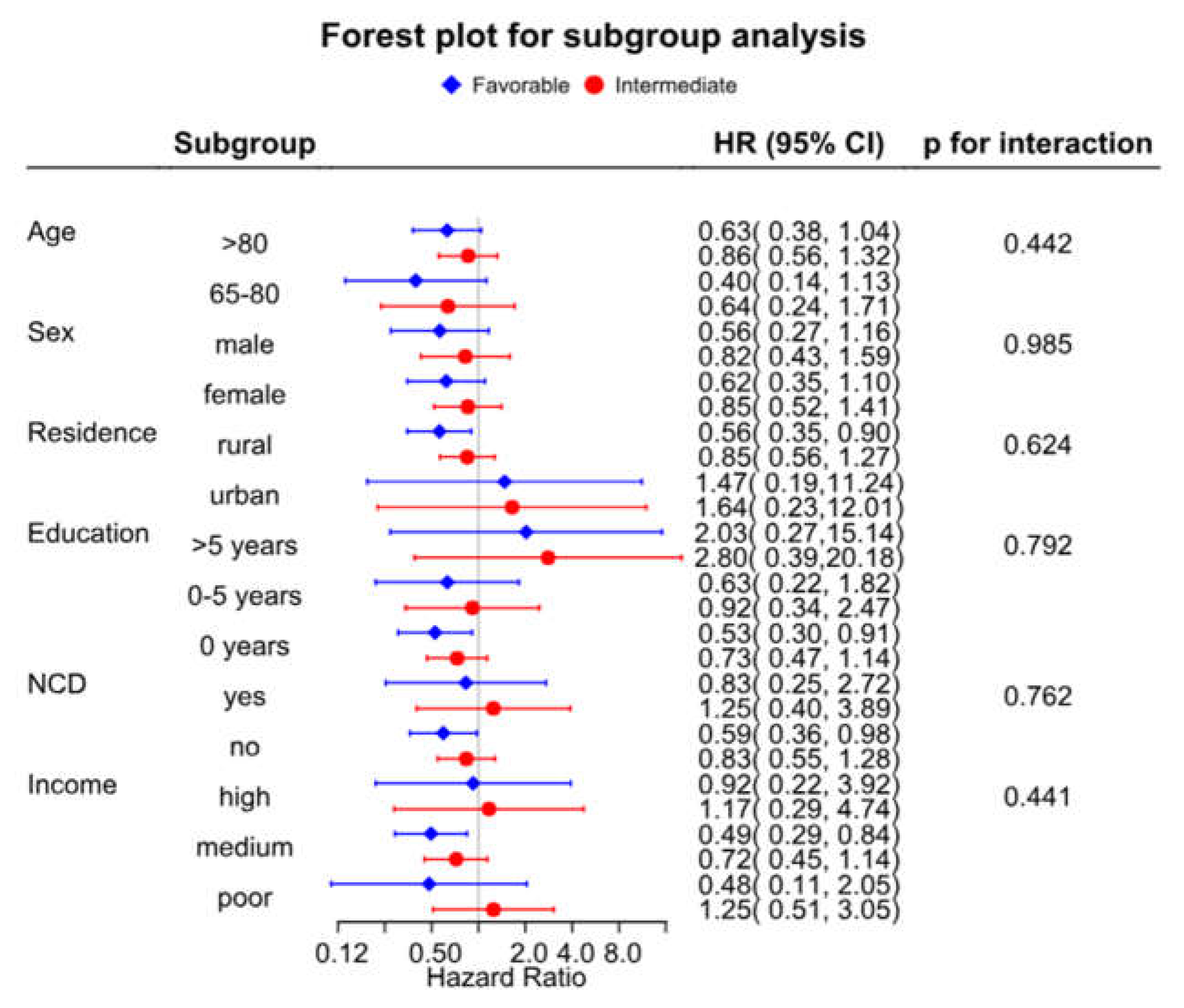
Figure 3.
The relationship between multiple lifestyle activity and cognitive impairment across socio-demographic groups.
Figure 3.
The relationship between multiple lifestyle activity and cognitive impairment across socio-demographic groups.
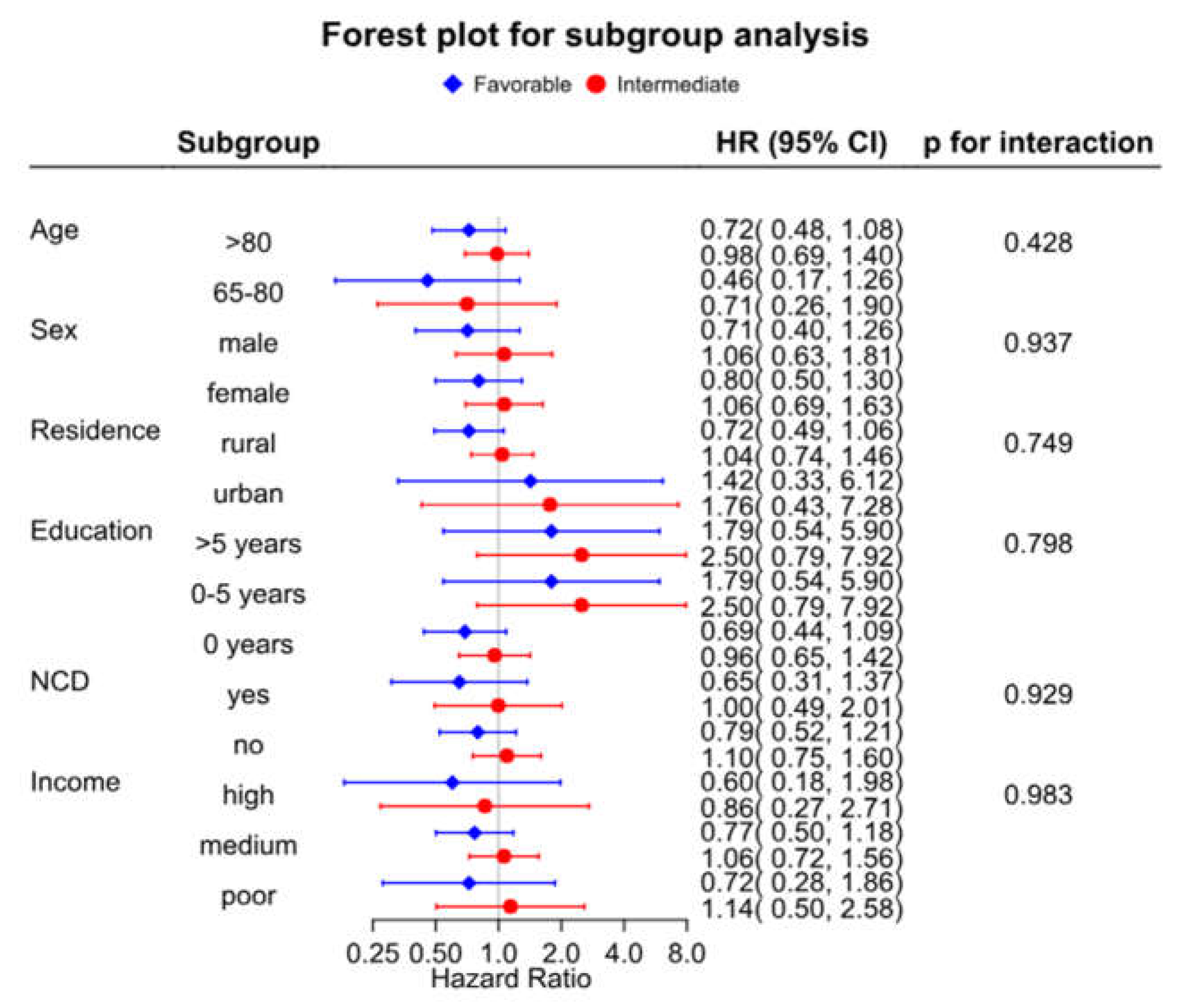
Figure 4.
The relationship between dietary behaviors and cognitive impairment across socio-demographic groups.
Figure 4.
The relationship between dietary behaviors and cognitive impairment across socio-demographic groups.
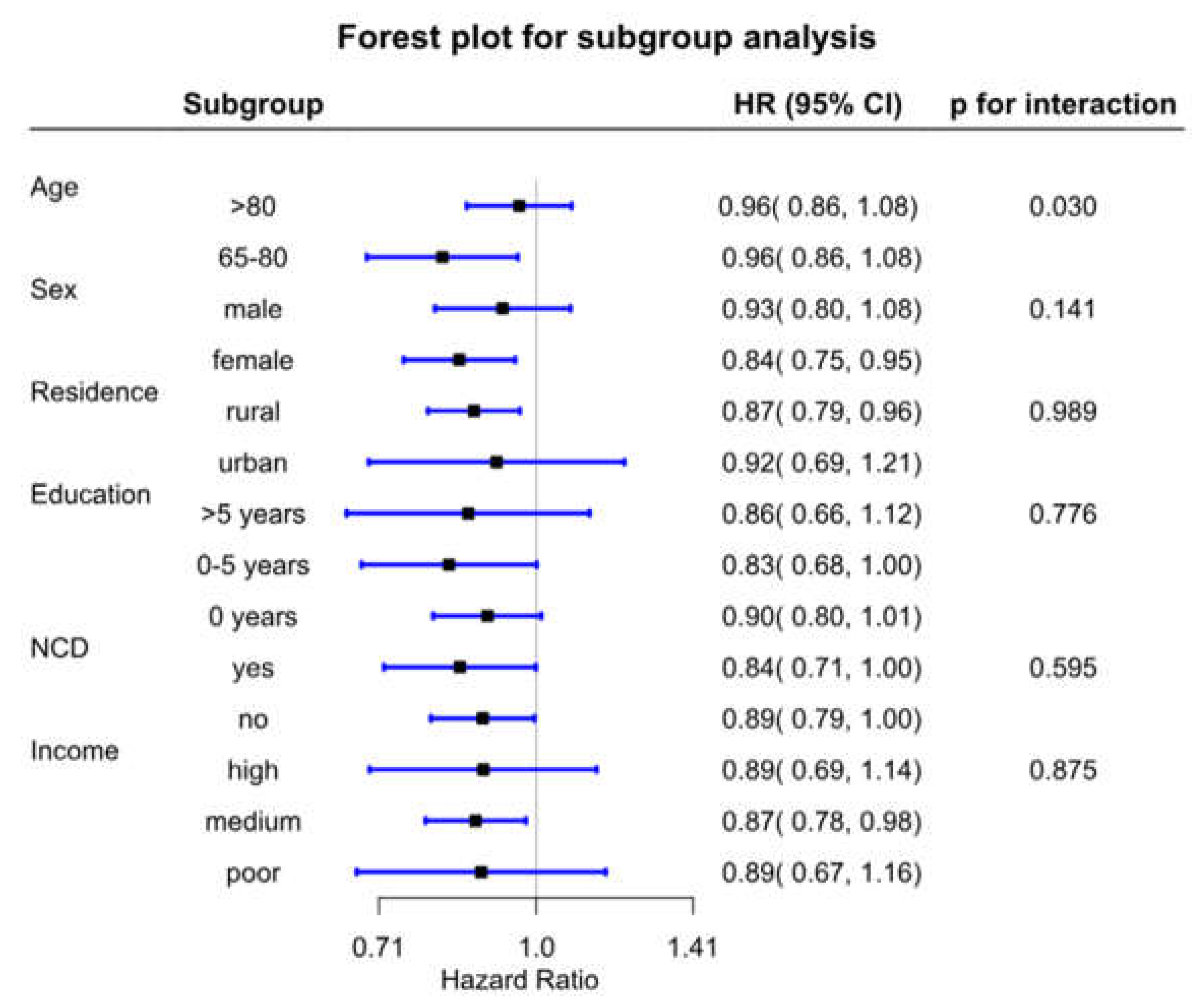
Figure 5.
Cubic splines for the risk of cognitive impairment across healthy dietary scores.
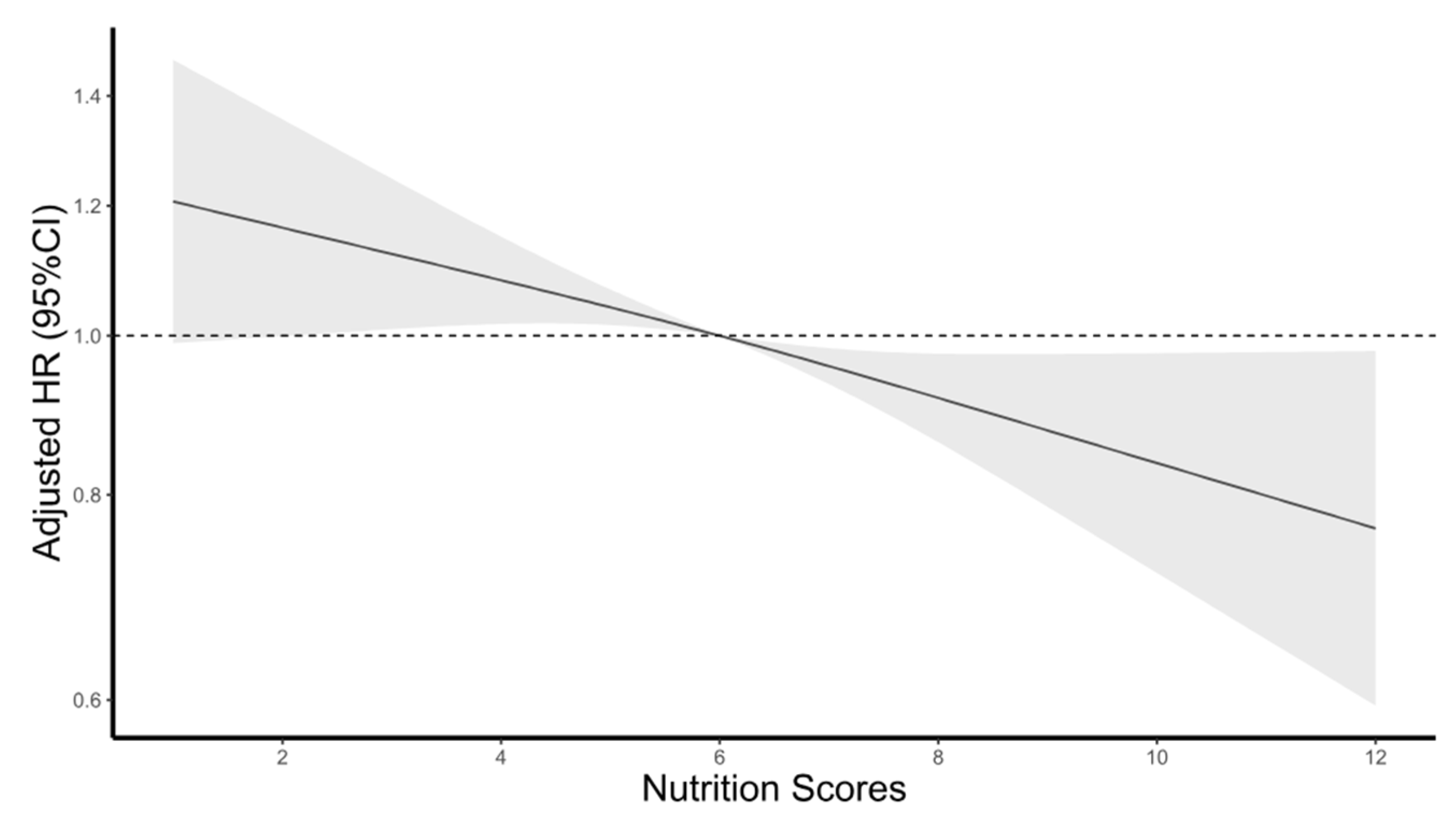
Figure 6.
The relationship between dietary behaviors and cognitive impairment across socio-demographic groups.
Figure 6.
The relationship between dietary behaviors and cognitive impairment across socio-demographic groups.
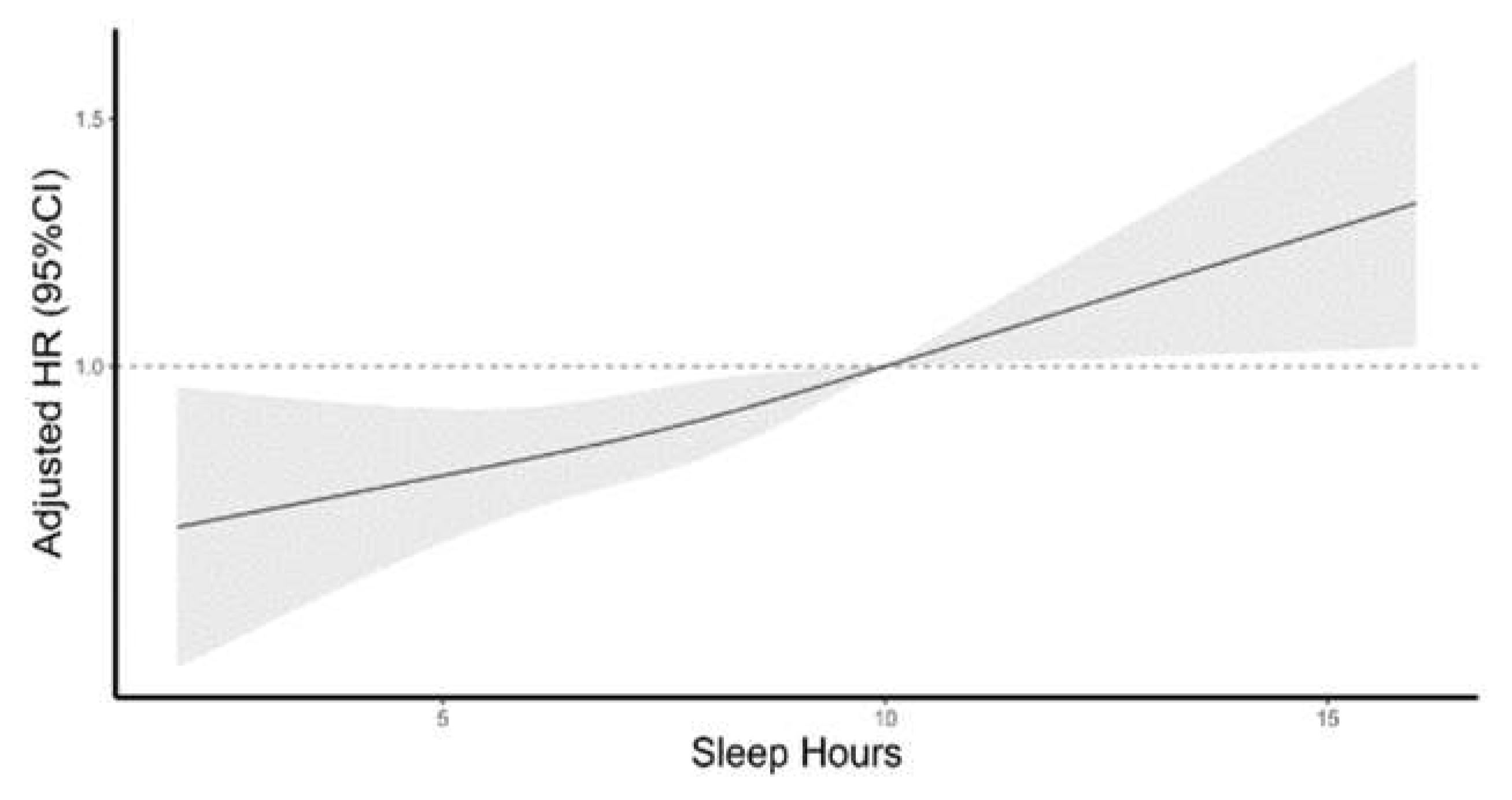

Table 1.
Characteristics of participants, cognition status at the baseline across the group of combined multiple behaviors.
Table 1.
Characteristics of participants, cognition status at the baseline across the group of combined multiple behaviors.
| Characteristics | All participants | Combined multiple behaviors | P value | ||
|---|---|---|---|---|---|
| Favorable | Intermediate | Unfavorable | |||
| Age in years | <0.001 | ||||
| n | 8321 | 636 | 7569 | 116 | |
| Mean (SD) | 82.0 (10.5) | 77.3 (9.2) | 82.3 (10.5) | 90.0 (8.7) | |
| Age_group,n(%) | <0.001 | ||||
| ≥80 | 4766/8321 (57.3%) | 238/636 (37.4%) | 4425/7569 (58.5%) | 103/116 (88.8%) | |
| 65-79 | 3555/8321 (42.7%) | 398/636 (62.6%) | 3144/7569 (41.5%) | 13/116 (11.2%) | |
| Sex,n(%) | 0.036 | ||||
| Male | 4398/8321 (52.9%) | 367/636 (57.7%) | 3968/7569 (52.4%) | 63/116 (54.3%) | |
| Female | 3923/8321 (47.1%) | 269/636 (42.3%) | 3601/7569 (47.6%) | 53/116 (45.7%) | |
| Education,n(%) | <0.001 | ||||
| >5 years | 1974/8321 (23.7%) | 330/636 (51.9%) | 1629/7569 (21.5%) | 15/116 (12.9%) | |
| 1-5 years | 2281/8321 (27.4%) | 162/636 (25.5%) | 2094/7569 (27.7%) | 25/116 (21.6%) | |
| 0 year | 4066/8321 (48.9%) | 144/636 (22.6%) | 3846/7569 (50.8%) | 76/116 (65.5%) | |
| Residence,n(%) | <0.001 | ||||
| Urban | 1264/8321 (15.2%) | 212/636 (33.3%) | 1044/7569 (13.8%) | 8/116 (6.9%) | |
| Rural | 7057/8321 (84.8%) | 424/636 (66.7%) | 6525/7569 (86.2%) | 108/116 (93.1%) | |
| BMI,n(%) | <0.001 | ||||
| Underweight | 2164/8321 (26.0%) | 97/636 (15.3%) | 2025/7569 (26.8%) | 42/116 (36.2%) | |
| Normal Weight | 4775/8321 (57.4%) | 354/636 (55.7%) | 4355/7569 (57.5%) | 66/116 (56.9%) | |
| Overweight or Obesity | 1382/8321 (16.6%) | 185/636 (29.1%) | 1189/7569 (15.7%) | 8/116 (6.9%) | |
| Income,n(%) | <0.001 | ||||
| High | 1274/8321 (15.3%) | 179/636 (28.1%) | 1086/7569 (14.3%) | 9/116 (7.8%) | |
| Medium | 5831/8321 (70.1%) | 433/636 (68.1%) | 5321/7569 (70.3%) | 77/116 (66.4%) | |
| Low | 1216/8321 (14.6%) | 24/636 (3.8%) | 1162/7569 (15.4%) | 30/116 (25.9%) | |
| Marital status,n(%) | <0.001 | ||||
| Married | 3841/8321 (46.2%) | 392/636 (61.6%) | 3414/7569 (45.1%) | 35/116 (30.2%) | |
| Divorced or Widowed | 4409/8321 (53.0%) | 238/636 (37.4%) | 4091/7569 (54.0%) | 80/116 (69.0%) | |
| Never Married | 71/8321 (0.9%) | 6/636 (0.9%) | 64/7569 (0.8%) | 1/116 (0.9%) | |
| Smoking n(%) | 0.799 | ||||
| Yes | 1828/8321 (22.0%) | 136/636 (21.4%) | 1664/7569 (22.0%) | 28/116 (24.1%) | |
| No | 6493/8321 (78.0%) | 500/636 (78.6%) | 5905/7569 (78.0%) | 88/116 (75.9%) | |
| Alcohol drinking,n(%) | 0.009 | ||||
| Yes | 1693/8321 (20.3%) | 153/636 (24.1%) | 1525/7569 (20.1%) | 15/116 (12.9%) | |
| No | 6628/8321 (79.7%) | 483/636 (75.9%) | 6044/7569 (79.9%) | 101/116 (87.1%) | |
| MMSE score in 2008 | <0.001 | ||||
| n | 8321 | 636 | 7569 | 116 | |
| Mean (SD) | 28.0 (1.8) | 28.8 (1.5) | 27.9 (1.9) | 27.1 (1.9) | |
| Median (Q1, Q3) | 29.0 (27.0, 29.0) | 29.0 (28.0, 30.0) | 29.0 (27.0, 29.0) | 27.0 (25.0, 29.0) | |
| MMSE score in 2018 | 0.021 | ||||
| n | 1442 | 149 | 1286 | 7 | |
| Mean (SD) | 25.8 (6.0) | 27.0 (4.5) | 25.6 (6.1) | 24.7 (3.6) | |
| Median (Q1, Q3) | 28.0 (25.0, 29.0) | 29.0 (26.0, 30.0) | 28.0 (25.0, 29.0) | 24.0 (23.0, 29.0) | |
Table 2.
The association of single and multiple behaviors with cognitive impairment.
| Risk factor | N events | Incidence rate per 100 person (95% CI) |
Incidence rate per 100 person-years (95% CI) |
Unadjusted model HR (95% CI) | Multivariable adjusted model HR (95% CI) |
|---|---|---|---|---|---|
| Single lifestyle activity | |||||
| Sleep | |||||
| 5-10 h | 1825 | 24.68 (23.70-25.67) | 5.21 (5.13-5.28) | 0.81 (0.71, 0.92) | 0.94 (0.82, 1.08) |
| <5 h or >10h | 245 | 26.49 (23.67-29.46) | 6.27 (5.53-7.08) | ref | ref |
| Housework | |||||
| Yes | 1497 | 25.29 (24.19-26.42) | 4.93 (4.69-5.17) | 0.65 (0.59, 0.72) | 0.75 (0.68, 0.83) |
| No | 573 | 23.86 (22.16-25.61) | 6.69 (6.52-6.86) | ref | ref |
| Exercise | |||||
| Yes | 671 | 21.42 (20.00-22.90) | 4.33 (4.24-4.44) | 0.73 (0.67, 0.80) | 0.88 (0.80, 0.97) |
| No | 1399 | 19.86 (18.39-21.39) | 5.96 (5.66-6.27) | ref | ref |
| Social connection | |||||
| Yes | 554 | 19.86 (18.39-21.39) | 3.78 (3.69-3.88) | 0.60 (0.54, 0.66) | 0.80 (0.72, 0.88) |
| No | 1516 | 27.41 (26.24-28.61) | 6.24 (5.93-6.55) | ref | ref |
| Multiple behaviors | |||||
| Dietary behaviors | |||||
| Good | 777 | 21.54 (20.21-22.92) | 4.62 (4.31-4.95) | 0.81 (0.74, 0.89) | 0.91 (0.82, 0.99) |
| Poor | 1293 | 27.43 (26.16-28.73) | 5.84 (5.74-5.93) | ref | ref |
| Multiple lifestyle activity | |||||
| Favorable | 166 | 15.81 (13.65-18.16) | 2.89 (2.47-3.35) | 0.35 (0.24, 0.50) | 0.65 (0.45, 0.94) |
| Intermediate | 1868 | 26.42 (25.40-27.47) | 5.72 (5.47-5.89) | 0.69 (0.50, 0.96) | 0.94 (0.68, 1.31) |
| Unfavorable | 36 | 17.91 (12.87-23.92) | 6.30 (5.68-6.96) | ref | ref |
| Combined multiple behaviors | |||||
| Favorable (>5) | 93 | 14.62 (11.97-17.61) | 2.69 (2.47-4.45) | 0.30 (0.19, 0.46) | 0.55 (0.35, 0.86) |
| Intermediate (2-5) | 1952 | 25.79 (24.81-26.79) | 5.55 (5.32-5.80) | 0.61 (0.41, 0.91) | 0.81 (0.54, 1.20) |
| Unfavorable (0-1) | 25 | 21.55 (14.46-30.15) | 7.32 (6.47-8.52) | ref | ref |
Disclaimer/Publisher’s Note: The statements, opinions and data contained in all publications are solely those of the individual author(s) and contributor(s) and not of MDPI and/or the editor(s). MDPI and/or the editor(s) disclaim responsibility for any injury to people or property resulting from any ideas, methods, instructions or products referred to in the content. |
© 2026 by the authors. Licensee MDPI, Basel, Switzerland. This article is an open access article distributed under the terms and conditions of the Creative Commons Attribution (CC BY) license.
Copyright: This open access article is published under a Creative Commons CC BY 4.0 license, which permit the free download, distribution, and reuse, provided that the author and preprint are cited in any reuse.