

Submitted:
09 September 2026
Posted:
10 September 2026
You are already at the latest version
Abstract
Dissociative Identity Disorder (DID), formerly known as multiple personality disorder, is recognized as one of the most complex conditions in the fields of psychiatry and psychology. Initially associated with interpretations of demonic possession, it later came to be understood from a clinical perspective through the contributions of scholars such as Rush, Charcot, and Janet, who emphasized its dissociative nature. The former diagnostic category of hysteria was subsequently reorganized within modern psychiatric classification systems while preserving its underlying conceptual framework. Furthermore, widely publicized cases, such as The Three Faces of Eve and Sybil, contributed to strengthening the association between DID and early-life trauma. It is estimated that 1.5% of the Brazilian population is affected by DID. Between 2018 and 2023, Brazil's Ministry of Health recorded 3,667 cases. This study was conducted as a narrative, descriptive, and exploratory literature review, drawing on databases including Google Scholar, SciELO, and PePSIC, as well as scientific publications, using specific search descriptors related to dissociation and Dissociative Identity Disorder.
Keywords:
dissociation
; psychoanalysis
; psychopathology
; mental health
; mental disorders
1. Introduction
Dissociative Identity Disorder (DID), formerly referred to as multiple personality disorder, is recognized as one of the most complex clinical conditions in the fields of psychiatry and psychoanalysis. Until the nineteenth century, its manifestations were largely interpreted as demonic possession or other supernatural phenomena. With the advancement of medicine, however, these interpretations were gradually replaced by a clinical perspective, particularly through the contributions of Benjamin Rush, Jean-Martin Charcot, and Pierre Janet, who emphasized the disorder’s dissociative nature [1].
The study by Panitz et al. [2] demonstrates that the former diagnostic category of hysteria, described since the time of Hippocrates and extensively investigated by Charcot and Freud, was removed from modern diagnostic classifications and redistributed into categories such as dissociative disorders, somatic symptom and related disorders, depersonalization/derealization disorder, functional neurological symptom disorder, among others. This reclassification did not eliminate the underlying nature of the condition but instead enabled greater diagnostic precision and more accurate clinical investigation. By conceptualizing the fragmentation of consciousness as a response to trauma, Janet anticipated the contemporary understanding of DID, which is currently regarded as an unconscious defensive mechanism against intolerable experiences.
Widely publicized clinical cases, such as those of Chris Costner Sizemore (The Three Faces of Eve) and Shirley Ardell Mason (Sybil), contributed to the popularization of the disorder and reinforced its close association with early traumatic experiences, particularly childhood abuse [1,3,4,5]. Panitz et al. [2] further support this perspective by emphasizing that dissociative disorders are consistently associated with severe trauma, neglect, or abuse, thereby confirming the central role of trauma in the etiology of DID.
From a psychoanalytic perspective, Freud interpreted hysterical symptoms as manifestations of unconscious conflict and sexual repression, whereas Bleuler associated them with schizophrenia. Contemporary authors such as Dell [6] and Maraldi [7] argue that DID should be understood as a complex and chronic dissociative disorder that extends far beyond the mere presence of multiple identities. Panitz et al. [2] further note that although the term hysteria has been abandoned, its conceptual core persists under contemporary diagnostic categories, including DID, dissociative amnesia, and functional neurological symptom disorder.
DID is characterized by the presence of two or more distinct identity states, each with its own memories, behavioral patterns, and even physiological characteristics [1,8]. Furthermore, the disorder is frequently associated with comorbid conditions, including dissociative fugue, psychogenic non-epileptic seizures, and psychosomatic symptoms, highlighting its considerable clinical complexity [9]. By emphasizing unconscious processes and the defensive function of dissociation, psychoanalysis provides a valuable framework for understanding DID as an extreme psychological response to trauma. This fragmentation should not be viewed solely as a pathological phenomenon but also as an unconscious survival strategy, illustrating both the limitations of the human mind when confronted with overwhelming suffering and its remarkable capacity to develop adaptive mechanisms that enable survival.
As a fundamental dimension in the understanding of dissociative disorders, mental health constitutes an essential component of overall quality of life. Rather than merely representing the absence of illness, it encompasses a dynamic state of balance among biological, psychological, social, and cultural factors. This balance is often disrupted by traumatic experiences, neglect, or abuse, making individuals with DID particularly vulnerable. Situating the disorder within this broader framework highlights that its manifestations extend beyond identity fragmentation, reflecting the complex interplay among trauma, subjectivity, and sociocultural context. This perspective underscores the need for integrative and multidisciplinary approaches capable of combining clinical practice with public health policies, thereby promoting not only effective treatment but also conditions that foster the psychological and emotional well-being of affected individuals.
It is estimated that approximately 1.5% of the Brazilian population is affected by DID. According to data from Brazil’s Ministry of Health, between 2018 and 2023, a total of 3,667 cases of other dissociative disorders (ICD-10 F44.8), including DID, were recorded in outpatient healthcare services, underscoring the epidemiological and clinical relevance of this condition [10].
Figure 1 presents the annual variation in the number of reported cases between 2018 and 2023.
The development of this article is grounded in the complexity and clinical relevance of Dissociative Identity Disorder (DID) within the fields of psychology and psychiatry. DID is a multifaceted condition characterized by a broad spectrum of symptoms and clinical presentations, posing significant challenges to both scientific research and professional practice.
From an academic perspective, this study seeks to contribute to reducing existing gaps in the specialized literature on DID. By providing a comprehensive analysis of its causes, clinical manifestations, and implications, the study aims to stimulate further research and expand current understanding of the disorder. Furthermore, its findings may support healthcare professionals in achieving more accurate diagnoses and implementing more effective therapeutic interventions, thereby directly benefiting individuals living with DID.
The social relevance of this study is equally significant. Individuals with DID frequently experience stigma and misunderstanding, factors that hinder social integration and limit access to appropriate mental healthcare. Expanding knowledge about the disorder may promote greater public awareness and empathy, contributing to the reduction of prejudice and fostering a more inclusive society. Such an enhanced understanding also has the potential to support the development of more effective mental health interventions and to inform public policies that ensure access to specialized services and continuous psychological support.
The primary objective of this study is to examine the clinical characteristics of DID and the psychological processes underlying the disorder. More specifically, it aims to identify the comorbidities most frequently associated with DID and to analyze how these conditions affect individuals’ quality of life across personal, social, academic, and occupational domains.
It is expected that this research will contribute to a more comprehensive understanding of the psychological mechanisms underlying DID while promoting greater awareness and dispelling common misconceptions surrounding the disorder. By examining the impact of DID on individuals’ lives, this study seeks to foster empathy and a deeper understanding of the challenges they face, ultimately contributing to the advancement of clinical practice, public policy, and social initiatives aimed at building a more inclusive, supportive, and compassionate society.
2. Materials and Methods
This study was conducted as a narrative, descriptive, and exploratory literature review with the aim of identifying, synthesizing, and critically analyzing the scientific literature on Dissociative Identity Disorder (DID). This methodological approach was selected to facilitate a comprehensive understanding of the disorder across its clinical, psychological, and social dimensions, while also identifying gaps in the existing literature that may guide future research.
The theoretical corpus was compiled through searches of multiple academic databases and scholarly search platforms, including Google Scholar, SciELO, and PePSIC, as well as scientific books and reference works in the fields of psychology and psychiatry. The search strategy employed predefined keywords, including Dissociative Disorders, Dissociative Identity Disorder, DID, Depersonalization, Schizophrenia, Dissociation, and their Portuguese equivalents.
The inclusion criteria comprised peer-reviewed articles, books, and scientific publications addressing DID, its clinical manifestations, associated comorbidities, and social implications, published in Portuguese, English, or Spanish. Studies lacking scientific rigor, publications not indexed in recognized academic databases, and opinion-based texts without adequate scholarly support were excluded.
It should be noted that two of the references included in this review were neither peer-reviewed journal articles nor academic books. Nevertheless, these sources underwent a rigorous critical appraisal and were found to meet the predefined criteria for quality, credibility, and relevance. In addition, the authors’ academic and professional qualifications were verified, confirming that they were licensed psychologists or professionals with expertise in the field of psychology, thereby strengthening the reliability of these sources. Their inclusion was justified by their substantial contribution to understanding the topic, particularly in light of the limited number of scientific publications and the restricted diversity of available literature on Dissociative Identity Disorder. Consequently, these materials were incorporated following a careful methodological evaluation of their scientific relevance and informational value.
The selected literature was analyzed from three complementary perspectives. First, a narrative analysis was conducted to identify conceptual and clinical patterns across the studies. Second, a descriptive approach was employed to systematically summarize the principal characteristics and clinical manifestations of DID. Finally, an exploratory analysis was performed to identify knowledge gaps and generate hypotheses capable of informing future investigations.
To enhance the linguistic quality, clarity, and readability of the manuscript, artificial intelligence (AI)-assisted language tools were used exclusively for editorial support, including language refinement, stylistic improvement, and translation into academic English. The AI did not contribute to the study design, literature selection, data analysis, interpretation of findings, or scientific conclusions. All AI-assisted outputs were carefully reviewed, verified, and, where necessary, revised by the authors to ensure the accuracy, integrity, and fidelity of the scientific content. The authors assume full responsibility for the final version of the manuscript.
3. Discussion
Dissociative Identity Disorder
Dissociative Identity Disorder (DID) was historically associated with supernatural explanations, such as demonic possession, an interpretation that persisted until the nineteenth century. However, with the advancement of medical knowledge, a paradigm shift occurred in the understanding of this condition [1].
At the beginning of the nineteenth century, Benjamin Rush was among the pioneers in developing a systematic clinical description of DID, outlining some of its fundamental features. Subsequently, prominent figures in psychiatry, including Jean-Martin Charcot and Pierre Janet, further advanced the understanding of the disorder by emphasising its dissociative aetiology (Sadock, 2017). During the same period, Sigmund Freud and Eugen Bleuler also contributed to the study of dissociative phenomena. From a psychoanalytic perspective, Freud proposed that the symptoms could arise from psychodynamic processes, whereas Bleuler associated these phenomena with schizophrenia [1].
The clinical and social significance of DID gradually increased as a result of several factors, including growing awareness of childhood abuse and the extensive media coverage of emblematic cases, such as The Three Faces of Eve and Sybil. The case of Chris Costner Sizemore, which inspired the film The Three Faces of Eve, is of particular historical relevance, especially in relation to the period following the birth of her daughter [1].
The case of Chris Sizemore, internationally known through The Three Faces of Eve, is regarded as an important landmark in the history of DID. In one reported episode, one of her identities, Eve Black, attempted to suffocate her newborn daughter but was prevented from doing so through the intervention of another identity, Eve White. Over approximately 25 years of psychiatric treatment, under the care of eight different psychiatrists, 22 distinct personalities were reportedly identified within her psychological functioning [3].
Similarly, the life history of Shirley Ardell Mason, who inspired the character of Sybil, gained considerable public attention through Flora Rheta Schreiber’s book and subsequently became an influential reference in discussions surrounding DID. The book, which was later adapted for film on two occasions, recounts Shirley’s life and establishes an association between childhood sexual abuse and the subsequent manifestation of dissociative pathology. Although the veracity of some of the reported accounts has been subject to considerable debate, the Sybil case played an important role in increasing awareness of the relevance of dissociative phenomena within the context of DID [4,5].
In this context, the cases discussed above highlight the importance of considering the extent to which violence and traumatic experiences may contribute to or influence the development of psychological disorders and their clinical manifestations, including DID. They also reinforce the need for public policies aimed at preventing and combating violence, particularly in relation to childhood abuse, as illustrated by the reported history of Shirley Ardell Mason and its association with childhood sexual abuse.
DID constitutes a complex psychopathological condition whose core has traditionally been conceptualised in terms of profound disruptions in the integration of identity, potentially functioning as a defensive response to overwhelming early traumatic experiences. This process may result in the coexistence of multiple self-states or identity configurations that remain insufficiently integrated within the individual’s psychological structure. Each state may be associated with distinct autobiographical memories, behavioural patterns and, in some cases, specific somatic or psychophysiological manifestations, reflecting significant disturbances in the integration of self and identity [1,7,8,11].
DID extends beyond the simple phenomenological experience of multiplicity and is understood as a complex and potentially chronic dissociative disorder. This fragmentation of psychological functioning may be accompanied by a range of comorbidities and dissociative manifestations, including dissociative amnesia, dissociative fugue, and functional neurological symptoms, such as functional non-epileptic seizures and psychogenic visual impairment. This broad spectrum of symptoms contributes to the considerable clinical complexity of DID and may substantially affect an individual’s capacity to maintain stable interpersonal relationships and functional adjustment across personal, social, academic, and occupational domains [1,7,8,9].
Given this complexity, some authors have proposed replacing the current terminology with designations such as “Major Dissociative Disorder”, “Pervasive Dissociative Disorder”, or “Complex Dissociative Disorder”. Such proposals seek to represent the complexity of the condition more comprehensively and accurately, emphasising that DID extends beyond the mere presence of multiple identities. From this perspective, the alternation between identity states would no longer constitute the sole or primary focus of clinical conceptualisation, with greater emphasis instead placed on identifying and addressing the associated comorbidities and broader dissociative symptomatology [1,7,8,9]
Dell [6] states:
“Over the past several decades, it has become increasingly evident that Dissociative Identity Disorder (DID) is characterized by far more than the presence of ‘alters.’ Individuals with DID routinely exhibit a broad range of dissociative symptoms. In other words, DID is more than a disorder of multiple identities; it is a chronic and complex dissociative disorder”.(p. 392)
Estudos clínicos indicam que o Transtorno Dissociativo de Identidade (TDI) é diagnosticado com maior frequência em mulheres, com proporções que variam entre 5:1 e 9:1 em relação aos homens [1]. Essa maior frequência de diagnósticos entre mulheres, associada às evidências apresentadas anteriormente acerca da relação entre violência sexual e manifestações dissociativas, suscita importantes questionamentos sobre os possíveis fatores relacionados a essa distribuição. Nesse sentido, torna-se pertinente investigar criticamente se a maior frequência de diagnósticos de TDI entre mulheres pode estar, em alguma medida, relacionada à maior exposição feminina à violência sexual. Essa questão adquire particular relevância diante dos dados apresentados pelo Atlas da Violência 2026, segundo os quais as vítimas do sexo feminino correspondem a 61,0% do conjunto das violências, enquanto, especificamente nos casos de violência sexual, representam 86,9% das vítimas, em contraste com 13,1% de vítimas do sexo masculino [12].
Esses dados evidenciam uma expressiva desigualdade de gênero na ocorrência da violência sexual e reforçam a necessidade de investigar de forma crítica possíveis relações entre a exposição diferencial à violência sexual, os fenômenos dissociativos e a distribuição dos diagnósticos de TDI entre os sexos.
Um exemplo clássico de Transtorno Dissociativo de Identidade (TDI) é o relato apresentado por Martinez-Taboas (1995), ocorrido em Porto Rico. Além de evidenciar a complexidade das manifestações clínicas e fenomenológicas do transtorno, o caso apresenta um aspecto que se mostra recorrente nos relatos discutidos neste artigo: a presença de experiências de violência. Nesse sentido, a narrativa permite observar, para além da diversidade sintomática, a ocorrência de experiências de violência física e sexual ao longo da trajetória da paciente, aspecto que retoma a discussão acerca da possível influência de fatores ambientais no desenvolvimento do TDI. A seguir, apresenta-se o relato conforme descrito por Martinez-Taboas (1995) e reproduzido por Louzã Neto e Elkis [13]:
Diana was a 26-year-old Puerto Rican woman, the mother of two children, who worked in an office. She sought psychological treatment complaining of dizziness, episodes of loss of consciousness, and seizures. During the clinical interview, she was also found to exhibit episodes of dissociative amnesia, headaches, auditory hallucinations (hearing her name being called), and pronounced mood fluctuations. She had a history of severe physical abuse by her mother during childhood and had been raped by her boyfriend during adolescence. During psychotherapy, Diana occasionally manifested two distinct identity states. Manuel was cooperative and supportive toward both Diana and the therapist, whereas Esther was aggressive, hostile, and frequently interfered with the therapeutic process. The handwriting of Manuel and Esther differed from Diana’s own handwriting. Although psychotherapy had begun to foster improved communication and cooperation between Manuel and Esther, treatment was discontinued when Diana and her husband relocated to the United States [13] (p. 293).
Beyond its symptomatic complexity, the case is particularly noteworthy because of the patient’s history of violence. Diana experienced physical abuse during childhood perpetrated by her mother and was subjected to sexual violence during adolescence by her boyfriend. This aspect revisits the discussion presented above concerning the possible relationship between experiences of violence and the development of dissociative manifestations. Considering the cases discussed in this article, in which experiences of physical and/or sexual violence were reported, it is pertinent to question whether such experiences may constitute not an isolated factor, but rather part of a broader set of environmental conditions potentially associated with the development of DID.
This observation, however, does not establish a causal relationship between violence and DID. Rather, it highlights the need for further investigation into the potential influence of risk and environmental factors, in interaction with biological, psychological, and social factors, on the manifestation of psychopathology such as DID. In this regard, it is worth considering whether studies involving larger samples and a greater number of individuals diagnosed with DID could help identify patterns of exposure to violence and determine whether such experiences may constitute potential risk factors for the development of the disorder.
Investigation of these factors may also contribute to a better understanding of the conditions associated with increased vulnerability to DID and, consequently, inform the development of prevention and intervention strategies. Should future research identify consistent and modifiable risk factors, such findings could inform public policies aimed at preventing violence, protecting children and adolescents, and providing appropriate support to victims. Such measures could contribute not only to reducing exposure to potentially traumatic circumstances but also to the early recognition and monitoring of possible psychopathological consequences.
Psychologist Valéria Barbieri argues that DID may manifest in ways resembling states of possession, in which individuals experience their will as being overridden by an external agency. However, it is essential to distinguish such manifestations from experiences arising within religious or cultural practices, since, in DID, the experience is involuntary and distressing and occurs outside culturally normative contexts [14]. The American Psychiatric Association, through the Diagnostic and Statistical Manual of Mental Disorders, Fifth Edition, Text Revision (DSM-5-TR), likewise emphasises the importance of this distinction, stating that DID should not be equated with religious or cultural practices [8].
This distinction is essential to prevent manifestations of DID from being interpreted exclusively as forms of demonic possession or as manifestations of an entity, regardless of whether that entity is perceived as malevolent or otherwise. As noted by Barbieri [14], the dissociative experience associated with the disorder is involuntary and distressing and may cause significant psychological suffering. Accordingly, distinguishing psychopathological manifestations from experiences embedded within religious or cultural contexts is essential for an appropriate understanding of the disorder and, consequently, for providing treatment that adequately addresses the individual’s needs.
The analogy of DID as a “virus of the mind” may be employed metaphorically to illustrate the way in which the disorder can interfere with psychological functioning. Just as a virus may disrupt the functioning of an organism by interfering with its physiological balance, DID may produce dissociative manifestations that compromise continuity of experience, self-perception, and a sense of control over certain aspects of one’s own experience. The metaphor therefore seeks to convey the intrusive and debilitating nature of the disorder, as well as the distress associated with its manifestations. Although there is currently no definitive cure for DID, therapeutic interventions may contribute significantly to symptom reduction and improvements in quality of life [14].
The absence of appropriate treatment may have significant psychological and physical consequences. Individuals with DID are at increased risk of developing comorbid conditions, including problematic use of licit and illicit substances and self-destructive behaviours, including suicidal behaviour [8,14].
In this context, it is essential to ensure that individuals with DID have access to psychologists, physicians, psychiatrists, and other professionals who can contribute to the ongoing assessment and treatment of the disorder. Where clinically indicated, access to psychopharmacological interventions should also be ensured to support the management of associated symptoms. Such care should not be restricted to private services or health insurance schemes but should also be available through the Brazilian Unified Health System (Sistema Único de Saúde; SUS), thereby ensuring that individuals with DID, as well as those experiencing other psychiatric disorders or forms of psychological distress, have access to high-quality, integrated, and multidisciplinary care.
With regard to DID in children, the presence of multiple clearly differentiated identities is uncommon. Nevertheless, children may frequently present with difficulties in concentration, challenges in establishing affective relationships, and the expression of traumatic experiences through play [14]. According to the DSM-5-TR, children generally do not display overt changes in identity; instead, they may present with imaginary companions, apparently autonomous behaviours, or mood states that appear to be personified. The manual further emphasises that such manifestations are not sufficiently explained by imaginative play or by the mere presence of imaginary companions [8].
Within this context, identifying DID during childhood presents particular challenges, as its manifestations may not be readily expressed through clearly differentiated identities. Consequently, it is necessary to consider not only the presence of such behaviours but also the manner in which they manifest and the context in which they occur. Play, for example, may constitute a means through which traumatic experiences are expressed, as suggested by Barbieri (2021), making it important to consider its content, recurrence, and the meaning attributed to these experiences by the child. Similarly, when an imaginary companion is present, attention should be given to the nature of the child’s relationship with that figure rather than interpreting its presence in isolation as either indicative or non-indicative of a dissociative manifestation. Thus, understanding the context and specific characteristics of these behaviours is essential for an appropriate assessment, particularly when distinguishing them from developmentally normative childhood behaviours.
During adolescence, DID may increasingly become a focus of clinical attention when symptoms such as suicidal behaviour, abrupt behavioural changes, inattention, aggression, and marked irritability emerge, as described in the DSM-5-TR [8]. Such manifestations may be confused with other psychopathological conditions, including attention-deficit/hyperactivity disorder (ADHD) and bipolar disorder, further illustrating the complexity of diagnosis during this developmental period.
Accordingly, the diagnosis of DID during childhood and adolescence presents particular challenges that may hinder its identification. As discussed by Barbieri [14] and the APA [8], manifestations of the disorder may not be readily apparent through clearly differentiated identities, particularly during childhood, when overt expressions of multiple identity states may be less evident. In addition, symptom overlap with other forms of psychopathology may complicate differentiation between DID, other psychiatric disorders, and potential comorbid conditions. During adolescence, the presence of symptoms such as inattention, behavioural changes, irritability, and abrupt shifts in behaviour may further increase diagnostic uncertainty, as these manifestations may be interpreted within the framework of other psychopathological conditions, such as ADHD and bipolar disorder.
In light of these considerations, it is pertinent to examine how DID can be appropriately differentiated from other forms of psychopathology and how an accurate diagnosis can be established in the presence of overlapping clinical manifestations. This complexity also raises the possibility of under-recognition or underdiagnosis of DID, particularly given the hypothesis that some individuals may have received alternative psychiatric diagnoses during childhood or adolescence. Such diagnostic pathways may subsequently hinder the recognition of DID later in life.
Psychopathological Aspects
Dissociative disorders are characterised by disruptions in the integration of consciousness, memory, identity, and other psychological functions. This disruption of the mind’s usual coherence can significantly affect several areas of an individual’s life, ranging from social relationships to occupational functioning [8].
In Dissociative Identity Disorder (DID), there is a disruption in identity characterised by the presence of two or more distinct personality states or identity states, each of which may be associated with particular characteristics, memories, and behavioural patterns.
Dissociative amnesia: is characterised by an inability to recall important autobiographical information, particularly information associated with traumatic or stressful experiences [1,8].
Depersonalisation/Derealisation Disorder: involves persistent or recurrent experiences of detachment from oneself and/or from one’s surroundings, in which individuals may feel as though they are observing themselves or their own lives from an external perspective, or that the surrounding environment is unreal or unfamiliar [1,8].
Other Specified Dissociative Disorder and Unspecified Dissociative Disorder: refer to clinical presentations involving prominent dissociative symptoms that do not fully meet the diagnostic criteria for a specific dissociative disorder, or for which there is insufficient information to make a more specific diagnosis [1,8].
Relationship with Trauma
Dissociative disorders, particularly DID, are frequently associated with traumatic experiences occurring during childhood or adolescence. Severe psychological trauma may contribute to the activation of dissociative processes as a means of coping with experiences associated with profound emotional distress. However, it is important to emphasise that not all individuals exposed to traumatic experiences develop dissociative disorders. This observation raises questions regarding the involvement of additional factors in this process, suggesting that trauma should not be conceptualised as an isolated determinant but rather as a potential risk factor within a broader interaction of conditions. Accordingly, it is necessary to investigate why, following apparently similar experiences, some individuals develop dissociative manifestations whereas others do not, as well as to examine the mechanisms involved in the activation of dissociation as a coping or defensive response to psychological distress [1,8].
Common Symptoms
In addition to the specific manifestations associated with each disorder, individuals with dissociative disorders may present with a range of other symptoms, including:
Flashbacks: intense and involuntary re-experiencing of traumatic events.
Apathy: reduced or absent interest, motivation, or emotional engagement.
Alterations in the perception of time: experiences in which time appears to pass unusually quickly or extremely slowly.
DID as a Paradigmatic Dissociative Psychopathology
Dissociative Identity Disorder is considered one of the most complex dissociative disorders and frequently co-occurs with other dissociative manifestations, including dissociative amnesia and depersonalisation. The different identity states, sometimes referred to in the clinical literature as “alters”, may emerge as ways of coping with traumatic experiences and may perform different functions within the individual’s psychological organisation [1,8].
According to the Diagnostic and Statistical Manual of Mental Disorders, Fifth Edition, Text Revision (DSM-5-TR) [8], the expression of different identity states in individuals with DID varies considerably and may be influenced by multiple factors, including social context, psychological stress, and individual characteristics. In some cases, particularly when experiences are described in terms of possession by external entities, transitions between identity states may become more overt. However, most individuals with the disorder do not display such alternations in an explicitly observable manner and may instead conceal them or experience them in more subtle forms. The development of identity states with markedly differentiated attributes, such as distinct names, styles, and specific abilities, is less common than is often assumed and is not itself an essential diagnostic criterion.
Identifying different identity states may be particularly challenging because transitions can occur abruptly and internally, without obvious external signs. In this context, psychological assessment is essential for identifying disruptions in the sense of identity, discontinuities in self-experience, and alterations in the perception of reality that may be associated with DID [8].
The DSM-5-TR also provides a framework for understanding that transitions between different identity states in Dissociative Identity Disorder (DID) do not necessarily represent a conscious or deliberate choice on the part of the individual. In this regard, such transitions should not be understood as intentional alternations in which the person consciously decides to assume a particular identity state at different times, but rather as manifestations that may occur involuntarily and without conscious control over their emergence. This characteristic is relevant to understanding the disorder and to differentiating such experiences from behaviours that are deliberately produced or feigned [8].
Within this framework, it is important to investigate what occurs internally during transitions between identity states, taking into account both the distress experienced by the individual and the circumstances in which these manifestations emerge. It is also pertinent to examine whether specific contexts or potential triggers are associated with the occurrence of such transitions. From a psychoanalytic perspective, these manifestations may be interpreted as being related to unconscious processes and defence mechanisms in response to experiences that generate psychological distress, even when such distress is not consciously experienced or readily apparent and may remain latent. This perspective, however, represents a possible theoretical interpretation and should not be regarded as an established causal explanation of DID. Accordingly, examining the internal processes involved in these transitions may contribute to a more comprehensive understanding of the subjective experience of individuals with the disorder.
Each identity state in DID may exhibit a distinctive and complex organisation, potentially involving individual aspirations, preferences, autobiographical narratives, and perceived developmental characteristics. Some identity states may remain closely associated with the circumstances in which they initially emerged, whereas others may undergo changes over time. These identity configurations may differ in characteristics such as gender, age, ethnicity, and lived experiences.
The coexistence of multiple identity states may result in a multifaceted psychological organisation in which different states contribute to the individual’s overall sense of identity. This complexity may be expressed through variations in memories, affective experiences, interpersonal relationships, and behavioural patterns, which may coexist in distinctive configurations within each individual [1,15,16,17].
Under certain circumstances, individuals with DID have been reported to experience differences in physical symptoms or physiological responses across identity states, including reports of specific allergic reactions to foods or variations in dermatological conditions [18]. Such reports should nevertheless be interpreted cautiously, as the mechanisms underlying inter-identity differences in physiological manifestations remain insufficiently established.
Patterns of speech, manual kinesics, and facial expressions may also vary substantially between identity states [9].
These findings make it particularly relevant to investigate the processes involved in the emergence and differentiation of identity states and to examine how changes in subjective experience may be associated with alterations in behaviour and, in some reported cases, with physiological manifestations.
In this regard, the complexity of DID raises questions concerning the mechanisms involved in transitions between different identity states. How does this process occur in the brain? What psychological and neurobiological mechanisms may be involved in these changes? And to what extent might alterations in self-perception, memory, affect, and behaviour be associated with different physiological responses? These questions become particularly relevant in light of reports describing differences between identity states not only in behaviour and subjective experience, but also in certain bodily manifestations.
From this perspective, DID may be understood as a phenomenon whose complexity extends beyond the strictly behavioural domain, prompting investigation into the interplay between psychological processes, brain functioning, and physiological responses. It is therefore pertinent to examine how different identity states may be associated with alterations in subjective experience and bodily responses, as well as which mechanisms might account for these potential variations. The observation that the same individual may present different manifestations depending on the identity state being expressed therefore represents a relevant question for scientific investigation, particularly with regard to the relationship between mind, brain, and body in the context of dissociative phenomena.
In a study conducted by Chalavi et al. [19], individuals diagnosed with Dissociative Identity Disorder comorbid with Post-Traumatic Stress Disorder (DID–PTSD) were found to exhibit significant differences in brain structure compared with healthy controls. The findings indicated a significant reduction in total grey matter volume in the frontal lobe (p = 0.002), as well as differences in the left (p = 0.006) and right frontal lobes. Furthermore, cortical surface analysis revealed an overall reduction in frontal-lobe surface area in these individuals, alongside an increase in the surface area of the right frontal lobe. A significant reduction in cortical thickness was also observed in the left frontal lobe [19].
Reinders et al. [20] reported that bilateral grey matter volume in the superior frontal gyrus was lower in individuals with DID than in control groups without psychopathology. In addition, reductions in cortical thickness (CT) and cortical volume (CV) were observed in the grey matter of the right superior frontal gyrus, while decreases in CT, surface area (SA), and CV were identified in the left superior frontal gyrus [20,21,22,23].
Reductions in several frontal regions, including Broca’s area, the anterior cingulate cortex, and deep cingulate regions, in individuals with DID have been interpreted as supporting the hypothesis that traumatic experiences may adversely affect the development of the frontal cortices [23,24,25]. Conversely, an increase in grey matter volume was observed in the left superior frontal sulcus, in contrast to bilateral reductions reported in this region [20,21,22,23].
Sussman et al. [23] and Reinders et al. [20,21] identified reductions in cortical grey matter volume across several regions of the frontal lobe, including the superior medial frontal gyrus, middle frontal gyrus, inferior frontal gyrus, and frontal pole, in both cerebral hemispheres.
Reinders et al. (2018) also reported reductions in surface area and cortical volume in the grey matter of the rostral middle frontal gyrus, particularly in the right hemisphere, in addition to reductions in cortical volume and cortical thickness in the left precentral gyrus in individuals with DID [20,21,22].
Neuroimaging investigations have demonstrated substantial reductions in grey matter volume, cortical thickness, and surface area across several frontal regions in individuals with DID. Specifically, the pars triangularis and pars orbitalis exhibited reductions in volume and surface area in the right hemisphere, whereas the pars opercularis showed concurrent reductions in volume and cortical thickness in the left hemisphere. Reinders et al. [20,21] and Sussman et al. [23] consistently reported reductions in cortical grey matter volume across multiple regions of the orbitofrontal cortex, including the left lateral orbitofrontal cortex, bilateral medial orbitofrontal cortex, and bilateral dorsolateral prefrontal/middle frontal cortex.
White matter studies conducted by Reinders et al. [20] demonstrated complex alterations in individuals with DID. Reductions in white matter tracts were observed in regions including the right inferior frontal gyrus, left middle frontal gyrus, and left precentral cortex, whereas increases were reported in other areas, including the left inferior frontal gyrus and precentral/premotor regions.
Chalavi et al. [19] identified a reduction in total left parietal lobe volume in individuals with DID, together with decreases in surface area and cortical thickness in parietal regions, although only the reduction in cortical thickness in the left hemisphere reached statistical significance. Reinders et al. [21] also observed reduced cortical thickness in the left angular gyrus in these individuals.
Findings concerning the precuneus and postcentral gyrus have been heterogeneous. Irle et al. [26] did not identify differences in precuneus volume among individuals with Borderline Personality Disorder (BPD), Dissociative Identity Disorder (DID), and healthy controls (HC). By contrast, Reinders et al. [21] reported an increase in cortical volume in the left precuneus and a reduction in cortical thickness in the right precuneus in individuals with DID. With regard to the postcentral gyrus, Irle et al. [26] observed an increase in total volume and in volume within the left hemisphere, whereas Reinders et al. [20,21,22] identified reductions in bilateral cortical volume in this region.
In light of the findings reported in the literature, it is pertinent to consider whether, in addition to clinical assessment and psychological evaluation, neuroimaging examinations might in the future contribute to the differential diagnosis of DID. The alterations described across studies, including significant reductions and changes in grey matter volume, cortical thickness, and surface area, as well as alterations in specific white matter tracts, raise the possibility of investigating whether neuroanatomical patterns are associated with the disorder. However, the presence of such alterations does not, in isolation, establish that they are specific to DID. Further research is therefore required to determine their sensitivity, specificity, and discriminatory capacity in relation to other psychopathological conditions.
In this regard, it would be valuable to conduct studies involving comparison groups comprising individuals without psychopathology and individuals diagnosed with different disorders that may present with clinical manifestations overlapping with those of DID, such as bipolar disorder, borderline personality disorder, schizophrenia, and post-traumatic stress disorder (PTSD). Comparisons across these groups could help determine whether particular neuroimaging findings are more consistently associated with DID or are also observed in other psychopathological conditions. Such an approach would allow for a more rigorous evaluation of the hypothesis that specific neuroanatomical patterns might assist in differentiating DID from other psychiatric disorders.
If future research were to identify alterations that are sufficiently consistent and specific to DID, neuroimaging could potentially be considered as a complementary component of the diagnostic process. This would not diminish the central role of clinical, psychological, and psychiatric assessment, but rather broaden the range of resources available to clinicians in conducting differential diagnosis. The interpretation of neuroimaging findings should likewise be integrated with information obtained from clinical assessment, interviews, psychological instruments, inventories, longitudinal follow-up, and, where appropriate, other complementary investigations.
Thus, neuroimaging would not be regarded as a tool capable of independently determining the presence of the disorder, but rather as a potential additional resource for helping to resolve diagnostic uncertainties.
This perspective is particularly relevant given the complexity of diagnosing DID and the possibility of confusion with other psychopathological conditions. The identification of more consistent neurobiological markers or patterns could, if their clinical utility were demonstrated, contribute to greater accuracy in differential diagnosis and, consequently, to more appropriate recognition of affected individuals. This could facilitate the implementation of therapeutic interventions that are better aligned with each individual’s needs, particularly in view of the potential consequences associated with inadequate or absent treatment. As noted in the literature, individuals with DID may exhibit higher rates of psychiatric comorbidity, substance misuse, and self-destructive behaviours, including suicidal behaviour [8,14].
Accordingly, it is pertinent to investigate the hypothesis that neuroanatomical alterations associated with DID may, in the future, have utility as a complementary resource in the diagnostic process. This remains, however, a hypothesis that requires empirical testing, particularly through studies involving larger samples, healthy control groups, and clinical groups with different psychopathological conditions. Only if consistent and sufficiently discriminative patterns are demonstrated would it be possible to assess their applicability in clinical practice. If such potential were confirmed, it would also be necessary to consider how neuroimaging could be implemented in an accessible manner within healthcare services, both in the private sector and within Brazil’s Unified Health System (Sistema Único de Saúde, SUS), ensuring that advances generated through research could effectively contribute to the accurate diagnosis and appropriate treatment of individuals with DID.
In their article, Strasburger and Waldvogel [9] presented the clinical case of a woman diagnosed with Dissociative Identity Disorder (DID), identified by the authors as BT. The case report illustrates the complexity of manifestations associated with different identity states, particularly with regard to alterations in visual perception. Regarding this case, the authors noted that:
“In certain identity states, BT was able to communicate only in English; in others, only in German; and in still others, she spoke both languages. During childhood, she spent several years in an English-speaking country, where she spoke exclusively English. These observations were consistent with the records from the psychiatric clinic where she had received treatment prior to psychotherapy, as well as with collateral anamnestic reports provided by third parties, including the patient’s friends.”
In their case analysis, Strasburger and Waldvogel [9] described the clinical course of a patient with visual impairment who had been diagnosed with Dissociative Identity Disorder (DID), highlighting a particularly notable phenomenon. During a psychotherapy session, when manifesting an identity state corresponding to a male adolescent, the patient, who ordinarily relied on a guide dog for mobility, demonstrated the ability to read complete words in a magazine. Particularly intriguing was the fact that this visual ability was initially limited to the recognition of whole words, without enabling her to identify the individual letters comprising them. Subsequently, this ability expanded to include other visual stimuli, such as objects, and, with the use of hypnotic techniques, was generalised to other identity states. At one point, multiple identity states were observed to coexist, some with visual capacity and others without it, with transitions between these states occurring within a matter of seconds.
A comparison of the different findings reported in the literature highlights the distinctive features of DID and the complexity of its subjective manifestations. Each identity state may exhibit its own organisation, involving different aspirations, preferences, life histories, behavioural characteristics, and even a particular subjective or psychological age. This differentiation underscores the fact that the experience of the disorder does not manifest uniformly across individuals, but may assume distinct configurations depending on each person’s history and psychological organisation. In this regard, DID encompasses a subjective dimension that extends beyond the simple description of behaviours or differing preferences, involving alterations in the experience of self, memory, affect, and the individual’s relationship with the world [1,15,16,17].
This distinctiveness becomes even more apparent in reports of different physical manifestations across identity states. As described above, alterations in physiological responses have been reported, including allergic manifestations and changes in dermatological conditions, as well as differences in speech patterns, facial expressions, and manual kinesics [9,10,11,12,13,14,15,16,17,18]. Thus, the phenomena associated with DID raise questions that extend beyond behavioural differences between identity states, also encompassing the relationship between psychological processes and bodily manifestations.
In this context, it becomes particularly relevant to investigate reports in which specific identity states are associated with psychogenic symptoms, such as blindness. The occurrence of such manifestations raises questions regarding the processes involved in their emergence: how might an identity state be associated with such a significant alteration in perceptual experience? Are there specific circumstances that precede the onset of the symptom? Are there experiences or events that may act as potential triggers? And, most importantly, what psychological and neurobiological mechanisms might be involved in this process? These questions become even more relevant when considering the possibility that certain symptoms may diminish or change over the course of therapeutic follow-up.
From this perspective, it is pertinent to investigate whether psychogenic manifestations observed in individuals with DID constitute recurrent phenomena, which factors are associated with their occurrence, and how they relate to particular identity states. It would also be relevant to examine whether there is any relationship between the emergence of such symptoms and traumatic experiences, psychological conflicts, or other specific circumstances experienced by the individual. Accordingly, investigation should not be limited to identifying the symptom itself, but should seek to understand its meaning, potential function, and the conditions under which it emerges and remits.
This discussion also allows for a theoretical connection with the conception of psychogenic symptoms within the psychoanalytic tradition. In his discussion of hysteria, Freud [27] described physical manifestations associated with psychological processes, allowing a theoretical comparison with certain phenomena currently observed in dissociative conditions. This comparison, however, does not imply equating DID with hysteria, but rather provides an opportunity to consider, from distinct theoretical perspectives, how psychological experiences may be related to the manifestation of bodily symptoms. In this sense, historical comparison may contribute to broadening reflection on the relationship between subjectivity, unconscious processes, and physical manifestations.
In view of this, the complexity of DID also reinforces the need to investigate the mechanisms involved in the emergence and remission of such symptoms. If certain psychogenic manifestations arise in association with specific identity states and subsequently diminish or disappear during psychotherapeutic treatment, it becomes relevant to investigate which processes may be associated with such changes. Psychotherapy, in this context, warrants attention not only as a treatment modality but also as a potential setting in which the processes underlying symptom manifestation can be observed. Verbal expression and the elaboration of subjective experience may constitute important elements in this process, without implying that other therapeutic modalities should be disregarded or that psychotherapy alone is responsible for symptom remission.
Thus, research on Dissociative Identity Disorder (DID) should consider the interplay between subjectivity, behaviour, brain functioning, and bodily manifestations. The existence of different identity states, associated with distinct subjective and behavioural characteristics and, in some reports, with differing physiological manifestations, represents a phenomenon that warrants further investigation. Understanding how these alterations arise, which factors contribute to their emergence, and how they may change over the course of treatment could contribute not only to a better understanding of the mechanisms involved in DID, but also to the refinement of diagnostic and therapeutic strategies.
Individuals diagnosed with Dissociative Identity Disorder (DID) frequently present with a range of symptoms, including somatic manifestations and depressive episodes. Psychotic-like symptoms, such as auditory hallucinations or voice-hearing experiences, have also been reported in individuals with DID. Some authors have proposed that such experiences may be related to dissociative processes and to the subjective experience of distinct identity states, although their underlying mechanisms remain a matter of ongoing investigation [7].
These individuals commonly report histories of severe childhood trauma, particularly involving physical and sexual abuse, with some studies estimating prevalence rates ranging from 85% to 97% [1]. Although genetic contributions remain under investigation, there is currently insufficient evidence to establish a substantial specific genetic contribution to the development of DID. Historically, childhood abuse was regarded as a principal aetiological factor in the disorder, potentially contributing to the emergence of dissociative symptoms. However, more recent research, including work by Cardeña [28] and Gleaves et al. [29], indicates that traumatic experiences occurring later in life, including those associated with disasters or contexts of conflict, may also be associated with the emergence or exacerbation of dissociative symptoms [1,28,29].
According to the DSM-5-TR, individuals with Dissociative Identity Disorder may experience difficulties in recognising or communicating changes in their identity states, alterations in consciousness, memory gaps, and other dissociative manifestations. Flashbacks may also occur, involving the vivid re-experiencing of traumatic events and potentially accompanied by changes in identity state, derealisation, and amnesia for aspects of the episode. The life histories of these individuals are frequently characterised by complex and adverse experiences, including physical, sexual, and emotional abuse, as well as highly stressful events during childhood. Non-suicidal self-injurious behaviour is also frequently reported in this population. Increased susceptibility to hypnosis and a high degree of dissociative capacity have likewise been described, suggesting a greater propensity for dissociative experiences. Some individuals may also experience transient psychotic symptoms or psychosis-like phenomena [8,30].
The literature reviewed reinforces the association between traumatic experiences and manifestations of Dissociative Identity Disorder (DID). Physical and sexual abuse during childhood are particularly prominent, having frequently been described in the histories of individuals diagnosed with the disorder [1]. However, studies also indicate that other forms of violence and traumatic experiences may be associated with the development of dissociative manifestations. Emotional abuse and traumatic events occurring in adulthood, including experiences related to disasters and contexts of conflict, may also contribute to the emergence or exacerbation of dissociative symptoms [1,28,29]. Thus, experiences potentially associated with the development of DID are not restricted to physical and sexual abuse during childhood, but encompass different forms of trauma and adverse circumstances across the lifespan.
When these findings are considered alongside the absence, to date, of consistent evidence for a substantial genetic contribution to the development of DID, it becomes pertinent to consider whether genetic factors, which remain insufficiently understood, might interact with social and environmental factors in the manifestation of the disorder. This hypothesis is of particular interest in light of the neuroimaging findings reported by Chalavi et al. [19], Irle et al. [26], and Reinders et al. [20,21], which identified structural brain differences in individuals with DID. Although such findings do not establish the existence of a genetic predisposition to the disorder, they raise questions concerning the possible contribution of neurobiological factors to its development.
From this perspective, it would be relevant to investigate whether certain biological characteristics might confer greater vulnerability to dissociation and, in interaction with traumatic experiences, adverse social conditions, and an absence or insufficiency of social support, contribute to the development of manifestations associated with DID. Such a perspective would allow the disorder to be conceptualised as potentially arising from the interaction of multiple dimensions, rather than being attributed exclusively to a single aetiological factor. Accordingly, experiences of violence, trauma, environmental conditions, and potential biological factors could be investigated in combination, recognising that the occurrence of a traumatic event alone does not necessarily account for the development of the disorder.
In view of this, it is pertinent to investigate whether individuals exposed to traumatic experiences exhibit different levels of vulnerability to the development of dissociative manifestations and which factors might account for such differences. Similarly, it would be important to examine whether particular neurobiological characteristics, in conjunction with genetic, social, and environmental factors, might contribute to this vulnerability. Studies of this kind could broaden understanding of the mechanisms involved in the development of DID and contribute to the identification of potential risk factors, thereby supporting the development of prevention and intervention strategies directed towards populations exposed to violence and other traumatic events.
Individuals with Dissociative Identity Disorder (DID) frequently present with complex patterns of personality functioning, characterised by a tendency towards social withdrawal and difficulties in establishing meaningful affective relationships. In some cases, a preference for solitude may be particularly pronounced. Borderline personality traits, such as impulsivity, emotional instability, and self-destructive behaviours, may also be present, particularly during periods of crisis. Interpersonal relationships may likewise be characterised by ambivalence, with a coexistence of a desire for closeness and an intense fear of abandonment. Despite these difficulties, many individuals are able to establish relationships, although these may frequently be characterised by dysfunctional or abusive dynamics. Obsessive traits have been reported as more prevalent in DID than histrionic characteristics, while some individuals may also present narcissistic or antisocial traits [8].
In light of the manifestations and difficulties experienced by individuals with DID, it is also pertinent to consider the extent to which the social withdrawal observed in such cases represents a manifestation associated with the disorder itself or may, at least in part, result from the consequences of certain behaviours and interpersonal difficulties. In this regard, it is possible to hypothesise that behaviours associated with the disorder may contribute to social distancing by others and, consequently, to processes of social isolation. This raises the question of whether such isolation may be associated with increased psychological distress and greater vulnerability to the development or exacerbation of depressive conditions.
This question also highlights the need to understand how appropriate treatment may contribute to reducing these factors and improving quality of life and well-being among individuals with DID. In addition to the management of dissociative manifestations, it is important to consider symptoms and characteristics that may occur concomitantly, such as emotional instability, impulsivity, and traits associated with borderline personality disorder. The presence of such manifestations may increase the complexity of clinical management and requires individualised assessment, particularly when symptoms overlap across different psychopathological conditions.
Within this context, it is pertinent to consider whether therapeutic strategies used in the treatment of disorders that present with manifestations similar to those observed in DID, such as borderline personality disorder and other psychopathological conditions, might, with appropriate adaptations, contribute to the management of specific symptoms in individuals with DID. This possibility does not imply that these disorders should be regarded as equivalent or that the same treatment can be applied indiscriminately. Rather, it highlights the need to investigate which interventions used for other conditions might be adapted to address specific manifestations, such as impulsivity, emotional instability, and difficulties related to social functioning.
Accordingly, future research could investigate not only interventions specifically directed towards DID, but also the possibility of adapting therapeutic strategies developed for other psychopathological conditions that present with overlapping symptoms. Such an approach could broaden the range of options available for clinical management, particularly in cases involving comorbidities or manifestations that extend beyond dissociative symptoms. In this regard, the central objectives should remain the reduction of psychological distress, symptom management, prevention of deterioration, and promotion of quality of life, while taking into account the specific characteristics of each individual and avoiding the automatic application of treatments developed for other disorders.
Individuals with Dissociative Identity Disorder (DID) are at significantly elevated risk of suicidal behaviours. More than 70% of patients receiving outpatient treatment report a history of suicide attempts, often in association with other self-destructive behaviours. This vulnerability appears to arise from a complex interaction among multiple risk factors, including severe and recurrent trauma across the lifespan, a high prevalence of Post-Traumatic Stress Disorder (PTSD), depression, and substance dependence. Dissociation itself has been identified as an independent risk factor for suicidal behaviours, with greater severity of dissociative symptoms being associated with a higher frequency of suicide attempts and self-injurious behaviours [8,30].
Given the high frequency of suicidal and self-injurious behaviours observed among individuals with DID, it is pertinent to consider whether transitions between identity states may be associated with increased psychological distress. Although it cannot be concluded that such transitions, in isolation, cause suicidal behaviours, it is important to investigate whether certain transitions or dissociative manifestations may occur during periods of greater psychological disorganisation, distress, or difficulty in managing internal experiences. From certain theoretical perspectives, transitions between identity states might be conceptualised as an extreme response of psychological functioning to experiences perceived as intolerable; however, this hypothesis requires further empirical investigation.
More than 70% of individuals with DID receiving outpatient treatment have a history of suicide attempts, according to the literature [8,30]. Given this high prevalence, it is necessary to consider which factors may be associated with this vulnerability. Is this frequency primarily attributable to the high occurrence of trauma across the lifespan, or might other factors related to dissociative functioning, psychiatric comorbidities, social isolation, feelings of not belonging, difficulties related to identity, and distress arising from an inability to understand or control certain experiences also contribute? Investigating these possibilities may contribute to a broader understanding of the factors associated with suicide risk in DID..
It is also important to investigate the relationship between the absence of treatment and the occurrence of suicidal and self-injurious behaviours. If individuals who do not receive appropriate clinical care exhibit a greater frequency or persistence of such manifestations, it would be important to determine whether continuity of treatment is associated, over time, with reductions in suicide attempts, self-injurious behaviours, and the intensity or frequency of transitions between identity states. This line of inquiry would allow researchers to investigate not only the effectiveness of interventions, but also the possible relationship between reductions in psychological distress and changes in dissociative manifestations over the course of clinical follow-up.
Within this context, it is essential to conceptualise DID as a multifactorial disorder, taking into account the interaction among traumatic experiences, psychological factors, social conditions, individual characteristics, potential neurobiological factors, and psychiatric comorbidities. Understanding this complexity may help to identify which factors are more strongly associated with increases or reductions in psychological distress across individuals. Accordingly, future research could investigate the neuropsychobiology of the disorder, seeking to understand how dissociative processes, neurobiological alterations, traumatic experiences, and environmental factors may interact in the clinical manifestation of DID.
Another aspect that warrants investigation is the relationship between psychoactive substance use and manifestations of the disorder. Given the occurrence of substance dependence or problematic substance use among some individuals with DID, it would be relevant to investigate whether substance use is associated with exacerbation of dissociative symptoms, increased emotional instability and impulsivity, or a heightened risk of self-injurious and suicidal behaviours. It would also be pertinent to examine whether substance use may be related to attempts to reduce, avoid, or numb psychological distress arising from dissociative and traumatic experiences. In this context, substance use should not necessarily be understood exclusively as an isolated behaviour, but may also represent a phenomenon related to the strategies employed by individuals to cope with severe psychological distress. This hypothesis, however, requires investigation in specifically designed studies.
Similarly, it is necessary to investigate whether factors such as social isolation, feelings of not belonging, difficulties in developing a coherent sense of identity, and limited understanding of one’s own experiences are associated with a greater occurrence of depression and substance dependence among individuals with DID. Identifying such relationships could contribute to understanding why some individuals may be more vulnerable to psychological distress, whereas others may exhibit different forms of adaptation or distinct clinical trajectories.
From this perspective, treatment should not be understood merely as a means of reducing isolated manifestations of the disorder, but rather as an opportunity to intervene across different dimensions that may contribute to psychological distress and reduced quality of life. Future research could therefore investigate whether therapeutic strategies used for other psychopathological conditions that present with symptoms overlapping with those of DID, such as borderline personality disorder and Attention-Deficit/Hyperactivity Disorder (ADHD), can be adapted to address specific manifestations, including impulsivity, emotional instability, and difficulties with emotion regulation. This possibility does not imply equating these disorders with DID, but rather investigating whether particular interventions can be modified and integrated into approaches specifically tailored to individuals with DID and comorbid conditions.
Thus, understanding DID requires moving beyond the identification of transitions between identity states and investigating the range of factors that may contribute to psychological distress, self-injurious and suicidal behaviours, and deterioration in quality of life. From a multifactorial perspective, it is pertinent to investigate the interaction among trauma, dissociation, identity, social isolation, psychiatric comorbidities, substance use, and potential neurobiological factors. Further investigation of these relationships may contribute to understanding which factors increase or reduce individual vulnerability and, consequently, to the development of therapeutic strategies better suited to reducing psychological distress, preventing self-destructive behaviours, and promoting well-being and quality of life.
Comorbidities and Differential Diagnosis
Individuals with Dissociative Identity Disorder (DID) frequently present with a high likelihood of developing other psychopathological conditions, reflecting the complex interaction between dissociative symptoms and different psychiatric disorders. Among the comorbidities most commonly reported are Post-Traumatic Stress Disorder (PTSD), mood disorders such as major depressive disorder and bipolar disorder, anxiety disorders including obsessive-compulsive disorder, eating disorders, psychotic disorders, personality disorders, substance-related problems, sleep disorders, and other dissociative disorders. Somatic and neurological symptoms are also frequently reported [8,30].
The complexity of DID, together with the overlap of symptoms with other clinical conditions, may make the establishment of an accurate diagnosis challenging. The DSM-5-TR [8] emphasises the importance of differentiating DID from other disorders with similar clinical presentations, including:
Post-Traumatic Stress Disorder (PTSD): both Dissociative Identity Disorder (DID) and PTSD may involve dissociative symptoms, including amnesia and intrusive recollections. However, in DID, dissociative phenomena are more closely associated with disruptions in identity and the presence of distinct identity states, whereas in PTSD they are generally understood in the context of responses to traumatic experiences. In DID, intrusive experiences may be associated with different identity states and may include trauma-related phenomena that are not necessarily experienced as belonging to the individual’s current sense of self. In PTSD, by contrast, intrusive symptoms are more directly related to the traumatic event or events, although dissociative manifestations may also occur [8,30].
Mood Disorders: comorbidity with mood disorders, including major depressive disorder and bipolar disorder, is frequently reported among individuals with DID. However, fluctuations in affect or behaviour associated with changes between identity states should not be equated with the episodic mood disturbances characteristic of bipolar disorders. In bipolar disorder, mood episodes are typically characterised by sustained periods of mania, hypomania, or depression and are not defined by changes in identity states. Nevertheless, mood symptoms may coexist with DID and may complicate differential diagnosis [8,30].
Personality Disorders: the association between DID and personality disorders, particularly borderline personality disorder (BPD), is frequently reported. However, DID is characterised by disruption in identity and the presence of distinct identity states, whereas personality disorders are defined by enduring and pervasive patterns of inner experience and behaviour. Although some manifestations may overlap, particularly in relation to affective instability, impulsivity, interpersonal difficulties, and self-destructive behaviours, these conditions should be differentiated on the basis of their broader clinical presentation and diagnostic criteria [8,30].
Psychotic Disorders: dissociative experiences in DID may resemble psychotic symptoms, particularly when individuals report hearing voices or experiencing phenomena that may initially be interpreted as hallucinations. This overlap may contribute to diagnostic confusion with conditions such as schizophrenia. However, voice-hearing and other unusual perceptual experiences in DID may be associated with dissociative processes and identity-state experiences rather than necessarily reflecting a primary psychotic disorder. Conversely, the presence of DID does not preclude the occurrence of genuine psychotic symptoms or comorbid psychotic disorders. Differential diagnosis should therefore consider the phenomenological characteristics, context, persistence, and broader pattern of such experiences rather than relying on the presence of voice-hearing alone [8,30].
Dissociative Amnesia: although both DID and dissociative amnesia may involve significant gaps in autobiographical memory, DID is distinguished by a disruption of identity involving distinct identity states, together with recurrent gaps in the recall of everyday events, important personal information, and/or traumatic events. In dissociative amnesia, memory loss is the predominant clinical manifestation and may be associated with traumatic or stressful experiences, without the identity disruption characteristic of DID. In DID, amnestic episodes may occur in association with transitions between identity states and may involve information that is inaccessible to the currently expressed state [8].
Depersonalisation/Derealisation Disorder: both DID and depersonalisation/derealisation disorder may involve experiences of detachment from oneself or from one’s surroundings. In DID, however, depersonalisation and derealisation may occur in the context of identity disruption and transitions between identity states. In depersonalisation/derealisation disorder, these experiences are the predominant clinical manifestations and occur in the absence of the identity disruption characteristic of DID. Individuals with depersonalisation/derealisation disorder generally retain reality testing, despite experiencing their perceptions of themselves or the external world as altered or unreal [8].
Major Depressive Disorder: depression is a frequently reported comorbidity among individuals with DID. However, affective changes occurring in the context of transitions between identity states should be distinguished from the persistent pattern of depressed mood and/or loss of interest or pleasure that characterises major depressive episodes. In addition, so-called anniversary reactions, referring to emotional or psychological responses that occur around the time of a significant date associated with a traumatic experience, may occur in individuals with trauma-related and dissociative disorders. Such reactions should nevertheless be distinguished from seasonal affective disorder, which is characterised by a recurrent temporal pattern of mood episodes associated with particular seasons. Although anniversary reactions may be clinically relevant in individuals with DID, they should not be regarded as specific to the disorder [8].
Substance/Medication-Induced Disorders: problematic substance use is frequently reported among individuals with Dissociative Identity Disorder (DID). However, amnesia associated with substance use is generally related to the acute effects of intoxication or to the consequences of prolonged substance use and may improve following cessation, depending on the substance and the nature of the cognitive impairment. By contrast, dissociative amnesia in DID occurs in the context of dissociative processes and may involve significant gaps in autobiographical memory, including information associated with different identity states [8,31].
Post-Traumatic Amnesia Due to Traumatic Brain Injury: Dissociative Identity Disorder (DID) and traumatic brain injury (TBI) may both involve memory lapses. However, TBI may produce a range of clinical manifestations, including loss of consciousness, disorientation, confusion, and, in more severe cases, significant neurological impairment. Neurocognitive disorders associated with TBI typically emerge immediately following the injury or upon recovery of consciousness and may persist beyond the acute phase. The cognitive profile following TBI can vary considerably and may include impairments in complex attention, executive functioning, learning and memory, processing speed, and social cognition. Although depersonalisation is not a typical manifestation of TBI, the presence of identifiable neurocognitive impairments may assist in distinguishing the cognitive consequences of TBI from dissociative amnesia. In DID, by contrast, dissociative amnesia occurs within the broader context of disruption in the continuity of identity and associated alterations in the sense of self and agency, rather than as a direct consequence of neurological injury [8].
Functional Neurological Symptom Disorder: Functional Neurological Symptom Disorder (FND) differs from Dissociative Identity Disorder in that it is characterised by neurological symptoms that are inconsistent with recognised neurological or medical conditions, rather than by the identity disruption characteristic of DID. FND may involve manifestations such as functional seizures, sensory disturbances, weakness, movement abnormalities, or other neurological symptoms. Although dissociative phenomena and functional neurological symptoms may coexist and may share psychological and neurobiological mechanisms, the presence of identity disruption and recurrent dissociative amnesia is more characteristic of DID, whereas FND is primarily defined by functional neurological manifestations [8].
Malingering and Feigned DID: individuals who deliberately feign DID may emphasise highly salient or stereotyped manifestations, such as pronounced amnesia and dramatic behavioural changes, while failing to reproduce more subtle or less widely recognised features of the disorder. In contrast, individuals with DID may experience substantial psychological distress, confusion, shame, and difficulties in understanding or communicating their dissociative experiences. In cases of suspected feigning, individuals may present highly stereotyped identity states, exaggerated behavioural differences, or apparently selective amnesia, particularly when such manifestations appear predominantly in situations in which they may provide an external benefit. In some circumstances, contrasting identities may be presented in highly simplified terms, such as a “good” and a “bad” identity, potentially in connection with secondary gain, including avoidance of responsibilities or attempts to evade criminal accountability. Such features may raise clinical suspicion of feigning but should not, in isolation, be considered sufficient evidence of malingering. Careful assessment of the individual’s broader clinical presentation, symptom consistency, contextual factors, and potential external incentives is required [8,32,33].
As in other presentations involving suspected feigning, careful assessment of the presence and nature of potential external incentives that may motivate the intentional production of symptoms is essential [32].
Within the field of forensic psychology, professionals frequently face the challenge of providing technical evidence to judges, juries, or legal counsel by presenting and interpreting scientific evidence concerning symptoms of mental disorders, including dissociative disorders, with the aim of informing decision-making in criminal proceedings [32,33].
The findings reported in the literature also raise an important concern regarding the risk of trivialising or discrediting the psychological suffering of individuals with DID. Although the possibility of feigning should be considered in clinical assessment, and particularly in forensic assessment, its existence should not lead to the assumption that dissociative manifestations are necessarily produced intentionally. Rather, it is essential to distinguish carefully between individuals who genuinely experience the disorder and those who deliberately produce or exaggerate symptoms for a particular purpose.
In this regard, the literature suggests that individuals who feign DID may present more stereotyped, exaggerated, and conspicuous manifestations, whereas alterations observed in individuals with the disorder may occur in a subtler, more gradual, or initially less recognisable manner [8,32,33]. This distinction raises an important question: to what extent are professionals adequately prepared to recognise dissociative manifestations that do not correspond to popular or stereotyped representations of DID? Associating the disorder exclusively with abrupt and highly conspicuous changes in personality may hinder the recognition of less readily observable presentations and, consequently, contribute both to inaccurate diagnoses and to the invalidation of the individual’s psychological suffering.
This issue is particularly relevant in forensic contexts, where assessment may have significant consequences for an individual’s life and for judicial decision-making. On the one hand, it is necessary to investigate the possibility of feigning and the presence of potential external incentives for the intentional production of symptoms; on the other hand, it is equally important to avoid using suspicion of feigning indiscriminately to invalidate genuine dissociative manifestations. The challenge, therefore, is to develop an assessment that is sufficiently rigorous to consider both possibilities simultaneously: the genuine presence of the disorder and the possibility that symptoms may have been intentionally produced or exaggerated.
Against this background, it is pertinent to consider how the presence of a dissociative disorder can be established in a judicial context, particularly when an individual’s manifestations are not readily apparent or when feigning is suspected. In such circumstances, it would not be sufficient to base the conclusion exclusively on the observation of changes in identity or on the presence of isolated symptoms. Rather, it is necessary to consider the body of information obtained through clinical and psychological assessment, the individual’s life history, the course of symptoms, interviews, assessment instruments, and other available sources of evidence, while taking into account the coherence and consistency of the information as a whole.
This need highlights the importance of adequate training for professionals responsible for such assessments, particularly those working at the interface between mental health and the justice system. An understanding of the different ways in which DID may manifest can help to prevent both the erroneous identification of feigning in individuals experiencing genuine psychological distress and the uncritical acceptance of intentionally produced or exaggerated manifestations. In this regard, forensic assessment should seek to ground its conclusions in available evidence and a comprehensive analysis of the case, avoiding interpretations based solely on stereotypes concerning how a person with DID is expected to behave.
Thus, the occurrence of feigned presentations should not contribute to the trivialisation of DID; rather, it should reinforce the need to improve assessment methods and the criteria used to identify the disorder. Further research is needed to determine which clinical, psychological, and behavioural characteristics have the greatest capacity to differentiate genuine disorder from feigning, and which procedures can provide greater confidence in assessments conducted in forensic contexts. The development and validation of more precise assessment instruments and protocols could contribute both to protecting individuals who genuinely experience the disorder and to appropriately identifying circumstances in which symptoms are intentionally produced or exaggerated.
Accordingly, the challenge facing forensic psychology does not simply consist of determining whether an individual is or is not feigning. Rather, it involves establishing, with the greatest possible degree of rigour, which evidence supports the presence of the disorder, which manifestations may be better explained by other psychopathological conditions, and whether there are indications of intentional symptom production or exaggeration. This distinction is essential for ensuring that judicial decisions are informed by technically and scientifically grounded assessments, while also preserving recognition of the psychological suffering experienced by individuals who genuinely have DID.
In this context, Brand et al. [34,35], in a two-part paper, provide technical guidance and a framework for specialists in dissociative disorders regarding the assessment of DID symptoms and their potential relevance to allegations of abuse attributed to a defendant. The authors emphasise the importance of investigating traumatic experiences throughout the victim’s childhood and adulthood, as well as their history of symptoms and dissociative episodes. They further note that some individuals may be reluctant to acknowledge experiences of abuse or the presence of a mental disorder. The authors argue that inadequate understanding of dissociative disorders among judges or jurors may contribute to erroneous conclusions based on assumptions of feigning when the clinical presentation is, in fact, genuine and amenable to diagnosis by qualified health professionals. They also emphasise the importance of considering the neurological aspects of DID and their potential implications for the individual’s health and social functioning, including the clinical course and the healthcare costs associated with a potentially chronic condition such as DID [34,35].
However, the two-part paper by Brand et al. [34,35] was subsequently criticised by Merckelbach and Paithis (2018). These authors argued that the work gives substantial emphasis to the trauma model as an explanation for DID while giving insufficient consideration to alternative theoretical perspectives, including the fantasy model. Merckelbach and Paithis [36] also highlighted the possibility of biases that may affect the reliability of symptom reports, particularly in the presence of personal or contextual incentives, such as financial gain or retaliatory motives. They discussed evidence suggesting that some individuals reporting dissociative amnesia may also exhibit broader symptom over-reporting, potentially in an attempt to persuade an evaluator that a mental disorder is present. Such findings do not, in themselves, invalidate reports of dissociative amnesia, but they reinforce the need for careful and methodologically rigorous assessment. Claims concerning specific false-positive rates for DID should nevertheless be interpreted cautiously, as estimates may vary according to the population assessed, diagnostic procedures, and the criteria used to define false-positive cases [33,36].
One strategy for reducing assessment bias and potential distortions is the use of multiple sources of information. The assessment process should incorporate self-report data alongside information obtained from psychological testing, interviews with family members, and other collateral sources. In addition, relevant documentation should be reviewed, including clinical records, police reports, and other pertinent records. A multimethod and multisource approach may provide a more comprehensive basis for evaluating the consistency of reported symptoms, their developmental and clinical context, and the possibility of alternative explanations or intentional symptom production.
The authors ultimately emphasise the multiplicity of factors that may be associated with DID, ranging from traumatic experiences to sleep disturbances, difficulties with emotion regulation, and intentional symptom production. Accordingly, all plausible explanatory hypotheses should be investigated impartially rather than assuming a single causal model. In response to the criticisms raised by Merckelbach and Paithis [36]. Brand et al. [37] published a reply in which they challenged aspects of their arguments and presented additional evidence supporting the trauma model [33,36].
From this perspective, before criminal sanctions are imposed, it is essential to establish, through an appropriate diagnostic assessment, whether the accused individual meets the criteria for Dissociative Identity Disorder (DID), thereby supporting the application of an individualised and fair sentence in accordance with the principle of individualised sentencing. Adequate training for forensic psychologists and professionals working within the Brazilian justice system is essential to ensure equitable treatment in cases involving this psychopathology. Such cases require individualised assessment and appropriate interdisciplinary collaboration with healthcare professionals [33,36].
Impacts of Dissociative Identity Disorder on the Lives of Affected Individuals
Dissociative Identity Disorder (DID) is a psychological condition that can significantly impair quality of life, affecting individuals’ social relationships as well as their personal and professional functioning. Such difficulties may arise, among other factors, from challenges in establishing affective relationships and from alterations in self-perception. Different identity states may exhibit a degree of relative autonomy, with distinct experiences, lifestyles, and preferences, and one identity state may have limited or no awareness of the experiences of others [16].
The history of Dissociative Identity Disorder (DID) can be traced to the nineteenth century, when some of the earliest clinical descriptions emerged. Although the disorder was formally recognised by the American Psychiatric Association (APA) in 1980, it remains associated with substantial stigma, which may contribute to delayed diagnosis, limited access to appropriate therapeutic interventions, and the persistence of discriminatory practices in social contexts. Insufficient information and persistent misconceptions about the disorder may further intensify the psychological distress experienced by affected individuals [16].
In Dissociative Identity Disorder (DID), symptoms are frequently associated with severe traumatic experiences, including physical and sexual abuse during childhood. From a psychoanalytic perspective, this developmental period has been conceptualised by theorists such as Mahler, Winnicott, and Freud as important to the formation of the foundations of the ego, self, and object constancy. In the context of profoundly disorganising experiences occurring during a period of marked psychological vulnerability, the psyche may mobilise complex defensive processes, which, from this theoretical perspective, may be associated with the emergence of differentiated identity configurations. Each of these self-configurations may function as a facilitating environment, providing the individual with an internal framework perceived as sufficiently safe to maintain traumatic material at a distance. Within psychoanalytic theory, this distancing has been conceptualised in relation to mechanisms such as repression, which serves to keep painful material outside conscious awareness, and splitting, through which contradictory aspects of experience are separated in an attempt to preserve psychological organisation. From this perspective, these processes may limit conscious re-experiencing of traumatic material. However, this account represents a theoretical formulation rather than an established causal explanation of DID.
From this perspective, difficulties in integrating traumatic experiences may be associated with disruptions in the continuity of identity, contributing to a fragmented experience of self and to psychological difficulties that may persist into adulthood. Such a formulation should nevertheless be distinguished from contemporary empirical models of DID, which recognise the complexity of the disorder and the contribution of multiple psychological, developmental, and environmental factors [7,38,39,40,41,42,43,44,45].
Dissociation, understood both as a defence mechanism and as a manifestation of repression, may occur abruptly, involving a temporary or enduring separation between psychic structures and affecting the regulation of mental and psychomotor functions. From a psychoanalytic perspective, this splitting of the self may disrupt the organisation of the narcissistic self-image, contributing to confusion in the constitution of the subject. Such a dynamic may further intensify difficulties in establishing object relations, particularly in the context of experiences that have not been symbolised or have been insufficiently elaborated, in which the individual may have limited conscious control over their own actions [7].
5. Conclusions
Based on the material presented, Dissociative Identity Disorder (DID) can be characterised as a highly complex clinical condition that remains challenging to diagnose. In addition to the presence of different identity states, the disorder may involve a wide range of manifestations and may be associated with other psychiatric conditions and problematic substance use. Identification can be particularly challenging because of symptom overlap with other psychopathological conditions, including schizophrenia, bipolar disorder, borderline personality disorder, and Post-Traumatic Stress Disorder (PTSD). In some cases, associated manifestations may receive greater clinical attention than the underlying dissociative disorder itself.
Against this background, it is essential that healthcare professionals receive appropriate training in the recognition and differential diagnosis of dissociative disorders, particularly those that are less frequently identified in routine clinical practice. Similarly, individuals should have adequate access to psychiatric consultations, psychological assessments, and psychotherapeutic care, both through Brazil’s Unified Health System (Sistema Único de Saúde, SUS) and through private healthcare services and health insurance providers.
The objectives proposed in this study were achieved, despite the difficulties encountered in identifying scientific research and publications addressing the topic. In the Brazilian context, research on DID remains relatively limited, highlighting the need to expand national investigations into the disorder, particularly with regard to diagnosis, clinical manifestations, comorbidities, factors associated with psychological distress, and therapeutic possibilities.
With regard to prevention strategies, at the primary level, there is a need to strengthen public policies aimed at preventing and addressing violence against children and adolescents, including its different forms. At the secondary level, access through the SUS to specialised professionals, such as psychologists and psychiatrists, should be expanded, alongside training to improve the recognition of dissociative disorders and the performance of appropriate differential diagnoses. At the tertiary level, it is essential to ensure continuous psychological and psychiatric follow-up, with individualised interventions and appropriate management of comorbidities, including, where clinically indicated, pharmacological treatment of associated symptoms or conditions, regular consultations, and psychotherapeutic care. In more severe cases, additional healthcare resources appropriate to the individual’s needs and clinical condition should also be considered.
Another important avenue for future research concerns the investigation of DID using neuroimaging techniques. Studies such as those by Chalavi et al. [19] and Reinders et al. [20,21] have identified structural and neurobiological differences associated with the disorder, while subsequent research has begun to investigate whether neuroimaging patterns might serve as potential biomarkers. At present, however, these findings do not support the use of neuroimaging as a method capable of independently establishing a diagnosis of DID. Nevertheless, they raise the possibility that certain neurobiological characteristics may, in the future, contribute to differential diagnosis and to a more comprehensive understanding of the mechanisms involved in the disorder.
Accordingly, neuroimaging research should be expanded through studies involving larger samples and comparison groups comprising both individuals without psychiatric disorders and individuals diagnosed with other psychopathological conditions presenting with manifestations that overlap with those of DID. Such studies could investigate whether particular structural or functional patterns demonstrate sufficient specificity to distinguish DID from other conditions. Longitudinal research would also be valuable, allowing individuals to be followed over the course of treatment and enabling investigation of whether particular neurobiological characteristics are associated with symptom severity, changes between identity states, and clinical trajectories.
Neurobiological investigation may also contribute to a broader understanding of the multifactorial nature of DID. Considering findings relating to traumatic experiences, neuroanatomical differences, dissociative manifestations, and psychiatric comorbidities, it is pertinent to investigate how psychological, social, environmental, and neurobiological factors may interact in the development and clinical course of the disorder. This perspective may help to move beyond explanations centred exclusively on a single aetiological factor and foster a more integrated understanding of the experiences of individuals with DID.
In addition, it remains important to investigate factors associated with psychological distress, self-injurious and suicidal behaviours, social isolation, depression, impulsivity, and problematic or dependent substance use. Understanding these relationships may help to identify factors associated with greater vulnerability and to determine which interventions may contribute to symptom reduction and improvements in quality of life. Similarly, future studies could investigate whether strategies used in the treatment of other psychopathological conditions presenting with manifestations that overlap with those of DID can be adapted, in a careful and individualised manner, to address specific symptoms and potential comorbidities.
Finally, psychology may play an important role in promoting quality of life among individuals with DID by contributing to the reduction of psychological distress, the appropriate recognition of dissociative manifestations, and the development of individualised therapeutic strategies. Improvements in professional training, expansion of research, and development of complementary investigative methods, including neuroimaging, may contribute to more accurate diagnosis and more appropriate interventions. In this regard, advancing knowledge of DID should not be limited to identifying the disorder, but should seek to understand its complexity and develop more effective approaches to prevention, diagnosis, treatment, and the promotion of well-being among affected individuals.
6. Patents
During the preparation of this manuscript, the authors used ChatGPT (OpenAI) to assist with language editing, refinement of the academic writing, and improvement of the overall clarity and organization of the text. The authors carefully reviewed and edited the generated content and take full responsibility for the content of this publication.
Abbreviations
The following abbreviations are used in this manuscript:
| Acronym | Term |
| DID | Dissociative Identity Disorder |
| PTSD | Post-Traumatic Stress Disorder |
| BPD | Borderline Personality Disorder |
| ADHD | Attention-Deficit/Hyperactivity Disorder |
| FND | Functional Neurological Symptom Disorder |
| TBI | Traumatic Brain Injury |
| APA | American Psychiatric Association |
| DSM-5-TR | Diagnostic and Statistical Manual of Mental Disorders, Fifth Edition, Text Revision |
| SUS | Sistema Único de Saúde (Unified Health System) |
| HC | Healthy Controls |
| CT | Cortical Thickness |
| CV | Cortical Volume |
| SA | Surface Area |
| VEP | Visual Evoked Potential(s) |
| fMRI | Functional Magnetic Resonance Imaging |
| TABWIN | A tabulation software developed by DATASUS that allows users to process SUS data files, perform statistical calculations, cross-reference variables, and generate charts or maps. Researchers and health managers use TabWin alongside data files (such as monthly outpatient production records) to extract specific figures for healthcare visits by region, period, or ICD-10. |
| SIA (Outpatient Information System) | The official system of DATASUS (Ministry of Health) that records all visits, procedures, and treatments performed within the SUS outpatient network. |
| The pars triangularis | is defined as a part of the inferior frontal gyrus, located between the anterior ramus of the lateral sulcus and the pars opercularis. It is commonly associated with Broca’s area, which is involved in speech production and language processing. |
| The pars orbitalis | is defined as the portion of the orbicularis oculi muscle responsible for eyebrow movement, acting specifically as one of the primary eyebrow depressors through its superomedial fibers. |
| The precuneus | is a highly developed region of the medial parietal cortex, involved in the control of voluntary shifts of attention, the retrieval of episodic memories, personal identity, and past experiences. It is associated with the highest resting perfusion rate in the cerebral cortex and plays a role in spatially guided behavior and the imagination of one’s own actions. |
References
- Sadock, B. J.; Sadock, V. A.; Ruiz, P. Compêndio de psiquiatria (E-book). Grupo A; 2017; Available online: https://integrada.minhabiblioteca.com.br/#/books/9788582713792/.
- Panitz, G. D. O.; Mendes, M. V.; Monteiro, R. T.; Gonçalves, E. P.; DOS ANJOS, G. U. I. L. H. E. R. M. E.; TORREZ, V. R.; PACHECO, M. A. Por onde anda a histeria? Acta Méd. 2018, 359–367. [Google Scholar]
- Acevedo, Andrea. ¿Cómo se originan las múltiples personalidades? Explora el trastorno de identidad disociativo y su gravedad. Cinco Noticias. 17 nov 2022. Available online: https://www.cinconoticias.com/multiples-personalidades/.
- Cazabat, E. H. Del trastorno por estrés postraumático a la disociación. Um espectro de respuestas al trauma. Revista de Psicotrauma. 2003. Available online: https://www.psicotrauma.com.ar/cazabat/archivos/21-Cazabat-Del%20trastorno%20por%20estrés%20postraumático%20a%20la%20disociacion.pdf.
- Montanari, C. C. Sybil: discutindo um caso de Transtorno Dissociativo de Identidade. Saúde Em Redes 2021, 7(2), 269–273. [Google Scholar] [CrossRef]
- Dell, P. F. 24 The Long Struggle to Diagnose Multiple Personality Disorder (MPD). Dissociation Dissociative Disord. DSM-V. Beyond 2009, 383. [Google Scholar]
- Maraldi, E. D. O. Transtorno dissociativo de identidade: aspectos diagnósticos e implicações clínicas e forenses. Rev. Front. Interdiscip. Do Direito 2019, 1(2), 32. [Google Scholar] [CrossRef]
- American Psychiatric Association. Manual diagnóstico e estatístico de transtornos mentais: DSM-5-TR—Texto revisado (E-book). Grupo A. 2023. Available online: https://integrada.minhabiblioteca.com.br/#/books/9786558820949/.
- Strasburger, H.; Waldvogel, B. Sight and blindness in the same person: Gating in the visual system. PsyCh. J. 2015, 4(4), 178–185. [Google Scholar] [CrossRef]
- Brasil. Ministério da Saúde. Registro de atendimentos ambulatoriais por CID-10: Sistema de Informações Ambulatoriais (SIA)—TABWIN [Base de dados]. Data de extração. 2023.
- Faria, M. d. A. O TESTE DE PFISTER E O TRANSTORNO DISSOCIATIVO DE IDENTIDADE. Avaliação Psicológica 2008, 7(3), 359–370. Available online: https://www.redalyc.org/pdf/3350/335027185009.pdf.
- Atlas da violência [Livro eletrônico]; Ipea; Fórum Brasileiro de Segurança Pública, 2026; Available online: https://publicacoes.forumseguranca.org.br/handle/fbsp/304.
- Louzã Neto, M. R.; Elkis, H. Psiquiatria básica, 2ª ed.; Artmed, 2007. [Google Scholar]
- Pierri, Vitória; Barbieri, Valéria. Ambiente seguro e estável para a criança ajuda a prevenir transtorno de identidade: Valéria Barbieri comenta sobre o transtorno dissociativo de identidade, conhecido como “personalidade múltipla”, relacionado a traumas sofridos na infância, facilitando a manifestação de duas ou mais personalidades. Jornal da USP, Ribeirão Preto, São Paulo, Brasil;Atualidades. 5 nov 2021. Available online: https://jornal.usp.br/atualidades/ambiente-seguro-e-estavel-para-a-crianca-ajuda-a-prevenir-transtorno-de-identidade/.
- Kohlenberg, R. J.; Tsai, M. Psicoterapia analítica funcional: Criando relações intensas e curativas; ESETec, 1991. [Google Scholar]
- Gulisz, I. C.; Vieira, F. d. M. Um Estudo de Revisão Sobre o Transtorno Dissociativo de Identidade: Características e Direções de Tratamento. Rev. PsicoFAE Plur. Em Saúde Ment. 2022, 11(1), 71–83. [Google Scholar] [CrossRef]
- International Society for the Study. Guidelines for Treating Dissociative Identity Disorder in Adults, Third Revision. J. Trauma Dissociation 2011, 12(2), 115–187. [Google Scholar] [CrossRef]
- Levin, R. The body and modernity in MPD/DID. In Broken images, broken selves: Dissociative narratives in clinical practice; Krippner, S., Powers, S. M., Eds.; Brunner/Mazel, 1997; pp. 136–162. [Google Scholar]
- Chalavi, S.; Vissia, E. M.; Giesen, M. E.; Nijenhuis, E. R. S.; Draijer, N.; Barker, G. J.; Veltman, D. J.; Reinders, A. A. T. S. Similar cortical but not subcortical gray matter abnormalities in women with posttraumatic stress disorder with versus without dissociative identity disorder. Psychiatry Res. Neuroimaging 2015, 231(3), 308–319. [Google Scholar] [CrossRef]
- Reinders, A. A.; Marquand, A. F.; Schlumpf, Y. R.; Chalavi, S.; Vissia, E. M.; Nijenhuis, E. R.; Veltman, D. J. Aiding the diagnosis of dissociative identity disorder: pattern recognition study of brain biomarkers. Br. J. Psychiatry 2019, 215(3), 536–544. [Google Scholar] [CrossRef]
- Reinders, A. A. T. S.; Marquand, A. F.; Schlumpf, Y. R.; Chalavi, S.; Vissia, E. M.; Nijenhuis, E. R. S.; Dazzan, P.; Jäncke, L.; Veltman, D. J. Aiding the diagnosis of dissociative identity disorder: pattern recognition study of brain biomarkers. Br. J. Psychiatry 2018, 215(3), 536–544. [Google Scholar] [CrossRef]
- Reinders, A. A. T. S.; Chalavi, S.; Schlumpf, Y. R.; Vissia, E. M.; Nijenhuis, E. R. S.; Jäncke, L.; Veltman, D. J.; Ecker, C. Neurodevelopmental origins of abnormal cortical morphology in dissociative identity disorder. Acta Psychiatr. Scand. 2017, 137(2), 157–170. [Google Scholar] [CrossRef]
- Sussman, D.; Pang, E. W.; Jetly, R.; Dunkley, B. T.; Taylor, M. J. Neuroanatomical features in soldiers with post-traumatic stress disorder. BMC Neurosci. 2016, 17(1). [Google Scholar] [CrossRef]
- Blihar, D.; Delgado, E.; Buryak, M.; Gonzalez, M.; Waechter, R. A systematic review of the neuroanatomy of dissociative identity disorder. Eur. J. Trauma Dissociation 2020, 4(3), 100148. [Google Scholar] [CrossRef]
- Braxton, S. A. Reawakening Sekhmet: The experience of African American women survivors of childhood sexual abuse with Kemetic yoga practice. Doctor of Philosophy (Ph.D.), Saybrook University, 2017. Available online: https://www.yoga-als-therapie.de/assets/Studien/Downloads/Braxton-2017-Dissertation.pdf.
- Irle, E.; Lange, C.; Weniger, G.; Sachsse, U. Size abnormalities of the superior parietal cortices are related to dissociation in borderline personality disorder. Psychiatry Res. Neuroimaging 2007, 156(2), 139–149. [Google Scholar] [CrossRef]
- Freud, S. Freud (1893-1895)—Obras completas. In Estudos sobre a histeria (Obras Completas de Freud); Barreto, L., Ed.; Companhia das Letras, 2016; volume 2. [Google Scholar]
- Cardeña, E. The etiologies of dissociation. Broken Images Broken Selves Dissociative Narrat. Clin. Pract. 1997, 61–87. [Google Scholar]
- Gleaves, D. H.; May, M. C.; Cardeña, E. An examination of the diagnostic validity of dissociative identity disorder. Clin. Psychol. Rev. 2001, 21(4), 577–608. [Google Scholar] [CrossRef]
- Macário de Almeida, A.; Belloli Ribeiro, A.; Benedetti, L. Transtorno Dissociativo de Identidade: um mecanismo de proteção complexo. Psicopatol. Crítica Perspect. Do Sofrimento Exist. 2020, 1(1). Available online: https://koan.emnuvens.com.br/psicopato/article/view/38.
- Pereira, F. R.; Xavier, F. Q.; Pavan, L. G.; Lopes, B.; Mendonça, A. B. L.; Machado, L.; de Sousa, C. Transtorno Dissociativo de Identidade. Anais Do II Congresso Médico De Rio Verde, 2019; p. 203. [Google Scholar]
- Scott, C. (Ed.) DSM-5® and the Law: Changes and Challenges; Oxford University Press, 2015. [Google Scholar]
- de Sousa, C. B. P.; Neto, F. M. R.; Braga, C. R. APLICAÇÃO DA LEI PENAL BRASILEIRA E O TRANSTORNO DISSOCIATIVO DE IDENTIDADE. Rev. Novos Desafios 2025, 5(1), 191–201. Available online: https://novosdesafios.inf.br/index.php/revista/article/view/144.
- Brand, B. L.; Schielke, H. J.; Brams, J. S. Assisting the Courts in Understanding and Connecting with Experiences of Disconnection: Addressing Trauma-Related Dissociation as a Forensic Psychologist, Part I. Psychol. Inj. Law 2017, 10(4), 283–297. [Google Scholar] [CrossRef]
- Brand, B. L.; Schielke, H. J.; Brams, J. S.; DiComo, R. A. Assessing Trauma-Related Dissociation in Forensic Contexts: Addressing Trauma-Related Dissociation as a Forensic Psychologist, Part II. Psychol. Inj. Law 2017, 10(4), 298–312. [Google Scholar] [CrossRef]
- Merckelbach, H.; Patihis, L. Why “Trauma-Related Dissociation” Is a Misnomer in Courts: a Critical Analysis of Brand et al. (2017a, b). Psychol. Inj. Law 2018, 11(4), 370–376. [Google Scholar] [CrossRef]
- Brand, B. L.; Dalenberg, C. J.; Frewen, P. A.; Loewenstein, R. J.; Schielke, H. J.; Brams, J. S.; Spiegel, D. Trauma-Related Dissociation Is No Fantasy: Addressing the Errors of Omission and Commission in Merckelbach and Patihis (2018). Psychol. Inj. Law 2018, 11(4), 377–393. [Google Scholar] [CrossRef]
- Ferenczi, S. Confusão de linguagens entre o adulto e a criança. In Artes & Ecos; (Obra original publicada em 1933); Spieler, E., Ed.; 2025. [Google Scholar]
- Freud, S. Obras completas. In Inibição, sintoma e angústia, O futuro de uma ilusão e outros textos (1926 -1929); Obra original publicada em 1926; de Souza, P. C., Ed.; Companhia das Letras., 2014; volume 17. [Google Scholar]
- Freud, S. Obras completas. In Três ensaios sobre a teoria da sexualidade, análise fragmentária de uma histeria (“O caso Dora” ) e outros textos; Obra original publicada em 1905; de Souza, P. C., Ed.; Companhia das Letras., 2016b; Volume 6. [Google Scholar]
- Mahler, M. s.; Pine, F.; Bergman, A. O Nascimento Psicologico da Criança—Simbiose e Individuação, 2a ed.; Russo, J. A., Ed.; 1986. [Google Scholar]
- Riani, A.; Caropreso, F. A teoria de Margaret Mahler sobre o desenvolvimento psíquico precoce normal. Psicol. Em Rev. 2019, 24(3), 894–914. [Google Scholar] [CrossRef]
- Winnicott, D. W. O Ambiente e os Processos de Maturação: Estudos Sobre a Teoria do Desenvolvimento Emocional; (Obra original publicada em 1965); Ortiz, I. C. S., Ed.; Artmed, 1982. [Google Scholar]
- Winnicott, D. W. O brincar e a realidade—; (Obra original publicada em 1971); Longhi, B., Ed.; Ubu Editora, 2019; vol. 1. [Google Scholar]
- Klein, M. Amor, culpa e reparação e outros ensaios; (Obra original publicada em 1937); Imago Editora: Ubu, 2023. [Google Scholar]
- Negro Junior, P. J.; Palladino-Negro, P.; Louzã, M. R. Dissociação e transtornos dissociativos: modelos teóricos. Rev. Bras. De Psiquiatr. 1999, 21(4), 239–248. [Google Scholar] [CrossRef]
- Onocko-Campos, R. T. Saúde mental no Brasil: avanços, retrocessos e desafios. Cad. De Saúde Pública 2019, 35(11). [Google Scholar] [CrossRef]
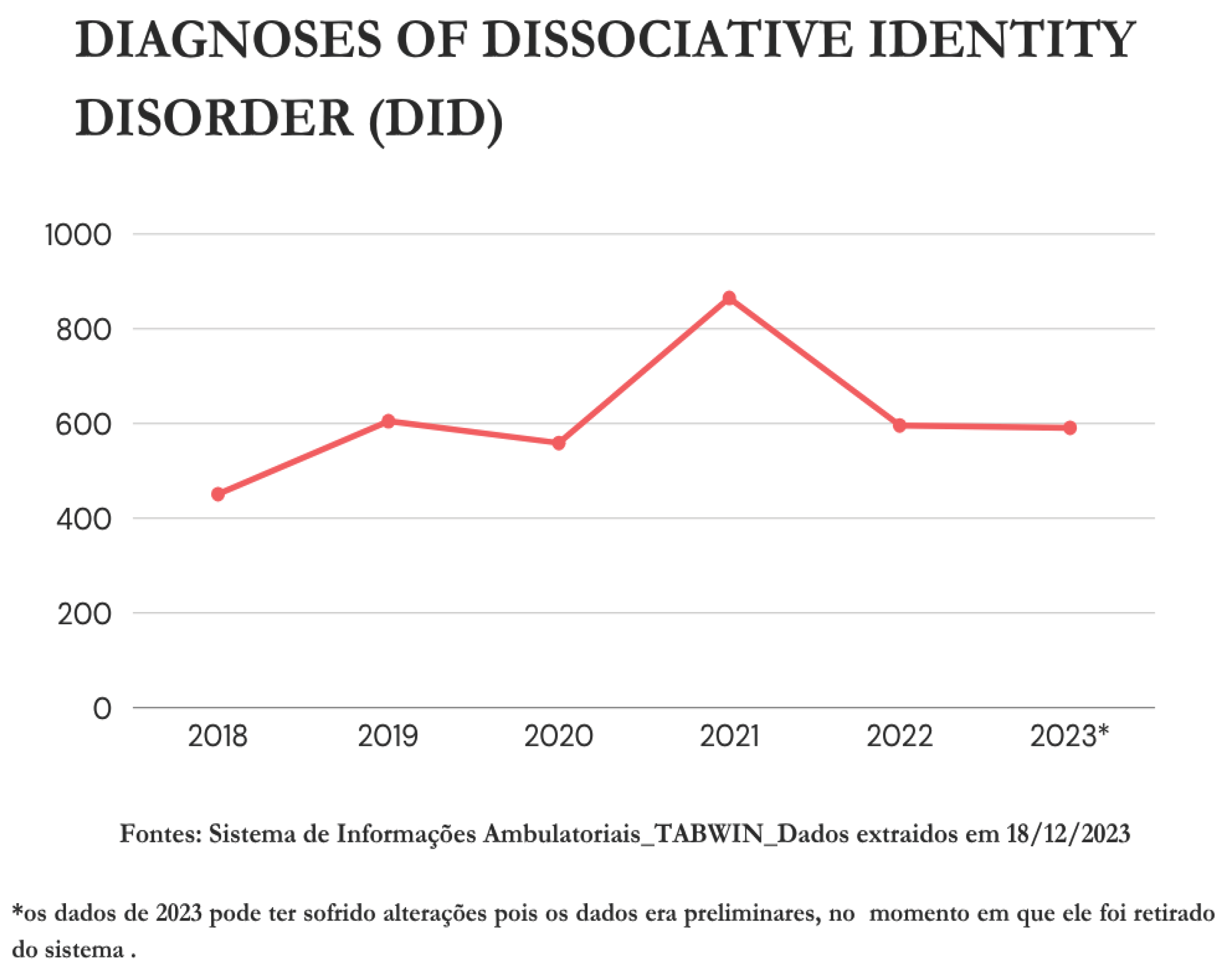
Disclaimer/Publisher’s Note: The statements, opinions and data contained in all publications are solely those of the individual author(s) and contributor(s) and not of MDPI and/or the editor(s). MDPI and/or the editor(s) disclaim responsibility for any injury to people or property resulting from any ideas, methods, instructions or products referred to in the content. |
© 2026 by the authors. Licensee MDPI, Basel, Switzerland. This article is an open access article distributed under the terms and conditions of the Creative Commons Attribution (CC BY) license (http://creativecommons.org/licenses/by/4.0/).
Copyright: This open access article is published under a Creative Commons CC BY 4.0 license, which permit the free download, distribution, and reuse, provided that the author and preprint are cited in any reuse.