

Submitted:
06 September 2026
Posted:
08 September 2026
You are already at the latest version
Abstract
Importance: Hearing loss is a multifactorial sensory impairment associated with communication difficulties, cognitive impairment, and emotional impacts in all ages. There are occupational risk factors for noise-induced hearing loss among healthcare workers, and this may present with negative professional outcomes. Assessing the baseline hearing of healthcare workers in their early medical education is a necessary step to inform screening measures and provide timely interventions and preventative strategies. Objective: To determine whether extended headphone use contributes to premature hearing loss among medical students and to explore the potential of simple questionnaires, self-reported health information (SRHI), and phone-reported health information (PRHI) as preliminary screening tools for hearing loss in this population. Design, Setting, Participants: A cross-sectional study was conducted among medical students. Eligibility criteria for enrollment included being over 18 years old and having no previous chronic or acute ear pathology. Participants completed a self-administered questionnaire assessing demographics, SRHI, PRHI, and hearing-related habits. Audiometry measured air conduction hearing thresholds across 1, 2, 4, and 8 kHz, reported as pure-tone audiometry (PTA). The study took place from August 2023 to March 2024. Retrospective control group data was sourced from a national database. Primary Outcomes and Measures: The primary outcome was the hearing threshold measured by PTA. Secondary outcomes included associations between hearing thresholds and factors such as headphone use (via PRHI), migraines, exposure to loud sounds, tinnitus, age, gender, and ethnicity.Results: The study included 50 medical students. The average ambient testing noise level was 41.66 dB. Daily moderate headphone use, whether in-ear or over-ear, did not significantly affect hearing outcomes (in-ear: p=0.633; over-ear: p=0.901). Self-reported migraines, weekly exposure to loud sounds, and tinnitus were not significantly associated with hearing test results (p=0.837, p=0.37, p=0.661, respectively). Age did not impact hearing (p=0.919), but gender was a significant factor, with females exhibiting slightly poorer hearing than males (p=0.0199). Finally, PRHI included headphone and environmental audio levels. Headphone audio levels proved no correlation with hearing threshold (Pearson’s correlation coefficient: -0.0311, p =0.847, n = 41), nor did environmental audio levels (Pearson’s correlation coefficient: -0.450, P-value: 0.0920, n=16).Conclusions and Relevance: The findings of the study suggest that there is no significant association between the modality, duration, or sound level of headphone usage and the baseline hearing levels, as measured at a single point in time, among medical students recruited from the study site. Our investigation utilized simple questionnaires, self-reported health information (SRHI), and phone-reported health information (PRHI) as preliminary screening tools for hearing loss within this population. While this study provides valuable insights, its findings are limited by the small cohort, absence of a concurrent control group, and reliance on a single-measure design. This study does support the use of audiometry, SRHI, and PRHI as valuable methods to screen healthcare students for hearing loss. Future research with larger, more diverse samples and more rigorous methodologies would be beneficial to validate and extend these findings.
Keywords:
hearing health
1. Introduction
Hearing loss is a significant public health concern affecting individuals across various demographics, with the World Health Organization reporting that approximately 1.5 billion individuals globally will be affected in 2023 [1]. Auditory impairment from hearing loss has been suggested to increase the risk of depression and cognitive decline and contribute to poor physical health [2,3,4]. Prolonged exposure to high noise levels from medical machines such as MRI machines, drills, ventilators, and operating room equipment, often exceeding safe decibel limits, may provide unique occupational risks of hearing loss among healthcare workers [5,6].
The use of headphones and personal listening devices has become increasingly prevalent among young adults, including medical students, for recreational and educational purposes. Studies have shown that prolonged and high-volume headphone [SS5] use—noise levels exceeding 85 dB—can lead to noise-induced hearing loss (NIHL), particularly when using headphones or earbuds, due to the direct transmission of sound into the inner ear at levels that can cause damage over time. Additionally, exposure to high peak levels, even for short durations, can contribute to NIHL and other auditory issues5. Research suggests that sensory presbycusis, a form of age-related hearing loss, may reflect years of wear and tear, with cumulative noise exposure playing a significant role in its development [6].
Assessing the baseline hearing of healthcare workers in their early medical education is a necessary step to inform screening measures, provide timely interventions, and preventative strategies. Additionally, earlier detection may prevent the development of social and emotional consequences of hearing loss and preserve cognitive function [7]. For medical students, earlier detection may improve educational and occupational outcomes [8].
This study explores the potential of self-reported health [SS16] information (SRHI) and phone-related health information (PRHI) as preliminary screening tools for hearing loss in medical students. These tools can be valuable for preliminary hearing loss screening, mainly when used with objective measures like pure tone audiometry (PTA). Bridging the gap between subjective experience and objective audiometry tests may help develop efficient early detection methods [4,9,10]
2. Methods
The California Northstate University Institutional Review Board #2306-02-121 approved the study. Participants provided written informed consent, and the study followed the Strengthening the Reporting of Observational Studies in Epidemiology (STROBE) reporting guidelines [11].
2.1. Study Design and Participants
This cross-sectional, single-blind, single-institution study was conducted between August 2023 and March 2024. Fifty medical students were recruited via message board for voluntary participation in the test group; control group data was sourced from a previously conducted study evaluating hearing loss in a similar cohort of US adults, and updated data from NHANES [12] was also used to conduct further analysis11. Subjects were eligible for enrollment if greater than 18 years of age and excluded if presenting with a previously diagnosed otologic disorder or current ear infection.
2.2. Study Methods
The SRHI was completed to assess environmental and vocational noise exposure, hearing protection use, and history of otologic disorder. PRHI included using the “Health App” (Apple©, 2024) to record headphone levels over the past year, and environmental sound levels were obtained for anyone who uses an Apple © Watch similar to another study [13]. A self-reported questionnaire was used to validate their headphone usage via their phone and whether they wore their Apple Watches consistently.
Before audiometry, otoscopy and ambient sound measurements were done (RISEPRO® Digital Sound Level Meter). Researcher were required to demonstrate proficiency in all study methods via formal training.
2.3. Study Measures
2.3.1. Audiometry
Subjects were given the audiometry response button, and the audiometer was positioned beyond the subject’s visual field to reduce observation bias. Air conduction pure tone audiometry (PTA) was conducted using Amplivox© 270, with a standard Amplivox© audiometric headset, adhering to the standardized modified Hughson-Westlake audiometric technique. PTA measured hearing thresholds in dB across frequencies of 1 kHz, 2 kHz, 4 kHz, and 8 kHz. If a subject responded to the initial 40dB tone at 1 kHz, the tone intensity was reduced by 5 dB until no longer registered as determined via response cessation, which required confirmation via increasing by 10 dB and confirming the threshold. This was repeated across the 4 frequencies and in both ears.
2.3.2. Data Validity and Analysis
2.3.3. Statistical Analysis
Data was analyzed using statistical tests, which included two-tailed unpaired t-tests and Pearson’s correlation coefficients with P values < .05 considered statistically significant. All data analysis was performed from November 2023 - March 2024 using Microsoft Excel 2020(Microsoft Corp) or R, version 3.6.0 (The R Foundation for Statistical Computing). Participant demographic data was illustrated in a chart, and each data category was quantified using descriptive statistics. The analysis assessed the extent to which subjects’ presenting symptoms indicative of hearing loss correlate with the audiometry result. A box chart was also created to compare demographics and hearing loss status (Figure 4). Additionally, 2017-2018 NHANES audiometric data was queried selectively for ages 18-33 years, and a modified high Fletcher index was calculated and then compared to our results via a two-tailed unpaired t-test.
3. Results
3.1. Participant Characteristics
50 subjects were enrolled for the test group with 0% subject attrition. Most subjects (78%) were aged between 22 and 25 years. 50% of subjects self-identified as male and 48% as female. A majority of subjects self-identified as Asian (62%) and Caucasian (18%). Non-binary (1%), African-American (4%), and Hispanic (2%) were underrepresented in the test group.

Table 1.
Participant Characteristics.
| African American | Asian | Caucasian | Latino or Hispanic | Native Hawaiian or Pacific Islander | Other | Two or more | Total | |
| Female | 1 | 16 | 3 | 1 | 2 | 2 | 25 | |
| Male | 1 | 15 | 5 | 1 | 2 | 24 | ||
| Non-binary | 1 | 1 | ||||||
| Total | 2 | 31 | 9 | 1 | 2 | 1 | 4 | 50 |
Mean hearing thresholds measured as FHI across both ears was 6.21 dB HL for participants. The average ambient noise level measured in this study was 41.66 dB.
3.2. Associations Between Self-Reported and Phone Reported Data Compared to Hearing Outcomes
Daily self-reported moderate headphone use (in-ear or over-ear) did not significantly affect hearing outcomes (Figure 3 and Figure 4). There were no differences between individuals using headphones for less than 3 hours daily compared to those using them for 3 or more hours per day (in-ear: p=0.633, over-ear: p=0.901). Neither self-reported migraines (0 vs. 1+ migraines) nor weekly exposure to loud sound was significantly associated with hearing test results (p=0.837 and p=0.37, respectively). Tinnitus was not significantly associated with hearing outcomes (p=0.661). No participants had missing data for age, gender, headphone use, hearing-associated health conditions, or hearing test results. Age did not significantly impact hearing, with no difference observed between students under 25 and those 25 years or older (p=0.919). Interestingly, gender was a significant factor. Females in the study exhibited slightly worse hearing than males (p=0.0199). Ethnicity did not significantly affect hearing results (Asian vs non-Asian) (p=0.417). No statistically significant difference was found for mean hearing thresholds, 4.74db, compared to NHANES 2017-2018 data in the 18-33 participant age range (p=0.1285). Finally, there was no correlation between the PRHI, including environmental (Pearson correlation coefficient: -0.450, P-value: 0.0920, n=16) and Headphone (Pearson correlation coefficient: -0.0311, p =0.847, n = 41) audio levels.
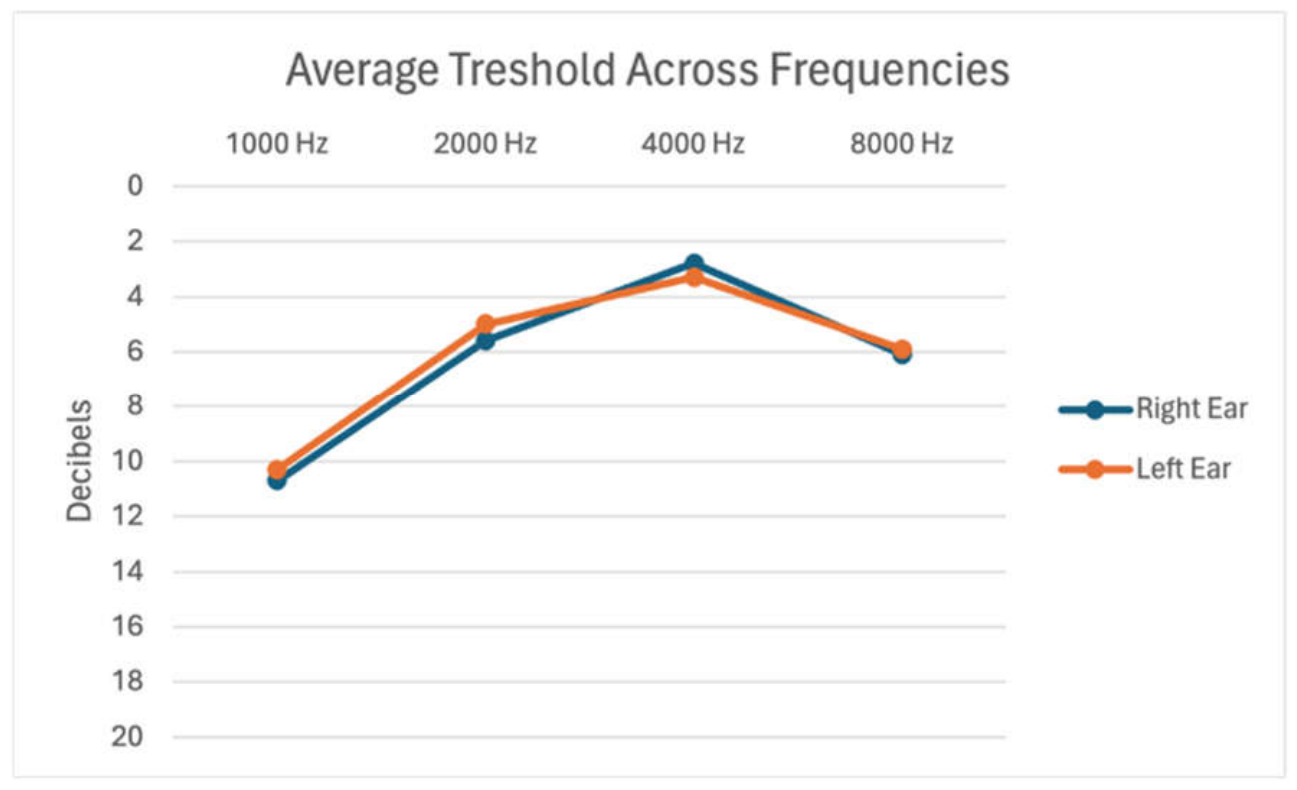
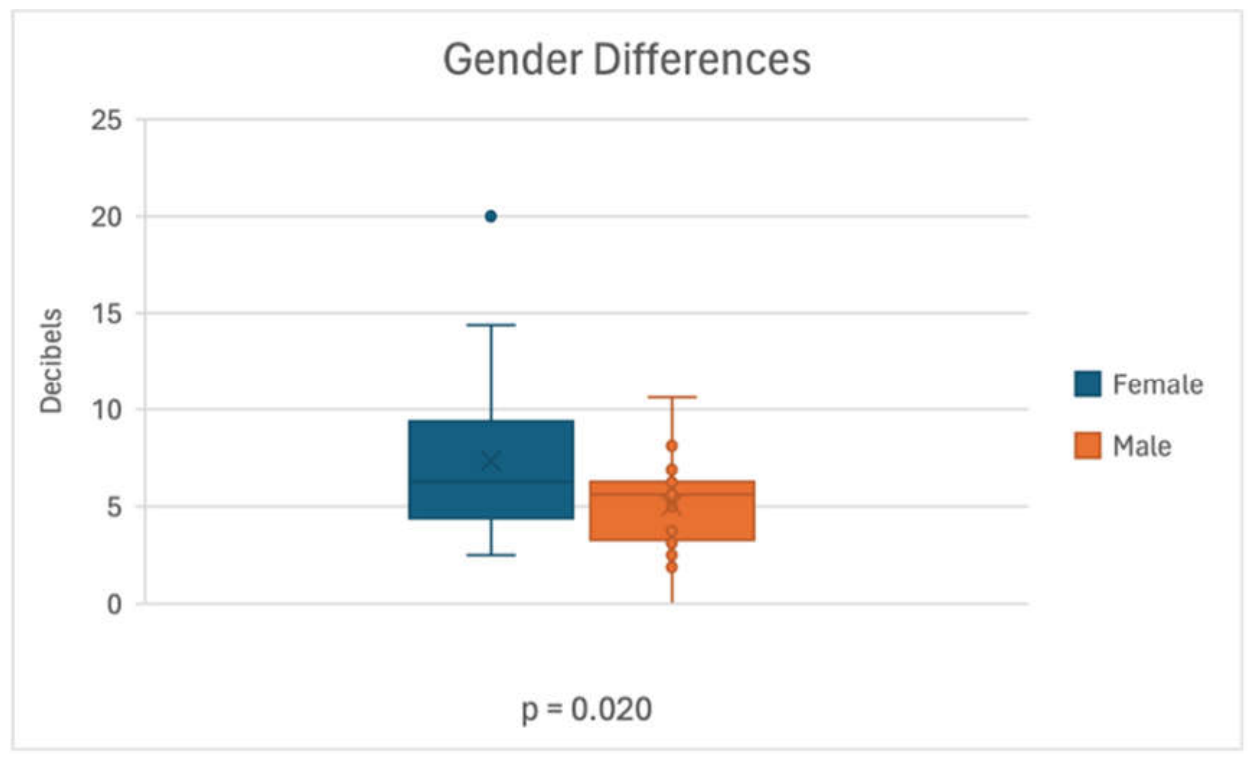
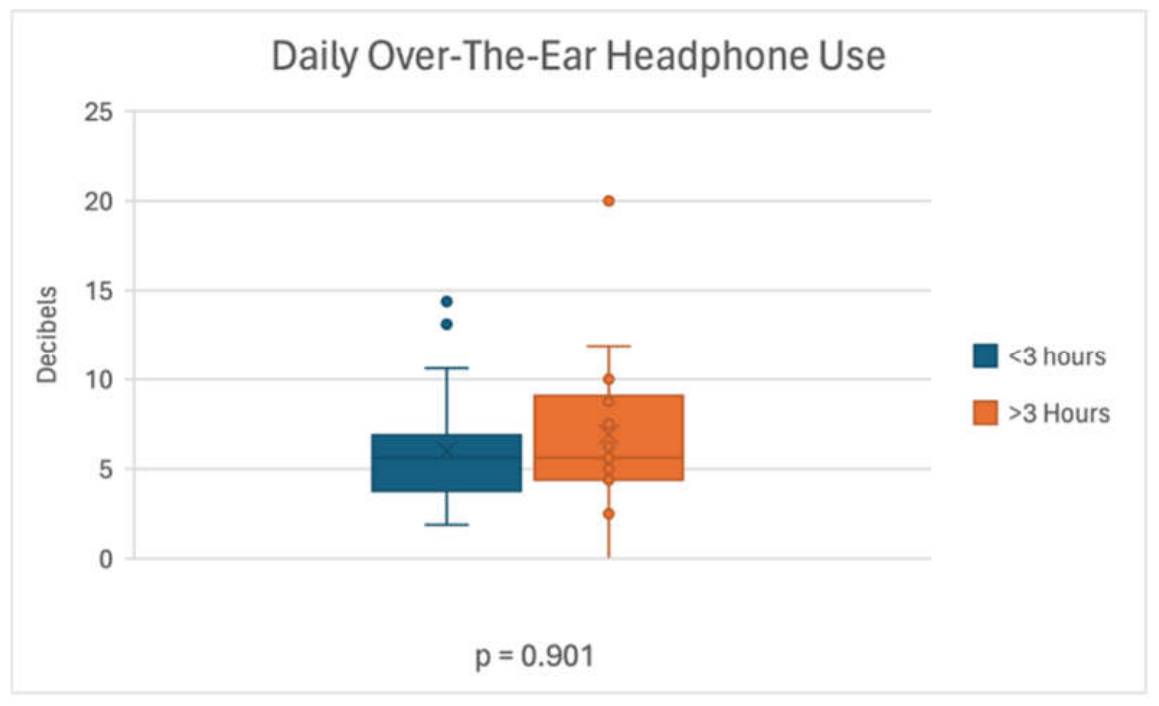
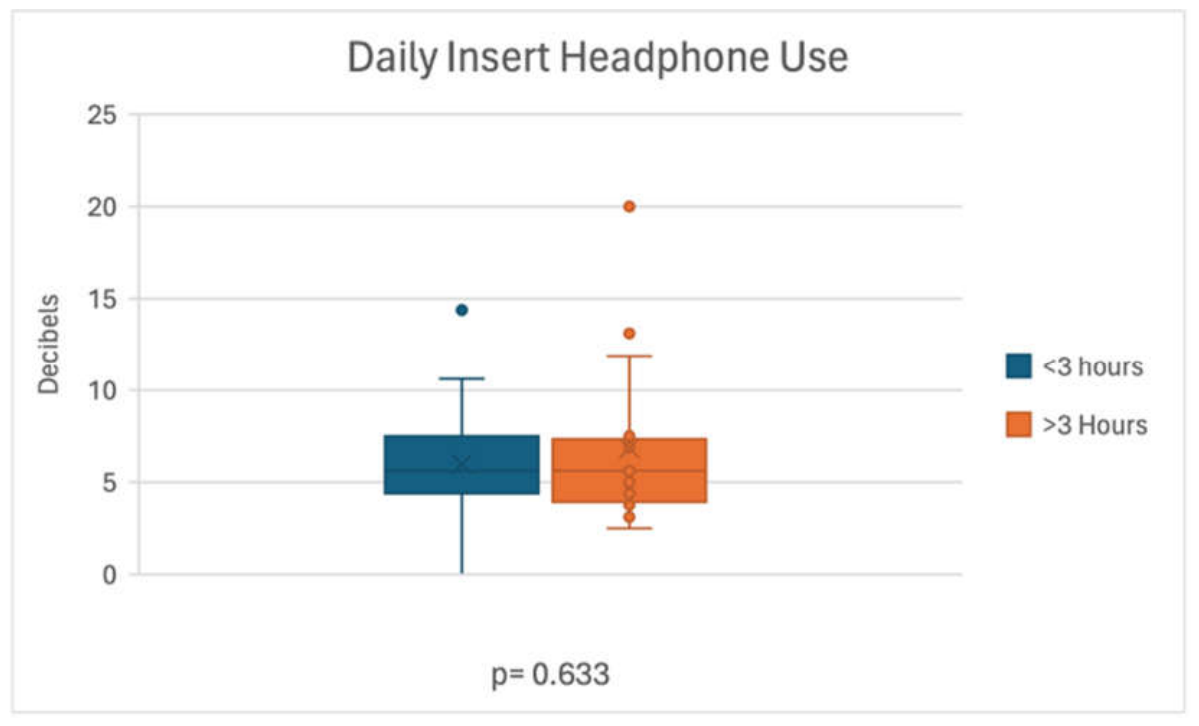
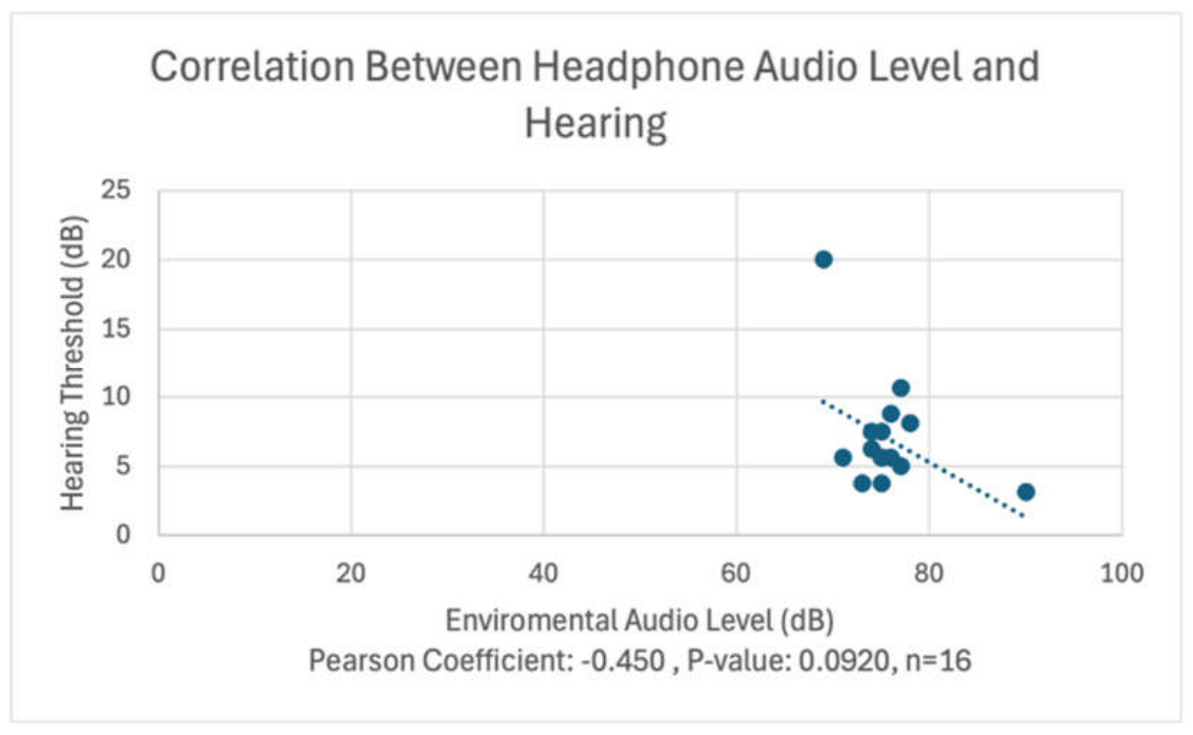
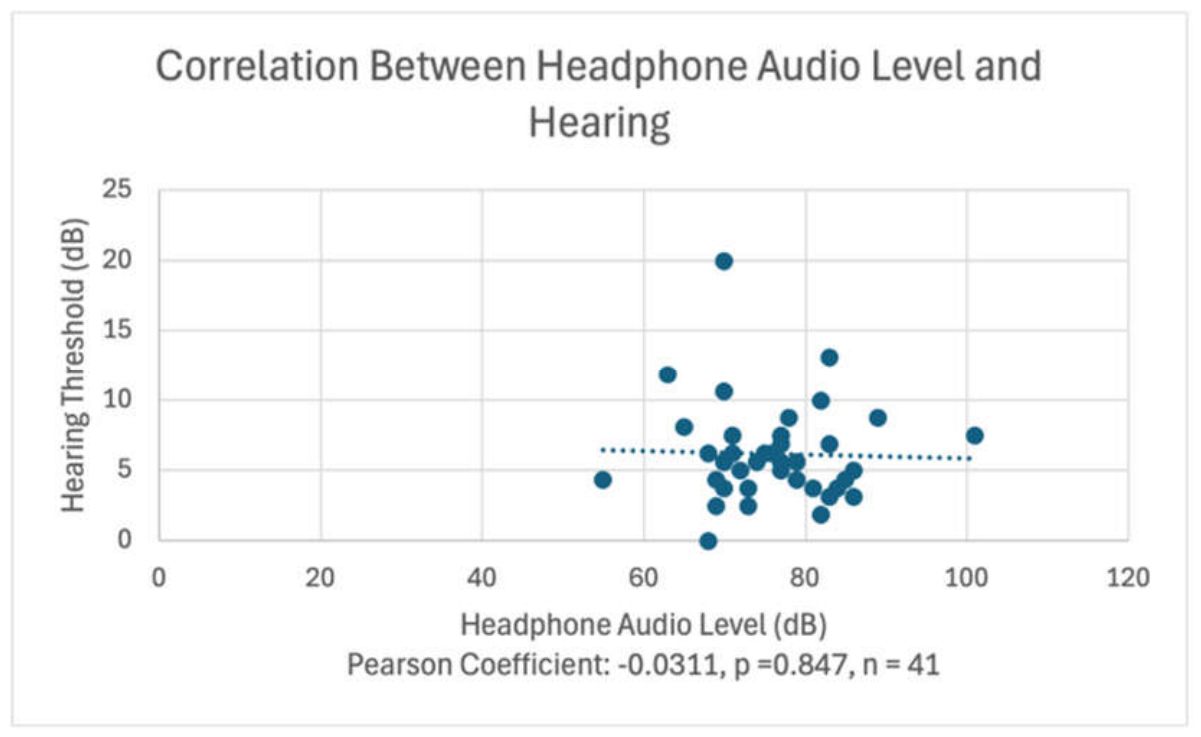
Figure 1.
Figure 2.
Figure 3.
Sex Differences in Hearing Loss Among Medical Students.
Figure 4.
Figure 5.
Correlation between PRHI environmental audio level and hearing thresholds.
Figure 6.
Correlation between PRHI headphone audio level and hearing thresholds
4. Conclusions
Investigation using a self-administered questionnaire to assess the hearing habits of medical students indicates that the two types of headphone use by medical students, in-ear or over-ear, did not lead to worse objective hearing outcomes. Additionally, utilizing phone-reported health information (PRHI) of headphone or environmental audio levels, there was no significant difference between self-reported habits and hearing. Age and ethnicity showed no significant association in the results. However, gender impacted hearing health in medical student communities where females exhibited slightly poorer hearing health than their male counterparts.
Collecting data on the hearing health of medical students is an evolving area of research. Early detection and intervention for hearing loss among medical students can facilitate timely interventions in hearing health and improve hearing care outcomes. Given the association between hearing loss and adverse health conditions such as depression and poor physical health, continuous monitoring of hearing health in the rigorous and demanding environment of medical school and clinical settings is crucial.
Self-reported screening tools and questionnaires are valuable due to their accessibility and ease of use. Similarly, PRHI can serve as a valuable tool in clinical and research settings. Additionally, demonstrating the safety of headphone use may reassure students regarding potential negative impacts on their hearing. Future randomized controlled studies can further refine and validate these screening methods and address any biases associated with using self-reported questionnaires to assess hearing health among medical students.
References
- Alberti, G., D. Portelli, and C. Galletti, Healthcare Professionals and Noise-Generating Tools: Challenging Assumptions about Hearing Loss Risk. International Journal of Environmental Research and Public Health, 2023. 20(15): p. 6520. [CrossRef]
- Nachtegaal, J., et al., The Association Between Hearing Status and Psychosocial Health Before the Age of 70 Years: Results From an Internet-Based National Survey on Hearing. Ear and Hearing, 2009. 30(3): p. 302-312. [CrossRef]
- Cosh, S., et al., Depression in elderly patients with hearing loss: current perspectives. Clin Interv Aging, 2019. 14: p. 1471-1480. [CrossRef]
- Lin, F.R., et al., Hearing Loss and Cognitive Decline in Older Adults. JAMA Internal Medicine, 2013. 173(4): p. 293-299. [CrossRef]
- Agrawal, Y., E.A. Platz, and J.K. Niparko, Prevalence of hearing loss and differences by demographic characteristics among US adults: data from the National Health and Nutrition Examination Survey, 1999-2004. Arch Intern Med, 2008. 168(14): p. 1522-30. [CrossRef]
- Fligor, B., Risk for Noise-Induced Hearing Loss From Use of Portable Media Players: A Summary of Evidence Through 2008. Perspectives on Audiology, 2009. 5: p. 10-20. [CrossRef]
- Basner, M., et al., Auditory and non-auditory effects of noise on health. Lancet, 2014. 383(9925): p. 1325-1332. [CrossRef]
- Davis, A., et al., Acceptability, benefit and costs of early screening for hearing disability: a study of potential screening tests and models. Health Technol Assess, 2007. 11(42): p. 1-294. [CrossRef]
- Mulrow, C.D., et al., Quality-of-life changes and hearing impairment. A randomized trial. Ann Intern Med, 1990. 113(3): p. 188-94.
- Tharpe, A.M., Unilateral and mild bilateral hearing loss in children: past and current perspectives. Trends Amplif, 2008. 12(1): p. 7-15. [CrossRef]
- Cuschieri, S., The STROBE guidelines. Saudi J Anaesth, 2019. 13(Suppl 1): p. S31-s34.
- Centers for Disease Control and Prevention National Center for Health Statistics, “National Health and Nutrition Examination Survey Data”. 2017-2018.
- Kaf, W.A., et al., Examining the Profile of Noise-Induced Cochlear Synaptopathy Using iPhone Health App Data and Cochlear and Brainstem Electrophysiological Responses to Fast Clicks Rates. Semin Hear, 2022. 43(3): p. 197-222. [CrossRef]
- Wang, J., et al., Association of Polygenic Risk Scores for Hearing Difficulty in Older Adults With Hearing Loss in Mid-Childhood and Midlife: A Population-Based Cross-sectional Study Within the Longitudinal Study of Australian Children. JAMA Otolaryngology–Head & Neck Surgery, 2023. 149(3): p. 204-211.
- Le, T.N., et al., Current insights in noise-induced hearing loss: a literature review of the underlying mechanism, pathophysiology, asymmetry, and management options. J Otolaryngol Head Neck Surg, 2017. 46(1): p. 41. [CrossRef]
- Crossley, E., et al., The Accuracy of iPhone Applications to Monitor Environmental Noise Levels. Laryngoscope, 2021. 131(1): p. E59-e62. [CrossRef]
Disclaimer/Publisher’s Note: The statements, opinions and data contained in all publications are solely those of the individual author(s) and contributor(s) and not of MDPI and/or the editor(s). MDPI and/or the editor(s) disclaim responsibility for any injury to people or property resulting from any ideas, methods, instructions or products referred to in the content. |
© 2026 by the authors. Licensee MDPI, Basel, Switzerland. This article is an open access article distributed under the terms and conditions of the Creative Commons Attribution (CC BY) license (http://creativecommons.org/licenses/by/4.0/).
Copyright: This open access article is published under a Creative Commons CC BY 4.0 license, which permit the free download, distribution, and reuse, provided that the author and preprint are cited in any reuse.