

Submitted:
04 September 2026
Posted:
07 September 2026
You are already at the latest version
Abstract
Numerous lines of evidence have previously allowed us to conclude that exposure of susceptible individuals to acetaminophen triggers many if not most cases of autism spectrum disorders (ASD), which have steadily increased in the US since 1980. Reasons for increasing acetaminophen exposure early in life include the switch from aspirin to acetaminophen in the early 1980s, dramatically increased marketing of acetaminophen in the 1990s, the development of acetaminophen use for opioid sparing protocols in response to the opioid crisis of the 2010s, and continued use of acetaminophen for vaccination as the vaccine schedule increased between 1980 and the present time. More recently, two sets of data from the US, one from the California Public School system and another from the NIH-sponsored ECHO study, indicate that the prevalence of autism spectrum disorders (ASD) is increasing dramatically in a manner dependent on low socioeconomic status. Some evidence suggests that a potential adverse drug-drug interaction between acetaminophen and cannabis use disorder may underlie this trend, with an increase in cannabis use disorder resulting from the legalization of recreational cannabis use. Although increasing use of acetaminophen and potentially changing environmental factors that enhance acetaminophen toxicity can explain the sustained rise in ASD, data consistent with the acetaminophen/autism model continue to be misinterpreted by those considered experts in the field, hampering progress. Most errors involve over-correction for mediating factors in large sibling-controlled studies, although more recent data involving socioeconomic-dependent disparities in ASD prevalence have also been misinterpreted.
Keywords:
acetaminophen
; autism
; cannabis
; sibling-controlled
; socioeconomic
Introduction
The prevalence of autism spectrum disorders (ASD) has been increasing since 1980, when DSM-III first classified ASD as an independent category. Further, emerging data from two sources indicates that the prevalence of ASD has dramatically accelerated in the past decade, in a manner that depends on socioeconomic status. First, a dramatic rise of ASD in California based on socioeconomic status, beginning in about 2017, is apparent in data released by the California Public School System [1]. The statistics are of great concern, with, for example, almost 10% of all Black Children in Los Angeles County, California born in 2019 having been diagnosed with ASD. Second, data recently reported by the NIH-funded ECHO consortium reveal that 11.4 % of Black boys in their sample born from 2003 to 2023 have been diagnosed with ASD, compared to 5.3 % of white boys (ethnicity based on maternal ethnicity, p = 0.0013, chi-square test) [2].
The etiology of ASD
Almost 20 different observations allow us to conclude that the preponderance of the increasing prevalence of ASD cannot be accounted for by changing diagnostic criteria, increasing awareness and funding, changing social attitudes, and other factors unrelated to the actual occurrence of ASD [3]. Indeed, the last change in diagnostic criteria that would have significantly increased the diagnosis of ASD (DSM5 in 2013) is fading into the past, and investigators conducting surveys of ASD prevalence have been aware of the importance of systematic diagnostic survey methods since at least the 1980s [4].
In contrast, abundant evidence has led us to conclude, without reasonable doubt, that exposure of susceptible babies and children to acetaminophen causes neurodevelopmental injury, leading to many if not most cases of ASD [3,4,5,6]. Evidence includes a wide range of pharmacological evidence, numerous laboratory animal studies, associations between autism and acetaminophen use across time, location, and medical practice, and a variety of other evidence, including the fact that longtime assumptions of safety were not based on any study showing safety for brain development. Evidence also allows us to conclude that a wide range of genetic, epigenetic and environmental factors associated with oxidative stress create susceptibility to acetaminophen-induced injury [7]. Furthermore, we have concluded that the developmental period of greatest susceptibility appears to be immediately following birth, with susceptibility diminishing over time and ending almost completely by about six years of age [6]. Some susceptibility is present during pregnancy, but appears to be much less than susceptibility for the first two months after birth [6].
Changes in the use of acetaminophen can account for much of the increasing prevalence of ASD since 1980. In general, major transitions affecting acetaminophen use occurred in the early 1980s when acetaminophen replaced aspirin as the drug of choice for pediatric use, and in the 1990s when advertising from the drug industry greatly expanded [5]. For example, between 115 and 250 million dollars (not adjusted for inflation) were spent per year specifically advertising acetaminophen during the 1990s and 2000s [8,9]. Another source of acetaminophen exposure early in life in the US is the vaccination of infants, including a hepatitis B vaccine at birth and a half dozen vaccines at about 8 weeks of age. The vaccine schedule for infants expanded after 1980, at the same time that the factors noted above caused general increases in acetaminophen use. Not surprisingly, independent studies have shown that many if not most parents give acetaminophen to alleviate the pain and fevers of vaccination [10,11].
Perhaps one of the best documented changes in practice is provided by the Baby and Child Care series published under the name of Dr. Benjamin Spock. This series covers the years 1946 through 2018, and has been extremely popular among parents. In the 1976 edition (4th edition), as in previous editions, acetaminophen is not mentioned. Rather, aspirin is suggested for fevers, and aspirin and codeine are suggested for pain. In the next edition (5th edition, 1985), acetaminophen is noted as a “substitute for aspirin” and recommended for treatment of fever, but only if a doctor cannot be reached for “several hours”. In this edition, aspirin and codeine are still suggested for pain. By 2018 (10th edition), routine use of acetaminophen is suggested for fevers, before and after vaccinations, and for teething and for pain in general. Consultation with a doctor is recommended only for “using at high doses or for long periods of time”.
The use of acetaminophen in pediatric practice was not carefully tracked in the medical literature [5]. However, at least two factors have driven up exposure to acetaminophen since 2000, particularly in the first two months of life, when exposure poses the greatest risk for neurodevelopment [6]. First, intravenous acetaminophen, which delivers drug more rapidly and at higher peak plasma concentrations than the oral medication [12], was approved for use in 2010. Second, acetaminophen has become widely used during labor and delivery [13,14,15] and in neonatal intensive care units [16] as a result of opioid-sparing protocols following the opioid crisis of the 2010s.
Although the increasing use of acetaminophen can account for the increased prevalence of ASD, it does not account for recent and profound increases in ASD dependent on socioeconomic status. However, an adverse, drug-drug interaction between acetaminophen and cannabis was reported in laboratory mice in 2019 by investigators at the University of Arkansas Children’s Hospital [17]. An adverse drug-drug interaction between acetaminophen and cannabis use disorder (CUD, not occasional cannabis use) is suspected as the culprit behind the dramatic, socioeconomic class-dependent increases in ASD seen in the data from the California public school system [18]. The dramatic rise of ASD in California based on socioeconomic status began in about 2017 [1], when the state legalized recreational marijuana. With more than half of all Americans living in an area with legalized recreational cannabis use in 2026, a potential adverse interaction between acetaminophen and CUD is of great concern. Both cannabis and acetaminophen affect human cognition by interacting with the brain’s endocannabinoid system. Further, CUD is strongly associated with socioeconomic status, and may be a particular problem in some Black communities [18].
Thus, the changing use of acetaminophen through time, perhaps coupled with increases in adverse drug-drug interactions involving acetaminophen, can explain current statistics regarding the prevalence of ASD (Figure 1). This constitutes yet another line of evidence pointing at a causal relationship between exposure of susceptible individuals to acetaminophen and ASD. This line of evidence, as with any one of the 32 other lines of evidence we have noted [3], is insufficient to draw conclusions when standing alone. However, the total weight of evidence is sufficient to establish a reliable model for the underlying cause of the ASD pandemic. Despite this progress in understanding, progress in addressing the pandemic has not been made.
The reason for a lack of progress
The “raw analysis” from observational studies generally shows a strong connection between acetaminophen use and ASD during pregnancy, labor and delivery, and early childhood. However, using statistical methods to adjust for factors that the investigators believe might confound the conclusions, the associations between acetaminophen and ASD usually found in the raw analysis can be diminished or even removed entirely, particularly for data collected during pregnancy. For example, in the widely publicized study published by Ahlqvist and colleagues in 2024 [19], the raw data showed a strong connection between high levels of acetaminophen use during pregnancy and ASD. The relationship was dose-dependent, with high doses of acetaminophen associated with a hazard ratio of 1.87 (C.I.:1.71-2.06) and statistically significant associations (p < 0.001) at low, medium and high doses of acetaminophen. These associations are particularly concerning given the high prevalence of acetaminophen use in some populations.
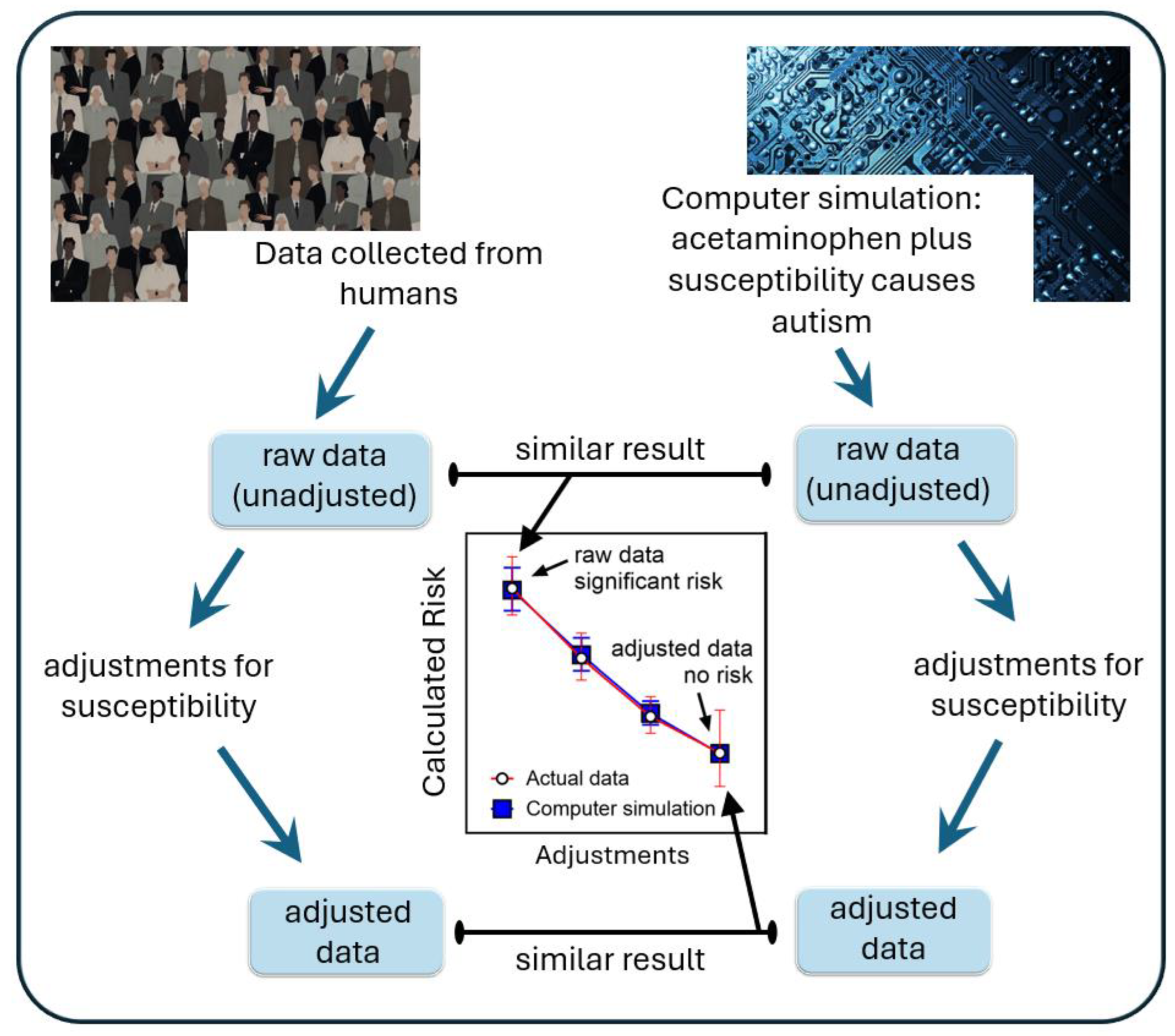
Ahlqvist and colleagues [19] concluded that acetaminophen use during pregnancy is not associated with ASD. That conclusion was based on the application of statistical “correction” for confounding factors that are, in fact, associated with oxidative stress, a cofactor rather than a confounding factor in the induction of ASD [7]. The effect of correction for cofactor-associated variables in the Ahlqvist study is that the association between acetaminophen use and ASD is cancelled out. As we have pointed out [3,4], this type of adjustment for interacting variables cancels out potentially important interactions. This error is conceptually related to adjustment for “mediators” of injury, and is an extremely well-known phenomenon, essentially foundational knowledge, in the field of statistics [20,21,22,23]. The net result is that the data evaluated by Ahlqvist and colleagues are virtually identical to the results of computer simulation showing what happens if acetaminophen exposure in susceptible individuals causes ASD (Figure 2). Although this error has been repeated in the medical literature almost three dozen times in the past year [24,25,26,27,28,29,30,31,32,33,34,35,36,37,38,39,40,41,42,43,44,45,46,47,48,49,50,51,52,53,54,55,56,57,58], computer simulations demonstrate conclusively that statistical “correction” or “adjustment” for cofactors (aka, predisposing factor or interacting variables) is invalid, covering up potentially important associations [4].
Thus, the conclusions reached based on the analysis of “sibling-controlled studies” are profoundly flawed [4], reconciling epidemiologic evidence with other evidence. Further, more in-depth analysis of a large sibling-controlled cohort from Tiawan reveals underlying problems with the results of the analysis [59], which potentially reflects errors in the underlying assumptions of the analysis [3]. Thus, continued reliance on sibling-controlled studies to dismiss the connection between acetaminophen and ASD constitutes cherry-picking, as it requires disregard for studies showing profound flaws in both the methodology and the results. Unfortunately, cherry-picking has long been a problem in the scientific community [60], although it seems unlikely that this error has ever caused problems of the magnitude we now face as a result of continued acetaminophen exposure during neurodevelopment.
Additional problems with the peer-reviewed literature continue to mount. For example, the recent ECHO study [2] found no connection between circumcision and ASD in US children born from 2003 to 2023. Such a connection had been observed earlier in Danish children born from 1994 to 2003 [61]. In that earlier study, the prevalence of infantile ASD was about double if a child was circumcised [61]. Since acetaminophen is frequently used with circumcision, particularly by parents comforting their child, this is one of many very compelling lines of evidence pointing at a causal relationship between acetaminophen exposure and ASD [3,6].
The differences between the US ECHO study and the earlier Danish study are expected: The impact of acetaminophen use with circumcision in the Danish boys is expected to be “diluted out” and/or overshadowed by increasing use of acetaminophen for opioid sparing protocols and particularly by acetaminophen use for vaccination. Unlike US children, the typical Danish infant would have received no vaccines within the first two months of life, when acetaminophen exposure carries the greatest risk due to normal (typical) development-associated deficiencies in metabolism [6]. Given that susceptibility to injury by acetaminophen is caused by inflammation and concomitant oxidative stress [7], we predict that acetaminophen exposure following a potent inflammatory stimulus (e.g., an infection or a vaccine) is going to be riskier than acetaminophen exposure for reasons that do not involve a potent inflammatory stimulus (e.g., typical teething or uncomplicated circumcision). Indeed, studies in both laboratory animals [62] and in children [63] indicate that acetaminophen is more toxic in the presence of an infection than in the absence of an infection.
Unfortunately, investigators working with the ECHO project [2] did not explain why differences between Danish children born from 1994 to 2003 and US children born from 2003 to 2024 are expected. Rather, they provided a number of reasons why the Danish study, much better powered and with less ethnic-associated bias than their own study, might be in error. Given that the initial purpose of these studies was to evaluate the potential effect of a surrogate for acetaminophen exposure (circumcision) on the prevalence of ASD [64], it is puzzling that the ECHO research team did not consider factors directly related to the central issue they were investigating.
Conclusion
In summary, as the prevalence of ASD continues to rise, urgent and immediate action is needed to eliminate the use of acetaminophen in susceptible individuals. Ongoing misinterpretation of evidence by those considered to be experts continues to serve as an impediment to progress.
Author Contributions
Conceptualization, J.P.J.III, S.M.-K., E.T., S.T.S., and W.P.; methodology, J.P.J.III, Z.K. and W.P.; validation, L.W., Z.K., and W.P; formal analysis, E.T. J.P.J.III; resources, J.P.J.III, Z.K., L.W., S.M.-K. and W.P.; writing—original draft preparation, S.T.S.; W.P.; writing—review and editing, J.P.J.III, Z.K., L.W., R.A., E.T., S.M.-K., S.T.S., and W.P.; project administration, W.P.; funding acquisition, J.P.J.III, Z.K., L.W., S.M.-K. and W.P. All authors have read and agreed to the published version of the manuscript.
Funding
This work was supported in part by generous donations to WPLab, Inc., a 501(c)3 non-profit focused on research and education regarding underlying causes of inflammatory-related diseases in high-income areas of the world. This research received no additional external funding.
Institutional Review Board Statement
Not applicable.
Informed Consent Statement
Not applicable.
Data Availability Statement
All data generated or analyzed during this study are included in the published article.
Acknowledgments
The authors wish to thank Kathryn J. Reissner, R. Randy Bollinger, Doron Goldberg, Sean M. Blasko, Paul Corrigan, Chanmolis Mout, Sean M. Blasko, Susan Poulton and John Poulton for invaluable insight and discussion. The authors also wish to thank Spencer Sharpe and Nathan Kohuth for vital logistical support. .
Competing Interests
The authors declare that they have no financial conflicts of interest to report. All authors have non-financial conflicts of interest arising from reputational risk, a conflict shared among most scientists and clinicians conducting work related to autism. Coauthor W.P. is a paid employees of WPLab. Coauthor L.W. is a paid employee of Northern Kentucky University. Coauthors J.P.J. III, Z.K., E.T., S.T.S, and S.M.-K. are non-paid collaborators working with WPLab. Coauthors W.P. and S.M.-K. are husband and wife.
References
- Nevison, C.; Zahorodny, W. Accelerating Autism Prevalence in California with Changepoint Circa Birth Years 2015–2016 and Divergence by County and Socioeconomic Indicators; Preprints: Preprints, 2026. [Google Scholar]
- McGrath, M.; Li, X.; Jacobson, L.P.; Leventhal, B.; Aschner, J.L.; Baker, B.; et al. Neonatal Medical Male Circumcision and Child Autism Diagnosis Epub 2026/08/03. JAMA pediatrics 2026. [Google Scholar] [CrossRef] [PubMed] [PubMed Central]
- Jones, J.P., III; Konsoula, Z.; Williamson, L.; Anderson, R.; Meza-Keuthen, S.; Parker, W. An Update on the Connection Between Acetaminophen and Autism: Expanding Evidence and Misinterpreted Sibling Control Studies. Preprints 2026. [Google Scholar] [CrossRef]
- Jones, J.P., 3rd; Williamson, L.; Konsoula, Z.; Anderson, R.; Reissner, K.J.; Parker, W. Evaluating the Role of Susceptibility Inducing Cofactors and of Acetaminophen in the Etiology of Autism Spectrum Disorder Epub 2024/08/31. Life (Basel, Switzerland) 2024, 14(8). [Google Scholar] [CrossRef] [PubMed] [PubMed Central]
- Zhao, L.; Jones, J.; Anderson, L.; Konsoula, Z.; Nevison, C.; Reissner, K.; et al. Acetaminophen causes neurodevelopmental injury in susceptible babies and children: no valid rationale for controversy. Clin. Exp. Pediatr. 2023. [Google Scholar] [CrossRef] [PubMed]
- Parker, W.; Anderson, L.G.; Jones, J.P.; Anderson, R.; Williamson, L.; Bono-Lunn, D.; et al. The Dangers of Acetaminophen for Neurodevelopment Outweigh Scant Evidence for Long-Term Benefits. Children 2024, 11(1), 44. [Google Scholar] [CrossRef] [PubMed]
- Parker, W.; Hornik, C.D.; Bilbo, S.; Holzknecht, Z.E.; Gentry, L.; Rao, R.; et al. The role of oxidative stress, inflammation and acetaminophen exposure from birth to early childhood in the induction of autism. J. Int. Med. Res. 2017, 45(2), 407–38. [Google Scholar] [CrossRef] [PubMed]
- Easton, T.; Herrera, S. J&J's dirty little secret. Forbes. 1998:42-4. [PubMed]
- ProPublica. Use Only As Directed. 2013. Available online: https://www.propublica.org/article/tylenol-mcneil-fda-use-only-as-directed (accessed on 28 June 2018).
- Saleh, E.; Swamy, G.K.; Moody, M.A.; Walter, E.B. Parental Approach to the Prevention and Management of Fever and Pain Following Childhood Immunizations: A Survey Study. Clinical pediatrics 2017, 56(5), 435–42. [Google Scholar] [CrossRef] [PubMed] [PubMed Central]
- Long, S.S.; Deforest, A.; Smith, D.G.; Lazaro, C.; Wassilak, G.F. Longitudinal study of adverse reactions following diphtheria-tetanus-pertussis vaccine in infancy. Pediatrics 1990, 85(3), 294–302. [Google Scholar] [CrossRef] [PubMed]
- Raffa, R.B.; Pawasauskas, J.; Pergolizzi, J.V., Jr.; Lu, L.; Chen, Y.; Wu, S.; et al. Pharmacokinetics of Oral and Intravenous Paracetamol (Acetaminophen) When Co-Administered with Intravenous Morphine in Healthy Adult Subjects. Clin Drug Investig. 2018, 38(3), 259–68. [Google Scholar] [CrossRef] [PubMed] [PubMed Central]
- Pharmacologic Stepwise Multimodal Approach for Postpartum Pain Management: ACOG Clinical Consensus No. 1. Obstet. Gynecol. 2021, 138(3), 507–17. [CrossRef] [PubMed]
- Sultan, P.; Nelson, G.; Joudi, K.; Singh, D.J.; Gregory, K.D.; Zakowski, M.; et al. Professional society recommended interventions for enhanced recovery after cesarean delivery in the United States: a multidisciplinary Delphi study. Int. J. Obstet. Anesth. 2026, 65, 104811. [Google Scholar] [CrossRef] [PubMed]
- Felder, L.; Cao, C.D.; Konys, C.; Weerasooriya, N.; Mercier, R.; Berghella, V.; et al. Enhanced Recovery after Surgery Protocol to Improve Racial and Ethnic Disparities in Postcesarean Pain Management. Am. J. Perinatol. 2022, 39(13), 1375–82. [Google Scholar] [CrossRef] [PubMed]
- Allegaert, K. A Critical Review on the Relevance of Paracetamol for Procedural Pain Management in Neonates. Frontiers in pediatrics 2020, 8, 89. [Google Scholar] [CrossRef] [PubMed] [PubMed Central]
- Ewing, L.E.; McGill, M.R.; Yee, E.U.; Quick, C.M.; Skinner, C.M.; Kennon-McGill, S.; et al. Paradoxical Patterns of Sinusoidal Obstruction Syndrome-Like Liver Injury in Aged Female CD-1 Mice Triggered by Cannabidiol-Rich Cannabis Extract and Acetaminophen Co-Administration. Molecules (Basel, Switzerland) 2019, 24(12). [Google Scholar] [CrossRef] [PubMed] [PubMed Central]
- Parker, W.; Harker, M.; Jones, J.P., Iii; Konsoula, Z.; Meza-Keuthen, S. Hypothesis: Emerging Evidence Might Suggest That Increases in Cannabis Use Disorder Following Legalization of Recreational Cannabis Significantly Contribute to Socioeconomic-Dependent Increases in the Prevalence of Autism Spectrum Disorder; Preprints: Preprints, 2026. [Google Scholar]
- Ahlqvist, V.H.; Sjöqvist, H.; Dalman, C.; Karlsson, H.; Stephansson, O.; Johansson, S.; et al. Acetaminophen Use During Pregnancy and Children's Risk of Autism, ADHD, and Intellectual Disability. Jama 2024, 331(14), 1205–14. [Google Scholar] [CrossRef] [PubMed] [PubMed Central]
- Vatcheva, K.P.; Lee, M.; McCormick, J.B.; Rahbar, M.H. The Effect of Ignoring Statistical Interactions in Regression Analyses Conducted in Epidemiologic Studies: An Example with Survival Analysis Using Cox Proportional Hazards Regression Model. Epidemiology (Sunnyvale, Calif) 2015, (1), 6. [Google Scholar] [CrossRef] [PubMed] [PubMed Central]
- MacKinnon, D.P.; Krull, J.L.; Lockwood, C.M. Equivalence of the mediation, confounding and suppression effect. Prevention science: the official journal of the Society for Prevention Research 2000, 1(4), 173–81. [Google Scholar] [CrossRef] [PubMed] [PubMed Central]
- Fritz, M.S.; Kenny, D.A.; MacKinnon, D.P. The Combined Effects of Measurement Error and Omitting Confounders in the Single-Mediator Model. Multivariate behavioral research 2016, 51(5), 681–97. [Google Scholar] [CrossRef] [PubMed] [PubMed Central]
- Schisterman, E.F.; Cole, S.R.; Platt, R.W. Overadjustment bias and unnecessary adjustment in epidemiologic studies. Epidemiology 2009, 20(4), 488–95. [Google Scholar] [CrossRef] [PubMed] [PubMed Central]
- Sheikh, J.; Allotey, J.; Sobhy, S.; Plana, M.N.; Martinez-Barros, H.; Naidu, H.; et al. Maternal paracetamol (acetaminophen) use during pregnancy and risk of autism spectrum disorder and attention deficit/hyperactivity disorder in offspring: umbrella review of systematic reviews. BMJ 2025, 391, e088141. [Google Scholar] [CrossRef] [PubMed]
- Editor. Weaponizing uncertainty in science and in public health puts people in harm's way. Nature 2025, 646(8084), 259–60. [Google Scholar] [CrossRef] [PubMed]
- Pearson, H.; Ledford, H. Trump links autism and Tylenol: is there any truth to it? Nature 2025, 646(8083), 13–4. [Google Scholar] [CrossRef] [PubMed]
- Looi, M.K.; Bowie, K. Autism: Trump links condition to Tylenol and touts leucovorin as "first" US therapeutic. BMJ 2025, 390, r2004. [Google Scholar] [CrossRef] [PubMed]
- Schweitzer, K. Acetaminophen Use in Pregnancy-Study Author Explains the Data. Jama 2025, 334(17), 1499–501. [Google Scholar] [CrossRef] [PubMed]
- Andrade, C. Maternal Use of Acetaminophen (Paracetamol) During Pregnancy and Neurodevelopmental Disorders in Offspring: A Reasoned Evaluation of Risk. J. Clin. Psychiatry 2025, 86(4). [Google Scholar] [CrossRef] [PubMed]
- Louwen, F.; Deuster, E.; McAuliffe, F.M.; Jacobsson, B.; Geary, M.; Fleischman, S.; et al. Paracetamol (acetaminophen) use during pregnancy and autism risk: Evidence does not support causal association. International journal of gynaecology and obstetrics: the official organ of the International Federation of Gynaecology and Obstetrics 2025, 171(3), 915–9. [Google Scholar] [CrossRef] [PubMed]
- Fombonne, E. Editorial: The acetaminophen scare: association vs causation. Journal of child psychology and psychiatry, and allied disciplines 2025, 66(11), 1621–6. [Google Scholar] [CrossRef] [PubMed]
- Milani, G.P.; Nicolini, G.; Cananzi, M.; Spiezia, L.; Vidal, E. Efficacy and Safety of Paracetamol and NSAIDs for Fever and Pain Management in Children with Chronic Diseases: A Narrative Review. Children 2026, 13(1), 71. [Google Scholar] [CrossRef] [PubMed]
- Wise, J. Paracetamol (Tylenol): No clear link between use in pregnancy and autism or ADHD in children, rapid review finds. BMJ 2025, 391, r2368. [Google Scholar] [CrossRef] [PubMed]
- Lee, B.K.; Stephansson, O.; Gardner, R.M. Paracetamol (acetaminophen) use in pregnancy and risk of autism and ADHD. BMJ 2025, 391, r2438. [Google Scholar] [CrossRef] [PubMed]
- Lang, K. Trump's claims on Tylenol (paracetamol), vaccines, and autism-what's the truth? BMJ 2025, 390, r2025. [Google Scholar] [CrossRef] [PubMed]
- Aronson, J.K. When I use a word... Paracetamol/acetaminophen-autism and asthma. BMJ 2025, 390, r2032. [Google Scholar] [CrossRef] [PubMed]
- Gupta, S.; Kopacz, K.S.; Hurdle, M.F.B. Acetaminophen, autism, and analgesia in pregnancy-a pain medicine perspective. Pain Manag. 2026, 16(1), 1–3. [Google Scholar] [CrossRef] [PubMed]
- Ottewell, L.; Wright, F. Purity, politics and pain: Trump's paracetamol posturing and the moralisation of pregnancy. Med. Humanit. 2025. [Google Scholar] [CrossRef] [PubMed]
- Gardner, R.M.; Lee, B.K. Triangulating Evidence on Prenatal Acetaminophen Use: Insights From a Large Japanese Cohort. Paediatr. Perinat. Epidemiol. 2025. [Google Scholar] [CrossRef] [PubMed]
- Shah, R.; Hargreaves, D. Autism, paracetamol and folic acid: the perils of health misinformation. Arch. Dis. Child 2026, Epub 2026/01/09. [Google Scholar] [CrossRef] [PubMed]
- Mahase, E. Paracetamol (Tylenol) in pregnancy: fresh study dispels autism risk. BMJ 2026, 392, s113. [Google Scholar] [CrossRef] [PubMed]
- ACMT. ACMT Position Statement: ACMT Responds to the Acetaminophen and Autism Controversy. J. Med. Toxicol. Off. J. Am. Coll. Med. Toxicol. 2026, 22(1), 106–9. [Google Scholar] [CrossRef] [PubMed]
- O'Leary, K. New analysis shows no link between autism and paracetamol Epub 2026/01/31. Nat. Med. 2026. [Google Scholar] [CrossRef] [PubMed]
- Brown, C. Is paracetamol in pregnancy a risk factor for ADHD? Nature 2026. [Google Scholar] [CrossRef] [PubMed]
- Bérard, A.; Cottin, J.; Leal, L.F.; Picot, C.; Pleau, J.; Friedman, J.M.; et al. Systematic Review and Meta-Analysis: Acetaminophen Use During Pregnancy and the Risk of Neurodevelopmental Disorders in Childhood. J. Am. Acad. Child Adolesc. Psychiatry 2026, 65(4), 484–504. [Google Scholar] [CrossRef] [PubMed]
- Bhamjee, S. Paracetamol, pregnancy and law: What the Texas Tylenol case teaches SA doctors. South African family practice: official journal of the South African Academy of Family Practice/Primary Care 2026, 68(1), e1–e4. [Google Scholar] [CrossRef] [PubMed] [PubMed Central]
- Marchetti, F. Autism, acetaminophen, and vaccines: when political rhetoric challenges scientific evidence. Recenti Prog. Med. 2026, 117(2), 83–6. [Google Scholar] [CrossRef] [PubMed]
- Pérez-Bermejo, M.; Murillo-Llorente, M.T.; Tudela, J. Is There a Link Between Paracetamol and Autism? A Response to "Evaluation of the Evidence on Acetaminophen Use and Neurodevelopmental Disorders Using the Navigation Guide Methodology". The Linacre quarterly. 2026:00243639261424843. Epub 2026/03/06. [CrossRef] [PubMed] [PubMed Central]
- Smith, R.; Zipursky, J.S. Safety of acetaminophen use in pregnancy: review of existing evidence. Am. J. Obstet. Gynecol. MFM 2026, 8(5), 101925. [Google Scholar] [CrossRef] [PubMed]
- Tezel Yalçın, H.; Yalçın, N.; Allegaert, K.; Erkekoğlu, P. A Noisy Signal? Geographic Bias in FAERS Reports Linking Paracetamol to Autism Spectrum Disorder. J Clin Med. 2026, 15(2). [Google Scholar] [CrossRef] [PubMed] [PubMed Central]
- Trovò, L.; Kucera, G.; Gomez, G.; de Souza, J.S.; Muotri, A.R.; Iakoucheva, L.M. Prenatal Acetaminophen Exposure Does Not Disrupt Human Fetal Brain Development in Cortical Organoid Models Epub 2025/11/24. bioRxiv 2025. [Google Scholar] [CrossRef] [PubMed] [PubMed Central]
- Mataix-Cols, D.; Pol-Fuster, J.; de la Cruz, L.F.; Lichtenstein, P.; D'Onofrio, B.M.; Brander, G.; et al. Familial confounding and causal inference in child and adolescent neurodevelopment and mental health. The Lancet Child & adolescent health 2026. [Google Scholar] [CrossRef] [PubMed]
- Balkanas, M.; Durcan, G.; Doğangün, B. Emerging Discussions on Folinic Acid and Acetaminophen in Autism. J. Autism Dev. Disord. 2026. [Google Scholar] [CrossRef] [PubMed]
- The Medical Letter; Inc. Prenatal acetaminophen use and autism. The Medical letter on drugs and therapeutics 2025, 67(1743), 193–5. [Google Scholar] [CrossRef] [PubMed]
- Szubert, M.; Stojko, R.; Sieroszewski, P. Statement of the Polish Society of Gynecologists and Obstetricians on paracetamol use during pregnancy and autism risk. Ginekol. Pol. 2025, 96(10), 799–800. [Google Scholar] [CrossRef] [PubMed]
- Prahm, K.P.; Chen, P.; Rode, L.; Ekelund, C.K.; Husby, K.R.; Bergholt, T.; et al. Acetaminophen Exposure During Pregnancy and the Risk of Autism in Offspring. JAMA Pediatr. 2026. [Google Scholar] [CrossRef] [PubMed]
- Society for Maternal-Fetal Medicine SPC. Society for Maternal-Fetal Medicine Statement: Acetaminophen use during pregnancy. Pregnancy 2026, 2(4), e70318. [Google Scholar] [CrossRef] [PubMed]
- Hasanain, R.S.; Al-Kuraishy, H.M.; Shokr, M.M.; Kafy, S.; Alshaikh, A.B.A.; Mogharbel, H. Prenatal Paracetamol Exposure and Autism Spectrum Disorder: A Critical Review of Proposed Mechanisms, Epidemiological Evidence, and Causal Inference Epub 2026/08/24 23:34. Neurotoxicology 2026, 103555. [Google Scholar] [CrossRef] [PubMed]
- Lee, P.C.; Chuang, Y.H.; Hu, Y.H.; Lin, C.N.; Li, C.Y.; Chen, Y.Y. Maternal Acetaminophen Use and Child Neurodevelopment Epub 2026/03/09. JAMA pediatrics 2026. [Google Scholar] [CrossRef] [PubMed] [PubMed Central]
- Andrade, C. HARKing, Cherry-Picking, P-Hacking, Fishing Expeditions, and Data Dredging and Mining as Questionable Research Practices. J. Clin. Psychiatry 2021, 82(1). [Google Scholar] [CrossRef] [PubMed]
- Frisch, M.; Simonsen, J. Ritual circumcision and risk of autism spectrum disorder in 0- to 9-year-old boys: national cohort study in Denmark. J. R Soc. Med. 2015, 108(7), 266–79. [Google Scholar] [CrossRef] [PubMed]
- MacDonald, M.G.; McGrath, P.P.; McMartin, D.N.; Washington, G.C.; Hudak, G. Potentiation of the Toxic Effects of Acetaminophen in Mice by Concurrent Infection with Influenza B Virus: a Possible Mechanism for Human Reye's Syndrome? Pediatr. Res. 1984, 18(2), 181–7. [Google Scholar] [CrossRef] [PubMed]
- Jiang, S.; Vozmediano, V.; Abdel-Rahman, S.M.; Schmidt, S.; James, L.P. Acetaminophen Protein Adducts in Hospitalized Children Receiving Multiple Doses of Acetaminophen. J Clin Pharmacol. 2019, 59(10), 1291–9. [Google Scholar] [CrossRef] [PubMed] [PubMed Central]
- Bauer, A.; Kriebel, D. Prenatal and perinatal analgesic exposure and autism: an ecological link. Environ. Health 2013, 12(1), 41. [Google Scholar] [CrossRef] [PubMed]
Figure 1.
Factors directly affecting acetaminophen use or factors potentially affecting the toxicity of acetaminophen can account for changes in the prevalence of ASD. This graph shows general increases in pharmaceutical based advertising, although acetaminophen was heavily marketed during the same period (see text). ASD prevalence data are from California according to Nevison and Zahorodny [1], and therefore the time in which recreational cannabis was legalized in California (December 2016) is noted in the graph.
Figure 1.
Factors directly affecting acetaminophen use or factors potentially affecting the toxicity of acetaminophen can account for changes in the prevalence of ASD. This graph shows general increases in pharmaceutical based advertising, although acetaminophen was heavily marketed during the same period (see text). ASD prevalence data are from California according to Nevison and Zahorodny [1], and therefore the time in which recreational cannabis was legalized in California (December 2016) is noted in the graph.
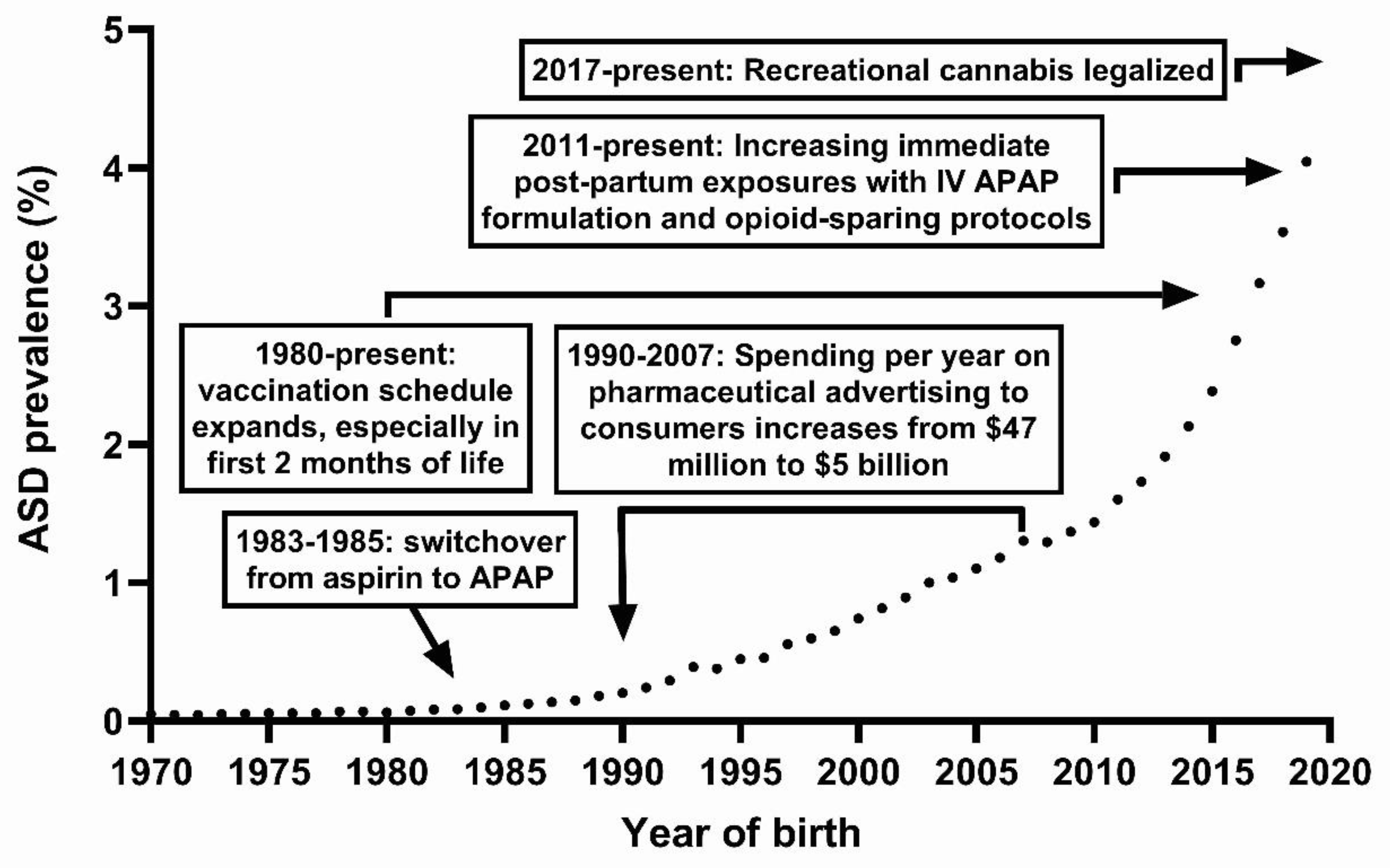
Figure 2.
A schematic diagram showing that data collected in human studies matches computer simulations in which exposure of susceptible individuals to acetaminophen causes ASD. The graph in the center of the diagram shows the calculated risk for ASD with acetaminophen use (y-axis) with increasing amounts of adjustment for interacting variables (x-axis). Results obtained from actual data and from computer simulations are similar both before and after adjustment for interacting variables. Although the diagram is schematic, the graph in the center of the diagram is based on a plot of results calculated by Ahlqvist et al [19] using healthcare data from Sweden, and of results calculated by our group based on computer simulations [3,4]. Tragically and nonsensically, results such as these are being widely used to support the erroneous view that acetaminophen use is not connected to ASD [19,24,25,26,27,28,29,30,31,32,33,34,35,36,37,38,39,40,41,42,43,44,45,46,47,48,49,50,51,52,53,54,55,56,57,58].
Figure 2.
A schematic diagram showing that data collected in human studies matches computer simulations in which exposure of susceptible individuals to acetaminophen causes ASD. The graph in the center of the diagram shows the calculated risk for ASD with acetaminophen use (y-axis) with increasing amounts of adjustment for interacting variables (x-axis). Results obtained from actual data and from computer simulations are similar both before and after adjustment for interacting variables. Although the diagram is schematic, the graph in the center of the diagram is based on a plot of results calculated by Ahlqvist et al [19] using healthcare data from Sweden, and of results calculated by our group based on computer simulations [3,4]. Tragically and nonsensically, results such as these are being widely used to support the erroneous view that acetaminophen use is not connected to ASD [19,24,25,26,27,28,29,30,31,32,33,34,35,36,37,38,39,40,41,42,43,44,45,46,47,48,49,50,51,52,53,54,55,56,57,58].
Disclaimer/Publisher’s Note: The statements, opinions and data contained in all publications are solely those of the individual author(s) and contributor(s) and not of MDPI and/or the editor(s). MDPI and/or the editor(s) disclaim responsibility for any injury to people or property resulting from any ideas, methods, instructions or products referred to in the content. |
© 2026 by the authors. Licensee MDPI, Basel, Switzerland. This article is an open access article distributed under the terms and conditions of the Creative Commons Attribution (CC BY) license (http://creativecommons.org/licenses/by/4.0/).
Copyright: This open access article is published under a Creative Commons CC BY 4.0 license, which permit the free download, distribution, and reuse, provided that the author and preprint are cited in any reuse.