

Submitted:
02 September 2026
Posted:
03 September 2026
You are already at the latest version
Abstract
Nature-themed artwork can serve as a positive distraction in pediatric healthcare settings. Yet children's perspectives are rarely considered in design decisions—particularly for window murals, which can transform views in clinical environments lacking natural scenery. This study explored adolescents' preferences for window mural subject matter in virtual pediatric hospital rooms and examined the influence of gender and age on those preferences. A cross-sectional study used an Immersive Virtual Environment (IVE) simulating 10 window mural conditions in a pediatric hospital room. Forty-four adolescents (ages 11–17) viewed the murals through VR and rated them on a 5-point facial hedonic Likert scale. Participants also ranked printed versions of the murals. Wilcoxon Signed-Rank Tests assessed preferences and group differences. The Sea, Flower, and Jungle murals were most preferred, while Abstract and Child Art murals were least favored—though still preferred over the control (blank window). Gender influenced preferences: females rated the Flower and Child Art murals significantly higher than males. No significant age-related differences were found. Adolescents prefer vibrant, nature-themed murals featuring animals and detailed scenes. All murals were preferred over a blank window view, underscoring the value of visual enhancements in patient rooms. These findings support considering child-informed, preference-based mural designs—especially in spaces without natural views—as a potential design strategy for pediatric healthcare environments.
Keywords:
pediatric design
; window murals
; immersive virtual environments (IVEs)
; adolescent preferences
; healthcare art
1. Introduction
Art plays a critical role in shaping therapeutic healthcare environments, particularly for pediatric settings [1]. Among various forms of art, nature-themed imagery has been shown to provide both psychological and physiological benefits [2], making it one of the most effective forms of positive distraction, which is defined as non-threatening stimuli that divert attention from pain or anxiety [3]. Ulrich’s Theory of Supportive Design further emphasizes that healing environments should provide access to these positive distractions, a strategy that is especially important for children, who often have less developed emotional regulation [4].
Healthcare designers and researchers increasingly view nature-based art as a therapeutic tool that reduces distress and supports emotional resilience [5,6]. When thoughtfully integrated, murals and visual art can humanize sterile environments, foster a sense of safety and belonging, and improve patient outcomes [7,8]. These benefits are highlighted in a study that found visual art, including murals, nature imagery, and representational scenes, enhances emotional well-being, reduces stress, and supports recovery in pediatric and adult settings alike [9]. Despite these benefits, decisions about visual art displays in pediatric healthcare environments are often made without input from the children who would experience them [10].
2. Art Preferences
2.1. The Role of Demographics in Art Preferences
Children’s preferences for artwork can vary and are shaped by a combination of factors such as developmental stage, demographics, and cultural background [11,12]. For instance, regarding gender, females often prefer floral or pastel–themed imagery, while males tend to prefer vivid landscapes or wildlife scenes [3,11]. These differences may stem from early socialization processes that influence gender-specific interests and aesthetic tastes, continuing into adolescence [10,13].
Therefore, healthcare settings that rely on gender-neutral artistic themes may not fully address the unique emotional needs of all children [14]. [9] also caution that generalized design strategies risk excluding critical patient subgroups and emphasize the need for more child-centered, individualized approaches to art selection.
2.2. Cultural Influences on Art Preferences
Preferences for subject matter, motifs, and color palettes may differ across cultural groups, suggesting the need for culturally responsive design [15,16]. Healthcare environments that rely on one-size-fits-all approaches, such as generic motifs, may fail to engage children across diverse cultural groups [13,17]. This oversight not only limits the therapeutic potential of visual art but may also alienate pediatric patients at a time when emotional connection and comfort are most needed.
2.3. Art Subject Matter and Pediatric Preferences
Although children can provide meaningful insights into healthcare design decisions [18,19], artwork is typically selected by adults, whose assumptions are frequently misaligned with children’s preferences [13]. Research shows that children generally prefer nature-inspired, representational imagery featuring animals, vibrant colors, and engaging content [3,20], because such imagery promotes feelings of relaxation and comfort [21]. In contrast, abstract designs are less desired and often seen as confusing or unappealing [13,22]. For example, in a study of hospitalized children aged 5 to 17, abstract art was among the least-preferred, with participants describing it as “messy,” “non-sense,” and “Don’t know what to do with this,” reflecting a general lack of preference for abstract content in pediatric healthcare environments [13] (p. 56).
2.4. Nature-Themed Art
According to [21], nature-themed murals in pediatric wards do more than decorate; they transform clinical spaces into emotionally supportive environments that reduce anxiety, foster comfort, and humanize the hospital experience for both children and their families. These findings align with broader evidence suggesting that representational and nature-based art communicate more effectively to children than abstract designs, which are more likely to be perceived as confusing or frightening [13,22]. Nature-themed imagery is among the most used and well-received visual interventions in healthcare settings [9]. Murals and other visual art, when thoughtfully selected, can foster a sense of safety and belonging, humanize sterile environments, and improve patient outcomes [7,8].
2.5. Planes of Application for Nature-Themed Art
Although most typically applied to walls through murals, framed prints, or screens [3,11,23], nature-themed art can also be effective when applied to other planes within the building. For example, [24] tested simulated nature in the form of ceiling-mounted photographic sky compositions and found significant positive outcomes on environmental satisfaction and diastolic blood pressure. [18] found that pediatric patients responded positively to ceiling tile art, especially those depicting realistic nature, realistic animals, and cartoon content. Since many patients spend prolonged periods lying down, the ceiling becomes an important canvas for visual engagement.
Windows also serve as critical planes in healthcare design, offering a visual connection to the outside world. Ideally, patient rooms should provide views of trees, sky, and other natural elements, which may support restoration and recovery [25]. However, this is not always possible due to space limitations, and efficiency-driven building layouts often result in patient rooms facing parking lots, busy streets, or nearby buildings instead of green spaces [26]. When direct access to natural views is unavailable, nature-inspired artwork and other simulated forms of nature may provide opportunities for restorative visual engagement in healthcare environments [8,23,26,27]. In a study by [6], representational imagery of tree or aquatic scenes was applied as murals to window planes overlooking adjacent buildings. The findings indicated that patients in the rooms with the murals had improved health-related outcomes, including systolic blood pressure and heart rate, compared to the patients in the control rooms, with the tree mural being the most impactful.
3. Research Gaps
Although the therapeutic value of nature-themed imagery in pediatric healthcare environments is well-documented, key gaps remain in the research. Most notably, there is a lack of direct input from children themselves regarding their preferences for specific imagery, and which are most and least preferred. Understanding these preferences is essential for creating environments that support young patients and their healing.
In particular, the window plane presents a unique and underutilized opportunity. Since windows are common features in patient rooms and viewing nature is an intrinsic human behavior, leveraging window murals to simulate natural scenes could significantly enhance the patient experience, especially when real views are limited or patients have little access to nature. Given that patient rooms are primary spaces where children and families spend much of their time during hospitalization, targeted, child-informed approaches to window imagery may support well-being and healing, as shown in both broader literature on art in healthcare environments and more specific studies in pediatric patient rooms [6,7,9]. Expanding research to explore preferred and unpreferred subject matter for window murals across diverse pediatric populations is a critical next step in understanding how window views can be enhanced in healthcare environments.
3.1. Research Objectives and Questions
This exploratory study investigates adolescent preferences regarding window mural designs within hospital settings. Specifically, the research addresses three key questions:
- What subject matter is most and least preferred for window murals by adolescents in pediatric hospital rooms?
- Does gender impact the preference for different themed window murals?
- Does age impact preference for different themed window murals (i.e., older adolescents versus younger adolescents)?
By exploring these aspects, the study is designed to gain deeper insights into adolescents’ mural preferences and how window views can be enhanced through mural applications.
4. Method
4.1. Research Design
This study was part of a larger mixed-method, cross-sectional, convergent research design. This approach allowed for a comprehensive understanding of participants’ preferences regarding mural subject matter in pediatric hospital rooms, while leveraging the strengths of both quantitative and qualitative data [28]. This manuscript examines adolescents’ subjective preferences for mural themes and explores the use of IVEs as a research methodology, evaluating the consistency between IVE-based and printed-image preference assessments. A qualitative manuscript is currently under development that will discuss additional findings from an objective viewpoint of the participant elicited by exposure to murals. The separation of the manuscripts is due to the different approaches used to analyze each type of finding: preference research versus psychological research.
The primary objective of the quantitative component was to identify the preferred and least preferred subject matter for window murals intended for pediatric hospital rooms. The murals were designed to improve window views in cases where pleasant or natural views were unavailable. Quantitative insights helped identify which mural types were most preferred by adolescents. These preferences could likely contribute positively to the psychosocial well-being of adolescents in clinical environments.
4.2. Research Population and Inclusion Criteria
Adolescents aged 11 to 17 were selected as the target population for this study due to a gap in existing research on their preferences and their sufficient cognitive and physical ability to use VR equipment and articulate their experiences. Participants were recruited through convenience sampling via multiple community channels, including flyers posted in local community locations, parenting-focused social media groups, and a university-wide announcement system. Interested parents or guardians completed an online interest form, after which potential participants were screened to determine eligibility based on the study’s inclusion and exclusion criteria. Eligible participants were then contacted and scheduled for an in-person session at a time convenient for the family.
The inclusion criteria required that participants be able to attend sessions in person and be in good health, have English language proficiency, and have no visual, hearing, or sensory processing disorders that could affect VR use or perception of the space. Prior VR experience was not required; however, participants needed to demonstrate basic comfort with the VR headset and controllers. Individuals who were unable to comfortably operate the equipment during the orientation period were excluded to ensure data reliability. Recruiting participants through multiple community channels and applying standardized screening procedures helped broaden the recruitment pool and reduce potential selection bias.
In total, 44 adolescents participated in the study, including 21 males and 23 females. The average age of the participants was 13.5 years, with males averaging 13.68 years and females averaging 13.35 years. Both male and female participants were represented across the full age range of 11 to 17 years. Table 1 presents the key demographic characteristics of the participants.
4.3. Selection of Mural Subject Matter
To determine the mural subject matter, a comprehensive review of existing literature was conducted, focusing on art preferences among children and adolescents in healthcare and educational settings. The primary literature search was conducted in February 2024 using advanced searches in EBSCO and CINAHL Complete. Three sets of keywords were combined using Boolean operators: (A) Setting terms (e.g., “hospital,” “clinic,” “healthcare environment”) combined with OR; (B) Population terms (e.g., “adolescent,” “pediatric,” “children”) also combined with OR; and (C) Independent variable terms (e.g., “positive distraction,” “painting,” “art”) combined with OR. The three sets were then connected using AND to refine the search. The search was limited to publications from 2017 to 2024, resulting in 33 records, of which 9 articles were selected for full review after title and abstract screening.
In addition, foundational, seminal, and recent studies published prior to 2025 were identified through hand-searching on Google Scholar and by reviewing the reference lists of selected articles. These studies were used to inform the development of mural theme categories and subject matter, rather than to represent current prevalence or outcomes.
Based on the review, five overarching visual categories were identified for the window murals: (1) realistic, (2) animated, (3) abstract, (4) child art, and (5) cultural themes. These categories provided the framework for selecting subject matter that represented different visual and thematic approaches identified in the literature. The realistic category included the Sea, Flower, and Real Meadow murals; the animated category included the Jungle, Storybook, Space, and Animated Meadow murals; and the remaining categories were represented by the Cultural, Child Art, and Abstract murals, respectively. Table 2 presents the five categories, ten mural conditions, and literature that guided the selection of subject matter.
4.4. Mural Design Process
The mural designs were developed using Midjourney, a generative AI platform that creates visual artwork from user-provided text prompts. Users with a paid subscription own the images they generate, which are considered royalty-free and may be used for research, publication, or presentation purposes. The AI prompts were carefully constructed to include all desired imagery, window dimensions, and layout requirements. An example of an AI prompt used was, “a realistic underwater coral reef, bottom border, white background, with a variety of colorful fish, a sea turtle, a sting ray, no sharks, some rocks, starfish, blue tang fish, --ar 16:9 --v 6.” Multiple iterations of the murals were produced until designs aligned with the intended themes and compositional goals (see Supplemental Material for more details on the AI prompt process).
The final mural designs were then reviewed by experts from American Art Resources (AAR), an art consulting firm specializing in healthcare facility design. This expert review validated the appropriateness, clarity, and aesthetic quality of the designs for use in healthcare environments. Feedback was provided through a consensus-based discussion, and minor revisions were made to the murals based on the experts’ recommendations.
Although each mural design was unique, consistency in layout and opacity was maintained across all ten conditions. All murals incorporated transparency levels of approximately 60–70% and covered 30–40% of the window area. The compositions were designed with less solid coverage in the middle and more intricate patterns along the perimeter. This approach preserves natural daylight and a central visual connection to the outdoors (see Figure 1).
Positioning the denser design elements along the window perimeter also ensured that the central viewing area remained unobstructed for adolescents in this study, addressing limitations identified in previous studies in which fully opaque murals reduced visibility throughout certain times of the day [6].
The placement and transparency of the murals were intentionally selected to preserve visibility, engagement, and natural lighting across all conditions, ensuring that structural design factors did not lead to any potential bias toward a particular mural type (see Figure 2).
An existing pediatric patient room in a Level 1 Trauma Hospital was selected as a model environment due to its window overlooking a courtyard with minimal landscaping and obstructed views. This room was precisely measured and digitally recreated as a three-dimensional (3D) model using Autodesk Revit, building information modeling (BIM) software used to create detailed architectural models of interior and exterior spaces. The model was then rendered and visualized using Enscape, a real-time rendering and virtual reality visualization plugin that allows immersive viewing of architectural environments. These tools were used to accurately capture the room’s dimensions, furnishings, medical equipment, and external views. The window murals were then added to the window in the 3D model. The camera view in the virtual model was placed on a virtual patient bed, with the eye level adjusted to create a realistic viewpoint.
Using Unreal Engine, a real-time 3D development platform for creating interactive simulations and virtual environments, the 3D model was transformed into an Immersive Virtual Environment (IVE) by overlaying typical hospital sounds, including staff and equipment noises. Unreal Engine is proprietary software copyrighted and trademarked by Epic Games and may be used under its license terms [33]. A Meta Quest 3 virtual reality (VR) headset [34] was used for immersive viewing and participant ratings. Additionally, a 5-point facial hedonic Likert scale was added to the IVE for the participants to score the various conditions (see Figure 3). The response options ranged from 1 (Strongly Dislike) to 5 (Strongly Like), with Neutral representing the midpoint of the scale. The face scale is commonly used to elicit feedback from adolescents, often more preferred than other assessment tools, such as visual analog scales and word descriptor scales [35,36].
4.5. Research Procedure
The study was conducted in a laboratory space at a local university in North America. Upon arrival, participants and their parents completed consent and assent forms in accordance with the university’s IRB-approved protocol (IRB2024-168). Participants were then introduced to the study procedure, including a demonstration of the face-scale rating system and the hand controllers used with the Virtual Reality (VR) headset.
Participants were seated in a chair during the VR experience to simulate the physical position of sitting in a patient’s bed. Prior to the main data collection, participants completed a brief practice session in a neutral virtual room to familiarize themselves with the VR equipment and reduce potential measurement error associated with unfamiliarity with the technology.
During the main data collection, participants viewed 11 window-view conditions, consisting of one control condition and ten mural conditions. The ten mural conditions were: Sea Mural, Real Meadow Mural, Jungle Mural, Animated Meadow Mural, Space Mural, Storybook Mural, Abstract Mural, Child Art Mural, Cultural Mural, and Flower Mural. The order of presentation was randomized for each participant to minimize order effects. Each condition was displayed for 10 seconds, after which participants responded to the prompt, “How much do you like your window view?” Responses were recorded using a five-point facial hedonic Likert scale within the virtual environment. Between each mural condition, the control condition was shown for five seconds to allow participants a brief visual reset before evaluating the next mural condition. The total time spent in the immersive virtual environment (IVE) was less than five minutes.
Following the VR session, participants removed the headsets and moved to a separate area of the laboratory. Printed images representing all 11 conditions (10 murals and one control) were displayed on a tabletop in a randomized order. Participants were asked to rank the 11 mural conditions from most preferred to least preferred while viewing all options simultaneously. The resulting rankings ranged from 1 (most preferred) to 11 (least preferred).
4.6. Quantitative Data Analysis
Quantitative data were analyzed to address three research questions: (1) What subject matter is most and least preferred for window murals by adolescents in pediatric hospital rooms? (2) Does gender impact the preference for different themed window murals? and (3) Does age impact preference for different themed window murals (i.e., older adolescents versus younger adolescents)? Statistical analysis was conducted using Stata 19.0 SE Standard Edition [37]. A significance level of p = .05 was established for all statistical tests. Descriptive statistics were used to examine participants’ preferences and identify the most and least preferred mural subject matter. For the VR evaluation, responses were measured on a five-point scale ranging from 1 (Strongly Dislike) to 5 (Strongly Like), with higher mean scores indicating greater preference. For the printed-picture evaluation, participants ranked the 11 conditions from 1 (most preferred) to 11 (least preferred), with lower mean rankings indicating greater preference.
The Wilcoxon Signed-Rank Test was used to examine differences between each mural condition and the control condition in both the VR and printed-picture formats. This non-parametric test is appropriate for comparing related observations, particularly when the assumption of normality is not met [38,39]. Statistical results were reported using the z-statistic, probability value (p), and exact probability value. To address the second and third research questions, additional analyses compared mural preferences by gender (male versus female) and age (older versus younger adolescents) for each mural condition in both the VR and printed-picture formats. Results with p < .05 were considered statistically significant.
5. Findings
Quantitative data were analyzed statistically using Stata 19.0 SE Standard Edition [37]. Data analysis was designed to address and answer the identified research questions. A significance level of p < 0.05 was used for all tests.
5.1. Preference for Subject Matter When Using VR
The first research question asked, “What subject matter is most and least preferred for window murals by adolescents in pediatric hospital rooms?” To examine this research question, Wilcoxon Signed–Rank Tests were conducted to compare participant preference scores for each mural condition with the control condition when viewed in the immersive virtual environment (IVE). The test compared the median score of the control to the median score of the 10 window mural conditions.
The results indicated statistically significant differences between the control condition and all mural conditions except for the abstract mural condition (see Table 3). Among the mural conditions, the Sea Mural, Flower Mural, and Jungle Mural demonstrated the largest observed differences from the control condition. The Child Art Mural also differed significantly from the control condition, though the magnitude of the difference was smaller than that of the other significant mural conditions. Detailed statistical comparisons are presented in the ‘When using VR’ column of Table 3.
5.2. Preference for Subject Matter When Ranking Printed Pictures
To further examine participant preferences, Wilcoxon Signed–Rank Tests were conducted to compare the control condition with the mural conditions when participants ranked printed images of the murals. Results indicated significant differences between the control condition and all mural conditions. The Sea Mural, Animated Meadow, and Jungle Mural exhibited the largest observed differences from the control condition. Detailed comparisons are provided in the ‘When Ranking Printed Pictures’ column of Table 3.
5.3. Gender Differences in Preference for Subject Matter When Using VR
The second research question asked, “Does gender impact the preference for different themed window murals?”. To answer this question, a series of Wilcoxon Signed–Rank tests were used to determine whether there are gender differences in preference for subject matter when using VR. The test compared male and female participants’ median scores on the 10 window-mural theme conditions when viewed using VR.
A statistically significant difference was found between Male and Female preferences for the Flower Mural condition and the Child Art Mural condition (see When using VR column of Table 4). The other mural conditions did not indicate a significant difference.
5.4. Gender Differences in Preference for Subject Matter When Ranking Printed Pictures
Wilcoxon Signed Rank Tests were used to compare male and female participants’ median scores on various window mural theme conditions when ranking printed pictures. The analysis revealed a significant difference in the flower-themed mural condition, indicating substantial gender-related disparities in mural preferences (see Table 4). The control and cultural-themed mural conditions also showed statistically significant differences. However, not all categories exhibited significant differences, and detailed statistical comparisons are provided in Table 4 for a comprehensive understanding.
5.5. Age Differences in Preference for Subject Matter When Using VR
The third research question was, “Does age impact preference for different themed window murals (i.e., older adolescents versus younger adolescents)? “. The Wilcoxon Signed–Rank Tests were used to determine whether there are any age differences in preference for subject matter when using VR. The test compared the median scores of older (ages 14-17) and younger (ages 11-13) participants on various window mural theme conditions when viewed in VR, which are subgroups within the full sample and are not independent cohorts. The results of the Wilcoxon Signed Rank Test of age-related differences in preferences for subject matter when using VR showed no significant variations between older and younger participants across various mural theme conditions (see Table 5).
5.6. Age Differences in Preference for Subject Matter When Ranking Printed Pictures
The Wilcoxon Signed Rank Tests of the analysis of age-related differences when ranking printed pictures revealed no significant differences. This suggests that age does not significantly differ between older and younger participants in preference across various mural theme conditions. Table 5 provides a detailed statistical comparison, reinforcing confidence in the conclusions drawn from this research.
5.7. Preference Ratings for Subject Matter When Using VR
To determine the overall most preferred mural theme in the study when using VR, Participants rated their preferences for mural subject matter through a survey utilizing a 5-point Likert scale. Results indicated that the Sea Mural received the highest average preference score (M = 4.30), followed by the Flower Mural (M = 4.11) and the Jungle Mural (M = 4.07). These categories received the highest levels of preference among participants. In contrast, the Control condition received the lowest average score (M = 2.77), indicating substantially lower preference compared with the mural conditions. Table 6 presents the mean ratings of the murals from most to least preferred subject matter.
5.8. Preference Rankings for Subject Matter When Ranking Printed Pictures
Participants were also asked to rank the printed murals from 1 (Most Preferred) to 11 (Least Preferred). The Sea Mural received the most favorable ranking (M=3.68), followed by the Flower Mural (M = 4.45) and the Jungle Mural (M = 4.41). The Control condition received the lowest ranking (M = 9.57), indicating that it was the least preferred option among participants. Table 7 provides the complete ranking of mural themes.
5. Discussion
This exploratory study examined adolescent preferences for different window mural themes in pediatric hospital rooms using both immersive virtual reality and printed image ranking methods. Across both evaluation methods, the Sea, Flower, and Jungle murals received the highest preference ratings, although in slightly different order. These murals shared several common characteristics, including the presence of natural elements, animal imagery, and visual movement such as swimming fish, flying birds, or butterflies. In addition, these murals incorporated vibrant colors and detailed designs.
The top three preferred murals all depict natural elements but vary in style (animated and realistic, see Table 8) and scale (large vs. small). This pattern suggests that the subject matter (nature) may play a greater role in shaping preferences than stylistic representation or scale.
Across both evaluation methods, the control condition was consistently the least preferred option. Even the lowest-rated mural themes, including the Child Art and Abstract murals, were generally more preferred than the control. This finding suggests that the presence of a mural may enhance the perceived quality of window views in environments where natural views are limited or unavailable. Additionally, even the less-preferred mural themes generally received higher preference ratings than the control condition.
The relatively lower preference for the Child Art mural may be related to age-related perceptions of appropriateness. Adolescents may view artwork that resembles children’s drawings as less aligned with their developmental stage. Similarly, the abstract mural received lower preference scores, which is consistent with previous research indicating that children and adolescents often prefer artwork with recognizable imagery over abstract compositions.
Gender differences were observed for a limited number of mural themes. Female participants showed higher preference scores for the Flower and Child Art murals than male participants. This supports previous findings suggesting that gender can influence preferences for art.
No statistically significant age differences were observed between younger and older adolescents in either the VR or ranking conditions. This result suggests that preferences for mural subject matter may be relatively consistent across the adolescent age range examined in this study.
A notable finding of the study was the consistency between the VR and printed image evaluation methods. During the VR task, participants viewed only one condition at a time without the ability to compare alternatives. In contrast, the ranking task allowed participants to view all mural options simultaneously. Despite these differences in presentation, both methods produced the same set of most-preferred and least-preferred mural themes. This convergence strengthens confidence in the reliability of the preference findings.
The use of Immersive Virtual Environments (IVE) also provides methodological advantages for evaluating mural designs. VR enabled participants to experience a simulated hospital environment while allowing researchers to systematically manipulate the window mural conditions. Given the logistical and ethical challenges associated with conducting controlled research in active pediatric hospital rooms, VR offers a valuable tool for evaluating environmental design interventions before implementation.
6. Implications for Design Practice
The findings suggest several actionable design implications for pediatric healthcare facility design. First, the recommendation is not that all rooms adopt the same mural. Rather, where the ‘one-size-fits-all’ recommendations are mostly applied, the preference rankings reported here provide an evidence-based recommendation for prioritizing mural themes from the highest-preference rank (i.e., nature-based murals: Sea, Flower, and Jungle murals), and prioritizing less the murals with the lowest preference while giving the lowest priority to the least-preferred themes (i.e., child art and abstract murals) in adolescent-occupied pediatric spaces.
Second, for those facilities that are capable of installing digital display technologies (e.g., high-resolution window-simulating displays, digital ceiling-mounted tiles), the adoption of a patient preference model in which adolescents select from the top-ranking themes would provide preference autonomy to each individual while constraining the option set to evidence-informed and age-specific design.
Third, gender significantly influenced mural preferences, with females preferring floral and child art themes compared to males. While not all themes need to be gender-based, offering a variety of options may help accommodate diverse preferences.
Lastly, designers should apply these recommendations as evidence-informed design guidance. While using this guidance, designers should distinguish between the patient room (where these findings are most applicable) and shared space (where the preferences of other occupants, such as visitors, family members, and healthcare staff, may not be equally applicable to patient preference rankings findings) (see future direction).
7. Conclusion
This study highlights the potential value of incorporating nature-themed window murals into pediatric healthcare environments, particularly in spaces where access to natural views is limited. Findings suggest that adolescents tend to prefer murals that depict nature-based imagery, particularly scenes involving animals, movement, and vibrant colors. These mural themes were consistently rated more favorably than the control condition, indicating that murals may enhance the perceived quality of window views in hospital rooms.
The results also suggest that subject matter selection is an important consideration in mural design. While nearly all mural themes were preferred over the absence of a mural, certain themes, particularly nature-based imagery, were consistently favored by participants. Window murals represent a relatively low-cost design intervention that may help improve the visual experience of healthcare environments for pediatric patients. By carefully selecting mural themes that align with patient preferences, designers and healthcare facilities may enhance the perceived quality and appeal of patient rooms.
8. Limitations
This study provides valuable insights into pediatric window mural preferences; however, several limitations must be acknowledged to provide context for the findings and guide future research.
First, the study was conducted with healthy adolescent participants rather than hospitalized pediatric patients. Although adolescents can articulate their preferences and interact with VR technology, their responses may differ from those of children experiencing illness, stress, or extended hospital stays. Future research should examine mural preferences among pediatric patients within healthcare settings to better understand how health conditions may influence environmental perceptions.
Second, the mural conditions were evaluated using immersive virtual reality simulations rather than real-world installations. While VR provides a controlled environment that allows researchers to manipulate the design variables systematically, it may not fully replicate the experience of viewing murals in actual hospital rooms. Factors such as daylight levels, room orientation, window placement, and surrounding architectural elements may influence mural perception in real-world settings.
Third, although the study examined ten distinct mural themes, this selection represents only a portion of the potential mural designs. Additional subject matter, such as cultural imagery, fantasy scenes, geographical landmarks, or alternative abstract styles, could provide a more comprehensive understanding of pediatric aesthetic preferences.
Fourth, the study sample was drawn via convenience sampling from a specific geographic and cultural context, which may limit the generalizability of the findings and introduce a risk of selection bias. Preferences for visual imagery may vary widely across cultural backgrounds, regions, and healthcare environments. Future studies should involve more diverse participant populations to assess the broader applicability of the findings.
Finally, this study focused on immediate preference responses, rather than long-term psychological or physiological outcomes. While participant preferences provide valuable insight into aesthetic appeal, additional research is needed to determine whether preferred mural designs contribute to measurable outcomes such as reduced stress, improved mood, or an enhanced recovery experience
9. Future Research Directions
This study provides an initial step toward understanding adolescent preferences for window mural themes in pediatric healthcare environments. Several opportunities exist for extending this line of research. Future studies should investigate how mural subject matter influences emotional and physiological responses, such as stress levels, mood, or perceived comfort. Integrating measures such as heart rate, stress biomarkers, or validated psychological scales could provide deeper insight into the potential therapeutic effects of mural designs. The intention is for these findings to inform the future installation and clinical evaluation of selected window mural designs in pediatric healthcare settings.
Additional research could also explore how mural preferences vary across developmental stages, including younger children, adolescents, and adult patients. Differences in cognitive development, emotional needs, and aesthetic perception may influence responses to various mural themes.
Environmental context represents another important area for investigation. Factors such as daylighting conditions, nighttime lighting, room orientation, window placement, and surrounding architectural elements may interact with mural designs to influence perception and preference.
Emerging technologies also present new possibilities for research. Future studies could explore the potential of augmented reality (AR), mixed reality (MR), or interactive digital murals, which may allow patients to engage dynamically with visual content. These technologies could enable customizable environmental experiences tailored to individual patient preferences.
Finally, additional research should examine how window murals affect other occupants of healthcare environments, including family members, visitors, and healthcare staff. Understanding how different user groups respond to mural designs could help inform more comprehensive evidence-based design strategies for healthcare facilities.
Supplementary Materials
The following supporting information can be downloaded at: https://doi.org/10.5281/zenodo.21895110, Murals Used as Experimental Stimuli, Midjourney Prompts, and Creation Process.
Author Contributions
Conceptualization, M.P.; methodology, M.P., F.O. and D.C.; software, M.P., F.O. and S.A.; validation, M.P., F.O. and N.K.; formal analysis, M.P., F.O., D.C., N.K. and C.B.; investigation, M.P., F.O., D.C., N.K. and C.B.; resources, M.P. and S.A.; data curation, M.P., F.O., D.C., N.K. and C.B.; writing—original draft preparation, M.P., F.O., D.C., N.K. and C.B.; writing—review and editing, M.P., F.O., D.C., N.K. and C.B.; visualization, F.O., D.C., N.K., C.B. and S.A.; supervision, M.P.; project administration, M.P., F.O. and D.C.; funding acquisition, M.P. All authors have read and agreed to the published version of the manuscript.
Funding
This research and the APC were funded by Texas Tech University (TTU) College of Health and Human Sciences.
Institutional Review Board Statement
This study was approved by the Texas Tech University (TTU) Institutional Review Board with IRB#: IRB2024-168. The Approval Document has been included in this submission.
Data Availability Statement
The data presented in this study are available from the corresponding author upon reasonable request. The data are not publicly available due to participant privacy and ethical considerations.
Acknowledgments
The authors would like to acknowledge Emily Krueger for her contributions to this research project, including support with the review process and other research activities, and Dr. Donald Lacombe for his contributions to the data analysis.
Conflicts of Interest
The authors declare no conflicts of interest. The funders had no role in the design of the study; in the collection, analyses, or interpretation of data; in the writing of the manuscript; or in the decision to publish the results.
References
- Wu, J. F.; Chung, C. Y. Art Therapy as an intervention for children: a bibliometric analysis of publications from 1990 to 2020. Sage Open 2023, 13(4), 21582440231219143. [Google Scholar] [CrossRef]
- Khalvati, L.; Chilaka, D. A. U.; Gaines, K. The impact of integrating natural elements on healthcare design: A brief review. In Proceedings of the 55th Annual Environmental Design Research Association (EDRA55) Conference: Human-Centric Design in the Natural and Built Environment, Portland, OR, 2025; Environmental Design Research Association; p. 109. [Google Scholar]
- Abulawi, R. A. The conceptual design themes of artwork in the public spaces of children’s hospital. Civ. Eng. Archit. 2023, 11(5), 2413–2434. [Google Scholar] [CrossRef]
- Jiang, S. Positive distractions and play in the public spaces of pediatric healthcare environments: a literature review. In HERD: Health Environments Research & Design Journal; SAGE Publications, 2020; Volume 13, 3, pp. 171–197. [Google Scholar] [CrossRef]
- Joseph, G.; Singarayan, V.; Krishna, S. Effect of aquarium therapy on pain during intravenous cannulation among children. Int. J. Res. Paediatr. Nurs. 2022, 4(2), 91–95. [Google Scholar] [CrossRef]
- Pearson, M.; Gaines, K.; Pati, D.; Colwell, M.; Motheral, L.; Adams, N. G. The physiological impact of window murals on pediatric patients. HERD Health Environ. Res. Des. J. 2019, 12(2), 116–129. [Google Scholar] [CrossRef]
- Gripko, M.; Joseph, A.; MohammadiGorji, S. Effects of the physical environment on children and families in hospital-based emergency departments: a systematic literature review. J. Environ. Psychol. 2023, 86, 101970. [Google Scholar] [CrossRef]
- Ullán, A. M.; Belver, M. H. Visual arts in children’s hospitals: scoping review. In HERD: Health Environments Research & Design Journal; SAGE Publications, 2021; Volume 14, 4, pp. 339–367. [Google Scholar] [CrossRef]
- Gaminiesfahani, S.; Lozanovska, M.; Tucker, R. A scoping review of the impact of art in the healthcare environment. HERD Health Environ. Res. Des. J. 2020, 13(5), 242–254. [Google Scholar] [CrossRef]
- Coad, J.; Coad, N. Children and young people’s preference of thematic design and colour for their hospital environment. J. Child Health Care 2008, 12(1), 33–48. [Google Scholar] [CrossRef]
- Eisen, S. L.; Ulrich, R. S.; Shepley, M. M.; Varni, J. W.; Sherman, S. The stress-reducing effects of art in pediatric health care: art preferences of healthy children and hospitalized children. J. Child Health Care 2008, 12(3), 173–190. [Google Scholar] [CrossRef]
- Kannampuzha Varuthunny, L.; Venukapalli, S. Gender and geocultural differences in children’s appreciation of art. Am. J. Art. Des. 2021, 6(2), 47–54. [Google Scholar] [CrossRef]
- Nanda, U.; Chanaud, C. M.; Brawn, L.; Hart, R.; Hathorn, K. Pediatric art preferences: countering the “one-size-fits-all” approach. HERD Health Environ. Res. Des. J. 2009, 2(4), 46–61. [Google Scholar] [CrossRef]
- Alter-Muri, S. B.; Vazzano, S. Gender typicality in children’s art development: a cross-cultural study. Arts Psychother. 2014, 41(2), 155–162. [Google Scholar] [CrossRef]
- Hathorn, K.; Nanda, U. A guide to evidence-based art. Cent. Health Des. 2008, 1, 1–23. Available online: https://www.healthdesign.org/sites/default/files/Hathorn_Nanda_Mar08.pdf.
- Ho, R. T.; Potash, J. S.; Fang, F.; Rollins, J. Art viewing directives in hospital settings effect on mood. HERD Health Environ. Res. Des. J. 2015, 8(3), 30–43. [Google Scholar] [CrossRef]
- Saraiva, J.; Varzim, M.; Cordeiro, H. The role of illustration in pediatric hospitalization: a collaborative project between ESAD and Pedro Hispano’s Hospital of Matosinhos. Convergências 2022, 15(30), 35–49. [Google Scholar] [CrossRef]
- Biddle, K. S.; Boggs, L. M.; Wolfe, M. L.; Rogers, S.; Petersen, C. M.; King-Singh, K.; Pearce, E.; Prowten, S. D.; Fish-Huson, C. Healing ceilings: a collaborative exploration of pediatric preferences in ceiling tile artwork. J. Pediatr. Nurs. 2025, 81, e96–e105. [Google Scholar] [CrossRef]
- Mason, J. J.; Coleman, L.; Dawod, M.; Wathen, K.; Houston, S.; Waldron, M.; Hinds, P. S. Child and caregiver voices about inpatient care: what do they report as positive and as needing improvement? J. Pediatr. Nurs. 2024, 75, 213–220. [Google Scholar] [CrossRef]
- Denissa, L.; Manurung, R. T.; Pattipawaej, O. C.; Effendi, I. Z.; Budiman, I. Visual impact of color on children’s excitement development, making exterior wall mural at Taruna Bakti Kindergarten Bandung. J. Innov. Community Engagem. 2022, 3(2), 82–96. [Google Scholar] [CrossRef]
- Nicolau, A.-A. Bringing life to the healthcare spaces: Building community, unity and solace. Romanian J. Med. Rehabil. Phys. Med. Balneoclimatology 2024, 1(3), 201–205. [Google Scholar] [CrossRef]
- Shen, X.; Zhang, H.; Li, Y.; Qu, K.; Zhao, L.; Kong, G.; Jia, W. Building a satisfactory indoor environment for healthcare facility occupants: a literature review. Build. Environ. 2023, 228, 109861. [Google Scholar] [CrossRef]
- Wiratno, T. A. Model of mural painting in the inpatient room of Fatmawati Hospital. Int. Rev. Humanit. Stud. 2020, 5(3), 12. [Google Scholar] [CrossRef]
- Pati, D.; Freier, P.; O’Boyle, M.; Amor, C.; Valipoor, S. The impact of simulated nature on patient outcomes: a study of photographic sky compositions. HERD Health Environ. Res. Des. J. 2016, 9(2), 36–51. [Google Scholar] [CrossRef]
- Ulrich, R. S. Effects of interior design on wellness: theory and recent scientific research. Journal of Health Care Interior Design: Proceedings from the.. Symposium on Health Care Interior Design. Symposium on Health Care Interior Design 1991, 3, 97–109. [Google Scholar]
- Water, T.; Wrapson, J.; Tokolahi, E.; Payam, S.; Reay, S. Participatory art-based research with children to gain their perspectives on designing healthcare environments. Contemp. Nurse A J. Aust. Nurs. Prof. 2017, 53(4), 456–473. [Google Scholar] [CrossRef]
- Dianat, F.; Bassaw, C.; Khatiwada, N.; Gaines, K. A literature review: Natural elements in recovery room design and their role in cognitive restoration and patient health and wellbeing. Int. J. Arts Humanit. Soc. Sci. 2025, 6(8), 61–69. [Google Scholar] [CrossRef]
- Creswell, J. W.; Plano Clark, V. L. Designing and conducting mixed methods research, 3rd ed.; SAGE Publications, 2017. [Google Scholar]
- Bernaldez, F. G.; Gallardo, D.; Abelló, R. P. Children’s landscape preferences: From rejection to attraction. J. Environ. Psychol. 1987, 7(2), 169–176. [Google Scholar] [CrossRef]
- Qi, Y.; Yan, Y.; Lau, S. S.; Tao, Y. Evidence-based design for waiting space environment of pediatric clinics—three hospitals in Shenzhen as case studies. Int. J. Environ. Res. Public Health 2021, 18(22), 11804. [Google Scholar] [CrossRef]
- Ramsey, I. L. Effect of Art Style on Children’s Picture Preferences. J. Educ. Res. 1982, 75(4), 237–240. [Google Scholar] [CrossRef]
- Bishop, K. The role of art in a paediatric healthcare environment from children’s and young people’s perspectives. Procedia-Soc. Behav. Sci. 2012, 38, 81–88. [Google Scholar] [CrossRef]
- Games, Epic. Unreal® Engine End User License Agreement (EULA) . n.d. Available online: https://store.steampowered.com/eula/3855380_eula_0 (accessed on 30 July 2026).
- Meta Platforms; Inc. Meta Quest 3 . Meta. 2023. Available online: https://www.meta.com/quest/quest-3/ (accessed on 30 July 2026).
- Höök, A.; Castor, C.; Björk, M.; Forsgren, E.; Muszta, A.; Nilsson, S. Content validity of the electronic faces Thermometer Scale for pain in children: Is a picture worth more than a thousand words? Front. Pain Res. 2024, 5. [Google Scholar] [CrossRef]
- Coombes, L.; Bristowe, K.; Ellis-Smith, C.; Aworinde, J.; Fraser, L. K.; Downing, J.; Bluebond-Langner, M.; Chambers, L.; Murtagh, F. E.; Harding, R. Enhancing validity, reliability and participation in self-reported health outcome measurement for children and young people: A systematic review of recall period, Response Scale format, and Administration modality. Qual. Life Res. 2021, 30(7), 1803–1832. [Google Scholar] [CrossRef]
- StataCorp. Stata Statistical Software: Release 19 [Computer software]; StataCorp LLC, 2025; Available online: https://www.stata.com (accessed on 30 July 2026).
- Field, A. Discovering statistics using IBM SPSS Statistics: North American Edition, 5th ed.; Sage Publications, Inc: Los Angeles, CA, 2017. [Google Scholar]
- McDonald, J. H. Handbook of biological statistics, 3rd ed.; Sparky House Publishing: Maryland, 2014. [Google Scholar]
Figure 1.
Link and QR Code to the Immersive Virtual Environment (IVE) 360° View of the Realistic Sea Mural Scene. Note. All murals maintained a consistent layout, opacity (60–70%), and coverage (30–40% of the window), with less solid coverage in the middle and more intricate patterns along the perimeter to preserve natural daylight and a central visual connection to the outdoors.
Figure 1.
Link and QR Code to the Immersive Virtual Environment (IVE) 360° View of the Realistic Sea Mural Scene. Note. All murals maintained a consistent layout, opacity (60–70%), and coverage (30–40% of the window), with less solid coverage in the middle and more intricate patterns along the perimeter to preserve natural daylight and a central visual connection to the outdoors.

Figure 2.
Control Condition and Ten Window Mural Conditions in the Immersive Virtual Environment (IVE).
Figure 2.
Control Condition and Ten Window Mural Conditions in the Immersive Virtual Environment (IVE).
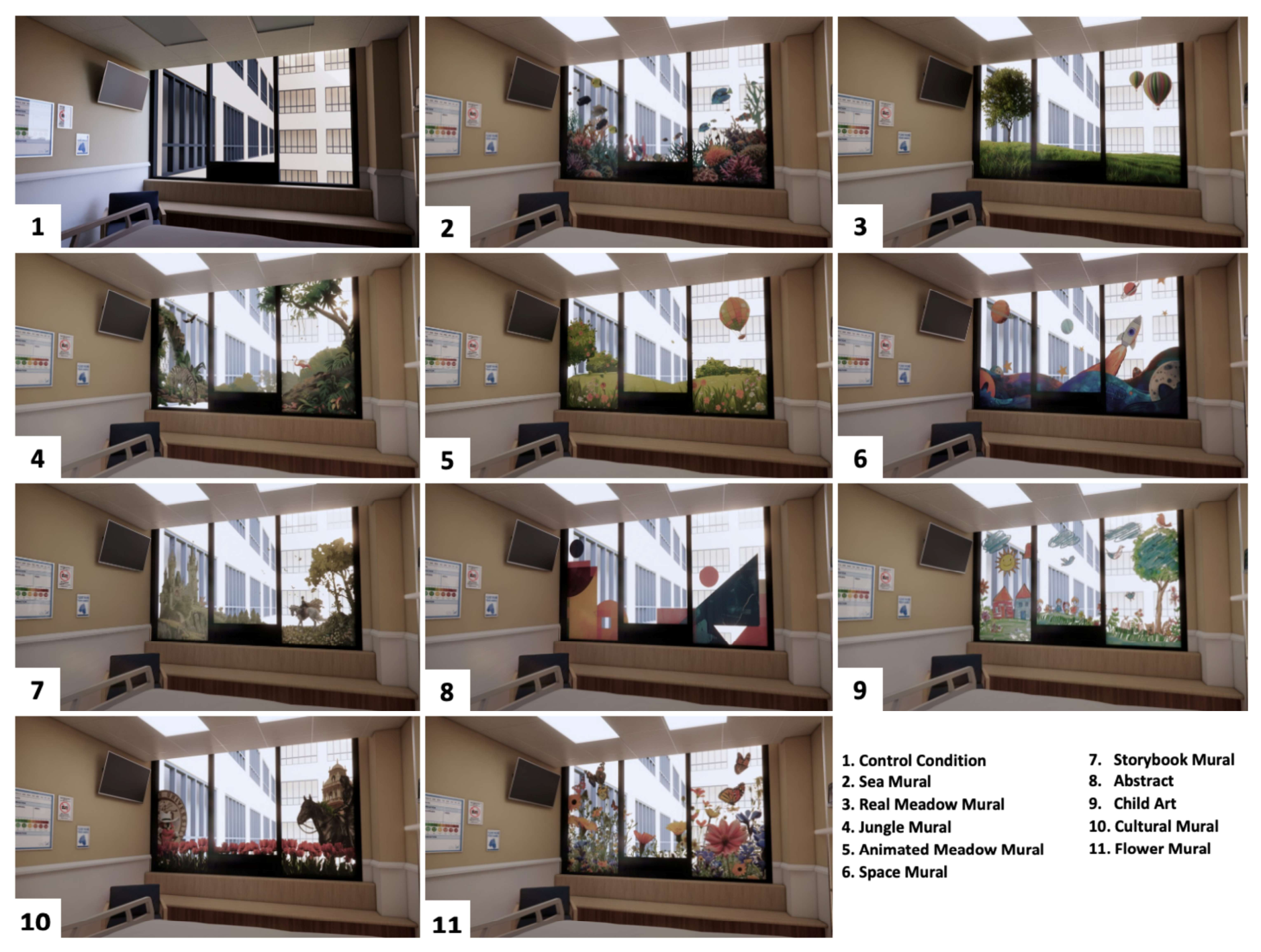
Figure 3.
Rating Diagram Using the 5-point Facial Hedonic Likert Scale.
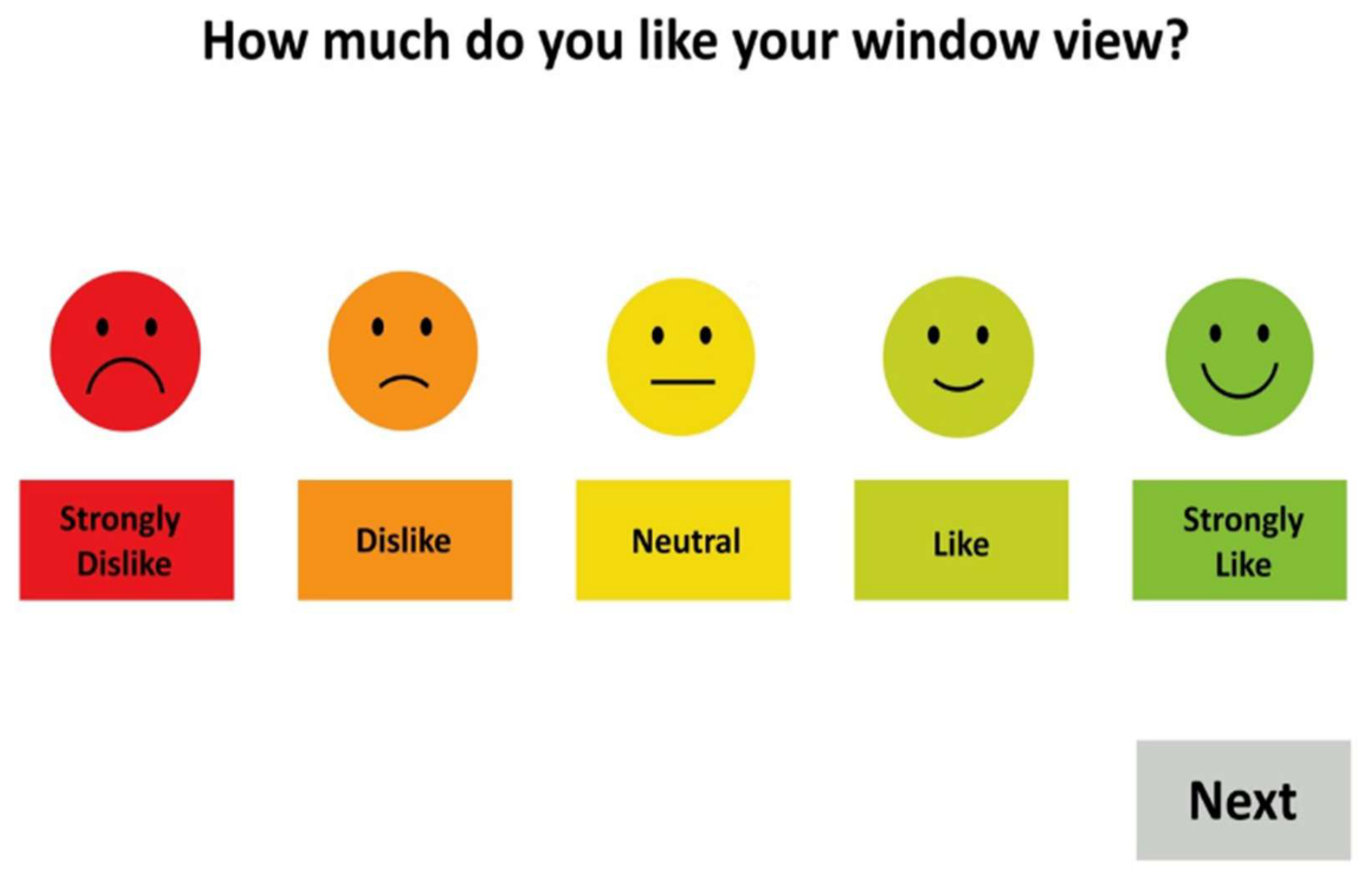

Table 1.
Participant Demographics.
| Category | Details |
|---|---|
| Total Participants | 44 |
| Male | 21 |
| Female | 23 |
| Overall Average Age | 13.5 |
| Male | 13.68 |
| Female | 13.35 |
| Age range | 11 - 17 |
Table 2.
Mural Theme Categories and Selected Designs Informed by Recent and Foundational Literature.
Table 2.
Mural Theme Categories and Selected Designs Informed by Recent and Foundational Literature.
| Category | Mural | Literature |
|---|---|---|
| Realistic | Sea Mural | [3,13] |
| Flower Mural | [3,11,13,23,29] | |
| Real Meadow Mural | [29] | |
| Animated | Jungle Mural | [13,23,30,31] |
| Storybook Mural | [17,31] | |
| Space Mural | [17,30] | |
| Animated Meadow Mural | [29,31] | |
| Cultural | Cultural Mural | [3] |
| Child Art | Child Art Mural | [13,32] |
| Abstract | Abstract Mural | [3,11,13] |
Table 3.
Wilcoxon Signed Rank Test for Preference of Subject Matter.
| When Using VR | When Ranking Printed Pictures | |||||
|---|---|---|---|---|---|---|
| z-statistic | Prob > |z| | Exact Prob | z-statistic | Prob > |z| | Exact Prob | |
| Sea Mural vs. Control | 5.516 | 0.000* | 0.000 | -5.475 | 0.0000* | 0.0000 |
| Flower Mural vs. Control | 5.018 | 0.000* | 0.000 | -4.8830 | 0.0000* | 0.0000 |
| Jungle Mural vs. Control | 4.965 | 0.000* | 0.000 | -5.0730 | 0.0000* | 0.0000 |
| Cultural Mural vs. Control | 4.764 | 0.000* | 0.000 | -4.8710 | 0.0000* | 0.0000 |
| Animated Meadow Mural vs. Control | 4.652 | 0.000* | 0.000 | -5.1460 | 0.0000* | 0.0000 |
| Space Mural vs. Control | 4.194 | 0.000* | 0.000 | -4.8850 | 0.0000* | 0.0000 |
| Real Meadow Mural vs. Control | 4.073 | 0.000* | 0.000 | -4.7910 | 0.0000* | 0.0000 |
| Storybook Mural vs. Control | 3.544 | 0.000* | 0.000 | -3.5150 | 0.0004* | 0.0003 |
| Child Art Mural vs. Control | 2.526 | 0.012* | 0.011 | -3.4620 | 0.0005* | 0.0003 |
| Abstract Mural vs. Control | 0.465 | 0.642 | 0.650 | -3.7450 | 0.0002* | 0.0001 |
Note. n=44, *Significant figures at <p.05.
Table 4.
Wilcoxon Signed Rank Test to find Gender Differences (Male vs Female) for Preference of Murals.
Table 4.
Wilcoxon Signed Rank Test to find Gender Differences (Male vs Female) for Preference of Murals.
| Mural Type | When Using VR | When Ranking Printed Pictures | ||||
|---|---|---|---|---|---|---|
| z-statistic | Prob > |z| | Exact Prob | z-statistic | Prob > |z| | Exact Prob | |
| Sea Mural | -0.236 | 0.814 | 0.92 | 0.914 | 0.361 | 0.376 |
| Flower Mural | -3.693 | 0.000* | 0.00 | 3.994 | 0.000* | 0.000 |
| Jungle Mural | 0.036 | 0.971 | 1.00 | 0.017 | 0.986 | 0.994 |
| Cultural Mural | 0.700 | 0.484 | 0.56 | -2.151 | 0.032* | 0.030 |
| Animated Meadow Mural | -1.613 | 0.107 | 0.13 | 0.053 | 0.958 | 0.965 |
| Space Mural | -0.711 | 0.477 | 0.51 | -0.439 | 0.661 | 0.674 |
| Real Meadow Mural | -0.142 | 0.887 | 0.92 | -1.586 | 0.113 | 0.116 |
| Storybook Mural | -1.855 | 0.064 | 0.06 | 1.168 | 0.243 | 0.250 |
| Child Art Mural | -2.590 | 0.010* | 0.01 | 0.646 | 0.518 | 0.531 |
| Abstract Mural | -1.446 | 0.148 | 0.17 | -0.474 | 0.635 | 0.654 |
| Control | 0.879 | 0.379 | 0.42 | -2.755 | 0.006* | 0.004 |
Note. n=44, *Significant figures at <p.05.
Table 5.
Wilcoxon Signed Rank Test to find Age Differences (Old vs. Young) for Preference of Murals.
Table 5.
Wilcoxon Signed Rank Test to find Age Differences (Old vs. Young) for Preference of Murals.
| Mural Type | When Using VR | When Ranking Printed Pictures | ||||
|---|---|---|---|---|---|---|
| z-statistic | Prob > |z| | Exact Prob | z-statistic | Prob > |z| | Exact Prob | |
| Flower Mural | -1.542 | 0.123 | 0.124 | 1.237 | 0.216 | 0.2251 |
| Sea Mural | -1.523 | 0.128 | 0.1611 | 0.844 | 0.399 | 0.4061 |
| Jungle Mural | -0.271 | 0.786 | 0.762 | 0.319 | 0.750 | 0.7621 |
| Cultural Mural | -0.813 | 0.416 | 0.4991 | -0.283 | 0.777 | 0.7919 |
| Animated Meadow Mural | -0.877 | 0.381 | 0.4065 | -0.862 | 0.389 | 0.4021 |
| Space Mural | -1.193 | 0.233 | 0.2563 | -0.113 | 0.910 | 0.925 |
| Real Meadow Mural | 0.058 | 0.954 | 0.9998 | -0.94 | 0.347 | 0.3632 |
| Storybook Mural | -0.851 | 0.395 | 0.4143 | 1.162 | 0.245 | 0.2547 |
| Child Art Mural | -0.813 | 0.416 | 0.4991 | -0.376 | 0.707 | 0.7194 |
| Abstract Mural | 0.153 | 0.879 | 0.8757 | -0.375 | 0.708 | 0.7241 |
| Control | -1.342 | 0.180 | 0.2312 | 1.058 | 0.290 | 0.2974 |
Note. n=44, *Significant figures at <p.05.
Table 6.
Mean Ratings for Subject Matter When Using VR.
| Preference Order | Category | Mean Rating (N=44) |
|---|---|---|
| 1 | Sea Mural | 4.2955 |
| 2 | Flower Mural | 4.1136 |
| 3 | Jungle Mural | 4.0682 |
| 4 | Animated Meadow | 3.8864 |
| 5 | Cultural Mural | 3.8182 |
| 6 | Space Mural | 3.7955 |
| 7 | Real Meadow Mural | 3.7045 |
| 8 | Storybook Mural | 3.5000 |
| 9 | Child Art Mural | 3.2727 |
| 10 | Abstract Mural | 2.9091 |
| 11 | Control | 2.7727 |
Note: The survey question used a 5-point Likert-type scale. The responses were on a 5-point scale, ranging from 1 (Strongly Dislike) to 5 (Strongly Like).
Table 7.
Mean Rankings for Subject Matter When Ranking Printed Pictures.
| Preference Order | Category | Mean Rank (N=44) |
|---|---|---|
| 1 | Sea Mural | 3.6818 |
| 2 | Jungle Mural | 4.4091 |
| 3 | Flower Mural | 4.4545 |
| 4 | Animated Meadow Mural | 5.2727 |
| 5 | Cultural Mural | 5.4318 |
| 6 | Space Mural | 5.4545 |
| 7 | Real Meadow Mural | 6.2500 |
| 8 | Abstract Mural | 6.9318 |
| 9 | Storybook Mural | 7.0000 |
| 10 | Child Art Mural | 7.5455 |
| 11 | Control | 9.5682 |
Note: The survey question used a ranking of the different themed murals in printed form. The responses ranged from 1 (Most Preferred) to 11 (Least Preferred).
Table 8.
Preference Overall Categorization by Mural Type Without Any Ranked Order.
| Category | Mural Themes |
|---|---|
| Most Preferred Mural Types | Sea, Flower, Jungle |
| Moderately Preferred Mural Types | Animated Meadow, Cultural, Space, Real Meadow |
| Least Preferred Mural Types | Storybook, Child Art, Abstract |
Disclaimer/Publisher’s Note: The statements, opinions and data contained in all publications are solely those of the individual author(s) and contributor(s) and not of MDPI and/or the editor(s). MDPI and/or the editor(s) disclaim responsibility for any injury to people or property resulting from any ideas, methods, instructions or products referred to in the content. |
© 2026 by the authors. Licensee MDPI, Basel, Switzerland. This article is an open access article distributed under the terms and conditions of the Creative Commons Attribution (CC BY) license (http://creativecommons.org/licenses/by/4.0/).
Copyright: This open access article is published under a Creative Commons CC BY 4.0 license, which permit the free download, distribution, and reuse, provided that the author and preprint are cited in any reuse.