

Submitted:
01 September 2026
Posted:
03 September 2026
You are already at the latest version
Abstract
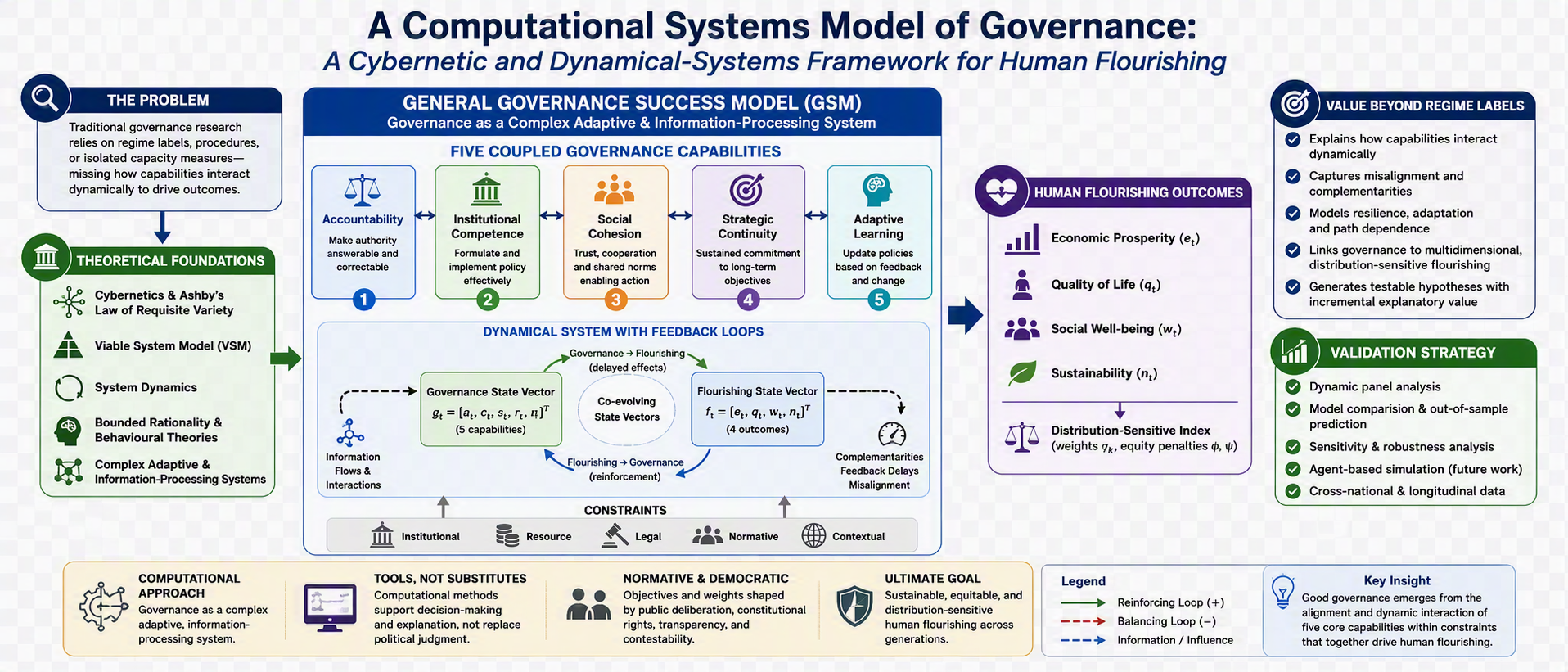
Governance research commonly evaluates political systems through regime classifications, institutional procedures, or isolated measures of state capacity. Such approaches provide limited insight into how governance capabilities interact dynamically to influence human flourishing. This conceptual paper develops the General Governance Success Model (GSM), a systems-theoretical metamodel representing governance as a complex adaptive and information-processing system. The model defines governance through five coupled capabilities: accountability, institutional competence, social cohesion, strategic continuity, and adaptive learning. Drawing on cybernetics, the Viable System Model, system dynamics, and behavioural theories of bounded rationality, the framework specifies governance performance as an outcome of capability levels, complementarities, feedback delays, and functional misalignment. Governance capabilities and flourishing outcomes are modelled as co-evolving state vectors subject to institutional, resource, legal, and normative constraints. The paper identifies empirically testable hypotheses concerning capability interactions, misalignment, resilience, and the incremental explanatory value of the model beyond regime classification. It also outlines a comparative validation strategy combining dynamic panel analysis, model comparison, sensitivity analysis, and future agent-based simulation. The framework treats computational methods as decision-support and explanatory tools rather than substitutes for political judgment. Normative objectives and model weights remain subject to public deliberation, constitutional rights, transparency, and contestability. The model contributes a transdisciplinary foundation for analysing how interacting governance capabilities may support sustainable and distribution-sensitive human flourishing.
Keywords:
governance systems
; complex adaptive systems
; dynamical systems
; cybernetics
; viable system model
; system dynamics
; human flourishing
; bounded rationality
1. Introduction
The question of what constitutes good government has occupied political thought for more than two thousand years. From Plato and Aristotle to contemporary governance scholars, the central concern has remained remarkably consistent: How should societies organize political authority to improve human well-being? Different civilizations have developed diverse governance systems—democracies, constitutional monarchies, developmental states, meritocratic administrations, and hybrid arrangements—that differ significantly in participation, leadership selection, institutional design, and legitimacy. Yet they all face a common challenge: How can governance effectively serve the people?
1.1. The Computational and Systems Perspective
This paper introduces a fundamental reconceptualization: governance systems can be understood as complex computational systems composed of interacting processes, information flows, and decision-making mechanisms. This perspective, rooted in computer science, cybernetics, and complex-systems theory, offers several analytical advantages:
- State-space representation: Governance systems can be characterized by state vectors, transition functions, and equilibrium conditions.
- Information processing: Governance involves collecting, aggregating, filtering, and transforming information. Ashby’s (1956) Law of Requisite Variety states that effective control requires the controller’s information-processing capacity to match the variety of the controlled system.
- Emergent behaviour: System-level outcomes arise from interactions among citizens, institutions, and policymakers.
- Feedback and control: Governance systems implement feedback-control mechanisms analogous to cybernetic systems (Wiener, 1948; Beer, 1972).
- Optimization framework: The contextually appropriate governance configuration can be formulated as a multi-objective optimization problem subject to institutional, economic, social, ethical, and resource constraints.
- Adaptive learning: Governance systems update policies in response to performance feedback.
- Robustness and resilience: Fault tolerance, graceful degradation, redundancy, and adaptive capacity can be analysed computationally (Morgan et al., 2023; Saikia & Jiménez, 2023).
This computational perspective does not reduce governance to merely algorithmic processes. Instead, it offers a rigorous framework for understanding system dynamics, interactions, information dependencies, feedback structures, and emergent properties.
1.2. The Primary Contribution
The central contribution of this paper is a systems-theoretical metamodel that represents governance quality as the co-evolution of five interacting institutional capabilities and multidimensional flourishing outcomes. The General Governance Success Model (GSM) extends existing governance frameworks by representing these capabilities as coupled and co-evolving system states rather than independent institutional indicators.
This metamodel addresses a specific gap in the literature: while the Viable System Model (Beer, 1972) provides a cybernetic architecture for organizational viability, and system dynamics (Forrester, 1961) offers tools for modelling feedback processes, neither has been systematically adapted to comparative governance evaluation with explicit linkages to human flourishing outcomes. The GSM integrates these traditions while adding:
- A formal state-space representation of governance capabilities
- Specified interaction effects among governance dimensions
- A dynamic, co-evolutionary relationship between governance and flourishing
- Testable hypotheses for empirical validation
- Falsifiability criteria
The GSM’s contribution is not a universal ranking of political regimes. It is a systems-theoretical model for explaining how multiple governance capabilities interact, become misaligned, adapt to feedback, and jointly affect human flourishing.
1.3. Research Questions
This paper addresses five principal research questions:
- How can governance systems be formally modelled as computational dynamical systems?
- What are the information-theoretic properties of effective governance?
- How do governance dimensions interact as coupled computational processes?
- What computational and institutional capabilities are required to support sustainable human flourishing?
- How can governance performance be benchmarked using computational methods?
2. Research Gap and Contribution
12.1. Limitations of Existing Governance Frameworks
Democratic theory emphasizes participation, representation, civil liberties, and electoral accountability, but has been less attentive to governance outcomes and state capacity (Dahl, 1971; Mansbridge, 2003). State-capacity research emphasizes administrative effectiveness, bureaucratic competence, and implementation, but may give less attention to accountability and participation (Evans, 1995; Fukuyama, 2013; Skocpol, 1985). Comparative political economy connects institutions to economic and social outcomes (Hall & Soskice, 2001; Rodrik, 2000), but lacks a unified computational framework. Human-development and well-being research measures capabilities and flourishing (Sen, 1999; Stiglitz et al., 2009; UNDP, 2022), but has not been systematically integrated with formal governance-system design.
Recent scholarship on polycentric governance has advanced understanding of how multiple, interdependent centres of decision-making can address complex collective action problems (Baldwin et al., 2024; Morrison et al., 2023). However, this literature has largely focused on environmental and natural resource governance rather than developing a general computational framework for comparative governance evaluation. Similarly, behavioural public administration research has illuminated how cognitive biases, trust, and administrative burden shape citizen-state interactions (Grimmelikhuijsen et al., 2017; Jilke et al., 2024; Alon-Barkat & Busuioc, 2024), but has not been systematically integrated with formal governance-system models.
2.2. The Systems and Cybernetics Heritage
Stafford Beer’s Viable System Model (VSM): provides a cybernetic framework for organizational viability based on implementation, coordination, control, intelligence, and policy (Beer, 1972, 1979).
Jay Forrester’s system dynamics: established stock-and-flow modelling for complex social systems and showed how delays and nonlinear feedback produce counterintuitive outcomes (Forrester, 1961, 1969).
Donella Meadows’ leverage points: identify where interventions in complex systems may be most effective (Meadows, 1999).
Peter Checkland’s Soft Systems Methodology: recognizes multiple and conflicting worldviews, informing the model’s treatment of flourishing as plural and contested (Checkland, 1981).
Heinz von Foerster’s second-order cybernetics: highlights observer dependence in system descriptions and governance indicators (von Foerster, 1974).
Ashby’s Law of Requisite Variety: states that a control system needs sufficient variety to regulate the system it controls (Ashby, 1956).
Geoffrey Vickers’ appreciation systems: emphasize value-laden judgments about what is desirable and feasible (Vickers, 1965).
2.3. The Computational Gap
Despite these advances, the literature lacks:
- A formal computational framework with state transitions, information flows, and control mechanisms.
- A complexity-theoretic account of bottlenecks, delays, nonlinearities, feedback, and imbalance.
- An agent-based perspective on distributed decisions, heterogeneous preferences, and emergence.
- An information-theoretic analysis of bandwidth, latency, fidelity, redundancy, and reliability.
- A machine-learning perspective on policy learning, adaptation, forecasting, and optimization.
- A formal optimization framework defining the contextually appropriate governance configuration under normative and institutional constraints.
3. Construct Development: The Five Governance Dimensions
The GSM defines governance through five coupled capabilities. The selection of these dimensions is grounded in systems theory, governance literature, and the Viable System Model. Table 1 provides a comprehensive construct-development summary.
3.1. Formal Definition of the General Governance Success Model (GSM)
The General Governance Success Model (GSM) is formally defined as a systems-theoretical metamodel that represents governance as a complex adaptive and information-processing system composed of five interacting institutional capabilities—accountability, competence, social cohesion, strategic continuity, and adaptive learning—whose dynamic configuration and contextual alignment determine the capacity of a governance system to promote sustainable human flourishing.
Formal Statement of the GSM:
Let be a governance system characterized by the state vector:
where:
- represents accountability at time
- represents institutional competence at time
- represents social cohesion at time
- represents strategic continuity at time
- represents adaptive-learning capacity at time
The GSM posits that:
- Governance Performance is a Nonlinear Function of Coupled Capabilities:where are main-effect coefficients and are interaction coefficients representing complementarities or conflicts among dimensions.
- Governance and Flourishing Co-Evolve Dynamically:where is the flourishing state vector, and are depreciation matrices, and is the context-sensitive misalignment measure.
- Contextual Misalignment Reduces Performance:where is the contextually appropriate governance profile and is a weighting matrix.
- The Normative Objective is Sustainable Human Flourishing:where represents economic prosperity, quality of life, social well-being, and sustainability.
Theoretical Claims of the GSM:
The GSM makes five central claims about governance systems:
- Multidimensionality: Governance cannot be reduced to a single dimension (such as democracy or state capacity). It requires at least five discriminable capabilities.
- Interaction: Governance capabilities do not operate independently. Their interaction effects (complementarities and conflicts) are as important as their individual levels.
- Co-evolution: Governance capabilities and human flourishing are mutually reinforcing over time through feedback loops.
- Context-Sensitivity: The optimal configuration of governance capabilities depends on contextual factors such as institutional history, development level, demographic complexity, and external threats.
- Normative Constraint: Governance optimization is subject to constitutional rights, democratic deliberation, transparency, and accountability.
Epistemological Status:
The GSM is proposed as a provisional and testable metamodel. Its dimensional structure, functional form, and parameter values are subject to empirical validation through:
- Exploratory and confirmatory factor analysis
- Measurement invariance testing
- Competing model comparison (4, 5, 6+ dimensions)
- Out-of-sample predictive validation
- Sensitivity analysis
- Falsification testing (Section 7.9)
The model is not a universal ranking of political regimes but a framework for analysing how governance capabilities interact, become misaligned, adapt to feedback, and jointly affect human flourishing.
3.2. Treatment of Omitted Governance Concepts
The five GSM dimensions intentionally subsume or exclude certain governance concepts. Table 2 explains these relationships.
3.3. Why These Five Dimensions?
The five dimensions are proposed as a parsimonious and provisionally comprehensive representation of core governance capabilities for comparative systems analysis. The dimensional structure is provisional and testable and should be validated empirically through:
- Exploratory factor analysis
- Confirmatory factor analysis
- Bayesian latent-variable comparison
- Discriminant-validity tests
- Out-of-sample predictive comparisons
- Comparison with four-, six-, and higher-dimensional models
The selection is justified by:
- Parsimony: The five dimensions capture the essential functions identified in the VSM (Beer, 1972) and state-capacity literature (Fukuyama, 2013).
- Coverage: Together, they span the governance space from input (accountability) through throughput (competence) and context (cohesion) to long-term orientation (continuity) and adaptation (learning).
- Discriminability: Each capability represents a theoretically distinguishable governance function, although the capabilities may be empirically correlated and dynamically coupled.
- Dynamic interaction: Theory suggests these dimensions interact in systematic ways that generate governance success or failure.
4. The General Governance Success Model
4.1. Causal-Loop Diagram
Before presenting the formal model, Figure 1 provides a causal-loop diagram illustrating the key feedback structures hypothesized in the GSM.
Figure 1 Legend: The diagram depicts reinforcing loops (R) and balancing loops (B) among governance dimensions and flourishing outcomes. Each link is marked with a polarity (+ or -), and each loop is closed. Threshold-dependent or ambiguous links are noted where appropriate. Arrows are monotonic unless otherwise indicated.
Defined Loops:
R1: Competence → Service Performance (+) → Institutional Trust (+) → Compliance/Cooperation (+) → Implementation Capacity (+) → Competence
- This is a reinforcing loop: better competence improves performance, which builds trust, which improves cooperation, which further strengthens competence.
R2: Learning → Policy Improvement (+) → Competence (+) → Better Outcomes (+) → Learning Reinforcement (+) → Learning
- This is a reinforcing loop: more learning enables policy improvement, which enhances competence, which produces better outcomes, which reinforces learning.
B1: Policy Failure (+) → Accountability Pressure (+) → Corrective Intervention (+) → Institutional Competence (−) → Policy Failure
- This is a balancing loop: policy failure generates accountability pressure, leading to corrective intervention, which adjusts competence and reduces policy failure. This contains one negative link, making it balancing.
R3: Cohesion (+) → Trust (+) → Investment (+) → Continuity (+) → Institutional Stability (+) → Cohesion
- This is a reinforcing loop: greater cohesion builds trust, which encourages investment, which supports continuity, which reinforces stability and cohesion.
B2: Policy Oscillation (+) → Coordination Costs (+) → Demand for Continuity (+) → Continuity Mechanisms (−) → Policy Oscillation
- This is a balancing loop: policy oscillation increases coordination costs, which generates demand for continuity, which activates continuity mechanisms that reduce oscillation. This contains one negative link, making it balancing.

Table 3. Causal-Loop to Formal Model Mapping.
| Causal-Loop Mechanism | Formal Representation |
|---|---|
| Service performance to trust | Trust-updating equation (Section 5.2.1) |
| Trust and cooperation to competence | and interaction term |
| Governance capability to outcomes | |
| Flourishing feedback to governance | |
| Accountability correction | and policy input |
| External disturbance |
4.2. State-Space Representation
Define the governance state at time as:
where:
- represents accountability
- represents institutional competence
- represents social cohesion
- represents strategic continuity
- represents adaptive-learning capacity
The feasible state space is:
where represents coupling, resource, institutional, legal, and normative constraints.
Note on Projection Operators: The projection operators and are mathematical abstractions enforcing bounds and feasibility constraints. They are not claims that institutions instantaneously move to the nearest feasible configuration. A more realistic implementation could replace projection with constrained transition rules or a feasibility-preserving control policy.
4.3. Information-Flow and Communication Structure
Let be a 5 × 5 directed matrix with zero diagonal, where represents effective information-flow capacity from governance dimension to dimension . High bandwidth with low fidelity may propagate misinformation; high fidelity with low bandwidth can produce scarcity; excessive latency delays adjustment; excessive redundancy raises costs; and balanced channels improve coordination, feedback, and adaptation.
4.4. Governance-Success Function with Interaction Effects
4.4.1. Baseline Empirical Approximation
The polynomial function is presented as a baseline empirical approximation, not as the definitive governance-success law. Governance performance is defined as:
The coefficients represent main effects, while coefficients represent complementarities, conflicts, and emergent effects. Expected complementarities include accountability-competence, accountability-cohesion, competence-cohesion, competence-continuity, cohesion-continuity, and cohesion-learning.
4.4.2. Alternative Functional Forms
The theory suggests several plausible functional forms that should be tested empirically:
Additive-Interaction Model (current):
Theoretical support: Governance dimensions contribute independently with some complementarity.
Multiplicative/CES Model:
Theoretical support: Governance dimensions are substitutable to some degree.
Threshold/Weakest-Link Model:
Theoretical support: Essential minimum capabilities are required.
Network Production Function:
Theoretical support: Complementarity effects are limited by the weaker dimension.
4.4.3. Empirical Discrimination
These formulations can be empirically distinguished through:
- Nested model comparison
- Likelihood ratio tests
- Information criteria (AIC, BIC)
- Predictive validation
- Cross-validation performance
4.5. Governance Misalignment
4.5.1. From Imbalance to Misalignment
The term "imbalance" is replaced with misalignment to better capture the theoretical concept: governance dimensions that are functionally misaligned relative to contextual requirements. The reference configuration is not simply the mean but a context-specific target.
4.5.2. Reference Profile Specification
The context-sensitive misalignment measure is defined as a weighted distance:
where (symmetric positive definite) weights dimensions in the misalignment distance, and represents the contextually appropriate governance profile.
Target Profile Estimation Strategy:
The reference profile represents the capability configuration associated with high performance in comparable contexts. The primary empirical strategy estimates the contextual reference profile from matched high-performing observations within the training sample. Matching uses contextual variables , while high performance is defined prospectively using subsequent distribution-sensitive flourishing. Target estimation and hypothesis testing employ nested cross-fitting to prevent the same observations from determining and validating the reference profile.
Formally:
where contains contextual characteristics and is estimated in the training sample. Misalignment is then calculated in held-out observations to avoid circularity:
The profile may depend on:
- Institutional context
- Development level
- External threat
- Demographic complexity
- Constitutional structure
- Policy domain
4.5.3. Types of Misalignments
The paper distinguishes four types of misalignments:
- Statistical imbalance: Deviation from the mean (baseline measure)
- Functional misalignment: Deviation from context-specific requirements
- Normative imbalance: Deviation from socially preferred configuration
- Dynamic maladaptation: Slow adjustment to changing conditions
4.5.4. Context-Sensitive Reference Profiles as Testable Propositions
The following are testable contextual moderators rather than established design rules:
- Crisis conditions: May require higher weight on competence and learning
- Federal systems: May require higher weight on coordination and accountability
- Small homogeneous societies: May require higher weight on cohesion and continuity
- Plural societies: May require higher weight on accountability and learning
- Post-conflict contexts: May require higher weight on accountability and cohesion
The direction and magnitude of these effects on the appropriate capability profile should be empirically determined rather than assumed.
Where dimensions differ in units or covariance, a context-sensitive Mahalanobis distance may be used, with estimated from the training sample and fixed for test observations:
4.6. Human Flourishing as the Objective Function
Define human-flourishing outcomes as:
where:
- represents economic prosperity
- represents quality of life
- represents social well-being
- represents sustainability
Define:
4.6.1. Distributional Sensitivity
To address distributional concerns:
Alternatively, impose minimum-threshold constraints for essential capabilities and rights.
4.6.2. Weight Determination
Weights should combine:
- Democratic deliberation
- Citizen engagement
- Expert input
- Empirical evidence
- Sensitivity analysis
- Transparency
4.7 Coupled Dynamical System with Co-Evolutionary Feedback
4.7.1 Core Model with Lagged Feedback and Delays
The transition equations represent governance and flourishing as co-evolving stocks with lagged feedback:
where the context-sensitive governance misalignment is defined as:
where:
- is the capability-specific depreciation matrix
- is the flourishing-specific depreciation matrix
- maps flourishing outcomes to governance reinforcement
- maps governance conditions to flourishing outcomes
- is the flourishing-to-governance reinforcement parameter
- is the governance-to-flourishing effectiveness parameter
- scales information-mediated capability interaction
- is the information-flow matrix
- denotes elementwise multiplication
- contains potential capability interactions
- is the governance-misalignment correction parameter
- is the institutional adjustment or gain matrix (symmetric positive definite)
- is the misalignment distance-weighting matrix
- is the flourishing-misalignment penalty parameter
- is the external-shock parameter
- is a shock propagation matrix
- represents policy interventions or control inputs
- represents external shocks
- distributes misalignment effects across flourishing dimensions
- and are stochastic disturbances
- and are projection operators onto feasible domains
Mechanism Explanation:
Equation (1) governs the evolution of governance capabilities through:
- capability retention and depreciation ,
- flourishing-to-governance reinforcement ,
- information-mediated interactions ,
- corrective adjustment toward a contextually appropriate governance profile ,
- policy interventions ,
- stochastic disturbances .
Equation (2) governs the evolution of flourishing outcomes through:
- flourishing retention and depreciation ,
- governance-to-flourishing effects ,
- direct costs of governance misalignment,
- external shocks propagated through ,
- stochastic disturbances .
Equation (3) measures the weighted distance between the observed governance state and the contextually appropriate target profile, with determining the relative importance of deviations across governance dimensions.
Note on Multiple Equilibria: Multiple equilibria are not claimed as a general property of the linear baseline model in Equation (1). They may emerge when the target profile is endogenous, interactions are nonlinear, constraints bind, thresholds alter transition rules, or agent-level feedback generates regime switching.
4.7.2 Mechanisms and Timescales
Each term in the equations corresponds to an identified mechanism:
Table 4: mathematical terms and mechanism within timescale
| Term | Mechanism | Timescale |
|---|---|---|
| Capability-specific depreciation | Medium-long | |
| Flourishing improves governance capacity (lagged) | Medium-long | |
| Information-mediated capability interaction | Short-medium | |
| Directional corrective adjustment toward target | Medium | |
| Policy interventions | Short-medium | |
| Flourishing depreciation | Medium | |
| Governance improves flourishing (lagged) | Medium | |
| Misalignment reduces flourishing | Medium-long | |
| External shocks propagate and reduce flourishing | Short | |
| Random disturbances | Any |
4.7.3 Path Dependence and Multiple Equilibria
The nonlinear and threshold variants of the GSM may admit multiple equilibria under a common parameterization. Demonstrating this property requires fixed-point analysis or simulation. Conditions that may generate multiple equilibria include:
- Nonlinear feedback
- Threshold effects
- Institutional complementarity
- Self-reinforcing processes
- Lock-in effects
4.8. Relationship to Beer’s Viable System Model
Table 5: Relationship between GSM and Beer's Viable System Model
| GSM Dimension | VSM System | Function |
|---|---|---|
| Accountability | System 3 (Control) + System 3* (Audit) | Monitoring and oversight |
| Competence | System 1 (Implementation) | Operational capability |
| Social Cohesion | System 2 (Coordination) | Conflict resolution and coordination |
| Strategic Continuity | Systems 4 (Intelligence) + 5 (Policy) | Long-term direction |
| Adaptive Learning | System 4 (Intelligence) + System 3* | Environmental scanning and adaptation |
4.8.1 Mapping Clarification
The VSM correspondence concerns functional analogy rather than structural equivalence. The GSM translates selected viability functions into societal governance capabilities, while adding democratic, behavioural, and normative properties not contained in the organizational VSM. The mapping is:
- Approximate, not isomorphic
- Functionally analogous, not structurally identical
- Selective, not exhaustive
- Illustrative, not definitive
The GSM does not represent VSM recursion in its core model. Recursion would require modelling governance at multiple levels: national government, subnational governments, departments, agencies, programs, and communities. This is a direction for future research.
4.9 Relationship to System Dynamics
The coupled model follows the system-dynamics tradition (Forrester, 1961): governance and flourishing are stocks, update terms are flows, and encode feedback loops, and misalignment penalties introduce nonlinear constraints and trade-offs. The causal-loop diagram (Section 4.1) provides the conceptual foundation for the stock-and-flow formulation.
4.10 Operationalizing Requisite Variety
Ashby’s Law of Requisite Variety can be operationalized as a heuristic diagnostic:
where represents effective governance response variety and represents environmental or societal disturbance variety. A value below one indicates potential insufficiency of regulatory variety. This ratio is not a direct operationalization of Ashby’s theorem but a conceptual bridge connecting Ashby’s principle to the GSM’s information-processing framework.
Important Qualifications:
- "Variety" in cybernetics concerns the number or entropy of distinguishable states and responses, not merely diversity in an informal sense.
- A government may have many possible policy responses but still lack timely information, accurate diagnosis, authority, coordination, implementation capacity, or political legitimacy.
- Therefore, effective regulatory variety should be understood as:
where the additional terms reflect fidelity, coordination, and latency-adjusted implementation capability.
Empirically, might be measured through policy response diversity, institutional flexibility, and information-processing capacity, while might be measured through social complexity, economic volatility, and environmental variability. These are approximate indicators rather than exact measures of cybernetic variety.
5. Behavioural and Multi-Agent Mechanisms
5.1. Bounded Rationality and Institutional Behaviour
Agents are behaviourally realistic rather than perfectly rational information processors. Simon’s (1957) bounded rationality emphasizes cognitive limits, incomplete information, and satisficing. Relevant phenomena include cognitive biases (Kahneman, 2011), groupthink (Janis, 1972), status quo bias, asymmetric risk perception (Kahneman & Tversky, 1979), social identity and trust formation (Tajfel & Turner, 1979; Rothstein, 2011), and organizational satisficing.
Recent research in behavioural public administration has illuminated how algorithmic decision-making introduces distinct biases in citizen-state interactions (Alon-Barkat & Busuioc, 2024), and how administrative burden shapes citizen experiences of government (Jilke et al., 2024). These findings underscore the importance of incorporating behavioural mechanisms into governance models.
5.2. Formal Integration of Behavioural Mechanisms
Three behavioural mechanisms are formally integrated into the model:
5.2.1. Trust Updating
Citizens update institutional trust according to service outcomes, procedural fairness, and information credibility:
and therefore:
where:
- represents trust
- is the update rate (: trust never updates; : prior trust disappears entirely)
- is a baseline constant
- are regression-style coefficients
- represents service outcomes
- represents procedural fairness
- represents information credibility (veracity)
- is the logistic function ensuring trust remains bounded
This formulation maintains scale consistency: the prior trust component is in log-odds units, and the information components are mapped to the same scale through regression-style coefficients.
Individual trust aggregates into societal cohesion:
where:
- is mean generalized trust
- is bridging connectivity
- is network polarization
- is a projection operator ensuring
This demonstrates why cohesion is not reducible to average trust and maintains boundedness.
5.2.2 Loss Aversion in Policymaking
Policymakers evaluate gains and losses relative to a reference point:
where:
- captures loss aversion
- reflect diminishing sensitivity
- The reference point may be current performance, campaign commitments, prior expectations, peer-country performance, a legal minimum, or a public aspiration threshold
5.2.3 Satisficing
Policymakers select the first admissible policy meeting aspiration thresholds. If policymakers satisfice, prospect-theory valuation determines whether a candidate policy crosses the aspiration threshold. If policymakers optimize, the policy selection rule is:
subject to legal, fiscal, and political constraints.
Loss aversion and satisficing can operate simultaneously: loss-averse valuation influences which policies are considered acceptable, while satisficing determines the search order and selection threshold.
5.3 Agent-Based Modeling Specification
A compact agent-based model specification includes the following elements:
Table 6: agent-based model specification
| Component | Description |
|---|---|
| Agent Types | Citizens, policymakers, administrators, oversight bodies, knowledge agents |
| State Variables | Preferences, resources, knowledge, trust, participation, institutional authority |
| Decision Rules | Bounded rationality, satisficing, prospect-theory valuation |
| Information Access | Information-flow matrix determines communication channels |
| Interaction Network | Social-network structure affects trust and cohesion |
| Learning Rule | Trust updating (Bayesian with biases), policy learning |
| Institutional Constraints | Feasible state space legal, fiscal, and political constraints |
| Macro-Level Outputs | Governance capabilities flourishing |
6. Illustrative Dynamic Scenarios and Expected Model Behaviour
Note: This section presents hypothetical dynamic scenarios derived from the model’s theoretical structure and expected behaviour. It is intended to illustrate the model’s conceptual predictions rather than report actual simulation results.
6.1. Purpose and Scope
To demonstrate the model’s plausibility and expected behaviour, this section examines whether different combinations of accountability feedback, administrative competence, and learning rates are expected to produce stable high-flourishing equilibria, low-capacity traps, oscillation, institutional overshoot, or polarization cascades.
6.2. Model Setup
The scenarios use a simplified three-dimensional version of the GSM:
State variables: Accountability (), Competence (), Adaptive learning ()
Parameter settings (relative, not numerical):
- Learning rate: Low, moderate, high
- Accountability feedback: Weak, moderate, strong
- Competence depreciation: Low, moderate, high
- Flourishing-to-governance feedback: Low to moderate
- Governance-to-flourishing effectiveness: Low to moderate
6.3. Expected Scenarios
Scenario 1: High Learning, Strong Accountability
- Expected outcome: Stable high-flourishing equilibrium
- Expected path: Rapid improvement, maintained over time
- Theoretical expectation: Faster recovery and smaller cumulative performance loss, conditional on stable feedback parameters
Scenario 2: Low Learning, Weak Accountability
- Expected outcome: Low-capacity trap
- Expected path: Initial slight improvement, then stagnation
- Theoretical expectation: Slow recovery and large cumulative performance loss
Scenario 3: High Learning, Weak Accountability
- Expected outcome: Policy oscillation
- Expected path: Rapid improvement followed by reversals
- Theoretical expectation: Moderate recovery but with volatility
Scenario 4: Moderate Learning, Moderate Accountability
- Expected outcome: Gradual improvement with some volatility
- Expected path: Slow but steady progress
- Theoretical expectation: Moderate recovery with limited volatility
6.4. Implications
These stylized scenarios suggest:
- Balance and complementarity are important
- Learning without accountability can be destabilizing
- Accountability without learning can be constraining
- Context-specific configurations may be optimal
- The nonlinear and threshold variants of the GSM may admit multiple equilibria under a common parameterization; demonstrating this property requires fixed-point analysis or simulation
6.5. Resilience Metrics
For any actual simulation, resilience should be measured using:
Recovery time:
Maximum performance loss:
Cumulative loss:
Local stability:
7. Measurement and Empirical Validation
7.1. Construct Operationalization
The five GSM dimensions must be operationalized using existing data sources. Table 3 provides candidate indicators:
Table 7: Candidate Indicators for GSM Dimensions
| Construct | Candidate Indicators | Data Source |
|---|---|---|
| Accountability | Electoral integrity, press freedom, judicial independence, audit effectiveness | V-Dem, Freedom House, World Justice Project |
| Competence | Government effectiveness, bureaucratic quality, regulatory quality, policy implementation | World Bank WGI, QoG Institute |
| Social Cohesion | Generalized trust, institutional trust, civic participation, bridging social capital | World Values Survey, OECD, national statistics |
| Strategic Continuity | Policy persistence, planning quality, treaty compliance, constitutional durability | Policy databases, expert surveys |
| Adaptive Learning | Policy evaluation, innovation capacity, data infrastructure, reform implementation | OECD, UNESCO, national statistics |
7.2. Measurement Invariance
Because the design compares countries and years, measurement invariance is fundamental. At minimum, the following should be addressed:
- Configural invariance: Same factor structure across groups
- Metric invariance: Equal factor loadings across groups
- Scalar invariance: Equal intercepts across groups
- Partial invariance: If full invariance fails, partial invariance with at least two items per factor
- Alignment methods: If full invariance fails, alignment methods for latent-variable comparison
- Temporal changes: Indicator meaning may change over time (e.g., press freedom indicators may shift)
- Differential item functioning: Indicators may operate differently across regions
If the latent constructs are not sufficiently invariant, direct score comparisons may not be valid. For comprehensive guidance on measurement invariance testing, see Vandenberg and Lance (2000) and Putnick and Bornstein (2016). Recent critiques of conventional invariance standards (Funder & Gardiner, 2024; Kusano et al., 2026) highlight the importance of context-sensitive approaches to cross-group comparison.
7.3. Competing Dimensional Structures
Before constructing a Governance Success Index, the paper must establish that the indicators support the proposed dimensions. Recommended sequence:
- Define indicators before observing outcomes.
- Test measurement invariance across regions and time.
- Estimate the five latent capabilities using confirmatory factor analysis.
- Evaluate convergent validity.
- Evaluate discriminant validity.
- Compare alternative dimensional structures (4, 5, 6 dimensions).
- Construct scores using training data.
- Test prediction on held-out observations.
7.4. Governance Success Index
A normalized baseline GSI may be computed as:
Important: The GSI should be distinguished from:
- Normative index: Weights fixed through theory or deliberation before testing
- Measurement index: Weights derived from a latent-variable model without using HFI
- Predictive score: Weights estimated to predict HFI and evaluated out of sample
7.5. Human Flourishing Index
7.6. Primary Validation Design
Unit of analysis: Country-year
Period: 2000-2025 (multidecade panel)
Governance constructs: Latent variables or transparent composite measures
Outcome: Multidimensional flourishing
Primary model: Dynamic panel or Bayesian multilevel model
Baseline comparison: Regime-type model
Incremental test: Add GSM dimensions, interactions, and misalignment
Validation: Temporal and geographic holdout samples
Robustness: Alternative indicators and weight specifications
Causal claims: Explicitly limited unless identification is available
7.7. Normalization
Min-max normalization should use training-data parameters or fixed policy-relevant bounds. Recomputing minima and maxima separately for every sample can make comparisons unstable.
7.8. Robustness Analysis
- Alternative indicator definitions
- Alternative normalization rules
- Equal and estimated weights
- Different misalignment metrics
- Country and time subsets
- Missing-data strategies
- Bootstrap samples
- Outlier treatments
- Alternative model classes
7.9. Falsification Criteria
Potential falsifiers include:
- GSM dimensions do not display acceptable discriminant validity.
- The five-dimensional model fits worse than plausible alternatives.
- Interaction terms add no explanatory or predictive value.
- Context-sensitive misalignment provides no stable explanatory or predictive value after accounting for average capability levels, contextual covariates, and conventional governance measures.
- GSM provides no incremental value beyond regime type and established governance indices.
- Governance and flourishing show no meaningful dynamic cross-effects.
- Relationships are unstable across countries, periods, or measurement choices.
8. Hypotheses
H1: Governance Quality and Flourishing
Higher values of an independently constructed measurement GSI are associated with higher subsequent HFI values.
A lagged predictor is used to reduce reverse-causality concerns and is consistent with the manuscript’s delayed-feedback theory. Alternative lag structures will be compared.
H2: Governance Configuration Versus Regime Type
H2a: Explanatory contribution:
The GSM improves model fit and substantive explanation beyond regime type and conventional governance indices. Substantive explanation is operationalized through meaningful improvement in explained variance, stable theoretically predicted coefficients, improved marginal-effect interpretation, better recovery of known historical patterns, and increased explanatory adequacy without excessive complexity. Statistical fit alone is not treated as equivalent to substantive explanation.
H2b: Predictive contribution:
The GSM reduces out-of-sample prediction error in temporal and geographic holdout samples.
Improvement is defined as:
- Increase in out-of-sample R²
- Reduction in RMSE or MAE
- Improvement in expected log predictive density
- Lower information criteria (AIC, BIC) for in-sample fit
- Better temporal-transfer performance
- Better geographic-transfer performance
H3: Context-Sensitive Misalignment Penalty
Holding average governance capability constant, greater distance from the contextually appropriate capability profile is associated with lower flourishing.
The contextual target profile is estimated exclusively in the training sample or defined independently of the tested outcome to avoid circularity. Alternative lag lengths can be tested.
10. Discussion
10.1. Theoretical Implications
The GSM connects complexity science, information theory, control theory, optimization, machine learning, multi-agent systems, computational social science, cybernetics, and system dynamics.
The computational formulation does not imply automated governance. Instead, it provides analytical tools for studying institutional interactions, information flows, feedback processes, emergent behaviour, and system constraints.
The model also contributes to contemporary debates on polycentric governance (Baldwin et al., 2024; Morrison et al., 2023) by providing a formal framework for analysing how multiple governance centres interact and evolve over time. Furthermore, the GSM aligns with research on adaptive governance and resilience (Morgan et al., 2023; Saikia & Jiménez, 2023), offering a systematic approach to understanding how governance systems can adapt to changing conditions while maintaining core capabilities.
10.2. Methodological Implications
The framework supports:
- Agent-based modelling
- Statistical and machine learning
- Causal inference
- Computational experiments
- Scenario analysis
- Robust optimization
- Sensitivity analysis
10.3. Practical Implications
Potential applications include:
- Evidence-informed policymaking
- Public-sector digital transformation
- Policy simulation
- Citizen-engagement platforms
- Early-warning systems
- Continuous program evaluation
Algorithmic tools should support, rather than replace, lawful and accountable public decision-making. Recent research on AI in public administration (Alon-Barkat & Busuioc, 2024; Peña Pazos et al., 2026; Aarab et al., 2025) underscores the importance of maintaining human oversight and democratic accountability in algorithmic governance.
10.4. Critical Systems Thinking and Boundary Questions
The GSM raises important boundary questions that affect model design:
Table 8: boundary questions and model implications
| Boundary Question | Model Implication |
|---|---|
| Who defines flourishing? | Determines γ, ϕ, and ψ |
| Who defines the target profile? | Determines |
| Who is included? | Determines the population and aggregation operator |
| Who bears costs? | Requires distribution-sensitive outcomes |
| Who controls data? | Affects credibility, accountability, and information flow |
| Who may contest decisions? | Constrains ui,t and the feasible set |
These questions are especially relevant because the model contains normative weights and optimization objectives. The GSM does not resolve these questions but provides a framework for addressing them transparently.
10.5. Limitations
- Computational complexity and possible intractability.
- Measurement error, ambiguity, cultural bias, and cross-national incomparability.
- Non-commensurability and value judgments in aggregation.
- Necessary simplification of institutional and social reality.
- Resource, legal, political, and organizational implementation constraints.
- Ethical, legal, privacy, equity, and accountability concerns.
- Normative pluralism and the contested nature of flourishing.
- Goodhart effects when indicators become targets.
- Model uncertainty and misspecification.
- The need for democratic justification of normative weights.
- The target profile estimation requires careful identification to avoid circularity.
10.6. Future Research
- More sophisticated governance simulations
- Empirical estimation of transition functions
- Distribution-sensitive flourishing metrics
- Real-time monitoring with privacy safeguards
- Human-AI collaboration in public administration
- Digital participation and deliberation
- Polycentric and decentralized control structures
- Robust and safe policy optimization
- Comparative validation across jurisdictions
- Integration of behavioural economics into agent models
- VSM recursion in governance systems
- Operationalization of requisite variety
- Empirical validation of contextual profile hypotheses
11. Conclusion
This paper presents a computational reformulation of the General Governance Success Model, framing governance as a complex computational system composed of interacting processes, information flows, institutional structures, and decision-making mechanisms. The model is grounded in the cybernetic and system-dynamics traditions, particularly Ashby’s Law of Requisite Variety, Beer’s Viable System Model, Forrester’s system dynamics, and Checkland’s Soft Systems Methodology, while extending them through contemporary computational methods.
Governance dimensions are represented as state variables, performance as a nonlinear function, and human flourishing as a multidimensional objective. State-space representation, interaction operators, misalignment metrics, and co-evolutionary dynamics provide a basis for formal analysis, simulation, and empirical testing. Successful governance is proposed to depend on the context-sensitive alignment and dynamic interaction of accountability, competence, social cohesion, strategic continuity, and adaptive learning.
The high-performing governance state is formulated as a constrained multi-objective optimal-control problem. Governance interventions are control inputs and sustainable human flourishing supplies the normative objective. Optimization must nevertheless remain subject to constitutional rights, public accountability, fairness, transparency, safety, and legitimate authorization. Objective weights should be democratically deliberated and tested through sensitivity analysis.
The ultimate purpose of governance is not merely the preservation of a political structure or the triumph of a particular ideology. It is the sustained improvement of human flourishing across generations. By focusing on governance functions rather than regime labels, the GSM provides a foundation for comparative assessment, policy analysis, institutional design, and future empirical investigation.
Appendix A: Notation Table
| Concept | Symbol |
| Strategic continuity | |
| Adaptive learning | |
| Accountability | |
| Competence | |
| Social cohesion | |
| Individual trust | |
| Governance state vector | |
| Flourishing state vector | |
| Governance main effects | |
| Interaction effects | |
| Human Flourishing Index | |
| Governance Success Index | |
| Misalignment (context-sensitive) | |
| Misalignment distance-weighting matrix | |
| Institutional adjustment matrix | |
| Governance depreciation matrix | |
| Flourishing depreciation matrix | |
| Governance-to-flourishing scale | |
| Information-interaction scale | |
| Information-flow matrix | |
| Loss-aversion coefficient | |
| Trust update rate | |
| Policy aspiration threshold | |
| Resource constraint | |
| Bridging connectivity | |
| Regression controls | |
| Identity matrix (5×5) | |
| Identity matrix (4×4) | |
| Stochastic disturbance (governance) | |
| Stochastic disturbance (flourishing) | |
| External shocks | |
| Shock propagation matrix | |
| Policy interventions |
References
- Aarab, A.; El Marzouki, A.; Boubker, O.; El Moutaqi, B. Integrating AI in public governance: A systematic review. Digital 2025, 5(4), 59. [Google Scholar] [CrossRef]
- Alon-Barkat, S.; Busuioc, M. Public administration meets artificial intelligence: Towards a meaningful behavioral research agenda on algorithmic decision-making in government. J. Behav. Public Adm. 2024, 7(1). [Google Scholar] [CrossRef]
- Ashby, W. R. An introduction to cybernetics; Chapman & Hall, 1956. [Google Scholar]
- Baldwin, E.; Thiel, A.; McGinnis, M.; Kellner, E. Empirical research on polycentric governance: Critical gaps and a framework for studying long-term change. Policy Stud. J. 2024, 52(2), 319–348. [Google Scholar] [CrossRef]
- Beer, S. Brain of the firm; Allen Lane, 1972. [Google Scholar]
- Beer, S. The heart of enterprise; John Wiley & Sons, 1979. [Google Scholar]
- Bonabeau, E. Agent-based modeling: Methods and techniques for simulating human systems. Proc. Natl. Acad. Sci. 99 2002, Suppl. 3, 7280–7287. [Google Scholar] [CrossRef] [PubMed]
- Checkland, P. Systems thinking, systems practice; John Wiley & Sons, 1981. [Google Scholar]
- Dahl, R. A. Polyarchy: Participation and opposition; Yale University Press, 1971. [Google Scholar]
- Epstein, J. M.; Axtell, R. Growing artificial societies; MIT Press, 1996. [Google Scholar]
- Evans, P. Embedded autonomy; Princeton University Press, 1995. [Google Scholar]
- Flood, R. L.; Jackson, M. C. Creative problem solving: Total systems intervention; John Wiley & Sons, 1991. [Google Scholar]
- Forrester, J. W. Industrial dynamics; MIT Press, 1961. [Google Scholar]
- Forrester, J. W. Urban dynamics; MIT Press, 1969. [Google Scholar]
- Forrester, J. W. Counterintuitive behavior of social systems. Technol. Rev. 1971, 73(3), 52–68. [Google Scholar]
- Fukuyama, F. The end of history and the last man; Free Press, 1992. [Google Scholar]
- Fukuyama, F. What is governance? Governance 2013, 26(3), 347–368. [Google Scholar] [CrossRef]
- Funder, D. C.; Gardiner, G. Misgivings about measurement invariance. Eur. J. Personal. 2024, 38(6). [Google Scholar] [CrossRef]
- Grimmelikhuijsen, S.; Jilke, S.; Olsen, A. L.; Tummers, L. Behavioral public administration: Combining insights from public administration and psychology. Public Adm. Rev. 2017, 77(1), 45–56. [Google Scholar] [CrossRef]
- Hall, P. A.; Soskice, D. (Eds.) Varieties of capitalism; Oxford University Press, 2001. [Google Scholar]
- Janis, I. L. Victims of groupthink; Houghton Mifflin, 1972. [Google Scholar]
- Jilke, S.; Bækgaard, M.; Herd, P.; Moynihan, D. Short and sweet: Measuring experiences of administrative burden. J. Behav. Public Adm. 2024, 7(1), 1–12. [Google Scholar] [CrossRef]
- Kahneman, D. Thinking, fast and slow; Farrar, Straus and Giroux, 2011. [Google Scholar]
- Kahneman, D.; Tversky, A. Prospect theory: An analysis of decision under risk. Econometrica 1979, 47(2), 263–291. [Google Scholar] [CrossRef]
- Kusano, K.; Napier, J. L.; Jost, J. T. The mismeasure of culture: Why measurement invariance is rarely appropriate for comparative research in psychology. In Personality and Social Psychology Bulletin; 2026. [Google Scholar]
- Lazer, D.; Pentland, A. S.; Adamic, L.; Aral, S.; Barabási, A. L.; Brewer, D.; Christakis, N.; Contractor, N.; Fowler, J.; Gutmann, M.; Jebara, T.; King, G.; Macy, M.; Roy, D.; Van Alstyne, M. Computational social science. Science 2009, 323(5915), 721–723. [Google Scholar] [CrossRef] [PubMed]
- Mansbridge, J. Rethinking representation. Am. Political Sci. Rev. 2003, 97(4), 515–528. [Google Scholar] [CrossRef]
- Meadows, D. H. Leverage points: Places to intervene in a system; The Sustainability Institute, 1999. [Google Scholar]
- Miller, J. H.; Page, S. E. Complex adaptive systems; Princeton University Press, 2009. [Google Scholar]
- Morgan, M.; Webster, A.; Piccarello, M.; Jones, K.; Chermak, J.; McCarthy, L.; Srinivasan, J. Adaptive governance strategies to address wildfire and watershed resilience in New Mexico’s upper Rio Grande watershed. Front. Clim. 5 2023. [Google Scholar] [CrossRef]
- Morrison, T. H.; Bodin, Ö.; Cumming, G. S.; Lubell, M.; Seppelt, R.; Seppelt, T.; Weible, C. M. Building blocks of polycentric governance. Policy Stud. J. 2023, 51(3), 475–499. [Google Scholar] [CrossRef]
- Newman, M. E. J. Networks: An introduction, 2nd ed.; Oxford University Press, 2018. [Google Scholar]
- Pearl, J. Causality, 2nd ed.; Cambridge University Press, 2009. [Google Scholar]
- Peña Pazos, G. L.; Fernández Miranda, M.; et al. Anticipatory governance and artificial intelligence: A systematic mapping and research agenda for public administration. Adm. Sci. 2026, 16(7), 326. [Google Scholar] [CrossRef]
- Putnam, R. D. Making democracy work: Civic traditions in modern Italy; Princeton University Press, 1993. [Google Scholar]
- Putnick, D. L.; Bornstein, M. H. Measurement invariance conventions and reporting: The state of the art and future directions for psychological research. Dev. Rev. 41 2016, 71–90. [Google Scholar] [CrossRef] [PubMed]
- Rodrik, D. Institutions for high-quality growth. Stud. Comp. Int. Dev. 2000, 35(3), 3–31. [Google Scholar] [CrossRef]
- Rothstein, B. The quality of government; University of Chicago Press, 2011. [Google Scholar]
- Russell, S.; Norvig, P. Artificial intelligence: A modern approach, 4th ed.; Pearson, 2020. [Google Scholar]
- Saikia, P.; Jiménez, A. Governance attributes for building water resilience: A literature review. In Water International; 2023. [Google Scholar] [CrossRef]
- Schelling, T. C. Dynamic models of segregation. J. Math. Sociol. 1971, 1(2), 143–186. [Google Scholar] [CrossRef]
- Sen, A. Development as freedom; Oxford University Press, 1999. [Google Scholar]
- Simon, H. A. Models of man: Social and rational; John Wiley & Sons, 1957. [Google Scholar]
- Skocpol, T. Bringing the state back in. In Bringing the state back in; Evans, P. B., Rueschemeyer, D., Skocpol, T., Eds.; Cambridge University Press, 1985; pp. 3–37. [Google Scholar]
- Sterman, J. D. Business dynamics; McGraw-Hill, 2000. [Google Scholar]
- Stiglitz, J. E.; Sen, A.; Fitoussi, J.-P. Report by the Commission on the Measurement of Economic Performance and Social Progress; 2009. [Google Scholar]
- Sutton, R. S.; Barto, A. G. Reinforcement learning, 2nd ed.; MIT Press, 2018. [Google Scholar]
- Tajfel, H.; Turner, J. C. An integrative theory of intergroup conflict. In The social psychology of intergroup relations; Austin, W. G., Worchel, S., Eds.; Brooks/Cole, 1979; pp. 33–47. [Google Scholar]
- Ulrich, W. Critical heuristics of social planning; Haupt, 1983. [Google Scholar]
- United Nations Development Programme. Human Development Report 2021/2022; 2022. [Google Scholar]
- Vandenberg, R. J.; Lance, C. E. A review and synthesis of the measurement invariance literature: Suggestions, practices, and recommendations for organizational research. Organ. Res. Methods 2000, 3(1), 4–70. [Google Scholar] [CrossRef]
- Vickers, G. The art of judgment; Chapman & Hall, 1965. [Google Scholar]
- von Foerster, H. Cybernetics of cybernetics; University of Illinois, 1974. [Google Scholar]
- Watts, D. J.; Strogatz, S. H. Collective dynamics of small-world networks. Nature 1998, 393(6684), 440–442. [Google Scholar] [CrossRef] [PubMed]
- Wiener, N. Cybernetics; MIT Press, 1948. [Google Scholar]
Figure 1. Causal-Loop Diagram of the GSM.
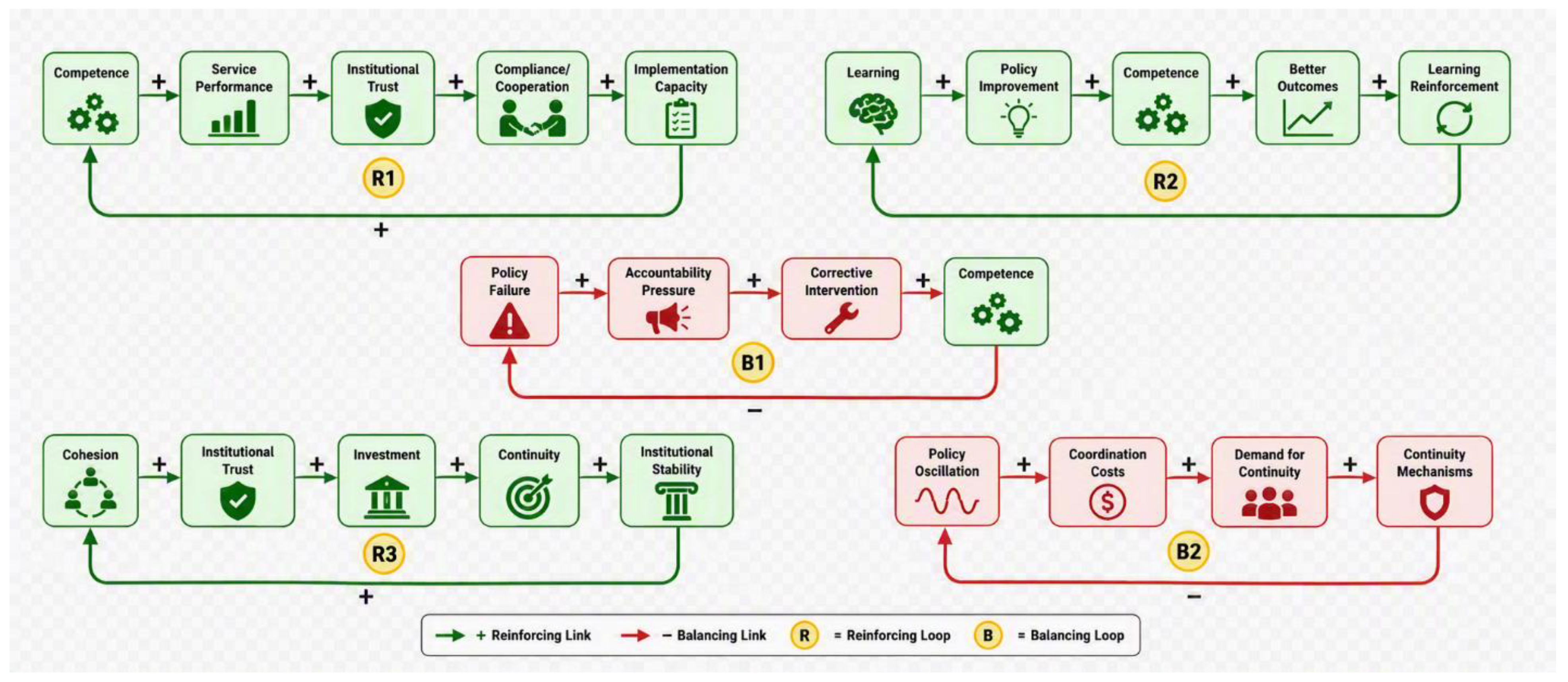
Table 1. Construct Development for GSM Dimensions.
| Construct | Conceptual Definition | Included Elements | Excluded Elements | Example Indicators | Theoretical Foundation |
|---|---|---|---|---|---|
| Accountability | Capacity to make public authority answerable and correctable | Audit, transparency, contestability, sanctions, electoral mechanisms, judicial review, independent oversight | General administrative ability, political legitimacy | V-Dem accountability measures, judicial independence, press freedom indices, World Justice Project | Democratic theory, VSM System 3*, principal-agent theory |
| Competence | Ability to formulate and implement policy effectively | Administrative capacity, technical expertise, coordination, policy analysis, implementation capability, bureaucratic professionalism | Political legitimacy, accountability mechanisms | Government Effectiveness Index, bureaucratic quality measures, policy implementation ratings | State-capacity theory, VSM System 1, Weberian bureaucracy |
| Social Cohesion | Degree of bridging trust, generalized cooperation, and shared norms enabling collective action across social groups | Interpersonal trust, institutional trust, civic participation, bridging social capital, shared identity, collective-action capacity | Subgroup bonding cohesion, distributional outcomes | World Values Survey trust measures, civic engagement, social capital indices, crime rates | Social capital theory, VSM System 2, Putnam (1993) |
| Strategic Continuity | Capacity for sustained commitment to long-term objectives | Policy persistence, long-term planning, institutional stability, commitment to international agreements, intergenerational orientation | Short-term adaptation, policy flexibility | Policy stability indices, planning documents, treaty compliance, constitutional durability | Historical institutionalism, VSM Systems 4 & 5 |
| Adaptive Learning | Capacity to update policies based on feedback and changing conditions | Policy evaluation, experimentation, reform implementation, data use, institutional learning, environmental scanning | Strategic commitment, policy stability | OECD policy evaluation indicators, innovation capacity, data infrastructure quality | Organizational learning theory, VSM System 4, cybernetics |
Table 2. Treatment of Omitted Governance Concepts.
| Omitted Concept | Treatment in GSM | Rationale |
|---|---|---|
| Legitimacy | Treated as an emergent mediating state influenced by accountability, performance, fairness, participation, and social cohesion | Legitimacy emerges from multiple governance processes and in turn affects compliance, cooperation, and stability; not an independent governance capability |
| Rule of Law | Embedded in accountability and competence | Legal constraints on authority are central to accountability; legal capacity is part of competence |
| Participation | Embedded in accountability and learning | Participation operates through accountability mechanisms and learning feedback |
| Rights Protection | Treated as constraint or outcome | Rights are normative constraints on governance, not capabilities per se |
| Fiscal Capacity | Part of competence | Fiscal capacity is a component of administrative capability |
| Information Integrity | Embedded in learning and accountability | Information quality is crucial for learning and accountability, not independent |
| Distributional Justice | Outcome or constraint | Distributional outcomes are measured in the flourishing index; equity is a constraint |
| Polycentricity | Institutional structure | Polycentric structures influence how dimensions interact but are not dimensions themselves (Baldwin et al., 2024; Morrison et al., 2023) |
| Institutional Trust | Part of social cohesion | Trust is central to cohesion; separate treatment would create conceptual overlap |
Disclaimer/Publisher’s Note: The statements, opinions and data contained in all publications are solely those of the individual author(s) and contributor(s) and not of MDPI and/or the editor(s). MDPI and/or the editor(s) disclaim responsibility for any injury to people or property resulting from any ideas, methods, instructions or products referred to in the content. |
© 2026 by the authors. Licensee MDPI, Basel, Switzerland. This article is an open access article distributed under the terms and conditions of the Creative Commons Attribution (CC BY) license (http://creativecommons.org/licenses/by/4.0/).
Copyright: This open access article is published under a Creative Commons CC BY 4.0 license, which permit the free download, distribution, and reuse, provided that the author and preprint are cited in any reuse.