

Submitted:
01 September 2026
Posted:
02 September 2026
You are already at the latest version
Abstract
Background: Beta-blockers are widely prescribed across cardiovascular indications, yet their real-world cardiovascular adverse-event profiles across drug generations remain incompletely characterized in large pharmacovigilance datasets. Objective: To compare the cardiovascular safety profiles of atenolol, bisoprolol and nebivolol using the FDA Adverse Event Reporting System (FAERS). Methods: Retrospective disproportionality analysis of FAERS reports via OpenVigil 2.1, covering each drug’s available reporting history through January 1st, 2026. Cardiovascular events were identified with Standardized MedDRA Queries; signals were assessed with the Reporting Odds Ratio (ROR, 95% CI) and Information Component (IC) under Evans’ criteria. Individual case safety reports were analysed for demographics, seriousness and outcomes. Results: Atenolol was most strongly associated with bradycardia (ROR = 10.513) and left ventricular hypertrophy (ROR = 6.765). Bisoprolol showed the highest signals for diastolic dysfunction (ROR = 24.875), atrial tachycardia (ROR = 23.283) and chronic cardiac failure (ROR = 23.222), together with the highest bradycardia-associated mortality (14.9%). Nebivolol had the lowest overall reporting burden, though counts are not exposure-adjusted; its strongest signals were bradycardia (ROR = 9.619) and coronary artery stenosis (ROR = 9.351), with lower bradycardia mortality (12.6%). Pediatric reports (0–17 years) occurred for all three agents at similar proportions, none FDA-approved in this group. Reports predominantly involved older adults (60–89 years), with a substantial proportion classified as serious. Conclusion: All three agents generated significant signals across a broad range of cardiovascular events, with nebivolol showing the most favourable profile. Because FAERS disproportionality cannot establish causality, these hypothesis-generating findings may inform beta-blocker selection in older or higher-risk patients, particularly those prone to bradyarrhythmias or diastolic dysfunction, pending prospective confirmation.
Keywords:
cardiovascular disease
; beta-blockers
; adverse drug reactions
; disproportionality analysis
; pharmacovigilance
; reporting odds ratio
1. Introduction
Cardiovascular disease (CVD) remains the leading cause of death worldwide. CVD encompasses a spectrum of conditions including coronary artery disease (CAD), stroke, hypertension, angina pectoris, myocardial infarction, and rheumatic heart disease [1]. Despite considerable therapeutic advances, the global burden has not abated: CVD accounts for approximately 17.5 million deaths annually, around 32% of all deaths worldwide [2]. The COVID-19 pandemic compounded this burden by disrupting healthcare delivery and worsening cardiovascular risk factors in vulnerable populations, with post-pandemic CVD mortality climbing to an estimated 20.5 million deaths in 2021 alone [3].
This burden has driven sustained efforts to develop, repurpose, and optimize cardiovascular treatments. Among currently available agents, beta-blockers have held a central place in cardiovascular medicine for decades, valued for their efficacy across a range of cardiac conditions [4]. Beyond their cardioprotective role, beta-blockers are also used in the management of anxiety, migraines, and certain tumors [5].
These agents act by competitively inhibiting catecholamine binding at β-adrenoceptors. Their primary cardiovascular effects (reduced heart rate, lower blood pressure and decreased myocardial workload) are mediated chiefly through β1-adrenoceptors in cardiac tissue, with β2-adrenoceptor antagonism in vascular and bronchial smooth muscle contributing to peripheral side effects in less selective agents [5,6].
Atenolol, bisoprolol, and nebivolol represent three successive pharmacological generations within this drug class and are among the most widely prescribed beta-blockers worldwide. Atenolol and bisoprolol are selective beta-1 adrenergic antagonists that reduce heart rate, blood pressure, and myocardial oxygen demand [7,8,9]. Nebivolol is a third-generation agent that combines beta-1 cardioselectivity with nitric oxide-mediated vasodilation [10]. Their labelled indications differ. In the United States atenolol is indicated for hypertension, angina pectoris and acute myocardial infarction; bisoprolol for hypertension; and nebivolol for hypertension only. The heart-failure indication for bisoprolol derives from European approval following CIBIS-II. Comparative real-world cardiovascular adverse event profiles remain incompletely characterized. These three agents were selected because they are among the most widely prescribed beta-blockers globally, have well-characterized pharmacological profiles, and carry sufficient FAERS reporting volumes to support stable disproportionality estimates, whereas other beta-blockers had considerably fewer reports. Known adverse effects include bradycardia, hypotension, heart block, bronchospasm, and fatigue, with severity influenced by patient comorbidities, dosing, and concomitant medications [11]. Despite widespread use of all three agents, systematic pharmacovigilance comparisons across generations in large spontaneous reporting datasets are absent from the literature.
This gap is especially relevant in patients with coexisting conditions such as asthma, diabetes, or peripheral vascular disease, in whom adverse event risk may be considerably higher.
This study compares the most frequently reported cardiovascular adverse events associated with atenolol (Tenormin), bisoprolol (Cardicor or Emcor), and nebivolol (Bystolic), using data from the FAERS database, building on prior FAERS-based disproportionality analyses in cardiovascular pharmacovigilance [12,13].
2. Methods:
2.1. Study Design and Data Source
This retrospective pharmacovigilance study queried the FDA Adverse Event Reporting System (FAERS) to evaluate cardiovascular adverse-event reporting patterns associated with three β1-selective adrenergic receptor antagonists: atenolol, bisoprolol, and nebivolol. Individual case safety reports (ICSRs) were retrieved using OpenVigil 2.1, a validated pharmacovigilance data-mining platform [12], which provides structured access to FAERS data [13]. OpenVigil 2.1 processes cleaned FAERS data and supports complete-case extraction, drug-name mapping, duplicate checking, data filtering, and disproportionality analysis [12,14]. The extracted ICSRs contained information regarding the suspected drug, indication, reported adverse events, seriousness and clinical outcomes, reporter country, reporter type, patient sex, and patient age, when available [13,14]. The publicly available data did not contain directly identifying patient information. Reports with missing demographic information were retained for the primary disproportionality analysis but were categorized as unknown or missing in descriptive analyses. Atenolol, bisoprolol, and nebivolol received initial FDA approval on August 19, 1981 [15], July 31, 1992 [16], and December 17, 2007 [17], respectively. The analysis included the full post approval reporting period available in OpenVigil 2.1 for each drug through the database cutoff used for extraction. Because OpenVigil 2.1 contains FDA AERS/FAERS data beginning in the first quarter of 2004, the effective observation periods began in 2004 for atenolol and bisoprolol and on December 17, 2007, for nebivolol.
2.2. Procedure
Adverse events were identified using the Medical Dictionary for Regulatory Activities (MedDRA), a standardized international terminology used across the regulatory lifecycle from clinical trials to post-marketing surveillance. MedDRA is structured hierarchically, with Standardized MedDRA Queries (SMQs) grouping related adverse event terms. Initially, SMQs were queried for adverse events related to atenolol (Tenormin), followed by those for bisoprolol (Cardicor or Emcor), and nebivolol (Bystolic), spanning each drug’s available FAERS reporting history through January 1st, 2026 (see below). The primary focus of this study was to assess the cardiac safety profile, particularly in relation to cardiovascular adverse events (CV-AEs). The cardiac adverse events list data has been provided in the supplementary files.
2.3. Statistical Analysis
Signal detection used a case/non-case design, comparing CV-AE reports for each beta-blocker against all other drugs in the FAERS database. Disproportionality was quantified using the reporting odds ratio (ROR)
Calculation of reporting odds ratio (ROR) with test drug versus all other drugs in FAERS database.
| Test drug. | All other drugs in FAERS | |
| Reports of AE of interest | A | B |
| All other events | C | D |
ROR= (A×D)/(B×C), 95%CI=eln(ROR)±1.96√(1/A+1/B+1/C+1/D)
The ROR was used to compare the likelihood of CV-AEs being reported with a specific drug (e.g., atenolol) relative to the same events reported for other drugs within the database. A higher ROR indicates a greater association between the drug and the adverse event. A positive signal for the ROR was considered according to Evans’ criteria, which required more than three cases, Chi-square values exceeding 4, a 95% confidence interval (CI) lower limit above 1.0, and an ROR value greater than 2.0. ROR > 1 means the adverse event is more likely to occur with the treatment. ROR < 1 means the adverse event is less likely to occur with the treatment. ROR = 1 suggests no association [15]. Reporting Odds Ratios were computed in SPSS (version 25.0); the Information Component and its 95% credibility interval were computed manually in Microsoft Excel from the observed and expected counts, following the BCPNN method of Bate et al., as SPSS does not provide a native Bayesian confidence propagation neural network (BCPNN) routine [14].
2.4. Information Component (IC) Analysis
Disproportionality was further evaluated using the Information Component (IC), a Bayesian signal detection method commonly applied in spontaneous reporting systems [14]. The IC compares the observed number of reports for a given drug–event pair with the number expected under the assumption of statistical independence, and was calculated as:
where NObs denote the observed number of reports for the drug–event pair and NExp represents the expected number based on marginal totals. A shrinkage factor of 0.5 was applied to stabilize estimates for rare events. Statistical significance was assessed using the lower bound of the 95% Bayesian credibility interval (IC025), with IC025 > 0 considered indicative of a positive disproportionality signal.
3. Results
3.1. Atenolol
3.1.1. Cardiovascular Adverse Events Data Determined for Atenolol Using FAERS Database
Disproportionality analysis identified significant cardiovascular pharmacovigilance signals for atenolol. The strongest signal was bradycardia (ROR = 10.513; 95% CI: 10.021–11.028), followed by left ventricular hypertrophy (ROR = 6.765; 95% CI: 5.514–8.300), pericardial haemorrhage (ROR = 7.067), ventricular hypertrophy (ROR = 6.999), and complete atrioventricular block (ROR = 6.686). Thirty-eight atenolol cardiovascular drug–event pairs were evaluated in total (Table 1); case counts ranged from 15 to 2,097 unique reports, and the twelve events with the highest Information Component are shown in Figure 1.
3.1.2. Characteristics of Patients and Outcomes
Individual case safety reports for atenolol are summarized in Supplementary Table S1. Bradycardia was the most frequently reported atenolol-associated AE (n = 1,796), followed by myocardial infarction (n = 1,667) and atrial fibrillation (n = 1,251). Among those affected by bradycardia, gender distribution was nearly balanced, with females comprising 46.3% and males 45.5% of cases. Hospitalization was reported in 56.3% of bradycardia cases, with life-threatening outcomes in 5.2% and death in 6.4%. For left ventricular hypertrophy (n = 95), the second highest-ROR event, hospitalization was observed in 57.9% of cases, with death in 5.3% and life-threatening outcomes in 9.5%.
Reports originated predominantly from the United States (32.6%; combining the “UNITED STATES” and “US” reporter-country entries), followed by France (12.6%), Great Britain (9.8%), and Italy (9.1%), with other countries collectively accounting for the remainder. Adverse events were observed across all age groups, with the highest occurrence in patients aged 80–89 (21.4%), followed by those aged 70–79 (20.4%), 60–69 (15.0%), and 90+ (6.1%), confirming that adverse event reports are concentrated in the oldest age groups.
3.2. Bisoprolol
3.2.1. Cardiovascular Adverse Events Data Determined for Bisoprolol Using FAERS Database
Disproportionality analysis identified significant cardiovascular pharmacovigilance signals for bisoprolol. The strongest signals were diastolic dysfunction (ROR = 24.875), atrial tachycardia (ROR = 23.283), and chronic cardiac failure (ROR = 23.222). Thirty-six bisoprolol cardiovascular drug–event pairs were evaluated in total (Table 2); case counts ranged from 147 to 4,154 unique reports, and the twelve events with the highest Information Component are shown in Figure 2.
3.2.2. Characteristics of Patients and Outcomes
Individual case safety reports for bisoprolol are summarized in Supplementary Table S2. Hypotension was the most frequently reported bisoprolol-associated AE (n = 4,154), followed by atrial fibrillation (n = 2,856) and bradycardia (n = 2,764). Among hypotension cases, males comprised 49.0% and females 47.4% of reports. Hospitalization was observed in 70.1% of hypotension cases, with death in 8.5% and life-threatening outcomes in 20.3%. For bradycardia, hospitalization occurred in 50.6% of cases, death in 14.9%, and life-threatening outcomes in 10.7%, with bisoprolol identified as the primary suspect in 88.3% of bradycardia reports. Reports originated most frequently from the United States (40.4% for hypotension; 77.8% for bradycardia), France, Great Britain and Italy. Adverse events occurred across all age groups, with the highest occurrence in patients aged 60–69 (28.1%) and 70–79 (26.6%) for hypotension, and 60–69 (22.5%) and 70–79 (20.4%) for bradycardia.
3.3. Nebivolol
3.3.1. Cardiovascular Adverse Events Data Determined for Nebivolol using FAERS Database
Disproportionality analysis identified significant cardiovascular pharmacovigilance signals for nebivolol. The strongest signals were bradycardia (ROR = 9.619) and coronary artery stenosis (ROR = 9.351), followed by chronic cardiac failure (ROR = 6.924) and sinus bradycardia (ROR = 6.464). Twenty-five nebivolol cardiovascular drug–event pairs were evaluated in total (Table 3); case counts ranged from 25 to 655 unique reports, and the twelve events with the highest Information Component are shown in Figure 3.
3.3.2. Characteristics of Patients and Outcomes
Individual case safety reports for nebivolol are summarized in Supplementary Table S3. Hypertension was the most frequently reported nebivolol-associated AE (n = 655), followed by hypotension (n = 638) and bradycardia (n = 422). Among hypotension cases, females comprised 47.6% and males 43.7% of reports. Hospitalization was observed in 50.3% of hypotension cases and 50.5% of bradycardia cases, with death reported in 12.9% and 12.6%, respectively. Life-threatening outcomes were observed in 9.6% of hypotension cases and 9.7% of bradycardia cases. Nebivolol was identified as the primary suspect in 87.1% of hypotension reports and 88.2% of bradycardia reports. The majority of reports originated from the United States (71.5% for hypotension; 70.6% for bradycardia). Adverse events were reported across all age groups including pediatric patients (0–17 years: 1.4% for hypotension, 1.4% for bradycardia), with the highest occurrence in patients aged 60–69 (23.0% for hypotension; 24.4% for bradycardia) and 70–79 (21.2% for hypotension; 20.4% for bradycardia).
4. Discussion
Clinical trials establish the benefits of beta-blockers, but they enroll selected patients under controlled conditions. The patients who receive these drugs day to day are older, more comorbid and often on polypharmacy [1,2]. Their real-world adverse event experience across pharmacological generations remains poorly characterized [16]. Our analysis of FAERS reports for atenolol, bisoprolol, and nebivolol brings that evidence into sharper focus across 100 cardiovascular drug–event pairs (39 for atenolol, 36 for bisoprolol and 25 for nebivolol). Because a single report may be coded to more than one Preferred Term, case counts are not additive across events.
Atenolol showed the strongest association with bradycardia (ROR = 10.513; n = 1,796) and left ventricular hypertrophy (ROR = 6.765). The bradycardia signal is mechanistically expected, since atenolol competitively blocks sinoatrial node β1 receptors and slows heart rate in a dose-dependent manner [11]. The outcome burden is nonetheless notable: 56.3% of bradycardia reports were associated with hospitalization and 6.4% with a fatal outcome. The predominance of reports in patients aged 70–79 (20.4%) and 80–89 (21.4%) is consistent with established prescribing patterns and further amplifies risk, as older patients exhibit greater susceptibility to hemodynamic compromise from bradyarrhythmias [17]. The LVH signal also deserves separate comment. While antihypertensive therapy is expected to attenuate left ventricular hypertrophy (LVH) through blood pressure reduction, the landmark LIFE trial demonstrated that atenolol was significantly inferior to losartan in reversing LVH despite equivalent blood pressure lowering, suggesting that atenolol does not confer comparable end-organ protection via non-hemodynamic pathways [18]. The remaining signal cluster covers atrioventricular block complete (ROR = 6.686; n = 156), pericardial haemorrhage (ROR = 7.067; n = 54) and ventricular hypertrophy (ROR = 6.999; n = 76). Together these show that atenolol’s pharmacovigilance risk spans both structural and electrophysiological domains, which should inform monitoring decisions in elderly or high-risk patients. These estimates rest on one to two orders of magnitude fewer reports than the bradycardia signal (n = 1,796) and are correspondingly less precise, as the wider credibility intervals in Figure 1 show.
For bisoprolol, the strongest disproportionality signals were observed for diastolic dysfunction (ROR = 24.875; n = 285), atrial tachycardia (ROR = 23.283; n = 158), and chronic cardiac failure (ROR = 23.222; n = 353). Notably, these three highest-ROR signals are not the ones supported by the most reports: bisoprolol’s most frequently reported events were hypotension (n = 4,154) and bradycardia (n = 2,764), both with substantially lower disproportionality (ROR = 5.617 and 13.957 respectively). Signal magnitude and volume of supporting evidence therefore need to be read together rather than interchangeably. The chronic cardiac failure signal needs to be read in context. Bisoprolol is guideline-recommended for heart failure with reduced ejection fraction (HFrEF), as established by the landmark CIBIS-II trial [19], and has also demonstrated mortality reduction in high-risk perioperative patients [20]. The pharmacovigilance signal likely reflects channeling bias: patients with pre-existing or progressive heart failure are disproportionately prescribed bisoprolol, and decompensation events are therefore more likely to be co-reported with this drug [21]. The diastolic dysfunction signal (ROR = 24.875) is mechanistically plausible: bisoprolol’s potent negative chronotropic effect may impair diastolic filling time by excessively slowing heart rate, particularly in patients with heart failure with preserved ejection fraction (HFpEF) or pre-existing diastolic impairment [22]. Among bisoprolol-associated adverse events, hypotension (n = 4,154) showed the highest hospitalization rate in the entire dataset at 70.1%, with death in 8.5% and life-threatening outcomes in 20.3%. Bisoprolol-associated bradycardia (n = 2,764) carried the highest mortality rate across all bradycardia cases in our analysis at 14.9%, compared to 12.6% for nebivolol and 6.4% for atenolol, a difference that may partly reflect bisoprolol’s greater degree of β1-selectivity and potency relative to the other agents studied.
Of the three agents, nebivolol had the lowest overall FAERS reporting burden. Bradycardia (ROR = 9.619; n = 422) and coronary artery stenosis (ROR = 9.351) were its strongest signals, but the absolute case counts were a fraction of those for atenolol (n = 1,796) and bisoprolol (n = 2,764). This pattern fits with nebivolol’s third-generation pharmacology: β1-selectivity combined with nitric oxide-mediated vasodilation attenuates the peripheral vasoconstriction and hemodynamic instability typical of earlier agents [10]. The coronary artery stenosis signal rests on only 29 reports, and its wide confidence interval (95% CI: 6.482–13.490) reflects that sparse evidence base; it most plausibly reflects channeling toward patients with established coronary disease on guideline-directed therapy rather than a drug-attributable effect [23]. Moderately associated events, including sinus bradycardia (ROR = 6.464; n = 51), angina pectoris (ROR = 5.805; n = 129) and ischaemic stroke (ROR = 6.443; n = 98), reflect the cardiovascular comorbidity burden typical of patients receiving nebivolol. Hypotension- and bradycardia-associated mortality (12.9% and 12.6%, respectively) were lower than bisoprolol’s bradycardia mortality of 14.9%, consistent with nebivolol’s more attenuated hemodynamic impact. Bradycardia and hypotension were also reported in pediatric patients (0–17 years; 1.4% of cases for each event). This proportion was closely comparable across all three agents (bradycardia reports aged 0–17: atenolol 1.45%, bisoprolol 1.48%, nebivolol 1.42%), and none of the three carries FDA approval in this age group. The finding is therefore best interpreted as a class-wide off-label reporting pattern rather than a nebivolol-specific signal. Interest in nebivolol’s cardioprotective potential beyond hypertension is also growing, including emerging applications in oncology [24].
Pregnancy and lactation deserve separate consideration, as neither exposure group was captured in our FAERS stratification. Available evidence from systematic reviews indicates that beta-blockers cross the placenta and can cause neonatal bradycardia, hypoglycemia, and respiratory depression; maternal use has also been associated with intrauterine growth restriction in some cohorts [25,26]. Atenolol in particular has been linked to significant intrauterine growth restriction and is generally avoided in pregnancy; labetalol is the preferred first-line beta-blocker in pregnancy, with bisoprolol or metoprolol as cardioselective alternatives when labetalol is not suitable, given comparatively lower rates of fetal growth restriction than atenolol [26]. In the context of lactation, beta-blockers are excreted in breast milk to varying degrees depending on protein binding and renal elimination; atenolol accumulates more substantially than labetalol or propranolol and has been associated with neonatal bradycardia and cyanosis in breastfed infants, highlighting the need for agent-specific guidance [27]. Our FAERS analysis could not stratify reports by pregnancy or lactation status; studies specifically designed around these populations are needed to fill this gap.
Looking across all three drugs, a consistent demographic picture emerges: adverse event burden was concentrated in patients aged 60–89, as expected given the prescribing context of these agents in hypertension, coronary disease, and heart failure. Age-related declines in baroreceptor sensitivity, autonomic reserve, and renal drug clearance each amplify beta-blocker risk in this group [17], and clinicians should calibrate dosing and monitoring accordingly, particularly in patients with renal impairment or diabetes, where hemodynamic instability can escalate rapidly. The high primary suspect attribution rates for bradycardia (atenolol 45.9%; bisoprolol 88.3%; nebivolol 88.2%) are consistent with a drug-related contribution. Primary-suspect designation, however, reflects the reporting clinician’s judgement rather than an assessment of causality, and the atenolol figure (45.9%) is appreciably lower than for the other two agents. Reports came from multiple countries across North America and Europe, suggesting broad geographic applicability. Nebivolol’s substantially lower reporting burden across all metrics supports a comparatively favorable pharmacovigilance profile [23].
Among the three agents, nebivolol showed the most favorable pharmacovigilance signal profile, consistent with its dual β1-selective and nitric oxide-mediated vasodilatory mechanism [10,22]. Bradycardia- and hypotension-associated mortality were lower than for bisoprolol, and the overall reporting volume was substantially smaller. That smaller volume cuts both ways: nebivolol’s most frequently reported event carried 655 cases, against 1,796 for atenolol and 4,154 for bisoprolol, so its disproportionality estimates are the least precise of the three and a genuinely lower reporting burden cannot be separated from lower reporting volume on these data alone. These observations may inform drug selection in older patients with diastolic dysfunction, HFpEF, or high bradyarrhythmia risk, but they should not be taken as proof of clinical superiority. They are hypothesis-generating signals from a voluntary reporting system, and prospective comparative studies are needed before they should drive practice changes.
4.1. Limitations
Several limitations inherent to spontaneous reporting database analyses must be acknowledged. First, FAERS data are subject to significant underreporting, as adverse events are submitted voluntarily by healthcare providers, patients, and manufacturers, and the true incidence of adverse events in the population cannot be derived from report counts alone. The ROR and IC are measures of disproportionate reporting, not measures of absolute risk or causality. Second, confounding by indication is an important consideration throughout this analysis: drugs are prescribed to patients with pre-existing cardiovascular disease, and many of the reported adverse events may reflect the underlying condition rather than a direct drug effect. This is particularly relevant for bisoprolol, which is guideline-recommended for heart failure, making signals such as chronic cardiac failure and diastolic dysfunction highly susceptible to channeling bias. Third, the analysis could not account for concomitant medications, polypharmacy, dose, or treatment duration, all of which may independently contribute to adverse event risk. Fourth, differences in market penetration, prescribing volume, and duration of clinical availability across the three agents influence both absolute report counts and the stability of disproportionality estimates, limiting direct cross-drug comparisons of reporting frequency and signal magnitude. Fifth, FAERS reports may contain duplicate entries despite OpenVigil 2.1’s deduplication procedures, and data quality is inherently dependent on the accuracy of voluntary submissions. Sixth, we did not have access to other large spontaneous reporting systems (e.g., VigiBase) or longitudinal cohort datasets for external validation, and our findings should therefore be regarded as hypothesis-generating pharmacovigilance signals requiring confirmation in independent data sources. Seventh, FAERS does not reliably capture patient ethnicity, precluding ethnicity-specific signal analyses; future studies using datasets with robust ethnicity data are needed to explore potential ethnic differences in beta-blocker safety profiles. Eighth, adverse event reports were not stratified by pregnancy or lactation status; beta-blocker use in pregnant or breastfeeding patients warrants dedicated pharmacoepidemiological investigation, as our FAERS analysis cannot characterize risks in these subpopulations. These limitations notwithstanding, the use of dual signal detection methods (ROR and IC), adherence to Evans’ criteria, and the large sample size accrued over each drug’s full FAERS reporting history strengthen the validity of the pharmacovigilance signals identified.
5. Conclusion
This study identified significant cardiovascular pharmacovigilance signals for all three beta-blockers analyzed, with meaningful differences between agents in signal magnitude, severity, and associated mortality. Bisoprolol demonstrated the highest disproportionality signals overall, particularly for diastolic dysfunction and chronic cardiac failure; these signals are best interpreted in the context of channeling bias, given bisoprolol’s guideline-endorsed role in heart failure management. Atenolol carried substantial bradycardia burden with notable life-threatening outcomes in elderly patients, consistent with its pharmacological profile as a non-vasodilatory beta-1 blocker. Nebivolol showed the most favorable pharmacovigilance profile, with the lowest overall reporting volume and lowest bradycardia-associated mortality. These findings can inform drug selection in older patients with diastolic dysfunction or elevated arrhythmia risk, though they cannot establish causality and should be confirmed in prospective comparative studies. The detection of nebivolol-associated adverse events in pediatric patients, a population for whom the drug carries no FDA approval, is a notable off-label signal that regulatory bodies should investigate. The signal differences identified here can guide more targeted drug selection; all three agents require close monitoring for bradycardia and hemodynamic instability in elderly patients. These results show what large-scale pharmacovigilance adds to clinical trial evidence: a real-world picture of who experiences adverse events, how serious they are, and whether one agent carries a lower burden than another. Controlled trials are rarely designed or powered to answer these questions directly.
Supplementary Materials
The following supporting information can be downloaded at the website of this paper posted on Preprints.org, Supplementary Table Legends: Supplementary Table S1: Atenolol-associated adverse event characteristics across demographic subgroups (age and gender), suspect attribution, serious clinical outcomes, and reporter country for the four most frequently reported adverse events. Supplementary Table S2: Patient Demographics, Suspect Attribution, Reporter Country, and Serious Outcomes for Cardiovascular Adverse Events Associated with Bisoprolol in the FDA Adverse Event Reporting System (FAERS). Supplementary Table S3: Patient Demographics, Suspect Attribution, Reporter Country, and Serious Outcomes for Cardiovascular Adverse Events Associated with Nebivolol in the FDA Adverse Event Reporting System (FAERS).
Author Contributions
Conceptualization: A.P.S., V.K., & M.N.; Project administration: A.P.S.; Supervision: A.P.S., R.P., & A.A.L.; Methodology: A.P.S., V.K., & M.N.; Formal analysis: V.K., H.V., & M.N.; Investigation: V.K. & H.V.; Data curation: V.K. & H.V.; Writing, original draft: V.K., H.V., & A.P.S.; Writing, review and editing: V.K., H.V., R.P., A.A.L., & A.P.S.
Funding
This work was supported by grants from the US National Institutes of Health (R01 HL185027 to A.P.S) and the VA Merit award (I01CX002684) to A.A.L.
Institutional Review Board Statement
This study utilized de-identified, publicly available data from the FDA Adverse Event Reporting System (FAERS) database. As no human subjects were directly involved and all data are freely accessible without personal identifiers, institutional review board (IRB) approval was not required in accordance with applicable federal regulations (45 CFR 46.101(b)).
Informed Consent Statement
Not applicable. This study analysed de-identified, publicly available reports and did not involve human subjects.
Data Availability Statement
The data analysed in this study are publicly available from the FDA Adverse Event Reporting System (FAERS) and were accessed through OpenVigil 2.1 (https://openvigil.sourceforge.net). The query covered each drug’s available FAERS reporting history from the earliest records in OpenVigil 2.1 (first quarter 2004 for atenolol and bisoprolol; from initial FDA approval on 17 December 2007 for nebivolol) through January 1st, 2026. All derived disproportionality estimates are reported in Table 1, Table 2 and Table 3 and Supplementary Table S1–S3.
Conflicts of Interest
The authors declare no conflicts of interest.
Abbreviations
| CVD | Cardiovascular Disease |
| AEs | Adverse Events |
| CV-AEs | Cardiovascular Adverse Events |
| FDA | Food and Drug Administration |
| FAERS | FDA Adverse Event Reporting System |
| ROR | Reporting Odds Ratio |
| CAD | Coronary Artery Disease |
| β-ARs | β-adrenoceptors |
| MedDRA | Medical Dictionary for Regulatory Activities |
| SMQs | Standardized MedDRA Queries |
| CI | Confidence Interval |
| SPSS | Statistical Package for the Social Sciences |
References
- Roth, G.A.; Mensah, G.A.; Johnson, C.O.; et al. Global Burden of Cardiovascular Diseases and Risk Factors, 1990–2019: Update From the GBD 2019 Study. J. Am. Coll. Cardiol. 2020, 76(25), 2982–3021. [Google Scholar] [CrossRef] [PubMed]
- Lindstrom, M.; et al. Global burden of cardiovascular diseases and risks collaboration, 1990-2021. J. Am. Coll. Cardiol. 2022, 80, 2372–2425. [Google Scholar] [CrossRef] [PubMed]
- Vosko, I.; Zirlik, A.; Bugger, H. Impact of COVID-19 on cardiovascular disease. Viruses 15(2), 508. [CrossRef] [PubMed]
- Eltabeeb, M.; Rabe Hamed, R.; A. El-Nabarawi, M.; H. Teaima, M.; M. Abdellatif, M. Recent Advances of β-blockers as drug repurposing approach: a systematic review. Bull. Pharm. Sci. Assiut Univ. 2024, 47(2), 681–698. [Google Scholar] [CrossRef]
- Diaconu, C.; et al. Beta-blockers in cardiovascular therapy: A review. J. Mind Med. Sci. 2019, 6, 216–223. [Google Scholar] [CrossRef]
- do Vale, G. T.; Ceron, C. S.; Gonzaga, N. A.; Simplicio, J. A.; Padovan, J. C. Three generations of β-blockers: History, class differences and clinical applicability. Curr. Hypertens. Rev. 2019, 15, 22–31. [Google Scholar] [CrossRef] [PubMed]
- James, P.A.; Oparil, S.; Carter, B.L.; et al. 2014 Evidence-based guideline for the management of high blood pressure in adults: report from the panel members appointed to the Eighth Joint National Committee (JNC 8). JAMA 2014, 311(5), 507–520. [Google Scholar] [PubMed]
- Heel, R. C.; Brogden, R. N.; Speight, T. M.; Avery, G. S. Atenolol. Drugs 1979, 17, 425–460. [Google Scholar] [CrossRef] [PubMed]
- Johns, T. E.; Lopez, L. M., Jr. Bisoprolol: Is this just another beta-blocker for hypertension or angina? Ann. Pharmacother. 1995, 29, 403–414. [Google Scholar] [CrossRef] [PubMed]
- Weiss, R. Nebivolol: a novel beta-blocker with nitric oxide-induced vasodilatation. Vasc. Health Risk Manag. 2006, 2, 303–308. [Google Scholar] [CrossRef] [PubMed]
- Frishman, W. H. Beta-adrenergic receptor blockers. Adverse effects and drug interactions. Hypertension 11 3 Pt 2, II21–II29. [CrossRef] [PubMed]
- Meng, L.; et al. Assessing fluoroquinolone-associated aortic aneurysm and dissection: Data mining of the public version of the FDA adverse event reporting system. Int. J. Clin. Pract. 2019, 73, e13331. [Google Scholar] [CrossRef] [PubMed]
- Huang, J.; et al. Safety profile of epidermal growth factor receptor tyrosine kinase inhibitors: A disproportionality analysis of FDA adverse event reporting system. Sci. Rep. 10, 4803. [CrossRef] [PubMed]
- Bate, A.; Evans, S. J. W. Quantitative signal detection using spontaneous ADR reporting. Pharmacoepidemiol. Drug Saf. 2009, 17, 427–436. [Google Scholar] [CrossRef] [PubMed]
- Evans, S. J.; Waller, P. C.; Davis, S. Use of proportional reporting ratios (PRRs) for signal generation from spontaneous adverse drug reaction reports. Pharmacoepidemiol. Drug Saf. 2001, 10, 483–486. [Google Scholar] [CrossRef] [PubMed]
- Ram, C. V. S. Beta-blockers in hypertension. Am. J. Cardiol. 2010, 106, 1819–1825. [Google Scholar] [CrossRef] [PubMed]
- Chobanian, A.V.; Bakris, G.L.; Black, H.R.; et al. Seventh report of the Joint National Committee on Prevention, Detection, Evaluation, and Treatment of High Blood Pressure. Hypertension 2003, 42(6), 1206–1252. [Google Scholar] [CrossRef] [PubMed]
- Dahlöf, B.; Devereux, R.B.; Kjeldsen, S.E.; et al. LIFE Study Group. Cardiovascular morbidity and mortality in the Losartan Intervention For Endpoint reduction in hypertension study (LIFE): a randomised trial against atenolol. Lancet 2002, 359(9311), 995–1003. [Google Scholar] [CrossRef] [PubMed]
- The CIBIS-II Investigators and Committees. The Cardiac Insufficiency Bisoprolol Study II (CIBIS-II): a randomised trial. Lancet 1999, 353(9146), 9–13. [PubMed]
- Poldermans, D. Bisoprolol reduces cardiac death and myocardial infarction in high-risk patients as long as 2 years after successful major vascular surgery. Eur. Heart J. 2001, 22, 1353–1358. [Google Scholar] [CrossRef] [PubMed]
- Ko, D. T.; et al. Adverse effects of β-blocker therapy for patients with heart failure. Arch. Intern. Med. 2004, 164, 1389. [Google Scholar] [CrossRef] [PubMed]
- Dézsi, C.A.; Szentes, V. The real role of β-blockers in daily cardiovascular therapy. Am. J. Cardiovasc Drugs 2017, 17(5), 361–373. [Google Scholar] [CrossRef] [PubMed]
- Yancy, C.W.; Jessup, M.; Bozkurt, B.; et al. 2013 ACCF/AHA guideline for the management of heart failure: a report of the American College of Cardiology Foundation/American Heart Association Task Force on Practice Guidelines. J. Am. Coll. Cardiol. 2013, 62(16), e147–e239. [Google Scholar] [PubMed]
- Cannata, F.; et al. Nebivolol versus placebo in patients undergoing anthracyclines (CONTROL Trial): rationale and study design. J. Cardiovasc. Med. 2023, 24, 469–474. [Google Scholar] [CrossRef] [PubMed]
- de Bruin, R.; van Dalen, S.L.; Franx, S.J.; Ramaswamy, V.V.; Simons, S.H.P.; Flint, R.B.; van den Bosch, G.E. The Risk for Neonatal Hypoglycemia and Bradycardia after Beta-Blocker Use during Pregnancy or Lactation: A Systematic Review and Meta-Analysis. Int. J. Environ. Res. Public Health 2022, 19(15), 9616. [Google Scholar] [CrossRef] [PubMed]
- Katsi, V.; Papakonstantinou, I.P.; Papazachou, O.; Makris, T.; Tsioufis, K. Beta-Blockers in Pregnancy: Clinical Update. Curr. Hypertens. Rep. 2023, 25(2), 13–24. [Google Scholar] [CrossRef] [PubMed]
- Van der Bijl, M.F.; Roeters Van Lennep, J.E. Balancing health and safety: Cardiovascular medications during pregnancy and lactation. Case Rep. Womens Health 2024, 43, e00609. [Google Scholar] [CrossRef] [PubMed]
Figure 1.
Atenolol: twelve highest-ranking cardiovascular adverse-event signals. Left panel: Bayesian signal strength. Each bubble marks the Information Component (IC) point estimate for one drug–event pair, the horizontal bar spans IC025 to IC, bubble area scales with the number of unique cases (n), and bubble colour encodes IC025. Right panel: the corresponding reporting odds ratio with its 95% confidence interval on a logarithmic axis; the dashed vertical line marks the ROR = 2 threshold of Evans’ criteria. Events are ordered by IC. The twelve events shown are drawn from 38 atenolol cardiovascular drug–event pairs analysed; case counts across the full set ranged from 15 reports (vascular calcification, atrial tachycardia) to 2,097 (hypotension), and events supported by fewer reports carry correspondingly wider intervals in both panels. A signal was considered present only where an event satisfied both criteria applied in this study: Evans’ criteria for the ROR and IC025 greater than zero. Complete numeric results for all 38 pairs, including ROR with 95% confidence intervals, IC and IC025, are given in Supplementary Table S4.
Figure 1.
Atenolol: twelve highest-ranking cardiovascular adverse-event signals. Left panel: Bayesian signal strength. Each bubble marks the Information Component (IC) point estimate for one drug–event pair, the horizontal bar spans IC025 to IC, bubble area scales with the number of unique cases (n), and bubble colour encodes IC025. Right panel: the corresponding reporting odds ratio with its 95% confidence interval on a logarithmic axis; the dashed vertical line marks the ROR = 2 threshold of Evans’ criteria. Events are ordered by IC. The twelve events shown are drawn from 38 atenolol cardiovascular drug–event pairs analysed; case counts across the full set ranged from 15 reports (vascular calcification, atrial tachycardia) to 2,097 (hypotension), and events supported by fewer reports carry correspondingly wider intervals in both panels. A signal was considered present only where an event satisfied both criteria applied in this study: Evans’ criteria for the ROR and IC025 greater than zero. Complete numeric results for all 38 pairs, including ROR with 95% confidence intervals, IC and IC025, are given in Supplementary Table S4.
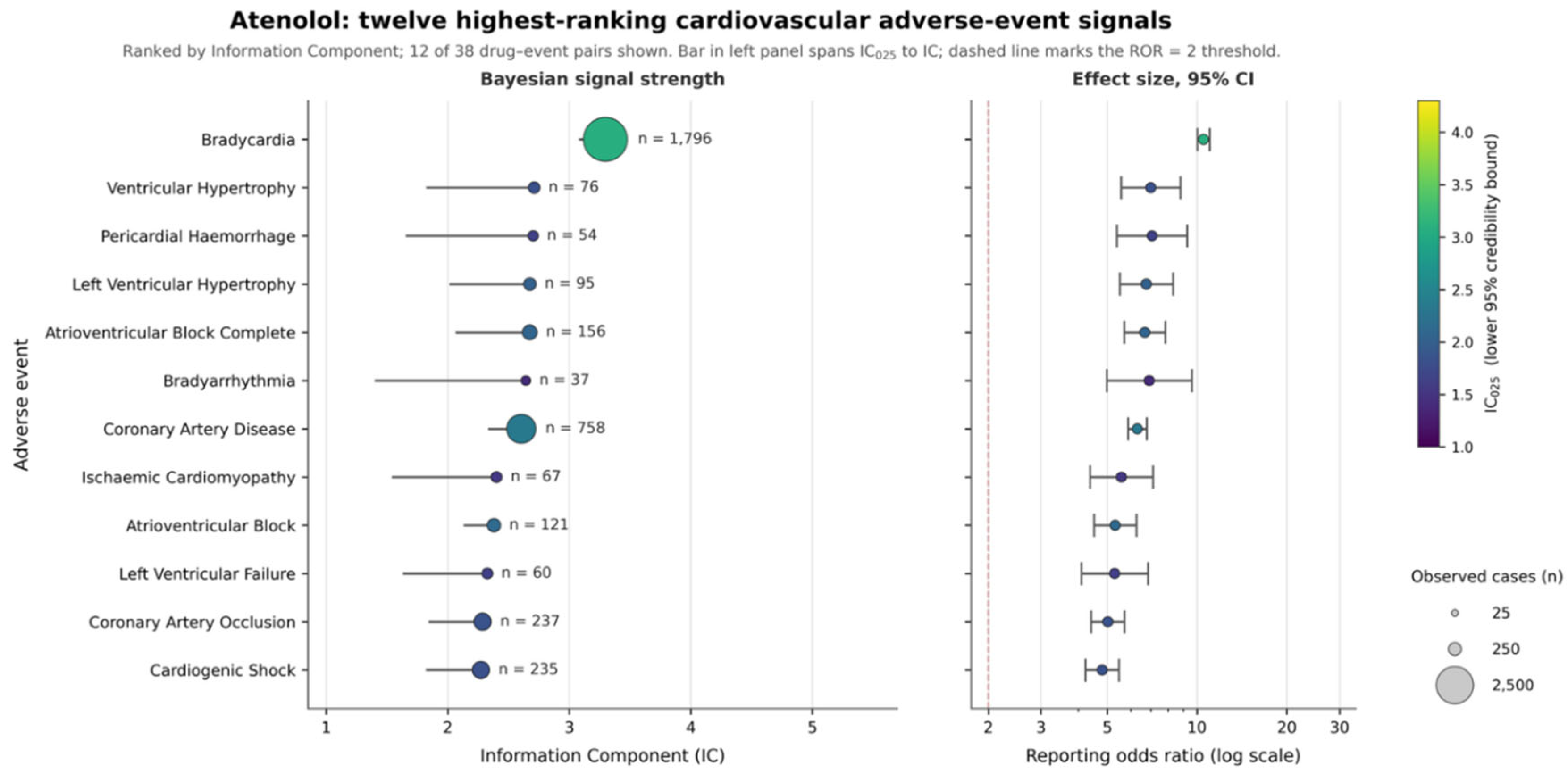
Figure 2.
Bisoprolol: twelve highest-ranking cardiovascular adverse-event signals. Left panel: Bayesian signal strength. Each bubble marks the Information Component (IC) point estimate for one drug–event pair, the horizontal bar spans IC025 to IC, bubble area scales with the number of unique cases (n), and bubble colour encodes IC025. Right panel: the corresponding reporting odds ratio with its 95% confidence interval on a logarithmic axis; the dashed vertical line marks the ROR = 2 threshold of Evans’ criteria. Events are ordered by IC. The twelve events shown are drawn from 36 bisoprolol cardiovascular drug–event pairs analysed; case counts across the full set ranged from 147 reports (left ventricular hypertrophy) to 4,154 (hypotension), and events supported by fewer reports carry correspondingly wider intervals in both panels. A signal was considered present only where an event satisfied both criteria applied in this study: Evans’ criteria for the ROR and IC025 greater than zero. Complete numeric results for all 36 pairs, including ROR with 95% confidence intervals, IC and IC025, are given in Supplementary Table S5.
Figure 2.
Bisoprolol: twelve highest-ranking cardiovascular adverse-event signals. Left panel: Bayesian signal strength. Each bubble marks the Information Component (IC) point estimate for one drug–event pair, the horizontal bar spans IC025 to IC, bubble area scales with the number of unique cases (n), and bubble colour encodes IC025. Right panel: the corresponding reporting odds ratio with its 95% confidence interval on a logarithmic axis; the dashed vertical line marks the ROR = 2 threshold of Evans’ criteria. Events are ordered by IC. The twelve events shown are drawn from 36 bisoprolol cardiovascular drug–event pairs analysed; case counts across the full set ranged from 147 reports (left ventricular hypertrophy) to 4,154 (hypotension), and events supported by fewer reports carry correspondingly wider intervals in both panels. A signal was considered present only where an event satisfied both criteria applied in this study: Evans’ criteria for the ROR and IC025 greater than zero. Complete numeric results for all 36 pairs, including ROR with 95% confidence intervals, IC and IC025, are given in Supplementary Table S5.
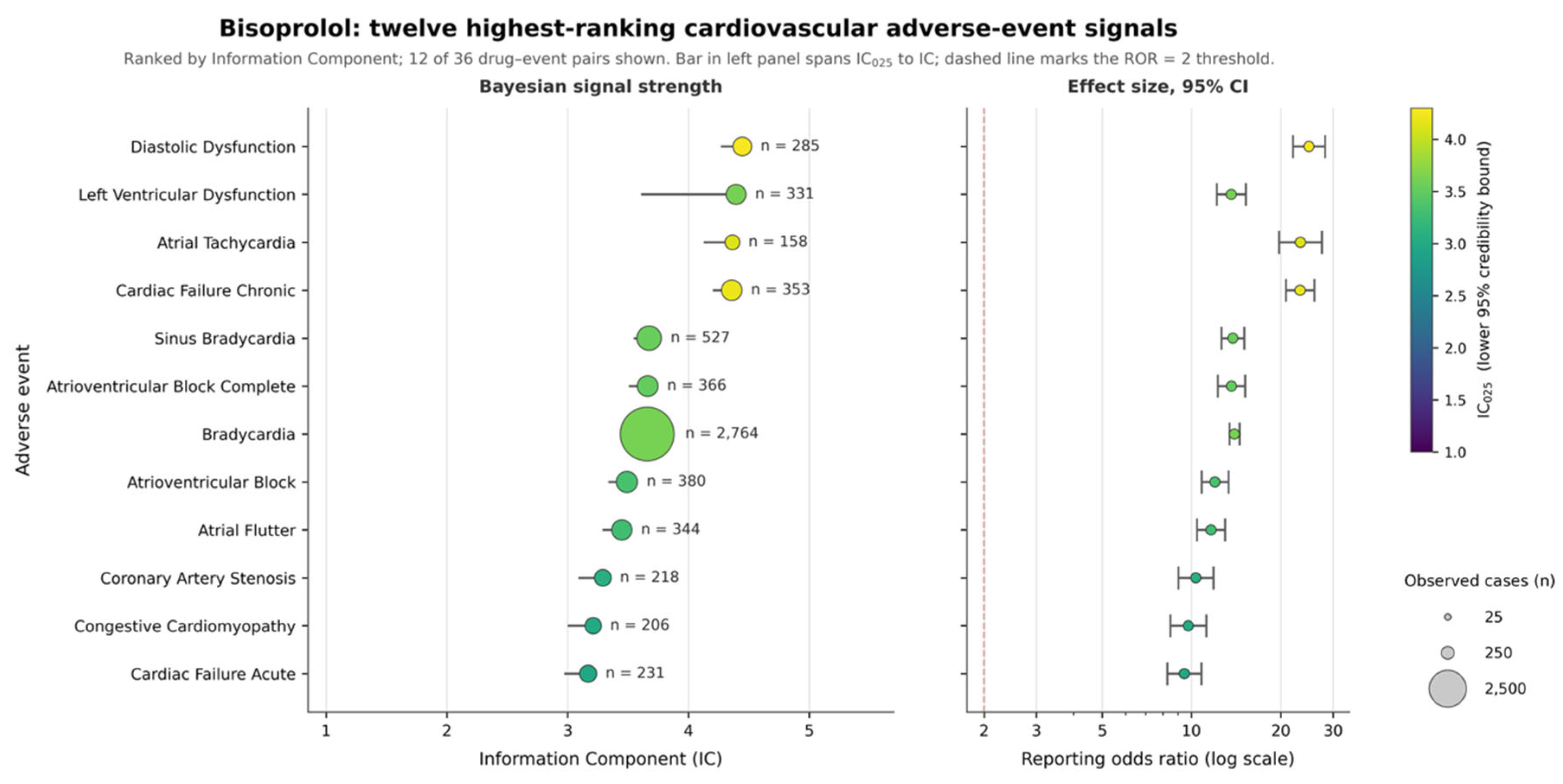
Figure 3.
Nebivolol: twelve highest-ranking cardiovascular adverse-event signals. Left 025. to IC, bubble area scales with the number of unique cases (n), and bubble colour encodes IC025. Right panel: the corresponding reporting odds ratio with its 95% confidence interval on a logarithmic axis; the dashed vertical line marks the ROR = 2 threshold of Evans’ criteria. Events are ordered by IC. The twelve events shown are drawn from 25 nebivolol cardiovascular drug–event pairs analysed; case counts across the full set ranged from 25 reports (complete atrioventricular block, tricuspid valve incompetence) to 655 (hypertension), and events supported by fewer reports carry correspondingly wider intervals in both panels. A signal was considered present only where an event satisfied both criteria applied in this study: Evans’ criteria for the ROR and IC025 greater than zero. Complete numeric results for all 25 pairs, including ROR with 95% confidence intervals, IC and IC025, are given in Supplementary Table S6.
Figure 3.
Nebivolol: twelve highest-ranking cardiovascular adverse-event signals. Left 025. to IC, bubble area scales with the number of unique cases (n), and bubble colour encodes IC025. Right panel: the corresponding reporting odds ratio with its 95% confidence interval on a logarithmic axis; the dashed vertical line marks the ROR = 2 threshold of Evans’ criteria. Events are ordered by IC. The twelve events shown are drawn from 25 nebivolol cardiovascular drug–event pairs analysed; case counts across the full set ranged from 25 reports (complete atrioventricular block, tricuspid valve incompetence) to 655 (hypertension), and events supported by fewer reports carry correspondingly wider intervals in both panels. A signal was considered present only where an event satisfied both criteria applied in this study: Evans’ criteria for the ROR and IC025 greater than zero. Complete numeric results for all 25 pairs, including ROR with 95% confidence intervals, IC and IC025, are given in Supplementary Table S6.
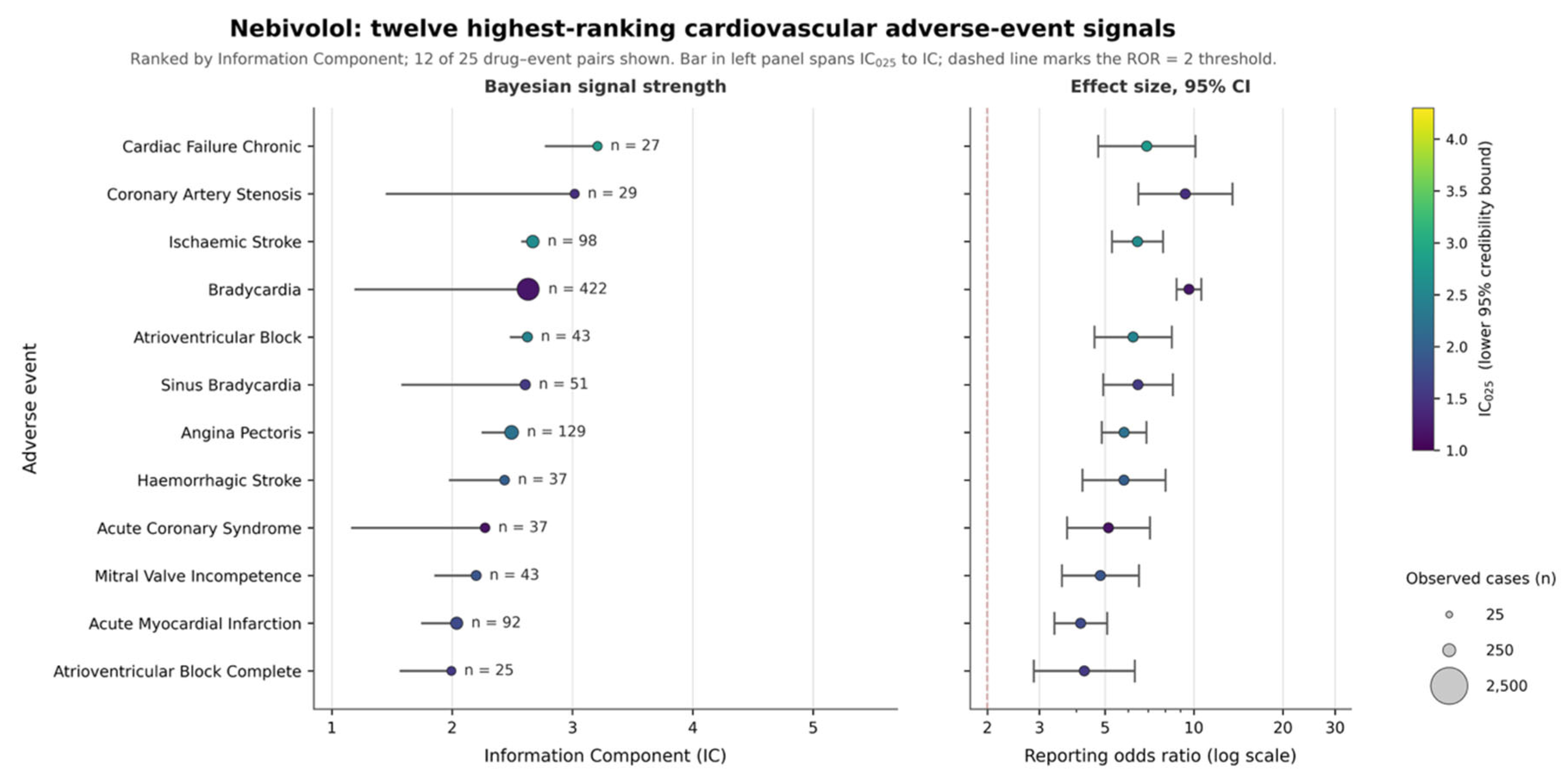

Table 1.
Cardiovascular Adverse Events Associated with Atenolol: A Pharmacovigilance Analysis of the FDA Adverse Event Reporting System (FAERS) Using Reporting Odds Ratio (ROR) and Information Component (IC).
Table 1.
Cardiovascular Adverse Events Associated with Atenolol: A Pharmacovigilance Analysis of the FDA Adverse Event Reporting System (FAERS) Using Reporting Odds Ratio (ROR) and Information Component (IC).
| Adverse 95. | Number of Drug Events | ROR (95% Cl) | IC | IC025 |
| Bradycardia | 1796 | 10.513 (10.021 - 11.028) | 3.297 | 3.078 |
| Left Ventricular Hypertrophy | 95 | 6.765 (5.514 - 8.300) | 2.676 | 2.013 |
| Atrioventricular Block Complete | 156 | 6.686 (5.703 - 7.839) | 2.675 | 2.063 |
| Ventricular Hypertrophy | 76 | 6.999 (5.568 - 8.798) | 2.711 | 1.823 |
| Bradyarrhythmia | 37 | 6.917 (4.984 - 9.598) | 2.643 | 1.4 |
| Vascular Calcification | 15 | 5.058 (3.030 - 8.442) | 2.137 | 0.468 |
| Pericardial Haemorrhage | 54 | 7.067 (5.388 - 9.271) | 2.703 | 1.653 |
| Coronary Artery Disease | 758 | 6.311 (5.869 - 6.786) | 2.605 | 2.332 |
| Diastolic Dysfunction | 50 | 4.672 (3.529 - 6.184) | 2.15 | 1.374 |
| Left Ventricular Failure | 60 | 5.298 (4.100 - 6.846) | 2.326 | 1.629 |
| Ischaemic Cardiomyopathy | 67 | 5.581 (4.378 - 7.114) | 2.401 | 1.539 |
| Carotid Artery Occlusion | 56 | 4.949 (3.796 - 6.451) | 2.234 | 1.514 |
| Aortic Arteriosclerosis | 44 | 4.293 (3.185 - 5.787) | 2.028 | 1.073 |
| Coronary Artery Occlusion | 237 | 5.025 (4.417 - 5.717) | 2.286 | 1.841 |
| Mitral Valve Incompetence | 186 | 4.412 (3.818 - 5.098) | 2.162 | 1.666 |
| Cardiogenic Shock | 235 | 4.812 (4.228 - 5.478) | 2.273 | 1.82 |
| Ventricular Dysfunction | 47 | 4.550 (3.407 - 6.075) | 2.185 | 1.424 |
| Myocardial Ischaemia | 223 | 4.636 (4.059 - 5.295) | 2.24 | 1.804 |
| Tricuspid Valve Incompetence | 112 | 3.595 (2.987 - 4.327) | 1.676 | 1.083 |
| Cardiomegaly | 181 | 4.080 (3.524 - 4.724) | 1.997 | 1.579 |
| Circulatory Collapse | 225 | 3.958 (3.468 - 4.516) | 1.958 | 1.566 |
| Acute Myocardial Infarction | 442 | 4.429 (4.031 - 4.867) | 2.114 | 1.742 |
| Ventricular Fibrillation | 149 | 3.995 (3.400 - 4.694) | 1.863 | 1.417 |
| Atrial Fibrillation | 1251 | 3.940 (3.724 - 4.168) | 1.961 | 1.881 |
| Cardiac Murmur | 104 | 2.963 (2.441 - 3.596) | 1.566 | 1.287 |
| Cardiac Valve Disease | 70 | 3.141 (2.481 - 3.978) | 1.651 | 1.31 |
| Atrial Flutter | 90 | 3.472 (2.818 - 4.276) | 1.794 | 1.494 |
| Cardiac Flutter | 74 | 3.284 (2.610 - 4.132) | 1.693 | 1.309 |
| Atrial Tachycardia | 15 | 2.361 (1.419 - 3.928) | 1.188 | 0.429 |
| Cardiac Failure Congestive | 934 | 3.094 (2.900 - 3.302) | 1.609 | 1.508 |
| Cardiac Arrest | 717 | 2.624 (2.437 - 2.824) | 1.383 | 1.267 |
| Myocardial Infarction | 1667 | 2.174 (2.071 - 2.282) | 1.095 | 1.04 |
| Electrocardiogram Qt Prolonged | 237 | 2.331 (2.051 - 2.649) | 1.193 | 1.057 |
| Tachycardia | 610 | 2.100 (1.939 - 2.275) | 1.065 | 0.95 |
| Angina Pectoris | 310 | 3.940 (3.576 - 4.341) | 1.95 | 1.81 |
| Cerebrovascular Accident | 1091 | 2.023 (1.920 - 2.132) | 1.0 | 0.92 |
| Atrioventricular Block | 121 | 5.319 (4.515 - 6.266) | 2.38 | 2.13 |
| Hypotension | 2097 | 4.150 (3.990 - 4.316) | 1.99 | 1.94 |
Table 2.
Cardiovascular Adverse Events Associated with Bisoprolol: A Pharmacovigilance Analysis of the FDA Adverse Event Reporting System (FAERS) Using Reporting Odds Ratio (ROR) and Information Component (IC).
Table 2.
Cardiovascular Adverse Events Associated with Bisoprolol: A Pharmacovigilance Analysis of the FDA Adverse Event Reporting System (FAERS) Using Reporting Odds Ratio (ROR) and Information Component (IC).
| Adverse Event | Number of Drug Events | ROR (95% Cl) | IC | IC025 |
| Diastolic Dysfunction | 285 | 24.875 (21.966 - 28.168) | 4.447 | 4.269 |
| Atrial Tachycardia | 158 | 23.283 (19.717 - 27.495) | 4.365 | 4.126 |
| Cardiac Failure Chronic | 353 | 23.222 (20.783 - 25.948) | 4.359 | 4.2 |
| Bradycardia | 2764 | 13.957 (13.420 - 14.515) | 3.659 | 3.622 |
| Sinus Bradycardia | 527 | 13.784 (12.613 - 15.063) | 3.675 | 3.547 |
| Atrioventricular Block Complete | 366 | 13.632 (12.255 - 15.164) | 3.663 | 3.507 |
| Left Ventricular Dysfunction | 331 | 13.610 (12.167 - 15.225) | 4.395 | 3.609 |
| Atrioventricular Block | 380 | 11.999 (10.814 - 13.315) | 3.491 | 3.338 |
| Atrial Flutter | 344 | 11.632 (10.427 - 12.976) | 3.449 | 3.288 |
| Coronary Artery Stenosis | 218 | 10.346 (9.029 - 11.856) | 3.292 | 3.088 |
| Congestive Cardiomyopathy | 206 | 9.756 (8.477 - 11.227) | 3.212 | 3.001 |
| Cardiac Failure Acute | 231 | 9.460 (8.287 - 10.798) | 3.17 | 2.971 |
| Mitral Valve Incompetence | 456 | 9.236 (8.405 - 10.150) | 3.134 | 2.996 |
| Cardiogenic Shock | 517 | 9.150 (8.376 - 9.996) | 3.121 | 2.991 |
| Left Ventricular Hypertrophy | 147 | 9.073 (7.698 - 10.693) | 3.078 | 2.827 |
| Cardiac Failure | 2519 | 7.927 (7.613 - 8.253) | 2.896 | 2.838 |
| Atrial Fibrillation | 2856 | 7.809 (7.518 - 8.112) | 2.404 | 2.293 |
| Circulatory Collapse | 489 | 7.393 (6.753 - 8.093) | 2.819 | 2.685 |
| Ischaemic Stroke | 508 | 6.955 (6.363 - 7.601) | 2.735 | 2.604 |
| Tricuspid Valve Incompetence | 256 | 6.882 (6.073 - 7.799) | 2.716 | 2.528 |
| Acute Myocardial Infarction | 671 | 5.671 (5.251 - 6.125) | 2.872 | 2.819 |
| Hypotension | 4154 | 5.617 (5.443 - 5.797) | 2.399 | 2.355 |
| Angina Pectoris | 684 | 5.466 (5.065 - 5.899) | 2.456 | 2.344 |
| Electrocardiogram Qt Prolonged | 610 | 5.082 (4.688 - 5.510) | 2.289 | 2.089 |
| Ventricular Fibrillation | 227 | 5.054 (4.428 - 5.768) | 2.289 | 2.089 |
| Cerebral Haemorrhage | 719 | 4.815 (4.470 - 5.187) | 2.3 | 2.181 |
| Myocardial Ischaemia | 201 | 3.506 (3.050 - 4.029) | 1.778 | 1.565 |
| Tachycardia | 1170 | 3.403 (3.210 - 3.607) | 1.733 | 1.704 |
| Cardiomegaly | 178 | 3.321 (2.864 - 3.851) | 1.701 | 1.627 |
| Coronary Artery Disease | 439 | 2.994 (2.724 - 3.290) | 1.558 | 1.29 |
| Coronary Artery Occlusion | 159 | 2.818 (2.411 - 3.293) | 1.47 | 1.038 |
| Hypertension | 2297 | 2.625 (2.518 - 2.737) | 1.357 | 1.246 |
| Cardiac Arrest | 851 | 2.594 (2.423 - 2.776) | 1.352 | 1.17 |
| Cardiomyopathy | 174 | 2.585 (2.226 - 3.003) | 1.349 | 0.946 |
| Pericardial Effusion | 242 | 2.553 (2.249 - 2.898) | 1.332 | 0.993 |
| Cardio-Respiratory Arrest | 320 | 2.026 (1.814 - 2.261) | 1.004 | 0.876 |
Table 3.
Cardiovascular Adverse Events Associated with Nebivolol: A Pharmacovigilance Analysis of the FDA Adverse Event Reporting System (FAERS) Using Reporting Odds Ratio (ROR) and Information Component (IC).
Table 3.
Cardiovascular Adverse Events Associated with Nebivolol: A Pharmacovigilance Analysis of the FDA Adverse Event Reporting System (FAERS) Using Reporting Odds Ratio (ROR) and Information Component (IC).
| Adverse Events | Number of Drug Events | ROR (95% Cl) | IC | IC025 |
| Bradycardia | 422 | 9.619 (8.735 - 10.593) | 2.632 | 1.186 |
| Coronary Artery Stenosis | 29 | 9.351 (6.482 - 13.490) | 3.019 | 1.448 |
| Cardiac Failure Chronic | 27 | 6.924 (4.739 - 10.117) | 3.209 | 2.771 |
| Sinus Bradycardia | 51 | 6.464 (4.931 - 8.474) | 2.608 | 1.578 |
| Ischaemic Stroke | 98 | 6.443 (5.279 - 7.864) | 2.671 | 2.574 |
| Atrioventricular Block | 43 | 6.226 (4.610 - 8.408) | 2.626 | 2.479 |
| Angina Pectoris | 129 | 5.805 (4.879 - 6.907) | 2.494 | 2.244 |
| Haemorrhagic Stroke | 37 | 5.799 (4.195 - 8.016) | 2.436 | 1.972 |
| Acute Coronary Syndrome | 37 | 5.138 (3.718 - 7.102) | 2.274 | 1.159 |
| Mitral Valve Incompetence | 43 | 4.826 (3.575 - 6.516) | 2.2 | 1.851 |
| Atrioventricular Block Complete | 25 | 4.258 (2.873 - 6.310) | 1.994 | 1.564 |
| Acute Myocardial Infarction | 92 | 4.138 (3.370 - 5.082) | 2.038 | 1.742 |
| Hypotension | 638 | 3.870 (3.576 - 4.188) | 1.914 | 1.8 |
| Hypertension | 655 | 3.592 (3.323 - 3.884) | 1.807 | 1.694 |
| Tricuspid Valve Incompetence | 25 | 3.560 (2.402 - 5.274) | 1.755 | 0.584 |
| Ventricular Tachycardia | 46 | 3.349 (2.506 - 4.475) | 1.737 | 1.319 |
| Atrial Fibrillation | 276 | 3.346 (2.971 - 3.769) | 1.725 | 1.553 |
| Cerebral Haemorrhage | 108 | 3.324 (2.750 - 4.017) | 1.723 | 1.45 |
| Myocardial Ischaemia | 36 | 3.248 (2.340 - 4.507) | 1.693 | 1.221 |
| Cardiac Failure | 232 | 3.237 (2.843 - 3.685) | 1.679 | 1.492 |
| Cardiogenic Shock | 40 | 3.108 (2.278 - 4.241) | 1.63 | 1.182 |
| Electrocardiogram QT Prolonged | 78 | 2.995 (2.397 - 3.742) | 1.575 | 1.254 |
| Circulatory Collapse | 40 | 2.935 (2.151 - 4.005) | 1.548 | 1.099 |
| Cardiomegaly | 28 | 2.897 (1.999 - 4.200) | 1.53 | 0.994 |
| Coronary Artery Disease | 66 | 2.702 (2.121 - 3.443) | 1.428 | 1.079 |
Disclaimer/Publisher’s Note: The statements, opinions and data contained in all publications are solely those of the individual author(s) and contributor(s) and not of MDPI and/or the editor(s). MDPI and/or the editor(s) disclaim responsibility for any injury to people or property resulting from any ideas, methods, instructions or products referred to in the content. |
© 2026 by the authors. Licensee MDPI, Basel, Switzerland. This article is an open access article distributed under the terms and conditions of the Creative Commons Attribution (CC BY) license (http://creativecommons.org/licenses/by/4.0/).
Copyright: This open access article is published under a Creative Commons CC BY 4.0 license, which permit the free download, distribution, and reuse, provided that the author and preprint are cited in any reuse.