
Submitted:
31 August 2026
Posted:
02 September 2026
You are already at the latest version
Abstract
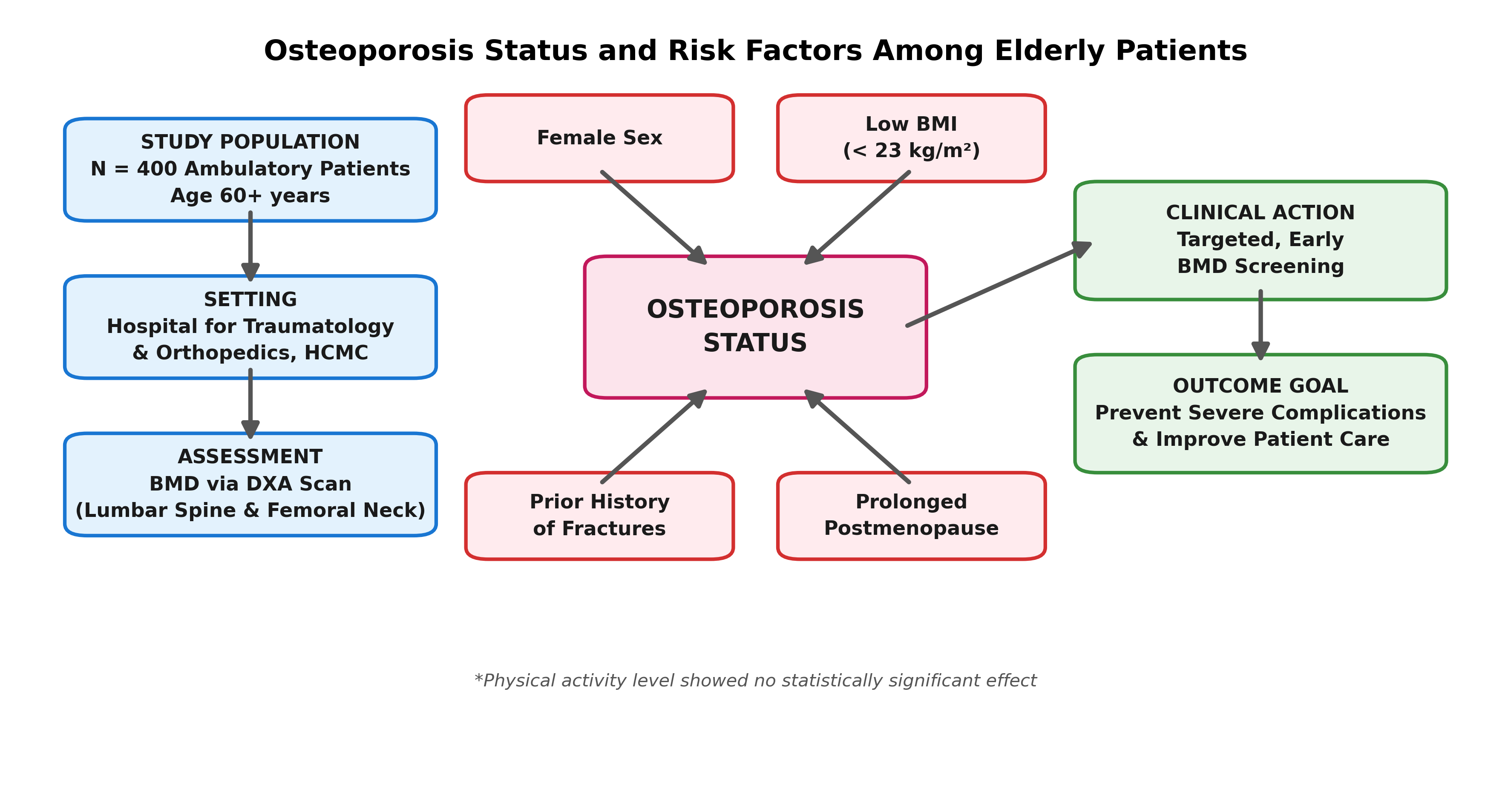
Background: Osteoporosis, is characterized by a compromise in bone strength, which is defined by a combination of bone mineral density (BMD) and bone quality. It is a common disease in the older people and undergo asymptomatic progression for years. One of the most severe complications of osteoporosis is fracture, which is not only diminishes the life quality of patients but also imposes a substantial burden on both families and health care systems. The survey of risk factors in this cohort shown that some factors truly contribute to the progress of osteoporosis, such as gender, body mass index (BMI) or the history of fractures. The results can prompt clinicians to conduct early screening and patient care and facilitate targeted interventions for older adults, who frequently present with multiple underlying comorbidities. Objectives: This study aimed to determine the prevalence of osteoporosis and identify associated risk factors among elderly patients. Methods: A cross-sectional descriptive study enrolled 400 ambulatory patients aged 60 years or older. BMD was measured at two anatomical sites: the femoral neck and the lumbar spine. Exclusion criteria comprised patients currently undergoing oncological therapy, as well as those with a history of or current treatment for osteoporosis. Results: Several risk factors that increase the likelihood of osteoporosis in the elderly include female sex, low body BMI < 23 kg/m² and a history of post-traumatic fractures. Female sex and low BMI were significantly associated with a higher prevalence of osteoporosis at both anatomy sites, whereas physical activity level showed no statistically significant effect. The duration postmenopause was significantly associated with an increased prevalence of osteoporosis at both the lumbar spine and femoral neck, exhibiting a progressive rise over time that peaked at age 30 years postmenopause. A history of fracture was significantly associated with osteoporosis status at both the lumbar spine and femoral neck, with a higher proportion of past fractures observed among participants with osteoporosis. (p < 0.05). Conclusions: This study emphasizes that female sex, low BMI, prolonged postmenopausal duration (age 30 years), and a prior history of fractures are significant clinical indicators of osteoporosis in the elderly. These findings highlight the critical need for targeted, early BMD screening programs prioritizing these high-risk groups to prevent severe osteoporotic complications and improve patient care.
Keywords:
osteoporosis
; lumbar spine
; femoral neck
; elderly people
; hospital for traumatology and orthopedics
; Vietnam
Copyright: This open access article is published under a Creative Commons CC BY 4.0 license, which permit the free download, distribution, and reuse, provided that the author and preprint are cited in any reuse.