

Submitted:
31 August 2026
Posted:
01 September 2026
You are already at the latest version
Abstract
The municipality of Yaonáhuac, situated in the Northern Highlands of the state of Puebla, Mexico, has a population that is predominantly comprised of individuals belonging to various Indigenous communities. This region is distinguished by its strong adherence to Indigenous traditions and customs, which have been handed down through generations and continue to play a significant role in the cultural identity and practices of the community. A significant proportion of the population is reliant on ethno-agricultural practices, with smallholdings constituting a primary source of income for local communities. However, in recent years, the extractive cultivation of potatoes for the snack food industry has been expanding in Yaonáhuac, resulting in environmental impacts that have altered water and soil conditions, thereby diminishing the possibilities of successfully practicing ecologically more sustainable agroforestry. The potato variety cultivated in the Northern Highlands is predominantly Atlantic, FL 2027. The cultivation of these crops necessitates a substantial water supply, thereby reducing the availability of this vital liquid from both surface and groundwater sources. This has a detrimental effect on traditional ‘milpa’ crops and results in the depletion of the soil due to the excessive use of agrochemicals. In this context, the present article will discuss the benefits and feasibility of developing traditional agroforestry techniques in Yaonáhuac to promote the application of ethno-agricultural knowledge for the benefit of the local economy, ecology and the conservation and maintenance of water resources, all of which are threatened by the arrival of industrial agriculture and ecological imperialism for potato chip production. This study is based on data on the strategies implemented for legislation and the proper use of resources in the communities surrounding the Northern Puebla Highlands, carried out by different territorial cooperatives that have demonstrated within their own communities and that can be replicated in the community of Yaonáhuac.
Keywords:
Yaonáhuac
; agroforestry
; extractive agriculture
; ecological imperialism
; Kuojtakiloyan
; ethno-ecoagriculture
; Tlaltipan
1. Introduction
The identity of the Indigenous rural Mexicans is rooted in the distant pre-Hispanic era, with the concept of a profound connection between humankind and Mother Earth being a central tenet. In the contemporary era, the repercussions of present-day political and economic circumstances have exerted an influence on even the most isolated Indigenous communities, resulting in the gradual obliteration of their bio-culturally and environmentally informed pasts. This has the potential to unveil alternative strategies for achieving more sustainable present and future outcomes [1,2]. In this context, the present study aims to explore the potential for mitigating the consequences of extractive agricultural activities, such as the cultivation of potatoes, within the context of Indigenous territories. This study will focus on a case study in Yaonáhuac, located in the Northern Puebla Highlands of Mexico, to provide a practical example and a platform for the discussion of these issues. The focus of this discussion is the adoption of the generation and dissemination of trans-generational, situated ecological knowledge, as articulated by McGregor [3] (p. 606), as cited in [4] (p. 5), who defined it as “cultural understanding of one’s responsibilities to the Earth’s living, non-living, and spiritual beings and natural interdependent collectives” in the context of productive endeavors founded on biocultural knowledge and the interpretation of nature and its resources [5].
The Northern Puebla Highlands are constituted by individual, parallel mountain ranges, compressed against each other, with intermontane plateaus separating them [6]. These mountain ranges are covered by dense woodlands, which provide abundant timber resources of various types [7]. The northern slopes of the Highlands, where Yaonáhuac is also located, are characterized by the presence of various partial basins, which are drained by rivers flowing into the Gulf of Mexico. It is therefore evident that the topography is distinguished by rivers characterized by a rapid and turbulent flow as providers of the vital liquid [8].
The Northern Puebla Highlands is a territory occupied by several Indigenous communities, including Nahuas, Totonacs, Tepehuans and Otomis [6]. These Indigenous communities have historically demonstrated a profound connection to their territory and land, often prioritizing spiritual and cultural aspects of their identity over material possessions. Moreover, the Indigenous cosmovision encompasses the concept of a symbiotic relationship between humanity and the land, with the former being entrusted with the responsibility of judicious utilization of natural resources. In other words, the occupation of land is related to their sustainable use. It is important to understand that the intensity of changes in these resources has a significant impact on the conservation of ecosystems [9].
However, not all Indigenous communities in the region have been able to maintain environmentally sustainable ethno-agricultural practices, due to external agro-industrial pressures and the socioeconomically precarious situation of the local communities. Moreover, as evidenced by the case of Yaonáhuac, the population has been undergoing a process of cultural assimilation, resulting in the erosion of its Indigenous cultural identity that once provided a sustainable framework for the local ethno-agricultural traditions. Today, agroecological agroforestry practices are being superseded by the intensified cultivation of potatoes for the snack food industry on land rented to intermediaries by local farmers. The resulting environmental impact has had a detrimental effect on water and soil conditions, thereby reducing the viability of practices that are more ecologically sustainable, such as agroforestry.
In his work Epistemologías del Sur, de Sousa Santos [10] proposes the utilization of the concept of ‘ecologies of knowledge’ for the development of environmental ethnosciences. The objective of this approach is to encourage intersectionality between scientific knowledge and situated ways of knowing, popular wisdom and endogenous environmental knowledge. In this sense, a comparison is drawn between the situation of Yaonáhuac and other examples from the same region that have developed their own situated land tenure management systems based on Indigenous identity and communal culture. These examples have achieved the following: 1) halting of extractive agricultural production initiatives; 2) promotion of ethno-agricultural strategies to protect the land, water resources and valuable woodlands; and 3) construction of more ecologically sustainable futures. The present article discusses the benefits and feasibility of recovering and developing further traditional agroforestry techniques in Yaonáhuac reviewing how these techniques can help to curb environmental degradation and foster harmony with nature. This work aims to promote ways of combining crops, trees, and livestock that recreate the natural cycles of the forest and that can be adapted to the current needs of the community, as has already been implemented by various Indigenous cooperatives in several communities in the Northern Puebla Highlands. This paper recommends re-establishing the vital ethno-environmental relationship where traditional techniques are fundamental, but which can also counteract the environmental impact of overexploitation of soil and agricultural pollution. Furthermore, this study suggests considering current ecological practices, incorporating not only reforestation for ecological conservation, but also the planting of species that can generate income in the medium and long term. The purpose of this discussion is to promote the application of ethno-agricultural knowledge to reinforce local economy, ecology and the conservation and maintenance of natural resources threatened by the arrival of industrial agriculture for potato chip production.
Hence the case study presented in this paper takes advantage of a critical transdisciplinary perspective that links together social sciences, ethnobotany and biocultural situated environmental linkages. Consequently, this study considers the heritage of knowledge as accumulated, dynamic, and open knowledge from a local culture that interacts with a situated agroecosystem and its biodiversity. This forms the bases for agroforestry practices, where nature, culture, and production are intertwined. The assumed transdisciplinary perspective of this study aims at exposing the benefits of fostering community social well-being in indigenous localities of Northern Puebla Highlands based on a way of life characterized by a system of beliefs and ethical values rooted in local biocultural environment [11].
2. Materials and Methods
As mentioned in the Introduction section of this paper, it applies the critical transdisciplinary perspective based on biocultural and ethnobiological approaches. The biocultural approach rests on three interconnected aspects: 1) biological diversity: the ecosystems, plants, animals, and water resources of a territory; 2) cultural diversity: the languages, worldviews, identities, and knowledge systems of peoples, and 3) local practices: traditional cultivation systems (such as the ‘milpa’) and community-based forms of self-governance. Ethnobotany, on the other hand, is the scientific discipline that studies relationships, interactions, and traditional knowledge shared between human societies and the plant kingdom. It focuses on understanding how a specific culture classifies, uses, conserves, and perceives the plants in its environment. Hence, ethnobotany bridges the biological sciences and the social sciences (anthropology and sociology) [12]. In Northern Puebla Highlands, the biocultural and ethnobotanical approach is fundamental due to the vast biodiversity of cloud forest and the strong presence of Nahua culture. An ethnobotanical study in Yaonáhuac demonstrates that replacing a biodiverse traditional ‘milpa’plot with intensive monoculture such as commercial potatoes cultivation, severely affects the local ecosystem, environmental sustainability and the way of life [13]
Consequently, following the above-mentioned transdisciplinary framework, the study was based on a comparison of the current state of various agroforestry practices, using as a reference a previous study conducted in the community of Cuetzalan. This study involved several informal meetings with different cooperatives, which provided information about the relationship of the indigenous community of Cuetzalan. Using this data, we compared the current situation in the community of Yaonáhuac and how these same practices are being implemented there. In Yaonáhuac, the absence of Indigenous cooperatives or organizations necessitated that the research be conducted through informal discussions and personal communications with local inhabitants and stakeholders.
The meetings with communities and cooperatives in Cuetzalan took place from 2023 to 2026 and consisted of collaborative work sessions, workshops, and visits to sites of significance in terms of agroforestry and sustainable social innovation. These meetings, held four times a year, brought together a diverse group of members from the seven Nahua indigenous communities of Cuetzalan. Visits to Yaonáhuac took place from 2024 to 2026, every two or three weeks. During these visits, various plots of land used for potato cultivation and ‘milpa’ were toured, as well as forested areas showing signs of illegal logging, guided by local smallholders from the community of Tatempan, Yaonáhuac, and educators from local schools.
In order to establish possible techniques applicable in Yaonáhuac, a systematic review was carried out in the databases Google Scholar, Scopus, Web of Science and JSTOR, in which articles were searched and selected that established effective agroforestry techniques in other communities of the Northern Highlands of Puebla, with the potential to be replicated in Yaonáhuac. The following graphical representation of the search algorithm was used to seek information in various databases (see Figure 1.)
Additionally, the following flowchart demonstrates the systematic review of databases carried out (see Figure 2.)
Moreover, the statistical data and census records from the National Institute of Statistics and Geography (INEGI) were utilized to present the fundamental information regarding the municipality of Yaonáhuac. In addition to this, the statistical information of the Federal State of Puebla was also utilized, as was the Municipal Development Plan 2021-2024 of Yaonáhuac. In the case of Cuetzalan, the Ecological and Territorial Planning Program (Programa de Ordenamiento Ecológico y Territorial, POET) was consulted, as well as UNITONA, the Indigenous Totonac Nahuatl Unity (Unidad Indígena Totonaca Nahuatl). The latter is an organization dedicated to Indigenous resistance against governmental extractive public policy.
A comprehensive review of the extant literature was subsequently conducted, with a focus on the historical development of the Totonacapan region from pre-Hispanic times to the 21st century, and the role of Yaonáhuac in this process. This provided valuable insights into the ethno-agricultural traditions, with reference to the agroforestry practices inherent in the concepts of Kuojtakiloyan (‘landscape living’), Tlaltipac (‘unity in diversity’) and faena community collaboration. Finally, the site experiences related to industrial potato cultivation were compared with the literature sources and published case studies, the majority of which were also located in the Northern Puebla Highlands region. Since this study was based on existing data from various articles and the meetings were completely anonymous, it was not necessary to obtain ethical consent to carry it out.
3. Results
3.1. Yaonáhuac: Social, Cultural and Ethnical Background
3.1.1. History
In the pre-Hispanic period, the Northern Puebla Highlands constituted part of the ancient region of Totonacapan, which was under the dominion of Zempoala, in proximity to the Gulf of Mexico coastline. The region experienced a period of considerable power and development around the year 750 AD. As the name suggests, the Totonacapan was inhabited by the Totonac people. However, due to the area’s abundant natural resources, it also attracted settlement by other ethnic groups. Consequently, the region of Totonacapan became a receptor for migrants, thereby triggering the development of a pluri-ethnic demographic structure that has remained stable until the present day. By the close of the 15th century, the Toltecs had exerted sufficient pressure on the Totonacs to force them to abandon many of their settlements and relocate closer to the coast outside Totonacapan. In addition to migrations, frequent internal conflicts served to weaken the territorial and social unity of the region, ultimately resulting in its subordination under the rule of the Mexica (Aztecs) of the Mesoamerican Central Plateau as their tributary province. The result of this was the expansion of the Nahuatl language into the Highlands, with the Totonac language being partially substituted by it [14].
The etymology of the Nahuatl name of the case study region, Yaonáhuac, is derived from the words ‘huey’ (big), ‘atl’ (water), ‘ohtli’ (path) and ‘nahuac’ (together or near). The name is therefore translated as ‘Next to the Great Waterway’, a phrase which is believed to refer to the joining of two smaller rivers to form the Puxtla river [15].
The Spanish conquest of Yaonáhuac commenced in 1519 with the arrival of Hernando Cortés, leading to the subjugation of the settlement under the encomienda system, which entailed the enslavement of its Indigenous population [7]. The narrative recounts that Cortés himself is believed to have planted an ahuehuete tree in Yaonáhuac. Consequently, this specific neighborhood has been designated ‘Ahuehuetes’. Yaonáhuac was administratively recognized as a ‘pueblo’ – that is, a village – in 1560. Since 1895, it has been an independent municipality of the Federal State of Puebla [7].
3.1.2. Demography
According to the 2020 census, Yaonáhuac has a population of 7926 inhabitants of which 53.53% are women and 46.47% men [17]. 80.24% of the population is Indigenous, 46.67% speaks an Indigenous language and 0.99% does not speak Spanish at all. Of all the Indigenous language speakers, 99.25% speak Nahuatl, 0.38% Totonac, and 0.37% Mazatec [16,17].
The last 2020 census of Consejo Nacional de la Evaluación de la Política de Desarrollo Social, CONEVAL, (2022) reveals that 64% of the total population of Yaonáhuac were living in poverty; of these, 80% were living in moderate poverty and 12% in extreme poverty [18]. The Government of Mexico measures the social inequality through Gini Coefficient designed to represent the distribution of income among inhabitants, specifically the level of inequity between them. Values closer to 0 expose equity among the population, while values closer to 1 reflect maximum inequity. The Gini Coefficient in Yaonáhuac in 2020 was that of 0.37. When we compare this indicator with statistics of poverty in Yaonáhuac, the reality of the majority living in the poverty is confirmed [19]. The economic growth of Mexico and the rapid expansion of urbanization across the country have triggered migration flows from rural areas to large cities and beyond the US–Mexican border [20]. In the case of transborder migration, Yaonáhuac maintains a steady flow of migrants. In both cases migrations are primarily characterized by emigration for employment purposes, driven by conditions of social underdevelopment, poverty and the pursuit of higher income [21].
In the case of the Mexican state of Puebla, its capital city, Puebla City, and the capital city of the country, Mexico City, have attracted local migrants seeking better economic opportunities. The consequence of these migratory patterns is the establishment of Indigenous settlements in peripheral areas of cities. These settlements are populated by individuals engaged in low-wage employment in sectors such as construction, domestic service, plumbing, cleaning, and even prostitution. It is evident that the aforementioned individuals lack the requisite qualifications, fundamental knowledge and specific experience to pursue more lucrative employment opportunities [20]. The migration of Indigenous populations to urban areas has been identified as a contributing factor to the erosion of Indigenous cultural identity in rural communities, as evidenced by the case study of Yaonáhuac [20].
3.1.3. Indigenous Life and Culture
As demonstrated, the predominant ethnic group in Yaonáhuac is the Nahua. However, the influx of mestizos to the region, coupled with their interaction with the urban dynamics of metropolitan areas such as Puebla and Mexico City, has had a significant impact on the continuity and conservation of Indigenous identity, communal life and ethno-agroecological traditions in some localities. Yaonáhuac is one of these communities where the Indigenous identity has been diminishing in the face of external cultural, social and economic pressures.
In the context of the traditional Nahua culture, the concept of community and communal life is intricately intertwined with nature and the principle of reciprocity. The rationale behind this phenomenon can be attributed to the notion of the supernatural character of nature, which is regarded as a repository of forces and powers that transcend human comprehension and capacity. Nature is the container of cosmological forces and the dwelling of deities that govern the habitat of the Nahuas. The natural and the supernatural are posited as complementary aspects of the cosmos, coexisting within a continuum through dynamic interrelationships, thus ensuring the preservation of a universal order [20]. In the context of the biocultural interrelation, the Nahuas have cultivated their agricultural practices, which are characterized by ‘milpa’ and agroforestry. In certain communities neighboring Yaonáhuac, these practices have precipitated ecologically sustainable ethno-eco-agriculture, environmental innovation and socially successful community building. In this sense, the development in Yaonáhuac has not adopted the same orientations, resulting in weakening of environmental traditions and the biocultural bonding between nature and the human community [20]. Consequently, and due to its population’s mainly precarious economic situation, it has become vulnerable to ecological imperialism and extractive agriculture represented by the potato chip industry.
3.1.4. Smallholdings
In Yaonáhuac, as in other regions of the Northern Highlands, the fundamental unit of social reproduction is the Peasant Domestic Group (PDG), which comprises nuclear families that often consist of two or even three generations residing together. The PDGs are the proprietors or lessees of agricultural land, which is primarily utilized for their own consumption [22]. Today, 33,89% of the economically active population is dedicated to agriculture. Though, as mentioned before, the loss of agricultural labor force due to the migration of young people triggered by the lack of economic profitability in traditional farming is causing changes in the use of agricultural land of the smallholdings [23]. PDGs send their younger members, predominantly males, as day laborers to the metropolitan areas of Central Mexico. The PDGs supplement their income through hunting, fishing, gathering and forestry, though the latter is responsible for significant deforestation, contributing to the environmental degradation of the municipality [24].
The mean area of agricultural lots in the municipality is 2 hectares, though this may be subdivided into various smaller pieces of land. Moreover, the legal status of these smallholdings is ambiguous, giving rise to internal conflicts within the PDGs, particularly in the context of inheritance. The irregular legal condition of the smallholdings is making the establishment of cooperation and the organization of productive societies difficult. The total area of the municipality, which amounts to 5731.01 hectares, the entirety of the land is under private ownership. Of these, 5513.11 hectares are used for agricultural and forestry purposes, and are typically located on the steep slopes of the region’s mountainous topography [24].
3.2. Geography, Natural Environment and Territorial Characteristics
3.2.1. Location and Topography
The municipality is in the northwestern part of the State of Puebla. The geographic coordinates of the site are as follows: 19° 52’ 06” and 19° 59’ 48” north latitude and 97° 21’ 54” and 97° 27’ 18” west longitude (see Figure 1 and Figure 2.). Yaonáhuac shares borders with the municipalities of Teziutlán and Tochtepec to the north, with Hueyapan to the east, with Atempan to the south, and with Tlatlauquitepec to the west [15,25]. The municipality’s altitude ranges from 240 to 1,700 meters above sea level [7]. The territory of the municipality is comprised of two distinct landform systems. Sierra Madre Oriental (70.59%) and Trans-Mexican Volcanic Belt (29.41%), of which 57.21% belong to the so-called Low Sierra, 29.43% to the volcanic mountain range with steep slopes and 13.36% to the high steep mountain range [26]. As is evident, the topography of the municipality is characterized by significant variation. The topography in the southern region is predominantly flat, exhibiting a gentle north-south incline. However, as one traverses towards the south, the decline in terrain becomes more precipitous and uneven, a consequence of the incursion of a mountainous protrusion originating from the west and traversing the municipal area from a south-west to north direction (see Figure 3.) [7].
3.2.2. Hydrography
The municipality of Yaonáhuac is characterized by abundant hydrological resources. The site is situated within the Tecolutla basin, which is traversed by the Xucayucan River. This river enters the south-east and flows through the central part of the municipality in a south-west-north-west direction for over 12 kilometers ultimately joining the Atexcaco River. The latter flows from south to north, traversing the central part of the municipality for a considerable distance before joining the Apulco River. This watercourse enters the municipality from south to north, finally flowing outside the municipality before joining the Tecolutla River. Furthermore, numerous intermittent streams contribute to these rivers [8] (see Figure 4 and Figure 5.).
Despite the many rivers and vast ground water resources, the hydrological equilibrium of the municipality has been compromised due to unregulated deforestation and overexploitation of springs and bodies of water. The overexploitation of water resources in Yaonáhuac is part of the water crisis affecting the state of Puebla. This is due to the establishment of clandestine water intakes by individuals or intermediaries at the water sources. Overexploitation is also caused by the lack of infrastructure to measure water diversions before they reach the community distribution networks. Deficiencies in distribution and infrastructure also contribute to the water resource problem, leading to illegal water extraction that is subsequently sold at exorbitant prices. Finally, the lack of a drainage network in certain informal settlements near rivers and ravines has resulted in increased pollution of surface watercourses, as well as a lack of infrastructure for wastewater and domestic sewage treatment. [26].
3.2.3. Climate
Yaonáhuac has a humid temperate climate with perennial precipitation, prevalent in the Northern Puebla Highlands. The Gulf slope is characterized by an average annual temperature range of 14 to 22 degrees Celsius. The annual precipitation range is 1,400–3,600 mm. [9,27]. The precipitation of the driest month is greater than 40 mm, and winter rainfall constitutes less than 18% of the annual total [7,9,27].
3.2.4. Edaphology
Two distinct soil types have been identified within the municipal boundaries. Andosol is the predominant soil type, covering more than 75% of the municipality. It exhibits a deep lithic phase, characterized by a layer of rock measuring between 50 and 100 centimeters in depth. Luvisol, another soil type, is found along the banks of the Apulco River also exhibiting a deep lithic phase [7]. As will be explained in more detail subsequently in this article, a decline in land with high ecological value and agricultural potential can be observed [26].
3.2.5. Flora
Most of the municipality is covered in forests, which are dominated by various species of tree, including red pine (Pinus patula), oak (Quercus spp.), soapberry (Clethra mexicana), sweetgum (Liquidambar styraciflua) and cedar (Cedrus spp.) (see Figure 6.) [26]. The most prevalent forest type is the pine-oak forest, followed by the cloud forest. The latter consists of dense tree vegetation located on the mountain slopes, which are covered with fog almost year-round. The oak forest is the least abundant tree type in this agroecological region, with trees ranging in height from 6 to 30 meters. Despite the presence of considerable biodiversity, the region has been subjected to substantial exploitation for domestic construction and illegal logging without subsequent reforestation, a practice that has contributed to the depletion of valuable natural vegetation. In most regions, established practices and programs for the conservation of these wooded areas are not being implemented. [24].
3.2.6. Administrative Division of the Municipality
Yaonáhuac is composed of two distinct regions: the densely constructed and urbanized center area and various rural communities located further afield and dispersed along the mountainous landscape. Most of the population is concentrated in the municipal center, whilst the rural communities are very small in comparison.

Table 1.
Yaonáhuac and its communities [27].
Table 1.
Yaonáhuac and its communities [27].
| Locality | Population |
| Municipality center | 3968 |
| Ahuehuetes | 1168 |
| Tatempan | 544 |
| Ahuata | 597 |
| Atotocoyan | 386 |
| Tepantiloyan | 316 |
| Teteltipan | 230 |
| Atemeya | 211 |
| Talcozamán | 141 |
| Contzitzintán | 130 |
| Ocotepec | 114 |
| Acocogta Poctan | 104 |
| Mazatonal | 88 |
| Hueytepec | 55 |
| Texuaco | 55 |
| El Crucero | 19 |
| La Mohonera | - |
3.2.7. Traditional Agriculture Practices
The climate in the area between 500 and 1,000 meters above sea level is conducive to the cultivation of a wide variety of crops, including corn, beans, legumes, coffee, sugarcane, and tropical fruit trees. The topographical characteristics of the arable land in Yaonáhuac, with inclines ranging from 10 to 60 degrees, pose significant risks of erosion when the soil remains exposed, as is often the case for transitional crops such as cereals and legumes. Consequently, the elevated regions of the mountain range are predominantly unproductive, as the primary agricultural produce, namely corn and beans, are cultivated on an annual basis, yielding modest harvests. In the context of these intricate natural conditions, the population has been incapable of deriving its entire subsistence from agriculture, thus necessitating the supplementation of this with extractive activities primarily centered on uncontrolled forestry. From a technical standpoint, two distinct agricultural systems are observed in high-mountain regions. The first system involves the use of a small plow, representing a modified form of pre-Columbian agriculture, which is practiced on the steepest slopes. The second system entails the use of a plow and oxen, a practice that is feasible in areas where the terrain permits. It is imperative to emphasize that there is a discernible depletion of forest cover within the context of arable regions [28].
3.3. Collective Organization and Puebla Northern Highland Communality Systems
As stated in Section 3.1.3, rural life and production in Yaonáhuac is characterized by the presence of Peasant Domestic Groups (PDGs), who primarily cultivate their own private smallholdings. This has resulted in a scenario where collaboration among farmers has almost become nonexistent, thereby diminishing their capacity to protect themselves against external economic and productive pressures. Conversely, it has been observed that 80.24% of the municipality’s population is of Indigenous origin. This fact is especially relevant when studying Indigenous socio-territorial and biocultural traditions and uses based on communality, communal land tenure system, ejido, and Kuojtakiloyan agroforestry tradition — ‘landscape living’. The concept of communality and the biocultural connection with the environment have become increasingly marginalized in the daily lives of Yaonáhuac people. Consequently, the agroforestry practices are in extinction even though most of the Indigenous population is dedicated to agriculture.
However, it is important to note the existence of some inspiring examples in neighboring Yaonáhuac, where the culture of communality has survived and continues to provide robust resistance to extractive agricultural practices and illegal logging in the Puebla Northern Highlands. In municipalities with a strong Indigenous heritage, the biocultural approach explains why land and water are viewed not merely as ‘commercial resources,’ but as sacred, collective assets. This manifests in three ways: 1) due to the conservation of traditional knowledge local farmers understand rainfall cycles, soil types and the management of native plants without relying on industrial agrochemicals; 2) the sacred character of land triggers the defense of territory and community resistance against mining operations, hydroelectric projects, or intensive monocultures as forces altering the ecosystem and destroying their way of life, culture, and history; 3) decision making is carried out though collective governance in the form of community assemblies or collective work initiatives to resolve the water use or the leasing of ‘ejido’ lands prioritizing the well-being of the community over individual economic gain [29].
As examples, Indigenous organizations such as Tosepan Titaniske, Masehual Siuamej Mosenyolchicauani and UNITONA have defended their territories and communities against the encroachment of large transnational grain and seed companies. These companies have been accused of introducing modernization processes that have led to environmental degradation, thereby compromising the ability of local communities to ensure self-sufficiency [30].
3.3.1. Tosepan Titaniske
Tosepan Titaniske is a cooperative movement and a social organization of Nahua and Totonac farmers. It was founded in 1977 and includes seven municipalities. The city of Cuetzalan is the organization’s social, political and commercial center. The organization has been instrumental in enhancing the quality of life within the communities it represents. The organization’s activities are centered on two key areas: the promotion of organic agriculture in the production of black pepper (Pimenta dioica) and coffee (Coffea arabica), and the facilitation of social innovation [31]. The region of Cuetzalan exhibits an altitudinal range of 300 to 1200 meters above sea level, analogous to that of Yaonáhuac, characterized by a humid tropical or temperate climate, and an original forest cover of tall and medium-height evergreen and semi-evergreen rainforests, and in the highest elevations, cloud forests and pine forests [32] of considerable ecological value.
In recent years, Tosepan has expanded its operational scope to encompass bamboo production, with the strategic intent of cultivating a more sustainable forestry sector capable of meeting the growing demand for wood-based construction materials and finishes. The organization is focused on the cultivation of two distinct species of this plant: Bambusa oldhamii has been introduced to the area, while Guadua aculeata is native to it. Tosepan Titaniske’s proposal is to utilize bamboo, a plant that grows rapidly and can be used as a substitute for wood, to protect Cuetzalan’s ecologically valuable biological resources, including its vulnerable cloud forests, from logging. The objective is twofold: firstly, to protect the environment, and secondly, to develop innovative solutions and commercially viable products with this material.
The Tosepan Cooperative Society is engaged in economic activities with the objective of achieving social welfare, including the establishment of the Tosepan Tomin Farmers Bank and the sponsorship of projects with a view to enhancing productivity in sectors such as handicrafts, bakeries, tortilla shops, mills, and farms. The organization also provides support with housing, construction materials, cement, rebar, etc., which are payable over two years without interest. Furthermore, the organization offers the best price on coffee seeds [20]. Consequently, organizations such as Tosepan are firmly embedded in the contexts of peasant and autochthonous conditions, which are foundational for resilience and social resistance in the face of external pressures. The fundamental characteristic of this mode of cooperative action and production management is its bottom-up scope, in which the process of decision-making is based on consensus and the active participation of community members [4] following programs based on the needs of each locality. In addition to the promotion of fair trade and organic agricultural production [33]. Tosepan aims to contribute to a positive revalorization of the local Indigenous identity and culture. This objective is pursued through the implementation of projects such as Tosepan Kalnemachtiloyan, a trilingual Nahuatl-Spanish English primary school for Indigenous children [34].
3.3.2. Masehual Siuamej Mosenyolchicauani
The Nahuatl term “Masehual Siuamej Mosenyolchicauani” means “Nahua women that work together”. The term is used to describe an association of women located in and operating from Cuetzalan, Puebla. The organization was established in 1985 and is noteworthy as one of the earliest social entities to be founded and administered by Indigenous women [34]. The initiative was originally conceived as a means of generating employment opportunities through the fair trade of Indigenous textile handicrafts, with the aim of mitigating migration to major cities and to the United States [35]. A decade later, Masehual initiated operations at the Taselotzin hotel, a tourism infrastructure initiative aimed at generating employment, promoting Indigenous culture, and encouraging environmental stewardship and the protection of the human rights of the Indigenous population in the Highlands [21].
By 1989, Masehual had grouped 300 women from eight Cuetzalan communities in the form of a commission to train their practical agricultural skills, such as horticultural production and the use of organic production techniques in communal kitchen gardens. Subsequently, the participating women implemented the transferred techniques in their own backyards, combining them with their traditional knowledge of herbal and medicinal practices when working with seeds, plants, and tinctures [36].
In recent years, the Masehual initiative has sought to address the deficiencies left by the State, with a focus on the preservation of traditions and environmental protection [4]. Within this framework, the role of female Nahua community members is twofold: firstly, they act as promoters of Kuojtakiloyan, which is a concept denoting a way of life centered on a harmonious relationship with the natural environment. Secondly, they serve as defenders of this way of life, which is intimately linked to the practice of Indigenous agroforestry. The importance of this link should not be underestimated, as it is this relationship that provides food, shelter and livelihoods for Nahua communities. Consequently, for the Nahua, they exist in harmony with the landscape as an integral component of it.
Kuojtakiloyan consists of both wild and cultivated plant species, with the objective of preserving the structural characteristics of the original forests. However, it should be noted that the species’ composition of these forests has been modified because of human intervention. In Cuetzalan, for instance, coffee is cultivated in this system, forming part of a regional landscape that includes ‘milpas’ (cornfields), fallow lands, grazing lands, and remnants of temperate and cloud forests. The species that provide shade for coffee, and others that thrive in this system, consist of between 250 and 300 plant species, of which 96% are considered useful, employed mainly as food (125 spp.), medicinal (40 spp.), as well as numerous ornamental, fuel, and melliferous species. From a commercial perspective, the most significant species are cinnamon (Cinnamomum verum), macadamia (Macadamia integrifolia), and coffee [30,31,32] (Coffea arabica). In this context, the mean percentage of useful plant species in Kuojtaliloyan has been recorded as up to 96% [36].
The efficiency of Kuojtakiloyan is contingent upon Tlaltipac — a sociocultural collaboration fabric of intercultural nature that permits the fusion of situated and external knowledge in a dialogical way to construct sustainable futures based on preservation, recovery, and community improvement. The Tlaltipac collectivity has its manifestation in agricultural activities, which are the essence of community life. These initiatives encompass a variety of local collaborative activities — faena — that are designed to reinforce community-building and to comply with the specific requirements of the local population. In rural areas where governmental support is lacking, faena have the potential to act as catalysts for development, thereby providing solutions to the immediate problems that affect daily life (see Figure 6.) [37].
3.3.3. UNITONA
UNITONA (Indigenous Totonac Nahuatl Unity) is a regional grassroots Indigenous organization in the Northern Puebla Highlands, founded in 2000. The name is an acronym of its main components: Indigenous Unity is representative of the cohesion of the region’s Indigenous peoples, whilst Totonac-Nahuatl refers to the two main ethnic groups constituting the organization: the Totonac and Nahua peoples. The formation of UNITONA was driven by the imperative to fortify communal bonds and address the systemic challenges afflicting the region, with a particular emphasis on the defense of territory. The organization has expressed opposition to projects it deems to be ‘dispossessing’, including open-pit mining, hydroelectric dams, and fracking. Furthermore, they advocate for the preservation of biocultural heritage, particularly regarding the conservation of Indigenous corn (Zea mays) and biodiversity in the face of the dissemination of genetically modified organisms (GMOs). The objective of these groups is to achieve autonomy and the recognition of Indigenous communities as collective subjects of rights, extending beyond the scope of government welfare programs. The organization has a strong presence, especially in the municipalities of Huehuetla and Ahuacatlán, and collaborates closely with other local Indigenous organizations [38].
UNITONA has been at the forefront of the ‘Community Defense of the Maize of Life of the Indigenous Peoples of the Northern Puebla Highlands’ initiative, with the objective of assessing the degree of vulnerability of Indigenous communities, regions and organizations to climate change. The initiative aims to facilitate the re-establishment of cultural traditions that contribute to the conservation of Mother Earth. Consequently, it asserts and upholds the continuation of life through the exchange of experiences in accordance with Indigenous spirituality. Consequently, the organization has been implementing culturally appropriate alternatives to glyphosate, including the use of other low-toxicity agrochemicals, biological or organic products, agroecological practices, and labor-intensive methods. These alternatives are designed to ensure safety for human health, the region’s biocultural diversity, and the environment. UNITONA’s actions indicate a shift towards ecological production, with the objective of preserving biodiversity and agrobiodiversity. This move is expected to result in the establishment of a fairer agrifood system [30].
3.4. Extractive Potato Cultivation in Yaonáhuac
Type and nature of potato cultivation reveals that it is a provider of large companies producing foods with low nutritional value — ‘junk food’ — with environmental impact or production and marketing ethics that are highly controversial [39]. Yaonáhuac provides various favorable conditions for potato cultivation, such as the humid and temperate climate and soil conditions suitable for potato cultivation, and favorable transportation conditions due to the proximity to the federal highway connecting Teziutlán and Tlatlauquitepec suitable for the transport of heavy loads to Grupo Sabritas’ collection and distribution centers [40].
As the arable land of Yaonáhuac consists of small landholdings, negotiations for brands like Sabritas do not take place on traditional real estate portals, but rather locally and directly. Rental agreements with small landholders are coordinated through regional agronomists as intermediaries (PepsiCo/Sabritas supply liaisons) or via mid-sized farmers who already hold farming contract agreements. Rental contracts are usually signed on a per-crop-cycle basis — 4 to 6 months for early or mid-season varieties — or annually if crop rotation is planned for soil conservation. Pricing rates are set per hectare through a strictly direct agreement. The value increases if the plot has access to irrigation water or is located along a road accessible to dump trucks or heavy-duty straight trucks [40].
In Mexico, the main potato varieties used for the industrial production of potato chips are Atlantic, FL 1867, Fianna, Snowden, and Lady Rosetta. Since 1966, Sabritas has been a subsidiary of PepsiCo, and it is currently the leading snack company in the country. It has a significant presence in the industrial potato cultivation in the Puebla Northern Highlands. The varieties used by Sabritas are characterized by their high percentage of dry matter (DM) and low sugars, which are indispensable to prevent browning during frying [41]. Furthermore, potatoes with pale skin, such as white or yellow varieties, have been shown to produce a crispy texture and maintain their color when subjected to the frying process [42].
In the geographical area of the Puebla Northern Highlands, and more specifically in the municipalities of Zacapoaxtla and Tlatlauquitepec, which are located adjacent to Yaonáhuac, there is a notable level of production of potatoes intended for industrial use (see Figure 7.) [43]. The proximity of Yaonáhuac to these main production areas has promoted the extension of potato cultivation also to its territory. Potato cultivation in this region is distinguished by its intensive and extractive nature.. Local cultivation combines manual techniques with rain-fed methods and the use of agrochemicals to ensure the quality of the harvest. The process of planting is undertaken in high-altitude regions, leveraging the cooler climatic conditions characteristic of these areas. In areas where rainfall is the sole source of hydration, the optimal period for planting is between 15 May and 15 June. Conversely, harvesting entails the manual extraction of the tubers through digging, necessitating caution to avoid damage during the subsequent industrial processing. It is imperative to exercise caution and meticulous management with insecticides and fungicides in this region, owing to the elevated humidity levels that prevail, with a view to averting the onset of soilborne diseases [44].
What is the difference between potato cultivation in the neighboring Zacapoaxtla and Tlatlauquitepec, and Yaonáhuac? Firstly, the issue of land tenure has been demonstrated to impact a range of factors, including productivity, economic viability, social conditions, and ecological dynamics. Local inhabitants describe the potato fields in Zacapoaxtla and Tlatlauquitepec as being of considerable size and cultivated by the landowners themselves. The potatoes are then sold directly to the potato chip industry, primarily to Sabritas. As illustrated in Figure 8., these producers endeavor to sustain their land in a favorable ecological condition to maintain its fertility, thereby ensuring the stability of production levels. In Yaonáhuac, a region characterized by a preponderance of smallholdings, agricultural intermediaries, who are external to the farming families, rent land from the latter. These intermediaries then sell the produce from the land to the potato chip industry (see Figure 8.). The reduced size of the cultivated pieces of land results in a smaller production volume, which is utilized by industry as a ‘buffer’. In instances where production elsewhere experiences a decline, the demand for potatoes is supplemented by these rented smallholdings. In the event of a favorable harvest for the primary potato suppliers, there is a reduction in the necessity to utilize the lands of smallholders. Consequently, renting land for the purpose of potato cultivation for industrial use does not guarantee economic stability for local rural families. While this measure has been shown to provide a certain degree of economic relief, it does not address the fundamental issues of migration and the prevailing local poverty. Secondly, in the past the local smallholdings were occupied by the situated ethno-agroecological production based on agroforestry. Consequently, a strict relationship existed between the natural environment and its resources. The implementation of extractive agricultural techniques by intermediary producers in Yaonáhuac has resulted in the decline of traditional agroforestry practices. The expansion of extractive agriculture in Yaonáhuac has already precipitated environmental degradation in the municipality, as will be discussed in the following section.
3.5. Social, Ecological and Environmental Consequences Related to Extractive Potato Cultivation in Yaonáhuac
In the context of Latin America, anthropogenic processes have had a pervasive impact on ecological diversity and the integrity of ecosystems. Among these factors, poor agricultural practices, forest fires, land invasions, and the extraction of firewood are particularly salient. Furthermore, overexploitation and pollution of water resources are additional issues that must be addressed [45]. In contrast, environmental conflicts associated with extractive agriculture have been observed to occur with increasing frequency. This is due to the fact that the aforementioned practice has given rise to a number of technological changes, including the replacement of traditional crop rotations with monoculture, the degradation of soil, the extraction of nutrients on a selective and recurrent basis in order to be replaced with fertilizers, the loss of biodiversity, and the increased use of pesticides and insecticides, the purpose of which is to reduce the diversity of organisms in order to maximize crop yields. The deterioration of the environment has accelerated in recent years, primarily because of the augmentation of extractive activities, which are driven by capitalist production logics [46].
Evidently, the events that have been unfolding in Latin America have been replicated at the local scale of Yaonáhuac. One might legitimately inquire into the reasons why the Yaonáhuac smallholders have not utilized themselves their plots for the purpose of potato cultivation. The rationale behind the issue lies in the elevated financial costs associated with potato production, which renders it challenging for small-scale producers to maintain a viable operational model. Consequently, intermediaries in the agricultural sector have been observed to capitalize on this dynamic [47]. The expansion of potato cultivation for the potato chip industry has resulted in environmental impacts that have led to alterations in water and soil conditions, thereby hindering the feasibility of implementing more ecologically sustainable practices, such as agroforestry. Potato cultivation requires a significant water supply, and there is an increasing scarcity of this vital liquid in both surface and groundwater sources [43]. In Yaonáhuac, intermediaries have been renting smallholdings for the purpose of potato production. These intermediaries have been extracting water from the local rivers and streams illegally in such quantities that the water levels in these bodies of water have recently become critically low. This observation is supported by evidence from local inhabitants. Consequently, diminished water resources have a detrimental effect on both traditional agriculture and general living conditions. The observations of the local population agree with the documented findings of the State Government [26].
The extraction of agricultural produce, in this case potatoes, necessitates the use of a substantial quantity of agrochemicals, which are integral components of crop cultivation. These chemicals function as nutrients, pesticides, and herbicides, among other roles. Consequently, modifications to ecosystems associated with alterations in the biochemical cycles of different elements, such as nitrogen, oxygen, hydrogen, and carbon, through the atmosphere, lithosphere, hydrosphere, and biosphere, are observed [36]. Local farmers engaged in traditional ‘milpa’ agriculture have expressed concerns over the impact of extractive practices on the degradation of soil in rented smallholdings. The rented lots are overexploited to such a degree that following two or three cultivation cycles, they are depleted of nutrients and contaminated by chemicals. Consequently, the intermediaries left behind infertile lands where further agricultural activity is unsustainable. These lands are thus susceptible to erosion caused by precipitation and wind. (See Figure 8.) Recently, bodies of water near human settlements in Yaonáhuac have increasing pollution problems due to domestic discharges and agrochemical runoff [48].
In addition to these issues, extractive agriculture has been a catalyst for deforestation, with the aim of acquiring more suitable land for technologized cultivation. It is evident that the mountain and cloud forests of Yaonáhuac have been subject to significant degradation, primarily attributable to the pursuit of short-sighted economic interests and the dearth of ecological knowledge among the local population. This has culminated in the rampant illegal logging that has ravaged these natural ecosystems. As previously stated, the Northern Puebla Highlands region experiences high precipitation levels throughout most of the year. The deforestation has resulted in landslides and flooding, as well as a decline in the water level of groundwater reservoirs. These conditions have further diminished the agricultural potential of the Yaonáhuac environment.
Finally, it is important to mention the demographic consequences of the migration of young people due to the lack of economic profitability in traditional farming. The mass migration of young people to large cities and the United States triggers a cultural loss due to the rupture in the knowledge transmission. In the case of Puebla Northern Highlands in general, local knowledge and expertise, and agrarian cultures of Mesoamerican tradition are preserved and put into practice by the population over the age of 50. Hence, due to migration, there is a grace period of approximately 20 years to preserve these systems of knowledge in place and integrate them into a major regional or national development project [49].
3.6. ‘Milpa’ and Agroforestry in Mexico
The ‘milpa’ system is a pivotal component of Mexico’s traditional ecological knowledge, which has undergone a process of adaptation to the changing circumstances of the Mexican population over the course of several centuries. The traditional ‘milpa’ system is the primary source of sustenance, cultural reproduction, and a method of reclaiming the natural environment. It is characterized by the cultivation of corn (Zea mays) in conjunction with other plant species. This symbiotic relationship is conducive to the establishment of sustainable food production systems and the reinforcement of agroecological strategies within agricultural territories. The term ‘milpa’ is derived from the Nahuatl words ‘milli,’ signifying ‘field,’ and ‘pan,’ denoting “union,” thus encapsulating the corn cultivation system’s interconnectedness with the species cultivated in conjunction with it. These include beans (Phaseolus vulgaris), squash (Cucurbita spp.), fruit trees, and other beneficial species [49,50].
Prior to the arrival of the conquistadors in the Americas, Indigenous populations throughout Mesoamerica had developed effective farming strategies for resource utilization. The evolution of diverse agricultural practices among Indigenous communities was contingent on the environmental characteristics, particularly the presence of varied ecosystems. Although corn constituted the primary crop, it was imperative to integrate it into the environment, thereby providing nutrients to the crop itself whilst concurrently engendering a sustainable environment that would benefit both the inhabitants and the environment. This established a complex agroforestry system. An agroforestry system can be defined as a set of techniques that integrate both shrubs and trees into cultivated areas, as well as domestic plots, with or without consideration for domestic animals.
Agroforestry is currently regarded as a sustainable practice, with a positive impact on ecological, economic, and social aspects. From an ecological standpoint, agroforestry is defined as an interaction between cultivated areas, forests and livestock areas. The integration of these elements has been demonstrated to substantially enhance provisioning primary environmental services. In the case of Mexico, agroforestry systems represent ecological strategies for biocultural development, the conservation of environmental services, and significant control of carbon emissions into the atmosphere. Nevertheless, the agri-food production is one of Mexico’s most significant revenue sources, though resulting in a form of ecological imperialism to satisfy the substantial demand for these products [51,52]. This ecological imperialism poses a significant environmental concern, irrespective of its capitalist ramifications. This phenomenon can be attributed to the actions of large food industries, which have been observed to engage in the excessive exploitation of land and natural resources [53]. This concept stems from the idea that forests and agricultural areas are completely incompatible. Therefore, an area must be cleared to create new farmland that will be intensively exploited with various monocultures, without allowing for regeneration. This leads to the loss of plant species diversity, soil nutrients, soil erosion, the loss of the undergrowth that protects wildlife, soil contamination, the loss of microorganisms vital to plants and soils, and it also affects carbon dioxide capture, which increases global warming and the pollution of water resources [53]. The following Table 2. exposes the differences between extractive agricultural model as that of potato cultivation in Yaonáhuac smallholdings, and the biocultural approach regarding crop production.
3.7. ‘Milpa’ Combined with Agroforestry in the Northern Puebla Highlands
The Northern Highlands are not merely cornfields. In this region, there is a notable presence of highly diversified systems of ecological symbiosis, which extend beyond the traditional corn-bean-squash triad. It has been established that the species include a variety of others, such as chili peppers (Capsicum spp.), tomatoes (Solanum spp.), sweet potatoes (Ipomoea spp.), and a wide variety of quelites (edible wild greens), besides those mentioned earlier in this article. At present, the Nahua and Totonac populations that still inhabit the Northern Puebla Highlands conserve traditional knowledge and recognize the importance of processes such as ‘acahual’ or abandoned ‘milpa’, as part of the recovery of forest ecosystems (see Figure 9.). The vegetation under consideration consists of that which grows spontaneously in previously forested lands that have been used for agricultural or livestock purposes, but which are currently in a state of rest (see Figure 9.). The primary objective of the project is to facilitate the establishment of new forest areas with the potential to be utilized as Kuojtakiloyan. In approximately five years, the area is expected to be covered with trees [54].
In the Nahua and Totonac communities that still practice it, Kuojtakiloyan arises from the forest context managed by the farmer in charge of the land. It encompasses the knowledge and traditions of each farmer, thereby conferring a distinct identity upon each crop. Despite the implementation of governmental programs aimed at enhancing environmental management and facilitating the integration of technologies applicable to the cultivation of diverse species, these endeavors have proven to be ineffective. The underlying cause of this ineffectiveness is the absence of a comprehensive focus on incorporating traditional knowledge and its practical application in the domain of agricultural production. In the Northern Puebla Highlands, there is an observable transition in the biocultural productive landscape from the herbaceous polyculture of the ‘milpa’ to the arboreal polyculture of Kuojtakiloyan, where black pepper (Pimenta dioica), native bees (Scaptotrigona mexicana), bamboo (Guadua aculeata), coffee (Coffea arabica) and mamey (Pouteria sapota) are also present, representing a shift from biodiversity to commercially viable productive diversity (See Figure 9.) [32,50].
To ensure the continued maintenance of traditional Nahua agroecosystems as Kuojtakiloyan, it is vital to consider the different groups of plant species that will have a defined function within the system and that can be of great use to Indigenous producers. It is important to note that while some municipalities in the Northern Puebla Highlands are beginning to incorporate traditional knowledge and classify different plant species according to the purpose of each agroecosystem — such as Cuetzalan, Zacapoaxtla, Teteles de Ocampo, and Hueytamalco — many others have neglected this knowledge and the value of these systems [32,55,56,57,58,59,60]. As previously mentioned in this article, this has resulted in several issues, including, but not limited to, the overexploitation of the land. The municipality of Yaonáhuac is a prime example of this phenomenon, as the pursuit of higher incomes and the industrialization of farmland ultimately result in the degradation of land and local natural resources.
The following comparative table (Table 3.) highlights the differences observed between the communities of Yaónahuac and Cuetzalan, in terms of bottom-up organization and the formation of organizations and cooperatives dedicated to defending the land and ethno-ecoagricultural practices, thereby promoting social and productive innovation.
4. Discussion
4.1. Ecological Consequences
As demonstrated in Yaonáhuac, local traditional smallholders who continue to practice milpa agriculture, have observed that intensive potato production in rented lands has resulted in significant deterioration in soil quality and fertility. This is attributed to the limited or absent incorporation of organic fertilizers, as well as the disposal or burning of agricultural waste and by-products. The deleterious consequences of the utilization of excessive quantities of chemical fertilizers and pesticides with a view to enhancing agricultural production have given rise to desertification and rendered infertile lands susceptible to erosion [61]. The Puebla State Government itself has drawn attention to the delicate ecological situation in Yaonáhuac in its “Plan Municipal de Desarrollo de Yaonahuac, Puebla, 2021-2024”, highlighting how the overexploitation of springs and bodies of water has engendered scarcity and changes in the quality of this vital resource, resulting in an increase in the presence of mineral salts and suspended particles, as well as contamination of the rivers and streams from which the supply is derived [26]. As Tellez-Kuenzler (1994) already noted, ecological deterioration has been observed in the Northern Puebla highlands since the late 20th century. This deterioration is characterized by the destruction of natural resources due to deforestation and loss of biodiversity and soil, contamination by agrochemicals, aquifer depletion, desertification amidst climate change and diminishing per capita access to water [49,62].
4.2. Social Consequences
As all over the Puebla Northern highlands, monocultures, ever-rising input costs, a lack of sound technical advice, economic support and migration challenge the rural peasant identity and local cultures. [63]. Added to this, the local Nahua people are frequently not aware of the rights of indigenous peoples and their territories, as well of regulations governing the equitable sharing of benefits derived from the commercial use by third parties of wild and domesticated biodiversity and of their collective biological resources, and traditional knowledge, technologies and practices related to them [49] considering the sustainable management of soil, water, and biodiversity.
Yaonáhuac, predominantly inhabited by Nahua people, is among the localities experiencing the erosion of significant ethnic concepts, including communal identity, collective decision-making processes, community-based land tenure systems (ejido), and a profound environmental understanding. The evident rupture with the Indigenous values related to environmental bonding and the precarious socio-economic situation of the Indigenous population has made possible the appearance of agricultural intermediaries and exploitation of the rural land and water resources. Despite changes in socio-economic dynamics and ecological conditions in Yaonáhuac due to extractive agricultural activities, this has not generated important movements of social resistance among the population as has been observed elsewhere in the region. [24].
As mentioned before, migration of labor force —younger generations — to urban areas and USA, is challenging the preservation of traditional knowledge and agroforestry practices in Yaonáhuac and impeding an efficient social and productive innovation based on agroforestry. Remittances sent by the migrants certainly represent a significant economic support for the families remaining in Yaonáhuac, as also the income acquired from smallholding rental though they do not mean a notable positive development regarding poverty rates. Though Yaonáhuac’s GINI coefficient is relatively low 0.37, representing a relative economic equality among the population, the statistics about the poverty rates between 2010 and 2020 show us that the economic situation has not improved notably in the mentioned ten year’s period (See Table 4.).
4.3. Opportunities for Renewal of Agroforestry and Public Policy
It is important to consider the example of Cuetzalan, which has been identified as a successful case in the same region. The re-establishment of the Indigenous identity and ethnic pride in this region is of paramount importance. This would facilitate the revaluation and recovery of traditional environmental knowledge related to agriculture, as well as the assessment of methods to create functional fusions between ancient and contemporary practices. The objective is to establish sustainable futures that will benefit the local population and ecological balance in the region.
The examples of community construction and social innovation through local socio-productive cooperatives, such as Tosepan Titaniske, Masehual Siuamej Mosenyolchicauani and UNITONA, demonstrate the capacity of these entities to organize communities in defense of their land and territory through effective participation in public policy. These actors have evolved into formidable local entities, capable of inciting social and political resistance, and demonstrating resilience in the face of external pressures. On the one hand, they promote bottom-up participation and activism through authentic faena-collaboration to concretely tackle local problems related to community development. These problems include the improvement of local infrastructure, streets, rural health service installations and schools. Conversely, they have been agents of social innovation by facilitating the recovery and promotion of traditional agricultural practices, such as agroforestry, which focuses on the cultivation of new, economically viable crops, including coffee, in the context of valuable mountain and cloud forests. It is evident that these Indigenous communities and cooperatives have pioneered the cultivation of novel plant species, including bamboo. They have continuously developed innovative methodologies for utilizing these species, particularly within the construction industry. Tosepan asserts that the substitution of valuable forestry resources with bamboo constitutes an ecologically conscious action, with the objective of safeguarding valuable forest ecosystems. Masehual’s primary interest lies in the preservation of water resources and the revival of ethnobiological knowledge. This initiative is undertaken with the objective of promoting environmental education through the sustainable utilization of vegetation for alimentation and ethnomedicine.
It is therefore vital to emphasize the importance of effective community building in Yaonáhuac, with the objective of reviving the Indigenous identity as the driving force behind the establishment of a sense of community. Consequently, the recovery of bottom-up faena-collaboration would reinforce the sense of community and shared responsibility of the Yaonáhuac territory.
Effective community construction would lead to more sustainable management of smallholdings, offering new alternatives for collaboration in the context of agricultural production. In this context, the Tlaltipac concept of ‘unity in diversity’ could be reintroduced to stimulate socio-productive innovation through the integration of traditional and contemporary scientific and technological knowledge. The implementation of this initiative would have a positive impact on soil quality and the preservation of water resources. Furthermore, it would facilitate the effective recovery of ‘milpa’ and agroforestry practices through the utilization of actual processes. This, in turn, would ensure the economic productivity of these practices within the context of local conditions. Moreover, as in Cuetzalan, the productive cooperatives can also provide environmentally friendly tourism services and benefit cooperative members with housing, health, and education services.
Local communities can exert influence over municipal public policy as effective cooperatives. In this capacity, they can act as political agents, demanding the inclusion of regulations and planning tools to control the expansion of extractive agriculture. Furthermore, they can establish clear rules for land use and consequences when environmental degradation is detected. The following example is provided to illustrate the point: the Indigenous cooperatives of Cuetzalan function as common good organizations, utilizing instruments for communal spatial planning, such as the Environment and Land Management Program for Cuetzalan (Programa de Ordenamiento Ecológico y Territorial, POET), in opposition to divergent land policies [64]. POET combines land management tools with Indigenous cosmovision and knowledge of the local biodiversity. It is imperative to emphasize the role of instruments such as POET in identifying ecological threats and promoting environmental policies that encourage sustainable land use, forestry restoration, and environmental conservation. In Cuetzalan, for instance, POET classifies land uses into predominant, compatible, restricted, and incompatible categories. In accordance with the provisions stipulated in the Mexican Environmental Law [64,65,66], the POET encompasses instruments for land use and ecological regulation, including spatial and ecological plans, a committee for spatial and ecological planning, administrative and technical working groups for the committee, and a commission for toxin and pesticide control. In Cuetzalan, the Cuetzalan Comprehensive Territorial Planning Committee (COTIC) is a highly participatory organization that functions as the primary conduit of communication between the State Government and the community [4].
We must consider questions such as the loss of ethno-eco-agricultural practices, locally situated environmental education and governmental support. In Northern Puebla highlands communities that have conserved and even developed further the Tlaltipac-concept on the communal basis, we can find acahual and Kuojtakiloyan environmental and agricultural practices. Kuojtakiloyan – landscape living – stands for Indigenous agroforestry that gives food, shelter and living but also gives guidance to local vulnerable ecosystems. This concept is of a holistic character meaning the coexistence of different living and non-living entities in the same place. Where this is practiced, crop plantations, forest biodiversity, water-cycle management and human habitat are parts of a living landscape [37]. The reinforcement of communality and local organizations and production cooperatives, as in the case of those of Cuetzalan, should consider the organization of environmental and eco-agricultural training and education to initiate the transformative processes to benefit the local agricultural production, environmental quality and life conditions of the local population. However, it has been shown that at least 38.7% of the population has knowledge about the relationship between humans, culture, and nature. This can be observed in how various families establish sustainable family gardens with high cultural and ecological value in their homes. Therefore, it is vitally important to integrate the biocultural dimension, valuing the knowledge and experience of farmers. This will lead to a greater appreciation of their traditional knowledge systems and better use of the environment, applying techniques that reduce soil degradation [67]. The following diagram (see Figure 10.) synthetizes this concept of communality described above.
Finally, in addition to the cooperative actions and bottom-up planning tools, Yaonáhuac has the potential to aspire to sustainable futures through the innovation of ‘milpa’ and agroforestry practices. The National Forestry Commission (CONAFOR) has proposed the implementation of sustainable agroforestry systems (SAFS) as a strategy to enhance food security [68]. Similarly, the Ministry of Agriculture and Rural Development (SADER) has emphasized the pivotal role of agroforestry in optimizing soil fertility, rehabilitating degraded land, and mitigating soil erosion [69].
The presence of any type of SAFS on a property has been demonstrated to yield a range of benefits for the producer, including the provision of diverse products that can enhance the economic viability of the enterprise. The potential to generate income through a diverse range of forestry-based activities, including food, firewood, fodder, timber, and non-timber forest products, is significant. This approach offers a more viable economic option in comparison to monoculture farming and temporary land rental for potato production. On a larger scale, the adoption of SAFS contributes to the diminishing of the greenhouse effect due to their potential as carbon sinks, through the capture of carbon from the air and soil. In this sense, the SAFS facilitates the more effective maintenance of natural resources and the restoration of degraded areas [70]. A case in point is the Puebla Northern Highlands, where medium- to high-intensity agroforestry systems are practiced and managed by Nahua and Totonac groups under the Kuojtakiloyan system [71] in warm-humid and semi-warm-humid conditions.
5. Conclusions
It is an irrefutable fact that Mexico is a nation with an Indigenous past, profoundly rooted in the rural world and with a robust connection to the land. As part of this environmental bonding, the production and trans-generational dissemination of situated knowledge have been identified as a key component. The Northern Puebla Highlands are distinguished by the presence of numerous Indigenous communities, predominantly Nahuas. These communities are disproportionately affected by marginalization and poverty, which have persisted because of socio-historical processes that have emerged from the colonial era [6]. As demonstrated in this article, not all these communities have successfully maintained their traditions and the biocultural knowledge as a framework for their productive activities, guided by their traditional capacity to interpret nature [5].
It would be important to implement a policy to promote the revival of the tradition of indigenous communality to trigger an effective cooperation organization dedicated, besides the conservation of traditional knowledge and productive practices, to the incorporation of strategies for successfully facing globalization. On the other hand, a policy is needed to regulate and control external economic and productive — extractive — pressures when indigenous rural communities have agreed to their operating within their territories to guarantee their equal participation in the benefits obtained [72]. The above mentioned would permit a social and productive innovation based on divergent value systems and worldviews and take advantage of situated productive and environmental knowledge of indigenous cultures.
As has been demonstrated, agroforestry practices are effective in addressing environmental issues of various scales. The positive effects of this phenomenon are observable at both local and global levels. These effects include the conservation of biological and cultural diversity, as well as the mitigation of genetic erosion and the food crisis. Furthermore, the phenomenon promotes the survival, permanence, development and defense of local identities and territories of Indigenous peoples, including those of Mexico. It has been confirmed by several researchers that SAFS plays a significant role in the development of low-carbon technologies [71]. Hence, the promotion of biocultural alternatives for extractive industrial agriculture in ethnically and environmentally delicate regions is therefore recommended. However, it is imperative to emphasize the significance of community guidelines and the promotion of bottom-up collaboration within the framework of local civic organizations. Such measures are essential for ensuring the preservation of SAFS plots as collective resources. Training is an indispensable tool for elucidating the importance of the actions and rules implemented for the conservation, use, restoration and improvement of the SAFS [71].
During this study, it became clear that Yaonáhuac faces a serious problem. As in other Indigenous communities in the highlands of Puebla, poverty compels them to offer their land for industrial potato monocultures to sustain the mass production of potato chips. This production model, derived from capitalism, disregards the impact of industrial agriculture on ecosystems. As mentioned earlier, the development of cooperatives like Tosepan can help promote the recovery of traditional cultivation techniques, re-establishing a connection with nature and, above all, mitigating the damage caused by industrial agriculture, thus allowing for the maintenance of production scale. To achieve this, it is necessary to incorporate legume species used in traditional ‘milpa’ cultivation, which allow for nitrogen fixation in the soil, as well as the use of organic fertilizers to prevent soil and water pollution. For its part, the development of cooperatives in Yaonáhuac on bottom-up basis, such as UNITONA, can help to establish communal regulations for the cultivation of certain environmentally friendly species within the community itself. Furthermore, this could help develop new knowledge that integrates scientific and traditional wisdom, contributing to the preservation of biocultural knowledge and helping to mitigate various environmental problems, while also generating income for the community, as is the case in Cuetzalan. The obvious limitation to resolving the situation is to stimulate citizen action to generate local conviction in Yaonáhuac of the viability of models such as those of Tosepan, Masehual and UNITONA.
Statement of Informed Consent for Participation
Informed consent for participation was obtained from all subjects involved in the study.
Author Contributions
For research articles with several authors, a short paragraph specifying their individual contributions must be provided. The following statements should be used “Conceptualization, J.C. Carrera and A.K. Kurjenoja; methodology, A.K. Kurjenoja; investigation, A.K. Kurjenoja and J.C. Carrera.; resources, A.K. Kurjenoja; writing—original draft preparation, A.K. Kurjenoja and J.C. Carrera; writing—review and editing, J.C. Carrera; visualization, A.K. Kurjenoja; supervision, A.K. Kurjenoja.; project administration, A.K. Kurjenoja. All authors have read and agreed to the published version of the manuscript.
Funding
This research received no external funding.
Institutional Review Board Statement
The study did not require ethical approval: (Mexican) Regulations of the General Health Law regarding Health Research. New Regulations published in the Official Gazette of the Federation on January 6, 1987. Last amendment published in the Official Gazette of the Federation on April 2, 2014. ARTICLE 17.- I. Research without risk: These are studies that employ retrospective documentary research techniques and methods and those in which no intervention or intentional modification is made to the physiological, psychological, and social variables of the individuals participating in the study, including: questionnaires, interviews, review of clinical records, and others, in which the subject is not identified nor are sensitive aspects of their behavior addressed (https://www.diputados.gob.mx/LeyesBiblio/regley/Reg_LGS_MIS.pdf).
Data Availability Statement
Data is contained within the article or supplementary material.
Conflicts of Interest
The authors declare no conflicts of interest.
Abbreviations
The following abbreviations are used in this manuscript:
| CDI | National Commission for the Development of Indigenous Peoples (Comisión Nacional para el Desarrollo de los Pueblos Indígenas) |
| CONAFOR | The National Forestry Commission (Comisión Nacional Forestal). |
| CONAPO | National Population Council (Consejo Nacional de Población) |
| CONEVAL | National Council for the Evaluation of Social Development Policy (Consejo Nacional de la Evaluación de la Política de Desarrollo Social) |
| COTIC | Cuetzalan Comprehensive Territorial Planning Committee (Comité del Ordenamiento Territorial Integral de Cuetzalan) |
| DM | Dry matter |
| Gini | A statistical value used to measure income inequality in a territory. |
| GMO | Genetically modified organisms |
| INEGI | National Institute of Statistics and Geography (Instituto Nacional de Estadística y Geografía) |
| PADHPOT. | Support Program for Water Infrastructure Development in the States of Puebla, Oaxaca, and Tlaxcala (Programa de Apoyo al Desarrollo Hidráulico de los Estados de Puebla, Oaxaca y Tlaxcala). |
| PDG | Peasant Domestic Group |
| POET | Ecological and Territorial Planning Program (Programa de Ordenamiento Ecológico y Territorial) |
| SADER | Ministry of Agriculture and Rural Development (Secretaría de Agricultura y Desarrollo Rural) |
| SAFS | Sustainable Agroforestry Systems |
| UNITONA | Indigenous Totonac Nahuatl Unity (Unidad Indígena Totonaca Nahuatl) |
References
- Chambers, P. A. Epistemology and domination: Problems with the coloniality of knowledge thesis in Latin American decolonial theory. Dados 2020, 63, 1–36. [Google Scholar] [CrossRef]
- Mignolo, W. Geopolítica de la sensibilidad y del conocimiento. Sobre (de) colonialidad, pensamiento fronterizo y desobediencia epistémica. Rev. Filos. 2013, 74, 7–23. [Google Scholar]
- McGregor, D. Anishinaabe-kwe, traditional knowledge and water protection. Can. Wom. Stud. 2008, 26(2008), 26–30. [Google Scholar]
- Durán-Díaz, P.; Armenta-Ramírez, A.; Kurjenoja, A.K.; Schumacher, M. Community Development through the Empowerment of Indigenous Women in Cuetzalan Del Progreso, Mexico. Land 9(2020), 1–25. [CrossRef]
- Velázquez Galindo, Y.; Rodríguez González, H. El agua y sus significados. Una aproximación al mundo de los nahuas en México. Antípoda. Rev. De Antropol. Y Arqueol. 2019, 69–88. [Google Scholar] [CrossRef]
- Sabino, L.R. Ser mujer es una gran responsabilidad’: Aprender a ser mujeres nahuas en Cuetzalan, Puebla, México. Pacarina del Sur. Revista de Pensamiento Crítico Latinoamericano. 2020, 11. Available online: https://www.academia.edu/download/62515850/2015_Ser_mujer_es_una_gran_responsabilidad__Aprender_a_ser_mujeres_nahuas_en_Cuetzalan__Puebla__Mexico.pdf (accessed on 05/08/2026).
- Yaonáhuac Puebla México Tierra de tradiciones y costumbres. Available online: https://www.yaonahuac.com.mx/ (accessed on 02/05/2026).
- Yaonáhuac. Wikipedia. Available online: https://es.wikipedia.org/wiki/Yaon%C3%A1huac. (accessed on 02/05/2026).
- Guevara Romero, M.L.; Téllez Morales, M.B.R.; Flores Lucero, M.L. Aprovechamiento sustentable de los recursos naturales desde la visión de las comunidades indígenas: Sierra Norte del Estado de Puebla. Rev. Electr. Nova Sci. 2015, 7(14) (2), 511–537. [Google Scholar] [CrossRef]
- De Sousa Santos, B. Construyendo las Epistemologías del Sur Antología Esencial; Vol I. CLACSO: Buenos Aires, Argentina, 2018. [Google Scholar]
- Palestina González, M.I. Evaluación de la sustentabilidad del solar nahua de la zona alta de Yaonáhuac, Puebla, mediante la construcción de índice. Puebla, Mexico, Benemérita Universidad Autónoma de Puebla (BUAP). 2021. Available online: https://www.researchgate.net/publication/376861609_Evaluacion_de_la_sustentabilidad_del_solar_nahua_de_la_zona_alta_de_Yaonahuac_Puebla_mediante_la_construccion_de_indice. (accessed on 05/08/2026).
- Roundtable: ‘Etnobotánica: aprovechamiento tradicional de plantas medicinales y patrimonio’, 2017. Available online: https://quimica.unah.edu.hn/dmsdocument/3692-1mesa-redonda-pdf (accessed on 05/08/2026).
- López, F.; Vittori, A. Etnobotánica: plantas que alimentan y curan. Argentina Investiga. february 2017. Available online: https://r.search.yahoo.com/_ylt=AwrjYQ49Q3ZqJAIA_IDD8Qt.;_ylu=Y29sbwNncTEEcG9zAzEEdnRpZAMEc2VjA3Ny/RV=2/RE=1787344958/RO=10/RU=https%3a%2f%2fargentinainvestiga.edu.ar%2fnoticia.php%3fid%3d2728/RK=2/RS=wFHYkjluChMDlLPTGThdeX2NQHY-. (accessed on 05/08/2026).
- Masferrer, E. Etnografía del estado de Puebla: Puebla norte; Puebla, Mexico, 2003; Vol. 1. [Google Scholar]
- Auditoría Superior de Puebla. Yaonáhuac. 2024. Available online: https://historico.auditoriapuebla.gob.mx/sujetos-de-revision/cuentas-publicas/ayuntamientos/item/yaonahuac#:~:text=Al%20significado%20del%20municipio%20de,a%20la%20gran%20V%C3%ADa%20Fluvial%22. (accessed on 02/05/2026).
- Instituto Nacional de Estadística y Geografía; INEGI. Censo de Población y Vivienda 2020. Comunicado de prensa. 2022. Available online: https://www.inegi.org.mx/contenidos/saladeprensa/aproposito/2022/EAP_PueblosInd22.pdf (accessed on 02/05/2026).
- Atlas lingüístico de México, Vols. 1-6; Lope Blanch, J. M., Ed.; El Colegio de México: Mexico City, Mexico; Fondo de Cultura Económica; pp. 1990–2000.
- Consejo Nacional de la Evaluación de la Política de Desarrollo Social; CONEVAL. Medición de la Pobreza. Pobreza a nivel municipio 2010-2020, 2022. Available online: https://www.coneval.org.mx/Medicion/Paginas/Pobreza-municipio-2010-2020.aspx (accessed on 05/08/2026).
- Gobierno de México. Data México. Yaónahuac. Municipio, 2026. Available online: https://www.economia.gob.mx/datamexico/es/profile/geo/yaonahuac#Mipymes-por-entidad. (accessed on 05/08/2026).
- Incháustegui, C. Nahuas de la Sierra Negra (Norte) de Puebla. Proyecto Perfiles Indígenas de México, Working paper, 2008. Available online: https://www.aacademica.org/salomon.nahmad.sitton/76. (accessed on 02/05/2026).
- Consejo Nacional de Población; CONAPO. Anexo B. Índices de intensidad migratoria México-Estados Unidos por entidad federativa y municipio, 2010. Available online: http://www.conapo.gob.mx/work/models/CONAPO/intensidad_migratoria/anexos/Anexo_B2.pdf (accessed on 05/08/2026).
- Espidio Balbuena, J.E. Sistemas de producción, prácticas y saberes agroecológicos: estudio de caso en la Sierra Norte de Puebla. Dissertation submitted as a partial requirement to obtain the degree of: Master of Science. Colegio de Postgraduados. Institución de Enseñanza e Investigación en Ciencias Agrícolas. Montecillo Campus. Postgraduate studies in Agroecology and Sustainability, Montecillo, Texcoco, Estado de México, 2020. [Google Scholar]
- Rappo Miguez, S.; Pérez Avilés, R. Problemas del campo poblano y propuestas para su desarrollo. Puebla, Mexico, Benemérita Universidad Autónoma de Puebla, BUAP. Available online: http://fediap.com.ar/wp-content/uploads/2022/09/Problemas-del-campo-y-propuestas-para-su-desarrollo-Miguez-y-Perez-U.A.P.-Mexico.pdf (accessed on 05/08/2026).
- Instituto Nacional de Estadística y Geografía; INEGI. Compendio de información geográfica municipal 2010, Yaonáhuac, Puebla, 2010. Available online: https://www.inegi.org.mx/app/biblioteca/ficha.html?upc=702825292973 (accessed on 02/05/2026).
- Secretaría de Gobernación. Orden Jurídico Poblano. Plan Municipal de Desarrollo de Yaonáhuac, Puebla. Available online: https://ojp.puebla.gob.mx/normatividad-municipal/item/3922-plan-municipal-de-desarrollo-de-yaonahuac-puebla-2021-2024. (accessed on 02/05/2026).
- Yaonáhuac, México. EcuRed. Available online: https://www.ecured.cu/Yaon%C3%A1huac_(M%C3%A9xico). (accessed on 02/05/2026).
- PueblosAmérica.com. Localidades del Municipio de Yaonáhuac, Puebla. Available online: https://mexico.pueblosamerica.com/puebla/yaonahuac/ (accessed on 02/05/2026).
- Beaucage, P. Comunidades indígenas de la Sierra Norte de Puebla. Rev.Mex. De Sociol. 1974, 36(1), 111–147. [Google Scholar] [CrossRef]
- Toledo, V.M. La bioculturalidad: orígenes y desarrollo en México. La Jornada. 2025. Available online: https://www.gob.mx/cms/uploads/attachment/file/986892/La_bioculturalidad-__or_genes_y_desarrollo_en_M_xico.pdf (accessed on 05/08/2026).
- Hernández García, M.G. La defensa del maíz de la vida en la Sierra Norte de Puebla. Recuento de una lucha. In Complejo ideológico cultural del maíz. Una aproximación interdisciplinar.; Gómez Arzapalo Dorantes, R.A., Ruiz Muñoz, G.A., Eds.; Editorial UIC: Mexico City, Mexico, 2023. [Google Scholar]
- Durán Olguín, L. Reflexiones desde el movimiento cooperativo indígena Tosepan. La innovación agrícola en manos de los campesinos. Dissertation submitted as a partial requirement to obtain the degree of: Master of Arts. Metropolitan Autonomous University, Xochimilco Unit. Division of Social Sciences and Humanities. Postgraduate degree in Rural Development at the master’s level, Xochimilco, Mexico City, Mexico, 2018. [Google Scholar]
- Toledo, V.M. El Kuojtakiloyan de la Sierra Norte de Puebla: una aproximación etnoecológica. In Etnoagroforestería en México; Moreno Calles, A.I., Casas, A., Toledo, V.M., Vallejo Ramos, M., Eds.; Morelia, Michoacán, Mexico, 2016; pp. 29–42. ISBN Universidad Nacional Autónoma de México. Escuela Nacional de Estudios Superiores Unidad Morelia Instituto de Investigaciones en Ecosistemas y Sustentabilidad. [Google Scholar]
- Jensen, A. Tosepan: Resistencia y Renovación en México. Local Futur. Econ. Happiness. 2016, 1–5. [Google Scholar]
- Benton Zavala, A.M. Paisaje Lingüístico en Tosepan Kalnemachtiloyan: ‘Lecturas’ sobre educación intercultural y revitalización. In Proceedings of the Conference “XIV Congreso Nacional de Investigación Educativa”, San Luis Potosí, San Luis Potosí, Mexico, 2017; pp. 20–24. [Google Scholar]
- Mosenyolchicauani, Masehual Siuamej. ¿Quién hay detrás del Hotel Taselotzin? Available online: https://www.taselotzin.com/quienes-somos/ (accessed on 02/05/2026).
- Martínez Corona, B. Género, Empoderamiento y Sustentabilidad: Una Experiencia de Microempresa Artesanal de Mujeres Indígenas; Universidad Nacional Autónoma de México, Centro Regional de Investigaciones Multidisciplinarias: Cuernavaca, Morelos, Mexico, 2016. [Google Scholar]
- Kurjenoja, A.K.; Schumacher, M. Women That Do Not Stay Silent: Nahua Experiences of Decolonization of Knowledge in Mexican Architectural Education. In Dialogues on Decolonizing the University. Mapping Global Racisms.; Mahali, A., Tate, S.A., Eds.; Palgrave Macmillan: Cham, Switzerland, 2025. [Google Scholar]
- Ramírez Pérez, P.; Hernández Loeza, S.E. We don’t see a State that recognizes collective subjects: Unitona. La. Jorn. Del Campo 2019, 140. Available online: https://www.jornada.com.mx/2019/05/18/cam-estado.html (accessed on 02/05/2026).
- Bernal Mendoza, H.; Sánchez Espíndola, A.; Zaldívar Martínez, P.; Enríquez García, F.; Medina, E.J.; Barrios Díaz, J.M.; Cuautle García, L.M. La situación de la agroindustria y agroexportación en el estado de Puebla, México. In: Problemas del campo poblano y propuestas para su desarrollo. Puebla, Mexico, Benemérita Universidad Autónoma de Puebla, BUAP, 2022. Rappo Miguez, S., Pérez Avilés, R., Eds.; Available online: http://fediap.com.ar/wp-content/uploads/2022/09/Problemas-del-campo-y-propuestas-para-su-desarrollo-Miguez-y-Perez-U.A.P.-Mexico.pdf (accessed on 05/08/2026).
- Lamudi, 2026. Available online: https://www.lamudi.com.mx/puebla/yaonahuac/terreno/for-rent/ (accessed on 05/08/2026).
- Sabritas® forma parte del motor que impulsa el campo en México. El Financiero. 2024. Available online: https://www.elfinanciero.com.mx/mundo-empresa/2024/03/26/sabritas-forma-parte-del-motor-que-impulsa-el-campo-en-mexico/. (accessed on 02/05/2026).
- México: En Sinaloa hay papa para todo el país. Argenpapa. El portal de la papa en Argentina, 2024. Available online: https://www.argenpapa.com.ar/noticia/14415-mexico-en-sinaloa-hay-papa-para-todo-el-pais#:~:text=Las%20m%C3%A1s%20importantes%20compa%C3%B1%C3%ADas%20de,sabr%C3%A1s%20que%20son%20de%20Sinaloa. (accessed on 02/05/2026).
- México: Puebla es uno de los principales productores de papa del país. Argenpapa. El portal de la papa en Argentina, 2023. Available online: https://www.argenpapa.com.ar/noticia/12877-mexico-puebla-es-uno-de-los-principales-producto-res-de-papa-del-pais#:~:text=De%20acuerdo%20con%20datos%20de,indispensable%20en%20las%20cemitas%20beisboleras. (accessed on 02/05/2026).
- González Sánchez, H.J. Estudio de variables en la elaboración de frituras de papa (Solanun tuberosum) variedad Atlantic y tratamiento de las aguas almidonosas generadas. Dissertation presented as a Partial Requirement to obtain the Title of Engineer in Food Science and Technology; Autonomous Agrarian University “Antonio Narro”, Division of Animal Science Department of Nutrition and Food: Saltillo, Coahuila, Mexico, 2003. [Google Scholar]
- Villanueva-González, C.E.; Lojka, B.; Archila Cardona, C.E. Agroforestería para la conservación de la biodiversidad en América Latina: una revisión sistemática. Rev. Eutopía 2023, 2(1), 1–25. [Google Scholar]
- Maraggi, I. Contribuciones de Biogeografía al análisis de problemáticas y conflictos ambientales vinculados a la agricultura industrial. Boletín Geogr. Del Sur 2023, 10, 1–15. [Google Scholar]
- Fernández, E. Costos de producción del cultivo de la papa (Solanum tuberosum L.), en el valle y Cofre de Perote. Dissertation, University of Veracruz, Veracruz, México, 2011. [Google Scholar]
- Universidad Nacional Autónoma de México; UNAM. PADHPOT. Programa de Apoyo al Desarrollo Hidráulico de los Estados de Puebla, Oaxaca y Tlaxcala, 2016. Available online: https://www.agua.unam.mx/padhpot/puebla.html (accessed on 05/08/2026).
- Ramírez Juárez, J. Tenencia de la tierra y estructura agraria en el estado de Puebla. Problemas del campo poblano y propuestas para su desarrollo.;Puebla, Mexico, Benemérita Universidad Autónoma de Puebla, BUAP. Rappo Miguez, S., Pérez Avilés, R., Eds.; 2022. Available online: http://fediap.com.ar/wp-content/uploads/2022/09/Problemas-del-campo-y-propuestas-para-su-desarrollo-Miguez-y-Perez-U.A.P.-Mexico.pdf (accessed on 05/08/2026).
- Espinoza-Pérez, J.; Pérez-García, O.; Reyes, C.; Andrade-Hoyos, P. The milpa agroecosystem: a case study in Puebla, Mexico. Agrofor. At. Work 2024, 62, 45–50. [Google Scholar]
- Franco, A. G.; Galindo, A. A. G. La milpa y la alimentación en México. Educ. Quím. 2023, 34. [Google Scholar] [CrossRef]
- Benrey, B.; Bustos-Segura, C.; Grof-Tisza, P. The mesoamerican milpa system: Traditional practices, sustainability, biodiversity, and pest control. Biol. Control 2024, 198, 105637. [Google Scholar] [CrossRef]
- Cadena-Zamudio, D. A.; Cadena-Iñiguez, P.; Arispe-Vázquez, J. L.; Noriega-Cantú, D. H.; Toledo-Aguilar, R.; Mayo-Hernández, J. Analysis of agroforestry research in Mexico: A bibliometric approach. Agrociencia. Available online. 2023. (accessed on 02/05/2026). [CrossRef]
- Valdés-Alcántara, I. V.; Fajardo-Franco, M. L.; Aguilar-Tlatelpa, M. Traditional knowledge in an agroforestry system and perspectives about agroecological practices in Nahua communities. Agro Product. 2024, 17(11), 107–117. [Google Scholar] [CrossRef]
- Pedregal, A.; Lukić, N. Del imperialismo al imperialismo verde: Herramientas del análisis de sistemas-mundo ante la gran crisis ecosocial. La Alianza Global Jus Semper, 2024. Available online: https://www.jussemper.org/Inicio/Recursos/Info.%20econ/delimperialismoalimperiali.html (accessed on 02/05/2026).
- Agro Cultura Mexicana. “Del campo para la ciudad”. Acahual, milpa abandonada/girasol silvestre. Available online: https://agro-cultura.mx/articulo/acahual-milpa-abandonada-girasol-silvestre. (accessed on 02/05/2026).
- Álvarez Sánchez, M. E.; López Alfaro, R. L.; Torres Carral, G. A. Participación en un socioecosistema complejo de la Sierra Norte de Puebla, México, con resoluciones sistémicas comunitarias. Tla-melaua 2018, 12(44), 142–163. [Google Scholar] [CrossRef]
- Castro-Renero, E. D.; Valdez-Hernández, J. I.; Ángeles-Pérez, G.; Valverde, G. R. Stand structure and tree diversity in three land management systems in Palmagtitan, Sierra Norte de Puebla, 2021. Available online: https://www.revista.ccba.uady.mx/ojs/index.php/TSA/article/view/3552/1656. (accessed on 02/05/2026).
- Valencia-Trejo, G. M.; Álvarez-Sánchez, M. E.; Gómez-Díaz, J. D. Propuestas de ordenamiento territorial comunitario con enfoque agroforestal en Xaltepuxtla, Puebla. Rev. Mex. De Cienc. Agrícolas 2020, 11(1), 45–56. [Google Scholar] [CrossRef]
- Domínguez-Hernández, F.; Huerta-Ortega, F.; Barrios-Díaz, B.; Posadas-García, M. A. Análisis dasométrico y propuesta de ordenamiento agroforestal del bosque en Tetela de Ocampo, Puebla. Av. En. Investig. Agropecu. 2012, 16(3), 75–82. [Google Scholar]
- Pérez-García, N.; Rueda-González, M.; Rojo-Martínez, G. E.; Martínez-Ruíz, R.; Ramírez-Valverde, B.; Juárez-Sánchez, J. P. El bambú (Bambusa spp.) Como sistema agroforestal: una alternativa de desarrollo mediante el pago por servicios ambientales en la Sierra Nororiental del estado de puebla. Ra Ximhai 2009, 5(3), 335–346. [Google Scholar] [CrossRef]
- Tellez-Kuenzler, L. La modernización del sector agropecuario y forestal. Serie: Una visión de la modernización de México; Fondo de Cultura Económica: Mexico City, Mexico, 1994. [Google Scholar]
- Palestina González, M.I. Evaluación de la sustentabilidad del solar nahua de la zona alta de Yaonáhuac, Puebla, mediante la construcción de índice. Benemérita Universidad Autónoma de Puebla, BUAP, 2021. Available online: https://www.researchgate.net/publication/376861609_Evaluacion_de_la_sustentabilidad_del_solar_nahua_de_la_zona_alta_de_Yaonahuac_Puebla_mediante_la_construccion_de_indice. (accessed on 05/08/2026).
- Ayuntamiento del Municipio de Cuetzalan del Progreso. Programa de Ordenamiento Ecológico Local del Territorio del Municipio de Cuetzalan del Progreso; Municipio de Cuetzalan; Cuetzalan, México, 2010. [Google Scholar]
- Flores-Sánchez, D.; Báez-Pérez, A. Diversidad de sistemas de cultivo y transición agroecológica: estudio de caso en la Sierra Norte del estado de Puebla, México. Agro-productividad 2020, 13(2), 23–29. [Google Scholar] [CrossRef]
- Cámara de Diputados. Ley General de Equilibrio Ecológico y la Protección al Ambiente. In D. Of. De La Fed.; 1998. [Google Scholar]
- Palestina-González, M.I.; Carranza-Cerda, I.; López-Reyes, L.; Torres, E.; Silva-Gómez, S.E. Sustainability Assessment of Traditional Agroecosystems in the High Region of Yaonáhuac, Puebla, Mexico. Environments 2021, 8, 40. [Google Scholar] [CrossRef]
- Comisión Nacional Forestal (CONAFOR). Sistema Nacional de Información y Gestión Forestal. 2029. Available online: https://snigf.cnf.gob.mx/ (accessed on 02/05/2026).
- Secretaría de agricultura y Desarrollo Rural (SADER). Sistemas Agroforestales, alternativa multifuncional de vida, México. 2020. Available online: https://www.gob.mx/agricultura/articulos/sistemas-agroforestales-altemativa-multifuncional-de-vida. (accessed on 02/05/2026).
- Marroquin-Morales, P.; Barrios-Calderón, R.J.; Pimienta de la Torre, D.J.; Sánchez-Torruño, H.; Montero-Flores, W.; López-López, B. La perspectiva de los sistemas agroforestales como una alternativa a la degradación ambiental en México. 2024, 11(23), 1–10. [Google Scholar] [CrossRef]
- Moreno-Calles, A.I.; Toledo, V.M.; Casas, A. Los sistemas agroforestales tradicionales de México: una aproximación biocultural. Bot. Sci. 2013, 91(4), 375–398. [Google Scholar] [CrossRef]
- Pérez Áviles, R. Problema indígena y marginación étnica. Problemas del campo poblano y propuestas para su desarrollo. Rappo Miguez, S.,Pérez Avilés, R. (coord). Puebla, Mexico, Benemérita Universidad Autónoma de Puebla, BUAP. Available online: http://fediap.com.ar/wp-content/uploads/2022/09/Problemas-del-campo-y-propuestas-para-su-desarrollo-Miguez-y-Perez-U.A.P.-Mexico.pdf (accessed on 05/08/2026).
Figure 1.
Graphical representation of the search algorithm. Source: graphics by J. C. Carrera (2026).
Figure 1.
Graphical representation of the search algorithm. Source: graphics by J. C. Carrera (2026).
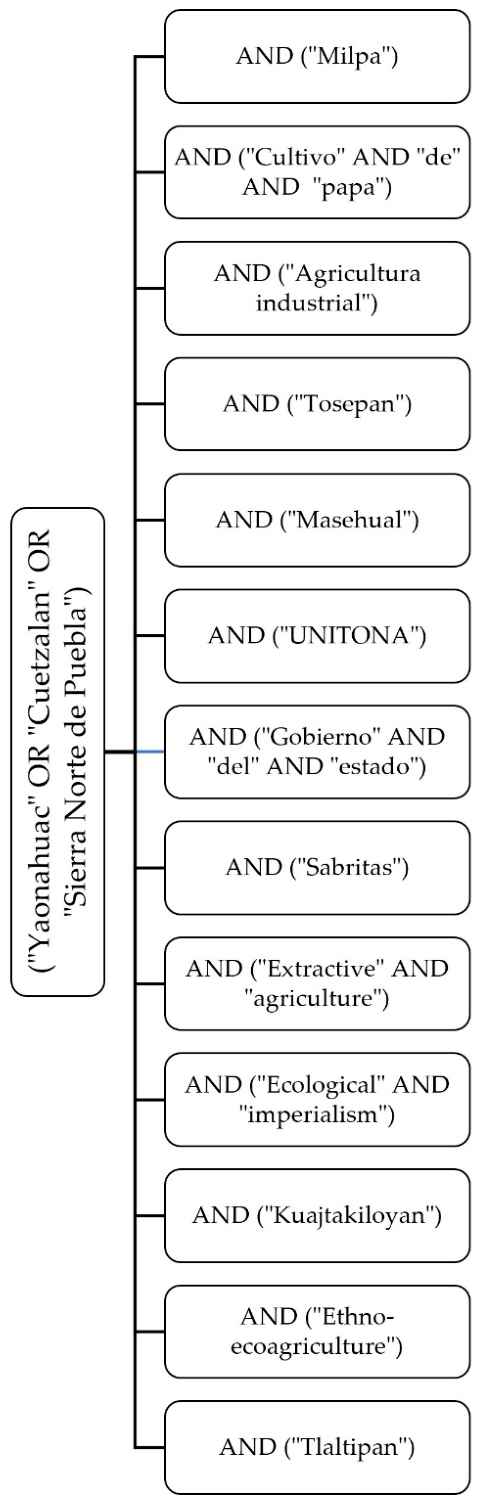
Figure 2.
The search flowchart for the systematic review of databases. Source: Graphics J.C. Carrera (2026).
Figure 2.
The search flowchart for the systematic review of databases. Source: Graphics J.C. Carrera (2026).
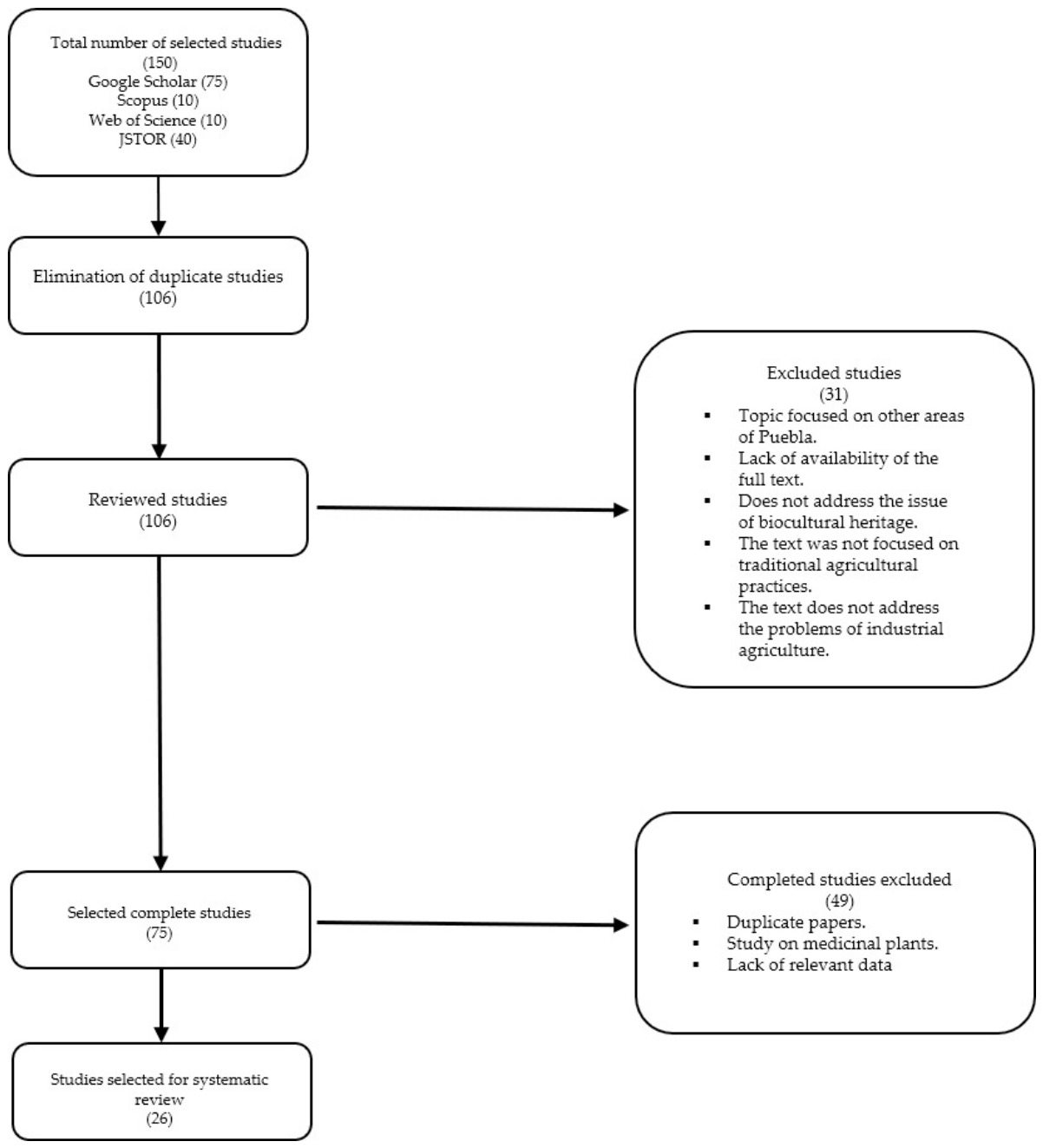
Figure 3.
Location of Yaonáhuac. Source: complementary graphics by A.K. Kurjenoja (2026) based on Municipio de Yaonáhuac. MapCarta. https://mapcarta.com/es/29512176.
Figure 3.
Location of Yaonáhuac. Source: complementary graphics by A.K. Kurjenoja (2026) based on Municipio de Yaonáhuac. MapCarta. https://mapcarta.com/es/29512176.
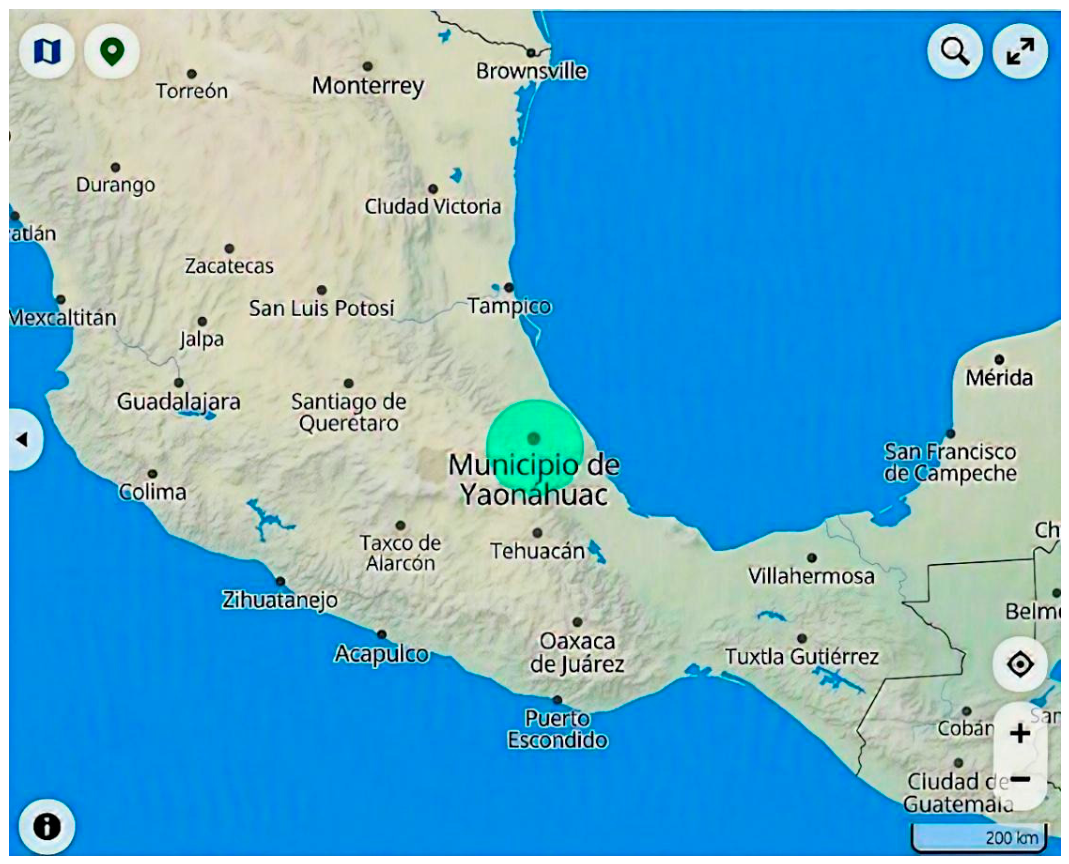
Figure 4.
Yaonáhuac and its surroundings. Source: complementary graphics by A.K. Kurjenoja (2026) based on National Institute of Statistics and Geography, INEGI (Instituto Nacional de Estadística y Geografía). Mapa Digital del México. https://www.inegi.org.mx/app/mapas/.
Figure 4.
Yaonáhuac and its surroundings. Source: complementary graphics by A.K. Kurjenoja (2026) based on National Institute of Statistics and Geography, INEGI (Instituto Nacional de Estadística y Geografía). Mapa Digital del México. https://www.inegi.org.mx/app/mapas/.
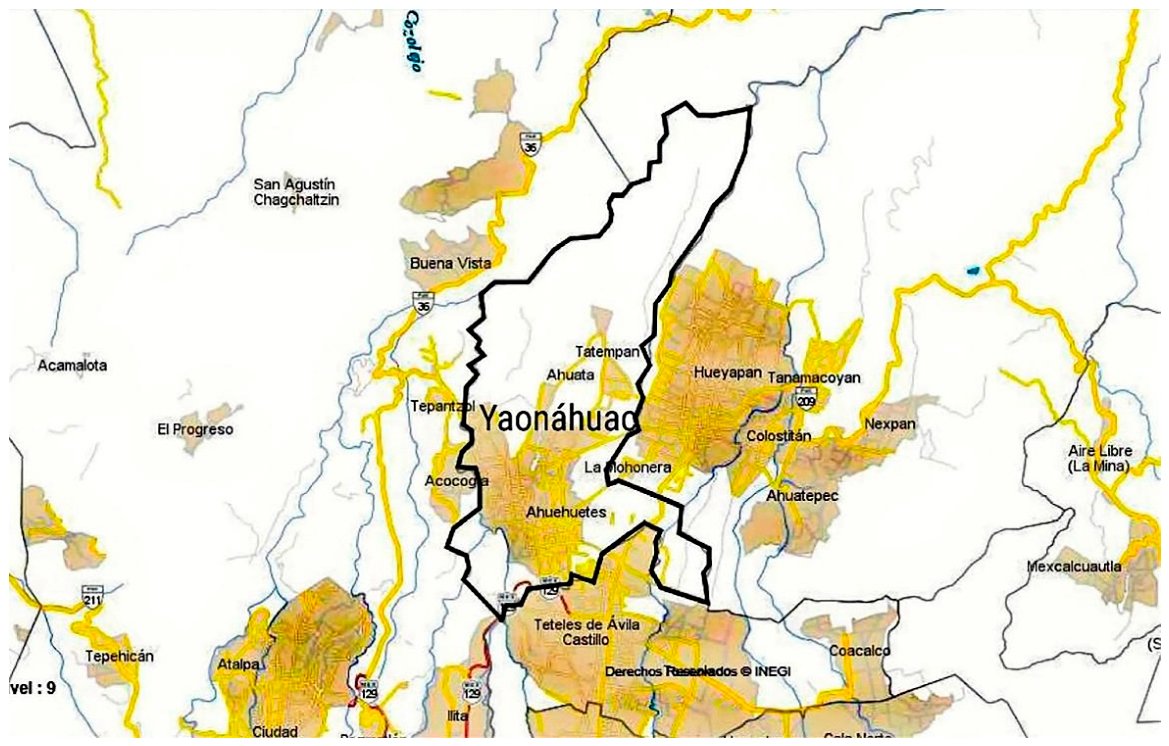
Figure 5.
Hydrographic network, Yaonáhuac region.Source: National Institute of Statistics and Geography, INEGI (Instituto Nacional de Estadística y Geografía). Espacio de datos de México. https://www.inegi.org.mx/app/areasgeograficas/?ag=21.
Figure 5.
Hydrographic network, Yaonáhuac region.Source: National Institute of Statistics and Geography, INEGI (Instituto Nacional de Estadística y Geografía). Espacio de datos de México. https://www.inegi.org.mx/app/areasgeograficas/?ag=21.
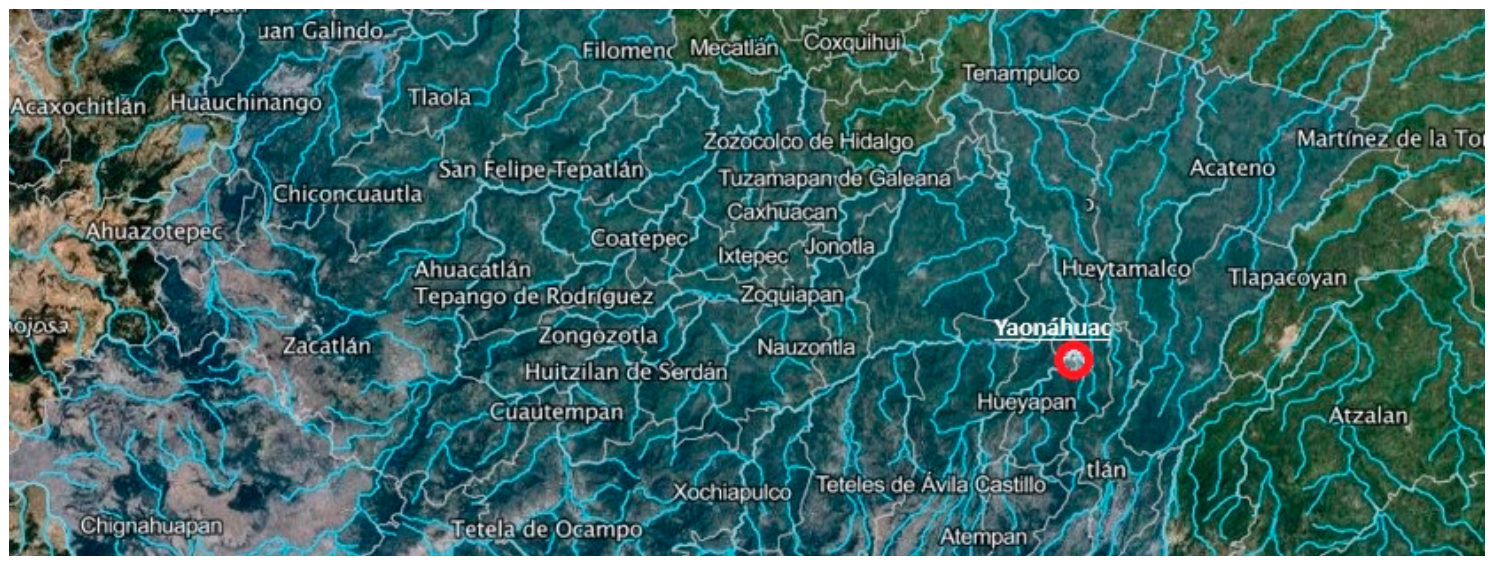
Figure 6.
Masehual’s meeting space in Cuetzalan (on the left). Bamboo cultivations of Tosepan in Cuetzalan (on the right). Photo: A.K. Kurjenoja (2025).
Figure 6.
Masehual’s meeting space in Cuetzalan (on the left). Bamboo cultivations of Tosepan in Cuetzalan (on the right). Photo: A.K. Kurjenoja (2025).
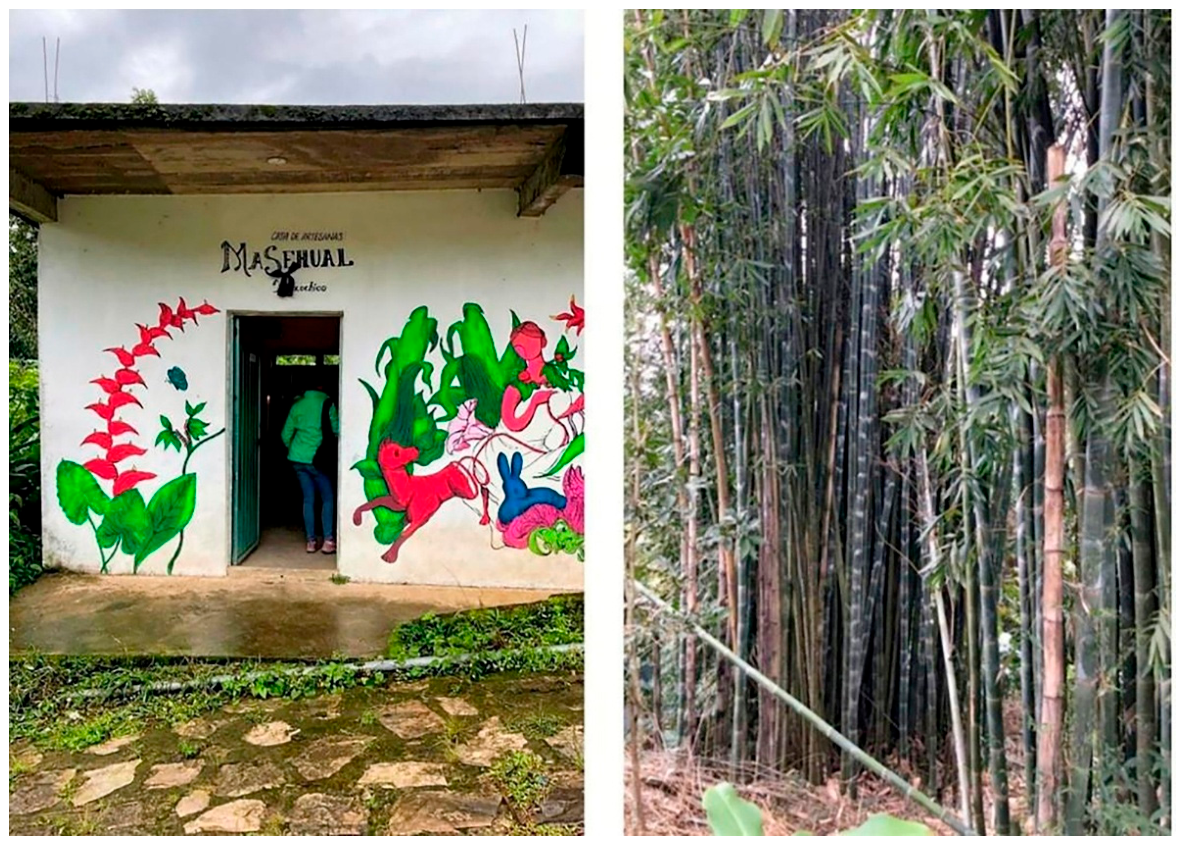
Figure 7.
Location of Tlatlauquitepec, Zacapoaxtla and Cuetzalan in relation to Yaonáhuac. Source: complementary graphics by A.K. Kurjenoja (2026) based on the map of the National Institute of Statistics and Geography, INEGI (Instituto Nacional de Estadística y Geografía). Espacio de datos de México. https://www.inegi.org.mx/app/areasgeograficas/?ag=21.
Figure 7.
Location of Tlatlauquitepec, Zacapoaxtla and Cuetzalan in relation to Yaonáhuac. Source: complementary graphics by A.K. Kurjenoja (2026) based on the map of the National Institute of Statistics and Geography, INEGI (Instituto Nacional de Estadística y Geografía). Espacio de datos de México. https://www.inegi.org.mx/app/areasgeograficas/?ag=21.
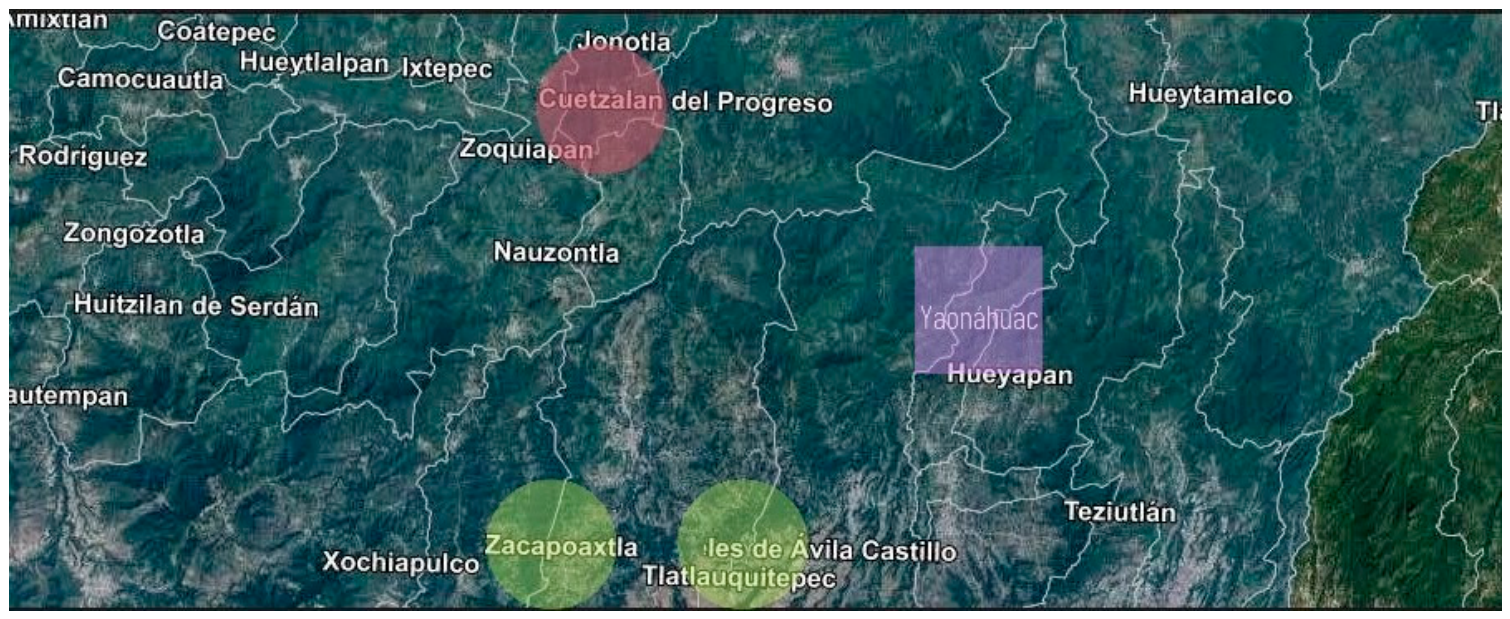
Figure 8.
Potato field in Tlatlauquitepec, prepared for sowing (above). Rented smallholdings for potato cultivation in Tlatempa, Yaonáhuac (below, left). The same lot after the cycle of potato cultivation had ended (below right). Photo: A.K. Kurjenoja (2025).
Figure 8.
Potato field in Tlatlauquitepec, prepared for sowing (above). Rented smallholdings for potato cultivation in Tlatempa, Yaonáhuac (below, left). The same lot after the cycle of potato cultivation had ended (below right). Photo: A.K. Kurjenoja (2025).
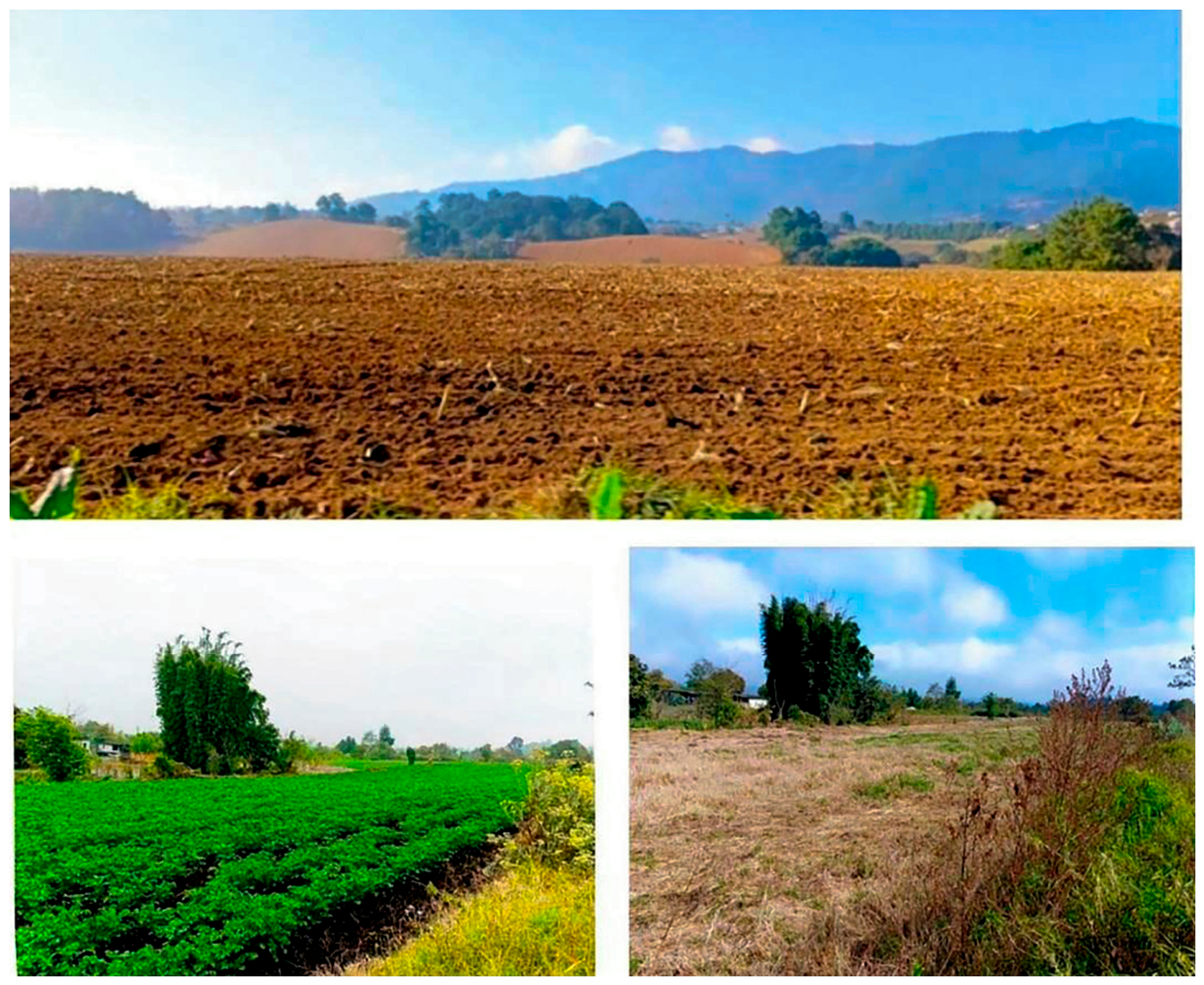
Figure 9.
Above, on the right: Tlatempa smallholding in Yaonáhuac, after harvesting the ‘milpa’. Above, on the left: Acahual lot in Tatempa, Yaonáhuac. Below: typical Kuojtakiloyan agroforestry in Cuetzalan, with corn, beans and squash, combined with banana plants (Musa paradisiaca L.). Photo: A.K. Kurjenoja (2025, 2026).
Figure 9.
Above, on the right: Tlatempa smallholding in Yaonáhuac, after harvesting the ‘milpa’. Above, on the left: Acahual lot in Tatempa, Yaonáhuac. Below: typical Kuojtakiloyan agroforestry in Cuetzalan, with corn, beans and squash, combined with banana plants (Musa paradisiaca L.). Photo: A.K. Kurjenoja (2025, 2026).
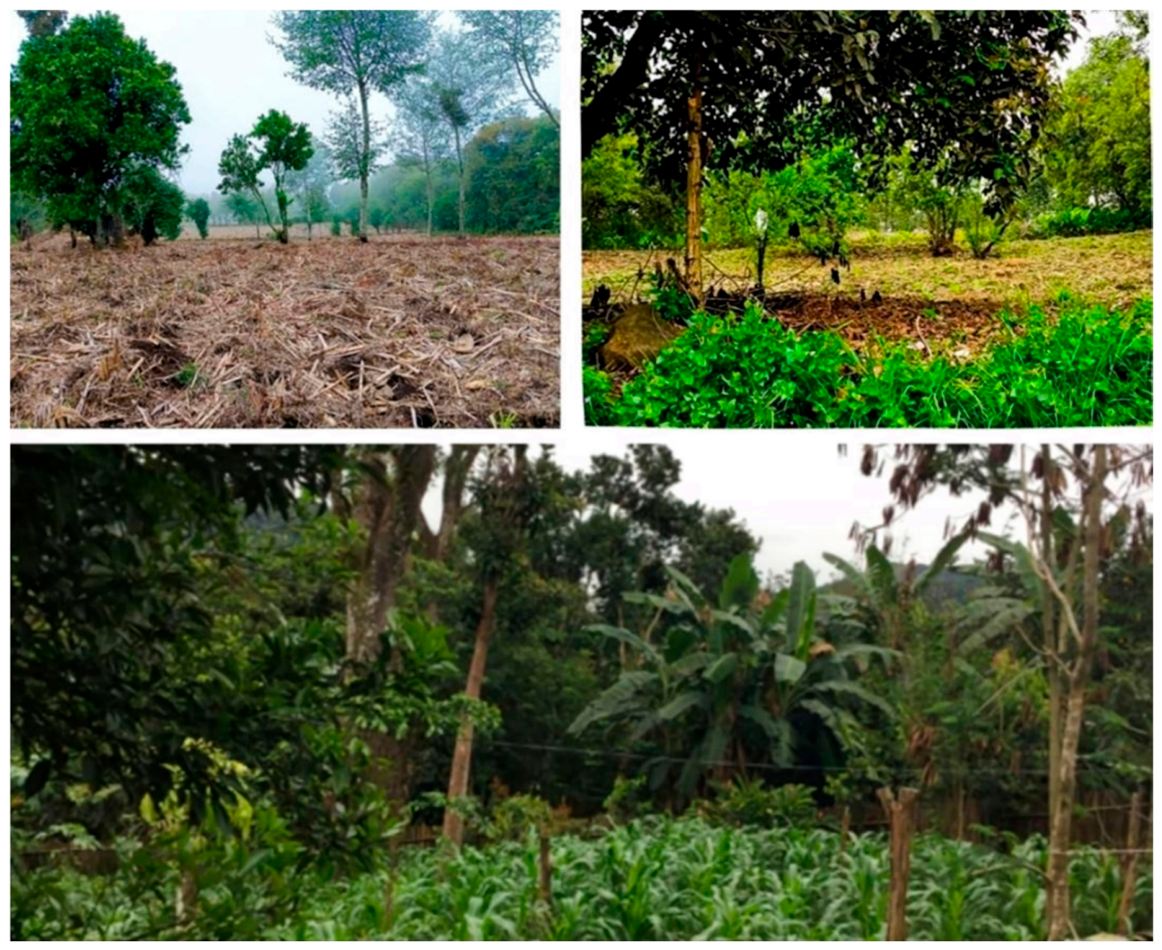
Figure 10.
The principle of Tlaltipac — the unity in diversity. Source: Graphics by J.C. Carrera (2026).
Figure 10.
The principle of Tlaltipac — the unity in diversity. Source: Graphics by J.C. Carrera (2026).
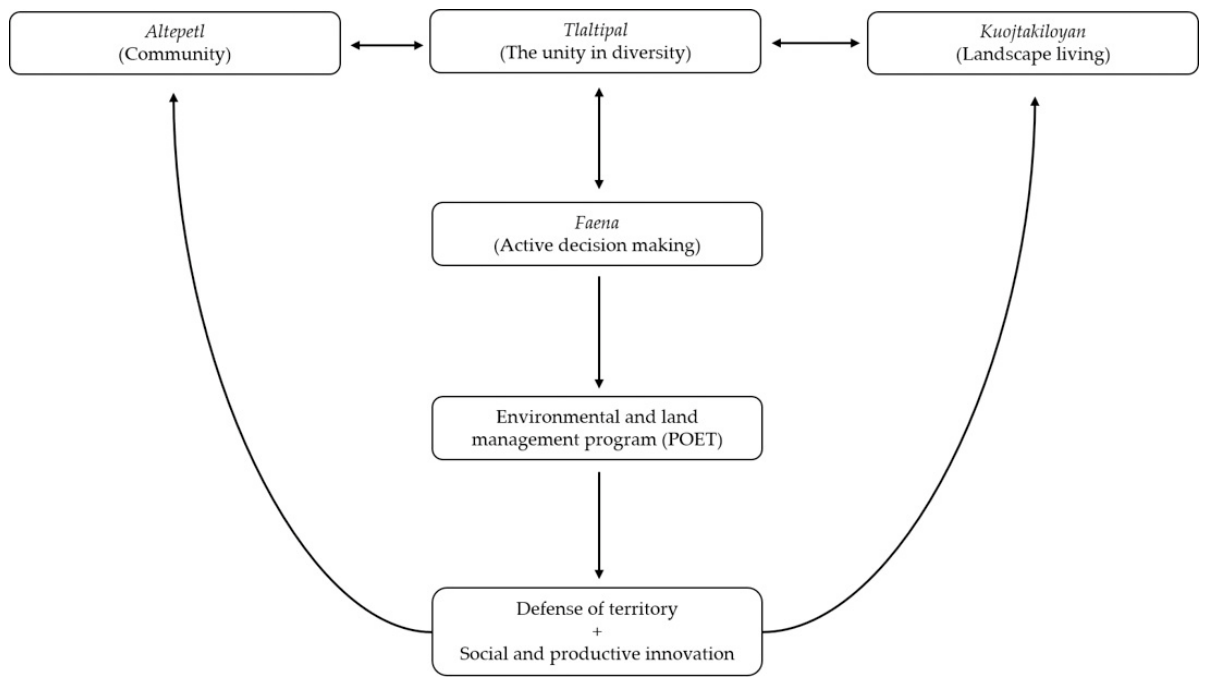
Table 2.
Comparison between extractive agricultural practices and biocultural approach to agriculture according to Victor. M. Toledo (2025) [29].
Table 2.
Comparison between extractive agricultural practices and biocultural approach to agriculture according to Victor. M. Toledo (2025) [29].
| Extractive agriculture | Biocultural approach |
| Views land as a factor of production of financial return. | Views the land as a living territory, a source and the home of community identity. |
| Introduces intensive monocultures that deplete nutrients and require agrochemicals. | Promotes polyculture (such as the ‘milpa’) which regenerates the soil and protects native, |
| Makes intensive use of water through private or federal concessions. | Manages water collectively and human and subsistence consumption. |
Table 3.
Differences observed between the communities of Yaonáhuac and Cuetzalan, in terms of bottom-up organization and the formation of civil organizations and cooperatives. Source: Graphics by J.C. Carrera (2026).
Table 3.
Differences observed between the communities of Yaonáhuac and Cuetzalan, in terms of bottom-up organization and the formation of civil organizations and cooperatives. Source: Graphics by J.C. Carrera (2026).
| Yaonáhuac | Cuetzalan | |
|
Weak, undervalued. | Strong attachment to indigenous roots. |
|
Little awareness of the community’s traditional knowledge systems. | High importance and awareness of the community’s traditional knowledge systems. |
|
There is no awareness of the impact of monocultures, overexploitation of the soil, and industrial agriculture. | Design of strategies for sustainable land use (POET). |
|
Degradation of ecosystem services for regulation and support. | The strategies implemented by the community have allowed them to resist external extractive pressures. |
|
There is no active participation in the development of public policies that help to counteract the impact of the overexploitation of the environment. | Constant struggle to intervene in public policies to reduce external extractive pressures (POET, COTIC). |
|
There is a lack of awareness of the importance of cooperatives for the proper management of the environment and the importance of agroforestry knowledge. | High awareness of the importance of the intervention of cooperatives such as Tosepan, Masehual and UNITONA, which use traditional knowledge for the sustainable use of the environment. |
|
No community territorial planning program has been developed, nor has a community committee been established to help develop it. | Community cooperatives are part of a committee that allows the development of the Environmental and Land Maintenance Program. |
|
There is a high rate of loss of traditional agricultural techniques. | Courses and workshops have been created around cooperatives to promote traditional agroforestry techniques such as acahual and Kuojtakiloyan. |
Table 4.
Poverty rates in Yaonáhuac in 2010 and 2020 [18].
Table 4.
Poverty rates in Yaonáhuac in 2010 and 2020 [18].
| Poverty in 2010 | Poverty in 2020 | |
| Moderate poverty | 39.2% | 52% |
| Extreme poverty | 31.1% | 12% |
| Total poverty rate | 70.3% | 64% |
Disclaimer/Publisher’s Note: The statements, opinions and data contained in all publications are solely those of the individual author(s) and contributor(s) and not of MDPI and/or the editor(s). MDPI and/or the editor(s) disclaim responsibility for any injury to people or property resulting from any ideas, methods, instructions or products referred to in the content. |
© 2026 by the authors. Licensee MDPI, Basel, Switzerland. This article is an open access article distributed under the terms and conditions of the Creative Commons Attribution (CC BY) license.
Copyright: This open access article is published under a Creative Commons CC BY 4.0 license, which permit the free download, distribution, and reuse, provided that the author and preprint are cited in any reuse.