

Submitted:
31 August 2026
Posted:
01 September 2026
You are already at the latest version
Abstract
Background: Pediatric bacterial meningitis remains an important cause of death and long-term neurological disability despite advances in vaccination, antimicrobial therapy, and supportive care. Because host inflammation contributes substantially to secondary neuronal injury, adjunctive cor-ticosteroids have been investigated as a strategy to reduce inflammation-mediated complications. This narrative review aims to critically evaluate the current evidence on corticosteroid therapy in pediatric meningitis, with particular emphasis on acute bacterial meningitis, major clinical and neurological outcomes, treatment timing, pathogen-specific effects, and the impact of changing post-vaccination epidemiology. Methods: A structured search of PubMed/MEDLINE, Scopus, and Web of Science was conducted for relevant publications available up to June 2026. Randomized controlled trials, observational studies, systematic reviews, meta-analyses, and international guide-lines involving patients aged 0–18 years were considered. Evidence was synthesized narratively, focusing on mortality, hearing loss, neurological sequelae, long-term outcomes, safety, causative pathogen, and timing of corticosteroid administration. Results: Adjunctive dexamethasone does not consistently reduce mortality, hospital stay, intensive care utilization, or healthcare costs. Its most reproducible benefit is a reduction in sensorineural hearing loss, particularly in Haemophilus influenzae type b meningitis. Benefits in pneumococcal meningitis are less consistent, while evidence supporting routine use in meningococcal disease remains limited. Efficacy is greatest when dexa-methasone is administered before or with the first antibiotic dose and appears less pronounced in the post-vaccination era. In tuberculous meningitis, corticosteroids improve survival, whereas rou-tine use is not supported in viral or fungal meningitis. Conclusion: Current evidence supports a se-lective, pathogen- and context-specific approach to corticosteroid therapy in pediatric meningitis. Dexamethasone is best regarded as a neuroprotective adjunct, with hearing preservation repre-senting its most consistent clinical benefit.
Keywords:
bacterial meningitis
; pediatric meningitis
; corticosteroids
; dexamethasone
; adjunctive therapy
; neurological sequelae
; sensorineural hearing loss
; mortality
; neuroprotection
1. Introduction
Meningitis is an inflammatory disorder of the meninges, the membranes that surround and protect the central nervous system (CNS). It comprises a heterogeneous group of infectious and non-infectious conditions, ranging from self-limiting illnesses to rapidly progressive and potentially life-threatening diseases. Among these, acute bacterial meningitis represents the most severe form because of its substantial mortality and its high risk of long-term neurological sequelae, particularly in children [1].
The pathophysiology of bacterial meningitis is driven not only by microbial invasion of the CNS but also, to a large extent, by the resulting host inflammatory response. After reaching the subarachnoid space, pathogens proliferate within the cerebrospinal fluid (CSF), an environment characterized by relatively limited immune surveillance and reduced host defense mechanisms [2,3]. Rapid microbial replication subsequently triggers a vigorous inflammatory cascade that plays a central role in the development of neurological injury.
Meningeal inflammation induces the release of pro-inflammatory cytokines and chemokines, including interleukin (IL)-1β, tumor necrosis factor-alpha (TNF-α), and several CXC chemokines, such as CXCL1, CXCL2, and CXCL5, which promote the recruitment of leukocytes, predominantly neutrophils, into the CSF [2,3,4,5,6,7,8,9]. Activated inflammatory cells further amplify tissue injury through the production of reactive oxygen species, proteolytic enzymes, and additional inflammatory mediators. These processes increase blood–brain barrier permeability, facilitating the influx of inflammatory cells and plasma proteins into the subarachnoid space [2,3], while also contributing to mitochondrial dysfunction, neuronal apoptosis, necrosis, and impaired neuronal function [8] (Figure 1).
This intense inflammatory response promotes the development of vasogenic and cytotoxic cerebral edema, increased intracranial pressure, impaired cerebral autoregulation, and reduced cerebral perfusion [6,7]. Consequently, secondary inflammation is a major determinant of disease severity and may contribute substantially to neurological injury beyond the direct effects of the infecting pathogen. Excessive immune activation can result in cerebral vasculitis, ischemia, neuronal death, and permanent neurological sequelae, including sensorineural hearing loss, cognitive impairment, epilepsy, and motor deficits [2,9,10].
The recognition that inflammation-mediated injury is a major contributor to morbidity in bacterial meningitis has provided the biological rationale for adjunctive anti-inflammatory therapies. Corticosteroids, particularly dexamethasone, have therefore been extensively investigated as adjuncts to antimicrobial treatment with the aim of attenuating the early inflammatory response and limiting secondary neurological damage. However, their clinical benefit in children remains heterogeneous and appears to depend on several factors, including the causative pathogen, timing of administration, disease severity, and epidemiological setting.
Accordingly, this narrative review aims to critically summarize and evaluate the current evidence on adjunctive corticosteroid therapy in pediatric meningitis, with particular emphasis on acute bacterial meningitis. Specifically, it examines the effects of corticosteroids on mortality, sensorineural hearing loss, neurological sequelae, and long-term functional outcomes; evaluates the influence of treatment timing, causative pathogen, and changing epidemiology on therapeutic efficacy; and discusses current indications, controversies, and areas of uncertainty. The role of corticosteroids in tuberculous, viral, and fungal meningitis is also considered to provide a broader perspective on their use across different meningitis etiologies. This narrative review adds to the available literature by providing an updated, pediatric-focused synthesis of adjunctive corticosteroid therapy across the spectrum of meningitis, while placing historical evidence in the context of contemporary clinical practice. Rather than considering corticosteroid efficacy as a uniform treatment effect, the review emphasizes its dependence on the causative pathogen, timing of administration, disease severity, and epidemiological setting. Particular attention is given to the shift in pediatric bacterial meningitis epidemiology following widespread Haemophilus influenzae type b (Hib) and pneumococcal vaccination, which has reduced the applicability of some of the benefits observed in earlier trials. The review also distinguishes the effects of corticosteroids on different clinically relevant outcomes, highlighting that their most consistent benefit is the prevention of sensorineural hearing loss—especially in Hib meningitis—rather than a reduction in mortality, hospitalization, or broader long-term neurodevelopmental impairment. In addition, it integrates evidence on bacterial, tuberculous, viral, and fungal meningitis, thereby clarifying where corticosteroid therapy is supported, uncertain, or potentially inappropriate. Finally, by synthesizing current controversies and identifying persistent gaps—including the need for better patient selection, biomarkers of inflammatory severity, and standardized long-term neurodevelopmental outcomes—the review provides a clinically oriented framework for a more selective and individualized use of adjunctive corticosteroids in children.
2. Methods
This narrative review aimed to summarize and critically evaluate the available evidence on adjunctive corticosteroid therapy in pediatric meningitis, with particular emphasis on acute bacterial meningitis and its effects on mortality, neurological sequelae, and hearing outcomes. The review also examined the role of corticosteroids in tuberculous, viral, and fungal meningitis, for which indications, therapeutic benefits, and potential risks remain less clearly established.
A structured literature search was conducted in PubMed/MEDLINE, Scopus, and Web of Science to identify relevant publications available up to June 2026. The electronic search was complemented by manual screening of the reference lists of key reviews, systematic reviews and meta-analyses, international clinical practice guidelines, and landmark studies to identify additional pertinent publications.
The search strategy combined Medical Subject Headings (MeSH), where applicable, with relevant free-text terms. Search terms included “meningitis,” “bacterial meningitis,” “pediatric meningitis,” “children,” “corticosteroids,” “dexamethasone,” “methylprednisolone,” “prednisolone,” “adjunctive therapy,” “neurological sequelae,” “hearing loss,” “tuberculous meningitis,” and “outcomes.” Terms were combined using the Boolean operators AND and OR to capture literature addressing both corticosteroid exposure and clinically relevant meningitis outcomes.
Eligible publications included randomized controlled trials, prospective and retrospective cohort studies, case-control studies, systematic reviews, meta-analyses, and international clinical practice guidelines evaluating corticosteroid therapy in children and adolescents aged 0–18 years with meningitis. Studies addressing bacterial and non-bacterial etiologies were considered when they reported data on mortality, neurological complications, hearing impairment, other clinical outcomes, inflammatory markers, or treatment safety. Studies focusing exclusively on adult populations and publications that did not report outcome-related information relevant to corticosteroid therapy were excluded.
For each eligible study, relevant information was extracted on study design and population characteristics, patient age, meningitis etiology, corticosteroid agent, dosage, duration of treatment, and timing of administration in relation to antimicrobial therapy. Outcomes of interest included mortality, sensorineural hearing loss, other neurological sequelae, length of hospital stay, intensive care unit admission or utilization, and treatment-related adverse events.
The evidence was subsequently organized into predefined thematic domains: (i) the pathophysiological rationale for corticosteroid use; (ii) corticosteroid agents, regimens, and timing of administration; (iii) efficacy in pediatric bacterial meningitis; (iv) pathogen-specific effects; (v) the role of corticosteroids in non-bacterial meningitis; (vi) safety and adverse effects; (vii) clinical and long-term outcomes; and (viii) unresolved controversies and priorities for future research.
Given the substantial heterogeneity among the available studies in terms of patient populations, causative pathogens, corticosteroid regimens, timing of treatment, healthcare settings, and outcome definitions, the findings were synthesized narratively rather than quantitatively. The evidence was interpreted with particular attention to the consistency of findings across study designs, pathogen-specific differences, treatment timing, and changes in the epidemiology of pediatric meningitis. This approach was intended to provide an updated clinically oriented overview of the evidence and to identify persistent uncertainties and knowledge gaps regarding the optimal use of adjunctive corticosteroids in pediatric meningitis.
3. Meningitis in Children
3.1. Epidemiology
Meningitis remains a major global health concern and continues to cause substantial morbidity, mortality, and long-term disability, particularly among children. Recent estimates indicate that approximately 2.5 million cases of meningitis occur worldwide each year, including nearly 1.6 million cases of bacterial meningitis and approximately 240,000 associated deaths [11,12].
The global burden of meningitis is unevenly distributed. The highest incidence is observed in low- and middle-income countries, particularly within the African “meningitis belt,” where recurrent outbreaks of meningococcal disease continue to occur [11,13]. By contrast, the incidence of bacterial meningitis has declined substantially in many high-income countries following the widespread introduction of conjugate vaccines targeting Hib, Streptococcus pneumoniae, and Neisseria meningitidis [14,15,16,17]. These vaccination programs have not only reduced overall disease incidence but have also altered the relative distribution of causative pathogens, with important implications for the contemporary role of adjunctive therapies.
Age is a major determinant of meningitis risk. Infants, particularly those younger than two months, experience the highest incidence because of immunological immaturity and increased susceptibility to invasive bacterial infection [18]. Although routine immunization has markedly reduced the burden of vaccine-preventable meningitis in older infants and children, bacterial meningitis continues to affect vulnerable populations, including very young infants, immunocompromised patients, incompletely vaccinated children, and those with limited access to timely healthcare.
Despite major advances in vaccination, antimicrobial therapy, and supportive care, bacterial meningitis remains associated with substantial mortality and neurological morbidity. Case-fatality rates may exceed 20–30% in some settings, and a considerable proportion of survivors develop permanent sequelae such as sensorineural hearing loss, epilepsy, cognitive impairment, and motor deficits [2,19,20,21,22]. Consequently, the burden of pediatric bacterial meningitis is determined not only by acute mortality but also by persistent neurological and neurodevelopmental disability. Prevention of inflammation-mediated neurological injury therefore remains an important therapeutic objective.
3.2. Etiology, Prognostic Factors, and Initial Management
The etiology of meningitis varies according to age, immune status, vaccination history, and clinical context. Infectious causes predominate and include bacterial, viral, fungal, and parasitic pathogens, whereas non-infectious meningitis may occur in association with autoimmune diseases, malignancies, or drug-induced inflammatory reactions [1,23].
Among infectious etiologies, bacterial meningitis is associated with the greatest risk of rapid clinical deterioration, death, and permanent neurological sequelae. The distribution of causative organisms is strongly age-dependent. In neonates and young infants, Group B Streptococcus (Streptococcus agalactiae), Escherichia coli, and Listeria monocytogenes are among the principal bacterial pathogens, reflecting perinatal exposure and immature host defenses [24,25]. Although intrapartum antibiotic prophylaxis has substantially reduced early-onset Group B streptococcal disease, its effect on late-onset infection has been limited [26,27].
Beyond the neonatal period, Streptococcus pneumoniae and Neisseria meningitidis become the predominant causes of bacterial meningitis [20,28,29], whereas Hib remains an important pathogen in settings where vaccination coverage is incomplete [2]. In immunocompromised patients, Listeria monocytogenes and Gram-negative bacilli account for a greater proportion of cases [1,30] (Table 1).
Viral meningitis is more common overall and generally follows a milder, self-limiting course; however, bacterial meningitis remains responsible for the majority of severe neurological complications and is therefore the principal focus of adjunctive corticosteroid therapy [1,31,32].
Most cases of bacterial meningitis arise following hematogenous dissemination of microorganisms to the central nervous system, although direct extension from contiguous infectious foci, including sinusitis or mastoiditis, may also occur [2,4].
The clinical presentation varies considerably with age. In older children, meningitis may present with the classic combination of fever, neck stiffness, headache, and altered mental status. In infants and young children, however, manifestations are often nonspecific and may include irritability, poor feeding, lethargy, vomiting, or seizures, potentially delaying recognition and treatment [1].
Early identification of children at increased risk of adverse outcomes is essential. Clinical features associated with severe disease include altered mental status, focal neurological deficits, seizures, and hemodynamic instability [33,34]. In pediatric cohorts, impaired consciousness, age younger than 12 months, and pneumococcal etiology have been associated with an increased risk of neurological complications and long-term sequelae [2,20,35].
Several laboratory parameters may also provide prognostic information. A low CSF leukocyte count, particularly below 1000 cells/μL, hypoglycorrhachia, elevated CSF protein concentrations, and positive blood cultures have been associated with poorer outcomes [1,36]. CSF lactate and serum procalcitonin may additionally support the distinction between bacterial and viral meningitis and facilitate early diagnostic decision-making [34,37].
Acute bacterial meningitis is a medical emergency requiring prompt hospitalization and immediate initiation of empirical antimicrobial therapy. Lumbar puncture should be performed as early as clinically feasible to establish the diagnosis and identify the causative pathogen; however, antimicrobial treatment should not be delayed when neuroimaging or CSF examination cannot be performed immediately [1,12,36]. Delayed initiation of effective antibiotics is associated with increased mortality and a greater risk of permanent neurological sequelae [1,33,36].
In children, empirical antimicrobial therapy generally includes a third-generation cephalosporin, such as ceftriaxone or cefotaxime, often in combination with vancomycin to provide adequate coverage against resistant Streptococcus pneumoniae [2,38,39]. In neonates and young infants, ampicillin is additionally required to ensure coverage against Listeria monocytogenes [39,40,41]. Once microbiological identification and antimicrobial susceptibility results become available, therapy should be narrowed and tailored accordingly.
Importantly, effective antimicrobial treatment does not completely prevent neurological injury. Bacterial killing and lysis can amplify the host inflammatory response within the subarachnoid space, contributing to blood–brain barrier disruption, cerebral edema, vascular injury, and neuronal damage. This inflammation-mediated component of disease provides the biological rationale for adjunctive corticosteroid therapy, which aims to attenuate secondary neurological injury without compromising antimicrobial efficacy.
4. Adjunctive Corticosteroid Therapy in Pediatric Meningitis
Adjunctive corticosteroid therapy has been extensively investigated as a means of attenuating the excessive host inflammatory response that contributes substantially to neurological injury in meningitis. In bacterial disease, invasion of the subarachnoid space triggers the release of pro-inflammatory cytokines and chemokines, disruption of blood–brain barrier integrity, cerebral edema, increased intracranial pressure, and secondary neuronal injury [2,3,7,8]. Importantly, this inflammatory response may be further amplified after initiation of antimicrobial therapy, when bacterial lysis promotes the release of cell wall components and other pro-inflammatory mediators [1,3,42].
Because a considerable proportion of neurological damage in bacterial meningitis results from inflammation-mediated injury rather than direct microbial invasion alone, corticosteroids have been proposed as adjuncts to antimicrobial therapy to reduce secondary CNS damage. Dexamethasone has been the most extensively studied agent, with the therapeutic rationale centered primarily on neuroprotection rather than on direct antimicrobial effects.
The clinical benefit of adjunctive corticosteroids, however, is not uniform and appears to vary according to patient age, causative pathogen, timing of administration, disease severity, and healthcare setting. In high-income countries, corticosteroid therapy has been associated with a reduction in selected neurological complications [43], particularly sensorineural hearing loss, which is among the most important long-term sequelae of childhood bacterial meningitis. The strongest evidence of benefit has been reported in Hib meningitis, in which adjunctive dexamethasone reduces the risk of hearing impairment in children [42]. In pneumococcal meningitis, corticosteroids may also reduce neurological morbidity, although evidence for a mortality benefit in pediatric populations remains inconsistent [2,36,42].
By contrast, studies conducted in low- and middle-income countries have generally shown less consistent benefit. Randomized trials in resource-limited settings have failed to demonstrate clear reductions in mortality or neurological sequelae [35,42,44]. These differences may reflect several factors, including delayed presentation, variations in pathogen distribution, greater disease severity at admission, malnutrition, HIV co-infection, and limited access to intensive care and supportive resources. Thus, the effectiveness of corticosteroid therapy appears to depend not only on biological mechanisms but also on the epidemiological and healthcare context in which treatment is delivered.
The role of corticosteroids differs substantially in non-bacterial forms of meningitis. In tuberculous meningitis, adjunctive dexamethasone or prednisolone is recommended because corticosteroid therapy has been associated with improved survival, particularly in patients with more advanced disease, although its effect on long-term neurological disability is less pronounced [11,45,46,47,48].
In contrast, routine adjunctive corticosteroid therapy is not recommended for viral or fungal meningitis. Evidence supporting benefit in these conditions is limited and derives predominantly from adult populations. In viral meningitis, a clinically meaningful benefit has not been established [11,49], whereas in cryptococcal meningitis adjunctive dexamethasone has been associated with increased adverse events and poorer outcomes [50]. Accordingly, the role of corticosteroids in meningitis should be considered etiology-specific rather than universal, with treatment decisions guided by the causative pathogen, timing of administration, and available evidence (Table 2).
5. Corticosteroids Used in Meningitis
Among the corticosteroids evaluated for meningitis, dexamethasone remains the preferred agent and is recommended by major international guidelines for acute bacterial meningitis [12,33]. Its use is supported by its potent anti-inflammatory activity, relatively long biological half-life, and favorable penetration into inflamed meningeal tissues [36,42]. Experimental and clinical evidence indicates that dexamethasone suppresses the production of pro-inflammatory cytokines, reduces leukocyte migration into the cerebrospinal fluid, and attenuates blood–brain barrier disruption, thereby limiting cerebral edema and secondary neuronal injury [1,3].
In children, the commonly recommended regimen is intravenous dexamethasone at a dose of 0.15 mg/kg every 6 hours for 2–4 days, administered immediately before or concomitantly with the first dose of antibiotics [1,33,36]. The timing of administration is a critical determinant of efficacy because the inflammatory response is rapidly amplified after antibiotic-induced bacterial lysis. Accordingly, administration after antimicrobial therapy has already been initiated is generally associated with reduced benefit [36,42].
When dexamethasone is unavailable or cannot be administered, alternative corticosteroids may be considered. According to the 2025 WHO guidelines, hydrocortisone or methylprednisolone may be used at equivalent glucocorticoid doses [12]. Hydrocortisone and prednisolone have also been evaluated historically in bacterial meningitis and remain relevant in the treatment of tuberculous meningitis, in which more prolonged corticosteroid courses are commonly used [45]. Methylprednisolone has been proposed as an alternative anti-inflammatory agent in severe CNS infections; however, evidence supporting its routine use in community-acquired bacterial meningitis remains limited [12]. By contrast, fludrocortisone has no established role in the treatment of pediatric meningitis.
The decision to continue adjunctive corticosteroid therapy should also take the causative pathogen into account. The strongest evidence of benefit has been reported for Hib and, to a lesser extent, Streptococcus pneumoniae, whereas evidence supporting routine use in meningococcal meningitis is less consistent [36,42]. In accordance with the 2024 NICE guidelines, dexamethasone should be continued when Hib or Streptococcus pneumoniae is identified and reconsidered or discontinued when another causative organism is confirmed [33]. Particular caution is warranted in Listeria monocytogenes meningitis, for which available evidence does not demonstrate a clear benefit and has raised concern about potentially unfavorable outcomes; dexamethasone is therefore generally discontinued once the diagnosis is established [36,51].
Overall, dexamethasone remains the cornerstone of adjunctive anti-inflammatory therapy in acute bacterial meningitis, but its use should not be considered uniform across all patients. Optimal management requires early administration, appropriate agent selection, and reassessment once the causative pathogen is identified, within a pathogen-specific and patient-centered treatment strategy (Table 3).
6. Clinical Outcomes of Adjunctive Corticosteroid Therapy in Pediatric Bacterial Meningitis
6.1. Mortality and Acute Clinical Outcomes
The effect of adjunctive corticosteroid therapy on mortality and other short-term outcomes in pediatric bacterial meningitis remains limited and inconsistent. Although corticosteroids effectively attenuate the inflammatory response within the central nervous system, current evidence does not demonstrate a reproducible improvement in survival, length of hospitalization, intensive care utilization, or other acute clinical outcomes.
Observational studies have generally failed to identify an independent mortality benefit after adjustment for disease severity and other confounding factors. In a multicenter cohort from the United States, adjunctive corticosteroid therapy was not associated with lower in-hospital mortality or shorter hospitalization; the overall case-fatality rate was 4.2%, and median hospital stay was 12 days in corticosteroid-treated children compared with 10 days in those who did not receive corticosteroids [52]. Similarly, a nationwide Taiwanese cohort reported higher crude mortality, longer hospital stays, and greater hospitalization costs among children treated with corticosteroids. However, these associations were substantially attenuated after multivariable adjustment, suggesting that the unfavorable crude outcomes primarily reflected confounding by indication, with corticosteroids being more frequently administered to children presenting with more severe disease, rather than a direct harmful effect of treatment [53].
More recently, a nationwide Japanese study evaluating early corticosteroid use between 2014 and 2022 likewise found no significant reduction in mortality, intensive care requirements, or duration of hospitalization after adjustment for baseline clinical characteristics [54]. These findings reinforce the observation that any apparent differences in acute outcomes in non-randomized studies must be interpreted cautiously because treatment allocation is strongly influenced by disease severity and clinical presentation.
The absence of a clear survival benefit is also consistent with evidence from randomized controlled trials, systematic reviews, and meta-analyses. Collectively, these studies have not demonstrated a significant reduction in mortality among children receiving adjunctive dexamethasone compared with standard antimicrobial therapy alone [36,40,42,44,54].
Taken together, current evidence indicates that adjunctive corticosteroids should not be administered with the expectation of improving survival or reducing acute healthcare utilization in pediatric bacterial meningitis. Their principal clinical value appears instead to lie in the prevention of selected inflammation-mediated neurological complications, particularly sensorineural hearing loss in specific patient subgroups, as discussed below (Table 4).
6.2. Neurological Outcomes
Although adjunctive corticosteroids do not appear to improve survival in pediatric bacterial meningitis, their principal therapeutic rationale is to limit inflammation-mediated neurological injury. Antibiotic-induced bacterial lysis releases cell wall components and other pro-inflammatory mediators into the subarachnoid space, amplifying a cascade characterized by cytokine production, blood–brain barrier disruption, cerebral edema, increased intracranial pressure, cerebral vasculitis, ischemic injury, and neuronal apoptosis [1,2,3,42]. Accordingly, dexamethasone has been investigated primarily as a neuroprotective adjunct rather than as an intervention expected to reduce mortality.
The most consistent neurological benefit of adjunctive corticosteroid therapy is the prevention of sensorineural hearing loss. The Cochrane systematic review, which included 25 randomized controlled trials involving adults and children, demonstrated a significant reduction in hearing impairment among children with Hib meningitis treated with adjunctive dexamethasone, without a corresponding reduction in mortality [40,42]. This finding supports hearing preservation as the best-established clinical benefit of corticosteroid therapy in pediatric bacterial meningitis.
Evidence regarding broader neurological outcomes is less consistent. The meta-analysis by Tian et al. confirmed the absence of a significant survival benefit and reported modest and heterogeneous improvements in neurological sequelae [54]. Importantly, much of the observed benefit originated from studies conducted before the widespread introduction of Hib conjugate vaccination, when Hib accounted for a larger proportion of pediatric bacterial meningitis cases.
Although several randomized controlled trials have suggested modest reductions in overall neurological sequelae with dexamethasone, these findings have not been consistently reproduced in more recent observational cohorts, in which Streptococcus pneumoniae has become a more prominent causative pathogen [54,55]. The changing etiological profile of pediatric bacterial meningitis therefore appears to have reduced the overall magnitude of benefit observed in contemporary clinical practice.
Overall, the neuroprotective effect of adjunctive corticosteroids is most clearly established for hearing preservation, particularly in Hib meningitis. Their effect on other neurological outcomes remains less certain and appears to vary according to pathogen, timing of therapy, and study population.
6.3. Long-Term Functional Outcomes
As mortality from pediatric bacterial meningitis has declined with advances in antimicrobial therapy, vaccination, and intensive care, long-term neurological and functional sequelae have become increasingly important determinants of disease burden. Approximately one in five survivors develops at least one permanent neurological disability, emphasizing the substantial contribution of chronic morbidity to the overall impact of the disease [2,15,19,20,21,22,56].
Long-term sequelae encompass a broad range of neurological and neurodevelopmental impairments, including epilepsy, motor deficits, cerebral palsy, cognitive dysfunction, language delay, attention and behavioral disorders, and reduced academic achievement [2,8,9,11,15,19,20,21,22,23]. These complications may persist long after resolution of the acute infection and can substantially affect educational attainment, social functioning, independence, and quality of life.
Several clinical characteristics have been associated with poorer long-term outcomes, including pneumococcal etiology, delayed initiation of antimicrobial therapy, seizures at presentation, altered mental status, increased intracranial pressure, and younger age [35,50]. These factors likely reflect both the severity of the initial inflammatory insult and the extent of secondary neurological injury.
Despite its ability to attenuate acute meningeal inflammation, adjunctive dexamethasone has not been shown to consistently improve broader long-term neurodevelopmental outcomes. Randomized trials have demonstrated a reduction in hearing loss, particularly in children with Hib meningitis, but convincing evidence of benefit for cognitive performance, educational achievement, or overall quality of life remains lacking [54,57].
Interpretation of the available literature is limited by substantial heterogeneity in outcome definitions, differences in the timing and duration of follow-up, and the epidemiological changes associated with widespread Hib vaccination. Many historical trials were conducted in populations and pathogen distributions that differ substantially from those encountered in contemporary practice. Consequently, the long-term neuroprotective effect of adjunctive corticosteroids beyond hearing preservation remains incompletely defined.
Further prospective studies using standardized neurological and neurodevelopmental assessments and sufficiently long follow-up periods are therefore needed to determine whether selected subgroups derive meaningful long-term functional benefit from corticosteroid therapy.
Regardless of adjunctive treatment, children recovering from bacterial meningitis require structured follow-up. International recommendations support post-discharge audiological assessment together with continued neurological and neurodevelopmental surveillance. When deficits are identified, early multidisciplinary rehabilitation, including speech and language therapy, physiotherapy, psychological support, and educational interventions, remains an essential component of comprehensive post-meningitis care [36,42].
6.4. Factors Influencing Treatment Effect
The clinical effect of adjunctive corticosteroid therapy is not uniform and is strongly influenced by the timing of administration, causative pathogen, and epidemiological context. Among these factors, treatment timing appears particularly important. Antibiotic-induced bacterial lysis rapidly releases inflammatory bacterial components into the cerebrospinal fluid and amplifies the host inflammatory response. Because a substantial component of secondary neurological injury occurs during this early phase, dexamethasone is most effective when administered immediately before or concomitantly with the first dose of antibiotics [1,3,36,42]. Administration after antimicrobial therapy has already been initiated is associated with diminished or absent benefit.
The magnitude of benefit also varies substantially according to the causative organism. The strongest evidence supports adjunctive dexamethasone in Hib meningitis, in which randomized controlled trials have consistently demonstrated a reduction in sensorineural hearing loss [36,42,44]. However, widespread implementation of Hib conjugate vaccination has profoundly altered the epidemiology of childhood bacterial meningitis. In many high-income countries, Streptococcus pneumoniae now accounts for a greater proportion of cases, reducing the number of children presenting with the pathogen for which corticosteroid-associated benefit is most clearly established.
In pneumococcal meningitis, the effect of dexamethasone is less consistent. Some studies suggest a reduction in selected neurological complications, but a clear mortality benefit has not been demonstrated in children [44,54,57]. The therapeutic effect may also be reduced in patients presenting late in the disease course. In addition, less favorable outcomes have been reported in some children with cephalosporin-resistant S. pneumoniae, further emphasizing the need for individualized interpretation of potential benefit [58].
Evidence supporting routine adjunctive corticosteroid therapy in meningococcal meningitis remains limited, while no clear benefit has been established in Listeria monocytogenes infection. Accordingly, continuation of corticosteroid treatment should be reassessed once microbiological results become available, with particular attention to the identified pathogen and the evidence supporting benefit in that setting [36,42].
Healthcare context may further modify treatment effect. Differences in time to presentation, nutritional status, comorbidities, pathogen distribution, antimicrobial resistance, and access to intensive supportive care may partly explain the smaller or absent benefits reported in some resource-limited settings.
Taken together, these findings indicate that the effectiveness of adjunctive dexamethasone is context-dependent rather than universal. The greatest benefit is observed when treatment is administered before or with the first antibiotic dose and when meningitis is caused by Hib. The transition toward a post-vaccination epidemiological landscape dominated by other pathogens, particularly S. pneumoniae, likely explains why contemporary observational studies demonstrate smaller treatment effects than historical randomized trials.
6.5. Safety and Clinical Implications
Adjunctive dexamethasone is generally well tolerated in children with bacterial meningitis. Randomized controlled trials and observational studies have not demonstrated a significant increase in serious adverse events compared with antimicrobial therapy alone [42,44,54]. Reported complications, including transient hyperglycemia, gastrointestinal bleeding, electrolyte disturbances, and secondary infections, are uncommon and rarely require discontinuation of therapy [36,40,42]. Nevertheless, clinical monitoring remains appropriate, particularly in critically ill children and in patients with relevant comorbidities.
The overall benefit–risk balance of corticosteroid therapy must be interpreted in the context of contemporary meningitis epidemiology. Much of the evidence supporting dexamethasone derives from randomized trials conducted before the widespread introduction of Hib conjugate vaccination, when Hib represented a major cause of pediatric bacterial meningitis. In current practice, particularly in high-income settings where S. pneumoniae accounts for a larger proportion of cases, the average clinical benefit appears smaller and less predictable.
These epidemiological changes support a selective rather than universal approach to corticosteroid therapy. Dexamethasone is most likely to provide benefit when administered immediately before or concomitantly with the first dose of antibiotics, particularly when Hib remains a plausible causative pathogen. Once microbiological results become available, the decision to continue therapy should be reassessed according to the identified organism and the strength of evidence supporting benefit [36,42,44,54,57].
Importantly, corticosteroids remain an adjunct rather than a substitute for the fundamental components of bacterial meningitis management. Prompt recognition, immediate administration of effective antimicrobial therapy, appropriate supportive and intensive care, and timely management of complications such as increased intracranial pressure remain the principal determinants of outcome.
Overall, current evidence supports an individualized approach in which the decision to initiate and continue dexamethasone is guided by treatment timing, suspected and confirmed etiology, disease severity, and clinical context. Its clearest therapeutic role is the prevention of selected inflammation-mediated neurological complications, particularly sensorineural hearing loss, rather than improvement in survival or global long-term functional recovery (Table 5).
7. Clinical Interpretation and Contemporary Perspectives
Adjunctive corticosteroid therapy in pediatric bacterial meningitis is supported by a strong pathophysiological rationale, but its clinical benefits are selective rather than uniform. Bacterial invasion of the subarachnoid space, followed by antibiotic-induced bacterial lysis, amplifies a host inflammatory response characterized by cytokine release, blood–brain barrier disruption, cerebral edema, intracranial hypertension, vascular injury, and neuronal damage. This inflammatory component provides the biological basis for early anti-inflammatory intervention. Among available corticosteroids, dexamethasone remains the most extensively studied and widely recommended because of its potent anti-inflammatory activity and favorable penetration into inflamed meningeal tissues.
Despite this biological rationale, the clinical benefits of corticosteroids are more limited than might be expected from their anti-inflammatory effects. The most consistent and reproducible benefit is a reduction in sensorineural hearing loss, particularly in children with Hib meningitis when dexamethasone is administered before or concomitantly with the first dose of antibiotics. By contrast, evidence for benefit in pneumococcal meningitis is less consistent, while data supporting routine use in meningococcal disease remain limited. Importantly, available studies have not demonstrated a clear survival advantage in children.
Timing of administration is a major determinant of treatment efficacy. The inflammatory response is rapidly intensified following antibiotic-induced bacterial lysis, and the potential neuroprotective effect of dexamethasone therefore appears greatest when treatment is initiated immediately before or at the same time as antimicrobial therapy. Delayed administration, once the inflammatory cascade is already established, is associated with reduced or absent benefit. This timing dependency reinforces the concept that corticosteroids act primarily by attenuating the early inflammatory burst rather than by modifying the underlying infection itself.
The contemporary relevance of corticosteroid therapy must also be interpreted in light of major changes in the epidemiology of pediatric bacterial meningitis. Much of the evidence supporting dexamethasone originated from studies conducted when Hib was a leading cause of childhood meningitis. Widespread Hib and pneumococcal vaccination has substantially altered pathogen distribution and reduced the proportion of children with infections for which corticosteroid-associated benefit is most clearly established. Consequently, the magnitude of benefit observed in contemporary cohorts is generally smaller than that reported in historical randomized trials.
Geographical and healthcare-related factors further contribute to variability in treatment effect. Studies conducted in low- and middle-income countries have not consistently demonstrated reductions in mortality or neurological sequelae. Differences in timing of presentation, disease severity, pathogen distribution, nutritional status, comorbidities, and access to intensive supportive care may partly explain these discrepancies. These observations suggest that the efficacy of corticosteroids depends not only on the biological characteristics of the infection but also on the clinical and healthcare context in which treatment is delivered.
Another important consideration is the distinction between preventing specific neurological complications and improving overall disease outcomes. Adjunctive corticosteroids have not been consistently associated with reductions in intensive care requirements, duration of hospitalization, or overall disease severity. Moreover, although dexamethasone may reduce hearing loss in selected patients, evidence supporting meaningful improvements in broader long-term neurodevelopmental outcomes, including cognition, functional recovery, and quality of life, remains limited. Corticosteroids should therefore be regarded primarily as a targeted neuroprotective adjunct rather than as a disease-modifying or life-saving therapy.
Taken together, the available evidence supports a selective and context-dependent approach to adjunctive corticosteroid therapy in pediatric bacterial meningitis. Treatment decisions should integrate the suspected or confirmed causative pathogen, timing of presentation and antibiotic administration, disease severity, vaccination-era epidemiology, and local healthcare context. The clearest benefit remains the prevention of sensorineural hearing loss in appropriately selected children, particularly those with Hib meningitis treated early. In contrast, routine corticosteroid administration across all etiologies cannot be justified by the available evidence. Future studies should therefore focus on identifying the pediatric subgroups most likely to benefit, defining biomarkers of excessive inflammatory activity, and determining whether targeted anti-inflammatory strategies can improve long-term neurological and neurodevelopmental outcomes in the contemporary post-vaccination era.
8. Conclusions
Adjunctive dexamethasone has an established but selective role in pediatric bacterial meningitis. Its most consistent clinical benefit is the reduction of sensorineural hearing loss, particularly in children with Hib meningitis when treatment is administered immediately before or concomitantly with the first dose of antibiotics. By contrast, benefits in pneumococcal and meningococcal meningitis are less consistent, and current evidence does not demonstrate a clear reduction in mortality.
Contemporary data also indicate that corticosteroids do not consistently improve hospital length of stay, intensive care utilization, or broader long-term neurodevelopmental outcomes. Their efficacy is strongly influenced by treatment timing, causative pathogen, and the epidemiological context in which meningitis occurs. In particular, the widespread introduction of Hib and pneumococcal conjugate vaccines has altered the distribution of causative organisms and reduced the proportion of children with infections for which corticosteroid-associated benefit is most clearly established.
These findings support a targeted rather than universal approach to adjunctive corticosteroid therapy. Dexamethasone should be considered when early administration is feasible and the suspected or confirmed pathogen is one for which benefit is supported by available evidence, with treatment reassessed once microbiological results become available. Clinical decisions should therefore integrate patient age, causative organism, disease severity, timing of presentation and antimicrobial therapy, and local epidemiological patterns.
Future research should move beyond evaluating corticosteroids as a uniform intervention and focus instead on identifying the pediatric subgroups most likely to benefit. Priorities include the development of biomarkers capable of characterizing inflammatory severity, refinement of pathogen- and risk-based treatment strategies, and prospective evaluation of long-term neurological, neurodevelopmental, and functional outcomes in the contemporary post-vaccination era.
Overall, the role of corticosteroids in pediatric bacterial meningitis is best understood as targeted neuroprotection rather than as a strategy to improve survival. Their greatest value lies in the early prevention of selected inflammation-mediated complications, particularly hearing loss, within an individualized and pathogen-informed treatment approach.
Author Contributions
GZ and MM wrote the first draft of the manuscript; SD, LB, and IA performed the literature review; SE revised the manuscript, supervised the project, and gave a substantial scientific contribution. All authors have read and agreed to the published version of the manuscript.
Funding
This research received no external funding.
Institutional Review Board Statement
Not applicable.
Informed Consent Statement
Not applicable.
Data Availability Statement
Not applicable.
Conflicts of Interest
The authors declare no conflict of interest.
References
- Mount, H.R.; Boyle, S.D. Aseptic and Bacterial Meningitis: Evaluation, Treatment, and Prevention. Am. Fam. Physician 2017, 96(5), 314–322. [Google Scholar] [PubMed]
- Zainel, A.; Mitchell, H.; Sadarangani, M. Bacterial Meningitis in Children: Neurological Complications, Associated Risk Factors, and Prevention. Microorganisms 2021, 9(3), 535. [Google Scholar] [CrossRef] [PubMed]
- Mook-Kanamori, B.B.; Geldhoff, M.; van der Poll, T.; van de Beek, D. Pathogenesis and pathophysiology of pneumococcal meningitis. Clin. Microbiol. Rev. 2011, 24(3), 557–91. [Google Scholar] [CrossRef] [PubMed]
- Kim, K.S. Pathogenesis of bacterial meningitis: from bacteraemia to neuronal injury. Nat. Rev. Neurosci. 2003, 4(5), 376–85. [Google Scholar] [CrossRef] [PubMed]
- Koedel, U.; Klein, M.; Pfister, H.W. New understandings on the pathophysiology of bacterial meningitis. Curr. Opin. Infect. Dis. 2010, 23(3), 217–23. [Google Scholar] [CrossRef] [PubMed]
- van de Beek, D.; de Gans, J.; cos, A.R.; Wijdicks, E.F. Community-acquired bacterial meningitis in adults. N Engl. J. Med. 2006, 354(1), 44–53. [Google Scholar] [CrossRef] [PubMed]
- Oordt-Speets, A.M.; Bolijn, R.; van Hoorn, R.C.; Bhavsar, A.; Kyaw, M.H. Global etiology of bacterial meningitis: A systematic review and meta-analysis. PLoS ONE 2018, 13(6), e0198772. [Google Scholar] [CrossRef] [PubMed]
- Barichello, T.; Generoso, J.S.; Simões, L.R.; Goularte, J.A.; Petronilho, F.; Saigal, P.; Badawy, M.; Quevedo, J. Role of Microglial Activation in the Pathophysiology of Bacterial Meningitis. Mol. Neurobiol. 2016, 53(3), 1770–1781. [Google Scholar] [CrossRef] [PubMed]
- Scheld, W.M.; Koedel, U.; Nathan, B.; Pfister, H.W. Pathophysiology of bacterial meningitis: mechanism(s) of neuronal injury. J. Infect. Dis. 2002, 186 Suppl 2, S225–33. [Google Scholar] [CrossRef] [PubMed]
- Lucas, M.J.; Brouwer, M.C.; van de Beek, D. Neurological sequelae of bacterial meningitis. J. Infect. 2016, 73(1), 18–27. [Google Scholar] [CrossRef] [PubMed]
- Ullah, N.; Khan, K.; Haseeb, A.; Ahmad, Z.; Abbas, S.H.; Samad, M.; Safdar, S.; Qayyum, S.N.; Khan, R.; Noori, S. Corticosteroids as adjunctive therapy in acute meningitis: a narrative review. Ann. Med. Surg. (Lond) 2026, 88(2), 1574–1584. [Google Scholar] [CrossRef] [PubMed]
- Organization WH. WHO guidelines on meningitis diagnosis, treatment and care: web annex B: qualitative and economic evidence reports. Web annes B: qualitative and economic evidence reports 2025. Available online: https://iris.who.int/handle/106657381020 (accessed on 2 July 2026).
- Barichello, T.; Rocha Catalão, C.H.; Rohlwink, U.K.; van der Kuip, M.; Zaharie, D.; Solomons, R.S.; van Toorn, R.; Tutu van Furth, M.; Hasbun, R.; Iovino, F.; Namale, V.S. Bacterial meningitis in Africa. Front Neurol. 2023, 14, 822575. [Google Scholar] [CrossRef] [PubMed]
- GBD 2016 Meningitis Collaborators. Global, regional, and national burden of meningitis, 1990-2016: a systematic analysis for the Global Burden of Disease Study 2016. Lancet Neurol. 2018, 17(12), 1061–1082. [Google Scholar] [CrossRef] [PubMed]
- Sonko, M.A.; Dube, F.S.; Okoi, C.B.; Diop, A.; Thiongane, A.; Senghore, M.; Ndow, P.; Worwui, A.; Faye, P.M.; Dieye, B.; Ba, I.D.; Diallo, A.; Boly, D.; Ndiaye, O.; Cissé, M.F.; Mwenda, J.M.; Kwambana-Adams, B.A.; Antonio, M. Changes in the Molecular Epidemiology of Pediatric Bacterial Meningitis in Senegal After Pneumococcal Conjugate Vaccine Introduction. Clin. Infect. Dis. 2019, 69 (Suppl 2), S156–S163. [Google Scholar] [CrossRef] [PubMed]
- World Health Organization. Invasive Bacterial Vaccine-Preventable Diseases Laboratory Network; World Health Organization: Geneva, 2017; Available online: https://www.who.int/teams/immunization-vaccines-and-biologicals/immunization-analysis-and-insights/surveillance/surveillance-for-vpds/laboratory-networks/ib-vpd-laboratory-network?utm_source=chatgpt.com (accessed on 23 August 2026).
- Davis, S.; Feikin, D.; HL, J. The effect of Haemophilus influenzae type B and pneumococcal conjugate vac- cines on childhood meningitis mortality: a systematic review. BMC Public Health 2013, 13 (Suppl 3), S21. [Google Scholar] [PubMed]
- Softić, I.; Tahirović, H.; Hasanhodžić, M. Neonatal bacterial meningitis: Results from a cross-sectional hospital based study. Acta Med. Acad. 2015, 44(2), 117–23. [Google Scholar] [CrossRef] [PubMed]
- Grandgirard, D.; Leib, S.L. Strategies to prevent neuronal damage in paediatric bacterial meningitis. Curr. Opin. Pediatr. 2006, 18(2), 112–8. [Google Scholar] [CrossRef] [PubMed]
- Shieh, H.H.; Ragazzi, S.L.; Gilio, A.E. Shieh HH, Ragazzi SL, Gilio AE. Risk factors for neurological complications and sequelae in childhood acute bacterial meningitis. J Pediatr (Rio J). 2012 Mar-Apr;88(2):184-5; author reply 185-6. [PubMed]
- Thigpen, M.C.; Whitney, C.G.; Messonnier, N.E.; Zell, E.R.; Lynfield, R.; Hadler, J.L.; Harrison, L.H.; Farley, M.M.; Reingold, A.; Bennett, N.M.; Craig, A.S.; Schaffner, W.; Thomas, A.; Lewis, M.M.; Scallan, E.; Schuchat, A. Emerging Infections Programs Network. Bacterial meningitis in the United States, 1998-2007. N Engl. J. Med. 2011, 364(21), 2016–25. [Google Scholar] [PubMed]
- Yogev, R.; Guzman-Cottrill, J. Bacterial meningitis in children: critical review of current concepts. Drugs 2005, 65(8), 1097–112. [Google Scholar] [PubMed]
- Hoffman, O.; Weber, R.J. Pathophysiology and treatment of bacterial meningitis. Ther. Adv. Neurol. Disord. 2009, 2(6), 1–7. [Google Scholar] [CrossRef] [PubMed]
- van de Beek, D.; Brouwer, M.C.; Koedel, U.; Wall, E.C. Community-acquired bacterial meningitis. Lancet 2021, 398(10306), 1171–1183. [Google Scholar] [CrossRef] [PubMed]
- Hasbun, R. Update and advances in community acquired bacterial meningitis. Curr. Opin. Infect. Dis. 2019, 32(3), 233–238. [Google Scholar] [CrossRef] [PubMed]
- Phares, C.R.; Lynfield, R.; Farley, M.M.; Mohle-Boetani, J.; Harrison, L.H.; Petit, S.; Craig, A.S.; Schaffner, W.; Zansky, S.M.; Gershman, K.; et al. Epidemiology of Invasive Group B Streptococcal Disease in the United States, 1999–2005. JAMA 2008, 299, 2056–2065. [Google Scholar] [CrossRef] [PubMed]
- Edmond, K.M.; Kortsalioudaki, C.; Scott, S.; Schrag, S.J.; Zaidi, A.K.; Cousens, S.; Heath, P.T. Group B streptococcal disease in infants aged younger than 3 months: Systematic review and meta-analysis. Lancet 2012, 379, 547–556. [Google Scholar] [CrossRef] [PubMed]
- Brouwer, M.C.; Tunkel, A.R.; van de Beek, D. Epidemiology, diagnosis, and antimicrobial treatment of acute bacterial meningitis. Clin. Microbiol. Rev. 2010, 23(3), 467–92. [Google Scholar] [CrossRef] [PubMed]
- Centers for Disease Control and Prevention (CDC). Bacterial Meningitis 2017 [updated January 25, 2017]. Available online: https://www.cdc.gov/meningitis/bacterial.html (accessed on 30 July 2026).
- Weisfelt, M.; van de Beek, D.; Spanjaard, L.; Reitsma, J.B.; de Gans, J. Community-acquired bacterial meningitis in older people. J. Am. Geriatr. Soc. 2006, 54(10), 1500–7. [Google Scholar] [CrossRef] [PubMed]
- Chadwick, D.R. Viral meningitis. Br. Med. Bull. 2006, 75-76, 1–14. [Google Scholar] [CrossRef] [PubMed]
- Lee, B.E.; Davies, H.D. Aseptic meningitis. Curr. Opin. Infect. Dis. 2007, 20(3), 272–7. [Google Scholar] [CrossRef] [PubMed]
- Paing, A.; Elliff-O’Shea, L.; Boardman, L.; Turner, D.; Glennie, L.; Guideline Committee. Meningitis (bacterial) and meningococcal disease: recognition, diagnosis and management-summary of updated NICE guidance. BMJ 2024, 387, q2452. [Google Scholar] [CrossRef] [PubMed]
- Huy, N.T.; Thao, N.T.; Diep, D.T.; Kikuchi, M.; Zamora, J.; Hirayama, K. Cerebrospinal fluid lactate concentration to distinguish bacterial from aseptic meningitis: a systemic review and meta-analysis. Crit. Care 2010, 14(6), R240. [Google Scholar] [CrossRef] [PubMed]
- McCormick, D.W.; Wilson, M.L.; Mankhambo, L.; Phiri, A.; Chimalizeni, Y.; Kawaza, K.; Denis, B.; Carrol, E.D.; Molyneux, E.M. Risk factors for death and severe sequelae in Malawian children with bacterial meningitis, 1997-2010. Pediatr. Infect. Dis. J. 2013, 32(2), e54-61. [Google Scholar] [CrossRef] [PubMed]
- Hasbun, R. Progress and Challenges in Bacterial Meningitis: A Review. JAMA Erratum in: JAMA. 2023 Feb 14;329(6):515. 2022, 328(21), 2147–2154. [Google Scholar] [CrossRef] [PubMed]
- Wei, T.T.; Hu, Z.D.; Qin, B.D.; et al. Diagnostic accuracy of procalcitonin in bacterial meningitis versus nonbacterial meningitis: a systematic review and meta-analysis. Medicine 2016, 95(11), e3079. [Google Scholar] [PubMed]
- Agrawal, S.; Nadel, S. Acute bacterial meningitis in infants and children: epidemiology and management. Paediatr. Drugs 2011, 13(6), 385–400. [Google Scholar] [CrossRef] [PubMed]
- Nudelman, Y.; Tunkel, A.R. Bacterial meningitis: epidemiology, pathogenesis and management update. Drugs 2009, 69(18), 2577–96. [Google Scholar] [PubMed]
- Tunkel, A.R.; Hartman, B.J.; Kaplan, S.L.; Kaufman, B.A.; Roos, K.L.; Scheld, W.M.; Whitley, R.J. Practice guidelines for the management of bacterial meningitis. Clin. Infect. Dis. 2004, 39(9), 1267–84. [Google Scholar] [CrossRef] [PubMed]
- Kim, K.S. Acute bacterial meningitis in infants and children. Lancet Infect. Dis. 2010, 10(1), 32–42. [Google Scholar] [CrossRef] [PubMed]
- Brouwer, M.C.; McIntyre, P.; Prasad, K.; van de Beek, D. Corticosteroids for acute bacterial meningitis. Cochrane Database Syst. Rev. 2015, 9, CD004405. [Google Scholar] [CrossRef] [PubMed]
- Duke, T.; Curtis, N.; Fuller, D.G. The management of bacterial meningitis in children. Expert Opin. Pharmacother. 2003, 4, 1227–1240. [Google Scholar] [CrossRef] [PubMed]
- Molyneux, E.M.; Walsh, A.L.; Forsyth, H.; Tembo, M.; Mwenechanya, J.; Kayira, K.; Bwanaisa, L.; Njobvu, A.; Rogerson, S.; Malenga, G. Dexamethasone treatment in childhood bacterial meningitis in Malawi: a randomised controlled trial. Lancet 2002, 360(9328), 211–8. [Google Scholar] [CrossRef] [PubMed]
- Prasad, K.; Singh, M.B.; Ryan, H. Corticosteroids for managing tuberculous meningitis. Cochrane Database Syst. Rev. 2016, 4, CD002244. [Google Scholar] [CrossRef] [PubMed]
- Török, M.E.; Nguyen, D.B.; Tran, T.H.; Nguyen, T.B.; Thwaites, G.E.; Hoang, T.Q.; Nguyen, H.D.; Tran, T.H.; Nguyen, T.C.; Hoang, H.T.; Wolbers, M.; Farrar, J.J. Dexamethasone and long-term outcome of tuberculous meningitis in Vietnamese adults and adolescents. PLoS ONE 2011, 6(12), e27821. [Google Scholar] [CrossRef] [PubMed]
- Thwaites, G.E.; Bang, N.D.; Dung, N.H.; et al. Dexamethasone for the treatment of tuberculous meningitis in adolescents and adults. N Engl. J. Med. 2004, 351, 1741–51. [Google Scholar] [CrossRef] [PubMed]
- Barnacle, J.R.; Davis, A.G.; Wilkinson, R.J. Recent advances in understanding the human host immune response in tuberculous meningitis. Front Immunol. 2024, 14, 1326651. [Google Scholar] [CrossRef] [PubMed]
- Hasbun, R. Steroids for viral meningitis: a foe or a friend? Clin. Microbiol. Infect. 2025, 31(1), 8–9. [Google Scholar] [CrossRef] [PubMed]
- Beardsley, J.; Wolbers, M.; Kibengo, F.M.; Ggayi, A.B.; Kamali, A.; Cuc, N.T.; Binh, T.Q.; Chau, N.V.; Farrar, J.; Merson, L.; Phuong, L.; Thwaites, G.; Van Kinh, N.; Thuy, P.T.; Chierakul, W.; Siriboon, S.; Thiansukhon, E.; Onsanit, S.; Supphamongkholchaikul, W.; Chan, A.K.; Heyderman, R.; Mwinjiwa, E.; van Oosterhout, J.J.; Imran, D.; Basri, H.; Mayxay, M.; Dance, D.; Phimmasone, P.; Rattanavong, S.; Lalloo, D.G.; Day, J.N. CryptoDex Investigators. Adjunctive Dexamethasone in HIV-Associated Cryptococcal Meningitis. N Engl. J. Med. 2016, 374(6), 542–54. [Google Scholar] [CrossRef] [PubMed]
- van de Beek, D.; Brouwer, M.C.; Koedel, U.; Wall, E.C. Steroid use in non-pneumococcal and non-Haemophilus bacterial meningitis - Authors’ reply. Lancet 2022, 399(10326), 718. [Google Scholar] [CrossRef] [PubMed]
- Mongelluzzo, J.; Mohamad, Z.; Ten Have, T.R.; Shah, S.S. Corticosteroids and Mortality in Children With Bacterial Meningitis. JAMA 2008, 299(17), 2048–55. [Google Scholar] [CrossRef] [PubMed]
- Hsieh, D.Y.; Lai, Y.R.; Lien, C.Y.; Chang, W.N.; Huang, C.C.; Cheng, B.C.; Kung, C.T.; Lu, C.H. Nationwide Population-Based Epidemiological Study for Outcomes of Adjunctive Steroid Therapy in Pediatric Patients with Bacterial Meningitis in Taiwan. Int. J. Environ. Res. Public Health 2021, 18(12), 6386. [Google Scholar] [CrossRef] [PubMed]
- Tian, C.; Jin, S.; Zhao, Z.; Liu, X.; Cheng, H.; Wang, X.; Zhao, L. Association of Corticosteroid Treatment With Outcomes in Pediatric Patients With Bacterial Meningitis: A Systematic Review and Meta-analysis of Randomized Controlled Trials. Clin. Ther. 2022, 44(4), e59–e73. [Google Scholar] [CrossRef] [PubMed]
- Kimberlin, D.W.; Barnett, E.D.; Lynfield, R.; Sawyer, M.H. (Eds.) Red Book: 2024–2027 Report of the Committee on Infectious Diseases, 33rd ed.; American Academy of Pediatrics: Itasca, IL, 2024. [Google Scholar]
- Edmond, K.; Clark, A.; Korczak, V.S.; Sanderson, C.; Griffiths, U.K.; Rudan, I. Global and regional risk of disabling sequelae from bacterial meningitis: a systematic review and meta-analysis. Lancet Infect. Dis. 2010, 10(5), 317–28. [Google Scholar] [CrossRef] [PubMed]
- Kameda, S.; Yamana, H.; Sasabuchi, Y.; Michihata, N.; Aso, S.; Matsui, H.; Fushimi, K.; Yasunaga, H.; Kohro, T. Early Corticosteroid Use and Short-Term Outcomes in Pediatric Bacterial Meningitis: A Nationwide Study in Japan, 2014 to 2022. Pediatr. Neurol. 2025, 164, 97–104. [Google Scholar] [CrossRef] [PubMed]
- Esposito, S.; Semino, M.; Picciolli, I.; Principi, N. Should corticosteroids be used in bacterial meningitis in children? Eur. J. Paediatr. Neurol. 2013, 17(1), 24–8. [Google Scholar] [CrossRef] [PubMed]
Figure 1.
Pathophysiology of bacterial meningitis and mechanisms leading to neurological injury.
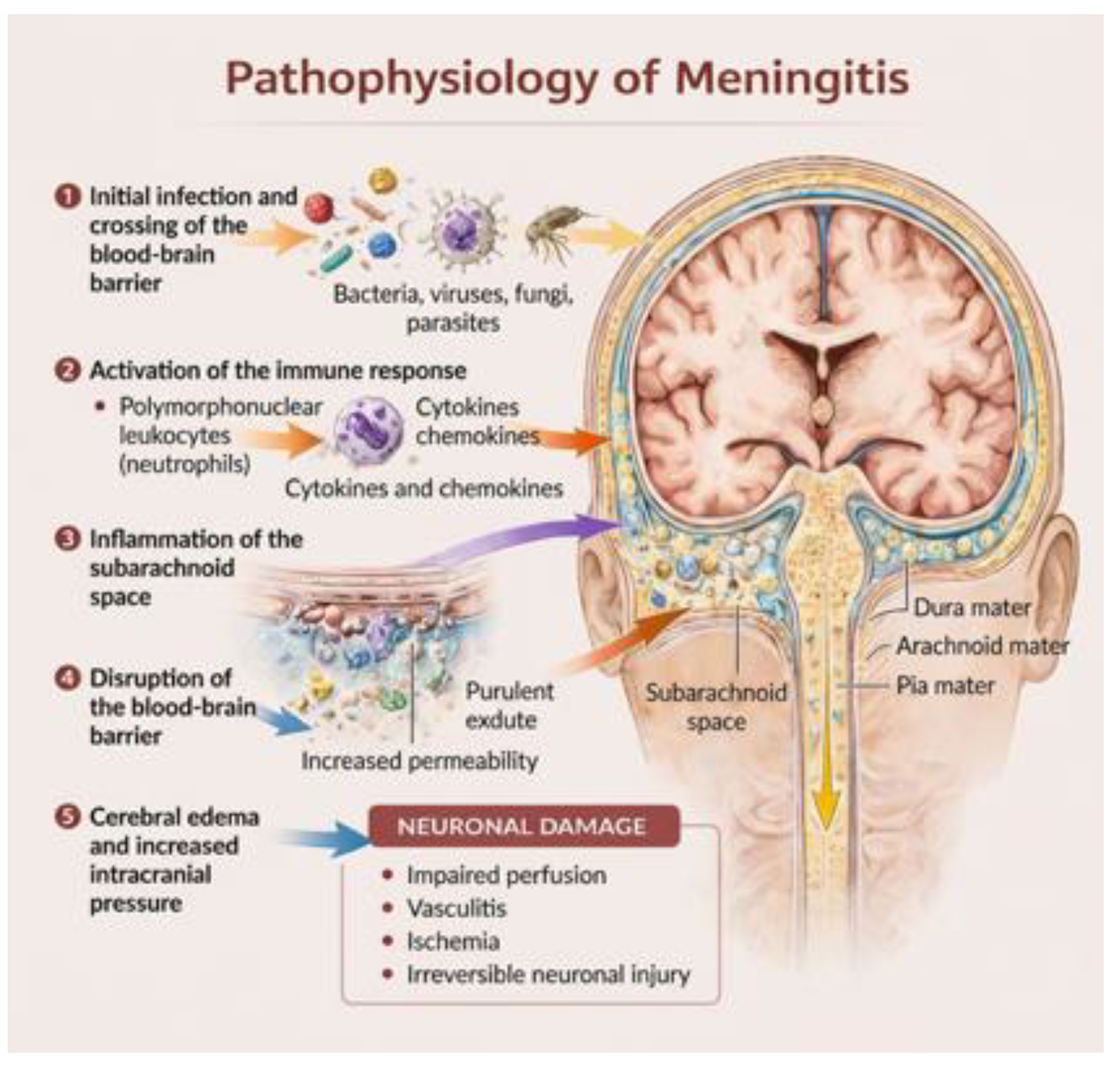

Table 1.
Major etiological agents of meningitis according to age group.
| Age Group | Most Common Pathogens |
| Preterm neonates | Escherichia coli, Group B Streptococcus |
| Neonates and young infants (<3 months) | Group B Streptococcus, Escherichia coli, Listeria monocytogenes, Streptococcus pneumoniae |
| Infants and children (3 months–10 years) | Streptococcus pneumoniae, Neisseria meningitidis, Haemophilus influenzae type b (in settings with incomplete vaccination coverage) |
| Adolescents |
Neisseria meningitidis, Streptococcus pneumoniae |
| Adults |
Streptococcus pneumoniae, Neisseria meningitidis |
| Older adults and immunocompromised patients |
Streptococcus pneumoniae, Listeria monocytogenes, Gram-negative bacilli |
Table 2.
Role of adjunctive corticosteroid therapy according to meningitis etiology.
| Etiology | Recommended Corticosteroid | Evidence of Benefit | Main Clinical Outcomes | Recommendation |
| Pneumococcal meningitis | Dexamethasone | Moderate–Strong | Reduction in neurological complications; uncertain effect on mortality in children | Recommended |
| Haemophilus influenzae type b meningitis | Dexamethasone | Strong | Significant reduction in sensorineural hearing loss | Strongly recommended |
| Meningococcal meningitis | Dexamethasone | Limited | Inconsistent benefit on mortality and sequelae | Case-by-case evaluation |
| Tuberculous meningitis | Dexamethasone or Prednisolone | Strong | Improved survival; limited impact on long-term neurological disability | Recommended |
| Viral meningitis | Not routinely indicated | Weak/Absent | No proven clinical benefit | Not recommended |
| Cryptococcal meningitis | Not recommended | Negative | Increased adverse events and poorer outcomes | Contraindicated/Discouraged |
| Listeria meningitis | Not recommended | Limited | Possible harm | Contraindicated |
Table 3.
Corticosteroids evaluated in meningitis: mechanisms, indications, and clinical considerations.
Table 3.
Corticosteroids evaluated in meningitis: mechanisms, indications, and clinical considerations.
| Corticosteroid | Main Mechanism of Action | Principal Indications | Advantages | Limitations |
| Dexamethasone | Suppression of pro-inflammatory cytokines (TNF-α, IL-1β), reduction of leukocyte migration and cerebral edema | Acute bacterial meningitis | Best evidence base; excellent CNS penetration; guideline-recommended | Benefit dependent on early administration |
| Prednisolone | Broad anti-inflammatory and immunomodulatory effects | Tuberculous meningitis | Useful for prolonged treatment courses | Limited evidence in acute bacterial meningitis |
| Hydrocortisone | Anti-inflammatory and glucocorticoid activity | Historical studies; adrenal insufficiency | Widely available | Limited evidence for routine meningitis treatment |
| Methylprednisolone | Potent anti-inflammatory activity | Selected severe CNS inflammatory conditions | Potential alternative in refractory cases | Insufficient evidence for routine use |
| Fludrocortisone | Mineralocorticoid activity | Septic shock with adrenal insufficiency | Hemodynamic support | No direct role in reducing meningeal inflammation |
Abbreviations: CNS, central nervous system.
Table 4.
Clinical outcomes associated with adjunctive dexamethasone therapy in pediatric bacterial meningitis.
Table 4.
Clinical outcomes associated with adjunctive dexamethasone therapy in pediatric bacterial meningitis.
| Outcome | Effect of Adjunctive Dexamethasone | Strength of Evidence | Comments |
|
Mortality |
No consistent reduction |
Moderate |
No significant benefit demonstrated in randomized controlled trials or adjusted observational studies. |
|
Sensorineural hearing loss |
Significant reduction (mainly in Haemophilus influenzae type b meningitis) |
High |
Greatest benefit when dexamethasone is administered before or with the first antibiotic dose. |
|
Overall neurological sequelae |
Modest reduction |
Moderate |
Benefit mainly observed in historical studies conducted before widespread Hib vaccination. |
|
Cognitive and neurodevelopmental outcomes |
Uncertain |
Low |
Evidence limited by heterogeneous outcome definitions and insufficient long-term follow-up. |
|
Length of hospital stay |
No consistent reduction |
Low |
Findings remain inconsistent across observational studies. |
|
ICU admission / Mechanical ventilation |
No consistent reduction |
Low |
No independent benefit after adjustment for disease severity. |
| Healthcare costs |
No consistent reduction |
Low | Higher crude costs largely reflect confounding by indication. |
| Adverse events |
Generally well tolerated | Moderate | Serious adverse events are uncommon and rarely require discontinuation of therapy. |
Table 5.
Practical clinical implications of adjunctive dexamethasone therapy in pediatric bacterial meningitis.
Table 5.
Practical clinical implications of adjunctive dexamethasone therapy in pediatric bacterial meningitis.
| Clinical Aspect | Current Evidence | Practical Implication |
| Mortality | No consistent reduction | Corticosteroids should not be administered with the expectation of improving survival. |
|
Neurological sequelae |
Modest benefit |
Adjunctive dexamethasone may reduce inflammation-mediated neurological injury in selected patients. |
|
Sensorineural hearing loss |
Strongest evidence of benefit, particularly in Hib meningitis |
Early administration remains the principal indication for adjunctive therapy. |
|
Timing of administration |
Critical determinant of efficacy |
Dexamethasone should be administered immediately before or together with the first dose of antibiotics whenever possible. |
|
Pathogen-specific effect |
Benefit varies according to the causative organism |
Greatest evidence supports use in Hib meningitis; benefit is less consistent in pneumococcal disease and limited in meningococcal meningitis; generally not recommended once Listeria monocytogenes infection is confirmed. |
|
Safety |
Generally well tolerated |
Serious adverse events are uncommon; routine clinical monitoring is usually sufficient. |
|
Current role in clinical practice |
Selective use |
Treatment decisions should be individualized according to the suspected pathogen, timing of antibiotic administration, disease severity, and local epidemiology. |
Disclaimer/Publisher’s Note: The statements, opinions and data contained in all publications are solely those of the individual author(s) and contributor(s) and not of MDPI and/or the editor(s). MDPI and/or the editor(s) disclaim responsibility for any injury to people or property resulting from any ideas, methods, instructions or products referred to in the content. |
© 2026 by the authors. Licensee MDPI, Basel, Switzerland. This article is an open access article distributed under the terms and conditions of the Creative Commons Attribution (CC BY) license (http://creativecommons.org/licenses/by/4.0/).
Copyright: This open access article is published under a Creative Commons CC BY 4.0 license, which permit the free download, distribution, and reuse, provided that the author and preprint are cited in any reuse.