

Submitted:
31 August 2026
Posted:
01 September 2026
You are already at the latest version
Abstract
Campylobacter jejuni tops the list of bacteria responsible for gastroenteritis in humans. Knowledge of capsular polysaccharide (CPS) fine structure allows for the design of chemical conjugation strategies and identification of gene clusters for bioconjugations. CPSs are the basis for a multivalent C. jejuni glycoconjugate vaccine that has as key serological markers variably linked O-methyl-phosphoramidate (MeOPN) moieties and heptoses of rare configurations. Previously, the activation strategy for C. jejuni CPSs whose backbones contained no vicinal diols (serotypes HS:4, HS:10, HS:15, HS:23/36 and HS:53) was based on oxidation of the non-reducing end sugar with periodate, followed by conjugation to protein via reductive amination. Here, we describe the approach taken to functionalize C. jejuni CPSs with inner regions susceptible to periodate centered on TEMPO/bleach-mediated oxidation of primary hydroxyls to carboxyls followed by carbodiimide-directed conjugation. This work describes the syntheses and immunogenicities of such C. jejuni CPS-conjugates, specifically those of serotypes HS:1, HS:2 and HS:3. The stoichiometric TEMPO/bleach-oxidation of CPSs showed preference for specific primary hydroxyl groups, such as C7 of 6-deoxy-heptoses, and furnished conjugates that induced strong IgG responses against the native C. jejuni CPSs. It is postulated that the enhanced immunogenicity of the described conjugates is due to the preservation of CPS structures and the zwitterionic character of CPSs, afforded by the native MeOPN units and unreacted carboxyls.
Keywords:
Campylobacter jejuni
; diarrhea
; capsule
; conjugate
; vaccine
; TEMPO-activation
1. Introduction
The Gram-negative bacteria, Campylobacter jejuni, is a food-borne and zoonotic pathogen that causes a high rate of diarrhea in humans [1,2]. C. jejuni infection may also induce autoimmune disorders, such as Guillain-Barré and Miller-Fisher syndromes due to ganglioside-like structures in its lipo-oligosaccharide (LOS), and inflammatory bowel diseases like Crohn’s disease [3,4,5,6]. A C. jejuni serotyping system (Penner serotypes HS:1, HS:2, HS:3, etc.) based on homologous antisera against capsular polysaccharides (CPSs), at the time thought to be lipopolysaccharide O-chains, was introduced in the 1980s [7]. Now, a genotype multiplex PCR system based on CPS gene clusters is more commonly used to group C. jejuni strains into serotype complexes [8].
The physico-chemical-analytical identification of C. jejuni CPSs confirmed that the chemical structures were the basis for strains to be assigned to specific serotype complexes [9]. In most cases, glycero-heptoses (Hep) and 6-deoxy-heptoses (6dHep) in different configurations, conformations and linkages, and O-methyl-phosphoramidate (MeOPN) side-branch moieties dictated strain serospecificity [9]. Of particular significance, C. jejuni strains with minor variations in CPS structure fall under a single serotype complex. For example, C. jejuni serotype complex HS:4 is composed of strains whose CPSs have disaccharide repeating blocks that differ in having glycero-ido-heptose [→3)-β-D-ido-Hepp-(1→4)-β-D-GlcpNAc-(1→] or 6-deoxy-ido-heptose [→3)-6d-β-D-ido-Hepp-(1→4)-β-D-GlcpNAc-(1→], and, in many cases, a single strain displays both. CPS structural similarities are also the basis for the observed serological cross reactivity between serotype complexes [9], such as HS:4, HS:13 [→3)-6d-β-D-ido-Hepp-(1→4)-β-D-Glcp-(1→] and HS:65 [→3)-β-D-ido-Hepp-(1→4)-β-D-Glcp-(1→].
The first conjugate vaccine experiments used the CPS of C. jejuni strain 81-176 (serotype complex HS:23 and HS:23/36), chosen because the CPS structure and associated genes were known [10,11,12,13,14] and that allowed for parallel studies with CPS isogenic mutants. CPSHS:23(81-176) is made of trisaccharide repeating blocks composed of 3-linked galactose, 3-linked N-acetyl-glucosamine and 2-linked 3-O-methyl-6-deoxy-D-altro-heptose [→3)--D-Galp-(1→3)--D-GlcpNAc-(1→2)-3-OMe-6d--D-altro-Hep-(1→]n, with non-stoichiometric MeOPN residues at O-2, -4 and -6 of Gal. The non-reducing end of the HS:23 CPS was determined to be a terminal Gal unit [11]. Since only the non-reducing end Gal could be oxidized by periodate, CPSHS:23 was activated by the formation of aldehydes at the terminal Gal and then conjugated to CRM197 by reductive amination [15].
This prototype C. jejuni CPSHS:23-CRM197 conjugate vaccine showed 100% efficacy in preventing diarrhea in a non-human primate (Aotus nancymaae) C. jejuni enteric challenge model [15]. Importantly, protection was also observed against heterologous challenge with another HS:23 strain (CG8421) with the structure [→3)--D-Galp-(1→3)--D-GlcpNAc-(1→2)-6d--D-altroHep-(1→]n [16], indicating that a single CPS conjugate may offer protection against other strains of the same serotype complex. In a Phase I human clinical trial, the prototype C. jejuni CPSHS:23-CRM197 conjugate vaccine, using a natural variant of strain 81-176 with LOS genetically truncated, showed safety and immunogenicity raising anti-CPS IgG antibodies (NCT05500417). The same activation/conjugation scheme using the non-reducing end monosaccharide was also successfully used in the syntheses of immunogenic conjugates with CPSs of serotypes HS:4 [15], HS:10 [9], HS:15 [17] and HS:53 [9] in which the inner glycan regions were resistant to periodate oxidation.
Oxidation with periodate was also the first method considered to activate CPSs with vicinal diols in their repeating blocks, such as in the unbranched 4-linked galactose (Gal) in serotype HS:1 (Figure 1), unbranched glucuronic acid (GlcA) in HS:2 (Figure 4) and 4-linked Gal in HS:3 (Figure 6). However, even when stoichiometric amounts of periodate were used, a considerable number of the aforementioned sugars were oxidized that resulted in conjugate batches affording inconsistent levels of anti-CPS antibodies. Therefore, an alternative activation procedure that did not overly disrupt the structure of these CPSs was needed.
The oxidation of primary hydroxyls to carboxyls with 2,2,6,6-tetramethylpiperidin-1-yl)oxyl (TEMPO) is a well-known process [18] that is commonly used for the derivatization of plant carbohydrates [19]. Others have also shown that TEMPO oxidized mannans retain their immunogenic properties [20]. In 2011, we reported a conjugation scheme based on TEMPO-mediated oxidation of microbial glycans in which ~10% of primary hydroxyls were oxidized to carboxyls using stoichiometric amounts of TEMPO/bleach [21]. The stoichiometric activated glycans were then conjugated to proteins through the fresh carboxyl functional groups by carbodiimide-based chemistry [21]. Intriguingly, analysis of the stoichiometric oxidized glycans revealed that the reaction mechanism exhibited a degree of selectivity for specific primary hydroxyls, such as those at C7 of 6-deoxy-altro-heptoses in the case of C. jejuni CPS81-176 [21]. This work describes the syntheses and immunogenicities of C. jejuni CPS-conjugate vaccines targeting serotype complexes HS:1 (HS:1/44; HS:1/8; HS:8; HS:44), HS:2 and HS:3 (HS:13; HS:50) using TEMPO/bleach activation of CPSs. These C. jejuni serotypes are among the most prevalent globally and would be included in a multivalent C. jejuni CPS conjugate vaccine [22].
2. Materials and Methods
2.1. C. jejuni Strains and Growth Conditions
The C. jejuni strain MSC57360 (serotype HS:1), NCTC 11168 (serotype HS:2) and ATCC 434431 (serotype HS3) were routinely cultured at 37 ̊C under microaerobic conditions (5% O2, 10% CO2, and 85% N2) in Mueller Hinton (MH) broth and MH agar plates.
2.2. Extraction and Purification of C. jejuni CPSs
Materials needed: High vacuum lyophilizer, 99% liquified phenol, deionized water, heating plate with magnetic stirring capability, water bath or heating mantel, thermometer, 1000 mL round-bottom flask with stopper, stir bar, dialysis bag (1000 MWCO).
In a 1000 mL round-bottom flask, C. jejuni dried cell mass was dissolved in 300 mL of deionized water and stirred at 80 oC for 1 hour. Heating and stirring was continued for an additional 3 hours after addition of 200 mL 99% liquified phenol. The extraction vessel with hot contents was placed in an ice bath overnight. The aqueous layer containing carbohydrate material (non-sugar components collect in the phenol layer) was collected in the morning and dialyzed against deionized water for two days in a dialysis bag (1000 MWCO), mainly for the removal of traces of phenol. The dialyzed aqueous carbohydrate preparation was lyophilized.
2.3. Purification and Structural Confirmation of C. jejuni CPSs
Materials needed: Beckman J2-MC series ultracentrifuge, ultracentrifuge tubes, Bio-Gel® P-2 (45-90 µm particle size), glass column (1 m x 1 cm), fraction collector, test tubes (5-10 mL), high vacuum lyophilizer, Deuterium oxide (D2O), NMR Instrument, NMR tubes, Ortho-phosphoric acid.
The lyophilized C. jejuni CPS crude material obtained from the water-phenol extraction describes above is resuspended in deionized water (as minimal required to dissolve sample) and ultracentrifuged at a minimum of 15,000 rpm for 6 h at 4 oC to separate the water-insoluble lipo-oligosaccharide as a pellet. The supernatant containing the crude CPS was extracted was lyophilized. The lyophilized supernatant material (yield range of ~25-100 mg from 1.0 g dried cell mass) is dissolved in deionized water and loaded into a Bio-Gel P2 polyacrylamide size exclusion column with water as eluent. Approximate 1 mL fractions are collected by a fraction collector as the column runs by gravity.
The fractions containing CPS are analyzed by 1H and 31P NMR spectroscopy for confirmation of structure and absence of protein and oligonucleotide contaminants. The CPS material is dissolved in 99 % D2O, lyophilized and dissolved in 0.5 mL of 99 % D2O for NMR analyses. Ortho-phosphoric acid was used as an external reference (δP 0.0) in 31P NMR spectroscopy.
2.4. Stoichiometric Activation of C. jejuni CPSs by TEMPO/Bleach-Mediated Oxidation
Materials needed: TEMPO (0.6 mg, 2% CPS by mass), NaBr (9.0 mg, 30% CPS by mass), NaOAc (1.23 g, to make a 1 M solution), NaClO (4%, 0.375 mL, 12.5 µL/mg CPS), deionized water (15 mL, 0.5 mL/mg CPS), 4-dram vial or 20 mL reaction vessel, purified C. jejuni CPS material (30.0 mg), stir bar, ice bath, ethanol (0.5 mL), 1000 MWCO dialysis bag, high-vacuum lyophilizer, and NaBH4.
TEMPO (0.6 mg, 2% CPS by mass) and NaBr (9.0 mg, 30% CPS by mass) are dissolved in deionized water (15 mL, 0.5 mL/mg CPS) with vigorous mixing in the reaction vessel. NaOAc (1.23 g, to make a 1 M solution) is added to the reaction (TEMPO does not dissolve well in sodium acetate buffer; therefore, do not reverse the above steps). Purified C. jejuni CPS material (30.0 mg) is added and stirred on ice for 10 min. NaClO (4%, 0.375 mL, 12.5 µL/mg CPS) is added dropwise at 0 °C. The reaction mixture is kept at 0 °C for 8 h and then refrigerated at 4 °C for 16 h. The reaction is quenched with ethanol (0.5 mL) and dialyzed against deionized water overnight using a 1000 MWCO dialysis bag. The retentate is lyophilized to yield the oxidized C. jejuni CPS material. Reduction of the oxidized CPS material with NaBH4 in water converts any residual aldehydes back to alcohols.
2.5. Conjugation of TEMPO/bleach Oxidized C. jejuni CPSs to BSA and CRM197
Materials needed: 1-ethyl-3-(3-dimethylaminopropyl)carbodiimide (EDC) (200 µL), 10 mL of 0.5 M of 2-(N-morpholino)ethanesulfonic acid (MES) buffer (pH 5.5); 5.0 M HCl (220 µL), TEMPO oxidized CPS material (20.0 mg), BSA or CRM197 (10.0 mg), 25 mL reaction vessel, stir plate and stir bar and 25 000 MWCO dialysis bag.
Oxidized CPS (20.0 mg) is dissolved in 0.5 M MES buffer (10 mL), EDC (200 µL) and 5.0 M HCl (220 µL) are added to the reaction vessel and stirred at room temperature for 20 minutes. BSA or CRM197 (10.0 mg) is added and stirred at room temperature for 24 h. The reaction temperature is increased to 37 oC and stirred for an additional 48 h. The reaction is put under dialysis in a 25 000 MWCO dialysis bag for 3 days against deionized H2O. The retentate is lyophilized to yield the conjugate. Conjugate is further purified by passage through a size-exclusion Bio-Gel column to remove unreacted CPS material.
2.6. Analysis of Carboxyl-Free Monosaccharides
Material needed: Native or TEMPO-oxidized CPS, 4M Trifluoro Acetic Acid (TFA), NaBD4, methanol:acetic acid solution (90%:10%), acetic anhydride, dichloromethane, GLC-MS instrument.
CPSs (0.5 mg) were dissolved in 4M TFA (4 ml) and heated at 100 oC for 4 h. After cooling to room temperature, solvent was evaporated. Hydrolysate was reduced overnight with NaBD4 in water, solvent evaporated and material treated with methanol:acetic acid solution three times to yield deuterium-labelled alditols. Alditols were acetylated with acetic anhydride with residual sodium acetate as catalyst at 100 oC for 1.5 h. The alditol acetates were collected with dichloromethane and analyzed be GLC-MS.
2.7. Mouse Studies and ELISA
Mouse immunogenicity studies used female BALB/c mice (8-10 wk old) purchased from Jackson Laboratories (Bar Harbor, ME). Mice were immunized via subcutaneous injection with variable doses of conjugates vaccines administered with 200 µg of Alhydrogel (Brenntag). Mice received a total of 3 injections at 4-wk intervals (0-4-8 wk). Serum was collected before the initial immunization and every 2-wk thereafter. CPS-specific antibody responses raised by CPS-CEM197 were determined by ELISA with wells coated with the corresponding CPS-BSA conjugates. Glycoconjugates were coated onto 96-well polystyrene plates (Nunc Maxisorb, ThermoScientific). Serum dilutions were assayed in duplicate against glycoconjugates or BSA/CRM197-coated wells. CPS-specific antibodies were detected using a goat anti-mouse IgG peroxidase conjugated secondary antibody and visualized using ABTS substrate. The optical density (OD) of individual wells at 405 nm was determined using a SpectraMax Plus384 plate reader (Molecular Devices). The endpoint titer of a sample was defined as the reciprocal of the last dilution yielding a net OD (i.e.: CPSHS:1-BSA OD minus BSA OD) of 0.15-0.29. Endpoint titers were analyzed using Prism software (GraphPad). Differences were identified between experimental groups and considered significant at p < 0.05 (Tukey’s MCT).
2.8. SDS-PAGE Analyses
Electrophoreses were performed on 12.5% SDS-PAGE gels. Gels were washed twice in water for 20 min and stained 30 minutes in 0.5% Alcian blue, 2% acetic acid solution at room temperature. De-staining was performed in 2% acetic acid solution at room temperature overnight.
2.9. Dot Blot Immunoblots of Whole Cells
C. jejuni cells were resuspended in PBS at an OD600 = 0.5 and 2 µl aliquots were spotted onto nitrocellulose filters. Filters were blocked in 2% skim milk and immunodetected with pooled mouse sera at a final dilution of 1/1000.
3. Results
3.1. Synthesis and Immunogenicity of C. jejuni CPSHS:1-CRM197 Conjugate
The CPSs of strains belonging to C. jejuni serotype complex HS:1 share a common structure based on a teichoic-acid like backbone composed of 4-linked Gal, glycerol (Gro) and phosphate (P) with non-stoichiometric amounts of fructose (Fru) units branching-off positions 2 and 3 of Gal (Figure 1A) [23]. MeOPN moieties can be found at position 3 of Fru branches [23]. The CPS gene cluster of serotype complex HS:1 is also in part found in serotypes HS:1/44, HS:1/8, HS:8 and HS:44, which in addition to their specific CPSs also express the HS:1 CPS, but with variations in Fru and MeOPN content [23]. For example, serotype HS:44 assembles only the HS:1 CPS backbone of Gal, Gro and P, and serotype HS:1/8 places an additional MeOPN at position 6 of Gal.
Six primary hydroxyls in CPSHS:1 are susceptible to oxidation by TEMPO, those being the two C1s and two C6s of Fru, C6 of Gal and C3 of Gro. The alditol acetate analysis of the stoichiometric oxidized CPSHS:1 showed a slight decrease in mannitol and glucitol acetates, the C-2 epimers that originate from reduction of the C-2 carbonyl of Fruc. Since carboxyl-containing sugars are undetectable via this procedure, the Fru branch units were therefore deemed to be one of the points of oxidation and thus a conjugation site. However, C6 of Gal and C3 of Gro may have also been oxidized to some extent and be participants in conjugation to protein. The gel-electrophoresis of the CPSHS:1-CRM197 product (1.4:1 protein to sugar ratio) showed the presence of high-molecular weight cross-linked lattice-type conjugates (Figure 1B), which in mice induced an immune response that afforded strong IgG responses at 10 and 50 µg doses (Figure 1C). Of particular significance, the sera raised by the CPSHS:1-CRM197 conjugate reacted with C. jejuni cells that only expose the teichoic-acid backbone of HS:1 CPS with no MeOPN-Fru branches, as observed with serotype HS:44 and isogenic mutant HS:1 1.08 [23] (Figure 1D).
The human clinical trials utilizing the prototype CPSHS:23-CRM197 conjugate vaccine [15] (NCT02067676 and NCT05500417) highlighted MeOPN as a critical immunogenic CPS epitope. Consequently, it was necessary to confirm that MeOPN moieties remain present following the TEMPO-oxidation of C. jejuni CPSs. Figure 2 shows the 31P NMR spectra of the native HS:1 CPS, TEMPO-oxidized HS:1 CPS and CPSHS:1-CRM197 conjugate, which showed that the chemical manipulations involved in the oxidation of HS:1 CPS with TEMPO/bleach and conjugation did not affect the MeOPN substituents of the Fru units (d 14.25) nor the CPS teichoic-acid backbone diester P (d 0.02).
Figure 3 shows a head-to-head comparison between the aforementioned CPSHS:1-CRM197 conjugate (made with TEMPO-oxidized CPS) and a CPSHS:1-CRM197 made with stoichiometric periodate-oxidized CPS (in which the Fru-free 4-linked Gal in the CPS backbone is the target of oxidation). The immunogenic response was noticeable stronger against the CPSHS:1-CRM197 conjugate with the TEMPO-oxidized CPS, pointing to the fact that structural disruption of the HS:1 CPS backbone alters critical immunogenic epitopes.
3.2. Synthesis and Immunogenicity of C. jejuni CPSHS:2-CRM197 Conjugate
C. jejuni serotype HS:2 strains have CPSs composed of repeating blocks made of ribose (Rib), N-acetyl-galacto-furanosamine (GalNAc), amidated glucuronic acid (GlcA) and 3,6-OMe-D-glycero-L-gluco-heptose (glucoHep) (Figure 4A) [24,25]. MeOPN moieties can be found at C-3 of GalNAc and at C-4 of glucoHep. The product of the conjugation (1:1.6 protein to sugar ratio) between stoichiometric TEMPO-oxidized HS:2 CPS and CRM197 (Figure 4B) gave a robust IgG response, especially at the 25 µg dose (Figure 4C). Sugar analysis (by the alditol acetate method) of the HS:2 CPS after stoichiometric TEMPO/bleach oxidation showed a noticeable decrease in Rib content, suggesting that some oxidation takes place at C5 of the Rib unit.
In some cases, especially when low single-ended molecular weight conjugates are present, it is possible to obtain a clear 1H NMR spectrum of the CPS attached to the protein, which helps confirm that the structural determinants are still present in the conjugate product. Figure 5 shows the 1H NMR spectra of the stoichiometric TEMPO-oxidized CPSHS:2 and of the CPSHS:2-CRM197 conjugate. The anomeric resonances (H-1) of the four glycosyl components of CPSHS:2 repeating block can be observed in both 1H NMR spectra along with the signature methyl resonances of the MeOPN and glucoHep units. Due to the protein part, 1H NMR spectra of glycoconjugates often display a ‘bumpy’ baseline in the upfield part of the spectrum.
3.3. Synthesis and Immunogenicity of C. jejuni CPSHS:3-CRM197 Conjugate
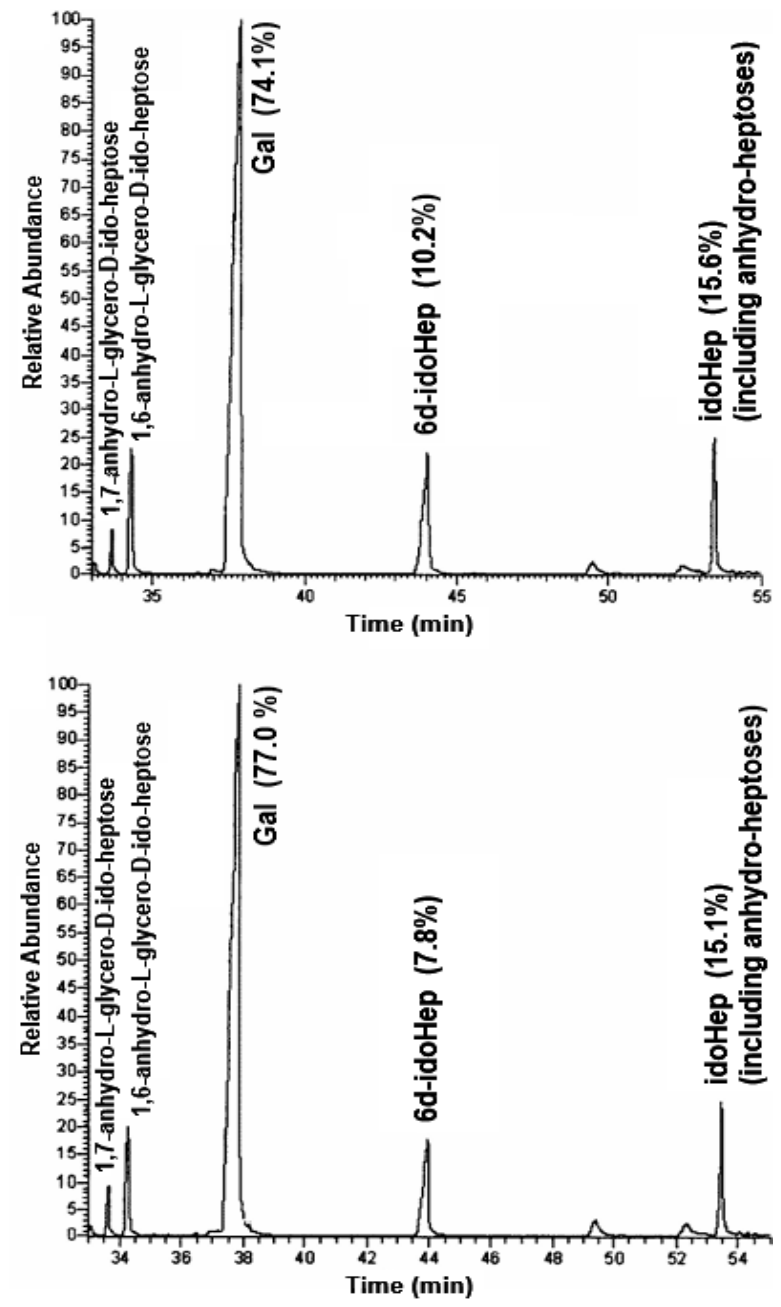
C. jejuni serotype HS:3 CPSs are composed of disaccharide repeats made of 4-linked Gal and 3-linked 6-deoxy-D-ido-heptose (6didoHep) or L-glycero-D-ido-heptose (idoHep). The MeOPN substitution in HS:3 CPSs takes place at position 2 of the heptose constituents (Figure 6A). In addition to MeOPN, HS:3 CPSs are also decorated non-stoichiometrically with 3-hydroxypropanoyl at position 3 of Gal [26,27]. The possible targets for TEMPO oxidation in C. jejuni CPSHS:3 are the primary alcohols at C-6 of Gal, and at C-7 of 6-deoxy-ido-heptose (6didoHep) or C7 of glycero-ido-heptose (idoHep). Consistently, oxidation of HS:3 CPS with stoichiometric quantities of TEMPO/bleach gave a product in which the C7 of 6-deoxy-ido-heptose was the main target of oxidation as determined by comparison of the alditol acetate products before and after oxidation (Figure 7). As an initial check that the CPSs in the conjugates have kept their antigenic determinants intact after oxidation and conjugation, when possible, they are tested against the corresponding C. jejuni serotype whole-cell antisera. Here, the CPSHS:3-CRM197 conjugate (1:1.8 protein to sugar ratio) (Figure 6B) reacted with C. jejuni HS:3 whole-cell antisera (Figure 6C) indicating that the conjugated CPSHS:3 retained its antigenic epitopes. Strong IgG responses against HS:3 CPSs were observed after immunization with the CPSHS:3-CRM197 conjugate with raised responses of approximate equal magnitude against the 5 and 25 µg doses (Figure 6D).
4. Discussion
C. jejuni serotype complexes HS:1, HS:2 and HS:3 are among the most prevalent C. jejuni serotypes globally and therefore must be integrated in the development of a C. jejuni vaccine [22]. This work describes the syntheses of glycoconjugate vaccines using the CPSs of C. jejuni serotypes HS:1, HS:2 and HS:3. Previously, CPS-conjugate vaccines for C. jejuni serotype complexes HS:4 [15], HS:15 [17] and HS:23 [15] and HS:53 [9] were constructed with CPSs activated by oxidation of the terminal glycose at the non-reducing end with periodate followed by conjugation to protein via reductive amination. In the cases of C. jejuni serotypes HS:1, HS:2 and HS:3, due to the presence of inner CPS sugars vulnerable to periodate oxidation, another CPS activation method was needed. We used a CPS activation-conjugation strategy based on TEMPO oxidation of primary hydroxyls to carboxyls followed by conjugation to protein using carbodiimide chemistry [21]. The CPS-CRM197 conjugates of the three C. jejuni serotypes were found to give a robust immunogenic response against the CPSs (Figs. 1C, 4C and 6D), in that two weeks following the final immunization, all immunized animals exhibited significant levels of serum anti-CPS IgG antibodies (p < 0.05) compared to pre-immune sera.
The conjugate vaccine composed of the HS:1 capsule conjugated to CRM197 was highly immunogenic in mice, with those immunized with 50 µg of conjugate per dose having a significantly higher endpoint titer (p < 0.05) than mice receiving 10 µg per dose (Figure 1C). The CPSHS:1-CRM197 antibodies were also observed to cross-react with cells of C. jejuni serotype HS:44 and serotype HS:1 insertional mutant HS:1 1.08 that lack the fructose branches and only display the CPS HS:1 teichoic acid-like backbone. In fact, the reactions appeared stronger with the two C. jejuni strains lacking the fructose branches, suggesting that the CPS HS:1 backbone repeat of [-4)-Gal-(1-2)-Gro-(1-P-] may be immunodominant. 31P NMR analyses of the TEMPO-oxidized CPS HS:1 and corresponding conjugate CPSHS:1-CRM197 showed that the TEMPO-oxidation and carbodiimide-based conjugation chemical manipulations did not modify or remove the MeOPN CPS moiety or the backbone diester-phosphate (Figure 2). Within the limits of detection, Fru was judged to be the preferred unit for TEMPO attack and thus the major site of conjugation to CRM197. A noteworthy observation was the unexpected low amount of sugar estimated by the anthrone assay in the CPSHS:1-CRM197 conjugates, which we postulate may be due to the non-Gal substituents (Fru, Gro and P) not being detected by this assay.
A head-to-head comparison of two CPSHS:1-CRM197 conjugates, one made with TEMPO-oxidized CPS and the other with periodate-oxidized CPS, revealed a higher immunogenic response to the conjugate containing the CPS activated with TEMPO (Figure 3). The lower immunogenicity of the CPSHS:3-CRM197 conjugate synthesized with periodate-oxidized CPS suggests that disruption of the CPS backbone (oxidation of some unbranched 4-linked Gal units) renders this conjugate less immunogenic and that the teichoic acid-like backbone is indeed an important immunogenic determinant of C. jejuni CPS HS:1.
The C. jejuni CPSHS:2-CRM197 conjugate also gave a strong immunogenic response, especially at the 25 µg dose (Figure 4C). As in the case of serotype HS:1, the structural integrity of the CPS, including the two MeOPN antigenic determinants, remain intact through the TEMPO-oxidation of CPS and conjugation steps (Figure 5). Within the limits of detection, C5 of Rib was judged to be the preferred site for TEMPO attack and thus the major site of conjugation to CRM197.
The case of C. jejuni serotype HS:3 gave the clearest picture in terms of which primary hydroxyl was favoured for oxidation by TEMPO, that being the C7 of the 6-deoxy-heptose, in lieu of C7 of glycero-heptose or C6 of Gal (Figure 7). The preferred oxidation by TEMPO at C7 of the 6-deoxy-heptose may be due to neighbouring methylene group (C6) offering low steric hindrance for the formation of the alkoxide-oxoammonium intermediate. Both 5 ug and 25 ug doses of CPSHS:3-CRM197 conjugate afforded strong immunogenic responses (Figure 6D). That the HS:3 CPS in the CPSHS:3-CRM197 conjugate presented its native antigenic epitopes was verified by its reaction with C. jejuni HS:3 whole-cell antisera (Figure 6C).
We have shown that TEMPO-mediated oxidation can be used to activate the CPSs of C. jejuni serotypes HS:1, HS:2 and HS:3, whose conjugation to CRM197 yielded immunogenic conjugates. In a previous study, we also showed that a dual conjugate vaccine made from TEMPO-oxidized C. jejuni HS:3 CPS and enterotoxigenic Escherichia coli (ETEC) CssBA protein induced antibodies against both antigens [28]. This activation methodology can be used on any microbial PS that contains at least one primary hydroxyl, as in the case of (1→6)-b-D-glucan of Actinobacillus suis [29], in which the C6 of the non-reducing end Glc unit acted as the sole site of TEMPO-oxidation and connection to protein [21].
The robust immunogenic responses observed with conjugates made with TEMPO-activated CPSs may be due to CPS epitopes remaining unaltered after oxidation and to the connection between activated CPS and protein not being random but limited to exocyclic hydroxyls, leaving sugar ring hydroxyls available for immunogenic interactions. Aldehyde formation is the first step in the mechanism of TEMPO-oxidation of primary hydroxyls and thus conjugation to protein via reductive amination can be applied at this stage [9]. However, we intentionally extended the oxidation to form carboxyls so that the conjugates would contain a limited number of negatively charged unreacted carboxyls that in combination with the positively charged MeOPN units afford the C. jejuni CPSs a zwitterionic character potentially making the conjugate more immunogenic [30,31]. Ongoing efforts are focused on developing a method to quantify the number of unreacted carboxyls in the conjugates, and if sole unconjugated zwitterionic C. jejuni CPSs exposing TEMPO-generated carboxyls and native MeOPN residues are immunogenic.
Acknowledgments
This work was supported by the University of Guelph and NSERC. The immunological/animal experiments were performed at the Naval Medical Research Command and supported by the Military Infectious Disease Research Program (MIDRP). Research was conducted under an approved animal use protocol in an AAALAC accredited facility in compliance with the Animal Welfare Act and other federal statutes and regulations relating to animals and experiments involving animals and adheres to principles stated in the Guide for the Care and Use of Laboratory Animals, NRC Publication, 2011 edition. The content is solely the responsibility of the authors and does not necessarily represent the official policy or position of the Henry M. Jackson Foundation for the Advancement of Military Medicine, Inc., Department of the Navy, Department of War, nor the United States Government. HJF/NMRC author declaration: F.P. and P.G. are federal employees of the United States government. C.E, A.M. are contracted employees of the US government. This work was prepared as part of official duties. Title 17 U.S.C. 105 provides that `copyright protection under this title is not available for any work of the United States Government.' Title 17 U.S.C. 101 defines a U.S. Government work as work prepared by a military service member or employee of the U.S. Government as part of that person's official duties.”.
References
- Majowicz, S.E.; Colston, J.M.; Kirk, M.D.; Pires, S.M.; Minato, Y.; Founou, L.L.; Devleesschauwer, B.; di Bari, C.; Estrada-Garcia, T.; Vaes, L.; et al. WHO estimates of the global, regional, and national burden of 14 foodborne diarrhoeal enteric hazards, 2000–21: An updated data synthesis. Lancet Glob. Health 2026, 14. [Google Scholar] [CrossRef] [PubMed]
- Coker, A.O.; Isokpehi, R.D.; Thomas, B.N.; Amisu, K.O.; Obi, C.L. Human Campylobacteriosis in Developing Countries. Emerg. Infect. Dis. 2002, 8, 237–243. [Google Scholar] [CrossRef] [PubMed]
- Nachamkin, I. Campylobacter enteritis and the Guillain-Barré syndrome. Curr. Infect. Dis. Rep. 2001, 3, 116–122. [Google Scholar] [CrossRef] [PubMed]
- Heikema, A.P.; Jacobs, B.C.; Horst-Kreft, D.; Huizinga, R.; Kuijf, M.L.; Endtz, H.P.; Samsom, J.N.; van Wamel, W.J.B. Siglec-7 specifically recognizes Campylobacter jejuni strains associated with oculomotor weakness in Guillain–Barré syndrome and Miller Fisher syndrome. Clin. Microbiol. Infect. 2013, 19, E106–E112. [Google Scholar] [CrossRef] [PubMed]
- Pimentel, M.; Chatterjee, S.; Chang, C.; Low, K.; Song, Y.; Liu, C.; Morales, A.; Cruz-Rico, C.L.; Mendoza-Domínguez, G.; Zaragoza-Galicia, S.A. A new rat model links two contemporary theories in irritable bowel syndrome. Dig. Dis. Sci. 2008, 53, 982–989. [Google Scholar] [CrossRef] [PubMed]
- Kalischuk, L.D.; Buret, A.G. A role for Campylobacter jejuni-induced enteritis in inflammatory bowel disease. Am. J. Physiol. Gastrointest. Liver Physiol. 2010, 298, G1–G9. [Google Scholar] [CrossRef] [PubMed]
- Penner, J.L.; Hennessy, J.N.; Congi, R.V. Serotyping of Campylobacter jejuni and Campylobacter coli on the basis of thermostable antigens. Eur. J. Clin. Microbiol. 1983, 2, 378–383. [Google Scholar] [CrossRef] [PubMed]
- Poly, F.; Serichatalergs, O.; Schulman, M.; Ju, J.; Cates, C.N.; Kanipes, M.; Mason, C.; Guerry, P. Discrimination of major capsular types of Campylobacter jejuni by multiplex PCR. J. Clin. Microbiol. 2011, 49, 1750–1757. [Google Scholar] [CrossRef] [PubMed]
- Monteiro, M.A.; Noll, A.; Laird, R.M.; Pequegnat, B.; Ma, Z.; Bertolo, L.; DePass, C.; Omari, E.; Gabryelski, P.; Redkyna, O.; et al. Campylobacter jejuni capsule polysaccharide conjugate vaccine; Carbohydrate-Based Vaccines: From Concept to Clinic; ACS Symposium Series; American Chemical Society: Washington, DC, USA, 2018; Volume 1290, pp. 249–271. [Google Scholar] [CrossRef]
- Aspinall, G.O.; McDonald, A.G.; Pang, H. Structures of the O-chains from lipopolysaccharides of Campylobacter jejuni serotypes O:23 and O:36. Carbohydr. Res. 1992, 231, 13–30. [Google Scholar] [CrossRef] [PubMed]
- Kanipes, M.I.; Papp-Szabo, E.; Guerry, P.; Monteiro, M.A. Mutation of waaC, encoding heptosyltransferase I in Campylobacter jejuni 81-176, affects the structure of both lipooligosaccharide and capsular carbohydrate. J. Bacteriol. 2006, 188, 3273–3279. [Google Scholar] [CrossRef] [PubMed]
- Papp-Szabó, E.; Kanipes, M.I.; Guerry, P.; Monteiro, M.A. Cell-surface a-glucan in Campylobacter jejuni 81-176. Carbohydr. Res. 2005, 340, 2218–2221. [Google Scholar] [CrossRef] [PubMed]
- Kanipes, M.I.; Tan, X.; Akelaitis, A.; Li, J.; Rockabrand, D.; Guerry, P.; Monteiro, M.A. Genetic analysis of lipooligosaccharide core biosynthesis in Campylobacter jejuni 81-176. J. Bacteriol. 2008, 190, 1568–1574. [Google Scholar] [CrossRef]
- Guerry, P.; Szymanski, C.M.; Prendergast, M.M.; Hickey, T.E.; Ewing, C.P.; Flicker, M.; Monteiro, M.A. Phase variation of Campylobacter jejuni 81-176 lipooligosaccharide affects ganglioside mimicry and invasiveness in vitro. Infect. Immun. 2002, 70, 787–793. [Google Scholar] [CrossRef] [PubMed]
- Monteiro, M.A.; Baqar, S.; Hall, E.R.; Chen, Y.-H.; Porter, C.K.; Bentzel, D.E.; Applebee, L.; Guerry, P. Capsule polysaccharide conjugate vaccine against diarrheal disease caused by Campylobacter jejuni. Infect. Immun. 2009, 77, 1128–1136. [Google Scholar] [CrossRef] [PubMed]
- Poly, F.; Read, T.D.; Chen, Y.; Monteiro, M.A.; Serichantalergs, O.; Pootong, P.; Bodhidatta, L.; Mason, C.J.; Rockabrand, D.; Baqar, S.; et al. Characterization of Two Campylobacter jejuni Strains for Use in Volunteer Experimental-Infection Studies. Infect. Immun. 2008, 76, 5655–5667. [Google Scholar] [CrossRef] [PubMed]
- Bertolo, L.; Ewing, C.P.; Maue, A.; Poly, F.; Guerry, P.; Monteiro, M.A. The design of a capsule polysaccharide conjugate vaccine against Campylobacter jejuni serotype HS15. Carbohydr. Res. 2013, 366, 45–49. [Google Scholar] [CrossRef] [PubMed]
- Golubev, V.A.; Rozantsev, E.G.; Neiman, M.B. Some reactions of free iminoxyl radicals with the participation of the unpaired electron participation. Izv. Akad. Nauk SSSR Ser. Khim. 1965, 11, 1927–1936. [Google Scholar] [CrossRef]
- Bragd, P.; van Bekkum, H.; Besemer, A. TEMPO-mediated oxidation of polysaccharides: survey of methods and applications. Top. Catal. 2004, 27, 49–66. [Google Scholar] [CrossRef]
- Ďurana, R.; Lacík, I.; Paulovičová, E.; Bystrický, S. Functionalization of mannans from pathogenic yeasts by different means of oxidations—preparation of precursors for conjugation reactions with respect to preservation of immunological properties. Carbohydr. Polym. 2006, 63, 372–381. [Google Scholar] [CrossRef]
- Ma, Z.; Bertolo, L.; Arar, A.; Monteiro, M.A. TEMPO-mediated glycoconjugation: A scheme for the controlled synthesis of polysaccharide conjugates. Carbohydr. Res. 2011, 346, 343–347. [Google Scholar] [CrossRef] [PubMed]
- Clarke, T.N.; Schilling, M.A.; Melendez, L.A.; Isidean, S.D.; Porter, C.K.; Poly, F.M. A systematic review and meta-analysis of Penner serotype prevalence of Campylobacter jejuni in low- and middle-income countries. PLoS ONE 2021, 16, e0251039. [Google Scholar] [CrossRef] [PubMed]
- Monteiro, M.A.; Chen, Y.-H.; Ma, Z.; Ewing, C.P.; Mohamad Nor, N.; Omari, E.; Song, E.; Gabryelski, P.; Guerry, P.; Poly, F. Relationships of capsular polysaccharides belonging to Campylobacter jejuni HS1 serotype complex. PLoS ONE 2021, 16, e0247305. [Google Scholar] [CrossRef] [PubMed]
- St. Michael, F.; Szymanski, C.M.; Li, J.; Chan, K.H.; Khieu, N.H.; Larocque, S.; Wakarchuk, W.W.; Brisson, J.-R.; Monteiro, M.A. The structures of the lipooligosaccharide and capsule polysaccharide of Campylobacter jejuni genome sequenced strain NCTC 11168. Eur. J. Biochem. 2002, 269, 5119–5136. [Google Scholar] [CrossRef] [PubMed]
- McNally, D.J.; Lamoureux, M.P.; Karlyshev, A.V.; Fiori, N.P.; Li, J.; Thacker, G.; Coleman, R.A.; Khieu, N.H.; Wren, B.W.; Brisson, J.-R.; Jarrell, H.C.; Szymanski, C.M. Commonality and Biosynthesis of the O-Methyl Phosphoramidate Capsule Modification in Campylobacter jejuni. J. Biol. Chem. 2007, 282, 28566–28576. [Google Scholar] [CrossRef] [PubMed]
- Aspinall, G.O.; Lynch, C.M.; Pang, H.; Shaver, R.T.; Moran, A.P. Chemical Structures of the Core Region of Campylobacter Jejuni O:3 Lipopolysaccharide and an Associated Polysaccharide. Eur. J. Biochem. 1995, 231, 570–578. [Google Scholar] [CrossRef]
- Chen, Y.-H. Campylobacter jejuni polysaccharides and conjugate vaccines thereof. Ph.D. Thesis, University of Guelph, Guelph, ON, Canada, 2011. [Google Scholar]
- Laird, R.M.; Ma, Z.; Dorabawila, N.; Pequegnat, B.; Omari, E.; Liu, Y.; Maue, A.C.; Poole, S.T.; Maciel, M.; Satish, K.; et al. Evaluation of a conjugate vaccine platform against enterotoxigenic Escherichia coli (ETEC), Campylobacter jejuni and Shigella. Vaccine 2018, 36, 6695–6702. [Google Scholar] [CrossRef] [PubMed]
- Monteiro, M.A.; Slavic, D.; St. Michael, F.; Brisson, J.-R.; MacInnes, J.I.; Perry, M.B. The first description of a (1→6)-β-D-glucan in prokaryotes: (1→6)-β-D-glucan is a common component of Actinobacillus suis and is the basis for a serotyping system. Carbohydr. Res. 2000, 329, 121–130. [Google Scholar] [CrossRef] [PubMed]
- De Silva, R.A.; Wang, Q.; Chidley, T.; Appulage, D.K.; Andreana, P.R. Immunological response from an entirely carbohydrate antigen: Design of synthetic vaccines based on Tn-PS A1 conjugates. J. Am. Chem. Soc. 2009, 131, 9622–9623. [Google Scholar] [CrossRef] [PubMed]
- Nishat, S.; Hossain, M.K.; Valentin, G.; Hossain, F.; Gamage, S.; Wall, K.A.; Andreana, P.R. The Glycopeptide PV-PS A1 Immunogen Elicits Both CD4+ and CD8+ Responses. Vaccines 2024, 12, 1375. [Google Scholar] [CrossRef] [PubMed]
Figure 1.
(A) The structure of serotype HS:1 CPS repeating oligosaccharide (R = MeOPN), with a representative connection to CRM197 through C-6 of Fru; (B) Gel code blue stained 12% SDS-PAGE gel showing two representative CPSHS:1-CRM197 conjugates (Conj.) and CRM; (C) Immunogenicity of CPSHS:1-CRM197 conjugate in mice (ELISA titers to CPSHS:1-BSA at two doses); and (D) Dot blot of C. jejuni cells immunodetected with mouse sera (final dilution 1:1000) of serotype HS:1, HS:1 kpsM, a insertional mutant of HS:1 lacking capsule, HS:44, naturally lacking the fructose branches, and HS1 1:08, an insertional mutant of HS:1 lacking fructose branches [23].
Figure 1.
(A) The structure of serotype HS:1 CPS repeating oligosaccharide (R = MeOPN), with a representative connection to CRM197 through C-6 of Fru; (B) Gel code blue stained 12% SDS-PAGE gel showing two representative CPSHS:1-CRM197 conjugates (Conj.) and CRM; (C) Immunogenicity of CPSHS:1-CRM197 conjugate in mice (ELISA titers to CPSHS:1-BSA at two doses); and (D) Dot blot of C. jejuni cells immunodetected with mouse sera (final dilution 1:1000) of serotype HS:1, HS:1 kpsM, a insertional mutant of HS:1 lacking capsule, HS:44, naturally lacking the fructose branches, and HS1 1:08, an insertional mutant of HS:1 lacking fructose branches [23].
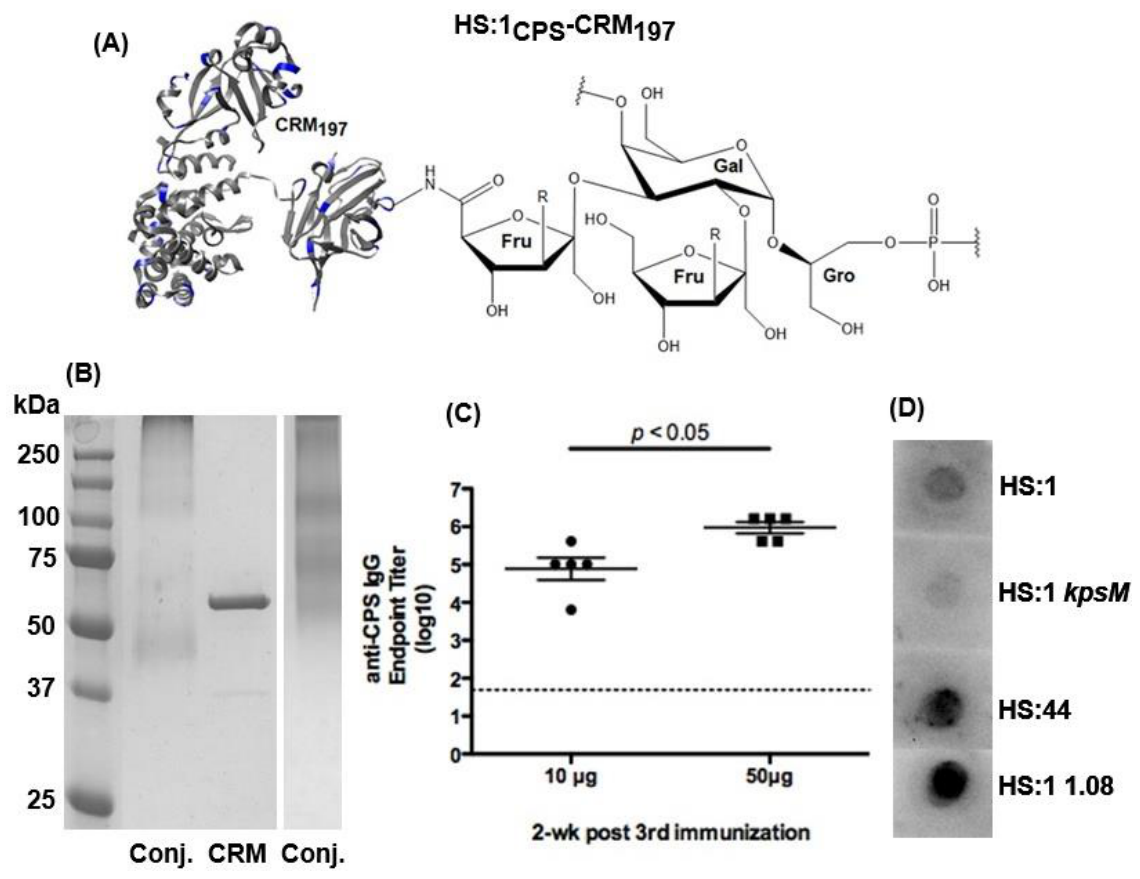
Figure 2.
31P NMR spectra of the C. jejuni native HS:1 CPS (top), TEMPO-oxidized HS:1 CPS (middle) and CPSHS:1-CRM197 conjugate (bottom) showing the 31P resonances of MeOPN at d 14.25 (attached to C3 of Fru branch units) and of the teichoic-acid diester P (d 0.02).
Figure 2.
31P NMR spectra of the C. jejuni native HS:1 CPS (top), TEMPO-oxidized HS:1 CPS (middle) and CPSHS:1-CRM197 conjugate (bottom) showing the 31P resonances of MeOPN at d 14.25 (attached to C3 of Fru branch units) and of the teichoic-acid diester P (d 0.02).
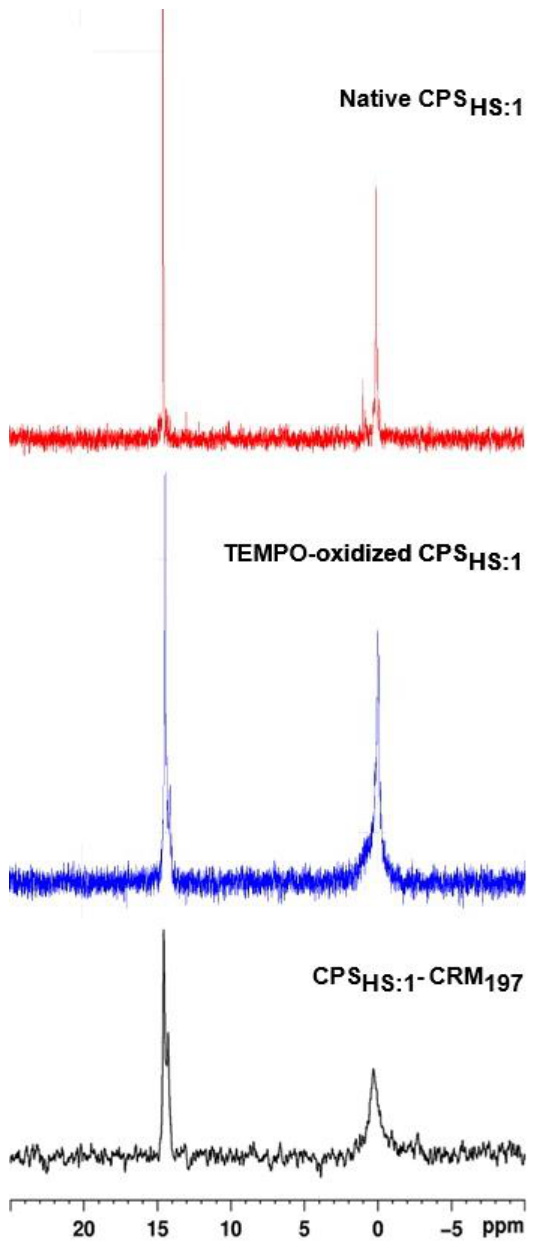
Figure 3.
Head-to-head comparison of CPSHS:1-CRM197 conjugates made with TEMPO-oxidized and periodate-oxidized HS:1 CPSs.
Figure 3.
Head-to-head comparison of CPSHS:1-CRM197 conjugates made with TEMPO-oxidized and periodate-oxidized HS:1 CPSs.
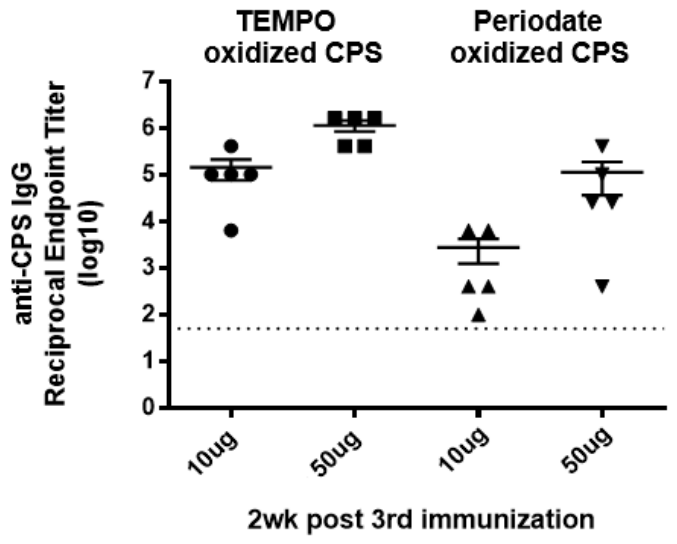
Figure 4.
(A) The CPSHS:2-CRM197 conjugate prepared with stoichiometrically TEMPO/bleach-oxidized CPSHS:2; R = MeOPN. (B) Coomassie stained SDS PAGE gel of the conjugate and CRM197; (C) ELISA showing the mouse IgG response to HS:2 CPS.
Figure 4.
(A) The CPSHS:2-CRM197 conjugate prepared with stoichiometrically TEMPO/bleach-oxidized CPSHS:2; R = MeOPN. (B) Coomassie stained SDS PAGE gel of the conjugate and CRM197; (C) ELISA showing the mouse IgG response to HS:2 CPS.
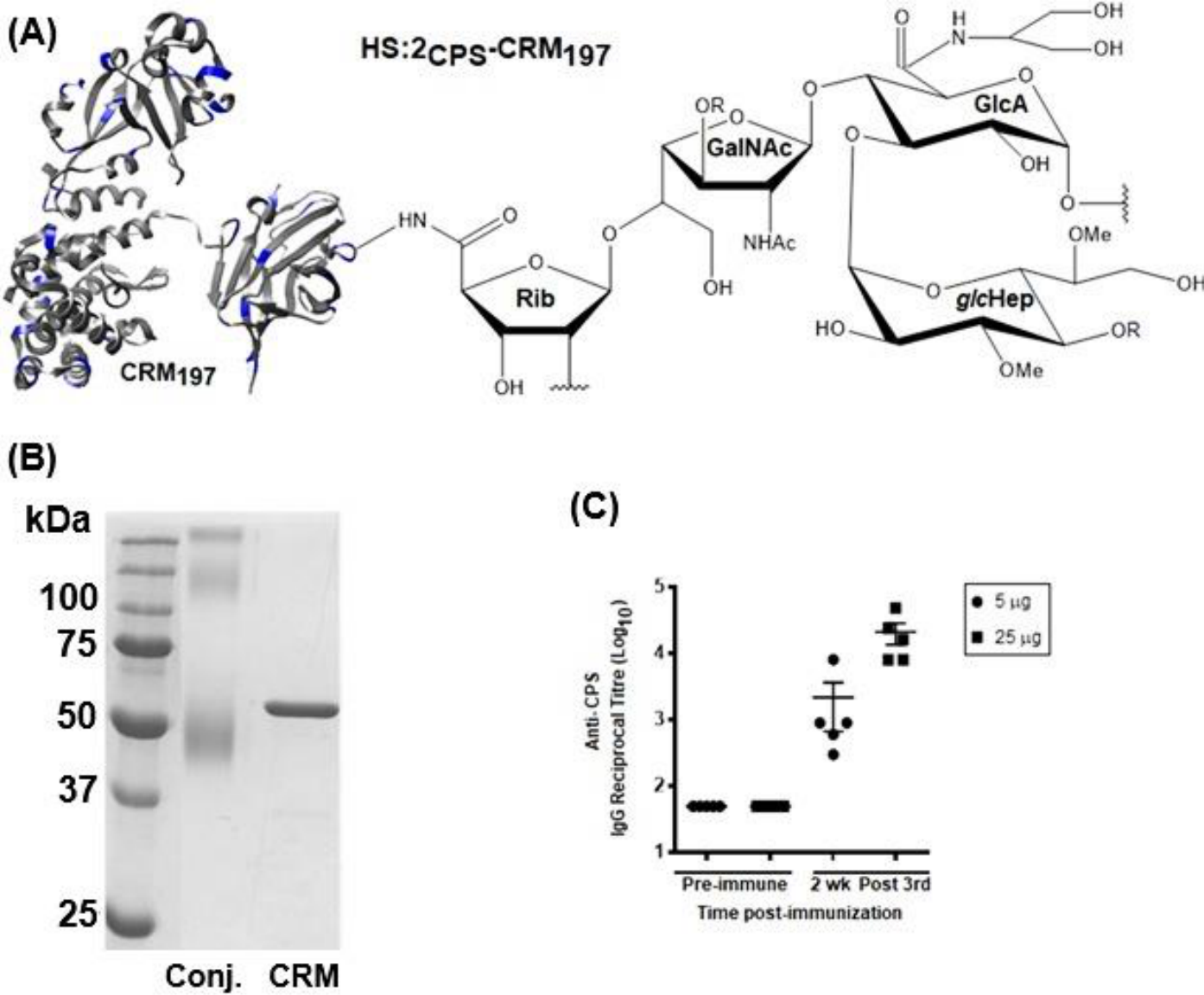
Figure 5.
1H NMR spectra of the TEMPO-oxidized CPSHS:2 (bottom) and of the CPSHS:2-CRM197 conjugate (top).
Figure 5.
1H NMR spectra of the TEMPO-oxidized CPSHS:2 (bottom) and of the CPSHS:2-CRM197 conjugate (top).
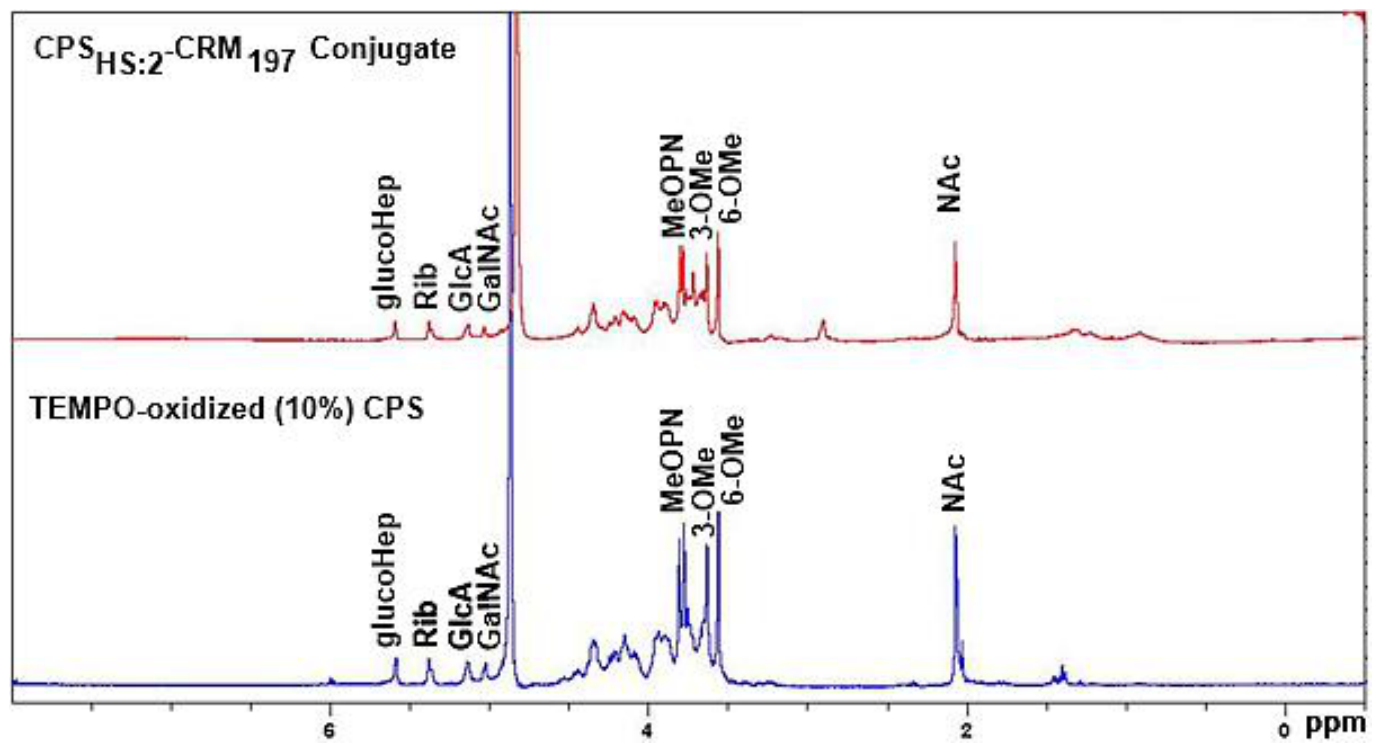
Figure 6.
(A) The CPSHS:3-CRM197 conjugate prepared with stoichiometrically TEMPO/bleach-oxidized CPSHS:3 (R = H or 3-hydroxypropanoyl); (B) Coomassie stained SDS PAGE gel of the conjugate and CRM197; (C) Immunoblot of CPSHS:3-CRM197 conjugate with C. jejuni HS:3 whole-cell antisera; (D) ELISA showing the mouse IgG response to HS:3 CPS at 5 and 25 µg doses.
Figure 6.
(A) The CPSHS:3-CRM197 conjugate prepared with stoichiometrically TEMPO/bleach-oxidized CPSHS:3 (R = H or 3-hydroxypropanoyl); (B) Coomassie stained SDS PAGE gel of the conjugate and CRM197; (C) Immunoblot of CPSHS:3-CRM197 conjugate with C. jejuni HS:3 whole-cell antisera; (D) ELISA showing the mouse IgG response to HS:3 CPS at 5 and 25 µg doses.
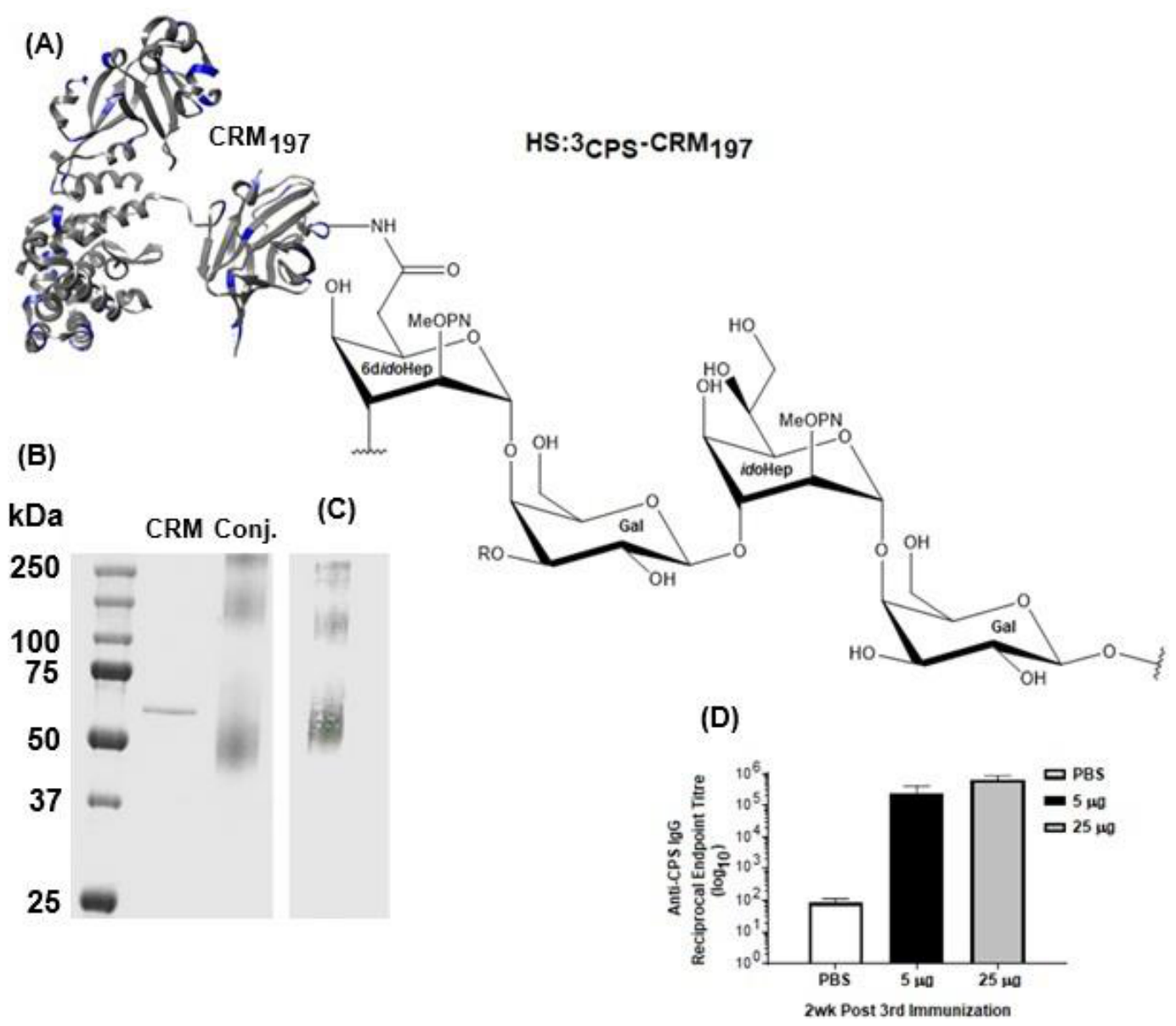
Figure 7.
GC-profiles of the alditol acetate products of native C. jejuni CPSHS:3 (top) and of TEMPO/bleach oxidized C. jejuni CPSHS:3 (bottom) showing a marked decreased in the alditol acetate of 6-deoxy-D-ido-heptose in the oxidized C. jejuni CPSHS:3. The amount of the alditol acetate of L-glycero-D-ido-heptose includes those of the alditol acetates of its anhydro derivatives, 1,6- and 1,7-anhydro-L-glycero-D-ido-heptoses, that are formed during the hydrolysis step.
Figure 7.
GC-profiles of the alditol acetate products of native C. jejuni CPSHS:3 (top) and of TEMPO/bleach oxidized C. jejuni CPSHS:3 (bottom) showing a marked decreased in the alditol acetate of 6-deoxy-D-ido-heptose in the oxidized C. jejuni CPSHS:3. The amount of the alditol acetate of L-glycero-D-ido-heptose includes those of the alditol acetates of its anhydro derivatives, 1,6- and 1,7-anhydro-L-glycero-D-ido-heptoses, that are formed during the hydrolysis step.
Disclaimer/Publisher’s Note: The statements, opinions and data contained in all publications are solely those of the individual author(s) and contributor(s) and not of MDPI and/or the editor(s). MDPI and/or the editor(s) disclaim responsibility for any injury to people or property resulting from any ideas, methods, instructions or products referred to in the content. |
© 2026 by the authors. Licensee MDPI, Basel, Switzerland. This article is an open access article distributed under the terms and conditions of the Creative Commons Attribution (CC BY) license.
Copyright: This open access article is published under a Creative Commons CC BY 4.0 license, which permit the free download, distribution, and reuse, provided that the author and preprint are cited in any reuse.