

Submitted:
31 August 2026
Posted:
31 August 2026
You are already at the latest version
Abstract
1-Isobutylpurine-2,6-diones possess a broad spectrum of pharmacological activities, highlighting their relevance in the search for new biologically active agents. In this study, we report the synthesis of a series of novel thietane-containing 1-isobutylpurine-2,6-dione derivatives. A crucial aspect of this work is the detailed stereochemical and conformational analysis of the thietanyl substituent. For the first time, the unambiguous assignment of axial and equatorial protons within the thietane ring was achieved using 2D NMR spectroscopy, exemplified by a comprehensive study of the starting substance. Furthermore, the newly synthesized compounds were evalu-ated for their antiplatelet activity, revealing inhibition of platelet aggregation exceed-ing that of acetylsalicylic acid. Based on structural analogy to established antiplatelet agent, we hypothesize that the observed biological effect is mediated via the inhibition of the glycoprotein IIb/IIIa (GPIIb/IIIa) receptor complex. These findings demonstrate that the incorporation of a thietane fragment into the 1-isobutylxanthine scaffold yields promising candidates for the development of novel GPIIb/IIIa-targeted an-tiplatelet therapeutics.
Keywords:
1-isobutylpurine-2
; 6-diones
; thietanes
; 2D NMR
; conformational analysis
; antiplatelet activity
; GPIIb/IIIa inhibitors
1. Introduction
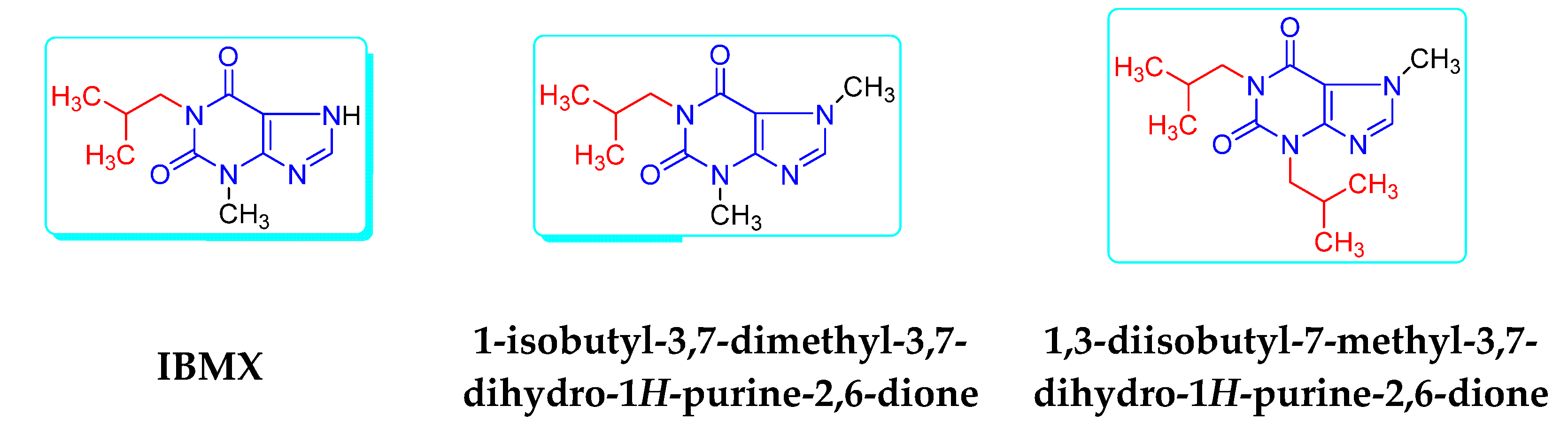
1-Isobutyl-3-methyl-3,7-dihydro-1H-purine-2,6-dione (IBMX, Figure 1) is a well-known phosphodiesterase inhibitor [1] employed as an agent for elevating cAMP levels in studies of various intracellular mechanisms [2].
IBMX enhanced 5-hydroxytryptamine-induced relaxation of the circular smooth muscle of the human colon, which confirms the involvement of cAMP in the 5-HT4 receptor binding mechanism [3]; IBMX led to the phosphorylation of the cardiac-type α1 subunit of voltage-dependent calcium channels of the pancreatic β-cell [4]; IBMX, via phosphorylation, affected adrenergic chronotropism in excised cardiac muscles from guinea pigs [5]. The addition of IBMX resulted in the phosphorylation and degradation of the Acheron protein, which drives metastatic processes in some cancers and protects some cancers from death [6].
IBMX is used as part of the maintenance medium for differentiation of fibroblasts into adipocytes for the bioactivity study of transported liposomal forms of insulin [7], and IBMX is also used as part of the adipogenic cocktails for differentiation of adipose stem cells to differentiate into mature adipocytes in the production of cultured fat [8].
The effects of 1-isobutylpurine-2,6-diones are not always associated with an increase in intracellular cAMP levels. 1-Isobutyl-3,7-dimethyl-3,7-dihydro-1H-purine-2,6-dione which exhibits no inhibitory activity against phosphodiesterases in contrast to IBMX [9], has been shown to activate the cystic fibrosis transmembrane conductance regulator chloride channel [10]; the review [11] indicated that such purine-2,6-diones may become potential therapeutic agents to cure cystic fibrosis, including dry eye syndrome [12]. Furthermore, 1-isobutyl-3,7-dimethyl-3,7-dihydro-1H-purine-2,6-dione has been proposed as an effective neuroleptic agent in contrast to the well-known psychostimulatory 3,7-dihydro-1H-purine-2,6-diones, caffeine or theophylline [13].
1,3-Diisobutyl-3,7-dihydro-1H-purine-2,6-dione displayed selectivity for A1-adenosine receptors [14,15], producing the bronchodilator effect [16]; the series of 1,3-diisobutyl-3,7-dihydro-1H-purine-2,6-diones are patented as A2B adenosine receptor antagonists, useful for treating various disease states, including asthma and diarrhea [17].
Derivatives of 1-isobutylpurine-2,6-dione have been investigated as selective agonists for the cannabinoid receptors GPR18, which constitute a promising drug target in immunology and cancer [18].
The 7-thietanyl-substituted 1-alkyl-3,7-dihydro-1H-purine-2,6-diones that we synthesized, containing amine residues at position 8, exhibit antiplatelet activity [19,20], however, their 1-isobutyl analogs remained unstudied.
The present work reports the synthesis of 8-amino-substituted 1-isobutyl-3-methyl-3,7-dihydro-1H-purine-2,6-diones containing thietane ring at position 7 and evaluates their antiplatelet activity.
2. Results
2.1. Chemistry
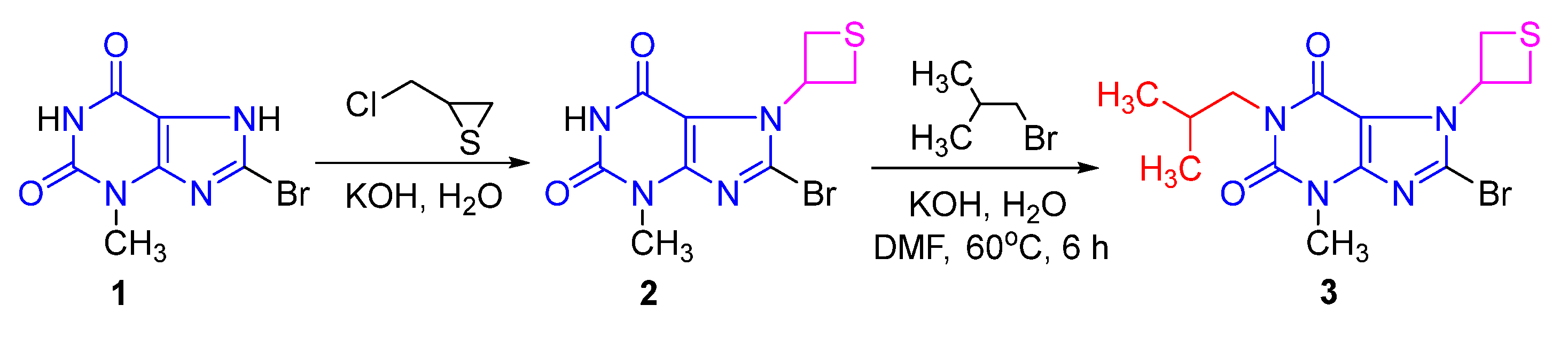
The key intermediate 8-bromo-1-isobutyl-3-methyl-7-(thietan-3-yl)-3,7-dihydro-1H-purine-2,6-dione (3) was prepared by sequential introduction of thietane ring into the N7-position of 8-bromo-3-methyl-3,7-dihydro-1H-purine-2,6-dione (1) by the reaction with 2-(chloromethyl)thiirane in water and alkylation of the N1-position of the resulting 8-bromo-3-methyl-7-(thietan-3-yl)-3,7-dihydro-1H-purine-2,6-dione (2) with isobutyl bromide in DMF in the presence of potassium hydroxide (Scheme 1).
8-Bromo-1-isobutyl-3-methyl-7-(1-oxothietan-3-yl)-3,7-dihydro-1H-purine-2,6-dione (4) was synthesized by oxidation of 8-bromopurine-2,6-dione 3 with hydrogen peroxide in 83% yield, 8-bromo-1-isobutyl-3-methyl-7-(1,1-dioxothietan-3-yl)-3,7-dihydro-1H-purine-2,6-dione (5) – by oxidation of 8-bromopurine-2,6-dione 3 with potassium permanganate in 79% yield in acetic acid.
Nucleophilic substitution reaction of bromine atom in compounds 3-5 with amines in ethanol resulted to the formation of 8-amino-substituted 1-isobutyl-3-methyl-7-(thietan-3-yl)-3,7-dihydro-1H-purine-2,6-diones (6a–e), 1-isobutyl-3-methyl-7-(1-oxothietan-3-yl)-3,7-dihydro-1H-purine-2,6-diones (6f–j) and 1-isobutyl-3-methyl-7-(1,1-dioxothietan-3-yl)-3,7-dihydro-1H-purine-2,6-diones (6k–o) in 35–83% yield (Scheme 2).
—
The structures of the synthesized compounds have been confirmed by IR, NMR spectroscopy and mass spectrometry data. For full spectral data, see Supplementary Information.
2.2. Structural Investigation of the Thietanyl Substituent
The four-membered thietane ring adopts a folded conformation (with a puckering angle φ=21°). Consequently, its 3-monosubstituted derivatives, such as the 7-(thietan-3-yl)purine-2,6-diones, can exist as two conformers featuring the substituent in either the axial (a) or equatorial (e) position (Figure 2). For steric reasons, the conformers with the substituent in the equatorial position are more stable.
A detailed investigation of the geometry of the thietanyl substituent was performed for compound 2. The structure of the investigated compound was obtained by geometry optimization and vibrational frequency calculations using the Gaussian 16 program package [21] at the B3LYP [22]/6-311++G(d,p) [23] and M06-2X/6-311+G(d,p) [24] levels of theory. The choice of the B3LYP/6-311++G(d,p) level is justified by its successful application to related sulfur-containing heterocyclic systems, in particular, for the calculation of structural parameters and spin–spin coupling constants of thiane derivatives [25]. The use of the additional M06-2X functional is motivated by its ability to properly account for dispersion interactions, which is crucial for the reliable description of conformational equilibria and inversion barriers in strained four-membered rings, including the thietane ring [26]. According to the computational data for compound 2 the C-S bond length is 1.842 Å, the C-C bond length is 1.537 Å, and the C-S-C bond angle is 78°, which is comparable to literature data [27].
The assignment of the methylene proton signals at C2,4 to the pseudoaxial and pseudoequatorial positions was performed based on the analysis of signal multiplet splitting and NOESY data. In the 1H NMR spectrum, the proton at C3 appears as a quintet at 5.82 ppm. The axial (Ha) and equatorial (He) hydrogen atoms at the C2,4 positions are magnetically non-equivalent and appear as a doublet of doublets at 4.22 ppm and as a triplet at 3.32 ppm, with a chemical shift difference of approximately 0.9 ppm. To achieve reliable signal assignment in the 1H NMR spectrum and to confirm the spatial structure of the thietane ring, quantum chemical calculations of spin–spin coupling constants were performed (Table 1). The JHH coupling constants were calculated using the GIAO method at the mPW1PW91/6-311+G(2d,p) level of theory [28] with the polarizable continuum model (PCM) for DMSO. For comparison with the experimental values, total JHH constants were used, including all contributions: Fermi contact, spin–dipolar, paramagnetic, and diamagnetic spin interactions. The experimental values of the geminal 2JHH and vicinal 3JHH coupling constants are close to each other and amount to 8.6, 9.7, and 8.6 Hz, which is in agreement with the calculated values (Figure 3). From the Karplus curve, which expresses the relationship between vicinal coupling constants and dihedral angles, these vicinal coupling constant values correspond to angles of approximately 30° (dihedral angle H-C3-C2,4-He) and 160° (dihedral angle H-C3-C2,4-Ha).
Furthermore, in the NOESY spectrum (Figure 4), the presence of a NOE correlation (nuclear Overhauser effect) between the signals of the spatially close C3-H proton and the S(CH)2 protons that exhibit the upfield triplet signal (δH 3.32 ppm) unambiguously indicates the pseudoequatorial position of the latter.
In heteronuclear correlation experiments, cross-peak pairs characterize spin–spin coupling between protons and carbon or nitrogen nuclei through multiple bonds. Moreover, vicinal 3J constants exhibit a dependence on dihedral angles similar to the Karplus curve and can be used to discriminate between axial and equatorial protons. To further refine the spatial structure of the thietane ring, the calculated 3JCH and 3JNH values were compared with experimental data obtained from heteronuclear correlation spectra. The JCH and JNH coupling constants were calculated using the approach based on the recommendations of P. R. Rablen [29]. According to this methodology, the Fermi contact contribution to the coupling constants was calculated at the B3LYP/6-31G(d,p) level of theory with an extended basis set for hydrogen atoms (u+1s) (Table 1).
To determine the long-range nJCH coupling constants, the {1H,13C} LR-HSQMBC experiment, developed by Williamson and co-workers and optimized for observing a full range of weak long-range nJCH correlations, was used [30]. To determine the nJNH coupling constants, a gradient-selected {1H,15N} HMBC experiment [31], optimized for long-range coupling constants, without decoupling during acquisition, was employed.
In the {1H,13C} LR-HSQMBC spectrum (Figure 5), the absence of a cross-peak between the carbon signal of the C2,4 atoms and the downfield S(CH)2 proton signal indicates a minimal 3JCH value (dihedral angle close to 90°), which corresponds to an axial orientation. In the {1H,15N} HMBC spectrum, no cross-peak is observed between the signals of the N7-atom of the purine-2,6-dione moiety and the upfield S(CH)2 proton signal (calculated dihedral angle N7-C3’-C2’,4’-H of 92.9°), indicating their equatorial arrangement.
The absence of cross-peaks in the aforementioned experiments indicates minimal values of the corresponding coupling constants, enabling unambiguous determination of the spatial orientation of protons in the thietane ring. The comparison of experimental and calculated coupling constants (JHH, JCH, JNH) presented in Table 1 shows good agreement and confirms the correctness of the proposed assignment of the axial and equatorial proton signals in the thietane ring.
2.3. Biological Study
In this work, the antiplatelet aggregation properties of 8-amino-substituted 1-isobutyl-3-methyl-3,7-dihydro-1H-purine-2,6-diones containing thietane ring under study were investigated (Table 2).
As a result of biological activity study of the synthesized compounds, it was found that the expression of antiplatelet activity of compounds 6d, g, h is comparable to that of acetylsalicylic acid. Compounds 6b, c, f exhibited antiplatelet activity exceeding the activity of acetylsalicylic acid (MA 13.7 vs. 16.2–19.6 at p < 0.05). Compound 6b demonstrated the highest antiplatelet activity, for which the maximum amplitude value in the ADP-induced platelet aggregation test exceeded the effect of acetylsalicylic acid by a factor of 1.4. 8-Morpholinyl-, 8-azepanyl-substituted 1-isobutylpurine-2,6-diones containing thietane or thietane oxide rings are active.
3. Discussion
The thietane ring in the key compound 3 is oxidized in good yields to thietane oxide (compound 4) and thietane dioxide rings (compound 5). In all thietane-containing 8-bromopurine-2,6-diones 3-5, the bromine atom is readily replaced by amines to form 8-amino-substituted 1-isobutyl-3-methylpurine-2,6-diones containing thietane, thietane oxide, and thietane dioxide rings. Thus, the developed strategy allows the preparation of 1-isobutyl-3-methylpurine-2,6-diones by modifying both the thietane fragment and the amine residue at the C8 position.
The literature described the antiaggregatory activity of 8-amino-substituted 1-alkyl-3-methyl-3,7-dihydro-1H-purine-2,6-diones containing thietane ring (Figure 6A) against erythrocytes [19,20], determined by viscometry [32]. The antiaggregatory activity of thietane-containing 2-[(1-alkyl-3-methyl-2,6-dioxo-2,3,6,7-tetrahydro-1H-purin-8-yl)sulfanyl]acetic acids and their salts (B) against platelets is known [33,34]. Among them, compounds exhibiting activity at the level of acetylsalicylic acid were found [35]. Ethyl 2-[8-arylmethylidenehydrazinyl-3-methyl-2,6-dioxo-7-(1-oxothietan-3-yl)-2,3,6,7-tetrahydro-1H-purin-1-yl]acetates (C) also exhibited activity at the level of acetylsalicylic acid [36].
The closest in structure to the synthesized compounds are 8-amino-substituted 1-alkyl-3-methyl-3,7-dihydro-1H-purine-2,6-diones containing thietane ring (A). Recently, it was shown that a representative of this series, 1-ethyl-3-methyl-8-(piperazin-1-yl)-7-(thietan-3-yl)-3,7-dihydro-1H-purine-2,6-dione hydrochloride (D), is undergoing Phase III clinical trials as antiplatelet agent that targets Glycoprotein IIb/IIIa inhibitors [37]. Therefore, the search for antiplatelet aggregation agents—glycoprotein IIb/IIIa inhibitors among 8-amino-substituted 1-isobutyl-3-methyl-3,7-dihydro-1H-purine-2,6-diones containing thietane ring is promising.
4. Materials and Methods
4.1. Materials and Instrumentations
IR spectra were recorded from KBr pellets on an InfraLUM FT-02 FTIR spectrometer (Russia). NMR spectra were recorded at 298 K on a Bruker Avance III pulsed spectrometer (Germany) at operating frequency 500.13 MHz (1H) and 125.76 MHz (13C). Chemical shifts (ppm) were recorded with the solvent signal as the internal standard (CDCl3, 1H NMR 7.26 ppm, 13C NMR 77.16 ppm, and DMSO-d6, 1H NMR 2.50 ppm, 13C NMR 39.52 ppm). Chemical shifts are expressed in ppm, and J values are given in Hertz. 13C NMR spectra were interpreted using DEPT-90 and DEPT-135 experiments. Mass spectra were obtained by ESI on an Orbitrap spectrometer (Thermo Scientific, USA).
Elemental analysis used a Hekatech Euro3000 analyzer (Germany). Results of elemental analyses for C, H, N, and S agreed with those calculated. Melting points were determined on a Stuart SMP30 apparatus (Great Britain). The course of reactions and purity of synthesized compounds were monitored by TLC on Sorbfil plates using BuOH–AcOH–H2O (4:2:1, v/v/v) for 4, 6a–j, n; and CHCl3–dioxane (9:1, v/v) for 5, 6k–m, o. Spots were detected in UV light or a chamber with I2 vapor.
4.2. Synthesis and Characterization
Unless otherwise specified, all reactions were performed under an air atmosphere. Reagents were used as purchased, unless otherwise indicated.
8-Bromo-3-methyl-7-(thietan-3-yl)-3,7-dihydro-1H-purine-2,6-dione (2). To a solution of compound 1 (24.50 g, 0.1 mol) and potassium hydroxide (6.73 g, 0.12 mol) in H2O (350 ml) at 50–60 °C, 2-(chloromethyl)thiirane (13.03 g, 0.12 mol) was added and stirred at 50–60 °C for 1 h. Then to the reaction mixture were added potassium hydroxide (3.37 g, 0.06 mol) and 2-(chloromethyl)thiirane (6.52 g, 0.06 mol) and stirred at 50–60 °C for 1 h. The resulting precipitate was filtered off, rinsed with H2O, ether, dried. To the dry precipitate was poured with 400 ml of chloroform, boiled for 10 min, filtered, and the filtrate was cooled. The resulting precipitate was filtered off, rinsed with CHCl3 and dried. Yield 11.55 g (36%), white crystalline powder; mp 233–234 °C (i-BuOH); IR (KBr, νmax, cm–1) 1670–1725 (C=C, C=N, C=O), 2780–3250 (N-H); 1H NMR (500 MHz, DMSO-d6) δH 3.05 (s, 3H, 3-CH3), 3.30–3.34 (m, 2H, S(CH)2), 4.20–4.24 (m, 2H, S(CH)2), 5.78–5.86 (m, 1H, 7-CH), 11.39 (s, 1H, 1-NH) ppm; 13C NMR (125 MHz, DMSO-d6) δC 28.6 (3-CH3), 34.7 (S(CH2)2), 52.6 (7-CH), 109.0 (C5), 127.3 (C8), 150.2 (C4), 150.3 (C2), 153.8 (C6) ppm; {1H,15N} HSQC (50 MHz, DMSO-d6) δN 153.6 (N1) ppm; {1H,15N} HMBC (50 MHz, DMSO-d6) δN 113.5 (N3), 153.8 (N1), 179.9 (N7) ppm; HRMS (ESI) m/z found 316.9721, 318.9697 [M+H]+, calcd for C9H9BrN4O2S+H+ 316.9703, 318.9682.
8-Bromo-1-isobutyl-3-methyl-7-(thietan-3-yl)-3,7-dihydro-1H-purine-2,6-dione (3) was obtained according to the procedure in the literature [35].
8-Bromo-1-isobutyl-3-methyl-7-(1-oxothietan-3-yl)-3,7-dihydro-1H-purine-2,6-dione (4). To a solution of compound 3 (1.87 g, 5 mmol) in AcOH (38 ml), 30% hydrogen peroxide solution (1.13 g, 10 mmol) was added. The reaction mixture was kept at r.t. for 1.5 h and then was neutralized with conc. ammonia solution at a temperature not exceeding 15 °C to pH 7. The resulting precipitate was filtered off, rinsed with H2O, and dried. Yield 1.62 g (83%), white crystalline powder; mp 191.5–192.7 °C (EtOH); IR (KBr, νmax, cm–1) 1049 (S=O), 1607, 1654, 1706, 1719 (C=C, C=N, C=O); 1H NMR (500 MHz, CDCl3) δH 0.91 (d, 6H, (CH3)2), 2.10–2.18 (m, 1H, CH), 3.43–3.47 (m, 2H, S(CH)2), 3.54 (s, 3H, 3-CH3), 3.86 (d, 2H, 1-CH2), 4.30–4.34 (m, 2H, S(CH)2), 6.46–6.53 (m, 1H, 7-CH) ppm; 13C NMR (125 MHz, CDCl3) δC 20.1 ((CH3)2), 27.2 (CH), 30.1 (3-CH3), 48.8 (1-CH2), 52.7 (7-CH), 55.3 (S(CH2)2), 108.7 (C5), 128.1 (C8), 149.9 (C4), 150.9 (C2), 154.3 (C6) ppm; HRMS (ESI) m/z found 389.0306, 391.0278 [M+H]+, calcd for C13H17BrN4O3S+H+ 389.0278, 391.0258.
8-Bromo-1-isobutyl-3-methyl-7-(1,1-dioxothietan-3-yl)-3,7-dihydro-1H-purine-2,6-dione (5). To a solution of compound 3 (5.60 g, 15 mmol) in AcOH (75 ml), a solution of potassium permanganate (4.74 g, 30 mmol) in H2O (75 ml) was added with stirring at r.t. for 1 h. The reaction mixture was stirred at 40 °C for 2 h, and then was decolorized with a solution of sodium thiosulfate (7.11 g, 45 mmol) in H2O (40 ml). The resulting precipitate was filtered off, rinsed with H2O, and dried. Yield 4.80 g (79%), white crystalline powder; mp 250.6–252.0 °C (EtOH); IR (KBr, νmax, cm–1) 1148, 1323 (SO2), 1593, 1618, 1656, 1702 (C=C, C=N, C=O); 1H NMR (500 MHz, CDCl3) δH 0.90 (d, 6H, (CH3)2), 2.11–2.18 (m, 1H, CH), 3.33 (s, 3H, 3-CH3), 3.80 (d, 2H, 1-CH2), 4.35–4.39 (m, 2H, S(CH)2), 5.20–5.24 (m, 2H, S(CH)2), 5.58–5.62 (m, 1H, 7-CH) ppm; 13C NMR (125 MHz, CDCl3) δC 20.0 ((CH3)2), 27.1 (CH), 30.0 (3-CH3), 48.6 (1-CH2), 40.4 (7-CH), 70.1 (S(CH2)2), 108.5 (C5), 129.1 (C8), 149.7 (C4), 150.9 (C2), 154.3 (C6) ppm; HRMS (ESI) m/z found 405.0308, 407.0283 [M+H]+, calcd for C13H17BrN4O4S+H+ 405.0227, 407.0207.
General Procedure for the Synthesis of 8-Amino-substituted 1-isobutyl-3-methyl-7-(thietan-3-yl)-3,7-dihydro-1H-purine-2,6-diones (6a–e). To a solution of compound 3 (1.12 g, 3 mmol) in EtOH (25 ml), the corresponding amine (9 mmol, in the case of the synthesis of compound 6d—12 mmol of benzylamine) was added, and the reaction mixture was boiled for 6–7 h. Then it was cooled, the resulting precipitate was filtered off, rinsed with H2O, and dried.
1-Isobutyl-3-methyl-8-(piperidin-1-yl)-7-(thietan-3-yl)-3,7-dihydro-1H-purine-2,6-dione (6a) white crystalline powder; yield 83%; mp 152.6–153.6 °C (i-PrOH); IR (KBr, νmax, cm–1) 1611, 1651, 1662, 1691 (C=C, C=N, C=O); 1H NMR (500 MHz, CDCl3) δH 0.91 (d, J = 6.7 Hz, 6H, (CH3)2), 1.63–1.74 (m, 6H, (CH2)3), 2.15–2.22 (m, 1H, CH), 3.12 (t, J = 5.05 Hz, 4H, 8-N(CH2)2), 3.22–3.25 (m, 2H, S(CH)2), 3.49 (s, 3H, 3-CH3), 3.90 (d, J = 7.4 Hz, 2H, 1-CH2), 4.31–4.35 (m, 2H, S(CH)2), 5.40–5.48 (m, 1H, 7-CH) ppm; 13C NMR (125 MHz, CDCl3) δC 20.1 ((CH3)2), 24.0 ((CH2)2CH2), 25.4 (CH2(CH2)2), 27.2 (CH), 29.8 (3-CH3), 35.8 (S(CH2)2), 48.2 (1-CH2), 51.7 (7-CH), 52.6 (8-N(CH2)2), 105.1 (C5), 148.9 (C4), 151.8 (C2), 154.8 (C6), 157.0 (C8) ppm; HRMS (ESI) m/z found 378.2003 [M+H]+, calcd for C18H27N5O2S+H+ 378.1959.
1-Isobutyl-3-methyl-8-(morpholin-4-yl)-7-(thietan-3-yl)-3,7-dihydro-1H-purine-2,6-dione (6b) white crystalline powder; yield 64%; mp 160.5–161.2 °C (EtOH); IR (KBr, νmax, cm–1) 1609, 1648, 1656, 1698 (C=C, C=N, C=O); 1H NMR (500 MHz, CDCl3) δH 0.90 (d, J = 5.9 Hz, 6H, (CH3)2), 2.12–2.21 (m, 1H, CH), 3.11–3.26 (m, 6H, 8-N(CH2)2, S(CH)2), 3.48 (s, 3H, 3-CH3), 3.78–3.92 (m, 6H, O(CH2)2, 1-CH2), 4.29–4.37 (m, 2H, S(CH)2), 5.44–5.54 (m, 1H, 7-CH) ppm; 13C NMR (125 MHz, CDCl3) δC 20.0 ((CH3)2), 27.2 (CH), 29.8 (3-CH3), 35.7 (S(CH2)2), 48.3 (1-CH2), 51.3 (7-CH), 51.6 (8-N(CH2)2), 66.2 (O(CH2)2), 105.5 (C5), 148.6 (C4), 151.7 (C2), 154.9 (C6), 155.5 (C8) ppm; HRMS (ESI) m/z found 380.1790 [M+H]+, calcd for C17H25N5O3S+H+ 380.1751.
8-(Azepan-1-yl)-1-isobutyl-3-methyl-7-(thietan-3-yl)-3,7-dihydro-1H-purine-2,6-dione (6c) white crystalline powder; yield 74%; mp 116.0–117.5 °C (hexane); IR (KBr, νmax, cm–1) 1616, 1645, 1652, 1698 (C=C, C=N, C=O); 1H NMR (500 MHz, CDCl3) δH 0.89 (d, J = 6.7 Hz, 6H, (CH3)2), 1.64–1.69 (m, 4H, (CH2)2), 1.80–1.86 (m, 4H, 2CH2), 2.12–2.21 (m, 1H, CH), 3.16–3.19 (m, 2H, S(CH)2), 3.40 (t, J = 5.9 Hz, 4H, 8-N(CH2)2), 3.51 (s, 3H, 3-CH3), 3.86 (d, J = 7.5 Hz, 2H, 1-CH2), 4.30–4.34 (m, 2H, S(CH)2), 5.32–5.40 (m, 1H, 7-CH) ppm; 13C NMR (125 MHz, CDCl3) δC 20.0 ((CH3)2), 27.2 (CH), 27.3 ((CH2)2), 28.6 (2CH2), 29.7 (3-CH3), 36.0 (S(CH2)2), 48.1 (1-CH2), 52.4 (7-CH), 53.6 (8-N(CH2)2), 104.4 (C5), 149.4 (C4), 151.8 (C2), 154.7 (C6), 158.4 (C8) ppm; HRMS (ESI) m/z found 392.2147 [M+H]+, calcd for C19H29N5O2S+H+ 392.2115.
8-(Benzylamino)-1-isobutyl-3-methyl-7-(thietan-3-yl)-3,7-dihydro-1H-purine-2,6-dione (6d) white crystalline powder; yield 68%; mp 156.2–157.6 °C (i-PrOH); IR (KBr, νmax, cm–1) 1615, 1647, 1698 (C=C, C=N, C=O), 3230–3380 (N-H); 1H NMR (500 MHz, CDCl3) δH 0.91 (d, J = 6.7 Hz, 6H, (CH3)2), 2.12–2.18 (m, 1H, CH), 3.51 (s, 3H, 3-CH3), 3.60–3.64 (m, 2H, S(CH)2), 3.81–3.87 (m, 4H, 1-CH2, S(CH)2), 4.75 (d, J = 5.5 Hz, 2H, 8-NCH2), 5.94–6.00 (m, 1H, 7-CH), 6.06 (br.s, 1H, 8-NH), 7.28–7.45 (m, 5H, C6H5) ppm; 13C NMR (125 MHz, CDCl3) δC 20.2 ((CH3)2), 27.3 (CH), 29.7 (3-CH3), 33.2 (S(CH2)2), 47.8 (1-CH2), 48.0 (8-NCH2), 50.7 (7-CH), 127.8, 127.9, 128.9, 138.1 (C6H5), 102.6 (C5), 149.0 (C4), 151.7 (C2), 152.5 (C6), 154.2 (C8) ppm; HRMS (ESI) m/z found 400.1831 [M+H]+, calcd for C20H25N5O2S+H+ 400.1802.
8-[(2-Hydroxyethyl)amino]-1-isobutyl-3-methyl-7-(thietan-3-yl)-3,7-dihydro-1H-purine-2,6-dione (6e) white crystalline powder; yield 65%; mp 157.2–159.6 °C (benzene); IR (KBr, νmax, cm–1) 1609, 1638, 1646, 1696 (C=C, C=N, C=O), 3250–3480 (N-H, O-H); 1H NMR (500 MHz, DMSO-d6) δH 0.83 (d, J = 6.6 Hz, 6H, (CH3)2), 2.00–2.08 (m, 1H, CH), 3.15–3.18 (m, 2H, S(CH)2), 3.30–3.38 (m, 5H, 3-CH3, 8-NCH2), 3.52–3.56 (m, 2H, OCH2), 3.71 (d, J = 7.3 Hz, 2H, 1-CH2), 4.12–4.16 (m, 2H, S(CH)2), 4.73 (t, J = 5.4 Hz, 1H, OH), 5.84–5.91 (m, 1H, 7-CH), 7.34 (br.s, 1H, 8-NH) ppm; 13C NMR (125 MHz, DMSO-d6) δC 20.5 ((CH3)2), 27.3 (CH), 29.8 (3-CH3), 36.4 (S(CH2)2), 45.8 (8-NCH2), 47.7 (1-CH2), 49.3 (7-CH), 60.0 (OCH2), 102.4 (C5), 150.4 (C2), 151.4 (C6), 153.4 (C8) ppm; HRMS (ESI) m/z found 354.1619 [M+H]+, calcd for C15H23N5O3S+H+ 354.1595.
General Procedure for the Synthesis of 8-Amino-substituted 1-isobutyl-3-methyl-7-(1-oxothietan-3-yl)-3,7-dihydro-1H-purine-2,6-diones (6f-j). To a solution of compound 4 (1.17 g, 3 mmol) in EtOH (40 ml), the corresponding amine (9 mmol) was added, and the reaction mixture was boiled for 5–8 h. Then it was cooled, the resulting precipitate was filtered off, rinsed with H2O, and dried.
1-Isobutyl-3-methyl-8-(piperidin-1-yl)-7-(1-oxothietan-3-yl)-3,7-dihydro-1H-purine-2,6-dione (6f) white crystalline powder; yield 56%; mp 221.3–222.4 °C (MeOH); IR (KBr, νmax, cm–1) 1063 (S=O), 1612, 1652, 1660, 1688, 1699 (C=C, C=N, C=O); 1H NMR (500 MHz, CDCl3) δH 0.89 (d, J = 5.7 Hz, 6H, (CH3)2), 1.58–1.77 (m, 6H, (CH2)3), 2.08–2.18 (m, 1H, CH), 3.12 (br.s, 4H, 8-N(CH2)2), 3.34–3.42 (m, 2H, S(CH)2), 3.50 (s, 3H, 3-CH3), 3.82 (d, J = 6.5 Hz, 2H, 1-CH2), 4.21–4.29 (m, 2H, S(CH)2), 6.02–6.09 (m, 1H, 7-CH) ppm; 13C NMR (125 MHz, CDCl3) δC 20.1 ((CH3)2), 23.9 ((CH2)2CH2), 25.3 ((CH2)2CH2), 27.2 (CH), 29.8 (3-CH3), 48.3 (1-CH2), 50.5 (7-CH), 52.6 (8-N(CH2)2), 55.9 (S(CH2)2), 104.3 (C5), 149.7 (C4), 151.6 (C2), 154.9 (C6), 157.6 (C8) ppm; HRMS (ESI) m/z found 394.1927 [M+H]+, calcd for C18H27N5O3S+H+ 394.1908.
1-Isobutyl-3-methyl-8-(morpholin-4-yl)-7-(1-oxothietan-3-yl)-3,7-dihydro-1H-purine-2,6-dione (6g) white crystalline powder; yield 70%; mp 213.2–214.5 °C (MeOH); IR (KBr, νmax, cm–1) 1063 (S=O), 1614, 1643, 1668, 1692, 1699 (C=C, C=N, C=O); 1H NMR (500 MHz, CDCl3) δH 0.90 (d, J = 6.4 Hz, 6H, (CH3)2), 2.09–2.17 (m, 1H, CH), 3.18 (br.s, 4H, 8-N(CH2)2), 3.33–3.40 (m, 2H, S(CH)2), 3.50 (s, 3H, 3-CH3), 3.79–3.89 (m, 6H, O(CH2)2, 1-CH2), 4.23–4.30 (m, 2H, S(CH)2), 6.09–6.16 (m, 1H, 7-CH) ppm; 13C NMR (125 MHz, CDCl3) δC 20.1 ((CH3)2), 27.2 (CH), 29.9 (3-CH3), 48.4 (1-CH2), 50.3 (7-CH), 51.6 (8-N(CH2)2), 55.8 (S(CH2)2), 66.1 (O(CH2)2), 104.7 (C5), 149.4 (C4), 151.5 (C2), 155.0 (C6), 156.2 (C8) ppm; HRMS (ESI) m/z found 396.1793 [M+H]+, calcd for C17H25N5O4S+H+ 396.1701.
8-(Azepan-1-yl)-1-isobutyl-3-methyl-7-(1-oxothietan-3-yl)-3,7-dihydro-1H-purine-2,6-dione (6h) white crystalline powder; yield 64%; mp 212.8–213.8 °C (i-PrOH); IR (KBr, νmax, cm–1) 1063 (S=O), 1614, 1649, 1662, 1695 (C=C, C=N, C=O); 1H NMR (500 MHz, CDCl3) δH 0.89 (d, J = 6.6 Hz, 6H, (CH3)2), 1.66 (br.s, 4H, (CH2)2), 1.84 (br.s, 4H, 2CH2), 2.09–2.15 (m, 1H, CH), 3.32–3.37 (m, 2H, S(CH)2), 3.45 (t, J = 5.8 Hz, 4H, 8-N(CH2)2), 3.48 (s, 3H, 3-CH3), 3.80 (d, J = 7.4 Hz, 2H, 1-CH2), 4.23–4.28 (m, 2H, S(CH)2), 5.97–6.04 (m, 1H, 7-CH) ppm; 13C NMR (125 MHz, CDCl3) δC 20.1 ((CH3)2), 27.2 (CH), 27.4 ((CH2)2), 28.5 (2-CH2), 29.8 (3-CH3), 48.2 (1-CH2), 51.3 (7-CH), 53.4 (8-N(CH2)2), 56.1 (S(CH2)2), 103.7 (C5), 150.2 (C4), 151.6 (C2), 154.7 (C6), 159.0 (C8) ppm; HRMS (ESI) m/z found 408.2082 [M+H]+, calcd for C19H29N5O3S+H+ 408.2064.
8-(Benzylamino)-1-isobutyl-3-methyl-7-(1-oxothietan-3-yl)-3,7-dihydro-1H-purine-2,6-dione (6i) white crystalline powder; yield 35%; mp 239.2–240.4 °C (MeOH); IR (KBr, νmax, cm–1) 1045 (S=O), 1620, 1648, 1695 (C=C, C=N, C=O), 3250–3360 (N-H); 1H NMR (500 MHz, CDCl3) δH 0.92 (d, J = 6.8 Hz, 6H, (CH3)2), 2.12–2.20 (m, 1H, CH), 3.16–3.21 (m, 2H, S(CH)2), 3.52 (s, 3H, 3-CH3), 3.83 (d, J = 7.5 Hz, 2H, 1-CH2), 4.23–4.28 (m, 2H, S(CH)2), 4.55 (d, J = 5.2 Hz, 2H, 8-NCH2), 6.31–6.38 (m, 1H, 7-CH), 7.17 (t, J = 5.2 Hz, 1H, 8-NH), 7.28–7.39 (m, 5H, C6H5) ppm; 13C NMR (125 MHz, CDCl3) δC 20.1 ((CH3)2), 27.3 (CH), 29.8 (3-CH3), 47.6 (1-CH2), 48.2 (8-NCH2), 48.4 (7-CH), 56.6 (S(CH2)2), 102.6 (C5), 127.8, 128.6, 128.6, 138.2 (C6H5), 151.2 (C4), 151.7 (C2), 153.1 (C6), 153.9 (C8) ppm; HRMS (ESI) m/z found 416.1776 [M+H]+, calcd for C20H25N5O3S+H+ 416.1751.
8-[(2-Hydroxyethyl)amino]-1-isobutyl-3-methyl-7-(1-oxothietan-3-yl)-3,7-dihydro-1H-purine-2,6-dione (6j) white crystalline powder; yield 53%; mp 249.3–250.3 °C (i-PrOH); IR (KBr, νmax, cm–1) 1074 (S=O), 1617, 1655, 1695 (C=C, C=N, C=O), 3180–3400 (N-H, O-H); 1H NMR (500 MHz, DMSO-d6) δH 0.81 (d, J = 6.5 Hz, 6H, (CH3)2), 1.98–2.06 (m, 1H, CH), 3.26–3.37 (m, 7H, S(CH)2, 3-CH3, 8-NCH2), 3.52–3.56 (m, 2H, OCH2), 3.67 (d, J = 7.0 Hz, 2H, 1-CH2), 4.02–4.08 (m, 2H, S(CH)2), 4.75 (t, J = 5.2 Hz, 1H, OH), 6.20–6.27 (m, 1H, 7-CH), 7.47 (br.s, 1H, 8-NH) ppm; 13C NMR (125 MHz, DMSO-d6) δC 20.4 ((CH3)2), 27.2 (CH), 29.9 (3-CH3), 45.9 (8-NCH2), 47.8 (1-CH2), 48.4 (7-CH), 56.2 (S(CH2)2), 60.0 (OCH2), 101.8 (C5), 151.0 (C4), 151.3 (C2), 153.4 (C6), 153.7 (C8) ppm; HRMS (ESI) m/z found 370.1562 [M+H]+, calcd for C15H23N5O4S+H+ 370.1544.
General Procedure for the Synthesis of 8-Amino-substituted 1-isobutyl-3-methyl-7-(1,1-dioxothietan-3-yl)-3,7-dihydro-1H-purine-2,6-diones (6k-o). To a solution of compound 5 (1.22 g, 3 mmol) in EtOH (40 ml), the corresponding amine (9 mmol) was added, and the reaction mixture was boiled for 1.5–3.5 h. Then it was cooled, the resulting precipitate was filtered off, rinsed with water, and dried.
1-Isobutyl-3-methyl-8-(piperidin-1-yl)-7-(1,1-dioxothietan-3-yl)-3,7-dihydro-1H-purine-2,6-dione (6k) white crystalline powder; yield 82%; mp 223.4–224.3 °C (i-PrOH); IR (KBr, νmax, cm–1) 1149, 1317 (SO2), 1616, 1649, 1656, 1666, 1695 (C=C, C=N, C=O); 1H NMR (500 MHz, CDCl3) δH 0.82 (d, J = 6.6 Hz, 6H, (CH3)2), 1.55–1.69 (m, 6H, (CH2)3), 2.04–2.12 (m, 1H, CH), 3.07 (t, J = 5.15 Hz, 4H, 8-N(CH2)2), 3.42 (s, 3H, 3-CH3), 3.79 (d, J = 7.5 Hz, 2H, 1-CH2), 4.19–4.23 (m, 2H, S(CH)2), 4.99–5.12 (m, 3H, S(CH)2, 7-CH) ppm; 13C NMR (125 MHz, CDCl3) δC 20.0 ((CH3)2), 23.8 ((CH2)2CH2), 25.3 ((CH2)2CH2), 27.1 (CH), 29.8 (3-CH3), 38.6 (7-CH), 48.2 (1-CH2), 52.6 (8-N(CH2)2), 70.0 (S(CH2)2), 104.1 (C5), 149.5 (C4), 151.6 (C2), 154.9 (C6), 159.0 (C8) ppm; HRMS (ESI) m/z found 410.1874 [M+H]+, calcd for C18H27N5O4S+H+ 410.1857.
1-Isobutyl-3-methyl-8-(morpholin-4-yl)-7-(1,1-dioxothietan-3-yl)-3,7-dihydro-1H-purine-2,6-dione (6l) white crystalline powder; yield 83%; mp 244.6–245.5 °C (i-PrOH); IR (KBr, νmax, cm–1) 1139, 1320 (SO2), 1612, 1657, 1665, 1698, 1705 (C=C, C=N, C=O); 1H NMR (500 MHz, DMSO-d6) δH 0.83 (d, J = 6.6 Hz, 6H, (CH3)2), 2.01–2.08 (m, 1H, CH), 3.15 (br.s, 4H, 8-N(CH2)2), 3.38 (s, 3H, 3-CH3), 3.69–3.78 (m, 6H, 1-CH2, O(CH2)2), 4.55–4.59 (m, 2H, S(CH)2), 4.88–4.93 (m, 2H, S(CH)2), 5.05–5.12 (m, 1H, 7-CH) ppm; 13C NMR (125 MHz, DMSO-d6) δC 20.4 ((CH3)2), 27.2 (CH), 30.1 (3-CH3), 38.6 (7-CH), 48.0 (1-CH2), 51.6 (8-N(CH2)2), 66.0 (O(CH2)2), 70.3 (S(CH2)2), 104.4 (C5), 149.2 (C4), 151.3 (C2), 154.7 (C6), 158.2 (C8) ppm; HRMS (ESI) m/z found 412.1668 [M+H]+, calcd for C17H25N5O5S+H+ 412.1650.
8-(Azepan-1-yl)-1-isobutyl-3-methyl-7-(1,1-dioxothietan-3-yl)-3,7-dihydro-1H-purine-2,6-dione (6m) white crystalline powder; yield 71%; mp 199.2–200.4 °C (i-PrOH); IR (KBr, νmax, cm–1) 1150, 1311 (SO2), 1615, 1655, 1661, 1697 (C=C, C=N, C=O); 1H NMR (500 MHz, DMSO-d6) δH 0.83 (d, J = 6.7 Hz, 6H, (CH3)2), 1.57 (br.s, 4H, (CH2)2), 1.79 (br.s, 4H, 2CH2), 2.00–2.08 (m, 1H, CH), 3.35 (s, 3H, 3-CH3), 3.45 (t, J = 5.6 Hz, 4H, 8-N(CH2)2), 3.70 (d, J = 7.4 Hz, 2H, 1-CH2), 4.44–4.48 (m, 2H, S(CH)2), 4.86–4.97 (m, 3H, S(CH)2, 7-CH) ppm; 13C NMR (125 MHz, DMSO-d6) δC 20.4 ((CH3)2), 27.2 (CH), 27.4 (CH2)2, 28.4 (2CH2), 30.0 (3-CH3), 39.9 (7-CH), 47.9 (1-CH2), 52.7 (8-N(CH2)2), 70.1 (S(CH2)2), 103.1 (C5), 150.3 (C4), 151.4 (C2), 154.4 (C6), 160.9 (C8) ppm; HRMS (ESI) m/z found 424.2033 [M+H]+, calcd for C19H29N5O4S+H+ 424.2014.
8-(Benzylamino)-1-isobutyl-3-methyl-7-(1,1-dioxothietan-3-yl)-3,7-dihydro-1H-purine-2,6-dione (6n) white crystalline powder; yield 83%; mp 244.8–246.3 °C (AcCN); IR (KBr, νmax, cm–1) 1131, 1324 (SO2), 1623, 1645, 1658, 1664, 1693 (C=C, C=N, C=O), 3320–3380 (N-H); 1H NMR (500 MHz, DMSO-d6) δH 0.82 (d, J = 6.4 Hz, 6H, (CH3)2), 2.00–2.07 (m, 1H, CH), 3.33 (s, 3H, 3-CH3), 3.69 (d, J = 6.9 Hz, 2H, 1-CH2), 4.32–4.36 (m, 2H, S(CH)2), 4.52 (d, J = 4.6 Hz, 2H, 8-NCH2), 4.92–4.96 (m, 2H, S(CH)2), 5.28–5.36 (m, 1H, 7-CH), 7.24–7.39 (m, 5H, C6H5), 8.00 (br.s, 1H, 8-NH) ppm; 13C NMR (125 MHz, DMSO-d6) δC 20.4 ((CH3)2), 27.2 (CH), 29.9 (3-CH3), 36.6 (7-CH), 46.8 (8-NCH2), 47.8 (1-CH2), 70.3 (S(CH2)2), 127.6, 128.3, 128.8, 139.3 (C6H5), 101.9 (C5), 150.8 (C4), 151.3 (C2), 153.6 (C6), 155.3 (C8) ppm; HRMS (ESI) m/z found 432.1718 [M+H]+, calcd for C20H25N5O4S+H+ 432.1701.
8-[(2-Hydroxyethyl)amino]-1-isobutyl-3-methyl-7-(1,1-dioxothietan-3-yl)-3,7-dihydro-1H-purine-2,6-dione (6o) white crystalline powder; yield 39%; mp 246.2–246.9 °C (i-PrOH); IR (KBr, νmax, cm–1) 1131, 1305 (SO2), 1616, 1653, 1661, 1696 (C=C, C=N, C=O), 3320–3580 (N-H, O-H); 1H NMR (500 MHz, DMSO-d6) δH 0.82 (d, J = 6.6 Hz, 6H, (CH3)2), 1.99–2.07 (m, 1H, CH), 3.32 (s, 3H, 3-CH3), 3.36–3.39 (m, 2H, 8-NCH2), 3.53–3.56 (m, 2H, OCH2), 3.68 (d, J = 7.3 Hz, 2H, 1-CH2), 4.29–4.33 (m, 2H, S(CH)2), 4.75 (t, J = 6.5 Hz, 1H, OH), 4.90–4.94 (m, 2H, S(CH)2), 5.25–5.32 (m, 1H, 7-CH), 7.54 (t, J = 5.0 Hz, 1H, 8-NH) ppm; 13C NMR (125 MHz, DMSO-d6) δC 20.4 ((CH3)2), 27.2 (CH), 29.9 (3-CH3), 36.6 (7-CH), 45.9 (8-NCH2), 47.7 (1-CH2), 59.9 (OCH2), 70.3 (S(CH2)2), 101.7 (C5), 151.0 (C4), 151.3 (C2), 153.5 (C6), 155.5 (C8) ppm; HRMS (ESI) m/z found 386.1510 [M+H]+, calcd for C15H23N5O5S+H+ 386.1493.
4.3. Antiplatelet Activity Study
The in vitro experiments were performed using the blood of healthy male donors aged 18–24 years (total 21 donors). The study was approved by the Ethics Committee of the Bashkir State Medical University (No. 2, dated November 12, 2020). Informed consent was obtained from all participants before blood sampling. The blood was collected from the cubital vein using the system of vacuum blood collection BD Vacutainer® equipment (Becton, Dickinson and Company, Franklin Lakes, NJ, USA). A 3.8% sodium citrate solution in a 9:1 ratio was used as a venous blood stabilizer. The study of the effect on platelet aggregation was performed using the Born method [38] on an «AT-02» aggregometer (SPC Medtech, Moscow, Russia). The assessment of the antiplatelet activity of the studied compounds and reference preparations was started with the final concentration of 2·10−3 mol/L. Adenosine diphosphate (ADP; 20 μg/mL) and collagen (5 mg/mL) manufactured by Tehnologia-Standart Company, Barnaul, Russia, were used as inducers of aggregation. The results of the study of the antiplatelet activity were processed using the statistical package Statistica 10.0 (StatSoft Inc., Tulsa, OK, USA). The Shapiro-Wilk test was used to check the normality of actual data distribution. The form of the distribution of the data obtained differed from the normal one; therefore, non-parametric methods were used for further analysis. The data were presented as medians and 25 and 75 percentiles. Analysis of variance was conducted using the Kruskal-Wallis test. A p value of 0.05 was considered statistically significant.
5. Conclusions
New 8-amino-substituted 1-isobutyl-3-methylpurine-2,6-diones containing thietane, thietane oxide, and thietane dioxide rings were synthesized from the key 8-bromo-1-isobutyl-7-(thietan-3-yl)purine-2,6-dione via oxidation of the thietane ring and subsequent reaction with amines. Analysis of two-dimensional correlation NMR spectra allowed assignment of the signals of the methylene protons of the thietane ring to the axial and equatorial arrangements. The results of biological activity screening showed that the synthesized compounds 6d, g, h exhibit activity similar to that of acetylsalicylic acid, while compounds 6b, c, f exceed the activity of acetylsalicylic acid. Our future research in this area will focus on investigating the mechanism of action and designing target molecules with improved antiplatelet aggregation properties to evaluate the potential of 8-substituted 1-alkyl-3-methylpurine-2,6-diones containing thietane ring.
Supplementary Materials
The following supporting information can be downloaded at the website of this paper posted on Preprints.org, Figure S1-S18: copies of NMR spectra of all synthesized compounds.
Author Contributions
Conceptualization, F.Kh.; methodology, F.Kh. and A.S.; formal analysis, A.L.; investigation, Zh.M., A.S., A.L. and Iu.Sh.; writing—original draft preparation, Iu.Sh. and Zh.M.; writing—review and editing, F.Kh. and A.S.; visualization, Iu.Sh. and A.L.; supervision, E.K.; project administration, D.K. and K.K.; funding acquisition, W.Y. and A.S. All authors have read and agreed to the published version of the manuscript.
Funding
This research was funded by the Russian Science Foundation “The role of deubiquitinating enzymes in ischemic reperfusion injury of the myocardium and the discovery of leading compounds”, grant number 24–45-00071, awarded to A.S. and the National Natural Science Foundation of China, grant number 82361138563, awarded to W.Y.
Institutional Review Board Statement
The study was approved by the Ethics Committee of the Bashkir State Medical University (protocol number 2, dated November 12, 2020).
Informed Consent Statement
Informed consent was obtained from all subjects involved in the study.
Data Availability Statement
Data are available in the manuscript.
Acknowledgments
The authors would like to acknowledge the Center of Collective Use “Chemistry” of the Ufa Institute of Chemistry UFRC RAS.
Conflicts of Interest
The authors declare no conflicts of interest.
References
- Verghese, M.W.; McConnell, R.T.; Strickland, A.B.; Gooding, R.C.; Stimpson, S.A.; Yarnall, D.P.; Taylor, J.D.; Furdon, P.J. Differential regulation of human monocyte-derived TNF alpha and IL-1 beta by type IV cAMP-phosphodiesterase (cAMP-PDE) inhibitors. J. Pharmacol. Exp. Ther. 1995, 272, 1313–1320. [Google Scholar] [CrossRef]
- Dartt, D. Methods and compositions for modulating conjunctival goblet cells. U.S. Patent US20070185014A1, 2007. [Google Scholar]
- McLean, P.G.; Coupar, I.M. Further investigation into the signal transduction mechanism of the 5-HT4-like receptor in the circular smooth muscle of human colon. Br. J. Pharmacol. 1996, 118, 1058–1064. [Google Scholar] [CrossRef] [PubMed]
- Leiser, M.; Fleischer, N. cAMP-Dependent phosphorylation of the cardiac-type α subunit of the voltage-dependent Ca2+ channel in a murine pancreatic β-cell line. Diabetes 1996, 45, 1412–1418. [Google Scholar] [CrossRef] [PubMed]
- Gotoh, H. Phosphorylation and adrenergic chronotropism and inotropism in guinea pig cardiac muscles. Life Sci. 1995, 56, 1655–1663. [Google Scholar] [CrossRef] [PubMed]
- Sheel, A.; Shao, R.; Brown, C.; Johnson, J.; Hamilton, A.; Sun, D.; Oppenheimer, J.; Smith, W.; Visconti, P.E.; Markstein, M.; Bigelow, C.; Schwartz, L.M. Acheron/Larp6 Is a survival protein that protects skeletal muscle from programmed cell death during development. Front. Cell Dev. Biol. 2020, 8, 622. [Google Scholar] [CrossRef] [PubMed]
- Zhang, Y.; Xiong, G.M.; Ali, Y.; Boehm, B.O.; Huang, Y.Y.; Venkatraman, S. Layer-by-layer coated nanoliposomes for oral delivery of insulin. Nanoscale 2021, 13, 776–789. [Google Scholar] [CrossRef] [PubMed]
- Song, W.J.; Liu, P.P.; Li, C.B.; Li, H.X.; Ding, S.J.; Zhou, G.H. Evaluation the food safety of cultured fat via detection of residues of adipogenic differentiation cocktail in cultured fat with high performance liquid chromatography and enzyme-linked immunosorbent assay. Food Res. Int. 2023, 165, 112486. [Google Scholar] [CrossRef] [PubMed]
- Nagel, W.; Katz, U. Xanthine derivatives without PDE effect stimulate voltage-activated chloride conductance of toad skin. Am. J. Physiol. Cell Physiol. 2003, 284, 521–527. [Google Scholar] [CrossRef] [PubMed]
- Chappe, V.; Mettey, Y.; Vierfond, J.M.; Hanrahan, J. W.; Gola, M.; Verrier, B.; Becq, F. Structural basis for specificity and potency of xanthine derivatives as activators of the CFTR chloride channel. Br. J. Pharmacol. 1998, 123, 683–693. [Google Scholar] [CrossRef] [PubMed]
- Becq, F. On the discovery and development of CFTR chloride channel activators. Curr. Pharm. Des. 2006, 12, 471–484. [Google Scholar] [CrossRef] [PubMed]
- Wu, J.; Wang, X.; Zhao, Y.; Hou, Y.; Gong, P. Overview of CFTR activators and their recent studies for dry eye disease: a review. RSC Med. Chem. 2023, 14, 2459–2472. [Google Scholar] [CrossRef] [PubMed]
- Philippossian, G.; Enslen, M. 1-Isopropyl- and 1-isobutyl-3,7-dimethylxanthine as medicaments. U.S. Patent 4,299,833, 1981. [Google Scholar]
- Daly, J.W.; Padgett, W.L.; Shamim, M.T. Analogues of caffeine and theophylline: effect of structural alterations on affinity at adenosine receptors. J. Med. Chem. 1986, 29, 1305–1308. [Google Scholar] [CrossRef] [PubMed]
- Mueller, C.E.; Shi, D.; Manning, M.; Daly, J.W. Synthesis of paraxanthine analogs (1,7-disubstituted xanthines) and other xanthines unsubstituted at the 3-position: structure-activity relationships at adenosine receptors. J. Med. Chem. 1993, 36, 3341–3349. [Google Scholar] [CrossRef] [PubMed]
- Merlos, M.; Gomez, L.; Vericat, M.L.; Bartroli, J.; García-Rafanell, J.; Forn, J. Structure-activity relationships in a series of xanthine derivatives with antibronchoconstrictory and bronchodilatory activities. Eur. J. Med. Chem. 1990, 25, 653–658. [Google Scholar] [CrossRef]
- A2B adenosine receptor antagonists. U.S. Patent US2003/0229106A1, 2003.
- Mahardhika, A.B.; Załuski, M.; Schoeder, C.T.; Boshta, N.M.; Schabikowski, J.; Perri, F.; Łażewska, D.; Neumann, A.; Kremers, S.; Oneto, A.; Ressemann, A.; Latacz, G.; Namasivayam, V.; Kieć-Kononowicz, K.; Müller, C.E. Potent, selective agonists for the cannabinoid-like orphan G protein-coupled receptor GPR18: a promising drug target for cancer and immunity. J. Med. Chem. 2024, 67, 9896–9926. [Google Scholar] [CrossRef] [PubMed]
- Shabalina, Yu.V.; Khaliullin, F.A.; Spasov, A.A.; Naumenko, L.V.; Sysoeva, V.A. Synthesis and antiaggregant activity of 8-amino-substituted 1-alkyl-3-methyl-7-(thietanyl-3)xanthines. Pharm. Chem. J. 2009, 43, 649–651. [Google Scholar] [CrossRef]
- Shabalina, Yu.V.; Khaliullin, F.A.; Spasov, A.A.; Naumenko, L.V.; Kuznetsova, V.A. Synthesis and antiaggregant activity of 8-substituted 1-alkyl-3-methyl-7-(1-oxothietan-3-yl)xanthines. Pharm. Chem. J. 2013, 47, 151–153. [Google Scholar] [CrossRef]
- Frisch, M.J.; Trucks, G.W.; Schlegel, H.B.; Scuseria, G.E.; Robb, M.A.; Cheeseman, J.R.; Scalmani, G.; Barone, V.; Petersson, G.A.; Nakatsuji, H.; et al. Gaussian 16, Revision C.01; Gaussian, Inc.: Wallingford, CT, USA, 2019. [Google Scholar]
- Lee, C.; Yang, W.; Parr, R.G. Development of the Colle-Salvetti correlation-energy formula into a functional of the electron density A Chemist‘s Guide to Density Functional Theory. In Phys. Rev. B;J. Chem. Phys., 2nd ed.; Koch, W., Holthausen, M.C., Eds.; Wiley-VCH: Weinheim, Germany, 1988; Volume 37 98, p. 785–789 5648–5652. [Google Scholar] [CrossRef]
- McLean, A.D.; Chandler, G.S. Contracted Gaussian basis sets for molecular calculations. I. Second row atoms, Z=11–18 DOI: 10.1063/1.438955 (c) Clark, T.; Chandrasekhar, J.; Spitznagel, G.W.; Schleyer, P.v.R. Efficient diffuse function-augmented basis sets for anion calculations. III. The 3-21+G basis set for first-row elements. J. Chem. Phys.;J. Chem. Phys.;Li–F. J. Comput. Chem. 1980, 72 72 4, 5639–5648 650–654 294–301. [Google Scholar] [CrossRef]
- Zhao, Y.; Truhlar, D.G. The M06 suite of density functionals for main group thermochemistry, thermochemical kinetics, noncovalent interactions, excited states, and transition elements: two new functionals and systematic testing of four M06-class functionals and 12 other functionals. Theor. Chem. Acc. 2008, 120, 215–241. [Google Scholar] [CrossRef]
- Jung, S.T.; Basche, L.; Reinsperger, T.; Luy, B.; Podlech, J. Stereoelectronic effects: Perlin effects in thiane-derived compounds. Eur. J. Org. Chem. 2020, 2020, 2153–2163. [Google Scholar] [CrossRef]
- Bjornsson, R.; Arnason, I.; Conformational properties of six-membered heterocycles: accurate relative energy differences with DFT; the importance of dispersion interactions and silicon substitution effects. Conformational stability, FMO, NMR, MEP and NBO analysis of 2,5-dimethyl-2,5-bis(methylthio)-1,4-dithiane and dimethoxy compounds by DFT approach. Phys. Chem. Chem. Phys.;Lett. Org. Chem. 2009, 11 18, 8689–8697 1–13. [Google Scholar] [CrossRef]
- Leśniak, S.; Kinart, W.J.; Lewkowski, J. Thietanes and Thietes: Monocyclic. In Comprehensive Heterocyclic Chemistry III; Elsevier: Amsterdam, The Netherlands, 2008; Volume 2, pp. 389–428. [Google Scholar] [CrossRef]
- Lee, Y.S.; Kim, J.Y.; Lee, J.H.; Lee, J.W.; Park, S.Y.; Lee, K.B. Computationally assisted structural revision of flavoalkaloids with a seven-membered ring: aquiledine, isoaquiledine, and cheliensisine. J. Nat. Prod. 2020, 83, 3291–3298. [Google Scholar] [CrossRef] [PubMed]
- Jain, R.; Bally, T.; Rablen, P.R. Calculating accurate proton chemical shifts of organic molecules with density functional methods and modest basis sets Quantum-chemical simulation of 1H NMR spectra. 2. Comparison of DFT-based procedures for computing proton–proton coupling constants in organic molecules. In J. Org. Chem.; Rablen, T., Ed.; 2009; Volume 74 76, p. 4017–4023 4818–4830. [Google Scholar] [CrossRef] [PubMed]
- Williamson, R.T.; Buevich, A.V.; Martin, G.E.; Parella, T. LR-HSQMBC: a sensitive NMR technique to probe very long-range heteronuclear coupling pathways Why is HMBC superior to LR-HSQC? Influence of homonuclear couplings JHH′ on the intensity of long-range correlations D-HMBC versus LR-HSQMBC: which experiment provides theoretically and experimentally the best results? In J. Org. Chem.;Magn. Reson. Chem.;Magn. Reson. Chem.; Furrer, P., Furrer, P., Eds.; 2014; Volume 79 56 57, p. 3887–3894 1101–1116 129–143. [Google Scholar]
- Burger, M.; Schorn, C.; Binet, M. Gradient-enhanced HMBC and HMQC experiments for the determination of long-range and one-bond heteronuclear coupling constants. J. Magn. Reson. 1993, 105, 93–96. [Google Scholar] [CrossRef]
- Dintenfass, L. Modifications of blood rheology during aging and age-related pathological conditions. Aging Clin. Exp. Res. 1989, 1, 99–125. [Google Scholar] [CrossRef] [PubMed]
- Khaliullin, F.A.; Shabalina, Yu.V.; Samorodov, A.V.; Kamilov, F.Kh.; Timirkhanova, G.A.; Murataev, D.Z. Synthesis and antiaggregant activity of 2-[3-methyl-1-ethylxanthinyl-8-thio]acetic acid salts containing a thietane ring. Pharm. Chem. J. 2018, 52, 52–56. [Google Scholar] [CrossRef]
- Gurevich, K.G.; Urakov, A.L.; Khaliullin, F.A.; Samorodov, A.V.; Shabalina, Yu.V.; Kamilov, F.Kh.; Murataev, D.Z.; Bashirova, L.I. Synthesis and anti-aggregation activity of 2-[3-methyl-1-ethylxanthin-8-ylthio]acetate salts containing thietanyl and dioxothietanyl rings. Pharm. Chem. J. 2020, 54, 444–448. [Google Scholar] [CrossRef]
- Khaliullin, F.A.; Mamatov, Z.K.; Timirkhanova, G.A.; Samorodov, A.V.; Bashirova, L.I. Synthesis, antiaggregant, and antioxidant activity of 2-{[1-isobutyl-3-methyl-7-(thietanyl-3)xanthin-8-yl]thio}acetic acid salts. Pharm. Chem. J. 2020, 54, 891–896. [Google Scholar] [CrossRef]
- Gurevich, K.G.; Urakov, A.L.; Klen, E.E.; Samorodov, A.V.; Nikitina, I.L.; Khaliullin, F.A.; Nebogatova, V.A.; Makarova, N.N.; Shepilova, S.O.; Bashirova, L.I.; Khalimov, A.R. Synthesis and biological activity of ethyl 2-[8-arylmethylidenehydrazino-3-methyl-7-(1-oxothietan-3-yl)xanthin-1-yl]acetates. Pharm. Chem. J. 2020, 54, 213–219. [Google Scholar] [CrossRef]
- Lukyanov, S.V.; Glukhov, Yu.F.; Tankhilevich, E. V. T.; Zateyshchikov, B.M.; Khlevchuk, D.A.; Bondareva, T.V. Results of a pilot clinical trial of the safety and efficacy of an original glycoprotein IIb/IIIa receptor inhibitor in acute coronary syndrome. Cardiovasc. Ther. Prev. 2023, 22, 3573. [Google Scholar] [CrossRef]
- Born, G. Aggregation of blood platelets by adenosine diphosphate and its reversal. Nature 1962, 194, 927–929. [Google Scholar] [CrossRef] [PubMed]
Figure 1.
Reported 1-isobutylpurine-2,6-diones as prototypes of the target compounds.
Scheme 1.
Synthesis of the key intermediate 3.
Scheme 2.
Synthesis of 8-amino-substituted 1-isobutyl-3-methyl-3,7-dihydro-1H-purine-2,6-diones containing thietane (6a–e), thietane oxide (6f–j) and thietane dioxide rings (6k–o).
Scheme 2.
Synthesis of 8-amino-substituted 1-isobutyl-3-methyl-3,7-dihydro-1H-purine-2,6-diones containing thietane (6a–e), thietane oxide (6f–j) and thietane dioxide rings (6k–o).

Figure 2.
This is a figure. Schemes follow the same formatting.
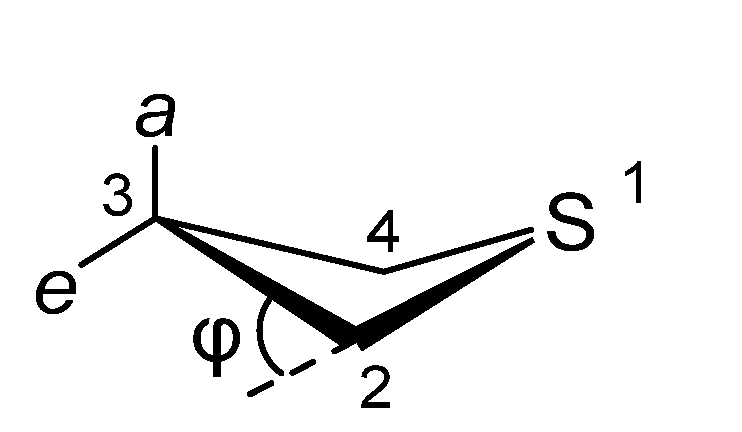
Figure 3.
Calculated dihedral angles and 2JHH and 3JHH coupling constants for compound 2.
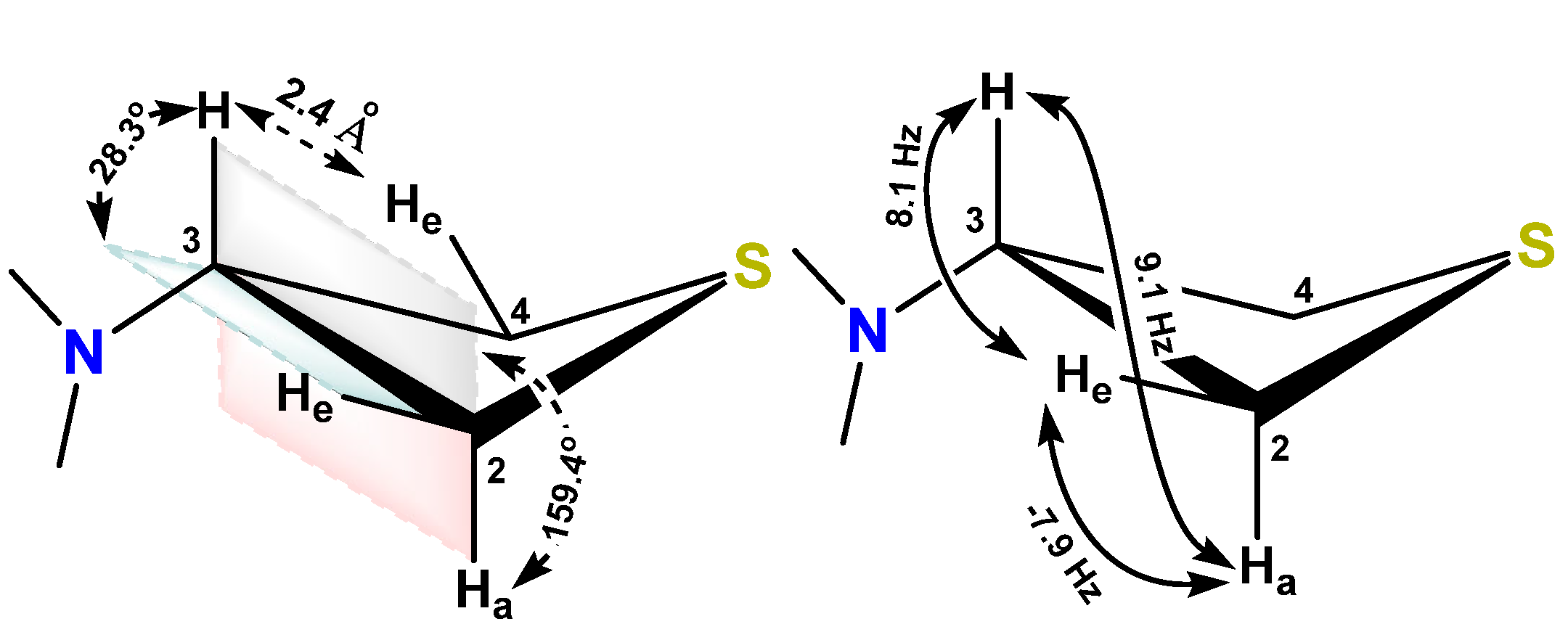
Figure 4.
{1H,1H} NOESY spectrum (500 MHz, DMSO-d6) and scheme of NOE correlations for the thietane ring protons of compound 2.
Figure 4.
{1H,1H} NOESY spectrum (500 MHz, DMSO-d6) and scheme of NOE correlations for the thietane ring protons of compound 2.
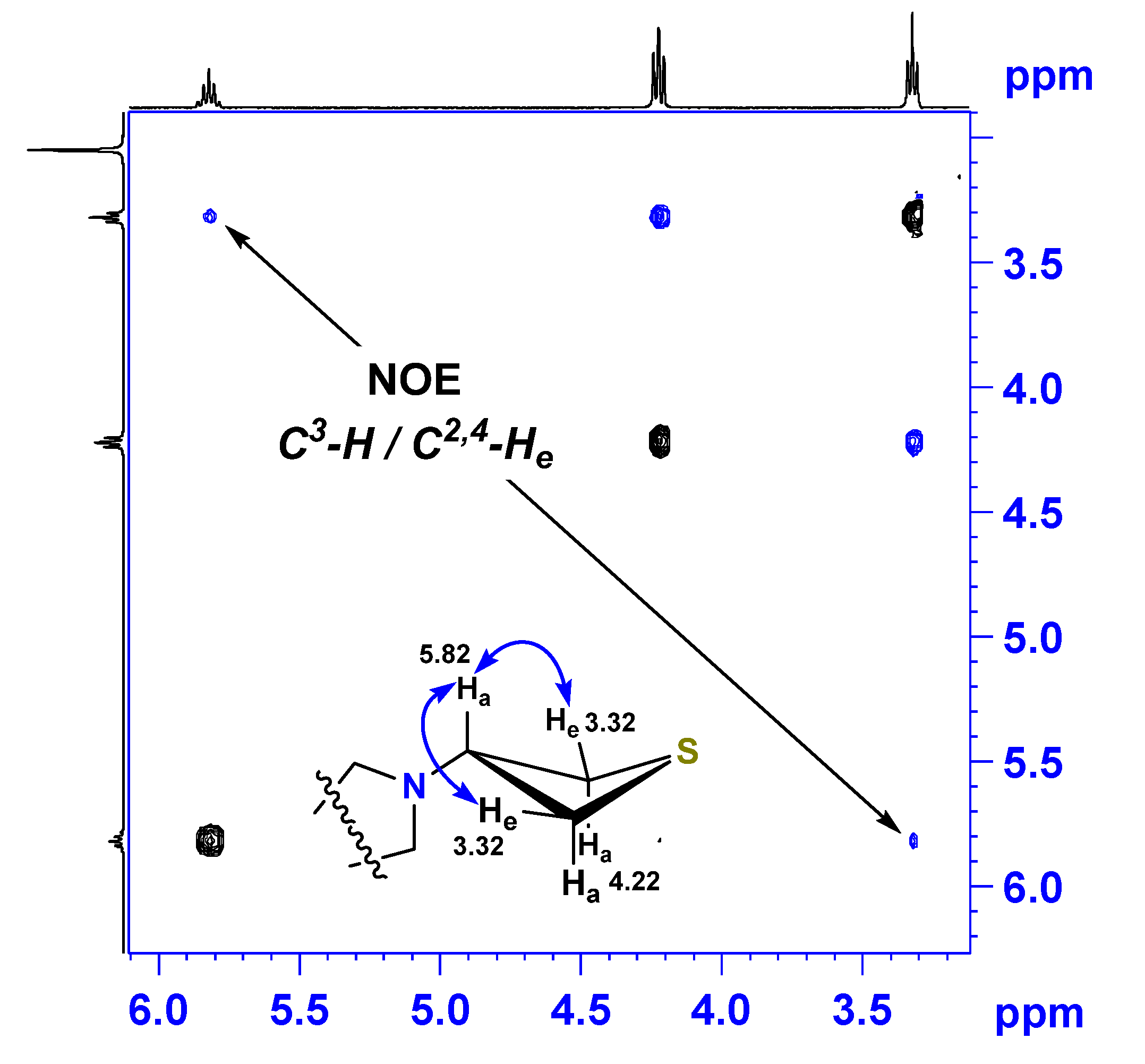
Figure 5.
Selected regions of the {1H,13C} LR-HSQMBC (a) and {1H,15N} HMBC (b) spectra showing the methylene proton signals of compound 2, with the calculated dihedral angles of the thietane ring.
Figure 5.
Selected regions of the {1H,13C} LR-HSQMBC (a) and {1H,15N} HMBC (b) spectra showing the methylene proton signals of compound 2, with the calculated dihedral angles of the thietane ring.
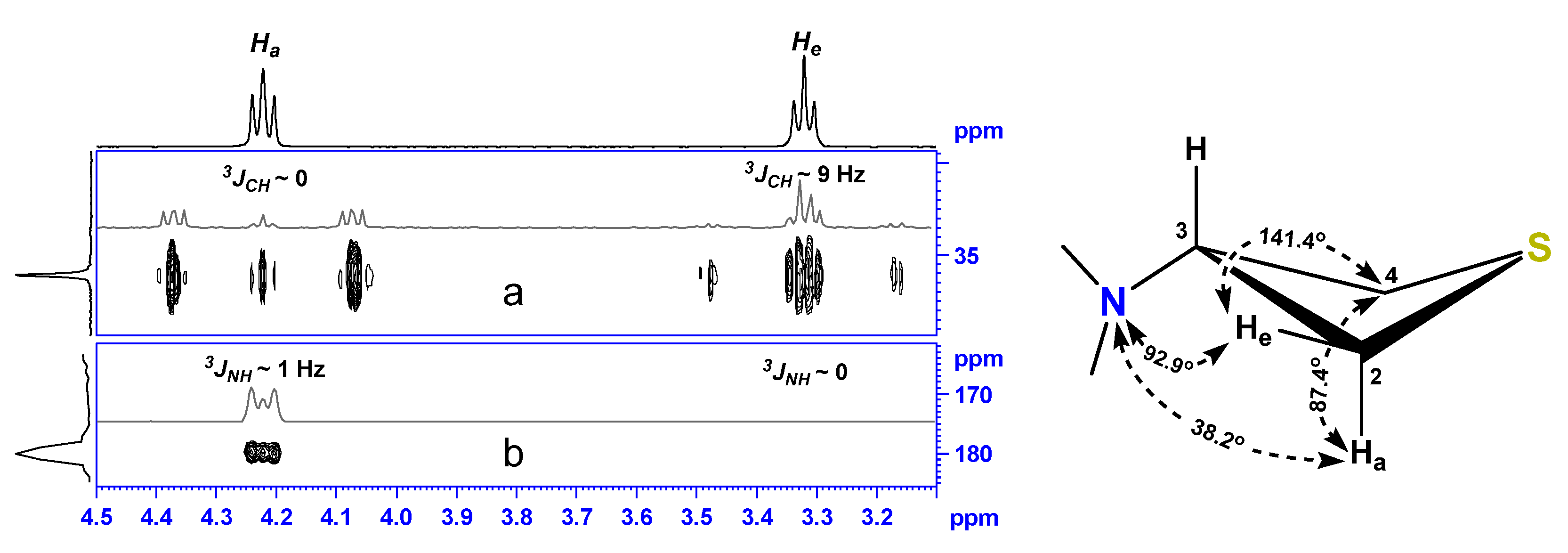
Figure 6.
1,8-Disubstituted 3-methyl-3,7-dihydro-1H-purine-2,6-diones containing thietane ring described in the literature.
Figure 6.
1,8-Disubstituted 3-methyl-3,7-dihydro-1H-purine-2,6-diones containing thietane ring described in the literature.
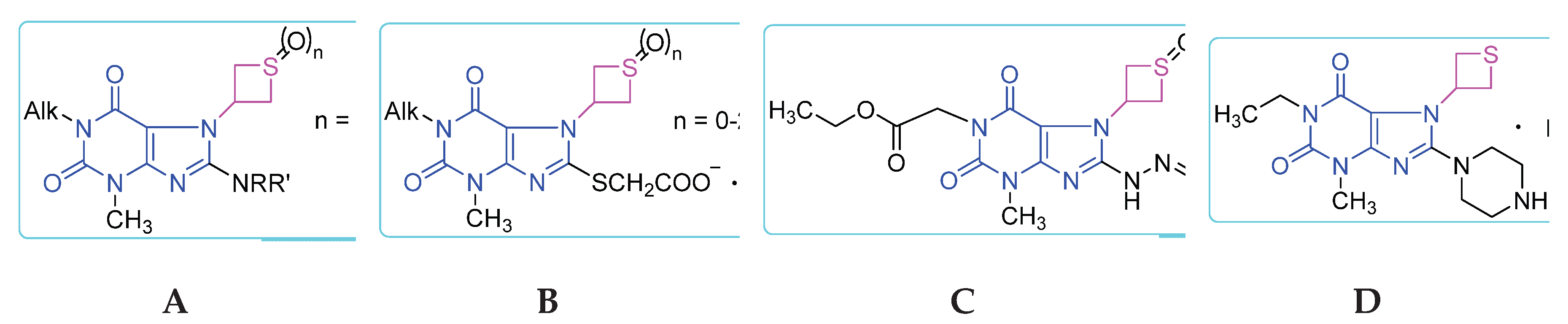

Table 1.
Measured 1 and Calculated JHH 2, JCH 3 and JNH 3 for compound 2 in Hz.
| J | Exp. | Calc. | Valence and dihedral angles | |
| M06-2X/6-311+G(d,p) | B3LYP/6-311++G(d,p) | |||
| 2JH2a-H2e | 8.6 | –7.9 | 111.7° | 112.0° |
| 3JH3-H2a | 9.7 | 9.1 | 160.3° | 159.4° |
| 3JH3-H2e | 8.6 | 8.1 | 29.1° | 28.3° |
| 3JC4-H2e | ~9 | 9.1 | 138.6° | 141.4° |
| 3JC4-H2a | ~0 | 0.8 | 94.4° | 87.4° |
| 3JN7-H2e | ~0 | 0.1 | 91.1° | 92.9° |
| 3JN7-H2a | ~1 | 1.3 | 40.1° | 38.2° |
1 DMSO-d6, 500 MHz; 2 M06-2X/6-311+G(d,p) // mPW1PW91/6-311+G(2d,p) GIAO PCM (DMSO); 3 M06-2X/6-311+G(d,p) // B3LYP/6-31G(d,p) u+1s.
Table 2.
Antiplatelet activity of test compounds.
| Cmpd |
Latent Period, % of Control |
Maximum Amplitude (MA), % of Control |
Aggregation Rate, % of Control |
| 6a | +3.7 (3.5–5.2) * | –3.0 (2.1–4.8) # | –7.6 (7.1–8.6) *,# |
| 6b | +12.7 (10.9–14.3) *,# | –19.6 (17.3–20.5) *,# | –27.3 (23.1–30.2) *,# |
| 6c | +11.3 (10.5–14.1) *,# | –19.3 (16.2–22.5) *,# | –26.8 (22.3–27.5) *,# |
| 6d | +12.9 (10.4–15.6) *,# | –15.9 (13.5–17.9) * | –9.7 (7.8–10.4) * |
| 6e | +9.2 (9.1–11.4) *,# | +8.4 (7.6–9.3) *,# | +9.1 (7.6–11.2) *,# |
| 6f | +11.2 (9.3–12.4) *,# | –16.2 (14.7–19.2) * | –28.5 (24.7–30.4) *,# |
| 6g | +2.4 (1.9–3.5) | –17.5 (15.3–19.8) * | +2.4 (1.7–3.4) *,# |
| 6h | –4.2 (3.9–5.7) | –15.5 (14.3–17.2) * | –21.9 (20.5–23.5) *,# |
| 6i | +1.2 (0.7–2.1) | –8.1 (7.3–9.5) *,# | –6.9 (6.3–8.1) *,# |
| 6j | +4.3 (3.2–5.7) # | –2.5 (1.4–6.7) # | +1.3 (0.9–1.7) # |
| 6k | –3.3 (2.7–4.1) | –7.9 (6.5–9.6) *,# | –4.3 (3.2–5.7) # |
| 6m | +3.2 (2.7–4.3) | –7.1 (6.7–9.4) *,# | –26.9 (24.8–30.1) *,# |
| Acetylsalicylic acid | –2.1 (1.1–2.6) | –13.7 (10.8–16.4) * | –10.5 (7.6–12.3) * |
The latent period is presented for collagen-induced platelet aggregation, the maximum amplitude and aggregation rate—for ADP-induced platelet aggregation. * p < 0.05—compared to control; # p < 0.05—compared to acetylsalicylic acid.
Disclaimer/Publisher’s Note: The statements, opinions and data contained in all publications are solely those of the individual author(s) and contributor(s) and not of MDPI and/or the editor(s). MDPI and/or the editor(s) disclaim responsibility for any injury to people or property resulting from any ideas, methods, instructions or products referred to in the content. |
© 2026 by the authors. Licensee MDPI, Basel, Switzerland. This article is an open access article distributed under the terms and conditions of the Creative Commons Attribution (CC BY) license.
Copyright: This open access article is published under a Creative Commons CC BY 4.0 license, which permit the free download, distribution, and reuse, provided that the author and preprint are cited in any reuse.