

Submitted:
26 August 2026
Posted:
28 August 2026
You are already at the latest version
Abstract
Background/Objectives: Healthcare workers (HCWs) are at increased risk of hepatitis B virus infection through occupational exposure, yet completion of the recommended hepatitis B vaccination schedule remains suboptimal in Kenya. We assessed vaccination completion, associated factors, motivators, and barriers among HCWs. Methods: We conducted a mixed methods study combining a cross-sectional survey of 1,614 HCWs in 178 health facilities across Kakamega, Nakuru, Mombasa, and Siaya counties with nine focus group discussions. The survey was conducted in August–September 2023 and the focus groups during June 2024–January 2025. Logistic regression was used to identify factors associated with completion of three vaccine doses, and qualitative data were analyzed thematically. Results: Among 1,583 HCWs with known vaccination status, 700 (44.2%; 95% CI: 41.8–46.7) reported completing three doses, 410 (25.9%) had received one or two doses, and 473 (29.9%) had never been vaccinated. The main motivator was self-protection (71.7%). Common barriers were vaccine unavailability (57.5%), lack of knowledge (28.8%), the vaccine not being offered on site (28.2%), and cost (17.4%). Completion was more likely among male HCWs and those working in private, urban, and referral facilities, and less likely among support staff, administrative staff, and allied health professionals than among nurses/midwives. Conclusions: Fewer than half of HCWs reported completing the three-dose hepatitis B vaccination schedule. Improving vaccine availability, reducing out-of-pocket costs, strengthening dose-reminder systems, and addressing knowledge gaps may improve completion among HCWs in Kenya.
Keywords:
hepatitis B virus
; hepatitis B vaccine
; healthcare worker vaccination
; multi-dose vaccination
; vaccine-preventable diseases
; vaccination schedule
; coverage
; adherence
Introduction
Hepatitis B virus (HBV) infection affects approximately 240 million people globally and is responsible for 1.1 million deaths annually due to complications such as cirrhosis and liver cancer [1]. The burden of HBV infection is particularly high in sub-Saharan Africa with an estimated prevalence of 5.1% (95% confidence interval (CI): 4.1–6.3) [1]. Healthcare workers (HCWs) are at an increased risk of occupational exposure to HBV from infected blood or contaminated body fluids following needle-stick and sharps injuries [2]. Globally, sharps injuries account for 66,000 cases of HBV infection among HCWs each year [2]. The risk of contracting HBV infection among unvaccinated HCWs after a single exposure ranges from 6-30% depending on the infectivity status of the source and the degree of contact with infected blood [3]. A systematic review of studies that were conducted in Africa reported a 6.8% prevalence of HBV infection among HCWs, [4] with some studies reporting up to four times increased risk of HBV infection among HCWs compared to the general population [5,6]. Studies that have been conducted in Kenya found the prevalence of HBV infection among the general population to range between 3-8% [7,8]. A separate study among HCWs estimated hepatitis B prevalence to be 4% [9]. These findings demonstrate the continued occupational risk of HBV infection among HCWs. Hepatitis B vaccination is an established preventive intervention and is recommended for health workers at risk of occupational exposure to blood or body fluids [10].
The World Health Organization recommends routine hepatitis B vaccination for HCWs prior to starting clinical duties using a three-dose schedule administered at 0, 1 and 6 months [11]. Where feasible, pre-vaccination serological screening to confirm existing infection or prior immunity is recommended [11]. After completion of the vaccination schedule, serological testing is recommended for high-risk HCWs (those with reasonably anticipated exposure to blood or body fluids in the course of their duties) to confirm protective immunity and additional doses or repeat vaccination is recommended for those that fail to mount an adequate immune response [12]. In Kenya, the Ministry of Health’s National Policy Guidelines for Immunization 2023 recommends hepatitis B vaccination for HCWs at risk of exposure to blood and body fluids using a three-dose schedule administered at 0, 1 and 6 months [13]. In Kenya, however, hepatitis B vaccination is recommended for HCWs at risk of occupational exposure but is not currently a mandatory requirement for HCW employment or clinical practice, contributing to inconsistent uptake across cadres and health facilities [14,15]. Consequently, the majority of HCWs are either not vaccinated against hepatitis B, partially vaccinated, or are unsure about their vaccination status [16,17].
Previous studies in sub-Saharan Africa have reported the high cost of the hepatitis B vaccine, vaccine unavailability and inadequate information regarding the vaccine as the main barriers to uptake. In Kenya, there is limited evidence on adherence to the recommended hepatitis B vaccination schedule and factors influencing uptake among HCWs. The existing studies have mainly been small surveys that were limited to single health facilities or individual counties [14]. Our study sought to address these gaps by examining hepatitis B vaccine uptake and factors associated with completion among HCWs across four diverse counties in rural and urban settings. By employing a mixed methods approach, our study used qualitative experiences to provide context and a comprehensive understanding for the quantitative findings. Findings from this study may inform context-specific strategies to improve hepatitis B vaccine coverage among HCWs in Kenya. These findings may also support broader efforts aligned with the 2030 hepatitis elimination agenda and Sustainable Development Goal 3.3[18] [19].
Materials and Methods
Study Population
We conducted this study among HCWs working in 12 sub-counties in four counties in Kenya: Kakamega, Mombasa, Nakuru and Siaya. Based on the 2019 population and housing census data [20], we classified the sub-counties as either urban or rural and purposively selected one third of sub-counties within each county to obtain seven rural and five urban sub-counties. These sub-counties represent approximately 5% of the national population [20].
The survey was conducted among both clinical and non-clinical health workers in health facilities who had direct contact with patients or potentially infectious surfaces, equipment or materials. Health facility staff who did not regularly have direct contact with patients or potentially infectious surfaces, equipment or materials in the course of their normal duties were excluded from the study.
Study Sites and Design
We implemented a mixed methods study design combining a cross-sectional baseline survey and focus group discussions (FGDs) targeting HCWs. It was nested within an HCW influenza vaccination project, implemented in collaboration with the Kenya Ministry of Health, to provide free influenza vaccine to HCWs in the four selected counties and determine rates of acceptance of the influenza vaccine. The baseline survey which included questions on vaccine preventable diseases in the workplace including hepatitis B vaccination status, was conducted during August–September 2023 prior to the influenza vaccination campaign and leveraged the infrastructure and systematic engagement established by the parent influenza vaccination project.
After the influenza vaccination exercise, we conducted three focus group discussions (FGDs) with HCWs who had received the influenza vaccine (group 1), three FGDs with HCWs who had not received the influenza vaccine (group 2), and three FGDs that included both influenza vaccinated and unvaccinated HCWs (group 3) to explore their views on HCW vaccination. Although the FGD groupings were based on influenza vaccination status, the discussions also explored attitudes and perceptions towards other vaccines recommended for HCWs, including hepatitis B vaccination.
Sample Size Calculation
This hepatitis B vaccination analysis used the HCW sample recruited for the parent influenza vaccination project; therefore, the sample size was determined by the parent study rather than by a hepatitis B–specific power calculation. The parent study used the standard sample size formula for comparing proportions [21]. Based on prior work among Kenyan HCWs, the parent study assumed that approximately 60%–80% of HCWs would report willingness to receive seasonal influenza vaccine [22]. For programme performance, the parent study assumed that influenza vaccination coverage would be 50%–70% in the first year and 40%–60% in the second year. To detect these differences with 80% power and a two-sided significance level of α = 0.05, the parent study required 354–385 HCWs in each of two comparison groups, corresponding to a minimum of 740–800 participants. To allow comparisons between HCWs working in rural and urban sites, the study targeted at least 800 participants from rural sub-counties and 800 participants from urban sub-counties. The same enrolled sample was used to assess hepatitis B vaccination status and factors associated with completion of the three-dose hepatitis B vaccination schedule.
Sampling
We contacted the departments of health in each county to obtain the list of health facilities in each of the study sub-counties and the number of HCWs within the health facilities. We then stratified the health facilities by ownership (government-owned, private, or faith-based) and by levels (level 2 - dispensaries, level 3 health centers, level 4 - sub-county hospitals or level 5 - county referral hospitals). Using the Kenya Ministry of Health human resource for health norms and standards [23] together with the available county staffing data, we obtained the total facility staffing and used these data to guide expected recruitment per facility level and ownership (Table S1).
Based on the national human resource for health norms and observed staffing patterns, we defined recruitment targets per facility level based on the anticipated number of eligible and willing HCWs available for recruitment per facility level. These were approximately two individuals for level 2 health facilities, seven for level 3 health facilities, 50 for level 4 health facilities and 200 individuals for level 5 health facilities. These estimates represent the recruitment targets per facility level rather than the total facility staffing.
We enrolled an equal number of participants from rural and urban sub-counties, and distributed the study participants across public, private and faith-based organisations proportionate to the number of HCWs in each type of health facility. All health facilities in the study sub-counties were included in the sampling frame. The research assistants visited the health facilities on their list sequentially to enroll as many health workers as possible across different cadres. Once no additional individuals were available or willing to be enrolled in the health facility, the research assistants moved to the next facility on the list until the required sample size for the type of health facility was achieved.
Data Collection
We collected data from consenting participants using a structured survey tool which was programmed on Research Electronic Data Capture (REDCap) software [24]. The survey tool was pilot tested for completeness, clarity, logical flow and skip patterns at the Siaya county hospital, in a subset of HCWs who were not included in the study and subsequently modified for the final data collection.
The quantitative tool was administered in-person by trained research assistants who collected data on the HCWs’ sociodemographic characteristics, knowledge of healthcare-associated infections, vaccination status and their willingness to receive vaccines recommended for HCWs including hepatitis B vaccine.
Qualitative data were collected through nine FGDs conducted during June 2024 – January 2025. Participants were purposively selected based on their influenza vaccination status to maximize diversity of vaccination attitudes. Although the primary aim of the FGDs was to explore influenza vaccine uptake, the interview guides included specific questions on hepatitis B vaccination, allowing for exploration of motivators, barriers, and perceptions related to hepatitis B vaccination. The FGDs were conducted among healthcare professionals who participated in the baseline survey of August to September 2023. For the FGDs, we limited participant selection to HCWs who had attained a health-related post-secondary school training/qualification. These HCWs were invited for the FGD at a central place within their counties. The discussions were conducted in Kiswahili or English and audio-recorded with the consent of the participants. A social anthropologist who had not participated in the survey or the influenza vaccination project led the discussions and field notes were recorded by both the interviewer and the note taker. The FGD interview guide included questions on HCWs’ knowledge and understanding of infectious risks at the workplace, their access to recommended vaccinations and the motivators and barriers influencing uptake of these vaccines (Table S2). FGDs comprised 6-12 participants and the discussions lasted between 60 and 90 minutes.
Study Definitions and Terms
Eligible survey participants were adults aged ≥18 years working at a health facility who had direct contact with patients or potentially infectious surfaces, equipment, or materials. Healthcare professionals eligible for FGDs were adult HCWs who had attained a health-related post-secondary school training or qualification. Nurses/midwives were defined as registered or enrolled nurses and midwives providing patient care or related clinical services. Clinicians were defined as clinical officers, doctors, pharmacists, pharmaceutical technologists, dentists or dental technologists. Laboratory staff were defined as laboratory technologists and technicians. An allied health professional was defined as either a health records officer, public health officer, nutritionist, social worker, mortician, physiotherapist, radiographer, occupational therapist, plaster technician, theatre technician or orthopedic technologist [25]. Administrative staff were defined as personnel performing managerial or clerical functions and they were included in the study only if their duties involved direct patient interaction or exposure to clinical environments or potentially infectious materials. These included receptionists working at registration desks, clerks handling patient files in wards or clinical areas, administrators, and revenue officers. Support staff were non-clinical hospital personnel whose duties involved direct or indirect exposure to patients, patient-care areas, or potentially infectious surfaces, equipment or materials and were exposed through handling contaminated materials, cleaning patient-care areas, transporting patients, or working in environments where exposure to infectious materials may occur. These included cleaners, patient attendants, laundry attendants, porters, and mortuary attendants. Body mass index (BMI) was defined as underweight (≤18.4kg/m2), normal weight (18.5-24.9 kg/m2), overweight (25.0-29.9 kg/m2), or obese ≥ 30 kg/m2 [26]. Primary health facilities comprised level 2 (dispensaries) and level 3 health facilities (health centers) while referral health facilities included level 4 (sub county referral hospitals) and level 5 health facilities (county referral hospitals). Minimal patient contact referred to HCWs who did not have contact with patients and whose routine work was not in a clinical area; moderate patient contact referred to HCWs who had contact that was not physical but would allow the acquisition or transmission of diseases that are spread at short range by respiratory means, while significant patient contact referred to direct physical contact with patients or with infectious materials, including surfaces or equipment contaminated by infectious materials [11].
Data Analysis
Quantitative data were cleaned and analyzed using R software version 4.4.3. Descriptive statistics (medians and interquartile ranges [IQR]) were used to summarize the participant’s age and average years worked in healthcare. Other characteristics of the study population were presented using proportions and 95% confidence intervals (CI). Categorical variables were compared using the chi-square test.
Participants were categorized into three groups based on self-reported hepatitis B vaccination status: (1) those that had completed the recommended three-dose schedule, (2) received one or two doses of the vaccine (partial-uptake) or (3) never received hepatitis B vaccine. Cadres were classified either as nurse/midwife, clinician, laboratory staff, allied health professional, support staff or administrative staff to minimize loss of contextual differences between cadres that may occur with broad clinical versus non-clinical classifications.
Our primary analysis compared complete hepatitis B vaccination schedule with incomplete vaccination (partial uptake or no uptake combined), as complete vaccination represents the clinically relevant threshold for protection. To assess whether factors associated with uptake (initiation) differ from those associated with adherence (completion), we conducted sensitivity analyses comparing (1) complete versus partial uptake, and (2) complete versus no uptake. Comparisons between these groups were summarized using proportions and 95% CIs and assessed using regression models as described below.
We used generalized linear models with a binomial family and logit link (logistic regression) to estimate odds ratios. Multivariable logistic regression models were used to identify factors independently associated with complete vaccine uptake, while adjusting for potential confounders. Variables with a p ≤ 0.25 in the univariable analysis were included in the multivariable model [27]. Statistical significance was set at a p-value < 0.05. Multicollinearity was assessed using the variance inflation factor (VIF), and highly collinear variables (VIF >5) were dropped. The Hosmer-Lemeshow goodness of fit test was used to assess model fitness [28]. We tested pre-specified two-way interaction terms between variables in the final model; interactions with p ≥ 0.05 were not retained.
For the qualitative data, a research assistant transcribed the audio recordings, and the qualitative researcher cross-checked the transcripts against the audio records to ensure accuracy and quality of transcribed data. Qualitative data were analyzed using inductive thematic analysis allowing the themes to emerge from the data. Transcripts were coded and organized using Nvivo version 12. Emerging themes related to barriers and motivators were identified. The qualitative findings were used to provide context for the quantitative results.
Ethical Considerations
This study protocol was approved by the African Medical and Research Foundation (AMREF) Ethical and Scientific Review Committee (ESRC) (AMREF-ESRC P1426/2023), Coast General Teaching and Referral Hospital Ethical Review Committee (ERC-CGH/MSc/VOL.1) and Kakamega County General Hospital Ethics Review Committee (ERC/209-07/2023). Reliance approval was provided by Washington State University Institutional Review Board based on in-country ethical approvals. This activity was reviewed by CDC and was conducted consistent with applicable federal law and CDC policy as provided for in the Code of Federal Regulations (45 C.F.R part 46 and 21 C.F.R. part 56). Administrative approval was provided by the National Commission for Science, Technology and Innovation and the departments of health of all participating counties. Written consent was obtained from survey and focus group discussion participants before initiation of any study activity.
Results
Characteristics of Participants Enrolled in the Study
We enrolled 1,614 HCWs from 178 health facilities from August to September 2023. Of these, 1,583 (98.1%) were included in the analytic sample. The 31 (1.9%) HCWs who were unsure of their hepatitis B vaccination status were excluded from the analysis. Percentages presented in the results are based on the analytic sample size (N=1,583), unless otherwise specified.
A total of 996 (62.9%) participants were female, 517 (32.7%) were nurses/midwives, and 1,013 (64.0%) had attained a diploma-level education (Table 1). The majority of the participants reported significant patient contact (1,291; 81.6%). The median age of the participants was 33 years (IQR: 28-40) and the median duration of work experience was 6 years (IQR: 3-10). Only 199 (12.6%) participants had an underlying medical condition, of which the most common were asthma (39/199, 19.6%), hypertension (32/199, 16.1%), diabetes (25/199, 12.6%) and chronic cardiac disease (13/199, 6.5%). A total of 1,077 (68.0%) participants worked in public health facilities, 1,023 (64.6%) were from referral health facilities while 793 (50.1%) worked in urban health facilities.
Among the 1,583 participants, 700 (44.2%) reported completing the recommended three-dose hepatitis B vaccination schedule, 410 (25.9%) reported receiving one or two doses, and 473 (29.9%) reported never receiving hepatitis B vaccine.
Reasons for Receiving Hepatitis B Vaccine Among Participants Who Reported Completing the Recommended Hepatitis B Vaccination Schedule (N=700)
Self-protection, 71.7% (95% CI: 68.3-74.9) was the most commonly reported reason for receiving the hepatitis B vaccine (Table 2). This was more frequently reported among clinical staff (laboratory staff 48%, clinicians 38% and nurses 37%) compared to non-clinical staff (support staff 18% and administrative staff 12%).
“I think vaccination is very necessary, considering the fact that we get in contact with vulnerable clients. So, it's good we are vaccinated so that we cannot really transmit to vulnerable clients or even just normal clients.” (FGD Group 1)
Overall, 32.1% (95% CI: 28.8%-35.7%) of respondents had received the hepatitis B vaccine because it was a requirement or was recommended during training. Some HCWs received the vaccine because it was a mandatory requirement or was recommended at the workplace 17.7% (95% CI: 15.1%-20.7%). Training-related requirements were more commonly reported among clinical staff (nurses 21% and clinicians 19%) than non-clinical staff (support staff 0.4%). Workplace recommendations showed a similar pattern with higher reporting among clinical staff, particularly laboratory staff (17%) compared to administrative staff (1.8%).
“For example, in the facility that I work the director fancies vaccination. So, if you come there as an employee, he would make sure you get the vaccine, even if he will pay for it himself, but you have to be vaccinated before you start working for him.” (FGD Group 2)
“Some facilities go an extra mile to support their staff, just to ensure they are vaccinated. For those accredited facilities, the auditors check to ensure that everybody gets vaccinated. So, some facilities go an extra mile to do it for their staff. Also, there are some institutions, learning institutions, they try to push that. Even in colleges, they try to push for hepatitis B vaccination.” (FGD Group 1)
Protecting family members (13.9%, 95% CI: 11.6%-16.6%) and protecting patients (8.9%, 95% CI: 7.0%-11.2%) were also cited as enablers for vaccination. These were more frequently cited among clinical cadres where protection of patients was reported by 7.9% of laboratory staff and 5.7% of clinicians compared to 1.4% among support staff.
“I think healthcare workers also require vaccination because apart from us being at the greatest risk, we also need to protect our own because we also have families, we have kids, we have partners. So when we are vaccinated, we also protect others, including our families and friends.” (FGD Group 2)
Other reasons for receiving hepatitis B vaccine included it being offered for free (9.7%, 95% CI: 7.8%-12.1%), vaccine accessibility (9.0%, 95% CI: 7.1%-11.3%), requirements or recommendations from the government or Ministry of Health (8.6%, 95% CI: 6.7%-10.9%) and prevention of complications or severe disease (7.9%, 95% CI: 6.1%-10.2%). Prevention of severe disease or complications was more frequently reported among clinicians (6.6%) compared to support staff (1.4%). In contrast, vaccine accessibility at the workplace showed only small variation across cadres (5.5% among nurses to 2.1% among support staff). The less frequently mentioned reasons were presence of a chronic illness (1.4%) and it was a requirement for travelling (1.1%).
Reasons for Incomplete or No Uptake of Hepatitis B Vaccine Among Participants Who Reported Partial or No Hepatitis B Vaccination
Among the 883 participants who reported either partial hepatitis B vaccination (n= 410) or no vaccination (n = 473), vaccine unavailability, 57.5% (95% CI: 54.2%-60.8%) was the most commonly reported barrier with the reason being more frequently cited among those with partial vaccination (64.6%, 95% CI: 59.9%-69.1%) compared to those that had never received the vaccine (51.4%, 95% CI: 46.9%-55.8%) (Table 3). Vaccine unavailability was more frequently reported among non-clinical staff especially support staff (38.2%) and administrative staff (31.5%) compared to clinicians (24.1%), nurses (28.1%) and laboratory staff (27.0%).
“Well, from past experience hepatitis B used to be erratic. Availability was erratic. There are times it is there, other times it's not there. You send staff to go and have it and they find it's out of stock. So, availability was a challenge...” (FGD Group 1 )
“There are challenges. Availability, if you go there, you are told the vaccine is not there, it's out of stock. So, you are being rescheduled. You go back there, it's still out of stock. So, you know, you get tired and you give up. You keep on waiting for it” (FGD Group 2)
HCWs expressed concerns that whenever the hepatitis B vaccine was availed, it often arrived at their facilities close to the expiration date. This led to perceptions that HCWs were not prioritized for recommended vaccines and that near-expiry vaccines were provided mainly to avoid wastage, contributing to safety concerns.
“Currently, hepatitis B is not available every time. And I remember there was a time when the vaccine for hepatitis B was about to expire. They decided that instead of the medicine to expire, they inject it to people so that they don’t expire yet it cost a lot of money. It was brought and health workers were injected. There was someone going around the facility during the procedure [administering the vaccine]. Simply because they were about to expire.” (FGD Group 1)
“Actually, what happens, they bring the vaccines when they are about to expire. They promise to bring a second dose, they don't come. So, we are not regarded as first priority in the vaccines as healthcare workers. They only bring them when they are about to expire and they don't want to waste” (FGD Group 1)
“You find that most of those vaccines, are not given frequently, and you find that the consumption of such vaccines that require samples [hepatitis B surface antigen testing] may not be consumed at the expected time. So, you find that most of them end up expiring, and you find some of the organizations, before they expire, they say it is better to make it available to health workers. So, it makes healthcare workers feel, are we not important? Why did the group not give us immunization while in good condition? So, people feel like, we have been given, so it expires in our bodies. No, we are not going to accept it. So that is the challenge.” (FGD Group 1)
Other commonly cited reasons included not being offered the hepatitis B vaccine (28.2%, 95% CI: 25.3%-31.3%), and lack of knowledge about the vaccine (28.8%, 95% CI: 25.9%-31.8%). The lack of knowledge about the vaccine as a reason for non-vaccination was more pronounced among those that had never received the vaccine compared to those that had partial vaccination and was more commonly cited among support staff (30.4%) and administrative staff (25.2%) than among nurses (4.0%) and clinicians (5.1%). Similarly, not being offered the vaccine was more frequently reported among support staff (27.2%) and administrative staff (18.0%) compared to laboratory technologists (6.3%), clinicians (10.8%) and nurses (12.6%). The participants emphasized the need for better sensitization and awareness to all healthcare workers to encourage vaccine uptake.
“I think there is a lot of assumption that medics or anybody working in the hospital facility is aware of everything. So, I think allowing sensitization programs in the facility is also very important. So, that you don't just come up with a memo, and you say, we have a vaccine for hepatitis B. I think you sensitize people, tell them the risks, tell them how important it is. Because if you don't do that, they won’t know [there] is a vaccination program going in the facility” (FGD Group 1)
Some participants reported that the cost of the vaccine was prohibitive as they had to pay out of pocket and the health insurance did not cater for the costs. Cost of receiving the vaccine was cited as a barrier by 17.4% of participants (95% CI: 15.1%-20.1%). It was more frequently reported among those with partial vaccination (19.8%, 95% CI: 16.2%-23.9%) compared to those who had never been vaccinated (15.4%, 95% CI: 12.5%-19.0%).
“The challenge is the cost for hepatitis B, because you have to get the three [doses]. Because you have to pay for yourself. The employer doesn’t cover the costs. And the insurance cover too doesn’t cover it. So, it’s only out of pocket. If you are getting it from a government facility, the charges are from around 680 shillings [$5.3] per dose. And you have to know where to find it. And then others, it goes up to 2,000 [shillings] [$15.5]. It depends. So, you have to know where it’s cost effective.” (FGD Group 3)
“One of the challenges is the cost implication. You find that most of the vaccinations are costly. So, if you want to access the vaccines, you have to dip into your pocket so that you can get the vaccines. They are not funded. The hepatitis B vaccine costs 1500 shillings [$11.6]” (FGD Group 1)
In some private health facilities, although the cost of the vaccine was shared between the employer and the HCW, some HCWs still found the cost unaffordable.
“In our facility, we cost share with the employer. They can pay half, and then you pay the half. So, for other people, they just feel it's too much for them. They never get the vaccine.” (FGD Group 2)
The hepatitis B vaccine is only available at select health facilities and most times, the HCW was required to travel to other health facilities to access the vaccine. The associated transport costs were barriers to vaccination.
“Where I work, they are not readily available [hepatitis B vaccine]. They are there occasionally. Sometimes it is available, sometimes it is not. You just go and ask, if it is available, they will give you, if it is not there they will refer you to somewhere else. So, and that actually increases the cost in terms of time but also associated transport….” (FGD Group 2)
The HCWs emphasized that inclusion of the hepatitis B vaccination in the health insurance schemes would improve uptake.
“The healthcare worker would be comfortable if the employer can convince us that the insurance we have can still cater for it… that we can go and get the vaccine from a private [facility] and use our insurance to cover for it. I think that kind of arrangement the health workers would consistently take it” (FGD Group 1)
Among participants that had been partially vaccinated against hepatitis B, 10.0% (95% CI: 7.5%-13.3%) indicated lack of a provider or programme-led follow-up system for remaining doses (including reminders for subsequent doses and tracking of defaulters) unlike the childhood immunization programme, as a reason for non-completion. HCWs reported that unlike the childhood routine vaccination services, HCW vaccination lacked follow up for subsequent doses, proper documentation and a structured system of reminders. The physical cards which sometimes were provided as proof of vaccination were often misplaced and there was no digital tracking system to ensure continuity.
“Nobody is responsible for following up….who is it that is supposed to follow up these people that have been vaccinated to make sure that the next time the vaccine is available, they are supposed to go for the next jab or if it is a routine thing, who follows up or is it the responsibility of the person who is vaccinated to do the follow-up and know when he or she is supposed to get the next vaccine? So that information is not very clear and so the follow-up is not done.” (FGD Group 3)
“How I wish we get those cards with reminders that the next day is when you are due for vaccination. Then we get a way to be reminding the healthcare workers that your next vaccine is due on this day at this time just like mothers have always been reminded about their days so that we don’t miss out and also know the importance of this vaccine” (FGD Group 1)
“…when it comes to the next vaccine dose everything goes quiet no reminder, nobody reminds you that remember you are supposed to go for your second dose, third dose. So, I think that brings about the issue of inconsistency …. because again they will not remind you if it's not available, I think that is where the mess is, because even if they remind you, you don't know where to get it…” (FGD Group 1)
Other reasons that were reported by a smaller proportion of participants included perceptions that the vaccine is unnecessary (3.3%, 95% CI: 2.3%-4.7%), the fear of the method of administration (2.8%, 95% CI: 1.9%-4.2%) and lack of awareness of the vaccine’s existence (2.6%, 95% CI: 1.7%-3.9%). These reasons were mostly cited among HCWs that had never received the vaccine. Concerns about vaccine safety (2.4%, 95% CI: 1.6%-3.7%), time constraints related to HCW availability (2.3%, 95% CI: 1.5%-3.6%), and the belief that one is not at risk of hepatitis B infection (1.8%, 95% CI: 1.1%-2.9%) were each reported by fewer than 3% of participants. Overall, these reasons showed limited variation across the cadres. Not yet due for the next scheduled dose (2.2%, 95% CI 1.1%-4.1%) and experiencing an adverse event after receiving the vaccine (1.2%, 95% CI 0.5%-2.9%) were reported among the HCWs that had been partially vaccinated.
HCW Perceptions on Access to Hepatitis B Vaccine
More than half of the respondents, 60.8% (95% CI: 58.3-63.2) perceived access to hepatitis B vaccination services as either difficult or very difficult (Table S3). This was more commonly reported among individuals who had never been vaccinated (74.6%, 95% CI: 70.4%-78.6%) compared to those that had completed the full vaccination schedule (47.4%, 95% CI: 43.7%-51.2%) (Figure 1). Conversely, participants who had been fully vaccinated described access to the vaccine as either easy or very easy (37.9%; 95% CI: 34.2%-41.6%) compared to only 6.9% (95% CI: 4.8%-9.7%) of those who had never received the vaccine. There was a statistically significant association between access to vaccination services and vaccination status (p < 0.001).
Multivariable Analysis of Factors Associated with Completion of the Multi-Dose Hepatitis B Vaccine Schedule Among HCWs in Kenya
From the results of the univariable models comparing complete hepatitis B vaccine uptake versus partial or no uptake combined as the outcome variable, sex, age, cadre, education, level of physical contact with patients, health facility ownership type, BMI, rural-urban classification of sub-counties where HCW worked, health facility level and county met the threshold for inclusion in the multivariable model at p ≤ 0.25 (Table S4).
County was significantly associated with completion in the univariable analysis (p < 0.001; Table S4) but was collinear with the rural–urban classification and was therefore not retained in the adjusted model. The final model included sex, age, cadre, education, level of physical contact with patients, health facility ownership type, BMI, rural-urban classification of sub-counties where HCW worked and health facility level. In the adjusted model, males had higher odds of completing the hepatitis B vaccination schedule compared to females (adjusted odds ratio (aOR): 1.8; 95% CI: 1.4-2.2) (Table S5) (Figure 2). We observed differences in cadres where support staff (aOR = 0.2, 95% CI: 0.1-0.3), administrative staff (aOR = 0.3, 95% CI: 0.2-0.4), and allied health professionals (aOR = 0.5, 95% CI: 0.4-0.7) had lower odds of full vaccination compared to nurses. There were no statistically significant differences in completion of vaccination status for clinicians and laboratory staff compared to nurses (Figure 2).
HCWs working in private health facilities had higher odds of full vaccination (aOR = 1.3, 95% CI: 1.1-1.7) compared to their counterparts in public health facilities, while those based in urban areas had about twice the odds of completing the vaccination schedule compared to those in rural areas (aOR = 2.1, 95% CI: 1.7-2.7). Similarly, working in referral health facilities was associated with higher odds of full vaccination (aOR = 1.4, 95% CI: 1.1-1.8) compared to working in primary health facilities. None of the interaction terms between variables in the final models were statistically significant.
Sensitivity Analysis
In the model comparing complete and partial uptake, the variables that remained statistically significantly associated with full vaccine uptake were sex, cadre, type of health facility ownership, rural-urban classification of the sub-county where the HCW was based, and health facility level. These findings were consistent with those observed in the main analysis comparing complete uptake to partial or no uptake combined (Table S6).
In the model comparing complete uptake to no uptake, the same variables of sex, cadre, rural-urban classification, and facility level remained statistically significant. Additionally, BMI and years of work experience were statistically significant. HCWs who were classified as obese had 1.6 times the odds of complete vaccine uptake compared to those who had a normal BMI (aOR = 1.6, 95% CI: 1.1-2.3) while HCWs with 6-10 years of experience had 1.5 times the odds of complete vaccination compared to those with less than 6 years of experience (aOR = 1.5, 95% CI: 1.1-2.2) (Table S7).
Discussion
We found that less than half of healthcare workers in the four selected counties in Kenya were fully vaccinated against hepatitis B, indicating suboptimal vaccine uptake. The main motivators for vaccine uptake were self-protection and mandatory requirements or recommendations by the employer or during training. In contrast, common barriers to vaccine uptake were vaccine unavailability, high cost of the vaccine, lack of reminders and insufficient knowledge or awareness about the vaccine. Workplace-based vaccination and provision of the vaccine at no cost were associated with easier vaccine access. In addition, sex, cadre, facility ownership, rural-urban location and facility level were independently associated with completion of hepatitis B vaccination schedule.
Our self-reported estimate of complete hepatitis B vaccination was higher than the pooled estimate reported in an African systematic review and higher than estimates reported in selected studies from other African settings (29–31). However, these comparisons should be interpreted cautiously because prior studies varied in sampling frame, facility type, study period, and ascertainment of vaccination status. Our estimate was similar to estimates from two referral-facility studies in Kenya (9,32), but our study included HCWs from rural and urban areas and from primary and referral facilities. Despite this broader sampling frame, complete hepatitis B vaccination remained suboptimal.
Almost 56% of participants reported no or incomplete hepatitis B vaccination. Incomplete or non-uptake of the hepatitis B vaccine was mainly associated with health system barriers including availability and cost of the vaccine. Among the partially vaccinated HCWs, the lack of follow up mechanisms for the subsequent doses was a hindrance to vaccination. These findings are similar to other studies that were conducted in sub-Saharan Africa, which reported vaccine unavailability and cost of the vaccine as the main barriers to hepatitis B vaccine uptake [29,30,31]. In our qualitative data, participants contrasted HCW hepatitis B vaccination with routine childhood immunization services, describing HCW vaccination as less consistently organized around vaccine availability, documentation, reminders for subsequent doses, and follow-up. Participants also reported that vaccines were sometimes offered close to expiry, which they interpreted as a sign that HCWs were not prioritized and which contributed to concerns about vaccine quality, safety, or effectiveness. Consistent with WHO guidance on health-worker vaccination programmes, reliable vaccine supply, reduced out-of-pocket costs, workplace-based vaccination, documentation, and reminder or recall systems may improve hepatitis B vaccine completion among HCWs [11].
Completion of the three-dose hepatitis B vaccination schedule was 63.2% among laboratory staff, 54.4% among nurses/midwives, and 52.3% among clinicians. Although higher than in several non-clinical cadres, completion remained suboptimal among HCWs with occupational exposure [11]. Administrative staff, allied health professionals and support staff were less likely to have completed hepatitis B vaccination compared to nurses. This disparity in vaccination uptake may be partly explained by the differences in awareness and knowledge about the vaccine across cadres or perceived risk of infection as clinical staff were more likely to be vaccinated compared to non-clinical staff. In our study, insufficient knowledge was a main barrier to vaccination, especially among non-clinical staff, aligning with evidence from sub-Saharan Africa [32,33,34]. The differences in vaccine uptake among cadres could also be attributed to prioritization of clinical HCWs for vaccination and vaccination-related communication and training leaving limited opportunities for non-clinical staff to be trained on vaccines and get vaccinated [35]. There is a need to address vaccine knowledge gaps and disparate uptake between clinical and non-clinical staff. Training across HCW cadres and inclusive vaccination programmes that provide access to clinical and non-clinical staff with occupational exposure to blood or body fluids may improve hepatitis B vaccine uptake [11].
Male HCWs in our study had 1.8 times the odds of completing the recommended hepatitis B vaccine schedule compared to their female counterparts. This finding differs from similar studies that have been conducted in low and middle-income countries which reported higher vaccine uptake among female HCWs [36,37,38]. In these studies, higher uptake among females was attributed to better health seeking behaviors which contribute to higher vaccine uptake [39]. In our setting, the observed differences by sex may suggest underlying differences in occupational roles, exposure patterns or access to vaccination across workstations. Unlike in some childhood immunization contexts where sex-based immunization prioritization has been reported, this was not a feature of hepatitis B vaccination schedule among HCWs in our context [40,41]. Further research is needed to better understand the sex differences in hepatitis B vaccine uptake among HCWs.
HCWs working in referral health facilities had 1.4 times the odds of completing the recommended hepatitis B vaccination compared to primary health facilities. This finding is corroborated by other studies in Africa which reported an association between tertiary health facilities and complete hepatitis B vaccination among HCWs [9] [42,43]. This disparity in vaccine uptake may be explained by institutional policies that mandate HCWs in tertiary facilities to receive vaccination, better vaccine availability in referral facilities and higher vaccine awareness in these facilities [44]. Similarly, HCWs that worked in urban sub-counties in our study had higher odds of vaccination compared to those that worked in rural sub-counties. These findings have also been reported in other studies [45,46]. This could be explained by more sensitization and the ease of access to hepatitis B vaccination services in urban areas; consistent with our qualitative findings, HCWs described erratic supply, stock-outs, near-expiry stock, and having to travel to other facilities – at additional transport cost – to obtain the vaccine [46].
In our study, HCWs that worked in private health facilities were more likely to complete hepatitis B vaccination compared to those in public health facilities. These findings align with a Ugandan study that found HCWs in private hospitals were more likely to have been vaccinated compared to those in public health facilities [46]. A possible explanation, consistent with participant accounts, is that some private or accredited facilities may have stronger occupational-health requirements and may offer or subsidize hepatitis B vaccination for employees. Comparable institutional requirements were not reported consistently across public facilities in this study. A more equitable availability of hepatitis B vaccine across all types of health facilities and in both urban and rural settings would help prevent HBV infection among HCWs and protect patients throughout the country.
A key strength was the inclusion of different HCW cadres, including clinical, non-clinical, and administrative staff recruited from multiple facility levels across rural and urban sub-counties. Despite these strengths, a limitation of this study is that the hepatitis B vaccination status was self-reported, as we did not verify vaccination documentation or check antibodies against the hepatitis B surface antigen to confirm protection. This may have introduced misreporting or recall bias leading to inaccurate vaccination coverage estimates. Another limitation is that the study was limited to four counties and may not be nationally representative.
Conclusions
In this four-county sample of Kenyan HCWs, fewer than half reported completing the recommended three-dose hepatitis B vaccination schedule. Completion varied by sex, cadre, facility ownership, rural–urban location, and facility level. These differences may partly reflect disparities in vaccine access and awareness, alongside other factors. Strategies adapted from routine immunization systems, including reliable vaccine supply, reduced out-of-pocket costs, workplace-based vaccination, documentation, reminders for subsequent doses, and targeted education for both clinical and non-clinical staff, may improve hepatitis B vaccine completion among HCWs. Improving hepatitis B vaccination among healthcare workers would contribute to preventing occupational HBV infections and support broader efforts to eliminate hepatitis B as a public health problem.
Supplementary Materials
The following supporting information can be downloaded at the website of this paper posted on Preprints.org: Table S1: Distribution of enrolled healthcare workers by county, health facility level, and ownership type; Table S2: Focus group discussion guide; Table S3: Perceived ease of access to hepatitis B vaccine among participants enrolled in the study; Table S4: Univariable analysis of factors associated with completion of the multidose hepatitis B vaccination schedule among healthcare workers in Kenya; Table S5: Multivariable analysis of factors associated with completion of the multidose hepatitis B vaccination schedule among healthcare workers in Kenya; Table S6: Multivariable analysis comparing complete versus partial hepatitis B vaccination; Table S7: Multivariable analysis comparing complete hepatitis B vaccination versus no hepatitis B vaccination.
Author Contributions
M.K.N., E.O., J.D., H.M., and G.O.E. conceptualized the study. J.D., E.O., D.O., and H.M. developed the study methodology. H.M., R.K., C.O., and S.L. supervised the study. R.J., E.K., S.W., S.S., and K.O. contributed to study approvals, supervision, and project administration. W.T., I.B., R.K., and J.O. supervised study implementation. H.M., R.K., C.O., and S.L. were responsible for data collection and project administration. H.M., E.O., J.D., C.O., S.L., and M.K.N. developed the analysis plan. H.M., S.L., and J.D. conducted data analysis and data curation. H.M., E.O., and J.D. drafted the original manuscript. R.A.T. critically reviewed and revised the manuscript. M.K.N., G.O.E., and E.O. acquired funding for the project. All authors reviewed and approved the final manuscript.
Institutional Review Board Statement
This study protocol was approved by the African Medical and Research Foundation (AMREF) Ethical and Scientific Review Committee (AMREF-ESRC P1426/2023), Coast General Teaching and Referral Hospital Ethical Review Committee (ERC-CGH/MSc/VOL.1), and Kakamega County General Hospital Ethics Review Committee (ERC/209-07/2023). Reliance approval was provided by the Washington State University Institutional Review Board based on the in-country ethical approvals. This activity was reviewed by the U.S. Centers for Disease Control and Prevention and was conducted consistent with applicable federal law and CDC policy. Administrative approval was provided by the National Commission for Science, Technology and Innovation and the departments of health of all participating counties.
Informed Consent Statement
Written informed consent was obtained from all survey and focus group discussion participants before initiation of study activities.
Data Availability Statement
The datasets used and/or analysed during the current study are available from the corresponding author on reasonable request.
Conflicts of Interest
The authors declare no conflicts of interest.
Funding
This work was funded by the US Centers for Disease Control and Prevention (NU2HGH000031) and the Task Force for Global Health (TFGH).
Acknowledgments
The authors wish to thank the respondents, County Government of Mombasa Department of Health, County Government of Nakuru Department of Health, County Government of Siaya Department of Health, County Government of Kakamega Department of Health, National Vaccines and Immunization Program, and Division of Disease Surveillance and Response for their participation in the implementation of this study.
References
- World Health Organization. Global hepatitis report 2026; WHO: Geneva, 2026. [Google Scholar]
- Pruss-Ustun, A.; Rapiti, E.; Hutin, Y. Sharps injuries: Global burden of disease from sharps injuries to health-care workers. In Environmental Burden of Disease Series No. 3.; World Health Organization: Geneva, 2003. [Google Scholar]
- U.S. Public Health Service. Updated U.S. Public Health Service Guidelines for the Management of Occupational Exposures to HBV, HCV, and HIV and Recommendations for Postexposure Prophylaxis. MMWR Recomm. Rep. Morb. Mortal. Wkly. Rep. Recomm. Rep. 2001, 50(RR-11), 1–52. [Google Scholar] [PubMed]
- Atlaw, D.; Sahiledengle, B.; Tariku, Z. Hepatitis B and C virus infection among healthcare workers in Africa: a systematic review and meta-analysis. Environ. Health Prev. Med. 2021, 26(1), 61. [Google Scholar] [CrossRef] [PubMed]
- Ziraba, A.K.; Bwogi, J.; Namale, A.; Wainaina, C.W.; Mayanja-Kizza, H. Sero-prevalence and risk factors for hepatitis B virus infection among health care workers in a tertiary hospital in Uganda. BMC Infect Dis. 2010, 10, 191. [Google Scholar] [CrossRef] [PubMed] [PubMed Central]
- Jha, A.K.; Chadha, S.; Bhalla, P.; Saini, S. Hepatitis B infection in microbiology laboratory workers: prevalence, vaccination, and immunity status. Hepat Res Treat. 2012, 2012, 520362. [Google Scholar] [CrossRef] [PubMed] [PubMed Central]
- Downs, L.O.; Campbell, C.; Yonga, P.; Githinji, G.; Ansari, M.A.; Matthews, P.C.; et al. A systematic review of Hepatitis B virus (HBV) prevalence and genotypes in Kenya: Data to inform clinical care and health policy. PLOS Glob Public Health 2023, 3(1), e0001165. [Google Scholar] [CrossRef] [PubMed]
- Makokha, G.N.; Zhang, P.; Hayes, C.N.; Songok, E.; Chayama, K. The burden of Hepatitis B virus infection in Kenya: A systematic review and meta-analysis. Front Public Health 2023, 11, 986020. [Google Scholar] [CrossRef] [PubMed]
- Kisangau, E.N.; Awour, A.; Juma, B.; Odhiambo, D.; Muasya, T.; Kiio, S.N.; et al. Prevalence of hepatitis B virus infection and uptake of hepatitis B vaccine among healthcare workers, Makueni County, Kenya 2017. J. Public Health Oxf. Engl. 2019, 41(4), 765–71. [Google Scholar] [CrossRef] [PubMed]
- World Health Organization. Hepatitis B vaccines: WHO position paper, July 2017 - Recommendations. Vaccine 2019, 37(2), 223–5. [Google Scholar] [CrossRef] [PubMed]
- World Health Organization. Implementation guide for vaccination of health workers; WHO: Geneva, 2022. [Google Scholar]
- Schillie, S.; Murphy, T.V.; Sawyer, M.; Ly, K.; Hughes, E.; Jiles, R.; et al. CDC guidance for evaluating health-care personnel for hepatitis B virus protection and for administering postexposure management. MMWR Recomm Rep Morb Mortal Wkly Rep Recomm Rep. 2013, 62(RR-10), 1–19. [Google Scholar] [PubMed]
- Ministry of Health (Kenya). Kenya National Immunization Policy Guidelines; Ministry of Health: Nairobi, 2023. [Google Scholar]
- Mwangi, I.A.; Wesongah, J.O.; Musyoki, V.M.; Omosa-Manyonyi, G.S.; Farah, B.; Edalia, L.G.; et al. Assessment of hepatitis B vaccination status and hepatitis B surface antibody titres among health care workers in selected public health hospitals in Kenya. PLOS Glob Public Health 2023, 3(4), e0001741. [Google Scholar] [CrossRef] [PubMed]
- Aremu, S.O.; Adamu, A.I.; Fatoke, B.; Uguru, L.I.; Itodo, S.O.; Aremu, D.O.; et al. Challenges to implementing mandatory hepatitis B vaccination: bridging immunization gaps among health workers in sub-Saharan Africa. Trop. Med. Health 2025, 53(1), 35. [Google Scholar] [CrossRef] [PubMed]
- Ledda, C.; Rapisarda, V.; Maltezou, H.C.; Contrino, E.; Conforto, A.; Maida, C.M.; et al. Coverage rates against vaccine-preventable diseases among healthcare workers in Sicily (Italy). Eur. J. Public Health 2021, 31(1), 52–6. [Google Scholar] [CrossRef] [PubMed]
- Eltvedt, A.K.; Poulsen, A.; Winther, T.N.; Von Linstow, M.L. Barriers for vaccination of healthcare workers. Hum. Vaccines Immunother. 2021, 17(9), 3073–6. [Google Scholar] [CrossRef] [PubMed]
- World Health Organization. Combating hepatitis B and C to reach elimination by 2030; WHO: Geneva, 2016. [Google Scholar]
- United Nations Department of Economic and Social Affairs. Goal 3: Good health and well-being. 20 May 2025. Available online: https://sdgs.un.org/goals/goal3#targets_and_indicators.
- Kenya National Bureau of Statistics. 2019 Kenya population and housing census; KNBS: Nairobi, 2019. [Google Scholar]
- Wang, H.; Chow, S.C. Sample Size Calculation for Comparing Proportions. In Wiley Encyclopedia of Clinical Trials [Internet]; 2007. [Google Scholar] [CrossRef]
- Andayi, F.; Emukule, G.O.; Osoro, E.; Ndegwa, L.K.; Otiato, F.; Muturi, P.; et al. Knowledge and attitude of Kenyan healthcare workers towards pandemic influenza disease and vaccination: 9 years after the last influenza pandemic. Vaccine 2021, 39(29), 3991–6. [Google Scholar] [CrossRef] [PubMed]
- Ministry of Health (Kenya). Norms and standards for health service delivery; Government of Kenya: Nairobi, 2006. [Google Scholar]
- Patridge, E.F.; Bardyn, T.P. Research Electronic Data Capture (REDCap). J. Med. Libr Assoc. 2018, 106(1). [Google Scholar] [CrossRef]
- Personnel I of M (US) C to S the R of AH. Institute of Medicine (US) Committee to Study the Role of Allied Health Personnel. Allied health services: avoiding crises. Appendix C: A sample of allied health job titles and a classification of instructional programs in allied health. In Allied Health Services: Avoiding Crises [Internet]; National Academies Press (US), 1989; Available online: https://www.ncbi.nlm.nih.gov/books/NBK218853/.
- World Health Organization. Body mass index (BMI) [Internet]. Available online: https://www.who.int/data/gho/data/themes/topics/topic-details/GHO/body-mass-index (accessed on 23 April 2025).
- Zhang, Z. Model building strategy for logistic regression: purposeful selection. Ann. Transl. Med. 2016, 4(6), 6. [Google Scholar] [CrossRef] [PubMed]
- Fagerland, M.W.; Hosmer, D.W. A Generalized Hosmer–Lemeshow Goodness-of-Fit Test for Multinomial Logistic Regression Models. Stata J. 2012, 12(3), 447–53. [Google Scholar]
- Malewezi, B.; Omer, S.B.; Mwagomba, B.; Araru, T. Protecting health workers from nosocomial Hepatitis B infections: A review of strategies and challenges for implementation of Hepatitis B vaccination among health workers in Sub-Saharan Africa. J Epidemiol Glob Health 2016, 6(4), 229–41. [Google Scholar] [CrossRef] [PubMed] [PubMed Central]
- Dayyab, F.M.; Iliyasu, G.; Ahmad, B.G.; Bako, A.T.; Ngamariju, S.S.; Habib, A.G. Hepatitis B vaccine knowledge and self-reported vaccination status among healthcare workers in a conflict region in northeastern Nigeria. Ther. Adv. Vaccines Immunother. 2020, 8. [Google Scholar] [CrossRef] [PubMed]
- Auta, A.; Adewuyi, E.O.; Kureh, G.T.; Onoviran, N.; Adeloye, D. Hepatitis B vaccination coverage among health-care workers in Africa: A systematic review and meta-analysis. Vaccine 2018, 36(32), 4851–60. [Google Scholar] [CrossRef] [PubMed]
- Chinese Military Medical Experts Group in Sierra Leone; Qin, Y.L.; Li, B.; Zhou, Y.S.; Zhang, X.; Li, L.; et al. Prevalence and associated knowledge of hepatitis B infection among healthcare workers in Freetown, Sierra Leone. BMC Infect. Dis. 2018, 18(1), 315. [Google Scholar] [CrossRef] [PubMed]
- Oni, O.I.; Osho, O.P.; Oluwole, M.T.; Osho, E.S.; Ogungbeje, A.; Raji, H.M. Assessing the level of knowledge, uptake of hepatitis B virus vaccine, and its determinants among health workers across various levels of health facilities in Ondo, South West, Nigeria. Egypt J. Intern Med. 2022, 34(1), 80. [Google Scholar] [CrossRef]
- Tatsilong, H.O.P.; Noubiap, J.J.N.; Nansseu, J.R.N.; Aminde, L.N.; Bigna, J.J.R.; Ndze, V.N.; et al. Hepatitis B infection awareness, vaccine perceptions and uptake, and serological profile of a group of health care workers in Yaoundé, Cameroon. BMC Public Health 2016, 16(1), 706. [Google Scholar] [CrossRef] [PubMed]
- Harun, MdGD; Sumon, S.A.; Mohona, T.M.; Rahman, A.; Abdullah, S.A.H.M.; Islam, MdS; et al. Hepatitis B Vaccination Coverage among Bangladeshi Healthcare Workers: Findings from Tertiary Care Hospitals. Vaccines 2022, 11(1), 41. [Google Scholar] [CrossRef] [PubMed]
- Muvunyi, C.M.; Harelimana, J.D.D.; Sebatunzi, O.R.; Atmaprakash, A.C.; Seruyange, E.; Masaisa, F.; et al. Hepatitis B vaccination coverage among healthcare workers at a tertiary hospital in Rwanda. BMC Res. Notes 2018, 11(1), 886. [Google Scholar] [CrossRef] [PubMed]
- Duodu, P.A.; Darkwah, E.; Agbadi, P.; Duah, H.O.; Nutor, J.J. Prevalence and geo-clinicodemographic factors associated with hepatitis B vaccination among healthcare workers in five developing countries. BMC Infect. Dis. 2022, 22(1), 599. [Google Scholar] [CrossRef] [PubMed]
- Abebaw, T.A.; Aderaw, Z.; Gebremichael, B. Hepatitis B virus vaccination status and associated factors among health care workers in Shashemene Zonal Town, Shashemene, Ethiopia: a cross sectional study. BMC Res. Notes 2017, 10(1), 260. [Google Scholar] [CrossRef] [PubMed]
- Redondo-Sendino, Á.; Guallar-Castillón, P.; Banegas, J.R.; Rodríguez-Artalejo, F. Gender differences in the utilization of health-care services among the older adult population of Spain. BMC Public Health 2006, 6(1), 155. [Google Scholar] [CrossRef] [PubMed]
- Jones, N.; Walsh, C.; Buse, K. Gender and immunisation: abridged report: a knowledge stocktaking exercise and an independent assessment of the GAVI Alliance; Overseas Development Institute: London, 2008. [Google Scholar]
- Hilber, A.M.; Bosch-Capblanch, X.; Schindler, C.; Beck, L.; Sécula, F.; Mckenzie, O.; et al. Gender and immunisation: summary report for SAGE, November 2010 [Internet]. 2010. Available online: https://api.semanticscholar.org/CorpusID:70892627.
- Ndunguru, B.; Wilfred, D.; Kapesa, A.; Kilonzo, S.D.; Mirambo, M.; Hyera, F.; et al. Low uptake of hepatitis B vaccination among healthcare workers in primary health facilities in Mwanza region, North-Western Tanzania. Front Public Health 2023, 11, 1152193. [Google Scholar] [CrossRef] [PubMed]
- Mungandi, N.; Makasa, M.; Musonda, P. Hepatitis B vaccination coverage and the determinants of vaccination among health care workers in selected health facilities in Lusaka district, Zambia: an exploratory study. Ann. Occup. Environ. Med. 2017, 29(1), 32. [Google Scholar] [CrossRef] [PubMed]
- Yousafzai, M.T.; Qasim, R.; Khalil, R. Hepatitis B Vaccination among Primary Health Care Workers in Northwest Pakistan. Int. J. Health Sci. 2014, 8(1), 67–76. [Google Scholar] [CrossRef] [PubMed]
- Yuan, Q.; Wang, F.; Zheng, H.; Zhang, G.; Miao, N.; Sun, X.; et al. Hepatitis B vaccination coverage among health care workers in China. PLOS ONE 2019, 14(5), e0216598. [Google Scholar] [CrossRef] [PubMed]
- Ssekamatte, T.; Mukama, T.; Kibira, S.P.S.; Ndejjo, R.; Bukenya, J.N.; Kimoga, Z.P.A.; et al. Hepatitis B screening and vaccination status of healthcare providers in Wakiso district, Uganda. PLOS ONE 2020, 15(7), e0235470. [Google Scholar] [CrossRef] [PubMed]
Figure 1.
Perceived ease of access to hepatitis B vaccination services among healthcare workers in Kenya, 2023.
Figure 1.
Perceived ease of access to hepatitis B vaccination services among healthcare workers in Kenya, 2023.
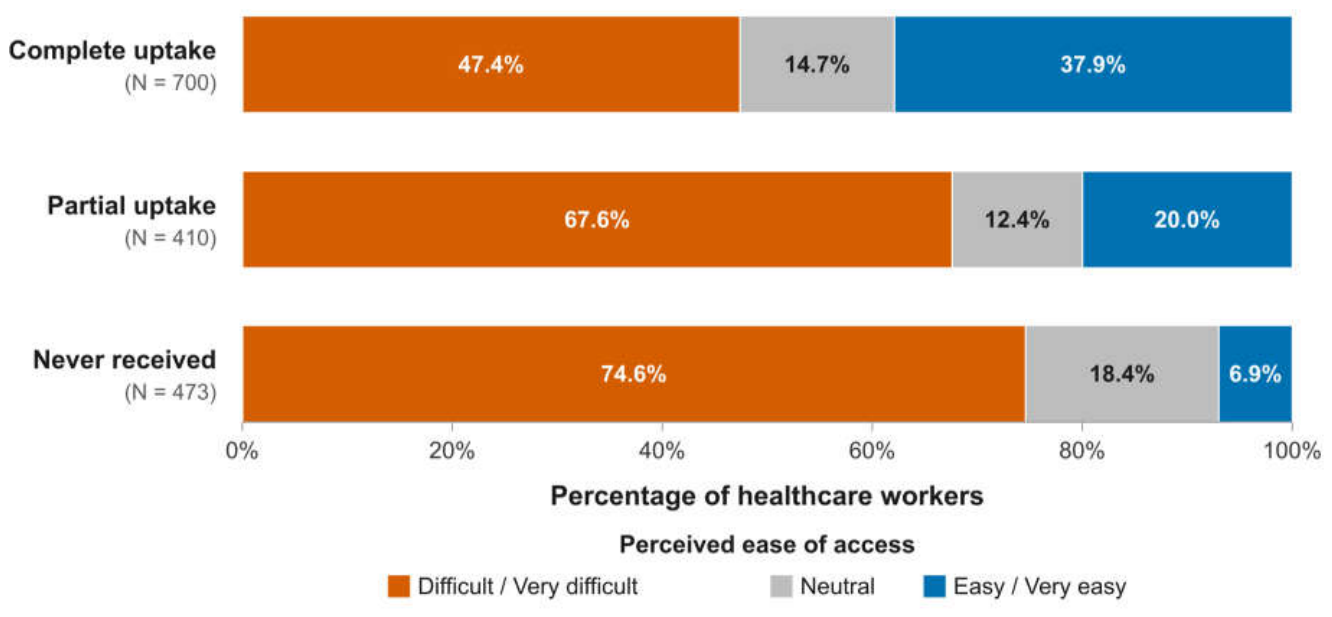
Figure 2.
Forest plot of factors associated with completion of the multidose hepatitis B vaccination schedule among healthcare workers in Kenya, 2023 (Comparing completed vaccine schedule to partial uptake or no vaccine uptake combined) .
Figure 2.
Forest plot of factors associated with completion of the multidose hepatitis B vaccination schedule among healthcare workers in Kenya, 2023 (Comparing completed vaccine schedule to partial uptake or no vaccine uptake combined) .
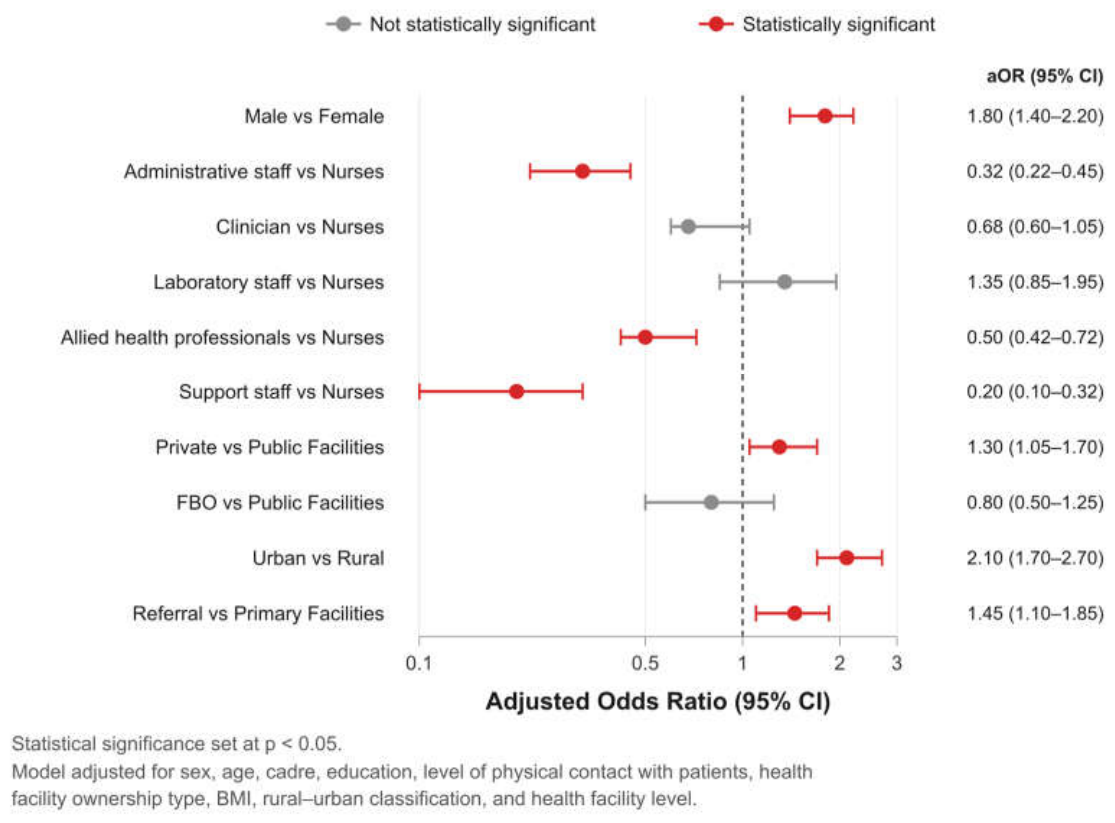

Table 1.
Sociodemographic characteristics of participants enrolled in the study by hepatitis B vaccination status, Kenya 2023 .
Table 1.
Sociodemographic characteristics of participants enrolled in the study by hepatitis B vaccination status, Kenya 2023 .
| Characteristic | Overall N=1583 n (%) |
Complete uptake of hepatitis B vaccine N=700 n (%) |
Partial uptake of hepatitis B vaccine N=410 n (%) |
Never received hepatitis B vaccine N=473 n (%) |
p-valuea |
|---|---|---|---|---|---|
| Sex | <0.001 | ||||
| Female | 996 (62.9) | 387 (55.3) | 271 (66.1) | 338 (71.5) | |
| Male | 587 (37.1) | 313 (44.7) | 139 (33.9) | 135 (28.5) | |
| Age | |||||
| Median (IQR) | 33 (28-40) | 32 (28-39) | 33 (28-40.8) | 34 (28-42) | 0.039d |
| 19-29 | 543 (34.3) | 260 (37.1) | 128 (31.2) | 155 (32.8) | 0.025 |
| 30-39 | 614 (38.8) | 278 (39.7) | 165 (40.2) | 171 (36.2) | |
| 40-49 | 257 (16.2) | 90 (12.9) | 77 (18.8) | 90 (19.0) | |
| >50 | 169 (10.7) | 72 (10.3) | 40 (9.8) | 57 (12.1) | |
| Cadre | |||||
| Nurse/midwife | 517 (32.7) | 281 (40.1) | 152 (37.1) | 84 (17.8) | <0.001 |
| Allied health professionalsb | 245 (15.5) | 92 (13.1) | 74 (18.0) | 79 (16.7) | |
| Clinicianc | 310 (19.6) | 162 (23.1) | 81 (19.8) | 67 (14.2) | |
| Support staff | 278 (17.6) | 63 (9.0) | 56 (13.7) | 159 (33.6) | |
| Administrative staff | 108 (6.8) | 23 (3.3) | 22 (5.4) | 63 (13.3) | |
| Laboratory staff | 125 (7.9) | 79 (11.3) | 25 (6.1) | 21 (4.4) | |
| Highest level of completed education | <0.001 | ||||
| High school certificate or less | 234 (14.8) | 49 (7.0) | 43 (10.5) | 142 (30.0) | |
| Diploma | 1,013 (64.0) | 472 (67.4) | 287 (70.0) | 254 (53.7) | |
| Bachelor's degree | 301 (19.0) | 153 (21.9) | 75 (18.3) | 73 (15.4) | |
| Post graduate degree | 35 (2.2) | 26 (3.7) | 5 (1.2) | 4 (0.8) | |
| Number of years worked in healthcare | |||||
| 0 - 5 | 774 (48.9) | 323 (46.1) | 182 (44.4) | 269 (56.9) | 0.003 |
| 6 -10 | 423 (26.7) | 197 (28.1) | 126 (30.7) | 100 (21.1) | |
| 11 - 20 | 256 (16.2) | 120 (17.1) | 64 (15.6) | 72 (15.2) | |
| >20 | 130 (8.2) | 60 (8.6) | 38 (9.3) | 32 (6.8) | |
| Level of physical contact with patients | <0.001 | ||||
| Minimal contact | 42 (2.6) | 17 (2.4) | 5 (1.2) | 20 (4.2) | |
| Moderate contact | 250 (15.8) | 82 (11.7) | 56 (13.7) | 112 (23.7) | |
| Significant contact | 1,291 (81.6) | 601 (85.9) | 349 (85.1) | 341 (72.1) | |
| Had underlying medical condition | |||||
| Reported yes | 199 (12.6) | 83 (11.9) | 47 (11.5) | 69 (14.6) | 0.300 |
| Reported no | 1,384 (87.4) | 617 (88.1) | 363 (88.5) | 404 (85.4) | |
| Health facility typef | <0.001 | ||||
| Public | 1,077 (68.1) | 440 (62.9) | 302 (73.7) | 335 (71.0) | |
| Private | 435 (27.5) | 233 (33.3) | 88 (21.5) | 114 (24.2) | |
| FBO | 69 (4.4) | 26 (3.7) | 20 (4.9) | 23 (4.9) | |
| BMI | |||||
| Underweight (≤18.4) | 28 (1.8) | 12 (1.7) | 8 (2.0) | 8 (1.7) | 0.024 |
| Normal (18.5 -24.9) | 648 (40.9) | 265 (37.9) | 156 (38.0) | 227 (48.0) | |
| Overweight (25.0 -29.9) | 569 (35.9) | 262 (37.4) | 153 (37.3) | 154 (32.6) | |
| Obese ≥ 30 | 338 (21.4) | 161 (23.0) | 93 (22.7) | 84 (17.8) | |
| Experienced adverse reactions following vaccinatione | 0.500 | ||||
| Yes | 248 (15.7) | 117 (16.7) | 63 (15.4) | 68 (14.4) | |
| No | 1,335 (84.3) | 583 (83.3) | 347 (84.6) | 405 (85.6) | |
| Rural-urban classification of sub- counties where HCW works | <0.001 | ||||
| Rural | 790 (49.9) | 261 (37.3) | 231 (56.3) | 298 (63.0) | |
| Urban | 793 (50.1) | 439 (62.7) | 179 (43.7) | 175 (37.0) | |
| Health facility level | <0.001 | ||||
| Primary health facilities | 560 (35.4) | 198 (28.3) | 163 (39.8) | 199 (42.1) | |
| Referral health facilities | 1,023 (64.6) | 502 (71.7) | 247 (60.2) | 274 (57.9) | |
| County | <0.001 | ||||
| Siaya | 536 (33.9) | 193 (27.6) | 143 (34.9) | 200 (42.3) | |
| Kakamega | 281 (17.8) | 96 (13.7) | 84 (20.5) | 101 (21.4) | |
| Mombasa | 362 (22.9) | 230 (32.9) | 82 (20.0) | 50 (10.6) | |
| Nakuru | 404 (25.5) | 181 (25.9) | 101 (24.6) | 122 (25.8) |
a p value comparing hepatitis B vaccination status categories. b Health records officers, public health officers, nutritionists, social workers, morticians, physiotherapists, radiographers, occupational therapists, plaster technicians, theatre technicians, orthopaedic technologists. c Clinical officers, doctors, pharmacists/pharmaceutical technologists, dentists/dental technologists. d Kruskal-Wallis test p-value. Statistically significant differences may reflect small distributional differences which may not be clinically meaningful given the large sample size. e Self-reported history of an adverse reaction following receipt of any vaccine, not specific to hepatitis B vaccine. Percentages may not sum to 100 due to rounding. f Health facility type was missing for two participants.
Table 2.
Reasons for receiving Hepatitis B vaccine among healthcare workers who reported completing the recommended hepatitis B vaccination schedule, Kenya 2023.
Table 2.
Reasons for receiving Hepatitis B vaccine among healthcare workers who reported completing the recommended hepatitis B vaccination schedule, Kenya 2023.
| Why did you receive the Hepatitis B vaccine | Kakamega N=96 n (%, 95% CI) | Mombasa N=230 n (%, 95% CI) | Nakuru N=181 n (%, 95% CI) | Siaya N=193 n (%, 95% CI) | Total N=700 n (%, 95% CI) |
|---|---|---|---|---|---|
| To protect myself | 75 (78.1, 68.9-85.2) | 166 (72.2, 66.1-77.6) | 131 (72.4, 65.4-78.4) | 130 (67.4, 60.5-73.6) | 502 (71.7, 68.3-74.9) |
| It is/was a requirement or recommended during my training | 26 (27.1, 19.2-36.7) | 29 (12.6, 8.9-17.5) | 74 (40.9, 34.0-48.2) | 96 (49.7, 42.8-56.7) | 225 (32.1, 28.8-35.7) |
| It is/was a requirement or recommended at my workplace/by my employer | 3 (3.1, 1.1-8.8) | 79 (34.3, 28.5-40.7) | 17 (9.4, 5.9-14.5) | 25 (13.0, 8.9-18.4) | 124 (17.7, 15.1-20.7) |
| To protect my family | 7 (7.3, 3.6-14.2) | 19 (8.3, 5.4-12.5) | 51 (28.2, 22.1-35.1) | 20 (10.4, 6.8-15.5) | 97 (13.9, 11.6-16.6) |
| It is/was offered for free | 4 (4.2, 1.6-10.2) | 16 (7.0, 4.3-11.0) | 26 (14.4, 10.0-20.2) | 22 (11.4, 7.6-16.7) | 68 (9.7, 7.8-12.1) |
| It is/was readily accessible | 5 (5.2, 2.2-11.6) | 11 (4.8, 2.7-8.4) | 18 (9.9, 6.4-15.2) | 29 (15.0, 10.7-20.7) | 63 (9.0, 7.1-11.3) |
| To protect my patients | 21 (21.9, 14.8-31.1) | 16 (7.0, 4.3-11.0) | 13 (7.2, 4.2-11.9) | 12 (6.2, 3.6-10.6) | 62 (8.9, 7.0-11.2) |
| It is/was a requirement or was recommended by government/Ministry of Health | 10 (10.4, 5.8-18.1) | 16 (7.0, 4.3-11.0) | 23 (12.7, 8.6-18.3) | 11 (5.7, 3.2-9.9) | 60 (8.6, 6.7-10.9) |
| To prevent the possibility of complications of infection or severe disease | 3 (3.1, 1.1-8.8) | 39 (17.0, 12.5-22.0) | 11 (6.1, 3.3-10.6) | 2 (1.0, 0.3-3.7) | 55 (7.9, 6.1-10.2) |
| The presence of chronic illness made me concerned about the effect of infection with the disease | 1 (1.0, 0.2-5.5) | 3 (1.3, 0.4-3.8) | 1 (0.6, 0.1-3.1) | 5 (2.6, 1.1-6.1) | 10 (1.4, 0.8-2.6) |
| It is/was a requirement for travelling | 0 (0.0, 0.0-3.9) | 4 (1.7, 0.6-4.4) | 2 (1.1, 0.3-4.0) | 2 (1.0, 0.3-3.7) | 8 (1.1, 0.5-2.3) |
| Others* | 0 (0.0, 0.0-3.9) | 1 (0.4, 0.1-2.4) | 2 (1.1, 0.3-4.0) | 1 (0.5, 0.1-2.9) | 4 (0.6, 0.2-1.6) |
* it was recommended by my parents/colleagues/friends, protect colleagues, to be a role model for others. CI Confidence Interval.
Table 3.
Reasons for incomplete or no uptake of hepatitis B vaccine among healthcare workers with partial or no hepatitis B vaccination, Kenya .
Table 3.
Reasons for incomplete or no uptake of hepatitis B vaccine among healthcare workers with partial or no hepatitis B vaccination, Kenya .
| Why haven't you received the hepatitis B vaccine/why didn’t you complete hepatitis B vaccination schedule | Partial uptake of hepatitis B vaccine N=410 n (%, 95% CI) | Never received hepatitis B vaccine N=473 n (%, 95% CI) | Total N=883 n (%, 95% CI) |
|---|---|---|---|
| Vaccine unavailability i.e. not readily accessible | 265 (64.6, 59.9-69.1) | 243 (51.4, 46.9 -55.8) | 508 (57.5, 54.2-60.8) |
| Lack of knowledge about the vaccine | 42 (10.2, 7.7-13.6) | 212 (44.8, 40.4-49.3) | 254 (28.8, 25.9-31.8) |
| Vaccine was not offered to me | 121 (29.5, 25.3-34.1) | 128 (27.1, 23.3-31.2) | 249 (28.2, 25.3-31.3) |
| Cost of receiving the vaccine | 81 (19.8, 16.2-23.9) | 73 (15.4, 12.5-19.0) | 154 (17.4, 15.1-20.1) |
| No follow up for remaining doses | 41 (10.0, 7.5-13.3) | 0 (0.0, 0.0 - 0.8) | 41 (4.6, 3.4-6.2) |
| The vaccine is not necessary | 8 (2.0, 1.0-4.0) | 21 (4.4, 2.9-6.8) | 29 (3.3, 2.3-4.7) |
| Fear of the method of administration of the vaccine | 4 (1.0, 0.4-2.5) | 21 (4.4, 2.9-6.8) | 25 (2.8, 1.9-4.2) |
| The vaccine is not mandatory | 5 (1.2, 0.5-2.9) | 17 (3.6, 2.3-5.8) | 22 (2.5, 1.7-3.8) |
| Concerns about safety of the vaccine | 5 (1.2, 0.5-2.9) | 16 (3.4, 2.1-5.5) | 21 (2.4, 1.6-3.7) |
| HCW availability constraints | 12 (2.9, 1.7-5.1) | 8 (1.7, 0.9-3.4) | 20 (2.3, 1.5-3.6) |
| I do not consider myself at risk of contracting the disease | 6 (1.5, 0.6-3.3) | 12 (2.5, 1.4-4.4) | 16 (1.8, 1.1-2.9) |
| Still within dosing schedule | 9 (2.2, 1.1-4.1) | 0 (0.0, 0.0 - 0.8) | 9 (1.0, 0.5-1.9) |
| Concerns about receiving too many vaccines | 0 (0.0, 0.0-0.8) | 8 (1.7, 0.9-3.4) | 8 (0.9, 0.5-1.8) |
| Lack of interest in the vaccine | 0 (0.0, 0.0-0.8) | 8 (1.7, 0.9 - 3.4) | 8 (0.9, 0.5 -1.8) |
| I have natural immunity against the disease | 3 (0.7, 0.2-2.1) | 4 (0.8, 0.3-2.2) | 7 (0.8, 0.4-1.6) |
| Concerns about receiving the vaccine too many times | 5 (1.2, 0.5-2.9) | 2 (0.4, 0.1-1.7) | 5 (0.6, 0.2-1.3) |
| I experienced an adverse event after receiving the vaccine | 5 (1.2, 0.5-2.9) | 0 (0.0, 0.0 - 0.8) | 5 (0.6, 0.2-1.3) |
| Concerns about the effectiveness of the vaccine | 0 (0.0, 0.0-0.8) | 4 (0.8, 0.3-2.2) | 4 (0.5, 0.2-1.2) |
| Fear of contracting the disease through vaccination | 1 (0.2, 0.0-1.4) | 3 (0.6, 0.2-1.8) | 3 (0.3, 0.1-0.9) |
| Lack of knowledge on importance of the vaccine | 3 (0.7, 0.2-2.1) | 0 (0.0, 0.0 - 0.8) | 3 (0.3, 0.1-0.9) |
| Lack of knowledge on vaccination schedule | 3 (0.7, 0.2-2.1) | 0 (0.0, 0.0 - 0.8) | 3 (0.3, 0.1-0.9) |
| Other# | 0 (0.0, 0.0-0.8) | 4 (0.8, 0.3-2.2) | 4 (0.5, 0.2 - 1.2) |
# Religious reasons, no specific reason, fear of unknown. CI Confidence Interval.
Disclaimer/Publisher’s Note: The statements, opinions and data contained in all publications are solely those of the individual author(s) and contributor(s) and not of MDPI and/or the editor(s). MDPI and/or the editor(s) disclaim responsibility for any injury to people or property resulting from any ideas, methods, instructions or products referred to in the content. |
© 2026 by the authors. Licensee MDPI, Basel, Switzerland. This article is an open access article distributed under the terms and conditions of the Creative Commons Attribution (CC BY) license (http://creativecommons.org/licenses/by/4.0/).
Copyright: This open access article is published under a Creative Commons CC BY 4.0 license, which permit the free download, distribution, and reuse, provided that the author and preprint are cited in any reuse.