
Submitted:
21 August 2026
Posted:
27 August 2026
You are already at the latest version
Abstract
Aim: To explore how specialised rehabilitation nursing supported the reconstruction of self-care capacity in an older adult recovering from revision total hip arthroplasty complicated by persistent postoperative pain, using Orem's Self-Care Deficit Nursing Theory as the disciplinary analytical framework. Background: Recovery following revision total hip arthroplasty is frequently complicated by persistent pain, functional limitations and prolonged rehabilitation. Although rehabilitation nursing plays a central role in supporting recovery, the processes through which multidimensional assessment, specialised clinical judgement and theory-informed nursing interventions contribute to person-centred rehabilitation remain insufficiently articulated. Methods: A theory-informed qualitative single case study was conducted in a Medium-Term Care and Rehabilitation Unit. Data were collected longitudinally throughout the inpatient rehabilitation episode through systematic clinical observation, serial multidimensional assessment, a semi-structured interview, nursing and medical records, and interdisciplinary rehabilitation documentation. Functional independence, pain, cognition, psychological well-being and anxiety were assessed using the Functional Independence Measure, Numerical Rating Scale, Mini-Mental State Examination, World Health Organization–Five Well-Being Index and Generalized Anxiety Disorder-7. Data were integrated through methodological triangulation and interpreted using Orem's Self-Care Deficit Nursing Theory. Results: Recovery was characterised as a dynamic process of reconstructing self-care capacity rather than solely improving functional performance. Persistent postoperative pain influenced mobility, participation in rehabilitation and performance of self-care activities by increasing therapeutic self-care demands. Longitudinal multidimensional assessment informed specialised rehabilitation nursing clinical judgement, enabling continuous adaptation of therapeutic priorities, individualised interventions and nursing support. Therapeutic education, person-centred rehabilitation and progressive transition from a partially compensatory to a supportive-educative nursing system strengthened self-care agency, confidence and autonomous self-management. The principal nursing-sensitive outcome was the progressive reconstruction of self-care capacity. Conclusion: This case demonstrates that Orem's Self-Care Deficit Nursing Theory can function as an operational framework for specialised rehabilitation nursing by supporting multidimensional assessment, strengthening clinical judgement and guiding individualised therapeutic decision-making. Recovery following complex orthopaedic surgery should be understood not only through improvements in pain or functional independence but also through the progressive reconstruction of self-care capacity. These findings reinforce the distinctive contribution of specialised rehabilitation nursing to person-centred orthopaedic rehabilitation and highlight reconstruction of self-care capacity as a meaningful nursing-sensitive outcome.
Keywords:
rehabilitation nursing
; revision total hip arthroplasty
; self-care
; self-care deficit nursing theory
; orem
; persistent postoperative pain
; case report
Introduction
Recovery following revision total hip arthroplasty represents one of the most demanding phases of orthopaedic rehabilitation. Compared with primary arthroplasty, revision procedures are associated with greater surgical complexity, prolonged recovery trajectories and a higher likelihood of persistent postoperative pain, functional limitations and reduced participation in everyday activities. Despite substantial advances in surgical techniques and perioperative care, persistent postsurgical pain remains a frequent and multifactorial condition that compromises functional recovery and quality of life, demonstrating that successful surgery alone does not ensure successful rehabilitation. Consequently, recovery after revision hip arthroplasty should be understood as a dynamic rehabilitation process in which symptom management, functional restoration and adaptation to a new health condition occur simultaneously.
For rehabilitation nurses, the consequences of persistent postoperative pain extend well beyond physical impairment. Pain influences confidence, mobility, participation in meaningful activities and the person's ability to progressively resume responsibility for everyday self-care. Contemporary rehabilitation therefore emphasises recovery as an active, person-centred process that combines symptom control, functional training, therapeutic education and shared decision-making to promote safe and sustainable independence. Within this process, specialised rehabilitation nursing has a unique role in supporting individuals to adapt to changing functional abilities while progressively increasing their participation in managing their own health and rehabilitation.
Achieving these outcomes, however, requires more than the delivery of evidence-based interventions. Rehabilitation following complex orthopaedic surgery involves the continuous interpretation of multidimensional clinical information, prioritisation of competing therapeutic needs and adaptation of interventions according to the person's evolving responses throughout recovery. Clinical judgement is therefore a defining component of specialised rehabilitation nursing, enabling the integration of physical, psychological and contextual information into coherent and individualised plans of care. Although its importance is widely recognised, the processes through which specialised rehabilitation nurses integrate comprehensive assessment, clinical judgement and rehabilitation interventions during complex postoperative recovery remain insufficiently articulated in the contemporary nursing literature.
This lack of explicitness is also reflected in the limited integration between rehabilitation evidence and disciplinary nursing knowledge. While current evidence provides robust recommendations regarding pain management, mobilisation and functional rehabilitation after hip arthroplasty, considerably less attention has been given to explaining how nursing knowledge structures clinical decision-making throughout rehabilitation. Orem's Self-Care Deficit Nursing Theory offers a relevant disciplinary framework because it conceptualises recovery as a dynamic relationship between therapeutic self-care demands, self-care agency and nursing support. Rather than focusing solely on functional recovery, the theory provides a coherent structure for understanding how specialised nursing interventions may progressively support the reconstruction of self-care capacity. Recent evidence suggests that theory-informed nursing interventions may improve self-care-related outcomes in chronic conditions, although the available evidence remains heterogeneous and further context-specific research is required.
Against this background, this theory-informed qualitative single case study explored how specialised rehabilitation nursing supported the reconstruction of self-care capacity in an older adult recovering from revision total hip arthroplasty. Using Orem's Self-Care Deficit Nursing Theory as the analytical framework, the study illustrates how multidimensional assessment, specialised clinical judgement and individualised rehabilitation interventions can be integrated to support person-centred recovery following complex orthopaedic surgery.
Methods
Study Design
This study adopted a theory-informed qualitative clinical case study design to examine how specialised rehabilitation nursing supported the reconstruction of self-care capacity in an older adult following revision total hip arthroplasty complicated by persistent postoperative pain. A qualitative case study was considered appropriate because it enables an in-depth exploration of complex clinical phenomena within their real-world context while integrating multiple complementary sources of evidence to generate clinically meaningful interpretations (Harrison et al., 2017).
Rather than focusing exclusively on the participant's clinical evolution, the study explored how comprehensive assessment, longitudinal follow-up and specialised rehabilitation nursing clinical judgement informed individualised therapeutic decision-making throughout the rehabilitation trajectory.
Theoretical Framework
Dorothea Orem's Self-Care Deficit Nursing Theory was adopted as the disciplinary analytical framework because it provides a coherent conceptual structure for understanding the dynamic relationship between therapeutic self-care demands, self-care agency and nursing support (Orem, 2001). Contemporary evidence demonstrates that Orem's theory remains relevant for interpreting complex rehabilitation processes and supporting person-centred nursing practice across a range of clinical settings (Tümkaya et al., 2024).
Within this perspective, persistent postoperative pain was interpreted not merely as a symptom of orthopaedic surgery but as a condition capable of temporarily disrupting the person's ability to perform deliberate self-care actions. Consequently, the analytical focus extended beyond symptom management to examine how specialised rehabilitation nursing progressively supported the reconstruction of self-care capacity throughout recovery.
The theoretical framework was therefore used to organise interpretation of the empirical findings rather than to predetermine them. Analysis focused on understanding the interaction between the participant's clinical condition, therapeutic self-care demands, self-care agency and the adaptation of the nursing system over time (Orem, 2001; Tümkaya et al., 2024).
Sources of Evidence and Data Collection
Data were collected longitudinally throughout the inpatient rehabilitation episode using multiple complementary sources of clinical evidence. These included systematic clinical observation during specialised rehabilitation nursing care, serial multidimensional assessment, a semi-structured interview, electronic health records, nursing documentation, medical records and interdisciplinary rehabilitation documentation. The integration of multiple sources of evidence strengthens the credibility of qualitative case studies by enabling triangulation and comprehensive understanding of complex clinical phenomena (Harrison et al., 2017).
Systematic clinical observation focused on pain-related behaviours, mobility, transfers, gait, participation in rehabilitation, performance of self-care activities, safety behaviours, treatment responses and progressive adaptation during recovery.
Serial multidimensional assessment formed part of routine clinical practice within the rehabilitation unit. Functional independence was assessed using the Functional Independence Measure (FIM), psychological well-being using the World Health Organization–Five Well-Being Index (WHO-5), anxiety symptoms using the Generalized Anxiety Disorder-7 (GAD-7), cognitive function using the Mini-Mental State Examination (MMSE) and pain intensity using the Numerical Rating Scale (NRS). Multidimensional assessment is considered fundamental for individualising rehabilitation interventions, monitoring recovery and supporting person-centred clinical decision-making (Podder et al., 2025).
A semi-structured interview was undertaken following clinical stabilisation to explore the participant's experience of persistent pain, functional recovery, rehabilitation and preparation for returning home. Documentary sources were used to reconstruct the rehabilitation trajectory, specialised nursing interventions, therapeutic adjustments and the interdisciplinary rehabilitation process.
Data Analysis
Analysis followed an iterative, theory-informed interpretive process. Initially, all sources of evidence were organised chronologically to reconstruct the rehabilitation trajectory. Clinical observations, serial assessment findings, documentary evidence and interview data were subsequently integrated and compared to identify convergence, complementarity and discrepancies across sources through methodological triangulation (Harrison et al., 2017).
Following evidence integration, Orem's Self-Care Deficit Nursing Theory was applied as a disciplinary analytical framework to interpret the empirical findings. Analysis examined how basic conditioning factors influenced recovery, how therapeutic self-care demands evolved throughout rehabilitation, how self-care agency progressively changed and how specialised rehabilitation nursing adapted the nursing system in response to these changes (Orem, 2001).
Particular attention was given to understanding how specialised rehabilitation nursing clinical judgement transformed multidimensional assessment findings into nursing diagnoses, therapeutic priorities, individualised interventions and outcome evaluation. Clinical judgement was therefore interpreted as the mechanism through which empirical evidence, disciplinary knowledge and the participant's priorities were integrated into therapeutic decision-making (Connor et al., 2023).
Rigour
Methodological rigour was strengthened through triangulation of multiple complementary sources of evidence, including systematic clinical observation, repeated multidimensional assessment, the participant's narrative and contemporaneous nursing, medical and interdisciplinary documentation. The chronological organisation of the evidence preserved the temporal relationship between changes in clinical condition, nursing assessment, clinical judgement, therapeutic decisions and rehabilitation outcomes, thereby strengthening analytical credibility (Harrison et al., 2017).
Reflexivity was maintained throughout the analytical process by distinguishing between directly observed clinical evidence and subsequent theory-informed interpretation. Interpretations were retained only when supported by convergence across multiple sources of evidence.
Ethical Considerations
Within the rehabilitation unit, all patients are routinely invited to provide written informed consent authorising the anonymous use of their clinical information for research purposes. The participant included in this study provided written informed consent under this institutional procedure.
No additional clinical procedures were introduced for research purposes other than the semi-structured interview. All potentially identifying information was removed or generalised before analysis to ensure confidentiality and anonymity. The study was conducted in accordance with the ethical principles of the Declaration of Helsinki (World Medical Association, 2013) and applicable European data protection legislation.
Reporting
The manuscript was prepared in accordance with the CARE reporting guideline (Gagnier et al., 2013) and informed by the Standards for Reporting Qualitative Research (SRQR) to enhance transparency and completeness in reporting qualitative research (O'Brien et al., 2014).
Findings
Clinical Complexity and Rehabilitation Context
Recovery unfolded within a clinically complex postoperative trajectory in which the interaction between surgical complications, persistent pain and pre-existing health conditions substantially increased therapeutic self-care demands. Before hospitalisation, the participant was an older woman living independently in the community who managed all activities of daily living without assistance and maintained an active role in the management of her own health. Her previous level of autonomy contrasted markedly with the functional limitations experienced following revision total hip arthroplasty, highlighting the abrupt disruption of self-care capacity imposed by the surgical episode.
The participant underwent revision total hip arthroplasty following an intraoperative periprosthetic femoral fracture, resulting in prolonged hospitalisation and the need for admission to a Medium-Term Care and Rehabilitation Unit. The postoperative course was further complicated by a urinary tract infection and antibiotic-induced anaphylaxis requiring intensive care management before transfer to rehabilitation. These events prolonged recovery, delayed functional progression and increased the complexity of clinical management by simultaneously affecting pain control, mobility, physical conditioning and confidence in movement.
Alongside the acute surgical complications, several pre-existing conditions influenced the rehabilitation trajectory. The participant presented with hypertension, paroxysmal atrial fibrillation, obstructive sleep apnoea requiring nocturnal non-invasive ventilation, obesity and osteoporosis, all of which increased clinical vulnerability during recovery. Rather than representing isolated comorbidities, these conditions interacted with postoperative restrictions to amplify therapeutic self-care demands and reduce the margin for safe functional progression.
Despite this complexity, important personal resources remained preserved throughout rehabilitation. Cognitive function was intact, with a Mini-Mental State Examination score of 29/30, allowing the participant to understand clinical information, actively participate in therapeutic decision-making and progressively acquire new self-management skills. Anxiety assessment using the Generalized Anxiety Disorder-7 did not identify clinically significant anxiety, and clinical observation consistently demonstrated emotional stability, active engagement and sustained motivation to recover functional independence.
Previous professional experience as a healthcare assistant also emerged as an important facilitating factor. Familiarity with healthcare environments enhanced understanding of therapeutic recommendations, facilitated communication with the multidisciplinary team and promoted active participation in rehabilitation planning. Family support, particularly from a close relative involved in discharge planning, further strengthened the participant's capacity to engage in recovery and prepare for the transition back to the community.
Longitudinal multidimensional assessment demonstrated that the principal challenge was not pain intensity alone but the cumulative impact of pain on mobility, transfers, self-care activities, sleep and confidence in performing everyday tasks. Consequently, rehabilitation required continuous adaptation of therapeutic goals in response to changing clinical priorities rather than implementation of a predefined programme. Serial assessment using the Functional Independence Measure, Numerical Rating Scale, World Health Organization–Five Well-Being Index, Generalized Anxiety Disorder-7 and Mini-Mental State Examination provided complementary information that informed successive clinical decisions throughout the rehabilitation process.
Viewed through Orem's Self-Care Deficit Nursing Theory, these findings indicate that the participant's postoperative condition generated a temporary imbalance between therapeutic self-care demands and self-care agency. While surgical complications, persistent pain and mobility restrictions substantially increased the demands associated with maintaining health and independence, preserved cognition, intrinsic motivation, previous healthcare experience and family support represented important conditioning factors that favoured the progressive reconstruction of self-care capacity. Rather than constituting static background characteristics, these personal and contextual resources influenced the participant's ability to respond to rehabilitation and provided the foundation upon which specialised rehabilitation nursing progressively adapted the nursing system throughout recovery.
Reconstruction of Self-Care Capacity
The reconstruction of self-care capacity was characterised as a dynamic and non-linear process in which functional recovery resulted from the continuous interaction between clinical evolution, comprehensive assessment and the progressive adaptation of specialised rehabilitation nursing interventions. Rather than reflecting isolated improvements in physical function, recovery involved the gradual restoration of the participant's ability to perform self-care activities safely, confidently and autonomously within the limitations imposed by the postoperative condition.
Persistent postoperative pain emerged as the principal factor influencing rehabilitation during the early stages of admission. Although pain intensity varied throughout the rehabilitation trajectory, systematic clinical observation demonstrated that its greatest impact was related to functional interference rather than numerical pain scores. Pain limited participation in gait training, reduced confidence during transfers, impaired sleep quality and restricted the performance of essential self-care activities, including personal hygiene, dressing and toileting. Consequently, clinical management focused on minimising the functional consequences of pain to facilitate active participation in rehabilitation rather than pursuing complete pain elimination.
Restricted weight-bearing following revision arthroplasty further increased therapeutic self-care demands by limiting mobility and requiring continuous supervision during transfers and ambulation. Initially, the participant depended on assistance for several basic activities of daily living because pain, reduced muscle strength and impaired balance limited safe movement. Functional performance was therefore influenced not only by physical impairment but also by the need to regain confidence while adapting to temporary movement restrictions.
Serial assessment using the Functional Independence Measure documented progressive improvements in functional independence throughout admission. These changes were consistent with daily clinical observations, which demonstrated gradual recovery of transfer ability, improved gait stability, increased walking tolerance and progressive reduction in the level of assistance required during everyday activities. Functional gains were achieved incrementally through repeated practice of meaningful activities, allowing rehabilitation goals to evolve in accordance with the participant's clinical progress.
Recovery was accompanied by positive psychological adaptation. Cognitive performance remained preserved throughout rehabilitation, allowing the participant to understand therapeutic recommendations, participate actively in goal setting and incorporate new self-management strategies into daily routines. Anxiety remained below the threshold for clinically significant symptoms, while serial assessment of psychological well-being demonstrated progressive improvement as functional independence increased. Clinical observation suggested that increasing confidence in movement was closely associated with enhanced motivation, greater participation in rehabilitation sessions and willingness to resume previously valued daily activities.
The participant's previous professional experience within the healthcare sector represented an important facilitator of rehabilitation. Familiarity with healthcare procedures enhanced understanding of the rehabilitation programme and promoted active engagement in therapeutic education. Rather than adopting a passive role, the participant progressively assumed greater responsibility for symptom monitoring, adherence to therapeutic recommendations and preparation for discharge, demonstrating increasing confidence in managing her own recovery.
Therapeutic education therefore became progressively integrated into the rehabilitation process rather than being confined to discharge preparation. Information regarding pain management, safe mobility, use of assistive devices, energy conservation, prevention of complications and continuation of rehabilitation at home was continuously reinforced according to the participant's evolving needs and readiness to learn. Family involvement further strengthened this process by facilitating discharge planning and supporting continuity of self-care after hospital discharge.
Longitudinal integration of multidimensional assessment findings demonstrated that recovery extended beyond improvements in functional performance alone. Progress was simultaneously reflected in enhanced psychological well-being, preserved cognitive function, increasing participation in therapeutic decision-making and growing confidence in performing everyday activities independently. These complementary dimensions consistently indicated progressive reconstruction of self-care capacity throughout the rehabilitation trajectory.
From the perspective of Orem's Self-Care Deficit Nursing Theory, this rehabilitation process reflected a gradual rebalancing between therapeutic self-care demands and self-care agency (Orem, 2001). While postoperative complications initially exceeded the participant's capacity to independently meet therapeutic demands, progressive functional recovery, therapeutic education and continuous adaptation of specialised rehabilitation nursing support enabled increasing autonomy in self-care activities. These findings demonstrate that reconstruction of self-care capacity was not solely the consequence of physical recovery but emerged through the interaction between clinical improvement, person-centred rehabilitation and the progressive adaptation of nursing support to the participant's changing needs (Tümkaya et al., 2024).
Specialised Rehabilitation Nursing Clinical Judgement
Specialised rehabilitation nursing clinical judgement developed through a continuous and iterative process in which serial multidimensional assessment, direct clinical observation and the participant's reported experience were integrated to support individualised therapeutic decision-making. Rather than relying on isolated assessment findings, clinical judgement was refined throughout the rehabilitation trajectory as new information emerged, allowing the nursing care plan to be progressively adapted to the participant's changing needs.
Comprehensive assessment extended beyond the evaluation of physical impairment. In addition to documenting pain intensity, functional dependence and mobility restrictions, the assessment process explored how persistent postoperative pain influenced participation in rehabilitation, performance of activities of daily living, emotional adaptation, confidence in movement and readiness to assume increasing responsibility for self-care. This multidimensional perspective enabled the rehabilitation process to be understood as a dynamic interaction between physical recovery, psychological adaptation and progressive reconstruction of self-care capacity.
Serial administration of the Functional Independence Measure, Numerical Rating Scale, World Health Organization–Five Well-Being Index, Generalized Anxiety Disorder-7 and Mini-Mental State Examination provided complementary information regarding the participant's functional evolution, psychological well-being, cognitive status and symptom burden. These standardised measures were interpreted alongside systematic clinical observation of transfers, gait, balance, posture, activity tolerance, pain behaviours and engagement during rehabilitation sessions. The convergence between objective assessment and observed clinical performance strengthened confidence in clinical decision-making and enabled early identification of emerging rehabilitation needs.
Throughout the rehabilitation trajectory, clinical priorities were continually redefined according to the participant's response to treatment. During the initial phase, persistent pain and restricted weight-bearing represented the principal barriers to participation in rehabilitation and safe performance of self-care activities. Consequently, therapeutic priorities focused on reducing the functional consequences of pain, facilitating safe mobility and preventing secondary complications associated with immobility. As recovery progressed, increasing emphasis was placed on improving functional independence, strengthening self-management skills and preparing the participant for a safe transition to the home environment.
Clinical judgement therefore involved more than selecting individual interventions. It required continuous interpretation of how changes in one clinical domain influenced other aspects of recovery. For example, improvements in pain control were interpreted in relation to increased participation in rehabilitation, greater confidence during transfers and enhanced performance of activities of daily living rather than as isolated reductions in pain intensity. Similarly, progressive improvements in functional independence were considered meaningful only when accompanied by increasing confidence, preserved psychological well-being and the participant's ability to assume greater responsibility for managing her own recovery.
Therapeutic education formed an integral component of this clinical reasoning process. Educational interventions were not delivered as a single discharge activity but were progressively adapted according to the participant's clinical evolution, learning needs and readiness to incorporate new self-management strategies. Ongoing dialogue between the participant, family member and multidisciplinary team supported shared decision-making and ensured that rehabilitation goals remained realistic, meaningful and aligned with the participant's priorities.
Longitudinal reassessment represented a defining characteristic of specialised rehabilitation nursing practice throughout this case. Each reassessment informed subsequent therapeutic decisions by identifying both achieved goals and persisting limitations, allowing the rehabilitation programme to evolve in response to objective clinical findings and the participant's lived experience. This iterative process transformed assessment into an active mechanism for guiding rehabilitation rather than a simple procedure for documenting clinical status.
From the perspective of Orem's Self-Care Deficit Nursing Theory, specialised rehabilitation nursing clinical judgement functioned as the mechanism through which changes in therapeutic self-care demands and self-care agency were continuously interpreted and translated into appropriate modifications of the nursing system (Orem, 2001). Rather than applying predetermined interventions, nursing support was progressively adjusted in accordance with the participant's evolving functional abilities, personal resources and rehabilitation goals. This dynamic adaptation illustrates how theory-informed clinical reasoning can make explicit the contribution of specialised rehabilitation nursing to the progressive reconstruction of self-care capacity in situations of complex postoperative recovery.
3.4. Person-Centred Outcomes
Person-centred outcomes extended beyond measurable improvements in functional performance and reflected the participant's progressive recovery of confidence, autonomy and capacity to manage her health condition within everyday life. Recovery was therefore understood as a multidimensional process in which functional, psychological and behavioural changes evolved simultaneously throughout rehabilitation.
Progressive improvement in functional independence was consistently demonstrated through serial assessment and corroborated by systematic clinical observation during rehabilitation. Increasing ability to perform transfers, ambulate safely and undertake activities of daily living was accompanied by a progressive reduction in the level of nursing assistance required. Importantly, these functional gains occurred in parallel with increasing confidence in movement and greater willingness to participate actively in rehabilitation, indicating that recovery involved both physical adaptation and restoration of self-efficacy.
Psychological adaptation also evolved positively during admission. Cognitive function remained preserved throughout the rehabilitation process, supporting active participation in therapeutic decision-making and facilitating the acquisition of new self-management skills. Anxiety remained below clinically significant levels, while improvements in psychological well-being reflected increasing confidence, reduced uncertainty regarding recovery and greater readiness to resume everyday activities. These findings suggest that emotional adaptation was closely interconnected with functional progression rather than representing an independent outcome.
Recovery was further characterised by progressive development of self-management capabilities. By discharge, the participant demonstrated the ability to recognise pain patterns, implement non-pharmacological pain management strategies, adhere to the prescribed therapeutic regimen and apply safety recommendations during mobility and activities of daily living. Therapeutic education and repeated supervised practice supported this transition from dependence on professional guidance towards increasing autonomy in managing the postoperative condition.
The participant's narrative provided additional insight into the rehabilitation experience by illustrating the relationship between symptom control, functional recovery and restoration of confidence. Rather than describing pain reduction as the principal outcome, the participant emphasised regaining the ability to move safely, perform everyday activities independently and return home with confidence. This perspective reinforced the interpretation that successful rehabilitation was experienced primarily through recovery of autonomy rather than complete resolution of symptoms.
From a nursing perspective, the most significant outcome of this rehabilitation process was the progressive restoration of self-care capacity. Improvements in mobility, symptom management and functional independence acquired clinical relevance because they enabled the participant to progressively resume responsibility for her own care. This transition was reflected in the evolution from greater dependence on compensatory nursing support during the early stages of rehabilitation towards an increasingly supportive-educative nursing system as discharge approached.
Viewed through Orem's Self-Care Deficit Nursing Theory, the rehabilitation trajectory demonstrated a progressive re-establishment of balance between therapeutic self-care demands and self-care agency (Orem, 2001). Although the participant continued to experience residual limitations at discharge, specialised rehabilitation nursing successfully supported adaptation to these limitations by strengthening functional independence, self-management and confidence in performing everyday activities. Consequently, the principal outcome of rehabilitation was not the complete elimination of disability but the reconstruction of the participant's capacity to safely manage her health condition within the context of daily life.
Synthesis of the Rehabilitation Trajectory
Collectively, the findings demonstrate that recovery was characterised by the progressive reconstruction of self-care capacity rather than by functional improvement alone. Throughout rehabilitation, serial multidimensional assessment enabled specialised rehabilitation nursing clinical judgement to continuously adapt therapeutic priorities according to the participant's evolving needs. Functional recovery, psychological adaptation and increasing self-management capacity developed simultaneously, reflecting a dynamic interaction between therapeutic self-care demands, self-care agency and the gradual transition from a partially compensatory to a supportive-educative nursing system. Consequently, rehabilitation outcomes were not solely determined by symptom reduction or gains in mobility, but by the participant's progressively restored ability to safely manage everyday life following discharge.
Discussion
Reconstruction of Self-Care Capacity as the Principal Rehabilitation Outcome
The principal finding of this theory-informed qualitative clinical case study is that recovery following complex revision total hip arthroplasty was characterised not simply by improvements in pain or functional independence, but by the progressive reconstruction of self-care capacity through specialised rehabilitation nursing. Although postoperative recovery is traditionally evaluated using indicators such as pain intensity, mobility and activities of daily living, these outcomes alone provide only a partial understanding of recovery, particularly in older adults with complex postoperative trajectories (Konnyu et al., 2023). In the present case, the most clinically meaningful outcome was the participant's increasing ability to understand her condition, interpret symptoms, adapt daily activities and progressively resume responsibility for managing her own health. This broader interpretation positions self-care capacity as a nursing-sensitive outcome that complements conventional measures of postoperative recovery and aligns with contemporary person-centred rehabilitation models.
Persistent postoperative pain remained the principal determinant of the rehabilitation trajectory. However, the findings indicate that its clinical relevance was defined less by pain intensity itself than by its sustained interference with mobility, participation in rehabilitation, performance of activities of daily living and confidence in movement. This observation is consistent with recent evidence demonstrating that persistent pain following total hip arthroplasty is a multidimensional condition influenced by biological, functional, psychological and contextual factors that continue to compromise recovery despite technically successful surgery. Contemporary nursing evidence also emphasises that postoperative pain management should extend beyond symptom measurement to incorporate multidimensional assessment, therapeutic education, patient participation and functional outcomes.
A particularly important contribution of this case lies in demonstrating that functional recovery did not occur solely as a consequence of surgical treatment or participation in rehabilitation. Instead, recovery emerged through continuous interaction between comprehensive assessment, specialised rehabilitation nursing interventions and the participant's active engagement in her rehabilitation process. Serial reassessment enabled therapeutic priorities to evolve according to changing clinical needs, while therapeutic education, supervised practice and shared decision-making progressively strengthened confidence, self-management and autonomy. This interpretation is consistent with contemporary evidence supporting person-centred rehabilitation, patient activation and continuity of nursing care as essential determinants of successful postoperative recovery.
From a disciplinary perspective, Orem's Self-Care Deficit Nursing Theory offers a coherent explanation for these findings by conceptualising recovery as the progressive restoration of equilibrium between therapeutic self-care demands and self-care agency (Orem, 2001). Rather than functioning merely as a descriptive conceptual model, the theory provided an interpretive framework through which specialised rehabilitation nursing clinical judgement could be understood. The gradual transition observed throughout rehabilitation reflected not only improvements in physical capacity but also strengthening of the participant's ability to deliberately perform, regulate and sustain self-care behaviours. This interpretation is supported by recent evidence demonstrating that nursing programmes based on Orem's theory improve self-care, self-efficacy and quality of life across chronic and complex health conditions (Tümkaya et al., 2024).
The participant's own narrative further corroborated this interpretation. During the final interview, she described regaining confidence to mobilise safely, manage pain independently and continue rehabilitation at home as the most meaningful achievements of the rehabilitation process, whereas pain reduction itself was considered secondary to recovering autonomy. This perspective reinforces growing recognition that patient-defined outcomes frequently differ from clinician-centred measures and supports the inclusion of confidence, autonomy and self-management as meaningful indicators of successful rehabilitation.
Collectively, these findings suggest that specialised rehabilitation nursing contributes to postoperative recovery not simply through the implementation of evidence-based interventions but by transforming multidimensional assessment into individualised clinical decisions that progressively strengthen the person's capacity for self-care. Within this perspective, reconstruction of self-care capacity represents the principal nursing-sensitive outcome of the rehabilitation process, providing a clinically meaningful indicator through which the specific contribution of specialised rehabilitation nursing can be understood and evaluated. This interpretation is consistent with the contemporary definition of nursing clinical judgement as a reflective reasoning process that integrates all available sources of information to produce individualised, person-centred clinical decisions (Connor et al., 2023).
Orem's Self-Care Deficit Nursing Theory as a Framework for Specialised Rehabilitation Nursing Clinical Reasoning
The present case demonstrates that Orem's Self-Care Deficit Nursing Theory functioned as considerably more than a conceptual framework for describing nursing care. Rather than being applied retrospectively to categorise clinical observations, the theory provided a disciplinary structure through which comprehensive assessment, clinical judgement and therapeutic decision-making could be integrated throughout the rehabilitation process. This distinction is particularly important because nursing theories are frequently criticised for remaining at an abstract conceptual level with limited applicability in contemporary clinical practice. In contrast, the present findings illustrate how Orem's theoretical constructs can support systematic clinical reasoning in complex rehabilitation settings by explicitly linking assessment findings with nursing diagnoses, therapeutic priorities and individualised interventions (Orem, 2001; Tümkaya et al., 2024).
A key contribution of this case lies in demonstrating that the concepts of basic conditioning factors, therapeutic self-care demands, self-care agency and nursing systems were not used as descriptive categories but as analytical constructs that supported interpretation of the participant's evolving rehabilitation needs. Comprehensive assessment extended beyond documenting pain, mobility limitations and functional dependence to examine how these factors interacted to influence the participant's capacity to deliberately perform self-care activities. Consequently, clinical priorities were determined not simply by the presence of symptoms but by their impact on the participant's ability to maintain autonomy and progressively resume responsibility for managing her health condition. This interpretation is consistent with contemporary evidence suggesting that Orem's theory remains a relevant framework for understanding complex chronic and rehabilitation care because it integrates physical, psychological and contextual dimensions of health within a person-centred perspective (Tümkaya et al., 2024).
The findings further demonstrate that Orem's theoretical framework strengthened specialised rehabilitation nursing clinical judgement by providing a coherent structure for interpreting multidimensional assessment findings. Clinical judgement has recently been defined as a reflective reasoning process that draws upon all available information, integrates theoretical knowledge with clinical experience and results in individualised clinical conclusions (Connor et al., 2023). Rather than relying on isolated assessment measures, nursing decisions in the present case emerged through continuous interpretation of functional performance, symptom burden, psychological adaptation, therapeutic response and the participant's own experience. The theory therefore supported the transformation of empirical observations into meaningful clinical decisions by clarifying how changes in therapeutic self-care demands required corresponding adaptations in nursing support.
An equally important finding concerns the dynamic relationship between therapeutic self-care demands and self-care agency. Persistent postoperative pain, mobility restrictions and temporary functional dependence substantially increased the demands associated with maintaining health and performing everyday activities during the early stages of rehabilitation. However, these demands gradually became more manageable as the participant developed greater confidence, acquired self-management skills and progressively incorporated therapeutic recommendations into daily routines. Recovery therefore reflected not only improvements in physical performance but also the strengthening of self-care agency through continuous interaction between therapeutic education, supervised practice and clinical support. This dynamic interpretation is central to Orem's theoretical proposition that nursing aims to reduce the discrepancy between what individuals need to do to maintain health and what they are able to accomplish independently (Orem, 2001).
The progressive transition observed between the partially compensatory and supportive-educative nursing systems further illustrates the operational value of Orem's theory in specialised rehabilitation nursing. Initially, direct nursing support was required to compensate for functional limitations, manage persistent pain and ensure safe participation in rehabilitation. As recovery progressed, nursing interventions increasingly focused on strengthening the participant's capacity to interpret symptoms, make informed decisions, apply non-pharmacological pain management strategies and safely manage daily activities. This transition was not determined by predetermined time points but emerged through continuous reassessment of the participant's evolving abilities, demonstrating the dynamic and responsive nature of theory-informed nursing practice.
Importantly, the participant's own narrative corroborated this theoretical interpretation. Her perception that the most meaningful achievement was not pain relief itself but regaining confidence to safely manage everyday life illustrates the progressive restoration of self-care agency described by Orem. From the participant's perspective, autonomy was experienced through increasing competence in recognising symptoms, adapting activities, using therapeutic strategies appropriately and feeling prepared to continue recovery at home. These findings reinforce the view that successful rehabilitation should be evaluated not only by improvements in functional indicators but also by the person's capacity to independently manage the challenges associated with living with a complex health condition.
Collectively, this case supports the continued relevance of Orem's Self-Care Deficit Nursing Theory within contemporary specialised rehabilitation nursing. Rather than functioning solely as a theoretical explanation of nursing care, the theory provided an operational framework that strengthened clinical reasoning, facilitated multidimensional assessment and guided individualised therapeutic decision-making. By making explicit the relationship between clinical complexity, self-care capacity and nursing intervention, Orem's framework also contributed to improving the visibility of nursing-sensitive outcomes and offers a robust disciplinary perspective for understanding recovery following complex orthopaedic surgery
Clinical Judgement as the Mechanism Linking Multidimensional Assessment and Individualised Intervention
Specialised rehabilitation nursing clinical judgement emerged as the central mechanism through which multidimensional assessment findings were translated into individualised therapeutic decisions throughout the rehabilitation process. Rather than relying on predetermined rehabilitation protocols or isolated clinical indicators, decision-making evolved through continuous cycles of assessment, interpretation, intervention and reassessment, allowing nursing care to remain responsive to the participant's changing clinical condition. This iterative process is consistent with contemporary conceptualisations of clinical judgement, which describe it as a reflective and context-dependent reasoning process integrating empirical evidence, disciplinary knowledge, clinical experience and the person's own priorities to guide nursing action (Connor et al., 2023).
A distinctive feature of this case was the integration of multiple complementary sources of evidence into clinical reasoning. Standardised outcome measures, including the Functional Independence Measure, Mini-Mental State Examination, Generalized Anxiety Disorder-7, World Health Organization–Five Well-Being Index and Numerical Rating Scale, provided objective information regarding functional performance, cognitive status, psychological well-being and symptom burden. However, these instruments did not determine clinical decisions in isolation. Their interpretation was continuously integrated with systematic clinical observation, documentation of functional performance, interdisciplinary communication and the participant's own narrative. This comprehensive approach enabled a deeper understanding of how persistent postoperative pain influenced daily functioning, rehabilitation engagement and self-care capacity, extending beyond what individual assessment tools could demonstrate independently (Connor et al., 2023).
The findings illustrate that clinical judgement was characterised by continuous prioritisation rather than by the implementation of predefined interventions. During the early stages of rehabilitation, persistent pain, impaired mobility and reduced confidence represented the principal barriers to participation in rehabilitation and safe performance of self-care activities. Consequently, therapeutic priorities focused on reducing the functional consequences of pain, preventing secondary complications and creating conditions that enabled safe participation in rehabilitation. As the participant's condition evolved, clinical priorities progressively shifted towards strengthening self-management, promoting autonomous decision-making and preparing for continuity of care following discharge. This continuous redefinition of therapeutic priorities demonstrates the adaptive nature of specialised rehabilitation nursing and reflects contemporary understanding of person-centred rehabilitation as a dynamic rather than protocol-driven process (Levett-Jones et al., 2019; Connor et al., 2023).
An important finding of this study is that therapeutic education was not implemented as an isolated intervention delivered at discharge but constituted an integral component of clinical judgement throughout rehabilitation. Educational strategies were continuously adapted according to changes in functional ability, symptom control, health literacy and readiness to learn. Education therefore functioned as a therapeutic intervention that progressively strengthened self-care agency by enabling the participant to interpret symptoms, recognise pain triggers, safely adapt activities, appropriately use pharmacological and non-pharmacological pain management strategies and actively participate in rehabilitation decisions. This longitudinal educational process reflects current evidence supporting therapeutic education as a central component of rehabilitation nursing practice and patient self-management (Konnyu et al., 2023).
The participant's own perspective further illustrates the importance of this clinical reasoning process. During the final interview, she identified the continuous explanations provided by nurses, repeated opportunities to practise new skills and gradual acquisition of confidence as the elements that most influenced her recovery. Importantly, these experiences were described as being equally relevant to pain management itself, suggesting that the participant perceived rehabilitation as a process of learning to manage a new health condition rather than simply recovering from surgery. This observation reinforces the concept that patient narratives constitute an essential source of clinical information, complementing objective assessment by revealing how individuals experience, interpret and respond to therapeutic interventions.
From a disciplinary perspective, Orem's Self-Care Deficit Nursing Theory provides a coherent explanation for the relationship between multidimensional assessment, clinical judgement and nursing intervention. Rather than directing specific interventions, the theory enabled interpretation of how changes in therapeutic self-care demands required continuous adaptation of nursing support according to the participant's evolving self-care agency (Orem, 2001). Clinical judgement therefore represented the mechanism through which empirical assessment findings were translated into decisions concerning the appropriate nursing system, therapeutic priorities and educational strategies. In this way, Orem's theory did not replace clinical reasoning but strengthened it by providing a conceptual framework that connected assessment, interpretation and intervention within a coherent disciplinary perspective (Tümkaya et al., 2024).
Collectively, these findings suggest that the contribution of specialised rehabilitation nursing extends beyond the implementation of rehabilitation techniques. Instead, it resides in the capacity to integrate multidimensional assessment, patient experience, disciplinary knowledge and evidence-based practice into individualised clinical decisions that progressively strengthen self-care capacity. This interpretation contributes to contemporary nursing knowledge by making explicit the cognitive processes underlying specialised rehabilitation nursing practice and by reinforcing clinical judgement as a nursing-sensitive mechanism through which rehabilitation outcomes are achieved.
Dynamic Adaptation of the Nursing System During Rehabilitation
A distinctive contribution of this case concerns the dynamic adaptation of the nursing system throughout the rehabilitation process. Rather than representing a static theoretical classification, the transition between Orem's partially compensatory and supportive-educative nursing systems reflected progressive changes in the participant's functional capacity, confidence and ability to assume responsibility for managing her health condition. The findings therefore illustrate that nursing systems should be understood as flexible clinical responses that evolve according to changing therapeutic self-care demands and self-care agency rather than as predetermined categories of nursing care (Orem, 2001).
During the early stages of rehabilitation, persistent postoperative pain, restricted weight-bearing and impaired mobility substantially limited the participant's ability to perform essential self-care activities independently. Consequently, specialised rehabilitation nursing adopted a predominantly partially compensatory approach in which direct nursing support was required to facilitate safe mobility, monitor symptom progression, prevent secondary complications and ensure participation in rehabilitation. Importantly, compensation was not interpreted as replacing the participant's role in recovery but as creating the conditions necessary for active engagement in the rehabilitation process. This interpretation is consistent with contemporary rehabilitation principles that recognise temporary dependence as a dynamic stage within recovery rather than a permanent characteristic of the individual (World Health Organization, 2023).
As rehabilitation progressed, serial multidimensional assessment demonstrated gradual improvements in functional independence, confidence, symptom management and readiness for self-care. These changes enabled specialised rehabilitation nursing to progressively shift the focus of care towards therapeutic education, supervision and supported decision-making. The participant assumed increasing responsibility for monitoring pain, applying non-pharmacological pain management strategies, adapting everyday activities and recognising situations requiring professional support. Consequently, nursing interventions evolved from predominantly compensatory actions towards strengthening the participant's own capacity to safely manage her postoperative recovery. This transition reflects current evidence emphasising empowerment, self-management and shared decision-making as central objectives of rehabilitation nursing practice (Konnyu et al., 2023).
Importantly, the transition between nursing systems was not determined by chronological progression or predetermined rehabilitation milestones. Instead, continuous reassessment ensured that nursing support remained proportional to the participant's evolving abilities and changing rehabilitation priorities. This dynamic adaptation illustrates the responsiveness of specialised rehabilitation nursing and reinforces the importance of individualising care according to ongoing multidimensional assessment rather than applying standardised rehabilitation pathways. Contemporary nursing literature increasingly recognises that adaptive care planning is fundamental to person-centred rehabilitation because recovery trajectories remain highly individual and influenced by biological, psychological and contextual factors (Connor et al., 2023).
From a theoretical perspective, this progressive adaptation represents one of the most clinically relevant operationalisations of Orem's Self-Care Deficit Nursing Theory. Rather than simply describing different categories of nursing intervention, the theory provides a mechanism for determining when, why and how nursing support should change throughout recovery. In the present case, changes in the nursing system reflected continuous interpretation of the relationship between therapeutic self-care demands and self-care agency, allowing specialised rehabilitation nursing to provide the minimum level of support necessary while progressively strengthening the participant's autonomy. This interpretation reinforces Orem's proposition that the ultimate purpose of nursing is not to substitute the person's capacity for self-care but to facilitate its restoration whenever possible (Orem, 2001; Tümkaya et al., 2024).
The participant's own experience further supports this interpretation. Rather than perceiving the reduction in direct nursing assistance as withdrawal of care, she described it as evidence of increasing confidence and preparedness to continue recovery independently. The gradual assumption of responsibility for symptom monitoring, safe mobility and everyday decision-making was experienced as an indicator of recovery itself, illustrating how autonomy developed through ongoing collaboration between the participant and the nursing team rather than through abrupt transfer of responsibility.
Collectively, these findings demonstrate that the dynamic adaptation of the nursing system constituted a central mechanism through which specialised rehabilitation nursing facilitated reconstruction of self-care capacity. By continuously aligning nursing support with the participant's evolving clinical condition, specialised rehabilitation nursing promoted a gradual transition from supported dependence towards informed autonomy, reinforcing the unique disciplinary contribution of nursing to complex postoperative rehabilitation.
Implications for Specialised Rehabilitation Nursing Practice
The findings of this case have important implications for specialised rehabilitation nursing by demonstrating that the contribution of nursing extends beyond the delivery of rehabilitation interventions to encompass the continuous interpretation of multidimensional clinical information and its translation into individualised therapeutic decisions. Rather than focusing exclusively on restoring physical function, specialised rehabilitation nursing supported the participant in progressively reconstructing the knowledge, confidence and practical abilities required to independently manage a complex postoperative condition. This perspective reinforces the distinctive disciplinary contribution of nursing by positioning clinical judgement and self-care capacity as central outcomes of rehabilitation practice rather than secondary consequences of functional recovery (Connor et al., 2023).
An important implication concerns the value of multidimensional assessment as the foundation of specialised rehabilitation nursing practice. In the present case, standardised outcome measures were not used merely to document clinical progress but were integrated with systematic clinical observation, participant-reported experience and interdisciplinary information to support successive therapeutic decisions. This approach illustrates that the clinical relevance of multidimensional assessment resides not in the isolated measurement of outcomes but in its capacity to inform adaptive clinical reasoning throughout the rehabilitation trajectory. Contemporary rehabilitation literature similarly advocates comprehensive assessment models that integrate physical, psychological and social dimensions to guide person-centred rehabilitation planning (Connor et al., 2023).
The findings also reinforce the importance of therapeutic education as a longitudinal therapeutic intervention rather than a discrete activity undertaken immediately before discharge. Educational strategies were continuously adapted according to the participant's evolving functional abilities, symptom experience and readiness to assume increasing responsibility for self-management. Consequently, education functioned as an integral component of specialised rehabilitation nursing, facilitating progressive development of self-efficacy, health literacy and autonomous decision-making. This interpretation is consistent with current evidence indicating that therapeutic education and supported self-management improve rehabilitation outcomes, enhance patient activation and facilitate continuity of care following orthopaedic surgery (Tümkaya et al., 2024).
From a disciplinary perspective, the present case further demonstrates the practical relevance of nursing theories within contemporary clinical practice. Nursing theories are sometimes perceived as abstract conceptual models with limited applicability in complex healthcare environments. However, this study illustrates that Orem's Self-Care Deficit Nursing Theory can function as an operational framework that structures multidimensional assessment, strengthens clinical judgement and supports individualised therapeutic planning. By explicitly linking assessment findings, nursing diagnoses, therapeutic priorities and outcome evaluation, the theory contributed to making the specialised contribution of rehabilitation nursing more visible within an interdisciplinary context (Orem, 2001; Tümkaya et al., 2024).
These findings are also relevant for the development of nursing-sensitive outcome indicators. Functional independence, pain intensity and mobility remain essential rehabilitation outcomes; however, they do not fully capture the specific contribution of specialised rehabilitation nursing. The present study suggests that reconstruction of self-care capacity, reflected in increasing autonomy, confidence, symptom self-management and informed decision-making, represents a complementary nursing-sensitive outcome that deserves greater attention in both clinical practice and rehabilitation research. Expanding outcome evaluation to include these dimensions may strengthen the visibility of nursing contributions and support more comprehensive evaluation of rehabilitation programmes (Connor et al., 2023).
Finally, this case highlights the need for future research examining the operationalisation of nursing theories within specialised rehabilitation settings. Although Orem's Self-Care Deficit Nursing Theory provided a coherent explanatory framework for this rehabilitation trajectory, further qualitative and mixed-methods studies involving larger and more diverse populations are needed to explore how theory-informed clinical reasoning influences rehabilitation outcomes across different clinical contexts. Such research may contribute to strengthening the theoretical foundations of rehabilitation nursing while simultaneously generating evidence capable of informing education, clinical practice and policy development.
Strengths, Limitations and Future Directions
The principal strength of this study lies in its theory-informed analysis of a complex rehabilitation process. Rather than describing the clinical evolution of a single patient, this case demonstrates how Orem's Self-Care Deficit Nursing Theory can be operationalised to structure multidimensional assessment, support specialised rehabilitation nursing clinical judgement and interpret recovery as the progressive reconstruction of self-care capacity. This approach contributes to addressing the recognised gap between nursing theory and clinical practice by illustrating how disciplinary concepts can inform everyday clinical reasoning and individualised therapeutic decision-making (Orem, 2001; Tümkaya et al., 2024).
A further strength is the longitudinal integration of multiple complementary sources of evidence. Serial multidimensional assessment, systematic clinical observation, contemporaneous clinical documentation and the participant's own narrative were analysed together to develop a comprehensive understanding of the rehabilitation trajectory. This triangulation strengthened the credibility of the findings by allowing objective clinical indicators to be interpreted alongside the participant's lived experience and the evolution of specialised rehabilitation nursing interventions. Such integration is increasingly recognised as an important methodological strategy for enhancing the analytical depth and trustworthiness of qualitative clinical case studies (Harrison et al., 2017).
The study also contributes to contemporary rehabilitation nursing by explicitly identifying reconstruction of self-care capacity as a nursing-sensitive outcome. While postoperative rehabilitation is commonly evaluated through measures of pain, mobility and functional independence, this case illustrates that these indicators do not fully capture the specific contribution of specialised rehabilitation nursing. The findings suggest that progressive development of self-management, confidence, autonomous decision-making and self-care agency represent clinically meaningful outcomes that deserve greater consideration in both research and clinical evaluation.
Several limitations should nevertheless be acknowledged. As a single clinical case, the findings cannot be statistically generalised to other populations or clinical settings. Recovery resulted from the interaction of multiple factors, including surgical intervention, interdisciplinary rehabilitation, pharmacological management, individual motivation and specialised rehabilitation nursing care. Consequently, it is not possible to attribute observed outcomes exclusively to nursing interventions. However, the purpose of qualitative clinical case studies is not statistical generalisation but analytical transferability, allowing theoretical understanding of complex clinical phenomena that may inform future research and clinical practice (Harrison et al., 2017).
Another limitation concerns the application of a single disciplinary theoretical framework. Although Orem's Self-Care Deficit Nursing Theory provided a coherent explanation of the rehabilitation process observed in this case, alternative nursing theories may offer complementary perspectives regarding adaptation, coping, person–environment interaction or rehabilitation outcomes. Comparative theory-informed case studies could therefore contribute to expanding understanding of specialised rehabilitation nursing practice across diverse clinical situations.
Future research should extend this line of inquiry through multicase qualitative studies, longitudinal mixed-methods designs and theory-informed intervention studies examining how specialised rehabilitation nursing clinical judgement influences self-care capacity across different rehabilitation contexts. In particular, further investigation is needed to evaluate reconstruction of self-care capacity as a nursing-sensitive outcome and to explore how multidisciplinary rehabilitation programmes can better integrate person-centred assessment, therapeutic education and theory-informed clinical reasoning into routine clinical practice.
Collectively, these strengths and limitations reinforce that the contribution of this study lies not in establishing causal relationships but in providing an empirically grounded and theoretically informed explanation of how specialised rehabilitation nursing supports recovery following complex orthopaedic surgery. By making explicit the mechanisms linking multidimensional assessment, clinical judgement, therapeutic intervention and reconstruction of self-care capacity, this case offers a transferable conceptual contribution that may inform future research, education and advanced rehabilitation nursing practice.
Because this study integrates multiple sources of clinical evidence within a theory-informed analytical framework, a schematic representation is provided to illustrate the relationships between data sources, analytical processes and disciplinary interpretation. Figure 1 summarises the conceptual model that guided the integration and interpretation of the empirical evidence.
Whereas Figure 1 illustrates the analytical framework underpinning data interpretation, Figure 2 summarises the participant's clinical trajectory, highlighting the temporal interaction between clinical evolution, multidimensional assessment, specialised rehabilitation nursing interventions and the progressive reconstruction of self-care capacity.
The timeline summarises the participant's clinical trajectory from the preoperative phase to discharge, illustrating the dynamic interaction between clinical evolution, multidimensional assessment, specialised rehabilitation nursing interventions and the progressive reconstruction of self-care capacity. Rather than presenting recovery as a linear improvement in functional performance, the figure highlights how serial assessment informed specialised rehabilitation nursing clinical judgement, enabling continuous adaptation of therapeutic priorities and nursing support throughout the rehabilitation process. Abbreviations: FIM, Functional Independence Measure; GAD-7, Generalized Anxiety Disorder-7; MMSE, Mini-Mental State Examination; NRS, Numerical Rating Scale; WHO-5, World Health Organization–Five Well-Being Index.
Conclusions
This theory-informed qualitative clinical case study demonstrates that specialised rehabilitation nursing contributes to recovery following complex revision total hip arthroplasty through considerably more than the delivery of rehabilitation interventions. By integrating multidimensional assessment, longitudinal clinical judgement, therapeutic education and person-centred care, specialised rehabilitation nursing supported the progressive reconstruction of self-care capacity, enabling the participant to regain autonomy, strengthen self-management abilities and progressively resume responsibility for managing her health condition.
The findings further demonstrate that Orem's Self-Care Deficit Nursing Theory can function as an operational framework for specialised rehabilitation nursing rather than solely as a conceptual model. In the present case, the theory structured comprehensive assessment, informed clinical judgement, guided individualised therapeutic decision-making and provided a coherent disciplinary explanation for the dynamic interaction between therapeutic self-care demands, self-care agency and the continuous adaptation of nursing support throughout rehabilitation (Orem, 2001; Tümkaya et al., 2024). These findings reinforce the contemporary relevance of nursing theories as practical instruments capable of strengthening evidence-informed clinical reasoning while increasing the visibility of nursing-sensitive outcomes.
Importantly, this study suggests that successful postoperative rehabilitation should not be evaluated exclusively through reductions in pain intensity or improvements in functional independence. Instead, the progressive reconstruction of self-care capacity—expressed through increasing autonomy, confidence, informed decision-making and the ability to independently manage health-related challenges—should be recognised as a meaningful nursing-sensitive outcome that complements conventional rehabilitation indicators. This perspective offers a broader understanding of recovery and reinforces the distinctive contribution of specialised rehabilitation nursing to person-centred orthopaedic rehabilitation (Connor et al., 2023).
Although this report describes a single clinical case and is therefore not intended to provide statistical generalisation, it offers an analytically transferable explanation of how theory-informed specialised rehabilitation nursing can support recovery in complex orthopaedic rehabilitation. Future qualitative and mixed-methods studies should further investigate the operationalisation of nursing theories across different rehabilitation settings and evaluate reconstruction of self-care capacity as a nursing-sensitive outcome capable of informing clinical practice, education and future research.
Ultimately, this case demonstrates that the distinctive contribution of specialised rehabilitation nursing lies not only in the interventions delivered, but in the capacity to transform multidimensional assessment, disciplinary knowledge and person-centred clinical judgement into individualised therapeutic decisions that progressively reconstruct self-care capacity. By making this process explicit, the study contributes to advancing disciplinary nursing knowledge while reinforcing the relevance of theory-informed practice as a foundation for contemporary specialised rehabilitation nursing.
Supplementary Materials
The following supporting information can be downloaded at the website of this paper posted on Preprints.org.
Authors’ Contributions
VB was the principal investigator and first author. She conceived the study, developed the methodological and theoretical framework, collected and analysed the data, interpreted the findings, and drafted the manuscript. RB contributed to the clinical management of the participant, data acquisition, interpretation of the findings, and critical revision of the manuscript. HJ contributed to the scientific supervision of the study, critical appraisal of the theoretical and methodological approach, interpretation of the findings, and final intellectual revision of the manuscript. All authors critically reviewed the manuscript, approved the final version, and agree to be accountable for all aspects of the work.
Funding
The authors received no specific grant from any funding agency in the public, commercial, or not-for-profit sectors. This research received no external funding.
Institutional Review Board Statement
Formal ethics committee approval was not sought because this manuscript reports a single anonymised clinical case based primarily on information generated during routine clinical care and did not involve any experimental intervention, randomisation, or alteration of the participant’s treatment. The participant provided written informed consent for the use of her clinical information and specific written informed consent for publication after reading the complete manuscript.
Informed Consent Statement
Written informed consent for publication of this case report and the accompanying figures was obtained from the participant.
Data Availability Statement
The data supporting the findings of this study are included within the article. Additional anonymised clinical information is available from the corresponding author upon reasonable request, provided that participant confidentiality can be maintained.
Conflicts of Interest
The authors declare that they have no competing interests.
References
- Alligood, M. R. Nursing theorists and their work, 10th ed.; Elsevier, 2022. [Google Scholar]
- Alves, J.; Alves, P. Perspective: From data to meaning—nursing clinical judgement in the age of artificial intelligence. Journal of Research in Nursing 2026, 31(1–2), 153–158. [Google Scholar] [CrossRef] [PubMed]
- Benner, P. From novice to expert: Excellence and power in clinical nursing practice; Addison-Wesley, 1984. [Google Scholar]
- Buysse, D. J.; Reynolds, C. F., III; Monk, T. H.; Berman, S. R.; Kupfer, D. J. The Pittsburgh Sleep Quality Index: A new instrument for psychiatric practice and research. Psychiatry Research 1989, 28(2), 193–213. [Google Scholar] [CrossRef] [PubMed]
- Connor, J.; Flenady, T.; Massey, D.; Dwyer, T. Clinical judgement in nursing – An evolutionary concept analysis. Journal of Clinical Nursing 2023, 32(13–14), 3328–3340. [Google Scholar] [CrossRef] [PubMed]
- Creswell, J. W.; Poth, C. N. Qualitative inquiry and research design: Choosing among five approaches, 4th ed.; SAGE, 2018. [Google Scholar]
- Folstein, M. F.; Folstein, S. E.; McHugh, P. R. Mini-mental state". A practical method for grading the cognitive state of patients for the clinician. Journal of Psychiatric Research 1975, 12(3), 189–198. [Google Scholar] [CrossRef] [PubMed]
- Spitzer, R. L.; Kroenke, K.; Williams, J. B. W.; Löwe, B. A brief measure for assessing generalized anxiety disorder: The GAD-7. Archives of Internal Medicine 2006, 166(10), 1092–1097. [Google Scholar] [CrossRef] [PubMed]
- Gagnier, J. J.; Kienle, G.; Altman, D. G.; Moher, D.; Sox, H.; Riley, D. S.; CARE Group. The CARE guidelines: Consensus-based clinical case reporting guideline development. Journal of Clinical Epidemiology 2013, 67(1), 46–51. [Google Scholar] [CrossRef] [PubMed]
- Harrison, H.; Birks, M.; Franklin, R.; Mills, J. Case study research: Foundations and methodological orientations. Forum Qualitative Sozialforschung / Forum: Qualitative Social Research 2017, 18(1), 19. [Google Scholar] [CrossRef]
- Hjermstad, M. J.; Fayers, P. M.; Haugen, D. F.; Caraceni, A.; Hanks, G. W.; Loge, J. H.; Fainsinger, R.; Aass, N.; Kaasa, S. Studies comparing Numerical Rating Scales, Verbal Rating Scales, and Visual Analogue Scales for assessment of pain intensity in adults: A systematic literature review. Journal of Pain and Symptom Management 2011, 41(6), 1073–1093. [Google Scholar] [CrossRef] [PubMed]
- Hulin, K.; Fearon, A.; Newman, P. What are the diagnoses attributed to persistent hip pain after hip arthroplasty? A systematic review. Journal of Clinical Orthopaedics and Trauma 2025, 67, 103036. [Google Scholar] [CrossRef] [PubMed]
- International Council of Nurses. ICNP: International Classification for Nursing Practice; ICN, 2023. [Google Scholar]
- International Association for the Study of Pain. IASP revised definition of pain. 2020. Available online: https://www.iasp-pain.org.
- Keith, R. A.; Granger, C. V.; Hamilton, B. B.; Sherwin, F. S. The Functional Independence Measure: A new tool for rehabilitation. Advances in Clinical Rehabilitation 1 1987, 6–18. [Google Scholar]
- Konnyu, K. J.; Pinto, D.; Cao, W.; Aaron, R. K.; Panagiotou, O. A.; Bhuma, M. R.; Adam, G. P.; Balk, E. M.; Thoma, L. M. Rehabilitation for Total Hip Arthroplasty. American Journal of Physical Medicine & Rehabilitation 2023, 102(1), 11–18. [Google Scholar] [CrossRef] [PubMed]
- Learmonth, I. D.; Young, C.; Rorabeck, C. The operation of the century: Total hip replacement. The Lancet 2007, 370(9597), 1508–1519. [Google Scholar] [CrossRef] [PubMed]
- Levett-Jones, T.; Hoffman, K.; Dempsey, J.; Jeong, S. Y.-S.; Noble, D.; Norton, C. A.; Roche, J.; Hickey, N. The "five rights" of clinical reasoning: An educational model to enhance nursing students' ability to identify and manage clinically "at risk" patients. Nurse Education Today 2010, 30(6), 515–520. [Google Scholar] [CrossRef] [PubMed]
- O'Brien, B. C.; Harris, I. B.; Beckman, T. J.; Reed, D. A.; Cook, D. A. Standards for Reporting Qualitative Research: A synthesis of recommendations. Academic Medicine 2014, 89(9), 1245–1251. [Google Scholar] [CrossRef] [PubMed]
- Orem, D. E. Nursing: Concepts of practice, 6th ed.; Mosby, 2001. [Google Scholar]
- Patton, M. Q. Qualitative research & evaluation methods, 4th ed.; SAGE, 2015. [Google Scholar]
- Podder, D.; Stala, O.; Hirani, R.; Karp, A. M.; Etienne, M. Comprehensive Approaches to Pain Management in Postoperative Spinal Surgery Patients: Advanced Strategies and Future Directions. Neurology International 2025, 17(6), 94. [Google Scholar] [CrossRef] [PubMed]
- Puchalski, C. M.; Romer, A. L. Taking a spiritual history allows clinicians to understand patients more fully. Journal of Palliative Medicine 2000, 3(1), 129–137. [Google Scholar] [CrossRef] [PubMed]
- Raja, S. N.; Carr, D. B.; Cohen, M.; Finnerup, N. B.; Flor, H.; Gibson, S.; Keefe, F. J.; Mogil, J. S.; Ringkamp, M.; Sluka, K. A.; Song, X.-J.; Stevens, B.; Sullivan, M. D.; Tutelman, P. R.; Ushida, T.; Vader, K. The revised International Association for the Study of Pain definition of pain: Concepts, challenges, and compromises. Pain 2020, 161(9), 1976–1982. [Google Scholar] [CrossRef] [PubMed]
- Riley, D. S.; Barber, M. S.; Kienle, G. S.; Aronson, J. K.; von Schoen-Angerer, T.; Tugwell, P.; Kiene, H.; Helfand, M.; Altman, D. G.; Sox, H.; Werthmann, P. G.; Moher, D.; Rison, R. A.; Shamseer, L.; Koch, C. A.; Sun, G. H.; Hanaway, P.; Sudak, N. L.; Kaszkin-Bettag, M.; Carpenter, J. E.; Gagnier, J. J. CARE guidelines for case reports: Explanation and elaboration document. Journal of Clinical Epidemiology 89 2017, 218–235. [Google Scholar] [CrossRef] [PubMed]
- Spitzer, R. L.; Kroenke, K.; Williams, J. B. W.; Löwe, B. A brief measure for assessing generalized anxiety disorder: The GAD-7. Archives of Internal Medicine 2006, 166(10), 1092–1097. [Google Scholar] [CrossRef] [PubMed]
- Tanner, C. A. Thinking like a nurse: A research-based model of clinical judgment in nursing. Journal of Nursing Education 2006, 45(6), 204–211. [Google Scholar] [CrossRef] [PubMed]
- Taylor, S. G.; Renpenning, K. M. Self-care science, nursing theory, and evidence-based practice; Springer, 2011. [Google Scholar]
- Topp, C. W.; Østergaard, S. D.; Søndergaard, S.; Bech, P. The WHO-5 Well-Being Index: A systematic review of the literature. Psychotherapy and Psychosomatics 2015, 84(3), 167–176. [Google Scholar] [CrossRef] [PubMed]
- Tümkaya, M. N.; Eroğlu, K.; Karaçam, Z. The effect of Orem’s Self-Care Deficit Theory–based care during pregnancy and postpartum period on health outcomes: A systematic review and meta-analysis. International Journal of Nursing Practice 2024, 30(6). [Google Scholar] [CrossRef] [PubMed]
- World Health Organization. World report on ageing and health; World Health Organization, 2021. [Google Scholar]
- World Health Organization. Package of interventions for rehabilitation; World Health Organization, 2023. [Google Scholar]
- World Medical Association. World Medical Association Declaration of Helsinki: Ethical principles for medical research involving human subjects. JAMA 2013, 310(20), 2191–2194. [Google Scholar] [CrossRef] [PubMed]
- Xie, J.; Bai, R.; Lei, H.; Bi, R.-L.; Chen, Y. Effect of pain-relief nursing on activities of daily living in patients following hip arthroplasty: a systematic review and meta-analysis. Frontiers in Medicine 2025, 12. [Google Scholar] [CrossRef] [PubMed]
- Zhang, B.; Rao, S.; Mekkawy, K. L.; Rahman, R.; Sarfraz, A.; Hollifield, L.; Runge, N.; Oni, J. K. Risk factors for pain after total hip arthroplasty: a systematic review. Arthroplasty 2023, 5(1), 19. [Google Scholar] [CrossRef] [PubMed]
Figure 1.
Theory-informed analytical model guiding data integration and interpretation.
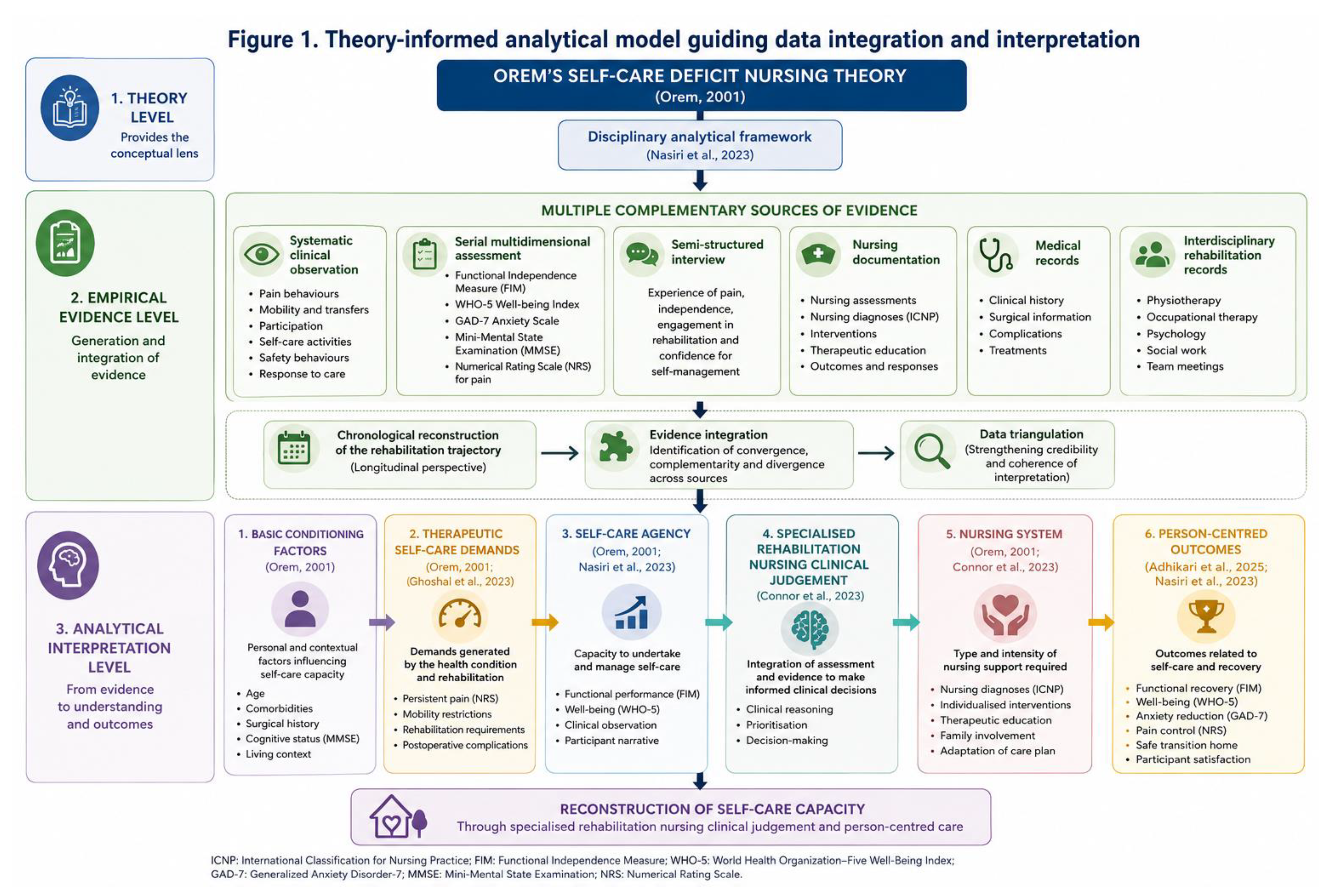
Figure 2.
Clinical timeline of the rehabilitation process and reconstruction of self-care capacity (CARE).
Figure 2.
Clinical timeline of the rehabilitation process and reconstruction of self-care capacity (CARE).
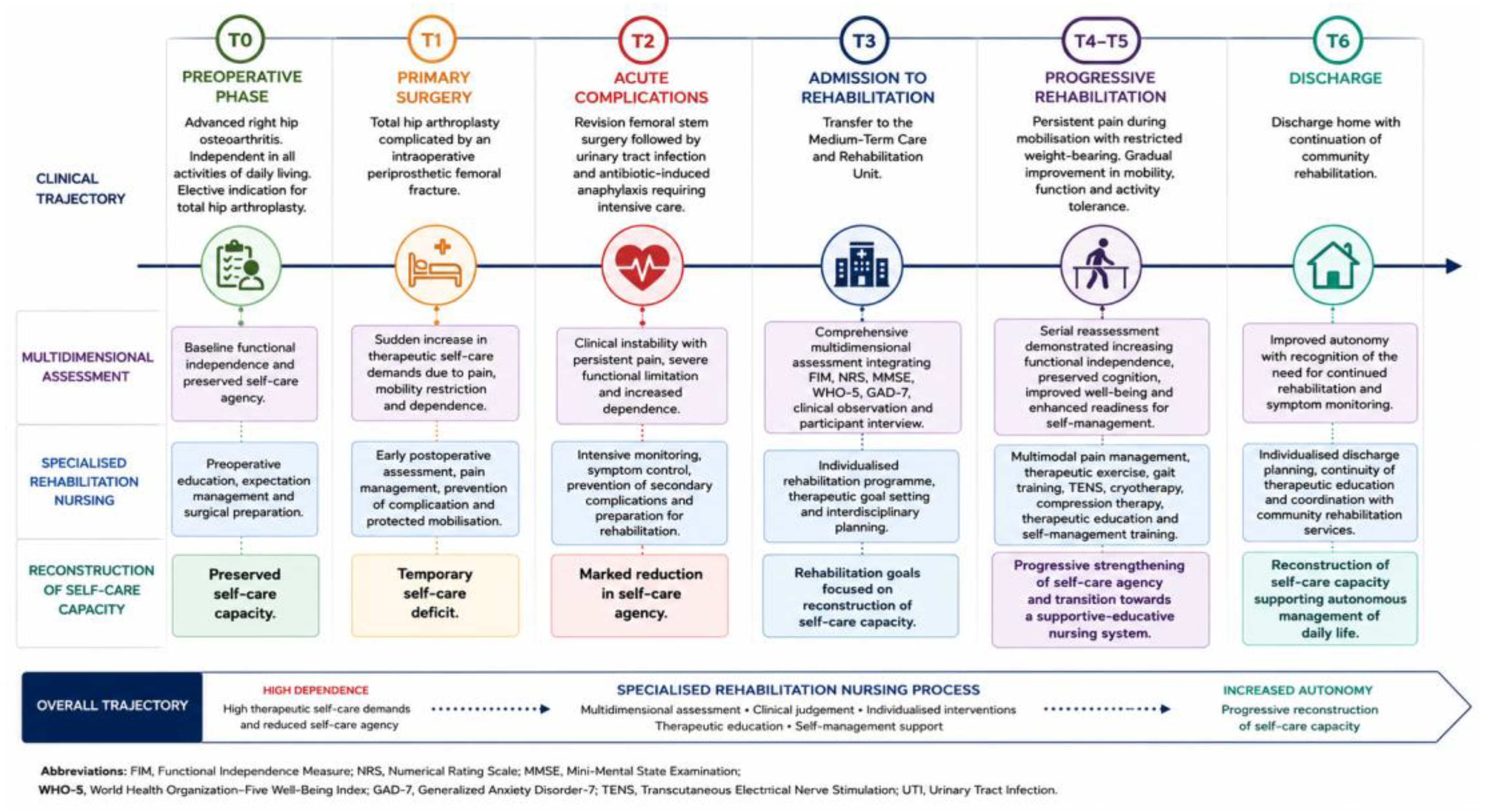
Disclaimer/Publisher’s Note: The statements, opinions and data contained in all publications are solely those of the individual author(s) and contributor(s) and not of MDPI and/or the editor(s). MDPI and/or the editor(s) disclaim responsibility for any injury to people or property resulting from any ideas, methods, instructions or products referred to in the content. |
© 2026 by the authors. Licensee MDPI, Basel, Switzerland. This article is an open access article distributed under the terms and conditions of the Creative Commons Attribution (CC BY) license (http://creativecommons.org/licenses/by/4.0/).
Copyright: This open access article is published under a Creative Commons CC BY 4.0 license, which permit the free download, distribution, and reuse, provided that the author and preprint are cited in any reuse.