

Submitted:
26 August 2026
Posted:
27 August 2026
You are already at the latest version
Abstract
Short bowel syndrome (SBS) is the leading cause of chronic intestinal failure in adults, arising when the residual small bowel can no longer absorb the macronutrients, water and electrolytes needed to sustain health without intravenous supplementation. Its management is, at its core, a nutritional problem. This review synthesises current evidence and guideline recommendations on the two pillars of that management: dietary (oral/enteral) therapy and parenteral nutritional support. We frame both around the two variables that dominate clinical behaviour, namely residual intestinal anatomy and the phase of intestinal adaptation, and translate them into anatomy-tailored dietary strategies, rational fluid and electrolyte replacement, micronutrient surveillance, and the composition, delivery and complications of (home) parenteral nutrition. We also position the pharmacological adjuncts, culminating in glucagon-like peptide-2 (GLP-2) analogues, within a stepwise strategy to reduce parenteral-support dependence. The goal throughout is a practical, physiology-anchored approach that maximises enteral autonomy and quality of life while preventing the metabolic, hepatic and catheter-related complications of long-term intravenous feeding.
Keywords:
short bowel syndrome
; intestinal failure
; parenteral nutrition
; home parenteral nutrition
; intestinal adaptation
; oral rehydration solution
; GLP‐2 analogues
; teduglutide
1. Introduction
Intestinal failure (IF) is defined by ESPEN as the reduction of gut function below the minimum necessary for the absorption of macronutrients and/or water and electrolytes, such that intravenous supplementation is required to maintain health and/or growth [1]. It is graded by onset and expected duration into three functional types: type I, an acute, short-lived and usually self-limiting condition seen perioperatively or in critical illness; type II, a prolonged acute state in metabolically unstable patients requiring multidisciplinary care over weeks to months; and type III, chronic intestinal failure (CIF) in a metabolically stable patient managed, where possible, at home [1,2].
Short bowel syndrome (SBS), defined in adults as a residual small-bowel length in continuity below approximately 200 cm following extensive resection, is the commonest pathophysiological mechanism of CIF, accounting for roughly two-thirds of adult cases [3,4]. The dominant causes are Crohn’s disease, mesenteric ischaemia, radiation enteritis, surgical complications and volvulus [5]. Whatever the trigger, the resulting clinical picture is dominated by malabsorption: diarrhoea or high stomal output, steatorrhoea, dehydration, electrolyte and micronutrient depletion, and weight loss [6].
Because the primary deficit is impaired absorption, the management of SBS is fundamentally a nutritional discipline. It rests on two complementary pillars: optimisation of what the patient eats and drinks (dietary/enteral therapy) and replacement of what the gut cannot absorb (parenteral support, PS). This review addresses both, organised around the two clinical variables that govern almost every decision (the residual anatomy and the phase of adaptation) and integrates the pharmacological therapies, now including GLP-2 analogues, that can shift the balance from intravenous dependence toward enteral autonomy [3,4,6].
2. Pathophysiology That Drives Nutritional Decisions
2.1. Residual Anatomy Defines the Phenotype
Three residual anatomies account for the great majority of adult SBS and behave so differently that they are best regarded as distinct clinical entities (Figure 1) [5,7]. In the end-jejunostomy patient, jejunum ends in a stoma with no colon in continuity. These patients are typically “net secretors”: because jejunal mucosa is freely permeable to water and sodium, hypotonic or hypertonic oral intake draws fluid into the lumen, so that stomal output can exceed oral intake. They lose large volumes of water, sodium and magnesium, adapt little over time, and are the most PS-dependent group [5,8].
In the jejuno-colic patient, jejunum is anastomosed to colon with little or no ileum remaining. Here the colon becomes a digestive organ: unabsorbed carbohydrate is fermented by the microbiota to short-chain fatty acids (SCFA), salvaging up to ~1000 kcal/day, while colonic contact slows transit through the peptide-YY/GLP-2 “ileo-colonic brake” [8,9]. Colonic preservation reduces PS requirements but introduces two anatomy-specific hazards: calcium-oxalate nephrolithiasis and D-lactic acidosis [8]. The jejuno-ileal patient retains more than ~10 cm of terminal ileum plus colon; with the ileal brake and bile-salt/B12 handling preserved, this group has the best absorptive and adaptive capacity and rarely needs long-term support [5].
2.2. Adaptation is a Moving Target
The remnant intestine changes over time. Three phases are conventionally described (Figure 2) [10]. The acute/hypersecretory phase (first 3–4 weeks) is dominated by massive fluid and electrolyte losses and gastric acid hypersecretion; PS is life-saving and the priorities are haemodynamic and electrolyte stabilisation rather than nutritional “repletion.” The adaptation phase (weeks to 1–2 years) brings structural and functional remodelling (villus hypertrophy, crypt deepening, slowed transit) together with spontaneous hyperphagia; this is the window in which early enteral feeding and anatomy-tailored diet do most of their work. In the maintenance/stabilisation phase (>1–2 years) a new absorptive steady state is reached, and it becomes possible to distinguish patients who have achieved enteral autonomy from those with established CIF who will need long-term support or intestinotrophic therapy [10,11].
Two absorptive concepts underpin this trajectory. Intestinal insufficiency denotes malabsorption compensated by hyperphagia and adaptation without intravenous support, whereas intestinal failure denotes malabsorption uncompensated, requiring PS; metabolic-balance studies formally separate the two [12]. Adaptive hyperphagia is a physiological ally: most SBS patients spontaneously eat 1.5–2 times their resting energy expenditure, and net absorption correlates far better with total intake than with the fraction absorbed [13]. This single observation, that eating more rather than eating “right” drives absorption, shapes much of dietary practice.
3. Goals, Energy Needs and Monitoring
The objectives of nutritional care are to correct and prevent malnutrition and dehydration, to preserve or restore fat-free mass and function, to maximise enteral autonomy, and to avoid the complications of both the disease and its treatment [3,4,14]. Energy requirements are usually estimated at ~25–35 kcal/kg/day, but because absorption is incomplete the delivered target must exceed the absorbed target; encouraging hyperphagia rather than imposing restriction is the guiding principle, and dietary counselling should be individualised and repeated as the patient adapts [6,13,15].
Objective monitoring anchors decisions. Beyond weight, hydration and stomal/faecal output charts, plasma citrulline, an enterocyte-derived amino acid, provides a quantitative biomarker of residual absorptive mucosal mass; concentrations below ~20 µmol/L correlate with permanent intestinal failure and low probability of PS independence [16]. Regular assessment of fluid balance (including a spot urine sodium <20 mmol/L as an early marker of sodium depletion), renal function, magnesium, and fat-soluble and other micronutrients allows problems to be pre-empted rather than discovered late [4,5].
4. Dietary (Oral and Enteral) Management
4.1. General Principles
Oral diet remains first-line therapy and should be maintained or reintroduced as early as safely possible, because luminal nutrients are themselves the strongest stimulus to adaptation [10,15]. Practical measures that apply across anatomies include eating frequent small meals, separating solids from large volumes of fluid, chewing well, and continuing to eat generously despite the counter-intuitive rise in stomal or faecal output that accompanies larger intakes. Diet must then be tailored to the residual anatomy (Figure 3), because the same advice can help one phenotype and harm another [5,6]. In patients with SBS at risk of malnutrition and concomitant hyporexia, high-energy, high-protein oral nutritional supplements (ONS) may represent a useful adjunct to oral feeding in order to support adequate nutrient intake; however, their use should be individualized, with particular attention to the mode of administration and the osmolarity of the formulation. Thus, iso-osmolar formulations are generally preferred, as they may enhance intestinal absorption while reducing fluid losses [4].
4.2. The Patient with an End-Jejunostomy (No Colon)
These patients are defined by their fluid and sodium physiology. Hypotonic drinks (water, tea, alcohol, dilute juices) and hypertonic drinks paradoxically increase stomal output by driving net jejunal secretion; the cornerstone of therapy is therefore to restrict free hypotonic fluids and replace them with a glucose–saline oral rehydration solution (ORS) whose sodium concentration is high enough (~90–120 mmol/L) to exploit sodium-glucose co-transport and reverse net secretion [5,6]. Sodium losses are large and must be replaced generously. Contrary to older teaching, these patients do not benefit from fat restriction: they absorb more fat when they eat more, so an energy-dense, unrestricted-fat, higher-salt diet with a separate ORS is usually optimal [5,6,17]. In concrete terms this means encouraging salty, savoury, energy-dense foods (for example crisps, salted crackers and pretzels, cheese, cured meats, oily fish, eggs, and butter or oil added freely to starchy staples such as bread, pasta, rice and potatoes), while adding salt at the table and avoiding large sugary or hypotonic drinks with meals [6,17]. Macronutrient composition otherwise matters relatively little because there is no colon to salvage malabsorbed substrate.
4.3. The Patient with Colon in Continuity
When colon is preserved, the dietary calculus changes. A higher-complex-carbohydrate, moderate-fat diet is generally advised: unabsorbed carbohydrate is fermented to SCFA and salvaged as energy, whereas a large unabsorbed fat load is fermented less efficiently, binds divalent cations, and worsens diarrhoea and steatorrhoea [8,9]. Medium-chain triglycerides (MCT) can add colon-absorbable energy in this group specifically. Soluble fibre supports SCFA production. Fluid handling is less demanding than in the jejunostomy patient, and hypotonic fluids are usually tolerated [6].
In practice, the plate is built on starchy complex carbohydrates (bread, pasta, rice, potatoes, couscous, polenta and refined cereals), with protein foods and only moderate fat; oats or psyllium are practical sources of soluble fibre, and MCT oil can be added when weight gain is difficult [6,9,17]. Very greasy, deep-fried and high-long-chain-fat foods are limited, not least because unabsorbed fat promotes oxalate absorption [17].
Two colon-specific complications require dietary attention. Enteric hyperoxaluria and calcium-oxalate stones arise because unabsorbed fatty acids bind calcium, leaving free oxalate to be absorbed by the colon; a low-oxalate diet, adequate calcium taken with meals and good hydration reduce the risk [8,17]. Foods particularly high in oxalate (spinach, rhubarb, beetroot, chard, nuts and nut products, soy, cocoa and chocolate, wheat bran, strong tea, many berries and sweet potato) are the ones to limit in this group [17]. D-lactic acidosis, a rare encephalopathy caused by colonic bacterial over-fermentation of carbohydrate to D-lactate, should be considered in a colon-in-continuity patient with neurological symptoms and a high anion-gap acidosis, and is managed by reducing rapidly fermentable carbohydrate and, at times, antibiotics [5].
The same principles extend to the jejuno-ileal patient: with terminal ileum and colon preserved, absorptive and adaptive capacity is largely intact, and a normal, energy-dense diet following the general measures outlined above is usually sufficient, without the specific restrictions required by the other two phenotypes; vitamin B12 status should nonetheless be monitored when a substantial length of ileum has been resected [5,6].
4.4. Foods and Drinks: What to Prefer and What to Limit
Translating these principles into everyday choices helps patients most (Figure 4). Across both phenotypes, the diet is built on starchy complex carbohydrates (bread, pasta, rice, potatoes, couscous, refined cereals) with generous protein (eggs, fish, poultry, meat, cheese, tofu, smooth nut butters), eaten as small, frequent meals with thorough chewing [6,15,17]. Fruit and vegetables are better tolerated peeled, well-cooked and soft (banana, peeled apple, cooked carrot) than raw and fibrous; skins, peels, pips, sweetcorn, mushrooms, whole nuts, seeds and dried fruit tend to increase output and, with a narrowed anastomosis, pose an obstruction risk [17].
Several items are best limited or avoided in most patients: concentrated, hyperosmolar sweet foods and drinks (fruit juice, sugary fizzy drinks, sweets, cakes, syrups and honey in quantity), which draw fluid into the lumen; sugar alcohols (sorbitol, mannitol, xylitol, isomalt) hidden in ‘sugar-free’ gum, sweets and cough drops, which act as osmotic laxatives; and excess alcohol and caffeine, which stimulate the gut and act as diuretics [17]. The remaining choices are then tailored by anatomy, following the phenotype-specific strategies detailed in Section 4.2 and Section 4.3 and summarised in Figure 3 and Figure 4 [5,6,17].
4.5. Fluid and Electrolyte Therapy
Dehydration and sodium depletion, rather than calorie deficit, are the commonest reasons for hospital readmission and for failure to wean PS [5,6].
To safely absorb water and sodium enterally, fluid replacement must exploit the active, coupled transport of sodium and glucose via the sodium-glucose cotransporter 1 (SGLT-1) on the jejunal brush border [4,5,6]. The active intracellular transport of sodium and glucose generates a localised osmotic gradient, drawing water passively into the enterocytes via solvent drag [4,5].
The practical toolkit is: limit hypotonic and hypertonic drinks; provide a glucose–saline ORS sipped throughout the day; replace magnesium (often as an evening oral dose, sometimes parenterally when depletion is severe); and use a spot urine sodium <20 mmol/L as an early warning of total-body sodium depletion, which itself aggravates magnesium loss through secondary hyperaldosteronism [5]. Some jejunostomy patients ultimately require subcutaneous or intravenous saline even when caloric needs are met enterally.
4.6. Macronutrients and Micronutrients
Energy and protein. Diet should be energy-dense; protein is generally well tolerated and does not need restriction, and whole-protein diets are as well absorbed as peptide-based formulas in most patients [6,15]. Fat and MCT are handled as described in Section 4.2 and Section 4.3. Carbohydrate and fibre are leveraged for colonic salvage only when colon is in continuity.
Micronutrient deficiencies are common in SBS and require structured monitoring at least once per year, with parenteral or oral supplementation tailored to laboratory values [4,6]. Water-soluble vitamins are absorbed in the proximal small bowel and deficiencies are rare, with the critical exception of Vitamin B12 [4]. Resection of more than 60 to 100 cm of terminal ileum completely abolishes active B12-intrinsic factor absorption, necessitating life-long monthly parenteral injections of 300 to 1000 µg [4,5,6]. Fat-soluble vitamins (A, D, E, K) are highly susceptible to malabsorption due to a depleted bile acid pool resulting from ileal resection [4,5]. Vitamin D deficiency is highly prevalent and actively drives Metabolic Bone Disease (MBD) [4]. Standard intravenous lipid emulsions provide phylloquinone (Vitamin K), but additional supplementation may be required in distal bowel disease or in patients on lipid-free PN [4]. High doses of Vitamin C (>200 mg/day) in HPN formulations can increase urinary oxalate excretion, elevating nephrolithiasis risk [4].
Enteral or, where absorption is inadequate, parenteral micronutrient provision should be guided by regular measurement rather than assumption [3,4].
Trace element management is critical in patients on long-term HPN. Zinc is excreted in large quantities in diarrhoeal and stomal fluids, and patients with high-output fistulas or stomas may require up to 12 to 17 mg of intravenous zinc per litre of fluid lost [4]. Selenium deficiency is common and associated with an increased risk of serious infections [4]. Copper should be monitored closely and restricted in cholestasis, as it is primarily excreted in bile, and toxicity can lead to severe hepatic accumulation [4]. Chromium is present as a widespread contaminant in parenteral components, and excess chromium accumulates in tissues and may cause renal impairment [4]. Manganese toxicity represents a major clinical concern in long-term HPN. Fixed-dose multi-trace element solutions often deliver manganese levels 5 to 6 times above current daily requirements (~55 µg/day), leading to manganese deposition in the globus pallidus, presenting as severe Parkinsonian-like neurotoxicity [4]. Iron deficiency is highly prevalent, affecting 30–50% of HPN patients, requiring regular intravenous iron separate infusions or custom HPN compounding [4]. Metabolic Bone Disease (MBD), affecting up to 84% of HPN patients (41% osteoporosis), is multifactorial, driven by chronic inflammation, corticosteroid use, and PN-related hypercalciuria [4]. Monitoring via repeated DXA scans is recommended, and management includes optimising calcium, magnesium, and phosphate ratios in the PN bag, followed by intravenous bisphosphonates (clodronate, pamidronate) or subcutaneous denosumab [4].
5. Pharmacological Adjuncts That Spare Parenteral Support
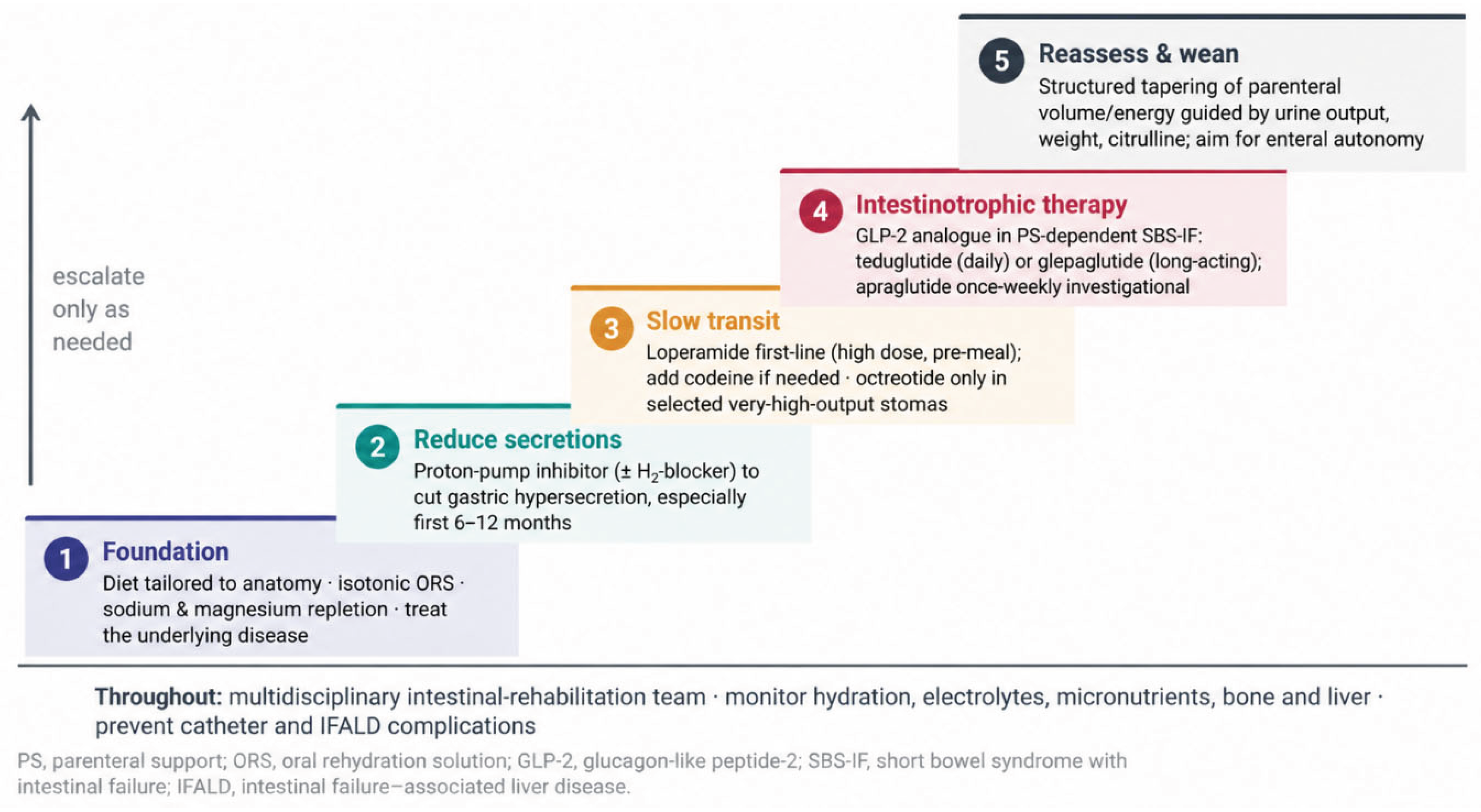
Drug therapy in SBS is best conceived as a stepwise escalation layered on top of diet and fluids, each step reserved for patients not controlled by the previous one (Figure 5) [4,5]. Antisecretory therapy with a proton-pump inhibitor reduces the gastric acid hypersecretion that magnifies early fluid losses and is especially useful in the first 6–12 months. Antimotility agents slow transit and reduce output: high-dose loperamide taken before meals is first-line (it undergoes enterohepatic recirculation that is lost in SBS, so doses higher than usual are often needed), with codeine phosphate added when necessary. Octreotide reduces very high stomal output but is reserved for selected refractory cases because it may impair adaptation and carries its own risks [5,6].
A major therapeutic advance is GLP-2 analogue therapy, which directly targets adaptation. GLP-2 is an intestinotrophic hormone that increases villus height and crypt depth, slows transit and reduces secretion, thereby improving absorption [18]. Teduglutide, a DPP-IV-resistant GLP-2 analogue, reduced PS requirements versus placebo in randomised phase 3 trials: in the pivotal STEPS study, 63% of teduglutide-treated patients achieved a 20–100% reduction in PS volume versus 30% on placebo, with rising plasma citrulline and, in extension studies, progressive weaning and enteral autonomy in a subset [19,20]. Response is more likely in patients with lower baseline PS requirements and non-inflammatory aetiology [21]. Longer-acting analogues designed to ease treatment burden have followed: glepaglutide, given once or twice weekly, significantly reduced PS volume in a phase 3 randomised trial [22], while apraglutide, a once-weekly analogue, improved intestinal fluid absorption in a randomised phase 2 study [23] and met its primary endpoint of reduced weekly PS volume in the global phase 3 STARS trial (NCT04627025; reported 2024), which stratified patients by stoma versus colon-in-continuity anatomy. GLP-2 therapy should be initiated within an experienced intestinal-rehabilitation programme, with diet and PS actively re-titrated as absorption improves.
6. Parenteral Nutrition and Home Parenteral Nutrition
6.1. Indications and Composition
Parenteral support is indicated whenever enteral intake plus adaptation cannot maintain hydration, electrolyte balance and nutritional status, which is the defining feature of intestinal failure [1,3]. In stable CIF, PS is delivered as home parenteral nutrition (HPN), which is the primary, life-preserving therapy and is more cost-effective than prolonged hospitalisation [24]. The admixture is individualised to the patient’s measured deficits rather than to standardised formulae: energy is provided as a glucose–lipid mixture, with amino acids to meet protein needs, and with sodium, potassium, magnesium, calcium, phosphate, trace elements and vitamins titrated to serial biochemistry [3,24]. Many jejunostomy patients need proportionally more intravenous fluid, sodium and magnesium than calories: a saline-and-magnesium problem as much as a feeding problem.
The standard daily macronutrient composition of an HPN formula should be tailored based on formal nutritional assessments. Energy requirements generally range from 20 to 35 kcal/kg/day (derived from glucose and lipids), and protein requirements range from 0.8 to 1.4 g of L-amino acids/kg/day [4]. Water and electrolyte requirements must be adjusted based on stomal and faecal outputs, typically providing 25 to 35 mL of water/kg/day, 1.0 to 1.5 mmol of sodium/kg/day, and 1.0 to 1.5 mmol of potassium/kg/day [4]. Tight glycaemic control is targeted during infusion, maintaining blood glucose below 180 mg/dL (10.0 mmol/L) and a target HbA1c of <7% in diabetic patients [4]. For safe, long-term HPN delivery, vascular access must be managed by an experienced nutrition support team (NST). Tunnelled central venous catheters (CVCs) or subcutaneously anchored catheters are the gold standard [4,6]. Access to the superior vena cava via the right internal jugular or subclavian vein is strongly preferred to reduce local thrombosis risk. To prevent life-threatening catheter-related bloodstream infections (CRBSI), strict aseptic non-touch techniques must be maintained [4,5].
6.2. Lipid Emulsions and Intestinal Failure–Associated Liver Disease
Lipid emulsions supply energy and essential fatty acids but are also a modifiable risk factor for intestinal failure–associated liver disease (IFALD), a severe, progressive and potentially life-threatening hepatobiliary complication of long-term home parenteral nutrition, ranging from steatosis and cholestasis to fibrosis [4,25]. In adults, IFALD is a multifactorial condition driven by both patient-specific and PN-associated factors [4]. Patient-specific risks include severe small-bowel resection (remnant <50–100 cm), loss of the colon in continuity, recurrent central-line sepsis and chronic enteral starvation [4,26]. Enteral starvation impairs the physiological secretion of gut-derived hepatoprotective hormones (such as gastrin, secretin and cholecystokinin), causing gallbladder stasis, biliary sludge accumulation and cholestasis [26]. Sepsis acts as a powerful trigger: circulating lipopolysaccharides (LPS) and endotoxins translocate from the gut lumen through a compromised, hyperpermeable epithelial barrier into the portal circulation, activating hepatic Kupffer cells and unleashing a cascade of pro-inflammatory cytokines (TNF-α, IL-6) that drive cholestasis and progressive fibrosis [4,26].
To prevent and treat IFALD, several lipid-modification and clinical strategies should be implemented:
- Limit soybean-oil dosage: for long-term HPN (>6 months), the dose of pure soybean-oil-based (n-6-rich) lipid emulsion should be strictly limited to less than 1.0 g/kg/day, since higher doses are associated with IFALD; overall lipid infusion of 0.8–1.5 g/kg/day is safe and should not exceed 2.6 g/kg/day [3,4].
- Use alternative mixed emulsions: if total lipid requirements exceed 1.0 g/kg/day, composite emulsions containing olive oil, medium-chain triglycerides (MCT) and/or fish oil, with a more favourable n-6:n-3 ratio, should be preferred. These formulations reduce the total omega-6 and phytosterol load and provide rich concentrations of α-tocopherol, exerting a strong antioxidant and hepatoprotective effect [3,25].
- Administer pure fish-oil emulsions in established cholestasis: in patients with cholestasis or hyperbilirubinaemia, pure fish-oil-based emulsions (rich in omega-3 fatty acids) or mixed lipid emulsions can successfully reverse cholestasis, normalise transaminases and arrest progressive fibrosis [4]. Omega-3 fatty acids downregulate pro-inflammatory pathways and promote fatty-acid oxidation via PPAR-α activation.
- Prevention of IFALD also depends on avoiding overfeeding and glucose overload, treating catheter sepsis promptly, and preventing small-bowel bacterial overgrowth [24,25]. In patients with double enterostomies, chyme reinfusion (re-feeding enteroclysis) successfully restores the bile salt–FGF19–FXR axis, markedly improving liver function and allowing HPN weaning [4,26].
6.3. Weaning and the Drive Toward Enteral Autonomy
Whenever adaptation, diet and pharmacotherapy improve absorption, PS should be actively tapered rather than left unchanged. Weaning is guided by objective targets (stable weight and hydration, adequate urine output and sodium, and rising citrulline) and typically proceeds by reducing infused volume and energy in structured steps, often first by dropping infusion nights per week before reducing per-session volume [4,21]. Roughly half of adult SBS patients regain enteral autonomy over time, most within the first two years, the probability being higher with greater residual small-bowel length, preserved colon and higher citrulline [11,27]. The remainder have established CIF and are candidates for long-term HPN and GLP-2 therapy [3,27]. Surgery retains a defined place in this therapeutic pathway: restoration of intestinal continuity to recruit distal unused bowel and, in selected patients, autologous reconstructive (bowel-lengthening) procedures can improve absorptive capacity and facilitate weaning [28]. Intestinal transplantation remains a life-saving option for patients with irreversible CIF who develop life-threatening complications of HPN, such as IFALD, progressive loss of central venous access or recurrent catheter-related sepsis, and candidacy should be assessed in a dedicated transplant centre [3,29].
6.4. Complications and Long-Term Surveillance
Long-term PS carries a defined complication burden that must be actively surveilled [3,24]. Catheter-related bloodstream infection is the most frequent serious complication and is minimised by strict aseptic technique, appropriate central venous access device selection, and, in recurrent cases, taurolidine or ethanol catheter locks; catheter occlusion and central-vein thrombosis are prevented by careful line care and tip positioning. IFALD and metabolic bone disease require periodic hepatic and skeletal assessment. A structured monitoring schedule (clinical, anthropometric and biochemical) conducted by an experienced team underpins both safety and quality of life, and patients benefit from education and peer-support networks [3,24,30].
7. Organisation of Care
Outcomes in SBS-IF are demonstrably better when patients are managed by a coordinated, multidisciplinary intestinal-rehabilitation team (gastroenterologist, surgeon, specialist dietitian, nutrition nurse and pharmacist), with early referral of complex patients to centres with expertise in both medical and surgical treatment [4,31]. Such teams integrate the elements described above (anatomy-tailored diet, fluid and electrolyte optimisation, antisecretory and antimotility drugs, GLP-2 therapy, and safe HPN) and are best placed to maximise the opportunity of weaning, to prevent HPN-related complications, and to assess candidacy for transplantation when HPN fails [3,31].
8. Key Messages for Practice
However complex an individual case may appear, the management of short bowel syndrome converges on a small number of principles that, applied consistently, most reliably improve outcomes at the bedside. The box below distils the preceding sections into a quick reference for the whole multidisciplinary team: gastroenterologist, surgeon, dietitian, nutrition nurse and pharmacist alike. Each point is developed in the relevant section above and is intended as a practical aide-mémoire rather than a substitute for individualised assessment.
|
KEY MESSAGES FOR PRACTICE ▸ Classify first. Establish the residual anatomy (end-jejunostomy vs colon-in-continuity vs jejuno-ileal) and the adaptation phase before giving any dietary advice: they change the advice completely. ▸ Feed generously. Compensatory hyperphagia, not restriction, drives absorption; energy-dense diet with individualised counselling is first-line in every phenotype. ▸ Tailor the diet to the colon. No colon: liberal fat, high-sodium ORS, restrict hypotonic fluids. Colon present: higher complex-carbohydrate/moderate-fat, MCT useful, watch oxalate and D-lactic acidosis. ▸ Master fluids and sodium. Dehydration and sodium depletion are the leading causes of readmission and failed weaning; a glucose–saline ORS and magnesium repletion are essential tools. ▸ Escalate drugs stepwise. PPI → high-dose loperamide ± codeine → (selected) octreotide → GLP-2 analogue in PS-dependent SBS-IF. ▸ Use PS wisely and safely. Individualise the admixture, cap soybean-oil lipid at ~1 g/kg/day and prefer composite emulsions to limit IFALD, and taper PS actively toward enteral autonomy. ▸ Refer early to a specialist team. Multidisciplinary intestinal rehabilitation improves weaning rates, prevents complications and identifies transplant candidates. |
9. Conclusions
The management of short bowel syndrome is the management of absorption. By reading the two variables that matter most, namely what anatomy remains and where the patient sits on the adaptation curve, the clinician can deploy a coherent sequence of interventions: an anatomy-tailored diet that harnesses hyperphagia and, where possible, colonic energy salvage; a disciplined fluid, sodium and magnesium strategy; a stepwise pharmacological ladder culminating in GLP-2 analogues; and a safely delivered, well-monitored parenteral programme with lipid strategies that protect the liver. Applied within an experienced multidisciplinary team, this integrated approach maximises enteral autonomy and quality of life while minimising the complications that have historically defined life with a short bowel.
Author Contributions
Conceptualisation, B.B., G.T, and E.V.S.; literature search and data curation, B.B., B.V., M.D., G.D.L., P.P., F.C., S.C. and G.T.; writing—original draft preparation, B.B.; writing—review and editing, B.B, B.V., M.D., G.T. and E.V.S.; supervision, E.V.S. All authors have read and agreed to the published version of the manuscript.
Funding
This research received no external funding.
Conflicts of Interest
Brigida Barberio has served as a speaker for AbbVie, Alfasigma, Eli Lilly, Ferring, Giuliani, Johnson&Johnson, Pharmaextracta, Pfizer, Takeda; has served as a consultant for AbbVie, Eli Lilly, Johnson&Johnson. Luisa Bertin has received speaker fees from Edra SpA, Takeda SpA, Giuliani SpA and Sanofi. Edoardo Vincenzo Savarino has served as speaker for Abbvie, Aboca, Abivax, Agave, AGPharma, Alfasigma, Apoteca, Biosline, CaDiGroup, Celltrion, Dr Falk, EG Stada Group, Eli Lilly, Fenix Pharma, Galapagos, Giuliani, Johnson&Johnson, JB Pharmaceuticals, Innovamedica/Adacyte, Lionhealth, Malesci, Mayoly Biohealth, Montefarco, Novartis, Omega Pharma, Pfizer, Rafa, Reckitt Benckiser, Recordati, Sandoz, Sanofi/Regeneron, SILA, Takeda, Tillots, Unifarco; has served as consultant for Abbvie, Alfasigma, Apogee, AstraZeneca, Biogen, Bristol-Myers Squibb, Celltrion, Dr. Falk, Eli Lilly, Fenix Pharma, Ferring, Giuliani, Grunenthal, Johnson&Johnson, JB Pharmaceuticals, Merck & Co, Nestlè, Pfizer, PRO.MED.CS Praha a.s., Reckitt Benckiser, Recordati, Sanofi/Regeneron, SILA, Takeda, Unifarco; he received research support from Bonollo, Difass, Pfizer, Reckitt Benckiser, Sanofi/Regeneron, SILA, Unifarco, Zeta Farmaceutici. Fabiana Zingone has served as a consultant for Takeda, Tillotts Pharma, Dr Falk, Immunic, Forte and First Tracks, and as a speaker for Takeda, Pharmaextracta, Eli Lilly, Giuliani, Johnson&Johnson, Alfasigma, Ferring, AbbVie, Kedrion, Werfen, Pfizer and Lionhealth. The remaining authors declare no conflict of interest.
References
- Pironi, L.; Arends, J.; Baxter, J.; et al. ESPEN endorsed recommendations. Definition and classification of intestinal failure in adults. Clin. Nutr. 2015, 34(2), 171–180. [Google Scholar] [CrossRef] [PubMed]
- O’Keefe, S.J.D.; Buchman, A.L.; Fishbein, T.M.; Jeejeebhoy, K.N.; Jeppesen, P.B.; Shaffer, J. Short bowel syndrome and intestinal failure: consensus definitions and overview. Clin. Gastroenterol. Hepatol. 2006, 4(1), 6–10. [Google Scholar] [CrossRef] [PubMed]
- Pironi, L.; Arends, J.; Bozzetti, F.; et al. ESPEN guidelines on chronic intestinal failure in adults. Clin. Nutr. 2016, 35(2), 247–307. [Google Scholar] [CrossRef] [PubMed]
- Pironi, L.; Cuerda, C.; Jeppesen, P.B.; et al. ESPEN guideline on chronic intestinal failure in adults – Update 2023. Clin. Nutr. 2023, 42(10), 1940–2021. [Google Scholar] [CrossRef] [PubMed]
- Nightingale, J.; Woodward, J.M.; Small Bowel and Nutrition Committee of the British Society of Gastroenterology. Guidelines for management of patients with a short bowel. Gut 2006, 55 (Suppl 4), iv1–iv12. [Google Scholar] [CrossRef] [PubMed]
- Iyer, K.; DiBaise, J.K.; Rubio-Tapia, A. AGA Clinical Practice Update on Management of Short Bowel Syndrome: Expert Review. Clin. Gastroenterol. Hepatol. 2022, 20(10), 2185–2194.e2. [Google Scholar] [CrossRef] [PubMed]
- Buchman, A.L.; Scolapio, J.; Fryer, J. AGA technical review on short bowel syndrome and intestinal transplantation. Gastroenterology 2003, 124(4), 1111–1134. [Google Scholar] [CrossRef] [PubMed]
- Nightingale, J.M.; Lennard-Jones, J.E.; Gertner, D.J.; Wood, S.R.; Bartram, C.I. Colonic preservation reduces need for parenteral therapy, increases incidence of renal stones, but does not change high prevalence of gall stones in patients with a short bowel. Gut 1992, 33(11), 1493–1497. [Google Scholar] [CrossRef] [PubMed]
- Nordgaard, I.; Hansen, B.S.; Mortensen, P.B. Colon as a digestive organ in patients with short bowel. Lancet 1994, 343(8894), 373–376. [Google Scholar] [CrossRef] [PubMed]
- Tappenden, K.A. Pathophysiology of short bowel syndrome: considerations of resected and residual anatomy. JPEN J. Parenter. Enter. Nutr. 2014, 38((1) Suppl, 14S–22S. [Google Scholar] [CrossRef] [PubMed]
- Carbonnel, F.; Cosnes, J.; Chevret, S.; et al. The role of anatomic factors in nutritional autonomy after extensive small bowel resection. JPEN J. Parenter. Enter. Nutr. 1996, 20(4), 275–280. [Google Scholar] [CrossRef] [PubMed]
- Prahm, A.P.; Brandt, C.F.; Askov-Hansen, C.; Mortensen, P.B.; Jeppesen, P.B. The use of metabolic balance studies in the objective discrimination between intestinal insufficiency and intestinal failure. Am. J. Clin. Nutr. 2017, 106(3), 831–838. [Google Scholar] [CrossRef] [PubMed]
- Crenn, P.; Morin, M.C.; Joly, F.; Penven, S.; Thuillier, F.; Messing, B. Net digestive absorption and adaptive hyperphagia in adult short bowel patients. Gut 2004, 53(9), 1279–1286. [Google Scholar] [CrossRef] [PubMed]
- Matarese, L.E.; O’Keefe, S.J.; Kandil, H.M.; Bond, G.; Costa, G.; Abu-Elmagd, K. Short bowel syndrome: clinical guidelines for nutrition management. Nutr. Clin. Pract. 2005, 20(5), 493–502. [Google Scholar] [CrossRef] [PubMed]
- Jeppesen, P.B.; Fuglsang, K.A. Nutritional Therapy in Adult Short Bowel Syndrome Patients with Chronic Intestinal Failure. Gastroenterol. Clin. North Am. 2018, 47(1), 61–75. [Google Scholar] [CrossRef] [PubMed]
- Crenn, P.; Coudray-Lucas, C.; Thuillier, F.; Cynober, L.; Messing, B. Postabsorptive plasma citrulline concentration is a marker of absorptive enterocyte mass and intestinal failure in humans. Gastroenterology 2000, 119(6), 1496–1505. [Google Scholar] [CrossRef] [PubMed]
- Pogatschnik, C.; Russell, L. Dietary interventions for short bowel syndrome in adults. Nutrients 2025, 17(13), 2198. [Google Scholar] [CrossRef] [PubMed]
- Jeppesen, P.B.; Sanguinetti, E.L.; Buchman, A.; et al. Teduglutide (ALX-0600), a dipeptidyl peptidase IV resistant glucagon-like peptide 2 analogue, improves intestinal function in short bowel syndrome patients. Gut 2005, 54(9), 1224–1231. [Google Scholar] [CrossRef] [PubMed]
- Jeppesen, P.B.; Gilroy, R.; Pertkiewicz, M.; Allard, J.P.; Messing, B.; O’Keefe, S.J. Randomised placebo-controlled trial of teduglutide in reducing parenteral nutrition and/or intravenous fluid requirements in patients with short bowel syndrome. Gut 2011, 60(7), 902–914. [Google Scholar] [CrossRef] [PubMed]
- Jeppesen, P.B.; Pertkiewicz, M.; Messing, B.; et al. Teduglutide reduces need for parenteral support among patients with short bowel syndrome with intestinal failure. Gastroenterology 2012, 143(6), 1473–1481.e3. [Google Scholar] [CrossRef] [PubMed]
- Jeppesen, P.B.; Gabe, S.M.; Seidner, D.L.; Lee, H.M.; Olivier, C. Factors associated with response to teduglutide in patients with short-bowel syndrome and intestinal failure. Gastroenterology 2018, 154(4), 874–885. [Google Scholar] [CrossRef] [PubMed]
- Jeppesen, P.B.; Vanuytsel, T.; Subramanian, S.; et al. Glepaglutide, a long-acting glucagon-like peptide-2 analogue, reduces parenteral support in patients with short bowel syndrome: a phase 3 randomized controlled trial. Gastroenterology 2025, 168(4), 701–713.e6. [Google Scholar] [CrossRef] [PubMed]
- Eliasson, J.; Hvistendahl, M.K.; Freund, N.; Bolognani, F.; Meyer, C.; Jeppesen, P.B. Apraglutide, a novel glucagon-like peptide-2 analog, improves fluid absorption in patients with short bowel syndrome intestinal failure: findings from a placebo-controlled, randomized phase 2 trial. JPEN J. Parenter. Enter. Nutr. 2022, 46(4), 896–904. [Google Scholar] [CrossRef] [PubMed]
- Pironi, L.; Boeykens, K.; Bozzetti, F.; et al. ESPEN guideline on home parenteral nutrition. Clin. Nutr. 2020, 39(6), 1645–1666. [Google Scholar] [CrossRef] [PubMed]
- Zafirovska, M.; Zafirovski, A.; Rotovnik Kozjek, N. Current insights regarding intestinal failure–associated liver disease (IFALD): a narrative review. Nutrients 2023, 15(14), 3169. [Google Scholar] [CrossRef] [PubMed]
- Covello, C.; Becherucci, G.; Di Vincenzo, F.; Del Gaudio, A.; Pizzoferrato, M.; Cammarota, G.; Gasbarrini, A.; Scaldaferri, F.; Mentella, M.C. Parenteral nutrition, inflammatory bowel disease, and gut barrier: an intricate plot. Nutrients 2024, 16(14), 2288. [Google Scholar] [CrossRef] [PubMed]
- Messing, B.; Crenn, P.; Beau, P.; Boutron-Ruault, M.C.; Rambaud, J.C.; Matuchansky, C. Long-term survival and parenteral nutrition dependence in adult patients with the short bowel syndrome. Gastroenterology 1999, 117(5), 1043–1050. [Google Scholar] [CrossRef] [PubMed]
- Iyer, K.R. Surgical management of short bowel syndrome. JPEN J. Parenter. Enter. Nutr. 2014, 38((1) Suppl, 53S–59S. [Google Scholar] [CrossRef] [PubMed]
- Grant, D.; Abu-Elmagd, K.; Mazariegos, G.; et al. Intestinal transplant registry report: global activity and trends. Am. J. Transplant. 2015, 15(1), 210–219. [Google Scholar] [CrossRef] [PubMed]
- Cuerda, C.; Pironi, L.; Arends, J.; et al. ESPEN practical guideline: Clinical nutrition in chronic intestinal failure. Clin. Nutr. 2021, 40(9), 5196–5220. [Google Scholar] [CrossRef] [PubMed]
- Matarese, L.E.; Jeppesen, P.B.; O’Keefe, S.J.D. Short bowel syndrome in adults: the need for an interdisciplinary approach and coordinated care. JPEN J. Parenter. Enter. Nutr. 2014, 38((1) Suppl, 60S–64S. [Google Scholar] [CrossRef] [PubMed]
Figure 1.
The three residual anatomies of the short bowel and their functional signature. The functional consequences (net secretion and high stomal losses in the end-jejunostomy; colonic energy salvage but oxalate-stone and D-lactic-acidosis risk in colon-in-continuity; preserved adaptation in the jejuno-ileal type) dictate diet, fluid strategy and parenteral-support needs.
Figure 1.
The three residual anatomies of the short bowel and their functional signature. The functional consequences (net secretion and high stomal losses in the end-jejunostomy; colonic energy salvage but oxalate-stone and D-lactic-acidosis risk in colon-in-continuity; preserved adaptation in the jejuno-ileal type) dictate diet, fluid strategy and parenteral-support needs.
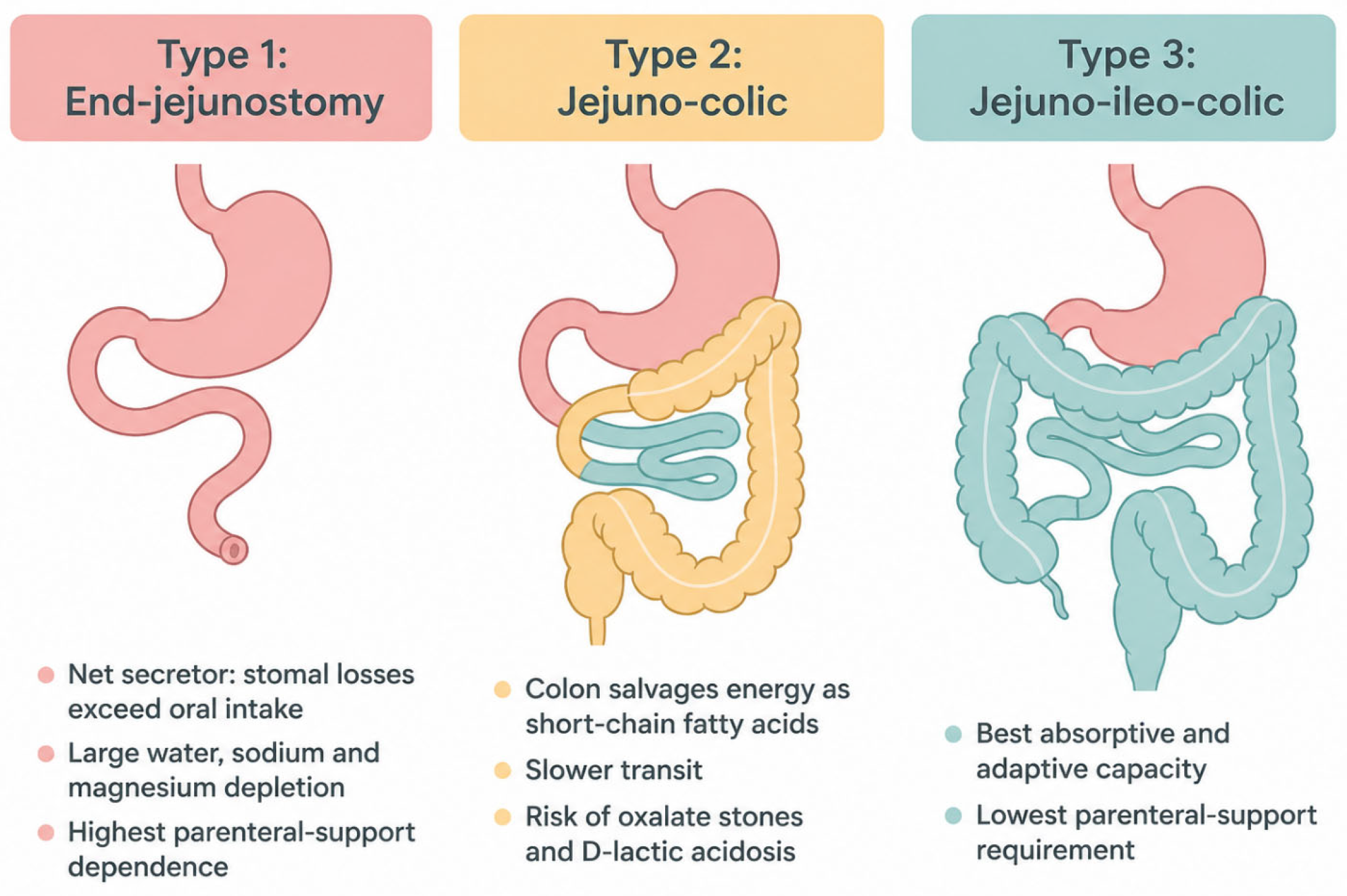
Figure 2.
Phases of intestinal adaptation and the shifting priorities of nutritional care. Management is not static: fluid and electrolyte stabilisation dominate early, anatomy-tailored diet and weaning dominate the adaptation window, and definition of enteral autonomy versus chronic intestinal failure, with consideration of GLP-2 therapy, dominates the maintenance phase.
Figure 2.
Phases of intestinal adaptation and the shifting priorities of nutritional care. Management is not static: fluid and electrolyte stabilisation dominate early, anatomy-tailored diet and weaning dominate the adaptation window, and definition of enteral autonomy versus chronic intestinal failure, with consideration of GLP-2 therapy, dominates the maintenance phase.
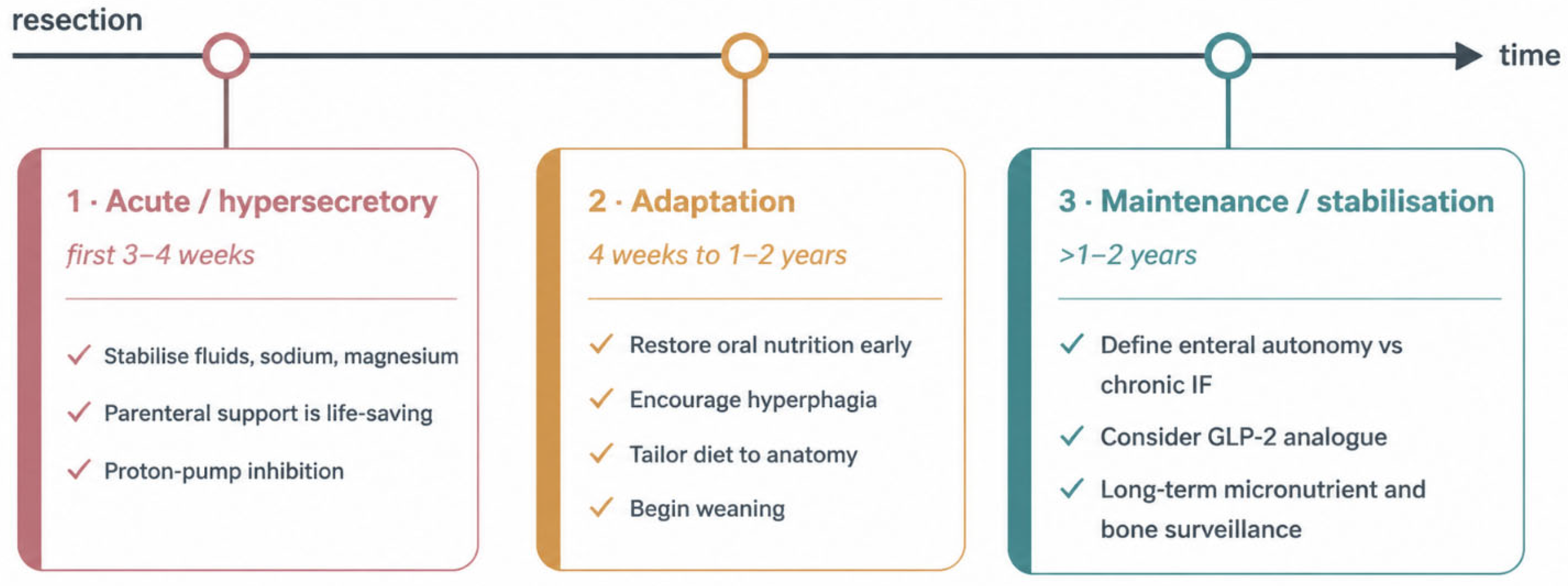
Figure 3.
Anatomy-tailored dietary strategy in short bowel syndrome. The same lever (fat, carbohydrate, fluid or fibre) is pulled in opposite directions depending on whether the colon is in circuit. Energy through compensatory hyperphagia, however, is encouraged in both phenotypes.
Figure 3.
Anatomy-tailored dietary strategy in short bowel syndrome. The same lever (fat, carbohydrate, fluid or fibre) is pulled in opposite directions depending on whether the colon is in circuit. Energy through compensatory hyperphagia, however, is encouraged in both phenotypes.
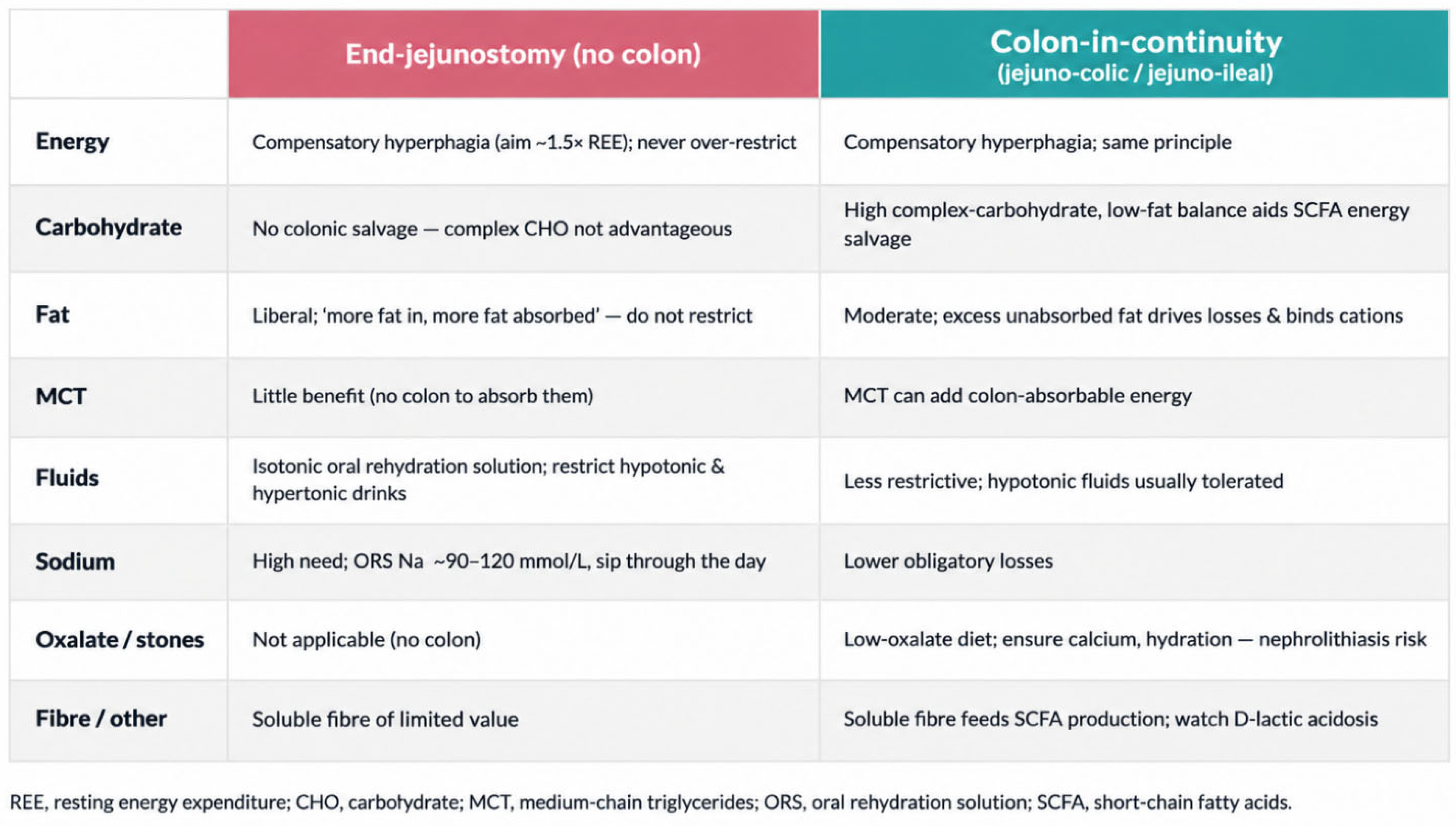
Figure 4.
Practical food and drink choices in short bowel syndrome. A prefer-versus-avoid summary organised by food category, with anatomy-specific advice flagged for the end-jejunostomy (no colon) and colon-in-continuity phenotypes. It operationalises the physiology of Figure 1 and Figure 3 at the level of the plate.
Figure 4.
Practical food and drink choices in short bowel syndrome. A prefer-versus-avoid summary organised by food category, with anatomy-specific advice flagged for the end-jejunostomy (no colon) and colon-in-continuity phenotypes. It operationalises the physiology of Figure 1 and Figure 3 at the level of the plate.
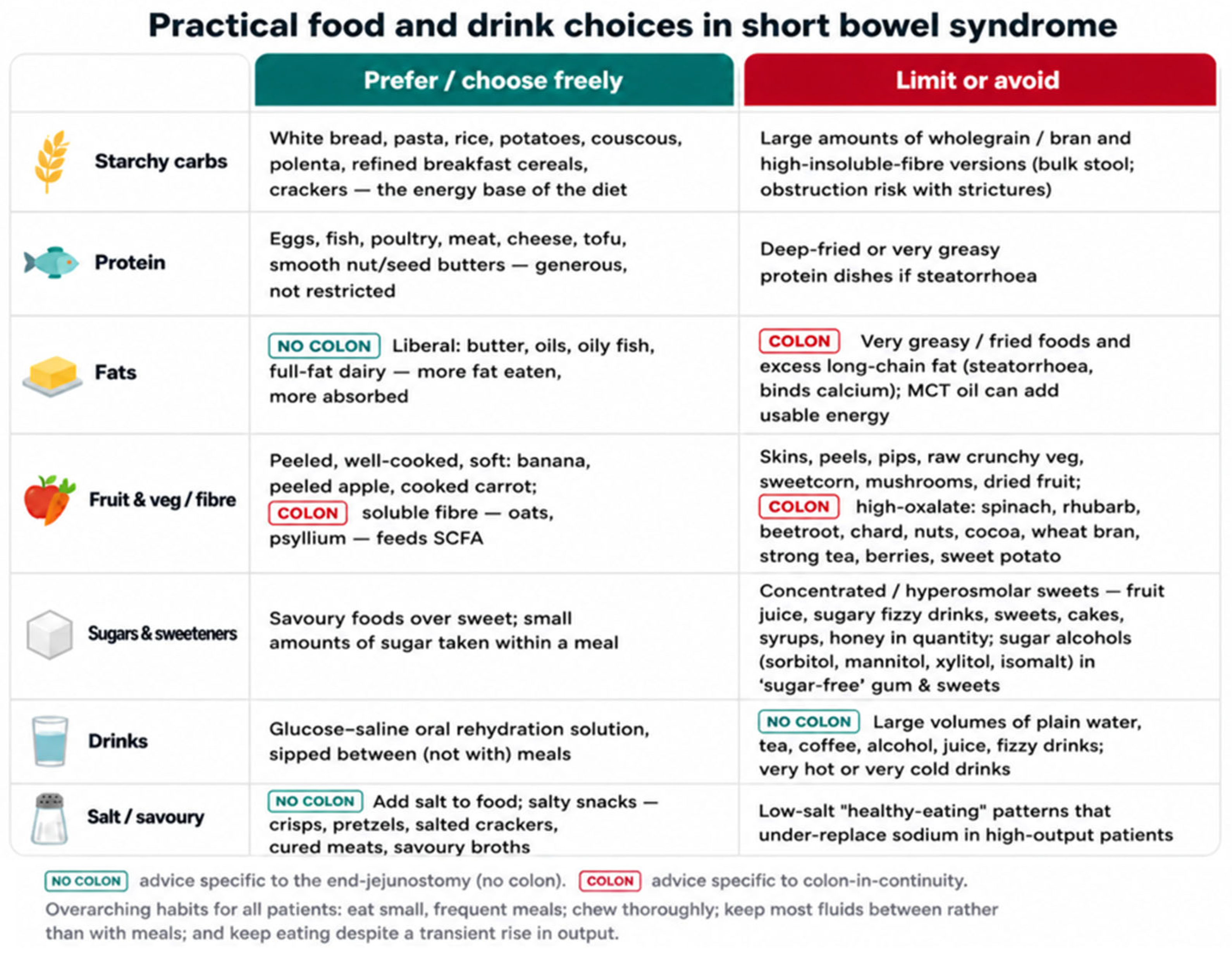
Figure 5.
A stepwise strategy to reduce parenteral-support dependence. Each rung is added only when the preceding measures are insufficient, and all sit on a foundation of anatomy-tailored diet, oral rehydration and electrolyte repletion. GLP-2 analogue therapy is the principal disease-modifying step in parenteral-support-dependent patients; structured reassessment and weaning close the loop.
Figure 5.
A stepwise strategy to reduce parenteral-support dependence. Each rung is added only when the preceding measures are insufficient, and all sit on a foundation of anatomy-tailored diet, oral rehydration and electrolyte repletion. GLP-2 analogue therapy is the principal disease-modifying step in parenteral-support-dependent patients; structured reassessment and weaning close the loop.
Disclaimer/Publisher’s Note: The statements, opinions and data contained in all publications are solely those of the individual author(s) and contributor(s) and not of MDPI and/or the editor(s). MDPI and/or the editor(s) disclaim responsibility for any injury to people or property resulting from any ideas, methods, instructions or products referred to in the content. |
© 2026 by the authors. Licensee MDPI, Basel, Switzerland. This article is an open access article distributed under the terms and conditions of the Creative Commons Attribution (CC BY) license (http://creativecommons.org/licenses/by/4.0/).
Copyright: This open access article is published under a Creative Commons CC BY 4.0 license, which permit the free download, distribution, and reuse, provided that the author and preprint are cited in any reuse.