

Submitted:
25 August 2026
Posted:
26 August 2026
You are already at the latest version
Abstract
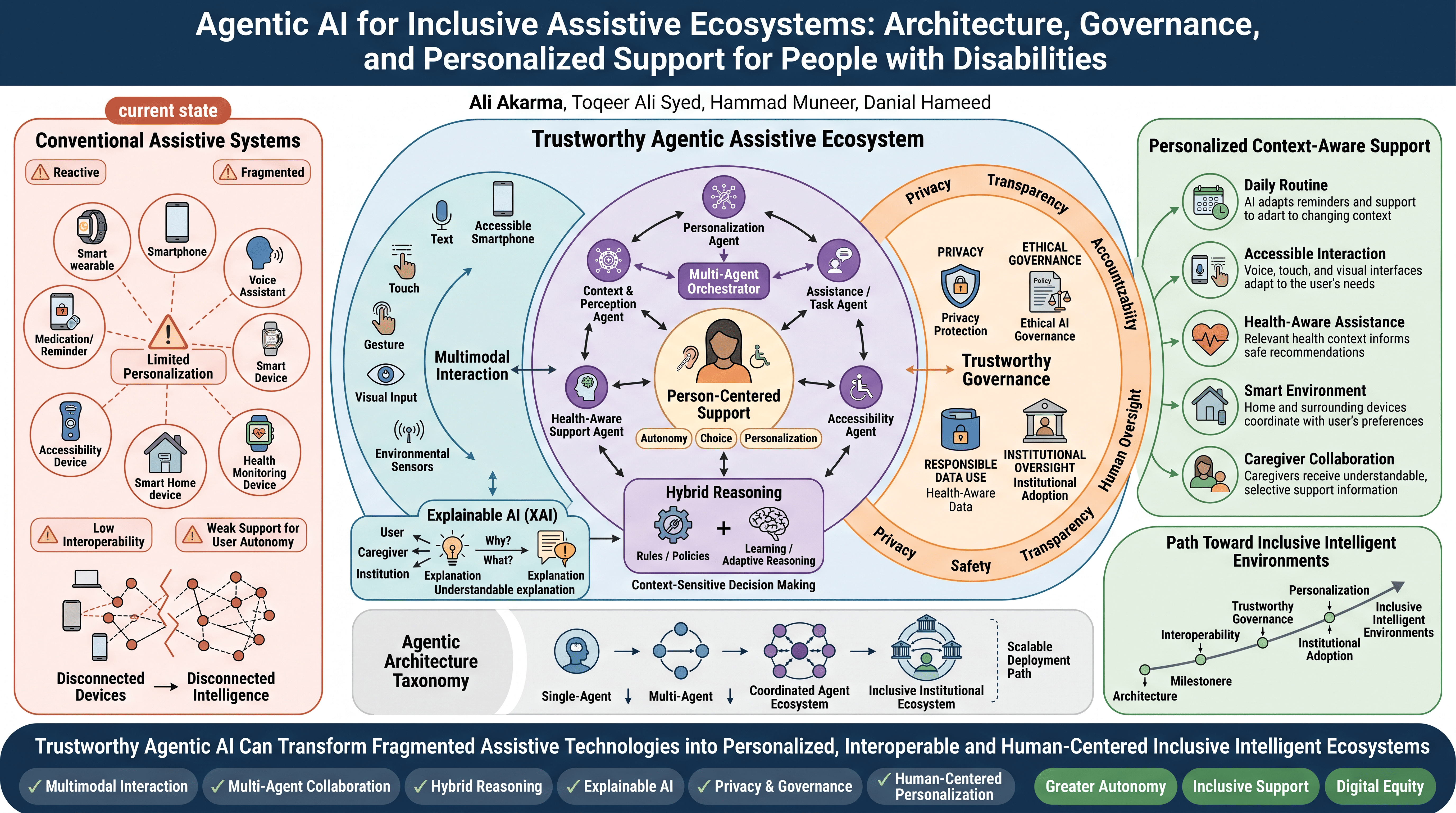
Artificial intelligence is transforming assistive technologies, yet many systems remain reactive, fragmented, and insufficiently personalized for individuals with disabilities and neurodivergent conditions. This chapter examines the architectural, design, and governance foundations of trustworthy agentic assistive systems. It synthesizes limitations of conventional approaches, including restricted adaptability, low interoperability, and weak support for user autonomy, and introduces a taxonomy of agentic architectures to guide scalable deployment. The chapter proposes a multi-agent framework integrating multimodal interaction, hybrid reasoning, explainable AI, and health-aware data to enable context-sensitive support. It further addresses privacy, ethical governance, and responsible institutional adoption while outlining future research directions. By bridging architectural innovation with human-centered design, this work advances a forward-looking vision for inclusive intelligent environments.
Keywords:
agentic AI
; Assistive technology
; multi-agent systems
; disability inclusion
; personalized support
; ethical AI
; AI governance
; healthcare AI
; neurodivergent support
1. Introduction
The development of artificial intelligence around the world has set the stage of a new paradigm in the field of accessibility, where more than mere accommodations are now replaced by systems that are able to perceive, reason and act with some level of autonomy (Bandi et al., 2025). In healthcare, education, and home settings, AI-powered solutions are slowly becoming part of daily infrastructure, and it defines the ways people engage with digital and physical systems. However regardless of the rapid technical advancement in machine learning, natural language processing, and sensor integration, there is still a vast gap between the theoretical possibilities of AI and its practical application to people with disabilities and neurodivergent conditions (Jan et al., 2025b).
Most of the current assistive tools are still based on a reactive model, in which the system only reacts to particular and direct prompts or predetermined triggers. Such tools tend to be single applications and not ecosystems and thus offer point solutions as opposed to continuous support. These systems often do not consider the dynamic and changing demands of users, especially neurodivergent users whose sensory, cognitive, and emotional needs can be changed depending on the environmental circumstances, social interaction, or physiological status. Consequently, personalization is still shallow, and interoperability is still poor, and long-term adaptive engagement is underdeveloped.
The shift to agentic ecosystems is the next significant development of human-computer interaction (Schneider, 2025), as opposed to the read-only systems that produce information, the read-write agents perform multi-step tasks autonomously in complex workflows (Siddiqui, 2026). Instead of being passive instruments, agentic systems can be goal-oriented, context-driven and act in concert on more than one platform. This transformation redefines assistive technology to be more of a constant intervention rather than a one-time intervention.
The term agentic AI is used to describe artificial systems that are highly autonomous, intentional, and sensitive to the context (Abou Ali et al., 2025). These systems can seek goals, learn in evolving conditions and have long-term interactions with humans and other digital infrastructures. In the case of disability inclusion, agentic AI will not be an analytical engine, but a partner collaborator. Although a traditional AI system may alert about health measures or send an alert, an agentic system may be able to orchestrate a care plan, modify environmental conditions as a way of alleviating sensory overload, rearrange tasks in response to perceived fatigue, and convey pertinent information to clinicians or caregivers. These capabilities allow shifting towards assistive tools that react to commands to ecosystems that anticipate, adapt and support.
Regardless of this promise, there are substantial obstacles to the implementation of credible agentic assistive systems. Discontinuous technology structures restrict cross-platform and device inter-operability. Biases of datasets discredit fair personalization. The governance structures tend to be slow in keeping pace with technological ability and this tends to create issues of privacy, accountability and human autonomy. The agentic systems without conscious architectural planning and ethical orientation may strengthen the exclusion instead of inclusion.
This chapter looks at the technological basis on which such agency is possible and the systemic constraints which restrict its responsible practice at the moment. It offers a systematic overview of architectural development, pinpoints the continuing constraints of assistive AI in modern times, and offers a taxonomy of agentic architectures to elucidate the new design landscape. Based on this, the chapter outlines a modular framework of multi-agency that should be used to provide inclusive, personalized, and transparent support in both institutional and home contexts.
Chapter Contributions
The chapter contributes to the new research area of agentic assistive ecosystems in five major ways. First, it cohesively evaluates the structural constraints of modern assistive AI, where fragmentation, the lack of personalization, and governance failures are seen as some of the main obstacles to inclusive scale. Second, it presents a taxonomy of agentic assistive architecture that differentiates the systems by level of autonomy, type of reasoning, and structure that offers a conceptual framework to future research and development.
Third, the chapter suggests a modular multi-layer system, which incorporates multimodal perception, hybrid symbolic-neural reasoning, distributed agent coordination, and explainable interaction processes in a single system. Fourth, it integrates privacy conserving intelligence, human in the loop control and regulatory compatibility as architectural constraints as opposed to compliance secondary measures. Lastly, it provides an agency assistive systems context in healthcare, educational, and intelligent living environments, providing a deployment focused insight on achieving research innovation to institutional practice.
Together with these efforts, agentic AI is not just a technological improvement, but a paradigm shifts to inclusive, trusted and governance conscious assistive ecosystems. The remainder of this chapter proceeds as follows: the next section traces the historical evolution of AI within assistive technologies; subsequent sections examine systemic limitations and introduce a taxonomy of agentic architectures; the proposed multi-agent framework is then presented in detail; institutional deployment and governance considerations are analyzed; and the chapter concludes with future research directions and critical reflections on responsible adoption. Figure 1 shows that the transformation of reactive assistive tools into agentic ecosystems is a structural change of linear input-output interaction to distributed, context-aware, and autonomous coordination.
2. Evolution of Artificial Intelligence in Assistive Technologies
The development of artificial intelligence in the field of assistive technologies is a larger historical series of deterministic logic to data-driven intelligence and, finally, autonomous agency. This development can be described by the growing degrees of flexibility, situational consciousness, and system integration and gradual transformation of the role of AI as a passive computational assistant to an active and cooperative agent. The interpretation of this historical development is crucial in placing modern agentic systems in a spectrum of technological transformation instead of considering them as discrete innovation.
2.1. Rule-Based and Static Assistive Systems
The first phase of assistive technology that ruled between the 1950s and 1980s was characterized by rule-based systems and symbolic AI. They were deterministic logic tools, whereby expert-defined rules of the form of if-then were used to control outputs. Human designers coded knowledge explicitly and reasoning was performed by symbolic manipulation and non-statistical inference. Whereas such systems were very dependable in their particular, highly localized fields, they were notoriously fragile and they could not adapt. Any situation that was not foreseen by the initial rule set usually led to failure or inapplicable output as Jain and Varshney (Jain & Varshney, 2025) explain.
Early assistive programs were an embodiment of this rigidity in parsing textual input based on a defined set of rules, offering only structured but rigid patterns of interaction. Likewise, the work of expert systems, like MYCIN (1970s), showed that symbolic reasoning could be successful in the medical domain but failed due to the inability to generalize in a non-encoded way. These systems were effective in controlled settings but failed in dynamic conditions where there is uncertainty, ambiguity or lack of full information.
When it comes to disability support, a model of one-size-fits-all interaction tended to be imposed by rule-based systems. The users had to learn to work with the predetermined logic of the software instead of the system to respond to the needs of individuals. Individualization was slight and situational sensitivity was almost nonexistent. Although such systems were significant early achievements in the area of accessibility, they were deterministic in nature and could not react to varying cognitive states, changes in the environment, or a changing user preference. Therefore, the assistive technologies during this period were used more as inanimate devices as opposed to dynamic partners.
2.2. Context-Aware and Machine Learning-Based Assistive Tools
The rise of machine learning in the 1990s and its acceleration in the 2010s was a drastic change to data-driven intelligence. These systems started to learn statistical patterns on big data rather than just using fixed rules, which allowed making decisions in a more flexible and probabilistic manner. The discovery of deep learning and neural networks, including AlexNet in 2012, has made tremendous advances to the precision of image recognition, text-to-speech translation, and natural language processing (NLP). The developments greatly broadened the scope of capability of assistive technologies.
The assistive tools during this period were more context aware. Speech recognition systems made it easier to access by users with motor impairments, computer vision models helped users with visual impairments to identify objects, and predictive text system made communication easier to users with speech disorders. The introduction of GPS integration and wearable sensors brought in primitive environmental consciousness, which allowed systems to come up with more applicable and timely suggestions. Instead of running fixed rules, these systems deduced patterns on the basis of behavioral data and scaled the outputs during the interaction with history. Nevertheless, with these developments, machine learning assistive tools were mostly predictive and reactive. They reacted to inputs by producing probabilistic outputs, but they did not have more goal-oriented reasoning. They could identify a face, write a lecture or recommend a path to follow but they could not plan multi-step care plans or think about long-term goals on their own. The complicated work still needed human coordination. Besides, individualization tended to be limited by the bias of datasets, which were usually trained on neurotypical groups, which restricted the ability to perform on a wide range of disability profiles. Therefore, despite the fact that machine learning brought in flexibility and enhanced the performance of many assistive applications, it did not revolutionize the interaction paradigm. Systems were merely instruments that improve certain work and independent entities that can work together in the long run.
2.3. Emergence of Agentic AI in Accessibility
The present decade marks the era of agentic AI. According to Plaat et al. (Plaat et al., 2025), agentic AI is a shift in reactive prediction to autonomous and goal-driven behavior. In contrast to the conventional machine learning systems, agentic architecture combines large language models (LLMs), memory modules, and planning systems, and multi-agent coordination systems. Gupta and Heggond (Gupta & Heggond, 2026) show that these systems are not merely meant to produce outputs, but they also aim to achieve goals, measure intermediate results and dynamically change strategies according to the feedback of the environment. The paradigm allows more holistic support in the assistive domain. The agentic systems are able to autonomously provide medication reminders, adapt dynamically to the communication styles of the people with cognitive impairments, and synchronize multi-step tasks through healthcare, educational, and home-based platforms. Instead of responding to user requests, these systems are able to predict those needs based on the situation cues that can be physiological or behavioral information or based on environmental conditions.
Such a transformation of automation to agency brings new opportunities and new challenges. Agentic AI shifts out of the light automation into the domain of the read-write agency, in which the system is given the mandate to engage in actions in the real world on behalf of the user. This power requires strong governance, transparency and human control. Although agentic systems are more flexible and supportive, they entail threats of autonomy, accountability, and moral alignment.
The historical path of rule-based determinism to statistical learning and lastly to the agentic autonomy can be used to describe a gradual development of the capability of the system, its awareness of the context, and the complexity of the operations. The functional boundaries of assistive technology were widened by each era at the cost of identifying new limitations. Agentic AI is not a substitute of the previously existing paradigms but an extension to them, which is a combination of symbolic reasoning, probabilistic learning and distributed coordination into integrated ecosystems that can sustain interaction. The evolution of assistive AI as shown in Figure 2 has been through deterministic rule-based system, then data driven learning models and finally autonomous agentic ecosystems. Table 1 demonstrates the development of assistive AI and their drawbacks.
3. Systemic Limitations of Contemporary Assistive Ai
Regardless of the great technological improvements, the existing assistive AI devices are subjected to systemic issues, preventing their use by people with disabilities. Although performance aspects, including accuracy, latency, and predictive capability have increased significantly, these technical achievements do not necessarily result in inclusive or sustainable assistance. It has been analyzed in literature that such failures typically lie in architectural silos, bias in datasets, lack of contextual modeling, and a lack of inclusive design principles at the system level. These systemic weaknesses are becoming more rather than less visible as assistive technologies continue to enter into the daily life of people.
3.1. Fragmented Ecosystems and Interoperability Barriers
One of the most important obstacles to the use of assistive AI is the divide in the technological sphere. The majority of modern tools are in the form of isolated platforms that lack the ability to converse with each other (Gupta & Heggond, 2026). A user can possess a good wearable to monitor the heart rate, an independent application to record the food intake and another system to auto-control the home, but all these systems hardly communicate in a meaningful manner (Ode et al., 2025). This division generates individual knowledge as opposed to integrated assistance. Data is still locked in proprietary ecosystems, and it is impossible to build cohesive user models, which can capture behavioral, physiological and contextual states together.
Such interoperability is further complicated by regulatory and technical disparities between jurisdictions which results in a patchwork of requirements which impedes the standardization of global technical standards. The legal frameworks of privacy laws, medical data governance, and platform specific APIs tend to be mutually incompatible, and cross-platform coordination is technically difficult and legally ambiguous. Moreover, the existing standards also tend to be missing sufficient regulations of such important activities in AI as delegation, consent, and cross-platform authentication. Because of this, assistive technologies often ignore long-term integration in favor of the short-term functionality, strengthening fragmentation instead of addressing it.
In terms of inclusion, fragmentation is costly to users and caregivers in terms of cognitive load. Rather than communicating with an integrated support system, users are forced to deal with several interfaces, repeat data input, and conflicting advice. This disconnection of structures eliminates the hope of smooth help and makes it impossible to scale to the institutional setting.
3.2. Personalization Gaps and Adaptive Constraints
Most existing AI systems are constructed with universal biometric baselines and datasets, which mostly reflect neurotypical, adult samples (Kalantari et al., 2025). This poses a personalization gap in which the AI does not acknowledge the individual physiological and behavioral patterns of neurodivergent users. Although statistical models can be highly accurate at aggregate, they tend to fail in high performance when applied to populations that are not based on dominating training distributions.
For example, Haroon et al. (Haroon et al., 2025) point out that automatic speech recognition (ASR) systems often demonstrate lower accuracy with pediatric or atypical speech because of bias in the databank. Misrecognition does not only lower the level of usability but also can lower the level of user confidence and discourage interaction. Likewise, sensory control devices have been based on low-level intervention models, which fail to consider real-time environmental conditions, and the changing sensory thresholds of an individual user. Systems can take up steady physiological standards, which are not sensitive to subtle stress reactions or situational changes. To a neurodivergent child, a system, which is unable to differentiate between physical activity and emotional distress (because of no filtering of activities) may issue counterproductive notifications, causing frustration and disengagement. With time, such incongruencies destroy trust and can make them more dependent on caregivers instead of becoming independent. Adaptive constraints are thus not only the inefficiency of technique but constitute structural impediments of fair personalization.
3.3. Trust, Transparency, and User Autonomy Challenges
The issue of trust is still a major challenge when using autonomous systems. The black box character of the decision-making processes of AI agents makes them less willing to relinquish control to them by users and caregivers. Even systems that work correctly are perceived as less reliable and will not be adopted in the presence of opaque reasoning paths.
Tielman et al. (Tielman et al., 2024) states that Explainable AI (XAI) tools have been developed to overcome this issue, although much of the current XAI interfaces are visual (e.g., complex charts or graphs), in essence rendering them inaccessible to users with visual impairments in understanding the decision-making process. Besides, the explanations are often technical in nature and not meaningful in content. The users can be presented with feature importance scores without being given practical information on how the system will perform in the future. Moreover, they have a danger of techno-ableism, in which technology is created to cure or manage people with disabilities instead of empowering them using a design with strategy (Shew, 2023). Efficiently optimized systems can unintentionally take precedence over the preferences of users or can institute normative behavioural standards. In the absence of strong human-in-the-loop (HITL) control, the autonomy of agents is likely to be compromised and agency is lost, making the agent more dependent on the system.
After all, the fragmentation, the void of personalization and lack of transparency are not single technical issues but structural drawbacks. They emphasize in common that assistive AI architecture needs to be reconsidered in an agentic and governance-conscious manner, making sure that autonomy, inclusion, and accountability are not only enforced as a set of rules but are inherently designed as core principles of an architecture. Structural fragmentation transmits the downstream effects as shown in Figure 3 whereby inconsistent and biased data pipelines eventually generate opaque and low-trust system outputs.
4. Taxonomy of Agentic Assistive Architectures
In order to classify the emerging discipline of agentic systems, there is the need to have a taxonomy according to the level of autonomy, reasoning, the persistence of memory and the structure of collaboration. The concept of agentic AI may be applied carelessly to refer to any mechanism with slight automation, unless it is conceptually defined. This classification thus differentiates assistive architectures on three focal dimensions namely: (1) degree of autonomy, which is the extent to which the system can initiate and take actions independently; (2) reasoning paradigm, i.e., whether the system is rule based or statistical, or a hybrid; and (3) collaborative topology, i.e., whether the intelligence is centralized, distributed or institutionally embedded. Instead of being hard and fast divisions, these levels are a continuum of more complex systemic levels. The development of reactive agents to health-integrated ecosystems is not only an improvement in technical terms but a change in structure in the way the assistive intelligence is integrated into human settings.
4.1. Reactive Support Agents
The lowest level of agency in the agentic paradigm is the reactive agents. These systems react to explicit user initiations or rather predetermined environmental modifications but do not participate in long term planning (Tien, 2017). These are usually driven by internal logic, the event of an input stimulus invoking a pre-defined workflow, which results in an output and no long-term contextual modeling.
They usually have very small and focused purposes like creating a project proposal, text translation, sending an email after a certain time has passed, or debugging. Though they are procedural proactive, once they start a multi-step task, they complete it, they do not have long-term memory structures and are not capable of making meaningful reasoning about changing user states over time.
Accessibility prompts such as medication alerts, static scheduling tools or rule-based accessibility prompts can be used as reactive systems in an assistive environment. Their advantage is that they are predictable and of low complexity. But their failure to sustain a long-term user concept and to adapt to a changing cognitive, emotional, or environmental situation restricts their usefulness as an overarch system of assistive technology. They are used in limited sessions as opposed to longitudinal support courses. Therefore, reactive agents are functionally helpful, but not adaptive ecosystems. They are automatized tools and not contextually aware partners.
4.2. Context-Aware Adaptive Agents
Context-sensitive adaptive agents go beyond the event driven logic, and include memory, environmental sensing and incremental learning (Ivașcu & Negru, 2021). These systems, unlike reactive agents, build changing user representations, using multimodal inputs, i.e. heart rate variability (HRV), geolocation data, behavioral logs, or speech patterns. They are able to identify patterns and update internal models over time and develop better intervention strategies. Such adaptive ability enables the system to measure the degree of intensity and modality of assistance. As an example, an agent might then be more directive in times of high stress or cognitive load and less so when performance levels off. The system is dynamically adjusted to strike a balance between autonomy and oversight, as opposed to performing individual tasks separately.
This type of architecture usually uses probabilistic inference models, reinforcement learning or recurrent neural networks to approximate latent user states. Context-aware agents can offer companionship, cognitive prompts and adaptive therapeutic exercises in the case of elderly care and neurorehabilitation. They bring in continuity over time and therefore, assistance becomes responsive and not reactive (Akarma et al., 2026). Nevertheless, context-aware agents possess medium autonomy, but their scope is quite individualistic. They maximize the interactions between an individual agent and a user but do not have distributed coordination among the various functional domains. Even their adaptation intelligence is localized.
4.3. Collaborative Multi-Agent Ecosystems
Saleem et al. (Saleem et al., 2025) underlines that collaborative multiagent systems (MAS) are a structural step forward of individualized adaptation to distributed intelligence. MAS architecture does not have a single monolithic model that does all the decision-making processes; they break tasks into specialized agents, with a given domain of expertise. These are agents who communicate, negotiate and coordinate to resolve complex interdependent issues.
This architecture can follow different paradigms:
- Orchestrator-Worker Paradigm: The central controller or orchestration agent gives tasks to the subordinate agents. Although this model is conceptually simple, it has several shortcomings because the central coordinator requires the ability to know all the capabilities of all the agents in advance and can cause points of failure.
- A more generalized and scalable paradigm where expert agents monitor a common blackboard and voluntarily react to tasks posted on it based on their area of specialization. The design enhances modularity, asynchronous reasoning, and does away with constrained centralized control (Salemi et al., 2025).
Shakshuki and Reid (Shakshuki & Reid, 2015) observe that a multi-agent ecosystem can comprise a Meal Planner Agent, a Reminder Agent and a Monitoring Agent that interact with a central communicative substrate to offer holistic assistance in an assistive context. As an example, the Monitoring Agent can dynamically provide physiological alerts that trigger schedule changes by the Reminder Agent which also affects dietary advice provided by the Meal Planner Agent.
This is a distributed topology, which allows reasoning across domains. Decisions are no longer made in functional silos but come out of integration of deliberation by specialized modules. The system is therefore very autonomous, able to perform multi-step operations in both the physical, digital and institutional worlds. However, coordination complicates things with the added challenge of overheads such as synchronization, conflict management and new emergent behavior. The governance and oversight mechanisms thus become the more crucial at this level.
4.4. Health-Integrated and Human-Centered Agentic Systems
The top layer of this taxonomy incorporates agentic architecture in clinical, educational or institutional architecture. Such systems do not focus on technical coordination only, but also involve regulatory compliance, human control, and interoperability with formal data ecosystems. Health-integrated agentic systems directly communicate with electronic health records (EHRs), clinical databases, and caregiver dashboards and comply with medical and ethical limitations (Ke et al., 2024). Their logic systems tend to be a combination of symbolic rule implementation, to make sure they follow contraindications or treatment guidelines, and neural adaptive elements, to make the recommendations personal. Such a hybrid symbolic-neural set-up can be flexible as well as have provable safety limits.
Crucially, such architecture incorporates human stakeholders into the reasoning cycle. Overview authority is given to clinicians, caregivers and institutional administrators. This will guarantee that AI supplements professional knowledge and does not substitute it. As an example, a health-integrated agent can suggest dietary modifications according to the metabolic trends but must get the approval of a clinician prior to making significant treatment changes. Federated learning or data masking are privacy-saving intelligence tools that can be used to protect sensitive patient data. Such systems also come with audit trails, consent management systems and explainability layers to hold accountability in high-risk environments.
In contrast to the lower tiers, health-integrated systems are more focused on systemic alignment rather than on individual optimization. They do not only aim at assisting people but also to align with institutional operations and regulatory frameworks. This level thus indicates the union of architecture, governance and human-centered design. These four agentic architectures are summarized comparatively in terms of autonomy, reasoning and collaborative structure as in Table 2.
This taxonomy explains in totality that not every autonomous system is similar. The agentic capability is developed gradually based on the contextual modeling, distributed coordination, and institutional embedding. The insights of these differences would be crucial in developing assistive eco-systems that are inclusive and have a balance in autonomy, safety, scalability, and accountability in governance. The hierarchical classification of agentic assistive systems based on the degree of autonomy, structural paradigm, and functional role, as shown in Figure 4, indicates a step-by-step progression of reactive tutoring agents towards clinically integrated multi-agents collaborators.
5. Design Principles for Trustworthy Agentic Assistive Systems
The most important thing that can ensure the successful implementation of agentic systems is developing trust, especially when they are used with sensitive health information or work with vulnerable populations. Assistive ecosystems trust is not an idealistic ethical goal, but an effective need that has a direct impact on adoption, continued involvement, and system sustainability. The concepts of design have to be then converted to normative ideals into enforceable architectural constraints in system logic, data pipelines, and interaction interfaces. In agentic contexts, when systems can act autonomously, structured transparency, limited autonomy, privacy-sensitive intelligence, and safe engineering of the systems result in trust.
5.1. Transparency and Explainability
Reliable agentic AI should be explainable, so that users, caregivers, and institutional stakeholders can have a sense of how the decisions are made (Abbas et al., 2025). As opposed to a static system, agentic architectures take context sensitive decisions, which can have planning, prioritization, and trade-offs. According to Meziane et al. (Meziane et al., 2025), transparency thus needs something more than post-hoc justification; it needs to be designed to be explainable, as part of the decision pipeline itself. This is an active form of communication, and the agent reveals its confidence levels, estimates of uncertainty and operational limitations. As an example, a monitoring agent forecasting a high risk of fatigue may be communicative about whether the prediction was founded on heart rate variability or sleep disruptions, or past behavior patterns. This disclosure increases the level of understanding among the users and decreases the sense of arbitrariness.
In the case of assistive technologies, transparency has to be multimodal as well. Instructions on how to use it should be available through haptic or audio feedback, simplified visual summaries, or guided textual documentation to meet the various accessibility needs. An auditory explanation layer can be needed by a visually impaired user and simplified structured reasoning summaries could be of use to neurodivergent users instead of crowded visual dashboards. Moreover, systems must keep informational audit trails of the model development processes, sources of training data, decision logic, and system updates. These audit logs can be used to trace regulatory compliance and institutional control. Explainability in high-risk assistive environments should hence be functioning at the user interaction level and the governance-accountability level.
5.2. Human-in-the-Loop Control
With increasing autonomy of the systems, meaningful human control becomes increasingly important (Phutane et al., 2025). Human-in-the-loop (HITL) control is a control that guarantees that agentic autonomy is not absolute. Designers have to specify what is meant by scoped autonomy whereby an agent can perform certain tasks without the necessity of confirmation or override by an authority. In assistive healthcare situations, this can be by permitting agents to give out reminders independently where the change or dietary modifications that have medical implications cannot be made without clinician permission. The human-in-command principle makes sure that the final power is vested in responsible human stakeholders but not autonomous algorithms.
HITL also serves a co-adaptive function. Users are supposed to be able to make corrective feedback, modify preferences or dispute system choices. This feedback loop allows us to keep the behavior of the system aligned with the changing user objectives. Such interaction leads to moderated trust over time as opposed to blind trust (Syed et al., 2025b). Importantly, HITL mechanisms should not impose too much mental load. The Oversight interfaces must be user-friendly and hierarchical so that when there is need, quick intervention can be done without bombarding the user with incessant authentication requests. It is not aimed at limiting autonomy but putting specific limits where human judgment is at the center, especially in cases of high stake or where ethical consideration is critical.
5.3. Privacy-Preserving Intelligence
The agentic systems frequently need access to very sensitive information, such as physiological indicators, behavioral patterns, geolocation history, and medical records. Since the assistive eco systems work within the realms of intimate personal space, privacy is not just a compliance concern but rather a core of user dignity and autonomy.
Architectures should implement privacy-preserving mechanisms at multiple layers:
- Federated Learning (FL): It allows models to be trained on a set of distributed devices without any raw patient information being sent to centralized servers (Raza, 2023). Only updates in models are aggregated thus less exposure of personal information and collaborative improvement.
- Data Masking and Redaction: Personally identifiable information (PII) should be anonymized or pseudonymized during model training, inference, and logging processes. This reduces re identification risk.
- Zero-Trust Architecture: All agents, services, and subsystems should be able to authenticate to each other within a limited trust area (Jan et al., 2025a). Micro segmentation will make sure that a compromised module does not get access to the whole ecosystem.
In addition, consent management protocols must enable users to have a granular control of the kind of data streams they share, with whom, and why. Dynamic consent models have the potential to grant clinicians temporary access to personal data but retain long-term ownership of the data. The design of privacy-preserving intelligence should therefore be proactive, which entails inclusion of protection mechanisms in communication channels, storage systems and reasoning systems as opposed to the retrofit of protection mechanisms after the system is deployed.
5.4. Safety, Robustness, and Ethical Alignment
According to Christian et al. (Christian et al., n.d.) robustness is what will guarantee that the system will operate in the dynamic real world safely and predictably. Assistive contexts are always dynamic: physiological conditions vary, noise in the environment is not constant, and human behavior is subject to change. The agentic systems thus should be stress-tested in terms of edge cases, adversarial inputs and unforeseen environmental perturbations. It is necessary to continuously monitor model drift, in which the performance of the system is moving out of the original validation conditions. When the confidence levels reduce, drift detection mechanisms should cause recalibration or human review. In addition to this, vulnerabilities can be identified through simulation-based validation and adversarial testing prior to its practical implementation.
Ethical alignment is also not just about mitigating bias, but also value-sensitive design. The reasoning architecture should have guardrails built in so that they stop malicious or discriminatory behavior. As an example, the symbolic rule constraints can be used to impose medical contraindications or avoid culturally inappropriate suggestions. An agentic system should be designed to be ethical and have strategies that do not violate the user dignity, autonomy and sociocultural diversity.
Safety also involves fail-safe mechanisms. Where uncertainty is involved or anomaly is detected the system must revert to conservative recommendations or escalate to human review instead of making an independent decision. The issue of redundancy among monitoring agents can also contribute to reliability in the mission critical assistive environments. Finally, safety, strength, and a high level of morality are stabilizing pillars which provide the balance between autonomy and responsibility. The agentic intelligence should be able to increase the capabilities without increasing the level of risk.
All these design principles, transparency, humanin-the-loop control, privacy-preserving intelligence and safety engineering are the structural base of trustful agentic assistive ecosystems. They turn autonomy as a technological attribute to a responsibly administered capacity to make sure that inclusive innovation is in consonance with human values and institutional responsibility. As illustrated in Figure 5, reliable agentic systems need to be designed with a layered base where privacy and security are supportive of both operational and pillars of transparency, robustness, and accountability that are informed by a human-centric design philosophy.
6. Proposed Architecture for Inclusive Agentic Assistive Ecosystems
The solutions to the existing shortcomings of assistive technology must be based on a modular and integrated architectural design that will be able to support autonomy without compromising on transparency and safety. This report presents a four-layer model that aims at providing flexibility, interoperability and inclusive implementation across healthcare, educational, and home settings. The architecture is further broken down into functional layers to provide separation of concerns and provide coordinated intelligence. All the layers have a specific task, including interaction, specialization of agents, orchestration of reasoning, and secure data integration, but are dynamically linked by structured communication protocols. This architecture gives more emphasis to distributed cognition as opposed to monolithic AI systems. It views assistive support as an ecosystem and not as a single model, which allows itself to be extended and aligns with regulations and human oversight as a first-class design property.
6.1. Architectural Overview
The suggested system is based on a multi-layer design to offer scalable and interoperable base agentic support. These four major layers are arranged on a hierarchical basis and provide two-way communication:
- Application and Interface Layer: Multimodal (voice, text, tactile feedback) and high-contrast graphics are provided, which is compatible with screen readers and other accessibility tools (Campoverde-Molina & Lujan-Mora, 2025). According to Kristic et al. (Kristić et al., 2025) the layer transforms user intent into system inputs in a structured format and converts presentation formats to cognitive and sensory preferences.
- Agents Layer: Houses a team of specialized, autonomous agents (Meal Planner, Reminder, Food Guidance, Monitoring) that execute domain specific subtasks. Every agent has a limited form of responsibility and exchanges contextual state information using an organized reasoning substrate.
- Reasoning and Coordination Layer: Synchronizes agent decisions using a hybrid reasoning model. It is used to coordinate communication by a mechanism called Blackboard/Event Bus which allows asynchronous updates and distributed negotiations of tasks.
- Data Integration Layer: Securely integrates structured and unstructured data from IoT sensors, wearables, nutritional databases, and electronic health records (EHRs). This layer implements access control decisions and heterogeneous data standardization into homogeneous semantic aspects.
These layers when put together create a pipeline whereby perception, reasoning, coordinated action and action on user generate feedback update models as run time progresses.
6.2. Multimodal Perception and Context Modeling
Perception module performs the role of identifying the type of food, environmental objects, speech inputs and physiological signals based on multimodal data streams. This architecture is designed to combine computer vision, natural language processing (NLP), wearable telemetry, and contextual metadata into one situational model unlike traditional assistive devices which can only take a single isolated input channel.
One important innovation in this layer is introduction of Activity-Aware Sensing that is dynamically changing interpretive thresholds depending on the current physical condition of the user. Instead of using fixed clinical baselines, the system uses Metabolic Equivalent of Tasks (METs) to distinguish between high heart rate as a result of exercise and high heart rate as a result of stress or anxiety. This avoids the cases of false-positive alerts as well as cognitive overload.
Context modeling is not limited to longitudinal behavioral embeddings that encode temporal trends in the sleep cycles, dietary adherence, reminder responsiveness and stress measures. These embeddings enable architecture to identify abnormalities in the pattern of baselines and cause adaptive interventions. Importantly, the results of perception are not directly sent to action modules. Instead, they are converted into structured forms that are stored in the common reasoning space and are interpretable and traceable in agent interactions.
6.3. Hybrid Reasoning and Decision Layer
Chandre et al. (Chandre et al., 2025) observes that the reasoning engine has a hybrid symbolic-neural architecture which integrates deterministic rule-based logic and adaptive learning models including reinforcement learning (Jaldi et al., 2025). This duality is important to make autonomy constrained by the explicit safety control and personalize it in the long term.
The symbolic reasoning elements impose hard constraints such as medical contraindications, allergy restrictions, dosage limits and ethical limits. These limits act as unspoken rules that do not allow unsafe action suggestions. As an example, a Meal Planner Agent would not be able to produce a recommendation that breaches dietary restrictions of diabetes which are coded in the rules of symbolic logic.
Competing objectives can be optimized softly by the use of neural learning elements such as reinforcement learning and recurrent neural networks. The system gets to know the user preferences, sensory tolerances and patterns of responsiveness and optimizes its policy by reward feedback processes. In the long run, it reduces reminder fatigue, enhances the likelihood of adherence, and establishes communication tone.
Decision-making follows a structured pipeline:
- Perceptual input updates contextual state.
- Candidate actions are generated by relevant agents.
- Symbolic filters eliminate unsafe or contradictory options.
- Neural scoring ranks feasible actions.
- The orchestration layer selects or escalates actions based on autonomy scope.
This hybrid approach reduces the risks of entirely neural decision making and still maintains flexibility. It offers explainable directions by permitting symbolic justifications of learned policy decisions.
6.4. Collaborative Agent Orchestration
In this framework, specialized agents communicate independently through the Blackboard/Event Bus. Instead of working in a sequence, agents subscribe to event streams and send hypotheses, requests or updates to a communicative substrate being shared. Using this architecture, distributed deliberation is possible without bottlenecks.
- Meal Planner Agent: Designs plans in accordance with nutritional, sensory and medical needs (Syed et al., 2025a). It is also the most efficient in balancing macronutrients and integrates the preferences of the user and sensory sensitivities (Syed et al., 2025d,2026b).
- Reminder Agent: Maximizes the time and method of medication and hydration notification (Jan et al., 2025b). It involves reinforcement learning so as to minimize reminding fatigue and maximize behavioral compliance.
- Food Guidance Agent: Helps with shopping and cooking with the use of computer vision and step-by-step adaptive instructions (Syed et al., 2025c,2026a). It varies the level of instruction in accordance with the cognitive load and past performance.
- Monitoring Agent: Measures physiological indicators (HRV, heart rate, oxygen saturation) and forecasts the adherence pattern based on the models, including Gated Recurrent Units (GRU), and sends alerts in case the deviation is higher than the fixed values.
The orchestration layer has structured negotiation protocols that are used by agents to resolve conflicts. As an example, when the Monitoring Agent notices that a person is fatigued and the Meal Planner suggests a very cognitively challenging recipe, the system can reprioritize simplicity over nutritional interest. This collaborative mechanism transforms isolated automation into ecosystem-level intelligence.
6.5. Explainable Interaction and Caregiver Interfaces
The system uses explainable AI modules to give an accountable explanation of the actions of the agents. Symbolic reasoning traces are then deduced to produce explanations in a user-friendly language. As an example, when the Reminder Agent recommends a bedtime earlier, it can convey the fact that the indicators of cognitive fatigue increased compared to the trend at the baseline. Explainability is stratified across user roles. The simplified contextual explanations are passed to end users, whereas caregivers and clinicians have access to structured dashboards showing the physiological trends, agent interventions, and policy decisions. These dashboards are equipped with override and audit logs which retain human supervision.
The interface layer can be used to deliver multimodal explanations, such as audio summation, simplified text and trend charts that can be displayed as visual trend charts modified to meet accessibility requirements. The architecture makes autonomy accountable by incorporating explainability in the user interface as well as the supervisor dashboard. Table 3 describes the specialized functions, contributions and key activities of every agent in this ecosystem.
Collectively, this architecture operationalizes agentic intelligence as a coordinated, governance-aware ecosystem. It combines multimodal perception, hybrid reasoning, distributed orchestration, and explainable interfaces with a set of scaling frameworks able to provide personalized, safe, and institutionally accurate assistive supporting services. The proposed system combines multimodal perception, hybrid symbolic-neural reasoning, and distributed agent orchestration with an integrated blackboard coordination system that provides explainable and multimodal feedback to users and caregivers as shown in Figure 6.
7. Institutional Deployment and Operational Integration
To effectively implement agentic systems to institutional settings, it is necessary to go beyond model development towards workflow integration, interoperability limitations, stakeholder alignment and regulatory compliance. Although architectural elegance is also a prerequisite, practical influence lies in the incorporation of agentic ecosystems into the current organizational systems. Deployment should thus take into consideration technical integration, human training, governance protocols as well as long-term sustainability.
7.1. Healthcare and Rehabilitation Environments
In the clinical environment, agentic AI could be used to supplement the activity of human providers with ongoing, real-time assessments of vital signs and behavioral trends as well as adherence indicators. In contrast to the conventional monitoring systems, which simply produce alerts, agentic architectures are able to synthesize longitudinal patient data, identify subtle deviations and prescribe context-sensitive interventions (Sheikh & Chong, 2025).
Nevertheless, there are significant operational challenges of integrating into healthcare systems. Research has found that almost 80 percent of the workload in deployment is spent on data engineering activities, such as standardization of clinical notes, alignment of electronic health record (EHR) formats and semantic interoperability across hospital information systems (Kong, 2019). Without structured data pipelines, autonomous reasoning remains unreliable.
After integration, the agentic systems are able to triage high-risk cases automatically, prioritize patients with predictive risk scores, and dynamically modify the care plans in cooperation with clinicians. This ability could minimize care events, which are missing, and facilitate proactive intervention in oncology or other chronic disease management settings. Notably, implementation should include audit conditionalities, clinician, and adherence to healthcare requirements to make certain that automation is something that augments and does not substitute for professional judgment.
7.2. Educational Institutions and Neurodivergent Support
The agentic systems in the educational context facilitate the efficiency of the administration as well as individualized learning journeys. In special education programs, these architectures may be used in the development of Individualized Education Programs (IEPs) (Zhang et al., 2024). As Ronksley-Pavia et al. (Ronksley-Pavia et al., 2025) observe, sharing responsibilities such as the creation of Present Levels of Academic Achievement (PLAAFP), the creation of measurable goals, and the development of assessment rubrics with specialized agents can help educators to minimize the administrative burden, but stay on track with the requirements.
In addition to documentation, the agentic ecosystems have the ability to adjust instructional resources depending on cognitive load, sensory sensitivity and engagement patterns. Participation cues can be monitored in real-time and therefore allow dynamic adjustments in the pacing of content or presented modality. In the case of neurodivergent learners, immersive AI-based virtual worlds have the potential to reduce the sensory load and facilitate the social-emotional growth by means of controlled exposure and adaptive interaction scaffolding (Lyu et al., 2024). According to Deckker and Sumanasekara (Deckker & Sumanasekara, 2025), the operational integration in schools needs to be combined with data protection policy, parental consent frameworks, and accessibility standards. It is also important to train educators on how to read insights created by the agent so that the AI would be a supportive partner and not an enigmatic judge.
7.3. Smart Homes and Independent Living Ecosystems
In the case of independent living, Agentic AI is a proactive organizer in a Smart Home ecosystem (Chandra & Navneet, 2025). Instead of having separate automation platforms, agents coordinate daily activities, medication compliance, nutrition arrangement and environmental adaptation. Connection to IoT devices allows the ability to control lighting, temperature, scheduling and safety monitoring without any problems. Social assistive robotics (SAR) can also be incorporated into these environments so as to offer companionship and behavior reinforcement. With the help of physiological monitoring and conversational interfaces, agentic systems will be able to identify the initial signs of distress, loneliness, or disruption of routine and act in advance.
Crucially, Mohammad et al. (Mohammad et al., 2025) suggest that participatory co-design is necessary to be deployed successfully in home settings. The elderly and disabled should be included in the process of establishing limits on privacy, interaction patterns, and respectable degree of autonomy. Systems of deployment must have customizable consent dashboard and localized data storage to ensure user sovereignty. In healthcare, education and smart home settings, the institutional integration of agentic AI has the potential to change the conceptual architecture into an operational ecosystem. Sustainable deployment does not just rely on technical strength, but must also be aligned to governance, trusted by stakeholders and adaptably integrated with the current human working processes. The proposed architecture, as shown in Figure 7, allows a single agentic core to provide its services in a heterogeneous institutional setting and maintain a consistent user model and dynamically adjust contextual permissions and policies.
8. Governance, Privacy, and Ethical Risk Management
The policy of agentic AI requires transformation into a set of governance structures as agentic AI becomes able to create and perform autonomous activities. In contrast to the traditional decision-support systems, agentic systems are able to control health behaviors, educational paths, and home settings. As a result, governance is not an institutional necessity but a structural condition to authoritative deployment. Good governance is built in such a way that accountability, systematized information stewardship, regulatory adherence, and ongoing risk avoidance are all a part of architectural design.
8.1. Algorithmic Accountability
Governance requires clear ownership for agent behavior (Temur, 2026). In distributed multi-agent systems, responsibility can become diffuse unless explicitly defined (Wang et al., 2025). Organizations should thus be able to develop accountability matrices that indicate whether the liability lies in the developer, the deploying institution, the model owner or supervisory personnel.
It is important to have a well-organized audit trail and logs of decisions. Any given agent must be able to track its actions of either a recommendation, automated adjustment or escalation must be tracked by timestamped records of contextual input, reasoning paths and confidence scores. With this traceability, post hoc by regulators, clinicians or institutional auditors can be reviewed.
Procedures of reporting incidents, as well as corrective updates, should also be included in the accountability structures. When failures have taken place, the institutions should be in a position to detect causal elements, revise system constraints and be open in conveying information to concerned stakeholders. Responsibility is therefore an active discipline and not a responsive measure of compliance.
8.2. Data Governance and Consent
Treatment of delicate information about vulnerable groups such as disability status, physiological indicators and emotional signals demands sophisticated data governance frameworks (Konstantinidis et al., 2025). Data stewardship should be such that the practices of collection should be proportionate, purpose-limited and user-consented.
According to Gruenwald et al. (Gruenwald et al., 2025), the European AI Act presents a framework of risk-based regulation, which sheds light on the validity of the use of accessibility related information to decrease bias and enhance the performance of a system. Such balance necessitates clear data reduction measures, which is the processing of the only necessary attributes without loss of functional utility.
The emerging agentic ecosystems can take the form of Memory Sovereignty, which will enable users to have a finer control over their digital identity, history of behaviors, and permissions to share data. These systems would enable people to revoke access, specify retention periods or choose wisely to authorize data streams either clinically or educationally. Data governance should then also be expanded to incorporate lifecycle controls, dynamic consenting, visible data lineage querying across distributed systems other than cybersecurity.
8.3. Regulatory and Policy Considerations
Foley and Melese (Foley & Melese, 2025) caution that the regulatory review in disability contexts should also be mindful that the systems do not reproduce techno-ableism, that is, practices of design that marginalize some forms of impairment or provide normative standards of behavior. A lot of agentic assistive systems implemented in healthcare, education or employment settings are considered High-Risk. This classification presupposes that it meets the rigid transparency, documentation, nondiscrimination, and human control requirements.
As pointed out by Buscemi et al. (Buscemi et al., 2025), the high-risk systems should be assessed in conformity, documented in risks, and monitored continuously. Institutions that use agentic architecture should indicate that they have validated models that are bias-free and auditable. Compliance with regulation should be consequently incorporated at the design phase as opposed to being tackled in retrospect. Compliance logic in system architecture facilitates the certification and audit process.
8.4. Risk Mitigation Strategies
Uniqueness of the risks brought about by agentic AI includes emergent behavior, cascading coordination errors (Syed et al., 2025e), and adversarial exploitation. The mitigation plan needs to work on the technical, organizational and procedural levels. Mack et al. (Mack et al., 2025) states that a Zero Trust cybersecurity architecture is one where all the agents and subsystems are continuously authenticated and authorized with minimal privilege conditions. Micro segmentation will ensure there is no side movement in the ecosystem in case one element has been affected.
Vulnerabilities can be found out in advance via adversarial training and regularized red-teaming exercises, in which security experts simulate attacks. The abnormal behavior patterns or the unexpected deviations in the policy should be identified by constant monitoring systems and escalated to human supervisors. The decision pipeline should also be installed with failsafe mechanisms. In case of uncertainty that surpasses certain predetermined limits, the system must fall back to conservative advice or human intervention. Agents of ecosystems can be resilient to dynamic and real-life environments through the integration of proactive cybersecurity controls and operational fallback procedures.
Collectively, accountability structures, disciplined data governance, regulatory alignment, and layered risk mitigation transform governance from a peripheral concern into a foundational architectural pillar. Responsible autonomy is based on governance systems that are as complex as the intelligence they are governing. The agentic system governance lifecycle as shown in Figure 8 is a structured risk-based workflow that adheres to the EU AI Act, which includes constant re-evaluation and human-in-command controls.
9. Future Research Directions
The Agentic assistive AI area is developing at a very fast rate, and the emerging lines of research direction are towards increased personalization, enhanced privacy and more integrated ecosystem design. The work of the future should be supported by increased freedom of action and enhanced control, while innovation should not gain more power than responsibility.
9.1. Emotionally Adaptive Agents
The concept of emotionally adaptive agents is a very important frontier in increasing trust and long-term interaction. Although the present systems are mostly based on behavioral and physiological indicators, the new generation systems seek to integrate the understanding of affective computing and cognitive neuroscience into decision-making. Neuroadaptive interfaces like the “TIMEBRON” propose that communication style, timing of intervention and modality of interaction can change depending on inferred emotional states (Nandi, 2025).
In assistive settings, especially in Social Assistive Robotics (SAR) emotively adaptable frameworks can offer companionship, alleviate loneliness, and offer dementia care by means of sympathetic talk and responsive conduction responses. Nonetheless, to develop such an ability, it is necessary to have strong protective measures that would avoid emotional manipulation or overreliance. Studies should thus go beyond the accuracy of detection and also focus on ethical limits that apply to affect-sensitive autonomy.
9.2. Federated Assistive Intelligence
Federated Learning at the Edge is being studied in the future in order to solve the ongoing privacy issues. Federated models are trained locally on distributed devices instead of centralizing sensitive health and behavioral information and combining an encrypted parameter update. This will minimize exposure risk and also facilitate cross-site learning.
Federated intelligence in assistive ecosystems may allow hospitals, schools or home settings to collaboratively enhance their performance without interfering with the privacy of the individuals involved. Notably, the study should also aim at reducing the bias amplification on federated context and the fair performance on demographic subgroups. The scalable assistive AI is based on the architecture that maintains not only privacy but also fairness.
9.3. Neuro-Symbolic Accessibility Models
Neuro-symbolic AI attempts to combine the pattern recognizing features of deep learning with the explanatory and logical rigor and interpretability of symbolic reasoning. This hybrid paradigm is specifically applicable in safety-critical assists. This can be achieved by integrating large language models with constraint-based rule engines, where the ambiguous intent of the user is interpreted, but the intentions of the users are limited by safety rules that can be verified.
Future studies can look into formal verification techniques and assistive policies can be mathematically proven against predetermined ethical and medical constraints. This development would go a long way in increasing the level of trust in high-risk deployments.
9.4. Toward Fully Autonomous Support Ecosystems
The accessibility of agentic AI in the long term is not limited to single applications, but to complete support ecosystems. These systems would be able to reason in domains of health, education, employment, and social interaction, and they would have persistent user models, which would improve with time.
To realize this vision, interoperable standards and cross-institutional governance agreements as well as participatory design with methodologies that put user dignity and agency in the center are all needed. Instead of automating individual tasks, the future ecosystems will strive to organize adaptive assistance on the entire range of everyday life and retain autonomy, accountability, and human control.
10. Limitations of the Proposed Architecture
Although the suggested multi-agent model progresses inclusive and governance-sensitive architecture, there are a few constraints that need to be critically considered. The computational costs of multimodal perception, hybrid reasoning, and continuous context modeling can be the first limiting factor, which means that it cannot be deployed in resource-constrained environments. Optimization of edge devices and effective compression strategies of models are still required to be comprehensible in terms of scalability.
Second, deep learning and adaptive learning parts are based on large language models and depend on them, which creates risks of model drift, hallucination, and unpredictable emergent behavior. Even though these risks are mitigated by symbolic constraints and humanin-the-loop mechanisms, total uncertainty avoidance is not possible in highly dynamic real-world contexts.
Third, high quality and representative datasets are the keys to successful personalization. The consistent biases in biomedical, behavioral and accessibility datasets could restrict the generalizability of the samples to a variety of disability profiles, cultural settings, and age groups. To overcome this challenge, it is necessary to invest in the sphere of inclusive data collection and federated learning infrastructures on a long-term basis.
Fourth, institutional integration poses non-technical obstacles, such as the complexity of regulatory compliance, the incompatibility with older systems, and the resistance of stakeholders to automation. The governance structures should thus be dynamic in relation to technological capabilities so as to be able to adapt responsibly.
It is critical to identify these constraints to avoid technological overreach and to make sure the agentic assistive systems are legally and ethically in accordance with human dignity, autonomy, and accountability. Future studies should consider these limitations by engaging in interdisciplinary research and practice in AI engineering, clinical practice, policy development, and disability advocacy.
11. Conclusions
The agentic AI transformation of assistive technology represents a significant chance of improving the quality of life, independence, and autonomy of disabled people. By replacing reactive and siloed tools with coordinated and autonomous multi-agent ecosystems, the domain will have the ability to bridge the longstanding gaps in personalization, contextual adaptability and cross platform interoperability. Agentic architecture helps systems to go beyond the limits of static accommodation and to proactive collaboration-not only to assist users in their individual tasks but also in the dynamic and changing life situations.
However, technological progress does not mean that it will have a significant effect on its own. Deliberate engineering of trust is the essential factor in successful adoption of agentic assistive ecosystems. Openness, human in the loop management, intelligence that does not invade privacy, and formal responsibility should be architectural primitives and not features that can be added to improve system functionality. In the absence of these measures, autonomy will be a threat to the agency of users, rather than empower them.
The suggested four-layered structure, which is based on multimodal interaction, distributed agent specialization, hybrid symbolic-neural reasoning, and secure data orchestration, offers the technical pathway of constructing inclusive and governance-sensitive assistive ecosystems. Architecture trades flexibility with finite reliability by the inclusion of hard safety constraints in symbolic reasoning and the ability of the architecture to be personalized through neural learning. The distributed blackboard model of communication also makes collaborative intelligence possible without compromising traceability or control.
In the future, the technical principles of agentic support systems will be further narrowed through developments in the field of emotionally adaptive agents, federated learning frameworks, and neuro symbolic reasoning systems. The developments can potentially enhance contextual awareness, intensify privacy assurances and improve explainability in contexts of high stakes, including healthcare and education.
Finally, the development of agentic AI in assistive settings should be informed by a sound sense of an inclusive design. Technology is not supposed to normalize, control and redefine disability but enhance personal agency and help in diverse ways of living and learning. With the combination of ethical governance and architectural innovation, as well as participatory development, intelligent environments can be the drivers of human empowerment, digital equity, and institutional change.
Acknowledgments
This research received no specific grant from any funding agency in the public, commercial, or not-for-profit sectors.
Additional Reading
- (1)
- Bostrom, N. (2014). Superintelligence: Paths, dangers, strategies. Oxford University Press.
- (2)
- Eubanks, V. (2018). Automating inequality: How high-tech tools profile, police, and punish the poor. St. Martin’s Press.
- (3)
- Floridi, L. (2013). The ethics of information. Oxford University Press.
- (4)
- Goggin, G., & Newell, C. (2003). Digital disability: The social construction of disability in new media. Rowman & Littlefield.
- (5)
- Lupton, D. (2018). Digital health: Critical and cross-disciplinary perspectives. Routledge.
- (6)
- Minsky, M. (1986). The society of mind. Simon and Schuster.
- (7)
- Norman, D. A. (2013). The design of everyday things. Basic Books.
- (8)
- Russell, S., & Norvig, P. (2020). Artificial intelligence: A modern approach (4th ed.). Pearson.
- (9)
- Winograd, T. (2007). Understanding natural language. AI Magazine, 28(4), 15-20.
- (10)
- Woods, D. D., Dekker, S., Cook, R., Johannesen, L., & Sarter, N. (2010). Behind human error. Ashgate Publishing.
Key Terms and Definitions
- Agentic AI: Artificial systems characterized by substantial autonomy, intentionality, and context sensitivity, capable of pursuing goals and engaging in extended interactions without constant human prompting.
- Assistive Technology: Any item, piece of equipment, or product system used to increase, maintain, or improve the functional capabilities of individuals with disabilities.
- Explainable AI (XAI): Methods and techniques in artificial intelligence that allow human users to comprehend and trust the results and output created by machine learning algorithms.
- Federated Learning: A machine learning technique that trains an algorithm across multiple decentralized devices or servers holding local data samples, without exchanging the raw data itself.
- Human-in-the-Loop (HITL): A design paradigm where human oversight is embedded within the autonomous decision-making process to ensure accountability and safety.
- Hybrid Reasoning: An architectural approach combining symbolic rule-based logic (for safety and constraints) with neural learning mechanisms (for adaptability and personalization).
- Interoperability: The ability of different assistive systems, devices, and platforms to exchange information and utilize the information that has been exchanged seamlessly.
- Multi-Agent Systems (MAS): Architectures composed of multiple interacting intelligent agents that decompose tasks into specialized domains to solve complex, interdependent problems through coordination. Neurodivergent Support: Design practices and technological accommodations specifically tailored to accommodate cognitive variations such as autism, ADHD, and dyslexia.
- Techno-ableism: Design practices or technological implementations that marginalize certain impairment profiles or enforce normative behavioral standards under the guise of assistance.
References
- Abou Ali, M., Dornaika, F., & Charafeddine, J. (2025). Agentic AI: A comprehensive survey of architectures, applications, and future directions. Artificial Intelligence Review, 59(1), 11. [CrossRef]
- Akarma, A., Syed, T. A., Jan, S., Muneer, H., & Jilani, A. K. (2026). Governance-Constrained Agentic AI: Blockchain-Enforced Human Oversight for Safety-Critical Wildfire Monitoring. arXiv preprint arXiv:2604.04265. [CrossRef]
- Bandi, A., Kongari, B., Naguru, R., Pasnoor, S., & Vilipala, S. V. (2025). The rise of agentic AI: A review of definitions, frameworks, architectures, applications, evaluation metrics, and challenges. Future Internet, 17(9), 404. [CrossRef]
- Buscemi, A., Deckenbrunnen, T., Kabir, F., Mishchenko, K., & Mowla, N. (2025). Assessing high-risk AI systems under the EU AI Act: From legal requirements to technical verification. arXiv. [CrossRef]
- Campoverde-Molina, M., & Luján-Mora, S. (2025). Artificial intelligence in web accessibility: A systematic mapping study. Computer Standards & Interfaces, 96, 104055. [CrossRef]
- Chandra, J., & Navneet, S. K. (2025). Plural voices, single agent: Towards inclusive AI in multi-user domestic spaces. arXiv. [CrossRef]
- Chandre, P., Mahalle, P., Shinde, G., Shendkar, B., & Kashid, S. (2025). Neuro-symbolic AI: A future of tomorrow. ASEAN Journal on Science and Technology for Development, 42(2), Article 2. [CrossRef]
- Christian, R., Babu, D. P., Patel, H., & Modi, K. (2025). Building trustworthy autonomous AI: Essential principles beyond traditional software design. Applied Cybersecurity & Internet Governance.
- Deckker, D., & Sumanasekara, S. (2025). Systematic review on AI in special education: Enhancing learning for neurodiverse students. EPRA International Journal of Multidisciplinary Research, 11, 539–545. [CrossRef]
- Foley, A., & Melese, F. (2025). Disabling AI: Power, exclusion, and disability. British Journal of Sociology of Education, 1–22.
- Gruenwald, I., et al. (2025). Is no one truly left beh(a)ind?: A comparative approach to regulating artificial intelligence for persons with disabilities. CERIDAP, (3), 147–176.
- Gupta, N., & Heggond, S. (2026). Agentic artificial intelligence-driven tutoring: A multi-agent cognitive architecture for personalized adaptive learning in education. International Journal of Applied Resilience and Sustainability, 2(2), 572–598.
- Haroon, R., Wigdor, K., Yang, K., Toumanios, N., Crehan, E. T., & Dogar, F. (2025). NeuroBridge: Using generative AI to bridge cross-neurotype communication differences through neurotypical perspective-taking. In Proceedings of the 27th International ACM SIGACCESS Conference on Computers and Accessibility (pp. 1–19).
- Ion, S. (2023). Mindfulness to calibrate behavior and emotions in children, adolescents and adults with autism spectrum disorder (ASD). Revista de Asistență Socială, 22(3), 211–219.
- Ivașcu, T., & Negru, V. (2021). Activity-aware vital sign monitoring based on a multi-agent architecture. Sensors, 21(12), Article 4181. [CrossRef]
- Jain, A., & Varshney, S. (2025). The evolution of generative AI: From rule-based systems to neural networks. In Exploring generative AI with computational intelligence (pp. 20–50). CRC Press.
- Jan, S., Razzaqi, H. A., Akarma, A., & Belgaum, M. R. (2025). A blockchain-monitored agentic AI architecture for trusted perception-reasoning-action pipelines. [CrossRef]
- Jan, S., Syed, T. A., Ali, G., Akarma, A., Belgaum, M. R., & Ali, A. (2025). Agentic AI framework for individuals with disabilities and neurodivergence: A multi-agent system for healthy eating, daily routines, and inclusive well-being. arXiv. [CrossRef]
- Jan, S., Akarma, A., Syed, T. A., Muhammad, M. A., & Kamal, S. (2026). EAGF: a four-pillar ethical AI governance framework for trustworthy cybersecurity in 5G renewable energy IoT systems. Scientific Reports. [CrossRef]
- Jaldi, C. D., Ilkou, E., Schroeder, N., & Shimizu, C. (2025). Education in the era of neurosymbolic AI. Journal of Web Semantics, 85, Article 100857. [CrossRef]
- Ke, Y., Yang, R., Lie, S. A., Lim, T. X. Y., Ning, Y., Li, I., Abdullah, H. R., Ting, D. S. W., & Liu, N. (2024). Mitigating cognitive biases in clinical decision-making through multi-agent conversations using large language models: Simulation study. Journal of Medical Internet Research, 26, Article e59439. [CrossRef]
- Kalantari, N., Bagale, A., & Motti, V. G. (2025). Designing assistive technologies for and with neurodivergent users: Considerations from research practice. Interacting with Computers, Article iwaf037. Advance online publication. [CrossRef]
- Kong, H.-J. (2019). Managing unstructured big data in healthcare systems. Healthcare Informatics Research, 25(1), 1–2. [CrossRef]
- Konstantinidis, I., Magnisalis, I., & Peristeras, V. (2025). A framework for a public service recommender system based on neuro-symbolic AI. Applied Sciences, 15(20), Article 11235. [CrossRef]
- Kristić, M., Zakarija, I., Škopljanac-Mačina, F., & Car, Ž. (2025). Machine learning for adaptive accessible user interfaces: Overview and applications. Applied Sciences, 15(23), Article 12538. [CrossRef]
- Lyu, Y., Liu, D., An, P., Tong, X., Zhang, H., Katsuragawa, K., & Zhao, J. (2024). EMooly: Supporting autistic children in collaborative social-emotional learning with caregiver participation through interactive AI-infused and AR activities. Proceedings of the ACM on Interactive, Mobile, Wearable and Ubiquitous Technologies, 8(4), Article 203. [CrossRef]
- Mack, K. A., Martinez, J. J., Lewis, A., Mankoff, J., Fogarty, J., Findlater, L., Evans, H. D., Bennett, C. L., & McDonnell, E. J. (2025). Modeling accessibility: Characterizing what we mean by “accessible.” In Proceedings of the 27th International ACM SIGACCESS Conference on Computers and Accessibility (pp. 1–20). [CrossRef]
- Meziane, L., Abbaoui, W., Abdellaoui, S., El Bhiri, B., & Ziti, S. (2025). Narrative review on symbolic approaches for explainable artificial intelligence: Foundations, challenges, and perspectives. Engineering Proceedings, 112(1), Article 39. [CrossRef]
- Mohammad, S. I., Azzam, E. R., Vasudevan, A., Ismail, S. M., Ayaz, H., & Prasad, K. D. V. (2025). Precision neurodiversity: Personalized brain network architecture as a window into cognitive variability. Frontiers in Human Neuroscience, 19, Article 1669431. [CrossRef]
- Nandi, R. (2025). TIMEBRON: A neuroadaptive framework for emotionally aligned and ethically modulated artificial intelligence. Authorea.
- Ode, O. P., Kalu, N. C., Abbas, S., Arshad, A., Inalegwu, A. I., & Koshechkin, K. (2025). Multi-agent AI systems in healthcare: Systematic evidence synthesis via PRISMA of clinical decision support systems, robotic interventions, and critical care. International Journal of Latest Technology in Engineering, Management & Applied Science, 14(5), 738–746.
- Plaat, A., van Duijn, M., van Stein, N., Preuss, M., van der Putten, P., & Batenburg, K. J. (2025). Agentic large language models: A survey. Journal of Artificial Intelligence Research, 84. [CrossRef]
- Phutane, M., Seelam, A., & Vashistha, A. (2025). “Cold, calculated, and condescending”: How AI identifies and explains ableism compared to disabled people. In Proceedings of the 2025 ACM Conference on Fairness, Accountability, and Transparency (pp. 1927–1941). [CrossRef]
- Raza, A. (2023). Secure and privacy-preserving federated learning with explainable artificial intelligence for smart healthcare system [Doctoral dissertation, University of Kent]. Kent Academic Repository. [CrossRef]
- Ronksley-Pavia, M., Nguyen, L., Wheeley, E., Rose, J., Neumann, M. M., Bigum, C., & Neumann, D. L. (2025). A scoping literature review of generative artificial intelligence for supporting neurodivergent school students. Computers and Education: Artificial Intelligence, 9, Article 100437. [CrossRef]
- Saleem, K., Saleem, M., Almogren, A., Almogren, A., Kaur, U., Bharany, S., & Rehman, A. U. (2025). Multi-agent based cognitive intelligence in non-linear mental healthcare-based situations. IEEE Access.
- Salemi, A., Parmar, M., Goyal, P., Song, Y., Yoon, J., Zamani, H., Pfister, T., & Palangi, H. (2025). LLM-based multi-agent blackboard system for information discovery in data science. arXiv. [CrossRef]
- Schneider, J. (2025). Generative to agentic AI: Survey, conceptualization, and challenges. arXiv. [CrossRef]
- Shakshuki, E., & Reid, M. (2015). Multi-agent system applications in healthcare: Current technology and future roadmap. Procedia Computer Science, 52, 252–261. [CrossRef]
- Sheikh, A., & Chong, E. K. P. (2025). Advancing AIoMT-enabled healthcare system-of-systems using multi-agent reinforcement learning. IEEE Access. [CrossRef]
- Shew, A. (2023). Against technoableism: Rethinking who needs improvement. W. W. Norton & Company.
- Siddiqui, M. S., Syed, T. A., & Akarma, A. (2026). ADAPT: An Agentic AI Framework for People with Disabilities and Neurodivergence. Journal of Disability Research, 5(2), 20260830. [CrossRef]
- Syed, T. A., Alshahrani, A., Ullah, A., Akarma, A., Khan, S., Nauman, M., & Jan, S. (2025). FinAgent: An agentic AI framework integrating personal finance and nutrition planning. In Proceedings of the 2025 IEEE International Conference on Computing and Applications (ICCA) (pp. 1–7). [CrossRef]
- Syed, T. A., Jan, S., Ali, G., Akarma, A., Ali, A., & Mastoi, Q.-u.-A. (2025). Agentic AI framework for smart inventory replenishment. arXiv. [CrossRef]
- Syed, T. A., Khan, S., Jan, S., Ali, G., Nauman, M., Akarma, A., & Ali, A. (2025). Agentic AI framework for cloudburst prediction and coordinated response. arXiv. [CrossRef]
- Syed, T. A., Alshahrani, A., Akarma, A., Khan, S., Nauman, M., Lee, I. E., ... Ullah, A. (2026). FinNutriAgent (FNA): An agentic AI for nutrition planning considering budget constraints. Engineering, Technology & Applied Science Research, 16(3), 36408–36417. [CrossRef]
- Syed, T. A., Akarma, A., Naqash, M. T., Hameed, D., Kamal, S., & Formisano, A. (2026). Agentic AI for climate-resilient cities: A PRISMA-guided review and digital twin framework. Preprints.org. [CrossRef]
- Syed, T. A., Siddiqui, M. S., Akarma, A., & Formisano, A. (2026). FedAgent-Chain: A Secure Federated and Agentic AI Framework for Multilingual Disability-Inclusive Employment in AI Cities. Smart Cities, 9(7), 106. [CrossRef]
- Syed, T. A., Akarma, A., Alatify, A., Naqash, M. T., & Alqurashi, A. (2026). Agentic AI-enhanced digital twins for Smart City civil infrastructure: A secure, autonomous and auditable management framework. PLoS One, 21(7), e0353610. [CrossRef]
- Temur, S. (2026). AI ethics and techno-ableism: Practical recommendations and strategies for a more inclusive future. In S. Pasupuleti & U. Yadav (Eds.), Safeguarding social justice and human rights in the age of AI (pp. 139–168). IGI Global. [CrossRef]
- Tielman, M. L., Suárez-Figueroa, M. C., Jönsson, A., Neerincx, M. A., & Siebert, L. C. (2024). Explainable AI for all: A roadmap for inclusive XAI for people with cognitive disabilities. Technology in Society, 79, Article 102685. [CrossRef]
- Tien, J. M. (2017). Internet of things, real-time decision making, and artificial intelligence. Annals of Data Science, 4(2), 149–178. [CrossRef]
- Wang, L., Kameswaran, V., & Kacorri, H. (2025). Toward a taxonomy of algorithmic harms for disability: A systematic review. Proceedings of the AAAI/ACM Conference on AI, Ethics, and Society, 8(3), 2649–2665. [CrossRef]
- Yusuf, B. A., Kalagbor, T. C., Ogegere, O. E., Tedongue, A. D., Eke, K. U., Ogegere, O. F., & Koshechkin, K. (2025). A systematic review of multi-agent systems (MAS) in healthcare: Applications, challenges, and strategic approaches for enhancing clinical and operational outcomes. International Journal of Clinical & Medical Surgery, 3(1), 1–12.
- Zhang, L., Jackson, H., Yang, S., Qian, X., Carter, R., Diliberto, J., & Zhang, J. (2024). Prototyping a multi-agent system to enhance AI-human collaboration in individualized education program development. [CrossRef]
Figure 1.
Conceptual transition from reactive assistive tools to an agentic assistive ecosystem with shared multi-agent reasoning and persistent user modeling.
Figure 1.
Conceptual transition from reactive assistive tools to an agentic assistive ecosystem with shared multi-agent reasoning and persistent user modeling.
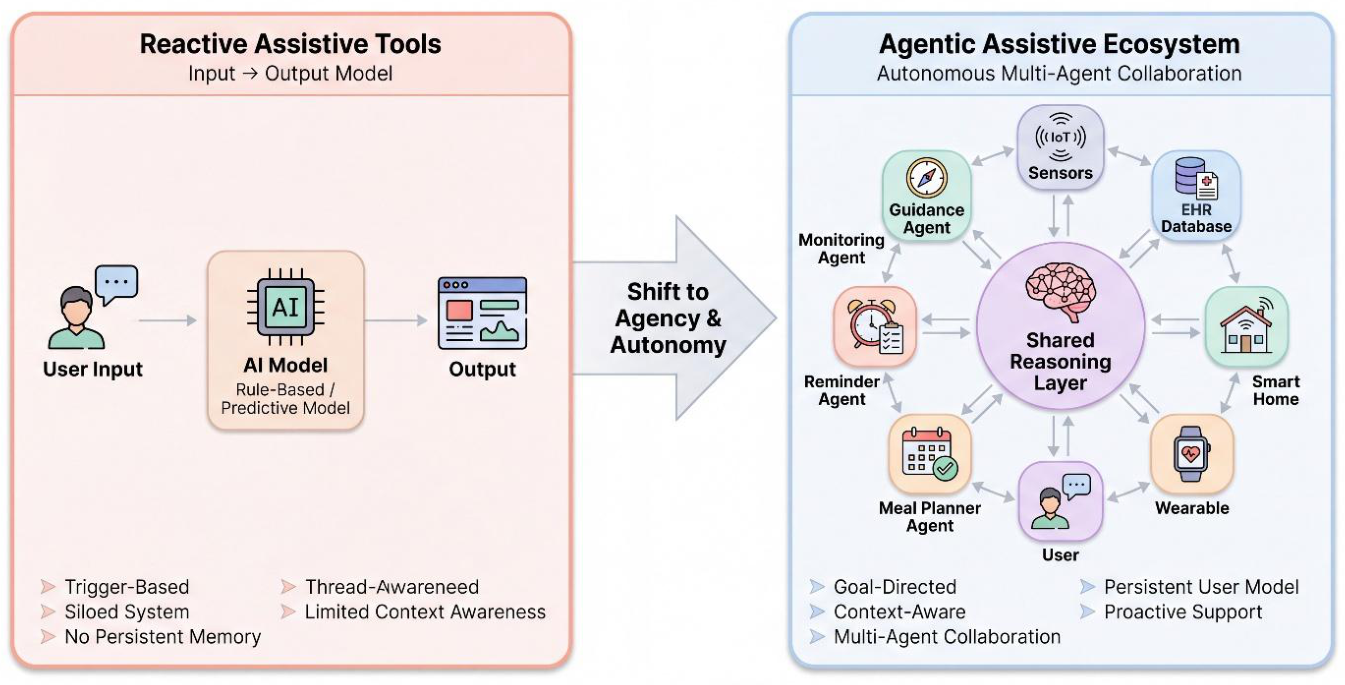
Figure 2.
Evolution of assistive artificial intelligence from symbolic rule-based systems to contemporary agentic multi-agent ecosystems.
Figure 2.
Evolution of assistive artificial intelligence from symbolic rule-based systems to contemporary agentic multi-agent ecosystems.

Figure 3.
Structural failure points in contemporary assistive AI architectures linking ecosystem fragmentation, biased data pipelines, and opaque user-facing outputs.
Figure 3.
Structural failure points in contemporary assistive AI architectures linking ecosystem fragmentation, biased data pipelines, and opaque user-facing outputs.
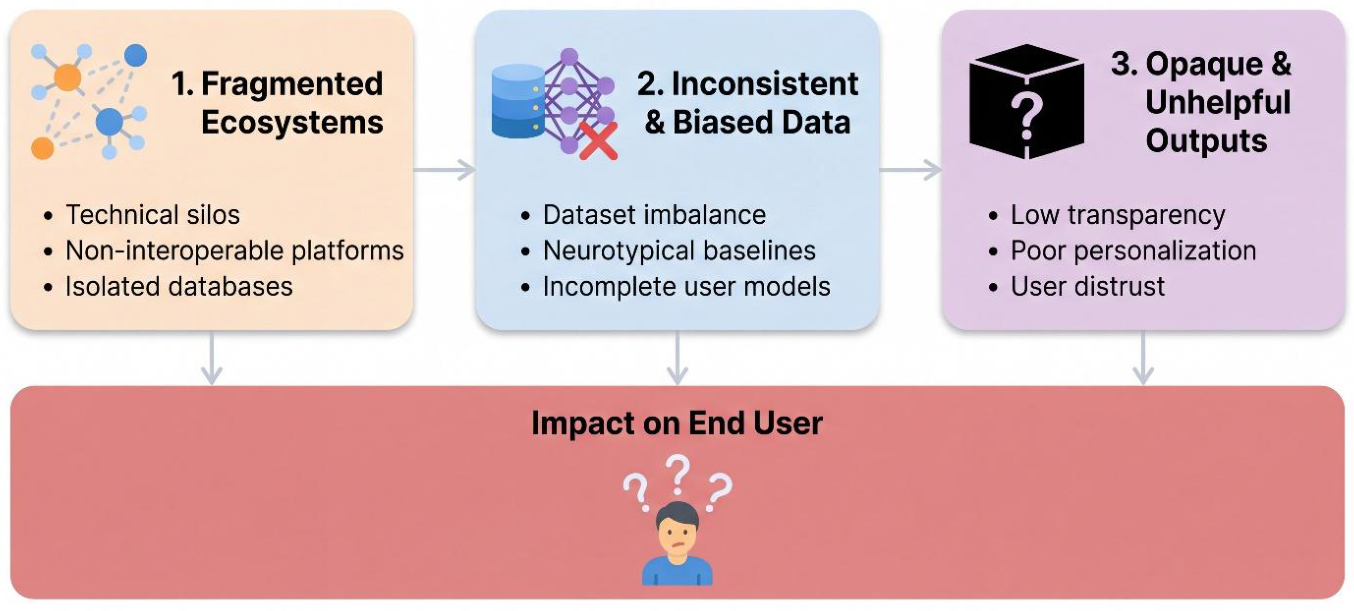
Figure 4.
Taxonomy of agentic assistive systems organized by autonomy level, structural paradigm, and functional role.
Figure 4.
Taxonomy of agentic assistive systems organized by autonomy level, structural paradigm, and functional role.
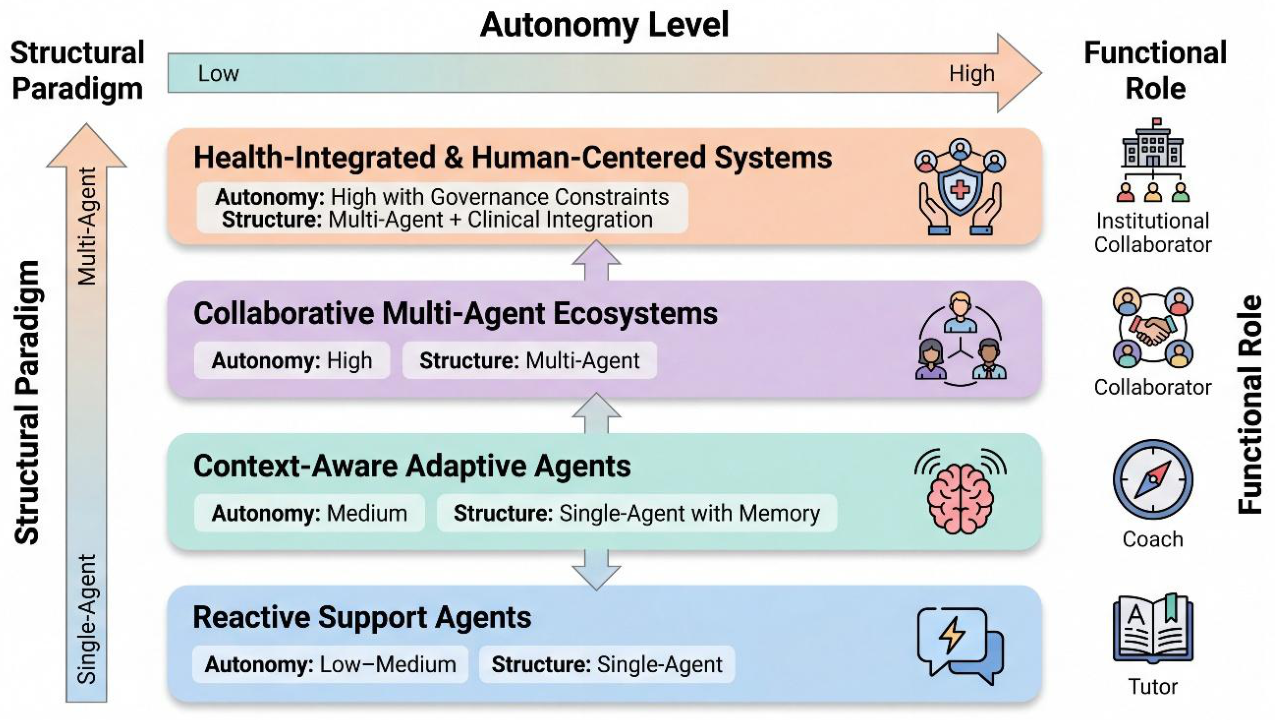
Figure 5.
Foundational design pillars of trustworthy agentic systems highlighting privacy and security as structural bases supporting transparency, robustness, accountability, and human-centricity.
Figure 5.
Foundational design pillars of trustworthy agentic systems highlighting privacy and security as structural bases supporting transparency, robustness, accountability, and human-centricity.
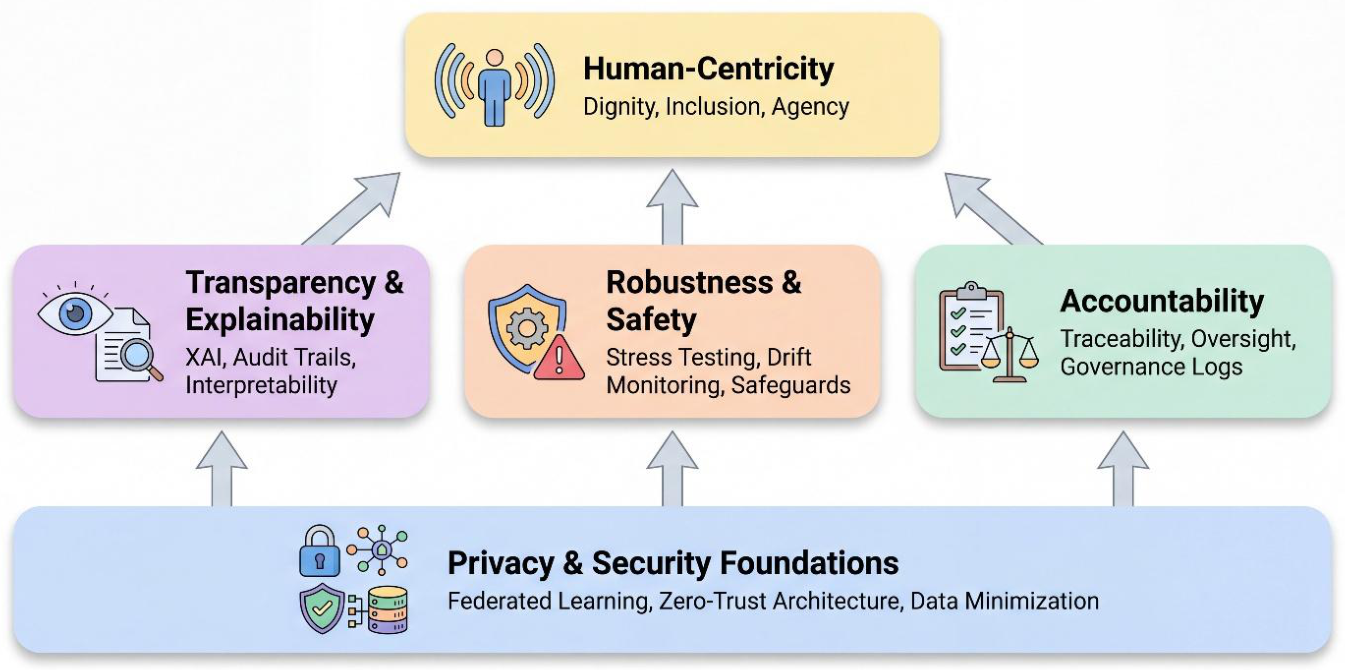
Figure 6.
End-to-end agentic assistive architecture integrating multimodal sensing, hybrid symbolic–learning reasoning, blackboard coordination, specialized agents, and explainable multimodal feedback.
Figure 6.
End-to-end agentic assistive architecture integrating multimodal sensing, hybrid symbolic–learning reasoning, blackboard coordination, specialized agents, and explainable multimodal feedback.
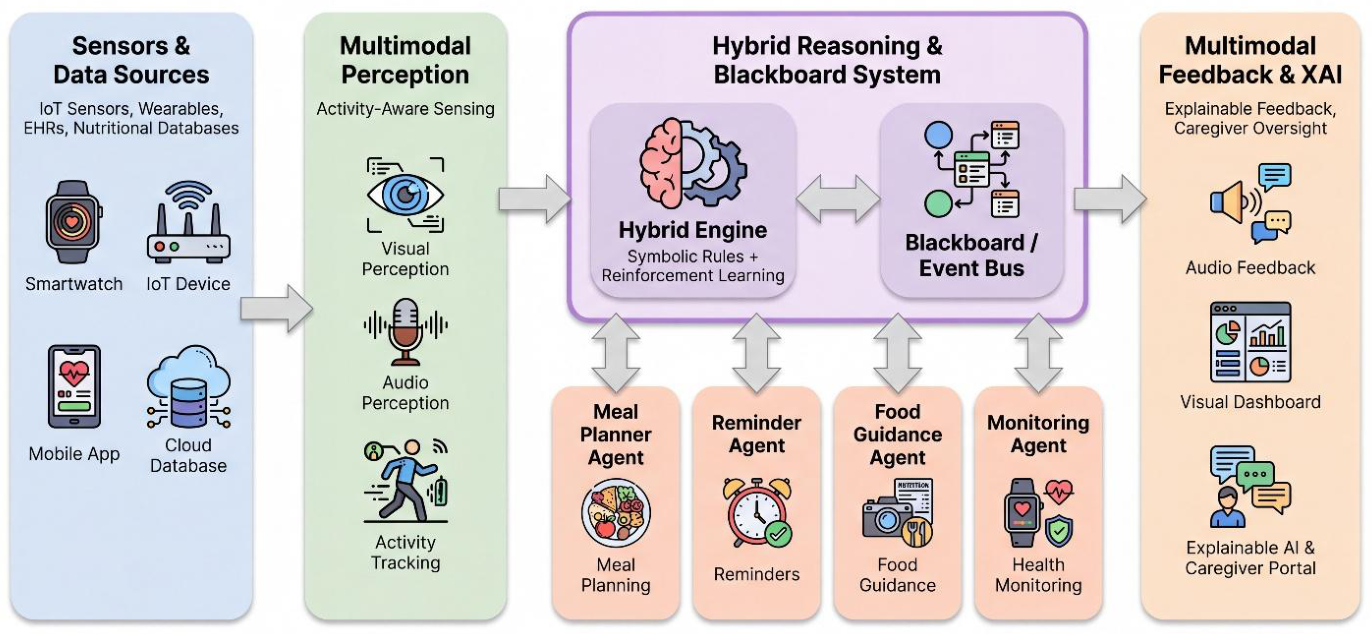
Figure 7.
Multi-environment deployment architecture of an agentic core system enabling shared user modeling with context-sensitive policy adaptation across home, school/work, and clinical settings.
Figure 7.
Multi-environment deployment architecture of an agentic core system enabling shared user modeling with context-sensitive policy adaptation across home, school/work, and clinical settings.
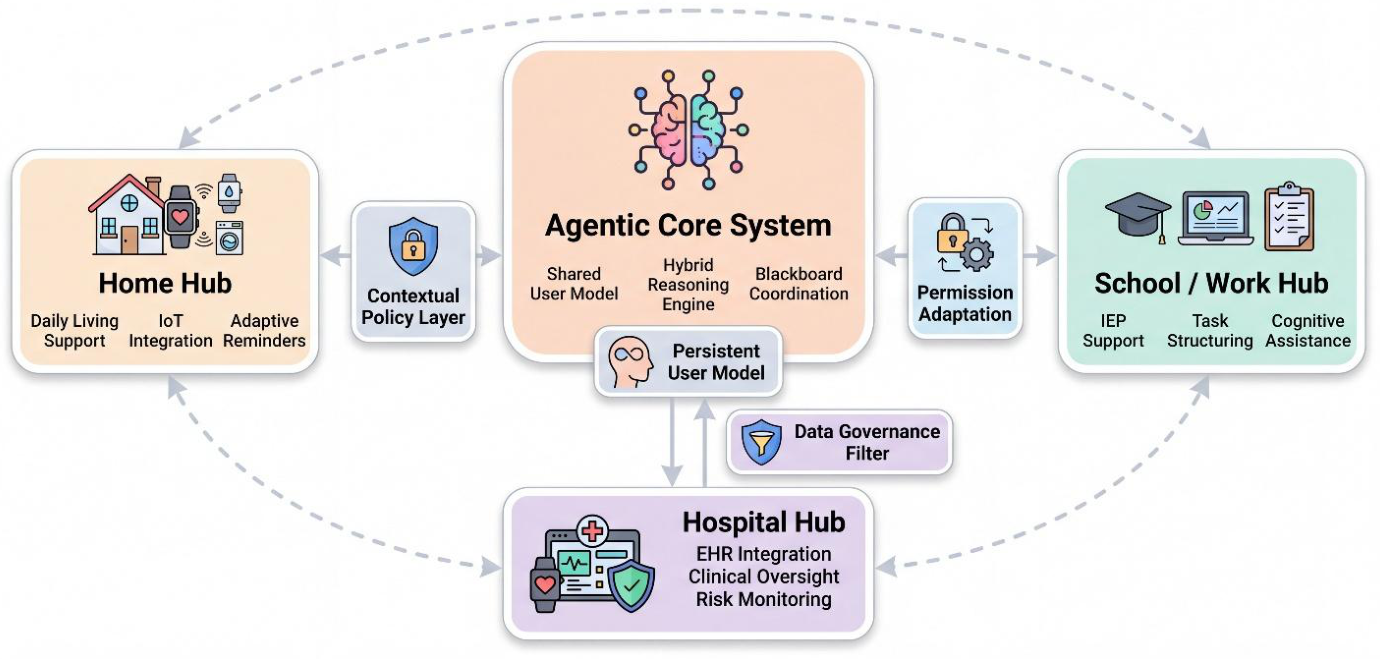
Figure 8.
Risk-based governance lifecycle for agentic assistive systems aligned with the EU AI Act, integrating task definition, risk classification, compliance auditing, safeguarded deployment, and continuous monitoring.
Figure 8.
Risk-based governance lifecycle for agentic assistive systems aligned with the EU AI Act, integrating task definition, risk classification, compliance auditing, safeguarded deployment, and continuous monitoring.
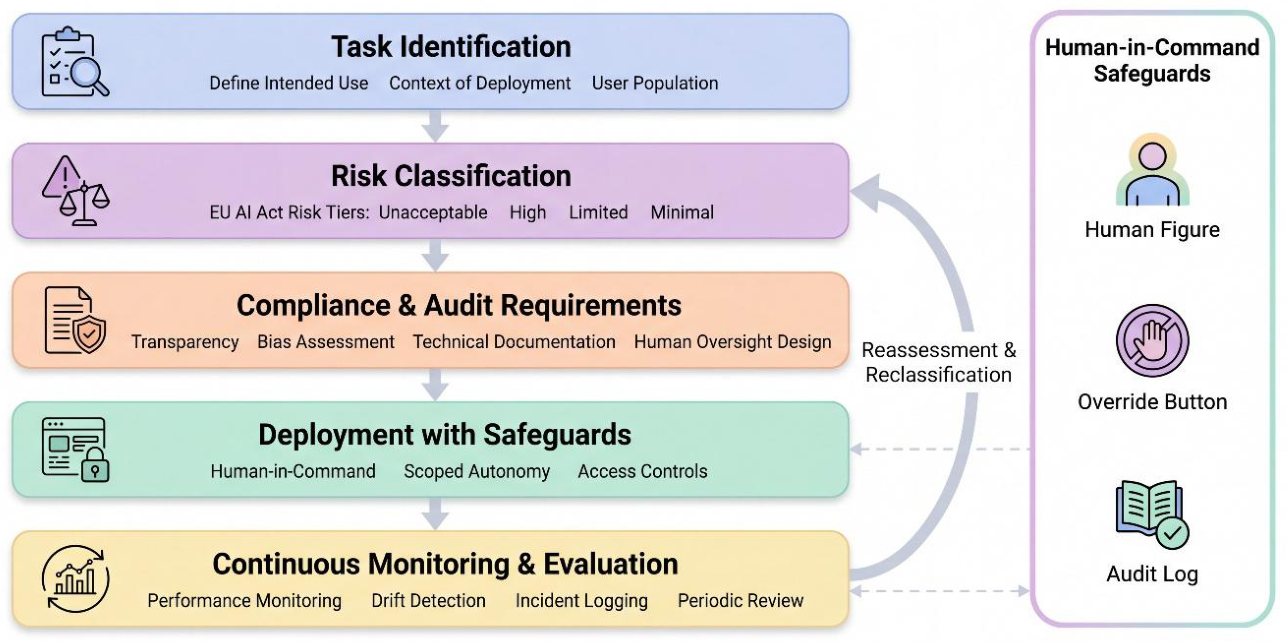

Table 1.
Evolution of Assistive AI Eras and Limitations.
| Era | Core Technology | Dominant Interaction Model | Primary Limitation |
|---|---|---|---|
| 1950s–1980s | Symbolic AI / Rule-Based | Deterministic "If-Then" | Rigid and unable to adapt to novelty. |
| 1990s–2010s | Machine Learning / Deep Learning | Predictive / Reactive | Dependent on human prompts; lacks reasoning. |
| 2020s–Present | Agentic AI | Autonomous / Collaborative | High demand for trust and ethical governance. |
Table 2.
Taxonomy of Agentic Assistive Architectures.
| Architecture Type | Degree of Autonomy | Reasoning Mechanism | Collaborative Support |
|---|---|---|---|
| Reactive | Low to Medium | Task-specific triggers | Individual task focus. |
| Context-Aware | Medium | Perceptual/Behavioral data | Personalized user modeling. |
| Multi-Agent | High | Distributed/Blackboard | Holistic ecosystem coordination. |
| Health-Integrated | High | Hybrid (Symbolic + Neural) | Clinical and caregiver inclusion. |
Table 3.
Roles and Characteristics of Specialized Agents.
| Agent Name | Primary Input | Reasoning/Model Type | Key Action |
|---|---|---|---|
| Meal Planner | Nutritional Databases, EHRs | Reinforcement Learning | Personalized meal suggestions. |
| Reminder Agent | Sensory Preferences, Context | Adaptive Scheduling | Multimodal behavioral nudges. |
| Food Guidance | Computer Vision, NLP | Object Recognition | Real-time cooking/shopping aid. |
| Monitoring Agent | Wearable Sensors, Activity | GRU / Pattern Recognition | Predictive health/stress alerts. |
Disclaimer/Publisher’s Note: The statements, opinions and data contained in all publications are solely those of the individual author(s) and contributor(s) and not of MDPI and/or the editor(s). MDPI and/or the editor(s) disclaim responsibility for any injury to people or property resulting from any ideas, methods, instructions or products referred to in the content. |
© 2026 by the authors. Licensee MDPI, Basel, Switzerland. This article is an open access article distributed under the terms and conditions of the Creative Commons Attribution (CC BY) license (http://creativecommons.org/licenses/by/4.0/).
Copyright: This open access article is published under a Creative Commons CC BY 4.0 license, which permit the free download, distribution, and reuse, provided that the author and preprint are cited in any reuse.