

Submitted:
24 August 2026
Posted:
26 August 2026
You are already at the latest version
Abstract
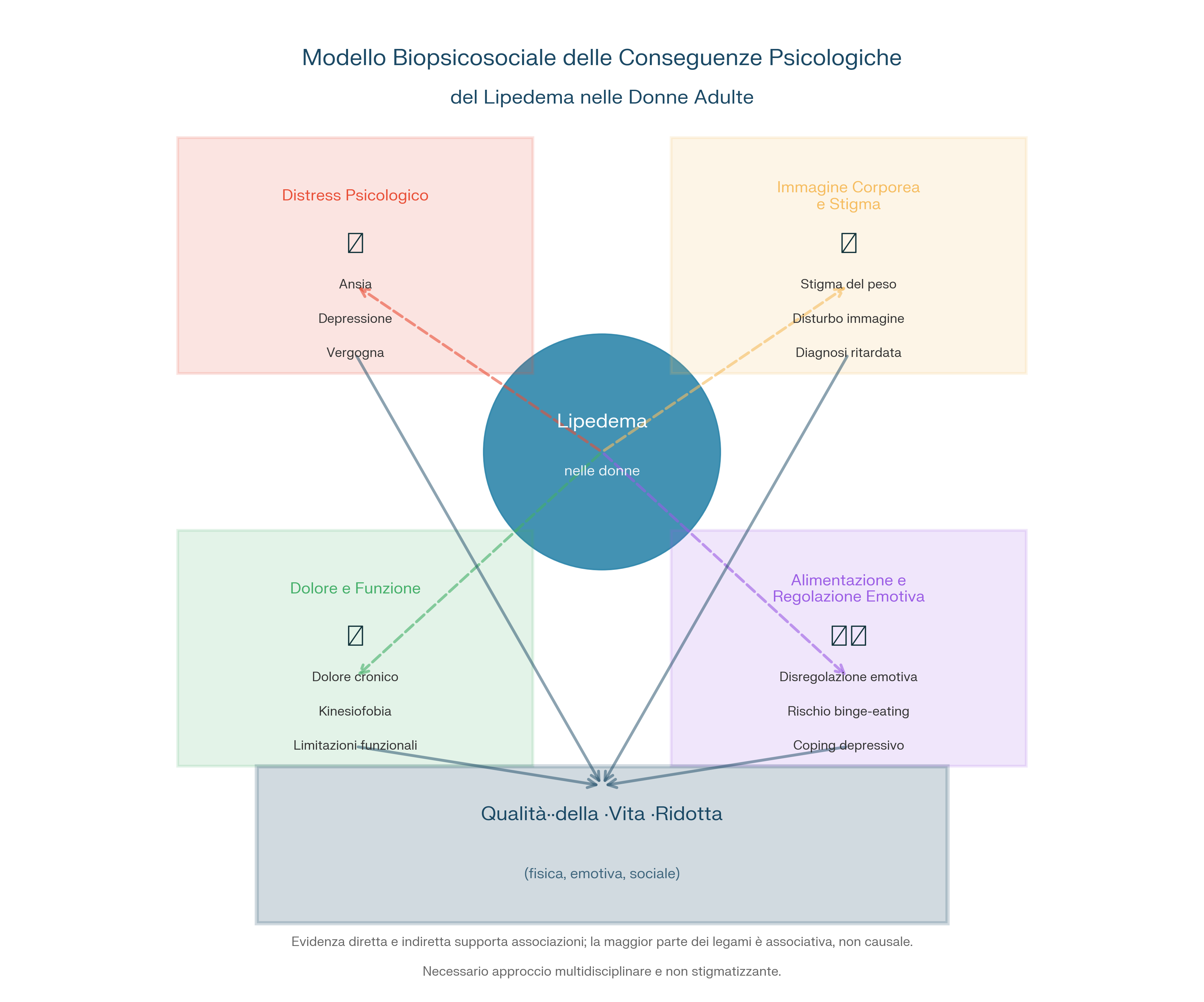
Background: Lipedema is a chronic, progressive adipose tissue disorder that almost exclusively affects women,characterized by bilateral, disproportionate subcutaneous fat accumulation in the limbs, pain, easy bruising, andresistance to conventional weight-loss interventions. Because its appearance is frequently mistaken for obesity,women with lipedema are exposed to prolonged misdiagnosis, weight stigma, and inadequate healthcareresponses. The psychological, psychosocial, and behavioral burden of the condition is increasingly recognized,but the evidence is fragmented across clinical, psychological, and eating-related research. Objective: To synthesize the available evidence on the psychological, psychosocial, and behavioralconsequences of lipedema in adult women — including psychological distress, anxiety and depression, pain andfunctional impact, delayed diagnosis, weight stigma, body image, shame, emotion regulation, quality of life, andeating-related outcomes — and to organize this evidence within an explicit biopsychosocial framework. Methods: A structured narrative review following SANRA principles and incorporating applicable PRISMA2020 elements was conducted. Databases targeted included PubMed/MEDLINE, Embase, Scopus, Web of Science, PsycINFO, and the Cochrane Library; a complete PubMed search strategy is reported. Observational,qualitative, mixed-methods, longitudinal, and relevant intervention studies and reviews of adult women withclinically diagnosed lipedema and separately identifiable lipedema data were eligible. Data were extracted intostandardized tables, appraised for methodological quality, and synthesized thematically by domain. Each findingwas classified as direct evidence (lipedema populations), indirect evidence (related populations such as obesity,chronic pain, lymphedema, or weight-stigma research), or hypothesis (theoretical mechanisms not directlydemonstrated). Results: Thirty-six sources formed the evidence base. Direct evidence documents substantially reducedhealth-related quality of life across physical, emotional, and social domains, elevated prevalence of depressivesymptoms, and frequent experiences of weight stigma, shame, and body-image disturbance. Pain and functionallimitations are nearly universal and are associated with disability, kinesiophobia, and reduced activity. Emotionregulation difficulties and coping styles characterized by depressive processing are reported. Eating-disorderscreening indicators are elevated in preliminary samples, and clinically diagnosed binge-eating disorder waspresent in 14.7% of patients in one specialist pilot cohort. Direct evidence for compensatory behaviors andcompulsive exercise in lipedema was not identified. Conclusions: Distress, stigma, body image concerns, and impaired quality of life are the relativelybetter-documented psychological consequences of lipedema. Emotion regulation, eating-disorder risk, anddysfunctional eating behaviors remain less studied and methodologically heterogeneous. A biopsychosocialmodel — in which pain, functional limitation, delayed diagnosis, and stigma converge on body image, emotionregulation, eating behavior, and quality of life — is supported by converging direct and indirect evidence,although most links remain associative rather than causal. Multidisciplinary, non-stigmatizing, individualizedcare is warranted.
Keywords:
lipedema
; lipoedema
; weight stigma
; body image
; emotion regulation
; disordered eating
; quality of life
; biopsychosocial
; women's health
; narrative review
1. Introduction
1.1. Clinical Characteristics of Lipedema
Lipedema is a chronic, progressive disorder of adipose tissue that almost exclusively affects women, with an estimated prevalence of approximately 11% of adult women worldwide [1,2]. It is characterized by bilateral, symmetrical, disproportionate accumulation of subcutaneous fat in the lower (and sometimes upper) limbs, with sparing of the hands and feet, marked tenderness to palpation, easy bruising, and pain [1,3,4]. Diagnosis is essentially clinical and rests on criteria initially established in the 1950s, including pain on pressure and touch, a negative Stemmer's sign, bilateral disproportionate limb hypertrophy, easy bruising, and sparing of the feet [1,3]. The condition is associated with hormonal influences — particularly estrogen — and with genetic susceptibility, and it is increasingly conceptualized as a hormonally influenced disorder distinct from obesity [5,6].
1.2. Distinction from Obesity and Lymphedema
A central clinical challenge is the frequent confusion of lipedema with obesity and lymphedema [1,4,7]. Unlike obesity, the abnormal fat distribution in lipedema is disproportionate and largely refractory to caloric restriction and extreme weight-loss modalities; weight loss tends to produce a disproportionate loss from the upper body, accentuating the disproportional figure [7,8]. Unlike lymphedema, lipedema is typically bilateral, spares the feet, and is not primarily caused by lymphatic insufficiency [3]. The overlap of lipedema with elevated body mass index in many patients complicates the distinction, and much of the literature has included women with comorbid obesity; for this reason, BMI and obesity should be treated as potential confounders or effect modifiers rather than as synonyms for lipedema [7,9].
1.3. Delayed Diagnosis and Stigma
Despite its prevalence, lipedema is profoundly under-recognized. In a Dutch survey, the mean time from symptom onset to diagnosis was 18 years, after consultation with a mean of 2.8 doctors [10]; earlier survey data reported an average of 18 years and 2.5 doctors, and UK research reported a median of 26–40 years to diagnosis [11]. In one international survey, 30% of participants reported that their general practitioner dismissed lipedema as a valid condition, and 58% reported being treated badly because of lipedema or overweight [11]. Qualitative work documents women being "fat-shamed," viewed as lacking character, and given unsupportive advice from healthcare professionals [12], and younger women appear to struggle most in these encounters [2]. This delayed recognition has direct consequences: it delays access to pain management, mobility support, and psychological care, and it reinforces the misperception that the body shape reflects lifestyle failure [12,13].
1.4. Psychological and Behavioral Burden
The clinical literature has long observed that the burden of lipedema extends beyond the limbs. Narrative and empirical accounts describe distress, anxiety, depression, eating disorders, and social isolation [8,11,14]. Weight-loss-resistant body shape can generate negative body image and "body shaming" from family, friends, and professionals [8], and the weight-loss measures that patients are typically advised to pursue exert minimal effect on the abnormal fat distribution — a clinical situation that has been linked to disordered eating, increased obesity risk, and depression [7]. The lived experience includes shame about appearance, fear of stigmatization, social avoidance, and a sense of being controlled by the body [12,15].
1.5. Rationale and Objectives
The psychological, psychosocial, and behavioral consequences of lipedema are reported across disparate literatures — clinical surveys, qualitative studies, quality-of-life research, stigma research, and eating-behavior research — but have rarely been integrated into a single framework. The objectives of this structured narrative review were (i) to synthesize the evidence on psychological distress, anxiety and depression; (ii) to examine the associations of pain and physical limitation with mental health; (iii) to analyze delayed diagnosis and misclassification; (iv) to characterize social, internalized, and healthcare-related weight stigma; (v) to summarize evidence on body image, shame, self-esteem, and social avoidance; (vi) to document quality-of-life and daily, relational, and occupational functioning; (vii) to evaluate emotion regulation, coping, acceptance, and psychological flexibility; (viii) to assess eating-disorder risk and dysfunctional eating behaviors; (ix) to propose integrative links among pain, stigma, body image, emotion regulation, eating behavior, and quality of life; and (x) to derive implications for clinical assessment and multidisciplinary care. Throughout, we distinguish direct evidence from lipedema populations, indirect evidence from related populations, and theoretical mechanisms.
2. Methods
2.1. Study Design
This is a structured narrative review. The term "systematic review" is deliberately avoided because formal systematic-review procedures (dual independent screening of a fully deduplicated record set, quantitative synthesis where appropriate, and a full PRISMA flow diagram) were not performed. The review follows the Scale for the Assessment of Narrative Review Articles principles — explicit justification of the article's importance, statement of aims, description of literature search, referencing, scientific reasoning, and appropriate presentation of data — and incorporates the PRISMA 2020 elements applicable to narrative reviews, namely specification of information sources, search strategy, eligibility criteria, screening, data extraction, and critical appraisal.
2.2. Information Sources and Search Strategy
A structured literature search was conducted on 17th August 2026 across the major biomedical and psychological bibliographic databases — PubMed/MEDLINE, Embase, Scopus, Web of Science, PsycINFO, and the Cochrane Library — via an aggregated academic search interface. Backward citation searching (screening the reference lists of included reviews and primary studies) and forward citation searching were performed where the interface permitted.
The following complete PubMed search strategy was used:
| ((lipedema[Title/Abstract] OR lipoedema[Title/Abstract])) AND ("psychological distress"[Title/Abstract] OR anxiety[Title/Abstract] OR depression[Title/Abstract] OR "weight stigma"[Title/Abstract] OR stigma[Title/Abstract] OR "body image"[Title/Abstract] OR "body dissatisfaction"[Title/Abstract] OR "self-esteem"[Title/Abstract] OR shame[Title/Abstract] OR "quality of life"[Title/Abstract] OR coping[Title/Abstract] OR "emotion regulation"[Title/Abstract] OR "psychological flexibility"[Title/Abstract]) AND ("eating disorder*"[Title/Abstract] OR "disordered eating"[Title/Abstract] OR "emotional eating"[Title/Abstract] OR "binge eating"[Title/Abstract] OR "loss of control"[Title/Abstract] OR "restrictive eating"[Title/Abstract] OR dieting[Title/Abstract] OR "compensatory behavior*"[Title/Abstract] OR "compulsive exercise"[Title/Abstract]) |
A broader variant combined the psychological and eating blocks with OR to maximize recall, and a focused variant retained the AND structure to maximize precision. Language restrictions: English, German, Dutch, French, Italian, Spanish, Polish, Czech, Swedish, Norwegian, and Danish, reflecting the European literature on this topic. Publication limits: no date limits were imposed initially; peer-reviewed articles and clearly identified preprints were eligible; conference abstracts, book chapters, and non-peer-reviewed sources were excluded.
2.3. Eligibility Criteria
Inclusion criteria: adults aged ≥ 18 years; women with clinically diagnosed lipedema (studies using self-reported diagnosis were flagged and considered separately); studies assessing psychological, psychosocial, behavioral, eating-related, functional, or quality-of-life outcomes; studies in which lipedema data were separately identifiable; observational, qualitative, mixed-methods, longitudinal, and relevant intervention studies; and relevant systematic, scoping, and narrative reviews. Studies including women with lipedema and comorbid obesity were eligible, but BMI and obesity were treated as possible confounders or effect modifiers, not synonyms for lipedema.
Exclusion criteria: animal studies, duplicates, non-peer-reviewed sources, studies in which lipedema could not be distinguished from obesity, lymphedema, or other conditions unless that limitation was explicitly discussed, and records judged irrelevant on title/abstract screening.
2.4. Screening, Data Extraction, and Critical Appraisal
Records were screened against the eligibility criteria at title/abstract level, with full-text review of eligible records. Because this is a narrative review, screening and extraction were conducted by the review team rather than by two independent reviewers with measured agreement; formal dual screening and a PRISMA flow diagram were not produced. Data were extracted into a standardized study-characteristics table covering author/year, country, design, sample, diagnosis, stage, BMI, comparison group, instruments, outcomes, results, and limitations; cells not available to the reviewers are marked. Critical appraisal used an adapted Newcastle-Ottawa Scale for cross-sectional studies, following the approach of a recent meta-analysis in this field [16], and appropriate qualitative-appraisal criteria for interview studies. Because the review is based on abstract-level records retrieved through the search interface, full-text verification of every included study is pending and is flagged accordingly.
2.5. Narrative Synthesis
Evidence was synthesized thematically by domain (physical/functional, psychological/psychosocial, emotional/adaptation, eating-related, and integrative). Each statement is classified as (a) direct evidence (from lipedema populations), (b) indirect evidence (from related populations — obesity, chronic pain, lymphedema, weight-stigma, or eating-disorder research), or (c) hypothesis (theoretical mechanisms not directly demonstrated). Cross-sectional associations are reported as "associated with," "reported," "may contribute to," or "is consistent with" rather than as causal statements.
3. Physical Symptoms and Functional Impact
3.1. Pain, Sensitivity, and Heaviness
Pain and easy bruising are the cardinal physical complaints in lipedema. In a Dutch survey of 162–163 patients, all participants reported physical complaints, with pain (88.3%) and easy bruising (85.9%) the most frequent; mean current pain on a 0–10 numerical rating scale was 4.2, with mean minimum 3.1 and mean maximum 6.1 [10]. In a Polish survey, the highest-severity symptoms were leg heaviness (mean 3.96/5), fatigue (3.74), swelling (3.63), and fat-tissue pain (3.13), with 92.9% of respondents reporting moderate-to-severe heaviness and fatigue, 87.8% swelling, and 72.4% fat-tissue pain [17]. Pain in lipedema is frequently described as neuropathic in quality and is a major driver of distress [9,14].
3.2. Mobility, Activity, and Disability
Functional limitation is substantial. In the Dutch survey, 63.0% of patients reported some problems with mobility, 64.8% some problems with usual activities (work, study, housework, family, leisure), and 74.1% pain or discomfort, with 16.7% reporting extreme pain or discomfort [10]. The lowest health-related quality-of-life scores in a national Swedish survey were observed in physical role functioning, indicating that women with lipedema are heavily limited in daily work and activities by poor physical health [13]. A comparative study found greater pain-related disability in daily activities among women with lipedema than among matched controls [18]. Disability is associated with leg volume and adipose-tissue pain intensity [19].
Fear of movement compounds functional limitation: in a case–control study, high kinesiophobia was detected in 78% of women with lipedema versus 55% of controls (p = .033), and kinesiophobia correlated with poorer health-related quality of life, physical activity, and energy [20]. A scoping review of objectively measured physical capacity found that women with lipedema generally show lower walking capacity and muscle strength than healthy or BMI-matched controls, and that structured multimodal exercise is associated with improvements in walking distance, muscle strength, and pain [21].
3.3. Psychological Relevance of Physical Symptoms
Physical symptoms are inseparable from psychological experience. In the Kempa comparative study, pain severity correlated positively with depressive symptoms (ρ = 0.612, p < 0.001) and moderately with impaired HRQOL (ρ = 0.418, p = 0.010) among women with lipedema [18]. In a German pilot study, relationships were observed between mental-health status and everyday pain intensity, and the authors suggested that psychological stress may contribute to lipedema-associated pain experience [9]. Poor sleep quality, frequently comorbid, is associated with both physical function and fatigue and contributes to reduced quality of life [22]. The iterative relationship between pain, reduced activity, and mental health has been described as a "vicious circle" in which pain relief and improved mobility may enable physical activity, with downstream benefits for mental health [23,24].
5. Emotion Regulation and Adaptation
5.1. Emotion Regulation Difficulties
Direct evidence on emotion regulation in lipedema is emerging but limited. In a cohort of women with lipedema, significant difficulties in emotion regulation were reported and were associated with anxiety symptoms, suggesting that emotion-regulation difficulties may play a role in the development of emotional disorders such as anxiety in this population [33]. This is consistent with the self-reported emotional lability (28%) documented in international survey data [11] and with qualitative themes of crying, anger, fearfulness, and rumination — participants commonly reported always thinking about lipedema (73.4%), feeling sensitive (75.8%), and being easily depressed (65.4%) [11].
5.2. Coping, Acceptance, and Psychological Flexibility
Coping patterns in lipedema appear to favor maladaptive strategies. In a survey of 733 women with lipedema, coping assessment showed that "depressive processing" was used most frequently, alongside significant psychological saliences on the Mini-SCL symptom checklist [30]. The German pilot study similarly reported problems with self-acceptance, acceptance of one's own body, coping with lipedema-associated pain, and coping with "difficult" emotions such as anxiety, anger, and shame — issues that may not meet the threshold for a full mental-health disorder but that nonetheless affect the patient's relationship with her body and her pain experience [9].
Acceptance and psychological flexibility are not yet directly measured in lipedema populations with validated instruments (e.g., AAQ-II) in the identified literature. However, qualitative evidence indicates that experienced acceptance of the condition is context- and situation-dependent, complicated by the burden of chronicity [15]. Psychological theory has been proposed as a framework for clinical support: self-regulation theory and self-determination theory have been used to inform self-care support for women with lipedema [34]. Compassion-based constructs are directly relevant: fears of compassion are elevated in the presence of weight stigma and internalized weight bias and are associated with depressive symptom severity [29], and self-compassion practice was associated with lower depressive symptoms (p = .033) and lower internalized weight bias (p < .001), although uptake of self-compassion practice was limited (8%) [31].
6. Eating Disorders and Dysfunctional Eating Behaviors
6.1. Screening and Risk
Direct evidence on eating-disorder risk in lipedema is limited and methodologically heterogeneous. In an exploratory online survey of 47 women with lipedema, approximately two-thirds scored at or above the EAT-26 screening cut-off, and over 70% screened positive when behavioral risk indicators were included [35]. These are screening indicators of risk, not clinical diagnoses: a positive EAT-26 screen indicates possible risk and does not establish an eating-disorder diagnosis, and the sample was small, self-selected, and not clinically verified [35]. Self-reported eating disorders were endorsed by 16% of participants in a large international survey [11]; the stage 3–4 group was significantly more likely to report depression and eating disorders than earlier-stage groups [11].
6.2. Diagnosed Eating Disorders
The strongest diagnostic-level evidence comes from a German specialist pilot study in which clinically confirmed (ICD-10 F) eating disorder with binge eating was present in 14.7% of 150 patients with lipedema [9]. The proportion of patients with any mental-health disorder (depression, anxiety, eating disorder, or PTSD) was 25.9% in those with BMI < 40 kg/m² and 49.3% in those with BMI ≥ 40 kg/m², indicating that obesity comorbidity increases psychiatric burden [9]. A case report documents a young woman with lipedema and hypermobile Ehlers-Danlos syndrome who developed restrictive eating and anorexia nervosa in the context of lipedema being mistaken for obesity, highlighting that lipedema misidentification can contribute to eating-disorder development [36].
6.3. Emotional Eating
Qualitative evidence from the German pilot study links eating to emotion regulation: among patients with eating disorders, binge eating represented an attempt to "numb" or "combat" stress, with the effect of reducing stress and, in that group, pain [9]. This pattern — eating in response to negative emotion — is consistent with the emotional-eating construct measured by instruments such as the Dutch Eating Behavior Questionnaire [37,38].
6.4. Binge Eating and Loss-of-Control Eating
6.5. Restrictive Dieting
Restrictive dieting is a plausible and clinically salient risk given the weight-loss-resistant nature of lipedema. Weight-loss measures exert minimal effect on the abnormal fat distribution, a situation that has been argued to foster eating disorders, increased obesity risk, and depression [7]. The case-report literature documents restrictive eating in the context of repeated, unsuccessful weight-loss attempts [36].
6.6. Compensatory Behaviors and Compulsive Exercise
No identified study directly assessed compensatory behaviors (vomiting, laxative use) or compulsive exercise in women with lipedema. This is a clear evidence gap. It is worth noting that exercise is recommended as part of conservative management and that exercise avoidance — rather than compulsive exercise — is the pattern documented in the functional literature (e.g., kinesiophobia in 78% of patients) [11,20]. The relationship between eating-disorder risk and exercise behavior in lipedema therefore remains unknown and requires dedicated study.
7. Integrative Biopsychosocial Model
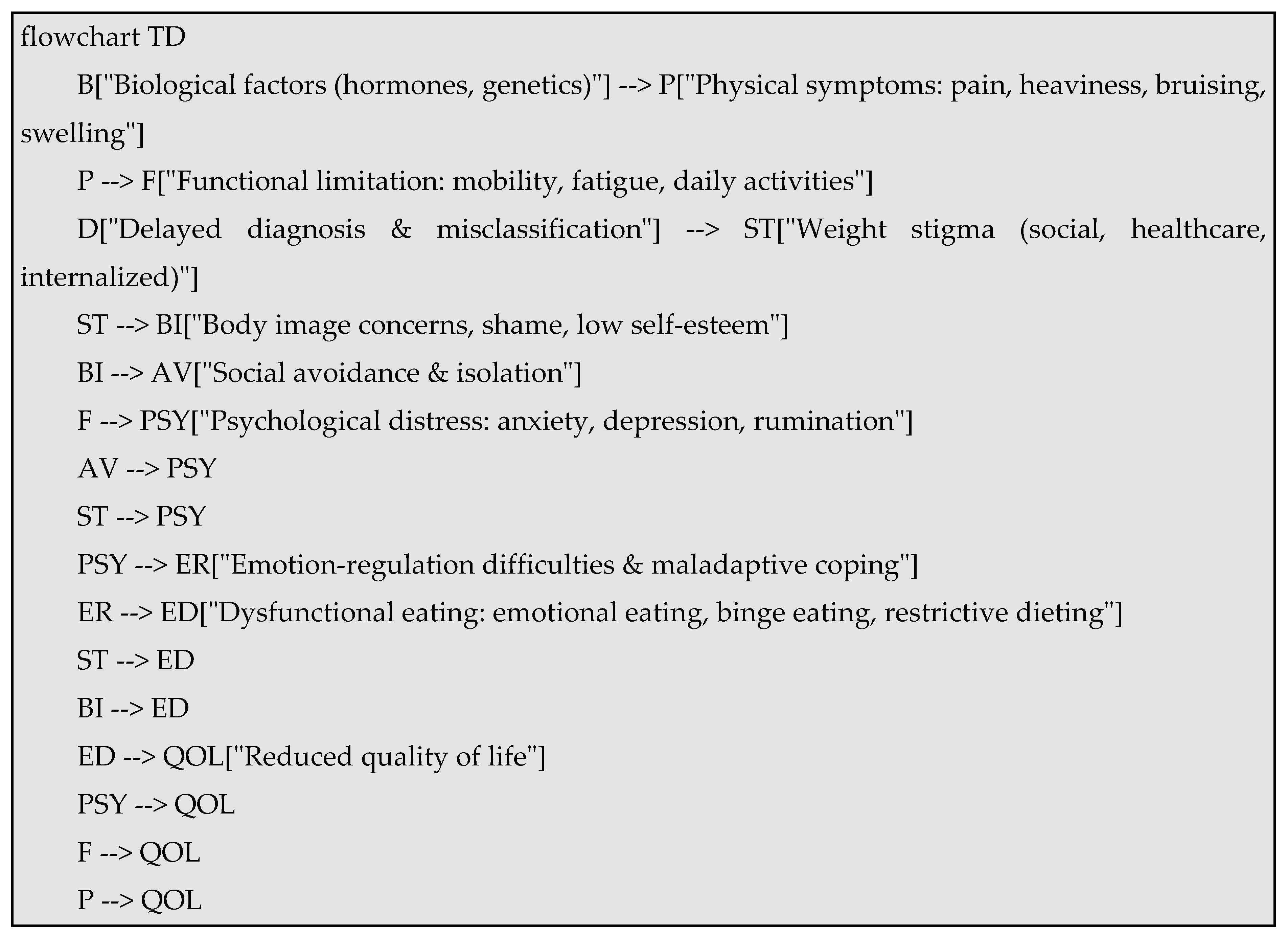
The available evidence supports a provisional biopsychosocial model in which biological, psychological, and social factors interact. Relationships are labeled as direct evidence (D), indirect evidence (I), or hypothesis (H). The model is presented as a framework for understanding, not as proven causality.
- Distress → emotion-regulation difficulties → dysfunctional eating (D/I/H): emotion-regulation difficulties are associated with anxiety in lipedema (D) [33]; binge eating functions as an emotion-regulatory behavior (D) [9]; emotional and binge eating are established correlates of negative affect and poor emotion regulation in general and obesity populations (I) [37].
Figure 1.
Provisional biopsychosocial pathways linking lipedema symptoms, pain, stigma, body image, emotion regulation, eating behavior, and quality of life. Solid arrows represent relationships supported by direct or indirect evidence; the model should not be read as proven causality.
Figure 1.
Provisional biopsychosocial pathways linking lipedema symptoms, pain, stigma, body image, emotion regulation, eating behavior, and quality of life. Solid arrows represent relationships supported by direct or indirect evidence; the model should not be read as proven causality.
8. Clinical Implications
8.1. Multidimensional Assessment
Assessment in lipedema should integrate physical, functional, psychological, and social dimensions. Given the documented burden on quality of life, pain, mobility, body image, and mood [10,13,16,25], evaluation should routinely include HRQOL, pain, function, and mood screening. Sleep disturbance should be queried given its association with physical function and fatigue [22], and fibromyalgia comorbidity should be considered in painful patients given its effect on anxiety, depression, and quality of life [26].
8.2. Non-Stigmatizing Nutritional Care
Because lipedema is weight-loss resistant and often misread as obesity, nutritional care must avoid the assumption that weight loss is the solution and must avoid stigmatizing language [1,7]. Advice should focus on overall health, anti-inflammatory dietary patterns, and realistic expectations, without reinforcing cycles of restrictive dieting that may contribute to disordered eating [7,36].
8.3. Psychological Assessment and Support
Screening for depression, anxiety, body-image distress, and stigma experiences should be offered [17,25,27]. Given the links between stigma, fears of compassion, and depression [29], and the association of self-compassion practice with lower depressive symptoms and lower internalized weight bias [31], compassion-focused and cognitive-behavioral approaches warrant consideration [32]. Psychological theory (self-regulation and self-determination) has been proposed as a framework for supporting self-care [34].
8.4. Eating-Disorder Risk Evaluation
Eating-disorder risk should be evaluated using validated screening instruments (e.g., EAT-26, SCOFF) with the explicit understanding that a positive screen indicates risk, not diagnosis [35]. Elevated binge-eating rates in specialist cohorts [9] and the presence of restrictive eating in case literature [36] justify routine inquiry about binge eating, loss-of-control eating, restrictive dieting, and compensatory behaviors. Positive screens should prompt structured clinical assessment rather than labeling.
8.5. Adapted Exercise
Exercise is a core component of conservative management, moving lymphatic fluid, managing weight, and improving physical and mental health [11]. However, kinesiophobia is highly prevalent [20], and activity limitations are substantial [10,13]. Programs should be adapted, gradual, and multimodal; structured aerobic and resistance programs have been associated with improved walking distance, strength, and pain [21]. Reassurance and graded exposure may be needed to overcome fear of movement.
8.6. Conservative and Surgical Treatment
Conservative therapy — complex decongestive therapy with compression, manual lymphatic drainage, and exercise — has shown improvements in limb volume, pain, and physical function in a randomized trial [40]. Surgical treatment (liposuction) is associated with improved quality of life and reduced depressive symptoms, pain, and disability in several cohorts [24,41,42,43]. Given the psychological burden, psychological support should accompany both conservative and surgical pathways.
8.7. Multidisciplinary, Individualized Care
The evidence supports multidisciplinary, individualized management integrating vascular/lymphology, nutrition, physiotherapy/rehabilitation, psychology, and psychiatry [14,18,32]. Care should be delivered in non-stigmatizing settings and should explicitly address the psychosocial dimensions of the condition [12,27].
9. Discussion
9.1. Synthesis
This structured narrative review finds that the psychological, psychosocial, and behavioral burden of lipedema is substantial and multidimensional. Direct evidence consistently documents reduced health-related quality of life across physical, social, and emotional domains [10,13,16]; elevated depressive symptoms [9,17,18]; pain and functional limitation that are nearly universal and linked to disability and kinesiophobia [10,19,20]; pervasive weight stigma, body-image concerns, and shame [15,27,28]; and impaired daily, relational, and occupational functioning [10,13,32]. Emotion regulation difficulties [33] and maladaptive coping (depressive processing) [30] are reported but less studied. Eating-disorder screening risk is elevated in preliminary samples [35], and diagnosed binge-eating disorder is documented in a specialist cohort [9], but direct evidence on emotional eating, restrictive dieting, compensatory behaviors, and compulsive exercise in lipedema is largely absent.
9.2. Consistency and Contradictions
Findings are broadly consistent across countries, designs, and instruments: quality-of-life impairment, depressive symptoms, and stigma-related distress appear across German, Swedish, Dutch, Polish, Czech, UK, Australian, and international samples [8,10,11,13,17,30,44]. The main apparent contradiction concerns the causal role of lipedema in mental illness: one pilot study reported that 80% of patients had high psychological stress but that this stress preceded symptom onset in most cases, with only 6% showing deterioration attributable to lipedema [9]. This does not negate the documented associations — it cautions against assuming that lipedema causes severe mental illness and instead supports bidirectional or shared-risk explanations, consistent with the general chronic-pain and stigma literature [9].
9.3. Confounders
BMI and obesity are major confounders: psychiatric burden, including eating disorders and depression, increases with BMI in lipedema cohorts [9], and the prevalence of obesity comorbidity is high [10]. Studies that do not separate lipedema from obesity risk attributing obesity-related burden to lipedema. Fibromyalgia comorbidity [26], hypothyroidism, and other conditions common in lipedema [13] may also confound psychological outcomes. Stage of disease is an additional modifier: later stages are associated with greater depression, eating-disorder report, and social impairment [11].
9.4. Methodological Limitations of the Review and the Evidence
The evidence base has important limitations: most quantitative studies are cross-sectional online surveys with self-reported diagnosis and selection bias [9,17,30]; clinical diagnosis and stage verification vary; instrument use is heterogeneous; and several key findings rest on single exploratory studies with small samples [35]. This review itself is a narrative (not systematic) synthesis: records were identified through an aggregated academic search interface, several studies were assessed at abstract level, dual-independent screening and a full PRISMA flow diagram were not performed, and exact per-database hit counts require verification at submission.
9.5. Evidence Versus Interpretation
Distress, stigma, body image, and reduced quality of life are the relatively better-documented consequences [16,25,27]. Emotion regulation, eating-disorder risk, and dysfunctional eating behaviors are less studied and methodologically heterogeneous [33,35]. The integrative biopsychosocial model is best supported where direct lipedema evidence converges with indirect evidence from weight-stigma and eating-disorder research; many pathway links remain hypotheses requiring longitudinal and mediation testing.
10. Future Research
Future research should prioritize: longitudinal, multicentre, adequately powered studies of psychological and eating-related outcomes; Future research should prioritize: longitudinal, multicentre, adequately powered studies of psychological and eating-related outcomes; appropriate control groups, including BMI-matched women without lipedema, to disentangle lipedema-specific from obesity-related burden; stratification by lipedema stage, BMI/obesity status, and menopausal status; standardized, clinically verified diagnosis and stage assessment; structured clinical diagnosis of eating disorders rather than screening alone; mediation studies testing the pathways proposed in the biopsychosocial model (e.g., stigma → emotion regulation → eating behavior → quality of life); validation of psychological and eating-behavior instruments in lipedema populations; dedicated study of emotional eating, restrictive dieting, compensatory behaviors, and compulsive exercise, which remain unmeasured; and psychological and multidisciplinary intervention trials, including compassion-focused and emotion-regulation interventions, with quality-of-life and eating-behavior outcomes.
11. Conclusions
Lipedema is associated with substantial psychological, psychosocial, and behavioral burden in adult women. The better-documented consequences are psychological distress, depressive symptoms, weight stigma (social, internalized, and healthcare-related), body-image concerns, shame, social avoidance, and impaired quality of life across physical, emotional, and social domains. Pain, functional limitation, and delayed diagnosis compound this burden, and emotion-regulation difficulties and maladaptive coping are emerging correlates. Eating-disorder screening risk is elevated in preliminary samples, and binge-eating disorder has been diagnosed in specialist cohorts, but direct evidence on emotional eating, restrictive dieting, compensatory behaviors, and compulsive exercise is lacking. The evidence supports a biopsychosocial framework in which biological factors, pain, functional limitation, delayed diagnosis, and stigma converge on body image, emotion regulation, eating behavior, and quality of life — a framework that should be tested prospectively rather than assumed. Multidisciplinary, non-stigmatizing, individualized care integrating vascular medicine, nutrition, physiotherapy, and psychology is warranted, with routine screening for mood, body image, stigma, sleep, and eating-disorder risk.

Table 1.
Study characteristics of key included studies (selection; full-text verification pending).
| Std. | State | Design | Sample | Diagnosis | Stage | BMI | Cmp. | Instruments | Key outcomes | Limitations |
|---|---|---|---|---|---|---|---|---|---|---|
| Dudek et al., 2018 [30] | Poland | Cross-sectional online | 329 women | Lipedema | – | – | None | WHOQOL-BREF, LEFS, PHQ-9, DAS-24 | Appearance-related distress and depression predicted lower QoL beyond symptom severity and mobility | Online self-report; selection bias |
| Romeijn et al., 2018 [7] | Netherlands | Cross-sectional survey | ~162–163 patients | Clinical lipedema | All stages | All BMIs included | Dutch female population norms | RAND-36, EQ-5D-3L, pain NRS | Pain (88.3%) and bruising (85.9%) most common; QoL lower than population norms; mean 18 years to diagnosis, 2.8 doctors | Recruitment via patient association website |
| Erbacher & Bertsch, 2020 [9] | Germany | Cross-sectional pilot | 150 patients | Clinically confirmed | – | 46% BMI ≥ 40 | None | Clinical diagnostic assessment | 26% current depression; 14.7% binge-eating disorder; 5.3% PTSD; 3.3% anxiety; 80% high stress pre-onset | Pilot; single specialist centre; retrospective timing of stress |
| Dudek et al., 2021 [8] | Poland | Cross-sectional online | 98 women (of 130) | Lipedema (44.9% medically diagnosed) | – | – | None | WHOQOL-BREF, PHQ-9 | High symptom severity; PHQ-9 mean 12.2; 59.2% possible depression; depression mediated symptom–QoL link | Online self-report; selection bias; mixed diagnostic status |
| Melander et al., 2021 [3] | Sweden | Qualitative (interviews) | 14 women | Lipedema | – | – | None | Semi-structured interviews | Fat-shaming; perceived as lacking character; unsupportive healthcare; self-blame | Small qualitative sample |
| Falck et al., 2022 [6] | Sweden | National cross-sectional online | 245 women | Confirmed diagnosis or symptoms | Self-reported type/stage | – | General female population | RAND-36, SOC-13 | Lower HRQOL, lowest in physical role functioning | Online recruitment via associations |
| Clarke et al., 2022 [4] | International | Cross-sectional online survey | 1303 women classified by stage | Self-reported lipedema | Stages 1–2: n=423; 3–4: n=474; unknown: n=406 | – | By stage group | Survey items on health, personality, healthcare | ~40% depression, 28% emotional lability, 16% eating disorders; later-stage more affected; 30% GP dismissal | Self-report; no clinical verification |
| Al-Wardat et al., 2022 [16] | – | Cross-sectional cohort | Women with lipedema | Clinical | – | – | None | Emotion-regulation measure; anxiety | ER difficulties associated with anxiety symptoms | – |
| Christoffersen & Tennfjord, 2023 [19] | Norway | Qualitative | 15 women (21–47 y; mean 36.2) | Lipedema | – | – | None | Interviews | Stigmatization by HCPs; younger women more affected; social support protective | Small sample; younger-women focus |
| Çağlıyan Türk et al., 2023 [31] | Turkey | Cross-sectional online | 354 women | Clinical lipedema | Types 1–2; stages 1–2 common | Mean 30.61 ± 6.86 | Fibromyalgia vs no-FMS | HADS, SF-12, ACR 2016 criteria | 35% FMS; higher anxiety/depression and lower QoL with FMS | Online recruitment via patient community |
| Kempa et al., 2024 [10] | Germany | Comparative cross-sectional | 39 lipedema vs 1:5 matched controls | Clinical lipedema | – | – | Population-matched controls | GEDA, German Pain Questionnaire | Higher depression, pain, pain-related disability; fewer close contacts; pain–depression ρ=0.612 | Small lipedema group |
| Clarke et al., 2024 [13] | International | Cross-sectional online | 1,070 women | Self-reported diagnosed/suspected | Stage 1: n=57; 2: n=311; 3: n=664; unknown: n=38 | –- | By stage | Experienced weight stigma, internalized weight bias, PHQ-9 | Stigma and internalized bias related to depression; internalized bias partially mediated | Cross-sectional; self-report |
| Chachaj et al., 2024 [26] | Poland | Comparative cross-sectional | Women with lipedema | Clinical | – | – | Overweight/obese women | Disability and emotional symptom measures | Behavioral impairment main factor affecting functioning; leg volume and adipose pain associated with disability | – |
| Clarke et al., 2026 [32] | International | Cross-sectional SEM | 843 women | Self-reported lipedema | – | – | None | Weight stigma, internalized bias, fears of compassion, PHQ-9 | Stigma → fears of compassion → depressive symptoms | Cross-sectional; SEM |
| Kunzová, 2026 [18] | Czech Republic | Exploratory cross-sectional online | 47 women | Lipedema (self-reported) | – | – | None | EAT-26, WHO-5 | ~Two-thirds above EAT-26 cut-off; ~one-fifth reduced well-being (WHO-5 ≤ 50) | Small exploratory sample; screening, not diagnosis |
Table 2.
Measurement instruments: domain, purpose, interpretation, and limitations.
| Domain | Instrument | Purpose | Interpretation | Limitations |
|---|---|---|---|---|
| Eating-disorder risk | EAT-26 | Screen for eating-disorder attitudes/behaviors | Score ≥ 20 (or behavioral indicators) = possible risk; screening only, not diagnostic | Positive screen ≠ diagnosis; used in lipedema in a small exploratory sample [18] |
| Eating-disorder risk | SCOFF | Brief 5-item screen for anorexia/bulimia risk | ≥ 2 "yes" = possible eating disorder; screening only | Not validated in lipedema |
| Binge eating | Binge Eating Scale | Severity of binge-eating behaviors | Higher scores = more severe binge eating | Not yet administered in published lipedema samples |
| Eating behavior | DEBQ (emotional, external, restraint subscales) | Assess emotional, external, and restrained eating styles | Higher subscale scores = more frequent pattern; subscales scored separately | Validated in general/obesity populations [37,38]; not yet applied to lipedema |
| Emotion regulation | DERS / DERS-16 | Difficulties in emotion regulation (awareness, clarity, impulse, strategies) | Higher scores = greater difficulty; ER difficulties associated with anxiety in lipedema [16] | Self-report; limited lipedema-specific validation |
| Psychological flexibility | AAQ-II | Experiential avoidance/psychological inflexibility | Higher scores = greater inflexibility | No lipedema-specific studies identified |
| Anxiety screening | GAD-2 / GAD-7 | Screen for generalized anxiety | Higher scores = greater anxiety | Lipedema studies more often used HADS [31]; GAD not identified in lipedema samples |
| Anxiety/depression | HADS | Hospital anxiety and depression scale | Higher scores = greater anxiety/depression; used in lipedema–fibromyalgia research [31] | Self-report |
| Depression | PHQ-9 | Depression severity | 5–9 mild, 10–14 moderate, 15–19 moderately severe, ≥ 20 severe; used in lipedema cohorts [8,13,30] | Self-report; screening rather than diagnostic interview |
| Depression (clinician) | HAM-A / HAM-D | Clinician-rated anxiety/depression | Interview-based severity rating | Not identified in lipedema studies |
| Well-being | WHO-5 | General psychological well-being | Score ≤ 50 indicates reduced well-being; used in lipedema [18] | Short; screening only |
| HRQOL (generic) | SF-36 / RAND-36 | Generic health-related quality of life, 8 domains | Lower scores = worse HRQOL; all domains reduced in lipedema [7,24] | Generic; not lipedema-specific |
| HRQOL (preference) | EQ-5D-3L | Utility-based HRQOL | Lower index = worse HRQOL; 66.1 vs 85 general population in lipedema [7] | Ceiling effects; generic |
| HRQOL | WHOQOL-BREF | Multidimensional QoL (physical, psychological, social, environment) | Lower domain scores = worse QoL; used in lipedema [8,30] | Generic |
| Body image | DAS-24 | Appearance-related distress | Higher scores = greater distress; predicted QoL in lipedema [30] | Generic; not lipedema-specific |
| Self-esteem | RSES | Global self-esteem | Lower scores = lower self-esteem; used in 733-woman lipedema cohort [17] | Self-report |
| Sense of coherence | SOC-13 | Comprehensibility, manageability, meaningfulness | Higher scores = stronger SOC; used in lipedema [6] | Not outcome-specific |
| Stigma | Health-related stigma scales / experienced weight stigma and internalized weight bias measures | Assess stigma experiences and internalization | Higher scores = greater stigma; associated with lower QoL and higher depression in lipedema [11,13,32] | Variable instruments; lipedema-specific validation pending |
| Pain | NRS; German Pain Questionnaire; TSK (kinesiophobia) | Pain intensity; pain-related fear of movement | NRS mean current 4.2 in lipedema [7]; high kinesiophobia in 78% [14] | Pain measures not lipedema-specific |
| Activity/function | LEFS; 6-minute walk test; KOS-ADL | Lower-extremity function; walking capacity | Reduced walking capacity and strength in lipedema [15,30,45] | Objective measures limited |
| Lipedema-specific QoL | FLQA(-lk); LYMQOL; LyQLI | Disease-specific QoL in lymphatic conditions | Improved after liposuction [41,42]; LYMQOL validated in German lipedema patients [46] | Adapted from lymphedema tools; further lipedema-specific validation needed |
Table 3.
Critical synthesis by domain.
| Domain | Direct evidence (lipedema) | Indirect evidence (related populations) | Consistency | Confounders | Clinical implication | Research gaps |
|---|---|---|---|---|---|---|
| Psychological distress, anxiety, depression | Elevated depressive symptoms (PHQ-9 59.2% possible; 26% diagnosed) [8,9]; higher vs controls [10]; anxiety less consistent (3.3% diagnosed) [9] | Chronic pain and weight-stigma literatures link distress to stigma and pain | Consistent for depression; mixed for anxiety | BMI/obesity, fibromyalgia [31], stage | Routine mood screening; psychological support | Longitudinal trajectories; causal direction |
| Pain, physical limitation, mental health | Pain 88.3%; functional limitation; kinesiophobia 78% [7,14]; pain–depression ρ=0.612 [10] | Chronic pain psychology; kinesiophobia research | Consistent | BMI; fibromyalgia | Adapted exercise; graded exposure; pain management | Objective function studies |
| Delayed diagnosis and misclassification | 18 years to diagnosis; 2.8–2.5 doctors; 30% GP dismissal [4,7] | Rare-disease and stigma research | Consistent | Healthcare access | Clinician education; early recognition | Diagnostic-delay outcomes studies |
| Weight stigma (social, internalized, healthcare) | More stigma than general population; linked to lower QoL and depression [11,13,32] | Weight-stigma research (eating, mood) [39] | Consistent | BMI | Non-stigmatizing care; compassion-focused support [33] | Intervention trials |
| Body image, shame, self-esteem | Appearance distress predicts QoL [30]; shame and social avoidance [12]; body shaming [24] | Body-image research in obesity/lymphedema [47] | Consistent | BMI; stage | Body-image assessment and support | Lipedema-specific body-image tools |
| Quality of life and functioning | Impaired across all domains; meta-analysis pooled deficits [5,6,7] | Chronic neuropathic pain comparison [24] | Consistent | BMI; comorbidities | Multidisciplinary care | Longitudinal QoL |
| Emotion regulation, coping, flexibility | ER difficulties associated with anxiety [16]; depressive processing coping [17] | Emotion-regulation and ACT literatures | Emerging | Distress level | Emotion-regulation and compassion interventions [33,35] | Validated measures; interventions |
| Eating disorders and dysfunctional eating | EAT-26 risk elevated [18]; binge-eating disorder 14.7% [9]; emotional eating as coping [9]; anorexia case [36] | Obesity/weight-stigma eating research [37,39] | Emerging; heterogeneous | BMI | ED-risk screening (screening ≠ diagnosis) | Clinical diagnosis; emotional eating, compensatory, compulsive exercise studies |
Table 4.
Evidence versus hypothesis.
| Proposed relationship | Direct support | Indirect support | Interpretation | Studies needed |
|---|---|---|---|---|
| Pain ↔ depressive symptoms | Yes: ρ = 0.612 in lipedema [10]; pain–disability link [26] | Chronic pain–depression literature | Bidirectional association likely; direction unresolved | Longitudinal mediation studies |
| Stigma → body image → social avoidance | Yes: stigma, body-image concerns, and avoidance reported [11,12,13] | Weight-stigma literature [39] | Consistent association; internalized bias may mediate [13] | Prospective cohorts; interventions |
| Stigma → fears of compassion → depression | Yes: SEM supports pathway [32] | Compassion-focused research | Cross-sectional pathway; direction assumed | Experimental/longitudinal tests |
| Delayed diagnosis → distress | Yes: delayed diagnosis and dismissive care reported [3,4,7] | Diagnostic-delay research | Plausible; not causally tested | Studies linking diagnostic delay to outcomes |
| Distress → emotion-regulation difficulty | Yes: ER difficulties associated with anxiety [16] | Emotion-regulation literature | Association only | Longitudinal ER studies |
| Emotion regulation → emotional eating/binge eating | Partial: binge eating described as stress-numbing in lipedema [9] | Emotional-eating literature [37,38] | Strongly plausible mechanism | Eating-behavior measures in lipedema; EMA studies |
| Weight-loss-resistant body → restrictive dieting → disordered eating | Case-level: anorexia in lipedema context [36]; argument in reviews [23] | Obesity/dieting literature | Hypothesis with limited direct data | Population-level dietary studies in lipedema |
| Compensatory behaviors / compulsive exercise in lipedema | None identified | Eating-disorder literature | Hypothesis only | Dedicated surveys and clinical assessments |
| All pathways → reduced QoL | Yes: impaired QoL across domains [5,6,7] | Chronic disease QoL research | Well supported | Multivariable pathway models |
Author Contributions
All authors contributed to the conception, literature search, data extraction, synthesis, and writing of this review.
Funding
This review received no external funding.
Data Availability Statement
No new data were generated. All sources are cited in the reference list.
Conflicts of Interest
The authors declare no conflicts of interest.
Ethics
No primary data were collected; ethical approval was not required.
References
- Buck, D.W.; Herbst, K.L. Lipedema: A Relatively Common Disease with Extremely Common Misconceptions. Digit. Commons@Becker (Washington University School of Medicine) 2016, (9), 4. [Google Scholar]
- Christoffersen, V.; Tennfjord, M.K. Younger Women with Lipedema, Their Experiences with Healthcare Providers, and the Importance of Social Support and Belonging: A Qualitative Study. Int. J. Environ. Res. Public Health 2023, 20(3), 1925–1925. [Google Scholar] [CrossRef] [PubMed]
- Kruppa, P.; Gohlke, S.; Łapiński, K.; García-Carrizo, F.; Soultoukis, G.A.; Infanger, M.; et al. Lipedema stage affects adipocyte hypertrophy, subcutaneous adipose tissue inflammation and interstitial fibrosis. Front. Immunol. 2023, 14, 1223264–1223264. [Google Scholar] [CrossRef] [PubMed]
- Carvalho, R. Lipedema: A common though often unrecognized condition. Chin. J. Plast. Reconstr. Surg. 2024, 6(3), 149–153. [Google Scholar] [CrossRef]
- Lüchinger, J.E.; Pavicic, E.; Giachino, C.L.; Stute, P. Impact of hormones on lipedema development: a systematic literature review. Arch. Gynecol. Obstet. 2026, 313(1), 60–60. [Google Scholar] [CrossRef] [PubMed]
- Faria, A.M.; Valerio, C.M.; Barcellos, C.R.; Oliveira, R.A.; Trujilho, F.R.; Baiocchi, J.M.T.; et al. Unraveling lipedema: comprehensive insights and the path to future discoveries. npj Metab. Health Dis. 2026, 4(1), 3–3. [Google Scholar] [CrossRef] [PubMed]
- Buso, G.; Depairon, M.; Tomson, D.; Raffoul, W.; Vettor, R.; Mazzolai, L. Lipedema: A Call to Action! Obesity 2019, 27(10), 1567–1576. [Google Scholar] [CrossRef] [PubMed]
- Grigoriadis, D.; Sackey, E.; Riches, K.; van Zanten, M.; Brice, G.; England, R.; et al. Investigation of clinical characteristics and genome associations in the ‘UK Lipoedema’ cohort. PLoS ONE 2022, 17(10). [Google Scholar] [CrossRef] [PubMed]
- Erbacher, G.; Bertsch, T. Lipoedema and Pain: What is the role of the psyche? – Results of a pilot study with 150 patients with Lipoedema. Phlebologie 2020, 49(5), 305–316. [Google Scholar] [CrossRef]
- Romeijn, J.R.M.; de Rooij, M.J.M.; Janssen, L.; Martens, H. Exploration of Patient Characteristics and Quality of Life in Patients with Lipoedema Using a Survey. Dermatol. Ther. 2018, 8(2), 303–311. [Google Scholar] [CrossRef] [PubMed]
- Clarke, C.; Kirby, J.N.; Smidt, T.; Best, T. Stages of lipoedema: experiences of physical and mental health and health care. Qual. Life Res. 2022, 32(1), 127–137. [Google Scholar] [CrossRef] [PubMed]
- Melander, C.; Juuso, P.; Olsson, M. Women’s experiences of living with lipedema. Health Care Women Int. 2021, 43, 54–69. [Google Scholar] [CrossRef] [PubMed]
- Falck, J.; Rolander, B.; Nygårdh, A.; Jonasson, L.; Mårtensson, J. Women with lipoedema: a national survey on their health, health-related quality of life, and sense of coherence. BMC Women S Health 2022, 22(1), 457–457. [Google Scholar] [CrossRef] [PubMed]
- Janota, B.; Michalska, P.; Janota, K. Lipedema: The intersection of physical and mental health. Arch. Psychiatry Psychother. 2025, 27(2), 59–66. [Google Scholar] [CrossRef]
- Kloosterman, L.M.; Eilers, R.; Scafoglieri, A.; Hendrickx, A.; Dekker, R.; Jager-Wittenaar, H. More than meets the eye: phenomenological insights into the functioning of people with lipoedema. Radboud Repos. (Radboud University) 2025, 20(1), 2463157–2463157. [Google Scholar] [CrossRef] [PubMed]
- Günay, Ü.; Talak, G.R.; Demiröz, A. Health-related quality of life among lipedema patients: A systematic review and meta-analysis. Phlebol. J. Venous Dis. 2025. [Google Scholar] [CrossRef] [PubMed]
- Dudek, J.; Białaszek, W.; Gabriel, M. Quality of life, its factors, and sociodemographic characteristics of Polish women with lipedema. BMC Women S Health 2021, 21(1), 27–27. [Google Scholar] [CrossRef] [PubMed]
- Kempa, S.; Gross, M.; Oliinyk, D.; Siegmund, A.; Müller, M.; Prantl, L.; et al. Health Implications of Lipedema: Analysis of Patient Questionnaires and Population-Based Matched Controls. Life 2024, 14(3), 295–295. [Google Scholar] [CrossRef] [PubMed]
- Chachaj, A.; Jeziorek, M.; Dudka, I.; Sowicz, M.; Adaszyńska, A.; Truszyński, A.; et al. Disability and emotional symptoms in women with lipedema: A comparison with overweight/obese women. Adv. Clin. Exp. Med. 2024, 33(12), 1367–1377. [Google Scholar] [CrossRef] [PubMed]
- Kasap, Z.; Türköz, M.D.; Keleş, B.; Yavuz, N.Ç. Unveiling kinesiophobia: A hidden challenge in women with lipedema. Phlebol. J. Venous Dis. 2025, 41(1), 15–22. [Google Scholar] [CrossRef] [PubMed]
- Malm, I.Å.; Nilsson, P.; Hurtig-Wennlöf, A. Objective measures of physical activity and physical capacities in lipedema - a scoping review. BMC Women S Health 2026, 26(1), 50–50. [Google Scholar] [CrossRef] [PubMed]
- Türk, A.Ç.; Büyükşireci, D.E.; Erden, E.; Erden, E.; Borman, P. The Relationship Between Sleep Quality, Fatigue, and Quality of Life in Women with Lipedema. Lymphat. Res. Biol. 2025. [Google Scholar] [CrossRef] [PubMed]
- Klietz, M.; Busch, L.; Hamatschek, M.; Paul, M.; Schriek, C.; Wiebringhaus, P.; et al. Understanding the Vicious Circle of Pain, Physical Activity, and Mental Health in Lipedema Patients – a Response Surface Analysis. In Research Square; 2023. [Google Scholar]
- Arndt, S.F.; Kasten, E.; Klesper, B.; Klesper, B. and Germany., L.K. an der A., Mittelweg 18, 20148 Hamburg, (2024) The Effects of Surgical Lipedema Therapy on Psychological Variables in Younger Patients between 18 and 35 Years. Med. Discov. 3(2).
- Dudek, J.; Białaszek, W.; Ostaszewski, P.; Smidt, T. Depression and appearance-related distress in functioning with lipedema. Psychol. Health Med. 2018, 23(7), 846–853. [Google Scholar] [CrossRef] [PubMed]
- Türk, A.Ç.; Erden, E.; Büyükşireci, D.E.; Umaroğlu, M.; Borman, P. Prevalence of Fibromyalgia Syndrome in Women with Lipedema and Its Effect on Anxiety, Depression, and Quality of Life. Lymphat. Res. Biol. 2023, 22(1), 2–7. [Google Scholar] [CrossRef] [PubMed]
- Falck, J.; Herbst, K.L.; Rolander, B.; Nygårdh, A.; Jonasson, L.; Mårtensson, J. Health-related stigma, perceived social support, and their role in quality of life among women with lipedema. Health Care Women Int. 2025, 46(11), 1278–1296. [Google Scholar] [CrossRef] [PubMed]
- Clarke, C.; Kirby, J.N.; Best, T. Beyond the physical: The interplay of experienced weight stigma, internalised weight bias and depression in lipoedema. Clin. Obes. 2024, 15(3). [Google Scholar] [CrossRef] [PubMed]
- Clarke, C.; Kirby, J.N.; Best, T. Fearing Compassion Under the Weight of Stigma: A Structural Equation Model Study on Depressive Symptoms in Women With Lipoedema. Mindfulness 2026, 17(2), 542–551. [Google Scholar] [CrossRef]
- Kreidel, Y.; Himmelreich, V.; Klaus, A.; Franke, G.H.; Hinz, A.; Brähler, E.; et al. Gesundheitsbezogene Lebensqualität und psychische Auffälligkeiten von Patientinnen mit Lipödem im Vergleich zu gesunden und chronisch erkrankten Populationen. PPmP-Psychother. · Psychosom. · Med. Psychol. 2025, 75 103–111. [Google Scholar]
- Clarke, C.; Best, T. Addressing weight stigma through self- compassion: Psychological benefits for women with lipoedema. 2024. [Google Scholar] [CrossRef]
- Łyszczak, P.; Szuba, A. Lipedema: a clinical entity. Acta Angiol. 2018, 24(4), 141–148. [Google Scholar] [CrossRef]
- Al-Wardat, M.; Clarke, C.; Alwardat, N.; Kassab, M.; Salimei, C.; Gualtieri, P.; et al. The Difficulties in Emotional Regulation among a Cohort of Females with Lipedema. Int. J. Environ. Res. Public Health 2022, 19(20), 13679–13679. [Google Scholar] [CrossRef] [PubMed]
- Williams, A.; McKain, L. Using psychological theory to inform self-care support for women with lipoedema. PubMed 2025, 30. [Google Scholar]
- Kunzová, M. Disordered eating risk and well-being in women with lipedema. Front. Glob. Women S Health 2026, 7, 1720708–1720708. [Google Scholar] [CrossRef] [PubMed]
- Wright, T.; Herbst, K.L. A Young Woman with Excessive Fat in Lower Extremities Develops Disordered Eating and Is Subsequently Diagnosed with Anorexia Nervosa, Lipedema, and Hypermobile Ehlers-Danlos Syndrome. Am. J. Case Rep. 2021, 22. [Google Scholar] [CrossRef] [PubMed]
- van Strien, T. Causes of Emotional Eating and Matched Treatment of Obesity. Curr. Diabetes Rep. 2018, 18(6), 35–35. [Google Scholar] [CrossRef] [PubMed]
- Barrada, J.R.; van Strien, T.; Cebolla, A. Internal Structure and Measurement Invariance of the Dutch Eating Behavior Questionnaire (DEBQ) in a (Nearly) Representative Dutch Community Sample. Eur. Eat. Disord. Rev. 2016, 24(6), 503–509. [Google Scholar] [CrossRef] [PubMed]
- Meadows, A.; Higgs, S. Internalised Weight Stigma Moderates the Impact of a Stigmatising Prime on Eating in the Absence of Hunger in Higher- but Not Lower-Weight Individuals. Front. Psychol. 2019, 10, 1022–1022. [Google Scholar] [CrossRef] [PubMed]
- Atan, T.; Bahar-Özdemir, Y. The Effects of Complete Decongestive Therapy or Intermittent Pneumatic Compression Therapy or Exercise Only in the Treatment of Severe Lipedema: A Randomized Controlled Trial. Lymphat. Res. Biol. 2020, 19(1), 86–95. [Google Scholar] [CrossRef] [PubMed]
- Schloßhauer, T.; Heiß, C.; von Hollen, A.; Spennato, S.; Rieger, U.M. Liposuction treatment improves disease-specific quality of life in lipoedema patients. Int. Wound J. 2021, 18(6), 923–931. [Google Scholar] [CrossRef] [PubMed]
- Høgh, A. Arteriosclerose, neuropati og kompression; 2021. [Google Scholar]
- Malcolm, L. A retrospective comparative study of patient-reported outcome measures, pre-treatment and twelve months post-treatment using tumescent liposuction for the management of lower limb lipoedema. In PubMed Central; 2024; pp. 41 285–294. [Google Scholar]
- Kunzová, M.; Lagová, E.; Keith, L. Mental and physical health burden and quality of life in Czech women with lipedema. Front. Glob. Women S Health 2025, 6, 1629077–1629077. [Google Scholar] [CrossRef] [PubMed]
- Angst, F.; Lehmann, S.; Aeschlimann, A.; Sándor, P.S.; Wagner, S. Cross-sectional validity and specificity of comprehensive measurement in lymphedema and lipedema of the lower extremity: a comparison of five outcome instruments. Health Qual. Life Outcomes 2020, 18(1), 245–245. [Google Scholar] [CrossRef] [PubMed]
- Mahler, J.; Keeley, V.; Obed, D.; Bingöl, A.; Vogt, P.M.; Hadamitzky, C. Validation of the Lymphedema Quality of Life Questionnaire for German Patients with Lipedema. Lymphat. Res. Biol. 2025, 23(6), 346–351. [Google Scholar] [CrossRef] [PubMed]
- Ridner, S.H.; Bonner, C.M.; Deng, J.; Sinclair, V.G. Voices From the Shadows. Cancer Nurs. 2011, 35(1). [Google Scholar] [CrossRef] [PubMed]
Disclaimer/Publisher’s Note: The statements, opinions and data contained in all publications are solely those of the individual author(s) and contributor(s) and not of MDPI and/or the editor(s). MDPI and/or the editor(s) disclaim responsibility for any injury to people or property resulting from any ideas, methods, instructions or products referred to in the content. |
© 2026 by the authors. Licensee MDPI, Basel, Switzerland. This article is an open access article distributed under the terms and conditions of the Creative Commons Attribution (CC BY) license (http://creativecommons.org/licenses/by/4.0/).
Copyright: This open access article is published under a Creative Commons CC BY 4.0 license, which permit the free download, distribution, and reuse, provided that the author and preprint are cited in any reuse.