

Submitted:
24 August 2026
Posted:
26 August 2026
You are already at the latest version
Abstract
Natural fibers from different plants are widely used as reinforcing fillers in polymers because of ecological, economic and technical benefits with applications in all major industries. Since a typical drawback of incorporating natural fibers in polymers is the reduction of impact strength this work investigates ways to enhance impact strength. 30 wt. % of grass fibers from permanent pasture grasslands are compounded with polypropylene and varying amounts of polypropylene-graft-maleic anhydride with three different degrees of grafting as coupling agent and ethylene propylene diene rubber as impact modifier. The impact strength and the melt flow index are measured for each compound while the adhesion between fibers and matrix is investigated by scanning electron microscopy. It can be shown that around 5 wt. % of coupling agents are sufficient to increase impact strength to a saturation level while the impact modifier has no significant influence. By multiple extrusion cycles of a pure grass fiber polypropylene compound, it can be shown that the melt flow index increases constantly with the number of extrusion cycles while the impact strength remains constant after an initial increase indicating matrix degradation but enhanced fiber matrix coupling.
Keywords:
natural fibers
; permanent pasture grasslands
; polypropylene
; compounding
; coupling agents
; adhesion
; impact strength
; melt flow index
; recycling
1. Introduction
A number of reasons to use natural fibers as reinforcement in polymer composites have been reported including ecological benefits (reduced carbon footprint [1,2], lower energy consumption for fiber production compared to e.g. glass fibers [1,3], use of biobased materials [1,4]), economic benefits (accessibility [4], lower material costs [1,2,3,4,5,6,7], reduced price fluctuation) and technical benefits (lower density [1,2,4] enabling lightweight structures, acoustic damping [1] and energy absorption, reduced brittleness [1] and splintering and hence favorable crash behavior [2,7]).
As a result, there are many applications for natural fiber composites in almost every industry. Applications in the automotive industry are e.g. dash boards, door panels, headliners, seat backs, trunk trims, and engine encapsulation [8,9]. First mentions date back to 1942 when Henry Ford presented a prototype car with hemp fibers and to the 1950s with the Trabant car body made from epoxy resin and cotton fibers [4]. In the construction and building industry mainly wood fibers are used for decking, window and door profiles, fences, railings and roof tiles [10,11] while in the packaging industry sustainable packaging based on natural fibers and bio-based or biodegradable polymers is of particular interest [12,13,14]. Applications are also found in the aerospace industry [7,14,15], in consumer goods and furniture [13,16], in defense and military applications [17,18], and biomedical applications [14,19].
When locking more specifically at the technical benefits, first of all the tensile strength and tensile modulus of single natural fibers are lower than that of e.g. E-glass-fibers [2,20]. Hence, the addition of natural fibers increases tensile modulus, tensile and bending strength of a polymer but to a lower extend than addition of glass fibers [21]. However, the increase of these properties strongly depends on the quality of the fiber-matrix interface [6,22,23]. Therefore, coupling agents are a means to increase impact strength by reducing interfaces and thus preventing or minimizing crack propagation.
Technical drawbacks that come with the incorporation of natural fibers compared to synthetic fibers are lower impact strength [1,5,8,10,23,24,25,26,27], poor compatibility with hydrophobic polymers [6,28,29], higher moisture absorption. [2,19,30], and processing consistency when using material with large variability due to its natural origin.
Impact modifiers like ethylene propylene diene rubber generally are a means to control impact strength. They are also used with natural fibers [4,10,31,32,33] but effects can be complex [8]. Therefore, a hypothesis is that modification of the matrix only helps to a limited extent if the interfaces between fibers and matrix remain unchanged, as cracks may spread unhindered through the interfaces.
An additional technical is that the variability of natural fibers poses a challenge for the reproducibility of the properties of the resulting compounds [1]. This especially is true for the mechanical properties which are most relevant for technical products for which fiber-reinforced plastics typically are being used [34].
In general, in the natural fiber polymer composites the matrix material can be a thermoset or a thermoplastic, with the latter being ecologically more favorable due to the better recyclability. Thermoplastics being studied extensively are polypropylene, polyethylene, polystyrene and polyvinyl chloride [5,10]. Among the thermoplastics polypropylene is increasingly used for technical applications and hence very interesting in combination with natural fibers as reinforcement.
The natural fibers can be extracted from a variety of plants and are typically categorized according to the origin within the plant, i.e. bast, leaf, seed, fruit, wood [10], or grass [2,5,10]. Major fiber sources worldwide are sugar cane, bamboo, jute, kenaf, flax, grass (American, Asian and African varieties such as big bluestem, snake grass, bamboo, esparto, and sabai), sisal and hemp [5,35] while in Europe regional natural fiber sources are hemp [5], flax and wood while jute, kenaf, sisal are being imported for production. All these plants are typically grown in monocultures. However, there is also mention of fibers derived from grass from European grass lands [36]. This report describes the manufacture and use of grass fibers and byproducts from agricultural grass lands for different applications highlighting insulation and construction panels, gardening supplies, geo textiles and polymeric composite. In line with these findings the German company BioWert produces a plastic compound with specially cultivated German ryegrass as natural reinforcing fiber. The German ryegrass is derived from monocultures which as such reduce biodiversity. To increase biodiversity, conversely, a progress would be to extract fibers from plants growing on the same piece of land. Due to the ease of harvesting this is readily accessible for permanent pasture grasslands in Europe.
To close gaps for European grass this paper therefore describes the development of a compound based on polypropylene and regional growing permanent pasture grass with addition of impact modifier and coupling agents with the goal to increase the impact strength.
2. Materials and Methods
The injection grade polypropylene homopolymer (MFI 12 g/10 min @ 2.16 kg and 230 °C) was supplied by TotalEnergies, grass fibers from permanent grassland by Biowert Industrie GmbH, coupling agents by Polymer Asia (C1) and BYK (C2 + C3), and the impact modifier (IM) by Melos GmbH (Table 1). Regrinding of injection molded articles from the virgin polypropylene used here was performed at Cortec GmbH.
The grass fibers undergo several processing steps at Biowert Industrie GmbH, including anaerobic lactic acid fermentation (silage), washing, mechanical grinding, drying, and cutting. The fibers can be classified into four distinct clusters based on their outer appearance (see Figure 1). These fibers are still bundles of cellulose fibers bonded by lignin and hemicellulose which clearly resemble the original grass stems and leaves in form and structure. For compounding all of those fibers, i.e. what is shown left in Figure 1, is been used.
The compound consists of 30 wt. % grass fibers, 60-70 t. % polypropylene (PP), and 0–10 wt. % coupling agents and impact modifier, see Table 2.
Both, virgin PP material and PP regrind were investigated to evaluate potential differences in processing behavior and material performance. To assess the compatibility and dispersion efficiency within the heterogeneous grass-fiber system, three different coupling agents C1 to C3 were used at different concentrations in order to systematically investigate their influence on interfacial adhesion and overall composite properties.
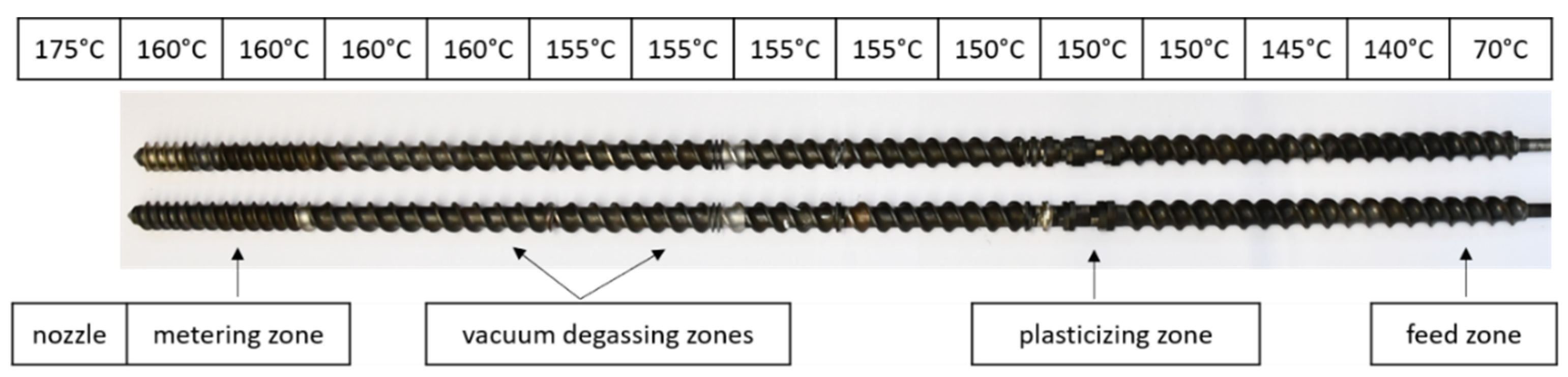
Compounding of the grass fiber polypropylene composites was performed with a twin-screw extruder, gravimetric dosing units, vacuum degassing, water cooling and pelletizing, see Figure 2.
All components are fed into the extruder via the main hopper. Some of the humidity on and within the grass fibers evaporates immediately upon entry in the feed zone. The remaining humidity serves as a drag agent, helping to extract other volatiles from the compound in the degassing zones. Adding the fibers via the main hopper also allows higher throughputs due to the larger opening in the feed zone as compared to side feeding.
The extruder is a co-rotating twin screw extruder ZSK 30 (Coperion GmbH). The screws have a diameter of 30 mm and a length of 1350 mm, yielding a L/D ratio of 45. The screw profile was developed in a previous project for flax fibers and is shown in Figure 2. In the plasticizing zone two blocks of kneading discs with staggering angles of 45 °, followed by two blocks of thinner kneading discs with staggering angles of 45 ° are used for plasticizing. Prior to the degassing zones are reverse conveying screw elements.
Also shown in Figure 2 is the temperature profile along the barrel used for compounding the grass fiber polypropylene composites. The screw speed is 320 rpm resulting in a throughput of 4.5 kg/h.
Figure 3.
Screw configuration and temperature profile for the co-rotating twin screw extruder with feeding zone, plasticizing zone, two vacuum degassing zones, and metering zone.
Figure 3.
Screw configuration and temperature profile for the co-rotating twin screw extruder with feeding zone, plasticizing zone, two vacuum degassing zones, and metering zone.
Gravimetric dosing units (Kubota Brabender Technologie GmbH) were utilized to ensure precise feeding, which is crucial at the low additive mass flow rate given by the throughput of 4.5 kg/h. Especially for fiber dosing, gravimetric feeding compensates fluctuating bulk densities and fiber agglomeration. Also, various modifications were made to the fiber dosing unit including a hopper with straight walls, spiral screws with optimized diameter, pitch, and girder width as well as exhaust pipes with inner profiles.
To examine possible degradation behavior of the compounds during processing and effects of multiple mixing, the material is processed several times using the same equipment as for compounding with a single dosing unit only and parameters described in Section 2.2 for up to 6 times.
The compounds are injection molded into tensile test specimens typ A1 according to ISO 527-2 and ISO 20753 on an Arburg 470 E injection molding machine. From these test specimens the center pieces (80 mm x 10 mm x 4 mm) are milled for impact testing. Specimens and granulate are stored at standard atmospheres for conditioning and testing according to ISO 291 (23 °C; 50% relative humidity) for at least 48 h.
Charpy impact tests are performed according to ISO 179-1 using a pendulum impact tester (ZwickRoell B5113.300) with a 2 J pendulum and unnotched specimens. A mean value and standard deviation are derived from 5 measurements.
The front surfaces of granules which are cut during the pelletizing process are analyzed by SEM (Hitachi SU5000) after being coated with a 20 nm thick layer of gold employing the high vacuum mode with an acceleration voltage of 5.0 kV and spot intensity of 30%. Using granules directly after compounding eliminates influences of injection molding and breaking specimens to produce fracture surfaces.
3. Results and Discussion
Initial material tests for compounds made from grass fibers with virgin polypropylene (compound P0, see Table 2) and polypropylene regrind (not listed in Table 2), respectively, show no difference in impact strength, tensile strength and Young’s modulus. Only the standard deviation was higher when using regrind. Therefore, both matrix polymers have been used for further investigation with a focus on virgin polymer.
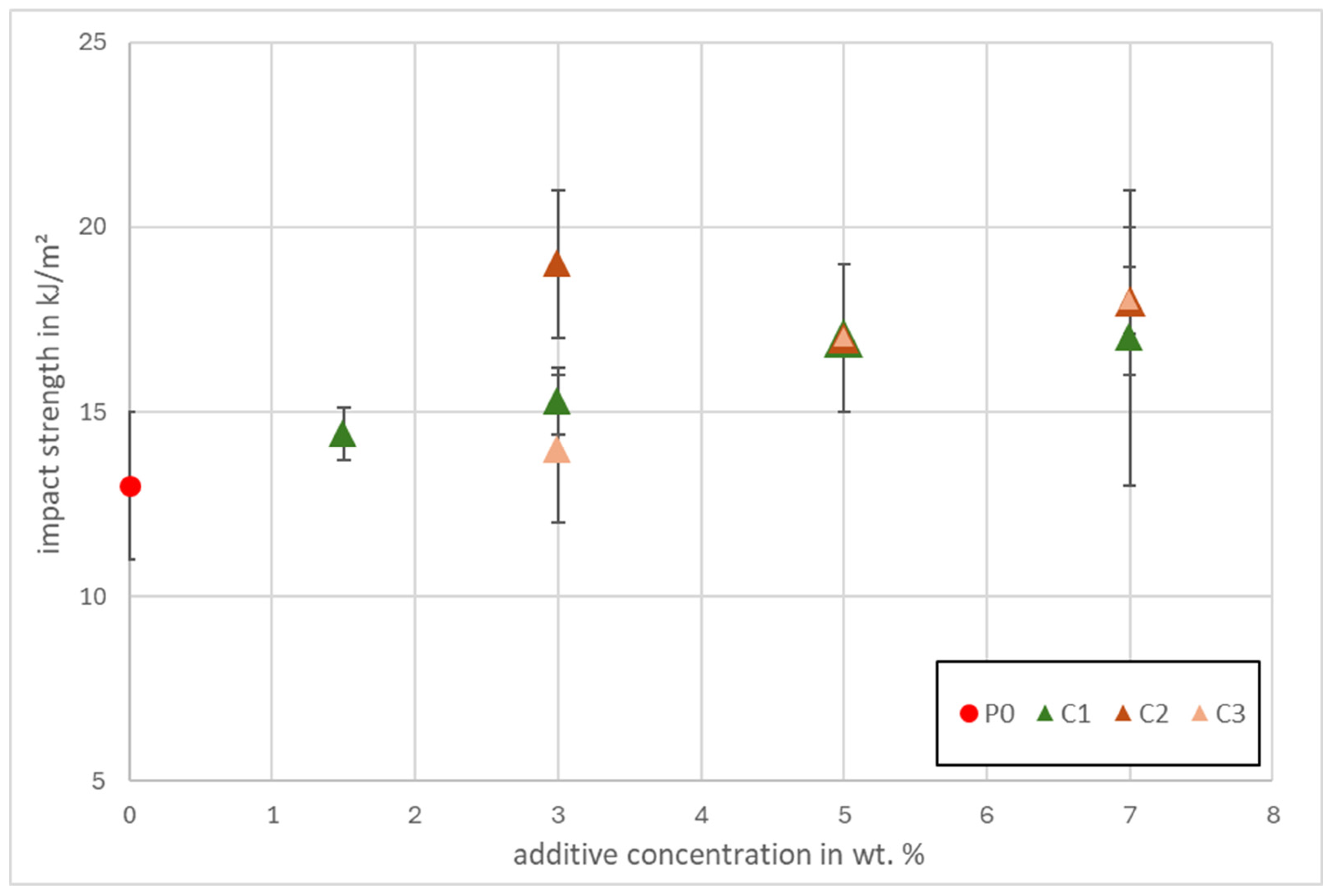
Impact strength measurements generally show an increase of impact strength with increasing concentration of coupling agent, as one would suspect. However, the effect of the three different coupling agents on the impact strength of the compounds is more complex, see Figure 4. While compound P0 has an impact strength of 13 kJ/m2, coupling agent C1 leads to the typical increase of impact strength up to 17 kJ/m2 with increasing concentration from 1.5% to 5%, yielding a constant level of 17 kJ/m2 for concentrations higher than 5%.
Compounds with coupling agent C2 with a degree of grafting of 1.4% exhibit the highest impact strength at a concentration of 3%, with values fluctuating on the same level for higher concentrations, indicating that the threshold concentration to reach saturation might be below 3%.
Not in line with these findings is that coupling agent C3, with the highest degree of grafting, namely 2.0%, again shows an increase of impact strength with increasing concentration of coupling agent very similar to the effects of C1.
This unusual finding might be attributed to the use of different batches of grass fibers, as a review revealed that the grass fiber batches used were manufactured at different times, so that an influence of varying environmental conditions cannot be ruled out. This again would highlight the overruling influence of grass fiber quality on compound characteristics and the fact that different degrees of grafting of the MA-g-PP coupling agents do not have the largest influence on impact strength.
Figure 4.
Impact strength of compounds P0 to P10 with 30 wt. % grass fibers and various amounts of 3 coupling agents with different degrees of grafting (C1: 1.0%, C2: 1.4%, C3: 2.0%).
Figure 4.
Impact strength of compounds P0 to P10 with 30 wt. % grass fibers and various amounts of 3 coupling agents with different degrees of grafting (C1: 1.0%, C2: 1.4%, C3: 2.0%).
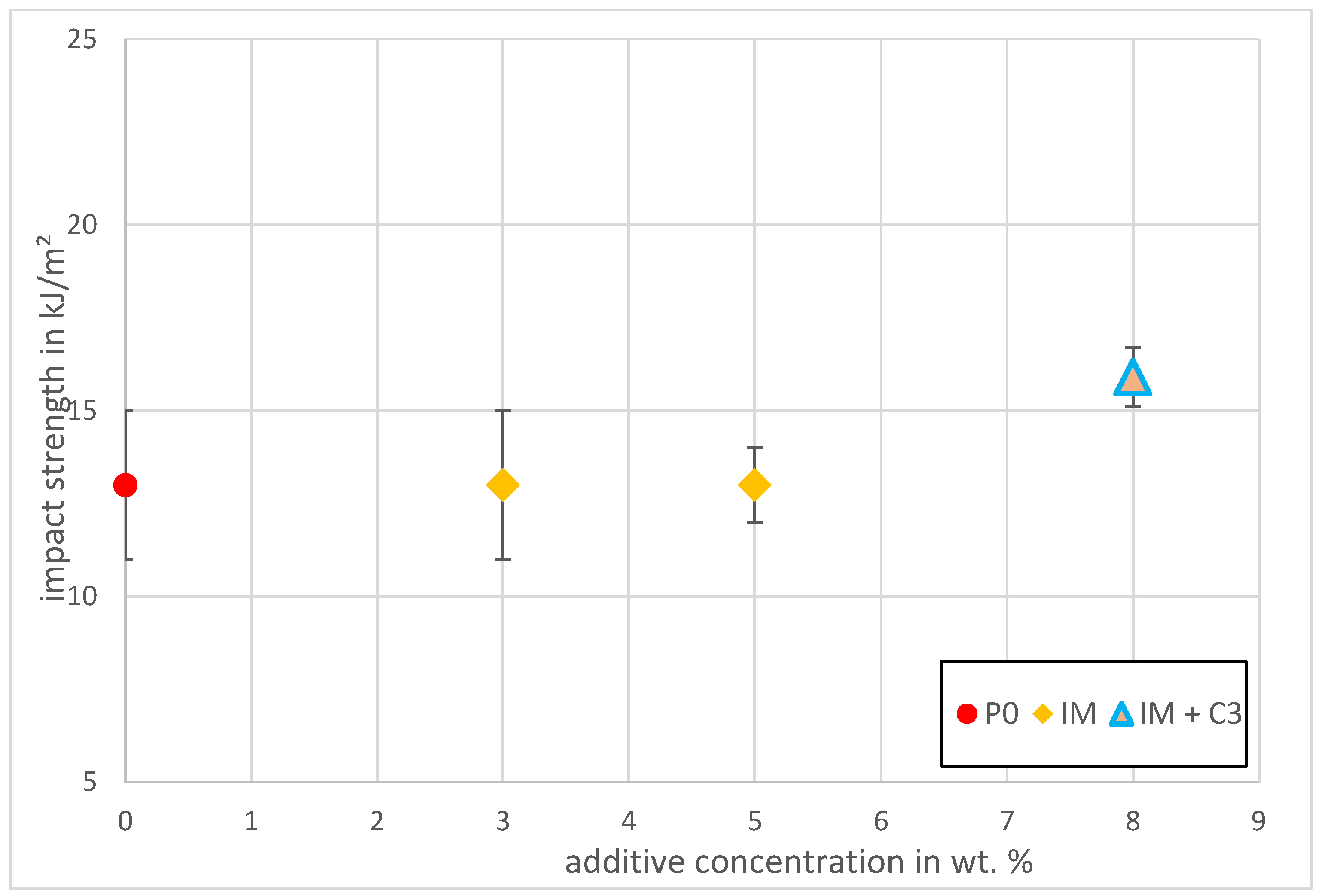
On addition of 3% or 5% of impact modifier to compound P0 there is no change of impact strength which remains at 13 kJ/m2, see Figure 5. An increase of impact strength to 16 kJ/m2 can only be observed when 5% of coupling agent C3 are added in combination with the impact modifier. However, this value is lower than an impact strength of 17 kJ/m2 if coupling agent C3 is added at a concentration of 5% alone, see Figure 4. The observation that for compounds of grass fibers in polypropylene coupling agents have a larger effect on impact strength than impact modifiers leads to the conclusion that the interface between fibers and matrix plays the predominant role for mechanical properties which is in line with findings for hemp in polypropylene [22,23].
Figure 5.
Impact strength of compounds P0 and P11 to P13 with 30 wt. % grass fibers and various amounts of impact modifier and coupling agent (P13 with IM+C3: 3% IM + 5% C3).
Figure 5.
Impact strength of compounds P0 and P11 to P13 with 30 wt. % grass fibers and various amounts of impact modifier and coupling agent (P13 with IM+C3: 3% IM + 5% C3).
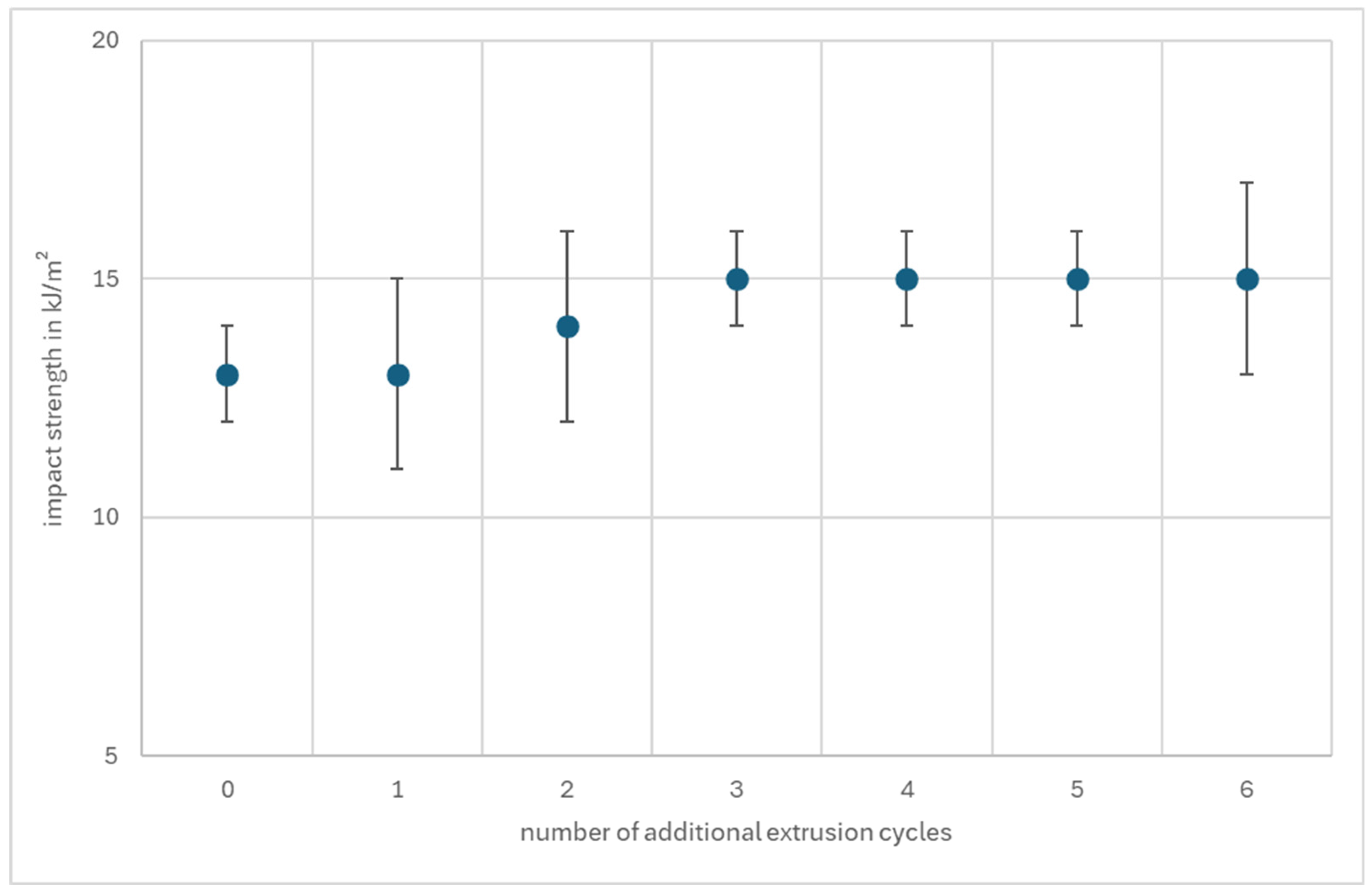
To further proof that the matrix does not significantly contribute to the impact strength of the compound, specimens of compound P0 haven been tested after multiple extrusion cycles, see Figure 6. For multiple extrusion the following trend can be observed: starting from the initial value of 13 kJ/m2 for compound P0, the impact strength increases to 15 kJ/m2 within the first three extrusion cycles and then remains at this level. This might be attributed to better mixing of fibers, coupling agent and matrix until no better mixing is possible.
Figure 6.
Impact strength of compound P0 versus number of additional extrusion cycles.
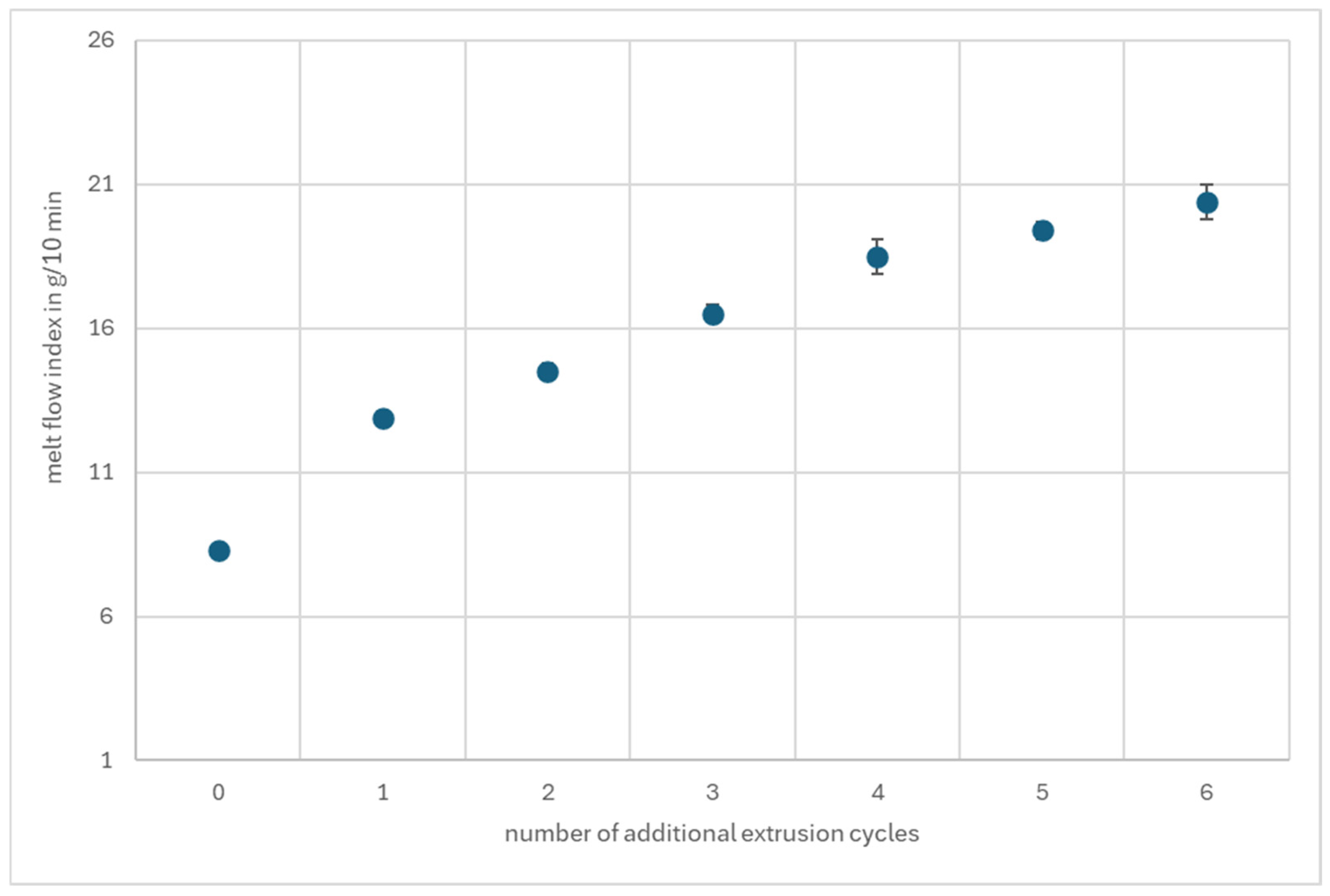
The melt flow index measurements of specimens (granules) from the multiple extrusion cycles show a monotonic increase from 8.3 g/10min to 20.4 g/10min with every further extrusion cycle, see Figure 7. This can well be attributed to a reduction of molecular weight of the polypropylene due to thermal degradation with each extrusion cycle [37] and the increase of the melt flow index with decreasing molecular weight [38,39]. However, a decrease of molecular is attributed with less tie molecules and entanglements and hence a reduced impact strength [38]. Since the impact strength has been found to increase with the number of extrusion cycles for three cycles this can only be attributed to better bonding at the fiber matrix interface.
Figure 7.
Melt flow index of compound P0 versus number of additional extrusion cycles.
SEM examinations were carried out to better assess the mixing and the adhesion between fibers and matrix. Figure 8 shows the front surface of granules just after the granulation process. No further cutting or breaking has been employed than that during granulation. The compound shown in Figure 8a) does not contain any bonding agent. In this case, distinct gaps between the fiber and the matrix are visible, there is no adhesion. The clearly defined gaps are prone to be starting points for crack propagation.
In Figure 8b) to 8e), the bonding agent content is increased from 1.5% to 7%. As the bonding agent concentration increases, less pronounced gaps become visible and the so-called pull-out effects decrease. Hence, the adhesion between the matrix and the fiber apparently increases as well. At a bonding agent concentration of 5% or higher, no gaps can be detected. Therefore, the adhesion between the matrix and the fiber dominates at both concentrations.
The SEM images shown confirm the assumption that increasing the amount of bonding agent leads to a better bond between the fiber and the matrix.
Figure 8.
SEM images of the front surfaces of cut granules from compound P0 and compounds P1-4 revealing gaps (ellipsoids) and adhesion (squares); a) P0: gaps visible, no adhesion between matrix and fibers; b) P1: mainly gaps, but also adhesion between fiber and matrix visible; c) P2: some gaps, more adhesion between matrix and fiber visible; d) P3: mainly adhesion between matrix and fiber visible; e) P4: mainly adhesion between matrix and fiber visible.
Figure 8.
SEM images of the front surfaces of cut granules from compound P0 and compounds P1-4 revealing gaps (ellipsoids) and adhesion (squares); a) P0: gaps visible, no adhesion between matrix and fibers; b) P1: mainly gaps, but also adhesion between fiber and matrix visible; c) P2: some gaps, more adhesion between matrix and fiber visible; d) P3: mainly adhesion between matrix and fiber visible; e) P4: mainly adhesion between matrix and fiber visible.
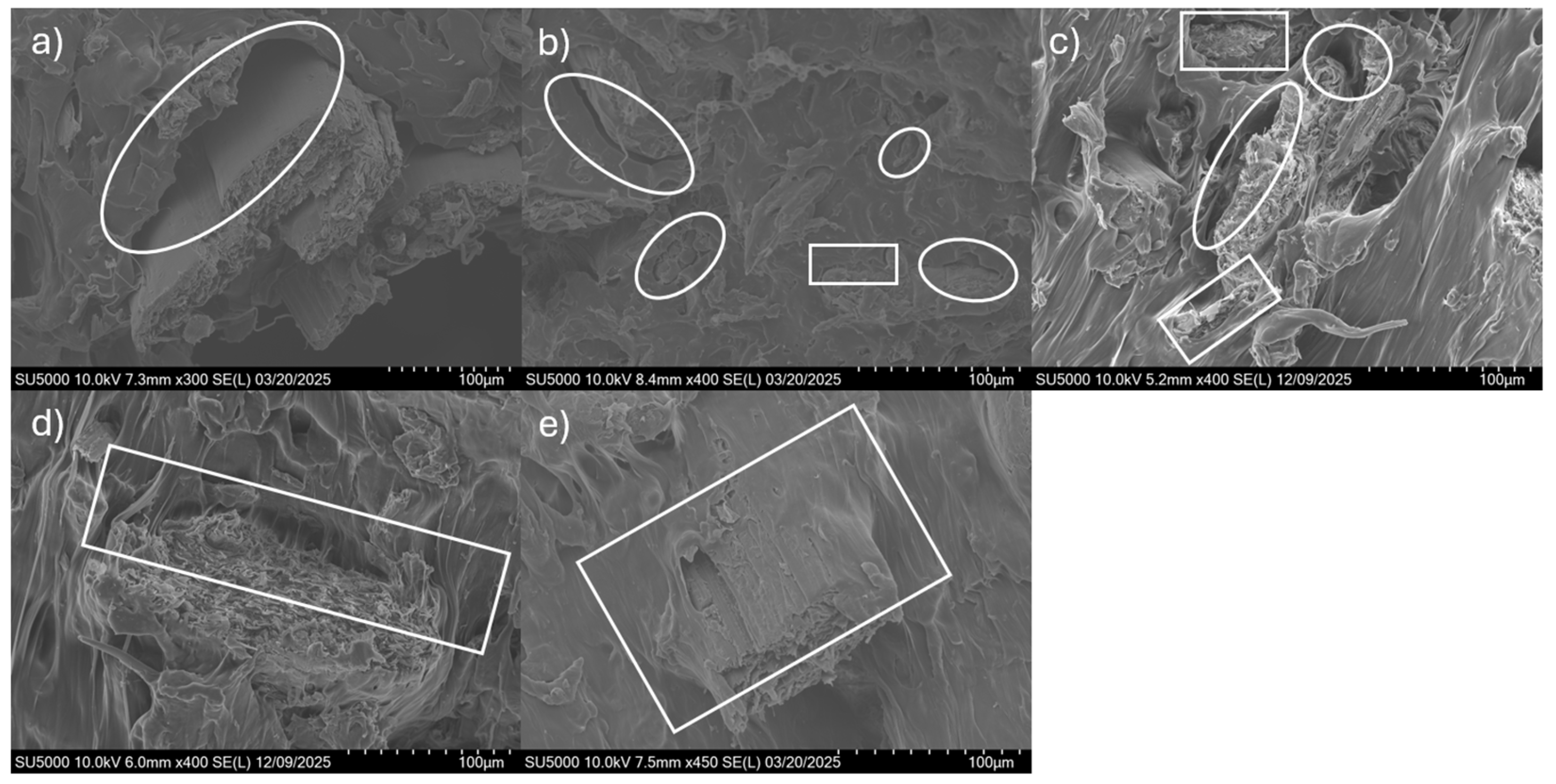
Figure 9 shows compounds with added impact modifier. While Figure 9a) and 9b) show compounds P11 and P12 with only impact modifier, Figure 9c) shows compound P13 with impact modifier plus bonding agent. In Figure 9a) and 9b), both, adhesion between the fiber and the matrix and distinct gaps are visible. In addition, cavities are visible where fibers were located prior to the granulation process, i.e. pull-out effects are observable, where fibers were pulled out of the matrix by the granulator’s cutting blade due to insufficient adhesion.
Figure 9.
SEM images of the front surfaces of cut granules from compounds P11-13 revealing gaps (ellipsoids) and adhesion (squares); a) P11: several holes caused by pull-out (marked with arrows) and adhesion between fiber and matrix visible; b) P12: holes caused by pull-out, gaps and adhesion between fiber and matrix are visible c) P13: less holes and gaps are visible, adhesion between fibers and matrix is visible.
Figure 9.
SEM images of the front surfaces of cut granules from compounds P11-13 revealing gaps (ellipsoids) and adhesion (squares); a) P11: several holes caused by pull-out (marked with arrows) and adhesion between fiber and matrix visible; b) P12: holes caused by pull-out, gaps and adhesion between fiber and matrix are visible c) P13: less holes and gaps are visible, adhesion between fibers and matrix is visible.
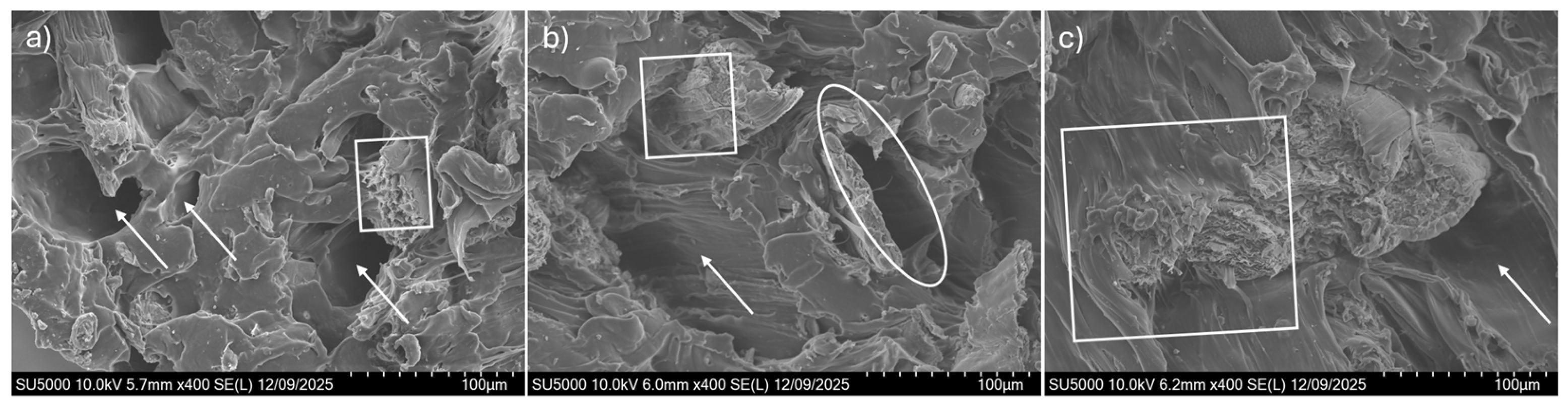
It can therefore be concluded that although the impact modifier contributes to a limited extent to the bonding of the fibers to the matrix, this effect is not sufficient to have a significant influence on the impact strength. Rather, the gaps between the fibers and the matrix continue to be predominant.
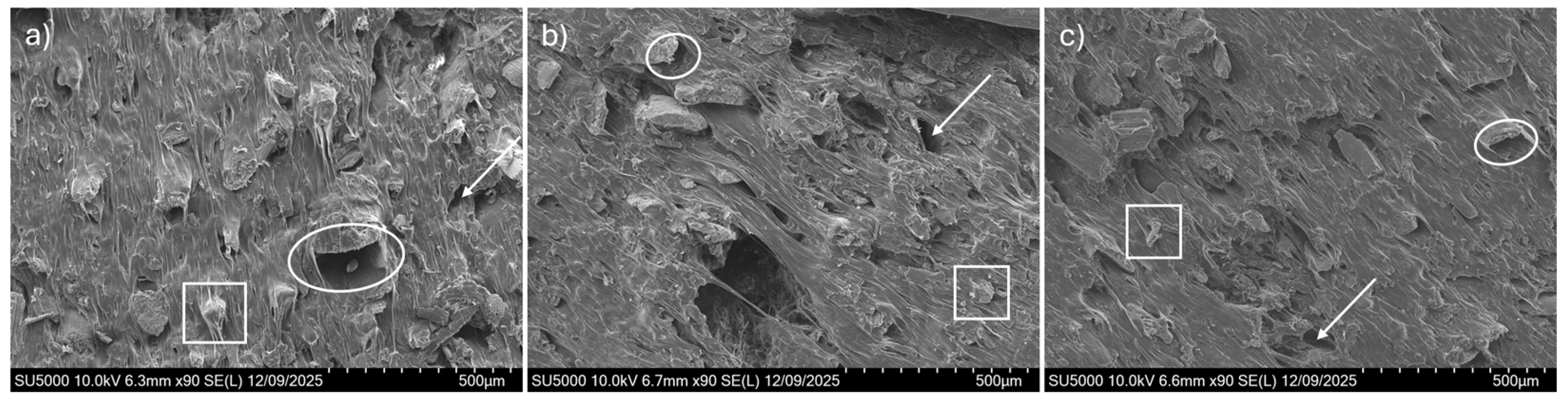
Figure 10 shows the front surface of granules after two, four and six extrusion cycles. In all three micrographs adhesion between fibers and matrix, as well as gaps, and pull-out effects are visible. Figure 10b) and 10c) also show a more pronounced covering of the fibers by the polypropylene matrix which is in line with the findings of the measured impact strength, see Figure 6.
Figure 10.
SEM images of the surfaces of cut granules from compounds at three different extrusion cycles a) 2 extrusion cycles, b) 4 extrusion cycles, c) 6 extrusion cycles.
Figure 10.
SEM images of the surfaces of cut granules from compounds at three different extrusion cycles a) 2 extrusion cycles, b) 4 extrusion cycles, c) 6 extrusion cycles.
4. Conclusions
Virgin polypropylene homopolymer and polypropylene regrind from the same polypropylene are compounded with 30 wt. % grass fibers from permanent pasture grass lands in central Germany. After only 1 regrinding cycle no difference in impact strength, tensile strength and Young’s modulus compounds compared to virgin polypropylene could be measured.
Three polypropylene-graft-maleic anhydrides with grafting degrees of 1%, 1.4% and 2% are added as coupling agent as well as EPDM as impact modifier to investigate their influence on impact strength. The concentrations range from 1.5% to 7% for the coupling agents and 3% and 5% for the impact modifier. Impact strength and melt flow index of the compounds are measured while the morphology is investigated by scanning electron microscopy.
It can be observed that for compounds of grass fibers in polypropylene coupling agents have a larger effect on impact strength than impact modifiers which leads to the conclusion that the interface between fibers and matrix plays the predominant role for the impact strength. This can be undermined by multiple extrusion as a means to reduce molecular weight of the polypropylene and hence increase the melt flow index. The reason for this, i.e. a lower number of tie molecules and entanglements, is known to reduce the impact strength as well. However, on the opposite the impact strength increases with the number of extrusion cycles until a constant level which then can only be attributed to stronger bonds across the fiber-matrix interface. This is also evident from SEM micrographs in which it can be seen that addition of coupling agents reduces gaps and fiber pull-out which cannot be observed when impact modifiers alone are added. Also, specimens from multiple extrusion show a better coverage of fibers by the matrix.
Author Contributions
Conceptualization, M.M..; methodology, K.G., E.S. and H.H.; validation, K.G., E.S., H.H. and M.M.; formal analysis, K.G., E.S. and H.H.; investigation K.G., E.S. and H.H.; resources, M.M.; data curation, K.G. and M.M.; writing—original draft preparation, K.G., E.S. and M.M.; writing—review and editing, E.S. and M.M.; visualization, K.G. and E.S.; supervision, M.M.; project administration, M.M.; funding acquisition, M.M. All authors have read and agreed to the published version of the manuscript.
Funding
The authors gratefully acknowledge funding by the Federal Ministry of Research, Technology and Space, grant number 031B1417B, within the funding scheme “Bio-economy innovation spaces” as part of the “National Research Strategy Bioeconomy 2030”.
Institutional Review Board Statement
Not applicable.
Data Availability Statement
The data that support the findings of this study are available from the corresponding author upon reasonable request.
Acknowledgments
The authors acknowledge support by the Research Centre for Materials and Process Engineering at Darmstadt University of Applied Sciences and especially the possibility to use the SEM for this study.
Conflicts of Interest
The authors declare no conflicts of interest.
References
- Gholampour, A.; Ozbakkaloglu, T. A review of natural fiber composites: properties, modification and processing techniques, characterization, applications. J. Mater. Sci. 2020, 55(3), 829–892. [Google Scholar] [CrossRef]
- Alkbir, M.; Sapuan, S.M.; Nuraini, A.A.; Ishak, M.R. Fibre properties and crashworthiness parameters of natural fibre-reinforced composite structure: A literature review. Compos. Struct. 2016, 148, 59–73. [Google Scholar] [CrossRef]
- Koohestani, B.; Darban, A.K.; Mokhtari, P.; Yilmaz, E.; Darezereshki, E. Comparison of different natural fiber treatments: a literature review. Int. J. Environ. Sci. Technol. 2019, 16(1), 629–642. [Google Scholar] [CrossRef]
- Bledzki, A.K.; Gassan, J.; Lucka, M. Natural fiber-reinforced polymers come back. Polimery 2000, 45(02), 98–108. [Google Scholar] [CrossRef]
- Faruk, O.; BLEDZKI, A.K.; Fink, H.-P.; Sain, M. Biocomposites reinforced with natural fibers: 2000–2010. Prog. Polym. Sci. 2012, 37(11), 1552–1596. [Google Scholar] [CrossRef]
- Mohanty, A.K.; Misra, M.; Drzal, L.T. Surface modifications of natural fibers and performance of the resulting biocomposites: An overview. Compos. Interfaces 2001, 8(5), 313–343. [Google Scholar] [CrossRef]
- Shaik, M.S.; Sankara Subramanian, H.; B., R.K.; Suyambulingam, I.; Senthamaraikannan, P.; Kumar, R. A Review on Fiber Properties, Manufacturing, and Crashworthiness of Natural Fiber-Reinforced Composite Structures. J. Nat. Fibers 2025, 22(1). [Google Scholar] [CrossRef]
- 8Panaitescu, D.M.; Vuluga, Z.; Frone, A.N.; Gabor, A.R.; Nicolae, C.-A.; Uşurelu, C.-D. Complex Effects of Hemp Fibers and Impact Modifiers in Multiphase Polypropylene Systems. Polymers 2023, 15(2). [Google Scholar] [CrossRef]
- Ashori, A. Wood-plastic composites as promising green-composites for automotive industries! Bioresour. Technol. 2008, 99(11), 4661–4667. [Google Scholar] [CrossRef]
- Mylsamy, B.; Shanmugam, S.K.M.; Aruchamy, K.; Palanisamy, S.; Nagarajan, R.; Ayrilmis, N. A review on natural fiber composites: Polymer matrices, fiber surface treatments, fabrication methods, properties, and applications. Polym. Eng. Sci. 2024, 64(6), 2345–2373. [Google Scholar] [CrossRef]
- Sombatsompop, N.; Yotinwattanakumtorn, C.; Thongpin, C. Influence of type and concentration of maleic anhydride grafted polypropylene and impact modifiers on mechanical properties of PP/wood sawdust composites. J. Appl. Polym. Sci. 2005, 97(2), 475–484. [Google Scholar] [CrossRef]
- Oksman, K.; Skrifvars, M.; Selin, J.-F. Natural fibres as reinforcement in polylactic acid (PLA) composites. Compos. Sci. Technol. 2003, 63(9), 1317–1324. [Google Scholar] [CrossRef]
- Pregi, E.; Faludi, G.; Kun, D.; Móczó, J.; Pukánszky, B. Three-component polypropylene/lignin/flax composites with high natural additive content for structural applications. Ind. Crops Prod. 2022, 182, 114890. [Google Scholar] [CrossRef]
- Akhil, U.V.; Radhika, N.; Saleh, B.; Aravind Krishna, S.; Noble, N.; Rajeshkumar, L. A comprehensive review on plant-based natural fiber reinforced polymer composites: Fabrication, properties, and applications. Polym. Compos. 2023, 44(5), 2598–2633. [Google Scholar] [CrossRef]
- Feng, D.; Caulfield, D.F.; Sanadi, A.R. Effect of compatibilizer on the structure-property relationships of kenaf-fiber/polypropylene composites. Polym. Compos. 2001, 22(4), 506–517. [Google Scholar] [CrossRef]
- Ibrahim, N.A.; Yunus, W.M.Z.W.; Othman, M.; Abdan, K.; Hadithon, K.A. Poly(Lactic Acid) (PLA)-reinforced Kenaf Bast Fiber Composites: The Effect of Triacetin. J. Reinf. Plast. Compos. 2010, 29(7), 1099–1111. [Google Scholar] [CrossRef]
- Adamu, Y.; Bello, T.K.; Shehu, U.; Bello, A.; Isa, M.T. Production and Characterization of Lightweight and High-Strength Natural/Synthetic Fiber Hybrid Composites for High-Impact Applications. Polym. Compos. 2025, 1–14. [Google Scholar] [CrossRef]
- Campilho, R.D. Recent innovations in biocomposite products. In Biocomposites for High-Performance Applications: Current Barriers and Future Needs Towards Industrial Development; Ray, D., Ed.; Woodhead Publishing, 2017; pp. 275–306. [Google Scholar]
- Elfaleh, I.; Abbassi, F.; Habibi, M.; et al. A comprehensive review of natural fibers and their composites: An eco-friendly alternative to conventional materials. Results Eng. 2023, 19, 101271. [Google Scholar] [CrossRef]
- Li, M.; Pu, Y.; Thomas, V.M.; et al. Recent advancements of plant-based natural fiber–reinforced composites and their applications. Compos. Part B Eng. 2020, 200, 108254. [Google Scholar] [CrossRef]
- Dewidar, M.; Bakrey, Mahmoud; Hashim, A.; Abdel-Haleem, A.; Diab, K. MECHANICAL PROPERTIES OF POLYPROPYLENE REINFORCED HEMP FIBER COMPOSITE. 2012. Available online: https://www.semanticscholar.org/paper/MECHANICAL-PROPERTIES-OF-POLYPROPYLENE-REINFORCED-Dewidar-Bakrey/76706ce86e64905addbfc6a6fa083a0320e169d3.
- Barhoumi, N.; Attia-Essaies, S.; Samet, A.; Ghanem, A.; Khlifi, K.; Majid, F. Eco-Friendly Polypropylene Composite Reinforced with Natural Fillers: Mechanical Properties and Wear Resistance. MATEC Web Conf. 2025, 414, 3003. [Google Scholar] [CrossRef]
- Boruvka, M.; Lenfeld, P.; Brdlik, P.; Behalek, L. Effect of compatibilizing agents on the interface and mechanical behaviour of polypropylene/hemp bast fiber biocomposites. IOP Conf. Ser. Mater. Sci. Eng. 2015, 87, 12085. [Google Scholar] [CrossRef]
- Várdai, R.; Ferdinánd, M.; Lummerstorfer, T.; et al. Effect of various organic fibers on the stiffness, strength and impact resistance of polypropylene; a comparison. Polym. Int. 2021, 70(1), 145–153. [Google Scholar] [CrossRef]
- Rowell, R.M.; Lange, S.E.; Jacobson, R.E. Weathering Performance of Plant-Fiber/Thermoplastic Composites. Molecular Crystals and Liquid Crystals Science and Technology. Section A. Molecular Crystals and Liquid Crystals 2000, 353(1), 85–94. [Google Scholar] [CrossRef]
- Khoathane, M.C.; Vorster, O.C.; Sadiku, E.R. Hemp Fiber-Reinforced 1-Pentene/Polypropylene Copolymer: The Effect of Fiber Loading on the Mechanical and Thermal Characteristics of the Composites. J. Reinf. Plast. Compos. 2008, 27(14), 1533–1544. [Google Scholar] [CrossRef]
- Keller, A. Compounding and mechanical properties of biodegradable hemp fibre composites. Compos. Sci. Technol. 2003, 63(9), 1307–1316. [Google Scholar] [CrossRef]
- John, M.J.; Anandjiwala, R.D. Recent developments in chemical modification and characterization of natural fiber-reinforced composites. Polym. Compos. 2008, 29(2), 187–207. [Google Scholar] [CrossRef]
- Célino, A.; Fréour, S.; Jacquemin, F.; Casari, P. The hygroscopic behavior of plant fibers: a review. Front Chem. 2013, 1, 43. [Google Scholar] [CrossRef]
- de Sousa Freire, R.; dos Santos, G.M.; de Almeida Melo Filho, J.; Savastano Junior, H.; Giacon, V.M. Influence of Hornification Treatment and Fiber Length on the Performance of Recycled Polypropylene Composites. Polym. Compos. 2025. [Google Scholar] [CrossRef]
- Bullions, T.A.; Gillespie, R.A.; Price-O’Brien, J.; Loos, A.C. The effect of maleic anhydride modified polypropylene on the mechanical properties of feather fiber, kraft pulp, polypropylene composites. J. Appl. Polym. Sci. 2004, 92(6), 3771–3783. [Google Scholar] [CrossRef]
- Saleem, A.; Medina, L.; Skrifvars, M. Influence of Fiber Coating and Polymer Modification on Mechanical and Thermal Properties of Bast/Basalt Reinforced Polypropylene Hybrid Composites. J. Compos Sci. 2020, 4(3), 119. [Google Scholar] [CrossRef]
- Sain, M.; Suhara, P.; Law, S.; Bouilloux, A. Interface Modification and Mechanical Properties of Natural Fiber-Polyolefin Composite Products. J. Reinf. Plast. Compos. 2005, 24(2), 121–130. [Google Scholar] [CrossRef]
- Notta-Cuvier, D.; Lauro, F.; Bennani, B.; Nciri, M. Impact of natural variability of flax fibres properties on mechanical behaviour of short-flax-fibre-reinforced polypropylene. J. Mater. Sci. 2016, 51(6), 2911–2925. [Google Scholar] [CrossRef]
- de Debasish; de Debapriya; Adhikari, B. Polymer modified grass fiber, part 1: Characterization of grass fiber and assessment of properties of polymer modified fiber. J. Appl. Polym. Sci. 2007, 104(2), 1095–1103. [Google Scholar] [CrossRef]
- Wachter, B.; Böchzelt, H.; Schnitzer, H.; Mandl, M. Grüne Bioraffinerie: Verwertung der Grasfaserfraktion; Berichte aus Energie- und Umweltforschung: Wien, 2003. [Google Scholar]
- Martínez-Jothar, L.; Montes-Zavala, I.; Rivera-García, N.; Díaz-Ceja, Y.; Pérez, E.; Waldo-Mendoza, M.A. Thermal degradation of polypropylene reprocessed in a co-rotating twin-screw extruder: kinetic model and relationship between Melt Flow Index and Molecular weight. RMIQ 2021, 20(2), 1079–1091. [Google Scholar] [CrossRef]
- Tzoganakis, C.; Vlachopoulos, J.; Hamielec, A.E.; Shinozaki, D.M. Effect of molecular weight distribution on the rheological and mechanical properties of polypropylene. Polym. Eng. Sci. 1989, 29(6), 390–396. [Google Scholar] [CrossRef]
- van Krevelen, D.W.; Hoftyzer, P.J. Newtonian shear viscosity of polymeric melts. Angew. Makromol. Chem. 1976, 52(1), 101–109. [Google Scholar] [CrossRef]
Figure 1.
Fermented, washed, dried and cut permanent grassland grass from the Vogelsberg region, Germany; left: fiber mixture; right: fibers separated into four clusters (a: coarse yellow fibers, b: fine yellow fibers, c: fine green fibers, d: black fibers and particles).
Figure 1.
Fermented, washed, dried and cut permanent grassland grass from the Vogelsberg region, Germany; left: fiber mixture; right: fibers separated into four clusters (a: coarse yellow fibers, b: fine yellow fibers, c: fine green fibers, d: black fibers and particles).
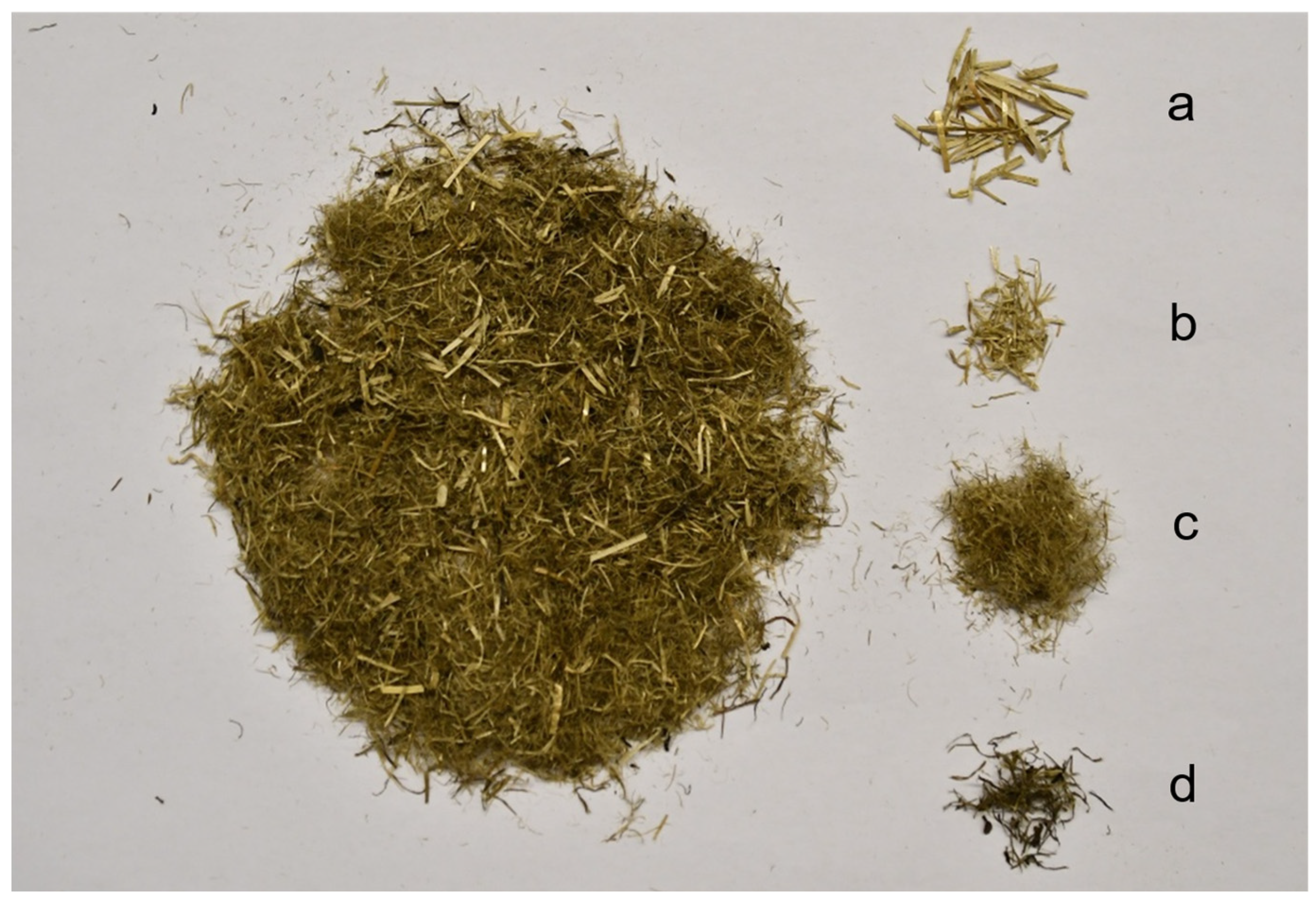
Figure 2.
Setup of the compounding line showing feeding units, vacuum degassing, cooling bath, and pelletizing unit.
Figure 2.
Setup of the compounding line showing feeding units, vacuum degassing, cooling bath, and pelletizing unit.
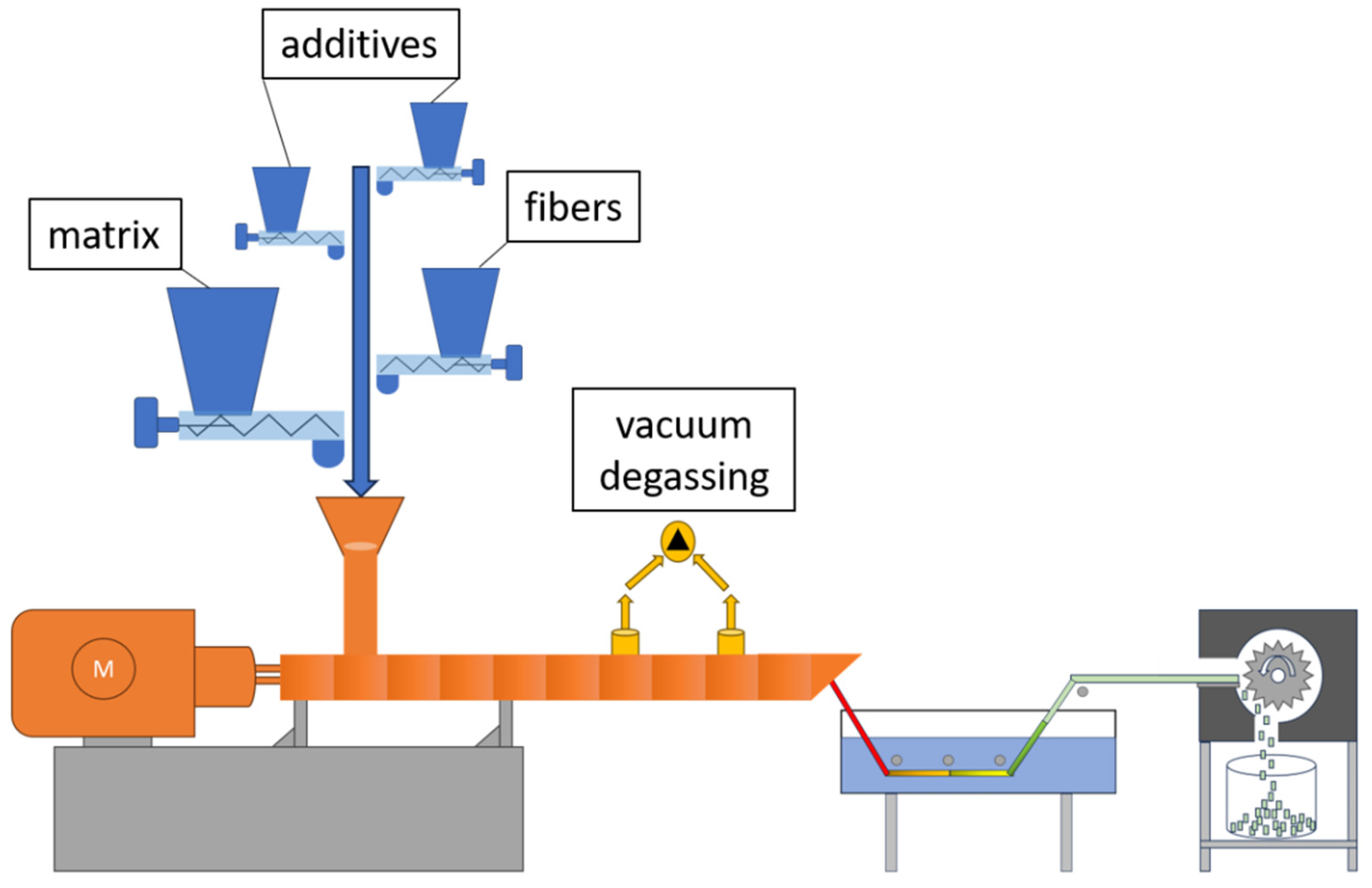

Table 1.
Identification of matrix material, fibers, coupling agents and impact modifier.
| Identification | Type of material | Trade name | Additional information |
|---|---|---|---|
| matrix | polypropylene homopolymer | TOTAL PPH 7062 | virgin/regrind |
| fibers | grass from permanent grasslands (region Vogelsberg, Germany) |
- | - |
| coupling-agent (C1) | maleic anhydride-g-PP | PA-BOND 363C | degree of grafting 1.0% |
| coupling-agent (C2) | maleic anhydride-g-PP | SCONA TPP 8112 | degree of grafting 1.4% |
| coupling-agent (C3) | maleic anhydride-g-PP | SCONA TSPP 10112 | degree of grafting 2.0% |
| impact modifier (IM) | ethylene propylene diene rubber | MELOS EPDM granules |
item 462440 |
Table 2.
Composition of compounds (in wt. %), all compounds contain 30 wt. % grass fibers.
| Compound | Matrix content | Matrix origin | Additives |
|---|---|---|---|
| P0 | 70% | virgin | 0% |
| P1 | 68,5% | virgin | C1: 1,5% |
| P2 | 67% | virgin | C1: 3% |
| P3 | 65% | virgin | C1: 5% |
| P4 | 63% | virgin | C1: 7% |
| P5 | 67% | virgin | C2: 3% |
| P6 | 65% | virgin | C2: 5% |
| P7 | 63% | virgin | C2: 7% |
| P8 | 67% | virgin | C3: 3% |
| P9 | 65% | virgin | C3: 5% |
| P10 | 63% | virgin | C3: 7% |
| P11 | 67% | regrind | IM: 3% |
| P12 | 65% | regrind | IM: 5% |
| P13 | 62% | regrind | C3: 5% + IM: 3% |
Disclaimer/Publisher’s Note: The statements, opinions and data contained in all publications are solely those of the individual author(s) and contributor(s) and not of MDPI and/or the editor(s). MDPI and/or the editor(s) disclaim responsibility for any injury to people or property resulting from any ideas, methods, instructions or products referred to in the content. |
© 2026 by the authors. Licensee MDPI, Basel, Switzerland. This article is an open access article distributed under the terms and conditions of the Creative Commons Attribution (CC BY) license.
Copyright: This open access article is published under a Creative Commons CC BY 4.0 license, which permit the free download, distribution, and reuse, provided that the author and preprint are cited in any reuse.