

Submitted:
24 August 2026
Posted:
25 August 2026
You are already at the latest version
Abstract
The cytochrome P450 (CYP) system is a superfamily of heme-containing monooxygenases essential for the metabolism of endogenous compounds and xenobiotics. In fish, CYP enzymes process diverse pollutants and contribute to adaptation to chemical stress. Their activity depends on NADPH-cytochrome P450 reductase (CYPOR), which provides electrons for CYP-mediated reactions. Two aspects remain insufficiently understood: the mechanisms underlying species-specific CYPOR reactivity in relation to ecological niche and the potential of CYPOR dynamics as a biomarker of bioremediation effectiveness. This review-hypothetical study aims to formulate and substantiate hypotheses linking CYPOR species specificity with ecological niche and to establish a conceptual framework for using CYPOR in bioremediation monitoring. Scientific literature published from 1980 to 2026 was searched in PubMed, Scopus, Web of Science, and Google Scholar. The proposed hypotheses form an integrated model in which species-specific CYPOR reactivity is considered an evolutionarily fixed trait reflecting ecological adaptation, while CYPOR dynamics may serve as an integrated indicator of pollution and remediation efficiency. The central concept is CYPOR as a common elec-tron donor system whose activity reflects the cumulative induction of CYP isoforms and responds to changes in toxicant exposure. This framework provides a basis for interpreting CYPOR variability in fish populations and developing future biomonitoring approaches.
Keywords:
CYPOR
; fish
; biomarker
; ecotoxicology
; ecological niche
; bioremediation
; cytochrome P450
; environmental monitoring
1. Introduction
The cytochrome P450 (CYP) system represents a superfamily of heme-containing monooxygenases that play a central role in the metabolism of both endogenous compounds and xenobiotics [1,2,3]. In fish, which occupy a key position in aquatic ecosystems, CYP enzymes mediate the metabolic processing of a wide range of pollutants, thereby determining organismal resilience to chemical stress and influencing population dynamics [4,5,6]. The functioning of the CYP system is impossible without NADPH-cytochrome P450 reductase (CYPOR), a flavoprotein that transfers electrons from NADPH to the heme of cytochrome P450 via flavin adenine dinucleotide (FAD) and flavin mononucleotide (FMN). The molecular mass of CYPOR varies from 75 to 80 kDa depending on the taxon, and its structural organization includes an N-terminal transmembrane domain as well as FMN-, FAD-, and NADPH-binding domains [7,8]. The universality of CYPOR lies in its ability to serve as an electron donor not only for all microsomal CYP isoforms but also for heme oxygenase, squalene monooxygenase, and fatty acid desaturases, making it a critical component of multiple metabolic pathways. This multifunctionality implies that any alteration in CYPOR expression or activity can have far-reaching consequences for the organism, affecting not only detoxification capacity but also steroidogenesis, lipid metabolism, and redox homeostasis [9].
The liver of fish is the primary organ of detoxification and is most susceptible to the effects of xenobiotics entering from water and food [10,11]. The concentration of CYPOR in the liver reflects the integrated load on the biotransformation system, since its level correlates with the total demand for electrons for CYP-mediated reactions. Numerous studies have confirmed that the level of CYPOR in fish liver can serve as a sensitive indicator of chronic pollution of the aquatic environment [11,12,13]. In a large-scale study on Lake Ladoga, it was established that in fish from anthropogenically impacted areas, the concentration of CYPOR reaches 5–6 ng/mL, whereas in individuals from conditionally clean waters it is 0.3–0.4 ng/mL, corresponding to a 15–20-fold increase [12]. Such a significant dynamic range creates prerequisites for the use of CYPOR as a quantitative biomarker of environmental stress. The magnitude of this response is remarkable and underscores the remarkable plasticity of the detoxification system in the face of chemical challenge.
The ecological niche of a species represents the set of biotic and abiotic factors that determine the position of the species in the ecosystem [4,5,14]. Trophic status, temperature regime, depth of habitation, nature of bottom sediments, and level of anthropogenic load form a specific profile of chemical exposure that the population encounters [5,15]. Benthic-feeding species, such as bream (Abramis brama), come into contact with pollutants sorbed onto bottom sediments, including heavy metals and persistent organic compounds [16]. Planktivores, such as roach (Rutilus rutilus), are exposed to dissolved and suspended substances, including pesticides and pharmaceutical residues [17]. Predators (perch Perca flavescens and pike-perch Sander lucioperca) accumulate lipophilic xenobiotics through the food chain, leading to biomagnification. It is logical to assume that the detoxification system in different species should be evolutionarily adapted to the characteristic set of toxicants, which manifests in species-specific features of CYPOR. This adaptation is not a static phenomenon but an ongoing process shaped by the selective pressures exerted by local environmental conditions over evolutionary time.
In recent decades, the problem of complex pollution of water bodies has acquired a global character. Mixtures of heavy metals, polycyclic aromatic hydrocarbons (PAHs), polychlorinated biphenyls (PCBs), pesticides, and pharmaceuticals create synergistic effects that are difficult to assess using standard hydrochemical analyses [16,17]. Biomarkers reflecting the integrated response of the organism are becoming indispensable tools for environmental monitoring. CYPOR, unlike isoform-specific indicators (e.g., CYP1A for PAHs), sums the effects of all xenobiotics requiring CYP-mediated metabolism, making it particularly valuable for assessing complex pollution. The reality of environmental contamination is that organisms are rarely exposed to a single compound; rather, they face a complex cocktail of substances that may interact in unpredictable ways. In this context, the ability of a biomarker to integrate the effects of multiple stressors is not merely advantageous but essential.
Bioremediation – is a method of cleaning contaminated environments using living organisms or their enzymes [14,18]. This method is being actively implemented for the restoration of disturbed ecosystems. However, the assessment of bioremediation effectiveness is traditionally based on chemical indicators, which do not always reflect the actual improvement of conditions for aquatic organisms [19]. Biomarkers that respond to the bioavailable fraction of pollutants can serve as earlier and more sensitive indicators of recovery [20,21]. The dynamics of CYPOR during bioremediation can potentially outpace chemical analyses, as it reflects the physiological response of the organism to a decrease in toxic load. This lag between chemical improvement and biological recovery has been documented in numerous studies, highlighting the need for biomarkers that can capture the biologically relevant changes that occur during remediation.
Despite growing interest in CYPOR, two key aspects remain insufficiently studied: the mechanisms determining species-specific reactivity of the enzyme in connection with ecological niche, and the possibility of using CYPOR dynamics for monitoring bioremediation effectiveness. The present work is a review-hypothetical study aimed at formulating and substantiating a system of hypotheses linking CYPOR species-specificity with fish ecological niche, as well as developing conceptual foundations for the application of this biomarker in bioremediation monitoring. The proposed hypotheses are structured at the molecular-biochemical, physiological-ecological, and applied levels and are provided with testable predictions, creating a basis for further experimental research. By synthesizing existing knowledge and proposing novel explanatory frameworks, this work seeks to bridge the gap between fundamental understanding of CYPOR biology and its practical application in environmental management.
2. Materials and Methods
The present work is performed in the format of a review article with elements of hypothetico-deductive modeling. The methodological basis includes systematic analysis of literature data, comparative biochemical analysis, and construction of logical models verifiable experimentally. The search for scientific publications was conducted in the PubMed, Scopus, Web of Science, and Google Scholar databases using the following keywords: “CYPOR”, “NADPH-cytochrome P450 reductase”, “fish”, “species-specific”, “biomarker”, “ecotoxicology”, “ecological niche”, “bioremediation”, “cytochrome P450”, “liver”, “xenobiotic metabolism”, “environmental monitoring”. The time interval covered the period from 1980 to 2026, ensuring comprehensive coverage of both foundational and recent advances in the field. Additionally, citation lists of relevant review articles were analyzed to identify publications that might not be indexed in the primary databases.
Inclusion criteria comprised original research and reviews containing quantitative data on CYPOR in fish, comparative studies of different species, works evaluating the biomarker potential of CYPOR, and publications examining the relationship between metabolic systems and ecological factors. Priority was given to articles with clear statistical analyses and robust experimental designs. Primary attention was devoted to four model species: bream (Abramis brama), roach (Rutilus rutilus), perch (Perca flavescens), and pike-perch (Sander lucioperca), studied in Lake Ladoga. For comparative analysis, data on rainbow trout (Oncorhynchus mykiss), common carp (Cyprinus carpio), leaping mullet (Liza saliens), Klunzinger’s mullet (Liza klunzingeri), and the deep-sea fish Coryphaenoides armatus were also included to provide a broader phylogenetic and ecological perspective.
Analytical methods included comparative assessment of basal CYPOR levels, degree of induction upon pollutant exposure, kinetic parameters (Km, Vmax), temperature and pH optima, as well as structural characteristics (molecular mass, flavin composition, amino acid substitutions). For assessing applicability in bioremediation monitoring, correlations between CYPOR level and pollutant concentrations, temporal dynamics of enzyme change, and relationships with histopathological, hematological, and biochemical markers were analyzed. Statistical approaches included meta-analysis where appropriate, allowing the synthesis of findings across multiple studies and the identification of robust patterns.
The hypothetico-deductive approach was implemented through the formulation of a system of hypotheses, each satisfying the following criteria: logical derivation from empirical observations, presence of verifiable predictions, consistency with existing theoretical frameworks, and proposal of specific experimental verification schemes. The hypotheses are structured at three levels: molecular-biochemical, physiological-ecological, and applied. For visualization, conceptual schemes and summary tables summarizing key parameters have been developed. This dual approach allows for a comprehensive treatment of the subject matter and provides a roadmap for future investigations.
3. Results
3.1. Species-Specificity of CYPOR Has an Evolutionary-Adaptive Nature Determined by Ecological Niche
The basal level of CYPOR and the nature of its induction upon xenobiotic exposure are species-specific traits formed during long-term evolutionary adaptation to a particular ecological niche, encompassing temperature regime, hydrostatic pressure, oxygen regime, and the level of chronic pollution. Comparative biochemical studies have revealed significant differences in the structure and function of CYPOR among different species. For instance, the molecular mass of the enzyme in rat is 75 kDa, in rainbow trout — 77 kDa, and the amino acid composition differs in the content of lysine, glycine, threonine, and tyrosine [8]. Flavin composition is also not uniform: in rat, 0.97 mol FAD and 0.92 mol FMN per 1 mol of enzyme are present, whereas in trout these values are 1.06 and 0.76, respectively [22,23]. These differences correlate with temperature optima: the trout enzyme is active at lower temperatures, reflecting adaptation to a cold-water environment [4,15,20]. It is noteworthy that the reproduction of the low-temperature optimum in reconstituted systems is possible only when all three components (CYP, reductase, lipids) are derived from trout, indicating co-adaptation of the entire membrane system. This finding underscores the fact that enzyme function is not determined by the protein alone but by its interaction with the lipid environment and partner proteins [9].
In leaping mullet (Liza saliens), CYPOR possesses spectral characteristics similar to mammalian enzymes (peaks at 378 and 455 nm) but differs in electrophoretic mobility and kinetic parameters [4,24]. In Liza klunzingeri, the enzyme is active over a wide pH range (6–9) and temperatures (40–60 °C) with an optimum at pH 8 and 50 °C, consistent with a warm-water lifestyle. These differences in catalytic properties are not merely academic curiosities but have functional consequences for the organism’s ability to metabolize xenobiotics under varying environmental conditions. Phylogenetic analysis of the CYP3 family in ray-finned fish has revealed significant sequence divergence correlating with ecological specialization, confirming the general principle of adaptation of the CYP system to environmental factors [20,25]. Adaptation to high hydrostatic pressure in the deep-sea fish Coryphaenoides armatus manifests in amino acid substitutions that stabilize the protein, as shown for CYP1A and aryl hydrocarbon receptor (AHR), and analogous changes are expected for CYPOR [23]. The deep-sea environment presents a unique set of challenges, including high pressure, low temperature, and often low oxygen, and the proteins of organisms inhabiting these depths have evolved remarkable adaptations.
The hypothesis generates several testable predictions. Temperature optima of CYPOR in species from different climatic zones will positively correlate with the average temperature of the habitat. In deep-sea species, specific amino acid substitutions (e.g., increased proline content and hydrophobic residues) enhancing stability under high pressure will be detected. Phylogenetic trees of CYPOR genes will cluster species not only by taxonomy but also by ecological types (boreal, tropical, deep-sea). Species inhabiting estuaries with chronic pollution will exhibit elevated basal CYPOR levels as a result of long-term selection. The evolution of such elevated basal levels may involve both changes in gene regulatory regions and alterations in the coding sequence that affect enzyme stability or turnover. Testing these predictions would require a combination of molecular evolutionary analysis, protein biochemistry, and ecological characterization of populations, representing a substantial but feasible research program.
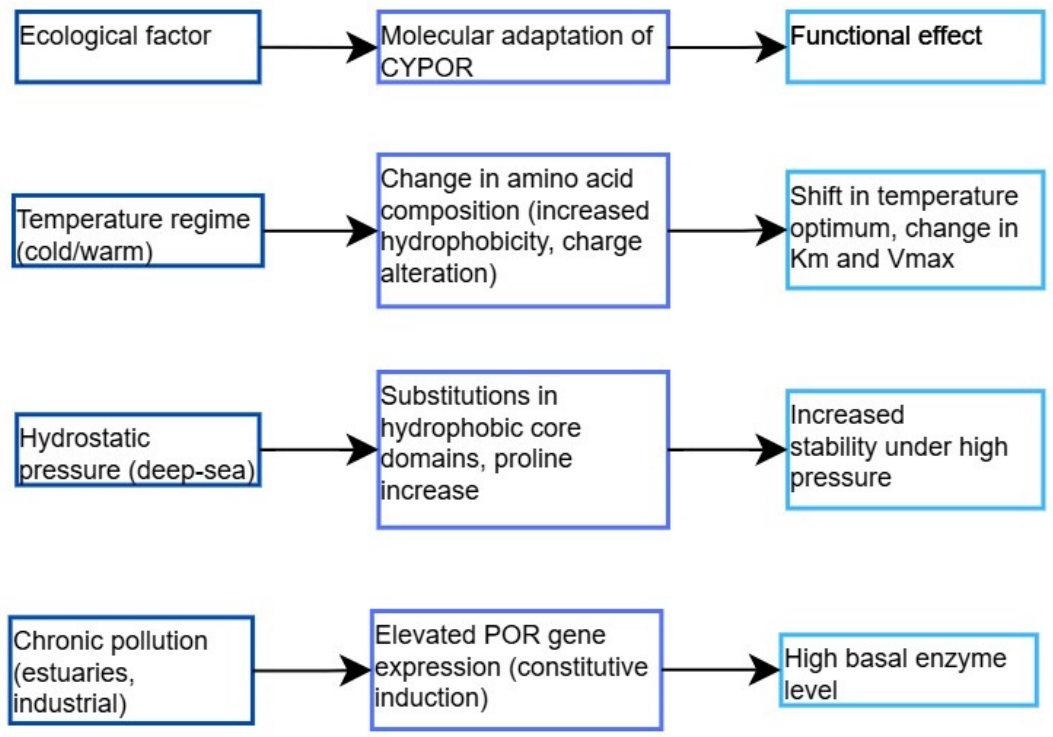
Figure 1.
Schematic representation of Hypothesis 1.

Table 1.
Comparison of structural and functional properties of CYPOR in different species.
| Parameter | Rat | Rainbow trout | Leaping mullet | Klunzinger’s mullet |
| Molecular mass, kDa | 75 | 77 | ~75 | ~75 |
| FAD content, mol/mol | 0.97 | 1.06 | n/d | n/d |
| FMN content, mol/mol | 0.92 | 0.76 | n/d | n/d |
| Temperature optimum, °C | ~37 | ~25 | n/d | 50 |
| pH optimum | ~7.4 | ~7.4 | n/d | 8.0 |
3.2. Trophic Status Determines the Pattern of CYPOR Induction
Species occupying different trophic levels (benthophages, planktophages, predators) differ in basal CYPOR levels and in the degree of its induction upon exposure to identical pollutants, which is due to differences in the routes of entry, biotransformation, and accumulation of xenobiotics [20,21]. Bream (Abramis brama) as a benthophage constantly contacts bottom sediments that accumulate heavy metals and hydrophobic organic compounds [16]. Its detoxification system is adapted to the metabolism of these substances, suggesting an elevated basal CYPOR level and high induction upon pollution. Roach (Rutilus rutilus), feeding on plankton, is exposed to dissolved pollutants (pesticides, pharmaceuticals). Its CYPOR is characterized by low basal levels and moderate induction [17]. Predators, perch and pike-perch, accumulate lipophilic compounds through the food chain, leading to biomagnification [20]. In pike-perch, as the apex of the food pyramid, the highest basal level and maximal CYPOR induction are expected [21]. The phenomenon of biomagnification is particularly concerning because it means that top predators are exposed to concentrations of pollutants that may be orders of magnitude higher than those found in the surrounding water.
Experimental data on CYP activity (EROD, GST, UGT) confirm species-specificity and dependence on trophic status. Studies of xenobiotic metabolism in different fish species show significant differences in the rates and pathways of biotransformation, correlating with diet [13,20,21,26]. Thus, trophic status acts as a key factor determining the profile of toxic load and, consequently, CYPOR reactivity. The relationship between trophic status and CYPOR is not merely correlative but likely causal, as the dietary exposure profile directly shapes the demand placed on the detoxification system. This hypothesis also has implications for food web ecology, suggesting that the impact of pollution may be differentially felt at different trophic levels, with implications for ecosystem management [11,15,20].
This hypothesis yields several predictions. Under identical pollution levels in a water body, CYPOR levels will be maximal in pike-perch, intermediate in bream and perch, and minimal in roach. The correlation coefficient between the concentration of lipophilic pollutants in muscle tissue and CYPOR levels will be highest in pike-perch. In controlled experiments with identical doses of a model pollutant, the degree of CYPOR induction will be proportional to the trophic rank of the species. In predators switched to a clean diet, CYPOR decline will occur more slowly than in benthophages due to the longer period of elimination of accumulated lipophilic compounds. The slower decline in predators reflects the fact that lipophilic compounds are stored in adipose tissue and are only slowly released into the circulation for metabolism and excretion. This lag could be a critical factor in interpreting monitoring data, as it implies that a predator’s CYPOR level may not reflect current exposure but rather the integrated exposure over a longer time period.
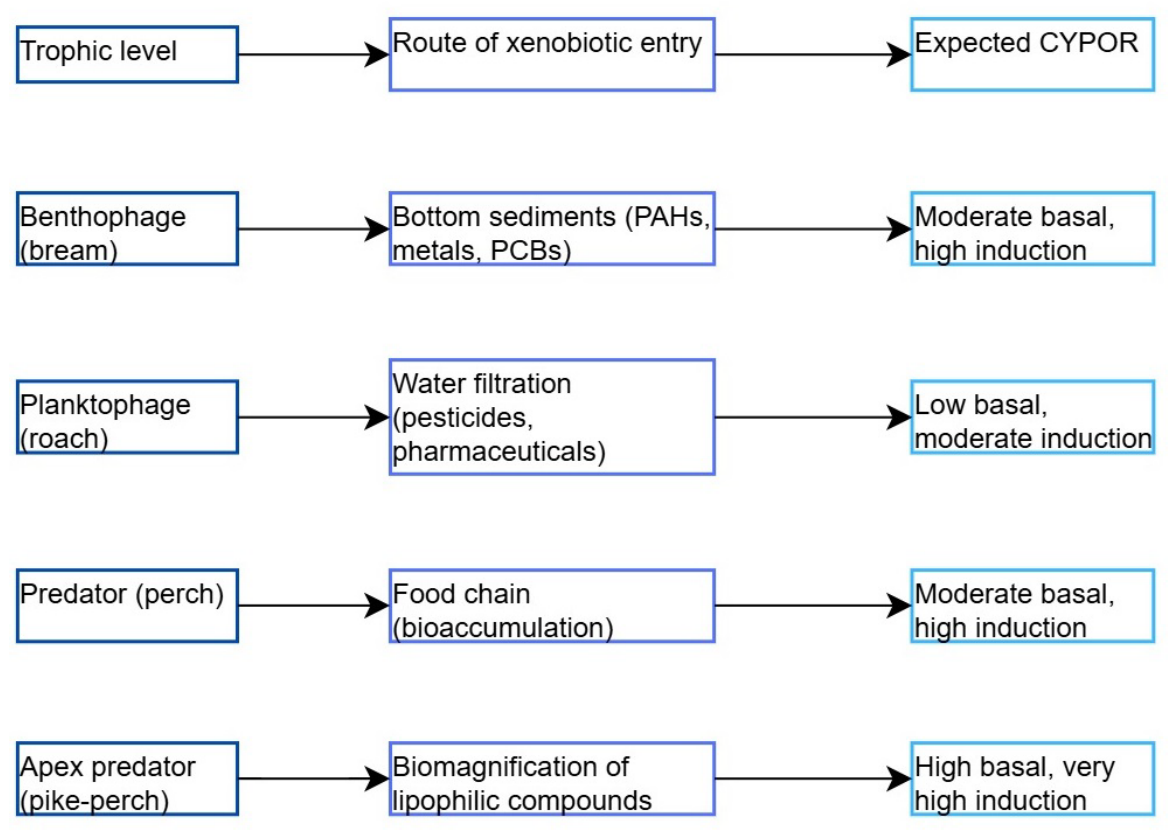
Figure 2.
Schematic representation of Hypothesis 2.
Table 2.
Ecological niche characteristics and presumed CYPOR features.
| Species | Trophic status | Main pollutant route | Basal CYPOR | CYPOR induction |
| Bream | Benthophage | Bottom sediments, PAHs, metals | Moderate | High |
| Roach | Planktophage | Dissolved substances | Low | Moderate |
| Perch | Predator (invertebrates) | Food chain | Moderate | High |
| Pike-perch | Obligate predator | Biomagnification | High | Very high |
3.3. CYPOR Serves as an Early Predictive Marker of Bioremediation Effectiveness
The decline in CYPOR levels in the liver of indicator fish during bioremediation precedes improvement in standard hydrochemical parameters and correlates with restoration of physiological status, allowing the use of CYPOR as an early predictive marker of remediation success [14,26,27]. Bioremediation is aimed at reducing pollutant concentrations in the environment, but chemical analyses often lag because they measure total content rather than the bioavailable fraction [14,18]. CYPOR reflects the integrated bioavailable load, since its level is determined by the actual demand for electrons for the metabolism of xenobiotics that have entered the organism. Furthermore, CYPOR sums the effects of all pollutants, including those not determined by routine methods. Change in CYPOR level is a direct physiological response occurring through regulation of transcription and translation, and can be observed within days after a decrease in the effective concentration of toxicants [2,26,28]. Empirical data from Lake Ladoga show a 15-20-fold dynamic range of CYPOR, providing high sensitivity to changes [12]. During bioremediation, CYPOR levels are expected to begin declining long before hydrochemical parameters (e.g., heavy metal concentrations) return to background values, since bioavailability decreases faster than total content [16].
The concept of bioavailability is crucial here, as it determines the actual exposure of organisms to contaminants. Many pollutants are strongly sorbed to sediments or suspended particles, making them less available for uptake by aquatic organisms [22,26]. Chemical analyses of water samples may overestimate the actual biological exposure, while biomarkers like CYPOR provide a more realistic assessment of the biologically effective dose [10,19,20]. This makes CYPOR particularly valuable for evaluating the success of remediation efforts, as it directly measures the outcome that matters most: the reduction of biologically relevant exposure. The dynamic range of CYPOR also means that even partial improvements in water quality should be detectable, providing early feedback on the effectiveness of the remediation strategy [6,7,13,28].
The predictions of this hypothesis include the following. During bioremediation, CYPOR decline will be recorded 2-3 months earlier than a significant improvement in hydrochemical parameters. The rate of CYPOR decline will be proportional to the rate of decrease in the bioavailable fraction of pollutants (assessed, for example, using passive samplers). CYPOR levels will show higher correlation with integrated fish health indicators (histopathological index, hematological parameters) than individual chemical parameters [24,27]. In species with high induction (predators), CYPOR decline will be more pronounced in the early stages of bioremediation than in species with low induction. The differential response of species with different trophic statuses could provide a more nuanced picture of the recovery process, revealing whether the improvement is occurring uniformly across the ecosystem or is concentrated in specific compartments.
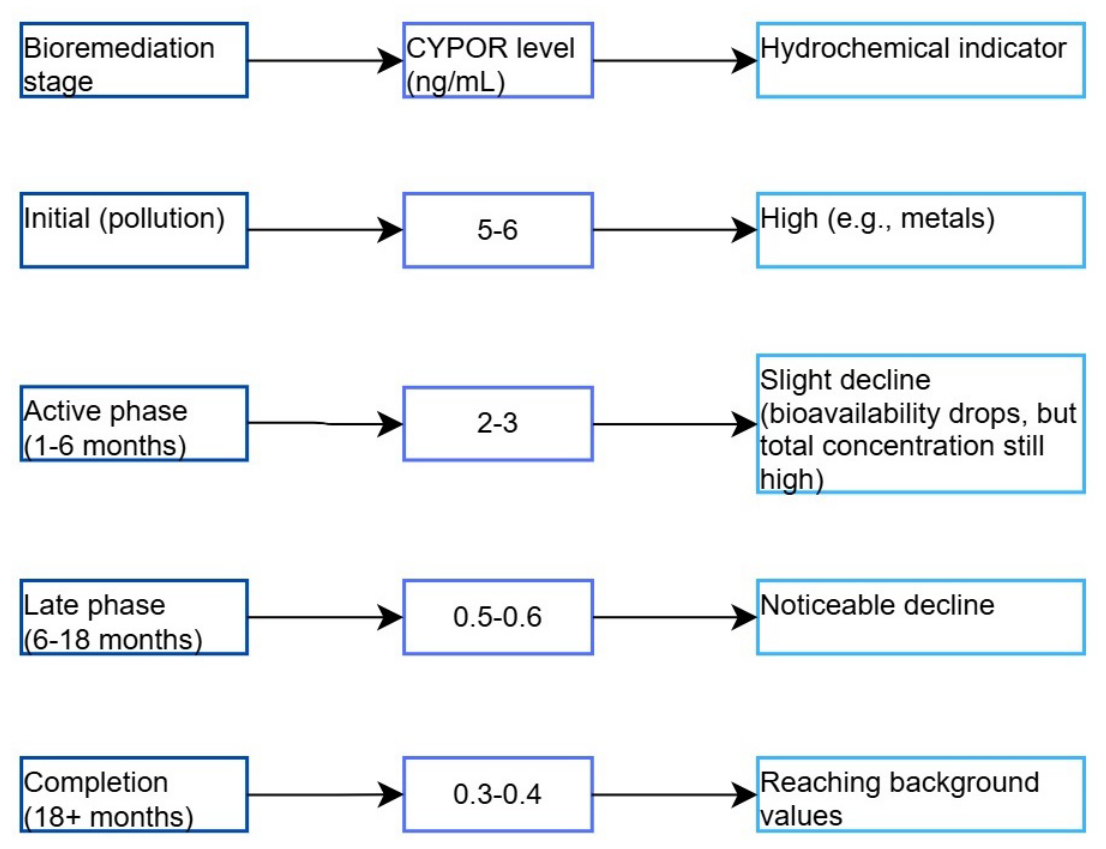
Figure 3.
Schematic representation of Hypothesis 3.
Table 3.
Comparison of CYPOR and hydrochemical parameters as indicators of bioremediation.
| Parameter | CYPOR | Hydrochemical parameters |
| Measured entity | Bioavailable fraction | Total concentration |
| Sensitivity | High (15–20× range) | Variable |
| Response time | Early (weeks–months) | Delayed (months–years) |
| Integrativeness | Sums all pollutants | Only determined substances |
| Biological significance | Reflects physiological response | Does not reflect biological effect |
| Predictive value | High | Limited |
3.4. Species-Specific Differences in CYPOR Determine the Choice of Indicator Species for Bioremediation Monitoring
The optimal choice of indicator species for bioremediation monitoring should be based on their species-specific CYPOR reactivity: species with high induction (predators) are preferable for early detection and assessment of initial cleanup stages, while species with low basal levels (planktophages) are more suitable for confirming complete ecosystem recovery [11,15,21,22,25]. Early stages of bioremediation require a sensitive indicator capable of registering small decreases in bioavailable load. Pike-perch, possessing maximum CYPOR induction, gives the most pronounced signal at the slightest improvement, allowing rapid adjustment of the cleanup strategy [20,21]. However, as pollution decreases, its excessive sensitivity may lead to false conclusions about full recovery, whereas roach with its low basal level continues to show elevated CYPOR until the last bioavailable fraction disappears. Thus, roach serves as a “reference” species for registering the completion of bioremediation [17]. A multi-species approach including species from all trophic levels provides an integrated assessment of ecosystem status across all links of the food chain [22,25]. This approach recognizes that different species integrate exposure over different time scales and through different pathways, and that complete recovery requires improvement at all trophic levels.
The practical implications of this hypothesis are significant. Many monitoring programs rely on a single indicator species, which may not provide a complete picture of ecosystem recovery [12]. By employing a panel of species with different trophic statuses and different CYPOR induction characteristics, it becomes possible to track the progress of remediation from multiple perspectives. For example, if predators show declining CYPOR while benthophages do not, this might indicate that the bioavailable fraction in the water column is decreasing but that sediment contamination remains a problem. The use of multiple species thus provides diagnostic information that can guide management decisions.
Predictions derived from this hypothesis include the following. During monitoring of a single site, the dynamics of CYPOR decline will be characterized by different rates: in pike-perch, rapid decline in the first months, in roach, slow and delayed. The correlation of CYPOR with pollutant concentration in water will be maximal in pike-perch at early stages and in roach at late stages. The use of a combination of three species (predator, benthophage, planktophage) will minimize errors in assessing bioremediation effectiveness compared to a single-species approach. This multi-species strategy is not only more informative but also more robust, as it reduces the risk of false conclusions arising from species-specific anomalies or confounding factors.
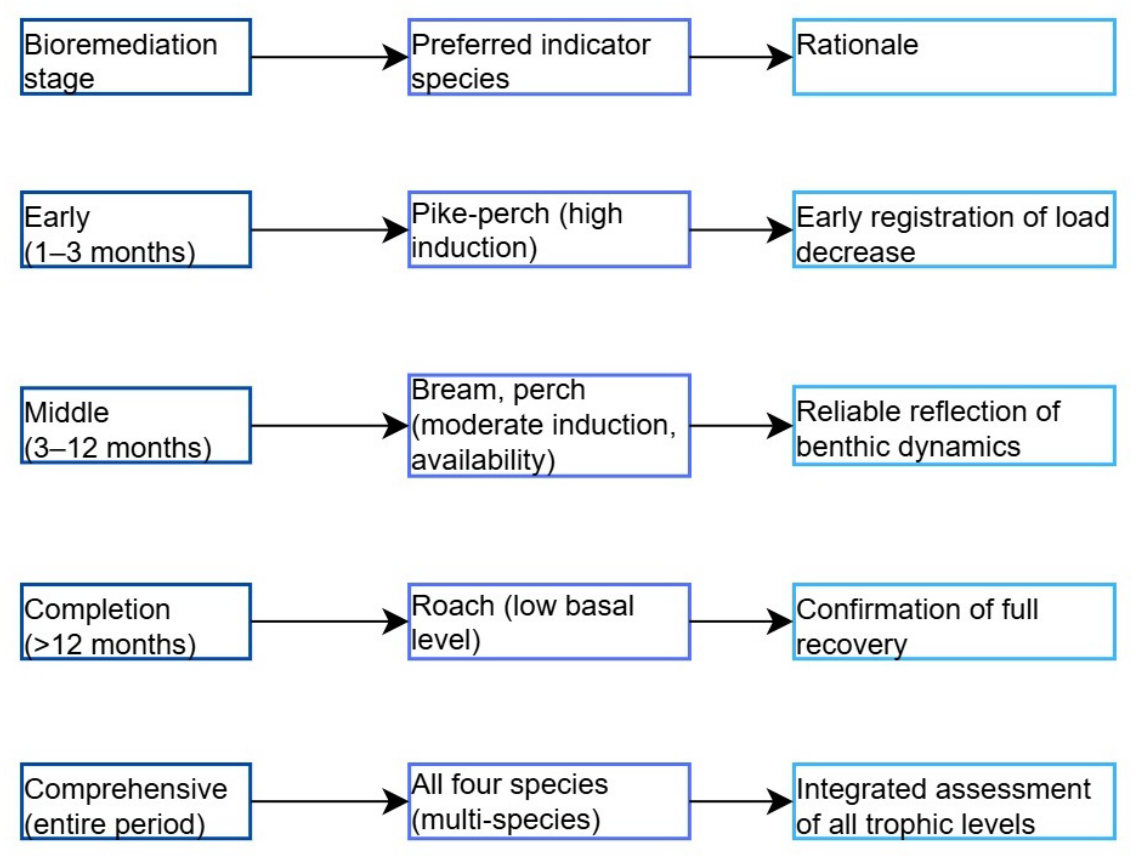
Figure 4.
Schematic representation of Hypothesis 4.
Table 4.
Recommended indicator species for different monitoring stages.
| Stage | Preferred species | Trophic status | Rationale |
| Early detection | Pike-perch, perch | Predators | High induction, rapid response |
| Main monitoring | Bream | Benthophage | Sediment linkage, availability |
| Completion assessment |
Roach | Planktophage | Low basal level, indicator of full recovery |
| Comprehensive assessment | All four | All levels | Integrated ecosystem coverage |
3.5. CYPOR Integrates the Effects of Pollutant Mixtures, Providing Comprehensive Assessment
Unlike isoform-specific biomarkers (e.g., CYP1A), CYPOR reflects the integrated load on the detoxification system resulting from complex mixtures of pollutants, making it more informative for assessing real ecological status under conditions of polycontamination. Real ecosystems are exposed to hundreds of compounds simultaneously: PAHs, PCBs, pesticides, pharmaceuticals, heavy metals, microplastics [16,17]. Each class induces specific CYP isoforms (CYP1A, CYP2B, CYP3A, etc.), and measurement of a single isoform provides only a partial picture. CYPOR, being a common electron donor for all microsomal CYPs, the level of which increases proportionally to the total activity of all induced isoforms, provides an integrated assessment [3,7,23]. If a mixture contains inducers of different CYPs, the total demand for electrons increases, and CYPOR levels rise more than under the action of each component individually, reflecting a synergistic effect [13,28]. This synergy is particularly important because the combined effect of pollutants in a mixture may be greater than the sum of their individual effects, a phenomenon that is often overlooked in traditional risk assessment approaches.
The concept of mixture effects is central to modern ecotoxicology, as it recognizes that organisms in the real world are rarely exposed to single compounds [5,10,11]. The interactions between pollutants can be complex, involving not only additive effects but also synergism and antagonism. The ability of CYPOR to capture the net effect of these interactions is a major advantage over single-target biomarkers. Moreover, because CYPOR is involved in the metabolism of both xenobiotics and endogenous compounds, its level may also reflect the impact of pollutants on the organism’s overall metabolic state [6,13]. This further enhances its value as an indicator of ecological health.
This hypothesis leads to the following predictions. Under field conditions, CYPOR levels will correlate better with the integrated pollution index (sum of concentrations normalized to maximum permissible concentrations) than CYP1A levels or EROD activity. Experimental exposure to a mixture of inducers (e.g., β-naphthoflavone + phenobarbital) will cause a rise in CYPOR exceeding the additive effect. During bioremediation, CYPOR decline will reflect the total decrease in bioavailability of all pollutant classes, not individual compounds. The use of CYPOR as an integrative biomarker is particularly valuable in complex environmental settings where the chemical composition of pollution is constantly changing, as it provides a stable and reliable measure of overall toxic load.
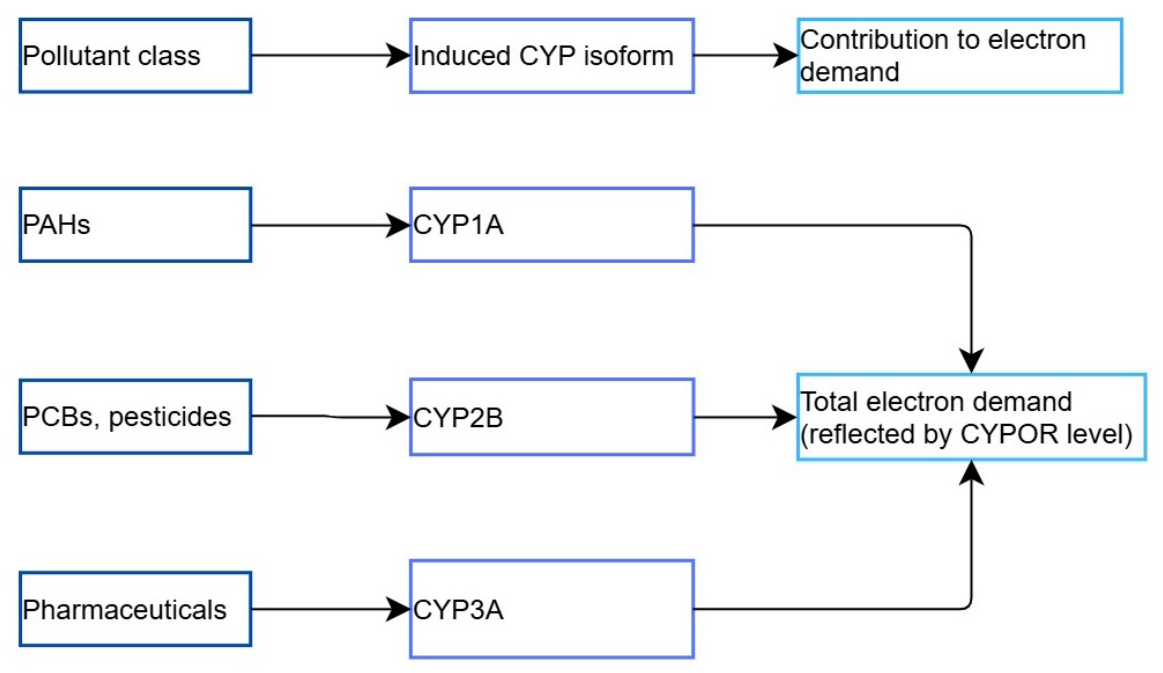
Figure 5.
Schematic representation of Hypothesis 5.
3.6. Molecular Structure of CYPOR Determines Its Species-Specific Sensitivity to Inhibitors
Species-specific variations in amino acid sequences in key domains of CYPOR (FAD-, FMN-, NADPH-binding) determine differences in enzyme sensitivity to inhibitors (heavy metals, pesticides, pharmaceuticals), which may affect the interpretation of monitoring data at high inhibitor levels [29,30]. CYPOR contains cysteine residues in active centers that can bind metal ions (Hg2+, Cd2+, Pb2+), reducing catalytic activity [16,17]. In different species, the number and position of cysteines vary, determining different IC50 and Ki values [31]. Studies on lake trout have shown that IC50 for Hg2+ is 5-10 μM, for Cd2+ - 15-20 μM. In carp, IC50 for Hg2+ is presumably higher (~10-15 μM), indicating lower sensitivity [12,21]. Mutations in flavin-binding domains (e.g., Y459H, V492E in humans) cause loss of function, demonstrating structural vulnerability [31,32]. The structural basis of these differences lies in the precise arrangement of amino acids that constitute the active site and the binding pockets for cofactors and substrates.
The sensitivity of CYPOR to inhibitors is not merely a matter of academic interest but has practical implications for the interpretation of biomonitoring data [12,25,29]. If the same pollutants that cause its induction inhibit the enzyme, the measured level of CYPOR may underestimate the actual degree of induction, leading to erroneous conclusions about the level of exposure. This is particularly relevant for sites contaminated with heavy metals, which can accumulate in the liver and inhibit enzyme activity even as the organism is mounting a transcriptional response. Understanding the species-specific sensitivity to inhibitors is therefore essential for accurate data interpretation.
From this hypothesis, the following predictions emerge. Sensitivity of CYPOR to Hg2+ will negatively correlate with cysteine content in the NADPH-binding domain. Species inhabiting historically polluted areas may possess substitutions reducing metal sensitivity (adaptive evolution). When interpreting monitoring data, it is necessary to account for possible CYPOR inhibition, which may mask true induction. The adaptive evolution of resistance to heavy metal toxicity has been documented in several species and may involve modifications to the CYPOR protein that reduce its sensitivity to metal binding [5]. Studying these adaptations can provide insights into the mechanisms of metal toxicity and the potential for evolutionary responses to pollution.
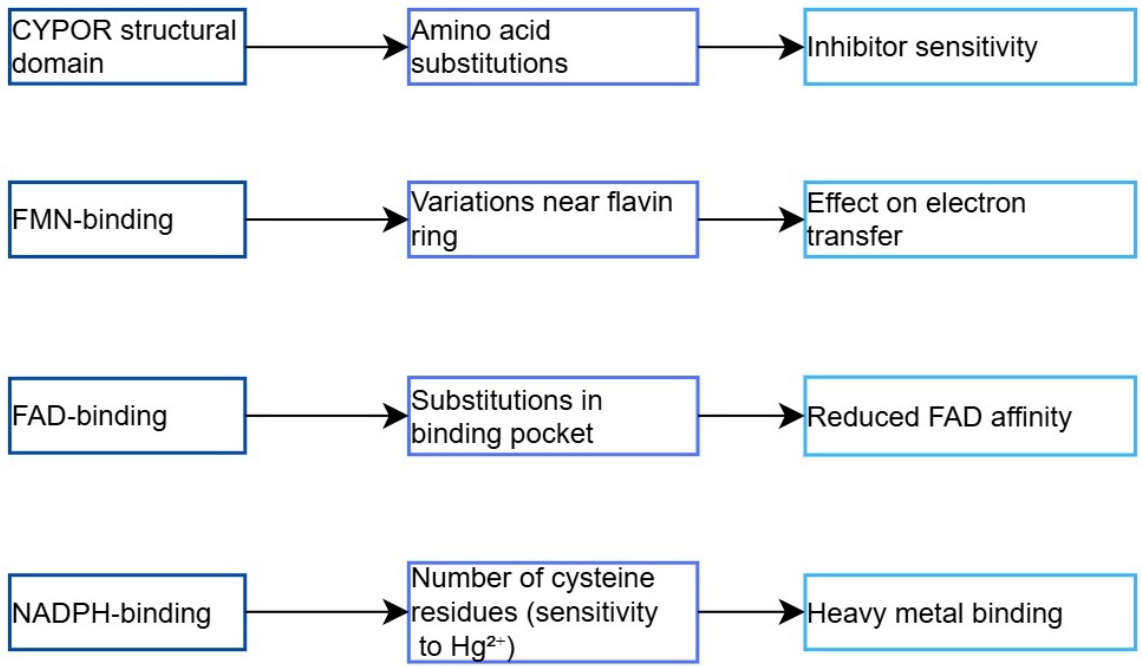
Figure 6.
Schematic representation of Hypothesis 6.
Table 5.
Recommended indicator species for different monitoring stages.
| Species | Inhibitor | IC50, μM | Ki, μM | Note |
| Lake trout | Hg2+ | 5–10 | 2–5 | Experimental |
| Lake trout | Cd2+ | 15–20 | 8–12 | Experimental |
| Rainbow trout | Hg2+ | 8–12 | 3–6 | Presumptive |
| Carp | Hg2+ | 10–15 | 5–8 | Presumptive |
3.7. CYPOR Can Serve as a Marker Not Only of Pollution but Also of General Physiological Stress
Elevation of CYPOR levels may be observed under various forms of stress (temperature shock, hypoxia, infections, reproductive changes) independently of the presence of xenobiotics, requiring consideration of physiological and abiotic factors in data interpretation. CYPOR participates in the metabolism of endogenous substrates (steroids, fatty acids), and its level may change during hormonal rearrangements (spawning), oxidative stress caused by hypoxia, or inflammation during infections [11,12,20,26]. It is known that CYP activity in fish depends on season and temperature. For example, a temperature increase within the physiological range elevates basal metabolism and may raise CYPOR by 20-30% without pollutant involvement [11,16]. Bacterial infections can induce CYP through cytokine pathways [20,27]. Thus, without consideration of these factors, false-positive results are possible.
The stress-responsive nature of CYPOR is not surprising given its role in multiple metabolic pathways. The induction of CYPOR during stress may be part of a generalized adaptive response that enhances the organism’s capacity to metabolize a wide range of substrates, including both endogenous and exogenous compounds [26]. However, this also means that the specificity of CYPOR as a pollution biomarker is limited unless confounding factors are accounted for. The use of additional biomarkers that are more specific to pollution (such as CYP1A for PAHs) can help to disentangle the effects of stress from those of pollution [20].
Predictions include: a 5 °C increase in water temperature (within the permissible range) will raise CYPOR in the control group by at least 15%. Hypoxia (dissolved oxygen < 4 mg/L) will cause CYPOR elevation in all species, regardless of pollution. Fish infected with bacteria (e.g., Aeromonas spp.) will have elevated CYPOR compared to healthy individuals from the same environment. For correct interpretation, parallel measurement of stress markers (cortisol, glucose, heat shock proteins) and consideration of seasonality and reproductive status are necessary. The integration of multiple biomarkers and environmental parameters is therefore essential for the reliable use of CYPOR in ecological monitoring.
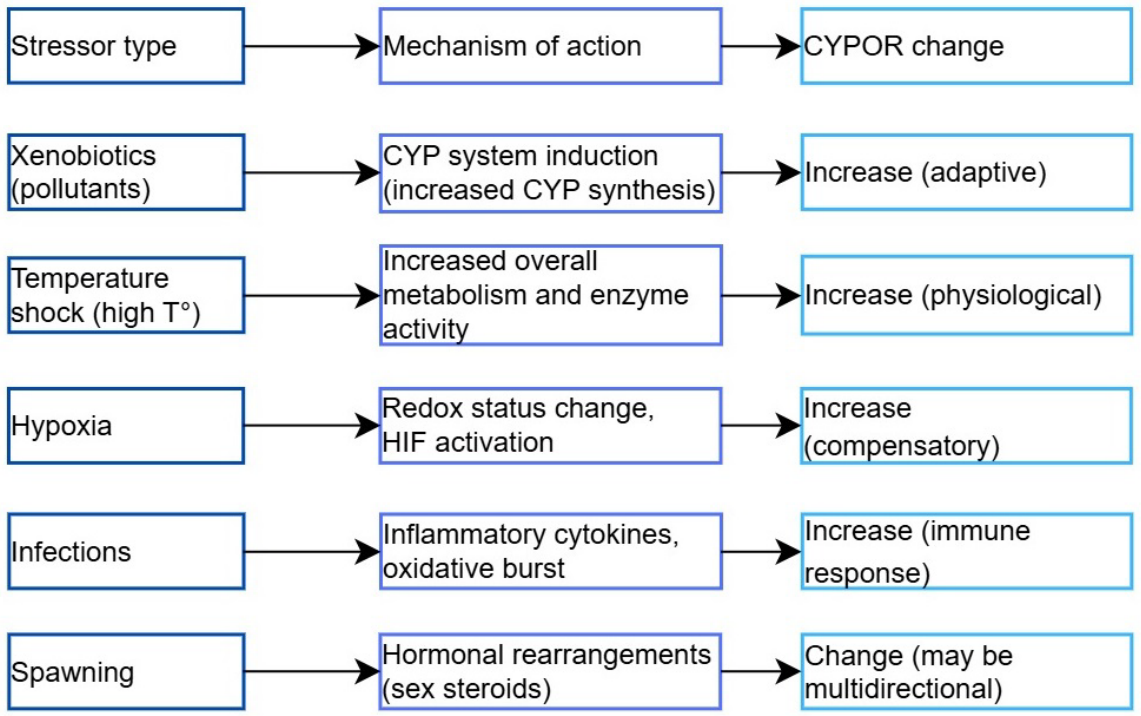
Figure 7.
Schematic representation of Hypothesis 7.
4. Discussion
The set of formulated hypotheses forms an interconnected conceptual model in which species-specific CYPOR reactivity is viewed as an evolutionarily fixed trait reflecting adaptation to ecological niche, and the dynamics of this indicator as an integrated indicator of both pollution and bioremediation effectiveness [4,5,14]. The central element is the concept of CYPOR as a common electron pump, the level of which is proportional to the total activity of all induced CYP isoforms, making it sensitive to any changes in the spectrum and intensity of toxic load [3]. This conceptual framework provides a unifying explanation for the diverse observations regarding CYPOR levels in fish populations and offers a roadmap for future research.
The first hypothesis (evolutionary-adaptive nature) is supported by comparative biochemical data on structural differences in CYPOR among species from different climatic zones and depths [5,15]. However, most of these data have been obtained on a limited number of species, and large-scale phylogenetic studies using modern methods (sequencing, crystallographic analysis) are needed. The second hypothesis (trophic status) finds indirect support in studies on CYP activity species-specificity, but direct verification requires controlled feeding and dosing experiments, which are methodologically challenging [15,16,17]. The integration of molecular data with ecological parameters is essential to test these hypotheses rigorously.
The third and fourth hypotheses have direct applied significance. Their verification requires long-term (at least 2-3 years) field observations at sites undergoing bioremediation, with regular sampling and comprehensive analysis (CYPOR, hydrochemistry, histopathology) [12,14,18]. The proposed multi-species approach should be tested at several objects with different types of pollution [22,25]. The fifth hypothesis (mixture integration) can be tested in laboratory experiments using mixtures of inducers of different CYP isoforms with measurement of CYPOR in comparison with isoform-specific markers [23]. Such experiments would not only test the hypothesis but also provide quantitative data on the relationship between CYPOR and the combined effects of pollutants.
The sixth hypothesis (inhibitor sensitivity) requires detailed in vitro studies on purified CYPOR preparations from different species, with determination of inhibition kinetic constants for a range of toxic metals and organic compounds [23,29,30]. The seventh hypothesis (stress nature) obliges the inclusion of additional parameter measurements (temperature, oxygen, cortisol, hematological indicators) in monitoring design and the use of statistical methods to separate the contributions of different factors [11,12,20,26]. Multivariate statistical approaches, such as principal component analysis or partial least squares regression, can help to disentangle the effects of multiple stressors and identify the most significant predictors of CYPOR variation.
Limitations of the presented approach are associated with the incompleteness of the empirical base: most CYPOR data are available for only a few species, and field studies do not always allow separation of the effects of mixed factors. Furthermore, within-species variability may be significant (individual differences, age, sex), requiring larger sample sizes. Standardization of CYPOR determination protocols for different tissues and storage conditions is also necessary. The establishment of a global database of CYPOR levels across species and environmental conditions would greatly facilitate comparative analyses and the testing of these hypotheses.
Promising research directions include: transcriptomic analysis of the POR gene in different species in response to pollutants; crystallographic study of CYPOR to identify structural bases of species-specificity; development of non-invasive methods (biopsy, excreta) to reduce impact on populations; creation of multi-biomarker panels including CYPOR, CYP1A, GST, hematological and histopathological indices, to increase assessment reliability. The use of emerging technologies, such as single-cell transcriptomics and high-throughput screening, could revolutionize our understanding of CYPOR regulation and its response to environmental stressors.
5. Conclusions
The conducted analysis allows the assertion that CYPOR represents a promising biomarker for ecological monitoring of aquatic ecosystems. Empirical data from Lake Ladoga, demonstrating a 15-20-fold range of enzyme level variation depending on pollution, create a solid foundation for the development of standardized methodologies. Species-specific differences in CYPOR reactivity, as our hypotheses show, are not statistical noise but reflect evolutionary adaptations to ecological niches, allowing different species to be used as sensitive and specific indicators for different monitoring stages. The utilization of multiple species in a coordinated monitoring program offers the possibility of obtaining a holistic view of ecosystem health.
Practical implementation of CYPOR testing requires a phased approach. At the first stage (baseline survey), it is necessary to determine baseline CYPOR levels for at least three indicator species (representing different trophic levels) at background and polluted sites, comparing with hydrochemical and histological data. At the second stage (bioremediation monitoring), regular (monthly or quarterly) CYPOR measurements should be conducted in dynamics, tracking decline rates and comparing with changes in chemical parameters. In the absence of positive CYPOR dynamics, the remediation strategy should be reconsidered. At the third stage (completion assessment), recording CYPOR levels not differing from controls serves as one criterion for successful bioremediation completion, confirmed by histological and hematological normalization. The combination of these multiple lines of evidence provides a robust basis for decision-making.
For successful implementation, the following preparatory activities are necessary:
- development of unified protocols for sampling, preservation, and analysis of specimens for different species;
- creation of regional databases on reference CYPOR levels, considering seasonal and age-related fluctuations; conducting controlled experimental studies to validate each of the seven hypotheses, particularly hypotheses 3 and 4 (predictive value and species selection);
- pilot projects at real bioremediation sites with parallel application of the multi-species approach;
- integration of CYPOR data with other biomarkers and hydrochemical parameters into a unified environmental monitoring system.
The establishment of international standards and guidelines would facilitate the adoption of this methodology across different regions and regulatory frameworks.
Long-term prospects include the development of automated forecasting systems based on CYPOR dynamics, creation of international standards, and specialist training. It is important to emphasize that CYPOR is not merely a measurable indicator but a window into the complex system of biochemical adaptation, understanding of which enriches fundamental ecology and ecotoxicology while simultaneously providing a reliable tool for nature conservation. The integration of fundamental research with applied tasks is the key condition for realizing the diagnostic and prognostic potential of CYPOR. By fostering collaborations between basic researchers, applied ecologists, and environmental managers, it will be possible to translate scientific insights into practical solutions for the protection and restoration of aquatic ecosystems.
Supplementary Materials
n/a.
Author Contributions
n/a.
Funding
n/a.
Data Availability Statement
Statements are available in section.
Acknowledgments
The authors extend their sincere thanks to the members of Federal State Budgetary Educational Institution of Higher Education “Saint-Petersburg State University of Veterinary Medicine” for their help and support.
Conflicts of Interest
n/a.
Abbreviations
The following abbreviations are used in this manuscript:
| CYP | cytochrome P450 |
| NADPH | nicotinamide adenine dinucleotide phosphate |
| CYPOR | cytochrome P450 reductase |
| FAD | flavin adenine dinucleotide |
| FMN | flavin mononucleotide |
| PAHs | polycyclic aromatic hydrocarbons |
| PCBs | polychlorinated biphenyls |
| AHR | aryl hydrocarbon receptor |
| EROD | ethoxyresorufin-O-deethylase |
| GST | glutathione S-transferase |
| UGT | UDP-glucuronosyltransferase |
References
- Sultatos, L.G.; Vesell, E.S. Enhanced drug-metabolizing capacity within liver adjacent to human and rat liver tumors. Proc. Natl. Acad. Sci. USA 1980, 77, 600–603. [Google Scholar] [CrossRef] [PubMed]
- Boobis, A.R.; Brodie, M.J.; Kahn, G.C.; Fletcher, D.R.; Saunders, J.H.; Davies, D.S. Monooxygenase activity of human liver in microsomal fractions of needle biopsy specimens. Br. J. Clin. Pharmacol. 1980, 9, 11–19. [Google Scholar] [CrossRef] [PubMed]
- Meyer, U.A. Interaction of proton pump inhibitors with cytochromes P450: Consequences for drug interactions. Yale J. Biol. Med. 1996, 69, 203–209. Available online: https://pmc.ncbi.nlm.nih.gov/articles/PMC2589004/ (accessed on 22 August 2026). [PubMed]
- Sedeño-Díaz, J.E.; López-López, E. Freshwater fish as sentinel organisms: From the molecular to the population level, a review. In New Advances and Contributions to Fish Biology; Türker, H., Ed.; IntechOpen: London, UK, 2012; pp. 151–173. [Google Scholar] [CrossRef] [PubMed]
- Lévêque, C. Role of fish in ecosystem functioning. In The Inland Water Fishes of Africa; Paugy, D., Lévêque, C., Teugels, G.G., Eds.; IRD Éditions: Marseille, France, 2017; pp. 339–348. [Google Scholar] [CrossRef]
- Kelly, S.L.; Kelly, D.E. Microbial cytochromes P450: Biodiversity and biotechnology. Where do cytochromes P450 come from, what do they do and what can they do for us? Philos. Trans. R. Soc. Lond. B Biol. Sci. 2013, 368, 20120476. [Google Scholar] [CrossRef] [PubMed]
- Xia, C.; Shen, A.L.; Duangkaew, P.; Kotewong, R.; Rongnoparut, P.; Feix, J.; Kim, J.P. Structural and functional studies of the membrane-binding domain of NADPH-cytochrome P450 oxidoreductase. Biochemistry 2019, 58, 2408–2418. [Google Scholar] [CrossRef] [PubMed]
- Nelson, D.R.; Goldstone, J.V.; Stegeman, J.J. The cytochrome P450 genesis locus: The origin and evolution of animal cytochrome P450s. Philos. Trans. R. Soc. Lond. B Biol. Sci. 2013, 368, 20120474. [Google Scholar] [CrossRef] [PubMed]
- Kandel, S.E.; Lampe, J.N. Role of protein-protein interactions in cytochrome P450-mediated drug metabolism and toxicity. Chem. Res. Toxicol. 2014, 27, 1474–1486. [Google Scholar] [CrossRef] [PubMed]
- Topić Popović, N.; Čižmek, L.; Babić, S.; Strunjak-Perović, I.; Čož-Rakovac, R. Fish liver damage related to the wastewater treatment plant effluents. Environ. Sci. Pollut. Res. Int. 2023, 30, 48739–48768. [Google Scholar] [CrossRef] [PubMed]
- Rana, S.V.S. Biomarkers of trace element toxicity in fish: A new paradigm in environmental health risk assessment. In Fish Species in Environmental Risk Assessment Strategies; Liwszyc, G.E., Larramendy, M.L., Eds.; Royal Society of Chemistry: Cambridge, UK, 2024; Chapter 2; pp. 6–31. [Google Scholar] [CrossRef]
- Ponamarev, V.; Popova, O.; Semenova, E.; Mikhailov, E.; Romanov, A. CYPOR variability as a biomarker of environmental conditions in bream (Abramis brama), roach (Rutilus rutilus), perch (Perca flavescens), and pike-perch (Sander lucioperca) from Lake Ladoga. Vet. Sci. 2026, 13, 94. [Google Scholar] [CrossRef] [PubMed]
- Anzenbacher, P.; Anzenbacherová, E. Cytochromes P450 and metabolism of xenobiotics. Cell. Mol. Life Sci. 2001, 58, 737–747. [Google Scholar] [CrossRef] [PubMed]
- Bala, S.; Garg, D.; Thirumalesh, B.V.; et al. Recent strategies for bioremediation of emerging pollutants: A review for a green and sustainable environment. Toxics 2022, 10, 484. [Google Scholar] [CrossRef] [PubMed]
- Wiens, J.J. The niche, biogeography and species interactions. Philos. Trans. R. Soc. Lond. B Biol. Sci. 2011, 366, 2336–2350. [Google Scholar] [CrossRef] [PubMed]
- Dong, Z.; Lynch, R.A.; Schaider, L.A. Key contributors to variations in fish mercury within and among freshwater reservoirs in Oklahoma, USA. Environ. Sci. Process. Impacts 2016, 18, 222–236. [Google Scholar] [CrossRef] [PubMed]
- Chen, H.; Liu, S.; Xu, X.-R.; Liu, S.-S.; Zhou, G.-J.; Sun, K.-F.; Zhao, J.-L.; Ying, G.-G. Antibiotics in typical marine aquaculture farms surrounding Hailing Island, South China: Occurrence, bioaccumulation and human dietary exposure. Mar. Pollut. Bull. 2015, 90, 181–187. [Google Scholar] [CrossRef] [PubMed]
- Behbudi, G.; Yousefi, K.; Sadeghipour, Y. Microbial enzymes based technologies for bioremediation of pollutions. J. Environ. Treat. Tech. 2021, 9, 463–469. [Google Scholar] [CrossRef]
- Tirado, Z.I.C.; Sayaverde, I.W.D.; Yajahuanca, R.D.S.A.; Aparicio, S.C.; Aliaga, K.M.J.; Aparicio, E.G.; Tyrrel, M.A.R.; Fortes Figueiredo, M.D.L.; Borges, J.W.P.; Brito Magalhães, R.L.; et al. Global research trends on water contamination by microorganisms: A bibliometric analysis. Int. J. Environ. Res. Public Health 2025, 22, 1128. [Google Scholar] [CrossRef] [PubMed]
- Orso, G.; Imperatore, R.; Coccia, E.; Rinaldi, G.; Cicchella, D.; Paolucci, M. A Deep Survey of Fish Health for the Recognition of Useful Biomarkers to Monitor Water Pollution. Environments 2023, 10, 219. [Google Scholar] [CrossRef]
- Koubová, A.; Toušová, Z.; Šauer, P.; de Sales-Ribeiro, C.; Vrana, B.; Smutná, M.; Kocour Kroupová, H.; Grabicová, K.; Schmidt-Posthaus, H.; Randák, T.; et al. Biomarker responses in wild brown trout from a headwater stream and their causal link to water pollution assessed through chemical analysis and in vitro reporter gene bioassays. J. Hazard. Mater. 2025, 494, 138433. [Google Scholar] [CrossRef] [PubMed]
- Röder, A.; Hutter, M.C.; Heitzer, E.; Franz, P.J.; Hüsken, S.; Wiek, C.; Girhard, M. Exploration of CYP4B1 Substrate Promiscuity Across Three Species. Catalysts 2025, 15, 454. [Google Scholar] [CrossRef]
- Sridhar, J.; Liu, J.; Foroozesh, M.; Stevens, C.L. Insights on cytochrome P450 enzymes and inhibitors obtained through QSAR studies. Molecules 2012, 17, 9283–9305. [Google Scholar] [CrossRef] [PubMed]
- Ponamarev, V.S. Serum CYPOR levels in Bactrian camels and their correlation with hepatic ultrastructural organization. Int. Res. J. 2026, 4, 41. [Google Scholar] [CrossRef]
- Sharifian, S.; Amrollahi Biuki, N. Criteria for the selection and use of indicator species for environmental monitoring. In Proceedings of the Marine Industries Conference; 2016; p. 8. [Conference paper; Available online: https://www.researchgate.net/publication/314351641_Criteria_for_the_selection_and_use_of_indicator_species_for_environmental_monitoring (accessed on 22 August 2026).
- Grădinariu, L.; Crețu, M.; Vizireanu, C.; Dediu, L. Oxidative Stress Biomarkers in Fish Exposed to Environmental Concentrations of Pharmaceutical Pollutants: A Review. Biology 2025, 14, 472. [Google Scholar] [CrossRef] [PubMed]
- Efimov, V.Y.; Kostrova, A.V. Concentration levels of CYPOR in various pathologies of the gastrointestinal tract. Mezhdunarodnyy Vestn. Vet. 2025, 3, 216–222. [Google Scholar] [CrossRef]
- Zuber, R.; Anzenbacherová, E.; Anzenbacher, P. Cytochromes P450 and experimental models of drug metabolism. J. Cell. Mol. Med. 2002, 6, 189–198. [Google Scholar] [CrossRef] [PubMed]
- Beck, T.C.; Beck, K.R.; Morningstar, J.; Benjamin, M.M.; Norris, R.A. Descriptors of Cytochrome Inhibitors and Useful Machine Learning Based Methods for the Design of Safer Drugs. Pharmaceuticals 2021, 14, 472. [Google Scholar] [CrossRef] [PubMed]
- Wang, J.; Nithianantham, S.; Chai, S.C.; Jung, Y.H.; Yang, L.; Ong, H.W.; Li, Y.; Zhang, Y.; Miller, D.J.; Chen, T. Decoding the selective chemical modulation of CYP3A4. Nat. Commun. 2025, 16, 3423. [Google Scholar] [CrossRef] [PubMed]
- Zhao, Z.; Liu, Q.; Bliven, S.; Xie, L.; Bourne, P.E. Determining cysteines available for covalent inhibition across the human kinome. J. Med. Chem. 2017, 60, 2879–2889. [Google Scholar] [CrossRef] [PubMed]
- Marohnic, C.C.; Panda, S.P.; Martásek, P.; Masters, B.S. Diminished FAD binding in the Y459H and V492E Antley-Bixler syndrome mutants of human cytochrome P450 reductase. J. Biol. Chem. 2006, 281, 35975–35982. [Google Scholar] [CrossRef] [PubMed]
Disclaimer/Publisher’s Note: The statements, opinions and data contained in all publications are solely those of the individual author(s) and contributor(s) and not of MDPI and/or the editor(s). MDPI and/or the editor(s) disclaim responsibility for any injury to people or property resulting from any ideas, methods, instructions or products referred to in the content. |
© 2026 by the authors. Licensee MDPI, Basel, Switzerland. This article is an open access article distributed under the terms and conditions of the Creative Commons Attribution (CC BY) license (http://creativecommons.org/licenses/by/4.0/).
Copyright: This open access article is published under a Creative Commons CC BY 4.0 license, which permit the free download, distribution, and reuse, provided that the author and preprint are cited in any reuse.