

Submitted:
21 August 2026
Posted:
25 August 2026
You are already at the latest version
Abstract
Background: The clinical overlap between gastrointestinal (GI) conditions and psychiatric disorders represents a challenge in clinical practice. Eating disorders (EDs)-including anorexia nervosa, bulimia nervosa, binge eating disorder (BED), as well as newly classified entities such as Avoidant/Restrictive Food Intake Disorder (ARFID) and orthorexia nervosa-frequently co-occur with GI diseases, complicating their management. Objective: This narrative review aims to summarize current knowledge regarding the prevalence, pathophysiological mechanisms, and diagnostic challenges associated with the coexistence of various EDs in patients with inflammatory bowel disease (IBD), disorders of gut-brain interaction (DGBIs), celiac disease, and gut microbiota alterations. Methods: The review was structured in accordance with the SANRA guidelines. A comprehensive literature search of PubMed and Scopus as primary databases, supplemented by Google Scholar was conducted for articles published from 2011 through early 2026. Results: The analyzed literature indicates a complex, bidirectional relationship driven by the gut-brain axis. Chronic GI symptoms often necessitate dietary modifications, which can inadvertently trigger or mask pathological restrictive eating behaviors. Diagnosing ARFID and orthorexia in these cohorts is particularly challenging due to overlapping somatic symptoms. Primary EDs can lead to significant GI distress and severe microbiome dysbiosis, perpetuating a vicious cycle of inflammation and malnutrition. Conclusions: The convergence of EDs and GI conditions requires heightened clinical vigilance. Distinguishing between necessary, symptom-driven dietary restrictions and pathological eating behaviors is crucial. Implementing an integrated, multidisciplinary care model-involving gastroenterologists, psychiatrists, and dietitians-is essential to improve diagnostic accuracy and patient outcomes.
Keywords:
eating disorders
; functional gastrointestinal disorders
; anorexia nervosa
; avoidant/restrictive food intake disorder
; bulimia nervosa
; disorders of gut-brain interaction
; feeding and eating disorders
1. Introduction
Eating disorders (EDs) are complex conditions characterized by persistent disturbances in eating behaviors with a worldwide weighted-mean lifetime prevalence estimated at 8.4% in women and 2.2% in men, and a point prevalence that has risen markedly over the past two decades [1]. Beyond their psychological impact, EDs are associated with significant medical morbidity, frequent hospitalizations, and a high mortality rate, making them among the most lethal mental disorders [2]. Classic entities such as anorexia nervosa (AN), bulimia nervosa (BN), and binge eating disorder (BED) are well-documented for their severe gastrointestinal (GI) complications, ranging from motility disorders to structural damage [3,5,6]. In recent years, the diagnostic landscape has expanded to include avoidant/restrictive food intake disorder (ARFID) and the proposed entity of orthorexia nervosa. Unlike traditional EDs, ARFID is driven by sensory sensitivities, low interest in food, or fear of aversive consequences-such as abdominal pain-rather than body image disturbances, [6,7]. Similarly, orthorexia involves a pathological obsession with "healthy" eating, which can lead to extreme dietary restrictions and malnutrition [8,9]. In patients with GI diseases, the prevalence of ARFID is notably high, estimated at 12-21%, yet it often remains underdiagnosed due to the overlap with somatic symptoms [10]. Emerging evidence suggests a profound, bidirectional link between EDs and gastrointestinal conditions, including inflammatory bowel disease (IBD), disorders of gut-brain interaction (DGBIs), and celiac disease [11,12]. Chronic GI symptoms may precede, exacerbate, or maintain disordered eating, while primary EDs can lead to severe gut dysbiosis and impaired GI function [13,14] Currently, there is a notable absence of formal guidelines from major gastroenterological societies such as AGA, ECCO, BSG, ESPGHAN, or ESPEN regarding screening for eating disorders within emergency departments and gastroenterology clinics. This significant gap in research highlights an urgent need for action, as patients with disorders of gut-brain interaction (DGBI) frequently present with underlying disordered eating patterns that remain undiagnosed. Recent studies, including work by Atkins et al. (2023) [15] and Burton Murray et al. (2022) [16], underscore the necessity of evaluating the psychological and nutritional context of dietary interventions to prevent the exacerbation of ARFID symptoms. Given the growing clinical overlap between these conditions, understanding the relationship between various GI diseases and the spectrum of eating disorders is of critical importance. There is a pressing need to help clinicians distinguish between necessary, symptom-driven dietary modifications and pathological behaviors. Therefore, the concrete aim of this narrative review is to summarize current knowledge regarding the prevalence, pathophysiology, and diagnostic challenges of various EDs in patients with IBD, DGBIs, celiac disease, and microbiota alterations.
2. Materials and Methods
This narrative review follows SANRA guidelines. In December 2025 and January 2026, a literature search was conducted using PubMed and Scopus as primary databases, supplemented by Google Scholar for clinical guidelines and grey literature. Search terms combined eating disorders (e.g., ARFID, anorexia) with gastrointestinal conditions (e.g., inflammatory bowel disease). The search was restricted to English-language, peer-reviewed articles published from 2011 through early 2026. The lower bound of 2011 was deliberately chosen to capture foundational research preceding the DSM-5 classification of ARFID (2013) and Rome IV criteria (2016). Inclusion required direct clinical relevance to the co-occurrence of these conditions; articles lacking full-text access or lacking this clinical intersection were excluded. In preparing this manuscript, the authors used Claude Opus 4.7 (Anthropic) and Gamma to assist in creating the schematic Figure 1 as stated in Acknowledgments.
3. Clinical Characterization of Classic and Newly Defined Eating Disorders
3.1. Anorexia Nervosa, Bulimia Nervosa, and Binge Eating Disorder
Anorexia nervosa (AN), bulimia nervosa (BN), and binge eating disorder (BED) remain the most frequently diagnosed eating disorders. Lifetime prevalence estimates among women may reach up to 4% for anorexia nervosa, approximately 2% for bulimia nervosa, and approximately 2% for binge eating disorder; rates are consistently lower in men and in countries with lower levels of economic development [17,18]. Although treatments are constantly improving [18], eating disorders still contribute to over 7000 deaths per year, making them the most lethal of all mental disorders [19], and the financial burden of treating eating disorders on both the healthcare system and society is very high [2].
Anorexia nervosa (AN) is an eating disorder with a very high mortality rate, affecting women in 95% of cases [20]. It is characterized by a strong fear of weight gain and a significant reduction in BMI, maintained through restricting food intake, excessive physical activity, and/or the use of purging methods. The etiology of anorexia nervosa is multifactorial [20,21] and most likely involves the interaction of genetic predisposition and various environmental factors; Significant changes in the composition and functioning of the intestinal microbiota have also been described in patients with this disorder [20].
Bulimia nervosa (BN) is a psychiatric disorder characterized by recurrent episodes of binge eating followed by compensatory behaviors aimed at avoiding weight gain [5].
Binge eating disorder (BED) is defined as a clinical entity characterized by recurrent episodes of compulsive eating of objectively large amounts of food within a short period of time, accompanied by loss of control over eating, experiencing marked discomfort, and intense emotional distress. BED is classified as a distinct psychiatric diagnosis in the DSM-5 [7], and in many cases requires the implementation of targeted psychotherapeutic interventions and/or pharmacological treatment [22].
3.2. Avoidant/Restrictive Food Intake Disorder (ARFID)
An example of a newly described eating disorder is avoidant or restricted feeding disorder (ARFID). This expanded the previous category associated primarily with feeding disorders occurring in infants and young children. ARFID can be diagnosed in individuals of any age if their restrictive or avoidant eating patterns lead to inadequate energy and/or nutrient intake and, consequently, cause at least one of the following: significant weight loss, severe nutritional deficiencies, the need for supplementation or replacement nutrition, or significant difficulties with psychosocial functioning [6,7]. The DSM-5 identifies three main mechanisms that may lead to the development of ARFID: selective avoidance of many foods due to their sensory characteristics (so-called "picky eating"), reduced appetite or little interest in food, and fear of unpleasant consequences after a meal, such as choking, vomiting, abdominal pain, or bloating [6,7]. The prevalence of ARFID in the global adult population is estimated to range widely from approximately 0.3% to 3.1%, with these values varying depending on the study group and the diagnostic methods used [23]. Systematic analyses of studies on ARFID indicate a wide range of its prevalence - from 1.5% to as much as 64% in groups of patients with clinically diagnosed eating disorders. However, it is worth emphasizing that most of these studies are based on small samples, primarily including children and adolescents [6,24]. Furthermore, this disorder leads to insufficient nutrition or energy supply and is not associated with fear of weight gain, body image disturbances, or striving for a slim body shape [25].
3.3. Orthorexia Nervosa and Differential Diagnosis
Orthorexia is also a relatively new concept; it has not yet been officially classified as an eating disorder - it is not listed in either the ICD-11 or the DSM-V, and neither the American Psychiatric Association nor the World Health Organization recognize it as a distinct mental entity. Orthorexia is defined as a pathological, excessively rigid pursuit of a "perfectly healthy" diet, which can lead to significant dietary restrictions and, in extreme cases, even a significant reduction in food intake. Individuals with orthorexia tendencies voluntarily implement numerous dietary restrictions, focusing on the process of preparing meals and controlling the origin of products [8]. This disorder is associated with a compulsive need to protect health and well-being through rigorous dietary practices [9,26], and even a small deviation from the adopted rules can cause a strong sense of guilt, shame or anxiety, which in turn may lead to increasingly restrictive dietary restrictions [8,27,28]. Some experts view orthorexia as a variant of ARFID, while others suggest that orthorexia is closer to obsessive-compulsive disorder, which influences inappropriate eating patterns [8]. The key distinction between ARFID and orthorexia lies in the type of anxiety accompanying the eating process: ARFID is associated with fear of the immediate, short-term consequences of food intake, such as choking, sensory discomfort, or loss of appetite [5,29], while orthorexia is associated with anxiety about the potential long-term health effects of consumed products, e.g., the risk of chronic diseases [29,30]. There is also no clear, universally recognized diagnostic standard for orthorexia, although several assessment tools have been proposed. One of the most commonly used is the ORTO-15 questionnaire, developed in 2005 by Donini and colleagues [31,32].
3.4. The Intersection of Eating Disorders and Gastrointestinal Diseases
Individuals with a history of ED have been shown to be more likely to develop gastrointestinal conditions during their lifetime. This association was comparable between genders and applied to anorexia nervosa (AN), bulimia nervosa (BN), and binge eating disorder (BED) [11,33]. Patients with ED have an increased risk of overall mortality as well as an increased risk of suicide compared to the general population [2,34]. Eating disorders and internalizing disorders have been shown to independently correlate with gastrointestinal diseases. Research suggests a common genetic component for these conditions, and identifying common molecular pathways may provide a basis for developing therapeutic interventions for these conditions [11].
The relationship between eating disorders (ED) and gastrointestinal diseases is bidirectional (Figure 1). EDs can precipitate GI pathology through dysbiosis and dysmotility, while GI diseases promote disordered eating via symptom-specific anxiety or restrictive diets. Evidence confirms mutual links between celiac disease and AN [35] and a fourfold increased risk of ED incidents in children with UC [36]. Genetic studies suggest a moderate causal impact of IBD on AN development [37].
4. Mental Disorders in Patients with Inflammatory Bowel Disease (IBD)
Inflammatory bowel disease (IBD) is a group of conditions that commonly affects young adults. Disease manifestations (abdominal pain, bloody diarrhea, unintentional weight loss) depend on the disease location, subtype, and disease activity. The course is usually relapsing with periods of exacerbations and remissions [38,39,40]. Ulcerative colitis (UC) and Crohn's disease (CD) are the primary disease entities within IBD. These conditions significantly reduce quality of life, contributing to limitations in daily functioning, difficulties in social and intimate relationships, and deterioration of mental and physical health [41,42,43]. IBD affects patients' activity, social life, psychological well-being, and interpersonal relationships. The disease is also associated with lower health-related quality of life (HRQoL) [44,45].
Individuals with inflammatory bowel disease (IBD) - including Crohn's disease (CD) and ulcerative colitis (UC) - are particularly susceptible to behavioral problems, including various forms of eating disorders (EDs) such as anorexia nervosa (AN), bulimia nervosa (BN), and binge eating disorder (BED) [46]. In a study of IBD patients, 4% were underweight, 24% were overweight, and 4% were obese. One-third of participants reported concerns about their body image, and over 10% reported disordered eating behaviors. It has been suggested that adolescents with IBD may experience disturbed eating patterns related to body image and weight [47]. Individuals with IBD also have a significantly higher incidence of new episodes of post-traumatic stress disorder, eating disorders, self-harm, sleep disorders, depression, anxiety disorders, and new mental health issues in general. The highest risk of developing additional psychiatric conditions was noted in boys aged 12-17 years and in patients with Crohn's disease [48]. Additionally, analyses have shown that individuals with IBD who experience comorbid mental health conditions generate significantly higher healthcare costs compared to IBD patients without such comorbidities [48,49]. Mental health assessment remains insufficiently integrated into routine care for IBD patients. Further research is needed to develop the most effective methods for monitoring and providing psychological support to these patients [48].
Proper diagnosis of comorbidities associated with IBD is crucial, their scale is unknown, but they can interfere with treatment of the underlying disease, increase disease activity, and are associated with reduced coping skills, reduced quality of life, and impact psychological well-being [50]. A study was conducted in Ontario among 33,961 patients with Crohn's disease and 32,389 patients with ulcerative colitis. The incidence rates of eating disorders were significantly higher in patients diagnosed with UC or CD than in the control group. The strongest point estimates were observed for ulcerative colitis cases in individuals aged ≤18 years. Children with immunological gastrointestinal disorders had more than twice the incidence of eating disorders compared to their peers without these conditions. In adults, this association was less pronounced, but still noticeable [36]. Additionally, one of the single-center prospective longitudinal studies conducted among children diagnosed with IBD, focusing on dietary patterns at the Children’s Clinical Hospital “Dr. Victor Gomoiu” in Bucharest, the capital of Romania, showed that a higher percentage of IBD patients were already (before diagnosis) exposed to an unhealthy diet, and the overall adherence to a healthy diet was reduced even before the diagnosis of gastrointestinal pathologies in children [51].
4.1. The Impact of Diet
Diet remains closely linked to IBD [52]. IBD patients whose eating behaviors are unsupervised increase their risk of developing restrictive eating behaviors, consequently increasing the risk of malnutrition and nutritional deficiencies [6,53]. The role of diet in the pathogenesis of IBD is intensively studied, and recent data suggest that the consumption of pro-inflammatory foods (such as red meat and refined grain products) may influence the composition of the gut microbiota and modulate the severity of inflammation [54]. Eating patterns in IBD result from a complex interaction between inflammation, altered gut-brain communication, gut peptides, disease symptoms, cognitive, and psychological factors [55]. Most patients obtain information about their diet from the Internet [56]. Nutritional factors may constitute a bridge between the environment and the development of IBD, and appropriately selected dietary interventions are an integral part of the treatment of these diseases. Without a doubt, the diet has a significant impact on their etiology, although the available evidence regarding specific dietary components is limited and indirect [52].
Variations in disease rates across the world and the increasing prevalence of IBD in regions adopting Western dietary patterns suggest a significant role for diet in this process. Potential mechanisms of dietary action include, among others, its influence on the permeability of the mucosal barrier and its impact on components of the immune system. Diet significantly shapes the composition and functioning of the gut microbiome and its metabolites, which, along with genetic and immunological factors, contribute to the pathogenesis of IBD [57,58]. Early detection of malnutrition, achieved through screening tools for nutritional status, is crucial for effective therapeutic management [59].
It has been demonstrated that after a diagnosis of Crohn's disease (CD), patients experience significant changes in their habits and lifestyle: they limit their consumption of alcohol, drugs, and smoking. They also change their diet, eliminating foods high in sugars and fats. Higher levels of depression were also noted in these patients [60]. Multivariate analysis demonstrated that both the presence of Crohn's disease and prior intestinal surgery were independently associated with an increased risk of micronutrient deficiencies [61]. A study conducted among 20 patients diagnosed with IBD from four hospitals in China demonstrated that most patients made dietary decisions based on their current disease status and dietary guidelines. Their decisions were also influenced by their past experiences. Although most patients changed their diet after diagnosis, these patients showed significant deficiencies in nutritional education, which resulted in these changes often being inconsistent with current dietary recommendations [62]. A prospective survey of 400 adults with IBD in the UK found that 57% of respondents believed that their diet influenced the course of their disease and could provoke flare-ups, and two-thirds of them gave up their favorite foods in an attempt to alleviate symptoms [63]. Based on data analysis from a study conducted in Poland, two dietary patterns (DP) were identified: "Processed high fat/sugar/salt/meat/dairy/potatoes" and "Semi-vegetarian." High adherence to the "Processed" pattern was associated with the highest severity of gastrointestinal symptoms, while adherence to the "Semi-vegetarian" pattern was associated with the lowest severity of these symptoms. The study results indicate a significant, adverse effect of a diet based on ultra-processed foods on the frequency of gastrointestinal disorders in adults, while emphasizing the importance of healthy dietary choices [64].
4.2. Malnutrition in IBD Patients
Both ED and IBD primarily affect young people [65,66], and their symptoms may be similar. The fact that laboratory abnormalities related to malnutrition are often observed in both diseases can make it difficult to determine their coexistence. Malnutrition is observed in up to 70% of patients with active IBD and in approximately 38% of patients in remission. This condition correlates with an increased risk of disease exacerbations, increased hospitalization rates, increased likelihood of postoperative complications, and increased need for surgical treatment [59]. In one retrospective cohort study of 165 pediatric patients with IBD, over half of the patients (53.5%) were malnourished at diagnosis, a percentage that decreased to 46.9% during follow-up. At the same time, a significant increase in the prevalence of obesity in adulthood was observed compared to childhood (2.3% vs. 20.5%, p < 0.001) [67].
Malnutrition associated with IBD has multifactorial causes, but limited food intake plays a significant role, often resulting from avoiding food during disease flares to alleviate symptoms or from eliminating specific food groups from the diet [68]. Avoidance of certain food products during disease flares and higher disease activity have been shown to be associated with a high risk of malnutrition [69].
Food-related quality of life (FR-QoL) refers to the psychosocial consequences of food consumption, dietary habits, and the processes of eating and drinking, which may be significantly impaired in patients with inflammatory bowel disease. The FR-QoL-29 questionnaire is a reliable and valid tool, demonstrating close correlations with disease activity and the degree of resulting disability. In a study conducted in a population of IBD patients, the FR-QoL-29 questionnaire assessed the relationships between the scale scores and selected clinical parameters. Lower FR-QoL-29 values were found to correlate with higher serum albumin levels, younger age, greater inflammatory disease activity, and higher levels of IBD-related disability. Female patients with a stenotic phenotype, diagnosed with Crohn's disease, and after IBD surgery demonstrated significantly poorer nutritional quality of life and require special clinical suport [70]. In another study, a poorer FRQoL was demonstrated in patients with reduced appetite and restrictive eating behaviors associated with fear of negative consequences of eating, while a higher FRQoL was observed in those who had undergone prior surgery and with lower disease activity [56].
4.3. Risk Factors for ED in IBD
Early intervention and diagnosis of ED have an impact on the clinical outcomes (mental and physical) of patients with IBD [46]. In one study, the percentage of adolescents with IBD at risk of developing ED was 9.6%. A direct correlation between the number of IBD relapses and the risk of developing ED has been demonstrated [71]. Many studies have focused on identifying risk factors for ED development among patients with IBD, which could contribute to paying special attention and increasing clinical caution in such patients.
Crohn's disease [67], female gender [46,72], history of weight loss [67], history of previous eating disorder diagnosis, number of IBD-related surgeries, dissatisfaction with current body weight [46], longer disease duration [47,72], gastrointestinal symptoms occurring particularly frequently during disease flares, increased anxiety [47], coexisting skin symptoms, perianal lesions, and prednisolone use [67] have been shown to increase the risk of nutritional disturbances in patients with IBD. Genetic predisposition to anorexia nervosa (AN) has also been shown to be nominally correlated with an increased risk of acute gastritis and Crohn's disease [73]. One study, however, found that the presence of AN was associated with a later risk of IBD, but the reverse was not demonstrated [3]. In addition, in another study, the risk of orthorexia in patients with IBD was 77% and was associated with lower BMI in patients over 30 years of age and with marital status in patients under 30 years of age [74]. A longer time since diagnosis, older age at follow-up, the presence of diarrhea, and higher height and BMI at presentation were associated with a lower risk of poor nutritional status [67].
5. ARFID in Gastroenterology—New Diagnostic Challenges
In clinical practice, patients with ARFID referred to gastroenterologists often describe a very restricted diet, limited to a few "safe" foods, typically consumed in small amounts. They often prefer to eat at home to avoid comments or judgment from others, and the process of reintroducing foods can be associated with significant anxiety. Although eliminating trigger foods may alleviate symptoms, it usually does not eliminate them completely, forcing patients into a stressful trial-and-error process to identify their triggers [75]. Up to 90% of IBD patients deliberately avoid certain foods to reduce abdominal pain or diarrhea during flare-ups [36]. Specifically, as many as 92% avoid specific foods during active symptoms, and 74% continue this avoidance even in remission [6], often due to the fear that certain foods may trigger a relapse [71,76,77]. Grossberg (2025) found that 16.3% of patients with inactive IBD screen positive for ARFID. GI-specific anxiety was identified as the sole significant predictor of the disorder in this population. Each one-point increase on the Visceral Sensitivity Index (VSI) was associated with a 3.3% increase in the odds of meeting ARFID criteria. These findings suggest that food restriction in remission is driven by psychological processes and fear of symptoms rather than active inflammation [78]. While such dietary modifications can improve quality of life, excessive elimination poses severe health risks. It is crucial to determine whether the extent of dietary restriction is a necessary symptom-management strategy or indicates a pathological behavior requiring intervention [75].
Recent cross-sectional studies utilizing the validated Nine-Item Food Avoidance/Restriction Scale (NIAS) - currently the primary brief screening tool for assessing ARFID risk [79] - have highlighted a strikingly high prevalence of ARFID risk among adult patients with various gastrointestinal conditions, ranging from 10.2% to over 53% depending on the cohort and disease activity [6,41,75,80,81,82].
5.1. Eosinophilic Esophagitis and ARFID
Eosinophilic esophagitis (EoE) is associated with an increased risk of developing avoidant/restrictive food intake disorder (ARFID) in both pediatric and adult populations [83,84]. Pilot studies indicate that approximately 37% of children with confirmed EoE meet ARFID criteria, leading to significantly lower quality of life and lower BMI z-scores compared to patients without the disorder. This risk is notably elevated in children managed with food elimination therapy alone (70%) and those with multiple IgE-mediated food allergies; importantly, ARFID diagnosis in this group is not significantly related to histological disease activity or symptom severity [83]. In the adult EoE population, ARFID is identified in approximately 4.5% of cases, often characterized by severe esophageal strictures (requiring dilation in 92% of patients) and a high burden of comorbid psychiatric conditions, including anxiety and depression [84]. The primary driver for food restriction is the fear of aversive consequences, specifically dysphagia and food impaction, which may stem from previous traumatic eating experiences [84,85].
5.2. Functional Dyspepsia/Gastroparesis/Upper Gastrointestinal Tract
Avoidant/restrictive food intake disorder (ARFID) is highly prevalent in functional and motility disorders of the upper gastrointestinal tract. In adult patients with gastroparesis (Gp), the prevalence of positive ARFID screens reaches 77%, with the most frequent phenotypes being appetite-related disturbances (84.2%) and fear of aversive consequences (75.6%) [86]. In the pediatric population, ARFID prevalence is estimated at 48.5–63.6% in gastroparesis and 65.2–66.7% in functional dyspepsia (FD). Notably, this risk does not correlate with objective physiological parameters, such as the degree of delayed gastric emptying or impaired fundic accommodation [87]. Population-based studies on disorders of gut-brain interaction (DGBI) indicate that the risk of ARFID is significantly higher among these patients compared to those without DGBI (34.6% vs. 19.4%), with the likelihood increasing alongside the number of affected GI anatomic regions. Among the DGBI group, the most common motivation is a lack of interest in eating (21.5%) [88]. Among organic upper GI disorders, the highest rate of suspected ARFID was observed in achalasia (78.4%). However, experts highlight a significant methodological limitation: screening tools such as the NIAS may overestimate prevalence in organic diseases because they cannot distinguish between adaptive food avoidance driven by physical symptoms and the pathological avoidance characteristic of ARFID [75].
A summary of recent studies evaluating the prevalence and clinical characteristics of ARFID in GI patients is presented in Table 1.
The clinical implications of overlapping ARFID and GI disorders are profound. Patients screening positive for ARFID are at a significantly higher risk of severe malnutrition [6] and exhibit higher levels of high-sensitivity C-reactive protein (hsCRP), indicating elevated systemic inflammation [90]. Furthermore, avoidant eating behaviors strongly correlate with increased severity of depressive symptoms, anxiety, and poorer health-related quality of life [75]. Interestingly, while active disease symptoms and inflammatory parameters remain significantly associated with ARFID risk, studies have demonstrated no significant association between ARFID risk and demographic factors such as age, sex, or race/ethnicity [6].
However, researchers caution that the frequency of positive NIAS results may be overestimated in these populations, particularly among patients with active disease [75,81] . This highlights the pressing need to refine ARFID assessment methods for patients with complex gastrointestinal disorders to avoid false-positive diagnoses [75]. Despite this, clinical recognition remains a major challenge. As demonstrated by a Mayo Clinic pilot study, gastroenterologists' sensitivity in identifying eating disorders in IBD patients without formal screening was 0%, highlighting the urgent need for implementing standardized screening tools like the NIAS in routine gastroenterological care [41].
6. Functional Bowel Disorders and Eating Disorder Symptoms
Disorders of gut-brain interaction (DGBIs), formerly referred to as functional gastrointestinal disorders (FGIDs), include conditions associated with, among others, visceral hypersensitivity and abnormal motility of various segments of the gastrointestinal tract [91]. DGBIs constitute a group of clinical entities characterized by chronic or recurrent gastrointestinal symptoms that cannot be explained by a detectable organic cause. Since there are no definitive biomarkers or characteristic endoscopic findings, diagnosis and classification rely primarily on patient-reported symptoms [92,93]. Individuals with DGBI may experience numerous complaints, such as early satiety, postprandial fullness, bloating, nausea, vomiting, or epigastric pain [92,93,94]. Available data indicate an elevated risk of co-occurring eating disorders in individuals with DGBI [95,96].
In one study, it was found that a substantial percentage of patients diagnosed with eating disorders presented with at least one DGBI (88.2-95.5%), and between 34.8% and 48.7% reported the presence of three or more such conditions [96]. The most frequently observed group of DGBIs was functional bowel disorders, with irritable bowel syndrome (IBS) being the predominant entity, with a prevalence ranging from 43.9% to 58.8%. All analyzed types of eating disorders exhibited a significant positive correlation with the majority of DGBI categories. Individuals reporting more severe eating disorder symptoms were characterized by a higher mean number of DGBIs (3.03-3.34) compared to patients presenting with milder symptom severity (1.60-1.84) [96]. It has been investigated that among pediatric patients with eating disorders diagnosed with AN, the majority report gastrointestinal symptoms; these specifically include functional constipation (61%), functional dyspepsia (54%), and irritable bowel syndrome (25%), while 9% of patients meet the criteria for rumination syndrome [97] . Additionally, an analysis of gastrointestinal disorders in patients with eating disorders revealed that among those diagnosed with an eating disorder, 74.2% received their ED diagnosis prior to the diagnosis of their gastrointestinal disorder. The most common gastroenterological diagnoses in the study cohort were functional disorders, particularly among individuals with previously diagnosed eating disorders [13].
Irritable bowel syndrome (IBS) is among the most frequently diagnosed disorders of gut-brain interaction (DGBIs), occurring in approximately 11% of the global population [95,98]; its prevalence is 1.5 to 3 times higher in women than in men [95,99]. This condition is chronic in nature and manifests with abdominal pain and altered bowel habits, which significantly reduces the quality of life of patients [95,98]. It has been demonstrated that irritable bowel syndrome (IBS) is associated with the occurrence of mood and sleep disorders, as well as anxiety [100].
Data suggest that eating disorders may promote the development of IBS in the long term, although the number of studies analyzing causal relationships between these conditions remains limited [29,101]. In patients with gastrointestinal diseases, the co-occurrence of eating disorders correlates with exacerbated psychiatric symptoms, including increased levels of stress and anxiety [29,102]. Concurrently, concerns arise that the use of restrictive dietary interventions in the treatment of IBS may additionally predispose individuals to the development of abnormal eating behaviors [29].
A cross-sectional study was conducted including 308 patients with irritable bowel syndrome (IBS) and 341 individuals with self-reported gluten-related disorders [103]. The applied self-report questionnaire was used to assess gastrointestinal symptom-specific anxiety, trait anxiety, negative affectivity, subjective severity of gastrointestinal symptoms, as well as quality of life and general well-being. In the IBS group, visceral anxiety was moderately to strongly associated with trait anxiety and IBS-specific quality of life, whereas in individuals with gluten-related disorders, it correlated with negative affectivity, the frequency of gastrointestinal symptoms, and well-being levels. Additionally, patients with the diarrhea-predominant IBS subtype (IBS-D) and the mixed subtype (IBS-M) obtained significantly higher Visceral Sensitivity Index scores compared to those with unclassified IBS (IBS-U) [103]. Another study conducted among individuals with irritable bowel syndrome demonstrated that the greater the severity of IBS symptoms, the higher the probability of co-occurring eating disorders and the lower the level of eating competence. In the analyzed group, 27% of individuals were classified as having a probable or highly probable eating disorder, and 29.1% reported current or past problems of this type. The analysis revealed a positive correlation between IBS symptom severity and scores on the 26-item Eating Attitudes Test (EAT-26), as well as a significantly lower Satter Eating Competence Inventory (ecSI 2.0™) score in participants with severe disease compared to those with a moderate course of the disease [95].
Studies indicate a significant association between irritable bowel syndrome (IBS) and specific eating disorders [21,29]. Among women with newly diagnosed, untreated AN, the prevalence of irritable bowel syndrome was estimated at 52.6% [21]. In IBS patients identified with eating disorder traits (according to the "sick, control, one-stone, fat, food" - SCOFF questionnaire), a significantly greater severity of orthorexia symptoms and greater disease symptom severity (IBS-SSS) were noted. This group was also characterized by higher levels of stress and anxiety, as well as a significantly lower food-related quality of life (FR-QoL) [29]. This is confirmed by analyses demonstrating a positive correlation between the severity of functional gastrointestinal symptoms and the propensity for orthorexia and emotional eating. It has been shown that the relationship between somatic symptoms and orthorexic tendencies is partially mediated by health anxiety. Conversely, the association between gastrointestinal complaints and emotional eating is explained by the exacerbation of orthorexia symptoms. This suggests that IBS patients, in an attempt to alleviate symptoms through rigorous dietary control, may develop orthorexic behaviors, which in turn can serve as a starting point for other forms of eating disorders, such as emotional eating, in which health anxiety plays a significant role [104].
7. Celiac Disease and the Risk of Eating Disorders
Gastrointestinal diseases classified as "organic" disorders encompass entities characterized by physiological changes within the digestive system, which frequently emerge in response to specific dietary components. In celiac disease, exposure to gluten leads to damage to the intestinal villi, manifesting as diarrhea, bloating, nausea, vomiting, and a general sense of fatigue, among other symptoms [75].
Celiac disease is a chronic, lifelong [105] systemic immune-mediated disorder triggered by exposure to gluten, leading to damage to the small intestinal mucosa, which results in both gastrointestinal symptoms and extraintestinal manifestations [106]. Along with the increased availability of diagnostic tools, a clear rise in the frequency of its diagnosis is observed worldwide [105,107,108,109], and the burden on patients as well as the costs associated with their treatment are constantly increasing [105]. The primary form of therapy remains a strict gluten-free diet, which allows for the resolution of symptoms and reduces the risk of long-term complications [110]. At the same time, both the chronic symptomatology and the necessity of lifelong adherence to restrictive dietary recommendations significantly burden the patients' quality of life, although some data indicate that a longer time elapsed since diagnosis promotes better adaptation to the disease [109].
The strict elimination of gluten requires significant control over food choices, which may lead to an excessive focus on eating, dietary habits, or body weight. In some patients, this promotes the development of abnormal eating patterns, including binge eating episodes, compensatory behaviors, or extreme dietary restrictions characteristic of eating disorders [107,111,112]. Shared pathophysiological elements have also been noted - including links between the immunoregulatory mechanisms of celiac disease and metabolic pathways associated with diabetes or anorexia nervosa- which may predispose individuals to the co-occurrence of these diseases [107,113]. Extensive population-based analyses indicate the existence of a bidirectional relationship between immune-mediated conditions and various forms of eating disorders [36,114]. Additionally, the population of patients with celiac disease exhibits a demographic profile similar to that of individuals with eating disorders, including a predominance of women, young individuals, and those of Caucasian descent [107].
A study conducted in Ontario investigated the association between celiac disease and the occurrence of eating disorders. The study was conducted among 14,718 patients with celiac disease. An increased incidence of eating disorders was observed in both pediatric and adult populations following the diagnosis of immune-mediated gastrointestinal diseases. It was demonstrated that the risk of developing eating disorders was particularly high in pediatric patients [36].
Conversely, in another survey study conducted among adult patients with celiac disease, participants completed a validated eating disorder questionnaire (Eating Attitudes Test-26). In individuals suffering from celiac disease, the presence of depressive symptoms, difficulties in adapting to chronic living with the disease, and body weight dissatisfaction were factors significantly increasing susceptibility to the development of eating disorders [107]. Additionally, in another survey study conducted among women, a risk of orthorexia was found in 71% of individuals with celiac disease. A positive correlation was demonstrated between the age of the subjects and the scores obtained in the ORTO-15 test. Individuals at risk of orthorexia prepared their meals independently significantly more often (94%) compared to participants without such risk (78%). Simultaneously, individuals with an elevated risk of orthorexia paid less attention to the caloric value of consumed products (46% vs. 69%). In 64% of individuals at risk of orthorexia, compared to 8% in the control group, thoughts about food elicited heightened anxiety [115].
8. Microbiota Alterations in Eating Disorders
Immune system dysregulation and microbiome alterations have been observed in patients with ED. Inflammation and microbiome changes have been recognized as essential features of IBD; however, microbiome alterations are associated with numerous diseases [116]. A detailed summary of microbiome alterations and their parallels in gastrointestinal diseases is presented in Table 2. A significant relationship has been demonstrated between the composition of the gut microbiome and the occurrence of mental disorders such as depression, anxiety, and eating disorders [117]. It has been shown that individuals diagnosed with mental disorders (MD) exhibit an increased abundance of bacteria from the Parabacteroides genus. Thus, it has been demonstrated that Parabacteroides may act as a potential mediator or biomarker of mental disorders, although its impact likely depends on the specific species and requires further research. The utility of microbiome analyses in studies on disorders with a complex genetic-environmental etiology has been confirmed [117]. The observed differences can only be partially attributed to nutritional status, encompassing both malnutrition and obesity. Consequently, it is hypothesized that the gut microbiome plays a key role in this complex mechanism; nevertheless, further research is needed regarding the specificity of dysbiosis and its significance in the development of eating disorders [118].
8.1. Microbiota Alterations in AN
An important mediating element in the gut-brain axis is the inflammatory response. Significant correlations have been demonstrated between immunological parameters and the composition of the gut microbiota, involving several bacterial genera [133]. Microbiome causality in AN is currently based on mouse FMT models rather than human RCTs [20,119]. Human evidence consists mainly of case reports and observational data, precluding conclusions on whether dysbiosis is a cause or result of starvation [120]. Randomized controlled trials are necessary to establish a definitive causal role of the microbiome in human populations [127]. Additionally, the current imbalance in the presentation of specific eating disorders reflects a genuine evidence gap; while the AN microbiome has been synthesized across multiple cohorts [119,120], research regarding BN and ARFID is currently in its infancy [122,127]. Sparse data regarding pediatric ARFID indicate reduced species richness and a dysbiotic signature characterized by the enrichment of Enterobacteriaceae and Bacteroidetes (notably B. vulgatus), alongside a depletion of Bifidobacterium [126,127].
It has been shown that specific inflammatory mediators may participate in the underlying mechanisms of selected mental disorders, including anorexia nervosa (AN) [118,133]. In particular, an association between elevated Interleukin-18 levels and anorexia has been demonstrated, suggesting the involvement of inflammatory processes in the pathophysiology of this disorder. A genetic predisposition to a higher proportion of bacteria from the Clostridiaceae1 family and the Butyrococcus genus is associated with a lower risk of anorexia, whereas the presence of the Parabacteroides genus correlates with an increased probability of its development. It was also found that selected cytokines and chemokines, including Interleukin-18 may slightly increase the risk of anorexia [118].
Changes in cytokine concentrations during the hospitalization of patients with AN were inversely associated with alterations in the abundance of selected bacteria from the Lachnospiraceae family and the Dialister genus. Changes in IL-1β levels correlated negatively with certain representatives of Lachnospiraceae, and positively with the Bacteroides genus. Conversely, in the long term, positive correlations were observed between changes in TNF-α and IL-15 concentrations and variations in the abundance of bacteria with potential metabolic and anti-inflammatory significance, such as Anaerostipes and Faecalibacterium. There are close links between the inflammatory response and the composition of the gut microbiota in anorexia nervosa, and microbiome alterations may co-participate in modulating the immunological processes accompanying eating disorders [133].
A study by Andreani NA et al. evaluated changes in the gut microbiome composition in hospitalized female adolescents with anorexia nervosa (AN) during treatment and at a one-year follow-up. It was demonstrated that the microbiome composition at admission was significantly associated with disease duration and previous weight loss, while changes occurring during therapy correlated with energy intake, weight gain, and normalization of hormonal parameters. The greatest deviations in the microbiota structure compared to healthy individuals were observed during the acute starvation phase and at low body weight; these differences gradually diminished with weight gain, especially one year after treatment initiation [120]. Slightly different observations were made in a study by Morisaki Y et al., which showed that despite gradual weight gain and improvement in psychological functioning, individuals with AN maintained a distinctly different, abnormal gut microbiota profile compared to age-matched healthy women. During treatment, an increase in the detection frequency of bacteria from the Lactiplantibacillus genus was observed, and an increase in the abundance of Bifidobacterium during hospitalization was significantly associated with greater weight gain at the one-year follow-up [134]. In another study among patients with AN, it was shown that elevated levels of Clostridium clusters I, XI, and XVIII, and reduced levels of Roseburia spp. did not change even after weight gain or diet normalization [135]. Conclusions from these observations indicate that weight normalization does not automatically lead to the restoration of a normal gut microbiota composition in patients with AN [134,135]. It was shown that the gut microbiota at the time of admission had prognostic value, including regarding the risk of rehospitalization and long-term treatment outcomes [120].
In female patients with AN, regardless of the clinical subtype, reduced intra-individual bacterial diversity was also found compared to healthy subjects [136]. In a cross-sectional study that evaluated the gut microbiota composition in 30 patients with AN compared to an equal-sized control group, patients with anorexia nervosa exhibited an increased proportion of bacteria from the Lachnospiraceae family and the Eubacterium hallii genus, alongside a concurrent decrease in the abundance of Ruminococcaceae, Faecalibacterium, and Subdoligranulum. The analysis confirmed that taxa belonging to the Lachnospirales order and the Lachnospiraceae family were characteristically overrepresented in the AN group [121]. Additionally, another cross-sectional study on a group of 16 female patients diagnosed with AN compared to 14 female control patients demonstrated that the microbiome of the study group was characterized by an increased abundance of Akkermansia muciniphila (a bacterium responsible for regulating the immune response, strengthening the intestinal barrier, and preventing the development of metabolic syndrome), while the microbiome of the control group was dominated by Roseburia (a bacterium belonging to the Firmicutes phylum), Agathobacter, and Faecalibacterium [137]. Significant correlations between microbiome composition and clinical parameters were also demonstrated. Lower body weight and BMI were associated with a higher abundance of bacteria from the Bacteroidota phylum and Bacteroides genus, while a higher BMI correlated positively with the proportion of Firmicutes and Subdoligranulum [121].
Importantly, the obtained results indicate the existence of different types of intestinal dysbiosis depending on the clinical subtype of anorexia nervosa. Researchers Monteleone AM et al. compared the microbiological and metabolomic profiles of women with the restricting subtype of anorexia nervosa (ANR), the binge-eating/purging subtype (ANBP), and healthy controls. In AN patients, regardless of the clinical subtype, reduced bacterial diversity was found compared to healthy individuals. When compared to the ANR group, ANBP patients were characterized by a significantly higher relative abundance of bacteria from the Bifidobacterium genus, Bifidobacteriaceae and Eubacteriaceae families, and the Bifidobacteriales order. Simultaneously, a reduced abundance of bacteria belonging to the Odoribacter and Haemophilus genera, as well as the Pasteurellaceae family and Pasteurellales order, was observed in this group. This suggests differences in the interactions between gut microorganisms and metabolites, which may be significant for understanding the gut-brain axis in eating disorders [136].
Analyses of microbiota composition in the pathogenesis of AN indicate significant disturbances within numerous bacterial taxa, including the Clostridium genus, which showed associations with the severity of abnormal eating behaviors and mental health parameters [20] . This is confirmed by the results of The MICROBIAN study, where a significant positive correlation was found between the severity of anxiety and depression symptoms and bacteria from the Firmicutes phylum [138]. Concurrently, another study demonstrated that the severity of depressive symptoms was inversely associated with the abundance of Faecalibacterium [121].
In AN patients, an enrichment of bacterial functional modules involved in the metabolism and degradation of neurotransmitters has been demonstrated, and selected bacterial structural variants correlate with metabolic features characteristic of this disorder. Analyses indicated that bacterial metabolites present in the serum may mediate the impact of altered gut microbiota on behaviors typical of AN. Additionally, significant alterations within the gut virome were observed in the subjects, including a reduction in viral-bacterial interactions [20].
The potential involvement of the microbiota in the pathogenesis of AN is supported by animal model studies utilizing fecal microbiota transplantation. In one study, transplanting microbiota from AN patients into germ-free mice maintained on an energy-restricted diet resulted in reduced weight gain in the animals and changes in gene expression in the hypothalamus and adipose tissue, which was associated with disturbances in energy metabolism and eating behaviors. The obtained results indicate that intestinal dysbiosis may be a significant factor participating in the pathogenesis of anorexia nervosa [20]. However, it should be noted that the results are not unequivocal - another study conducted on rats did not show that microbiota transplantation contributed to additional weight reduction compared to the control group [139].
Interventions aimed at microbiota modulation yield promising results. In a study by Agustí A et al., rats with an eating disorder characterized by a lack of control over food intake were administered Bacteroides uniformis CECT 7771 (B. uniformis), resulting in decreased anxiety and mitigation of binge-eating episodes, which was associated with an effect on the brain's reward response [125]. These effects are corroborated by a study conducted at Xingtang County People’s Hospital, which showed that the group receiving probiotic treatment exhibited significantly higher levels of Bifidobacterium and Lactobacillus, and lower levels of Enterobacter compared to the control group. Additionally, the study group had lower levels of somatostatin and nitric oxide, indicating an improvement in the functioning of the gut-brain axis. The 6-month relapse rate was significantly lower in the probiotic group compared to the control group. Probiotic supplementation in children with AN has a positive impact on altering intestinal flora, improving the gut-brain axis function, and enhancing long-term clinical outcomes [140]. This underscores the potential significance of therapeutic strategies such as an appropriately modified diet or the use of live-microorganism-based biotherapeutics [134].
8.2. Microbiota Alterations in Bulimia
Bulimia is associated with reduced levels of pro-inflammatory cytokines. In the case of bulimia, a positive association with the Lonchococcus genus and an inverse relationship with the presence of Eubacterium hallii have been demonstrated. Pro- and anti-inflammatory factors, such as VEGF-A and TNF, exhibited weak but significant associations with the occurrence of this eating disorder [118].
8.3. Microbiota Alterations in Binge Eating Disorder (BED)
Binge Eating Disorder (BED) is associated with a downward trend in alpha diversity and the expansion of potentially pro-inflammatory taxa such as Enterobacteriaceae [124]. In contrast to AN, BED is characterized by a depletion of Akkermansia muciniphila. Preclinical evidence suggests that microbiome-based interventions involving the administration of Bacteroides uniformis, Bifidobacterium, or Faecalibacterium prausnitzii may effectively attenuate binge-eating frequency and alleviate anxiety-like behaviors [20,122,125].
8.4. Microbiota Alterations in ARFID
It is also worth noting that a different profile of microbiota alterations is observed in the case of avoidant/restrictive food intake disorder (ARFID). In a study by Ye Q et al., a relative enrichment of taxa belonging to the Enterobacterales order and Enterobacteriaceae family, as well as the Bacteroidaceae family and Bacteroides genus, was found in children with ARFID, whereas bacteria from the Actinobacteriota phylum, including the Bifidobacteriales order and the Bifidobacterium genus, were more frequently observed in healthy children. The differences primarily concerned taxonomic composition, while overall microbiota diversity indices did not show significant deviations between the groups. Functional analyses did not reveal significant differences in major metabolic pathways; however, an enrichment of selected enzymes related to carbohydrate metabolism and an increased presence of antibiotic resistance genes, particularly to macrolides, were observed in children with ARFID. ARFID in children is associated with a distinct gut microbiota profile and specific functional changes, suggesting the potential involvement of the gut microbiome in the pathogenesis of this eating disorder as well [126].
9. Conclusions
The coexistence of eating disorders, particularly ARFID and orthorexia, in the population of patients with inflammatory bowel disease (IBD) and irritable bowel syndrome (IBS) constitutes a significant and often underdiagnosed clinical challenge. In light of the analyzed data, the implementation of systematic screening and routine assessment of nutritional competence is of key importance and should be incorporated into daily practice regardless of the degree of somatic disease activity. Particular diagnostic vigilance should be directed toward high-risk groups, including pediatric patients, women with severe IBS, and patients post-small bowel resection, in whom nutritional status disorders and micronutrient deficiencies occur with the highest frequency. The complex, bidirectional relationship between the manifestation of gastrointestinal symptoms and eating psychopathology necessitates the application of an integrated, multidisciplinary model of care, combining the competencies of a gastroenterologist, psychiatrist, and dietitian. Systematic patient education, fostering the development of health-promoting dietary behaviors, should become an integral element of the therapeutic process. It is essential to conduct further well-designed prospective studies that will allow for a precise understanding of the gut-brain axis mechanisms and the development of standardized diagnostic and therapeutic algorithms in this patient population.
Author Contributions
Conceptualization, A.K. and B.K.-S.; methodology, A.K.; formal analysis, B.K.-S. and H.C.-L.; investigation, A.K. and B.K.-S.; writing—original draft preparation, A.K. and B.K.-S.; writing—review and editing, A.K. and B.K.-S.; visualization, A.K.; supervision, B.K.-S.; B.K.-S. and H.C.-L. provided a scientific analysis of data and critically revised the final version of the manuscript. All authors have read and agreed to the published version of the manuscript.
Funding
This research received no external funding.
Institutional Review Board Statement
Not applicable.
Informed Consent Statement
Not applicable.
Data Availability Statement
No new data were created or analyzed in this study. Data sharing is not applicable to this article.
Acknowledgments
In preparing this manuscript, the authors used Claude Opus 4.7 (Anthropic) and Gamma to assist in creating the schematic Figure 1. The figure is original conceptual diagram produced with the support of these tools and does not represent primary experimental data, nor does it reproduce, adapt, or include any third-party copyrighted material. All AI-generated output was subsequently checked for scientific accuracy and revised by the authors, who assume full responsibility for the content, integrity, and conclusions of this work. No AI tools were used for data analysis or interpretation.
Conflicts of Interest
The authors declare no conflicts of interest.
Abbreviations
The following abbreviations are used in this manuscript:
| AGA | American Gastroenterological Association |
| AI | artificial intelligence |
| AN | anorexia nervosa |
| ANBP | binge-eating/purging subtype of anorexia nervosa |
| ANR | restricting subtype of anorexia nervosa |
| aOR | adjusted odds ratio |
| ARFID | avoidant/restrictive food intake disorder |
| ARFID-cl | ARFID checklist (modified NIAS-equivalent) |
| BED | binge eating disorder |
| BIDMC | Beth Israel Deaconess Medical Center |
| BMI | body mass index |
| BN | bulimia nervosa |
| BSG | British Society of Gastroenterology |
| CD | Crohn’s disease |
| CI | confidence interval |
| CRP | C-reactive protein |
| DGBI | disorder of gut–brain interaction |
| DP | dietary pattern |
| DSM-5 | Diagnostic and Statistical Manual of Mental Disorders, 5th edition |
| EAT-26 | Eating Attitudes Test, 26-item |
| ECCO | European Crohn’s and Colitis Organisation |
| ecSI 2.0 | Satter Eating Competence Inventory, version 2.0 |
| ED | eating disorder |
| EDE-Q / EDE-Q8 | Eating Disorder Examination Questionnaire / 8-item version |
| EoE | eosinophilic esophagitis |
| ESPEN | European Society for Clinical Nutrition and Metabolism |
| ESPGHAN | European Society for Paediatric Gastroenterology, Hepatology and Nutrition |
| FD | functional dyspepsia |
| FGID | functional gastrointestinal disorder |
| FLEQ-Ch | Food Literacy Evaluation Questionnaire (Chinese version) |
| FMT | faecal microbiota transplantation |
| FR-QoL / FR-QoL-29 | food-related quality of life / 29-item questionnaire |
| GERD | gastro-oesophageal reflux disease |
| GI | gastrointestinal |
| Gp | gastroparesis |
| H₂S | hydrogen sulfide |
| HC | healthy controls |
| HPA | hypothalamic–pituitary–adrenal |
| HRQoL | health-related quality of life |
| hs-CRP | high-sensitivity C-reactive protein |
| IBD | inflammatory bowel disease |
| IBD-U | inflammatory bowel disease, unclassified |
| IBS | irritable bowel syndrome |
| IBS-C | irritable bowel syndrome with constipation |
| IBS-D | irritable bowel syndrome with diarrhoea |
| IBS-M | irritable bowel syndrome with mixed bowel habits |
| IBS-SSS | Irritable Bowel Syndrome Symptom Severity Score |
| IBS-U | irritable bowel syndrome, unclassified |
| ICD-11 | International Classification of Diseases, 11th revision |
| IgE | immunoglobulin E |
| IL | interleukin |
| MD | mental disorder |
| NIAS | Nine-Item ARFID Screen |
| n.s. | non-significant |
| ORTO-15 | 15-item orthorexia self-report questionnaire |
| PAGI-SYM | Patient Assessment of Upper Gastrointestinal Symptoms |
| PARDI / PARDI-AR-Q | Pica, ARFID, and Rumination Disorder Interview / ARFID Questionnaire |
| PG-SGA | Patient-Generated Subjective Global Assessment |
| RCT | randomised controlled trial |
| SANRA | Scale for the Assessment of Narrative Review Articles |
| SCFA | short-chain fatty acid |
| SCOFF | Sick, Control, One stone, Fat, Food (screening questionnaire) |
| SMA | superior mesenteric artery |
| TNF | tumour necrosis factor |
| UC | ulcerative colitis |
| UCLA | University of California, Los Angeles |
| UNC | University of North Carolina |
| VEGF-A | vascular endothelial growth factor A |
| VSI | Visceral Sensitivity Index |
| WHO | World Health Organization |
| Y-NIAS | Youth Nine-Item ARFID Screen |
References
- Galmiche, M.; Déchelotte, P.; Lambert, G.; Tavolacci, M.P. Prevalence of Eating Disorders over the 2000-2018 Period: A Systematic Literature Review. Am. J. Clin. Nutr. 2019, 109, 1402–1413. [Google Scholar] [CrossRef] [PubMed]
- Van Hoeken, D.; Hoek, H.W. Review of the Burden of Eating Disorders: Mortality, Disability, Costs, Quality of Life, and Family Burden. Curr. Opin. Psychiatry 2020, 33, 521–527. [Google Scholar] [CrossRef]
- Larsen, J.T.; Yilmaz, Z.; Vilhjálmsson, B.J.; Thornton, L.M.; Benros, M.E.; Musliner, K.L.; Werge, T.; Hougaard, D.M.; Mortensen, P.B.; Bulik, C.M.; et al. Anorexia Nervosa and Inflammatory Bowel Diseases—Diagnostic and Genetic Associations. JCPP Adv. 2021, 1, e12036. [Google Scholar] [CrossRef]
- Hetterich, L.; Mack, I.; Giel, K.E.; Zipfel, S.; Stengel, A. An Update on Gastrointestinal Disturbances in Eating Disorders. Mol. Cell. Endocrinol. 2019, 497. [Google Scholar] [CrossRef]
- American Psychiatric Association. Diagnostic and Statistical Manual of Mental Disorders. In Diagnostic Stat. Man. Ment. Disord.; 2022. [Google Scholar] [CrossRef]
- Yelencich, E.; Truong, E.; Widaman, A.M.; Pignotti, G.; Yang, L.; Jeon, Y.; Weber, A.T.; Shah, R.; Smith, J.; Sauk, J.S.; et al. Avoidant Restrictive Food Intake Disorder Prevalent Among Patients With Inflammatory Bowel Disease. Clin. Gastroenterol. Hepatol. 2022, 20, 1282–1289.e1. [Google Scholar] [CrossRef]
- Association, D.A.P. Diagnostic and Statistical Manual of Mental Disorders: DSM-5. 2013. [Google Scholar] [CrossRef]
- psychotherapy, A.B.-M.-A. of P.U. Orthorexia Nervosa–an Eating Disorder, Obsessive-Compulsive Disorder or Disturbed Eating Habit. Res. Brytek-MateraArchives Psychiatry Psychother. 2012.
- Kiss-Leizer, M.; Tóth-Király, I.; Rigó, A. How the Obsession to Eat Healthy Food Meets with the Willingness to Do Sports: The Motivational Background of Orthorexia Nervosa. Eat. Weight Disord. 2019, 24, 465–472. [Google Scholar] [CrossRef]
- Zia, J.K.; Riddle, M.; DeCou, C.R.; McCann, B.S.; Heitkemper, M. Prevalence of Eating Disorders, Especially DSM-5’s Avoidant Restrictive Food Intake Disorder, in Patients with Functional Gastrointestinal Disorders: A Cross-Sectional Online Survey. Gastroenterology 2017, 152, S715–S716. [Google Scholar] [CrossRef]
- Mikhail, M.E.; Pascoe, L.A.; Burt, S.A.; Culbert, K.M.; Klump, K.L. Preliminary Evidence That Shared Genetic Influences Underlie Comorbidity Between Self-Reported Eating and Internalizing Disorders and Gastrointestinal Disease in Adult Women and Men. Int. J. Eat. Disord. 2024, 58, 564. [Google Scholar] [CrossRef]
- Ágh, T.; Kovács, G.; Supina, D.; Pawaskar, M.; Herman, B.K.; Vokó, Z.; Sheehan, D. V. A Systematic Review of the Health-Related Quality of Life and Economic Burdens of Anorexia Nervosa, Bulimia Nervosa, and Binge Eating Disorder. Eat. Weight Disord. 2016, 21, 353–364. [Google Scholar] [CrossRef]
- Almeida, M.N.; Atkins, M.; Garcia-Fischer, I.; Weeks, I.E.; Silvernale, C.J.; Samad, A.; Rao, F.; Burton-Murray, H.; Staller, K. Gastrointestinal Diagnoses in Patients with Eating Disorders: A Retrospective Cohort Study 2010–2020. Neurogastroenterol. Motil. 2024, 36, e14782. [Google Scholar] [CrossRef]
- Hambleton, A.; Pepin, G.; Le, A.; Maloney, D.; Aouad, P.; Barakat, S.; Boakes, R.; Brennan, L.; Bryant, E.; Byrne, S.; et al. Psychiatric and Medical Comorbidities of Eating Disorders: Findings from a Rapid Review of the Literature. J. Eat. Disord. 2022, 10. [Google Scholar] [CrossRef]
- Atkins, M.; Zar-Kessler, C.; Madva, E.N.; Staller, K.; Eddy, K.T.; Thomas, J.J.; Kuo, B.; Burton Murray, H. History of Trying Exclusion Diets and Association with Avoidant/Restrictive Food Intake Disorder in Neurogastroenterology Patients: A Retrospective Chart Review. In Neurogastroenterol. Motil.; STRING:PUBLICATION: WGROUP, 2023; Volume 35, p. e14513. [Google Scholar] [CrossRef]
- Murray, H.B.; Doerfler, B.; Harer, K.N.; Keefer, L. Psychological Considerations in the Dietary Management of Patients With DGBI. Am. J. Gastroenterol. 2022, 117, 985–994. [Google Scholar] [CrossRef]
- Smink, F.R.E.; Van Hoeken, D.; Hoek, H.W. Epidemiology, Course, and Outcome of Eating Disorders. Curr. Opin. Psychiatry 2013, 26, 543–548. [Google Scholar] [CrossRef]
- Smink, F.R.E.; Van Hoeken, D.; Hoek, H.W. Epidemiology of Eating Disorders: Incidence, Prevalence and Mortality Rates. Curr. Psychiatry Rep. 2012, 14, 406–414. [Google Scholar] [CrossRef]
- Stanculete, M.F.; Chiarioni, G.; Dumitrascu, D.L.; Dumitrascu, D.I.; Popa, S.L. Disorders of the Brain-Gut Interaction and Eating Disorders. World J. Gastroenterol. 2021, 27, 3668. [Google Scholar] [CrossRef]
- Fan, Y.; Støving, R.K.; Berreira Ibraim, S.; Hyötyläinen, T.; Thirion, F.; Arora, T.; Lyu, L.; Stankevic, E.; Hansen, T.H.; Déchelotte, P.; et al. The Gut Microbiota Contributes to the Pathogenesis of Anorexia Nervosa in Humans and Mice. Nat. Microbiol. 2023, 8, 787. [Google Scholar] [CrossRef]
- Carpinelli, L.; Savarese, G.; Pascale, B.; Milano, W.D.; Iovino, P. Gut–Brain Interaction Disorders and Anorexia Nervosa: Psychopathological Asset, Disgust, and Gastrointestinal Symptoms. Nutrients 2023, 15, 2501. [Google Scholar] [CrossRef]
- Grilo, C.M.; Juarascio, A. Binge-Eating Disorder Interventions: Review, Current Status, and Implications. Curr. Obes. Rep. 2023, 12, 406–416. [Google Scholar] [CrossRef]
- Menzel, J.E.; Luo, T. Avoidant Restrictive Food Intake Disorder. Eat. Disord. Boys Men. 2024, 67–82. [Google Scholar] [CrossRef]
- Bourne, L.; Bryant-Waugh, R.; Cook, J.; Research, W.M.-P.U. Avoidant/Restrictive Food Intake Disorder: A Systematic Scoping Review of the Current Literature. In ElsevierL;MandyPsychiatry Res. 2020•Elsevier; Bourne, Bryant-Waugh, R., J Cook, W., Eds.; 2020. [Google Scholar]
- Sarmiento, C.; Lau, C. Diagnostic and Statistical Manual of Mental Disorders, 5th Ed.: DSM-5. Wiley Encycl. Personal. Individ. Differ. Personal. Process. Individ. Differ. 2020, 125–129. [Google Scholar] [CrossRef]
- Segura-Garcia, C.; Ramacciotti, C.; Rania, M.; Aloi, M.; Caroleo, M.; Bruni, A.; Gazzarrini, D.; Sinopoli, F.; De Fazio, P. The Prevalence of Orthorexia Nervosa among Eating Disorder Patients after Treatment. Eat. Weight Disord. 2015, 20, 161–166. [Google Scholar] [CrossRef]
- Donini, L.M.; Marsili, D.; Graziani, M.P.; Imbriale, M.; Cannella, C. Orthorexia Nervosa: A Preliminary Study with a Proposal for Diagnosis and an Attempt to Measure the Dimension of the Phenomenon. Eat. Weight Disord. 2004, 9, 151–157. [Google Scholar] [CrossRef]
- Varga, M.; Dukay-Szabó, S.; Túry, F.; Van Furth Eric, F. Evidence and Gaps in the Literature on Orthorexia Nervosa. Eat. Weight Disord. 2013, 18, 103–111. [Google Scholar] [CrossRef]
- Sultan, N.; Foyster, M.; Tonkovic, M.; Noon, D.; Burton-Murray, H.; Biesiekierski, J.R.; Tuck, C.J. Presence and Characteristics of Disordered Eating and Orthorexia in Irritable Bowel Syndrome. Neurogastroenterol. Motil. 2024, 36, e14797. [Google Scholar] [CrossRef]
- Donini, L.M.; Barrada, J.R.; Barthels, F.; Dunn, T.M.; Babeau, C.; Brytek-Matera, A.; Cena, H.; Cerolini, S.; Cho, H. hyun; Coimbra, M.; et al. A Consensus Document on Definition and Diagnostic Criteria for Orthorexia Nervosa. Eat. Weight Disord. 2022, 27, 3695–3711. [Google Scholar] [CrossRef]
- Donini, L.M.; Marsili, D.; Graziani, M.P.; Imbriale, M.; Cannella, C. Orthorexia Nervosa: Validation of a Diagnosis Questionnaire. Eat. Weight Disord. 2005, 10. [Google Scholar] [CrossRef]
- Stochel, M.; Janas-Kozik, M.; Zejda, J.E.; Hyrnik, J.; Jelonek, I.; Siwiec, A. [Validation of ORTO-15 Questionnaire in the Group of Urban Youth Aged 15-21]. Psychiatr. Pol. 2015, 49, 119–134. [Google Scholar] [CrossRef]
- Pascoe, L.A.; Mikhail, M.E.; Burt, S.A.; Culbert, K.M.; Klump, K.L. Shared Genetic Influences between Eating Disorders and Gastrointestinal Disease in a Large, Population-Based Sample of Adult Women and Men. Psychol. Med. 2024, 54, 1184–1195. [Google Scholar] [CrossRef]
- Suokas, J.T.; Suvisaari, J.M.; Gissler, M.; Löfman, R.; Linna, M.S.; Raevuori, A.; Haukka, J. Mortality in Eating Disorders: A Follow-up Study of Adult Eating Disorder Patients Treated in Tertiary Care, 1995-2010. Psychiatry Res. 2013, 210, 1101–1106. [Google Scholar] [CrossRef]
- Marild, K.; Stordal, K.; Bulik, C.M.; Rewers, M.; Ekbom, A.; Liu, E.; Ludvigsson, J.F. Celiac Disease and Anorexia Nervosa: A Nationwide Study. Pediatrics 2017, 139. [Google Scholar] [CrossRef]
- Subramanian, L.; Coo, H.; Jane, A.; Flemming, J.A.; Acker, A.; Hoggan, B.; Griffiths, R.; Sehgal, A.; Mulder, D. Celiac Disease and Inflammatory Bowel Disease Are Associated With Increased Risk of Eating Disorders: An Ontario Health Administrative Database Study. Clin. Transl. Gastroenterol. 2024, 15, e00700. [Google Scholar] [CrossRef]
- Jiang, R.; Zeng, R.; Xinqi, Q.; Wu, H.; Zhuo, Z.; Yang, Q.; Li, J.; Leung, F.W.; Lian, Q.; Sha, W.; et al. Causal Association of Inflammatory Bowel Disease on Anorexia Nervosa: A Two-Sample Mendelian Randomization Study. Int. J. Ment. Heal. Addict. 2023 225 2023, 22, 3030–3039. [Google Scholar] [CrossRef]
- Kuźnicki, P.; Neubauer, K. Emerging Comorbidities in Inflammatory Bowel Disease: Eating Disorders, Alcohol and Narcotics Misuse. J. Clin. Med. 2021, 10, 4623. [Google Scholar] [CrossRef]
- Gomollón, F.; Dignass, A.; Annese, V.; Tilg, H.; Van Assche, G.; Lindsay, J.O.; Peyrin-Biroulet, L.; Cullen, G.J.; Daperno, M.; Kucharzik, T.; et al. European Evidence-Based Consensus on the Diagnosis and Management of Crohn’s Disease 2016: Part 1: Diagnosis and Medical Management. J. Crohn’s Colitis 2017, 11, 3–25. [Google Scholar] [CrossRef]
- Magro, F.; Gionchetti, P.; Eliakim, R.; Ardizzone, S.; Armuzzi, A.; Barreiro-de Acosta, M.; Burisch, J.; Gecse, K.B.; Hart, A.L.; Hindryckx, P.; et al. Third European Evidence-Based Consensus on Diagnosis and Management of Ulcerative Colitis. Part 1: Definitions, Diagnosis, Extra-Intestinal Manifestations, Pregnancy, Cancer Surveillance, Surgery, and Ileo-Anal Pouch Disorders. J. Crohn’s Colitis 2017, 11, 649–670. [Google Scholar] [CrossRef] [PubMed]
- Robelin, K.; Senada, P.; Ghoz, H.; Sim, L.; Lebow, J.; Picco, M.; Cangemi, J.; Farraye, F.A.; Werlang, M. Prevalence and Clinician Recognition of Avoidant/Restrictive Food Intake Disorder in Patients With Inflammatory Bowel Disease. Gastroenterol. Hepatol. (N. Y) . 2021, 17, 510. [Google Scholar]
- Cashman, K.D.; Shanahan, F. Is Nutrition an Aetiological Factor for Inflammatory Bowel Disease? Eur. J. Gastroenterol. Hepatol. 2003, 15, 607–613. [Google Scholar] [CrossRef]
- Ghosh, S.; Mitchell, R. Impact of Inflammatory Bowel Disease on Quality of Life: Results of the European Federation of Crohn’s and Ulcerative Colitis Associations (EFCCA) Patient Survey. J. Crohns. Colitis 2007, 1, 10–20. [Google Scholar] [CrossRef]
- Jones, J.L.; Nguyen, G.C.; Benchimol, E.I.; Bernstein, C.N.; Biton, A.; Kaplan, G.G.; Murthy, S.K.; Lee, K.; Cooke-Lauder, J.; Otley, A.R. The Impact of Inflammatory Bowel Disease in Canada 2018: Quality of Life. J. Can. Assoc. Gastroenterol. 2019, 2, S42–S48. [Google Scholar] [CrossRef]
- Larussa, T.; Flauti, D.; Abenavoli, L.; Boccuto, L.; Suraci, E.; Marasco, R.; Imeneo, M.; Luzza, F. The Reality of Patient-Reported Outcomes of Health-Related Quality of Life in an Italian Cohort of Patients with Inflammatory Bowel Disease: Results from a Cross-Sectional Study. J. Clin. Med. 2020, Vol. 9 9, 2416. [Google Scholar] [CrossRef]
- Stoleru, G.; Leopold, A.; Auerbach, A.; Nehman, S.; Wong, U. Female Gender, Dissatisfaction with Weight, and Number of IBD Related Surgeries as Independent Risk Factors for Eating Disorders among Patients with Inflammatory Bowel Diseases. BMC Gastroenterol. 2022, 22, 438. [Google Scholar] [CrossRef]
- David, J.G.; Chute, D.; Reed, B.; Saeed, S.; Dematteo, D.; Atay, O.; Maddux, M.; Daly, B. Assessing the Prevalence of and Risk Factors for Disordered Eating Attitudes and Behaviors in Adolescents With Inflammatory Bowel Disease. Inflamm. Bowel Dis. 2021, 28, 143. [Google Scholar] [CrossRef]
- Cooney, R.; Tang, D.; Barrett, K.; Russell, R.K. Children and Young Adults With Inflammatory Bowel Disease Have an Increased Incidence and Risk of Developing Mental Health Conditions: A UK Population-Based Cohort Study. Inflamm. Bowel Dis. 2023, 30, 1264. [Google Scholar] [CrossRef]
- Szigethy, E.; Murphy, S.M.; Ehrlich, O.G.; Engel-Nitz, N.M.; Heller, C.A.; Henrichsen, K.; Lawton, R.; Meadows, P.; Allen, J.I. Mental Health Costs of Inflammatory Bowel Diseases. Inflamm. Bowel Dis. 2021, 27, 40–48. [Google Scholar] [CrossRef]
- Argollo, M.; Gilardi, D.; Peyrin-Biroulet, C.; Chabot, J.F.; Peyrin-Biroulet, L.; Danese, S. Comorbidities in Inflammatory Bowel Disease: A Call for Action. Lancet Gastroenterol. Hepatol. 2019, 4, 643–654. [Google Scholar] [CrossRef]
- Ţincu, I.F.; Chenescu, B.T.; Duchi, L.A.; Pleșca, D.A. Adherence to the Mediterranean Diet in Paediatric Patients with Inflammatory Bowel Disease and Functional Abdominal Pain Disorders—Comparative Study. J. Clin. Med. 2025, 14, 1971. [Google Scholar] [CrossRef]
- Wark, G.; Samocha-Bonet, D.; Ghaly, S.; Danta, M. The Role of Diet in the Pathogenesis and Management of Inflammatory Bowel Disease: A Review. Nutr. 2021, Vol. 13 13, 135. [Google Scholar] [CrossRef]
- Vidarsdottir, J.B.; Johannsdottir, S.E.; Thorsdottir, I.; Bjornsson, E.; Ramel, A. A Cross-Sectional Study on Nutrient Intake and-Status in Inflammatory Bowel Disease Patients. In RamelNutrition journal; Vidarsdottir, SpringerJB, Johannsdottir, S.E., Thorsdottir, I., E Bjornsson, A., Eds.; 2015•Springer 2016; p. 15. [Google Scholar] [CrossRef]
- Levine, A.; Rhodes, J.M.; Lindsay, J.O.; Abreu, M.T.; Kamm, M.A.; Gibson, P.R.; Gasche, C.; Silverberg, M.S.; Mahadevan, U.; Boneh, R.S.; et al. Dietary Guidance From the International Organization for the Study of Inflammatory Bowel Diseases. Clin. Gastroenterol. Hepatol. 2020, 18, 1381–1392. [Google Scholar] [CrossRef]
- Moran, G.W.; Thapaliya, G. The Gut-Brain Axis and Its Role in Controlling Eating Behavior in Intestinal Inflammation. Nutrients 2021, 13, 1–17. [Google Scholar] [CrossRef]
- Day, A.S.; Yao, C.K.; Costello, S.P.; Andrews, J.M.; Bryant, R. V. Food-Related Quality of Life in Adults with Inflammatory Bowel Disease Is Associated with Restrictive Eating Behaviour, Disease Activity and Surgery: A Prospective Multicentre Observational Study. J. Hum. Nutr. Diet. 2022, 35, 234–244. [Google Scholar] [CrossRef]
- De Souza, H.S.P.; Fiocchi, C.; Iliopoulos, D. The IBD Interactome: An Integrated View of Aetiology, Pathogenesis and Therapy. Nat. Rev. Gastroenterol. Hepatol. 2017 1412 2017, 14, 739–749. [Google Scholar] [CrossRef]
- Lee, M.; Chang, E.B. Inflammatory Bowel Diseases (IBD) and the Microbiome—Searching the Crime Scene for Clues. Gastroenterology 2021, 160, 524–537. [Google Scholar] [CrossRef]
- Li, S.; Ney, M.; Eslamparast, T.; Vandermeer, B.; Ismond, K.P.; Kroeker, K.; Halloran, B.; Raman, M.; Tandon, P. Systematic Review of Nutrition Screening and Assessment in Inflammatory Bowel Disease. World J. Gastroenterol. 2019, 25, 3823–3837. [Google Scholar] [CrossRef]
- Vitale, E.; Lupo, R.; Artioli, G.; Lezzi, A.; Secondo, D.; Mignone, A.; Calabrò, A.; Carvello, M.; Caldararo, C.; Lezzi, P.; et al. How Knowledge Time Influenced Anxiety, Depression, Stress and Quality of Life Levels in Patients Suffering from Crohn Disease: A Cross-Sectional Multicenter Study. Acta Bio Medica Atenei Parm. 2023, 94, e2023020. [Google Scholar] [CrossRef]
- Park, Y.E.; Park, S.J.; Park, J.J.; Cheon, J.H.; Kim, T. Il; Kim, W.H. Incidence and Risk Factors of Micronutrient Deficiency in Patients with IBD and Intestinal Behçet’s Disease: Folate, Vitamin B12, 25-OH-Vitamin D, and Ferritin. BMC Gastroenterol. 2021, 21, 32. [Google Scholar] [CrossRef]
- Ting-Ting, Y.; Wen-Jing, T.; Yi-Ting, L.; Wen-Jing, X.; Gui-Hua, X. ‘Eating Is like Experiencing a Gamble’: A Qualitative Study Exploring the Dietary Decision-making Process in Adults with Inflammatory Bowel Disease. Health Expect. 2023, 27, e13873. [Google Scholar] [CrossRef]
- Limdi, J.K.; Aggarwal, D.; McLaughlin, J.T. Dietary Practices and Beliefs in Patients with Inflammatory Bowel Disease. Inflamm. Bowel Dis. 2016, 22, 164–170. [Google Scholar] [CrossRef]
- Hawryłkowicz, V.; Stasiewicz, B.; Korus, S.; Krauze, W.; Rachubińska, K.; Grochans, E.; Stachowska, E. Associations Between Dietary Patterns and the Occurrence of Hospitalization and Gastrointestinal Disorders—A Retrospective Study of COVID-19 Patients. Nutrients 2025, 17, 800. [Google Scholar] [CrossRef]
- Treasure, J.; Duarte, T.A.; Schmidt, U. Eating Disorders. Lancet 2020, 395, 899–911. [Google Scholar] [CrossRef]
- Barnes, E.L.; Loftus, E. V.; Kappelman, M.D. Effects of Race and Ethnicity on Diagnosis and Management of Inflammatory Bowel Diseases. Gastroenterology 2021, 160, 677–689. [Google Scholar] [CrossRef]
- Isa, H.M.; Mohamed, M.; Alsaei, A.; Isa, Z.; Khedr, E.; Mohamed, A.; Jahrami, H. Analysis and Prediction of Nutritional Outcome of Patients with Pediatric Inflammatory Bowel Disease from Bahrain. BMC Pediatr. 2024, 24, 265. [Google Scholar] [CrossRef]
- Bergeron, F.; Bouin, M.; D’Aoust, L.; Lemoyne, M.; Presse, N. Food Avoidance in Patients with Inflammatory Bowel Disease: What, When and Who? Clin. Nutr. 2018, 37, 884–889. [Google Scholar] [CrossRef]
- Cao, Q.; Huang, Y.H.; Jiang, M.; Dai, C. The Prevalence and Risk Factors of Psychological Disorders, Malnutrition and Quality of Life in IBD Patients. Scand. J. Gastroenterol. 2019, 54, 1458–1466. [Google Scholar] [CrossRef]
- Wellens, J.; Guadagnoli, L.; Vanderstappen, J.; Hoekx, S.; Vandaele, J.; Verstockt, B.; Ferrante, M.; Whelan, K.; Vermeire, S.; Sabino, J. Development and Validation of the FR-QoL-29-Dutch (Flemish) Questionnaire and Assessment of Clinical Factors Associated with Food-Related Quality of Life in a Belgian Inflammatory Bowel Disease Population: A Cross-Sectional Study. BMJ Open Gastroenterol. 2025, 12, e001940. [Google Scholar] [CrossRef]
- Riva, A.; Arienti, G.; Zuin, G.; Spini, L.; Calia, M.; Biondi, A.; Nacinovich, R.; Cavanna, A.E. Risk Factors for the Development of Eating Disorders in Adolescents with Early-Onset Inflammatory Bowel Diseases. Nutrients 2024, 16, 2675. [Google Scholar] [CrossRef]
- Riva, A.; Arienti, G.; Zuin, G.; Spini, L.; Sansotta, N.; Cavanna, A.E.; Nacinovich, R. “Inside the Gut–Brain Axis”: Psychological Profiles of Adolescents with Inflammatory Bowel Diseases and with Restrictive Eating Disorders. Nutrients 2025, 17, 1706. [Google Scholar] [CrossRef]
- Pu, C. Anorexia Nervosa and Gastrointestinal Diseases: A Multivariable Mendelian Randomization Study. Medicine 2025, 104, e44503. [Google Scholar] [CrossRef]
- Di Giorgio, F.M.; Modica, S.P.; Saladino, M.; Muscarella, S.; Ciminnisi, S.; Almasio, P.L.; Petta, S.; Cappello, M. Food Beliefs and the Risk of Orthorexia in Patients with Inflammatory Bowel Disease. Nutrients 2024, 16, 1193. [Google Scholar] [CrossRef]
- Fink, M.; Simons, M.; Tomasino, K.; Pandit, A.; Taft, T. When Is Patient Behavior Indicative of Avoidant Restrictive Food Intake Disorder (ARFID) versus Reasonable Response to Digestive Disease? Clin. Gastroenterol. Hepatol. 2021, 20, 1241. [Google Scholar] [CrossRef]
- Wellens, J.; Vissers, E.; Matthys, C.; Vermeire, S.; Sabino, J. Personalized Dietary Regimens for Inflammatory Bowel Disease: Current Knowledge and Future Perspectives. Pharmgenomics. Pers. Med. 2023, 16, 15. [Google Scholar] [CrossRef]
- Ahuja, A.; Pelton, M.; Raval, S.; Kesavarapu, K. Role of Nutrition in Gastroesophageal Reflux, Irritable Bowel Syndrome, Celiac Disease, and Inflammatory Bowel Disease. Gastro Hep Adv. 2023, 2, 860. [Google Scholar] [CrossRef]
- Grossberg, L.B.; Mishra, K.; Rabinowitz, L.G.; Mecsas-Faxon, B.; Mandal, N.; Susheela, A.; Naik, A.; Patel, K.; Gallotto, M.; Greenwood, T.; et al. A Multicenter Study to Assess Avoidant/Restrictive Food Intake Disorder in Patients with Inflammatory Bowel Disease. Inflamm. Bowel Dis. 2025, 31, 2381–2389. [Google Scholar] [CrossRef]
- Zickgraf, H.F.; Ellis, J.M. Initial Validation of the Nine Item Avoidant/Restrictive Food Intake Disorder Screen (NIAS): A Measure of Three Restrictive Eating Patterns. Appetite 2018, 123, 32–42. [Google Scholar] [CrossRef]
- Tu, W.; Li, Y.; Yin, T.; Zhang, S.; Zhang, P.; Xu, G. Association between Avoidant/Restrictive Food Intake Disorder Risk, Dietary Attitudes and Behaviors among Chinese Patients with Inflammatory Bowel Disease: A Cross-Sectional Study. BMC Gastroenterol. 2025, 25, 144. [Google Scholar] [CrossRef]
- Burton-Murray, H.; Kiser, K.; Gurung, J.; Williams, K.; Thomas, J.J.; Khalili, H. Avoidant/Restrictive Food Intake Disorder Symptoms Are Not as Frequent as Other Eating Disorder Symptoms When Ulcerative Colitis Is in Remission. J. Crohns. Colitis 2024, 18, 1510. [Google Scholar] [CrossRef]
- Yin, T.; Tu, W.; Li, Y.; Yang, M.; Huang, L.; Zhang, S.; Xu, G. Risk of Avoidant/Restrictive Food Intake Disorder in Patients with Inflammatory Bowel Disease: Predictive Value of Disease Phenotype, Disease Activity and Food Literacy. J. Eat. Disord. 2023, 11, 211. [Google Scholar] [CrossRef]
- Murphy, L.B.; Buckley, C.; O’gorman, M.; Fitzgerald, S. Muller, | Aubrey; Robson, | Jacob Avoidant and Restrictive Food Intake Disorder among Children with Eosinophilic Esophagitis. 2025. [Google Scholar] [CrossRef]
- Ketchem, C.J.; Dellon, E.S. Avoidant Restrictive Food Intake Disorder in Adults With Eosinophilic Esophagitis. Gastro Hep Adv. 2022, 1, 52–54. [Google Scholar] [CrossRef]
- Nicholas, J.K.; van Tilburg, M.A.L.; Pilato, I.; Erwin, S.; Rivera-Cancel, A.M.; Ives, L.; Marcus, M.D.; Zucker, N.L. The Diagnosis of Avoidant Restrictive Food Intake Disorder in the Presence of Gastrointestinal Disorders: Opportunities to Define Shared Mechanisms of Symptom Expression. Int. J. Eat. Disord. 2021, 54, 995. [Google Scholar] [CrossRef]
- Hollis, E.; Murray, H.B.; Parkman, H.P. Relationships among Symptoms of Gastroparesis to Those of Avoidant/Restrictive Food Intake Disorder in Patients with Gastroparesis. Neurogastroenterol. Motil. 2024, 36. [Google Scholar] [CrossRef]
- Kaul, I.; Burton-Murray, H.; Musaad, S.; Mirabile, Y.; Czyzewski, D.; van Tilburg, M.A.L.; Sher, A.C.; Chumpitazi, B.P.; Shulman, R.J. Avoidant/Restrictive Food Intake Disorder Prevalence Is High in Children with Gastroparesis and Functional Dyspepsia. Neurogastroenterol. Motil. 2024, 36. [Google Scholar] [CrossRef]
- Flack, R.; Brownlow, G.; Burton-Murray, H.; Palsson, O.; Aziz, I. The Prevalence and Burden of Avoidant/Restrictive Food Intake Disorder Symptoms in Adults With Disorders of Gut-Brain Interaction: A Population-Based Study. Gastroenterology 2026, 170, 365–374. [Google Scholar] [CrossRef]
- Bennett, A.; Bery, A.; Esposito, P.; Zickgraf, H.; Adams, D.W. Avoidant/Restrictive Food Intake Disorder Characteristics and Prevalence in Adult Celiac Disease Patients. Gastro Hep Adv. 2022, 1, 321–327. [Google Scholar] [CrossRef]
- Burton-Murray, H.; Sella, A.C.; Gydus, J.E.; Atkins, M.; Palmer, L.P.; Kuhnle, M.C.; Becker, K.R.; Breithaupt, L.E.; Brigham, K.S.; Aulinas, A.; et al. Medical Comorbidities, Nutritional Markers, and Cardiovascular Risk Markers in Youth with ARFID. Int. J. Eat. Disord. 2024, 57, 2167. [Google Scholar] [CrossRef]
- Drossman, D.; Gastroenterology, W.H.-U. Rome IV—Functional GI Disorders: Disorders of Gut-Brain Interaction. gastrojournal.org. 2016. [Google Scholar] [CrossRef]
- Abraham, S.; Kellow, J.E. Do the Digestive Tract Symptoms in Eating Disorder Patients Represent Functional Gastrointestinal Disorders? BMC Gastroenterol. 2013, 13. [Google Scholar] [CrossRef]
- Corazziari, E. Definition and Epidemiology of Functional Gastrointestinal Disorders. Best Pract. Res. Clin. Gastroenterol. 2004, 18, 613–631. [Google Scholar] [CrossRef]
- Schmulson, M. How to Use Rome IV Criteria in the Evaluation of Esophageal Disorders. Curr. Opin. Gastroenterol. 2018, 34, 258–265. [Google Scholar] [CrossRef]
- Evans, K.M.; Averill, M.M.; Harris, C.L. Disordered Eating and Eating Competence in Members of Online Irritable Bowel Syndrome Support Groups. Neurogastroenterol. Motil. 2023, 35, e14584. [Google Scholar] [CrossRef]
- Wiklund, C.A.; Rania, M.; Kuja-Halkola, R.; Thornton, L.M.; Bulik, C.M. Evaluating Disorders of Gut-Brain Interaction in Eating Disorders. Int. J. Eat. Disord. 2021, 54, 925. [Google Scholar] [CrossRef]
- Rurgo, S.; Marchili, M.R.; Spina, G.; Roversi, M.; Cirillo, F.; Raucci, U.; Sarnelli, G.; Raponi, M.; Villani, A. Prevalence of Rome IV Pediatric Diagnostic Questionnaire-Assessed Disorder of Gut–Brain Interaction, Psychopathological Comorbidities and Consumption of Ultra-Processed Food in Pediatric Anorexia Nervosa. Nutrients 2024, 16, 817. [Google Scholar] [CrossRef]
- Lacy, B.E.; Pimentel, M.; Brenner, D.M.; Chey, W.D.; Keefer, L.A.; Long, M.D.; Moshiree, B. ACG Clinical Guideline: Management of Irritable Bowel Syndrome. Am. J. Gastroenterol. 2021, 116, 17–44. [Google Scholar] [CrossRef]
- Canavan, C.; West, J.; Card, T. The Epidemiology of Irritable Bowel Syndrome. Clin. Epidemiol. 2014, 6, 71–80. [Google Scholar] [CrossRef]
- Grover, M.; Kolla, B.P.; Pamarthy, R.; Mansukhani, M.P.; Breen-Lyles, M.; He, J.P.; Merikangas, K.R. Psychological, Physical, and Sleep Comorbidities and Functional Impairment in Irritable Bowel Syndrome: Results from a National Survey of U.S. Adults. PLoS ONE 2021, 16, e0245323. [Google Scholar] [CrossRef]
- Perkins, S.J.; Keville, S.; Schmidt, U.; Chalder, T. Eating Disorders and Irritable Bowel Syndrome: Is There a Link? J. Psychosom. Res. 2005, 59, 57–64. [Google Scholar] [CrossRef]
- Satherley, R.; Howard, R.; Higgs, S. Disordered Eating Practices in Gastrointestinal Disorders. Appetite 2014, 84, 240–250. [Google Scholar] [CrossRef]
- Bertalan, E.; Horváth, Z.; Gajdos, P.; Magyaródi, T.; Rigó, A. Psychometric Properties of the Hungarian Visceral Sensitivity Index (VSI-H): Insights from Two Cross-Sectional Studies on Self-Reported IBS and Gluten-Related Conditions. BMC Psychol. 2025, 13, 679. [Google Scholar] [CrossRef]
- Gajdos, P.; Román, N.; Tóth-Király, I.; Rigó, A. Functional Gastrointestinal Symptoms and Increased Risk for Orthorexia Nervosa. Eat. Weight Disord. 2021, 27, 1113. [Google Scholar] [CrossRef]
- Windsor, J.W.; Kuenzig, M.E.; Murthy, S.K.; Bitton, A.; Bernstein, C.N.; Jones, J.L.; Lee, K.; Targownik, L.E.; Peña-Sánchez, J.N.; Rohatinsky, N.; et al. The 2023 Impact of Inflammatory Bowel Disease in Canada: Executive Summary. J. Can. Assoc. Gastroenterol. 2023, 6, S1–S8. [Google Scholar] [CrossRef]
- da Silva Kotze, L.M.; Kotze, L.R.; Arcie, G.M.; Nisihara, R. Clinical Profile of Brazilian Patients Aged over 50 Years at the Diagnosis of Celiac Disease. Rev. Assoc. Med. Bras. 2023, 69. [Google Scholar] [CrossRef]
- Nisihara, R.; Techy, A.C.M.; Staichok, C.; Roth, T.C.; de Biassio, G.F.; Cardoso, L.R.; da Silva Kotze, L.M. Prevalence of Eating Disorders in Patients with Celiac Disease: A Comparative Study with Healthy Individuals. Rev. Assoc. Med. Bras. 2024, 70, e20231090. [Google Scholar] [CrossRef]
- Lebwohl, B.; Rubio-Tapia, A. Epidemiology, Presentation, and Diagnosis of Celiac Disease. Gastroenterology 2021, 160, 63–75. [Google Scholar] [CrossRef] [PubMed]
- Castilhos, A.C.; Gonçalves, B.C.; Macedo E Silva, M.; Lanzoni, L.A.; Metzger, L.R.; Kotze, L.M.S.; Nisihara, R.M. QUALITY OF LIFE EVALUATION IN CELIAC PATIENTS FROM SOUTHERN BRAZIL. Arq. Gastroenterol. 2015, 52, 171–175. [Google Scholar] [CrossRef]
- Cichewicz, A.B.; Mearns, E.S.; Taylor, A.; Boulanger, T.; Gerber, M.; Leffler, D.A.; Drahos, J.; Sanders, D.S.; Thomas Craig, K.J.; Lebwohl, B. Diagnosis and Treatment Patterns in Celiac Disease. Dig. Dis. Sci. 2019, 64, 2095–2106. [Google Scholar] [CrossRef]
- Lebwohl, B.; Haggård, L.; Emilsson, L.; Söderling, J.; Roelstraete, B.; Butwicka, A.; Green, P.H.R.; Ludvigsson, J.F. Psychiatric Disorders in Patients With a Diagnosis of Celiac Disease During Childhood From 1973 to 2016. Clin. Gastroenterol. Hepatol. 2021, 19, 2093–2101.e13. [Google Scholar] [CrossRef]
- Babio, N.; Alcázar, M.; Castillejo, G.; Recasens, M.; Martínez-Cerezo, F.; Gutiérrez-Pensado, V.; Vaqué, C.; Vila-Martí, A.; Torres-Moreno, M.; Sánchez, E.; et al. Risk of Eating Disorders in Patients With Celiac Disease. J. Pediatr. Gastroenterol. Nutr. 2018, 66, 53–57. [Google Scholar] [CrossRef]
- Mostowy, J.; Montén, C.; Gudjonsdottir, A.H.; Arnell, H.; Browaldh, L.; Nilsson, S.; Agardh, D.; Naluai, Å.T. Shared Genetic Factors Involved in Celiac Disease, Type 2 Diabetes and Anorexia Nervosa Suggest Common Molecular Pathways for Chronic Diseases. PLoS ONE 2016, 11. [Google Scholar] [CrossRef]
- Zerwas, S.; Larsen, J.T.; Petersen, L.; Thornton, L.M.; Quaranta, M.; Koch, S.V.; Pisetsky, D.; Mortensen, P.B.; Bulik, C.M. Eating Disorders, Autoimmune, and Autoinflammatory Disease. Pediatrics 2017, 140. [Google Scholar] [CrossRef]
- Kujawowicz, K.; Mirończuk-Chodakowska, I.; Witkowska, A.M. Dietary Behavior and Risk of Orthorexia in Women with Celiac Disease. Nutrients 2022, 14, 904. [Google Scholar] [CrossRef]
- Ng, Q.X.; Soh; Sen, A.Y.; Loke, W.; Lim, D.Y.; Yeo, W.S. The Role of Inflammation in Irritable Bowel Syndrome (IBS). J. Inflamm. Res. 2018, 11, 345–349. [Google Scholar] [CrossRef]
- Delanote, J.; Correa Rojo, A.; Wells, P.M.; Steves, C.J.; Ertaylan, G. Systematic Identification of the Role of Gut Microbiota in Mental Disorders: A TwinsUK Cohort Study. Sci. Rep. 2024, 14, 3626. [Google Scholar] [CrossRef]
- Ma, Z.; Zhao, H.; Zhao, M.; Zhang, J.; Qu, N. Gut Microbiotas, Inflammatory Factors, and Mental-Behavioral Disorders: A Mendelian Randomization Study. J. Affect. Disord. 2025, 371, 113–123. [Google Scholar] [CrossRef]
- Zhao, W.; Kodancha, P.; Das, S. Gut Microbiome Changes in Anorexia Nervosa: A Comprehensive Review. Pathophysiol. 2024, Vol. 31 31, Pages 68-88 68–88. [Google Scholar] [CrossRef]
- Andreani, N.A.; Sharma, A.; Dahmen, B.; Specht, H.E.; Mannig, N.; Ruan, V.; Keller, L.; Baines, J.F.; Herpertz-Dahlmann, B.; Dempfle, A.; et al. Longitudinal Analysis of the Gut Microbiome in Adolescent Patients with Anorexia Nervosa: Microbiome-Related Factors Associated with Clinical Outcome. Gut Microbes 2024, 16, 2304158. [Google Scholar] [CrossRef]
- Yuan, R.; Yang, L.; Yao, G.; Geng, S.; Ge, Q.; Bo, S.; Li, X. Features of Gut Microbiota in Patients with Anorexia Nervosa. Chin. Med. J. (Engl) . 2022, 135, 1993. [Google Scholar] [CrossRef]
- Tempia Valenta, S.; Atti, A.R.; Marcolini, F.; Rossi Grauenfels, D.; Giovannardi, G.; Fanelli, G.; De Ronchi, D. The Gut Microbiota’s Role in Bulimia Nervosa and Binge Eating Disorder: Etiological Insights and Therapeutic Implications from a Scoping Review. Neurosci. Appl. 2025, 4. [Google Scholar] [CrossRef]
- Carbone, E.A.; D’Amato, P.; Vicchio, G.; De Fazio, P.; Segura-Garcia, C. A Systematic Review on the Role of Microbiota in the Pathogenesis and Treatment of Eating Disorders. Eur. Psychiatry 2020, 64. [Google Scholar] [CrossRef]
- Guo, W.; Xiong, W. From Gut Microbiota to Brain: Implications on Binge Eating Disorders. Gut Microbes 2024, 16, 2357177. [Google Scholar] [CrossRef]
- Agustí, A.; Campillo, I.; Balzano, T.; Benítez-Páez, A.; López-Almela, I.; Romaní-Pérez, M.; Forteza, J.; Felipo, V.; Avena, N.M.; Sanz, Y. Bacteroides Uniformis CECT 7771 Modulates the Brain Reward Response to Reduce Binge Eating and Anxiety-Like Behavior in Rat. Mol. Neurobiol. 2021, 58, 4959. [Google Scholar] [CrossRef]
- Ye, Q.; Sun, S.; Deng, J.; Chen, X.; Zhang, J.; Lin, S.; Du, H.; Gao, J.; Zou, X.; Lin, X.; et al. Using 16S RDNA and Metagenomic Sequencing Technology to Analyze the Fecal Microbiome of Children with Avoidant/Restrictive Food Intake Disorder. Sci. Rep. 2023, 13, 20253. [Google Scholar] [CrossRef]
- Schneider, E.; Schmidt, R.; Cryan, J.F.; Hilbert, A. A Role for the Microbiota-Gut-Brain Axis in Avoidant/Restrictive Food Intake Disorder: A New Conceptual Model. Int. J. Eat. Disord. 2024, 57, 2321–2328. [Google Scholar] [CrossRef]
- Cao, Y.; Shen, J.; Ran, Z.H. Association between Faecalibacterium Prausnitzii Reduction and Inflammatory Bowel Disease: A Meta-Analysis and Systematic Review of the Literature. Gastroenterol. Res. Pract. 2014, 2014. [Google Scholar] [CrossRef]
- Lloyd-Price, J.; Arze, C.; Ananthakrishnan, A.N.; Schirmer, M.; Avila-Pacheco, J.; Poon, T.W.; Andrews, E.; Ajami, N.J.; Bonham, K.S.; Brislawn, C.J.; et al. Multi-Omics of the Gut Microbial Ecosystem in Inflammatory Bowel Diseases. Nat. 2019 5697758 2019, 569, 655–662. [Google Scholar] [CrossRef]
- Pozuelo, M.; Panda, S.; Santiago, A.; Mendez, S.; Accarino, A.; Santos, J.; Guarner, F.; Azpiroz, F.; Manichanh, C. Reduction of Butyrate- and Methane-Producing Microorganisms in Patients with Irritable Bowel Syndrome. Sci. Rep. 2015, 5. [Google Scholar] [CrossRef]
- Li, X.; Yuan, Q.; Huang, H.; Wang, L. Gut Microbiota in Irritable Bowel Syndrome: A Narrative Review of Mechanisms and Microbiome-Based Therapies. Front. Immunol. 2025, 16, 1695321. [Google Scholar] [CrossRef]
- Villanueva-Millan, M.J.; Leite, G.; Wang, J.; Morales, W.; Parodi, G.; Pimentel, M.L.; Barlow, G.M.; Mathur, R.; Rezaie, A.; Sanchez, M.; et al. Methanogens and Hydrogen Sulfide Producing Bacteria Guide Distinct Gut Microbe Profiles and Irritable Bowel Syndrome Subtypes. Am. J. Gastroenterol. 2022, 117, 2055–2066. [Google Scholar] [CrossRef]
- Käver, L.; Voelz, C.; Specht, H.E.; Thelen, A.C.; Keller, L.; Dahmen, B.; Andreani, N.A.; Tenbrock, K.; Biemann, R.; Borucki, K.; et al. Cytokine and Microbiome Changes in Adolescents with Anorexia Nervosa at Admission, Discharge, and One-Year Follow-Up. Nutrients 2024, 16, 1596. [Google Scholar] [CrossRef]
- Morisaki, Y.; Miyata, N.; Nakashima, M.; Hata, T.; Takakura, S.; Yoshihara, K.; Suematsu, T.; Nomoto, K.; Miyazaki, K.; Tsuji, H.; et al. Persistence of Gut Dysbiosis in Individuals with Anorexia Nervosa. PLoS ONE 2023, 18, e0296037. [Google Scholar] [CrossRef]
- Mack, I.; Cuntz, U.; Grmer, C.; Niedermaier, S.; Pohl, C.; Schwiertz, A.; Zimmermann, K.; Zipfel, S.; Enck, P.; Penders, J. Weight Gain in Anorexia Nervosa Does Not Ameliorate the Faecal Microbiota, Branched Chain Fatty Acid Profiles, and Gastrointestinal Complaints. Sci. Rep. 2016, 6. [Google Scholar] [CrossRef]
- Monteleone, A.M.; Troisi, J.; Serena, G.; Fasano, A.; Grave, R.D.; Cascino, G.; Marciello, F.; Calugi, S.; Scala, G.; Corrivetti, G.; et al. The Gut Microbiome and Metabolomics Profiles of Restricting and Binge-Purging Type Anorexia Nervosa. Nutrients 2021, 13, 507. [Google Scholar] [CrossRef]
- Kipper, J.A.; Wiener, M.; Horvath, A.; Haidacher, F.; Lackner, S.; Holasek, S.; Ramirez-Obermayer, A.; Bengesser, S.; Baranyi, A.; Lahousen-Luxenberger, T.; et al. Beyond the Surface: Gut Microbiome and Implicit Learning in Anorexia Nervosa - A Pilot Study. J. Psychosom. Res. 2025, 194, 112164. [Google Scholar] [CrossRef]
- Ketel, J.; Bosch-Bruguera, M.; Auchter, G.; Cuntz, U.; Zipfel, S.; Enck, P.; Mack, I. Gastrointestinal Microbiota & Symptoms of Depression and Anxiety in Anorexia Nervosa—A Re-Analysis of the MICROBIAN Longitudinal Study. Nutrients 2024, 16, 891. [Google Scholar] [CrossRef]
- Kooij, K.L.; Andreani, N.A.; Keller, L.; Trinh, S.; van der Gun, L.; Hak, J.; Garner, K.; Luijendijk, M.; Drost, L.; Danner, U.; et al. Antibiotic-Induced Microbial Dysbiosis Worsened Outcomes in the Activity-Based Anorexia Model. Int. J. Eat. Disord. 2025, 58, 1487. [Google Scholar] [CrossRef]
- Lu, X.; Liu, Y.; Hao, L.; Li, J.; Hua, L. Effects of Probiotic Supplementation on Intestinal Flora, Brain–Gut Peptides and Clinical Outcomes in Children with Anorexia Nervosa. Br. J. Nutr. 2025, 133, 491. [Google Scholar] [CrossRef]
Figure 1.
Bidirectional relationship between eating disorders and gastrointestinal diseases. The left column lists four mechanisms by which eating disorders precipitate or worsen gastrointestinal disease: malnutrition, dysmotility, dysbiosis, and mucosal injury. The right column lists four mechanisms operating in the opposite direction, by which gastrointestinal disease precipitates or worsens disordered eating: gastrointestinal-symptom-specific anxiety, restrictive therapeutic diet prescription, sensory aversion after adverse luminal events, and microbiome-mediated effects on brain circuits. The shared amplifiers shown below operate in both directions and contribute to the chronic, self-perpetuating nature of the comorbidity, alongside well-documented clinical under-recognition of eating disorders in gastroenterological practice. ARFID, avoidant/restrictive food intake disorder; GERD, gastro-oesophageal reflux disease; HPA, hypothalamic–pituitary–adrenal; IBD, inflammatory bowel disease; IBS, irritable bowel syndrome; SCFA, short-chain fatty acid; SMA, superior mesenteric artery.
Figure 1.
Bidirectional relationship between eating disorders and gastrointestinal diseases. The left column lists four mechanisms by which eating disorders precipitate or worsen gastrointestinal disease: malnutrition, dysmotility, dysbiosis, and mucosal injury. The right column lists four mechanisms operating in the opposite direction, by which gastrointestinal disease precipitates or worsens disordered eating: gastrointestinal-symptom-specific anxiety, restrictive therapeutic diet prescription, sensory aversion after adverse luminal events, and microbiome-mediated effects on brain circuits. The shared amplifiers shown below operate in both directions and contribute to the chronic, self-perpetuating nature of the comorbidity, alongside well-documented clinical under-recognition of eating disorders in gastroenterological practice. ARFID, avoidant/restrictive food intake disorder; GERD, gastro-oesophageal reflux disease; HPA, hypothalamic–pituitary–adrenal; IBD, inflammatory bowel disease; IBS, irritable bowel syndrome; SCFA, short-chain fatty acid; SMA, superior mesenteric artery.
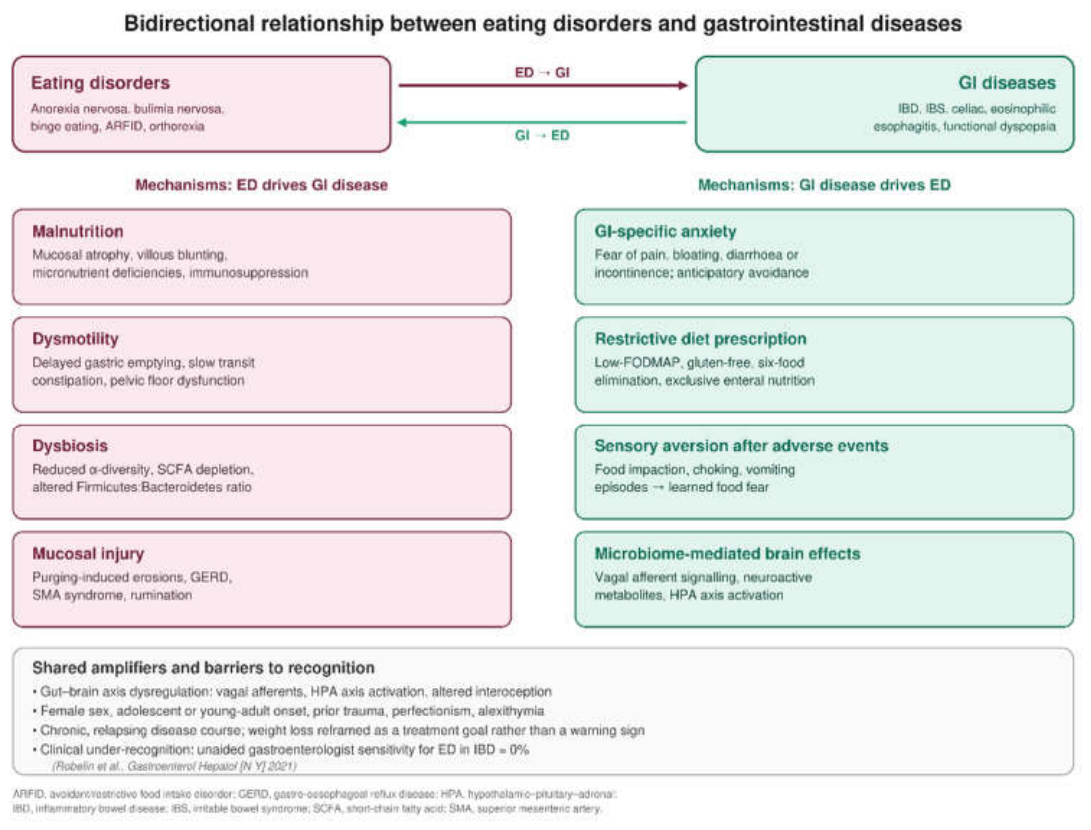

Table 1.
Studies evaluating the prevalence and clinical characteristics of avoidant/restrictive food intake disorder (ARFID) in adult and pediatric populations with gastrointestinal disorders. Studies are grouped by gastrointestinal population and listed chronologically within each group. Where 95% confidence intervals were not reported in the original publication, we have estimated them from reported sample size and proportion using the Wilson method; estimated intervals are preceded by “~”.
Table 1.
Studies evaluating the prevalence and clinical characteristics of avoidant/restrictive food intake disorder (ARFID) in adult and pediatric populations with gastrointestinal disorders. Studies are grouped by gastrointestinal population and listed chronologically within each group. Where 95% confidence intervals were not reported in the original publication, we have estimated them from reported sample size and proportion using the Wilson method; estimated intervals are preceded by “~”.
| First author / year | Design | n, GI population (subtype) | Instrument and cutoff | Prevalence (95% CI) | Key covariates | Limitations | Conclusion |
|---|---|---|---|---|---|---|---|
| Inflammatory bowel disease | |||||||
|
Robelin 2021 [41] |
Cross-sectional pilot; single-centre (Mayo Clinic, USA) | n = 98 adults with IBD | NIAS, cutoffs Picky ≥ 10, Appetite ≥ 9, Fear ≥ 10 | 10.2% NIAS+ (95% CI ~5.0–18.0) | Compared unaided physician judgement vs. NIAS — unaided clinician sensitivity for ED was 0% (specificity 96.5%) | Small n; pilot design; single tertiary centre; no formal ARFID diagnostic interview | Demonstrated the critical need for systematic screening tools in IBD clinics. |
|
Yelencich 2022 [6] |
Cross-sectional; single centre (UCLA IBD Center, USA) | n = 161 adults with IBD (45.3% CD, 51.6% UC, 3.1% IBD-U) | NIAS, cutoff ≥ 24 (composite); PG-SGA for nutritional risk | 17.0% NIAS+ (28/161; 95% CI 11.7–23.6) | ARFID+ strongly linked to malnutrition: 60.7% vs. 15.8% (p < 0.001). Associated with active disease symptoms. No association with age, sex, race/ethnicity, or BMI. | Single-centre; convenience sampling; NIAS not formally validated in IBD; cross-sectional design precludes causal inference | First large IBD-ARFID study; established the ARFID–malnutrition link. |
|
Yin 2023 [82] |
Cross-sectional, multicentre (4 tertiary centres, China) | n = 372 hospitalised adults with IBD | NIAS (Chinese-version), conventional Picky/Appetite/Fear cutoffs; FLEQ-Ch for food literacy | 32.5% NIAS+ (121/372; 95% CI 27.8–37.5) | Elevated risk associated with active CD and adherence to restrictive dietary regimens. Inverse correlation with food-literacy score (FLEQ-Ch). | Hospitalised inpatients (selection bias toward higher disease activity); generalisability outside China unclear; food-literacy data self-reported | Highest IBD-ARFID estimate from hospitalised cohorts; identified food literacy as a modifiable target. |
|
Tu 2025 [80] |
Cross-sectional, multicentre (4 tertiary hospitals, China) | n = 483 adults with IBD | NIAS (Chinese-version) | 20.3% NIAS+ (98/483; 95% CI ~16.8–24.0) | Highest risk in active CD and those on specific restrictive dietary regimens; dietary attitudes mediated risk. | Chinese-only cohort; instrument-translation effects; no concurrent biomarkers of nutritional status | Confirms elevated risk in active CD; reinforces dietary-attitude target. |
|
Burton-Murray 2024 [81] |
Cross-sectional; single centre | n = 101 adults with UC in clinical remission | NIAS (standard cutoffs); EDE-Q8 for body-image-driven ED symptoms | 11.0% NIAS+ (95% CI ~5.8–18.4); 30% had other cognitive/behavioural ED symptoms on EDE-Q8 | In remission, NIAS+ prevalence is lower than in active disease, but cognitive/behavioural ED symptoms remain frequent. | Single centre; remission cohort only; NIAS does not capture shape/weight concerns | Highlights value of pairing NIAS with EDE-Q to capture full ED spectrum. |
|
Grossberg 2025 [78] |
Cross-sectional, multicentre (BIDMC and Loyola, USA) | n = 325 adults with IBD (49.5% CD, 45.5% UC) | PARDI-AR-Q (ARFID subscale) | 17.8% PARDI-AR-Q+ (95% CI 13.7–22.5); active vs. inactive disease 51% vs. 40%, n.s. | ARFID+ patients were younger, had shorter disease duration and worse psychosocial functioning (p < 0.05). | Two urban academic centres; retrospective disease-activity data; PARDI-AR-Q not previously validated in IBD | First multicentre PARDI-AR-Q study; converges with Yelencich on ~17–18% prevalence. |
| Irritable bowel syndrome and disorders of gut–brain interaction | |||||||
|
Flack 2026 [88] |
Population-based internet survey (UK + USA) | n = 4002 adults; 1704 (42.6%) with ≥ 1 Rome IV DGBI | NIAS (standard subscale cutoffs); Rome IV diagnostic questionnaire | 34.6% NIAS+ in DGBI vs. 19.4% in non-DGBI; aOR 1.67 (95% CI 1.43–1.94) | Adjusted for age, sex, ethnicity, mood disorders. Dominant subscale: lack of interest in eating (21.5%), then sensory avoidance (18.1%), then fear of aversive consequences. Findings replicated in both countries. | Self-report data; NIAS may overestimate ARFID where GI-driven restriction is rational; doctor-diagnosed celiac and IBD excluded from DGBI category | Largest dataset to date; establishes a population-level DGBI–ARFID association. |
|
Fink 2021 [75] |
Cross-sectional, single centre (Northwestern, USA) | n = 289 adults with achalasia, celiac, EoE, or IBD | NIAS (composite cutoffs) | 53.7% NIAS+ overall (achalasia 78.4%, other organic GI 35–57%) | Higher NIAS scores in patients on a physician- or dietitian-prescribed diet; ARFID correlated with anxiety and depression. | Single centre; convenience sample; authors caution that NIAS likely overestimates ARFID in organic GI disease because it cannot distinguish necessary symptom-driven restriction from pathological avoidance | Cautionary benchmark for NIAS interpretation in organic GI disease. |
|
Nicholas 2021 [85] |
Cross-sectional, online survey (USA) | n = 2610 adults aged 18–44 self-identifying as picky eaters | Self-report ARFID symptom and GI-symptom items | Subgroup analyses (not a single prevalence figure) | Picky eaters with GI symptoms had significantly higher fear-of-aversive-consequences scores than those without GI symptoms. | Self-selected "picky-eater" sample (recruitment bias); no clinician-confirmed GI diagnoses; cross-sectional | Identifies fear-driven motivation as a shared ARFID–GI mechanism. |
| Celiac disease | |||||||
|
Bennett 2022 [89] |
Retrospective survey; single centre (Vanderbilt, USA) | n = 137 adults with biopsy-confirmed celiac disease | ARFID-cl (modified NIAS-equivalent) self-report survey | 57% suspected-ARFID (78/137; 95% CI 48.4–65.4) | No differences in age, sex, BMI, nutrient deficiencies, or bone disease vs. ARFID-negative. Food and social burden on the Impact-of-Gluten-free-Diet Questionnaire most predictive. Gluten-free-diet adherence and biopsy healing not better in ARFID+. | Retrospective; instrument is a modified survey rather than the published NIAS; selection bias toward symptomatic patients attending a tertiary clinic | Strikingly high prevalence; argues against the assumption that restriction is uniformly disease-driven. |
| Eosinophilic esophagitis | |||||||
|
Ketchem/ Dellon 2022 [84] |
Retrospective case series; tertiary centre (UNC, USA) | Adults with EoE referred for dysphagia or food impaction | Clinical ARFID criteria (DSM-5); retrospective chart review | First adult EoE–ARFID case series; prevalence not population-derived (denominator was incident EoE diagnoses, not all EoE patients) | All patients had severe strictures and high psychiatric-comorbidity burden; two-thirds on centrally acting medications. | Small retrospective series; selection bias; likely underestimates true prevalence (only documented cases captured) | Established adult EoE–ARFID as a distinct, clinically severe phenotype. |
|
Murphy 2025 [83] |
Cross-sectional; paediatric tertiary centre | Children with EoE | Validated paediatric ARFID screening (PARDI-AR-Q / Y-NIAS) | 37% positive screen (vs. 3% in matched controls) | ARFID patients 10× more likely to report GI disorders and 5× more likely to have elevated triglycerides and hs-CRP. | Single centre; paediatric cohort; screening instrument may inflate prevalence; cross-sectional | Establishes EoE–ARFID overlap in paediatric populations with cardiometabolic correlates. |
| Gastroparesis and functional dyspepsia | |||||||
|
Hollis/Burton Murray/Parkman 2024 [86] |
Prospective; consecutive adult patients at academic centre (Temple, USA) | n = 107 adults with gastroparesis (4-h gastric retention 33.5 ± 21.8%) | NIAS (standard cutoffs); PAGI-SYM for GI severity | 77% NIAS+ (82/107; 95% CI 67.9–84.5). Subscale positivity: appetite 84%, fear 76%, picky 45%. | Gastroparesis diagnosis preceded eating difficulties in 38%; eating difficulties preceded gastroparesis in 17%. Female predominance (84%). | Single centre; tertiary referral bias; NIAS may overestimate given that symptom-driven food avoidance is rational in delayed gastric emptying | Highest reported prevalence in any GI population; provides temporal data suggesting Gp typically precedes ARFID. |
|
Kaul 2024 [87] |
Prospective longitudinal; pediatric tertiary care (USA) | Children (10–17 y) with gastroparesis, functional dyspepsia, or healthy controls | NIAS and PARDI-AR-Q (concurrent administration); 2-month follow-up | Gp: 48.5% (NIAS) / 63.6% (PARDI-AR-Q); FD: 66.7% / 65.2%; HC: 15.3% / 9.7% (p < 0.0001 across groups) | Positive ARFID screen was not related to delayed gastric retention or abnormal fundic accommodation. 71.9% (NIAS) / 53.3% (PARDI-AR-Q) of baseline positives remained positive at 2 months. | Single centre; small subgroup numbers; instrument-discordance (NIAS vs. PARDI-AR-Q) demonstrates measurement uncertainty | Confirms high paediatric Gp/FD–ARFID prevalence; supports prospective stability. |
Abbreviations: aOR, adjusted odds ratio; ARFID, avoidant/restrictive food intake disorder; ARFID-cl, ARFID checklist (modified NIAS-equivalent); BIDMC, Beth Israel Deaconess Medical Center; BMI, body mass index; CD, Crohn’s disease; CI, confidence interval; DGBI, disorder of gut–brain interaction; DSM-5, Diagnostic and Statistical Manual of Mental Disorders, 5th edition; ED, eating disorder; EDE-Q8, Eating Disorder Examination Questionnaire 8-item; EoE, eosinophilic esophagitis; FD, functional dyspepsia; FLEQ-Ch, Food Literacy Evaluation Questionnaire (Chinese); GI, gastrointestinal; Gp, gastroparesis; HC, healthy controls; hs-CRP, high-sensitivity C-reactive protein; IBD, inflammatory bowel disease; IBD-U, IBD unclassified; n.s., non-significant; NIAS, Nine-Item ARFID Screen; PAGI-SYM, Patient Assessment of Upper Gastrointestinal Symptoms; PARDI-AR-Q, Pica, ARFID, and Rumination Disorder Interview–ARFID Questionnaire; PG-SGA, Patient-Generated Subjective Global Assessment; UC, ulcerative colitis; UCLA, University of California Los Angeles; UNC, University of North Carolina; Y-NIAS, Youth NIAS. Instrument cut-off conventions: NIAS subscale cutoffs follow Burton Murray et al. (2021): Picky ≥ 10, Appetite ≥ 9, Fear of aversive consequences ≥ 10. A positive screen is defined when at least one subscale meets its cutoff. Yelencich (2022) used the composite NIAS cutoff of ≥ 24. PARDI-AR-Q follows Stern / Bryant-Waugh thresholds for screen-positive status. Interpretive note: NIAS and similar screens cannot reliably distinguish necessary, symptom-driven dietary restriction (e.g., avoidance of trigger foods during an IBD flare or in EoE-related dysphagia) from clinically significant ARFID. Reported prevalences should therefore be regarded as upper bounds requiring confirmation by structured diagnostic interview (e.g., PARDI) and multidisciplinary assessment. The exceptionally high prevalences in gastroparesis (77%), functional dyspepsia (66.7%), and achalasia (78.4%) likely reflect this measurement limitation rather than ARFID prevalence per se.
Table 2.
Microbiome alterations across eating disorders and their parallels in inflammatory bowel disease and irritable bowel syndrome. Convergent depletions of butyrate-producing Firmicutes and expansions of Proteobacteria identify a shared dysbiosis signature linking these conditions through the gut–brain axis.
Table 2.
Microbiome alterations across eating disorders and their parallels in inflammatory bowel disease and irritable bowel syndrome. Convergent depletions of butyrate-producing Firmicutes and expansions of Proteobacteria identify a shared dysbiosis signature linking these conditions through the gut–brain axis.
| Condition | Category | Diversity | Increased taxa | Decreased taxa | SCFAs / metabolites | Key references |
|---|---|---|---|---|---|---|
| Eating disorders | ||||||
| Anorexia nervosa | Psychiatric / restrictive | Inconsistent for α-diversity; β-diversity altered in most studies |
Methanobrevibacter smithii Akkermansia muciniphila Lachnospiraceae (some species) Clostridium clusters I, XI, XVIII Eubacterium hallii |
Faecalibacterium prausnitzii Roseburia inulinivorans Ruminococcaceae Subdoligranulum Bacteroidetes phylum (low BMI) |
↓ butyrate; ↑ branched-chain fatty acids; altered tryptophan metabolism | Zhao 2024 Fan 2023 Andreani 2024 Yuan 2022 [20,119,120,121] |
| Bulimia nervosa | Psychiatric / binge-purge | Limited data; α-diversity broadly preserved |
Lachnospiraceae shifts Lonchococcus Inconsistent ratio of Firmicutes : Bacteroidetes |
Eubacterium hallii Pro-inflammatory cytokines VEGF-A, TNF weakly associated Faecalibacterium prausnitzii |
Sparse data; possible ↓ butyrate-producers; ClpB-like bacterial proteins implicated as anti-melanocortin mimics | Tempia Valenta 2025 Ma 2025 · Carbone 2020 [118,122,123] |
| Binge eating disorder | Psychiatric / binge | Limited data; trend toward ↓ diversity |
Enterobacteriaceae Bacteroidetes Clostridium |
Akkermansia muciniphila Faecalibacterium prausnitzii |
Animal models: ↓ SCFAs; Bacteroides uniformis supplementation reduces binge-like behaviour | Tempia Valenta 2025 Guo & Xiong (2024)· Agustí 2021 [122,124,125] |
| ARFID | Restrictive (sensory/fear-based) | Chao1 ↓ (richness); Shannon and Simpson indices ↑ (paediatric data) |
Enterobacterales / Enterobacteriaceae Bacteroidaceae / Bacteroides vulgatus Escherichia coli Streptococcus thermophilus |
Actinobacteriota phylum Bifidobacteriales / Bifidobacterium Prevotella copri Ruminococcus gnavus |
Glycosyltransferase GT26 enriched; ↑ macrolide-resistance genes; SCFA data absent | Ye 2023 · Schneider 2024 [126,127] |
| Gastrointestinal disease parallels | ||||||
| Inflammatory bowel disease (CD and UC) | Immune-mediated inflammatory | ↓ α- and β-diversity; more pronounced in Crohn’s disease |
Proteobacteria / Enterobacteriaceae Escherichia coli (adherent-invasive) Ruminococcus gnavus (CD) Streptococcaceae, Veillonellaceae |
Faecalibacterium prausnitzii Roseburia spp. Lachnospiraceae, Ruminococcaceae Coprococcus, Eubacterium |
↓ butyrate, propionate, acetate; ↓ SCFA biosynthesis pathways; ↑ H₂S | Cao 2014 (meta-analysis) · Lloyd-Price 2019 [128,129] |
| Irritable bowel syndrome | Disorder of gut–brain interaction | ↓ α-diversity in IBS-D and IBS-M; preserved or ↑ in IBS-C |
Methanobrevibacter smithii (IBS-C) Enterobacteriaceae Fusobacterium, Desulfovibrio (IBS-D) Veillonella, Ruminococcus |
Roseburia intestinalis Bifidobacterium Methanobacteriales (severe IBS) Lachnobacterium |
↓ butyrate; ↑ H₂S (IBS-D); ↑ methane (IBS-C) | Pozuelo 2015 Li 2025 · Villanueva-Millán 2022 [130,131,132] |
| Shared dysbiosis signature across eating disorders and DGBI/IBD | ||||||
|
Convergent depletions:Faecalibacterium prausnitzii, Roseburia spp., Bifidobacterium, other butyrate-producing Firmicutes — observed across anorexia nervosa, ARFID, IBD, and IBS. Convergent expansions: Enterobacteriaceae / Proteobacteria — a hallmark of intestinal inflammation, present in IBD, IBS, ARFID, and BED. Convergent metabolic shift: reduced faecal short-chain fatty acids — particularly butyrate — with loss of epithelial-barrier and anti-inflammatory effects shared across conditions. Divergent signatures: Methanobrevibacter smithii is enriched in both anorexia nervosa and IBS-C but depleted in active IBD; Akkermansia muciniphila is enriched in AN but depleted in BED. | ||||||
Abbreviations: AN, anorexia nervosa; ARFID, avoidant/restrictive food intake disorder; BED, binge eating disorder; CD, Crohn’s disease; DGBI, disorder of gut–brain interaction; ED, eating disorder; H₂S, hydrogen sulfide; IBD, inflammatory bowel disease; IBS, irritable bowel syndrome; IBS-C/-D/-M, IBS with constipation / diarrhoea / mixed predominance; SCFA, short-chain fatty acid; UC, ulcerative colitis. Up and down arrows indicate increased and decreased relative abundance or concentration vs. healthy controls. Notes on evidence quality: AN microbiome data derive from approximately 14 cohort studies (n ≈ 476 patients) synthesised in Zhao 2024 and Andreani 2024. BN and BED data are limited to fewer than 10 small studies, summarised in Tempia Valenta 2025. ARFID microbiome data derive principally from one paediatric cohort (Ye 2023, n = 135) and the conceptual review of Schneider 2024. IBD signatures are based on the Cao 2014 meta-analysis. IBS signatures are derived from cross-cohort meta-analyses (Li 2025) and subtype-specific work (Villanueva-Millán 2022). Direct head-to-head studies comparing ED and GI cohorts are lacking; the shared-signature inference is based on parallel observation rather than co-recruited samples.
Disclaimer/Publisher’s Note: The statements, opinions and data contained in all publications are solely those of the individual author(s) and contributor(s) and not of MDPI and/or the editor(s). MDPI and/or the editor(s) disclaim responsibility for any injury to people or property resulting from any ideas, methods, instructions or products referred to in the content. |
© 2026 by the authors. Licensee MDPI, Basel, Switzerland. This article is an open access article distributed under the terms and conditions of the Creative Commons Attribution (CC BY) license (http://creativecommons.org/licenses/by/4.0/).
Copyright: This open access article is published under a Creative Commons CC BY 4.0 license, which permit the free download, distribution, and reuse, provided that the author and preprint are cited in any reuse.