Preprint
Article

This version is not peer-reviewed.

Microplastics in Vegan Foods from Spain, France, and Italy: Quantification and Characterization Across Dairy Alternatives, Meat Substitutes, and Sauces

Submitted:

21 August 2026

Posted:

24 August 2026

You are already at the latest version

Abstract

The market rise of innovative vegan food products has been driven by global dietary trends moving toward plant-rich models. Nevertheless, new xenobiotics, such as microplastics (MPs), may be introduced via plastic packaging and multi-step industrial processing. Five commercial vegan items—seitan, quinoa burgers, soy desserts, vegan “Parmesan,” and vegan pesto sauce—that were gathered from Spanish, French, and Italian markets (N=15) were statistically assessed for MP contamination. MP contamination levels were primarily governed by processing intensity and primary packaging rather than botanical origin. While liquid/semi-solid matrices indicated significantly lower concentrations (0.3–4.7 MPs/10 g), solid ultra-processed meat substitutes had the most significant MP burdens (5.3–9.3 MPs/10 g). Recovery (> 85–91%) was mainly by small fragments (< 100 μm). Commodity thermoplastics and engineering polymers generated from machinery have been confirmed by polymer identification. Predefined consumption assumptions of vegan diets yield significant yearly MPs concentrations (approximately 350,000–400,000 MPs/year), according to estimated daily intake. In order to establish future food safety regulations and risk management procedures in the veg-based sector. This exploratory pilot study provides preliminary baseline information on MP contamination in the selected commercial vegan food categories and markets.
Keywords: 
;  ;  ;  ;  

1. Introduction

Global food systems have been under enormous pressure in recent years to evolve to paradigms that are solid, sustainable, and health-promoting. Rich in meat products, sodium, and saturated fats, traditional Western dietary patterns are a major contributor to environmental degradation worldwide, accounting for up to one-third of greenhouse gas emissions (GHGE) and extensive land exploitation. They are also strongly associated with non-communicable diseases (NCDs) [1,2,3]. As a result, influencing consumer behaviour to adopt plant-based diets (such as vegetarian, vegan, and flexitarian) has become a viable strategy to reduce climate change and improve public health. Adopting plant-rich diets is becoming increasingly crucial in national and international dietary frameworks. In particular, mathematical optimisation models applied to national dietary guidelines indicate that plant-dominant diets may substantially decrease GHGE and land use while meeting essential nutritional requirements [1,2,3].
The transition to plant-based diets is prompted by a variety of complicated sociocultural factors that differ geographically. Structural limitations (such as product availability, price point, and market accessibility), self-efficacy, individual ethical beliefs, and sociocultural identities all have a significant impact on consumer acceptance of plant-based products. Emerging economies are usually constrained by practical access and structural availability restrictions, whereas established Western markets commonly indicate value-driven and identity-focused consumer preferences toward plant-based products. The demand for plant-based meat substitutes and plant-based food alternatives, which range from grains and legumes to structured meat and dairy analogues, is nevertheless growing rapidly worldwide despite these different regional factors [4,5,6].
Anthropogenic demand on the environment continues to increase within the framework of advancing toward circular economy models and the urgent requirement to minimise the environmental impact associated with human production and consumption chains; this trend is highlighted by the production of 430.9 million tonnes of plastics in 2024 [7]. Ironically, the multi-step processing required to create these ultra-processed formulations from agricultural raw ingredients (such as soy, wheat gluten, quinoa, nuts, herbs, and plant fats) involves constant exposure to industrial machinery, synthetic packaging materials, and international supply chains, even though the rapid industrial expansion of novel plant-based food alternatives has emerged as a key sustainability strategy [8,9,10,11]. Consequently, these specific vegan formulations might be significant carriers for emerging chemical and physical xenobiotics, including microplastics (MPs). The widespread detection of emerging contaminants, such as MPs, pharmaceuticals, pathogens, and heavy metals, within waste streams including sewage sludge [12,13,14,15], which severely restricts their agricultural or energetic valorisation if not subjected to strict quality and safety management, is similar to this exposure pathway [16,17].
A key strategy for achieving sustainability in the worldwide ecological transition is the substitution of plant-based matrices for animal proteins. Quinoa (Chenopodium quinoa), cañihua (C. pallidicaule), and amaranth (Amaranthus caudatus) are examples of Andean pseudocereals that have balanced amino acid profiles and high crude protein levels (15.0%–16.3% dry weight) that are comparable to animal sources while significantly lowering environmental consequences. For instance, GHGE (27.0 kg CO2 vs. 0.7–0.9 kg CO2). Quinoa and cañihua have substantially smaller water footprints (850–1,200 L/kg vs. 15,400 L/kg and eq/kg) than beef [11]. In terms of nutrition, studies indicate that limiting less on animal food consumption improves cardiometabolic health and weight reduction regardless of the degree of NOVA processing; processed plant foods do not appear to be associated with weight gain [10,18,19,20,21]. Despite these benefits, commercial vegan meals may be exposed to new xenobiotics due to rigorous industrial processing, high-shear emulsification, and plastic packaging, which might result in MP contamination levels that are on level with or higher than those observed in foods derived from animals.
Although plant-based convenience and speciality items are widely distributed commercially throughout the European Union, there is still an absence of thorough empirical evidence on MP contamination in specific, renowned commercial vegan categories. There is a significant analytical gap with regard to processed plant-based matrices due to the vast majority of the environmental and food safety literature currently in publication has concentrated on marine creatures, drinking water, or items produced from animals. In order to satisfy this knowledge gap, the present study provides a systematic quantitative analysis of MP contamination in five different commercial vegan product categories that are commonly consumed in South–Western Europe (Spain, France and Italy): seitan with vegetables, quinoa burgers with tomato, soy-based desserts, vegan “Parmesan”-style cheese, and vegan pesto sauce. Due to their extremely varied physicochemical matrices—which include fermented dairy analogues, emulsified plant fat-and-oil systems, high-protein wheat gluten networks, and mixtures—evaluating these specific products is essential. Each of these matrices presents unique physical and chemical mechanisms for MP uptake, migration, and retention during industrial processing, handling, and packaging. Consequently, the primary aim of this study is to isolate, quantify, and chemically characterise–identify MPs in these five product categories that were collected from three important Southern European markets. The parameters analysed include abundance, size distribution, polymer composition, and morphology. Additionally, this study aims to identify critical contamination hotspots in vegan food processing, assess potential human dietary exposure risks associated with plant-based dietary crucial empirical data to inform future food safety regulations and quality assurance standards within the rapidly growing plant-based sector by providing preliminary analytical baseline information across selected Southern European markets. To the best of our knowledge, this exploratory pilot study is among the first targeted investigation to quantify and chemically characterize MP contamination across multiple commercially available vegan food categories in Southern European markets. The findings may help generate hypotheses for future food–safety studies and inform the design of broader monitoring studies in the rapidly expanding plant–based food sector.

2. Materials and Methods

2.1. Gathering Samples

Samples were acquired between July and August 2026. We acquired a range of vegan food products from different retail establishments in Oviedo (Spain), Bayonne (France), and Pavia (Italy) that represented the most common commercial vegan items in the Spanish, French, and Italian markets. As many distinct firms as feasible were chosen for analysis in each location. The chosen brands included a variety of formulas and packaging styles, as well as the primary providers of vegan items. A single production batch could contain up to three different packages. Considering this represented an exploratory study, the sampling strategy gave industry representativeness precedence above brand exhaustiveness. Therefore, rather than focusing on batch variability, the current study analysed technical replication (in triplicate) within a single batch. Moreover, the selection was not intended to be representative of the whole market. In particular, five distinct commercial products were investigated in each of the three regions (Table S1). Every product came in factory-sealed packaging. Each of the five products’ sampling concentrated on a single production batch, which underwent triple analysis (n = 3 per batch, total analytical samples = 45). Accordingly, the present sampling design should be interpreted as an exploratory pilot sampling framework rather than as a market-representative survey. The observations are intended to characterize the selected products and to generate hypotheses for subsequent multi-brand and multi-batch studies.

2.2. Sample Preparation

All reagents and double-filtered distilled water were filtered using a glass microfibre filter (0.7 µm particle size, Whatman, Florham Park, NJ, USA) to guarantee the total absence of background MPs and prevent MP cross-contamination. Every sample was preserved in a beaker. The solid samples (10 g each) were combined with 500 mL of double-filtered distilled water to render stirring easier. The samples were stirred for 30 minutes at 120 rpm using a flocculation analyser (JLT6, VELPS Scientifica, Usmate Velata, MB, Italy) with a digital display, six glass beaker settings, an electric speed control mechanism (10–300 rpm), and a programmable timer (0–99 h). Each sample was subsequently combined with 80 mL H2O2 50% v/v solution (VWR Chemicals, Briare, France) and incubated for 24 h at room temperature continuously stirring. Subsequently, all samples was left to oxidise with 80 mL of Fenton’s reagent for an additional 24 h at room temperature. A stainless steel module (CISA Sieving Technologies, Barcelona, Spain) with overlapping sieves sized 500, 250, 100, and 20 µm was then used to filter each sample. The sieving column was made of a vertical system of stainless steel mesh with successively decreasing apertures (500, 250, 100, and 20 µm). The residual eluent (liquid fraction < 20 µm) was collected in a solid stainless steel collection tray at the base.
The MPs were collected in beakers after being held on each sieve and cleaned with distilled water that had been double-filtered. Lastly, a density separation technique utilising a ZnCl₂ solution (d = 1.5 g/mL, 97% purity, VWR Chemicals, Briare, France) was used to separate the polymers from inorganic contaminants. By adding a saturated ZnCl₂ solution that had been adjusted to a reasonable density of 1.5–1.6 g/cm³, density separation was achieved. The mixture was completely homogenised and let to remain at room temperature for a whole day in order to enable full flotation of the low- and high-density polymers. To maximise analytical recovery and reduce any physical entrapment inside the remaining matrix, this density separation approach was carried out in duplicate (2 × 24 h) each sample. Before filtering, the supernatant containing MPs was quantitatively separated by carefully aspirating the top layer, which was restricted to 10–20% of the fluid volume. After this operational control guarantyd full capture of the floating particle fraction without disturbing or resuspending the thick sediments at the bottom of the vessel, the combined supernatant was then directed straight to the vacuum filtering unit. Glass microfibre filters (Whatman, Florham Park, NJ, USA) with a pore size of 0.7 µm were used to filter the MP concentration.

2.3. Microplastic Analysis

The MPs in the filters were counted using a stereomicroscope (Leica M205FA) and a high-resolution digital camera (Leica DFC310FX; 1.4 Mpixel, Leica Microsystems, Germany). The sizes of the MPs were determined using the Confocal UniOvi ImageJ software (Version 1.54p). A scanning electron microscope analysis (SEM) (JEOL-6610LV, Tokyo, Japan) with a resolution of up to 3.0 nm and an operating voltage of 0.5–30 kV was used to further analyse MPs. The magnifications were between 5× and 50,000×. Backscattered and secondary electron detectors were used to apply low- and high-vacuum modes as necessary. The files were automatically saved as JPG, TIFF, or BMP.
To chemically identify the separated MPs, sample spectra were compared to reference polymer databases using a strict automatic match criterion of ≥ 80%. To ensure analytical rigour, ambiguous matches—that is, those that produced transmission/reflection quality scores between 70% and 79% or exhibited clear atmospheric/baseline anomalies—were often referred to human expert verification. For this post-analysis cross-examination, the main diagnostic infrared absorption bands (such as the C=O stretching at about 1700 cm−1 for polyesters (PES) or the characteristic doublet at about 2900 cm−1 and about 1450 cm−1 for polyolefins) must be visually correlated against standard spectra. Any particle having a spectral match score of less than 70% or whose core structural peaks could not be definitively reconciled with reference baselines during human auditing was conservatively removed from the final dataset in order to avoid Type I mistakes (false positives). The operational definition of MPs comprised any synthetic polymeric particles with sizes between 1 and 5,000 μm that are categorised as fragments, fibres, microbeads, etc. To eliminate any natural or semi-synthetic interferences (such cotton and cellulose), cross-validation using micro-Fourier transform infrared spectroscopy (µFTIR) was essential. Throughout the whole study, all clearly separated particles were subjected to µFTIR analysis. Polymeric confirmation was strictly allowed when the spectral library match score (Hit Index) was more than 0.85; spectra below this threshold exhibiting ambiguous signals due to low signal-to-noise ratios were classified as unconfirmed and eliminated from the final counts.
A µFTIR spectrophotometer (Perkin Elmer Spotlight 200i FTIR spectrophotometer, Springfield, IL, USA) from the Autonomous University of Madrid (UAM) Molecular Spectroscopy Unit was used to determine the chemical composition of MPs. For transmission analysis, MPs were set up atop infrared light-transparent supports (KBr pellets). The results of an automatic analysis of the produced infrared spectra were compared with a spectral database that was kept in the device. The instrument’s spectrum library included over 36,000 chemical spectra of organic and inorganic materials, polymers, fibres, paints and their derivatives, solvents, pharmaceuticals, etc. The following measurement settings were used to analyse MPs: infrared beam aperture (20 ×100 μm for MP fibres and 50 ×50 μm for MP-fragments), spectral range (550–4000 cm−1), resolution (16 cm−1), and number of scans (30).
A Euromex Edu Blue (v2.4.9.0) magnifying lens (Duiven, Netherlands) with 20× and 40× magnification was used to evaluate MPs particles each plate’s sample count and approximate size, shape, and colour were determined (data collected prior to analysis). Colour classification was only utilised as qualitative and descriptive criteria to assist the operator during manual sorting and prevent particle miscounting; it was not subjected to quantitative statistical modelling. The samples were physically put on the surface of a manufactured KBr pellet, which is transparent in the mid-infrared band, after being recognised. They were then stored in an infrared microscope sample container. For this important procedure, a magnifying lens was always utilised as a visual assistance. Electrostatically charged microfibres were transmitted by handling isolated particles with tungsten needles or absorbent paper tips. Individual particles were carefully applied to the surface of a potassium bromide (KBr) pellet substrate. Before the KBr pellet was put on the motorised stage of the infrared microscope, each target was first identified using visible light microscopy. After determining the optical aperture and measurement settings, mid-infrared spectroscopic acquisition was performed. The generated spectra were automatically matched to reference polymer profiles kept in the device’s software database in order to achieve chemical identification.

2.4. Quality Assurance and Quality Control (QA/QC)

From the time of collection until their quantification, the MP samples underwent quality assurance and control (QA/QC) [22]. Important QA/QC processes included filtering chemical reagents before use, eliminating polymeric contaminants from the lab, and using glass microfibre filters with a pore size of 0.7 µm. During the collection and analysis process, secondary contamination from MPs detected in the air, on surfaces, and eventually on the equipment was decreased by using good field and laboratory practices (GLPs). As little plastic as feasible was used during sampling and sample processing. When this was not feasible, procedural blanks were employed. Polymer interaction was inevitable in two particular situations, despite the analytical workflow’s strong preference for glass and metallic equipment: (i) the main commercial plastic packaging of the vegan food items themselves. To systematically detect and remove any background contamination or particle shedding originating from these specific plastic interfaces, full procedural blanks (n=5, including no food matrix) were included into the process. These blanks were processed concurrently thru every subsequent analytical stage, from the initial opening of the sealed vessels and chemical digestion to density separation, wet sieving, and final vacuum filtration, to guarantee that any external polymer contribution was fully quantified and mathematically corrected. To accurately assess any background and airborne contamination, each extraction batch was processed alongside parallel procedural blanks (n=5, including no food matrix) using the same methods. MPs produced by the falcon tubes used for sample handling and sampling were therefore deemed insignificant, according to [22,23]. This background blank number was carefully subtracted from each final sample count to get actual net abundances. In the ISO 5 laminar flow cabinet, filter exposure times were restricted to fewer than 15 minutes in order to minimise airborne fallout during microscopic counting (see Supplementary Materials file).

2.5. Statistical Analysis

R and SPSS (24.0 v, IBM, Armonk, NY, USA) for Windows were used to evaluate the data. The technical triplicates (n = 3) obtained from each manufacturing batch were averaged to generate a single value for each commercial product, thereby avoiding pseudoreplication. The independent statistical unit was therefore the commercial product (N= 5 per country; total N= 15). Statistical comparisons were regarded as exploratory rather than confirmatory due to the small number of independent products. Where parametric assumptions were reasonably satisfied, ANOVA and Tukey’s HSD were used to characterize observed differences among product categories and countries. Results are primarily reported using means, standard deviations and 95% confidence intervals (CIs). Effect-size estimates were calculated as complementary descriptive measures, but given the small sample size, they were interpreted cautiously and not used as standalone evidence of biologically meaningful differences.

3. Results

3.1. Comparative MP Analysis Among All Vegan Food for Each Countries

As illustrated in Table S2, the assessment of MP contamination in fifteen commercial vegan food items, where technical triplicates (n= 3) were averaged into individual statistical units per product (N=5 per country; total N=15), indicated widespread contamination across all evaluated categories and geographical origin. Levene’s test for homoscedasticity (p> 0.05) and Shapiro-Wilk normality tests (p> 0.05) verified that all parametric assumptions were completely met across the dataset. Exploratory comparison of the three markets indicated modest differences in overall mean MP abundance, with the highest mean observed in the Italian samples (5.8 ± 0.5 MPs/10 g), followed by France (4.9 ± 0.4 MPs/10 g) and Spain (4.6 ± 0.6 MPs/10 g). Given the limited number of independent products per country, these differences should be interpreted as descriptive patterns rather than evidence of robust country-level effects. The vegan food product category had a highly significant impact on MP concentrations among national markets (p< 0.001). Italian samples showed a higher mean MP abundance than Spanish samples in this exploratory dataset; however, the small number of independent products limits the strength and generalizability of this comparison
In every country, solid ultra-processed meat substitutes exhibited MP burdens; in particular, plant-based and quinoa burgers had peak mean concentrations in Italy (9.3 ± 1.5 MPs/10 g sample) and Spain (9.3 ± 2.3 MPs/10 g sample), while French quinoa burgers had lower levels (6.7 ± 1.5 MPs/10 g sample) (Table S2). There was no statistically significant geographical variation found across countries for either seitan (p= 0.24) or burgers (p= 0.08). Similarly, gluten-based seitan with vegetables yielded elevated MP levels ranging from 5.3 ± 1.2 MPs/10 g sample in France to 7.0 ± 1.7 MPs/10 g sample in Spain and 7.3 ± 1.2 MPs/10 g sample in Italy (Table S2). The MP concentrations of vegan “Parmesan”-style cheese alternatives were remarkably consistent in all three countries (p= 0.82), with Spanish samples averaging 4.7 ± 1.2 MPs/10 g sample and Italian and French samples averaging 5.3 MPs/10 g sample (5.3 ± 1.5 and 5.3 ± 0.6, respectively) (Table S2). Conversely, overall contamination levels were significantly lower in liquid and semi-solid matrices (p< 0.01); vegan pesto sauce exhibited a statistically significant declining geographical gradient (p< 0.05) from Italy (4.7 ± 0.6 MPs/10 g sample) to France (3.7 ± 1.2 MPs/10 g sample) and Spain (1.7 ± 1.2 MPs/10 g sample) (Table S2). Lastly, according to Table S2, soy-based desserts had the lowest overall MP contamination of all the product samples that were evaluated. They yielded 3.3 ± 0.6 MPs/10 g sample in France and 2.6 ± 0.6 MPs/10 g sample in Italy, while reaching almost nonexistent concentrations in Spain (0.3 ± 0.6 MPs/10 g sample), where MPs were identified in only one of the three replicates analysed. This represented a statistically significant decrease when compared to both the French and Italian counterparts (p< 0.01, d> 1.5). Table 1 summarizes all the findings and considerations discussed in this session.

3.2. Size Distribution and Morphological Characteristics of Recovered MPs

Table S3 describes the physical and morphological characteristics of MPs identified in all 15 commercial vegan food items. Technical triplicates (n=3) were combined into arithmetic means to represent distinct statistical units (N= 5 per nation; total N= 15). Levene’s test for homoscedasticity (p> 0.05) and Shapiro-Wilk normality tests (p> 0.05) verified that all datasets corresponded to parametric criteria. Particle size distribution and shape morphotypes were strongly biased toward small fragments throughout all investigated countries, with minimal overall variation between geographical areas (p> 0.05), according to a two-tailed Analysis of variation (ANOVA). Particles smaller < 100 μm dominated MPs all assessed samples, accounting for more than 85–91% of all recoverable MPs in Italy, France, and Spain (Table S3). In particular, the 51–100 μm size fraction represented 51 ± 11% in Italy, 38 ± 16% in France, and 47 ± 11% in Spain, whereas the 1–50 μm size fraction accounted for overall mean abundances of 40 ± 14% in Italy, 49 ± 17% in France, and 46 ± 14% in Spain (Table S3). All nations had a small percentage of particles larger > 100 μm; Italy, France, and Spain did not vary statistically significantly in the 101–150 μm (4–7%), 151–250 μm (2–5%), or >250 μm (0–1%) fractions (p> 0.05, d< 0.3). With an average of 83 ± 7% in Italy, in France, and 81 ± 9% in Spain, fragments were the most common particle morphotype across all food types and nations (Table S3). With 11 ± 6% in Italy, 11 ± 6% in France, and 10 ± 6% in Spain, films constituted the second most common MP shape. Fibres ranked in second with 6 ± 3% in Italy, 8 ± 5% in France, and 9 ± 4% in Spain. Microbeads were almost nonexistent in all matrices (0–1%), with only a few small occurrences observed in pesto sauce (1%) and French quinoa burgers (2%) (Table S3). Different morphological, size, and polymer profiles observed when particular food categories were assessed separately throughout each nation (Table S3).
MPs recovered from the five vegan food matrices were examined for texture, surface topography, and physical degradation patterns using SEM analysis (JEOL-6610LV) (Figure 1) [26]. The SEM images verified a definite prevalence of heterogeneous and irregular fragments in all the samples, which is consistent with the previous optical characterisation [24].
  • Extremely processed foods (vegan seitan with veggies and a vegan quinoa burger): The MPs recovered from these solid matrices demonstrated the greatest rates of structural damage and topological degradation [17]. SEM images indicated complex microfractures, localised porosity, ragged angular edges, and longitudinal cracks [26]. The extreme heat and mechanical stress (cereal/legume grinding, high-speed mixing, and thermo-mechanical extrusion) needed to texturize the plant proteins causes these topographic flaws [27].
  • Analogous fat and dairy matrix (vegan “Parmesan” cheese): Film-like morphotypes (lamellar films) and clustering fragments in the 51–100 μm range were significantly present in MPs recovered from vegan “Parmesan” cheese [28,43]. SEM analysis revealed thin sheets with damaged edges, fractures, and folds [32]. This pattern shows how friction and the negative pressure of vacuum packaging on the lipid-rich surface (coconut oil) induce tiny layers to mechanically separate from the plastic wrapper [31] (Figure 1).
  • Emulsified semi-solid matrix (vegan pesto sauce): Smaller fragments (< 50 μm) were indicative of MPs isolated in the vegan pesto sauce [27]. When processing hard botanical components (nuts, pine nuts, and basil), hydraulic shear and abrasive cutting of the crushing blades resulted in angular and uneven surfaces, as illustrated in SEM images [26] (Figure 1).
  • Liquid/semi-solid matrix (Vegan soy dessert): The majority of the MPs identified in the vegan soy dessert belonged to the fine particle size fraction (1–50 μm) [27]. Due to fluid friction and high-speed pumping in the pasteurization/UHT treatment and packaging processes, SEM analysis revealed MPs with abrasive shapes [36] (Figure 1).
SEM confirmed the virtual absence of identical or polished microbeads (0–1%) in the five matrices [26]. This verifies that MP contamination comes from degradation and mechanical friction during industrial processing and packaging, and not from the direct addition of primary plastic microbeads [17].
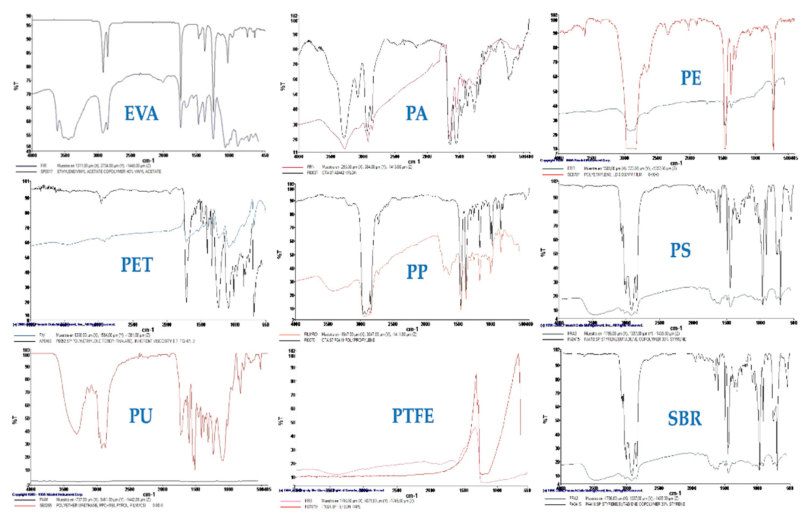
In addition to having the highest concentration of fragments (91–93%), the lowest fibre contribution (2–4%), and polymer signatures dominated by polyethylene (PE), polypropylene (PP), and polystyrene (PS), soy-based desserts continually demonstrated the highest proportion of the finest size fraction (1–50 μm), reaching 63% in Italy, 77% in France, and 66% in Spain (Table S3). Similar high concentrations of 1–50 μm particles (44% in Italy, 46% in France, and 51% in Spain) and increased fragment percentages (75–87%) were observed in vegan pesto sauce; polymer identification confirmed polyamide (PA), PE, polyethylene terephthalate (PET), and PP (Table S3, Figure 2).
Conversely, vegan “Parmesan”-style cheese a shifted size distribution that increased in the 51–100 μm range (58% in Italy, 38% in France, and 60% in Spain). This was supported by a significant film morphotype fraction (14% in Italy, 7% in France, and 15% in Spain) that was triggered by direct contact with vacuum cling film packaging. Polymer analysis identified ethylene-vinyl acetate (EVA), PE, PET, and PP (Table S3). While polymer characterisation revealed complex synthetic blends including PA, PE, PET, polytetrafluoroethylene (PTFE), and polyurethane (PU), Seitan with vegetables demonstrated a predominant size clustering in the 51–100 μm range (53% in Italy, 55% in France, and 49% in Spain), with fragments (69–78%) and films (16–18%) dominating the morphotype profile. Finally, plant-based and quinoa burgers demonstrated the most varied morphological profiles and particle sizes, with 51–100 μm MPs recovered representing an up 48–62%, along with significant film contributions (11–18%), the highest fibre counts (7–11%), and a polymer composition that included PE, PET, PP, PS, and styrene-butadiene rubber (SBR) (Table S3).
Particle morphology is primarily determined by food processing mechanisms and primary packaging types rather than geographical origin, as confirmed by cross-country statistical comparisons of identical revealed no statistically significant differences in particle size or morphotype distribution between Italy, France, and Spain (p> 0.05, Cohen’s d< 0.4). Inter-product comparisons within each nation, nevertheless, indicated that food category had a highly significant impact on morphotype breakdown (p< 0.01, d= 1.18) and size distribution (p< 0.01, d= 1.32). Specifically, burgers, seitan, and vegan cheeses had significantly higher proportions of MP–film morphotypes (11–18%, p< 0.05, 95% CI [8.2,16.4]) and larger particle μm), which directly reflected high-shear mechanical processing and flexible plastic film encapsulation, while semi-solid desserts and pesto sauces had significantly higher proportions of <50 μm fragments compared to solid extruded alternatives (p< 0.01). Due to the small number of independent products, effect-size estimates should be regarded carefully as exploratory measures of magnitude.

4. Discussion

The quantitative assessment of MP contamination in commercial vegan foods provides significant data on the processes controlling particle transfer in contemporary plant-based diets. Although plant-based items are often thought of as more sustainable environmental alternatives, the empirical evidence collected in France, Spain, and Italy reveals notable differences resulting from production paradigms. MP burdens are intrinsically connected to technological transformations, matrix physical states, and polymer-packaging interfaces rather than representing the origins of basic ingredients. The main structural and operational factors influencing these contamination profiles are explained in subsequent subsections, which also compares them to recognised non-vegan dietary assessments findings.

4.1. Impact of Food Matrix Complexity, Industrial Processing, and Packaging on MP Abundance

The findings of the present study demonstrate that MP contamination in plant-based food items is primarily dictated by the degree of industrial processing and the nature of primary packaging rather than the intrinsic plant origin of the raw materials [24,25,26]. Regional differences in as well as additive complexity are primary reasons for the observed geographical variation in MP burdens, with Italy exhibiting the highest contamination levels (5.8 ± 0.5 MPs/10 g sample), followed by France (4.9 ± 0.4 MPs/10 g sample) and Spain (4.6 ± 0.6 MPs/10 g sample) [17,27]. Highly multi-layered formulations (such as pre-gelatinized wheat flour, brown rice, oat flakes, and vegetable blends) requiring extensive industrial mixing, conveying, and extrusion—where mechanical friction against synthetic machinery belts, scrapers, and seals promotes particle shedding—are observed in the elevated MP concentrations in Italian samples [26].
Spanish products, conversely, had lower overall MP contamination due to their simpler, less processed formulations. For example, a soy-based dessert with 99.5% soy extract and no thickening gums or modified starches yielded nearly zero MP levels (0.3 ± 0.6 MPs/10 g sample) [17,27]. While high-pressure extrusion and vacuum sealing continue to be the main sources of contamination, French items exhibited an intermediate contamination profile where the use of certified organic ingredients in products like quinoa burgers may slightly decrease baseline agricultural contamination.
Based on matrix structure interface, a clear hierarchy of MP risk emerges across different food categories [17]: solid meat substitutes (burgers and seitan) consistently generated the greatest MP concentrations (5.3–9.3 MPs/10 g sample) as a consequence of extreme shear stress applied to polymeric components during thermo-mechanical extrusion, along with negative pressure from vacuum-packed plastic boxes that push flexible films into close proximity to damp surfaces [26,27]. Similarly, due to matrix (17% coconut oil) tightly wrapped in vacuum cling film has a high chemical affinity for hydrophobic synthetic polymers and plasticiser migration, vegan ‘Parmesan’-style cheese exhibited elevated, remarkably uniform contamination across all three countries (4.7–5.3 MPs/10 g sample) [27,28]. Conversely, lower MP concentrations were identified in liquid and semi-solid matrices, including pesto sauce (1.7–4.7 MPs/10 g sample), which is protected from main container-derived migration by inert glass jar packing [27]. Significantly, comparing scientific literature indicates that plant-based substitutes do not naturally have lower MP concentration than non-vegan foods [17,29]; ultra-processed plant-based burgers and seitan (0.53–0.93 MPs/g) have MP concentrations that are up to 20–30 times higher than unprocessed fresh whole meats (≤ 0.01–0.05 MPs/g) [17,25,29]. Furthermore, lipid-rich vegan cheeses display contamination levels on par with or slightly higher than traditional dairy cheeses (∼ 0.08–0.25 MPs/g) [28]. Ultimately, that anthropogenic manufacturing and contact with plastic packaging, rather than the plant-versus-animal dichotomy, are the most significant factors of MP exposure [17,24,25,26,27,28]. This indicates that dietary strategies to reduce MP ingestion should prioritise minimally processed fresh whole foods over industrially manipulated, plastic-packaged items [17,25].

4.2. Size Distribution, Morphological Characteristics, and Polymer Signatures as Indicators of Contamination Pathways

Important mechanistic data regarding the specific operational pathways of contamination during food processing and packaging is provided by the physical dimensions, morphological profiles, and recovered MPs (Table S3) [26,27]. The severe physical degradation processes currently taking place within industrial processing lines are demonstrated by the significant dominance of small particle size fractions across all three geographical markets, where MPs < 100 μm consistently accounted for over 85–91% of the total burden [26,30]. The high frequency of fluid mixing, homogenisation, and pumping of fluid ingredients, which breaks down synthetic polymers into microscopic debris without triggering larger can be observed in the high prevalence of the finest 1–50 μm fraction in liquid and semi-solid matrices, especially in soy-based desserts (63–77%) and vegan pesto sauces (44–51%) [27]. Conversely, solid extruded matrices exhibited a clear distributional shift toward the 51–100 μm range, including plant-based burgers (48–62%), gluten-based seitan (49–55%), and lipid-dense vegan cheeses (38–60%) (Table S3). This modification is consistent with the strong thermo-mechanical shear stress applied during high-moisture extrusion and protein texturization, when abrasive contact with equipment walls produces both tiny microscopic dust and bigger particle debris [26,30,31].
These contamination pathways resulting from processing are further supported by a morphological analysis (Table S3). The majority of obtained MPs across all items and nations (69–93%) were irregularly shaped fragments. Their widespread occurrence is directly related to the mechanical deterioration of polymer-based processing elements, including filter membranes, gasket seals, polymeric scrapers, and synthetic conveyor belts, which are subjected to high pressure and constant friction during batch formulation [17,26]. A direct result of main packaging interfaces is the secondary lead of films (3–18%), which peaked in seitan, vegan cheeses, and plant-based burgers [27,28]. Flexible polymer films are forced into close contact with the moist or lipidic food matrix in these solid and high-fat products by the negative pressure used during vacuum sealing, which facilitates the mechanical stripping and chemical migration of MP–film layers [28,32,33]. MP–Fibres, conversely, represented a small percentage (2–15%) and were mostly enriched in Spanish/Italian burgers (7–15%) and pesto sauces (6–14%). This suggests that airborne atmospheric fallout onto raw agricultural leaves during field cultivation or shedding from worker protective clothing during open processing steps [24,25]. Food contamination occurs by secondary mechanical fragmentation and packaging degradation rather than primary spherical plastic additives, as demonstrated by the nearly complete lack of spherical microbeads (0–1%) in the majority of matrices [17,26].
Final confirmation of these distinctive point sources is provided by chemical polymer identification throughout the product lines (Table S3). PE, PP, and PET are consistently identified in all categories, which reflects their widespread use in primary packaging containers, mixing tubs, and food-grade conveyor systems [34,35,36]. SBR in burgers suggests wear from industrial drive belts and mechanical seals, while the recovery of PTFE (Teflon) and PU in seitan samples reveals the deterioration of non-stick thermal coatings and heavy-duty conveyor belts operating under high thermal load [17,26]. Additionally, packaging-derived transfer from flexible barrier films wrapped around high-fat matrices is directly supported by the presence of EVA only in vegan “Parmesan”-style cheeses [32,33,34]. Furthermore, a cross-country comparison indicates these size, shape, and polymer signatures are remarkably consistent for identical food categories in Italy, France, and Spain (Table S3). This suggests that packaging chemistry and universal industrial manufacturing technologies, rather than local environmental baselines, control physical particle characteristics [17,26].

4.2.1. Surface Morphology (SEM) and Its Mechanistic Implications in Vegan Food Items

SEM microstructural evaluation provides pertinent information for understanding the mechanisms of plastic material transfer and fragmentation that might be taking place throughout the processing and packaging of processed plant-based foods [27]. In this scenario, we might connect the properties of MPs to the mechanical and physicochemical processes that the food may be exposed to based on the surface morphology, size, and shape of the detected particles. Thus, the rough, angular, and fractured particles identified in the vegan quinoa burger and the vegan vegetable seitan are consistent with physical abrasion processes associated with the continuous contact of the food matrix with augers, extruders, seals, and other polymeric components of the equipment. This wear could favor the detachment of particles from materials such as PTFE, PU, ​​and PE, subsequently becoming incorporated into the food matrix [26].
Furthermore, the physicochemical interactions between the food’s fat phase—which is especially rich in coconut oil—and the flexible packaging materials—such as EVA or PET films—may be responsible for the morphology of vegan “Parmesan” cheese, which is characterised by folded layers and wrinkled surfaces [28]. The mechanical forces generated during packaging, handling, and storage, along with the potential alteration or weakening of the polymer interface, may make it simpler for tiny layers to separate into the food [31]. Additionally, shearing, impact, and progressive fragmentation processes in fluid matrices may be inferred from the prevalence of fragment–MPs <50 in the vegan sauce and the vegan soy dessert. Smaller fragments could arise from the decrease of previously deteriorated plastic particles due to hydrodynamic pressures and high-speed impact events [27].
These morphological shifts are especially significant from the standpoint of food safety and human exposure due to MP’ porous and rough surfaces have a which may favour interaction with other substances present in food or the environment [37,38]. This surface can promote the adsorption of lipophilic pollutants and interaction with chemicals from the plastic material itself, including specific additions like phthalates and bisphenol-A, in matrices with a high lipid content, including pesto and plant-based cheese [16]. Additionally, MPs, particularly those <100 μm, may be more capable of mechanically interacting with gastrointestinal tissues if they have uneven This might lead to and inflammation of the intestinal mucosa [25]. With all factors viewed, the surface morphology observed with SEM not only enables the physical characterisation of MPs present in vegan foods but also provides hints regarding their potential mechanisms of generation, transformation, and interaction with food matrices—aspects that can be critical for comprehending their behaviour and possible toxicological relevance.

4.3. Comparative Polymer Signatures of Conventional Non-Vegan and Vegan Substitutes Foods

When compared to previous studies on conventional, non-vegan food items, the analytical identification of polymer types throughout the assessed vegan matrices (Table S3) demonstrates both clear technical divergences and structural chemical similarities. Commodity thermoplastics, such as PE, PP, and PET, were widely used in all vegan product lines, reflecting the universal profile identified in processed animal-derived products including commercial sausages, chicken nuggets, and canned meats [26,29,32,33,36]. Nevertheless, an extremely complex polymer spectrum, comprising PA, PS, PTFE, PU, and SBR, was observed by ultra-processed vegan meat substitutes (plant-based burgers and seitan) (Table S3). PE, PP, and polyester (PES) fibres from agricultural bioaccumulation, slaughtering effluent, or primary film trays are the main sources of MP contamination in non-vegan processed meats [29,34]. Conversely, the presence of synthetic elastomers (such as SBR and PU) and fluoropolymers (like PTFE) in seitan and burgers directly indicates heavy thermo-mechanical processing specific to plant protein texturization, where severe polymer shedding is caused by aggressive high-shear extrusion and continuous conveying against rubber seals and non-stick machinery coatings [26,30,31,32,33,34,35,36].
In dairy alternatives, vegan “Parmesan”-style cheese was characterised by PE, PP, PET, and EVA (Table S3). The specific recovery of vegan cheese direct flexible vacuum barrier which are designed with EVA sealants to encapsulate high-fat plant oil emulsions [28,43], whereas traditional aged dairy cheeses usually accumulate PE and PVC from plastic ripening moulds and wax/film coatings [43]. Vegan pesto sauce and soy desserts have simpler polymer profiles dominated by PE, PP, and PA in liquid and semi-solid matrices (Table S3). The absence of fluoropolymers in both and matrices that low-shear and inert glass or rigid container packaging significantly restrict the diversity of machinery-derived MPs, even tho traditional animal-based sauces (such as dairy-based pestos or mayonnaise) exhibit very similar PE/PP-dominated profiles [17,27]. In conclusion, comparing suggests whereas acquire of biological and polymers (PE, PET, PVC) (Milne et al., 2024), plant-based substitutes acquire an equivalent or wider range of industrial engineering polymers (PTFE, PU, SBR, EVA), driven solely by high-intensity mechanical manipulation and specialised polymer encapsulation [17,26,30,31,32,33,34,35,36].

4.4. Exploratory Scenario–Based Dietary Exposure Assessment

Using the obtained MP concentrations and predetermined consumption assumptions, a scenario-based Estimated Daily Intake (EDI) was determined to provide an exploratory illustration of potential dietary exposure. The average intake of vegans or exposure at the population level are not meant to be represented by this estimate. The EDI was determined using the standardised equation (Eq. 1): Eq. 1
E D I = C M P × F I R B W
where CMP represents the microplastic concentration in the food matrix (MPs/g), assuming an average adult body weight (BW) of 70 kg and standard European food ingestion rates (FIR).
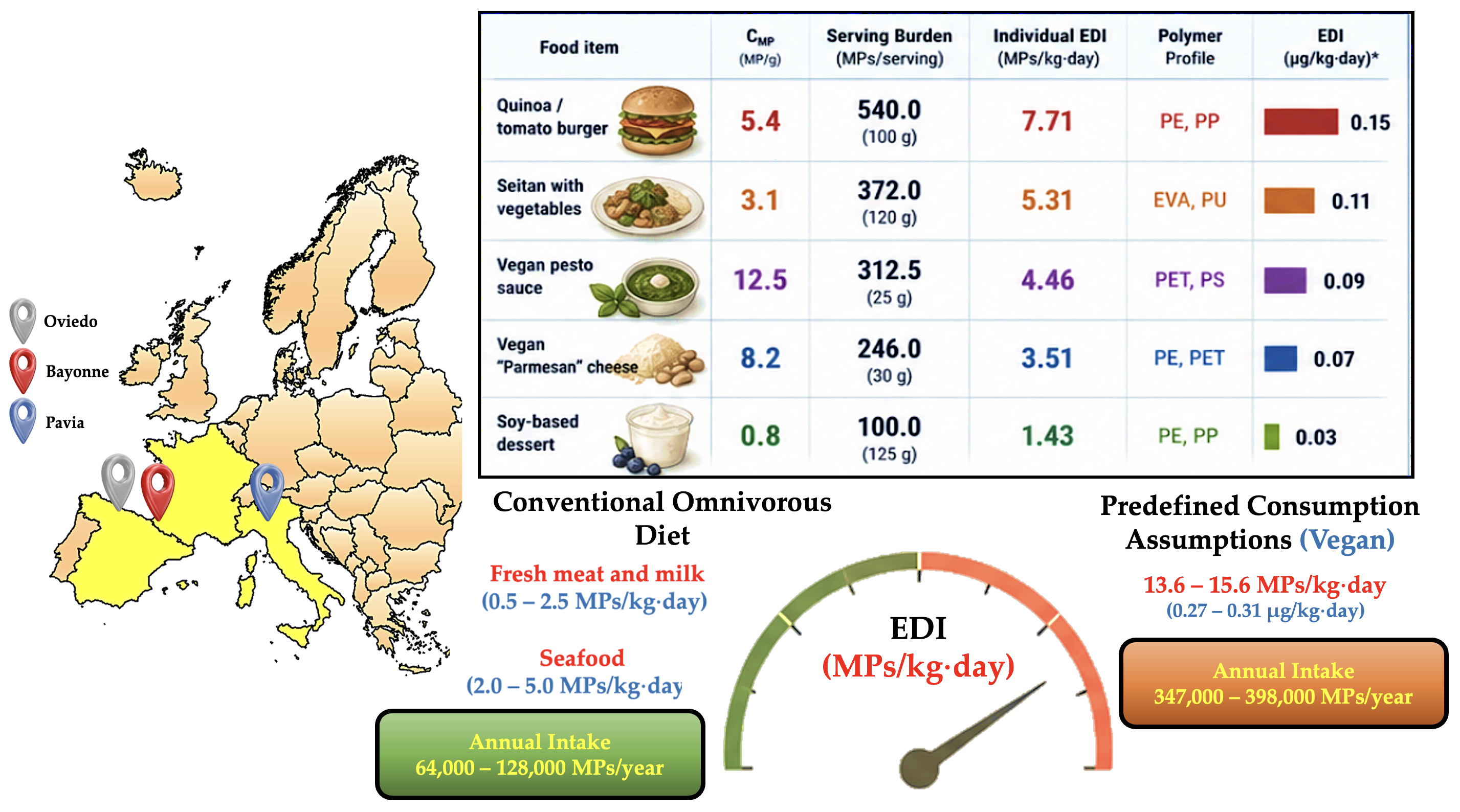
A conservative average mass of 0.02 μg per single MP was employed for mass-based exposure estimates, assuming a mean density of 1.05 g/cm3 and an equivalent spherical diameter of 20 μm. When baseline CMP for ultra-processed matrices are integrated, significant differences in daily exposure levels, polymer-specific profiles, and particle concentrations per serving are identified for all product categories. With 540.0 MPs/serving (100 g/day serving at a CMP= 5.4 MPs/g) and an EDI of 7.71 MPs/kg·day, plant-based quinoa burgers exhibited the highest individual contamination level (0.15 μg/kg ·day). This stands in stark contrast to fresh raw beef patties, which have much lower baseline MP contents (CMP= 0.5–1.2 MPs/g; EDI = 0.71–1.71 MPs/kg⋅day). The mechanical abrasion of dried grains during industrial milling, along with high-moisture thermal extrusion (HMTE) and automated moulding equipment shedding PE and PP fragments from processing belts and packaging films, are the causes of this increased particle load in quinoa burgers. These processes cause physical micro-abrasion of the intestinal mucosa and encourage the sorptive carrying of lipophilic environmental contaminants. While whole pork or chicken cuts produce lower baseline exposures (EDI≈ 0.86–2.14 MPs/kg⋅day), seitan with vegetables delivered 372.0 MPs/serving (120 g/day serving at a CMP= 3.1 MPs/g), corresponding to an EDI of 5.31 MPs/kg⋅day (0.11 μg/kg⋅day). The rigorous mechanical isolation of essential wheat gluten, high-shear mixing, and multi-stage dough handling that introduce substantial fractions of PU and EVA synthetic fibres and rubberised fragments from conveyers and sealing gaskets are the main causes of seitan’s high MP concentration. These particles are susceptible to chemical degradation under acid-enzymatic gastric conditions, potentially leaching reactive isocyanate monomers, vinyl acetate residues, and toxic plasticiser additives resulting in oxidative stress.
Additionally, vegan pesto sauce had the greatest volumetric MP burden (CMP= 12.5 MPs/g), producing 312.5 MPs/serving (25 g/day and 4.46 MPs/kg·day; 0.09 μg/kg⋅day), in contrast to conventional dairy pesto with Parmigiano Reggiano (CMP≈ 3.0–4.5 MPs/g; EDI ≈1.07–1.61 MPs/kg·day). High CMP in vegan pesto is triggered by the mechanical grinding of hard botanical ingredients in high-shear rotary blenders, which contaminates the matrix mainly with PET and PS, whose pre-adsorbed endocrine-disrupting additives (such as phthalates and bisphenol–A) are easily desorbed in the gut due to the sauce’s lipid-rich solvent phase. Similarly, vegan “Parmesan” supplied 246.0 MPs/serving (30 g/day serving at a CMP= 8.2 MPs/g) with an EDI of 3.51 MPs/kg⋅day (0.07 μg/kg⋅day). Whereas aged dairy cow cheese usually exhibits decreased MP burdens (CMP≈ 1.5–2.8 MPs/g; EDI≈ 0.64–1.20 MPs/kg⋅day). Intestinal tight-junction proteins are disrupted by PE and PET micro-fragments introduced by the industrial agitation of modified starches and coconut oils followed by thermoformed plastic packing, increasing permeability (“leaky gut”). Finally, among the assessed vegan items, soy-based desserts indicated the lowest exposure tier, yielding 100.0 MPs/serving (125 g/day serving at a CMP= 0.8 MPs/g) and an EDI of 1.43 MPs/kg⋅day (0.03 μg/kg⋅day), bringing them closer to conventional cow’s milk yoghurt (CMP≈ 0.3–0.6 MPs/g; EDI≈ 0.54–1.07 MPs/kg⋅day), including small amounts of PP and PE micro-fragments from liquid UHT pumping and filling lines. To illustrate the potential magnitude of dietary exposure under a defined consumption scenario, we considered a hypothetical daily combination of seleceted products included in the present datasets (i.e., one plant–based burget together with a small portion of pesto or a cheese analogue and one soy–based dessert). The total consumption rate under these predetermined assumptions is around 13.6–15.6 MPs/kgbw·day and, when quantitatively extended over 365 days, roughly 347,000–398,000 MPs/year. Rather than being estimates of real yearly MP consumption among vegan consumers, these data points should be carefully considered as scenario-dependent estimates. Benchmarked against a conventional omnivorous diet—where fresh meat and milk yield low EDIs (0.5–2.5 MPs/kg⋅day), and seafood provides moderate exposure (2.0–5.0 MPs/kg⋅day; it becomes evident that multi-stage industrial transformation acts as a far more potent vector for MP contamination than biological or environmental bioaccumulation [29,30,31,32,33,34,35,36]. Crucially, individual dietary habits, food frequency, portion-size variability, brand-to-brand variability, batch-to-batch variability, packaging differences, and intake of other plant-based and non-plant-based foods are all ignored in this scenario. All data, exposure values, polymer profiles, and toxicological mechanisms described above are summarized in Table 2.
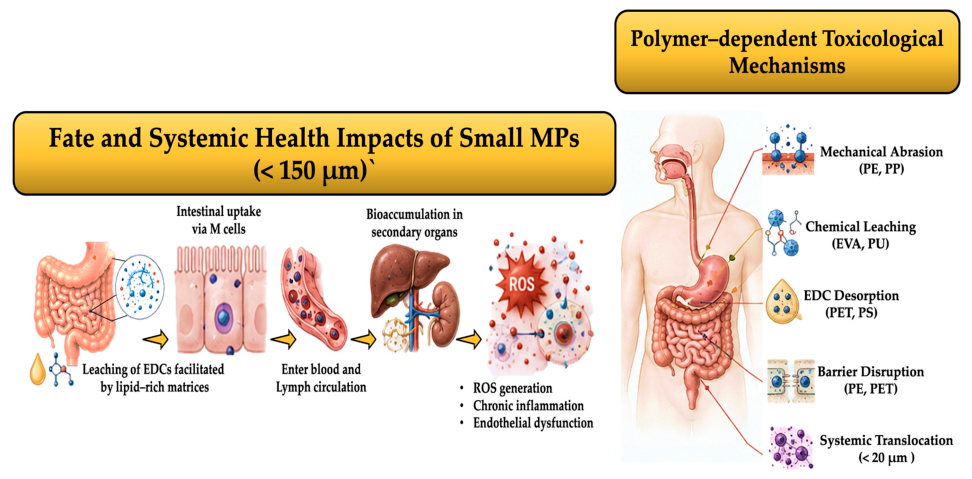
Particle size and polymer identity determine systemic effects on health from a human toxicological perspective. MPs of coarse size (>150 μm) mainly cause superficial mechanical abrasion of the mucosal epithelium and are not absorbed throughout the intestinal lumen (>99% ejected fecally) [16,24,25]. Conversely, small MPs (<150 μm, especially <20 μm), including the PE, PET, PU, and PS fractions identified in these ultra-processed matrices, easily pass through the intestinal barrier via paracellular passage or transcellular endocytosis (M cells of Peyer’s patches), entering the blood and lymphatic circulation (Table 2, Figure 3) [16,24,25]. Once systemically distributed, small MPs accumulate in secondary target organs (liver, kidneys, vascular endothelium), where polymers like PS and PU generate excessive reactive oxygen species (ROS), triggering chronic inflammation and endothelial dysfunction [37,38,39].
Concurrently, the intestinal leaching of embedded endocrine-disrupting chemicals (EDCs), such as phthalates and bisphenol A, is facilitated by the lipid-rich matrices of plant-based sauces and cheeses, resulting in a dual physical-chemical toxicity burden [16,17,27,28]. The importance for public health strategies to prioritise fresh, minimally processed whole plant foods over industrially transformed convenience formulations is highlighted by the reality that, although a plant-based diet eliminates marine and animal bioaccumulation pathways, a heavy reliance on ultra-processed, plastic-packaged vegan analogues presents serious MP hazards (Figure 3).

4.5. Limitations of the Study

When evaluating the current findings, a number of limitations should be taken into consideration. First, only 15 commercial items—five from each nation—were included in the study; each product was represented by a single production batch. Technical triplicates were carried out, however the number of independent commercial items is not increased by these repetitions. As a result, the study’s statistical power is limited, and it is unable to produce reliable estimates of variability between brands, batches, seasons, or markets. Second, the variety of foods consumed within vegan dietary patterns cannot be represented by the five vegan food categories that were studied. Third, the exposure calculations should not be considered as estimates of real dietary exposure in vegan communities since they were scenario-based and depended on predetermined serving sizes and consumption assumptions. Fourth, market share, customer purchase frequency, packaging variety, and regional variability within each nation were not taken into consideration in the study.
Finally, unless directly verified by source-tracing studies, the mechanical attribution of individual MPs to particular processing machinery or packaging materials remains inferential. Therefore, in order to confirm and generalise the current results, larger research involving numerous brands, production batches, sampling dates, packaging types, and consumer-relevant consumption statistics is necessary.
Techniques such micro–Raman spectroscopy (µRaman) or high-resolution Raman spectroscopy, known as atomic force microscopy-Raman (AFM-Raman) may be capable to detect MPs < 1 μm and provide more accurate characterisation in future studies.

5. Future Perspectives

From a mechanistic and biomedical perspective, establishing focused dietary and therapeutic treatments requires an understanding of the toxicokinetic pathways of ingested MPs. Severe health risks, including as oxidative stress, mitochondrial dysfunction, pro-inflammatory cytokine release, and potential endocrine disruption, have been associated with long-term exposure to MPs [40]. Oral administration of Procambarus clarkii-derived chitosan (PCC) prior to MP intake has been reported to enhance faecal excretion by at least 45% [40]. Mechanistically, MP entrapment and integration into mixed lipid micelles—a crucial requirement to facilitate via endocytosis and transcytosis—are prevented of a high-viscosity hydrogel matrix in the stomach lumen. Additionally, PCC hydrogels have been demonstrated in vitro to effectively sequester polystyrene nanoplastics (NPs) in simulated gastric fluid (SGF, pH 3.0), suggesting that biopolymer therapy may be able to remove both MPs and NPs from the human body [41]. Furthermore, chitosan attenuates epithelial translocation while reducing MP-induced inflammatory cascades, including as Toll-like receptor (TLR)-mediated signalling and NLRP3 inflammasome activation [42].
An ongoing in vitro study is currently assessing the comparative effectiveness of vegan chitosan fungal extracted from Aspergillus niger versus PCC upon these encouraging biological findings while harmonising with plant-based and cruelty-free paradigms. The relative binding affinities and entrapment capabilities of the biopolymers for MPs in SGF (pH 3.0) are analysed in this study. With its unique degree of deacetylation (DDA) and molecular weight (MW) distribution, fungal chitosan may provide similar or better MP sequestration capability in acidic luminal settings without depending on animal sources generated from crustaceans, according to preliminary mechanistic findings.
Biopolymer-based treatments are a very promising therapeutic strategy from a translational perspective for human health applications. Cattle are frequently impacted by long-term exposure to MP through interior surroundings, synthetic feeding equipment, and processed dietary habits. In scenarios of long-term low-dose food exposure, future prospective studies should concentrate on improving biopolymer matrices to avoid intestinal barrier hyperpermeability, systemic bioaccumulation, and organ toxicity.

6. Conclusions

This exploratory pilot study provides preliminary evidence that MP contamination may be detected across several commercially available vegan food items sampled from Spain, France and Italy. Within the selected products, MP abundance varied more clearly among food categories and product matrices than among countries, suggesting that processing characteristics and packaging interfaces may be relevant factors influencing MP occurrence.
Although the current study does not permit quantitative estimation of the reduction in dietary exposure that would result from substituting processed products with minimally processed foods, the observed patterns are consistent with the hypothesis that highly processed and plastic-packaged food matrices may represent relevant points of MP exposure. Since both undergo intense mechanical friction against polymeric during mixing, extrusion, and vacuum-sealing, solid, highly processed meat substitutes like seitan and plant-based burgers MP concentrations that are entirely comparable to those of heavily processed animal-derived products including chicken nuggets. Consequently, eating fresh, minimally processed whole foods (like fresh vegetables, dry legumes, or fresh raw meats) reduces MP ingestion by up to 30 times compared to ready-to-eat ultra-processed items packaged in plastic. This golden rule for reducing dietary MP exposure is applicable to both vegan and non-vegan diets [17].
The scenario-based exposure calculations should not be considered as estimates of average or population-level exposure among vegan consumers, but they do provide additional insight into the possible volume of dietary MP intake under specific consumption assumptions. Therefore, more brands and manufacturing batches, repeated sampling gradually, a wider variety of vegan meals, and consumer-relevant dietary consumption data should all be included in future studies. These types of studies will be required to establish reliable dietary exposure estimates and assess the generalisability of the current findings.

Supplementary Materials

The following supporting information can be downloaded at the website of this paper posted on Preprints.org.

Author Contributions

C.C.: Conceptualization, Methodology, Formal Analysis, Supervision, Statistical analysis, Visualization, Validation, Writing—original draft, Writing—review and editing; R. L.: Visualization, Funding, Methodology, Writing—review and editing; K.S.: Visualization, Methodology; and U. C.: Conceptualization, Methodology, Formal Analysis, Visualization, Validation, Writing—original draft, Writing—review and editing. All authors have read and agreed to the published version of the manuscript.

Funding

This research was funded by the RUDN University Scientific Projects Grant System, grant number: 021411-0-000.

Data Availability Statement

The datasets used and/or analyzed during this study are available from the corresponding author on reasonable request.

Acknowledgments

The authors are grateful at the Photonic Microscopy and Imaging Processing Unit of the Scientific-Technical Services of the University of Oviedo (Confocal UniOvi ImageJ), for the assistance in the MPs analysis and Molecular Spectroscopy Unit of the Autonomous University of Madrid (UAM) for the assistance in FTIR analysis. R.L. acknowledged the support from the RUDN University Scientific Projects Grant System, grant number: 021411-0-000. This article is dedicated to Alexander Santiago Casella Flores.

Conflicts of Interest

The authors declare no conflicts of interest.

Abbreviations

The following abbreviations are used in this manuscript:
AFM–Raman Atomic Force Microscopy-Raman
BW Body Weight
CIs Confidence Intervals
DDA Degree of Deacetylation
EDCs Endocrine-Disrupting Chemicals
EDI Estimated Daily Intake
EVA Ethylene-Vinyl Acetate
FIRs Food Ingestion Rates
GHGE Global Greenhouse Gas Emissions
GLPs Good Field and Laboratory Practices
HMTE High-Moisture Thermal Extrusion
KBr Potassium Bromide
MPs Microplastics
MW Molecular Weight
NCDs Non-Communicable Diseases
NPs Nanoplastics
PA Polyamide
PCC Procambarus Clarkii Chitosan
PE Polyethylene
PES Polyester
PET Polyethylene Terephthalate
PP Polypropylene
PS Polystyrene
PTFE Polytetrafluoroethylene
PU Polyurethane
ROS Reactive Oxygen Species
SBR Styrene-Butadiene Rubber
SEM Scanning Electron Microscopy
SGF Simulated Gastric Fluid
UAM Autonomous University of Madrid
µFTIR Micro–Fourier Transform Infrared Spectrometry
µRaman Micro–Raman Spectroscopy

References

  1. Sturm, L.; Klausmann, L.; Seper-Nagl, K.; Alber, O.; Griesbacher, A.; Kühn, T.; Wagner, K. H. A path to sustainable and healthy diets: modeling ovo-lacto-vegetarian food-based dietary guidelines. Front. Nutr. 13 2026, 1754132. [Google Scholar] [CrossRef]
  2. Zhu, B.; Winterstein, J.; Habisch, A. Cultural influences on vegetarian food consumption: insights from Germany and Thailand using the motivation-opportunity-ability model. Brit. Food J. 2026, 128(13), 206–230. [Google Scholar] [CrossRef]
  3. Craig, W. J. Health effects of vegan diets. Am. J. Clin. Nutr. 2009, 89(5), 1627S–1633S. [Google Scholar] [CrossRef]
  4. Awasthi, M. K.; Kumar, V.; Hellwig, C.; Wikandari, R.; Harirchi, S.; Sar, T.; Taherzadeh, M. J. Filamentous fungi for sustainable vegan food production systems within a circular economy: Present status and future prospects. Food Res. Int. 2023, 164, 112318. [Google Scholar] [CrossRef]
  5. Winkelmair, A.; Schroter, F. A.; Jansen, P. Vegetarian and sustainable food consumption behavior: Exploring the relation to explicit and implicit attitudes toward vegetarian foods and dispositional mindfulness. Appetite 2025, 206, 107847. [Google Scholar] [CrossRef]
  6. Kautish, P.; Thaichon, P.; Soni, P. Environmental values and sustainability: Mediating role of nature connectedness, and love for nature toward vegan food consumption. J. Consum. Behav. 2024, 23(3), 1130–1145. [Google Scholar] [CrossRef]
  7. Plastics Europe. Plastics—The fast facts 2025 plastics Europe, Brussels. 2025. Available online: https://plasticseurope.org/knowledge-hub/plastics-the-fast-facts-2025/ (accessed on 11 August 2026).
  8. Herman, A.; O’Neill, K. The geographies of veganism: Exploring the complex entanglements of places, plants, peoples, and profits through vegan food practices. Prog. Environ. Geogr. 2025, 4(1), 92–112. [Google Scholar] [CrossRef]
  9. Estévez, M.; Arjona, A.; Sánchez-Terrón, G.; Molina-Infante, J.; Martínez, R. Ultra-processed vegan foods: Healthy alternatives to animal-source foods or avoidable junk? J. Food Sci. 2024, 89(11), 7008–7021. [Google Scholar] [CrossRef]
  10. Kahleova, H.; Znayenko-Miller, T.; Jayaraman, A.; Motoa, G.; Chiavaroli, L.; Holubkov, R.; Barnard, N. D. Vegan diet, processed foods, and body weight: a secondary analysis of a randomized clinical trial. Nutr. Metab. 2025, 22(1), 21. [Google Scholar] [CrossRef]
  11. Quevedo-Olaya, J. L.; Schmiele, M.; Correa, M. J. Potential of Andean grains as substitutes for animal proteins in vegetarian and vegan diets: A nutritional and functional analysis. Foods 2025, 14(17), 2987. [Google Scholar] [CrossRef]
  12. Casella, C.; Sol, D.; Laca, A.; Díaz, M. Microplastics in sewage sludge: a review. Environ. Sci. Pollut. Res. 2023, 30(23), 63382–63415. [Google Scholar] [CrossRef]
  13. Casella, C.; Sol, D.; Laca, A.; Díaz, M. Microplastic retention in secondary sewage sludge: characterization and influence of solid concentration. Appl. Sci. 2025, 15(7), 3557. [Google Scholar] [CrossRef]
  14. Hooge, A.; Hauggaard-Nielsen, H.; Heinze, W. M.; Lyngsie, G.; Ramos, T. M.; Sandgaard, M. H.; Syberg, K. Fate of microplastics in sewage sludge and in agricultural soils. TrAC Trends Anal. Chem. 2023, 166, 117184. [Google Scholar] [CrossRef]
  15. Harley-Nyang, D.; Memon, F. A.; Jones, N.; Galloway, T. Investigation and analysis of microplastics in sewage sludge and biosolids: A case study from one wastewater treatment works in the UK. Sci. Total Environ. 2022, 823, 153735. [Google Scholar] [CrossRef]
  16. Cornelli, U.; Casella, C.; Belcaro, G.; Cesarone, M. R.; Marucci, S.; Rondanelli, M.; Zanoni, G. Definition of emerging microplastic syndrome based on clinical and epidemiological evidence: A narrative review. Microplastics 2025, 4(4), 93. [Google Scholar] [CrossRef]
  17. Cornelli, U.; Recchia, M.; Casella, C. The Food Microplastic Pyramid (FOMIC-Py) as a Novel Framework for Prioritizing Dietary Exposure and Industrial Processing Impact: An Italian North-South Exposure Model. Toxics 2026. [Google Scholar] [CrossRef]
  18. Ohlau, M.; Spiller, A.; Risius, A. Plant-based diets are not enough? Understanding the consumption of plant-based meat alternatives along ultra-processed foods in different dietary patterns in Germany. Front. Nutr. 2022, 9, 852936. [Google Scholar] [CrossRef]
  19. Daas, M. C.; Vellinga, R. E.; Pinho, M. G. M.; Boer, J. M.; Verschuren, W. M.; van Der Schouw, Y. T.; Biesbroek, S. The role of ultra-processed foods in plant-based diets: associations with human health and environmental sustainability. Eur. J. Nutr. 2024, 63(8), 2957–2973. [Google Scholar] [CrossRef]
  20. Louie, J. C. Y. Are all ultra-processed foods bad? A critical review of the NOVA classification system. Proc. Nutr. Soc. 2025, 1–9. [Google Scholar] [CrossRef]
  21. Steele, E. M.; O’Connor, L. E.; Juul, F.; Khandpur, N.; Baraldi, L. G.; Monteiro, C. A.; Herrick, K. A. Identifying and estimating ultraprocessed food intake in the US NHANES according to the Nova classification system of food processing. J. Nutr. 2023, 153(1), 225–241. [Google Scholar] [CrossRef]
  22. Casella, C.; Sol, D.; Laca, A.; Díaz, M. Microplastic retention in secondary sewage sludge: characterization and influence of solid concentration. Appl. Sci. 2025, 15(7), 3557. [Google Scholar] [CrossRef]
  23. Saqib, M.; Fan, Y.; Hao, R.; Zhang, B. Optical imaging of nanoscale electrochemical interfaces in energy applications. Nano Energy 2021, 90, 106539. [Google Scholar] [CrossRef]
  24. Borriello, L.; Scivicco, M.; Cacciola, N. A.; Esposito, F.; Severino, L.; Cirillo, T. Microplastics, a global issue: human exposure through environmental and dietary sources. Foods 2023, 12(18), 3396. [Google Scholar] [CrossRef]
  25. Eze, C. G.; Nwankwo, C. E.; Dey, S.; Sundaramurthy, S.; Okeke, E. S. Food chain microplastics contamination and impact on human health: a review. Environ. Chem. Lett. 2024, 22(4), 1889–1927. [Google Scholar] [CrossRef]
  26. Di Fiore, C.; Maio, M.; Avino, P. Food processing and microplastics. In Microplastics in Agriculture and Food Science; Academic Press, 2025; pp. 245–249. [Google Scholar] [CrossRef]
  27. Peng, G.; Faikhaw, O.; Juan, B.; Reemtsma, T. Systematic evaluation of food design, treatments, packaging and storage conditions on microplastic concentrations in complex matrices. J. Hazard. Mater. Adv. 2025, 100972. [Google Scholar] [CrossRef]
  28. Macan Schönleben, A.; den Ouden, F.; Yin, S.; Fransen, E.; Bosschaerts, S.; Andjelkovic, M.; Poma, G. Organophosphorus flame retardant, phthalate, and alternative plasticizer contamination in novel plant-based food: a food safety investigation. Environ. Sci. Technol. 2025, 59(18), 9209–9220. [Google Scholar] [CrossRef]
  29. Milne, M. H.; De Frond, H.; Rochman, C. M.; Mallos, N. J.; Leonard, G. H.; Baechler, B. R. Exposure of US adults to microplastics from commonly-consumed proteins. Environ. Pollut. 2024, 343, 123233. [Google Scholar] [CrossRef]
  30. Jadhav, E. B.; Sankhla, M. S.; Bhat, R. A.; Bhagat, D. S. Microplastics from food packaging: An overview of human consumption, health threats, and alternative solutions. Environ. Nanotechnol. Monit. Manag. 2021, 16, 100608. [Google Scholar] [CrossRef]
  31. Panou, A.; Karabagias, I. K. Migration and safety aspects of plastic food packaging materials: Need for reconsideration? Coatings 2024, 14(2), 168. [Google Scholar] [CrossRef]
  32. Kaseke, T.; Lujic, T.; Cirkovic Velickovic, T. Nano-and microplastics migration from plastic food packaging into dairy products: impact on nutrient digestion, absorption, and metabolism. Foods 2023, 12(16), 3043. [Google Scholar] [CrossRef]
  33. Guo, X.; Dai, H.; He, L. Migration testing of microplastics from selected water and food containers by Raman microscopy. J. Hazard. Mater. 2024, 462, 132798. [Google Scholar] [CrossRef]
  34. Kedzierski, M.; Lechat, B.; Sire, O.; Le Maguer, G.; Le Tilly, V.; Bruzaud, S. Microplastic contamination of packaged meat: Occurrence and associated risks. Food Packag. Shelf Life 2020, 24, 100489. [Google Scholar] [CrossRef]
  35. Velebit, B.; Janković, V.; Milojević, L.; Baltić, T.; Ćirić, J. Overview of microplastics in the meat: Occurrence, detection methods and health effects. Meat Technol. 2023, 64(2), 36–41. [Google Scholar] [CrossRef]
  36. Sharma, P. Microplastic contamination in food processing: Role of packaging materials. Food Sci. Eng. 2024, 271–287. [Google Scholar] [CrossRef]
  37. Prata, J. C.; Da Costa, J. P.; Lopes, I.; Duarte, A. C.; Rocha-Santos, T. Environmental exposure to microplastics: An overview on possible human health effects. Sci. Total Environ. 2020, 702, 134455. [Google Scholar] [CrossRef]
  38. Prata, J. C. Microplastics and human health: Integrating pharmacokinetics. Crit. Rev. Environ. Sci.Technol. 2023, 53(16), 1489–1511. [Google Scholar] [CrossRef]
  39. Marfella, R.; Prattichizzo, F.; Sardu, C.; Fulgenzi, G.; Graciotti, L.; Spadoni, T.; Paolisso, G. Microplastics and nanoplastics in atheromas and cardiovascular events. New Eng. J. Med. 2024, 390(10), 900–910. [Google Scholar] [CrossRef]
  40. Casella, C.; Cornelli, U.; Ballaz, S.; Recchia, M.; Zanoni, G.; Ramos-Guerrero, L. Preliminary study on PCC-chitosan’s ability to enhance microplastic excretion in human stools from healthy volunteers. Foods 2025, 14(13), 2190. [Google Scholar] [CrossRef]
  41. Casella, C.; Cornelli, U.; Schiavi, S.; Taglietti, A.; Luque, R.; Zanoni, G. Mechanistic insights into polystyrene nanoplastic sequestration by a Procambarus clarkii-derived chitosan hydrogel in simulated gastric fluid: An in vitro study. Food Hydrocoll. 2026, 112910. [Google Scholar] [CrossRef]
  42. Rondanelli, M.; Perna, S.; Porta, M. D.; Lombardoni, F.; Patelli, Z.; Nichetti, M.; Cazzola, R. Modification of metabolic syndrome parameters following the administration of polyglucosamine L112: results of a subgroup analysis of subjects enrolled in a double blind randomised placebo controlled clinical investigation. BMC Nutr. 2025, 11(1), 170. [Google Scholar] [CrossRef]
  43. Winkler, A. S.; Cherubini, A.; Rusconi, F.; Santo, N.; Madaschi, L.; Pistoni, C.; Bacchetta, R. Human airway organoids and microplastic fibers: A new exposure model for emerging contaminants. Environ. Int. 2022, 163, 107200. [Google Scholar] [CrossRef]
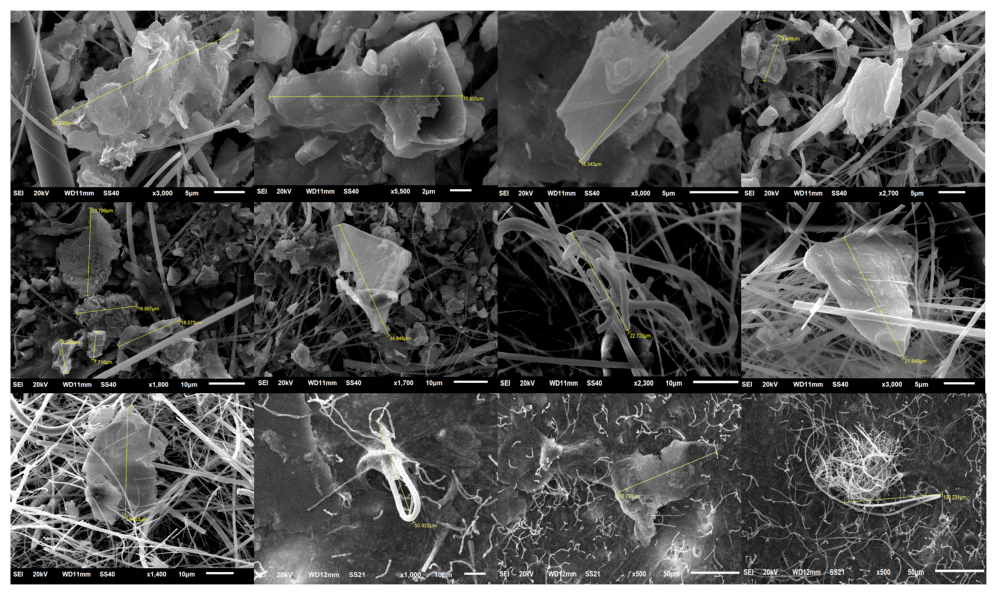
Figure 1. SEM images of the all vegan food samples (France, Spain and Italy).
Preprints 229500 g001
Figure 2. μFTIR images of the all vegan food samples (France, Spain and Italy).
Preprints 229500 g002
Figure 3. Biological fate, polymer-dependent toxicological mechanisms, and systemic health impacts of ingested small MPs (< 150 µm).
Preprints 229500 g003
Table 1. Cross-country comparison of mean MP concentrations (MPs/10 g sample ) for identical commercial vegan food categories analysed in Italy, France, and Spain.
Vegan food item Cross–Country Comparison (Mean MP concentration) Exploratory Statistical Comparison (p–value)*
Seitan with vegetables Italy (7.3) ≈ Spain (7.0) > France (5.3) No clear difference detected (p> 0.05)
Plant–Based / Quinoa Burgers Italy (9.3) = Spain (9.3) > France (6.7) Exploratory trend (p= 0.08)
Vegan “Parmesan”–Style Cheese Italy (5.3) = France (5.3) ≈ Spain (4.7) No difference detected (p= 0.82)
Vegan Pesto Sauce Italy (4.7) > France (3.7) > Spain (1.7) Exploratory difference (p< 0.05) (Italy vs Spain)
Soy–based Dessert France (3.3) ≈ Italy (2.6) > Spain (0.3) Exploratory difference (p< 0.01) (France/Italy vs Spain)
*Values represent the artihmetic mean of MPs recovered per 10 g of sample. Statistical significance was determined using two–tailed ANOVA and post–hoc pairwise Tukey’s HSD test (N= 5 per country). Given the limited number of independent commercial products per country (N = 5), p-values are reported as exploratory indicators and should not be interpreted as definitive evidence of market-level differences.
Table 2. Illustrative scenario–based dietary exposure calculations for the selected vega food items (based on [16]).
Food item CMP
(MP/g)
Serving Burden (MPs/serving) Individual EDI (MPs/kgday) Main MPs Main Toxicological Effects
Quinoa / tomato burger 5.4 540.0 (100 g) 7.71 PE, PP Physical micro–abrasion of the intestinal mucosa, mucosal
inflammation, and sorptive carrying of lipophilic environmental
contaminants
Seitan with
vegetables
3.1 372.0 (120 g) 5.31 EVA, PU Chemical degradation under gastric acidic conditions, leaching of
reactive isocyanate monomers, vinyl acetate residues, and plasticizers
triggering oxidative stress
Vegan Pesto sauce 12.5 312.5 (25 g) 4.46 PET, PS “Trojan Horse” effect: the lipid–rich phase accelerates intestinal
desorption of pre–adsorbed endocrine–disrupting chemical (phthalates,
Bisphenol–A)
Vegan
“Parmesan” cheese
8.2 246.0 (30 g) 8.2 PE, PET Disruption of intestinal tight–junction proteins (ZO–1), increasing gut permeability (“leaky gut”) and triggering GALT immune activation
Soy–based
dessert
0.8 100.0 (125 g) 0.8 PE, PE Contribution to chronic low–dose background exposure; systemic
translocation in tiny particle fractions (< 20 μm)
Hypothetical Cumulative Scenario*
(Convenience diet)
13.6 – 15.6 EVA, PE, PET, PP, PS, PU Systemic translocation (via M cells in Peyer’s patches), organ bio–accumulation (i.e., liver, kidneys,
endothelium), chronic inflammation, and
ROS–mediated endothelial dysfunction
*Scenario-based calculation using predefined consumption assumptions for selected products included in this study. This value is not intended to represent illustrative scenariol or population-level vegan dietary exposure
Disclaimer/Publisher’s Note: The statements, opinions and data contained in all publications are solely those of the individual author(s) and contributor(s) and not of MDPI and/or the editor(s). MDPI and/or the editor(s) disclaim responsibility for any injury to people or property resulting from any ideas, methods, instructions or products referred to in the content.
Copyright: This open access article is published under a Creative Commons CC BY 4.0 license, which permit the free download, distribution, and reuse, provided that the author and preprint are cited in any reuse.