

Submitted:
21 August 2026
Posted:
24 August 2026
You are already at the latest version
Abstract
Wildfires are an escalating natural hazard in Australia and a growing public health concern. Exposure to wildfire smoke is associated with acute and chronic adverse health effects, placing wildland firefighters at elevated risk due to recurrent occupational exposure. Although protective behaviours and personal protective equipment (PPE) are recommended, uptake remains inconsistent due to operational and behavioural barriers. This descriptive qualitative study applied the Health Belief Model to explore firefighters’ risk awareness, protective practices, motivators, and barriers. Semi-structured interviews were conducted with eleven wildland firefighters in Southeast Queensland, Australia. Participants demonstrated strong awareness of short-term health effects, informed by personal experience, but limited understanding of long-term health risks. Compliance with mandatory PPE (clothing, gloves, boots, helmets) was high and motivated by prevention of immediate injury. However, respiratory protective equipment use was inconsistent due to discomfort, poor fit, communication difficulties, and operational constraints. Additional barriers to health protective behaviours included limited decontamination access and inequities in PPE design, particularly for women. Participants identified improved health education, practical PPE options, and further research as priorities for strengthening occupational health protection. Addressing these barriers through improved knowledge translation, organisational support, and approaches such as cultural burning may reduce exposure and improve workforce health.
Keywords:
firefighter
; wildfire
; smoke
; occupational health
; health protection
1. Introduction
Wildfires are a major natural hazard in Australia and a national health priority [1], with the frequency and severity of events increasing due to declining rainfall and rising extreme temperatures [2]. These changes are strongly linked to a warming climate, prolonged drought, and reduced fuel moisture content, all of which create more favourable conditions for fire ignition and spread [3,4]. Planned burns, also referred to as prescribed or controlled burns, are a key strategy to mitigate the hazard associated with severe wildfires by pre-emptively reducing fuel loads through low-intensity burning of flammable vegetation build-up [5]. Land management agencies play a central role in conducting planned burns and responding to wildfires, placing these teams at the frontline of an increasingly fire-prone landscape. With fire risk predicted to increase [6,7,8], the need to put fire team health protection at the centre of everyday practice is critical.
In the 2024-2025 financial year, Queensland Parks and Wildlife Service surpassed previous records for number of planned burns completed on public protected estates with 637 burn events encompassing 968,884 hectares [9]. In addition to these planned burns, agency fire teams must also respond to wildfires throughout the year. This operational burden underscores the heightened exposure these wildland fire teams (herein referred to as firefighters) will continue to face and highlights the urgent need to prioritise health protection strategies to ensure both workforce sustainability and community safety.
Firefighters encounter a wide range of physical, chemical, mechanical, and psychosocial hazards that can lead to both acute and chronic adverse health outcomes [10]. Immediate physical risks include unstable terrain, falling debris, and radiant heat, each capable of causing significant injury [11]. In parallel, firefighters experience repeated and often intense exposure to wildfire smoke, which contains numerous harmful constituents including carbon dioxide, carbon monoxide, nitrogen oxides, volatile organic compounds, polycyclic aromatic hydrocarbons, and particulate matter <2.5μm and <10μm (PM2.5 and PM10, respectively) [12,13,14]. PM2.5 can transport toxic co-pollutants deep into the lungs and systemic circulation, driving oxidative stress, inflammatory changes and contributing to cardiovascular and respiratory injury [15,16]. Documented impacts of wildfire smoke exposure in fire teams include declines in lung function, increased airway hyperresponsiveness, systemic inflammation, cardiovascular disease markers, and elevated risk of lung cancer [17]. Reflecting these established risks, the International Agency for Research on Cancer (IARC) classified occupational exposure as a firefighter as carcinogenic to humans (Group 1) in 2022 [18]. Additionally, each state and territory within Australia has presumptive legislation for firefighters who are diagnosed with some cancers, further demonstrating acceptance that certain types of cancers are work-related [19]. However, types of cancer and specifics on firefighters covered varies (e.g., volunteer, career, forestry) by jurisdiction.
Although personal protective equipment (PPE) – including respiratory protective equipment (RPE) – is a critical component of workplace health protection, its effectiveness in the field is often limited. High quality, fit-tested and correctly used respiratory protection can reduce exposure to particles and gases however, there are significant barriers to field implementation. When high quality respirators are available, hot conditions, remote locations, and strenuous physical demands can make them uncomfortable and burdensome [20,21]. Cultural norms, team attitudes, and knowledge gaps also influence PPE uptake [22]. Across wildland firefighters, maladaptive attitudes around PPE have been reported. For example, some teams adopt a ‘badge of honour’ mentality in which worn and soiled PPE is treated as a marker of seniority and experience [23]. Additionally, ideas that wearing RPE is considered as a sign of inadequate toughness have been described [22]. Beyond PPE, other health protective behaviours in general populations such as regular physical activity, a nutritious diet, adequate sleep, good mental health practices, and avoidance of smoking and excessive alcohol consumption are important for reducing respiratory disease risk and all-cause mortality [24,25,26].
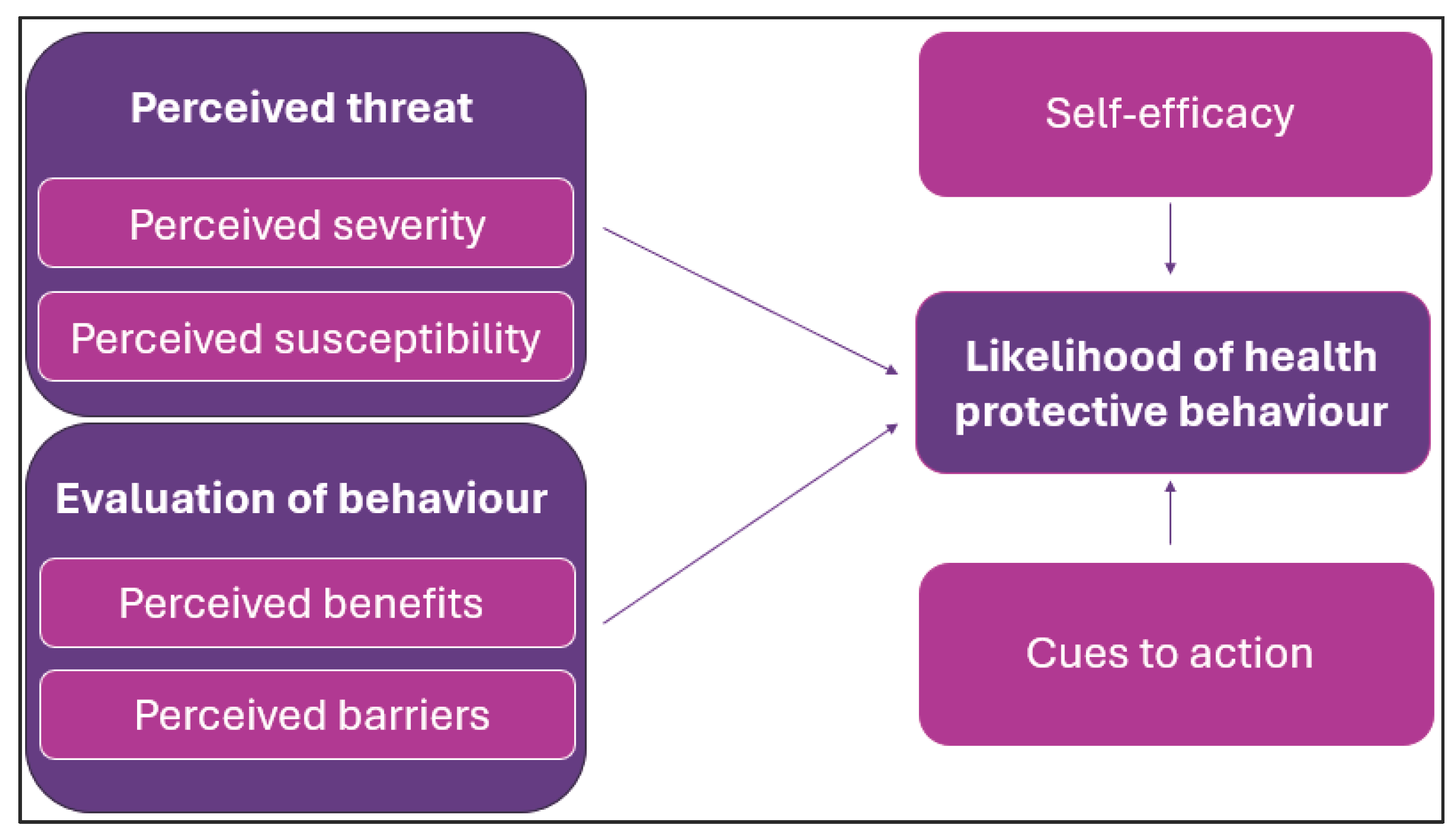
The Health Belief Model (HBM) provides a useful framework for understanding the adoption of health protective behaviours (Figure 1) [27]. It emphasises risk perception – comprising perceived susceptibility to and severity of health threats – as well as perceived benefits, barriers, self-efficacy, and motivators influencing behavioural decisions. Applying the HBM to firefighters can help identify the factors that support or impede engagement in both occupational (e.g., PPE use) and personal health protective behaviours.
This study uses the HBM to examine current knowledge, barriers, and motivators related to health protective behaviours among firefighters working in a land management agency in Southeast Queensland, Australia. By identifying the factors influencing implementation of these behaviours, the findings aim to inform strategies that enhance firefighter health protection in the face of escalating fire activity.
2. Materials and Methods
2.1. Study Design
This descriptive qualitative study aimed to investigate all domains of the HBM. The study examined firefighters’ current knowledge and practices related to health protective behaviours, including personal protective equipment (PPE) use and other protective behaviours. In addition, the study explored barriers that firefighters encounter when implementing health protection measures and sought to identify future motivators which would encourage enhanced health protective practices. The study received ethical approval from the Children’s Health Queensland Hospital and Health Services Human Research Ethics Committee (HREC/22/QCHQ/88527) and the University of Queensland Human Ethics Committee (2023/HE000043).
2.2. Participants and Recruitment
Participants were wildland firefighters employed by a local government organisation in Southeast Queensland. Firefighters within this organisation held a range of roles, from those working exclusively in fire operations to those in broader land management positions who engaged in fire operations on occasion. Participants were recruited from an existing cohort established through the Environmental Measures of Bushfire smoke Exposure and Respiratory health (EMBER) study [28,29]. Purposive sampling was employed to ensure participants represented a range of job experience, job role, and gender. Firefighters were approached during EMBER study visits to gauge their interest, and interview times organised. An additional participant outside of the organisation was included at the recommendation of a firefighter in a leadership position within the fire team.
2.3. Semi-Structured Interviews
In-depth, semi-structured interviews were conducted face to face with firefighters in a private location convenient for each participant, typically their workplaces. Written informed consent was obtained from participants prior to interviews. Firefighters were asked a series of open-ended questions based on the HBM to explore their knowledge, attitudes, and experiences of health protective behaviours. Questions were modified from a previously validated interview guide [30] and were designed to explore participants’ knowledge of potential health risks arising from their career, their current health protective behaviours, motivators and barriers to implementing those behaviours. Participants were provided with the definition of health protective behaviours, and questions facilitated discussion of personal beliefs and experiences.
This project was embedded within a larger co-design initiative conducted with the participating fire team, driven by the participants themselves who are keen to share their perspectives and shape future research. As a ground-up program of work, interviewers were research assistants with prior fieldwork experience in firefighter health studies who had established trust with participants through extensive fieldwork and study participation. While the interviewers did not hold formal qualitative research training, their existing relationships with participants supported open and comfortable engagement from the outset. Interviews were audio-recorded and lasted 20 to 60 minutes until data saturation was reached, defined as the point at which no new information was emerging [31].
2.4. Data Analysis
Interviews were transcribed using the automated transcription function in Microsoft Word (Version 2604), after which all transcripts were reviewed for accuracy against the original audio recordings, and paralinguistic features were noted (e.g., pauses, sighs, gaps in speech) [32]. To ensure participant confidentiality, transcripts were de-identified and each participant was assigned a pseudonym prior to analysis. Exact experience levels have not been reported with pseudonyms to maintain anonymity within the organisation. Data were managed and coded using NVivo 12 (QSR International), facilitating systematic organisation of the dataset.
An in-depth thematic analysis was conducted following Braun and Clarke’s six-phase approach, including familiarisation with the data, generation of initial codes, searching for themes, reviewing themes, defining and naming themes, and producing the final report [33]. Coding was iterative, allowing themes to be refined as analysis progressed. The development and interpretation of themes were guided by the HBM, providing a theoretical framework through which patterns in the data were examined. Narrative summaries were constructed for each theme, supported by illustrative participant quotes to enhance transparency and to ground interpretations in the data [33]. As part of the broader co-design initiative, participants reviewed themes to ensure accurate representation of their experiences and beliefs.
3. Results
3.1. Participant Demographics
Ten participants were recruited from the EMBER cohort, and one additional participant was included from outside of the local authority. From the agency firefighters, 40% (4/10) were female, and participants were a median age of 34 years (range 27 – 60 years). Participants had a median of 8.5 years’ experience in a fire management role (range 2 months – 30 years). The additional participant was an independent land management consultant with multiple decades of experience in the sector, and an extensive history of working with Traditional Owners (First Nations people of Australia) to support cultural burning practices. This participant’s age and exact years of experience have been removed to maintain anonymity. The thematic analysis below encompasses the interviews of the ten council firefighters only. Key themes from the additional participant are discussed separately, due to the vastly different ideas that arose. Although only one individual consultant was interviewed, the importance of their views cannot be understated, and their ideas and opinions are critical thoughts to be considered moving forward into any potential solutions in future.
3.2. Knowledge of Health Effects and Hazards
The first section of the HBM investigates perception of health risk, including knowledge of health impacts and perceived severity of these impacts. All participants confidently identified short-term health impacts related to their occupational wildfire smoke exposure. This knowledge of the potential short-term health impacts was based on their personal experiences on the fire ground. Firefighters reported experiencing fatigue, brain fog, muscle soreness, dehydration, respiratory symptoms (e.g., trouble breathing, sore throat, runny nose), vision issues, psoriasis, and headaches. For example, Amy described some of the symptoms she frequently experiences after being on a burn:
“Certainly, I know that after fires I have like a brain fog. Feels like I’ve got a really bad hangover without having all the fun. Fatigue. Muscle soreness from running around on the fire block. So, there’s lots of implications from fire.” – Amy
Firefighters commonly identified hazards such as physical terrain and radiant heat and described the immediate injuries and consequences of encountering these hazards. Every firefighter recognised smoke inhalation as a hazard of their occupation; however, knowledge of the potential long-term health impacts of exposure was limited. Participants identified the carcinogenic nature of wildfire smoke, with this knowledge largely due to inclusion in their training. Firefighters otherwise conveyed a lack of knowledge concerning the long-term impacts of their occupation. Isaac, a senior firefighter reflected on his limited knowledge on the long-term health impacts of his job:
“Through ignorance, [I know] very little. Obviously smoke impact. There are associated risks to the severity, I don’t know.” – Isaac
Similarly, Finn, a junior crew member, described smoke inhalation as a hazard, however when asked about what health effects might result from this, he admitted he was unsure:
“Look, smoke inhalation. That’s probably a big one. Different types of smoke as well, like depending on what’s actually getting burnt can be the difference between different harmful smokes and non-harmful smokes and so forth.” – Finn
“What kind of health effects do you think that smoke exposure might have?” – Interviewer
“I don’t really know at this stage, maybe ask me in another ten years or something like that.” – Finn
Leading on from identifying wildfire smoke as a hazard, some participants expressed concern about unknown burning conditions, namely hazardous waste or potentially toxic vegetation. Greg demonstrated concern about the composition of smoke from these potentially toxic sources. He then went on to retell an event where he encountered some waste whilst conducting a planned burn:
“Well, the obvious [hazard] like smoke inhalation is big. Also, just like the content of the smoke – there’s a lot of foreign objects and I guess poisonous plants as well that you can be inhaling…”
“Actually, another thing is when we were burning once, we came to an area and there were aerosols in the grass and they started exploding. It [sounded] like gunshots.” – Greg
3.3. Current Health Protective Behaviours
The interviews aimed to understand what strategies and behaviours firefighters currently implement both at work and in their personal lives. These responses fell into two main categories; behaviours based on work policy, and behaviours stemming from personal preference.
3.3.1. Health Protective Behaviours Based on Work Policy
All firefighters described high adherence to organisation-mandated PPE use. The mandatory PPE described included fire-retardant uniform, fire boots, helmet, and gloves. While firefighters acknowledged that PPE use was mandated by organisational policy, many expressed that they would wear it regardless, reflecting a personal commitment to their own safety. This suggests that PPE use was not solely compliance-driven but reflected firefighters’ own value of their health and safety. Chris described his use of PPE being personally motivated, regardless of work policy:
“PPE is work [mandated], but I wear it because it’s there for a reason, especially your helmet. So, while PPE is work, I definitely could get away with not wearing it if I was an idiot. It’s my choice that I wanna wear it.” – Chris
Conversely, the use of RPE and eye protection was much more varied. None of the firefighters interviewed wore RPE all the time when conducting planned burns. Firefighters described that the use of RPE and eye protections was usually based on a personal risk assessment and was highly dependent on risk perception in the moment. Dani described her use of RPE as being highly variable dependent on the situation she was in:
“It’s just personal choice. And I only wear it if I’m in the smoke. Sometimes I won’t wear a mask at all on a burn. And then other times I might wear it for half a day. I might wear it all day. It just depends on if you’re in the smoke or not.” – Dani
Most respondents described opting to remove themselves from intense smoke, where possible. This included moving upwind of the smoke or sheltering in work vehicles during very smoky periods. Chris and Finn explain these alternatives of physical removal and sheltering, rather than donning RPE:
“I put more effort into [physically moving] than pulling out my mask and putting on my mask. I’d rather hold my breath, which is what I do. I’ll just hold my breath, walk through it, get behind the fire, and then I don’t have to worry about it anymore. I’ll wear sunglasses and sometimes - most of the time - that fogs up my sunglasses, and there’s other aspects to it that are uncomfortable, so I try to just avoid it altogether.” – Chris
“So, if [the smoke is] really bad, you can sit in the fire vehicles, and the filtration system in those is actually pretty good – it will reduce the smoke pretty significantly.” – Finn
PPE laundering was discussed by 80% of participants (8/10); however, only 60% (6/10) reported a regimented approach to decontamination after a burn. Among this group, confidence in the effectiveness of their routines varied. Most reported having no knowledge on how to decontaminate effectively.
3.3.2. Personal Health Protective Behaviours
Participants reported implementing other health protective strategies in their personal lives. Keeping fit through regular exercise and maintaining good nutrition were widely reported habits, with many describing being “fire fit” as critical to performing their job effectively. However, some reported that exercise and diet were not primarily occupationally motivated, rather their increased fitness for work was just an added benefit of their exercise regime, such as Chris described:
“I maintain fitness, but I wouldn’t say it’s purely for fire. I think that’s just a benefit to fire for me.” – Chris
3.4. Current Motivations
A variety of motivations for implementing health protective behaviours arose. Primarily, personal experiences and stories shared within the workplace were commonly mentioned as motivators, which either directly or indirectly, influenced a participant to engage in health protective behaviours. Every firefighter recounted at least one personal event or story that had influenced them to consider the health impacts of their job, which in turn positively impacted their health protective behaviours, most commonly reinforcing their PPE use. These experiences ranged from health scares in their own personal lives influencing their daily activity levels, to a commonly shared narrative of a colleague that was critically injured on the job. Although individual experiences and stories were varied, reflecting on personal experiences are strong motivators to further the use of personal protective behaviours.
A strong theme that emerged from respondents was the positive work culture within their organisation, and an environment that encouraged PPE use through supportive senior staff and availability of options for each PPE type. A ‘zero harm’ workforce was mentioned by multiple participants, highlighting the organisation’s focus on employee safety, and encouragement of strong PPE practices. This idea was explained by Amy:
“I think our current workplace is very zero harm. Look out for yourself. Look out for the team, the whole lot. We’re always watching everyone. We’re a team.” – Amy
Protecting their health was a universal motivator for the implementation of health protective behaviours. Three sub-themes of motivators emerged from this cohort – short-term health protection (including injury prevention), long-term health protection, and health protection of loved ones.
Short-term health protection and injury prevention were the most common motivators for the implementation of health protective strategies, particularly PPE use. All firefighters described immediate protection from hazards as a motivator. Firefighters revealed that the immediate hazards of their job, such as the fire itself, unpredictable terrain, and physicality of their work, posed significant threats to their immediate safety. Prevention of serious injury and death was at the forefront of majority of firefighter’s minds, including Emma’s:
“My biggest [motivator] is injury prevention. Basically, that’s why I [wear PPE].” – Emma
Long-term health protection was mentioned by majority of firefighters as a motivator for health protection. These concerns were primarily focused on maintaining good health so they could enjoy life outside of their work. For example, Hillary stated that her motivations centred around maintaining fitness so she could continue her active lifestyle when she is older:
“Keeping healthy for a long time. I wanna be able to go on overnight hikes until I’m 70. That would be lovely. I don’t wanna be 70 and cripple and not being able to move. So that would be my general motivator.” – Hillary
The theme of long-term health protection was less prevalent amongst older or more experienced firefighters. Instead, some voiced that health protection for them is ‘too little, too late’. However, they believed it is important to support younger workers to keep them healthy. This is explained by James, a supervisor with extensive experience:
“I’m at the end of my line or getting closer to that. The damage is done. You know, and I accept that responsibility as my own.” – James
Finally, protecting family and family and pets was a motivator for some firefighters. Respondents recognised that toxic residue can be a risk and decontamination practices can limit exposure to smoke and particulate matter within their homes. Ben and Chris both showed concerns for their loved ones, knowing that they were bringing contaminated gear into the home environment, which is particularly an issue for more vulnerable people, such as children:
“I’m concerned for my dogs too because they have very sensitive respiratory systems, and you know the aforementioned information that I’ve heard previously about. Particulate matter on your gear and things like that, that concerns me for both my family and my pets.” – Ben
“I’m aware because I’ve got young kids and obviously being smaller, they’re less, I guess, tolerant. I feel like I take it reasonably seriously.” – Chris
3.5. Barriers
We explored barriers to health protective behaviours. The most frequent issue identified was related to RPE, with all participants referring to the available options as uncomfortable. Additionally, the majority found their current RPE inconvenient or restrictive with an improper seal or fit. The improper fit may be a result of masks not being fit tested, as stated by participants. Emma described how these factors resulted in low and inconsistent usage of P3 respirators, instead opting for a less protective P2 masks (N95 equivalent):
“If something’s not gonna fit. I’m not gonna wear it. Even though it would provide me more protection somewhat. If it’s super uncomfortable, if it hurts me in another way, I’ll be more inclined to go without because even like chemical masks, they’re so heavy on the front I’d generally not wear the higher protective one, I’ll wear a P2.” – Emma
Helmets were also mentioned specifically by several participants and were described as hot and heavy. Multiple participants attributed post-shift headaches to the weight of their helmets throughout their shift. However, despite the obvious discomfort, helmets were worn consistently by participants. This highlights the importance that firefighters place on immediate injury prevention, as all participants were aware of the potential danger from falling tree limbs. Dani described her discomfort after wearing a helmet for the duration of her shift:
“That’s the other reason I think I get headaches is cause the helmet is so heavy. They’re Kevlar, so they’re not insanely heavy. But when you’re wearing it all day – you get a bit of a stiff neck.” – Dani
Participants also commonly discussed the lack of access to facilities and services provided by their organisation. Most frequently mentioned as a barrier to health protection, firefighters discussed that laundry facilities are not accessible to all members of the fire team. Amy showed concern that uniform washing must be done at home, as there are no work-provided washing facilities:
“We’re supposed to wash our uniforms. You’re supposed to wash them after every fire. It doesn’t always happen. We have to wash them in our own washing machines. Yeah, we don’t have the equipment laundered. So I know that’s an issue. So we sometimes are wearing the same PPE overalls to the fireground. So that is an issue.” – Amy
Additional inequities in facilities access includes availability and practicality of gyms. Participants noted that although gym facilities are free, their locations are inconvenient for firefighters not based in specific office areas. Participants expressed that accessing the gyms would require excess travel out of work hours and felt they were not designed for practical access for workers outside of their usual work base. Dani described how the available facilities are more suitable for those in the organisation who work in offices, rather than people working in the field:
“We have access to gyms, but they’re all at the offices. So, people in the office have access to Pilates, personal trainers and all that sort of stuff. And I’m like, that’s really nice for people that are sitting at a desk all day. And they say that we also can and have access to those things, but it has to be in our own personal time… They’re not designed for us. They’re not designed for people in the field… It would be very nice if there was stuff like that for us to be able to access.” – Dani
Poorly fitting PPE, including respirators and fire uniform, was a more prominent issue for women. Three out of four women (75%) interviewed stated that their PPE did not fit them correctly, highlighting the need for more options. Hillary and Emma both described their ill-fitting PPE:
“I do find that there’s no permanent masks that fit me. I can only wear the P2s so far. So yeah, there’s not enough options for people of my size for wrapping them around your face. I’ve got so much gap it just falls off me.” – Emma
“Most fire equipment is made for men, so a lot of it’s too big. Not made for us, I guess.” – Hillary
3.6. Future Motivators And Desired Information
The final aspect of our interviews investigated what might motivate firefighters to further their health protective behaviours. The majority of participants expressed a desire for more knowledge of the health impacts of their job. Participants were particularly interested in the impacts of long-term exposure to smoke. They reiterated that currently, their knowledge is predominately speculative, and they are uncertain about the potential negative health impacts. Greg summarised the desire to be more informed, and explained how that helped in another aspect of his work:
“Honestly, I think being more informed would probably help. It did when I learned more about herbicides was pretty like comfortable with using them because I was using them for so long.” – Greg
Participants also expressed they would like to see more research into toxins in the smoke that arise from different vegetation types or illegally dumped materials that get burnt alongside the vegetation in some sites. Ben expressed the desire to characterise their exposure across a wide range of scenarios:
“We have so many different types of vegetation that you would experience fire in and then you know, illegal dumping. So rubbish and other materials that we may find in bushland areas, we often don’t really know what we’re exposed to, and we don’t even know if our current PPE that we have is appropriate for those levels of exposure either. So, if we could get better measures across a wide range of scenarios that we’re exposed to.” – Ben
The second most frequently mentioned future direction was increasing options for PPE, particularly respiratory protection. Participants expressed that PPE options that do not hinder radio communications, are not restrictive, are lightweight, and are easy to breathe through would be desirable and increase the amount they used RPE.
Additionally, firefighters expressed keen interest in learning about broader health protective strategies, outside improving PPE. They specifically mentioned nutrition or dietary supplements, as well as other recovery strategies as a potential area of interest to help aid in health protection or recovery. Amy summarised this idea, as she described the importance of good health and recovery information:
“Just good written information that we could follow and then we could adopt as our guidelines for better nutrition, better recovery, really simple things like that can really help.” – Amy
Ben echoed this idea, hoping that results from health studies would be translatable into real-world strategies to protect firefighter health:
“Things like general health and wellbeing diet. I’d love to see outcomes from this, that there may be some dietary supplements that would help alleviate some of the effects that we see from these from smoke impact.” – Ben
Most firefighters mentioned that all their suggestions would be well-suited as part of their training. This would facilitate greater knowledge around the hazards and their resulting health effects, and hence further health protective practices within the organisation.
3.7. Health Protection Through a Different Lens: Cultural Burning and Its Importance for Country and People
The independent participant (Karl) provided a wealth of knowledge and experience working with Indigenous fire practitioners on land management, including fire. Karl used the term “cultural burning” throughout the interviews, this terminology has been retained in the present study. Cultural burning extends beyond land management practices and encompasses the use of fire by Indigenous Australians to support the health of Country, culture, and community. These practices involve the sharing of intergenerational knowledge and fostering ongoing connections to Country and people [28]. Karl emphasised the importance of cultural burning not only for environmental stewardship and connection to Country, but also for protecting and promoting the health and wellbeing of those involved.
Karl’s extensive work with private landowners, governments, volunteer fire services, and Traditional Owners has exposed him to a plethora of burning practices. Karl conveyed a unique and considered position on the use of some of the key aspects of cultural burning as being unintentionally health protective, as well as safeguarding diversity and preserving landscapes. Primarily, he discussed how an in-depth knowledge of the land that is being burned, and planning accordingly to the environment is critical in reducing exposure and hence minimising any potential negative health effects.
“I guess it starts really respect the Country because the last thing we want to do is burn the living daylights out of Country. It produces outcomes that we know contribute to an increased risk next time for a start, so even from a science point or a fire behavioural point of view or an ecological point of view for fire ecology point of view, you’re actually producing a worse outcome next time. So, caring for the Country should be at the top and designing or preparing and managing the fire that you put into that even at a wildfire.” – Karl
Karl explained that the frequency of burning has a significant impact on the amount of smoke produced, and that by burning the landscape appropriately (and more frequently), the risk of wildfires can still be reduced, however the fires are also less harmful to those conducting the burns. The result is less smoke produced and therefore lower exposure.
“If you’ve been burning areas appropriately, particularly wood, grassy understory, eucalypt forest, it used to be the vast majority of the East Coast of Australia. Then those fires are producing less smoke, and you can do your lighting in a way that you don’t have to choke in the smoke. I’ve certainly taken big steps to limit exposure for smoke and when I’ve been designing burns like the 780 hectares on [Country].” – Karl
When Karl was asked about the feasibility of incorporating cultural burning practices into western fire management organisations, he explained the problem to be systemic. Karl explained that the combination of lack of community understanding, negative public attitudes, and bureaucracy of governments and private organisations present a major challenge. He believed that open-mindedness to the potential of better ways to improve both health and ecological outcomes is essential, however he was concerned that currently organisations lack this type of thinking, or capacity to implement such large change.
“Yeah, it’s box ticking. You know, at the end of the day, the bureaucrats and up the line to the government and politicians and the community more generally will drive that. You know, for instance, the resistance to burning per se is a social problem. You know people don’t understand and don’t want to know.” – Karl
Karl also emphasised the importance of Indigenous knowledge in land management, noting that Aboriginal Australians have been managing Country for over 60,000 years. He argued that this knowledge is currently undervalued, and that increasing Aboriginal cultural input into fire management thinking and practice is essential.
“You know, people should be aware of what they’re involved in, and in that space, I think increasing the input - the cultural input, Aboriginal input - into thinking it’s really important.” – Karl
4. Discussion
This study provides novel insight into firefighter health protective behaviours in Southeast Queensland and the barriers to implementation. A key finding is the substantial gap in firefighters’ understanding of the long-term health risks associated with their occupation, particularly in relation to wildfire smoke exposure. Participants consistently reported limited awareness about chronic health impacts and a desire for clearer, evidence-based information. Their calls for greater knowledge of long-term outcomes, and desire for strategies to reduce their risk, reflect a strong motivation to manage their occupational risk and protect their health.
The HBM offers a useful framework for interpreting these findings. Greater awareness of susceptibility and severity of harm is known to increase the likelihood of adopting protective behaviours when practical barriers are addressed [27]. Improving the accessibility and relevance of health information for firefighters may therefore be a critical step toward strengthening protective practices, including more consistent use of respiratory protective equipment (RPE).
4.1. Risk Perception and Knowledge Of Health Impacts
Firefighters demonstrated a personal understanding of the short-term health effects associated with their roles, including fatigue, respiratory irritation, dehydration, headaches, and musculoskeletal strain. Similar symptoms and acute impacts of wildfire smoke have been reported [29,30,31]. Important to note is firefighters’ awareness of the short-term health impacts of their occupation was primarily related to personal experiences, rather than training.
In contrast, firefighters often framed knowledge of long-term health effects, such as chronic respiratory disease or cancer, as speculative. This is particularly notable given the growing body of literature liking occupational exposure to wildfire smoke to adverse chronic health outcomes. Epidemiological studies have demonstrated the correlation between wildland firefighting and increased risk of developing lung cancer and cardiovascular disease [21]. Additionally, firefighters’ exposure to particulate matter has been associated with arterial stiffness and inflammation and increased oxidative stress levels [32,33,34]. The 2022 IARC classification of firefighting as a Group 1 carcinogenic occupation underscores the importance of translating scientific evidence into practical, accessible knowledge for firefighters [18]. The findings of this study suggest that translation of the available knowledge and research has not occurred effectively, and hence the health knowledge gap of firefighters persists.
4.2. Health Protective Behaviours – Motivators and Barriers
Consistent with previous research, firefighters reported high adherence to mandatory PPE such as fire-retardant uniform, fire boots, helmets, and gloves [35]. This aligns with participants reporting that short-term health protection was a major motivator on the fire ground. The perceived risks of immediate injury and negative health outcomes drawn from personal experience and accounts of colleagues’ injuries, support the high adherence to PPE which provides immediate protection according to the HBM [36]. Additionally, this study highlights the importance of social structures in adopting health protective behaviours. The positive work culture and “zero harm” attitude described by firefighters in this study was a strong motivator for health protection. The literature has previously identified a strong theme of firefighters treating contaminated and soiled PPE as a ‘badge of honour’ signifying experience. [23,37]. This study suggests a cultural shift may be underway, with participants demonstrating greater awareness of the importance of clean uniforms and safety standards.
In contrast to the use of mandated PPE, the use of RPE was largely discretionary. Firefighters described using situational judgement and preferring to physically remove themselves from the smoke rather than using a respirator. Barriers to RPE use included discomfort, heat stress, low perception of effectiveness, poor fit, and interference with radio communication. Within the HBM framework, perceived barriers are identified as the strongest predictor of health-protective behaviour, explaining firefighters’ aversion to RPE [38]. Firefighters’ limited knowledge of the long-term health impacts of smoke inhalation results in a lower perceived risk of harm.
Additional barriers to PPE and RPE use for women were reported, with frequent reports of poor fit. Gender-based inequities regarding PPE are well-documented in occupational exposure medicine [39,40,41]. In firefighting, women report that even if uniforms and PPE are labelled ‘unisex’, they are often designed for a larger body size and facial structure, negatively impacting comfort of uniforms, and seals of respirators [42]. These findings, consistent with the broader literature, support the need for more inclusive PPE procurement within this agency.
Decontamination and gear washing was also commonly described by firefighters as a health protective strategy, not only for their own health, but for protection of their family members. The protection of loved ones by not bringing home harmful pollutants on their gear was a concern. However, participants described that they had no access to gear washing services through their work and limited knowledge on how to effectively decontaminate at home. Similar organisational barriers have been described previously, where responsibility for health protection is implicitly shifted onto individual workers without institutional support [22]. This is concerning in the case of decontamination due to off-gassing from uniforms which has been shown to prolong exposure to both firefighters and their families [43].
Importantly, firefighters’ engagement in broader health protective behaviours, such as exercise and nutrition, was high, but these behaviours were not primarily motivated by perceived occupational health risk. Instead, firefighters framed fitness and diet as necessary for job performance rather than broader health protection. This finding aligns with previous research suggesting that firefighters value fitness for task performance rather than disease prevention [44].
4.3. Cultural Burning as a Complementary Health Protective Approach
Insights from the independent fire management consultant provide an important complementary perspective, emphasising cultural burning as both an ecological and health protective practice. Indigenous fire management has been shown to reduce fuel loads, fire intensity, and smoke production when applied appropriately and frequently, leading to improved outcomes for Country, biodiversity, and people [45,46,47,48]. From a health perspective, lower-intensity burns may reduce cumulative smoke exposure, hence improving long-term health outcomes for firefighters. However, overcoming systemic barriers reported here requires not only policy change but also a reframing of fire management paradigms to value Indigenous knowledge systems alongside Western scientific approaches.
4.4. Strengths and Limitations
This study centres firefighters lived experiences, capturing health knowledge, the barriers they face, and their considered suggestions for improving uptake of protective behaviours. Although the sample size was small, participants represented a wide range of experience levels and included both men and women within the workforce. The significant trust and rapport previously developed between the interviewers and participants allowed for excellent and in-depth data sharing of personal experiences and knowledge. The inclusion of perspectives on cultural burning, though contributed by a single participant, introduces valuable considerations regarding alternative land management approaches and highlights viewpoints beyond government firefighting structures. However, findings should be interpreted with caution. The limited sample size and recruitment from a single organisation restrict generalisability beyond this context. Broader sampling across jurisdictions and roles would strengthen future work.
4.5. Implications and Future Recommendations
Firefighters demonstrated a clear demand for improved access to health information, particularly regarding the long-term consequences of smoke exposure and other environmental hazards. Evidence suggests that strengthening knowledge can enhance perceived susceptibility and severity, thereby supporting motivation to adopt protective behaviours when structural and practical barriers are addressed [49]. This highlights the need to better translate fire safety and health research into accessible, operationally relevant information for wildland firefighters.
The study identifies knowledge gaps as one contributor to inconsistent use of RPE and other protective practices, positioning knowledge translation as a practical intervention point. At the same time, firefighters emphasised that health protection must extend beyond PPE alone. Interest in broader, evidence-based approaches to maintaining long-term health suggests strong receptiveness to interventions targeting overall occupational wellbeing. Additionally, consideration of alternative burning practices, including cultural burning, may offer benefits not only for ecological management but also for reducing exposure burdens for fire practitioners.
Overall, improving firefighter health protection requires a multifaceted approach addressing knowledge dissemination, equipment constraints, organisational systems, and cultural context. The range of future research avenues identified by participants underscores both the complexity of the issue and the workforce’s readiness to engage in solutions.
Author Contributions
Conceptualisation, D.V., F.J. and T.F-B.; Methodology, S.I., E.V., L.H. and D.V.; Validation, E.V. and D.V.; Formal analysis, S.I.; Writing – Original Draft Preparation, S.I.; Writing – Review & Editing, S.I., E.V., L.H., K.P., T.F-B., F.J. and D.V.; Visualization, S.I.; Supervision, D.V., F.J. and T.F-B.; Project Administration, F.J. and D.V.; Funding Acquisition, D.V. and F.J.
Funding
Please add: This research was funded by the Centre for Safe Air Seed Funding Grant (2024).
Institutional Review Board Statement
The study was conducted win accordance with the Declaration of Helsinki, and approved by the Ethics Committee of the Children’s Health Queensland Hospital and Health Services Human Research (HREC/22/QCHQ/88527) and the Ethics Committee of the University of Queensland (2023/HE000043).
Informed Consent Statement
Informed consent was obtained from all subjects involved in the study.
Data Availability Statement
We encourage all authors of articles published in MDPI journals to share their research data. In this section, please provide details regarding where data supporting reported results can be found, including links to publicly archived datasets analyzed or generated during the study. Where no new data were created, or where data is unavailable due to privacy or ethical restrictions, a statement is still required. Suggested Data Availability Statements are available in section “MDPI Research Data Policies” at https://www.mdpi.com/ethics.
Acknowledgments
The data presented in this article are not readily available because transcripts of interview recordings may compromise participant and organisation anonymity and privacy. Requests to access the datasets should be directed d.vilcins@uq.edu.au.
Conflicts of Interest
The authors declare no conflicts of interest.
Abbreviations
The following abbreviations are used in this manuscript:
| PPE | Personal protective equipment |
| RPE | Respiratory protective equipment |
| PM2.5 | Particulate matter <2.5μm |
| PM10 | Particulate matter <10μm |
| HBM | Health Belief Model |
| IARC | International Agency for Research on Cancer |
| EMBER | Environmental Measures of Bushfire smoke Exposure and Respiratory health |
References
- Australian Centre for Disease Control. National Health and Climate Strategy. Available online: https://www.cdc.gov.au/topics/climate-and-health/national-health-and-climate-strategy (accessed on 12 December 2025).
- Vardoulakis, S.; Marks, G.; Abramson, M. J. Lessons Learned from the Australian Bushfires: Climate Change, Air Pollution, and Public Health. JAMA Intern. Med. 2020, 180(no. 5), 635–36. [Google Scholar] [PubMed]
- Yu, Pei; Xu, Rongbin; Abramson, Michael J.; Li, Shanshan; Guo, Yuming. Bushfires in Australia: A Serious Health Emergency under Climate Change. Lancet Planet. Health 2020, 4(no. 1), e7–e8. [Google Scholar] [CrossRef] [PubMed]
- Ellis, Todd M.; Bowman, David M. J. S.; Jain, Piyush; Flannigan, Mike D.; Williamson, Grant J. Global Increase in Wildfire Risk Due to Climate-Driven Declines in Fuel Moisture. Glob. Chang. Biol. 2022, 28(no. 4), 1544–59. [Google Scholar] [CrossRef] [PubMed]
- Haikerwal, Anjali; Reisen, Fabienne; Sim, Malcolm R.; Abramson, Michael J.; Meyer, Carl P.; Johnston, Fay H.; Dennekamp, Martine. Impact of Smoke from Prescribed Burning: Is It a Public Health Concern? J. Air Waste Manag. Assoc. 2015, 65(no. 5), 592–98. [Google Scholar] [CrossRef] [PubMed]
- McGloin, Ryan; Trancoso, Ralph; Syktus, Jozef; Eccles, Rohan; Toombs, Nathan; Dowdy, Andrew. Substantial Increases in the Likelihood of Extreme Fire Weather Events for Fire-Prone Ecosystems in Australia. npj Nat. Hazards 2026, 3(no. 1), 28. [Google Scholar] [CrossRef]
- Abram, Nerilie J; Henley, Benjamin J; Gupta, Alex Sen; Lippmann, Tanya, JR.; Clarke, Hamish; Dowdy, Andrew J; Sharples, Jason J; Nolan, Rachael H; Zhang, Tianran; Wooster, Martin J. Connections of Climate Change and Variability to Large and Extreme Forest Fires in Southeast Australia. Commun. Earth Environ. 2021, 2(no. 1), 8. [Google Scholar] [CrossRef]
- Jones, Matthew W; Abatzoglou, John T; Veraverbeke, Sander; Andela, Niels; Lasslop, Gitta; Forkel, Matthias; Smith, Adam JP; Burton, Chantelle; Betts, Richard A; van der Werf, Guido R. Global and Regional Trends and Drivers of Fire under Climate Change. Rev. Geophys. 2022, 60(no. 3), e2020RG000726. [Google Scholar] [CrossRef]
- Powell, Andrew. Planned Burns Blaze Past Annual Target “: Queensland Government, 2025.
- Cuenca-Lozano, María F.; Ramírez-García, César O. Occupational Hazards in Firefighting: Systematic Literature Review. Saf. Health Work. 2023, 14(no. 1), 1–9. [Google Scholar] [CrossRef] [PubMed]
- Britton, C.; Lynch, C. F.; Ramirez, M.; Torner, J.; Buresh, C.; Peek-Asa, C. Epidemiology of Injuries to Wildland Firefighters. Am. J. Emerg. Med. 2013, 31(no. 2), 339–45. [Google Scholar] [CrossRef] [PubMed]
- Aguilera, Rosana; Corringham, Thomas; Gershunov, Alexander; Benmarhnia, Tarik. Wildfire Smoke Impacts Respiratory Health More Than Fine Particles from Other Sources: Observational Evidence from Southern California. Nat. Commun. 2021, 12(no. 1), 1493–8. [Google Scholar] [CrossRef] [PubMed]
- Johnston, Fay H; Borchers-Arriagada, Nicolas; Morgan, Geoffrey G; Jalaludin, Bin; Palmer, Andrew J; Williamson, Grant J; Bowman, David MJS. Unprecedented Health Costs of Smoke-Related Pm2. 5 from the 2019–20 Australian Megafires. Nat. Sustain. 2021, 4(no. 1), 42–47. [Google Scholar] [CrossRef]
- Pai, S. J.; Carter, T. S.; Heald, C. L.; Kroll, J. H. Updated World Health Organization Air Quality Guidelines Highlight the Importance of Non-Anthropogenic Pm(2.5). Environ. Sci. Technol. Lett. 2022, 9(no. 6), 501–06. [Google Scholar] [CrossRef] [PubMed]
- Xing, Y. F.; Xu, Y. H.; Shi, M. H.; Lian, Y. X. The Impact of Pm2.5 on the Human Respiratory System. J. Thorac. Dis. 2016, 8(no. 1), E69–74. [Google Scholar] [CrossRef] [PubMed]
- Lu, X.; Li, R.; Yan, X. Airway Hyperresponsiveness Development and the Toxicity of Pm2.5. Environ. Sci. Pollut. Res. Int. 2021, 28(no. 6), 6374–91. [Google Scholar] [CrossRef] [PubMed]
- Navarro, Kathleen M.; Clark, Kathleen A.; Hardt, Daniel J.; Reid, Colleen E.; Lahm, Peter W.; Domitrovich, Joseph W.; Butler, Corey R.; Balmes, John R. Wildland Firefighter Exposure to Smoke and Covid-19: A New Risk on the Fire Line. Sci. Total Environ. 2021, 760, 144296. [Google Scholar] [CrossRef] [PubMed]
- Demers, Paul A; DeMarini, David M; Fent, Kenneth W; Glass, Deborah C; Hansen, Johnni; Adetona, Olorunfemi; Andersen, Maria HG; Freeman, Laura E Beane; Caban-Martinez, Alberto J; Daniels, Robert D. Carcinogenicity of Occupational Exposure as a Firefighter. Lancet Oncol. 2022, 23(no. 8), 985–86. [Google Scholar] [CrossRef] [PubMed]
- Safe Work Australia. Presumptive Legislation for Firefighters. Available online: https://www.safeworkaustralia.gov.au/book/comparison-workers-compensation-arrangements-australia-and-new-zealand-2021-28th-edition/chapter-4-coverage-and-eligibility-benefits/table-410-presumptive-legislation-firefighters (accessed on 23 January 2026).
- Garg, Priya; Wang, Siyan; Oakes, Jessica M; Bellini, Chiara; Gollner, Michael J. The Effectiveness of Filter Material for Respiratory Protection Worn by Wildland Firefighters. Fire Saf. J. 2023, 139, 103811. [Google Scholar] [CrossRef]
- Navarro, Kathleen M.; Kleinman, Michael T.; Mackay, Chris E.; Reinhardt, Timothy E.; Balmes, John R.; Broyles, George A.; Ottmar, Roger D.; Naher, Luke P.; Domitrovich, Joseph W. Wildland Firefighter Smoke Exposure and Risk of Lung Cancer and Cardiovascular Disease Mortality. Environ. Res. 2019, 173, 462–68. [Google Scholar] [CrossRef] [PubMed]
- Padamsey, Kiam; Wallace, Ruth; Liebenberg, Adelle; Cross, Martyn; Oosthuizen, Jacques. Fighting Fire and Fumes: Risk Awareness and Protective Practices among Western Australian Firefighters. Int. J. Wildland Fire 2024, 33(no. 4). [Google Scholar] [CrossRef]
- Wolffe, T. A. M.; Turrell, L.; Robinson, A.; Dickens, K.; Clinton, A.; Maritan-Thomson, D.; Stec, A. A. Culture and Awareness of Occupational Health Risks Amongst Uk Firefighters. Sci. Rep. 2023, 13(no. 1), 97. [Google Scholar] [CrossRef] [PubMed]
- Dunton, G. F. Sustaining Health-Protective Behaviors Such as Physical Activity and Healthy Eating. JAMA 2018, 320(no. 7), 639–40. [Google Scholar] [CrossRef] [PubMed]
- Zhu, Nanbo, Canqing Yu, Yu Guo, Zheng Bian, Yuting Han, Ling Yang, Yiping Chen, Huaidong Du, Huimei Li, Fang Liu, Junshi Chen, Zhengming Chen, Jun Lv, Liming Li, Junshi Chen, Zhengming Chen, Robert Clarke, Rory Collins, Yu Guo, Liming Li, Jun Lv, Richard Peto, Robin Walters, Daniel Avery, Ruth Boxall, Derrick Bennett, Yumei Chang, Yiping Chen, Huaidong Du, Simon Gilbert, Alex Hacker, Mike Hill, Michael Holmes, Andri Iona, Christiana Kartsonaki, Rene Kerosi, Ling Kong, Om Kurmi, Garry Lancaster, Sarah Lewington, Kuang Lin, John McDonnell, Iona Millwood, Qunhua Nie, Jayakrishnan Radhakrishnan, Paul Ryder, Sam Sansome, Dan Schmidt, Paul Sherliker, Rajani Sohoni, Becky Stevens, Iain Turnbull, Jenny Wang, Lin Wang, Neil Wright, Ling Yang, Xiaoming Yang, Zheng Bian, Xiao Han, Can Hou, Pei Pei, Chao Liu, Canqing Yu, Zengchang Pang, Ruqin Gao, Shanpeng Li, Shaojie Wang, Yongmei Liu, Ranran Du, Yajing Zang, Liang Cheng, Xiaocao Tian, Hua Zhang, Yaoming Zhai, Feng Ning, Xiaohui Sun, Feifei Li, Silu Lv, Junzheng Wang, Wei Hou, Mingyuan Zeng, Ge Jiang, Xue Zhou, Liqiu Yang, Hui He, Bo Yu, Yanjie Li, Qinai Xu, Quan Kang, Ziyan Guo, Dan Wang, Ximin Hu, Jinyan Chen, Yan Fu, Zhenwang Fu, Xiaohuan Wang, Min Weng, Zhendong Guo, Shukuan Wu, Yilei Li, Huimei Li, Zhifang Fu, Ming Wu, Yonglin Zhou, Jinyi Zhou, Ran Tao, Jie Yang, Jian Su, Fang Liu, Jun Zhang, Yihe Hu, Yan Lu, Liangcai Ma, Aiyu Tang, Shuo Zhang, Jianrong Jin, Jingchao Liu, Zhenzhu Tang, Naying Chen, Ying Huang, Mingqiang Li, Jinhuai Meng, Rong Pan, Qilian Jiang, Jian Lan, Yun Liu, Liuping Wei, Liyuan Zhou, Ningyu Chen Ping Wang, Fanwen Meng, Yulu Qin, Sisi Wang, Xianping Wu, Ningmei Zhang, Xiaofang Chen, Weiwei Zhou, Guojin Luo, Jianguo Li, Xunfu Zhong, Jiaqiu Liu, Qiang Sun, Pengfei Ge, Xiaolan Ren, Caixia Dong, Hui Zhang, Enke Mao, Xiaoping Wang, Tao Wang, Xi Zang, Ding Zhang, Gang Zhou, Shixian Feng, Liang Chang, Lei Fan, Yulian Gao, Tianyou He, Huarong Sun, Pan He, Chen Hu, Xukui Zhang, Huifang Wu, Min Yu, Ruying Hu, Hao Wang, Yijian Qian, Chunmei Wang, Kaixu Xie, Lingli Chen, Yidan Zhang, Dongxia Pan, Qijun Gu, Yuelong Huang, Biyun Chen, Li Yin, Huilin Liu, Zhongxi Fu, Qiaohua Xu, Xin Xu, Hao Zhang, Huajun Long, Xianzhi Li, Libo Zhang, Zhe Qiu, and Group on behalf of the China Kadoorie Biobank Collaborative. “Adherence to a Healthy Lifestyle and All-Cause and Cause-Specific Mortality in Chinese Adults: A 10- Year Prospective Study of 0.5 Million People.” Int. J. Behav. Nutr. Phys. Act. 16, no. 1 (2019): 98.
- Du, Min; Zhu, Lin; Liu, Min; Liu, Jue. Mutual Associations of Healthy Behaviours and Socioeconomic Status with Respiratory Diseases Mortality: A Large Prospective Cohort Study. Nutrients 2023, 15(no. 8), 1872. [Google Scholar] [CrossRef] [PubMed]
- Alyafei, Anees; Easton-Carr, Raul. The Health Belief Model of Behavior Change. In StatPearls; 2024. [Google Scholar]
- Weir, Jessica; Freeman, Dean; Williamson, Bhiamie. Cultural Burning in Southern Australia: An Illustrated Report: Bushfire & Natural Hazards; CRC Melbourne, 2021. [Google Scholar]
- Wah, Win; Gelaw, Asmare; Glass, Deborah C.; Sim, Malcolm R.; Hoy, Ryan F.; Berecki-Gisolf, Janneke; Walker-Bone, Karen. Systematic Review of Impacts of Occupational Exposure to Wildfire Smoke on Respiratory Function, Symptoms, Measures and Diseases. Int. J. Hyg. Environ. Heal. 2025, 263, 114463. [Google Scholar] [CrossRef] [PubMed]
- White, Anthony R. Impact of Wildfire Smoke, Heat Stress and Sleep Deprivation on the Brain Health of Wildland Firefighters. Int. J. Wildland Fire 2025, 34(no. 9), WF24203. [Google Scholar] [CrossRef]
- García-Heras, F.; Gutiérrez-Arroyo, J.; Rodríguez-Medina, J.; Carballo-Leyenda, B.; Sánchez-Collado, P.; Villa-Vicente, G.; Rodríguez-Marroyo, J. A. Determinants of Health and Performance in Wildland Firefighters: A Narrative Review. J. Funct. Morphol. Kinesiol. 2025, 10(no. 1). [Google Scholar] [CrossRef] [PubMed]
- Adetona, Anna M.; Adetona, Olorunfemi; Gogal, Robert M., Jr.; Diaz-Sanchez, David; Rathbun, Stephen L.; Naeher, Luke P. Impact of Work Task-Related Acute Occupational Smoke Exposures on Select Proinflammatory Immune Parameters in Wildland Firefighters. J. Occup. Environ. Med. 2017, 59(no. 7). [Google Scholar] [CrossRef] [PubMed]
- Gaughan, Denise M; Siegel, Paul D; Hughes, Michael D; Chang, Chiung-Yu; Law, Brandon F; Campbell, Corey R; Richards, Jennifer C; Kales, Stefanos F; Chertok, Marcia; Kobzik, Lester. Arterial Stiffness, Oxidative Stress, and Smoke Exposure in Wildland Firefighters. Am. J. Ind. Med. 2014, 57(no. 7), 748–56. [Google Scholar] [CrossRef] [PubMed]
- Navarro, Kathleen M.; Cisneros, Ricardo; O’Neill, Susan M.; Schweizer, Don; Larkin, Narasimhan K.; Balmes, John R. Air-Quality Impacts and Intake Fraction of Pm2.5 during the 2013 Rim Megafire. Environ. Sci. Technol. 2016, 50(no. 21), 11965–73. [Google Scholar] [CrossRef] [PubMed]
- Kim, D. H.; Kim, S.; Lee, J. Y. An Empirical Investigation of Firefighting Personal Protective Equipment and Burn Injuries in Korea. Ind. Health 2022, 60(no. 1), 2–15. [Google Scholar] [CrossRef] [PubMed]
- Ferrer, R.; Klein, W. M. Risk Perceptions and Health Behavior. Curr. Opin. Psychol. 2015, 5, 85–89. [Google Scholar] [CrossRef] [PubMed]
- Wagner, Shannon L; White, Nicole; Krutop, Elyssa. Mental Health Risk for Wildland Firefighters: A Review and Future Directions. Int. J. Wildland Fire 2025, 34(no. 1). [Google Scholar] [CrossRef]
- Carpenter, Christopher J. A Meta-Analysis of the Effectiveness of Health Belief Model Variables in Predicting Behavior. Health Commun. 2010, 25(no. 8), 661–69. [Google Scholar] [CrossRef] [PubMed]
- Rizzi; Nicole, Deryn. the Circle of Fire: Gendered Barriers in Fire Services in Ontario; 2024. [Google Scholar]
- Waring, Sara; Almond, Louise; Klingberg, Sarah; Pereira, Ema; Halsall, Lauren; Brewer, Gayle. What Factors Affect the Ability of Female Firefighters to Develop and Perform to Their Fullest Ability in the Fire and Rescue Service? Int. J. Emerg. Serv. 2025. [Google Scholar] [CrossRef]
- Schlünssen, Vivi; Jones, Rachael M. Gender Aspects in Occupational Exposure and Health Studies. Ann. Work Expo. Heal. 2023, 67(no. 9), 1023–26. [Google Scholar] [CrossRef] [PubMed]
- Hollerbach, B. S.; Heinrich, K. M.; Poston, W. S. C.; Haddock, C. K.; Kehler, A. K.; Jahnke, S. A. Current Female Firefighters’ Perceptions, Attitudes, and Experiences with Injury. Int. Fire Serv. J. Leadersh. Manag. 2017, 11, 41–47. [Google Scholar] [PubMed]
- Padamsey, Kiam; Liebenberg, Adelle; Wallace, Ruth; Oosthuizen, Jacques. Preliminary Assessment of Tunic Off-Gassing after Wildland Firefighting Exposure. Fire 2024, 7(no. 9), 321. [Google Scholar] [CrossRef]
- Staley, John A; Weiner, Bryan; Linnan, Laura. Firefighter Fitness, Coronary Heart Disease, and Sudden Cardiac Death Risk. Am. J. Health Behav. 2011, 35(no. 5), 603–17. [Google Scholar] [CrossRef] [PubMed]
- McKemey, Michelle; Hunter, John T.; Patterson, Maureen; Simpson, Ian; Reid, Nick C. H. Impacts of Indigenous Cultural Burning Versus Hazard Reduction on Dry Sclerophyll Forest Composition, Abundance, and Species Richness in Southeast Australia. Fire 2025, 8(no. 9), 367. [Google Scholar] [CrossRef]
- Maclean, Kirsten; Hankins, Don L; Christianson, Amy C; Oliveras, Imma; Bilbao, Bibiana A; Costello, Oliver; Langer, E.R.; Robinson, Cathy J. Revitalising Indigenous Cultural Fire Practice: Benefits and Partnerships. Trends Ecol. Evol. 2023, 38(no. 10), 899–902. [Google Scholar] [CrossRef] [PubMed]
- Bowman, David MJS; Dingle, Joanne K; Johnston, Fay H; Parry, David; Foley, Michael. Seasonal Patterns in Biomass Smoke Pollution and the Mid 20th-Century Transition from Aboriginal to European Fire Management in Northern Australia. Glob. Ecol. Biogeogr. 2007, 16(no. 2), 246–56. [Google Scholar] [CrossRef]
- Burgess, Christopher P; Johnston, Fay H; Berry, Helen L; McDonnell, Joseph; Yibarbuk, Dean; Gunabarra, Charlie; Mileran, Albert; Bailie, Ross S. “Healthy Country, Healthy People: The Relationship between Indigenous Health Status and “Caring for Country”.”. Med. J. Aust. 2009, 190(no. 10), 567–72. [Google Scholar] [CrossRef] [PubMed]
- Orbell, Sheina; Zahid, Hina; Henderson, Caroline J; Hagger, M.S.; Cameron, L.D.; Hamilton, K.; Hankonen, N.; Lintunen, T. Changing Behavior Using the Health Belief Model and Protection Motivation Theory. Handb. Behav. Change 2020, 46–59. [Google Scholar] [CrossRef]
Figure 1.
Components of the Health Belief Model [27].
Figure 1.
Components of the Health Belief Model [27].
Disclaimer/Publisher’s Note: The statements, opinions and data contained in all publications are solely those of the individual author(s) and contributor(s) and not of MDPI and/or the editor(s). MDPI and/or the editor(s) disclaim responsibility for any injury to people or property resulting from any ideas, methods, instructions or products referred to in the content. |
© 2026 by the authors. Licensee MDPI, Basel, Switzerland. This article is an open access article distributed under the terms and conditions of the Creative Commons Attribution (CC BY) license (http://creativecommons.org/licenses/by/4.0/).
Copyright: This open access article is published under a Creative Commons CC BY 4.0 license, which permit the free download, distribution, and reuse, provided that the author and preprint are cited in any reuse.