

Submitted:
19 August 2026
Posted:
21 August 2026
You are already at the latest version
Abstract
Background: Invasive fungal infections are an important global public health problem, causing morbidity and mortality, particularly among immunocompromised and critically ill patients. Outcomes depend on timely diagnosis, laboratory capacity, and access to effective antifungal therapy. However, national data describing these resources in Chile remain limited. We aimed to characterize gaps in mycological diagnostic and therapeutic access. Methods: We conducted a nationwide survey of physicians, pharmacists, and laboratory professionals representing Chilean hospitals. Multiple responses from the same institution were consolidated. A 15-item diagnostic and therapeutic access score was developed to assess differences between hospitals. Results: 35 hospitals participated. Diagnostic infrastructure varied substantially across institutions. Although all hospitals reported access to direct mycological examination, 65.7% had MALDI-TOF MS and 51.4% had molecular identification methods. The access score differed significantly according to hospital size, with median scores of 53.3% (20.0–80.0), 66.7% (46.7–86.7), and 73.3% (60.0–86.7) in hospitals with 0–300, 301–499, and ≥500 beds, respectively (p=0.003). Conclusions: This nationwide assessment identified size-dependent inequities in mycological capacity in Chile. Larger hospitals had greater diagnostic and therapeutic access, supporting targeted national strategies to strengthen smaller institutions and ensure equitable care.
Keywords:
invasive fungal infection
; survey
; antifungal access
; therapeutic drug monitoring
1. Introduction
Fungal diseases represent a broad clinical spectrum, ranging from non-invasive mucosal yeast infections to life-threatening invasive diseases caused by both yeasts and filamentous fungi [1,2]. In the last decade, the clinical relevance of these pathologies has increased due to the growing population of patients with advanced immunosuppression and the emergence of resistance to conventional antifungals [3,4].
A timely and accurate diagnosis is the most critical factor in determining patient prognosis [5]. In Chile, recent multicenter data highlighted a significant clinical challenge: while therapeutic intervention rates are high among patients with suspected fungal diseases, long-term survival remains suboptimal [6]. This suggests a diagnostic-therapeutic gap, where the availability of antifungal drugs does not necessarily translate into clinical success, potentially due to delays in species-level identification, limited access to specialized diagnostic tools, or insufficient implementation of therapeutic drug monitoring (TDM) and antifungal susceptibility testing [6,7].
The management of fungal diseases requires a robust, multidisciplinary infrastructure. According to the European Confederation for Medical Mycology (ECMM), excellence in fungal care is built upon the synergy between clinical expertise, specialized laboratory diagnostics—including MALDI-TOF-MS, antigen detection, and molecular methods—and clinical pharmacy through Antifungal Stewardship (AFS) programs [8,9]. However, the real-world impact of these resources is often limited by a lack of institutional awareness; if the multidisciplinary team is unaware of the diagnostic or therapeutic tools available in their own centers, patient care is inevitably compromised [8,10].
Although several studies in Latin America have mapped general laboratory infrastructure, no comprehensive assessment exists for Chile, and the degree of multidisciplinary coordination within Chilean hospitals remains unclear [11,12]. To address this, the Medical Mycology Advisory Committee of the Chilean Society of Infectious Diseases (SOCHINF) conducted a nationwide survey targeting clinicians, microbiologists, and pharmacists. This study aimed to characterize the current landscape of fungal disease management in Chile, identify systemic barriers in diagnostic capacity and antifungal stewardship, and inform future health policies and institutional improvements.
2. Materials and Methods
A descriptive, cross-sectional, multicenter study was conducted between April 23 and June 5, 2026, using an electronic survey designed to characterize diagnostic and therapeutic access to antifungal resources in hospitals in Chile. The survey was developed in Google Forms and distributed to professionals involved in the management of fungal infections at each institution, including infectious diseases physicians or other clinical physicians, pharmacists, and mycology laboratory professionals, such as medical technologists or microbiologists. The instrument consisted primarily of multiple-choice questions, together with selected free-text fields, aimed at collecting information on hospital characteristics, level of hospital complexity, patient population served, availability of a mycology laboratory, available diagnostic methods, fungal identification, antifungal susceptibility testing, access to biomarkers, molecular assays, therapeutic drug monitoring, and availability of systemic antifungal agents. The survey was designed and refined by members of the Medical Mycology Advisory Committee. Its structure and content were adapted from comparable international studies evaluating mycology capacity and antifungal access [11,12]. The survey is available in Table S1.
For the analysis, individual responses were consolidated at the hospital level because some centers responded from more than one professional. Hospital names were standardized to identify responses corresponding to the same institution. For single-response variables, the most frequent response within each hospital was used. In contrast, for multiple-choice variables, the union of the capabilities reported by the different professionals from the same center was used, interpreting the presence of a capability as institutionally reported availability. Residual discrepancies between responses from the same hospital were also identified as a potential indicator of heterogeneity in institutional knowledge. In case of discrepancies, the information was verified with each center. Categorical variables were expressed as absolute frequencies and percentages, whereas continuous variables were summarized as medians and interquartile ranges (IQRs).
The analysis was descriptive at the hospital level for the main diagnostic, therapeutic, and monitoring variables. To evaluate differences between groups, comparisons were performed according to hospital complexity, number of beds, and geographic region of the country. Because of the small number of low- and medium-complexity hospitals, these were grouped into a single category for complexity comparisons. For the geographic analysis, hospitals were classified by national region as Central (capital of Chile), Northern, or Southern; in addition, the Central region was compared with the combined Northern/Southern regions to explore the hypothesis of a greater concentration of resources in the central part of the country. Categorical variables were compared using Fisher’s exact test or chi-square test, as appropriate.
In addition, an exploratory antifungal diagnostic and therapeutic access index was developed by the study investigators, based on tools considered clinically relevant and potentially representative of institutional access, comprising a maximum of 15 points. Each hospital received 1 point for each capability reported as available. The components included an institutional mycology laboratory, mycological diagnosis always performed within the institution, direct mycological diagnosis, MALDI-TOF, identification PCR, susceptibility testing for yeasts, susceptibility testing for filamentous fungi, galactomannan, (1→3)-β-D-glucan, Pneumocystis jirovecii PCR, voriconazole plasma concentration monitoring, and availability of voriconazole, echinocandins, liposomal amphotericin B, and isavuconazole. The overall access score was compared using nonparametric tests (Mann–Whitney for two-group comparisons and Kruskal–Wallis for comparisons among three groups), as appropriate. The total score was expressed as a percentage of the maximum possible score and categorized as low (<40%), intermediate (40–69.9%), or high (≥70%). This index has not been externally validated and was used for descriptive purposes to compare structural access gaps between hospitals.
A p-value ≤0.05 was considered statistically significant. Statistical analyses were performed using Stata/SE version 19.5 (StataCorp LLC, College Station, TX, USA).
3. Results
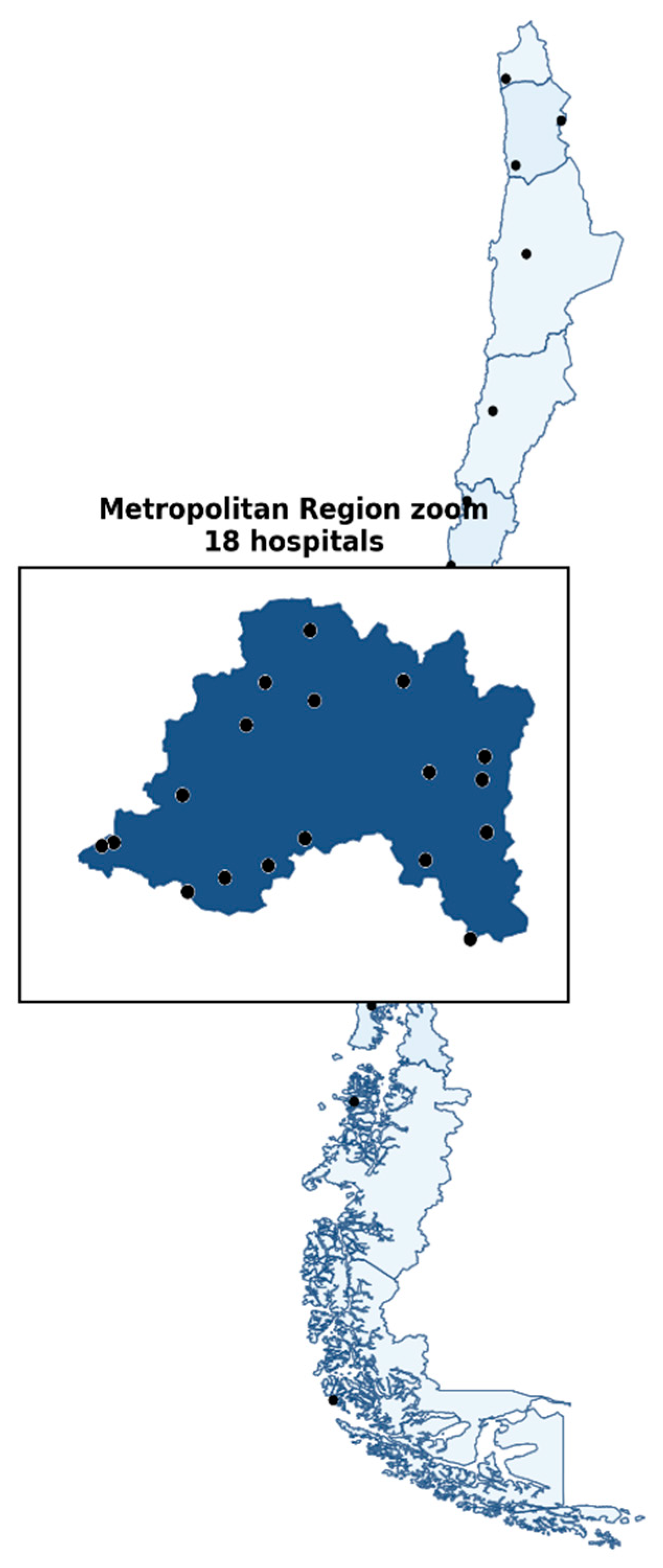
A total of 35 centers, corresponding to 13 of the 16 regions of the country, participated in this study, based on 59 individual responses consolidated at the institutional level. Of these, 30/35 hospitals (85.7%) reported providing care for patients considered at high risk for invasive fungal infection, operationally defined as centers caring for patients with hematologic malignancies, oncologic conditions, or transplantation. 18/35 hospitals (51.4%) were located in the Metropolitan Region, indicating that the capital had the highest concentration of participating centers (Figure 2). At the hospital level, 19/35 (54.3%) had responses from a single professional group, 11/35 (31.4%) from two groups, and 5/35 (14.3%) from all three groups considered. The physician group was represented in 28/35 hospitals (80.0%), pharmacists in 19/35 (54.3%), and the laboratory/microbiology group in 9/35 (25.7%). This distribution should be considered when interpreting technical variables related to mycological diagnosis, given that laboratory professionals were underrepresented relative to the other professional groups. The fungi most frequently reported as relevant or of greatest concern in the participating centers were Candida spp., mentioned by 33/35 hospitals (94.3%), followed by Aspergillus spp. in 24/35 hospitals (68.5%) and Cryptococcus spp. in 15/35 hospitals (42.9%). Less frequently reported fungi included Mucorales (17.1%) and Histoplasma spp. (5.7%), and dermatophytes (2.9%).
Figure 1.
Access to antifungal therapy in Chile.
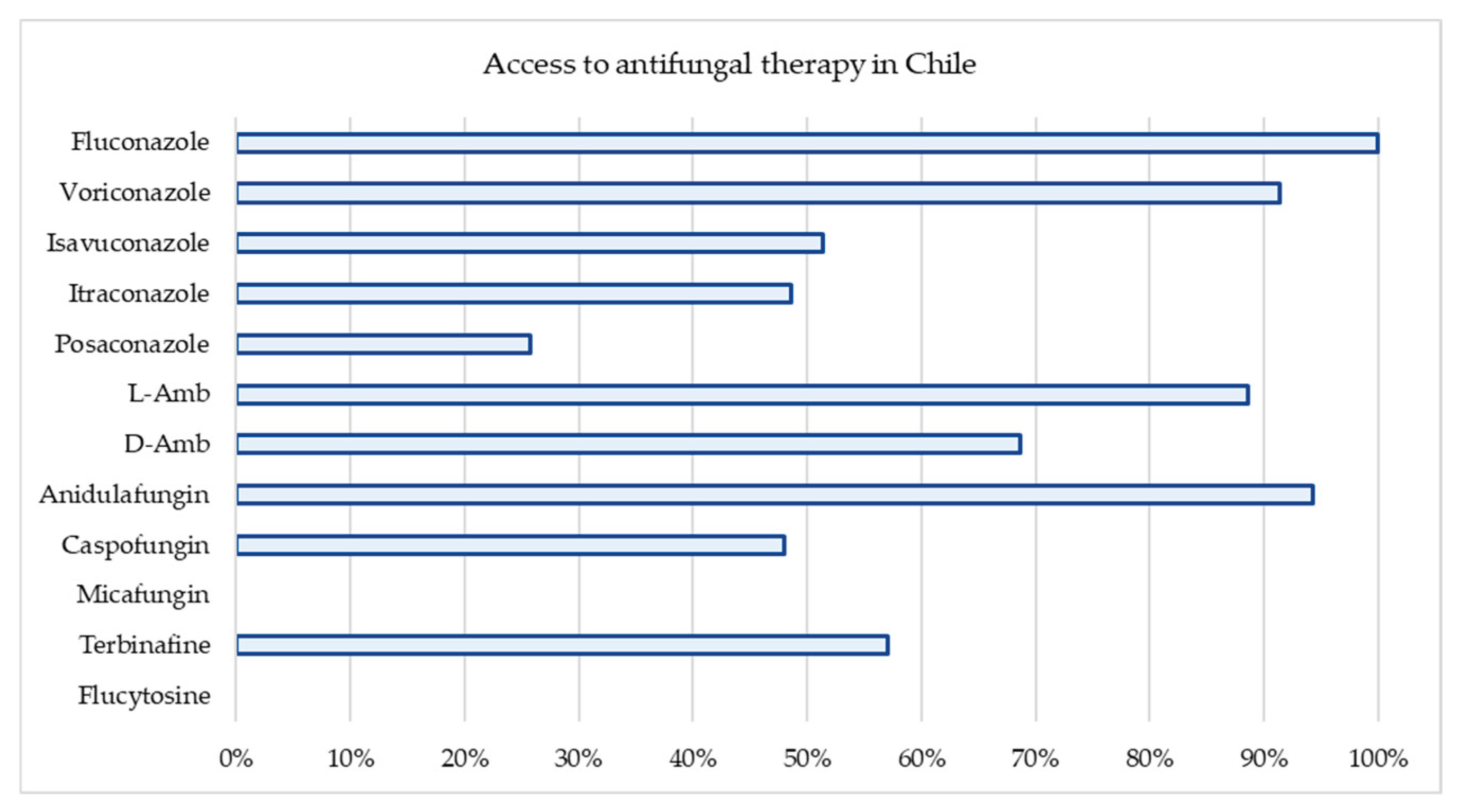
Figure 2.
Geographic Distribution of Surveyed Hospitals Across Chile. Each black dot represents one participating hospital. The inset provides an enlarged view of the Metropolitan Region, where 18 participating hospitals were located.
Figure 2.
Geographic Distribution of Surveyed Hospitals Across Chile. Each black dot represents one participating hospital. The inset provides an enlarged view of the Metropolitan Region, where 18 participating hospitals were located.
3.1. Diagnostic Tools
3.1.1. Microscopy/Identification Tools
All centers have an institutional mycology laboratory. Direct mycological examination was widely available and was reported by all 35 hospitals (100%). The most frequently available microscopy-based methods were Gram staining (33/35, 94.3%); India ink staining (29/35, 82.9%); and potassium hydroxide (KOH) preparation (22/35, 62.9%). Other reported techniques included Giemsa staining (18/35, 51.4%), lactophenol cotton blue staining (16/35, 45.7%), calcofluor white staining (12/35, 34.3%), and silver staining (13/35, 37.1%).
Regarding culture media availability, Sabouraud agar with or without inhibitor was the most frequently available medium (27/35 hospitals, 77.1%), followed by chromogenic agar (16/35, 45.7%) and potato dextrose agar (11/35, 31.4%). Chromogenic agar was predominantly available in high-complexity centers, suggesting greater access to specialized mycological diagnostic resources in these institutions. Dermatophyte agar showed limited availability (2/35, 5.7%), while 7/35 centers (20.0%) did not know or did not report which culture media were available.
Fungal species identification by any method was widely available, being reported by 34/35 hospitals (97.1%). However, advanced fungal identification methods (PCR, MALDI-TOF MS, or automated VITEK-type systems) were available in only 26/35 hospitals (74.3%). Automated identification or VITEK-type systems were the most frequently available approach (26/35, 74.3%), followed by MALDI-TOF MS (23/35, 65.7%), PCR-based identification (18/35, 51.4%), and manual biochemical identification (13/35, 37.1%). Combined access to MALDI-TOF MS and an automated VITEK-type system was reported by only 17/35 hospitals (48.6%). In contrast, availability of all three advanced identification methods (PCR, MALDI-TOF MS, and VITEK-type systems) was limited to 11/35 hospitals (31.4%). Notably, all centers reporting access to more than one advanced identification method were high-complexity hospitals.
Antifungal susceptibility testing was available predominantly for yeasts (29/35, 82.9%), whereas only 6/35 (17.1%) reported susceptibility testing for filamentous fungi. The same six centers reported availability for both yeasts and filamentous fungi. Regarding the methods used for antifungal susceptibility testing, automated systems (including VITEK) were the most frequently available (21/35, 60.0%), followed by broth microdilution (19/35, 54.2%), E-test (16/35, 45.7%), and disk diffusion (15/35, 42.9%).
3.1.2. Antibody Detection Tests and Molecular Testing
Serologic antibody detection assays were uncommon, available in 7 of 35 hospitals (20.0%). In contrast, antigen detection assays were available in 26 of 35 hospitals (74.3%). The most frequent were Cryptococcus spp. antigen and Aspergillus galactomannan, both reported by 20 of 35 hospitals (57.1%). Access to (1→3)-β-D-glucan was limited, available in only 5 of 35 centers (14.3%). Molecular tests were reported as available in 25 of 35 hospitals (71.4%). The most frequent was PCR for Pneumocystis jirovecii, available in 21 of 35 centers (60.0%), followed by PCR for Candida spp. in 11 of 35 (31.4%) and PCR for Aspergillus spp. in 4 of 35 (11.4%). PCR for other fungi was reported by 4 of 35 hospitals (11.4%).

Table 1.
Diagnostic, susceptibility, antigen, molecular, and therapeutic drug monitoring techniques.
Table 1.
Diagnostic, susceptibility, antigen, molecular, and therapeutic drug monitoring techniques.
| Technique | Total (n) | % | |
| Microscopy | |||
| KOH / potassium hydroxide | 22 | 62.9 | |
| Gram stain | 33 | 94.3 | |
| India ink | 29 | 82.9 | |
| Calcofluor white | 12 | 34.3 | |
| Lactophenol cotton blue | 16 | 45.7 | |
| Silver stain / Grocott stain in histology | 13 | 37.1 | |
| Giemsa stain in histology | 18 | 51.4 | |
| Cultures | |||
| Chromogenic agar | 16 | 45.7 | |
| Potato dextrose agar | 11 | 31.4 | |
| Sabouraud agar with or without inhibitor | 27 | 77.1 | |
| Dermatophyte agar | 2 | 5.7 | |
| Unknown | 7 | 20.0 | |
| Species identification | |||
| Automated VITEK-type identification | 26 | 74.3 | |
| Manual biochemical identification | 13 | 37.1 | |
| MALDI-TOF-MS | 23 | 65.7 | |
| PCR for identification | 18 | 51.4 | |
| Microscopic/macroscopic identification | 1 | 2.9 | |
| Unknown | 2 | 5.7 | |
| Antifungal susceptibility testing technologies | |||
| Disk diffusion | 15 | 42.8 | |
| E-test | 16 | 45.7 | |
| Broth microdilution | 19 | 54.3 | |
| VITEK or other automated method | 21 | 60 | |
| Unknown | 3 | 8.6 | |
| Antibodies | |||
| Aspergillus spp. antibodies | 3 | 8.6 | |
| Candida spp. antibodies | 3 | 8.6 | |
| Cryptococcus antibodies | 1 | 2.9 | |
| Histoplasma spp. antibodies | 2 | 5.7 | |
| Not available | 28 | 80.0 | |
| Antigens | |||
| Aspergillus GM (ELISA) | 17 | 48.6 | |
| Aspergillus GM (LFA/immunochromatography) | 7 | 20 | |
| (1→3)-β-D-glucan | 5 | 14.3 | |
| Cryptococcus (LFA) | 12 | 34.3 | |
| Cryptococcus (latex agglutination) | 15 | 42.9 | |
| Histoplasma | 3 | 8.6 | |
| Not available | 8 | 22.9 | |
| Molecular | |||
| Aspergillus PCR | 4 | 11.4 | |
| Candida PCR | 11 | 31.4 | |
| Mucorales PCR | 1 | 2.9 | |
| Pneumocystis jirovecii PCR | 21 | 60.0 | |
| Cryptococcus PCR in CSF | 6 | 17.1 | |
| PCR for other fungi | 5 | 14.3 | |
| FilmArray / molecular panel including fungi | 2 | 5.7 | |
| No molecular techniques reported | 10 | 28.6 | |
| Therapeutic drug monitoring | |||
| Voriconazole TDM | 18 | 51.4 | |
| Posaconazole TDM | 1 | 2.9 | |
| Isavuconazole TDM | 2 | 5.7 | |
| Not available | 16 | 45.7 | |
MALDI-TOF-MS: matrix-assisted laser desorption/ionization-time of flight mass spectrometry; PCR: polymerase chain reaction; E-test: Epsilometer test; GM: Galactomannan; LFA: Lateral Flow Assay; CSF: cerebrospinal fluid; TDM: Therapeutic Drug Monitoring.
3.2. Therapeutic Access
Regarding therapeutic access, broad availability of systemic antifungal agents was observed across participating centers. All hospitals reported access to at least one triazole, with fluconazole universally available (35/35, 100.0%), followed by voriconazole (32/35, 91.4%), isavuconazole (18/35, 51.4%), itraconazole (17/35, 48.6%), and posaconazole (9/35, 25.7%). Notably, access to isavuconazole demonstrated significant geographic heterogeneity, with higher availability among hospitals located in the Metropolitan Region, the country’s capital area (12/18, 66.7%), compared with hospitals from the northern and southern regions (6/17, 35.3%), suggesting an unequal distribution of access to newer-generation antifungal across the country. Availability of at least one echinocandin was reported by nearly all centers (34/35, 97.1%), mainly driven by anidulafungin (33/35, 94.3%), followed by caspofungin (17/35, 48.6%). No center reported availability of micafungin. Access to any formulation of amphotericin B was reported by 34/35 hospitals (97.1%), including liposomal amphotericin B (31/35, 88.6%) and amphotericin B deoxycholate (24/35, 68.6%). Terbinafine was available in 20/35 centers (57.1%), whereas no hospital reported availability of flucytosine.
TDM
Access to antifungal therapeutic drug monitoring was limited. Overall, 20 of 35 hospitals (57.1%) reported access to plasma concentration monitoring for at least one antifungal agent. Monitoring was concentrated primarily on voriconazole, available in 18 of 35 hospitals (51.4%). In contrast, plasma concentration monitoring for isavuconazole and posaconazole was reported by only 2 of 35 (5.7%) and 1 of 35 (2.9%), respectively.
3.3. Overall Access Score
The overall access score was compared according to hospital complexity, geographic region of the country (Central, Northern, and Southern regions), and number of hospital beds (<300, 301–499, and ≥500 beds).
Thirty high-complexity hospitals and five medium/low complexity hospitals were analyzed. The overall score for access to antifungal diagnostic and therapeutic resources was higher in high-complexity hospitals, with a median of 66.7% (IQR, 26.7%–86.7%), compared with 60.0% (IQR, 20.0%–80.0%) in medium/complexity hospitals. However, this difference was not statistically significant (p = 0.272).
When high-complexity hospitals were compared with medium/low-complexity hospitals, a trend toward greater availability of advanced diagnostic tools was observed in high-complexity hospitals. This difference was particularly evident for MALDI-TOF MS (73.3% vs. 20.0%; p = 0.038) and identification by polymerase chain reaction (PCR; 56.7% vs. 20.0%; p = 0.1774). However, most between-group differences did not reach statistical significance, possibly because of the small number of medium- or low-complexity hospitals included in the analysis.
Descriptively, the overall access score was highest in the Central region, with a median of 73.3%, compared with the Northern region (60.0%) and the Southern region (63.3%). No statistically significant differences were observed among the three regions (p = 0.432) (Supplementary Table S2, Figure 3)
When hospitals in the Central region were compared with those in the Northern and Southern regions combined, greater availability was observed for MALDI-TOF MS (14/18; 77.8 vs. 9/17; 52.9%; p = 0.164), voriconazole therapeutic drug monitoring (11/18 [61.1%] vs. 7/17 [41.2%]; p = 0.318), and isavuconazole (12/18 [66.7%] vs. 6/17 [35.3%]; p = 0.094). However, none of these differences reached statistical significance. Overall, these findings did not conclusively support the hypothesis of greater overall availability of antifungal resources in the Central region.
A clear association was observed between hospital size and the overall access score. Hospitals with fewer than 300 beds had a median score of 53.3% (IQR, 20.0%–80.0%), whereas hospitals with 301–499 beds had a median score of 66.7% (IQR, 46.7%–86.7%) and those with 500 or more beds had a median score of 73.3% (IQR, 60.0%–86.7%). The difference among the three groups was statistically significant according to the Kruskal–Wallis test (p = 0.003) (Figure 4).
MALDI-TOF MS showed the most pronounced between-group difference. Its availability increased progressively with the number of hospital beds, from 30.8% in hospitals with fewer than 300 beds to 76.9% in hospitals with 301–499 beds and 100% in hospitals with 500 or more beds. This difference was statistically significant (p = 0.002).
Other indicators also showed a trend toward greater availability in larger hospitals, although the differences did not reach statistical significance. These indicators included the availability of voriconazole, posaconazole, isavuconazole, PCR identification, and Cryptococcus antigen testing (Table 2). These findings suggest that hospital size may be associated with greater access to advanced diagnostic technologies and specialized antifungal agents. However, some comparisons may have been limited by the sample size.
4. Discussion
In this nationwide survey, most participating hospitals in Chile reported caring for patient populations at high risk for invasive fungal infections (IFI), predominantly individuals with hematologic malignancies, oncologic conditions, or those undergoing transplantation. This finding underscores the urgent need to strengthen diagnostic and therapeutic capacity for fungal diseases across the country.
The fungi most frequently identified as clinically relevant were Candida spp., Aspergillus spp., and Cryptococcus spp., which closely aligns with global and regional epidemiology reported in recent years [13,14]. Although the survey included hospitals from 13 of Chile's 16 national regions, a trend toward reduced diagnostic capacity in geographically extreme regions was observed, particularly regarding access to specialized mycology laboratories. However, these regional differences did not reach statistical significance.
Diagnostic infrastructure varied substantially across institutions. While all hospitals reported access to direct mycological examination, only 65.7% had MALDI-TOF MS, and 51.4% reported access to molecular identification methods. These advanced techniques were predominantly available in high-complexity hospitals, exposing structural inequities in diagnostic access. Antifungal susceptibility testing was widely available for yeasts (82.9%) but critically limited for filamentous fungi (17.1%), indicating that susceptibility testing for molds has not been fully integrated into AFS programs. The lack of standardization across susceptibility methods and the limited availability of therapeutic drug monitoring (TDM)—available for voriconazole in only 51.4% of centers and virtually absent for posaconazole (2.9%) and isavuconazole (5.7%)—further illustrate profound gaps in the diagnostic–therapeutic continuum.
In addition to these gaps, access to fungal antigen detection was heterogeneous: Aspergillus galactomannan was available in only 48.6% of hospitals (ELISA) and 20% (lateral flow assay), while Cryptococcus antigen testing—critical for the diagnosis of cryptococcal meningitis—was available in 34.3% of centers via lateral flow assay and 42.9% via latex agglutination. Histoplasma antigen detection was reported in only 8.6% of hospitals, underscoring substantial limitations in the diagnosis of endemic mycoses. This limited and uneven access to antigen-based diagnostics is clinically relevant because these assays provide rapid, non-culture-based detection of key fungal pathogens, enabling earlier therapeutic decisions and improving outcomes in settings where advanced identification methods or molecular testing are not consistently available.
Access to (1•3)-β-D-glucan (BDG) was notably scarce, reported by only 14.3% of hospitals. BDG is a cell wall polysaccharide used as a pan-fungal biomarker to support diagnosis and guide therapy in IFI. Its diagnostic performance varies according to patient population and pretest probability, offering a high negative predictive value (>90%) in critically ill patients and solid organ transplant recipients when the likelihood of IFI is low to moderate [15]. However, BDG interpretation remains challenging due to variability in assay performance across manufacturers, as highlighted in a 2020 Cochrane review [16]. Beyond invasive candidiasis and aspergillosis, BDG also plays a role in diagnostic algorithms for Pneumocystis jirovecii pneumonia (PJP). In a multicenter European ICU study, BDG demonstrated a sensitivity of 86% and specificity of 71%, with positive predictive value improving when combined with respiratory PCR [17]. Importantly, BDG has also been shown to safely shorten antifungal therapy duration in invasive candidiasis, reducing unnecessary exposure to antifungals [18]. The limited availability of BDG in Chilean hospitals therefore represents a critical bottleneck in early non-invasive diagnosis and stewardship.
Although most hospitals reported broad access to first-line systemic antifungal agents, important therapeutic gaps persist. Only 51.4% of centers had access to isavuconazole, an agent used alongside voriconazole for invasive aspergillosis and an approved therapy for mucormycosis. Furthermore, given that therapeutic drug monitoring for voriconazole was available in only 51.4% of participating centers, having access to isavuconazole—which generally does not require routine TDM—becomes even more necessary within the institutional therapeutic arsenal. Access to isavuconazole also revealed marked geographical centralism, with 66.7% of centers in the Metropolitan Region having access compared to only 35.3% in the northern and southern regions. While international guidelines support its use as first-line therapy for invasive aspergillosis and as rescue or sequential therapy for mucormycosis—particularly when liposomal amphotericin B cannot be used due to toxicity—its limited availability outside the capital may restrict optimal management, especially in the absence of drug levels in blood of these infections [19,20,21,22].
Regarding other classes, while anidulafungin was universally available (94.3%), micafungin was completely absent across all centers. Most critically, access to flucytosine was absent in all surveyed hospitals (0%) despite its long-standing role in induction therapy for cryptococcal meningitis and its demonstrated impact on reducing mortality and hospitalization in resource-limited settings [23,24,25,26]. As a result, induction therapy for cryptococcal meningitis in Chile often relies on liposomal amphotericin B plus fluconazole.
Hospital size (number of beds) emerged as the most statistically significant determinant of diagnostic and therapeutic access (p=0.003). Larger hospitals (≥500 beds) demonstrated significantly higher overall access scores (median 73.3%) and greater availability of advanced diagnostic tools, most notably MALDI-TOF MS (100% vs. 76.9% in hospitals 301–499 beds and 30.8% in hospitals <300 beds; p=0.002), PCR-based identification, and specialized antifungal agents. This association suggests that structural capacity and institutional scale—rather than geographic region or hospital complexity alone—are the primary drivers of access to comprehensive IFI management resources in Chile.
This study has limitations that should be acknowledged. First, although the survey included hospitals across most national regions, it did not achieve complete coverage of all hospital centers in Chile. Second, a methodological limitation was the unequal representation of professional groups: while physicians and pharmacists were well represented (80.0% and 54.3%, respectively), only 25.7% of hospitals had responses from laboratory professionals. Because information was gathered through self-reported survey data, this imbalance suggests potential underreporting of diagnostic capabilities and introduces information bias regarding diagnostic techniques. Finally, most participating institutions were high-complexity hospitals, with only a small number of medium- and low-complexity centers represented, which may limit the generalizability of these findings across lower-tier healthcare settings in the country.
5. Conclusions
This nationwide survey demonstrates broad access to several core diagnostic and therapeutic resources for invasive fungal infections in Chile. Nevertheless, substantial gaps remain, particularly in access to BDG testing, antifungal susceptibility testing—especially for filamentous fungi—and therapeutic drug monitoring. Therapeutic gaps were also identified, most notably the absence of flucytosine, an essential component of recommended induction regimens for cryptococcal meningitis, and the limited availability of newer-generation antifungal agents. These findings provide a national baseline for developing public health policies to address current deficiencies, strengthen regional laboratory capacity, and ensure more timely and equitable access to fungal diagnostics and antifungal treatment across the country. As part of this effort, the Medical Mycology Advisory Committee intends to implement targeted interventions to improve diagnostic and therapeutic access nationwide. The survey presented here will serve as the baseline for a follow-up national assessment planned in three years, allowing evaluation of the impact and effectiveness of these interventions.
Supplementary Materials
The following supporting information can be downloaded at: Preprints.org.
Author Contributions
Conceptualization: M.R and C.C.A; methodology: C.C. and C.C.A.; software: C.C and C.T.; validation: M.R.; formal analysis: A.S.; investigation: C.C.; data curation: C.C.; writing—original draft preparation: C.C.A and N.D.; writing—review and editing: C.C.A, N.D and M.R.; All authors have read and agreed to the published version of the manuscript.
Funding
This research received no external funding.
Institutional Review Board Statement
Not applicable
Informed Consent Statement
Not applicable. Patient informed consent was not required because the study did not involve patients, interventions, or patient-level or identifiable clinical data. Healthcare institutional professionals voluntarily provided by healthcare information through an anonymous survey conducted within the transparency framework of each participating hospital. Respondents were informed that the data could be used for research and scientific publication purposes, and no personally identifiable information was collected.
Data Availability Statement
All data generated or analyzed in this study are included in the article and its supplementary materials. If additional information is required, it may be requested from the corresponding author.
Acknowledgments
The study design, data collection, analysis, interpretation, and manuscript preparation were conducted by the listed authors. Microsoft Excel was used to generate graphs and figures. During the preparation of this manuscript, the authors used Julius AI (web-based platform, accessed 2026) to assist with image generation and visual presentation, and also acknowledge the use of Large Language Models during the preparation of this manuscript, specifically, Gemini for language editing and translation support. The authors reviewed and edited all outputs and take full responsibility for the content of this publication.
Conflicts of Interest
The authors declare no conflicts of interest.
References
- Bongomin, F.; Gago, S.; Oladele, R.O.; Denning, D.W. Global and Multi-National Prevalence of Fungal Diseases—Estimate Precision. J. Fungi 2017, 3, 57. [Google Scholar] [CrossRef] [PubMed]
- Schmiedel, Y.; Zimmerli, S. Common invasive fungal diseases: An overview of invasive candidiasis, aspergillosis, cryptococcosis, and Pneumocystis pneumonia. Swiss Med. Wkly. 2016, 146, w14281. [Google Scholar] [CrossRef]
- Fisher, M.C.; Alastruey-Izquierdo, A.; Berman, J.; Bicanic, T.; Bignell, E.M.; Bowyer, P.; Bromley, M.; Brüggemann, R.; Garber, G.; Cornely, O.A.; et al. Tackling the emerging threat of antifungal resistance to human health. Nat. Rev. Microbiol. 2022, 20, 557–571. [Google Scholar] [CrossRef] [PubMed]
- Perfect, J.R. The antifungal pipeline: a reality check. Nat. Rev. Drug Discov. 2017, 16, 603–616. [Google Scholar] [CrossRef] [PubMed]
- Cornely, O.A.; Alastruey-Izquierdo, A.; Arenz, D.; Chen, S.C.A.; Dannaoui, E.; Hochhegger, B.; Hoenigl, M.; Jensen, H.E.; Lagrou, K.; Lass-Flörl, C.; et al. Global guideline for the diagnosis and management of mucormycosis: an initiative of the ECMM in cooperation with the MSGERC. Lancet Infect. Dis. 2019, 19, e405–e421. [Google Scholar] [CrossRef] [PubMed]
- Rabagliati, R.; Benadof, D.; Thompson, L.; Garcia, P.; Gonzalez, T.; Vizcaya, C.; Soto, A.; Gutierrez, C.; Rodriguez, L.; Labraña, Y.; et al. A prospective, multicenter study of invasive fungal disease caused by molds in children and adults in Chile. PLoS One 2025, 20, e0330426. [Google Scholar] [CrossRef] [PubMed]
- Falci, D.R.; Pasqualotto, A.C. Clinical mycology in Latin America and the Caribbean: A snapshot of diagnostic and therapeutic capabilities. Mycoses 2019, 62, 368–373. [Google Scholar] [CrossRef] [PubMed]
- Aerts, R.; Cuypers, L.; Meijer, E.F.J.; Kohnen, M.; Meis, J.F.; Cornely, O.A.; Lagrou, K.; Salmanton-García, J.; Wagemakers, A.; Vestjens, S.; et al. ESCMID-EFISG Survey on Diagnostic and Therapeutic Capacity for Invasive Fungal Infections in Belgium, the Netherlands, and Luxembourg: A Focus on High Azole Resistance. Mycoses 2025, 68, e70092. [Google Scholar] [CrossRef] [PubMed]
- Johnson, M.D.; Lewis, R.E.; Dodds Ashley, E.S.; Ostrosky-Zeichner, L.; Zaoutis, T.; Thompson, G.R.; Andes, D.R.; Walsh, T.J.; Pappas, P.G.; Cornely, O.A.; et al. Core Recommendations for Antifungal Stewardship: A Statement of the Mycoses Study Group Education and Research Consortium. J. Infect. Dis. 2020, 222, S175–S198. [Google Scholar] [CrossRef] [PubMed]
- Banda, C.; Neyra, E.; Rios-Blanco, R.; Espinoza-Lopez, P.; Antunez de Mayolo, N.; Ogata, M.M.; Bustamante, B. Gaps in fungal disease diagnostics and availability of antifungals: A nationwide survey of hospital laboratories in Peru. Med. Mycol. 2026, 64, myag032. [Google Scholar] [CrossRef] [PubMed]
- Maquera-Afaray, J.; Cuéllar, L.E.; Cornely, O.A.; Salmanton-García, J.; IFI Diagnostic and Treatment Capacity Collaborator Team Peru. Fungi under fire: diagnostic capacities and antifungal availability in Peruvian healthcare facilities. Microbiol. Spectr. 2025, 13, e0202024. [Google Scholar] [CrossRef] [PubMed]
- Salmanton-García, J.; Falci, D.R.; Cornely, O.A.; Pasqualotto, A.C. Elevating fungal care: bridging Brazil’s healthcare practices to global standards. Microbiol. Spectr. 2025, 13, e02112-24. [Google Scholar] [CrossRef] [PubMed]
- Trelles, M.; Murillo, J.; Fuenmayor-González, L.; Yu-Liu, Y.; Alexander-León, H.; Acebo, J.; Cuicapuza, D.; Morales, M.; Peña, C.; García-Aguilera, M.F. Prevalence of invasive fungal infection in critically ill patients: A systematic review and meta-analysis. BMC Infect. Dis. 2025, 25, 11264. [Google Scholar] [CrossRef] [PubMed]
- Lass-Flörl, C.; Steixner, S. The changing epidemiology of fungal infections. Mol. Asp. Med. 2023, 94, 101215. [Google Scholar] [CrossRef] [PubMed]
- Lamoth, F.; Akan, H.; Andes, D.; Bille, J.; Carratalà, J.; Castagnola, E.; Cevenini, R.; Cornely, O.A.; Cuenca-Estrella, M.; Donnelly, J.P.; et al. Assessment of the role of 1,3-β-D-glucan testing for the diagnosis of invasive fungal infections in adults. Clin. Infect. Dis. 2021, 72, S102–S108. [Google Scholar] [CrossRef] [PubMed]
- White, S.K.; Schmidt, R.L.; Walker, B.S.; Hanson, K.E. (1→3)-β-D-glucan testing for the detection of invasive fungal infections in immunocompromised or critically ill people. Cochrane Database Syst. Rev. 2020, 7, CD009833. [Google Scholar] [CrossRef] [PubMed]
- Giacobbe, D.R.; Dettori, S.; Di Pilato, V.; Ball, L.; Asperges, E.; Bandera, A.; Blasi, F.; Bressan, R.; Cauda, R.; Cortegiani, A.; et al. Pneumocystis jirovecii pneumonia in intensive care units: A multicenter study by ESGCIP and EFISG. Crit. Care 2023, 27, 323. [Google Scholar] [CrossRef] [PubMed]
- De Pascale, G.; Posteraro, B.; D’Arrigo, S.; Spinazzola, G.; Garufi, U.; Cutuli, S.L.; Bello, G.; Montini, L.; Spanu, T.; Sanguinetti, M.; et al. (1,3)-β-D-glucan-based empirical antifungal interruption in suspected invasive candidiasis: A randomized trial. Crit. Care 2020, 24, 550. [Google Scholar] [CrossRef] [PubMed]
- Cornely, O.A.; Alastruey-Izquierdo, A.; Arenz, D.; Chen, S.C.A.; Dannaoui, E.; Hochhegger, B.; Hoenigl, M.; Jensen, H.E.; Lagrou, K.; Lass-Flörl, C.; et al. Global guideline for the diagnosis and management of mucormycosis: An initiative of the ECMM in cooperation with the MSGERC. Lancet Infect. Dis. 2019, 19, e405–e421. [Google Scholar] [CrossRef] [PubMed]
- Maertens, J.A.; Raad, I.I.; Marr, K.A.; Patterson, T.F.; Kontoyiannis, D.P.; Cornely, O.A.; Bow, E.J.; Rahav, G.; Neofytos, D.; Aoun, M.; et al. Isavuconazole versus voriconazole for primary treatment of invasive mould disease (SECURE): A phase 3, randomised-controlled, non-inferiority trial. Lancet 2016, 387, 760–769. [Google Scholar] [CrossRef] [PubMed]
- Wang, J.; Sun, J.; Yang, D.-W.; Zhang, Q.-Q.; Li, R.-Y. Appraisal of guidelines on drug therapy for invasive aspergillosis. Front. Pharmacol. 2025, 16, 1443487. [Google Scholar] [CrossRef] [PubMed]
- Ullmann, A.J.; Aguado, J.M.; Arikan-Akdagli, S.; Denning, D.W.; Groll, A.H.; Lagrou, K.; Lass-Flörl, C.; Lewis, R.E.; Lortholary, O.; Maertens, J.; et al. Diagnosis and management of Aspergillus diseases: Executive summary of the 2017 ESCMID-ECMM-ERS guideline. Clin. Microbiol. Infect. 2018, 24, e1–e38. [Google Scholar] [CrossRef] [PubMed]
- Loyse, A.; Dromer, F.; Day, J.; Lortholary, O.; Harrison, T.S. Flucytosine and cryptococcosis: Accessibility of a 50-year-old antifungal. J. Antimicrob. Chemother. 2013, 68, 2435–2444. [Google Scholar] [CrossRef] [PubMed]
- Chang, C.C.; Harrison, T.S.; Bicanic, T.A.; Chiller, T.; Sorrell, T.C.; Perfect, J.R.; Jarvis, J.N.; Govender, N.P.; Meya, D.B.; Rajasingham, R.; et al. Global guideline for the diagnosis and management of cryptococcosis: An initiative of the ECMM and ISHAM in cooperation with the ASM. Lancet Infect. Dis. 2024, 24, e495–e512. [Google Scholar] [CrossRef] [PubMed]
- Mashau, R.; Meiring, S.; Quan, V.; Thomas, J.; Govender, N.P.; GERMS-SA. Outcomes of flucytosine-containing treatment for cryptococcal meningitis: A national prospective observational study in South Africa. Lancet Infect. Dis. 2022, 22, 1365–1373. [Google Scholar] [CrossRef] [PubMed]
- Molloy, S.F.; Kanyama, C.; Heyderman, R.S.; Kouanfack, C.; Chanda, D.; Carazo, S.; Niessen, L.W.; Lakhi, S.; Guarner, J.; Duncombe, C.; et al. Antifungal combinations for cryptococcal meningitis in Africa. N. Engl. J. Med. 2018, 378, 1004–1017. [Google Scholar] [CrossRef] [PubMed]
Figure 3.
Distribution of the overall access score according to geographic region of the country. Regional scores are represented using a continuous yellow-to-blue color scale, with yellow indicating lower access and dark blue indicating higher access. Regions shown in gray had no available data.
Figure 3.
Distribution of the overall access score according to geographic region of the country. Regional scores are represented using a continuous yellow-to-blue color scale, with yellow indicating lower access and dark blue indicating higher access. Regions shown in gray had no available data.
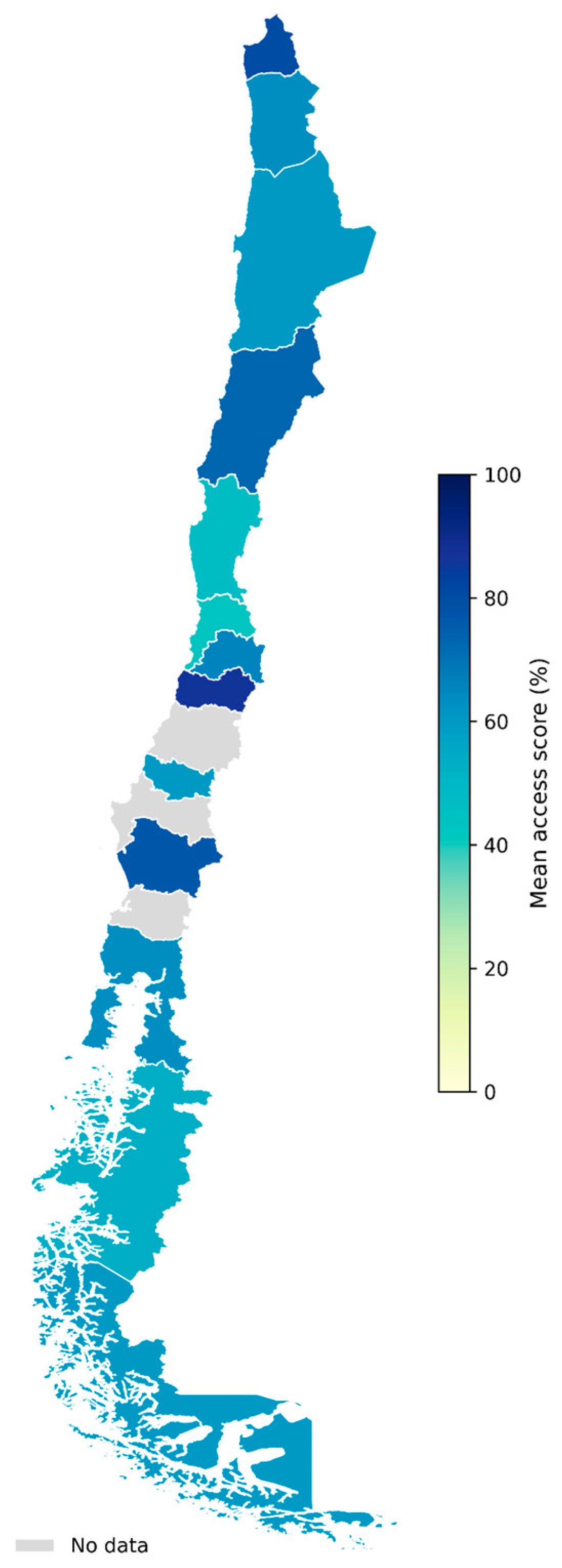
Figure 4.
Box plot of overall access score according to hospital beds (<300, 301–499, and ≥500 beds).
Figure 4.
Box plot of overall access score according to hospital beds (<300, 301–499, and ≥500 beds).
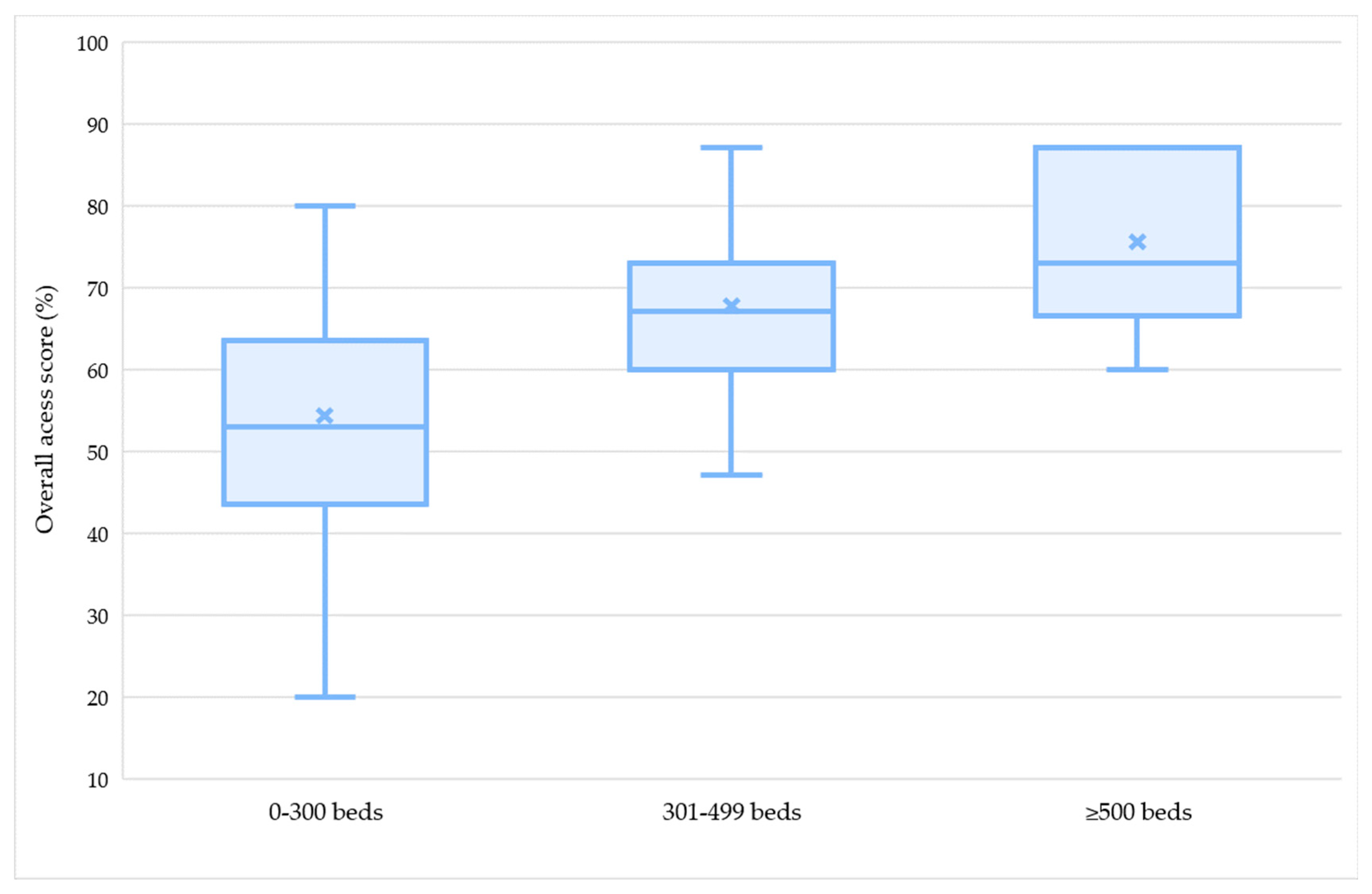
Table 2.
Individual Components of the Diagnostic and Therapeutic Access Score by Institutional Bed Capacity.
Table 2.
Individual Components of the Diagnostic and Therapeutic Access Score by Institutional Bed Capacity.
| Item | 0-300 beds | 301-499 beds | ≥500 beds | P-value |
|---|---|---|---|---|
| Institutional mycology laboratory | 13/13 (100%) | 13/13 (100%) | 9/9 (100.0%) | |
| Always internal diagnosis | 3/13 (23.1%) | 5/13 (38.5%) | 5/9 (55.6%) | 0.374 |
| Direct mycological diagnosis | 13/13 (100.0%) | 13/13 (100.0%) | 9/9 (100.0%) | NA |
| MALDI-TOF-MS | 4/13 (30.8%) | 10/13 (76.9%) | 9/9 (100.0%) | 0.002 |
| PCR identification | 4/13 (30.8%) | 8/13 (61.5%) | 6/9 (66.7%) | 0.688 |
| Yeast susceptibility | 9/13 (69.2%) | 12/13 (92.3%) | 8/9 (88.9%) | 0.348 |
| Filamentous susceptibility | 1/13 (7.7%) | 2/13 (15.4%) | 3/9 (33.3%) | 0.453 |
| Galactomannan | 6/13 (46.2%) | 7/13 (53.8%) | 7/9 (77.8%) | 0.384 |
| (1→ 3)-β-D-glucan | 2/13 (15.4%) | 2/13 (15.4%) | 1/9 (11.1%) | 1.0 |
| Pneumocystis jirovecii PCR | 6/13 (46.2%) | 9/13 (69.2%) | 6/9 (66.7%) | 0.471 |
| TDM voriconazole | 6/13 (46.2%) | 6/13 (46.2%) | 6/9 (66.7%) | 0.632 |
| Voriconazole | 10/13 (76.9%) | 13/13 (100.0%) | 9/9 (100.0%) | 0.100 |
| Equinocandin | 12/13 (92.3%) | 13/13 (100.0%) | 9/9 (100.0%) | 1.0 |
| Liposomal amphotericin | 10/13 (76.9%) | 13/13 (100.0%) | 8/9 (88.9%) | 0.170 |
| Isavuconazole | 5/13 (38.5%) | 6/13 (46.2%) | 7/9 (77.8%) | 0.225 |
Disclaimer/Publisher’s Note: The statements, opinions and data contained in all publications are solely those of the individual author(s) and contributor(s) and not of MDPI and/or the editor(s). MDPI and/or the editor(s) disclaim responsibility for any injury to people or property resulting from any ideas, methods, instructions or products referred to in the content. |
© 2026 by the authors. Licensee MDPI, Basel, Switzerland. This article is an open access article distributed under the terms and conditions of the Creative Commons Attribution (CC BY) license (http://creativecommons.org/licenses/by/4.0/).
Copyright: This open access article is published under a Creative Commons CC BY 4.0 license, which permit the free download, distribution, and reuse, provided that the author and preprint are cited in any reuse.