

Submitted:
19 August 2026
Posted:
21 August 2026
You are already at the latest version
Abstract
Invasive Fungal Infections (IFIs) represent a significant threat to transplant recipients and patients with non-HIV-related immunosuppression, particularly in low- and middle-income countries (LMICs). While the disease burden in HIV populations is widely recognized, this group faces a critical gap in diagnosis and treatment that perpetuates a cycle of preventable deaths.
Advances in medical therapies have revolutionized the management of hematologic malignancies, autoimmune diseases, and solid organ transplantation, increasing the number of severely immunocompromised individuals susceptible to opportunistic pathogens. In the US, IFI incidence rose from 30.2 to 31.8 per 100,000 between 2006 and 2015 [1]. However, epidemiological knowledge in LMICs remains limited due to scarce surveillance, high diagnostic and treatment costs, and low access to diagnostic methods, with disparities between regions and even within centers from the same countries.
Current clinical guidelines must be adapted to regional resources to optimize diagnostic strategies and timely treatment. This review aims to analyze the primary gaps in LMICs to identify key intervention nodes for reducing mortality in non-HIV immunocompromised patients in our region.
Keywords:
invasive fungal infections
; non-HIV immunosuppression
; fungal diagnostics
; candidemia
; aspergillosis
; LMICs
; fungal treatment
1. Introduction
Low- and middle-income countries (LMICs) are defined by the World Bank Group based on Gross National Income (GNI) per capita. Although diverse in population and size, these countries share development indicators and face similar infrastructure and health system challenges.
Infectious disease solutions demand the One Health approach, yet LMICs struggle to implement it due to weak governance, scarce resources, poor coordination and communication, and community mistrust in health systems [1]. These challenges are accentuated by advances in medical therapies, which have increased the number of people with severe immunocompromised conditions and heightened susceptibility to infections. Among this group, fungal pathogens are particularly concerning, often causing high mortality due to impaired immunity and delays in diagnosis and treatment initiation.
The incidence of IFIs has increased in high-complexity centers in the United States, rising from 30.2 per 100,000 in 2006 to 31.8 per 100,000 in 2015. In France, rates rose from 2.16 to 2.36 per 10,000 hospitalizations between 2012 and 2018 [2]. Socioeconomic and geographic factors also affect the incidence and mortality of these infections, leading to differences within regions of the same country [3]. Knowledge of epidemiological changes remains limited, especially in low- and middle-income countries (LMICs), where surveillance of fungal infections is scarce or absent. Economic constraints and the high costs of diagnosis and treatment further widen the gap in reducing mortality. For example, data in the Middle East and North Africa region are scarce. Still, available rates illustrate that IFIs are not negligible: Pakistan reports up to 21 per 100,000 cases of Candidemia and 14 per 100,000 cases of mucormycosis, while Ethiopia reports 10.9 per 100,000 cases of invasive aspergillosis [4]. In Latin America and the Caribbean, a survey of 129 centers across 24 countries found that only 9% met the minimum mycology standards set by the European Confederation of Medical Mycology. Brazil shows more progress than other countries, yet gaps persist, particularly in diagnostic methods for cryptococcosis and antifungal susceptibility testing [5]. In a recent cross-sectional survey in Colombia assessing institutions’ profiles and diagnostic and therapeutic access across 133 institutions (133 hospitals and 20 research centers), significant disparities in diagnostic capacity were observed depending on the institution profile. Still, advanced diagnostics, such as antigen detection and molecular techniques, were severely limited and restricted in tertiary hospitals and reference centers [6].
Current clinical recommendations are based on scientific evidence for best practices in diagnosing and managing IFIs. However, regional socioeconomic differences require adapting these recommendations to available resources and optimizing protocols to improve diagnostic strategies, thereby allowing timely and appropriate treatment.
This review analyzes critical gaps in LMICs — such as epidemiological challenges, resource limitations, and clinical practices—to identify targeted interventions. These include implementing cost-effective diagnostic algorithms, training healthcare workers, and establishing regional surveillance systems. Such strategies can help reduce delays in diagnosis and improve treatment outcomes, directly supporting efforts to decrease mortality among non-HIV immunocompromised patients in our region.
2. Pathogens and At-Risk Populations
Among transplant recipients and non-HIV immunocompromised individuals, the primary risk factors for fungal infections are the intensity of immunosuppression, the duration and severity of neutropenia, and comorbidities that impair immune function, such as diabetes. Pharmacologic management of other medical conditions, such as viral infections or other diseases, with steroids has also increased the population at risk.
Immune Responses to Fungal Pathogens
Host defense mechanisms against fungal pathogens are diverse and play a critical role in determining disease development following exposure. These mechanisms encompass both innate and adaptive immune responses. The dichotomy between T helper cell subsets (Th1 and Th2) is particularly important in orchestrating effective immune responses to fungal infections [8]. Th1 cells promote cell-mediated immunity by activating macrophages and cytotoxic T cells, which are essential for eliminating intracellular fungal pathogens. In contrast, Th2 cells drive humoral immunity and stimulate antibody production, but an excessive Th2 response may impair effective fungal clearance. Therefore, a balanced Th1 response is generally protective against most fungal infections, whereas a predominant Th2 response is associated with increased susceptibility. Moreover, the Th17 response, with the secretion of IL-17, plays an important role in defense against mucosal and systemic fungal infections, most notably Candida albicans, by rapidly recruiting neutrophils to the site of infection and inducing the production of antimicrobial peptides [7].
Although innate immunity lacks antigen specificity, it closely interacts with adaptive immunity, initiating adaptive immune responses through defined signaling pathways. Key examples include Toll-like receptors (TLRs), which recognize fungal components and trigger the production of pro-inflammatory cytokines such as interleukin-12 (IL-12) and tumor necrosis factor-alpha (TNF-alpha). These cytokines play a pivotal role in promoting T cell differentiation and activating the adaptive immune response, ultimately enhancing the host's ability to control fungal infections [8]. (Figure 1)
Prolonged and severe neutropenia, as seen in cancer patients, is the most recognized risk factor for invasive fungal infection, given the critical role of innate immunity as the first line of defense against fungal pathogens. In contrast, the effects of immunosuppressants in non-neutropenic patients will differ depending on the type of molecule and the concomitant immunosuppressive agents used. These risks begin with the use of glucocorticoids and their impact on the innate immune system, but are usually used with other agents, such as small-molecule agents like calcineurin inhibitors or antiproliferative and antimetabolite drugs; depleting or non-depleting antibodies, such as thymoglobulin and alemtuzumab, among others, that affect the adaptive immune response [9].
Another important consideration is that individual susceptibility is shaped by host genetic variation. Polymorphisms in key innate immune receptors, including Toll-like receptor 2, Toll-like receptor 4, Dectin-1, and pentraxin-3, alter cytokine release and phagocytic efficiency, leaving certain transplant and oncology patients highly vulnerable despite identical environmental exposures and immunosuppressive doses [11]. Recent studies show that individuals with these polymorphisms have nearly twice the risk of developing fungal infections compared with those without them [12].
Traditionally, the type of pathogen and the period of highest risk depend on whether the recipient has undergone Hematopoietic Stem Cell Transplantation (HSCT) or Solid Organ Transplant (SOT). In the latter case, the 12-month cumulative incidence of IFIs) Can reach as high as 21 per 1000 transplants and is significantly affected by the specific organ transplanted. A recent study by Gold and Benedict indicated that the most commonly affected transplant organ was the lungs, followed by the pancreas, with the lowest incidence observed in kidney transplant recipients [13]. Among HSCT recipients in the same study, the incidence of IFI was 28.5 per 1000 person-years, with a higher incidence in allogeneic recipients than in autologous recipients [13].
Pathogen distribution varies by organ: invasive candidiasis is especially common in recipients of abdominal transplants (liver, pancreas, small bowel), while invasive aspergillosis is the leading mold infection in lung transplant patients [11,13,14]. In HSCT patients, aspergillosis is the most common invasive fungal infection (IFI), accounting for 43-63% of all fungal cases. However, emerging fungi such as Rhizopus spp., Fusarium, and Scedosporium are also being reported in this population [14]. Table 1 shows a comparative summary of the main fungal pathogens in SOT and HSCT.
3. Key Points and Challenges
Epidemiological Shifts
Advancements in SOT, HSCT, and cancer chemotherapy have significantly improved survival for patients with end-stage organ diseases and hematological malignancies [15,16]. The one-year survival rate for SOT recipients now exceeds 90% [16]. However, the intense immunosuppression required to prevent graft rejection or treat underlying malignancies increases susceptibility to opportunistic pathogens in these patients [16,17].
The temporal pattern of IFDs has shifted. Historically, these infections were concentrated in the immediate post-transplant period, coinciding with the peak of immunosuppression. However, the widespread implementation of targeted antifungal prophylaxis has delayed the median onset of such infections [18,19]. HSCT recipients increasingly experience breakthrough or late-onset mold infections well beyond the traditional neutropenic phase, often during the management of graft-versus-host disease (GVHD) [19,20]. For instance, contemporary surveillance data indicate that HSCT patients develop candidiasis at a median of 169 days and other IFDs at 172 and 349 days post-transplant, representing a significant delay relative to historical cohorts, in which candidiasis occurred at a median of 61 days and other IFDs at 100 and 150 days.
Geographic and climatic trends exert a powerful influence on local epidemiology. Endemic mycoses—such as histoplasmosis, coccidioidomycosis, and blastomycosis—have expanded substantially beyond their traditional geographic boundaries. These endemic fungi now account for 15,6% of IFDs in SOT recipients and 4,1% in HSCT recipients, a significant increase from historical rates of less than 5% and 1%, respectively.
Kidney transplant recipients generally exhibit the lowest overall incidence of IFD among SOT cohorts, but they demonstrate wide regional variations in prevalence.[21] Cumulative incidence rates are 0,9% in developed countries, 3,5-4% in Kuwait and Turkey, and up to 14% in India.[9] While Aspergillus and Candida species are typically responsible for most IFDs in renal transplant recipients globally, certain cohorts have shown dramatic deviations.[21] For example, mucormycosis has been reported to account for up to 52% of all invasive mycoses in Iranian renal transplant recipients, which is significantly higher than the 0,2 to 1,3% incidence reported in international registry databases. This regional variation is driven by localized risk factors, including the prevalence of diabetes mellitus, prior exposure to broad-spectrum azole or echinocandin prophylaxis, iron overload, and the use of iron chelators such as deferoxamine [21].
Mortality associated with fungal infections in transplant recipients and non HIV immunosuppressed patients.
Although the precise incidence and mortality rates of fungal infections are uncertain, an estimated 55.4 million deaths occur globally each year [10]. Infections remain the leading cause of mortality in the early postoperative period, accounting for a substantial proportion of deaths within the first month after transplantation [16], particularly in countries without well-defined antimicrobial prophylaxis guidelines for high-risk patients.
In this population, treating IFDs) is exceptionally challenging due to drug-induced toxicities, significant drug-drug interactions with core immunosuppressive therapies, and an increasingly complex spectrum of antifungal resistance [22,23]. These factors contribute to higher morbidity and mortality rates due to the complexity of antifungal medication management.
4. Critical Challenges in LMICs
As previously noted, in Low- and Middle-Income Countries (LMICs), mortality rates are elevated due to relevant structural factors, such as:
The "Diagnostic Desert"
The primary challenge in managing IFIs in LMICs is the significant shortage of timely, accurate, and readily accessible diagnostic tools. Conventional laboratory methods, such as fungal blood cultures, are often slow and insensitive, detecting fewer than 50% of candidemia cases and, in some cases, taking longer to yield results for molds such as Aspergillus. This delay is far too long to guide acute clinical decisions, which underscores the importance of rapid diagnostic tests.
The most commonly available antigen test in Latin America is Cryptococcal antigen detection, used in 75% of centers, while Aspergillus galactomannan detection is reported in 48% of centers [5]. In certain reports, access to rapid Histoplasma urine antigen testing—an essential diagnostic method for a highly endemic pathogen in the region—is available in only 43% of Latin American countries [10]. In contrast, other surveys indicate availability in merely 22% of centers within the región [5]. Furthermore, in countries with a low prevalence of endemic mycoses, diagnostic tests are rarely available due to limited demand.
On the other hand, disparities in healthcare tiers are evident, with diagnostic capabilities varying significantly across levels of care. Primary clinics and general hospitals typically have only basic microscopy. At the same time, advanced tests such as Galactomannan (GM) Enzyme Immunoassays (EIAs) or Polymerase Chain Reaction (PCR) are available solely at tertiary hospitals and national laboratories. Although the latter could offer a solution for high-cost techniques, it requires coordination and may impact turnaround time. Furthermore, slow transfer networks and inadequate sample transport logistics often result in patients with rapidly progressing infections succumbing before diagnostic samples can be processed at tertiary centers.
Therapeutic Barriers and Access
Once an IFD is diagnosed, clinicians in LMICs encounter a "pharmacological minefield' characterized by limited options and elevated costs.
The worldwide arsenal of antifungal agents comprises merely four principal classes of systemic medications: polyenes (such as amphotericin B), azoles (including fluconazole, voriconazole, posaconazole, and isavuconazole), echinocandins (caspofungin, micafungin, anidulafungin, and rezafungin), and the pyrimidine analog flucytosine.
The persistent challenge of drug unavailability continues to affect resource-limited settings significantly. Several essential, life-saving antifungal agents—such as flucytosine and liposomal amphotericin B—remain either unregistered or excessively expensive. For example, posaconazole has been reported to be accessible in only 5.0% of surveyed African institutions [24]. In a survey conducted in Latin America and the Caribbean, the most available medications were fluconazole and amphotericin B deoxycholate. 5-Flucytosine was among the antifungal therapies with limited availability, alongside isavuconazole, echinocandins, and lipid formulations of amphotericin B [5].
The emergence of multi-drug-resistant pathogens, such as *Candida auris*, and environmental resistance in *Aspergillus fumigatus*, primarily driven by the agricultural application of triazole fungicides, further constrains the effectiveness of the limited available treatments.
Finally, in non-HIV immunosuppressed patients, common azole antifungals interact dangerously with essential immunosuppressants such as calcineurin inhibitors, necessitating advanced monitoring that is frequently unavailable. This, combined with drug unavailability, limits options for selecting the most effective and secure agent for a particular patient. Calcineurin inhibitors (CNIs)—specifically tacrolimus and cyclosporine—and mTOR inhibitors—such as sirolimus—are the cornerstones of graft-versus-host disease (GVHD) prevention in HSCT and graft rejection prevention in SOT. These immunosuppressive agents are primary substrates of the cytochrome P450 3A4 enzyme system and the P-glycoprotein efflux pump. Crucially, mold-active triazoles (voriconazole, posaconazole, and itraconazole) are potent inhibitors of P-glycoprotein. When co-administered, the triazole halts the metabolism of the immunosuppressant, leading to a dramatic, unpredictable accumulation of the drug in the patient's bloodstream. For this reason, TDM plays a fundamental role in managing these patients. In High-income countries, TDM is performed routinely using high-performance liquid chromatography (HPLC) or liquid chromatography-mass spectrometry (LC-MS) to adjust doses. In LMICs, TDM is virtually non-existent or suffers from long turnaround times. Consequently, clinicians in resource-limited settings are forced to prescribe these drugs blindly, resulting in a high incidence of graft loss, severe nephrotoxicity, and uncontrolled fungal sepsis [27]. The main limitations to implementing TDM are related to laboratory infrastructure, access to validated assays, and reimbursement models that may differ substantially across income settings. However, incorporating TDM into routine clinical practice, especially in the treatment of hematological diseases, may enable a shift toward target-concentration dosing strategies and a more personalized approach that can improve outcomes and quality of life by minimizing toxicities. It may also have pharmacoeconomic implications and contribute to more effective care, but such analyses are scarce in hematological malignancies [12].
Infrastructure and Environmental Risks
The majority of public healthcare facilities in LMICs lack the necessary HEPA-filtered "Protective Environments" designated for high-risk patients, which serve to prevent exposure to mold spores [25]. Furthermore, standard air conditioning units without adequate filtration can accumulate moisture and dust, thereby effectively functioning as incubation chambers that recirculate fungal spores directly into patient areas.
Hospital renovation or construction activities often proceed without adequate coordination with infection control teams, and there is frequently insufficient monitoring and environmental assessment to manage the proliferation of spores resulting from these activities. This lack of coordination may lead to significant outbreaks of aspergillosis and mucormycosis, attributable to dust dispersion.
In LMICs, such advanced engineering controls are seldom accessible beyond select private tertiary care facilities. The predominant reliance in most public hospitals is on natural ventilation—specifically, open windows—or on inadequately maintained, unfiltered split-system air-conditioning units [28].
5. Strategies for Breaking the Cycle
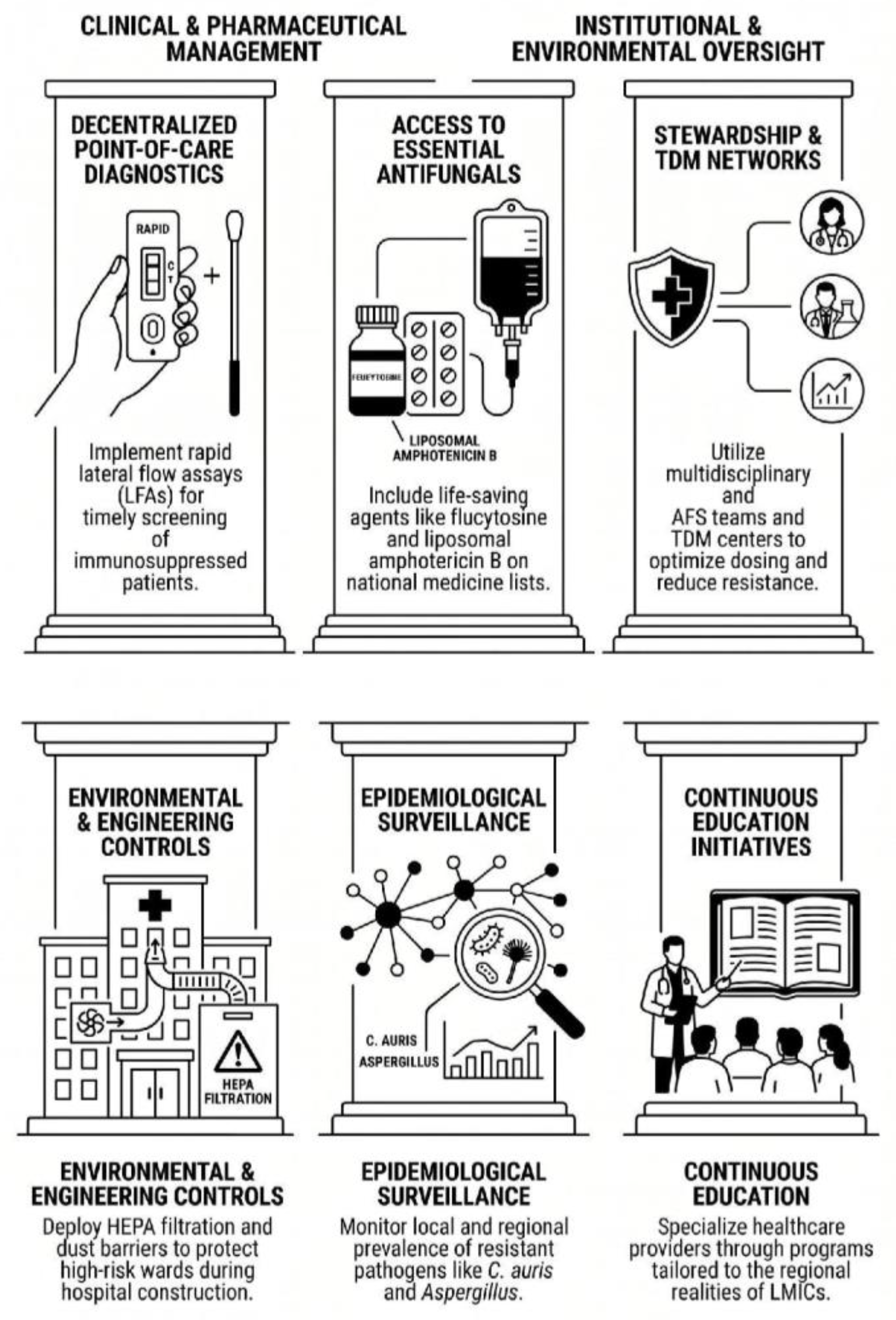
The elevated incidence of preventable mortality resulting from IFIs among transplant recipients and immunosuppressed patients in LMICs represents a significant failure within health systems. To disrupt this cycle, it is essential to implement a comprehensive and coordinated shift from reactive, empirical treatment approaches to proactive, evidence-based management strategies. (Figure 2)
Decentralize and Implement Point-of-Care Diagnostics
In 2019, the Global Action Fund for Fungal Infections (GAFFI) and the World Health Organization (WHO) recommended essential diagnostics for fungal diseases for routine use at provincial and district hospitals during the 4th Fungal Infection Forum. The availability of lateral flow assays and molecular techniques is essential in improving rapid diagnosis in LMICs.
For example, implementing rapid, cost-effective, and laboratory-independent point-of-care lateral flow assays, notably the Cryptococcal Antigen (CrAg) LFA and the Histoplasma urine antigen LFA, as standard screening procedures for all patients with severe immunosuppression in whom fungal disease is suspected, could represent a significant advancement in timely diagnosis. Such an approach would facilitate not only the prompt administration of antifungal therapies but also the more efficient utilization of high-cost treatment strategies.
Essential Antifungal Access and Pricing
Public health systems should include essential, life-saving antifungal agents, such as flucytosine, liposomal amphotericin B, voriconazole, posaconazole, and isavuconazole, on national Essential Medicines lists. This measure is crucial to ensure consistent, subsidized procurement, guided by local epidemiological data to prioritize the availability of antifungal drugs.
As previously stated, the global arsenal of antifungal medications is limited. Hence, implementing priority registration pathways for newly approved and pipeline antifungals that demonstrate safety, efficacy, and a diminished potential for drug-drug interactions is also a significant consideration.
Establish Antifungal Stewardship and TDM Networks
Establishing multidisciplinary Antifungal Stewardship (AFS) teams—comprising infectious disease specialists, clinical pharmacists, and medical microbiologists—within all tertiary and transplant centers to optimize prescribing patterns and prevent the overuse of broad-spectrum prophylaxis, which drives pathogen resistance, is important for the rational use of antifungal drugs.
Develop regional TDM centers that utilize cost-effective chromatographic methods to support clinicians in modifying triazole and calcineurin inhibitor dosing regimens, thereby mitigating drug toxicity and clinical inefficacy.
Implement Environmental and Engineering Controls
Implement stringent infection prevention protocols throughout all stages of hospital construction, demolition, and renovation. This includes installing dust-tight physical barriers, using negative air pressure in construction zones, and relocating highly vulnerable transplant and acute leukemia patients.
In facilities where implementing advanced positive-pressure HEPA filtration systems is structurally or financially impractical, it is recommended to enhance natural ventilation and use industrial-grade, portable HEPA filtration units capable of delivering at least 12 air changes per hour in high-risk wards [29].
Expand Epidemiological Surveillance
It is imperative to enhance epidemiological data not only at the national level but also by implementing local surveillance within centers that manage high-risk patients. Such measures are essential for designing and implementing cost-effective policies to improve clinical and administrative decision-making. Additionally, it is important to expand surveillance efforts beyond Candida bloodstream infections to encompass clinical and environmental monitoring of azole-resistant Aspergillus fumigatus and multidrug-resistant Candida auris.
In this area, administrators must foster active and prospective epidemiological research initiatives at regional hospitals to accurately determine the prevalence and clinical outcomes of opportunistic fungal diseases. This will provide essential data to inform investment decisions in laboratory techniques and antifungal medications, thereby enabling more efficient resource allocation.
Educational Initiatives
All of the aforementioned strategies would be ineffective without implementing continuous educational programs for healthcare providers that address the fungal problem, thereby promoting appropriate resource utilization.
To promote the participation of universities, scientific societies, research institutes, and similar entities in public initiatives to educate and specialize medical professionals in infectious diseases, it is essential to create platforms that facilitate the ongoing development of management strategies tailored to the regional realities of LMICs.
Exchange and communication across regions are also important for creating stronger, mutually beneficial programs in the fight to reduce mortality among patients with IFDs.
6. Adaptations for LMICs: The Syndromic Approach
One approach to addressing this issue is to transition from solely clinical empirical algorithms to diagnostic-enabled syndromic testing. This shift is propelled by the advent of affordable point-of-care tests (POCTs), rapid multiplex molecular panels, and structured clinical algorithms. Clinical empirical syndromic management employs standardized flowcharts and algorithms to assist first-line healthcare providers in initiating treatment at the patient’s initial visit, thereby obviating the need for immediate advanced laboratory investigations [30,31]. This method is based on the principle of broad-spectrum empirical coverage, targeting the most likely pathogens responsible for a specific clinical presentation within a designated geographical region [31].
Diagnostic-enabled molecular and serological syndromic testing employs advanced multiplex assays—primarily multiplex polymerase chain reaction (mPCR) and serological lateral flow assays (LFAs)—to detect a comprehensive panel of pathogens associated with a specific clinical syndrome [30]. This significantly shortens turnaround times from days to hours, thereby allowing clinicians to rapidly shift from broad-spectrum empirical treatments to precise, pathogen-specific interventions.
For example, pulmonary fungal infections are frequently misdiagnosed as tuberculosis or post-TB lung disease in LMICs due to highly overlapping clinical and radiological presentations. This clinical diagnostic challenge is particularly pronounced in cases of Chronic Pulmonary Aspergillosis (CPA) and pulmonary histoplasmosis. Because chest computed tomography (CT) scanning is unavailable in most rural settings, clinical screening algorithms rely on chest radiography; the absence of both cavitation and pleural thickening has been shown to possess a negative predictive value for CPA, thus enabling clinicians to exclude the disease using simple X-rays [32]. In South Africa, a study conducted at a specialized post-tuberculosis lung disease (PTLD) clinic evaluated patients over two years, of whom underwent chest CT scans and Aspergillus-specific IgG serological testing. Within this post-tuberculosis cohort, a proportion of patients demonstrated positive Aspergillus serology and met the formal criteria for a diagnosis of CPA [33].
To further enhance diagnostic accessibility in resource-limited settings, artificial intelligence (AI) and machine learning models are being incorporated into point-of-care lateral flow assays.
7. Conclusions
The high incidence of preventable deaths from IFIs in LMICs represents a significant failure of health systems. To address this, a transition from a reactive approach to proactive, evidence-based management strategies is proposed.
Breaking the cycle of mortality requires a comprehensive, coordinated strategy that adapts global clinical guidelines to each country's available resources and regional epidemiological circumstances.
Awareness of IFDs is a critical factor in motivating policymakers within the public health systems of LMICs to advance the implementation of these strategies to disrupt the cycle.
Supplementary Materials
The following supporting information can be downloaded at: https://www.mdpi.com/article/doi/s1, Figure S1: title; Table S1: title; Video S1: title.
Funding
This research received no external funding.
Institutional Review Board Statement
Not applicable.
Acknowledgments
During the preparation of this manuscript, the author used Grammarly to improve clarity in the writing process and Notebook LM for figures and tables. The authors have reviewed and edited the output and take full responsibility for the content of this publication.
Conflicts of Interest
The author declares no conflicts of interest.
Abbreviations
The following abbreviations are used in this manuscript:
| IFIs IFDs |
Invasive fungal infections Invasive fungal disease |
| LMICs | Low- and Middle-Income Countries |
| Th | T helper |
| TLRs | Toll-like receptors |
| IL TDM |
Interleukin Therapeutic Drug Monitoring |
References
- Yopa, D; Mbang,D. Barriers and enablers to implementing One Health strategies in developing countries: a systematic review. Front Public Health. 2023;11:1252428.
- Yuan Cao; Yun Lo. Epidemiological shifts and advances in research on early diagnosis of invasive fungal infection in critically ill patients; Front Cell Infect Microbiol; 2025, 15:1658476.
- Bongomin, F; Gago, S. Global and multinational prevalence of fungal diseases-Estimate Prevision; J. Fungi; 2017, 3:57. [CrossRef]
- Osman, M, Bikai, A. Update on invasive fungal infections in the Middle Eastern and North African Region. Braz J Microbiol; 2020, 51:1771.
- Falci, D., & Passqualotto, A. Clinical mycology in Latin America and the Caribbean: A snapshot of diagnostic and therapeutic capabilities. Mycoses; 2019, 62:368.
- Ceballos-Garzon A, Escandon P. Diagnostic and therapeutic capacity for fungal infections in Colombia: An ESCMID-EFISG nationwide multicenter assessment of mycological healthcare. Int J Infect Dis. 2026 Jan;162:108182. [CrossRef]
- Tangye SG, Puel A. The Th17/IL-17 Axis and Host Defense Against Fungal Infections. J Allergy Clin Immunol Pract. 2023 Jun;11(6):1624-1634. doi: 10.1016/j.jaip.2023.04.015. Epub 2023 Apr 26. [CrossRef]
- Li, L.; Xue,J. Longitudinal Assessment of the effect of Invasive fungal infections on Transplant success in kidney transplant recipients. Am J Transplant; 2025, 25(8):1775. [CrossRef]
- Karadag, H, Andacoglu, O. Invasive fungal infections after liver transplantation: A retrospective matched controlled risk analysis. Ann Transplant; 2021, 26:e930117. [CrossRef]
- Romani, L. Immunity to fungal infections. Nat Rev Immunol, 2011, 4:275. [CrossRef]
- Halloran, P. Immunosuppressive drugs for kidney transplantation. NEJM, 2004; 351:2715.
- Tangye SG, Puel A. The Th17/IL-17 Axis and Host Defense Against Fungal Infections. J Allergy Clin Immunol Pract. 2023 Jun;11(6):1624-1634. doi: 10.1016/j.jaip.2023.04.015. Epub 2023 Apr 26. [CrossRef]
- Denning, D. Global incidence and mortality of severe fungal diseases. Lancet Infect Dis; 2024, 24:e428-38. [CrossRef]
- Vaquera-Aparicio DN, Castillo-Bejarano J. Epidemiology and clinical characterization of invasive fungal infections in pediatric hemato-oncologic patients at a tertiary referral center in Northeastern Mexico. Ann Hematol. 2025 Nov;104(11):6021-6031. [CrossRef]
- Gold JAW, Benedict K. Invasive Fungal Disease in Solid Organ and Hematopoietic Cell Transplant Recipients, United States. Transpl Infect Dis. 2025 Sep-Oct;27(5):e70077. [CrossRef]
- Elhaj Mahmoud D, Hérivaux A. The epidemiology of invasive fungal infections in transplant recipients. Biomed J. 2024 Jun;47(3).
- Kriegl L, Boyer J. Antifungal stewardship in solid organ transplantation. Transpl Infect Dis. 2022 Oct;24(5):e13855. [CrossRef]
- Vázquez JA, Miceli MH. Invasive fungal infections in transplant recipients. Ther Adv Infect Dis. 2013 Jun;1(3):85-105. [CrossRef]
- Senoner, T., Breitkopf, R. Invasive Fungal Infections after Liver Transplantation. Journal of Clinical Medicine, 2023, 12(9), 3238. [CrossRef]
- Kriengkauykiat J, Ito JI. Epidemiology and treatment approaches in management of invasive fungal infections. Clin Epidemiol. 2011;3:175-91. [CrossRef]
- Palash Samanta, Cornelius J. Clancy. Fungal Infections in Lung Transplantation. J Thorac Dis 2021;13(11):6695-6707.
- Shi JM, Pei XY. Invasive fungal infection in allogeneic hematopoietic stem cell transplant recipients: single center experiences of 12 years. J Zhejiang Univ Sci B. 2015 Sep;16(9):796-804. [CrossRef]
- Rahi MS, Jindal V. Fungal infections in hematopoietic stem-cell transplant patients: a review of epidemiology, diagnosis, and management. Ther Adv Infect Dis. 2021 Aug 19;8:20499361211039050. [CrossRef]
- Einollahi, B. Epidemiology of invasive fungal infections in kidney transplant patients. Clinical Epidemiology, 2012, 4, 53–55.
- IDSA 2026 Clinical Practice Guideline Update on the Prevention of Invasive Aspergillosis in Adult Solid Organ Transplant Recipients.
- Salmanton-García J, Giacinta A. Current trends on antifungal prophylaxis in solid organ transplantation: a study from ESCMID-EFISG, ESCMID-ESGICH, SITA, and SEIMC-GESITRA-IC. Infection. 2025 Dec;53(6):2411-2420.
- Driemeyer C, Falci DR. The current state of clinical mycology in Africa: a European Confederation of Medical Mycology and International Society for Human and Animal Mycology survey. Lancet Microbe. 2022 Jun;3(6):e464-e470. [CrossRef]
- Alysa J. Martin, PharmD; Carissa Treptow. Incidence of Invasive Fungal Infections in Adults and Pediatric Patients With Acute Lymphoblastic Leukemia Who Received Chemotherapy. J Hematol Oncol Pharm. 2024;14(4):139-147.
- Dadwal SS, Hohl TM. American Society of Transplantation and Cellular Therapy Series, 2: Management and Prevention of Aspergillosis in Hematopoietic Cell Transplantation Recipients. Transplant Cell Ther. 2021 Mar;27(3):201-211. [CrossRef]
- Lacopino, Reza. Diagnostic and Therapeutic Gaps in Invasive Mycoses Management. Fungal Genom Biol, Vol.15 Iss.01 No:1000271; 2025.
- Pimentel J, Dos Santos GQ. Hospital Indoor Air as a Reservoir of Opportunistic Filamentous Fungi: Species Diversity and Antifungal Susceptibility. Curr Microbiol. 2026 Mar 7;83(4):228. [CrossRef]
- Mareković I. What's New in Prevention of Invasive Fungal Diseases during Hospital Construction and Renovation Work: An Overview. J Fungi (Basel). 2023 Jan 23;9(2):151. [CrossRef]
- Baker J, Denning DW. The SSS revolution in fungal diagnostics: speed, simplicity and sensitivity. Br Med Bull. 2023 Sep 12;147(1):62-78. [CrossRef]
- Murtagh M, White PL, Rodriguez-Tudela JL. Global perspective on gaps in fungal diagnostics in low-resource settings: WHO landscape analysis and research priorities for invasive fungal diseases. Lancet Microbe. 2026 May;7(5):101307. [CrossRef]
- Page, L, Byanyima, R. Chronic pulmonary aspergillosis commonly complicates treated pulmonary tuberculosis with residual cavitation. European Respiratory Journal 2019 53(3): 1801184.
- Huisamen, T, Thomson H. A retrospective study exploring chronic pulmonary aspergillosis in post-tuberculosis lung disease patients. J Thorac Dis 2025;17(1):320-332. [CrossRef]
- Staiger MFP, Souza GHA. The impact of toll-like receptor polymorphisms on susceptibility to fungal infections: a systematic review of genetic and clinical data. Clin Microbiol Infect. 2026 Jul;32(7):1087-1095. [CrossRef]
- Salmanton-García J, Marchesi F. Optimizing Treatment, Minimizing Risk: Therapeutic Drug Monitoring in Hematological Malignancies. Mediterr J Hematol Infect Dis. 2026 Mar 1;18(1):e2026022. [CrossRef]
Figure 1.
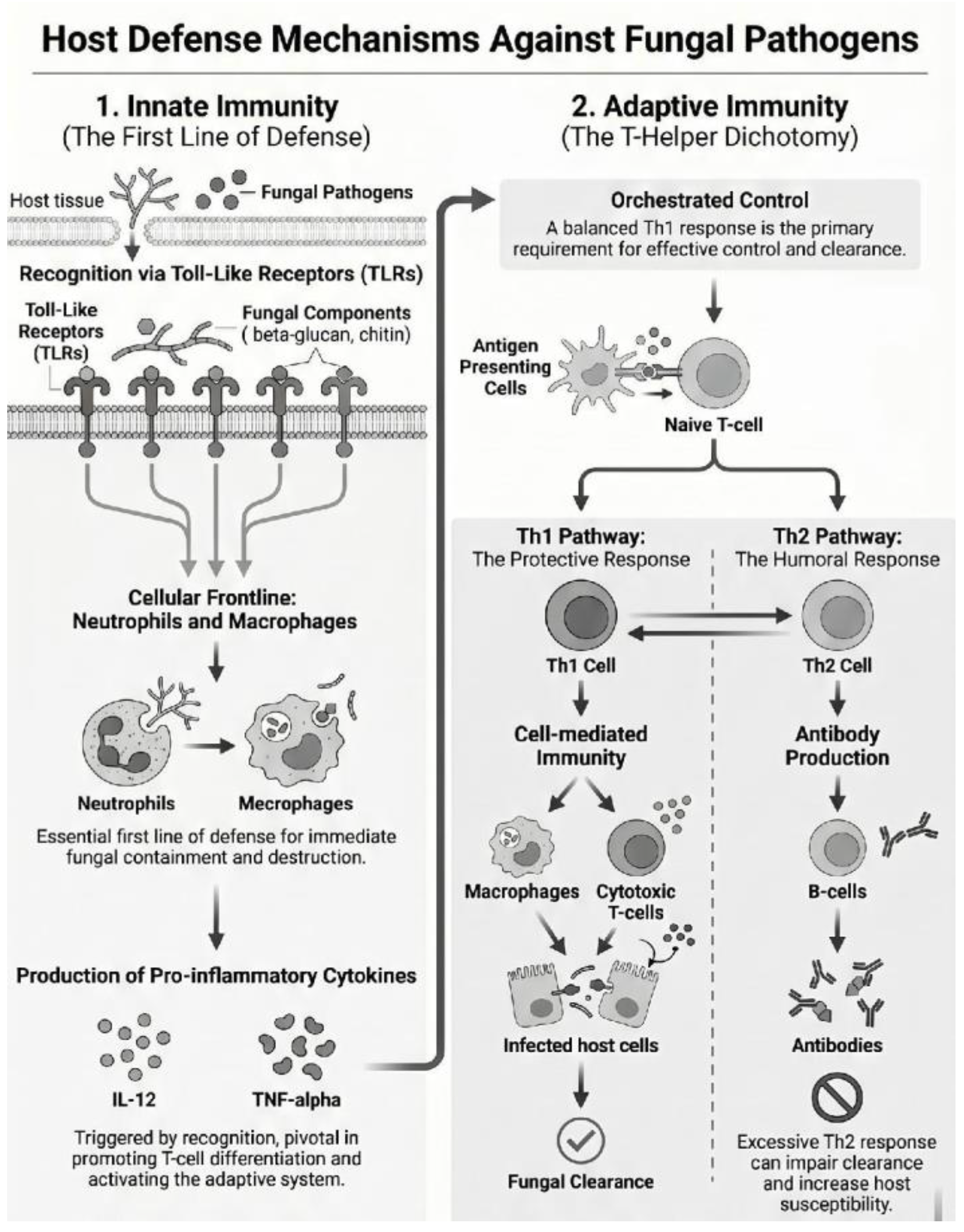
Figure 2.
Strategies for breaking the cycle in LMICs.

| Recipient Type | Transplant Organ or Condition | Pathogen Type | Pathogen Species | Incidence Rate |
|---|---|---|---|---|
| HSCT | Allogeneic recipients |
Mold (IFI) | Aspergillus spp. | 28.5 per 1000 person-years (8% incidence); 43-63% of IFI cases |
| Autologous recipients |
Mold (IFI) | Aspergillus spp. | <2% incidence | |
| General / Hematological Malignancy |
Emerging Molds | Rhizopus spp., Fusarium, and Scedosporium |
incidence not quantified | |
| SOT | Lungs | Mold | Aspergillus spp. | 2.4% (12-month cumulative incidence) to <5% |
| Pancreas | Yeast (IFI) | Invasive candidiasis |
1.3% - 5.0% (12-month cumulative incidence) | |
| Liver | Yeast | Candida spp. | 4.7% (12-month cumulative incidence | |
| Small Bowel | Yeast | Candida spp. | 11.6% (12-month cumulative incidence) | |
| Kidney | IFI / Fungi | General | Lowest incidence observed in SOT |
Disclaimer/Publisher’s Note: The statements, opinions and data contained in all publications are solely those of the individual author(s) and contributor(s) and not of MDPI and/or the editor(s). MDPI and/or the editor(s) disclaim responsibility for any injury to people or property resulting from any ideas, methods, instructions or products referred to in the content. |
© 2026 by the authors. Licensee MDPI, Basel, Switzerland. This article is an open access article distributed under the terms and conditions of the Creative Commons Attribution (CC BY) license (http://creativecommons.org/licenses/by/4.0/).
Copyright: This open access article is published under a Creative Commons CC BY 4.0 license, which permit the free download, distribution, and reuse, provided that the author and preprint are cited in any reuse.