
Submitted:
18 August 2026
Posted:
20 August 2026
You are already at the latest version
Abstract
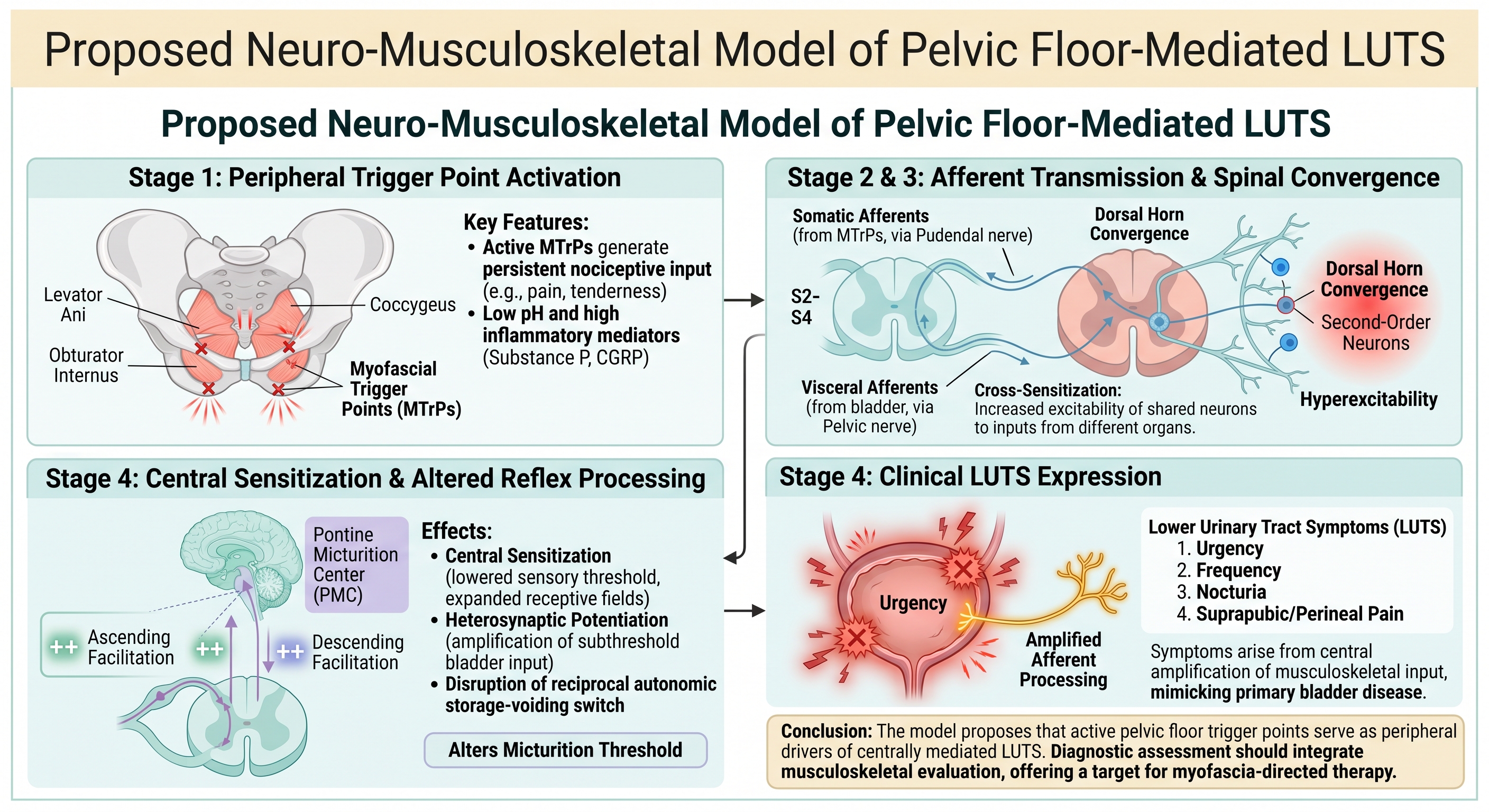
Background and Objectives: Lower urinary tract symptoms (LUTS), such as urgency, frequency, and pelvic discomfort, are often attributed to bladder-centered mechanisms; nonetheless, several patients exhibit overlapping pelvic floor dysfunctions that existing urologic models do not fully explain. Evidence from the musculoskeletal and pain literature demonstrates that myofascial trigger points within the pelvic floor are prevalent in patients with pelvic pain and urinary symptoms, potentially contributing to symptom generation. In this narrative review, we synthesized the literature on pelvic floor myofascial dysfunction, referred pain patterns, and autonomic regulation of bladder function to develop an integrated neuromusculoskeletal framework. Materials and Methods: Relevant studies were identified through targeted database searches, AI-assisted literature screening, and manual reviews and selected based on mechanistic relevance. Results: The reviewed evidence supports a pathway in which active myofascial trigger points generate sustained nociceptive afferent inputs that converge with bladder afferents in the sacral spinal cord, potentially facilitating cross- and central sensitization, lowering the threshold for bladder sensation, and altering micturition reflex processing. The resulting amplification of afferent signaling provides a mechanistic basis for urgency, frequency, and pelvic pain in the absence of primary bladder pathology. Conclusions: This model integrates musculoskeletal and urological perspectives and suggests that in a subset of patients, LUTS may reflect the central processing of peripheral musculoskeletal input. Incorporating pelvic floor assessment into clinical evaluations may improve diagnostic accuracy and provide more targeted management. Further prospective studies are warranted to validate this integrated pathway and its therapeutic implications.
Keywords:
central nervous system sensitization
; lower urinary tract symptoms
; myofascial pain syndromes
; pelvic floor
; trigger points
; urinary bladder
Copyright: This open access article is published under a Creative Commons CC BY 4.0 license, which permit the free download, distribution, and reuse, provided that the author and preprint are cited in any reuse.