
Submitted:
19 August 2026
Posted:
19 August 2026
You are already at the latest version
Abstract
Background: Tuberculosis (TB) remains a major public health challenge in rural and socioeconomically disadvantaged communities, where limited access to health information, stigma, healthcare barriers, and social inequalities may influence knowledge and engagement with TB services. This study examined TB knowledge, personal and family experiences of TB, and perceived barriers to healthcare engagement among community members in rural Eastern Cape, South Africa. The findings were further interpreted through the complementary concepts of knowledge democracy and reparative engagement to explore how community and experiential knowledge could inform culturally responsive and participatory approaches to TB education. Methods: A secondary analysis was conducted using data from a cross-sectional Knowledge, Attitudes and Practices (KAP) survey involving 131 adults from Ntabankulu, Eastern Cape, South Africa. Descriptive statistics were used to summarise participant characteristics and TB knowledge levels. Associations between participant characteristics and TB knowledge were assessed using Fisher’s exact test and the Kruskal–Wallis test, as appropriate, with statistical significance set at p < 0.05. Findings relating to personal and family experience of TB, perceived barriers to healthcare engagement, and preferred approaches to TB education were interpreted using knowledge democracy and reparative engagement as complementary conceptual lenses. These frameworks were applied retrospectively and were not measured as participant-level constructs. Results: Most participants (64.9%) demonstrated moderate TB knowledge, while 23.7% demonstrated high knowledge. Educational attainment was significantly associated with TB knowledge (p < 0.001), with higher educational attainment corresponding to greater knowledge. Participants with personal or family experience of TB also demonstrated greater TB knowledge, suggesting that experiential exposure may contribute to community understanding of the disease. Perceived barriers to TB testing and healthcare engagement included stigma, fear of diagnosis, misinformation, and constraints in accessing healthcare services, reflecting individual, interpersonal, and structural influences. Participants identified survivor storytelling, peer and community education, community health worker involvement, culturally and linguistically appropriate communication, and participatory community dialogue as preferred approaches to strengthening TB education. Conclusions: TB knowledge and healthcare engagement in rural Eastern Cape communities are shaped by the interplay of educational attainment, experiential knowledge, and broader social and structural conditions. Interpreted through the lens of knowledge democracy and reparative engagement, the findings suggest that conventional biomedical health education could be strengthened by recognizing communities not only as recipients of health information but also as contributors to knowledge production and locally responsive solutions. Community-informed approaches incorporating lived experience, peer education, community health workers, culturally appropriate communication, and participatory dialogue warrant prospective evaluation. Future co-designed and implementation research should determine whether these approaches improve TB knowledge, reduce stigma, strengthen trust, and enhance engagement with TB testing, prevention, treatment, and care.
Keywords:
tuberculosis
; community engagement
; knowledge democracy
; reparative engagement
; TB knowledge
; health literacy
; experiential knowledge
; health education
; rural health
; Eastern Cape
; South Africa
1. Introduction
Tuberculosis (TB) remains one of the leading infectious causes of morbidity and mortality worldwide and continues to represent a major public health challenge in South Africa, which remains among the countries with a high burden of TB [1,2]. Despite substantial advances in TB diagnosis, treatment, and prevention, the disease disproportionately affects socially and economically disadvantaged populations, particularly those living in rural and historically underserved communities characterized by poverty, overcrowding, limited health literacy, and restricted access to healthcare services [3,4,5,6]. These interconnected social and structural determinants may contribute to delayed diagnosis, treatment interruptions, ongoing community transmission, and adverse health outcomes. In South Africa, the TB epidemic is closely linked to persistent socioeconomic inequalities and the substantial burden of HIV [7]. Populations living in informal settlements, rural communities, and other resource-constrained settings experience heightened vulnerability to TB because of intersecting social, economic, environmental, and health-system factors [8]. Evidence from systematic reviews indicates that TB burden is particularly concentrated among vulnerable populations, including people living with HIV and groups experiencing socioeconomic marginalisation [9,10]. These disparities reinforce the need for public health strategies that address not only the biomedical dimensions of TB but also the social and structural determinants that influence exposure, healthcare access, diagnosis, treatment, and recovery [11,12].
The Eastern Cape Province is characterised by substantial socioeconomic and health inequalities and continues to experience a considerable burden of TB [13]. Rural communities within the province face multiple barriers to healthcare access and engagement, including poverty, transport constraints, geographical distance, limited health-system resources, and delays in healthcare-seeking [14,15,16,17]. These intersecting challenges highlight the importance of approaches that strengthen health literacy, improve equitable access to TB prevention and care, and meaningfully incorporate community perspectives into public health responses.
Although biomedical interventions remain fundamental to TB control, engagement with prevention, testing, treatment, and care is also influenced by behavioural, social, cultural, and structural factors [18]. Limited health literacy, misinformation, stigma, fear of diagnosis, and mistrust of healthcare services may discourage timely healthcare seeking and reduce engagement with TB services [19,20,21,22,23]. Health education approaches that rely predominantly on unidirectional transmission of biomedical information may be insufficient where local experiences, cultural understandings, structural constraints, and relationships between communities and health institutions strongly influence health-related decisions. Greater attention to community-generated and experiential knowledge may therefore complement conventional health education approaches.
Knowledge democracy provides a useful conceptual framework for recognizing multiple forms and sources of knowledge and for considering communities as contributors to, rather than solely recipients of health knowledge [24,25,26,27]. Within public health, this perspective foregrounds participatory dialogue, co-learning, epistemic inclusion, and recognition of experiential and locally situated knowledge alongside biomedical expertise. Reparative engagement, in turn, emphasizes the relational dimensions of participation, including trust, reciprocity, accountability, institutional responsiveness, and sustained engagement between communities and health institutions [28,29,30]. Although conceptually related, the two frameworks address different dimensions of community engagement: knowledge democracy focuses principally on whose knowledge is recognized and valued, whereas reparative engagement focuses on how relationships between communities and institutions can become more equitable, reciprocal, and responsive. Considered together, they provide complementary lenses through which TB knowledge, healthcare engagement, and community-informed approaches to health education can be examined.
Participatory approaches involving community health workers, peer educators, people with lived experience of TB, and community dialogue have increasingly been incorporated into efforts to improve health communication, address stigma, strengthen trust, and support engagement with TB prevention and care [31,32,33,34,35]. Knowledge, Attitudes and Practices (KAP) surveys can provide valuable insights into community knowledge, beliefs, experiences, behaviours, and perceived barriers influencing healthcare engagement [36,37]. However, conventional interpretation of KAP data frequently focuses on identifying deficits in individual knowledge or behaviour, with comparatively less attention to how experiential knowledge, community agency, relationships with health institutions, and structural conditions might shape those findings.
An important conceptual and empirical gap therefore remains in understanding how routinely collected community KAP data can be interpreted beyond a predominantly knowledge-deficit perspective. Limited research has examined TB knowledge and healthcare engagement through the complementary lenses of knowledge democracy and reparative engagement in rural South African settings [16,38,39]. Applying these frameworks to existing community evidence may provide a means of examining both the epistemic dimension of TB education, whose knowledge is recognized and incorporated, and its relational dimension, how trust, reciprocity, responsiveness, and participation influence engagement between communities and health services.
Accordingly, this study presents a secondary analysis of a community-based TB KAP survey conducted among adults in Ntabankulu, Eastern Cape, South Africa. The study aimed to examine TB knowledge, personal and family experience of TB, and perceived barriers to TB testing and healthcare engagement, and to interpret these findings through the complementary frameworks of knowledge democracy and reparative engagement. These frameworks were applied as interpretive lenses rather than participant-level measured constructs. The study further explored community preferences for TB education and engagement to identify priorities that could inform the future co-design and prospective evaluation of culturally and contextually responsive approaches to TB prevention and care.
2. Methods
2.1. Study Design and Setting
This study was a secondary analysis of data from a quantitative, cross-sectional Knowledge, Attitudes and Practices (KAP) survey conducted among adult community members in Ntabankulu, Eastern Cape Province, South Africa. The original survey assessed community knowledge, attitudes, experiences, and practices related to tuberculosis (TB), including knowledge of TB transmission, symptoms, prevention, diagnosis, and treatment; perceived barriers to accessing TB services; and community perspectives on TB education and healthcare engagement.
For the present study, the existing dataset was re-analysed to examine associations between TB knowledge and selected sociodemographic characteristics, personal and family experience of TB, perceived barriers to healthcare engagement, and community preferences for TB education. The empirical findings were subsequently interpreted through the complementary conceptual frameworks of knowledge democracy and reparative engagement. These frameworks were applied retrospectively as interpretive lenses and were not prospectively operationalized or measured as participant-level constructs in the original survey. Accordingly, the analysis did not seek to quantitatively measure knowledge democracy or reparative engagement, but rather to use these concepts to contextualize patterns identified in the survey data. Ntabankulu is a predominantly rural area of the Eastern Cape Province characterized by dispersed settlements, socioeconomic disadvantage, and challenges in accessing healthcare services. These contextual characteristics make the setting relevant for examining how access to health information, socioeconomic circumstances, personal and family experiences of TB, and barriers to healthcare access intersect with community TB knowledge and engagement. The rural context is particularly important given the continuing need for contextually responsive approaches to TB prevention, health education, and healthcare engagement in underserved communities.
2.2. Study Population, Eligibility, and Sampling
The original survey included adult community members residing in Ntabankulu, Eastern Cape Province, South Africa. Individuals were eligible to participate if they were aged ≥18 years, resided in the study area, provided informed consent, and agreed to participate in the survey. Individuals younger than 18 years, those who did not reside within the study area, and those who were unable or unwilling to provide informed consent were not eligible for participation.
A non-probability convenience sampling approach was used to recruit eligible community members who were reached during community engagement and outreach activities conducted within the study area. Potential participants who met the eligibility criteria were invited to participate, and written informed consent was obtained before the questionnaire was administered. The original survey enrolled 131 participants.
The sample size for the present study was determined by the number of eligible records available from the completed original KAP survey rather than by a new prospective sample-size calculation. As this was a secondary analysis of an existing dataset, all available records meeting the eligibility requirements for the present analysis were considered for inclusion. The analytical sample, therefore, comprised the maximum available sample from the original survey for which the variables required to address the study objectives were available. No additional participants were recruited, and no new participant contact or primary data collection was undertaken.
Prior to analysis, records were assessed for completeness with respect to the primary outcome, TB knowledge, and the sociodemographic, experiential, and healthcare-engagement variables required for the study. No observations included in the reported analyses contained missing data requiring imputation or exclusion; consequently, all 131 eligible records were retained in the final analytical sample. Because participants were recruited through community engagement and outreach activities using a non-probability convenience sampling approach, the sample was not intended to provide a statistically representative estimate of the entire adult population of Ntabankulu. Individuals reached through these activities may have differed from community members who were not reached in terms of previous exposure to health information, healthcare utilization, TB awareness, or willingness to engage in health-related activities. Accordingly, estimates derived from this sample should be interpreted within the context of the study population, and potential selection bias should be considered when assessing the external validity and generalisability of the findings.
2.3. Data Collection and Data Quality
Data for the original survey were collected using a structured questionnaire administered by trained fieldworkers. The questionnaire captured sociodemographic characteristics; knowledge and awareness of TB; personal and family history of TB; perceived barriers to TB testing, treatment, and healthcare access; community perceptions of TB; and preferences relating to TB education and healthcare engagement. Fieldworkers followed standardized procedures for questionnaire administration to promote consistency in data collection. Before the present analysis, the dataset was reviewed for completeness, coding consistency, duplicate records, out-of-range values, and implausible observations. Variables used in the analysis were subsequently checked against the predefined coding framework before statistical analysis.
2.4. Patient and Public Involvement
The present study involved a secondary analysis of an existing community-based survey dataset. Community members and patients were not directly involved in formulating the secondary research questions, selecting the conceptual frameworks, conducting the statistical analysis, interpreting the findings, or preparing the manuscript. As no additional participant recruitment, participant contact, or primary data collection was undertaken, the secondary analysis imposed no additional burden on participants.
The absence of direct community involvement in the secondary analytical process is explicitly acknowledged, particularly because knowledge democracy and reparative engagement were applied as interpretive frameworks. Accordingly, the present study should not be considered a co-produced research process. Rather, these frameworks were used to interpret existing empirical findings and to identify priorities for future participatory research. The findings are intended to inform future studies in which community members, people with lived experience of TB, community health workers, healthcare providers, and other local stakeholders can participate more directly in the co-design, implementation, interpretation, and evaluation of TB education and engagement interventions. Study findings will be disseminated through peer-reviewed publications, scientific meetings, and, where feasible, appropriate community and stakeholder engagement platforms to support future TB education and community-engagement initiatives.
2.5. Study Variables and Measurement of TB Knowledge
The primary outcome was TB knowledge, assessed using questionnaire items covering key domains of TB transmission, signs and symptoms, prevention, diagnosis, and treatment. Responses to individual knowledge items were combined to generate a cumulative TB knowledge score. Participants were subsequently classified into low, moderate, or high TB knowledge categories according to the predefined scoring framework presented in Supplementary Table S1.
Independent variables examined in relation to TB knowledge included age, sex, educational attainment, employment status, personal history of TB, family history of TB, perceived barriers to TB testing and healthcare engagement, healthcare access, and selected community perceptions.
For the purposes of the present analysis, personal and family experience of TB was defined specifically as participants’ self-reported personal history of TB and/or reported history of TB among family members. These variables were treated as indicators of experiential exposure to TB and were not considered comprehensive qualitative measures of lived experience.
Perceived barriers to healthcare engagement comprised participant-reported factors that could potentially influence TB testing, treatment-seeking, or access to healthcare services. This included stigma, fear of diagnosis, misinformation, transport or geographical access constraints, and other barriers captured in the original questionnaire. These variables reflected participants’ perceptions and were therefore not interpreted as objectively measured indicators of health-system performance or healthcare accessibility.
2.6. Statistical Analysis
Data were analysed using IBM SPSS Statistics version 29.0 (IBM Corp., Armonk, NY, USA), and graphical presentations were generated using GraphPad Prism version 10 (GraphPad Software, San Diego, CA, USA). Participant characteristics and TB knowledge outcomes were summarised using descriptive statistics. Categorical variables were presented as frequencies and percentages. Continuous variables were summarised using means and standard deviations (SDs) when approximately normally distributed and medians and interquartile ranges (IQRs) when distributions were non-normal. Ordinal variables were summarised using frequencies and percentages or medians and IQRs, as appropriate.
Associations between categorical participant characteristics and TB knowledge categories were assessed using Fisher’s exact test, which was selected where expected cell frequencies were small. For comparisons of continuous or ordinal variables across the three TB knowledge categories, the Kruskal–Wallis test was used when the assumptions of parametric tests were not met. Where applicable, the statistical test used for each comparison is reported alongside the corresponding results.
All statistical tests were two-sided, and a p-value < 0.05 was considered statistically significant. Given the exploratory nature of the analysis, statistical significance was interpreted alongside the magnitude and direction of observed differences rather than as evidence of causality.
The analysis was primarily exploratory and association-based. Because the original survey employed a cross-sectional design, temporal relationships could not be established, and observed associations were not interpreted as causal. Furthermore, where analyses were bivariate, associations were not interpreted as independent effects because residual confounding by sociodemographic, socioeconomic, experiential, healthcare access, and other unmeasured characteristics could not be ruled out. Before statistical analysis, the dataset was systematically assessed for completeness, coding consistency, duplicate observations, missing values, out-of-range values, and implausible observations. No variables included in the reported analyses contained missing observations requiring imputation or case-wise exclusion; therefore, no missing-data imputation was performed, and all eligible observations were retained in the relevant analyses. The study was reported in accordance with the Strengthening the Reporting of Observational Studies in Epidemiology (STROBE) Statement to promote transparent and complete reporting of the observational study design, analysis, and findings.
2.7. Conceptual Framework and Analytical Application
The findings were interpreted using the complementary frameworks of knowledge democracy and reparative engagement. Knowledge democracy recognizes that legitimate health knowledge can arise from multiple sources and emphasizes the value of community and experiential knowledge alongside biomedical and professional expertise. Reparative engagement emphasizes trust, reciprocity, relational accountability, institutional responsiveness, and meaningful participation in addressing historically and structurally embedded health inequities. Although conceptually related, the frameworks address different dimensions of community engagement. Knowledge democracy primarily concerns whose knowledge is recognized, valued, and incorporated into health communication and decision-making, whereas reparative engagement focuses on the quality of relationships between communities and institutions, including trust, reciprocity, responsiveness, and accountability. Their complementary application, therefore, enabled consideration of both epistemic and relational dimensions of TB education and healthcare engagement.
Importantly, neither knowledge democracy nor reparative engagement was directly measured as a participant-level construct in the original KAP survey. The original questionnaire was not designed or validated to quantify either framework. Instead, the frameworks were applied retrospectively during the secondary analysis as interpretive lenses to contextualize empirical findings on TB knowledge, personal and family experiences of TB, perceived barriers to healthcare engagement, and participant preferences for TB education. To enhance transparency and reduce the risk of post hoc overinterpretation, empirical survey domains were mapped to the two frameworks according to the conceptual relationships shown in Table 1. This mapping was used to organize interpretation rather than to generate new quantitative variables, scores, or causal relationships.
2.8. Ethical Considerations
Ethical approval for the original study was obtained from the Walter Sisulu University Faculty of Health Sciences Research Ethics and Biosafety Committee (Reference No. WSU HREC 06/2025; approved 5 June 2025). Administrative permission to conduct the study was obtained from the Eastern Cape Department of Health (Reference No. EC_202506_011; approved 12 June 2025). All participants provided written informed consent before enrolment in the original study. Participation was voluntary, and the data used in the present secondary analysis were anonymized and de-identified prior to analysis. No additional participant recruitment, direct participant contact, intervention, or prospective data collection was undertaken for the present study. The secondary analysis was conducted using the existing anonymized dataset, within the scope of the approved research and applicable institutional requirements for the secondary use of research data. Participant confidentiality was maintained throughout data management, analysis, and reporting, and no directly identifying information was available to the analytical team. All procedures were conducted in accordance with the ethical principles of the Declaration of Helsinki and applicable institutional standards for research involving human participants.
3. Results
3.1. Participant TB Knowledge Levels
Among the 131 participants, most (64.9%) demonstrated moderate TB knowledge, while 23.7% had high TB knowledge. Only a small proportion had low TB knowledge. The distribution of TB knowledge levels is presented in Figure 1.
The figure illustrates the proportion of participants classified as having low, moderate, and high TB knowledge based on their overall scores obtained from the TB knowledge assessment questionnaire.
Abbreviations: TB, tuberculosis.
3.2. Educational Attainment and TB Knowledge
Educational attainment was significantly associated with TB knowledge (p<0.001). Participants with tertiary education were more likely to have high TB knowledge, whereas those with lower educational attainment were predominantly classified within the moderate- and low-knowledge categories. More than half (52%) of participants in the high-knowledge group had completed tertiary education, whereas none in the low-knowledge group had attained tertiary education (Figure 2).
The figure illustrates the distribution of TB knowledge categories according to participants’ highest level of educational attainment. Higher levels of education were associated with progressively greater proportions of participants classified within the high-knowledge category.
Abbreviations: TB, tuberculosis.
Footnote: Educational attainment was categorized according to participants’ highest completed level of formal education. Associations between educational attainment and TB knowledge categories were assessed using Fisher’s exact test. A statistically significant association was observed (p < 0.001).
3.3. Lived Experience and TB Knowledge
Participants with a personal history of TB demonstrated higher TB knowledge than those without previous TB infection. Similarly, participants reporting a family history of TB were more likely to demonstrate moderate or high TB knowledge than those without known household exposure. The relationship between lived TB experience and TB knowledge is presented in Figure 3.
The figure illustrates the distribution of TB knowledge categories according to participants’ personal or family history of TB. Participants with previous TB experience or a family history of TB generally demonstrated higher levels of TB knowledge than those without prior exposure.
Abbreviations: TB, tuberculosis.
Footnote: Lived TB experience was defined as self-reported previous TB infection and/or a family history of TB. Knowledge levels were categorized as low, moderate, or high based on participants’ scores on the TB knowledge assessment questionnaire.
3.4. Barriers to TB Testing and Healthcare Engagement
Participants with lower TB knowledge reported more barriers to TB testing and healthcare engagement than those with moderate or high knowledge. Frequently reported barriers included fear of receiving a TB diagnosis, TB-related stigma and discrimination, misinformation about TB transmission and treatment, limited access to healthcare services, transportation challenges, and broader socioeconomic constraints. The distribution of reported barriers across TB knowledge categories is shown in Figure 4.
The figure illustrates the frequency of reported barriers to TB testing and healthcare engagement among participants classified as having low, moderate, or high TB knowledge. Barriers assessed included fear of diagnosis, stigma and discrimination, misinformation regarding TB, limited healthcare access, and structural or socioeconomic challenges.
Abbreviations: TB, tuberculosis.
Footnote: Participants could report more than one barrier to TB testing and healthcare engagement; therefore, percentages may not total 100%. TB knowledge categories were derived from scores on the TB knowledge assessment questionnaire and classified as low, moderate, or high.
3.5. Community-Driven Strategies for TB Education
Participants identified several community-driven strategies to strengthen TB education and healthcare engagement. The most frequently suggested approaches included survivor storytelling, peer education, greater involvement of community health workers, culturally appropriate health messaging, and participatory community dialogue. Participants also emphasised the importance of delivering TB education in local languages and through trusted community structures. These proposed strategies are summarised in Figure 5.
The framework summarizes community-identified strategies for strengthening TB awareness and healthcare engagement, including survivor storytelling, peer education, community health worker involvement, culturally tailored health communication, and participatory dialogue platforms. The framework illustrates how these approaches may contribute to improved community knowledge, reduced stigma, enhanced trust, and greater engagement with TB prevention and care services.
Abbreviations: TB, tuberculosis.
Footnote: The conceptual framework was developed from themes identified during the secondary analysis and informed by the principles of reparative engagement and knowledge democracy. The framework is intended to illustrate potential pathways for strengthening community participation in TB education and should not be interpreted as a causal model.
4. Discussion
This secondary analysis examined tuberculosis (TB) knowledge, healthcare engagement, and community-driven solutions in a rural South African community through the complementary frameworks of knowledge democracy and reparative engagement. Three key findings emerged. First, most participants demonstrated moderate TB knowledge, indicating general awareness but persistent knowledge gaps [40]. Second, educational attainment and lived TB experience were associated with higher TB knowledge. Third, participants identified stigma, fear of diagnosis, misinformation, limited healthcare access, and socioeconomic constraints as important barriers to TB testing and healthcare engagement [41]. These findings highlight the need for community-centred approaches that address the social and structural determinants of TB alongside biomedical interventions [33].
Although most participants demonstrated moderate TB knowledge, important gaps remained in their understanding of TB prevention, transmission, diagnosis, and treatment. Similar findings have been reported across rural and resource-constrained settings in sub-Saharan Africa, where awareness has improved, but misconceptions and delayed healthcare-seeking persist [42,43]. This distinction between awareness and health literacy is important because recognizing TB does not necessarily translate into timely healthcare utilization or informed decision-making [44,45].
Educational attainment was strongly associated with TB knowledge, with participants who had a tertiary education more likely to demonstrate high knowledge. This finding is consistent with previous studies showing that education improves health literacy, access to health information, and healthcare utilization [46]. However, educational inequalities remain common in rural South Africa, highlighting the need for accessible, community-based health education strategies that complement formal education and reach populations with limited educational opportunities [41].
Participants with personal or family experience of TB demonstrated greater TB knowledge, reinforcing the importance of experiential learning. Consistent with previous studies, lived experience appears to enhance understanding through interactions with healthcare providers, treatment programmes, and family support networks [47,48]. From the perspective of knowledge democracy, these findings support recognising experiential and community-generated knowledge as valuable complements to biomedical knowledge [49]. Incorporating TB survivors and affected families into health promotion activities may therefore strengthen community education and improve engagement with TB services.
Participants also identified stigma, fear of diagnosis, misinformation, limited healthcare access, and socioeconomic constraints as major barriers to TB testing and care. These findings are consistent with previous studies showing that social and structural barriers continue to delay diagnosis and reduce treatment uptake in high-burden settings [49,50]. Addressing these barriers requires more than information campaigns alone and calls for community engagement strategies that acknowledge local realities and build trust between healthcare services and communities.
The findings further support the relevance of reparative engagement as a framework for strengthening TB prevention and control. By promoting trust, reciprocity, dialogue, and meaningful community participation, reparative engagement provides opportunities to address historical and structural inequities that influence healthcare engagement [48,50]. Participants’ recommendations, including survivor storytelling, peer education, community health worker involvement, culturally appropriate messaging, and participatory dialogue, align with evidence supporting community-based participatory approaches to TB control [6,7,8,51].
From a public health perspective, these findings suggest that community engagement should be integrated into routine TB programmes rather than implemented as isolated outreach activities. Community-responsive health systems that recognize local knowledge and lived experience may improve health literacy, strengthen trust, increase healthcare utilization, and enhance the sustainability of TB prevention and control programmes [31,51].
4.1. Implications for Practice and Policy
The findings have several implications for TB control programmes. First, TB education should use culturally appropriate and community-centred approaches that promote dialogue rather than one-way information delivery. Secondly, community engagement should be recognized as a core component of TB prevention and control. Third, greater investment in community health workers, peer educators, and survivor-led initiatives may strengthen trust, improve health literacy, and enhance healthcare engagement. Finally, programme monitoring should include measures of community participation, health literacy, and trust alongside conventional clinical indicators.
4.2. Strengths and Limitations
A major strength of this study is its application of the complementary frameworks of knowledge democracy and reparative engagement to the interpretation of TB knowledge, healthcare engagement, and community-informed approaches to health education in a rural South African setting. By considering experiential and community knowledge alongside conventional biomedical perspectives, the study extends the interpretation of Knowledge, Attitudes and Practices (KAP) data beyond individual knowledge deficits and highlights the social, relational, and structural contexts in which TB knowledge and healthcare engagement occur. The use of data generated within an underserved rural community further provides contextually relevant evidence from a population in which barriers to healthcare access and health information remain important public health concerns. The inclusion of educational attainment, personal and family experience of TB, perceived barriers to care, and community preferences for TB education enabled the analysis to consider multiple dimensions of community knowledge and engagement.
Several limitations should, however, be considered when interpreting the findings. First, the cross-sectional design precludes the determination of temporal or causal relationships. Associations between educational attainment, personal or family experience of TB, perceived barriers, and TB knowledge should therefore not be interpreted as evidence that these factors caused differences in knowledge or healthcare engagement. Similarly, the study did not prospectively evaluate whether the community-informed strategies identified by participants improved TB knowledge, reduced stigma, increased testing, or improved treatment outcomes.
Second, the relatively small sample of 131 participants from a single rural setting limits statistical power and the generalisability of the findings to the wider population of the Eastern Cape or other rural South African communities. Participants in the original survey were recruited through community engagement and outreach activities, which may also have introduced selection bias if individuals participating in such activities differed systematically in TB awareness, previous exposure to health information, healthcare engagement, or willingness to participate from community members who were not reached. The findings should therefore be interpreted as context-specific rather than population-representative.
Third, information was predominantly self-reported and may consequently be affected by recall, reporting, and social desirability biases. Personal and family histories of TB, perceived barriers to healthcare engagement, and reported preferences for TB education may therefore not fully reflect objectively measured experiences or behaviours. Furthermore, TB knowledge was categorised as low, moderate, or high using a cumulative questionnaire-based scoring system. Although this approach facilitated comparison between groups, categorisation may reduce information contained in the underlying knowledge scores and is dependent on the validity and appropriateness of the thresholds used to define the respective knowledge categories.
Fourth, the statistical analyses primarily examined associations between individual participant characteristics and TB knowledge. Potential confounding and interactions between educational attainment, age, socioeconomic circumstances, employment, previous TB exposure, healthcare access, and other characteristics may therefore not have been fully accounted for. The observed associations, particularly those involving education and lived TB experience, should consequently be interpreted as exploratory rather than as independent causal determinants of TB knowledge.
Fifth, because this was a secondary analysis, the investigation was restricted to variables and questions included in the original KAP survey. The original questionnaire was not prospectively designed to operationalise or directly measure the constructs of knowledge democracy or reparative engagement. These frameworks were instead applied retrospectively as interpretive lenses to contextualise the empirical findings. Consequently, the study does not provide direct quantitative measurement or validation of either framework and should not be interpreted as demonstrating the effectiveness of reparative engagement or knowledge-democracy-based interventions.
Sixth, although the study foregrounds community knowledge and participation, community members were not directly involved in formulating the secondary research questions, analysing the data, interpreting the findings, or preparing the manuscript, as acknowledged in the Patient and Public Involvement statement. This represents an important methodological limitation in applying a knowledge-democracy perspective, as the interpretation ultimately remains researcher-led. Future studies should therefore move beyond retrospective interpretation towards genuine co-production by involving community members, TB survivors, community health workers, and other local stakeholders throughout the research process.
Finally, the community-driven strategies identified in this study, including survivor storytelling, peer education, community health worker involvement, culturally appropriate communication, and participatory dialogue, represent participant-informed priorities and conceptual pathways rather than interventions tested for effectiveness in the present study. Prospective implementation and evaluation studies are required to determine whether these approaches improve health literacy, reduce stigma, strengthen trust, increase timely TB testing, or enhance engagement with TB prevention and care. Despite these limitations, the study provides contextually grounded and hypothesis-generating insights into the relationships among TB knowledge, educational attainment, personal and family experience of TB, and perceived barriers to healthcare engagement in a rural South African community. Importantly, it provides a conceptual foundation for future participatory research in which knowledge democracy and reparative engagement can be prospectively operationalized, co-developed with communities, and evaluated using appropriate quantitative, qualitative, and implementation-science methods.
5. Conclusion
This secondary analysis demonstrates that TB knowledge and healthcare engagement in a rural Eastern Cape community are shaped by the intersection of educational attainment, personal and family experience of TB, and broader social and structural barriers. Although most participants demonstrated moderate TB knowledge, important gaps remained, while stigma, fear of diagnosis, misinformation, healthcare access constraints, and socioeconomic challenges continued to influence engagement with TB testing and care.
The findings further highlight the potential value of recognising community and experiential knowledge alongside biomedical expertise. Interpreted through the complementary lenses of knowledge democracy and reparative engagement, participants’ preferences for survivor storytelling, peer education, community health worker involvement, culturally and linguistically appropriate communication, and participatory dialogue identify potential priorities for developing more responsive approaches to TB education. However, these frameworks were applied retrospectively as interpretive lenses and were not directly measured or prospectively evaluated in the original survey. The findings, therefore, should not be interpreted as evidence that these approaches improve TB outcomes.
Future research should move beyond consultation toward genuine co-production by involving community members, TB survivors, community health workers, and other local stakeholders in the design, implementation, interpretation, and evaluation of TB education interventions. Prospective and implementation studies are needed to determine whether community-informed approaches grounded in knowledge democracy and reparative engagement improve TB knowledge, reduce stigma, strengthen trust, facilitate timely healthcare-seeking, and enhance engagement in TB prevention and care.
Overall, this study suggests that strengthening TB education in rural settings requires more than transferring biomedical information to communities. It requires recognizing communities as partners in knowledge production and creating equitable mechanisms that enable biomedical expertise, lived experience, and local knowledge to inform culturally responsive public health practice.
Supplementary Materials
The following supporting information can be downloaded at the website of this paper posted on Preprints.org.
Funding
This research received no specific grant from any funding agency in the public, commercial, or not-for-profit sectors. Institutional support, including staff time and research facilities, was provided by the School of Laboratory Science, Walter Sisulu University. The institution had no role in the study design, data collection, analysis, interpretation of findings, manuscript preparation, or the decision to submit the manuscript for publication.
Authors’ Contributions
N.D. conceived the study, curated and analyzed, developed the methodology, drafted the manuscript, and revised the final version. N.S. contributed to the study’s conceptualization, methodology, and critical revision of the manuscript. T.A. resources, and critically reviewed the manuscript. L.M.F. provided supervision, contributed to the study conceptualization, methodology, data interpretation, visualization, manuscript drafting, and critical revision. All authors approved the final manuscript and agreed to be accountable for all aspects of the work.
Data Availability Statement
The datasets generated and analyzed during this study are available from the corresponding author upon reasonable request, subject to institutional ethical approval and participant confidentiality requirements.
Acknowledgments
The authors sincerely thank all community members who participated in the original study. We also acknowledge Rhodes University Community Engagement (RUCE) for its guidance and support in strengthening our understanding of community engagement principles, which informed the conceptual development of this study.
Competing Interests
None declared.
Declaration of AI Use
During manuscript preparation, the authors used generative artificial intelligence (AI) tools for language editing, text refinement, and citation formatting. All AI-generated content was critically reviewed, substantially revised, and verified by the authors. No AI tools were used to generate, analyze, or interpret research data. The authors accept full responsibility for the accuracy, integrity, and originality of the manuscript.
Glossary of Terms
| Term | Definition |
| Community-Based Participatory Research (CBPR) | A collaborative approach to research in which community members, researchers, and other relevant stakeholders participate in multiple stages of the research process, with emphasis on equitable partnership, shared decision-making, mutual learning, and the production of knowledge responsive to community priorities. In this manuscript, CBPR is discussed as a participatory approach relevant to future research and is not described in the design of the present secondary analysis. |
| Community Engagement | A process of developing relationships and working collaboratively with communities to identify health priorities, exchange knowledge, inform interventions, and contribute to decisions affecting health and well-being. The degree of participation may range from consultation and information sharing to partnership and co-production. |
| Community Health Worker | A community-based health worker who provides a link between communities and formal healthcare services and may contribute to health education, prevention, referral, treatment support, follow-up, and navigation of healthcare services. |
| Community-Informed Approach | An approach in which community perspectives, experiences, priorities, and preferences are considered when developing health programmes, interventions, research, or communication strategies. It does not necessarily imply full community co-production or shared decision-making. |
| Community Participation | The involvement of community members in processes that affect their health, potentially including identification of priorities, programme planning, implementation, decision-making, evaluation, and knowledge generation. |
| Co-design | A collaborative process through which intended beneficiaries, community members, practitioners, researchers, and/or other stakeholders contribute to the development of an intervention, programme, service, or research activity. |
| Co-production of Knowledge | The collaborative generation, interpretation, and application of knowledge through meaningful partnership among researchers, professionals, communities, and other knowledge holders, recognising the contribution of both scientific and experiential forms of knowledge. |
| Culturally Responsive Health Education | Health education that takes account of the language, cultural context, social experiences, beliefs, communication practices, and priorities of the population for whom it is intended. |
| Educational Attainment | The highest level of formal education completed by an individual. In this study, educational attainment was examined as a sociodemographic characteristic in relation to TB knowledge. |
| Epistemic Accessibility | The extent to which knowledge and information are communicated and made available in forms that people can meaningfully understand, interpret, evaluate, and use within their linguistic, cultural, educational, and social contexts. |
| Epistemic Inclusion | Recognition and meaningful inclusion of different sources and forms of knowledge in research, policy, health communication, and decision-making. |
| Experiential Knowledge | Knowledge developed through direct personal, family, caregiving, community, or healthcare-related experience rather than exclusively through formal education or professional training. In this study, personal and family histories of TB were treated as indicators of experiential exposure rather than comprehensive qualitative measures of lived experience. |
| Health Equity | A condition in which avoidable, unfair, or remediable differences in health, healthcare access, and opportunities to achieve optimal health are minimised across population groups. |
| Health Literacy | The capacity of individuals and communities to access, understand, evaluate, and use health information and services in ways that support informed health-related decisions and actions. |
| Healthcare Access | The opportunity and ability to obtain appropriate healthcare services when needed, influenced by factors such as geographical availability, affordability, transport, acceptability, service availability, and health-system capacity. |
| Healthcare Engagement | The ways in which individuals interact with and participate in healthcare across prevention, health-seeking, testing, diagnosis, treatment, follow-up, and continuing care. |
| Healthcare-Seeking Behaviour | Actions taken by individuals or communities in response to perceived symptoms, illness, or health needs, including decisions regarding whether, when, and where to seek healthcare. |
| Knowledge Democracy | A conceptual framework that recognises multiple forms and sources of knowledge—including scientific, professional, experiential, Indigenous, and community knowledge—and seeks greater equity in whose knowledge is recognised, valued, produced, and incorporated into decision-making. In this study, knowledge democracy was applied retrospectively as an interpretive lens and was not measured as a participant-level construct. |
| Knowledge-Deficit Model | An approach that primarily attributes inadequate health-related behaviour or decision-making to insufficient biomedical knowledge and consequently emphasises the transfer of expert information to individuals or communities. |
| Knowledge, Attitudes and Practices Survey | A structured survey approach used to assess what a population knows about a subject, its beliefs or attitudes towards it, and relevant reported behaviours or practices. In this study, the KAP survey focused on TB-related knowledge, experiences, perceptions, barriers, and engagement. |
| Lived Experience | The subjective knowledge and understanding arising from directly experiencing a condition, healthcare service, or related social circumstances. In the present quantitative analysis, personal and family TB histories serve as indicators of experiential exposure and should not be interpreted as comprehensive qualitative measurement of lived experience. |
| Local Knowledge | Knowledge developed within a particular community or social context through collective experience, cultural practices, social relationships, and interaction with local conditions and institutions. |
| Participatory Community Dialogue | Structured or facilitated communication in which community members actively exchange experiences, perspectives, concerns, and knowledge about health issues rather than receiving information solely through one-way communication. |
| Participatory Health Promotion | Health-promotion approaches that involve communities in identifying priorities and developing, implementing, and/or evaluating interventions rather than positioning them solely as recipients of health information. |
| Peer Education | An educational approach in which individuals sharing relevant community, social, experiential, or demographic characteristics provide information, support, and health-promotion messages to peers. |
| Perceived Barriers to Healthcare Engagement | Participant-reported factors considered to hinder healthcare seeking, TB testing, treatment, or access to services. These may include stigma, fear, misinformation, transport difficulties, geographical constraints, and other social or health-system barriers. |
| Reparative Engagement | An interpretive approach to engagement that emphasises addressing inequitable or damaged relationships between communities and institutions through trust, reciprocity, accountability, responsiveness, mutual respect, and meaningful participation. In this study, reparative engagement was applied as an interpretive framework rather than a directly measured intervention or participant-level construct. |
| Relational Accountability | The principle that researchers, institutions, healthcare providers, and communities have responsibilities within their relationships, including responsiveness, transparency, respect, reciprocity, and accountability for decisions and actions. |
| Rural Community | A population residing in a non-urban or geographically dispersed setting. Rural communities may experience distinct healthcare challenges related to distance, transportation, service availability, infrastructure, workforce distribution, and socioeconomic circumstances; these characteristics should not be assumed to apply uniformly across all rural populations. |
| Secondary Data Analysis | The analysis or re-analysis of data collected previously for another or broader research purpose to address additional research questions or apply new analytical or interpretive perspectives. |
| Social Determinants of Health | The social, economic, environmental, political, and structural conditions in which people are born, grow, live, work, and age and that influence health risks, health outcomes, and access to healthcare. |
| Social Desirability Bias | A form of response bias in which participants may report answers they perceive to be socially acceptable or desirable rather than responses that fully reflect their beliefs, experiences, or behaviours. |
| Stigma | Negative beliefs, attitudes, labelling, stereotyping, discrimination, or social exclusion associated with a health condition. TB-related stigma may influence disclosure, healthcare seeking, testing, treatment engagement, and social relationships. |
| Structural Barriers | Obstacles arising from broader socioeconomic, institutional, geographic, or health-system conditions that can constrain access to healthcare or the ability to act on health knowledge, including poverty, transport difficulties, geographical distance, and limitations in service availability. |
| Survivor Storytelling | The sharing of personal experiences by people who have experienced TB, potentially providing experiential knowledge, social support, relatable health information, and opportunities to address misconceptions and stigma. In this study, it represents a community-informed educational approach rather than an intervention whose effectiveness was evaluated. |
| Tuberculosis (TB) | An infectious disease caused by bacteria belonging to the Mycobacterium tuberculosis complex, most commonly affecting the lungs but capable of affecting other organs and tissues. |
| TB Knowledge | Participants’ understanding of key aspects of TB, including transmission, signs and symptoms, prevention, diagnosis, and treatment, as assessed through the study questionnaire. |
| TB Knowledge Score | A composite score derived from responses to questionnaire items assessing TB transmission, symptoms, prevention, diagnosis, and treatment. The score was used to classify participants into low, moderate, and high TB knowledge categories according to the predefined study scoring framework. |
| Underserved Population | A population experiencing persistent barriers to obtaining appropriate health information, services, or healthcare because of geographical, socioeconomic, structural, cultural, or health-system constraints. |
Abbreviations
| Abbreviation | Full Term |
| CBPR | Community-Based Participatory Research |
| CHW | Community Health Worker |
| CI | Confidence Interval |
| HIV | Human Immunodeficiency Virus |
| IQR | Interquartile Range |
| KAP | Knowledge, Attitudes and Practices |
| SD | Standard Deviation |
| STROBE | Strengthening the Reporting of Observational Studies in Epidemiology |
| TB | Tuberculosis |
| WHO | World Health Organization |
| WSU | Walter Sisulu University |
References
- World Health Organization. Global Tuberculosis Report 2024; World Health Organization: Geneva, Switzerland, 2024; Available online: https://www.who.int/teams/global-tuberculosis-programme/tb-reports (accessed on 18 August 2026).
- Furin, J.; Cox, H.; Pai, M. Tuberculosis. Lancet 2019, 393, 1642–1656. [Google Scholar] [CrossRef] [PubMed]
- Hargreaves, J.R.; Boccia, D.; Evans, C.A.; Adato, M.; Petticrew, M.; Porter, J.D. The social determinants of tuberculosis: From evidence to action. Am. J. Public Health 2011, 101, 654–662. [Google Scholar] [CrossRef] [PubMed]
- Lönnroth, K.; Jaramillo, E.; Williams, B.G.; Dye, C.; Raviglione, M. Drivers of tuberculosis epidemics: The role of risk factors and social determinants. Soc. Sci. Med. 2009, 68, 2240–2246. [Google Scholar] [CrossRef] [PubMed]
- Munro, S.A.; Lewin, S.A.; Smith, H.J.; Engel, M.E.; Fretheim, A.; Volmink, J. Patient adherence to tuberculosis treatment: A systematic review of qualitative research. PLoS Med. 2007, 4, e238. [Google Scholar] [CrossRef] [PubMed]
- Adisa, R.; Durojaye, D.M. Treatment adherence, social support and coping mechanisms among patients with drug-sensitive tuberculosis: A cross-sectional study in two directly observed therapy centres in southwest Nigeria. BMJ Open 2025, 15, e099559. [Google Scholar] [CrossRef] [PubMed]
- Abdool Karim, S.S.; Churchyard, G.J.; Karim, Q.A.; Lawn, S.D. HIV infection and tuberculosis in South Africa: An urgent need to escalate the public health response. Lancet 2009, 374, 921–933. [Google Scholar] [CrossRef] [PubMed]
- Kipp, A.M.; Olivier, D.; Skonje, N.; Hanrahan, C.F.; Beyers, N. Community variability in tuberculosis-related stigma in South Africa: An ecological analysis from the MISSED TB Outcomes Study. BMJ Open 2026, 16, e106835. [Google Scholar] [CrossRef] [PubMed]
- Holtgrewe, L.M.L.; Johnson, A.; Nyhan, K.; Davis, J.L. Burden of tuberculosis in underserved populations in South Africa: A systematic review and meta-analysis. PLoS Glob. Public Health 2024, 4, e0003753. [Google Scholar] [CrossRef] [PubMed]
- Chavez-Rimache, L.; Ugarte-Gil, C.; Brunette, M.J. The community as an active part in the implementation of interventions for the prevention and care of tuberculosis: A scoping review. PLoS Glob. Public Health 2023, 3, e0001482. [Google Scholar] [CrossRef] [PubMed]
- Bhargava, A.; Bhargava, M.; Meher, A.; Benedetti, A. Social and cultural factors in tuberculosis control: A call for a rights-based approach. Indian J. Med. Ethics 2019, 4, 285–291. [Google Scholar] [CrossRef] [PubMed]
- Alhassan, A.; Salifu, Y.; Doe, P.F.; Kusi-Appiah, E. A scoping review of socio-cultural factors affecting tuberculosis control: Evidence from global studies. Front. Public Health 2026, 13, 1704805. [Google Scholar] [CrossRef] [PubMed]
- Massyn, N.; Day, C.; Ndlovu, N.; Padarath, A. (Eds.) District Health Barometer 2023/24; Health Systems Trust: Durban, South Africa, 2024; Available online: https://www.hst.org.za/publications/Pages/DHB2023-24.aspx (accessed on 18 August 2026).
- Willie, M.M.; Maqbool, M. Access to public health services in South Africa’s rural Eastern Cape Province. SSRN Electron. J. 2023. [Google Scholar] [CrossRef]
- Nxumalo, E.L.; Sineke, N.; Dlatu, N.; Apalata, T.; Faye, L.M. Treatment outcomes of tuberculosis in the Eastern Cape: Clinical and socio-demographic predictors from two rural clinics. Int. J. Environ. Res. Public Health 2025, 22, 1804. [Google Scholar] [CrossRef] [PubMed]
- Dlatu, N.; Tsuro, U.; Faye, L.M.; Apalata, T.; Hosu, M.C. Toward community-driven tuberculosis education: Findings from a knowledge and engagement pilot survey in the rural community of Eastern Cape, South Africa. Front. Public Health 2025, 13, 1671871, Erratum in: Front. Public Health 2026, 13, 1756648. https://doi.org/10.3389/fpubh.2025.1756648. [Google Scholar] [CrossRef] [PubMed]
- van der Westhuizen, H.M.; Giddy, J.; Coetzee, R.; von Delft, A.; Cox, H. Strengthening accountability for tuberculosis policy implementation in South Africa: Perspectives from policymakers, civil society, and communities. BMC Glob. Public Health 2024, 2, 48. [Google Scholar] [CrossRef] [PubMed]
- Pai, M.; Behr, M.A.; Dowdy, D.; Dheda, K.; Divangahi, M.; Boehme, C.C.; Gettys, A.; Menzies, D.; Raviglione, M. Tuberculosis. Nat. Rev. Dis. Prim. 2016, 2, 16076. [Google Scholar] [CrossRef] [PubMed]
- Courtwright, A.; Turner, A.N. Tuberculosis and stigmatization: Pathways and interventions. Public Health Rep. 2010, 125 (Suppl. 4), 34–42. [Google Scholar] [CrossRef] [PubMed]
- Aitambayeva, N.; Aringazina, A.; Nazarova, L.; Zhusupov, B. A systematic review of tuberculosis stigma reduction interventions. Healthcare 2025, 13, 1846. [Google Scholar] [CrossRef]
- Campbell, C.; Cornish, F. How can community health programmes build enabling environments for transformative communication? AIDS Behav. 2012, 16, 847–857. [Google Scholar] [CrossRef] [PubMed]
- Taylor, M.; Medley, N.; van Wyk, S.S.; Oliver, S. Community views on active case finding for tuberculosis in low- and middle-income countries: A qualitative evidence synthesis. Cochrane Database Syst. Rev. 2024, 3, CD014756. [Google Scholar] [CrossRef] [PubMed]
- Kielmann, K.; Dickson-Hall, L.; Jassat, W.; van Leeuwen, K.M.; Cox, H. Adaptive responses in policy for decentralized drug-resistant tuberculosis care in South Africa. Health Policy Plan. 2021, 36, 249–259. [Google Scholar] [CrossRef] [PubMed]
- Hall, B.L.; Tandon, R. Decolonization of knowledge, epistemicide, participatory research and higher education. Res. All 2017, 1, 5–21. [Google Scholar] [CrossRef]
- Hall, B.L. Towards a knowledge democracy movement. RIMCIS Int. Multidiscipl. J. Soc. Sci. 2018, 7, 5–22. [Google Scholar] [CrossRef]
- Frickel, S.; Hess, D.J. Knowledge democracy and the politics of expertise. In The Routledge Handbook of Knowledge and Power; Routledge: London, UK, 2020; pp. 234–248. [Google Scholar] [CrossRef]
- Fana, T.E.; Ijeoma, E.; Sotana, L. Knowledge, attitudes and prevention practices of drug-resistant tuberculosis in the Eastern Cape Province, South Africa. Tuberc. Res. Treat. 2019, 2019, 8978021. [Google Scholar] [CrossRef] [PubMed]
- Richardson, E.T.; Keshavjee, S.A.; Klinsky, S.; Farmer, P. Reparations and distributive justice in global health. BMJ Glob. Health 2026, 11 (Suppl. 1), e023078. [Google Scholar] [CrossRef] [PubMed]
- Nabaneh, S.; Mahlangu, B.; Mothoa, B.; Dube, N. From reparative to transformative justice: A Pan-African feminist reimagining of reparations in Africa and the diaspora. Afr. Hum. Rights Yearb. 2025, 9, 445–473. [Google Scholar] [CrossRef]
- Mkhwanazi, N.; van der Riet, M.; Pretorius, E. Reparative engagement in health communication: Shifting from information to dialogue. J. Health Commun. 2025, 30, 115–128. [Google Scholar] [CrossRef]
- Kumah, A. Building community networks and engagement for effective tuberculosis case management. Front. Public Health 2025, 13, 1576875. [Google Scholar] [CrossRef] [PubMed]
- Okelloh, D.; Achola, M.; Opole, J.; Odeny, L.; Rood, E. Lessons learned from community-based tuberculosis case-finding in western Kenya. Public Health Action 2019, 9, 53–57. [Google Scholar] [CrossRef] [PubMed]
- Johnson, T.S.; Nanziri, L.; Gupta, A.J.; Katamba, A. Effectiveness of routine tuberculosis education in a high-burden setting: A prospective observational cohort study. PLoS ONE 2026, 21, e0344250. [Google Scholar] [CrossRef] [PubMed]
- Ndi, N.N.; Samje, M.; Tabe, K.; Mbuntcha, H. Evaluation methods in tuberculosis control programmes in resource-limited settings: A scoping review. Discov. Public Health 2025, 22, 430. [Google Scholar] [CrossRef]
- Sinha, P.; Shenoi, S.V.; Friedland, G.H. Opportunities for community health workers to contribute to global efforts to end tuberculosis. Glob. Public Health 2020, 15, 474–484. [Google Scholar] [CrossRef] [PubMed]
- Launiala, A. How much can a KAP survey tell us about people’s knowledge, attitudes and practices? Qual. Health Res. 2009, 19, 295–306. [Google Scholar] [CrossRef]
- Sima, B.T.; Belachew, T.; Abebe, F. Health care providers’ knowledge, attitude and perceived stigma regarding tuberculosis in a pastoralist community in Ethiopia: A cross-sectional study. BMC Health Serv. Res. 2019, 19, 19. [Google Scholar] [CrossRef] [PubMed]
- Daftary, A.; Padayatchi, N.; O’Donnell, M. Patients’ experiences with tuberculosis treatment and the role of social support in improving outcomes. Int. J. Tuberc. Lung Dis. 2015, 19, 1344–1351. [Google Scholar] [CrossRef]
- Kedthongma, W.; Usaprom, S.; Phakdeekul, W. Community-based interventions to improve tuberculosis treatment outcomes: A meta-analysis. MethodsX 2026, 16, 103893. [Google Scholar] [CrossRef] [PubMed]
- Foppiano Palacios, C.; Moll, A.P.; Shrestha, R.; Shenoi, S.V. Evaluating community knowledge of tuberculosis preventive therapy in rural South Africa. BMC Public Health 2025, 25, 918. [Google Scholar] [CrossRef] [PubMed]
- Makgopa, S.; Madiba, S. Tuberculosis knowledge and delayed health care seeking among newly diagnosed tuberculosis patients in primary health facilities in an urban district, South Africa. Health Serv. Insights 2021, 14, 11786329211054035. [Google Scholar] [CrossRef] [PubMed]
- Junaid, S.A.; Kanma-Okafor, O.J.; Olufunlayo, T.F.; Sekoni, A.O. Tuberculosis stigma: Assessing tuberculosis knowledge, attitude and preventive practices in Surulere, Lagos, Nigeria. Ann. Afr. Med. 2021, 20, 184–192. [Google Scholar] [CrossRef] [PubMed]
- Matakanye, H.; Tshitangano, T.G.; Mabunda, J.T. Knowledge, beliefs and perceptions of tuberculosis and its treatment among patients in Limpopo Province, South Africa. Int. J. Environ. Res. Public Health 2021, 18, 10404. [Google Scholar] [CrossRef] [PubMed]
- John, S.; Abdulkarim, S.; Katlholo, T.; Okegbe, M. Using a knowledge and awareness survey to engage and inform a community-based tuberculosis intervention among nomads in Adamawa State, Nigeria. Trop. Med. Infect. Dis. 2024, 9, 167. [Google Scholar] [CrossRef] [PubMed]
- Chauhan, A.; Parmar, M.; Dash, G.C.; Jaswal, S. Health literacy and tuberculosis control: A systematic review and meta-analysis. Bull. World Health Organ. 2024, 102, 421–431. [Google Scholar] [CrossRef] [PubMed]
- Guardia Zuñiga, R.C.; Abad de Vite, B.V.; Azañero Suarez, A.; Silva-Valencia, J. Educational level mediates the relationship between knowledge and preventive practices in multidrug-resistant tuberculosis patients. Epidemiologia 2025, 6, 75. [Google Scholar] [CrossRef] [PubMed]
- Sebothoma, K.J.; Peu, M.D.; Moagi, M.M.; Ramalivhana, N.J. Experiences of families living with tuberculosis patients in the North West Province, South Africa. Health SA Gesondheid 2024, 29, 2530. [Google Scholar] [CrossRef] [PubMed]
- Iruedo, J.O.; Pather, M.K. Lived experiences of patients and families with decentralised drug-resistant tuberculosis care in the Eastern Cape, South Africa. Afr. J. Prim. Health Care Fam. Med. 2023, 15, a4255. [Google Scholar] [CrossRef] [PubMed]
- Teibo, T.K.A.; Andrade, R.L.P.; Rosa, R.J.; Villa, T.C.S. Barriers that interfere with access to tuberculosis diagnosis and treatment across countries globally: A systematic review. ACS Infect. Dis. 2024, 10, 2600–2614. [Google Scholar] [CrossRef] [PubMed]
- Namata Kamoga, R.M.; Pritam Singh, R.K.; Andrews, E.; Nakasujja, N. Community participation in responding to health misinformation. Int. J. Equity Health 2026, 25, 94. [Google Scholar] [CrossRef] [PubMed]
- Collins, S.E.; Clifasefi, S.L.; Stanton, J.; The LEAP Advisory Board; The Harm Reduction Research Group. Community-based participatory research (CBPR): Towards equitable involvement of the community in psychology research. Am. Psychol. 2018, 73, 884–898. [Google Scholar] [CrossRef] [PubMed]
Figure 1.
Distribution of tuberculosis knowledge levels among community participants.
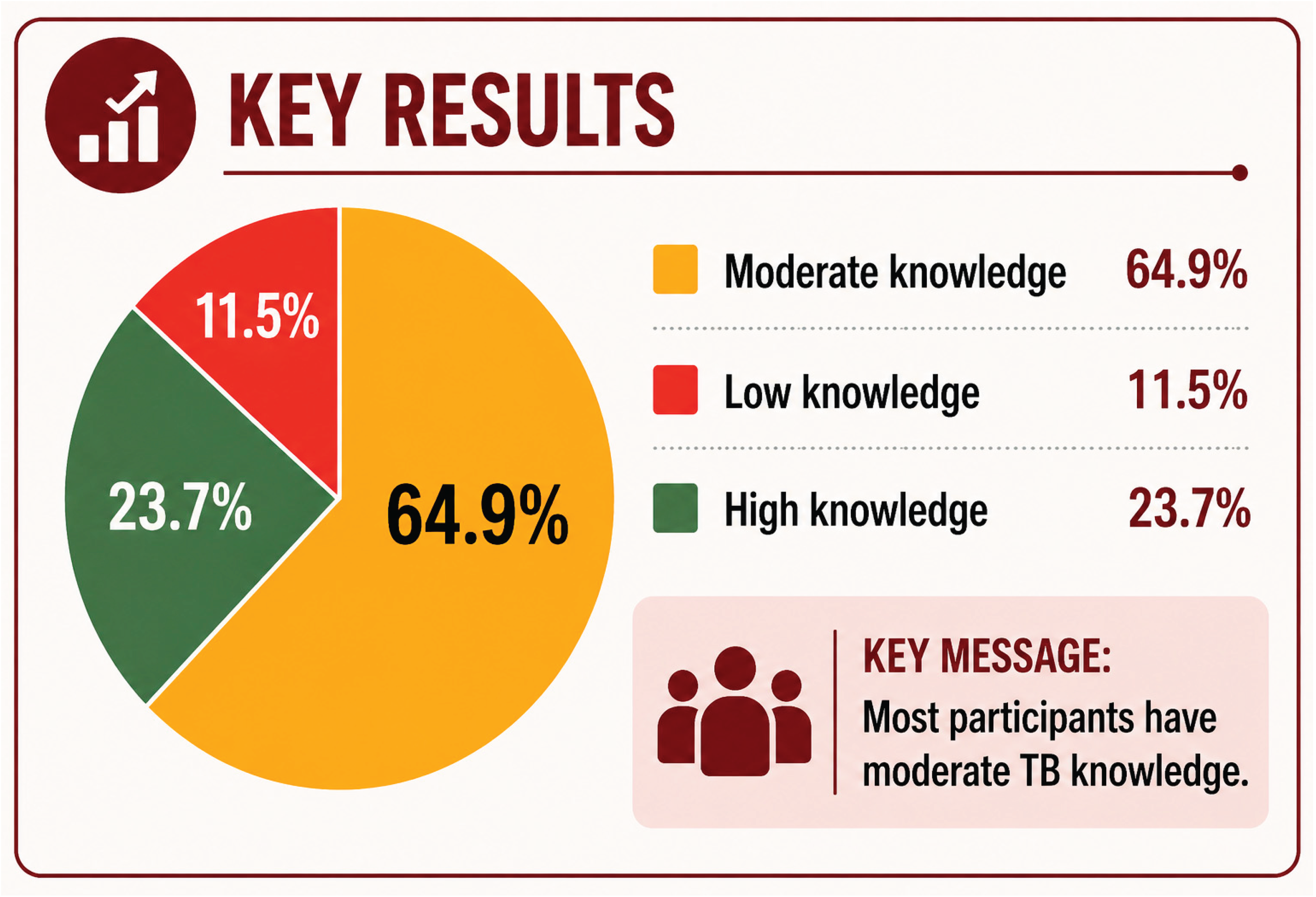
Figure 2.
Association between educational attainment and tuberculosis knowledge categories.
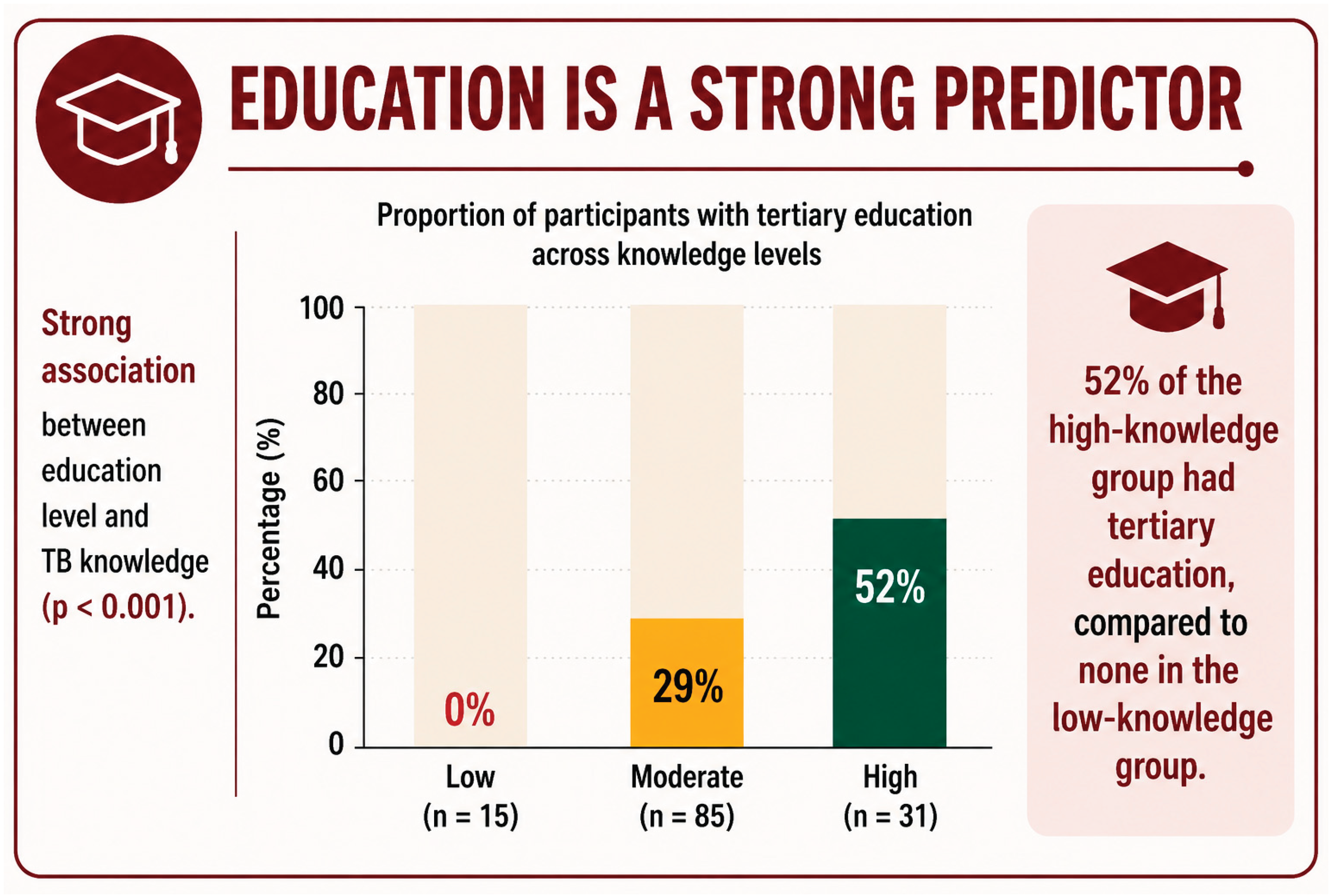
Figure 3.
Association between lived tuberculosis experience and tuberculosis knowledge levels.
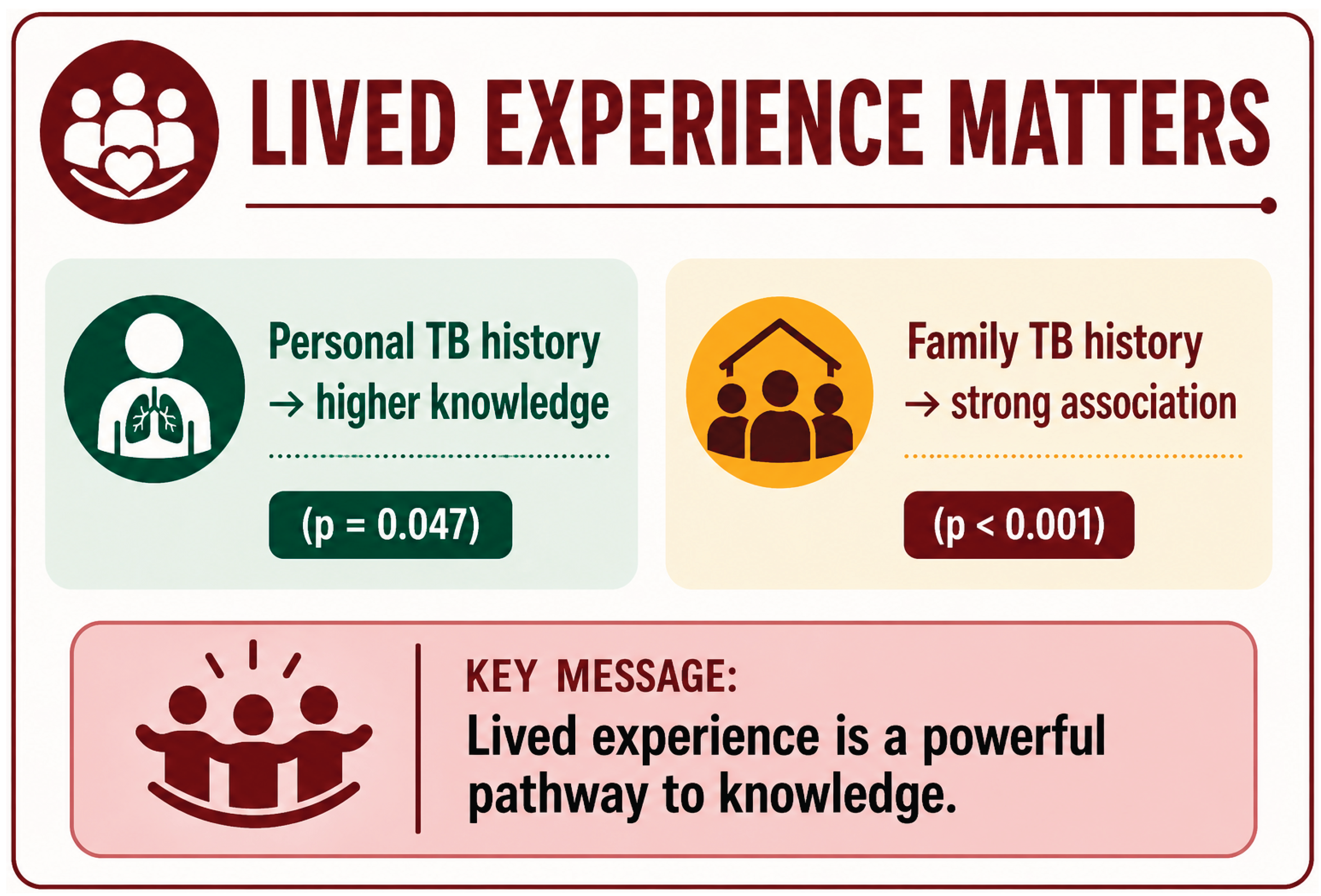
Figure 4.
Reported barriers to tuberculosis testing stratified by tuberculosis knowledge category.
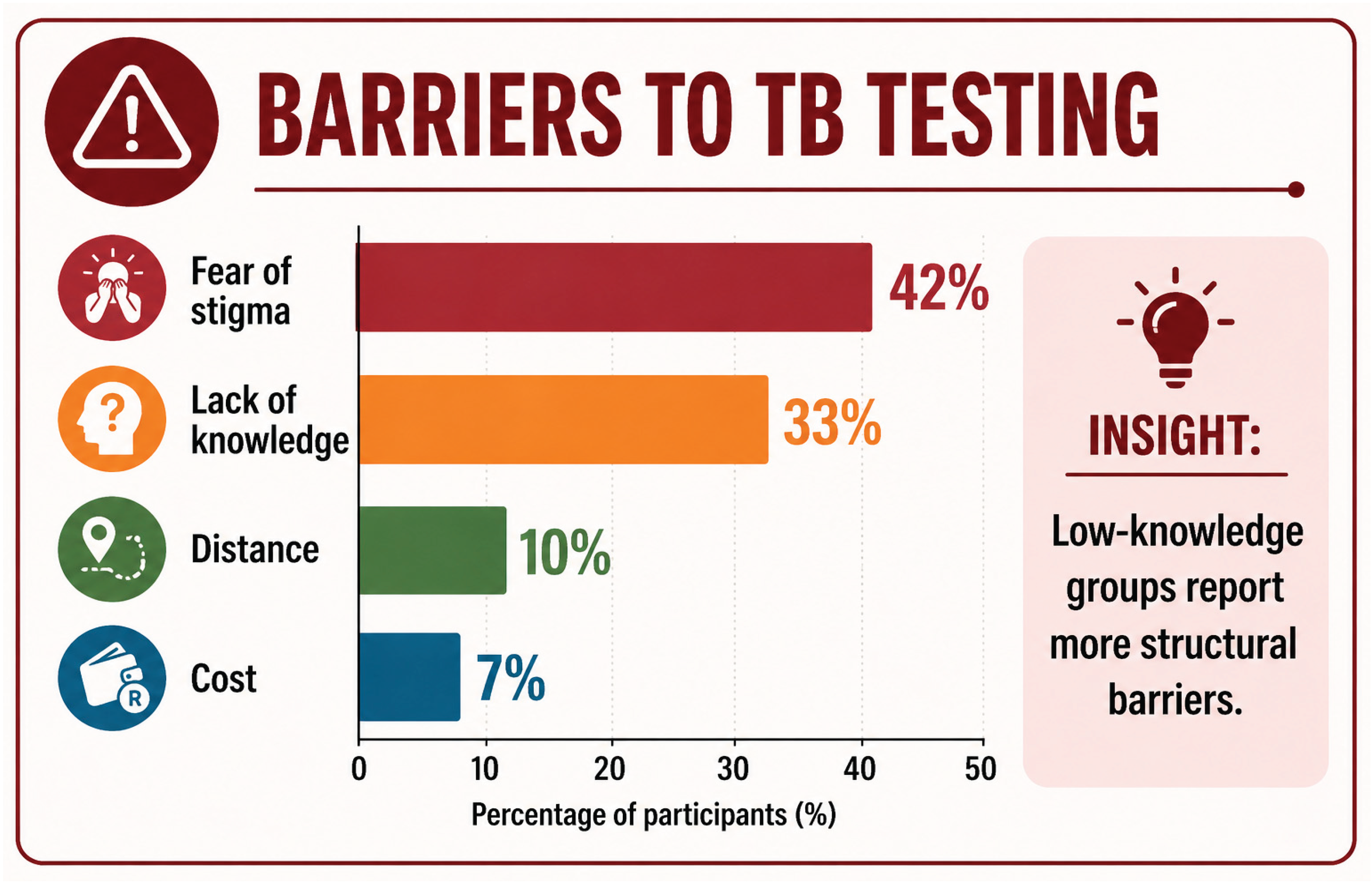
Figure 5.
Conceptual framework illustrating community-driven approaches to tuberculosis education and engagement.
Figure 5.
Conceptual framework illustrating community-driven approaches to tuberculosis education and engagement.
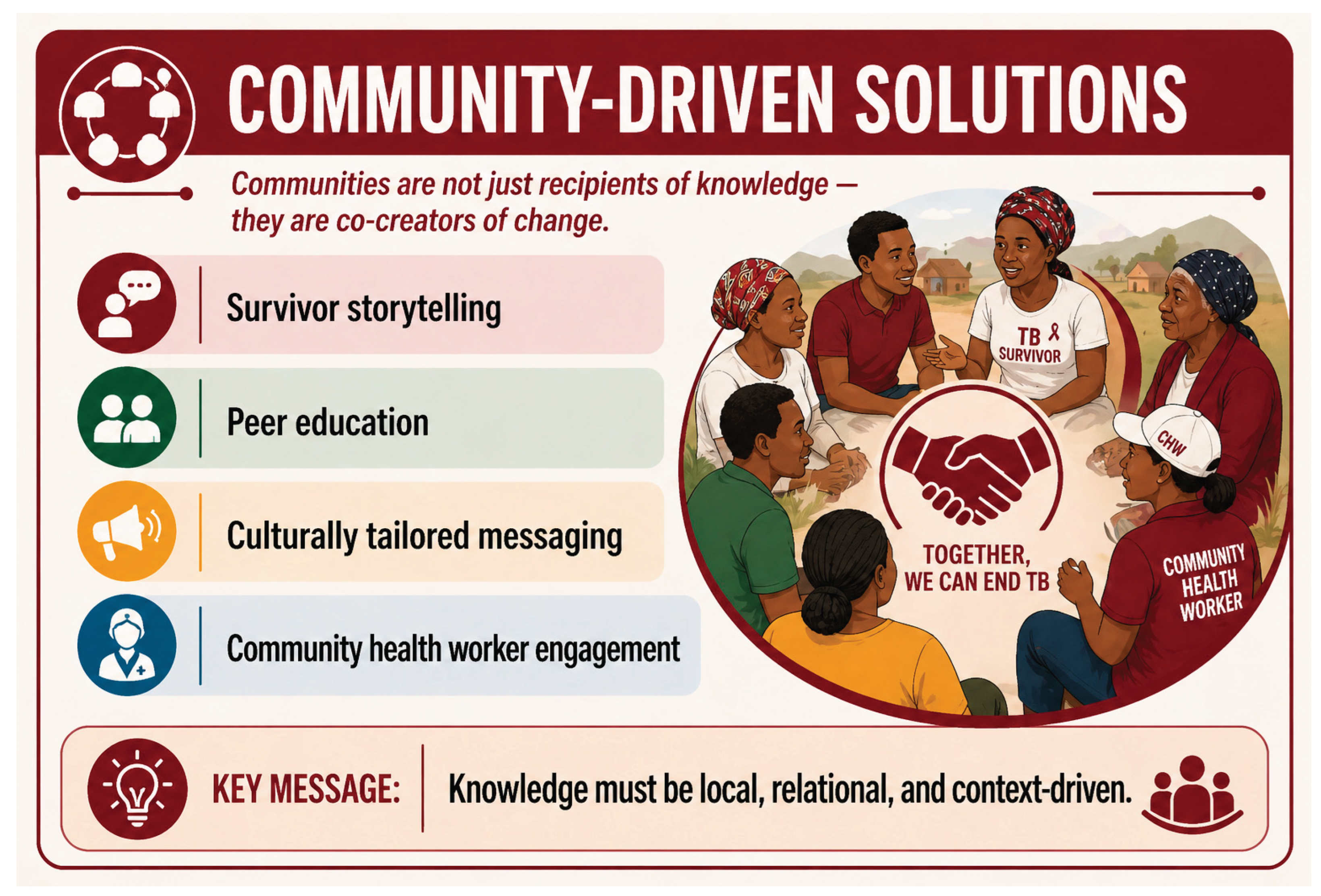

Table 1.
Mapping of empirical survey domains to the interpretive frameworks of knowledge democracy and reparative engagement.
Table 1.
Mapping of empirical survey domains to the interpretive frameworks of knowledge democracy and reparative engagement.
| Empirical domain | Survey information | Knowledge democracy interpretation | Reparative engagement interpretation |
| TB knowledge | Knowledge scores | Distribution of and access to biomedical knowledge | Need for responsive and accessible education |
| Personal/family TB experience | Personal and family TB history | Recognition of experiential knowledge | Potential role of survivor involvement and reciprocity |
| Stigma and misinformation | Reported barriers | Interaction between biomedical, community, and socially circulating knowledge | Trust and relational barriers to engagement |
| Healthcare access | Access and transport barriers | Structural inequalities affecting translation of knowledge into action | Institutional responsiveness and accessibility |
| Survivor storytelling | Preferred education strategy | Recognition of lived expertise | Potential mechanism for trust-building |
| Peer/community education | Preferred education strategy | Co-learning and distributed knowledge production | Community partnership and reciprocal engagement |
| Community health workers | Preferred education strategy | Knowledge mediation between health systems and communities | Relational bridge between communities and formal services |
| Local-language communication | Communication preference | Epistemic and linguistic accessibility | Culturally responsive engagement |
Table note: The mappings represent the authors’ interpretive application of the conceptual frameworks to domains captured in the original survey. They do not represent participant-level measurements of knowledge democracy or reparative engagement and should not be interpreted as evidence of causal pathways or intervention effectiveness.
Disclaimer/Publisher’s Note: The statements, opinions and data contained in all publications are solely those of the individual author(s) and contributor(s) and not of MDPI and/or the editor(s). MDPI and/or the editor(s) disclaim responsibility for any injury to people or property resulting from any ideas, methods, instructions or products referred to in the content. |
© 2026 by the authors. Licensee MDPI, Basel, Switzerland. This article is an open access article distributed under the terms and conditions of the Creative Commons Attribution (CC BY) license (http://creativecommons.org/licenses/by/4.0/).
Copyright: This open access article is published under a Creative Commons CC BY 4.0 license, which permit the free download, distribution, and reuse, provided that the author and preprint are cited in any reuse.