

Submitted:
18 August 2026
Posted:
19 August 2026
You are already at the latest version
Abstract
Important gaps remain in our understanding of the composition of the vaginal virome, its interactions with the bacterial microbiome and the host immune system, and its implications for vaginal homeostasis, human papillomavirus (HPV) persistence, and obstetric outcomes. The vaginal virome is a dynamic component of the female genital ecosystem, comprising eukaryotic viruses, bacteriophages, and endogenous viral elements. Recent evidence suggests that alterations in viral composition and diversity may influence the stability of the vaginal microbiome and mucosal immune responses, thereby increasing susceptibility to clinically relevant disorders. Increased viral diversity has been associated with vaginal dysbiosis, persistent HPV infection, and adverse pregnancy outcomes, including preterm birth. In parallel, bacteriophage-based therapies and recombinant endolysins have shown promise for the selective treatment of bacterial biofilms associated with bacterial vaginosis. The vaginal virome is an integral component of the microbial ecology of the female genital tract. A better understanding of its interactions with the bacterial microbiome and the host immune system may facilitate the development of diagnostic biomarkers and innovative therapeutic strategies for precision medicine in women's health.
Keywords:
vaginal virome
; vaginal microbiome
; bacteriophages
; vaginal dysbiosis
; human papillomavirus
; preterm birth
; phage therapy
1. Introduction
Our understanding of female genital tract health has undergone a substantial transformation over the past two decades with the advent of next-generation sequencing (NGS) technologies, which have enabled detailed characterization of microbial communities associated with the human body [1,2]. In female reproductive health, these advances have demonstrated that vaginal homeostasis depends on dynamic interactions among the host, the local immune system, and a complex microbial ecosystem composed of bacteria, fungi, archaea, and viruses [3,4].
In most women of reproductive age, a healthy vaginal bacterial microbiome is characterized by the predominance of Lactobacillus species, particularly L. crispatus, L. jensenii, and L. gasseri [5,6,7]. These bacteria help maintain a vaginal pH below 4.5 through the production of lactic acid, bacteriocins, and other antimicrobial metabolites that inhibit the proliferation of potentially pathogenic microorganisms [6,7]. Alterations in vaginal microbial composition have been associated with bacterial vaginosis, reproductive tract infections, obstetric complications, and altered susceptibility to HPV infection [8,9,10,11].
Although the bacterial microbiome has been extensively investigated, the viral component of the vaginal ecosystem remains incompletely understood [4,12]. The term “virome” refers to the collection of viruses present within a specific biological niche, encompassing eukaryotic viruses, bacteriophages, and viral elements integrated into the genomes of resident microorganisms [13]. Recent metagenomic studies have demonstrated that the vaginal virome exhibits considerable diversity and may influence both the ecological stability of the vaginal microbiome and immune functions of the female genital mucosa [4,14].
Eukaryotic viruses identified in the female genital tract include members of the families Papillomaviridae, Herpesviridae, Polyomaviridae, and Anelloviridae [4,14,15]. Although some of these viruses are recognized for their clinical relevance, particularly HPV and herpesviruses, accumulating evidence suggests that certain components of the virome may also contribute to mucosal immune modulation and local homeostasis [14,16,17]. In parallel, bacteriophages, viruses that specifically infect and replicate within bacteria, represent a major component of the vaginal virome and can influence bacterial community composition through bacterial lysis, horizontal gene transfer, and ecological remodeling [4,14,18].
In recent years, metagenomic and viromic studies have identified associations between alterations in the vaginal virome and clinically relevant conditions, including bacterial vaginosis, persistent HPV infection, cervical disease, and adverse pregnancy outcomes [4,14,15,17,19]. Although the causal nature of these associations remains uncertain, these observations support the hypothesis that the virome is a functionally relevant component of female reproductive health. Beyond its potential pathophysiological role, growing knowledge of bacteriophage biology has stimulated the development of innovative therapeutic approaches. Phage therapy and recombinant endolysins are being investigated as selective strategies for bacterial biofilms associated with bacterial vaginosis, particularly in the context of antimicrobial resistance [20,21,22,23,24,25,26].
Given the growing interest in the viral ecology of the female genital tract, a critical synthesis of the available evidence is warranted. Accordingly, this review examines the composition of the vaginal virome, its interactions with the bacterial microbiome and the host immune system, and its potential clinical implications for gynecology, obstetrics, and reproductive medicine.
2. Composition and Ecology of the Vaginal Virome
The vaginal virome is a complex and dynamic component of the microbial ecosystem of the female genital tract. Although it has historically received less attention than the bacterial microbiome, metagenomic studies indicate that viral communities are closely integrated with mucosal ecology and the vaginal bacterial microbiome [4,12,14].
The term “virome” encompasses all viruses present within a given biological niche, including eukaryotic viruses capable of infecting human cells, bacteriophages that infect resident bacteria, and viral elements integrated into microbial and human genomes [13]. The composition of the vaginal virome varies considerably among individuals and is influenced by host and environmental factors, including age, sexual activity, hormonal status, contraceptive use, pregnancy, and vaginal dysbiosis [4,14].
Metagenomic studies have shown that the vaginal virome is rich in bacteriophages, including tailed double-stranded DNA phages classified within Caudoviricetes, together with eukaryotic viruses from the families Papillomaviridae, Herpesviridae, Polyomaviridae, and Anelloviridae [4,14,15]. Compared with more complex microbial ecosystems such as the gastrointestinal tract, the vaginal virome is shaped by the relatively low-complexity bacterial communities that frequently characterize Lactobacillus-dominated states [4,6,14].
Rather than indicating infection or disease, detection of viral sequences in the vaginal mucosa can occur in healthy asymptomatic women. Human Microbiome Project–based analyses have identified several eukaryotic viral families in such populations, with alphapapillomaviruses among the most frequently detected viruses [14].
The vaginal virome can be broadly considered in terms of bacteriophages and eukaryotic viruses. Bacteriophages frequently dominate viral sequence datasets and infect resident vaginal bacteria, including Lactobacillus species, rather than human cells [4,14]. Eukaryotic viruses include members of the families Papillomaviridae, Anelloviridae, Herpesviridae, Polyomaviridae, Adenoviridae, and other less frequently detected groups. HPV and anelloviruses are among the most commonly identified eukaryotic viruses, although prevalence estimates vary substantially according to population, sampling, and sequencing methodology [14,15].
Interactions between viral and bacterial communities are likely to contribute to vaginal ecological stability. Under eubiotic conditions, Lactobacillus-dominated bacterial communities coexist with their associated bacteriophages within an environment characterized by low inflammation, preserved epithelial integrity, and appropriate local immune function [14,26].
Recent evidence indicates that cervicovaginal virome composition is associated with bacterial community structure and genital inflammation, raising the possibility that viral communities participate in ecological transitions between eubiosis and dysbiosis [14,17]. Although the underlying mechanisms remain incompletely understood, changes in bacteriophage activity and eukaryotic viral composition may influence or reflect susceptibility to dysbiosis, mucosal inflammation, and sexually transmitted infections [14,17].
Taken together, current evidence supports the concept that the vaginal virome is not merely a collection of resident viral particles but rather a functionally integrated component of the female genital ecosystem that may influence both microbial ecology and host immune responses.
3. Eukaryotic Viruses and Mucosal Immunity
Eukaryotic viruses comprise the fraction of the vaginal virome capable of directly infecting human cells within the genital mucosa. Traditionally, research has focused primarily on the pathogenic roles of HPV and herpesviruses. However, several eukaryotic viruses may persist asymptomatically within the vaginal mucosa, and their potential immunomodulatory effects remain incompletely understood [14,15,17].
Among the viruses frequently identified in asymptomatic women are members of the families Anelloviridae, Polyomaviridae, and Papillomaviridae [14,15]. Anelloviruses, particularly torque teno viruses (TTVs), have attracted increasing attention because of their high prevalence in healthy individuals and their association with host immune status [16,24]. Although definitive evidence supporting either a protective or pathogenic role is lacking, anellovirus abundance has been proposed as an indirect marker of immune status in several clinical settings [16].
The vaginal mucosa serves as an important immunological interface between the host and the external environment. Epithelial and immune cells express pattern recognition receptors (PRRs), including Toll-like receptors (TLRs), that recognize viral components and initiate innate antiviral responses. Activation of these pathways can induce type I interferons and inflammatory cytokines that contribute to antiviral immunity [27].
Observational studies have associated alterations in cervicovaginal virome composition, including differential abundance of anelloviruses, with genital inflammation and altered cytokine profiles [17,28]. These findings support a relationship between the viral ecosystem and mucosal immune state, although the direction and causal significance of these associations remain uncertain.
Increasing attention has been directed toward the interaction between the vaginal ecosystem and HPV infection. Evidence suggests that bacterial community composition and broader cervicovaginal ecological disturbances may influence HPV persistence and clearance [11,28,29,30]. Studies of the vaginal eukaryotic virome further indicate differences in viral community composition across cervical disease states [15,17].
Collectively, these findings underscore the importance of understanding the vaginal virome not only in terms of classical viral pathogenicity but also as a potential modulator of mucosal immunity and susceptibility to gynecologic disease.
4. Bacteriophages and Regulation of the Vaginal Microbiome
Bacteriophages constitute a major component of the vaginal virome and can shape bacterial community ecology through bacterial lysis, horizontal gene transfer, and selective pressure [12,18,31,32]. Bacteriophage–bacterium interactions commonly involve lytic and lysogenic life cycles. During lysogeny, the phage genome is maintained within the bacterial host, often as a prophage. In the lytic cycle, active phage replication culminates in bacterial lysis and release of progeny virions [18,31,32] (Figure 1).
Transitions between lysogeny and lysis are influenced by multiple factors, including bacterial physiological state, multiplicity of infection, environmental stress, extracellular signals, and phage regulatory circuits [18,31,32].In general, lytic replication is favored when conditions support rapid phage propagation, whereas lysogeny can provide a persistence strategy when immediate transmission opportunities are limited [18,31,32].
In eubiotic vaginal ecosystems, bacteriophages and Lactobacillus species appear to coexist within a dynamic ecological equilibrium that may contribute to microbial resilience [14,26]. In addition, bacteriophages can facilitate horizontal gene transfer and influence bacterial adaptation and fitness [18,31,32].
Several investigators have proposed that alterations in bacteriophage dynamics may contribute to ecological transitions associated with bacterial vaginosis [25,26]. According to this hypothesis, environmental or host-related perturbations may promote prophage induction within lactobacilli, leading to bacterial lysis, depletion of protective populations, increased vaginal pH, and subsequent expansion of anaerobic communities [26].
Although biologically plausible, this hypothesis has yet to be confirmed by adequately powered longitudinal studies integrating bacterial and viral metagenomic analyses. Most available evidence remains observational, limiting causal inference. Bacteriophages should therefore be regarded as potential contributors to, rather than established initiators of, vaginal dysbiosis.
Rather than acting as the primary cause of bacterial vaginosis, bacteriophages may function as ecological amplifiers of dysbiosis. Under this conceptual model, an initial perturbation—such as sexual intercourse, menstruation, hormonal fluctuations, smoking, vaginal douching, or antibiotic exposure—could destabilize the vaginal microbiota. This disturbance may promote prophage induction within Lactobacillus populations, accelerating their depletion and facilitating the expansion of anaerobic bacteria. The resulting microbial shifts may further remodel both the bacterial microbiome and the vaginal virome, establishing a self-reinforcing ecological feedback loop that perpetuates dysbiosis rather than necessarily initiating it (Figure 2).
5. Vaginal Virome and Dysbiosis: Current Evidence
Bacterial vaginosis is the most common form of vaginal dysbiosis among women of reproductive age and is characterized by the replacement of Lactobacillus-dominated communities with polymicrobial communities enriched in anaerobic bacteria [8]. Despite substantial advances in understanding this condition, the mechanisms underlying its onset and recurrence remain incompletely understood.
Recent studies suggest that alterations in the vaginal virome are associated with ecological instability accompanying vaginal dysbiosis [14,17,26]. Compared with Lactobacillus-dominated states, bacterial vaginosis is associated with changes in viral diversity, bacteriophage abundance, and viral community structure [14,17,26]. The composition of the vaginal virome appears closely linked to the bacterial microbiome, particularly the relative abundance of protective lactobacilli and bacterial vaginosis-associated anaerobes. Larger longitudinal studies are needed to determine whether reproducible viral community state types can be defined and whether they consistently parallel bacterial community state types [14,17].
Beyond quantitative differences, functional alterations in the vaginal virome have also been described. Viral genes associated with integration, recombination, and bacterial adaptation have been identified in dysbiotic vaginal communities [26]. These observations raise the possibility that viruses contribute to ecological remodeling during the transition from eubiosis to dysbiosis.
The relationship between the vaginal ecosystem and HPV persistence has also attracted increasing attention. Microenvironments characterized by reduced Lactobacillus dominance, increased bacterial diversity, and altered viral community composition have been associated with impaired local immune responses and persistent oncogenic HPV infection [11,15,17,29,30]. Nevertheless, it remains unclear whether virome alterations are causal, consequential, or simply biomarkers of the ecological disturbances associated with vaginal dysbiosis and HPV persistence.
The vaginal virome should be viewed as an ecological regulator of the vaginal ecosystem rather than merely a collection of viruses associated with disease.
6. Vaginal Virome, Hpv Persistence, and Cervical Carcinogenesis
Persistent infection with oncogenic human papillomavirus (HPV) genotypes, particularly HPV16 and HPV18, is the principal etiological driver of high-grade squamous intraepithelial lesions (HSIL) and cervical cancer. However, only a minority of HPV infections persist and progress, indicating that additional host, microbial, and environmental factors influence disease outcome [11,28,29,30].
Accumulating evidence indicates that the composition of the vaginal microbiome influences the natural history of HPV infection. Lactobacillus crispatus dominated microbiota are generally associated with more favorable HPV outcomes, whereas diverse anaerobe rich communities are associated with viral persistence and cervical precancer [11,29,30,33,34].
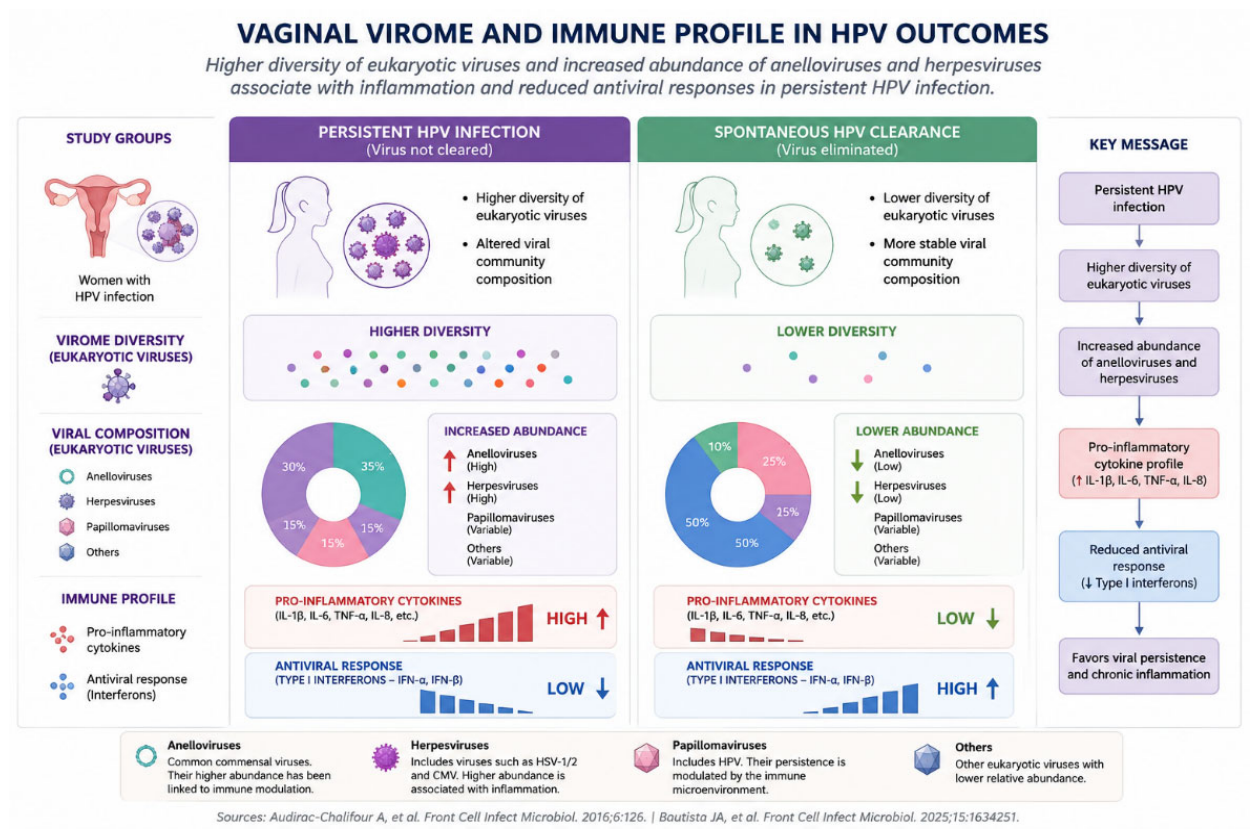
More recently, the vaginal virome has emerged as another potential modulator of this process. An observational study reported greater eukaryotic viral diversity and altered viral community composition across cervical disease states [15]. Higher abundances of anelloviruses and herpesviruses have also been linked to altered immune and inflammatory profiles, although these relationships are not yet sufficient to establish causality [16,17,28,35] (Figure 3).
A recent study of the cervicovaginal DNA virome showed that non-papillomavirus viruses, including anelloviruses and bacteriophages, were associated with genital inflammation and bacterial community composition. HPV abundance and contig richness were not the principal correlates of these microenvironmental features; instead, virome alterations included anellovirus expansion and bacteriophage–bacterium associations involving bacterial vaginosis-associated taxa [17]. These findings support the view that the cervicovaginal virome may serve as a dynamic indicator of local ecological and inflammatory states rather than a direct marker of HPV infection alone.
Although the underlying mechanisms remain incompletely understood, alterations in the vaginal virome may influence mucosal immune regulation and thereby modify the host's capacity to control HPV infection. Bacterial dysbiosis, altered virome composition, and mucosal inflammation may coexist within a microenvironment that favors HPV persistence [11,17,28,29,30].
Rather than acting as an independent determinant of HPV persistence, the vaginal virome is more plausibly viewed as an integral component of a complex ecological network involving bacterial communities, host immunity, and epithelial integrity. Within this framework, virome alterations may amplify or sustain a microenvironment favorable to viral persistence rather than directly driving cervical carcinogenesis.
Nevertheless, the available evidence is derived predominantly from observational studies, precluding definitive conclusions regarding causality. Consequently, it remains uncertain whether alterations in the vaginal virome contribute directly to HPV persistence or simply reflect the ecological and immunological disturbances accompanying persistent infection.
7. Vaginal Virome and Preterm Birth
Spontaneous preterm birth remains a leading cause of neonatal morbidity and mortality worldwide. Genetic, environmental, immunological, and infectious factors contribute to its etiology, and accumulating evidence indicates that the vaginal microbiome during pregnancy is associated with adverse obstetric outcomes [36,37,38,39].
During uncomplicated pregnancy, vaginal bacterial communities often become more Lactobacillus dominant and less diverse, a pattern associated with reproductive tract stability [39,40]. Longitudinal analysis of the vaginal eukaryotic DNA virome has shown that viral communities also vary during pregnancy and that greater viral richness can be associated with preterm birth [19].
Alterations in the vaginal virome during pregnancy have been associated with preterm birth, although no single virus has been established as a causal agent [19]. The underlying mechanisms remain incompletely understood, and interactions among viruses, the bacterial microbiome, and host immunity may contribute indirectly to gestational inflammatory states.
Several non-mutually exclusive mechanisms may explain these associations. Altered bacteriophage dynamics could contribute to depletion of protective Lactobacillus populations and expansion of inflammation-associated anaerobic communities [26]. In addition, phage-mediated bacterial lysis can release bacterial products that stimulate innate immune pathways; excessive inflammatory signaling is a recognized component of pathways leading to cervical remodeling and preterm parturition [18,26,38]. Importantly, there is currently no evidence that vaginal bacteriophages directly infect or damage the amnion or chorion. Their proposed contribution is therefore indirect and mediated through effects on the vaginal microbial ecosystem and host inflammatory responses.
Overall, available evidence remains insufficient to establish a causal relationship between alterations in the vaginal virome and spontaneous preterm birth. Well-designed longitudinal studies integrating virome, microbiome, metabolome, and host immune profiling will be essential to determine whether viral alterations have prognostic value or instead represent biomarkers of ecosystem instability during pregnancy.
Taken together, these observations support the concept that the vaginal virome may influence obstetric outcomes by modulating the ecological and immunological stability of the cervicovaginal environment rather than by directly interacting with gestational tissues.
8. Phage Therapy and Recombinant Endolysins
Advances in our understanding of vaginal viral ecology have stimulated interest in therapeutic strategies based on bacteriophages and phage-derived proteins. These approaches are particularly relevant in the context of antimicrobial resistance and the high recurrence rates associated with conventional treatment of bacterial vaginosis [23,25,26].
Classical phage therapy uses intact bacteriophages to selectively infect target bacteria, whereas endolysin therapy relies on purified phage-derived enzymes that lyse bacteria independently of viral replication. Both approaches offer the theoretical advantage of greater biological specificity than broad-spectrum antibiotics [23,24,41]. In bacterial vaginosis, however, translational development is currently more advanced for recombinant endolysins—particularly PM-477—than for whole-phage therapy [20,21,22].
Despite their therapeutic potential, bacteriophage-based interventions in the vaginal environment face several challenges, including the complex architecture of polymicrobial biofilms, narrow host range, emergence of phage resistance, and possible immune-mediated neutralization [23,25]. These factors may complicate the selection of effective phages or phage combinations for polymicrobial vaginal communities.
Recombinant endolysins have emerged as a particularly promising alternative. These phage-derived enzymes hydrolyze bacterial cell-wall peptidoglycan, resulting in rapid bacterial lysis [22,42]. PM-477, an engineered endolysin derived from Gardnerella prophages, has demonstrated activity against Gardnerella dominated biofilms while largely preserving protective Lactobacillus populations in preclinical and ex vivo studies [20,21,22].
Although preclinical findings are encouraging, adequately powered randomized clinical trials remain necessary to establish the safety, efficacy, optimal dosing strategies, and long-term effects of phage-derived therapeutics for recurrent bacterial vaginosis.
9. Limitations of Current Knowledge
Despite the rapid expansion of vaginal virome research, important methodological and conceptual limitations continue to hinder progress. One major technical challenge is the low microbial and viral biomass of vaginal specimens, which increases susceptibility to contamination during sample collection, nucleic acid extraction, library preparation, and sequencing [43].
Another major limitation is the absence of standardized methodologies for virome characterization. Differences in sample processing, sequencing platforms, genome assembly, taxonomic annotation, and bioinformatic workflows complicate comparisons across studies and reduce reproducibility [44,45,46,47,48].
Furthermore, most available evidence is derived from cross-sectional observational studies, which preclude causal inference. Consequently, it remains uncertain whether virome alterations precede microbial dysbiosis, arise as a consequence of ecological disruption, or simply reflect ongoing inflammatory processes.
An additional challenge is the large proportion of viral sequences that remain taxonomically and functionally uncharacterized—a phenomenon commonly referred to as “viral dark matter.” Incomplete viral reference databases limit confident taxonomic and functional assignment, potentially leading to underestimation of viral diversity and obscuring biologically relevant virus–host interactions [44,46].
Another important limitation is the reliance on taxonomic descriptions rather than functional characterization. Metagenomic sequencing can identify viral genomes but provides limited information regarding viral activity, replication state, bacteriophage life cycle, or the biological consequences of virus–host interactions. Integration of metagenomics with metatranscriptomics, metaproteomics, metabolomics, and experimental validation will be essential to establish functional relevance [44,46,48].
Finally, distinguishing resident members of the vaginal virome from transient viruses introduced through sexual activity, environmental exposure, or contamination remains a major challenge. Without longitudinal sampling, defining a stable core vaginal virome remains difficult.
10. Future Perspectives
Advances in metagenomics, metatranscriptomics, and long-read or single-molecule sequencing technologies are expected to expand our understanding of viral ecology in the female genital tract. A major priority will be the integration of multi-omics approaches including metagenomics, metatranscriptomics, metaproteomics, metabolomics, and host immune profiling to characterize viral activity and functional interactions rather than composition alone [45,48,49]. Such integrative approaches may also support the development of more robust biomarkers and predictive models, provided that they are validated in large longitudinal cohorts.
Beyond naturally occurring bacteriophages, advances in synthetic biology are creating opportunities to engineer phages with altered host range, enhanced activity against biofilms, or the capacity to deliver genetic payloads that modify bacterial phenotypes. Although these approaches remain largely experimental, they illustrate the broader potential of phage-based technologies for precision microbiome engineering [23,24,41].
An emerging frontier is functional viromics, which seeks to determine how viral communities influence microbial ecology and host physiology rather than simply cataloging viral genomes. Combining experimental models with high-resolution multi-omics technologies will be critical for identifying the biological mechanisms through which bacteriophages and eukaryotic viruses shape vaginal homeostasis and disease [44,46,48].
11. Conclusions
The vaginal virome is an integral and dynamic component of the microbial ecosystem of the female genital tract rather than an isolated collection of resident viruses. Evidence accumulated over the past decade indicates that viral communities interact in complex ways with the bacterial microbiome and the host immune system, potentially influencing vaginal homeostasis and clinically relevant reproductive outcomes.
Although current knowledge is still largely derived from observational studies, available data suggest that alterations in the vaginal virome are associated with vaginal dysbiosis, persistent HPV infection, and adverse obstetric outcomes, including preterm birth. Bacteriophage-based therapies and recombinant endolysins also represent promising approaches for selectively targeting bacterial communities and biofilms associated with recurrent vaginal dysbiosis.
Establishing the clinical relevance of the vaginal virome will require robust longitudinal studies, standardized metagenomic and bioinformatic methods, functional experimental validation, and integration of multi-omics approaches. Such advances may facilitate the translation of virome-based knowledge into diagnostic, prognostic, and therapeutic strategies in female reproductive health.
Author: Contributions: Conceptualization, J.E.J., R.M.N.E. and P.C.G.; methodology, J.E.J. and P.C.G.; software, J.E.J.; validation, J.E.J. and P.C.G.; formal analysis, J.E.J. and P.C.G.; investigation, J.E.J., R.M.N.E. and P.C.G.; data curation, J.E.J. and P.C.G.; writing—original draft preparation, J.E.J., C.R.T. and P.C.G.; writing—review and editing, J.E.J., C.R.T. and P.C.G.; visualization, J.E.J. and P.C.G.; supervision, J.E.J. All authors have read and agreed to the published version of the manuscript.
Funding
This research received no external funding.
Institutional Review Board Statement
Not applicable.
Informed Consent Statement
Not applicable.
Data Availability Statement
No new data were created or analyzed in this study. Data sharing is not applicable to this article.
Conflicts of Interest
The authors declare no conflicts of interest.
Abbreviations
The following abbreviations are used in this manuscript:
| BV | bacterial vaginosis |
| CMV | cytomegalovirus |
| CST | community state type |
| EBV | Epstein–Barr virus |
| HPV | human papillomavirus |
| HSIL | high-grade squamous intraepithelial lesion |
| HSV | herpes simplex virus |
| NGS | next-generation sequencing |
| PAMP | pathogen-associated molecular pattern |
| PRR | pattern recognition receptor |
| TLR | Toll-like receptor |
| TTV | torque teno virus. |
References
- Structure, function and diversity of the healthy human microbiome. Nature 2012, 486(7402), 207–14. [CrossRef] [PubMed]
- The integrative human microbiome project. Nature 2019, 569(7758), 641–648. [CrossRef]
- Ravel, J.; Gajer, P.; Abdo, Z.; Schneider, G.M.; Koenig, S.S.K.; McCulle, S.L.; Karlebach, S.; Gorle, R.; Russell, J.; Tacketet. Vaginal microbiome of reproductive-age women. Proc. Natl. Acad. Sci. U S A 2011, 108 Suppl 1, 4680–4687. [Google Scholar] [CrossRef] [PubMed]
- Orton, K.L.; Monaco, C.L. The vaginal virome in women's health and disease. Microorganisms 2025, 13(2), 431. [Google Scholar] [CrossRef] [PubMed]
- Ma, B.; Forney, L.J.; Ravel, J. Vaginal microbiome: rethinking health and disease. Annu Rev. Microbiol. 2012, 66, 371–389. [Google Scholar] [CrossRef] [PubMed]
- Anahtar, M.N.; Gootenberg, D.B.; Mitchell, C.M.; Kwon, D.S. Cervicovaginal microbiota and reproductive health: the virtue of simplicity. Cell Host Microbe 2018, 23(2), 159–168. [Google Scholar] [CrossRef] [PubMed]
- Petrova, M.I.; Lievens, E.; Malik, S.; Imholz, N.; Lebeer, S. Lactobacillus species as biomarkers and agents that can promote various aspects of vaginal health. Front Physiol. 2015, 6, 81. [Google Scholar] [CrossRef] [PubMed]
- Onderdonk, A.B.; Delaney, M.L.; Fichorova, R.N. The human microbiome during bacterial vaginosis. Clin. Microbiol. Rev. 2016, 29(2), 223–238. [Google Scholar] [CrossRef] [PubMed]
- Muzny, C.A.; Schwebke, J.R. Pathogenesis of bacterial vaginosis: discussion of current hypotheses. J. Infect. Dis. 2016, 214 Suppl 1(Suppl 1), S1–5. [Google Scholar] [CrossRef] [PubMed]
- Muzny, C.A.; Taylor, C.M.; Swords, W.E.; Tamhane, A.; Chattopadhyay, D.; Cerca, N.; Schwebke, J.R. An updated conceptual model on the pathogenesis of bacterial vaginosis. J. Infect. Dis. 2019, 220(9), 1399–1405. [Google Scholar] [CrossRef] [PubMed]
- Usyk, M.; Zolnik, C.P.; Castle, P.E.; Porras, C.; Herrero, R.; Gradissimo, A.; Gonzalez, P.; Safaeian, M.; Schiffman, M.; Burk, R.B. Costa Rica HPV Vaccine Trial (CVT) Group. Cervicovaginal microbiome and natural history of HPV in a longitudinal study. PLoS Pathog. 2020, 16(3), e1008376. [Google Scholar] [CrossRef] [PubMed]
- Liang, G.; Bushman, F.D. The human virome: assembly, composition and host interactions. Nat. Rev. Microbiol. 2021, 19(8), 514–527. [Google Scholar] [CrossRef] [PubMed]
- Virgin, H.W. The virome in mammalian physiology and disease. Cell 2014, 157(1), 142–150. [Google Scholar] [CrossRef] [PubMed]
- Happel, A.U.; Varsani, A.; Balle, C.; Passmore, J.A.; Jaspan, H. The Vaginal Virome-Balancing Female Genital Tract Bacteriome, Mucosal Immunity, and Sexual and Reproductive Health Outcomes? Viruses 2020, 12(8), 832. [Google Scholar] [CrossRef] [PubMed]
- Li, Y.; Cao, L.; Han, X.; Ma, Y.; Liu, Y.; Gao, S.; Zhang, C. Altered vaginal eukaryotic virome is associated with different cervical disease status. Virol. Sin. Epub. 2023, 38(2), 184–197. [Google Scholar] [CrossRef] [PubMed]
- Timmerman, A.L.; Schönert, A.L.M.; van der Hoek, L. Anelloviruses versus human immunity: how do we control these viruses? FEMS Microbiol. Rev. 2024, 48(1), fuae005. [Google Scholar] [CrossRef] [PubMed]
- Kaelin, E.A.; Skidmore, P.T.; Łaniewski, P.; Holland, L.A.; Chase, D.M.; Herbst-Kralovetz, M.M.; Lim, E.S. Cervicovaginal DNA virome alterations are associated with genital inflammation and microbiota composition. mSystems 2022, 7(2), e00064-22. [Google Scholar] [CrossRef] [PubMed]
- Barr, J.J. A bacteriophages journey through the human body. Immunol. Rev. 2017, 279(1), 106–122. [Google Scholar] [CrossRef] [PubMed]
- Wylie, K.M.; Wylie, T.N.; Cahill, A.G.; Macones, G.A.; G Tuuli, M.G.; Stout, M.J. The vaginal eukaryotic DNA virome and preterm birth. Am. J. Obstet. Gynecol. 2018, 219(2), 189.e1–189.e12. [Google Scholar] [CrossRef] [PubMed]
- Landlinger, C.; Oberbauer, V.; Tisakova, L. P.; Schwebs, T.; Berdaguer, R.; Van Simaey, L.; Vaneechoutte, M.; Corsini, L. Preclinical data on the Gardnerella-specific endolysin PM-477 indicate its potential to improve the treatment of bacterial vaginosis through enhanced biofilm removal and avoidance of resistance. Antimicrob. Agents Chemother. 2022, 66(5). [Google Scholar] [CrossRef] [PubMed]
- Castro, J.; Sousa, L.G.V.; França, A.; Tisakova, L.P.; Corsini, L.; Cerca, N. Exploiting the anti-biofilm effect of the engineered phage endolysin PM-477 to disrupt dual-species biofilms associated with bacterial vaginosis. Antibiotics 2022, 11(5), 558. [Google Scholar] [CrossRef] [PubMed]
- Tisakova, L.P.; Schwebs, T.; Berdaguer, R.; von Freyberg, M.; Foessleitner, P.; Kieninger, A.; Poljak, A.; Corsini, L.; Farr, A. Endolysin selectively kills Gardnerella ex vivo in vaginal samples from women with bacterial vaginosis. npj Biofilms Microbiomes 2025, 11, 1–8. [Google Scholar] [CrossRef] [PubMed]
- Kortright, K.E.; Chan, B.K.; Koff, J.L.; Turner, P.E. Phage therapy: a renewed approach to combat antibiotic-resistant bacteria. Cell Host Microbe 2019, 25(2), 219–232. [Google Scholar] [CrossRef] [PubMed]
- Pires, D.P.; Cleto, S.; Sillankorva, S.; Azeredo, J.; Lu, T.K. Genetically engineered phages: a review of advances over the last decade. Microbiol. Mol. Biol. Rev. 2016, 80(3), 523–543. [Google Scholar] [CrossRef] [PubMed]
- Mazinani, S.; Arjmand, N.; Sheikh Soleimany Darany, Z.; Habibimoghadam, N.; Younis, N.K.; Kareem, R.A.; Sameer, H.N.; Adil, M.; Pour, A.S. Phage therapy for treatment of bacterial vaginosis. Arch. Microbiol. 2026, 208, 233. [Google Scholar] [CrossRef] [PubMed]
- Lamont, R.F.; Ali, A.; Jørgensen, J.S. Recent advances in the role of bacteriophages in the aetiology and therapy of vaginal dysbiosis in the form of bacterial vaginosis and the prevention of preterm birth. Microorganisms 2025, 13(10), 2410. [Google Scholar] [CrossRef] [PubMed]
- Kawai, T.; Akira, S. Innate immune recognition of viral infection. Nat. Immunol. 2006, 7(2), 131–137. [Google Scholar] [CrossRef] [PubMed]
- Audirac-Chalifour, A.; Torres-Poveda, K.; Bahena-Román, M.; Téllez-Sosa, J.; Martínez-Barnetche, J.; Cortina-Ceballos, B.; López-Estrada, G.; Delgado-Romero, K.; Burguete-García, A.I.; Cantú, D.; et al. Cervical microbiome and cytokine profile at various stages of cervical cancer: a pilot study. PLoS ONE 2016, 11(4), e0153274. [Google Scholar] [CrossRef]
- Norenhag, J.; Du, J.; Olovsson, M.; Verstraelen, H.; Engstrand, L.; Brusselaers, N. The vaginal microbiota, human papillomavirus and cervical dysplasia: a systematic review and network meta-analysis. BJOG 2020, 127(2), 171–180. [Google Scholar] [CrossRef] [PubMed]
- Bautista, J.A.; Altamirano-Colina, A.; López-Cortés, A. The vaginal microbiome in HPV persistence and cervical cancer progression. Front Cell Infect. Microbiol. 2025, 15, 1634251. [Google Scholar] [CrossRef] [PubMed]
- Sutton, T.D.S.; Hill, C. Gut bacteriophage: current understanding and challenges. Front Endocrinol. 2019, 10, 784. [Google Scholar] [CrossRef] [PubMed]
- Shkoporov, A.N.; Hill, C. Bacteriophages of the human gut: the known unknown of the microbiome. Cell Host Microbe 2019, 25(2), 195–209. [Google Scholar] [CrossRef] [PubMed]
- Brotman, R.M.; Shardell, M.D.; Gajer, P.; Tracy, J.K.; Zenilman, J.M.; Ravel, J.; Gravitt, P.E. Interplay between the temporal dynamics of the vaginal microbiota and human papillomavirus detection. J. Infect. Dis. 2014, 210(11), 1723–1733. [Google Scholar] [CrossRef] [PubMed]
- Suárez-Rico, D.O.; Rizo de la Torre, L.D.C.; Zermeño-Ruiz, M.; Balleza-Alejandri, L.R.; García-Galindo, J.J.; Montoya-Fuentes, H.; Beltrán-Ramírez, A. Bidirectional Interactions Between Cervicovaginal Microbiota and Human Papillomavirus Drive Persistence and Disease Progression. Int. J. Mol. Sci. 2026, 27(12), 5616. [Google Scholar] [CrossRef] [PubMed]
- Mei, Y.; Teng, H.; Wang, J. Host Immune Response Mechanisms Against Herpes Simplex Virus Type 2 Infection. Pathogens 2026, 15(3), 319. [Google Scholar] [CrossRef] [PubMed]
- Fettweis, J.M.; Serrano, M.G.; Brooks, J.P.; Edwards, D.J.; Girerd, P.H.; Parikh, H.I.; Huang, B.; Arodz, T.J.; Edupuganti, L.; Glascocket. The vaginal microbiome and preterm birth. Nat. Med. 2019, 25(6), 1012–1021. [Google Scholar] [CrossRef] [PubMed]
- Elovitz, M.A.; Gajer, P.; Riis, V.; Brown, A.G.; Humphrys, M.S.; Holm, J.B.; Ravel, J. Cervicovaginal microbiota and local immune response modulate the risk of spontaneous preterm delivery. Nat. Commun. 2019, 10(1), 1305. [Google Scholar] [CrossRef] [PubMed]
- Romero, R.; Dey, S.K.; Fisher, S.J. Preterm labor: one syndrome, many causes. Science 2014, 345(6198), 760–765. [Google Scholar] [CrossRef] [PubMed]
- Gudnadottir, U.; Debelius, J.W.; Du, J.; Hugerth, L.W.; Danielsson, H.; Schuppe-Koistinen, I.; Fransson, E.; Brusselaers, N. The vaginal microbiome and the risk of preterm birth: a systematic review and network meta-analysis. Sci. Rep. 2022, 12(1), 7926. [Google Scholar] [CrossRef] [PubMed]
- MacIntyre, D.A.; Chandiramani, M.; Lee, Y.S.; Kindinger, L.; Smith, A.; Angelopoulos, N.; Lehne, B.; Arulkumaran, S.; Brown, R.; Teoh; TGet. The vaginal microbiome during pregnancy and the postpartum period in a European population. Sci. Rep. 2015, 5, 8988. [Google Scholar] [CrossRef] [PubMed]
- Czaplewski, L.; Bax, R.; Clokie, M.; Dawson, M.; Fairhead, H.; Fischetti, V.A.; Foster, S.; Gilmore, B.F.; Hancock, R.E.W.; Harper, D.; et al. Alternatives to antibiotics: a pipeline portfolio review. Lancet Infect. Dis. 2016, 16(2), 239–251. [Google Scholar] [CrossRef] [PubMed]
- Fischetti, V.A. Development of phage lysins as novel therapeutics: a historical perspective. Viruses 2018, 10(6), 310. [Google Scholar] [CrossRef] [PubMed]
- Eisenhofer, R.; Minich, J.J.; Marotz, C.; Cooper, A.; Knight, R.; Weyrich, L.S. Contamination in low microbial biomass microbiome studies: issues and recommendations. Trends Microbiol. 2019, 27(2), 105–117. [Google Scholar] [CrossRef] [PubMed]
- Roux, S.; Adriaenssens, E.M.; Dutilh, B.E.; Koonin, E.V.; Kropinski, A.M.; Krupovic, M.; Kuhn, J.H.; Lavigne, R.; Brister, J.R.; Varsani, Aet. Minimum information about an uncultivated virus genome (MIUViG). Nat. Biotechnol. 2019, 37(1), 29–37. [Google Scholar] [CrossRef] [PubMed]
- Knight, R.; Vrbanac, A.; Taylor, B.C.; Aksenov, A.; Callewaert, C.; Debelius, J.; Gonzalez, A.; Kosciolek, T.; McCall, L.; McDonald, D.; et al. Best practices for analysing microbiomes. Nat. Rev. Microbiol. 2018, 16(7), 410–422. [Google Scholar] [CrossRef] [PubMed]
- Roux, S.; Páez-Espino, D.; Chen, I.A.; Palaniappan, K.; Ratner, A.; Chu, K.; Reddy, T.B.K.; Nayfach, S.; Schulz, F.; Call, L.; et al. IMG/VR v3: an integrated ecological and evolutionary framework for interrogating genomes of uncultivated viruses. Nucleic Acids Res. 2021, 49(D1), D764–D775. [Google Scholar] [CrossRef] [PubMed]
- Quince, C.; Walker, A.W.; Simpson, J.T.; Loman, N.J.; Segata, N. Shotgun metagenomics, from sampling to analysis. Nat. Biotechnol. 2017, 35(9), 833–844. [Google Scholar] [CrossRef] [PubMed]
- Dorlass, E.G.; Amgarten, D.E. Bioinformatic Approaches for Comparative Analysis of Viruses. Methods Mol. Biol. 2024, 2802, 395–425. [Google Scholar] [CrossRef] [PubMed]
- Williams, A.; Maros, A.; France, M.T.; Ravel, J.; Holm, J.B. Not all vaginal microbiomes are equal: functional context shapes immune landscapes. mBio Epub. 2026, 17(3), e0364525. [Google Scholar] [CrossRef] [PubMed]
Figure 1.
Lysogenic and lytic bacteriophage cycles and their potential influence on the vaginal bacterial microbiome.
Figure 1.
Lysogenic and lytic bacteriophage cycles and their potential influence on the vaginal bacterial microbiome.
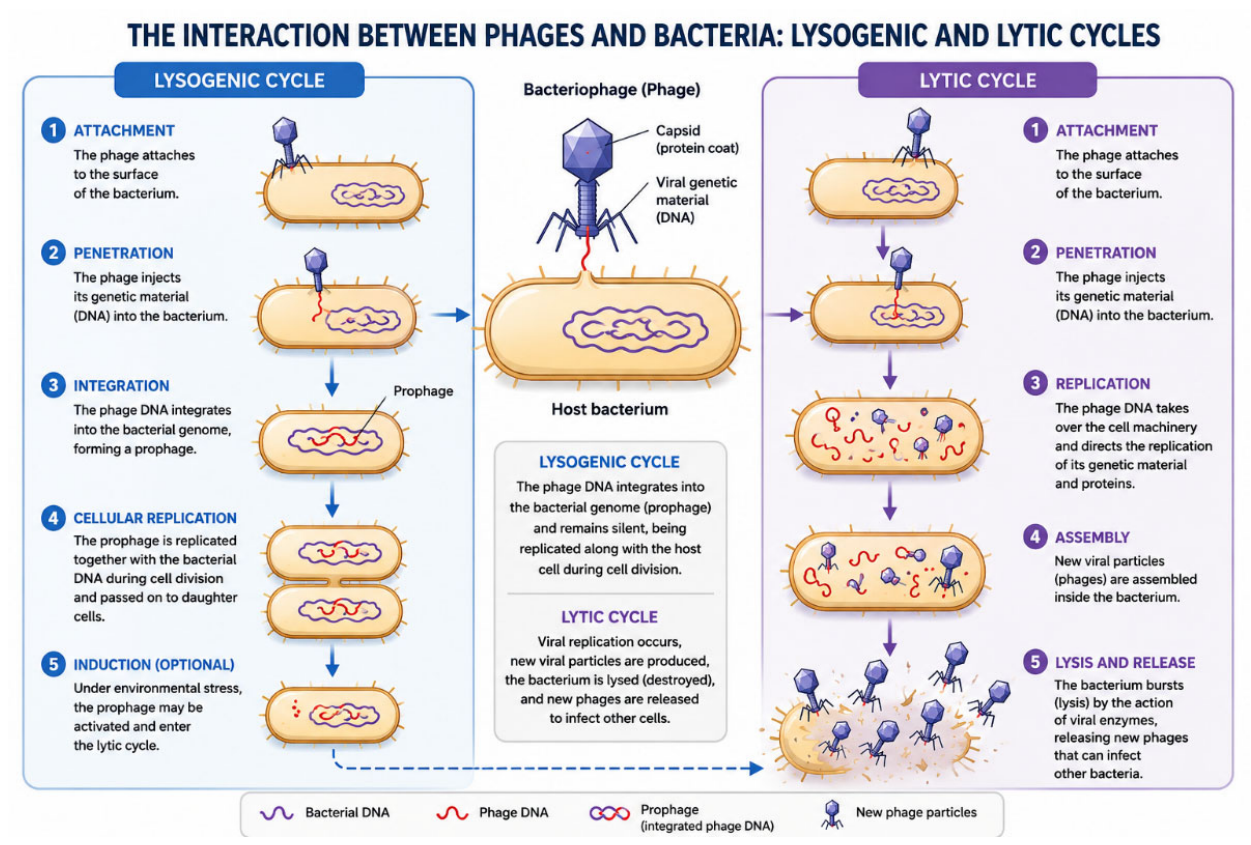
Figure 2.
Proposed ecological model of phage-mediated amplification of vaginal dysbiosis.
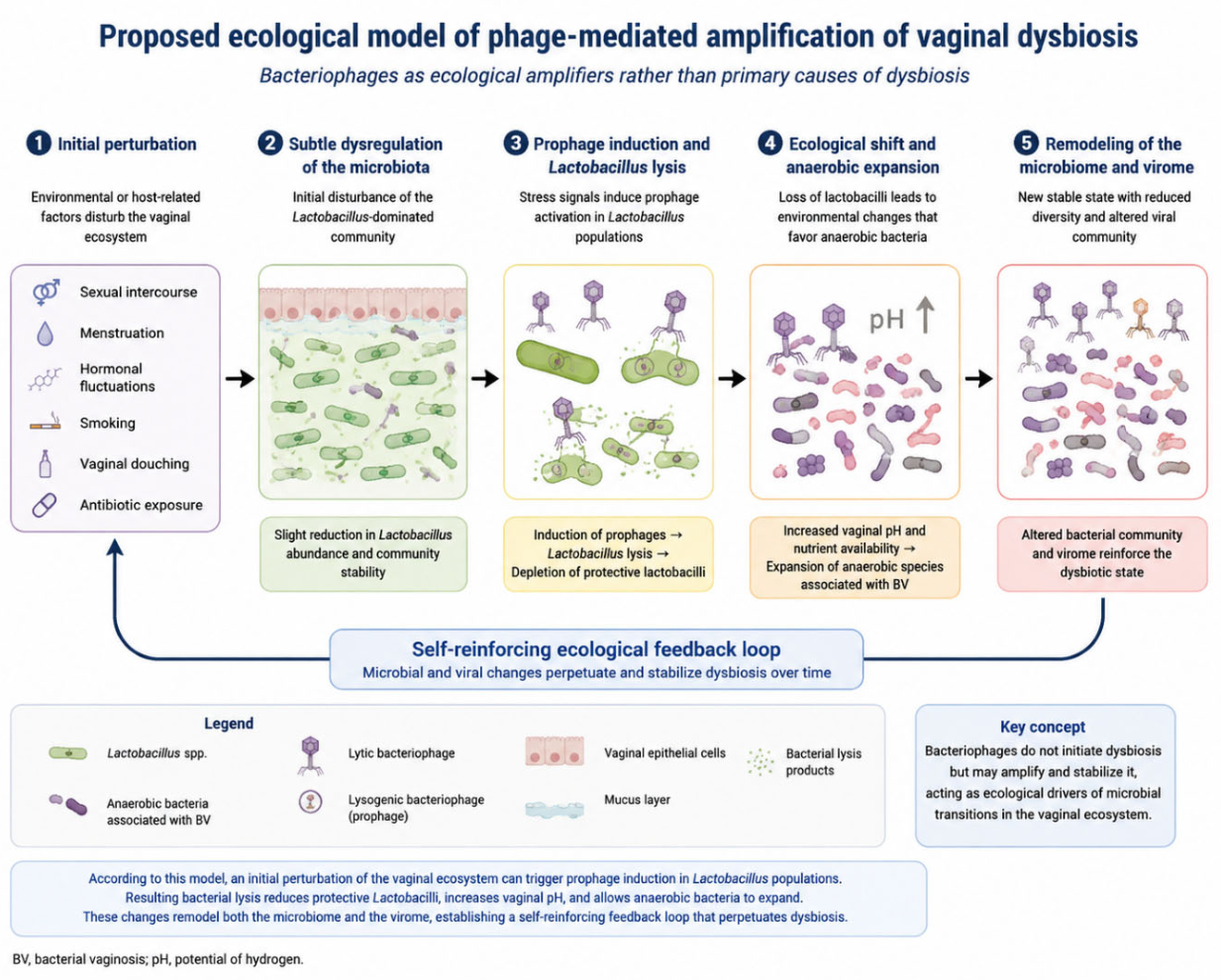
Figure 3.
Vaginal virome and immune profile in HPV outcomes.
Disclaimer/Publisher’s Note: The statements, opinions and data contained in all publications are solely those of the individual author(s) and contributor(s) and not of MDPI and/or the editor(s). MDPI and/or the editor(s) disclaim responsibility for any injury to people or property resulting from any ideas, methods, instructions or products referred to in the content. |
© 2026 by the authors. Licensee MDPI, Basel, Switzerland. This article is an open access article distributed under the terms and conditions of the Creative Commons Attribution (CC BY) license.
Copyright: This open access article is published under a Creative Commons CC BY 4.0 license, which permit the free download, distribution, and reuse, provided that the author and preprint are cited in any reuse.