
Submitted:
17 August 2026
Posted:
19 August 2026
You are already at the latest version
Abstract
Background/Objectives: Family caregivers of people with schizophrenia frequently experience psychological stress due to long-term caregiving responsibilities, including symptom management, treatment supervision, and emotional support. Limited access to structured caregiver education remains a challenge, particularly in settings where mental health resources are constrained. This study aimed to evaluate the effectiveness of a web-based digital psychoeducation program in improving coping mechanisms among family caregivers of people with schizophrenia. Methods: A quasi-experimental study with a pretest–posttest control group design was conducted among family caregivers of people with schizophrenia receiving care at a mental health hospital in Indonesia. A total of 202 caregivers were recruited and allocated into an intervention group (n = 101) and a control group (n = 101). The intervention group received a 10-week web-based digital psychoeducation program consisting of structured modules addressing schizophrenia knowledge, caregiving skills, stress management, communication, relapse prevention, resilience, and emotional well-being. Coping mechanisms were assessed using the Brief COPE Inventory and categorized into problem-focused coping, emotion-focused coping, and avoidance coping. Data were analyzed using the Wilcoxon signed-rank test and Mann–Whitney U test. Results: The intervention group demonstrated significant improvements in problem-focused coping (p = 0.001) and emotion-focused coping (p = 0.011) after completing the digital psychoeducation program. Between-group comparisons showed significant differences in changes in problem-focused coping and emotion-focused coping compared with the control group (p < 0.001). Although avoidance coping increased within the intervention group (p = 0.018), the difference in change scores between groups was not statistically significant (p = 0.305). Conclusions: A web-based digital psychoeducation program was associated with improved problem-focused and emotion-focused coping among family caregivers of people with schizophrenia. Digital psychoeducation has potential as an accessible complementary approach to strengthen caregiver support services, particularly in healthcare settings with barriers to conventional face-to-face education.
Keywords:
digital psychoeducation
; schizophrenia
; family caregivers
; coping mechanisms
; mental health nursing
; digital health
; caregiver support
1. Introduction
Schizophrenia is a severe and chronic psychiatric disorder characterized by disturbances in perception, cognition, emotion, and behavior, often manifested through hallucinations, delusions, disorganized thinking, and impaired social functioning [1,2]. Affecting approximately 24 million people worldwide, schizophrenia represents a substantial public health challenge due to its long-term treatment requirements and need for continuous psychosocial support. Although pharmacological treatment remains the cornerstone of schizophrenia management, long-term care and functional support often require active involvement from family caregivers, particularly in low- and middle-income countries where community mental health resources remain limited [3].
Family caregivers play an essential role in supporting individuals with schizophrenia by assisting with medication adherence, monitoring symptoms, providing emotional support, and managing daily activities [4]. However, these responsibilities frequently expose caregivers to considerable psychological distress, emotional exhaustion, social isolation, financial burden, and reduced quality of life [5,6]. Caregivers of people with schizophrenia often experience substantial caregiving burden due to symptom unpredictability, recurrent relapses, behavioral disturbances, and persistent societal stigma [7]. Consequently, interventions that support caregivers' psychological well-being have become an important component of comprehensive schizophrenia care [8].
Coping mechanisms represent an important factor influencing how caregivers manage caregiving-related stress and maintain psychological well-being [9,10]. Coping mechanisms refer to cognitive and behavioral strategies used by individuals to manage internal and external demands arising from stressful situations [11]. In the context of schizophrenia caregiving, coping responses may involve problem-focused coping, emotion-focused coping, and avoidance coping, reflecting different ways caregivers respond to caregiving-related stress. Less adaptive coping responses, including excessive avoidance, denial, and emotional withdrawal, may increase psychological distress and interfere with effective caregiving [12,13]. Therefore, strengthening adaptive coping mechanisms among family caregivers represents a key objective of psychosocial interventions.
Family psychoeducation has consistently been recommended as an evidence-based intervention for schizophrenia care. Psychoeducation improves caregivers' understanding of schizophrenia, enhances communication and problem-solving skills, strengthens emotional regulation, and promotes collaborative management between families and healthcare professionals [14,15,16]. Previous studies have demonstrated that psychoeducation can reduce caregiver burden, improve illness-related knowledge, enhance caregiving skills, and strengthen family involvement in schizophrenia care [17]. Nevertheless, conventional face-to-face psychoeducation programs often encounter substantial barriers, including geographical limitations, transportation difficulties, scheduling conflicts, workforce shortages, and limited continuity of caregiver participation.
The rapid expansion of digital health technologies has created new opportunities to deliver psychoeducation through web-based platforms. Web-based psychoeducation may extend access to structured educational resources while providing opportunities for caregivers to acquire knowledge, reflect on caregiving experiences, and develop coping strategies [18,19]. Through flexible and self-directed learning, web-based interventions may help caregivers acquire and apply coping strategies within their daily caregiving experiences. These characteristics make digital psychoeducation particularly valuable for caregivers who face geographical, occupational, or logistical barriers to attending conventional psychoeducation sessions [20].
Despite the increasing use of digital approaches in mental health care, evidence regarding the effects of web-based digital psychoeducation on coping mechanisms among family caregivers of people with schizophrenia remains limited. Previous studies have primarily focused on broader caregiver outcomes, including caregiver burden, psychological distress, and illness-related knowledge, while fewer studies have examined changes in specific coping mechanisms following structured web-based psychoeducational interventions [21]. Although caregiver burden represents an important indicator of the psychological impact of caregiving, coping mechanisms reflect the underlying processes through which caregivers perceive, regulate, and respond to ongoing caregiving demands. Adaptive coping strategies may influence how caregivers manage stressors, maintain psychological well-being, and provide continuous support for individuals with schizophrenia. Therefore, examining specific coping domains may provide a deeper understanding of how psychoeducation facilitates caregiver adaptation beyond changes in general caregiver outcomes. Evidence from low- and middle-income settings, particularly Indonesia, remains limited [22], despite the growing need for accessible caregiver support strategies that can overcome barriers related to time, distance, and availability of mental health services [23].
This study aimed to evaluate changes in coping mechanisms following a web-based digital psychoeducation program among family caregivers of people with schizophrenia using a quasi-experimental study design. The intervention was developed as a structured web-based psychoeducation program providing evidence-based information and practical strategies related to schizophrenia, caregiving skills, stress management, communication, relapse prevention, resilience, and emotional well-being. This study evaluated changes in problem-focused coping, emotion-focused coping, and avoidance coping before and after the intervention and compared changes between the intervention and control groups. This study contributes to a better understanding of how web-based digital psychoeducation may support coping mechanisms among family caregivers involved in long-term schizophrenia care.
2. Materials and Methods
2.1. Study Design
This study employed a quasi-experimental design with two parallel groups and pre- and post-intervention assessments to evaluate the effectiveness of a web-based digital psychoeducation program in improving coping mechanisms among family caregivers of people with schizophrenia. The study included an intervention group and a control group, with coping mechanisms assessed before the intervention (pretest) and after completion of the intervention (posttest).
The intervention group received access to the web-based digital psychoeducation program, whereas the control group did not receive access to the digital psychoeducation program during the study period. The intervention was delivered through the Ademind (https://www.ademind.online) web-based platform and consisted of ten structured psychoeducational modules designed to strengthen caregivers’ knowledge and coping strategies. Changes in problem-focused, emotion-focused, and avoidance coping were assessed by comparing pre- and post-intervention measurements within and between the two groups.
Random allocation was not performed; therefore, the study was classified as quasi-experimental. This design was selected to evaluate the effectiveness of the digital psychoeducation intervention under routine mental healthcare conditions while maintaining a comparison group for assessing changes in caregivers’ coping mechanisms.
2.2. Study Setting
The study was conducted at Soeprapto Mental Hospital, Bengkulu, Indonesia. The hospital provides specialized mental health services for people with schizophrenia and other psychiatric conditions and serves as an important mental healthcare facility in Bengkulu Province.
The hospital was selected as the study setting because it provides psychiatric services for people with schizophrenia and serves as an access point for identifying eligible family caregivers involved in patient care. Participant recruitment and baseline and post-intervention assessments were conducted through the hospital setting, while the digital psychoeducation intervention was delivered remotely through the Ademind.online web-based platform.
2.3. Data Collection Procedure
Eligible caregivers were informed about the study objectives, procedures, potential benefits, and their rights as research participants. After providing written informed consent, participants were enrolled in the study and completed the baseline assessment (pretest), which included demographic characteristics and assessment of coping mechanisms.
Following the pretest, participants in the intervention group received an orientation on how to access and use the Ademind.online web-based platform. The orientation was provided to ensure that participants could navigate the platform and access the digital psychoeducation materials appropriately.
The intervention group subsequently completed the ten digital psychoeducation modules over a 10-week intervention period. Each module required approximately 30 min to complete, with one module assigned for completion each week. Participant engagement was monitored using a program participation monitoring sheet to document module completion and participation throughout the intervention period.
The control group did not receive access to the web-based digital psychoeducation intervention or any study-related psychoeducational intervention during the study period. Following completion of the 10-week intervention period, participants in both groups completed the posttest using the same coping assessment instrument administered at baseline. The pretest and posttest data were subsequently analyzed to assess changes in caregivers’ coping mechanisms.
2.4. Participants, Sample Size, and Sampling
The target population consisted of family caregivers of people diagnosed with schizophrenia who received treatment at Soeprapto Mental Hospital, Bengkulu, Indonesia. Based on available population data, the target population comprised 1208 family caregivers. The required sample size was estimated using the Slovin formula: n = N/[1 + N(e)²], where n represents the required sample size, N represents the population size, and e represents the margin of error. Based on a population of 1208 family caregivers and a margin of error of 10%, the minimum calculated sample size was 92 participants. Considering a potential 10% attrition rate, the minimum sample requirement was increased to 101 participants. Because this study used a two-group quasi-experimental design, the required sample size was applied to each study group to maintain balanced allocation and enable comparison of changes in coping mechanisms between groups. Therefore, the final sample consisted of 202 family caregivers, with 101 participants in the intervention group and 101 participants in the control group (Figure 1)
Participants were recruited using a non-probability quota sampling technique. Equal quotas were established for the intervention and control groups, with 101 participants were recruited for each group. Participants were recruited consecutively until the predetermined quota for each group was reached. Participants were allocated to the intervention or control group based on recruitment feasibility and study implementation considerations. Random allocation was not performed; therefore, the study used a non-randomized quasi-experimental design.
Participants were eligible if they were family caregivers of individuals with schizophrenia who had received treatment at Soeprapto Mental Hospital, Bengkulu, Indonesia, for at least five years. This criterion referred to the patient’s treatment history at the hospital and was not related to the duration of caregiver involvement. Eligible participants were required to be actively involved in the daily care of their family member, willing to participate in the study and provide written informed consent, and able to access the web-based digital psychoeducation program using an internet-connected digital device. Participants were excluded if they were not actively involved in caregiving activities, were unable to complete the study procedures, or lacked access to the internet or a digital device required for participation in the intervention.
2.5. Web-Based Digital Psychoeducation Intervention
The intervention consisted of a structured web-based digital psychoeducation program developed specifically for family caregivers of people with schizophrenia. The program was delivered through the Ademind.online platform and was designed to provide caregivers with accessible and structured learning materials addressing schizophrenia, caregiving practices, stress management, social support, communication, relapse prevention, long-term care planning, resilience, and emotional well-being.
The psychoeducation program consisted of ten sequential modules. The content was organized to progressively improve caregivers’ understanding of schizophrenia and develop practical and psychological skills relevant to long-term caregiving. Each module contained specific learning materials and learning outcomes designed to facilitate knowledge acquisition, reflection, and the application of caregiving strategies in daily situations. The structure, key content, and expected learning outcomes of the ten modules are presented in Table 1.
Each module required approximately 30 min to complete, and participants were given one week to complete each module. The intervention was delivered asynchronously through the Ademind.online platform, allowing caregivers to access learning materials using an internet-connected digital device according to their individual circumstances. The intervention period consisted of ten weeks, with one module made available for completion each week.
To ensure intervention fidelity, participant engagement was monitored throughout the intervention period using completion records available through the Ademind.online platform and a program participation monitoring sheet. These records were used to document module completion and participation during the 10-week intervention period. Monitoring participant engagement ensured that caregivers received the intended intervention exposure and completed the structured psychoeducation materials according to the planned schedule.
The development of the web-based digital psychoeducation program followed the ADDIE (Analysis, Design, Development, Implementation, and Evaluation) framework [24]. The intervention content was developed based on the identified needs of family caregivers of people with schizophrenia and was reviewed by a multidisciplinary expert panel consisting of a psychiatrist, a clinical psychologist, a senior mental health nurse, and an academic specialist in psychiatric nursing. Content validity was assessed using the Content Validity Index (CVI). The S-CVI/Ave value was 0.96, indicating a high level of content validity. Revisions were made based on expert feedback to improve the clarity, relevance, and contextual appropriateness of the learning materials.
The digital platform was evaluated by information technology specialists to assess its functionality, interface design, and technical reliability before implementation. A preliminary needs assessment involving 30 caregivers was conducted to evaluate the feasibility and acceptance of the web-based platform. Feedback obtained from the development and evaluation stages was used to refine the content structure and presentation of the psychoeducation modules before implementation in the main study.
The intervention was designed to strengthen caregivers’ coping mechanisms through knowledge acquisition, practical caregiving skills, stress management, communication strategies, social support, relapse prevention, long-term care planning, and resilience-building. Although avoidance coping was assessed as one of the study outcomes, it was not established as a specific intervention target. Instead, problem-focused coping, emotion-focused coping, and avoidance coping were assessed before and after the intervention to evaluate changes in caregivers’ coping mechanisms following participation in the web-based digital psychoeducation program.
2.6. Outcome Measures
The primary outcome of this study was caregivers’ coping mechanisms, which were assessed using the Brief COPE Inventory developed by [16]. The Brief COPE is a 28-item self-report instrument consisting of 14 coping subscales, with two items representing each coping strategy. The subscales include active coping, planning, use of instrumental support, use of emotional support, positive reframing, acceptance, humor, religion, self-distraction, denial, venting, behavioral disengagement, substance use, and self-blame [17].
In this study, the Brief COPE subscales were categorized into three broader coping domains based on the theoretical classification of coping responses: problem-focused coping, emotion-focused coping, and avoidance coping. Problem-focused coping included active coping, planning, and use of instrumental support. Emotion-focused coping included acceptance, humor, use of emotional support, positive reframing, venting, religion, and self-blame. Avoidance coping included self-distraction, denial, behavioral disengagement, and substance use [25,27].
The Brief COPE was administered before and after the intervention to evaluate changes in caregivers’ coping mechanisms. Scores for each coping domain were calculated by averaging the corresponding items within each domain, with higher scores indicating greater use of the respective coping strategies. Changes in problem-focused coping, emotion-focused coping, and avoidance coping were analyzed within and between the intervention and control groups.
Demographic characteristics were also collected, including age, gender, marital status, educational level, employment status, and monthly family income. These variables were examined to describe participant characteristics and explore their potential association with caregivers’ coping mechanisms.
2.7. Statistical Analysis
Data analysis was performed using statistical procedures appropriate for the characteristics and distribution of the study variables. Descriptive statistics were used to summarize participants’ demographic characteristics and coping mechanism scores. Categorical variables were presented as frequencies and percentages, while continuous variables were summarized using means and standard deviations.
Changes in coping mechanisms between pre-intervention and post-intervention assessments within each group were analyzed using the Wilcoxon signed-rank test. The analysis was conducted separately for the three coping domains: problem-focused coping, emotion-focused coping, and avoidance coping.
Differences in changes between the intervention and control groups were assessed using the Mann–Whitney U test based on change scores calculated as post-intervention scores minus pre-intervention scores. This analysis was performed to determine whether the magnitude of change in coping mechanisms differed between groups.
All statistical tests were two-tailed, and statistical significance was established at p < 0.05. Statistical analyses were conducted to evaluate changes in caregivers’ coping mechanisms following participation in the web-based digital psychoeducation program.
2.8. Ethical Considerations
Ethical approval for this study was obtained from the Research Ethics Committee of STIKES Tri Mandiri Sakti Bengkulu and KEPPIN under Research Ethics Approval No. 000197/KEPK STIKES TMS BENGKULU/2025. Before enrollment, all participants were informed about the purpose, procedures, potential benefits, and voluntary nature of the study and provided written informed consent.
Participation was voluntary, and participants were informed of their right to withdraw from the study at any stage without consequences. Confidentiality and anonymity were maintained throughout the research process. All information obtained from participants was treated as confidential and used solely for research purposes. The study procedures were conducted in accordance with applicable ethical principles for research involving human participants.
3. Results
3.1. Demographic Characteristics
A total of 202 family caregivers of people with schizophrenia were included in the study, comprising 101 participants in the intervention group and 101 participants in the control group. Participants were characterized according to gender, age, marital status, educational level, occupation, and monthly family income. These characteristics were assessed to describe the study sample and examine baseline differences between the intervention and control groups. The demographic characteristics and baseline coping mechanisms of participants are presented in Table 2.
The demographic characteristics of participants are presented in Table 2. Significant differences were observed between the intervention and control groups in terms of age (p < 0.001) and marital status (p = 0.003). The intervention group had a higher proportion of younger caregivers, whereas the control group included a greater proportion of caregivers in older age categories. Differences in marital status distribution were also observed between groups. Other demographic characteristics, including gender, educational level, occupation, and monthly family income, showed no statistically significant differences between groups.
3.2. Pre-Intervention Results
Table 3 presents the pre-intervention coping mechanism scores of caregivers in the intervention and control groups. At baseline, the intervention group had a higher mean score for problem-focused coping than the control group (1.69 vs. 1.38), with a statistically significant between-group difference (t = 3.45, p = 0.001). Similarly, the intervention group had a higher mean score for emotion-focused coping compared with the control group (1.32 vs. 1.00), and the difference was statistically significant (t = 3.03, p = 0.003).
In contrast, no statistically significant difference was observed between the intervention and control groups for avoidance coping at baseline. The mean scores were 0.75 and 0.80, respectively (t = −0.56, p = 0.577). The findings indicate that the groups were not fully comparable at baseline for problem-focused and emotion-focused coping, whereas their avoidance coping scores were comparable before the intervention.
3.3. Post-Intervention Results
Table 4 presents the coping mechanism scores after the intervention in the intervention and control groups. The intervention group had a higher mean score for problem-focused coping than the control group (2.05 vs. 1.38), with a significant between-group difference (t = 7.52, p < 0.001). In contrast, the mean score for emotion-focused coping was lower in the intervention group than in the control group (1.60 vs. 2.00), and the difference was statistically significant (t = −3.93, p < 0.001). For avoidance coping, the intervention group had a higher mean score than the control group (1.01 vs. 0.78), with a statistically significant difference (t = 2.31, p = 0.022).
3.4. Pre- to Post-Intervention Changes in Coping Mechanism
Changes in coping mechanisms were assessed by comparing pre-intervention and post-intervention scores across three coping domains: problem-focused coping, emotion-focused coping, and avoidance coping. Within-group changes were analyzed using the Wilcoxon signed-rank test, while differences in change scores between the intervention and control groups were examined using the Mann–Whitney U test. The results are presented in Table 5 and Figure 5.
The intervention group showed significant changes in problem-focused coping, emotion-focused coping, and avoidance coping after participation in the web-based digital psychoeducation program. Problem-focused coping increased from 1.69 (SD = 0.745) at pre-intervention to 2.05 (SD = 0.726) at post-intervention, with a significant within-group difference (Z = −3.200, p = 0.001). Emotion-focused coping increased from 1.32 (SD = 0.734) to 1.60 (SD = 0.694), showing a significant change after the intervention (Z = −2.549, p = 0.011). Avoidance coping also increased from 0.75 (SD = 0.654) to 1.01 (SD = 0.768), with a significant within-group difference (Z = −2.375, p = 0.018).
The control group did not show significant changes in any coping domain. Problem-focused coping remained unchanged from 1.38 (SD = 0.487) at pre-intervention to 1.38 (SD = 0.526) at post-intervention (Z = −0.036, p = 0.972). Emotion-focused coping increased from 1.00 (SD = 0.766) to 2.00 (SD = 0.754), but the difference was not statistically significant (Z = −0.106, p = 0.916). Avoidance coping showed a slight decrease from 0.80 (SD = 0.633) to 0.78 (SD = 0.642), with no significant within-group difference (Z = −0.241, p = 0.810).
Between-group comparisons based on change scores (post-intervention minus pre-intervention) showed significant differences in problem-focused coping and emotion-focused coping between the intervention and control groups (both p < 0.001). The intervention group demonstrated a greater change in problem-focused coping compared with the control group. A significant difference was also observed in emotion-focused coping change scores between groups. For avoidance coping, the difference in change scores between the intervention and control groups was not statistically significant (p = 0.305), indicating that the changes observed within each group did not differ significantly between groups.
Figure 2.
Pre- to Post-Intervention Changes in Coping Mechanisms.
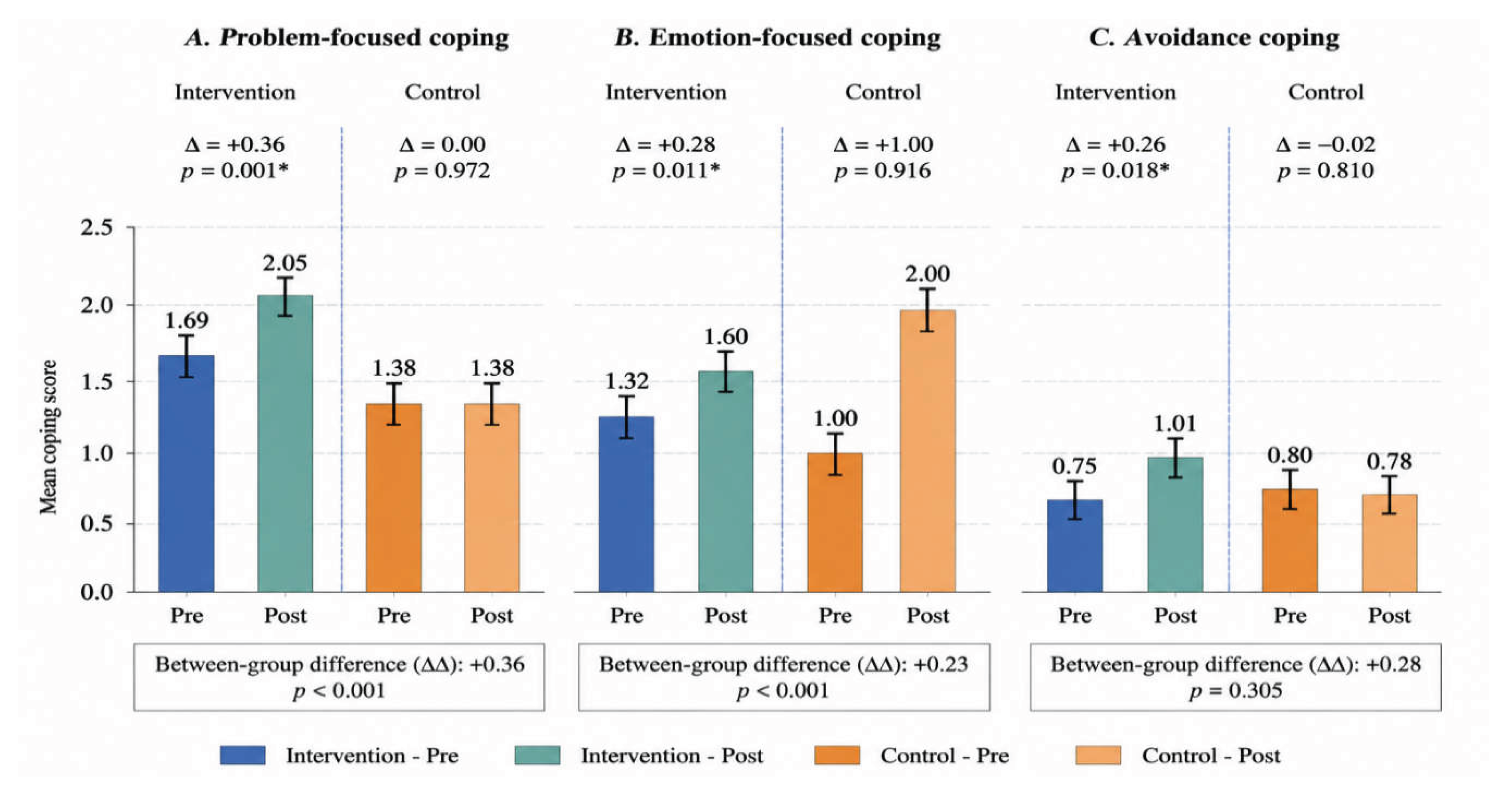
Note:Bars represent mean coping scores, and error bars represent standard deviations (±SD). Δ represents the within-group change calculated as post-intervention minus pre-intervention score. ΔΔ represents the difference in change scores between the intervention and control groups. Within-group comparisons were performed using the Wilcoxon signed-rank test, and between-group comparisons were performed using the Mann–Whitney U test. *p < 0.05.
4. Discussion
This study demonstrated that participation in a web-based digital psychoeducation program was associated with improvements in adaptive coping mechanisms among family caregivers of individuals with schizophrenia. Previous psychoeducation studies among caregivers of individuals with schizophrenia have predominantly evaluated broader caregiver outcomes, including caregiver burden, psychological distress, expressed emotion, and illness-related knowledge, while specific changes in coping strategies remain less frequently examined [16,28]. In contrast, the present study specifically examined changes in caregiver coping mechanisms by evaluating three major domains: problem-focused coping, emotion-focused coping, and avoidance coping.
The findings showed that caregivers who participated in the 10-week digital psychoeducation program experienced significant improvements in problem-focused coping and emotion-focused coping. Meanwhile, changes in avoidance coping were observed only within the intervention group and did not demonstrate a significant difference compared with the control group. These findings suggest that digital psychoeducation may influence caregiver adaptation through multiple pathways, particularly by enhancing problem-solving abilities, emotional regulation, and the way caregivers appraise and respond to caregiving-related challenges [29,21].
Caring for individuals with schizophrenia requires continuous adaptation because caregivers frequently encounter complex situations, including unpredictable symptoms, medication management difficulties, relapse concerns, behavioral changes, and uncertainty regarding disease progression [30,31]. These circumstances may become chronic sources of stress for families when caregivers lack sufficient knowledge, caregiving skills, and effective coping strategies [32]. Therefore, strengthening coping mechanisms represents an important component of caregiver interventions because caregivers’ ability to manage stress may influence both the quality of care provided and their own psychological well-being [12,33].
The primary contribution of this study lies in demonstrating that digital psychoeducation may influence specific coping domains involved in caregiver adaptation rather than only producing general improvements in caregiver outcomes. Previous research has shown that psychoeducation provides benefits for families of individuals with schizophrenia by improving illness understanding, reducing caregiver burden, and supporting caregivers in managing the challenges associated with long-term caregiving demands [28]. A recent systematic review and meta-analysis involving 21 studies and 1,639 caregivers reported that psychoeducation was associated with improvements in several caregiver outcomes, including caregiver burden, quality of life, and expressed emotion [16]. The study further suggested that the mechanisms underlying psychoeducation may extend beyond knowledge acquisition by influencing coping mechanisms and stress appraisal processes based on Lazarus and Folkman’s transactional model of stress and coping [34].
Previous findings have also demonstrated that psychoeducation can reduce caregiver burden by improving illness understanding and strengthening caregivers’ ability to manage caregiving challenges [15]. However, most previous studies have evaluated psychoeducation outcomes using broader indicators, such as caregiver burden or psychological distress, whereas the modification of specific coping strategies remains relatively underexplored. Therefore, the present study provides additional insight into how digital psychoeducation may influence specific coping responses among caregivers of individuals with schizophrenia.
The intervention was delivered through the Ademind.online web based platform over a 10-week period consisting of ten structured learning modules. The modules covered schizophrenia knowledge, caregiving skills, stress management, communication strategies, relapse prevention, long-term care planning, resilience, and emotional well-being. The intervention was designed not only to provide information but also to develop caregivers’ practical and psychological resources. Each module included specific learning objectives that guided caregivers to understand schizophrenia, reflect on their caregiving experiences, and apply learned strategies to daily caregiving situations. This structured learning process may have contributed to changes in coping mechanisms because caregivers were gradually exposed to new knowledge while developing cognitive and behavioral responses that were more adaptive to caregiving challenges.
Each module was designed with specific learning objectives, allowing caregivers to understand schizophrenia, reflect on their caregiving experiences, and apply acquired strategies in daily caregiving situations. To ensure that the intervention process was implemented as planned, weekly monitoring sheets were used to evaluate caregiver completion of each module. This monitoring system enabled researchers to confirm that participants completed the entire psychoeducation program and received the intended educational materials.
The gradual learning process through structured modules may have contributed to changes in coping mechanisms. Unlike one-time educational approaches that primarily provide information, repeated exposure to structured learning materials allows caregivers to integrate new knowledge, reflect on previous caregiving experiences, and develop more adaptive responses to caregiving challenges.
Coping mechanisms in this study were assessed using the Brief COPE Inventory [25], which was categorized into three major domains: problem-focused coping, emotion-focused coping, and avoidance coping. Problem-focused coping refers to strategies aimed at directly managing stressors through active coping, planning, and instrumental support. Emotion-focused coping involves strategies directed toward regulating emotional responses, including acceptance, emotional support, positive reframing, humor, religion, emotional expression, and self-blame. Meanwhile, avoidance coping includes strategies such as self-distraction, denial, behavioral disengagement, and substance use. This classification enabled the study to evaluate changes in caregivers’ behavioral strategies, emotional adaptation, and cognitive responses when facing caregiving-related stress.
Effects on Problem-Focused Coping
The most consistent improvement observed in this study occurred in the problem-focused coping domain. The intervention group demonstrated an increase in scores from a mean of 1.69 before the intervention to 2.05 after the intervention (p = 0.001), whereas the control group showed no significant change (p = 0.972). The between-group analysis further demonstrated that the improvement in problem-focused coping was significantly greater in the intervention group compared with the control group (p < 0.001).
These findings indicate that the digital psychoeducation program contributed to strengthening caregivers’ ability to actively manage caregiving-related challenges. From a practical perspective, this improvement may reflect enhanced caregiver competence in identifying problems, developing care plans, and selecting appropriate responses when facing changes in patients’ conditions.
Individuals with schizophrenia often require long-term support involving medication supervision, symptom monitoring, assistance with daily activities, and early recognition of relapse indicators [35,36]. These responsibilities may become significant sources of stress, particularly when caregivers have limited knowledge and insufficient skills to manage complex caregiving situations [37,38]. Uncertainty regarding symptom fluctuations, treatment outcomes, and disease progression may also contribute to caregivers’ perception that caregiving demands exceed their available resources [39,40].
The intervention modules in this study provided structured information regarding basic patient care, medication management, symptom monitoring, treatment adherence, and the establishment of daily caregiving routines. The program also included materials related to crisis management and relapse prevention, enabling caregivers to recognize early warning signs and prepare appropriate responses when patients experienced changes in their clinical condition [8]. Through this process, caregivers may develop greater confidence in managing caregiving situations and begin to perceive caregiving challenges as manageable problems rather than uncontrollable stressors.
The improvement in problem-focused coping can be interpreted through the Transactional Model of Stress and Coping proposed by Lazarus and Folkman [41]. The findings can be interpreted within Lazarus and Folkman's Transactional Model of Stress and Coping, which proposes that coping responses are shaped by individuals' appraisal of stressors and available resources. In this study, digital psychoeducation may have enhanced caregivers' perceived resources by improving illness knowledge and caregiving skills, thereby facilitating more adaptive coping responses [42].
Digital psychoeducation may influence this appraisal process by strengthening caregivers’ internal resources. Increased illness-related knowledge, practical caregiving skills, and problem-solving strategies may enhance caregivers’ perceived control over caregiving situations. This process may facilitate cognitive reappraisal, whereby caregivers reinterpret caregiving challenges from uncontrollable sources of distress into situations that can be managed through appropriate strategies [16,17,18,19,20,21,22,23,24,25,26,27,28,29,30,31,32,33,34,35,36,37,38,39,40,41,42,43].
These findings are consistent with previous evidence indicating that psychoeducation contributes to caregiver adaptation by improving illness understanding, coping capacity, and stress appraisal. Chow et al. (2024) emphasized that psychoeducation may influence caregiver coping mechanisms through changes in illness perception and appraisal of caregiving situations. Therefore, the improvement in problem-focused coping observed in this study may represent not only increased knowledge acquisition but also deeper cognitive and behavioral changes in how caregivers respond to schizophrenia-related challenges [16].
Effects on Emotion-Focused Coping
In addition to improvements in problem-focused coping, this study demonstrated significant changes in emotion-focused coping. The score for emotion-focused coping increased from a mean of 1.32 before the intervention to 1.60 after the intervention in the intervention group (p = 0.011), and the magnitude of change was significantly greater than that observed in the control group (p < 0.001).
These findings suggest that digital psychoeducation may support not only caregivers’ ability to manage practical caregiving problems but also their emotional adaptation throughout the caregiving process [45]. Schizophrenia is a chronic psychiatric condition that may generate substantial emotional challenges for family members, including concerns about the patient’s future, frustration related to behavioral changes, social stigma, and changes in family roles [10,45].
The improvement in emotion-focused coping may be associated with the emotional components incorporated into the intervention. The modules addressing resilience, emotional well-being, and stress management provided caregivers with opportunities to recognize, understand, and regulate their emotional experiences during caregiving. Rather than eliminating negative emotions, these components may help caregivers develop more adaptive ways of responding to emotional distress associated with long-term caregiving.
In chronic caregiving situations, caregivers often have limited ability to directly modify the patient’s illness trajectory, symptom fluctuations, or treatment response. Therefore, emotional regulation becomes an essential component of psychological adaptation. According to the Transactional Model of Stress and Coping, when individuals encounter situations that cannot be fully controlled, adaptive emotional regulation strategies become important resources for maintaining psychological stability.
The findings support previous research demonstrating that psychoeducational interventions can improve caregiver psychological adjustment through increased illness understanding, stress management skills, and emotional resource development. Digital interventions may provide additional advantages because caregivers can access educational materials according to their personal circumstances, revisit content when needed, and gradually integrate new perspectives into their caregiving experiences [17].
The improvement in emotion-focused coping observed in this study suggests that digital psychoeducation functions beyond a knowledge-delivery intervention. Instead, it may facilitate psychological adaptation by helping caregivers develop emotional resources needed to sustain their caregiving role. This interpretation is consistent with previous findings indicating that psychoeducation can improve emotional adjustment and reduce psychological distress among caregivers of individuals with severe mental disorders [15,16,17]
Interpretation of Avoidance Coping Changes
Unlike the previous two domains, changes in avoidance coping demonstrated a more complex pattern. Although the intervention group showed a significant increase in avoidance coping scores from 0.75 before the intervention to 1.01 after the intervention (p = 0.018), the difference in change scores between the intervention and control groups was not statistically significant (p = 0.305). Therefore, this increase cannot be interpreted as a direct effect of the digital psychoeducation program.
The interpretation of avoidance coping changes requires careful consideration. Avoidance coping is generally regarded as a less adaptive coping strategy when it becomes a persistent pattern used to escape problems or prevent direct engagement with stressors. However, in the context of chronic stress conditions such as schizophrenia caregiving, temporary disengagement or distraction may function as a short-term emotional regulation strategy to reduce psychological overload and emotional exhaustion [9,12,33].
Caregiving for individuals with schizophrenia involves prolonged exposure to uncertainty, behavioral challenges, and emotional demands. Under such circumstances, caregivers may occasionally use avoidance-related strategies as a temporary mechanism to manage overwhelming emotions before returning to active coping efforts. Therefore, the presence of avoidance coping does not necessarily indicate poor adaptation when it occurs alongside improvements in more adaptive coping domains.
The digital psychoeducation program in this study was primarily designed to improve schizophrenia knowledge, caregiving skills, stress management, communication, resilience, and emotional adjustment rather than directly targeting avoidance behaviors. Consequently, the observed changes in avoidance coping may reflect individual variations in coping responses rather than a specific intervention effect.
Future interventions may consider incorporating targeted psychological approaches aimed at reducing maladaptive avoidance patterns. Strategies such as cognitive behavioral therapy, acceptance-based interventions, or structured coping skills training may complement psychoeducation programs by helping caregivers recognize avoidance behaviors and develop more constructive responses to caregiving-related stress.
Strengths and Limitations
This study has several strengths. The study contributes to the growing evidence regarding the potential role of web-based digital psychoeducation in supporting coping mechanisms among family caregivers of individuals with schizophrenia. While previous studies have primarily focused on caregiver burden, psychological distress, or illness-related knowledge outcomes, this study specifically examined changes across three coping domains: problem-focused coping, emotion-focused coping, and avoidance coping. This approach provides a more comprehensive understanding of how digital psychoeducation may influence caregivers’ psychological responses when facing the demands of long-term caregiving.
The intervention was specifically developed for family caregivers of individuals with schizophrenia using a structured web-based learning approach. The program consisted of ten sequential modules covering schizophrenia knowledge, caregiving strategies, stress management, communication skills, social support, relapse prevention, long-term care planning, resilience, and emotional well-being. The intervention development process was guided by the ADDIE framework and involved multidisciplinary expert evaluation from psychiatry, clinical psychology, mental health nursing, and academic nursing fields. This systematic development process strengthened the relevance and appropriateness of the educational content by aligning the intervention materials with caregiver needs and clinical perspectives.
Another strength of this study was the inclusion of both intervention and control groups, which enabled evaluation of changes in coping mechanisms before and after participation in the digital psychoeducation program. Although the study design was quasi-experimental, the comparison group provided additional information regarding changes occurring during the study period. The use of the Brief COPE Inventory also allowed assessment of multiple coping dimensions, providing a broader perspective on caregiver adaptation beyond single outcome measures.
Several limitations should be considered when interpreting these findings. First, the non-random allocation of participants limits the ability to establish definitive causal relationships between the intervention and changes in coping mechanisms. Unmeasured differences between groups may have influenced the observed outcomes despite the use of a comparison group. Future studies using randomized controlled designs are needed to provide stronger evidence regarding the effectiveness of web-based digital psychoeducation programs.
Second, this study was conducted at a single mental health hospital in Bengkulu, Indonesia, which may limit the generalizability of the findings to caregivers from different geographical regions, healthcare systems, and cultural contexts. Multicenter studies involving diverse caregiver populations are needed to further evaluate the applicability of digital psychoeducation across different settings.
Third, the assessment of coping mechanisms relied on the Brief COPE Inventory, which is a self-report instrument. Although self-report measures are widely used for assessing psychological constructs, they may introduce potential response bias because participants’ reported coping strategies can be influenced by social desirability, recall processes, or individual interpretation of their experiences. Common method bias may occur when data are obtained from the same measurement source, potentially affecting the observed relationships among study variables and the interpretation of findings [47,48]. Future studies may consider combining self-report assessments with qualitative interviews, behavioral observations, or reports from healthcare providers to obtain a more comprehensive understanding of caregivers’ coping processes.
The use of self-reported measures represents another limitation. Coping mechanisms were assessed using the Brief COPE Inventory, and participants’ responses may have been influenced by social desirability bias, personal interpretation, or their current emotional state. Future studies combining quantitative assessments with qualitative approaches may provide a more comprehensive understanding of caregivers’ coping processes.
The implementation of web-based interventions may also be influenced by factors such as digital literacy, internet accessibility, and caregiver engagement with learning materials. Although the platform provided flexible access to educational content, differences in technological familiarity may have affected participants’ learning experiences and interaction with the intervention. Future development of digital psychoeducation programs should consider these factors to ensure accessibility and effectiveness among caregivers with varying levels of digital readiness.
5. Conclusions
This study found that participation in a web-based digital psychoeducation program was associated with changes in coping mechanisms among family caregivers of people with schizophrenia. The most notable changes were observed in problem-focused coping and emotion-focused coping, with caregivers who participated in the intervention demonstrating significant improvements in these domains compared with their baseline scores and greater changes compared with the control group. These findings suggest that digital psychoeducation may support caregiver adaptation by strengthening problem-solving abilities, emotional regulation, and the capacity to respond to the psychological demands associated with long-term schizophrenia care.
The findings indicate that structured web-based psychoeducation may serve as an accessible support strategy for family caregivers by providing relevant illness-related knowledge, practical caregiving guidance, and opportunities for self-directed learning. The flexible learning format may help overcome common barriers experienced by caregivers, including limited time availability, geographical constraints, and difficulties accessing conventional face-to-face caregiver education programs. Through repeated exposure to structured educational materials, caregivers may gradually integrate new knowledge and develop more adaptive approaches to managing caregiving-related challenges.
Although avoidance coping scores increased within the intervention group, the change was not significantly different compared with the control group. Therefore, this finding should not be interpreted as evidence that the digital psychoeducation program directly influenced avoidance coping. Unlike problem-focused coping and emotion-focused coping, avoidance coping represents a more complex domain because its adaptive value depends on the context, frequency, and function of its use. Persistent reliance on avoidance strategies may be considered maladaptive when caregivers use them to disengage from stressors or avoid addressing caregiving problems. However, in the context of chronic caregiving demands, temporary avoidance-related responses may represent short-term attempts to regulate emotional distress or obtain psychological relief during periods of overwhelming stress.
The observed changes in avoidance coping may therefore reflect individual variations in coping responses rather than a specific intervention effect. Caregivers of individuals with schizophrenia often experience prolonged emotional demands, uncertainty regarding illness progression, and repeated exposure to challenging caregiving situations. Under such circumstances, some caregivers may temporarily rely on avoidance-related strategies as part of their broader coping process while adapting to ongoing stressors. Nevertheless, this interpretation should be considered cautiously because the present intervention was not specifically designed to reduce avoidance coping patterns.
Future interventions may consider incorporating targeted psychological approaches aimed at modifying maladaptive avoidance responses, such as cognitive behavioral strategies, acceptance-based approaches, or structured coping skills training. These approaches may complement digital psychoeducation by addressing specific behavioral and emotional patterns that are not fully targeted through educational interventions alone. Future research using randomized controlled designs, multicenter settings, and longer follow-up periods is recommended to further evaluate the sustainability of coping changes and determine whether improvements in adaptive coping strategies contribute to reductions in caregiver burden, enhanced psychological well-being, and improved quality of life. Further investigation is also needed to explore how web-based digital psychoeducation can be integrated into routine mental health services to provide continuous and accessible support for family caregivers of individuals with schizophrenia.
6. Implications for Practice and Future Research
From a clinical perspective, the findings of this study suggest that web-based digital psychoeducation may serve as a complementary approach within mental health services to extend caregiver support beyond conventional hospital-based education. Family caregivers of individuals with schizophrenia require continuous education and psychological support because caregiving responsibilities are often prolonged and associated with fluctuating clinical conditions. However, structured caregiver support programs remain limited in many healthcare settings, particularly in regions where mental health resources, healthcare personnel, and access to face-to-face interventions are constrained.
The integration of structured digital caregiver programs into routine schizophrenia care may provide healthcare professionals with an additional strategy to deliver continuous psychoeducational support, improve illness-related knowledge, and strengthen adaptive coping skills among caregivers. The web-based format allows caregivers to access educational materials flexibly according to their individual circumstances, potentially reducing barriers related to geographical distance, transportation difficulties, time constraints, and competing caregiving responsibilities. Therefore, digital psychoeducation should be considered a complementary intervention that enhances existing family-centered mental health services rather than replacing direct clinical interactions.
For mental health nurses and other healthcare professionals, these findings highlight the potential role of digital platforms in expanding caregiver interventions beyond traditional clinical encounters. Digital psychoeducation programs may facilitate continuous education, reinforcement of caregiving skills, and early identification of caregiver difficulties. Future implementation studies should examine how digital caregiver support programs can be integrated into routine schizophrenia management pathways, including evaluation of long-term adherence, cost-effectiveness, scalability, and their impact on caregiver burden, quality of life, and patient-related outcomes.
Future research should also consider multicenter randomized controlled trials with longer follow-up periods to determine the sustainability of coping improvements and establish stronger causal evidence regarding the effectiveness of digital psychoeducation. In addition, future interventions may incorporate more targeted psychological approaches, such as cognitive behavioral strategies or acceptance-based interventions, to address maladaptive coping patterns, particularly avoidance coping.
Supplementary Materials
The following supporting information can be downloaded at: Preprints.org. Supplementary Table S1: Structure and Content of the Psychoeducation Modules.
Author Contributions
Conceptualization, A.H.S.D. and F.M.S.; methodology, A.H.S.D.; validation, F.M.S. and J.S.K.; formal analysis, A.H.S.D.; investigation, A.H.S.D.; resources, A.H.S.D.; data curation, A.H.S.D.; writing—original draft preparation, A.H.S.D.; writing—review and editing, F.M.S., J.S.K., and T.N.H.; visualization, A.H.S.D.; supervision, F.M.S. and J.S.K.; project administration, A.H.S.D. All authors have read and agreed to the published version of the manuscript.
Funding
This research received no external funding.
Institutional Review Board Statement
The study was conducted in accordance with the Declaration of Helsinki and approved by the Research Ethics Committee of STIKES Tri Mandiri Sakti Bengkulu and KEPPIN (protocol code: 000197/KEPK STIKES TMS BENGKULU/2025).
Informed Consent Statement
Informed consent was obtained from all participants involved in the study before data collection. Participants were informed about the study objectives, procedures, and their right to withdraw from participation at any time without any consequences. All participants voluntarily agreed to participate and provided written informed consent prior to enrollment.
Data Availability Statement
The datasets used and/or analyzed during the current study are available from the corresponding author upon reasonable request. Public sharing of the dataset is restricted due to the sensitive nature of the collected information, including health-related data from family caregivers of individuals with schizophrenia. Any request for data access will be evaluated according to ethical requirements and applicable privacy regulations.
Acknowledgments
The authors would like to thank Soeprapto Mental Hospital, Bengkulu, Indonesia, for providing support during the participant recruitment and data collection process. The authors also acknowledge the assistance of healthcare staff and all family caregivers who participated in this study. Their cooperation and willingness to share their experiences contributed to the successful completion of this research.
Conflicts of Interest
The authors declare no conflicts of interest. This research received no external funding, and no external party was involved in the design of the study, data collection, analysis, interpretation of results, manuscript preparation, or the decision to publish the findings.
Abbreviations
The following abbreviations are used in this manuscript:
| ADDIE | Analysis, Design, Development, Implementation, and Evaluation |
| Brief COPE | Brief Coping Orientation to Problems Experienced Inventory |
| CI | Confidence Interval |
| CVI | Content Validity Index |
| ADDIE | Analysis, Design, Development, Implementation, and Evaluation |
| S-CVI/Ave | Scale-level Content Validity Index/Average |
| OR | Odds Ratio |
| SD | Standard Deviation |
| WHO | World Health Organization |
References
- Jauhar, S.; Johnstone, M.; McKenna, P.J. Schizophrenia. Lancet 2022, 399, 473–486. [Google Scholar] [CrossRef] [PubMed]
- Striebel, J.M. What is schizophrenia - symptomatology. CNS Spectr. 2024, 30, e12. [Google Scholar] [CrossRef] [PubMed]
- Gowda, G.S.; Isaac, M.K. Models of Care of Schizophrenia in the Community—An International Perspective. Curr. Psychiatry Rep. 2022, 24, 195–202. [Google Scholar] [CrossRef] [PubMed]
- Kim, S.-H.; Park, S. Effectiveness of family interventions for patients with schizophrenia: A systematic review and meta-analysis. Int. J. Ment. Health Nurs. 2023, 32, 1598–1615. [Google Scholar] [CrossRef] [PubMed]
- Gagiu, C.; Dionisie, V.; Manea, M.C.; et al. Quality of Life in Caregivers of Patients with Schizophrenia: A Systematic Review of the Impact of Sociodemographic, Clinical, and Psychological Factors. Behav. Sci. 2025, 15. [Google Scholar] [CrossRef] [PubMed]
- Sustrami, D.; Suhardiningsih, A.V.S.; Purbasari, D.N.; et al. A Descriptive Study of Quality of Life of Caregiver in the Family of Schizophrenia Patients. Malays. J. Nurs. 2022, 14, 124–127. [Google Scholar] [CrossRef]
- Peng, M.-M.; Xing, J.; Tang, X.; et al. Disease-Related Risk Factors for Caregiver Burden among Family Caregivers of Persons with Schizophrenia: A Systematic Review and Meta-Analysis. Int. J. Env. Res. Public Health 2022, 19. [Google Scholar] [CrossRef] [PubMed]
- Tessier, A.; Roger, K.; Gregoire, A.; et al. Family psychoeducation to improve outcome in caregivers and patients with schizophrenia: a randomized clinical trial. Front Psychiatry 2023, 14, 1171661. [Google Scholar] [CrossRef] [PubMed]
- Kamarulbahri, T.M.S.T.; Ariaratnam, S.; Nikmat, A.W.; et al. Coping Strategies and Their Associated Factors Among Caregivers of Patients With Schizophrenia in Kuantan, Malaysia. Front. Psychiatry. Epub ahead of print 2022. [CrossRef] [PubMed]
- Pan, Z.; Li, T.; Jin, G.; et al. Caregiving experiences of family caregivers of patients with schizophrenia in a community: a qualitative study in Beijing. BMJ Open Epub ahead of print 2024. 14. [CrossRef] [PubMed]
- Rosenbaum, D.; Int-Veen, I.; Rubel, J.; et al. Associations of Different Emotion Regulation Strategies with Coping-Efficacy, Rumination and Stress. Cogn. Ther. Res. 2022, 46, 889–901. [Google Scholar] [CrossRef]
- Issac, A.; Nayak, S.G.; Yesodharan, R.; et al. Needs, challenges, and coping strategies among primary caregivers of schizophrenia patient: A systematic review & meta-synthesis. Arch. Psychiatr. Nurs. 2022, 41, 317–332. [Google Scholar] [CrossRef] [PubMed]
- Rohmi, F.; Yusuf, A.; Fitriasari, R.; et al. What Benefits Might a Family Expect From Using Spiritual Coping Mechanisms When Providing Care for People With Schizophrenia? Literature Review. SAGE Open Nurs. 2023, 9, 23779608231214936. [Google Scholar] [CrossRef] [PubMed]
- Shetty, K. V.; Math, S.B.; Marimuthu, P.; et al. Family intervention for expressed emotion in schizophrenia: Indian context. Indian J. Psychiatry 2023, 65, 453–459. [Google Scholar] [CrossRef] [PubMed]
- Okafor, A.J.; Monahan, M. Effectiveness of Psychoeducation on Burden Among Family Caregivers of Adults With Schizophrenia: A Systematic Review and Meta-Analysis. In Nursing Research and Practice; Epub ahead of print 2023. [CrossRef] [PubMed]
- Chow, J.Y.A.; Yeo, Y.T.T.; Goh, Y.S. Effects of Psychoeducation on Caregivers of Individuals Experiencing Schizophrenia: A Systematic Review and Meta-Analysis. Int. J. Ment. Health Nurs. 2024, 33, 1962–1987. [Google Scholar] [CrossRef] [PubMed]
- Yasuma, N.; Sato, S.; Yamaguchi, S.; et al. Effects of brief family psychoeducation on family caregiver burden of people with schizophrenia provided by psychiatric visiting nurses: a cluster randomised controlled trial. BMC Psychiatry 2024, 24, 445. [Google Scholar] [CrossRef] [PubMed]
- Sin, J.; Henderson, C.; Elkes, J.; et al. Effect of Digital Psychoeducation and Peer Support on the Mental Health of Family Carers Supporting Individuals With Psychosis in England (COPe-support): A Randomised Clinical Trial. In The Lancet Digital Health; Epub ahead of print 2022. [CrossRef] [PubMed]
- Münchenberg, P.S.; Yessimova, D.; Panteli, D.; et al. Digital Health Interventions for Informal Family Caregivers of People With First-Episode Psychosis: Systematic Review on User Experience and Effectiveness. JMIR Ment. Heal 2024, 11, e63743. [Google Scholar] [CrossRef] [PubMed]
- Yu, Y.; Xiao, L.; Ullah, S.; et al. The Experiences of Informal Caregivers of People With Dementia in Web-Based Psychoeducation Programs: Systematic Review and Metasynthesis. JMIR Aging 2023, 6, e47152. [Google Scholar] [CrossRef] [PubMed]
- Mueser, K.T.; Achtyes, E.D.; Gogate, J.; et al. Telehealth-Based Psychoeducation for Caregivers: The Family Intervention in Recent-Onset Schizophrenia Treatment Study. In Jmir Mental Health; Epub ahead of print 2022. [CrossRef] [PubMed]
- Morillo, H.; Lowry, S.; Henderson, C. Exploring the effectiveness of family-based interventions for psychosis in low- and middle-income countries: a systematic review. Soc. Psychiatry Psychiatr. Epidemiol. 2022, 57, 1749–1769. [Google Scholar] [CrossRef] [PubMed]
- Conde-Moro, A.R.; Quer-Palomas, S.; Berrios, R.C.; et al. Assessing Family Caregivers’ Needs for a Digital Intervention to Support Families Affected by Schizophrenia. Stud. Health Technol. Inf. 2025, 323, 211–215. [Google Scholar] [CrossRef] [PubMed]
- Branch, R. Instructional design: The ADDIE approach; Epub ahead of print 1 January 2010; 2010. [Google Scholar] [CrossRef]
- Carver, C.S. You Want to Measure Coping but Your Protocol’ Too Long: Consider the Brief Cope. Int. J. Behav. Med. 1997, 4, 92–100. [Google Scholar] [CrossRef] [PubMed]
- Rodrigues, F.; Figueiredo, N.; Rodrigues, J.; et al. A Comprehensive Review and Bifactor Modeling Analysis of the Brief COPE. Inq. J. Heal Care Organ Provis. 2022, 59, 00469580221108127. [Google Scholar] [CrossRef] [PubMed]
- Huda, N.; Lin, Y.; Shaw, M.K.; et al. Psychometric Properties and Cross-Cultural Adaptation of the Indonesian Version of the Brief COPE in a Sample of Advanced Cancer Patients. PLoS ONE. Epub ahead of print 2022. [CrossRef] [PubMed]
- Sharif, L.; Al-Zahrani, M.S.; Alanzi, F.R.; et al. Effectiveness of Psychoeducation via Telenursing on Reducing Caregiver Burden Among Caregivers for Patients with Schizophrenia in Saudi Arabia: A Quasi-Experimental Study. Healthc 2025, 13, 1–21. [Google Scholar] [CrossRef] [PubMed]
- Zhu, M.; Lai, M.; Chen, R.; et al. Web-Based Compassion Interventions for Family Caregivers’ Mental Well-Being: A Systematic Review and Meta-Analysis. J. Am. Med. Dir. Assoc. 2024, 25, 802–809.e3. [Google Scholar] [CrossRef] [PubMed]
- Peng, M.M.; Ma, Z.; Ran, M.S. Family caregiving and chronic illness management in schizophrenia: positive and negative aspects of caregiving. BMC Psychol. 2022, 10, 1–12. [Google Scholar] [CrossRef] [PubMed]
- Sustrami, D.; Yusuf, A.; Fitryasari, R.; et al. Determinants of Burden in Family Caregivers of Individuals With Schizophrenia: A Systematic Review. J. Psychosoc. Nurs. Ment. Health Serv. 2023, 61, 38–43. [Google Scholar] [CrossRef] [PubMed]
- Muñoz-Cruz, J.C.; López-Martínez, C.; Orgeta, V.; et al. Subjective caregiver burden and coping in family carers of dependent adults and older people: A systematic review and meta-analysis. Stress Heal 2024, 40, e3395. [Google Scholar] [CrossRef] [PubMed]
- Azizah, H.; Afriyeni, N.; Puspasari, D. Differences in quality of life based on coping strategies among caregivers of patients with schizophrenia. J. Ilm. Psikol. Terap. 2026, 14, 1–11. [Google Scholar] [CrossRef]
- Folkman, S. Stress: Appraisal and Coping. In Encyclopedia of Behavioral Medicine; Gellman, M.D., Turner, J.R., Eds.; Springer New York: New York, NY; pp. 1913–1915.
- Liman, Y.S.P.; Junadi, Purnawan; Rusadi, Rosmala Atina. The Effectiveness of Family Support on Medication Adherence in Preventing Recurrence in People with Schizophrenia: Scoping Review. Media Publ. Promosi Kesehat. Indones. 2024, 7, 2414–2421. [Google Scholar] [CrossRef]
- Rodolico, A.; Bighelli, I.; Avanzato, C.; et al. Family interventions for relapse prevention in schizophrenia: a systematic review and network meta-analysis. Lancet Psychiatry 2022, 9, 211–221. [Google Scholar] [CrossRef] [PubMed]
- Nasir, A.; Vimasturoh, I.; Rindayati, R.; et al. The Caregiver Burden and Family Coping in Families with Schizophrenia: Cross-sectional Study. Iran. J. Nurs. Midwifery Res. 2025, 30, 846–850. [Google Scholar] [CrossRef] [PubMed]
- Syarif, I.; Amqam, H.; Syamsuddin, S.; et al. Determinant Factors of Stress in Caregivers of Patients With Schizophrenia: Cross-Sectional Study. JMIR Form. Res. 2025, 9, e70648. [Google Scholar] [CrossRef] [PubMed]
- Bora, S.T.; Buldukoğlu, K.; DE BaileyJr. Effectiveness of an Uncertainty Management Psychoeducation Program for Schizophrenia Caregivers: A Randomized Controlled Trial. J. Am. Psychiatr. Nurses Assoc. 2024, 30, 590–602. [Google Scholar] [CrossRef] [PubMed]
- Irawani, F.H.; Asniar, A.; Marthoenis, M. Uncertainty in illness among individuals with schizophrenia: a phenomenology study in Indonesia. J. Public Ment. Health 2022, 21, 239–249. [Google Scholar] [CrossRef]
- Lazarus, R.S.; Folkman, S.T.A.-T.T.-. Stress, appraisal, and coping. 1984.
- Soni, A.; Kumar, R.; Das, A. Experiences of the family caregivers of persons with schizophrenia in north Indian region: A qualitative inquiry. Arch. Psychiatr. Nurs. 2024, 51, 17–24. [Google Scholar] [CrossRef] [PubMed]
- Sin, J.; Woodham, L.; Henderson, C.; et al. Usability Evaluation of an eHealth Intervention for Family Carers of Individuals Affected by Psychosis: A Mixed-Method Study. In Digital Health; Epub ahead of print 2019. [CrossRef] [PubMed]
- Chueachalad, A.; Suvanayos, C.; Bhatarasakoon, P. Effect of a multichannel psychoeducation program on caregiving burden among caregivers of persons with schizophrenia: Randomized controlled trial. Int. J. Nurs. Stud. Adv. 2026, 10, 100474. [Google Scholar] [CrossRef] [PubMed]
- Kaewwanna, W.; Bhatarasakoon, P.; Kitsumban, V. Effectiveness of Internet-based Psychosocial Interventions among Family Caregivers of People with Schizophrenia: A Systematic Review. Pac. Rim Int. J. Nurs. Res. 2023, 27, 564–584. [Google Scholar] [CrossRef]
- Qiu, D.; Li, Y.; Wu, Q.; et al. Patient’s disability and caregiver burden among Chinese family caregivers of individual living with schizophrenia: mediation effects of potentially harmful behavior, affiliate stigma, and social support. Schizophrenia 2023, 9, 83. [Google Scholar] [CrossRef] [PubMed]
- Podsakoff, P.M.; Podsakoff, N.P.; Williams, L.J.; et al. Common Method Bias: It's Bad, It's Complex, It's Widespread, and It's Not Easy to Fix. Annu Rev. Organ Psychol. Organ Behav. 2024, 11, 17–61. [Google Scholar] [CrossRef]
- Kumar, S.; Dixit, V.; Ali, R.; et al. Gender differences in burden of care and coping strategies among caregivers of schizophrenia patients. Ind. Psychiatry J. 2023, 32, 78–85. [Google Scholar] [CrossRef] [PubMed]
Figure 1.
Participant Recruitment and Data Collection Flowchart.
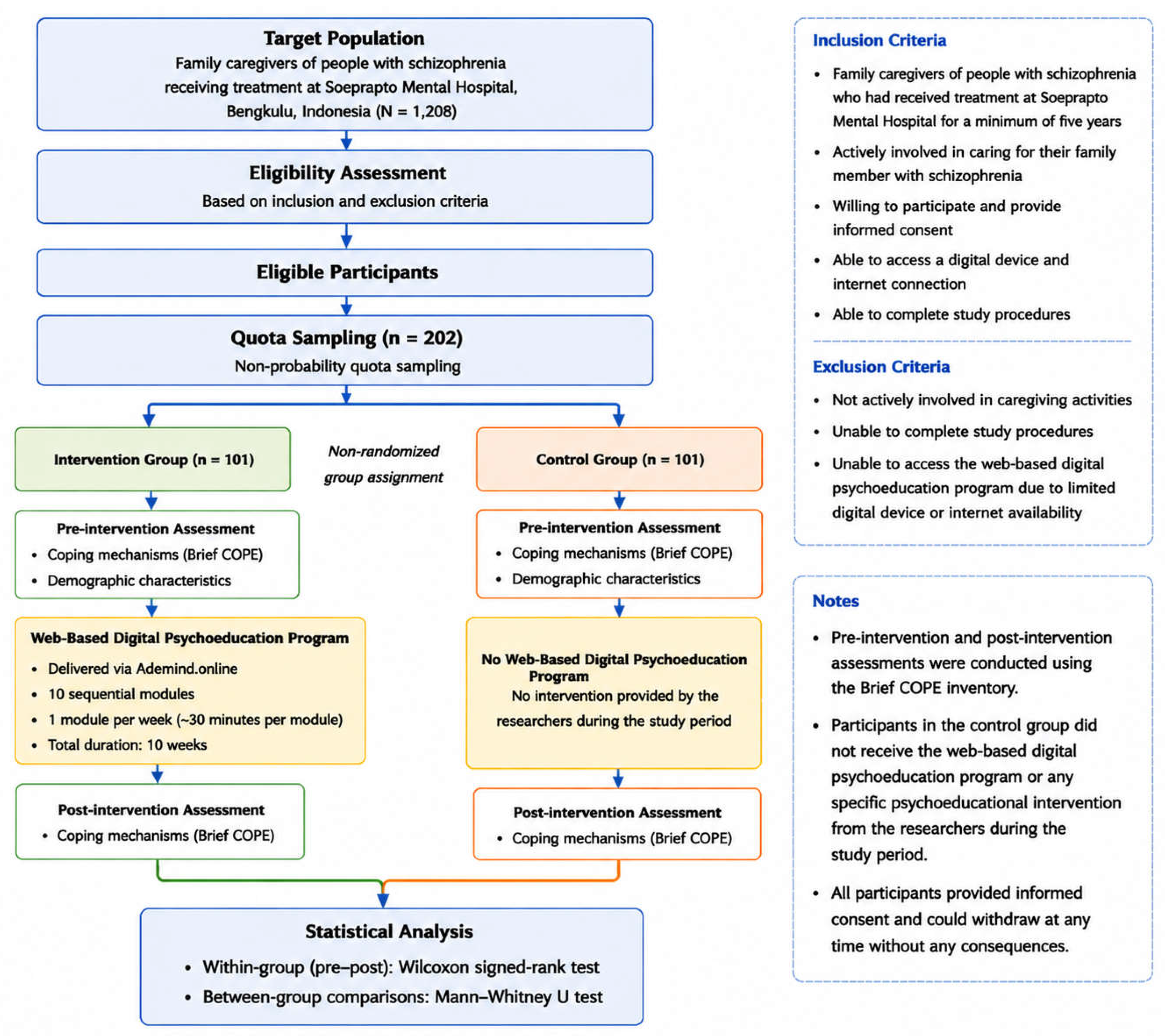

Table 1.
Structure and Content of the Web-Based Digital Psychoeducation Modules.
| Module and Topic | Key Content | Expected Learning Outcome |
| Module 1. Introduction to Schizophrenia | Definition, diagnostic characteristics, common symptoms, possible causes, and the importance of early recognition. | Caregivers understand the basic characteristics, symptoms, and contributing factors of schizophrenia and are better able to respond to caregiving challenges. |
| Module 2. Impact of Schizophrenia on the Family | Emotional and social impact of schizophrenia on caregivers and family members, including grief, frustration, isolation, family dynamics, communication, and support. | Caregivers recognize the emotional and social impact of schizophrenia and become more aware of their psychological responses to caregiving responsibilities. |
| Module 3. Basic Care for People with Schizophrenia | Daily caregiving practices, medication management and supervision, symptom monitoring, treatment adherence, establishing routines, and medication side effects. | Caregivers acquire practical knowledge and skills for daily care, medication supervision, symptom monitoring, and treatment adherence. |
| Module 4. Stress Management for Caregivers | Stress reduction techniques, mindfulness, deep-breathing exercises, physical activity, self-care, and seeking support. | Caregivers learn practical strategies to manage stress and maintain their psychological well-being while providing long-term care. |
| Module 5. Importance of Social Support | Family and peer support, community resources, support groups, and available mental health services. | Caregivers identify available sources of social support and develop strategies to strengthen their support networks. |
| Module 6. Effective Communication with People with Schizophrenia | Active listening, validation, non-verbal communication, trust-building, and strategies for understanding patients’ needs. | Caregivers develop effective communication skills that promote supportive interactions and improve understanding of patients’ needs. |
| Module 7. Managing Crisis and Relapse | Early warning signs of relapse, crisis recognition, crisis management planning, and appropriate responses during emergencies. | Caregivers recognize early signs of relapse and develop appropriate strategies for responding to crises while maintaining patient and caregiver safety. |
| Module 8. Long-Term Care Planning | Patient needs and preferences, flexible care planning, recovery support, daily functioning, and anticipated changes in the patient’s condition. | Caregivers develop realistic and flexible long-term care plans that address patients’ needs, preferences, recovery, and daily functioning. |
| Module 9. Building Resilience and Emotional Well-Being | Resilience-building strategies, goal setting, positive thinking, social connectedness, and prioritizing caregivers’ emotional health. | Caregivers strengthen resilience and develop strategies to maintain emotional well-being during long-term caregiving. |
| Module 10. Evaluation and Reflection | Review of learning materials, reflection on caregiving experiences, assessment of preparedness, and planning for future caregiving. | Caregivers consolidate their learning, reflect on their caregiving experiences, and develop plans for applying the knowledge and skills gained. |
Table 2.
Demographic Characteristics and Baseline Coping Mechanisms of Family Caregivers of People with Schizophrenia.
Table 2.
Demographic Characteristics and Baseline Coping Mechanisms of Family Caregivers of People with Schizophrenia.
| Variable | Category | Total N (%) | Intervention N (%) | Control N (%) | χ² | P-Value |
| Gender | Male | 95 (47.0) | 53 (52.5) | 42 (41.6) | 2.405a | 0.121 |
| Female | 107 (53.0) | 48 (47.5) | 59 (58.4) | |||
| Age | 18–25 years | 31 (15.3) | 25 (24.8) | 6 (5.9) | 23.214a | <0.001 |
| 26–35 years | 63 (31.2) | 36 (35.6) | 27 (26.7) | |||
| 36–45 years | 30 (14.9) | 14 (13.9) | 16 (15.8) | |||
| 46–55 years | 44 (21.8) | 12 (11.9) | 32 (31.7) | |||
| 56–65 years | 34 (16.8) | 14 (13.9) | 20 (19.8) | |||
| Marital Status | Not married | 41 (20.3) | 29 (28.7) | 12 (11.9) | 12.511a | 0.003b |
| Married | 154 (76.2) | 69 (68.3) | 85 (84.2) | |||
| Divorced | 2 (1.0) | 2 (2.0) | 0 (0.0) | |||
| Widowed | 5 (2.5) | 1 (1.0) | 4 (4.0) | |||
| Educational Level | No formal education | 6 (3.0) | 2 (2.0) | 4 (4.0) | 10.844a | 0.093b |
| Elementary school | 17 (8.4) | 7 (6.9) | 10 (9.9) | |||
| Junior high school | 30 (14.9) | 15 (14.9) | 15 (14.9) | |||
| Senior high school | 84 (41.6) | 49 (48.5) | 35 (34.7) | |||
| Diploma | 13 (6.4) | 2 (2.0) | 11 (10.9) | |||
| Bachelor’s degree (S1) | 48 (23.8) | 25 (24.8) | 23 (22.8) | |||
| Postgraduate (S2/S3) | 4 (2.0) | 1 (1.0) | 3 (3.0) | |||
| Occupation | Not employed | 38 (18.8) | 18 (17.8) | 20 (19.8) | 0.641a | 0.986 |
| Student | 13 (6.4) | 7 (6.9) | 6 (5.9) | |||
| Farmer | 43 (21.3) | 21 (20.8) | 22 (21.8) | |||
| Private employee | 46 (22.8) | 25 (24.8) | 21 (20.8) | |||
| Civil servant | 15 (7.4) | 7 (6.9) | 8 (7.9) | |||
| Entrepreneur | 47 (23.3) | 23 (22.8) | 24 (23.8) | |||
| Monthly Family Income | < IDR 1,000,000 (< USD 62.50) | 48 (23.8) | 22 (21.8) | 26 (25.7) | 3.580a | 0.472b |
| IDR 1,000,000–2,999,999 (USD 62.50–187.50) | 93 (46.0) | 53 (52.5) | 40 (39.6) | |||
| IDR 3,000,000–4,999,999 (USD 187.50–312.50) | 40 (19.8) | 17 (16.8) | 23 (22.8) | |||
| IDR 5,000,000–9,999,999 (USD 312.50–624.99) | 17 (8.4) | 7 (6.9) | 10 (9.9) | |||
| > IDR 10,000,000 (> USD 625.00) | 4 (2.0) | 2 (2.0) | 2 (2.0) |
Note:Values are presented as n (%). Percentages for the total sample are based on N=202, whereas percentages for the intervention and control groups are based on n=101 each. ᵃPearson's chi-square test. ᵇMonte Carlo exact test (two-sided) was used when expected cell counts were <5. P<0.05 was considered statistically significant.
Table 3.
Pre-Intervention Coping Mechanisms in the Intervention and Control Groups.
| Coping Mechanism | Intervention Group (N = 101) | Control (N = 101) | t | p-value | |||||
| Mean | Median | SD | Mean | Median | SD | ||||
| Problem-focused coping | 1.69 | 2.00 | 0.75 | 1.38 | 1.00 | 0.49 | 3.45 | 0.001 | |
| Emotion-focused coping | 1.32 | 1.43 | 0.73 | 1.00 | 1.00 | 0.77 | 3.03 | 0.003 | |
| Avoidance coping | 0.75 | 1.00 | 0.65 | 0.80 | 1.00 | 0.63 | −0.56 | 0.577 | |
Table 4.
Post-Intervention Coping Mechanisms in the Intervention and Control Groups.
| Coping Mechanism | Intervention Group (N = 101) | Control (N = 101) | t | p-value | |||||
| Mean | Median | SD | Mean | Median | SD | ||||
| Problem-focused coping | 1.69 | 2.00 | 0.75 | 1.38 | 1.00 | 0.49 | 3.45 | 0.001 | |
| Emotion-focused coping | 1.32 | 1.43 | 0.73 | 1.00 | 1.00 | 0.77 | 3.03 | 0.003 | |
| Avoidance coping | 0.75 | 1.00 | 0.65 | 0.80 | 1.00 | 0.63 | −0.56 | 0.577 | |
Table 5.
Pre- to Post-Intervention Changes in Coping Mechanisms in the Intervention and Control Groups.
Table 5.
Pre- to Post-Intervention Changes in Coping Mechanisms in the Intervention and Control Groups.
| Coping Mechanism | Group | Pre-Intervention (N = 101) | Post-Intervention (N = 101) | Z | p-value (Within Group) | p-value (Between Group)* | ||
| Mean | SD | Mean | SD | |||||
| Problem-focused coping | Intervention | 1.69 | 0.75 | 2.05 | 0.72 | -3.200 | 0.001* | <0.001*** |
| Control | 1.38 | 0.49 | 1.38 | 0.53 | -0.036 | 0.972 | ||
| Emotion-focused coping | Intervention | 1.32 | 0.73 | 1.60 | 0.69 | -2.549 | 0.011* | <0.001*** |
| Control | 1.00 | 0.77 | 2.00 | 0.75 | -0.106 | 0.916 | ||
| Avoidance coping | Intervention | 0.75 | 0.65 | 1.01 | 0.77 | -2.375 | 0.018* | 0.305 |
| Control | 0.80 | 0.63 | 0.78 | 0.64 | -0.241 | 0.810 | ||
Note: *p < 0.05; **p < 0.001. Within-group comparisons were performed using the Wilcoxon signed-rank test. Between-group comparisons were performed using the Mann–Whitney U test based on change scores (post-intervention minus pre-intervention).
Disclaimer/Publisher’s Note: The statements, opinions and data contained in all publications are solely those of the individual author(s) and contributor(s) and not of MDPI and/or the editor(s). MDPI and/or the editor(s) disclaim responsibility for any injury to people or property resulting from any ideas, methods, instructions or products referred to in the content. |
© 2026 by the authors. Licensee MDPI, Basel, Switzerland. This article is an open access article distributed under the terms and conditions of the Creative Commons Attribution (CC BY) license (http://creativecommons.org/licenses/by/4.0/).
Copyright: This open access article is published under a Creative Commons CC BY 4.0 license, which permit the free download, distribution, and reuse, provided that the author and preprint are cited in any reuse.