
Submitted:
17 August 2026
Posted:
18 August 2026
You are already at the latest version
Abstract
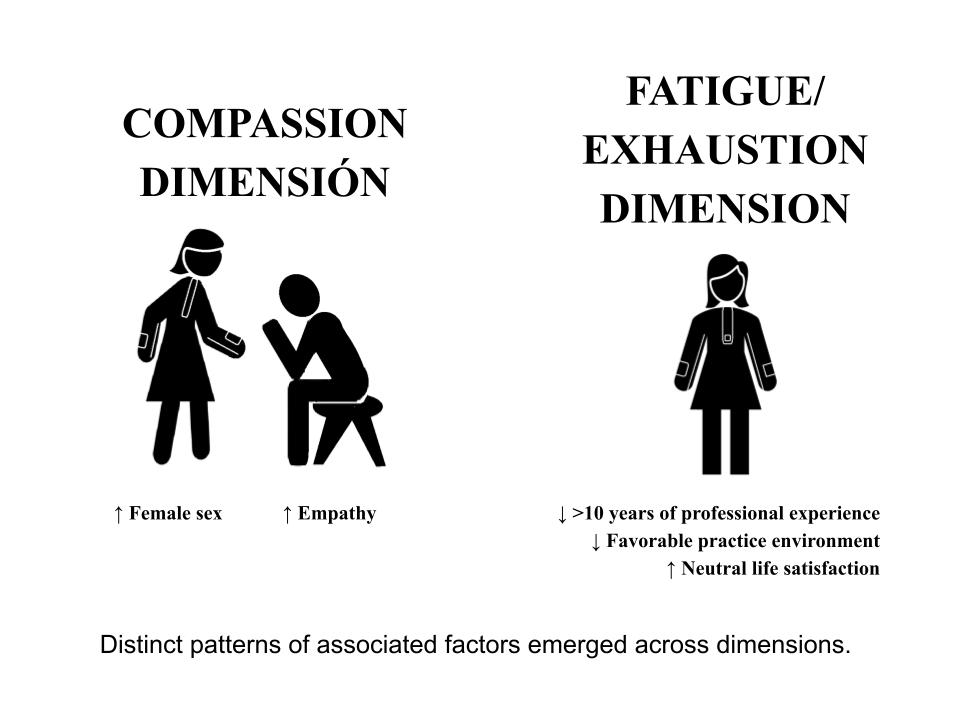
The objective of this study was to differentially analyze the predictors of compassion and fatigue/exhaustion dimensions of compassion fatigue (CF). Methods: Observational, analytical, and cross-sectional study in 374 nursing professionals from Peru, recruited through a virtual survey. Empathy, practice environment, life satisfaction, and CF were assessed. Two multiple linear regression models were conducted with variable selection based on the Akaike information criterion. Results: The sample was predominantly female (88.2%) and had a mean age of 39.77 years (SD = 9.11). In the compassion model, empathy (β = 0.45; p < 0.001) and female sex (β = 0.11; p = 0.025) maintained positive associations. The model accounted for 21% of the adjusted variance. In the fatigue/burnout model, professional experience of more than ten years (β = -0.18; p = 0.01) and a favorable practice environment (β = -0.12; p = 0.03) were associated with lower scores, while neutral life satisfaction (β = 0.15; p = 0.01) and working in health facilities (β = 0.12; p = 0.03) were associated with higher scores. This second model explained 8% of the adjusted variance. Conclusion: The dimensions of compassion and fatigue/exhaustion present different patterns of association. Empathy and sex predict the compassion dimension, while professional experience and practice environment predict the fatigue/burnout dimension.
Keywords:
nursing
; compassion fatigue
; empathy
; working conditions
; personal satisfaction
1. Introduction
In nursing practice, continuous contact with suffering, trauma, and emotional demands of care can increase susceptibility to compassion fatigue (CF), especially in highly complex clinical settings [1,2]. This phenomenon is a relevant occupational health problem due to its association with alterations in physical and psychological well-being, lower work performance and intention to leave the job [1,2]. A systematic review with meta-analysis of 196 studies reported moderate levels of burnout and secondary traumatic stress in nursing professionals, with higher scores in intensive care units and emergency departments, although with high heterogeneity among the included studies [1].
CF has been described as a state of physical and emotional exhaustion that may be accompanied by psychological and spiritual disturbances, and with reduced ability to empathize with and tolerate the suffering of others [3,4,5]. This construct was first used in the nursing literature by Joinson [6] in 1992, who used it to describe the burnout observed in nurses repeatedly exposed to the suffering of their patients. Subsequently, Figley [3] developed and systematized this concept as one of the “costs of caregiving”, linked to direct and prolonged exposure to the suffering of other people and to the empathic response of the professional. While burnout is usually related to chronic work demands and unfavorable organizational conditions, CF is more specifically linked to empathic exposure to the patient’s suffering and trauma. Although some authors describe a relatively rapid onset of its manifestations, it can also develop cumulatively with repeated exposures [3,7,8].
In the literature there is no consensus on the definition and dimensionality of CF. One of the instruments most widely used by the scientific community is the Professional Quality of Life Scale (ProQOL), which distinguishes a positive component (compassion satisfaction) and two negative components (burnout and secondary traumatic stress) [9,10]. In the Peruvian context, the Compassion Fatigue Scale (EFat-Com) was developed, consisting of two factors: compassion and fatigue/exhaustion [11]. In this study, the original names of the EFat-Com are respected; therefore, the compassion dimension is interpreted as a positive component related to empathic disposition and the favorable experience of care, but it is not assumed to be an exact equivalent of compassion satisfaction assessed by ProQOL. And the fatigue/exhaustion dimension as a negative emotional response to the suffering of others, characterized by emotional exhaustion, frustration and burnout resulting from prolonged exposure to compassion stress. These two dimensions show differentiated patterns and do not necessarily represent components of a construct, which justifies analyzing their associated factors separately [12].
Among personal factors, empathy occupies an important place due to its dual function: it constitutes an essential clinical competence for patient-centered care and, at the same time, some of its dimensions may be associated with greater emotional vulnerability [13,14]. In the stress and CF model, empathy facilitates the connection with the patient’s suffering and can favor vicarious exposure to trauma; however, this relationship varies according to the empathic component considered [15,16]. Cognitive empathy and perspective-taking have been associated with lower CF and secondary traumatic stress, while personal distress and certain forms of affective involvement have been related to higher levels of fatigue, secondary traumatic stress, and burnout [14,16]. Consequently, the evidence does not support a uniform effect of empathy; its relationship with CF seems to depend on the form of empathic processing and contextual resources such as social support [15].
Several authors have examined the relationship between sociodemographic and occupational characteristics such as sex, age, professional experience, clinical unit and job satisfaction with the dimensions of CF; however, the magnitude and direction of these associations are not uniform [10,17,18]. The differences observed between geographical regions, clinical services, and professional groups can be related to the heterogeneity of the work contexts, measurement instruments, sampling strategies, and analytical methods used [1,17]. In contrast, evidence more consistently shows that the practice environment, psychological demands, leadership, job satisfaction, and resources such as social support, self-efficacy, self-compassion, and emotional intelligence are associated with burnout and secondary traumatic stress [12,19,20,21,22]. Taken together, these findings support a multifactorial and context-dependent understanding, although predominantly cross-sectional designs preclude establishing causal relationships or definitive interactions.
Although multivariate models have been developed on CF, most have focused on specific domains such as personal variables, job characteristics, or organizational factors, predominantly using cross-sectional designs and particular clinical populations [1,12,19,20]. Consequently, there is still limited evidence that simultaneously examines, within the same population and through a common analytical framework, the relative contribution of empathy, sociodemographic and occupational characteristics, and the practice environment on the two dimensions of EFat-Com. In this context, it is methodologically pertinent to estimate independent models for the dimensions compassion and fatigue/exhaustion, with the goal of identifying if both present differential patterns of association.
Faced with these gaps, the Theory of Conservation of Resources (COR) offers a pertinent interpretative framework, proposing that well-being and attrition can be related to the availability, threat or loss of personal and work resources [23]. From this perspective, it is plausible that the factors associated with the compassion dimension are not identical to those related to the fatigue/exhaustion dimension. In this context, the present study aimed to analyze the predictors differentially with the dimensions compassion and fatigue/exhaustion of CF.
2. Materials and Methods
2.1. Study Design
An observational, analytical, cross-sectional study was conducted. The COR Theory was used as an interpretative framework to examine the contribution of personal and work resources; however, the study did not directly measure processes of loss, gain or investment of resources [23].
2.2. Population, Sample and Sampling
The population was made up of nursing professionals who worked in healthcare facilities in Lima. Nurses who worked in hospitals, clinics, and health facilities with hospitalization services in Peru, and who had access to electronic devices with an internet connection to complete the virtual questionnaire, were eligible. Nurses who resided in another country, those who performed exclusively administrative functions, and those who reported a previous diagnosis of a mental health problem, such as depression, anxiety, or other related disorders, were excluded.
The sample size was estimated according to the multiple linear regression model with 10 predictive parameters, considering a significance of 5%, a power of 80% and a mean effect size (f2=0.15) according to Cohen’s criteria. A minimum required of 118 participants was determined, accounting for a possible loss of 20% due to incomplete records, a minimum sample of 142 nursing professionals was established. Finally, 374 nursing professionals participated, exceeding the estimated sample size. Sampling was non-probabilistic for convenience.
The participants had an age range between 21 and 69 years (M = 39.77; SD = 9.11), with a marked prevalence of females (88.24%). Regarding professional careers, approximately 50% of those evaluated reported more than 10 years of experience in the sector; on the contrary, the group with less than five years of legal practice represented the segment with the lowest proportion. As for religious affiliation, a predominance of Catholic identity was observed, followed by a minority representative of the evangelical faith. Similarly, 74.06% of the population evaluated lived in the city of Lima. Regarding the occupational field, the majority performed their functions in public or national hospitals (62.88%), constituting the most frequent work environment compared to private health institutions or other centers. Finally, when analyzing the perception of satisfaction with life, more than two-thirds of the sample expressed satisfaction with minimal levels of job dissatisfaction (Table 1).
2.3. Variable and Instruments
Information collection was carried out through a self-administered virtual survey. The questionnaire was implemented on the AllCounted platform, selected for its security and privacy conditions, as well as for allowing undesirable surveys, restricted access through passwords or codes, and control of the sharing of results.
The first section of the instrument aimed at recording sociodemographic variables (age, sex, type of religion professed and place of residence) and labor variables (type of health facility in which they work and years of experience).
Empathy was assessed using a specific factor of the Communication Skills Scale adapted for Peruvian nurses. This scale, originally developed in Spain, was subjected to a process of cultural adaptation to the Peruvian context, with review and adjustment of items through a focus group. In the validation study, the empathy subscale showed factor loads greater than 0.62 and adequate internal consistency, with a McDonald’s omega (ω) coefficient of 0.82 [24].
Psychological resilience was assessed using the abbreviated version of the Connor–Davidson Resilience Scale (CD-RISC-10), recently validated in a sample of Peruvian nurses [25]. This instrument consists of 10 items that measure the ability to maintain adaptive functioning in the face of adverse experiences, using a five-point Likert-type response format (1 = “strongly disagree” to 5 = “strongly agree”). A one-dimensional scale, confirmed by confirmatory factor analysis with satisfactory fit indices (comparative fit index [CFI] = 0.978, Tucker–Lewis index [TLI] = 0.971, standardized root mean square residual [SRMR] = 0.044, and root mean square error of approximation [RMSEA] = 0.080). In terms of reliability, it reported high internal consistency, with an ordinal Cronbach’s alpha (α) coefficient of 0.89 and a ω of 0.81.
The nursing work environment was assessed with the Practice Environment Scale of the Nursing Work Index (PES-NWI), composed of 31 items distributed in five subscales: nurse participation in hospital affairs, nursing foundations for quality of care, nursing manager’s skill/leadership/support, staff and resource adequacy, and nurse-doctor collegiate relations. The scale employed a Likert format of four response options, ranging from 1 (strongly disagree) to 4 (strongly agree). The scale showed adequate reliability in the Hispanic population, with α of 0.89, and high internal consistency in Peruvian nurses, with ω of 0.95 [26].
The assessment of satisfaction was carried out using the Satisfaction With Life Scale (SWLS), originally developed by Diener et al. [27] and psychometrically validated in the Peruvian context [28]. This instrument is a brief self-report measure composed of five items that explore the cognitive component of subjective well-being, using a five-point Likert-type response format (1 = “strongly disagree” to 5 = “strongly agree”). It presents a one-dimensional factor structure, confirmed by confirmatory factor analysis (CFA) with highly satisfactory fit indices (χ2/df=2.192, CFI=0.994, TLI=0.988, RMSEA=0.071 and SRMR=0.013). Regarding its reliability, it presents high internal consistency, reporting α of 0.93, ω of 0.93.
CF was assessed using the EFat-Com, developed in Peruvian nursing professionals [11]. The administered version was composed of 13 items, originally distributed in two dimensions: tiredness or fatigue-exhaustion and compassion. The items are answered using a five-point Likert scale (1 = “Never” to 5 = “Always”). In the original study, favorable evidence of content validity and internal structure was reported, as well as an internal consistency of α = 0.807 for the total score. Because in the present study the dimensions were used as separate dependent variables, their internal structure and reliability in the analyzed sample were examined.
2.4. Procedures
Before the start of the fieldwork, the approval of a Research Ethics Committee was requested. Once the corresponding authorization was obtained, the virtual form was disseminated through institutional social networks of hospitals and health establishments, as well as in universities with postgraduate programs that enroll nursing professionals. Participation was voluntary and access to the questionnaire was preceded by an informed consent process in digital format.
2.5. Analysis
The analysis of the data was developed in four sequential phases to respond to the objectives of the study. Prior to the descriptive and predictive analyses, the internal structure of the EFat-Com was evaluated by confirmatory factor analysis. Due to the ordinal nature of the items, the weighted least squares estimator adjusted for mean and variance (WLSMV) was used. Initially, a two-factor model was estimated to correlate with the 13 items and without covariances between the residuals. The fit was assessed using χ2, CFI, TLI, RMSEA with its 90% confidence interval, and SRMR. Given the insufficient fit of the initial model, factor loads and modification indices were examined. The modifications were incorporated only when they showed theoretical and semantic congruence with the content of the items. The respecified model excluded items 6 and 12 and allowed residual covariances between items 1 and 2, 11 and 13, 11 and 2, and 10 and 4. The internal consistency of each dimension was estimated using McDonald’s omega coefficient and ordinal alpha. The scores used in the subsequent analyses were calculated from the items retained in the final model.
In the second phase, descriptive statistics (mean, standard deviation, minimum and maximum values) were calculated to characterize the sample and describe the behavior of the main variables (practice environment, empathy and dimensions of compassion fatigue). In the third phase, the preliminary bivariate relationships between the study variables were evaluated. Given the distributional characteristics of the data, Spearman’s rho nonparametric correlation coefficient was used to estimate the magnitude and direction of these associations. In the third phase, to identify the sociodemographic, occupational and psychological predictors of the two dimensions of compassion fatigue (Compassion and Fatigue/Exhaustion), multiple linear regression models were estimated. For the construction of these models, a stepwise regression variable selection algorithm was implemented. Initially, the following were introduced as possible predictors: sex, length of professional experience, religion, type of health facility, job satisfaction, empathy and perception of the nursing practice environment. The polytomic variables were recoded as indicator variables (dummy), establishing methodologically relevant reference categories for their interpretation. The retention of the variables in the final model was based on the optimization of the Akaike Information Criterion (AIC), thus guaranteeing an adequate balance between parsimony and explanatory goodness of fit of the model.
Prior to the interpretation of the standardized coefficients, compliance with the assumptions underlying the general linear model was evaluated, these being normality and t homoscedasticity through graphical inspections. In the same way, the absence of multicollinearity was evaluated by calculating the Variance Inflation Factor (VIF) for each predictor, establishing a strict criterion of VIF retention < 5.00 to guarantee the absence of collinearity that could inflate the standard errors. Finally, the presence of outliers with an impact on the estimation of the model was examined by calculating the Cook distance using the threshold of D < 1.00. All statistical analyses were executed using the R environment and programming language (version 4.5.2).
2.6. Ethical Aspects
Before the start of the fieldwork, the approval of a Research Ethics Committee was requested. Once the corresponding authorization was obtained, the virtual form was disseminated through institutional social networks of hospitals and health establishments, as well as in university environments linked to postgraduate programs taken by nursing professionals. Participation was voluntary and access to the questionnaire was preceded by an informed consent process in digital format.
3. Results
The initial two-factor model with all 13 items and no residual covariances was insufficiently fit (χ2(64) = 549.245, p < 0.001, CFI = 0.950, TLI = 0.944, RMSEA = 0.150, and SRMR = 0.115). Based on the joint evaluation of the factor loads, modification indices and semantic congruence of the items, a respecified model was estimated in which items 6 and 12 were eliminated and residual covariances were allowed between items 1 and 2, 11 and 13, 11 and 2, and 10 and 4.
The respecified model showed a comparatively more favorable fit (χ2(39) = 136.508, p < 0.001, CFI = 0.986, TLI = 0.981, RMSEA = 0.086, and SRMR = 0.072). All factor loads were statistically significant (p < 0.001) and ranged from 0.412 to 0.785 for Fatigue and between 0.670 and 0.932 for Compassion. The standardized residual covariances were 0.550 between items 1 and 2, 0.512 between items 11 and 13, −0.375 between items 11 and 2, and 0.484 between items 10 and 4 (all p < .001). The correlation between the factors was practically null and non-significant (r = −0.004, p = 0.946). The Compassion dimension presented an adequate internal consistency (ω = 0.85, ordinal α = 0.90). The Fatigue dimension presented an acceptable internal consistency, although of a smaller magnitude (ω = 0.71. ordinal α = 0.80). This version of the instrument is used to carry out the subsequent analyses.
Table 2 details the descriptive statistics and the correlation matrix for the study variables. In relation to the nursing practice environment, the sample reported a mean of 2.70 (SD = 0.57); This result, being above the theoretical cut-off point of 2.50, suggests a generally favorable perception of the work environment among the professionals evaluated. On the other hand, empathy levels registered a mean of 4.76 (SD = 0.82), with scores ranging from 2.40 to 6.00. Regarding the dimensions of compassion fatigue, the compassion dimension presented an average level of 4.13 (SD = 0.61), while the fatigue/exhaustion dimension reported a mean of 2.78 (SD = 0.69).
The analysis of associations using Spearman’s rho coefficient revealed a positive and statistically significant correlation between the practice environment and empathy (rho = 0.23, p < 0.001). Likewise, a positive relationship was found between the practice environment and the compassion dimension (rho = 0.12, p < 0.05). Additionally, a positive association of moderate magnitude was observed between empathy and the compassion dimension (rho = 0.41, p < 0.001). Finally, there were no statistically significant correlations between the fatigue/exhaustion dimension and the rest of the variables evaluated.
To identify predictors of the compassion dimension, a multiple linear regression model was evaluated (Table 3). Prior to the interpretation of the coefficients, compliance with the underlying statistical assumptions was verified. The analysis of the residues showed an approximate adjustment to the normal distribution and a homoscedastic dispersion. Likewise, the presence of multicollinearity was ruled out, since the values of the VIF were strictly lower than 2 for all predictors. Finally, the calculation of Cook’s distance confirmed the absence of influential cases that could skew the estimates.
The final model was statistically significant and managed to explain 21% of the variance in the compassion dimension (adjusted R2 = 0.21). When examining the standardized coefficients, empathy emerged as the main positive predictor of the model (β = 0.45, p < 0.001); that is, the higher the levels of empathy, the higher the scores in the compassion dimension. Additionally, the gender variable was significant, indicating that women presented slightly higher scores in this dimension compared to men (β = 0.11, p = 0.025). Conversely, the categories of time of professional experience evaluated (5 to 10 years and more than 10 years) were not statistically significant predictors (p = 0.874 and p = 0.074, respectively) compared to the reference group made up of professionals with less than five years of practice.
On the other hand, a second multiple linear regression model was estimated to identify the predictors of the fatigue/exhaustion dimension (Table 4). As in the previous model, compliance with the necessary statistical assumptions was corroborated: the visual analysis of the residuals indicated an approximate distribution to normal and a homoscedastic dispersion. The existence of multicollinearity was ruled out, since the values of the VIF were kept strictly below 2 for all predictors. Likewise, the Cook distance assessment confirmed the absence of influential outliers.
The global model was statistically significant, managing to explain 8% of the variance in fatigue/exhaustion scores (adjusted R2 = 0.08). When evaluating the individual contribution of the variables using standardized coefficients, protective and risk factors were identified. Regarding protective factors, the length of professional experience greater than 10 years was positioned as the main negative predictor (β = -0.18, p = 0.01); This indicates that professionals with more experience endure significantly less fatigue compared to the control group (less than five years of experience). Similarly, a more favorable perception of the nursing practice environment predicted lower levels of fatigue/exhaustion (β = -0.12, p = 0.03).
Finally, socio-labor conditions were identified that increase this dimension. Presenting a neutral job satisfaction acted as a positive predictor of fatigue compared to the group that reported being satisfied with life (β = 0.15, p = 0.01). In addition, working in a health center predicted higher levels of burnout compared to those who perform their functions in the hospital environment (β = 0.12, p = 0.03). The other categories evaluated, such as being dissatisfied with life, working in polyclinics, clinics or independently, as well as having between 5 and 10 years of experience, did not show statistically significant effects within the model (p > 0.05).
4. Discussion
The present study identified different association patterns for the compassion and fatigue/exhaustion dimensions of EFat-Com. Empathy and gender were associated with the compassion dimension, while professional experience of more than ten years and a favorable practice environment were associated with lower fatigue/burnout scores. In contrast, neutral life satisfaction and work in health centers were associated with higher scores in the latter dimension. These results support the usefulness of analyzing both factors separately. Although, due to the cross-sectional design and the use of automated variable selection procedures, they do not allow causal relationships to be established or independent etiological mechanisms to be demonstrated.
Empathy was the main positive predictor of the compassion dimension, but it did not report association with the other dimension. This result confirms that empathy does not have a uniform effect on the dimensions of CF. However, a study conducted in Turkey during the COVID-19 pandemic reported that empathy is not associated with CF [5]. The literature shows that cognitive empathy and perspective-taking have been associated with less fatigue or secondary traumatic stress; while personal discomfort and certain forms of affective involvement are related to greater burnout and secondary traumatic stress [14,16]. However, a study conducted in China found a positive association between empathy and fatigue partially mediated by social support, confirming the heterogeneity of the results [15]. Consequently, empathy seems to be differentially related to the positive and negative components of CF, depending on its dimension and the personal and contextual resources available.
Regarding sociodemographic characteristics, only gender reported a statistically significant association with the compassion dimension, with higher scores in women. This result coincides with a study conducted on American nurses where they also observed greater satisfaction with compassion among women [29]. However, the available evidence is inconsistent. A study conducted in Malaysia determined that the initial difference by sex ceased to be significant after incorporating factors from the work environment [30]. Another study conducted in Saudi Arabia reported that gender was not a predictor of compassion satisfaction, but it was a predictor of burnout [18]. Consequently, the evidence suggests that the association between gender and compassion satisfaction may be contextually dependent and partially explained by work and organizational differences; however, cross-sectional designs and the low representation of men prevent establishing the underlying mechanism.
Regarding the psychometric analysis, the results provide favorable evidence on the two-dimensional structure of CF assessed by EFat-Com, in general consonance with the proposal of the original validation study in Peruvian nurses [11]. The respecified model made it possible to distinguish the dimensions of compassion and fatigue/exhaustion, whose correlation was practically zero and not significant. This differentiation was also consistent with the multivariate models, in which different predictor patterns were observed for each dimension. Together, the findings suggest that both dimensions do not simply behave as polar opposites of the same continuum and support their analysis separately. However, because the two-dimensional model was not directly compared with a one-dimensional model and because it was necessary to eliminate two items and incorporate residual covariances, these results should be interpreted as favorable, but not definitive evidence of its psychometric and conceptual autonomy.
On the other hand, it is reported that having more professional experience, specifically more than 10 years, was associated with lower scores in the fatigue/exhaustion dimension in the regression model. This result is consistent with a study conducted in Palestine, which observed lower burnout in nurses with more than ten years of professional practice [19] and with another study where they identified an inverse association between work experience and fatigue [21]. Along the same lines, another study reported greater secondary traumatic stress among professionals with less experience [7]. Although this relationship could reflect greater clinical familiarity and better coping resources, these mechanisms were not directly evaluated. In addition, the evidence is not uniform, as it has also been reported that there is no association between years of experience and burnout [1]. Therefore, experience should be considered a contextually associated factor, not a universal protective resource.
Likewise, the favorable nursing practice environment was associated with a lower score of the fatigue/exhaustion dimension, which supports a multifactorial understanding of the phenomenon and underscores the relevance of organizational conditions. Previous studies have linked adequate staffing and resources, collaborative relationships, manager support, and positive work environments with higher compassion satisfaction and lower levels of burnout, emotional exhaustion, or secondary traumatic stress [12,19,20,31,32]. Likewise, systematic reviews have identified leadership, positive organizational culture, clinical supervision, and work environment as factors associated with lower burnout, although the certainty of the evidence remains moderate to low due to the predominance of cross-sectional designs and the heterogeneity of the studies [1,2]. Therefore, CF should not be interpreted only as an individual vulnerability, but as a phenomenon also related to emotional demands and available institutional resources.
Regarding the theoretical implications, the findings can be interpreted in a way that is consistent with the COR Theory, which conceives stress as a response to the threat or loss of valued resources and well-being as favored by their conservation and accumulation [23]. The presence of different association patterns for both dimensions supports the usefulness of analyzing them separately, although it does not demonstrate completely independent etiological mechanisms. The study also did not directly measure loss, gain, or investment of resources; therefore, the theory functions as an interpretative framework and not as an empirically contrasted model.
In practical terms, the findings support the evaluation of multilevel strategies. At the individual level, interventions aimed at strengthening empathic communication skills and emotional regulation could be studied. At the organizational level, actions should be considered on leadership, autonomy, professional support, workloads, and availability of resources [1,2,12,22]. However, the cross-sectional design of the study does not allow us to establish that these interventions reduce CF. Their comparative effectiveness and sustainability require evaluation through longitudinal and intervention studies.
The results should be interpreted considering several limitations. First, the cross-sectional design prevents establishing causal relationships. Second, the use of self-report measures increases the risk of social desirability and common-method variance. Third, virtual recruitment through institutional, social and university networks could generate self-selection bias and limit the representativeness of the sample. The exclusion of professionals with a previous diagnosis of mental health problems could also produce selection bias and underestimate professional burnout. Likewise, the majority female composition and the origin of a single national context limit generalization. Automated stepwise selection can lead to unstable coefficients, overfitting, and optimistic p-values. The fatigue/exhaustion model explained only 8% of the variance, indicating limited explanatory capacity and the likely existence of unobserved factors. Finally, some categories included few participants, and age was not incorporated into the models, despite its possible relationship with professional experience.
5. Conclusions
In summary, the compassion and fatigue/exhaustion dimensions of EFat-Com presented different patterns of association. Empathy and female sex were associated with higher compassion scores, while greater professional experience and a favorable practice environment were associated with lower fatigue/burnout scores. Neutral life satisfaction and work in health facilities were associated with higher health care scores. These findings support the usefulness of analyzing both factors separately, but do not demonstrate conceptual independence or causal relationships. The low variance explained by the fatigue/exhaustion model indicates that other relevant factors were not captured. Longitudinal studies, probabilistic sampling, and theoretically prespecified models are required to confirm these results and evaluate interventions targeting both personal resources and organizational conditions. Therefore, it is recommended to develop programs aimed at strengthening empathy, along with institutional policies aimed at improving the practice environment. This integrated approach seems the most promising for promoting a healthy professional experience and sustainably reducing CF in nursing.
Author Contributions
Conceptualization, R.Z., J.A.Z., R.C., F.D.B, and E.F.; methodology, R.C., F.D.B, H.C., G.S., L.S., and R.Z.; validation, J.A.Z., F.D.B., H.C., E.M.Q., and G.S.; formal analysis, R.Z., and E.F.; investigation, J.A.Z., R.C., F.D.B, and L.S.; data curation, J.A.Z., R.C., F.D.B, E.M.Q., H.C., G.S., and E.F.; Resources, R.Z. and L.S.; Visualization, R.Z.; writing—original draft preparation, R.Z., J.A.Z., R.C., F.D.B, and E.F.; writing—review and editing, E.F., E.M.Q., H.C., G.S., and L.S.; project administration, J.A.Z. and R.Z. All authors have read and agreed to the published version of the manuscript.
Funding
The study was funded by the Universidad María Auxiliadora.
Institutional Review Board Statement
The Ethics and Research Committee of the María Auxiliadora University approved this study (Acta N.° 02-2025). All participants gave their free and informed consent prior to the response to the questionnaire. To safeguard the privacy of the information and ensure researchers’ exclusive access to the data, the database was encrypted by removing any personally identifiable information.
Informed Consent Statement
Informed consent was obtained online from all study participants.
Data Availability Statement
The information will be available upon request addressed to the corresponding author due to privacy.
Conflicts of Interest
The authors declare no conflict of interest.
References
- Yi, L.; Hu, S.; Liao, M.; Cheng, L.; Liu, Y.; Tian, X.; Jiménez-Herrera, M.F. Prevalence and Related Factors of Compassion Fatigue among Registered Nurses and Nursing Students during the Internship: A Systematic Review and Meta-Analysis. BMC Nurs. 2024, 23, 956. [Google Scholar] [CrossRef] [PubMed]
- Marshman, C.; Hansen, A.; Munro, I. Compassion Fatigue in Mental Health Nurses: A Systematic Review. Psychiatr. Ment. Health Nurs. 2022, 29, 529–543. [Google Scholar] [CrossRef] [PubMed]
- Figley, C.R. Compassion Fatigue: Psychotherapists’ Chronic Lack of Self Care. J. Clin. Psychol. 2002, 58, 1433–1441. [Google Scholar] [CrossRef] [PubMed]
- Halamová, J.; Kanovský, M.; Krizova, K.; Šoková, B.; Baránková, M.; Figley, C. The Development of the Compassion Satisfaction and Compassion Fatigue Scale. Front. Public Health 2024, 12, 1406467. [Google Scholar] [CrossRef] [PubMed]
- Sahin, S.; Arioz Duzgun, A.; Unsal, A.; Inan Kirmizigul, E.; Ozdemir, A. Assessment of Compassion Fatigue and Empathy Levels in Nurses During the COVID-19 Outbreak: Turkey’s Case. J. Relig Health 2023, 62, 1343–1357. [Google Scholar] [CrossRef] [PubMed]
- Joinson, C. Coping with Compassion Fatigue: Nursing. In Ovid; 1992. [Google Scholar]
- Borges, E.M.D.N.; Fonseca, C.I.N.D.S.; Baptista, P.C.P.; Queirós, C.M.L.; Baldonedo-Mosteiro, M.; Mosteiro-Diaz, M.P. Fadiga por compaixão em enfermeiros de urgência e emergência hospitalar de adultos. Rev. Lat.-Am. Enferm. 2019, 27, e3175. [Google Scholar] [CrossRef] [PubMed]
- Zhang, Y.-Y.; Han, W.-L.; Qin, W.; Yin, H.-X.; Zhang, C.-F.; Kong, C.; Wang, Y.-L. Extent of Compassion Satisfaction, Compassion Fatigue and Burnout in Nursing: A Meta-Analysis. J. Nurs. Manag 2018, 26, 810–819. [Google Scholar] [CrossRef] [PubMed]
- Cocker, F.; Joss, N. Compassion Fatigue among Healthcare, Emergency and Community Service Workers: A Systematic Review. IJERPH 2016, 13, 618. [Google Scholar] [CrossRef] [PubMed]
- Xie, W.; Chen, L.; Feng, F.; Okoli, C.T.C.; Tang, P.; Zeng, L.; Jin, M.; Zhang, Y.; Wang, J. The Prevalence of Compassion Satisfaction and Compassion Fatigue among Nurses: A Systematic Review and Meta-Analysis. Int. J. Nurs. Stud. 2021, 120, 103973. [Google Scholar] [CrossRef] [PubMed]
- Carranza Esteban, R.F.; Mamani-Benito, O.; Turpo Chaparro, J.E.; Chávez Sosa, J.V.; Lingan, S.K. The Design and Validation of a Compassion Fatigue Scale in Peruvian Nurses. IJERPH 2023, 20, 6147. [Google Scholar] [CrossRef] [PubMed]
- Maillet, S.; Read, E. Work Environment Characteristics and Emotional Intelligence as Correlates of Nurses’ Compassion Satisfaction and Compassion Fatigue: A Cross-Sectional Survey Study. Nurs. Rep. 2021, 11, 847–858. [Google Scholar] [CrossRef] [PubMed]
- Akıncı, D.; Çetin, H.; Yılmaz, S. Determination of the Relationship between Empathy and Compassion Fatigue in Pediatric Clinic Nurses. IJMHP 2024, 26, 1–10. [Google Scholar] [CrossRef]
- Shen, X.; Bu, H.; Zhang, J.; Duan, W.; Wang, H.; Tao, Y.; Qiao, Z. The Dual Roles of Empathy in Mediating Structural Empowerment and Compassion Fatigue among Chinese Nurses. BMC Nurs. 2024, 23, 837. [Google Scholar] [CrossRef] [PubMed]
- Zhang, J.; Wang, X.; Chen, O.; Li, J.; Li, Y.; Chen, Y.; Luo, Y.; Zhang, J. Social Support, Empathy and Compassion Fatigue among Clinical Nurses: Structural Equation Modeling. BMC Nurs. 2023, 22, 425. [Google Scholar] [CrossRef] [PubMed]
- Shi, H.; Shan, B.; Zheng, J.; Zhang, Y.; Zhang, J.; Hu, X. Grief as a Mediator of the Relationship between Empathy and Compassion Fatigue. Psycho-Oncology 2022, 31, 840–847. [Google Scholar] [CrossRef] [PubMed]
- Cavanagh, N.; Cockett, G.; Heinrich, C.; Doig, L.; Fiest, K.; Guichon, J.R.; Page, S.; Mitchell, I.; Doig, C.J. Compassion Fatigue in Healthcare Providers: A Systematic Review and Meta-Analysis. Nurs. Ethics 2020, 27, 639–665. [Google Scholar] [CrossRef] [PubMed]
- Shdaifat, E. Assessing Compassion Satisfaction, Compassion Fatigue, Stress and Job Satisfaction among Nurses. SA j. ind. psychol. 2023, 49. [Google Scholar] [CrossRef]
- Batran, A.; Aqtam, I.; Ayed, A.; Ejheisheh, M.A. The Relationship between Professional Quality of Life and Work Environment among Nurses in Neonate Care Units. PLoS ONE 2025, 20, e0322023. [Google Scholar] [CrossRef] [PubMed]
- Chen, X.; Li, J.; Arber, A.; Qiao, C.; Wu, J.; Sun, C.; Han, X.; Wang, D.; Zhu, Z.; Zhou, H. The Impact of the Nursing Work Environment on Compassion Fatigue: The Mediating Role of General Self-efficacy. Int. Nurs. Rev. 2025, 72, e13044. [Google Scholar] [CrossRef] [PubMed]
- Ganeti, D.D.; Dereje Fufa, B.; Bayana Kebede, E.; Shemsi Seid, S.; Wogane Ilala, B.; Bacha Benti, N.; Belay Belachew, Y. Compassion Fatigue and Associated Factors among Nurses Working in Jimma Zone Public Hospitals, Southwest Ethiopia: A Facility Based Cross-Sectional Study. PLoS ONE 2025, 20, e0312400. [Google Scholar] [CrossRef] [PubMed]
- Eskici, G.T.; Kasap, E.U.; Gumus, E. Relationships between Leadership Behaviour of Nurse Managers and Nurses’ Levels of Job Satisfaction and Compassion Fatigue during the COVID-19 Pandemic. Nurs. Open 2023, 10, 4548–4559. [Google Scholar] [CrossRef] [PubMed]
- Hobfoll, S.E.; Halbesleben, J.; Neveu, J.-P.; Westman, M. Conservation of Resources in the Organizational Context: The Reality of Resources and Their Consequences. Annu. Rev. Organ. Psychol. Organ. Behav. 2018, 5, 103–128. [Google Scholar] [CrossRef]
- Samillán-Yncio, G.; Zeladita-Huaman, J.A.; Franco-Chalco, E.; Zegarra-Chapoñan, R.; Montes-Iturrizaga, I.; Rivera-Medrano, Z.J. Psychometric Assessment of the Communication Skills Scale Among Peruvian Nurses and Factors Associated with Job Insecurity. Healthcare 2024, 12, 2582. [Google Scholar] [CrossRef] [PubMed]
- Zegarra-Chapoñan, R.; Zeladita-Huaman, J.A.; Castro-Murillo, R.; Blas Bergara, F.D.J.; Franco-Chalco, E.; Membrillo-Pillpe, N.J.; Castillo-Parra, H.; Samillán-Yncio, G.; Smith, L. Psychometric Validation of the Connor–Davidson Resilience Scale 10 in Peruvian Nurses and Its Association with Stress and Empathy. Healthcare 2026, 14, 1097. [Google Scholar] [CrossRef] [PubMed]
- Membrillo-Pillpe, N.J.; Zeladita-Huaman, J.A.; Jauregui-Soriano, K.; Zegarra-Chapoñan, R.; Franco-Chalco, E.; Samillan-Yncio, G. Association between the Nursing Practice Environment and Safety Perception with Patient Safety Culture during COVID-19. Int. J. Environ. Res. Public Health 2023, 20, 5909. [Google Scholar] [CrossRef] [PubMed]
- Diener, E.; Emmons, R.A.; Larsen, R.J.; Griffin, S. The Satisfaction With Life Scale. J. Pers. Assess. 1985, 49, 71–75. [Google Scholar] [CrossRef] [PubMed]
- Caycho-Rodríguez, T.; Ventura-León, J.; Cadena, C.H.G.; Barboza-Palomin, M.; Gallegos, W.L.A.; Dominguez-Vergara, J.; Azabache-Alvarado, K.; Cabrera-Orosco, I.; Pinho, A.S. Psychometric Evidence of the Diener’s Satisfaction with Life Scale in Peruvian Elderly. Rev. Cienc. De La Salud 2018, 16, 473–491. [Google Scholar] [CrossRef]
- Roney, L.N.; Acri, M.C. The Cost of Caring: An Exploration of Compassion Fatigue, Compassion Satisfaction, and Job Satisfaction in Pediatric Nurses. J. Pediatr. Nurs. 2018, 40, 74–80. [Google Scholar] [CrossRef] [PubMed]
- Nadarajan, S.S.; Chui, P.L.; Lee, W.L.; Zaini, N.H. Factors Influencing Compassion Satisfaction and Compassion Fatigue among Nurses: A Study in a Tertiary Hospital. BMC Nurs. 2025, 24, 93. [Google Scholar] [CrossRef] [PubMed]
- Baek, J.; Cho, H.; Han, K.; Lee, H. Association between Nursing Work Environment and Compassion Satisfaction among Clinical Nurses. J. Nurs. Manag 2020, 28, 368–376. [Google Scholar] [CrossRef] [PubMed]
- Barnard, N.B.; Coetzee, S. Understanding the Link Between Nurses’ Practice Environment, Emotional Exhaustion, Compassion Satisfaction, and Adverse Events. Nurs. Amp Health Sci. 2025, 27, e70132. [Google Scholar] [CrossRef] [PubMed]

Table 1.
Frequencies and percentages of participants’ sociodemographic characteristics.
| f | % | |
| Sex | ||
| Male | 44 | 11.76 |
| Female | 330 | 88.24 |
| Years of experience | ||
| Less than 5 | 84 | 22.46 |
| Between 5 to 10 years | 113 | 30.21 |
| More than 10 years | 177 | 47.33 |
| Religion | ||
| Catholic | 284 | 75.94 |
| Evangelical | 48 | 12.83 |
| Adventist | 13 | 3.48 |
| Agnostic | 13 | 3.48 |
| Other religion* | 16 | 4.28 |
| Department of residence | ||
| Lima | 277 | 74.06 |
| Other department of Peru | 97 | 25.94 |
| Work establishment | ||
| Hospital | 227 | 62.88 |
| Health center | 59 | 16.34 |
| Polyclinic | 5 | 1.39 |
| Clinic | 32 | 8.86 |
| Independent practice / Freelance | 6 | 1.66 |
| Other** | 32 | 8.87 |
| Life satisfaction | ||
| Satisfied | 248 | 68.70 |
| Neither satisfied nor dissatisfied | 98 | 27.14 |
| Dissatisfied | 15 | 4.16 |
* Mormon, Jehovah’s Witness, and others **Ambulance, physician’s office, and others.
Table 2.
Descriptive statistics and correlation matrix of nursing practice environment, empathy, and the dimensions of compassion fatigue.
Table 2.
Descriptive statistics and correlation matrix of nursing practice environment, empathy, and the dimensions of compassion fatigue.
| Variable | M | SD | Min | Max | Spearman’s rho | ||
| 1 | 2 | 3 | |||||
| 1. Nursing practice environment | 2.70 | 0.57 | 1.10 | 4.00 | - | ||
| 2. Empathy | 4.76 | 0.82 | 2.40 | 6.00 | 0.23** | - | |
| 3. CF—Compassion | 4.13 | 0.61 | 1.57 | 5.00 | 0.12* | 0.41** | - |
| 4. CF—Fatigue/exhaustion | 2.78 | 0.69 | 1.17 | 5.00 | -0.09 | -0.1 | -0.09 |
CF = Compassion fatigue. * p <0.05, ** p <0.001.
Table 3.
Step Regression Model for Predicting the Compassion Dimension of Compassion Fatigue.
| Variable | b | EE | β | t | p |
| Intercept | 2.27 | 0.21 | - | 10.68 | <0.001 |
| Empathy | 0.33 | 0.04 | 0.45 | 9.18 | <0.001 |
| Sex (Female) | 0.21 | 0.09 | 0.11 | 2.26 | 0.025 |
| Time of Experience (5 to 10 years) | 0.01 | 0.08 | 0.01 | 0.16 | 0.874 |
| Time of Experience (More than 10 years) | 0.14 | 0.08 | 0.11 | 1.8 | 0.074 |
Note: The gender reference category is Male. The reference category of time of experience is Less than 5 years. Adjusted R2= 0.21.
Table 4.
Step Regression Model for Predicting the Fatigue/Exhaustion Dimension of Compassion Fatigue.
Table 4.
Step Regression Model for Predicting the Fatigue/Exhaustion Dimension of Compassion Fatigue.
| Variable | b | EE | β | t | p |
| Intercept | 3.19 | 0.22 | 14.71 | <0.001 | |
| Life Satisfaction (Neutral) | 0.23 | 0.09 | 0.15 | 2.75 | 0.01 |
| Life Satisfaction (Dissatisfied) | 0.01 | 0.19 | 0.01 | 0.05 | 0.96 |
| Time of Experience (5 to 10 years) | -0.05 | 0.10 | -0.04 | -0.51 | 0.61 |
| Time of Experience (More than 10 years) | -0.25 | 0.10 | -0.18 | -2.53 | 0.01 |
| Nursing Practice Environment | -0.15 | 0.07 | -0.12 | -2.13 | 0.03 |
| Type of establishment (Health Center) | 0.21 | 0.10 | 0.12 | 2.18 | 0.03 |
| Type of establishment (Polyclinic) | 0.48 | 0.30 | 0.08 | 1.61 | 0.11 |
| Type of establishment (Clinic) | 0.02 | 0.13 | 0.01 | 0.14 | 0.89 |
| Type of establishment (Independent practice)) | 0.49 | 0.30 | 0.09 | 1.62 | 0.11 |
Note: The job satisfaction benchmark category is Satisfied. The reference category of time of experience is Less than 5 years. The reference category of the type of establishment is Hospital. Adjusted R2 = 0.08.
Disclaimer/Publisher’s Note: The statements, opinions and data contained in all publications are solely those of the individual author(s) and contributor(s) and not of MDPI and/or the editor(s). MDPI and/or the editor(s) disclaim responsibility for any injury to people or property resulting from any ideas, methods, instructions or products referred to in the content. |
© 2026 by the authors. Licensee MDPI, Basel, Switzerland. This article is an open access article distributed under the terms and conditions of the Creative Commons Attribution (CC BY) license (http://creativecommons.org/licenses/by/4.0/).
Copyright: This open access article is published under a Creative Commons CC BY 4.0 license, which permit the free download, distribution, and reuse, provided that the author and preprint are cited in any reuse.