
Submitted:
14 August 2026
Posted:
18 August 2026
You are already at the latest version
Abstract
Controllability is one of the fundamental requirements for successful missile guidance. Several factors can reduce guidance accuracy, including atmospheric disturbances, seeker and sensor noise, parameter variations, actuator saturation, and changes in missile velocity. Fuzzy controllers are well suited to nonlinear and complex dynamical systems, particularly when precise model information is unavailable. In this paper, a proportional-navigation guidance controller is reformulated using fuzzy logic and evaluated using a comparatively complete three-degree-of-freedom missile model. Unlike simplified studies that neglect seeker dynamics, autopilot dynamics, filtering, saturation, and missile-velocity variation, these effects are included in the simulation model. The results indicate that, as target maneuver intensity increases, the fuzzy guidance method reduces the integral of absolute lateral acceleration relative to conventional proportional navigation and therefore reduces the associated fuel-consumption index. For a fixed target, however, proportional navigation performs slightly better. When seeker noise is introduced, the fuzzy controller again provides a lower fuel-consumption index than proportional navigation.
Keywords:
fuzzy logic
; proportional navigation
; missile guidance
; 3-DOF model
; nonlinear control
; guidance system
1. Introduction
As the maneuverability of aerial threats increases, guidance and control systems must provide greater agility and robustness. Atmospheric disturbances, variations in seeker and missile parameters, sensor noise, nonlinear missile dynamics, and actuator saturation can all affect guidance performance. Consequently, there is a need for guidance methods that remain effective under uncertain and nonlinear operating conditions.
Proportional navigation (PN) has been widely used as a practical homing-guidance rule because of its relative simplicity and closed-loop structure. However, the conventional PN law is generally derived from simplified and partially linearized engagement dynamics. These assumptions can reduce performance when nonlinearities, uncertainties, and high target maneuvers become significant.
Fuzzy-logic guidance has been investigated as an alternative because fuzzy controllers can operate effectively for nonlinear and complex systems without requiring a highly precise mathematical model. Fuzzy logic has previously been applied to missile-guidance-law design [1], fuzzy homing-guidance evaluation [2], proportional-navigation implementation [3], and fuzzy predictive pursuit guidance [4].
Related studies have also considered trajectory-correction and guidance problems in a variety of computational and engineering settings, including trajectory correction for semi-Lagrangian schemes [5], trajectory correction in free-breathing radial cine MRI [6], trajectory-correction projectiles [7], ballistic and weaponeering analysis [8], one-dimensional trajectory-correction strategies [9], and six-degree-of-freedom digital simulations for missile guidance and control [10]. Although several of these studies address different application domains, they collectively illustrate the importance of trajectory modelling and correction under dynamic conditions.
The broader homing-guidance literature provides a well-established foundation for proportional navigation, seeker filtering, flight-control dynamics, and high-fidelity simulation. Standard treatments discuss proportional-navigation geometry, miss-distance analysis, homing-loop dynamics, filtering, autopilot effects, and tactical engagement simulation [11,12,13,14,15,16]. Practical missile guidance and control design has also been studied through integrated guidance-and-control architectures and numerical tuning of guidance and control algorithms [17,18].
A substantial body of research has extended conventional guidance laws to address nonlinear engagement geometry, highly maneuvering targets, terminal constraints, and uncertainty. Examples include guidance laws for highly maneuvering targets [19], optimal virtual-target guidance [20], nonlinear modified bias proportional navigation [21], field-of-view-constrained interception [22], and hit-to-kill interception under demanding maneuver requirements [23]. Sliding-mode and robust-control formulations have further addressed finite-time convergence, autopilot dynamics, acceleration saturation, and precision interception [24,25,26,27].
Fuzzy and intelligent guidance methods have been developed specifically to improve adaptability when the engagement dynamics or measurements are uncertain. In addition to fuzzy proportional-navigation guidance [28], fuzzy logic has been combined with inverse-kinematics guidance [29], integrated proportional-navigation strategies for highly maneuvering targets [30], and adaptive second-order sliding-mode guidance [31]. Neural-network-assisted proportional navigation has also been investigated for ballistic-target interception [32], while full missile models have been used to compare alternative fuzzy guidance structures [33]. These developments support evaluating fuzzy guidance in a model that retains seeker, autopilot, actuator, noise, and velocity effects rather than relying only on idealized engagement equations.
More broadly, intelligent computational methods have been applied across a wide range of nonlinear modelling, recognition, prediction, and control problems. Representative applications include face detection and recognition [34,35,36,37], palmprint and signature recognition [38,39], deformable texture matching and computer vision [40,41], and fuzzy-inference-based load forecasting [42]. Data-driven and machine-learning approaches have also been used for healthcare prediction and screening [43,44,45,46,47], retinal-image analysis [48], and general multiclass classification software [49]. Related optimization and intelligent-system research spans wireless computing and communications [50], antenna design [51], mobile-robot control [52], scalable load balancing in distributed computing [53], and studies of human cognitive factors such as thinking styles and self-efficacy [54]. Although these applications differ from missile guidance, they demonstrate the broad use of computational intelligence, fuzzy reasoning, learning, and optimization for complex systems and motivate continued investigation of intelligent guidance and control methods.
The main contribution of the present study is to compare fuzzy proportional-navigation guidance with conventional PN using a missile model that includes seeker/tracker dynamics, autopilot and airframe dynamics, actuator effects, sensor noise, and missile-velocity variation.
The performance criterion used in the simulations is the integral of the absolute lateral acceleration command, which is treated as an indicator of control effort and fuel consumption. Four scenarios are considered: a fixed target, a target maneuvering at 3g, targets maneuvering at 5g and 6g, and a fixed target with seeker noise.
2. Proportional Navigation Guidance Rule
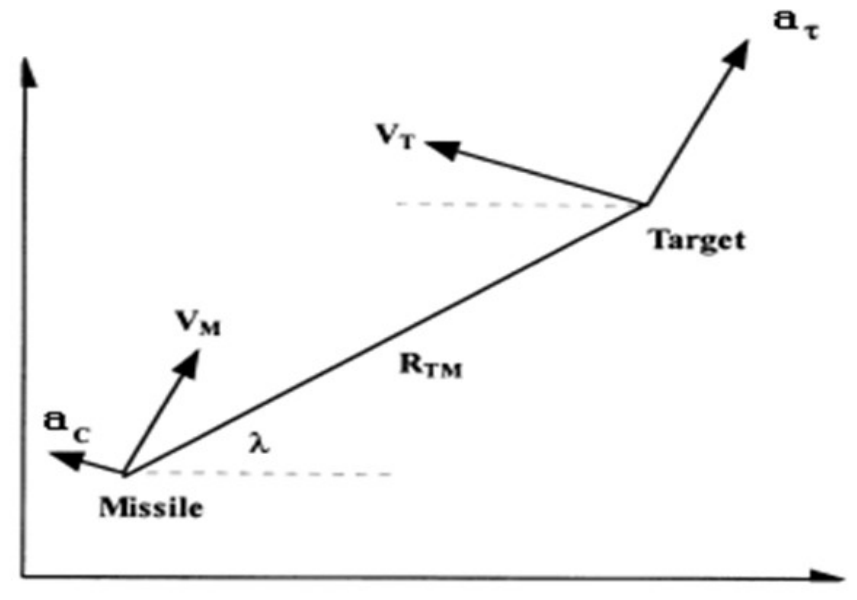
Proportional navigation commands lateral acceleration in proportion to the closing velocity and the line-of-sight angular rate. The guidance law used in the source manuscript is
where is the commanded lateral acceleration, N is the navigation constant, is the missile–target closing velocity, and is the line-of-sight angular rate.
Figure 1.
Missile–target engagement geometry used in the proportional-navigation formulation.
3. Fuzzy Guidance System
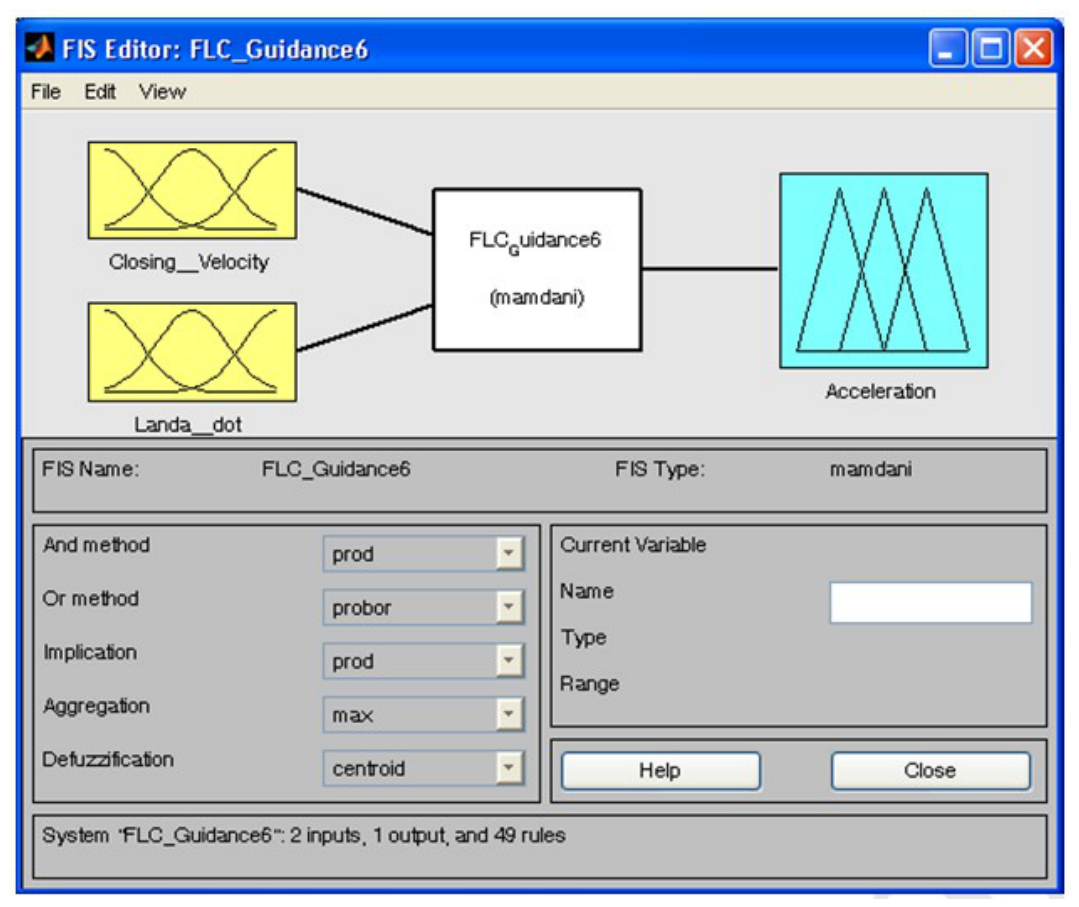
A fuzzy system performs inference using fuzzy sets and fuzzy logic. The controller considered in this work consists of a database, fuzzification stage, decision-making unit, and defuzzification stage. Input signals are first converted into fuzzy linguistic variables. The rule base is then used to determine the fuzzy output, which is finally converted into a crisp acceleration command [55].
3.1. Inputs and Output
The two fuzzy-controller inputs are the closing velocity and the line-of-sight angular rate . The controller output is the commanded acceleration.
Figure 2.
MATLAB fuzzy-inference-system editor showing closing velocity and line-of-sight angular rate as inputs and acceleration as the output.
Figure 2.
MATLAB fuzzy-inference-system editor showing closing velocity and line-of-sight angular rate as inputs and acceleration as the output.
3.2. Membership Functions
Seven linguistic labels are used:
- NB: negative big,
- NM: negative medium,
- NS: negative small,
- ZE: zero,
- PS: positive small,
- PM: positive medium,
- PB: positive big.
The membership functions used for the controller inputs and output are shown in Figure 3.
3.3. Fuzzy Rule Base
The source paper uses a rule base. Table 1 reproduces the supplied fuzzy guidance table in LaTeX form. Rows correspond to and columns correspond to .
The fuzzy rules can be expressed in linguistic form. For example, a rule has the structure
The rule-editor implementation in MATLAB is shown in Figure 4.
For each rule, membership values are evaluated for the conditional terms. The fuzzy output is then passed to a defuzzification stage. The source manuscript uses a centroid-type defuzzification approach.
Figure 5.
Example relationship between line-of-sight angular rate and the fuzzy-controller acceleration output.
Figure 5.
Example relationship between line-of-sight angular rate and the fuzzy-controller acceleration output.
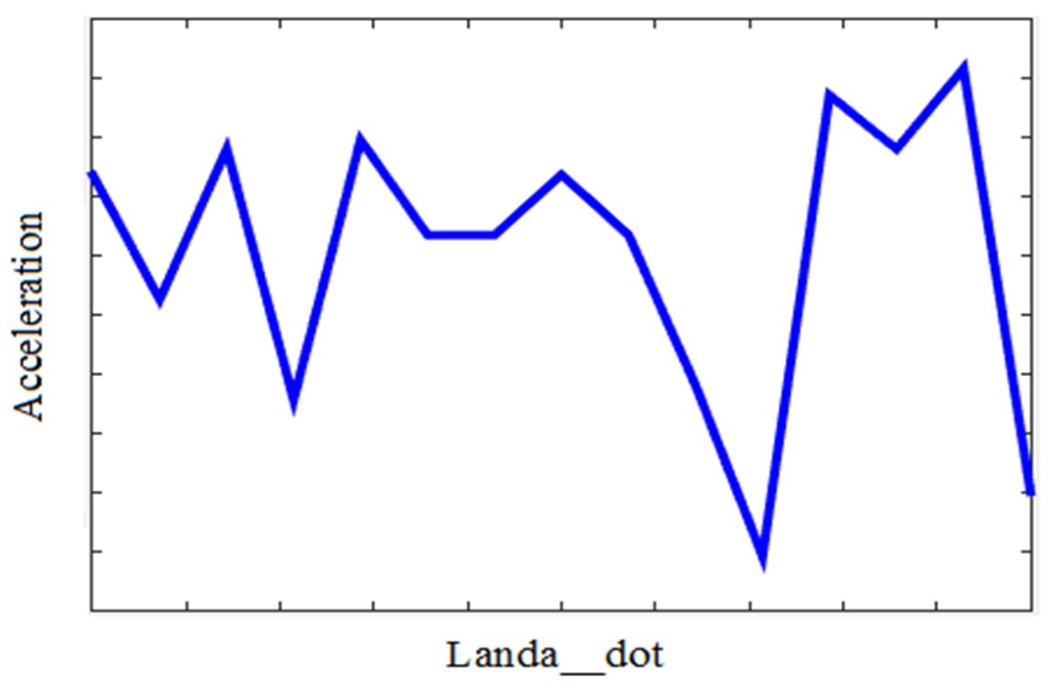
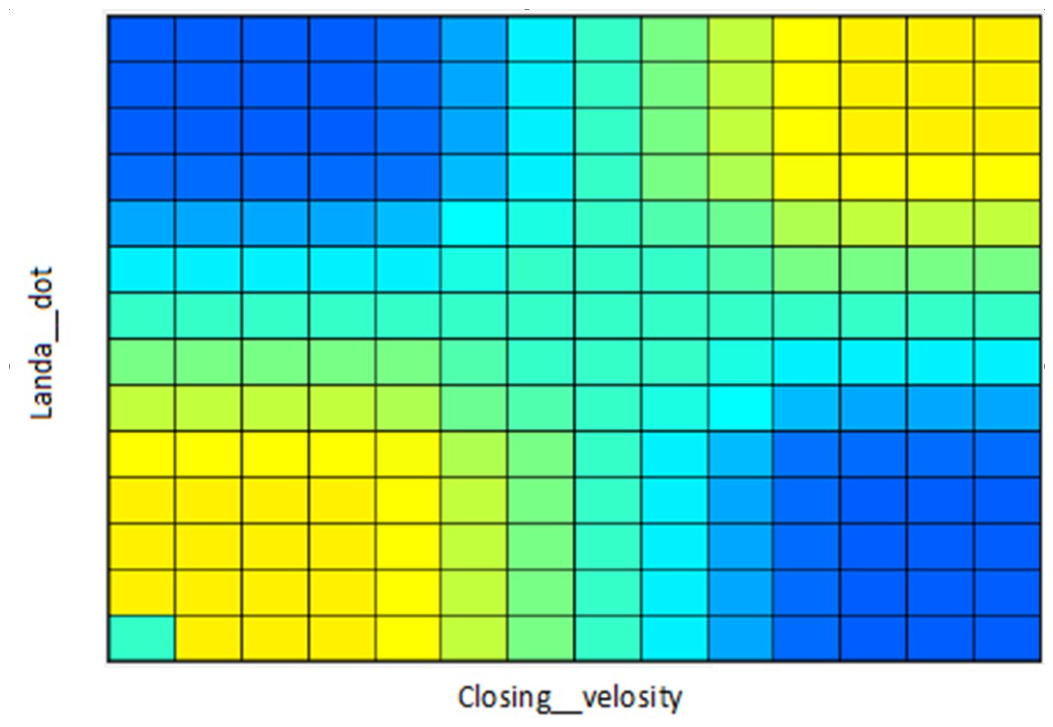
Figure 6.
Relationship between the two fuzzy inputs, closing velocity and line-of-sight angular rate.
Figure 6.
Relationship between the two fuzzy inputs, closing velocity and line-of-sight angular rate.
4. Simulation Model
The missile model was implemented in MATLAB/Simulink. The model contains five main blocks, as shown in Figure 7.
The main blocks are:
- 1.
- Target model: provides the target trajectory, with or without maneuvering.
- 2.
- Seeker/tracker: includes seeker dynamics, associated gyroscopes, line-of-sight calculations, and sensor-control dynamics.
- 3.
- Guidance: contains the guidance law and the required flight sequencing.
- 4.
- Airframe and autopilot: includes the autopilot, navigation sensors, control-surface actuators, aerodynamics, flight equations, and atmosphere model.
- 5.
- 3-DOF animation: provides a graphical representation of missile motion.
In the comparative simulations, the guidance block is alternatively configured with conventional PN or the fuzzy guidance controller. The principal performance index is the integral of the absolute lateral acceleration, which is treated as a measure of control effort and fuel consumption.
5. Simulation Results
5.1. Scenario 1: Fixed Target
For the first scenario, the target is fixed and the initial missile angle is zero. Figure 8 shows the missile and target trajectories.
Figure 9 compares the accumulated absolute lateral acceleration for PN and fuzzy guidance.
The source manuscript reports a final value of approximately 304 energy units for PN guidance and 316 energy units for fuzzy guidance. Therefore, PN performs slightly better for this fixed-target case.
5.2. Scenario 2: Target Maneuvering at 3g
The second scenario introduces a target maneuver of 3g. Figure 10 shows the missile and target trajectories.
The accumulated absolute lateral acceleration is shown in Figure 11.
The source paper reports approximately 456 energy units for PN and 455 energy units for fuzzy guidance. Thus, at 3g the two methods are nearly equivalent, with fuzzy guidance providing a small reduction.
5.3. Scenario 3: Higher Target Maneuvers
The third scenario considers 5g and 6g target maneuvers. Figure 12 compares the accumulated absolute lateral acceleration.
For the 5g case, the source manuscript reports approximately 573 energy units for PN guidance and 565 energy units for fuzzy guidance. For the 6g case, the corresponding values are approximately 643 and 606 energy units. These results indicate that the relative advantage of fuzzy guidance increases as target maneuver intensity increases.
5.4. Scenario 4: Fixed Target with Seeker Noise
The fourth scenario considers a fixed target with added seeker noise. Figure 13 compares the accumulated absolute lateral acceleration.
The source manuscript reports approximately 363 energy units for PN guidance and 335 energy units for fuzzy guidance. Under this noisy-sensor condition, fuzzy guidance requires less control effort according to the selected performance index.
6. Discussion
The simulations indicate that conventional PN performs slightly better for a fixed and non-maneuvering target, whereas fuzzy guidance becomes more competitive as the target maneuver intensity increases. For the 3g maneuver, the two methods are nearly equivalent. For 5g and 6g maneuvers, the fuzzy guidance controller achieves lower accumulated absolute lateral acceleration.
The simulations also show that fuzzy guidance is less sensitive to seeker noise under the conditions studied. This is consistent with the general motivation for fuzzy control in nonlinear systems with uncertain or incomplete model information.
The results are specific to the supplied simulation model, controller settings, membership functions, and rule base. The source paper treats the integral of absolute lateral acceleration as a proxy for fuel consumption; therefore, the comparisons reported here should be interpreted in terms of that selected control-effort measure.
7. Conclusions
This paper compares fuzzy proportional-navigation guidance with conventional proportional navigation using a comparatively complete 3-DOF missile model. The simulations include seeker/tracker dynamics, airframe and autopilot dynamics, actuator effects, sensor noise, and other nonlinearities represented in the supplied model. For a fixed target, conventional PN produces a slightly lower control-effort index. As target maneuver intensity increases, fuzzy guidance becomes more effective and produces lower accumulated absolute lateral acceleration. The fuzzy controller also performs better in the tested seeker-noise scenario. A possible extension suggested in the source manuscript is a hybrid guidance strategy in which PN is used for low-maneuvering targets and fuzzy guidance is used for highly maneuvering targets, with the transition between the two strategies determined by a fuzzy supervisory mechanism.
References
- Lin, C.M.; Mon, Y.J. Fuzzy Logic Based Guidance Law Design for Missile Systems. In Proceedings of the IEEE International Conference on Control Applications, 1999, pp. 421–426.
- Mishra, S.K.; Sarma, I.G.; Swamg, K.N. Performance Evaluation of Two Fuzzy Logic Based Homing Guidance Schemes. Journal of Guidance, Control and Dynamics 1993, pp. 1381–1391.
- Rajasekhar, V.; Sreenatha, A.G. Fuzzy Logic Implementation of Proportional Navigation Guidance. Acta Astronautica 1999. [CrossRef]
- Becan, M.R.; Kuzucu, A. Fuzzy Predictive Pursuit Guidance in the Homing Missiles. International of Information Technology 2004.
- Cossette, J.F.; Smolarkiewicz, P.K.; Charbonneau, P. The Monge–Ampere Trajectory Correction for Semi-Lagrangian Schemes. Journal of Computational Physics 2014, 274, 208–229. [CrossRef]
- Buonincontri, G.; Methner, C.; Krieg, T.; Carpenter, T.A.; Sawiak, S.J. Trajectory Correction for Free-Breathing Radial Cine MRI. Magnetic Resonance Imaging 2014, 32, 961–964. [CrossRef]
- Bin, X.; Liang, Z. Trajectory Correction Projectile and Analysis on the Key Technologies for the Trajectory Correction Process. National Defense Science & Technology 2013, 34, 27–33.
- Martínez, M.; Bruno, N.; Kelly, R. Ballistic and Weaponeering Analysis of Projectiles Using Optical Strobe Tracer as Self-Registration Method to Improve Accuracy and Crease Dispersion of Direct and Indirect Fire Weapons. In Proceedings of the Proceedings of the 27th International Symposium on Ballistics, Freiburg, Germany, 2013; pp. 302–313.
- Qiang, S.; Pian, Z.; Deng-Hong, Y.; Dong-Guang, L. Correction Strategy Analysis on One-Dimensional Trajectory Correction Fuze. Transactions of Beijing Institute of Technology 2013, 33, 445–448.
- Xu, Y.; Wang, Z.; Gao, B. Six-Degree-of-Freedom Digital Simulations for Missile Guidance and Control. Bibliographic details incomplete in the source manuscript. [CrossRef]
- Zarchan, P. Tactical and Strategic Missile Guidance, 6 ed.; Vol. 239, Progress in Astronautics and Aeronautics, American Institute of Aeronautics and Astronautics: Reston, VA, 2012.
- Palumbo, N.F.; Blauwkamp, R.A.; Lloyd, J.M. Basic Principles of Homing Guidance. Johns Hopkins APL Technical Digest 2010, 29, 25–41.
- Palumbo, N.F.; Blauwkamp, R.A.; Lloyd, J.M. Modern Homing Missile Guidance Theory and Techniques. Johns Hopkins APL Technical Digest 2010, 29, 42–59.
- Palumbo, N.F.; Harrison, G.A.; Blauwkamp, R.A.; Marquart, J.K. Guidance Filter Fundamentals. Johns Hopkins APL Technical Digest 2010, 29, 60–70.
- Jackson, P.B. Overview of Missile Flight Control Systems. Johns Hopkins APL Technical Digest 2010, 29, 9–24.
- Hawley, P.A.; Blauwkamp, R.A. Six-Degree-of-Freedom Digital Simulations for Missile Guidance, Navigation, and Control. Johns Hopkins APL Technical Digest 2010, 29, 71–84.
- Palumbo, N.F.; Reardon, B.E.; Blauwkamp, R.A. Integrated Guidance and Control for Homing Missiles. Johns Hopkins APL Technical Digest 2005, 25, 121–139.
- Reardon, B.E.; Lloyd, J.M.; Perel, R.Y. Tuning Missile Guidance and Control Algorithms Using Simultaneous Perturbation Stochastic Approximation. Johns Hopkins APL Technical Digest 2010, 29.
- Gurfil, P.; Jodorkovsky, M.; Guelman, M. Simple Guidance Law Against Highly Maneuvering Targets. In Proceedings of the AIAA Guidance, Navigation, and Control Conference and Exhibit, 1998.
- Mozaffari, M.; Safarinejadian, B.; Binazadeh, T. Optimal Guidance Law Based on Virtual Sliding Target. Journal of Aerospace Engineering 2017, 30. [CrossRef]
- Wang, Y.; Wang, H.; Lin, D.; Wang, W. Nonlinear Modified Bias Proportional Navigation Guidance Law Against Maneuvering Targets. Journal of the Franklin Institute 2022, 359, 2949–2975. [CrossRef]
- Singh, N.K.; Hota, S. FOV Constrained Guidance Law for Nonstationary Nonmaneuvering Target Interception with Any Impact Angle. Proceedings of the Institution of Mechanical Engineers, Part G: Journal of Aerospace Engineering 2022, 236. [CrossRef]
- Vincent, T.L.; Cottrell, R.G.; Morgan, R.W. Minimizing Manoeuvre Advantage Requirements for a Hit-to-Kill Interceptor. Proceedings of the Institution of Mechanical Engineers, Part G: Journal of Aerospace Engineering 2005, 219. [CrossRef]
- Zhang, Y.; Sun, M.; Chen, Z. Finite-Time Convergent Guidance Law with Impact Angle Constraint Based on Sliding-Mode Control. Nonlinear Dynamics 2012, 70, 619–625. [CrossRef]
- Shin, H.S.; Tsourdos, A.; Li, K.B. A New Three-Dimensional Sliding Mode Guidance Law Variation with Finite Time Convergence. IEEE Transactions on Aerospace and Electronic Systems 2017, 53, 2221–2232. [CrossRef]
- Geng, S.T.; Zhang, J.; Sun, J.G. Adaptive Back-Stepping Sliding Mode Guidance Laws with Autopilot Dynamics and Acceleration Saturation Consideration. Proceedings of the Institution of Mechanical Engineers, Part G: Journal of Aerospace Engineering 2019, 233, 4853–4863. [CrossRef]
- Savkin, A.V.; Pathirana, P.N.; Faruqi, F.A. Problem of Precision Missile Guidance: LQR and H-Infinity Control Frameworks. IEEE Transactions on Aerospace and Electronic Systems 2003, 39, 901–910. [CrossRef]
- Rajasekhar, V.; Anavatti, S.G. Fuzzy Logic Implementation of Proportional Navigation Guidance. Acta Astronautica 2000, 46, 17–24. [CrossRef]
- Missile Guidance Algorithm Design Using Inverse Kinematics and Fuzzy Logic. Fuzzy Sets and Systems 1996, 79, 287–295. [CrossRef]
- Hassan, L.; Sadati, S.H.; Karimi, J. Integrated Fuzzy Guidance Law for High Maneuvering Targets Based on Proportional Navigation Guidance. Iranian Journal of Electrical and Electronic Engineering 2013, 9, 204–214.
- Gürsoy-Demir, H.; Efe, M.Ö. Adaptive Second Order Sliding Mode Guidance Law for Missile-Target Interception with Fuzzy Logic System. Proceedings of the Institution of Mechanical Engineers, Part G: Journal of Aerospace Engineering 2023, 237, 2665–2676. [CrossRef]
- Lin, C.L.; Chen, K.M.; Wu, M.T.; Huang, S.W. Hybrid Guidance Law for Interception of Ballistic Targets. Proceedings of the Institution of Mechanical Engineers, Part G: Journal of Aerospace Engineering 2006, 220. [CrossRef]
- Vural, A.Ö. Fuzzy Logic Guidance System Design for Guided Missiles. Master’s thesis, Middle East Technical University, 2003.
- Hajati, F.; Faez, K.; Pakazad, S.K. An Efficient Method for Face Localization and Recognition in Color Images. In Proceedings of the Systems, Man and Cybernetics, 2006. SMC’06. IEEE International Conference on. IEEE, 2006, Vol. 5, pp. 4214–4219. [CrossRef]
- Pakazad, S.K.; Faez, K.; Hajati, F. Face Detection Based on Central Geometrical Moments of Face Components. In Proceedings of the Systems, Man and Cybernetics, 2006. SMC’06. IEEE International Conference on, 2006, pp. 4225–4230.
- Hajati, F.; Raie, A.A.; Gao, Y. Pose-invariant 2.5 D face recognition using geodesic texture warping. In Proceedings of the 2010 11th International Conference on Control Automation Robotics & Vision. IEEE, 2010, pp. 1837–1841.
- Ayatollahi, F.; Raie, A.A.; Hajati, F. Expression-invariant face recognition using depth and intensity dual-tree complex wavelet transform features. Journal of Electronic Imaging 2015, 24, 023031–023031. [CrossRef]
- Shojaiee, F.; Hajati, F. Local composition derivative pattern for palmprint recognition. In Proceedings of the 2014 22nd Iranian Conference on Electrical Engineering (ICEE). IEEE, 2014, pp. 965–970.
- Abdoli, S.; Hajati, F. Offline signature verification using geodesic derivative pattern. In Proceedings of the 2014 22nd Iranian Conference on Electrical Engineering (ICEE). IEEE, 2014, pp. 1018–1023.
- Hajati, F.; Cheraghian, A.; Gheisari, S.; Gao, Y.; Mian, A.S. Surface geodesic pattern for 3D deformable texture matching. Pattern Recognition 2017, 62, 21–32. [CrossRef]
- Cremers, D.; Reid, I.; Saito, H.; Yang, M.H. Computer Vision–ACCV 2014: 12th Asian Conference on Computer Vision, Singapore, Singapore, November 1-5, 2014, Revised Selected Papers, Part V; Springer, 2015.
- Barzamini, R.; Hajati, F.; Gheisari, S.; Motamadinejad, M. Short term load forecasting using multi-layer perception and fuzzy inference systems. Journal of Applied Sciences 2012, 12, 40–47. [CrossRef]
- Fiorini, S.; Hajati, F.; Barla, A.; Girosi, F. Predicting diabetes second-line therapy initiation in the Australian population via timespan-guided neural attention network. PLOS ONE 2019, 10, e0211844.
- Tavakolian, A.; Hajati, F.; Rezaee, A.; Fasakhodi, A.O.; Uddin, S. Fast COVID-19 versus H1N1 screening using optimized parallel inception. Expert Systems with Applications 2022, 204, 117551. [CrossRef]
- Tavakolian, A.; Rezaee, A.; Hajati, F.; Uddin, S. Hospital readmission and length-of-stay prediction using an optimized hybrid deep model. Future Internet 2023, 15, 304. [CrossRef]
- Zobeiri, A.; Rezaee, A.; Hajati, F.; Argha, A.; Alinejad-Rokny, H. Post-cardiac arrest outcome prediction using machine learning: a systematic review and meta-analysis. International Journal of Medical Informatics 2025, 193, 105659. [CrossRef]
- Jamshidiha, S.; Rezaee, A.; Hajati, F.; Golzan, M.; Chiong, R. An explainable transformer model for Alzheimer’s disease detection using retinal imaging. Scientific Reports 2025, 15, 26773. [CrossRef]
- Khan, M.W.; Sheng, H.; Zhang, H.; Du, H.; Wang, S.; Coroneo, M.; Hajati, F.; Shariflou, S.; Kalloniatis, M.; Phu, J.; et al. RVD: a handheld device-based fundus video dataset for retinal vessel segmentation. In Proceedings of the NeurIPS, 2024.
- Wang, S.; Lu, H.; Khan, A.; Hajati, F.; Khushi, M.; Uddin, S. A machine learning software tool for multiclass classification. Software Impacts 2022, 13, 100383. [CrossRef]
- Barolli, L.; Takizawa, M.; Enokido, T.; Chen, H.C.; Matsuo, K. Advances on Broad-Band Wireless Computing, Communication and Applications: Proceedings of the 15th International Conference on Broad-Band and Wireless Computing, Communication and Applications (BWCCA-2020); Springer Nature, 2020.
- Mohamadzade, B.; Rezaee, A. Compact and broadband dual sleeve monopole antenna for GSM, WiMAX and WLAN application. Microwave and Optical Technology Letters 2017, 59, 1271–1277. [CrossRef]
- Rezaee, A. Model predictive for Mobile robot control. Transactions on Environment and Electrical Engineering 2017, 2, 17–22. [CrossRef]
- Gavagsaz, E.; Rezaee, A.; Haj Seyyed Javadi, H. Load balancing in reducers for skewed data in MapReduce systems by using scalable simple random sampling. The Journal of Supercomputing 2018, 74, 3415–3440. [CrossRef]
- Sarvghad, S.; Rezaee, A.; Masomi, F. On the Relationship between Thinking Styles and Self-Efficacy of Pre-University Students in Shiraz 2011.
- Siddiqui, K.M.; Sahay, K.; Giri, V.K. Performance and Analysis of Switching Function Based Voltage Source Inverter Fed Induction Motor. International Electrical Engineering Journal 2014, 5, 1545–1552.
Figure 3.
Membership functions used for the fuzzy variables.
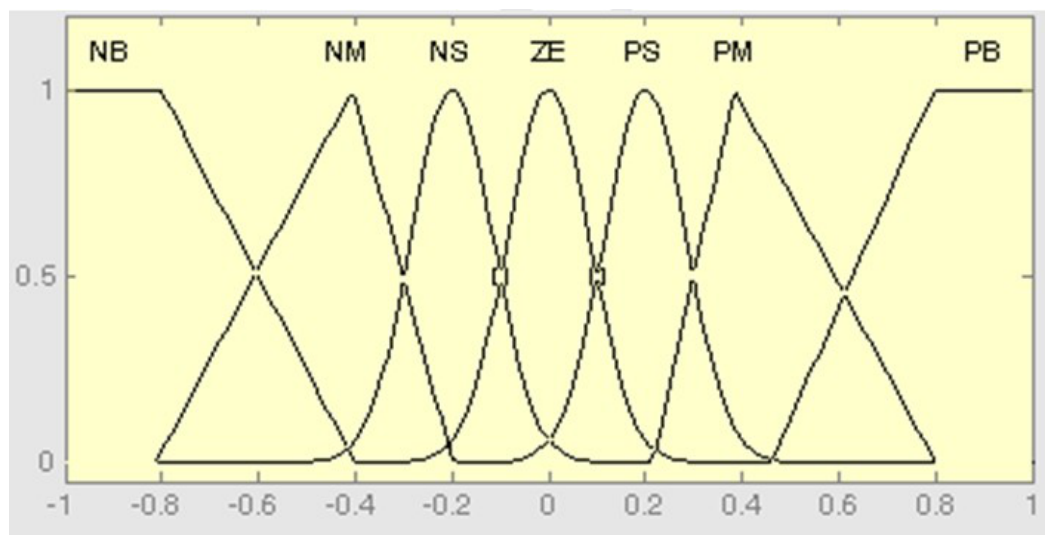
Figure 4.
MATLAB fuzzy rule editor used to implement the guidance rule base.
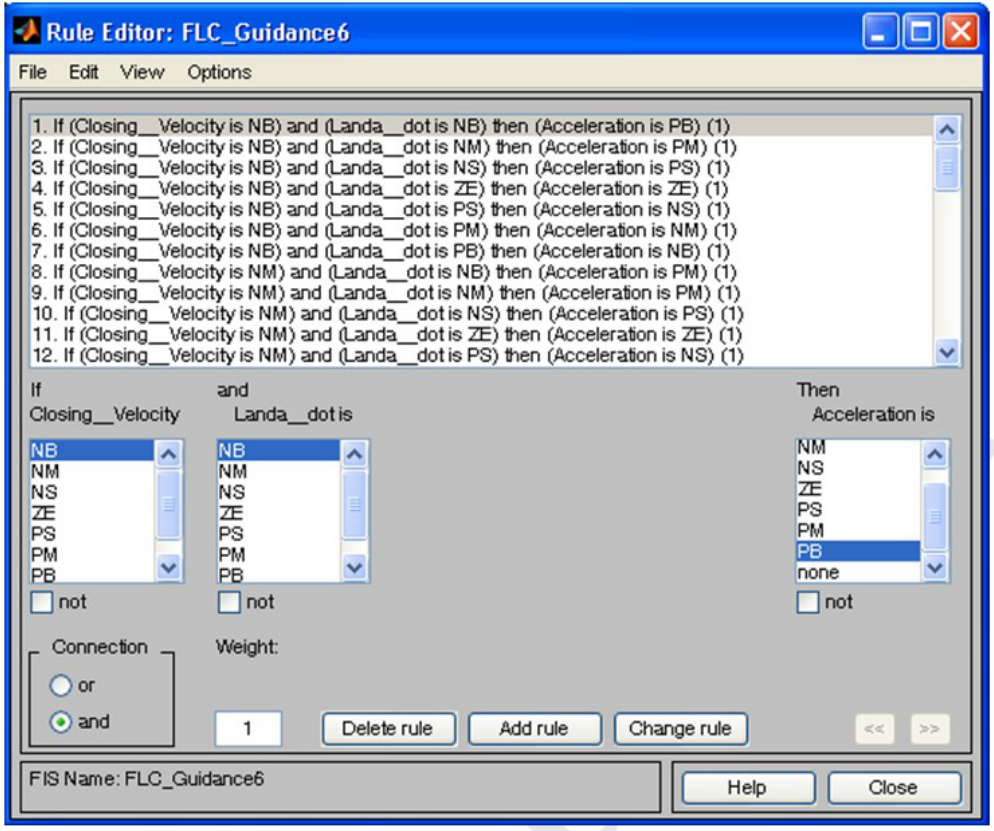
Figure 7.
Block diagram of the missile simulation model.
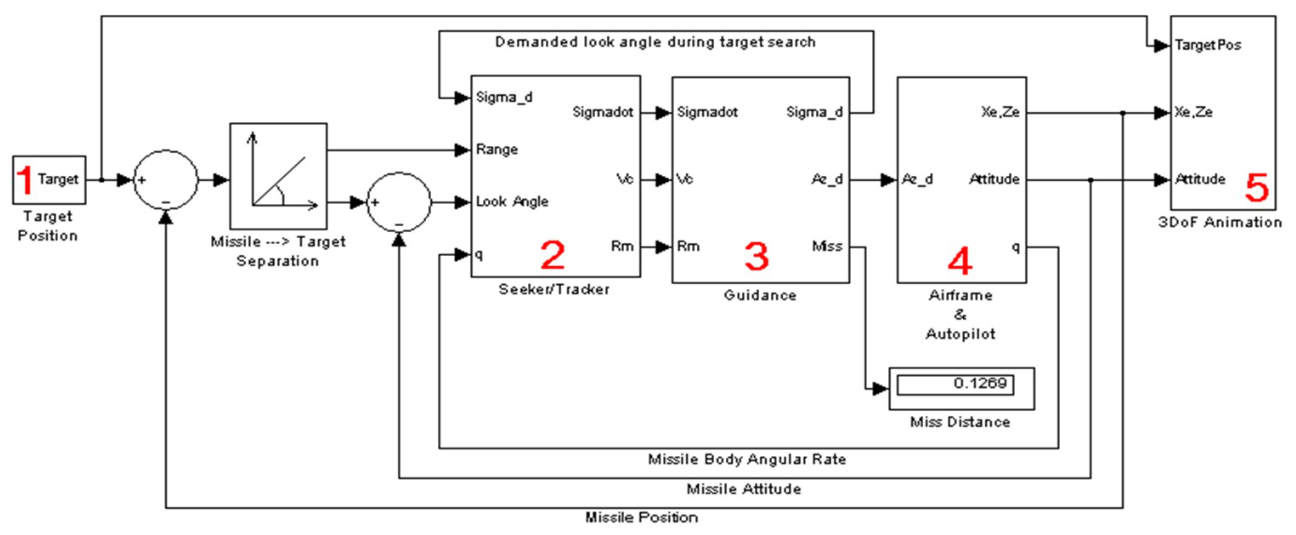
Figure 8.
Missile and target trajectories for the fixed-target scenario.
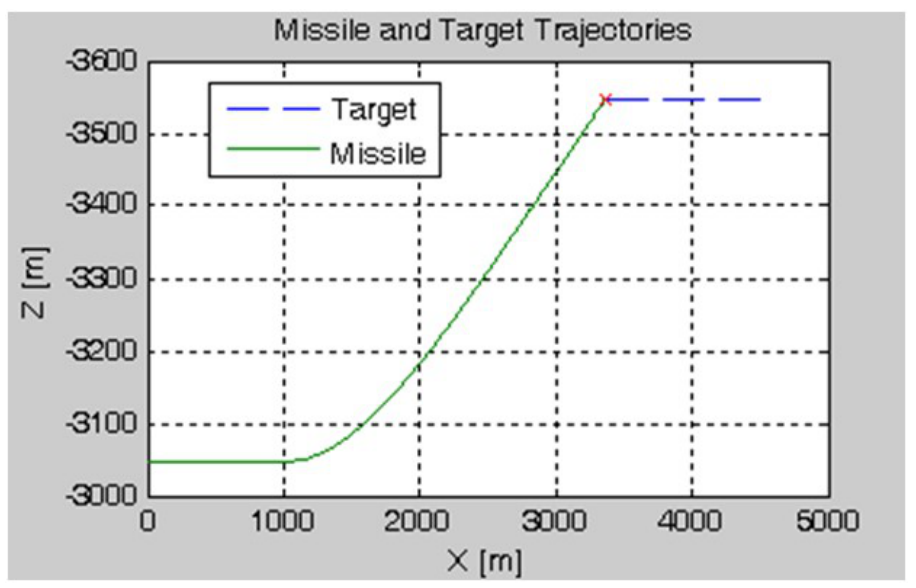
Figure 9.
Integral of absolute lateral acceleration for PN and fuzzy guidance in the fixed-target scenario.
Figure 9.
Integral of absolute lateral acceleration for PN and fuzzy guidance in the fixed-target scenario.
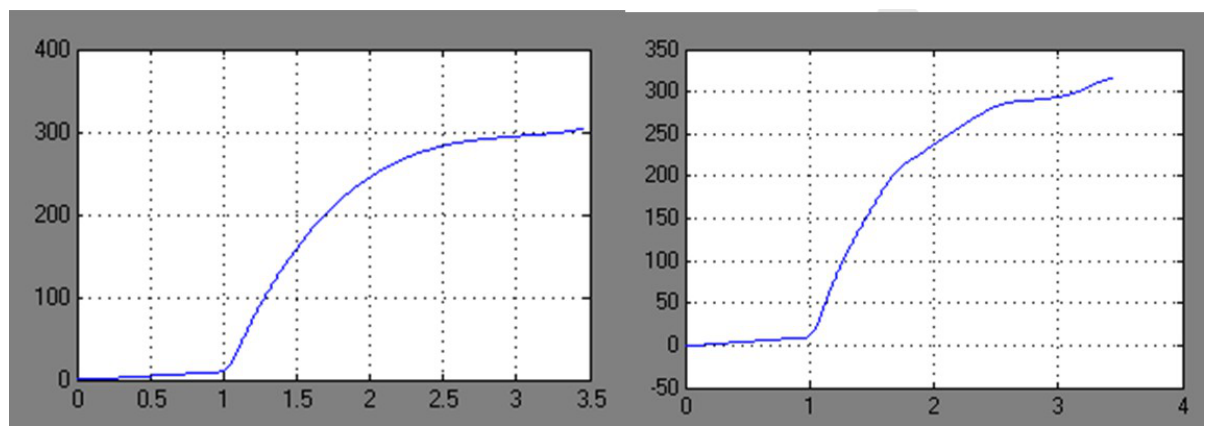
Figure 10.
Missile and target trajectories for the 3g target-maneuver scenario.
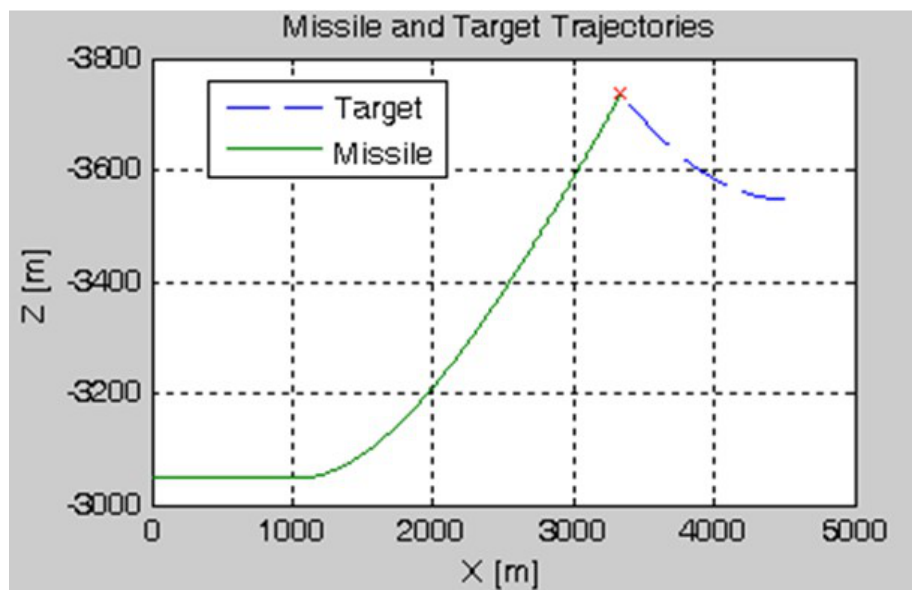
Figure 11.
Integral of absolute lateral acceleration for PN and fuzzy guidance with a 3g target maneuver.
Figure 11.
Integral of absolute lateral acceleration for PN and fuzzy guidance with a 3g target maneuver.
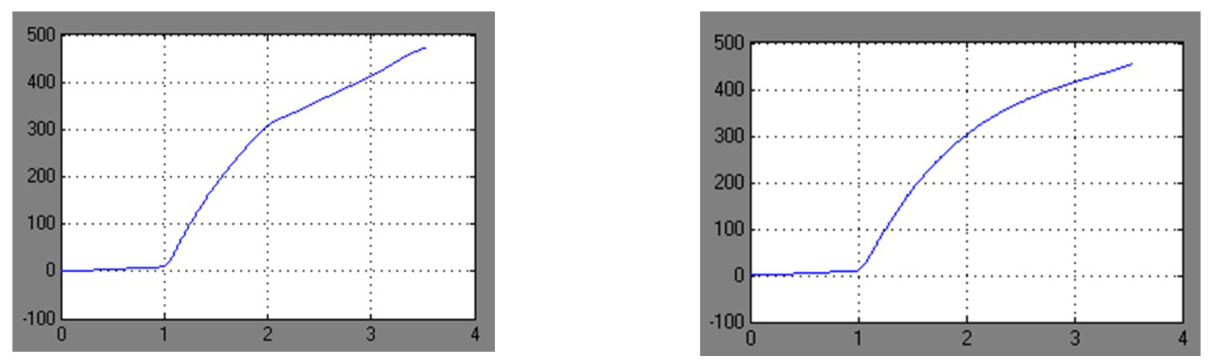
Figure 12.
Integral of absolute lateral acceleration for PN and fuzzy guidance under 5g and 6g target maneuvers.
Figure 12.
Integral of absolute lateral acceleration for PN and fuzzy guidance under 5g and 6g target maneuvers.
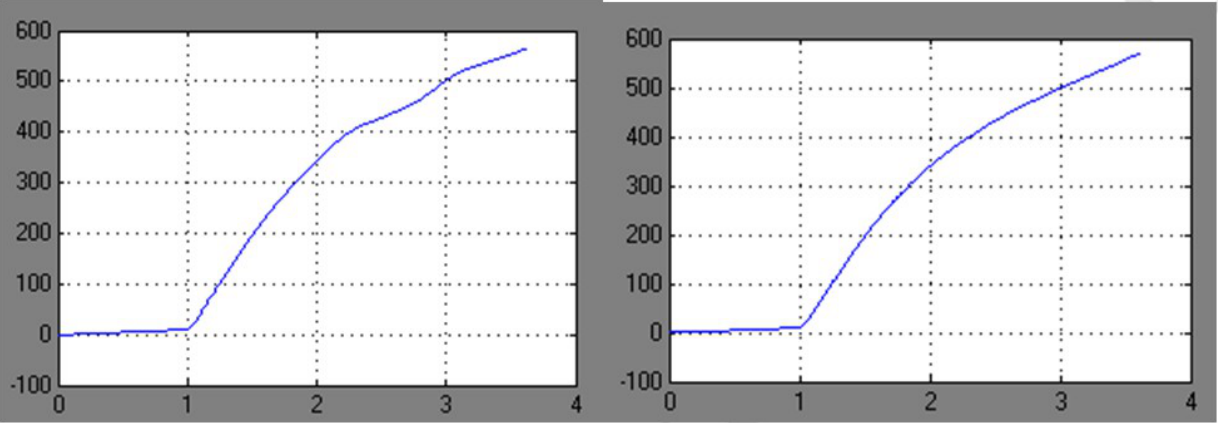
Figure 13.
Integral of absolute lateral acceleration for PN and fuzzy guidance for a fixed target with seeker noise.
Figure 13.
Integral of absolute lateral acceleration for PN and fuzzy guidance for a fixed target with seeker noise.
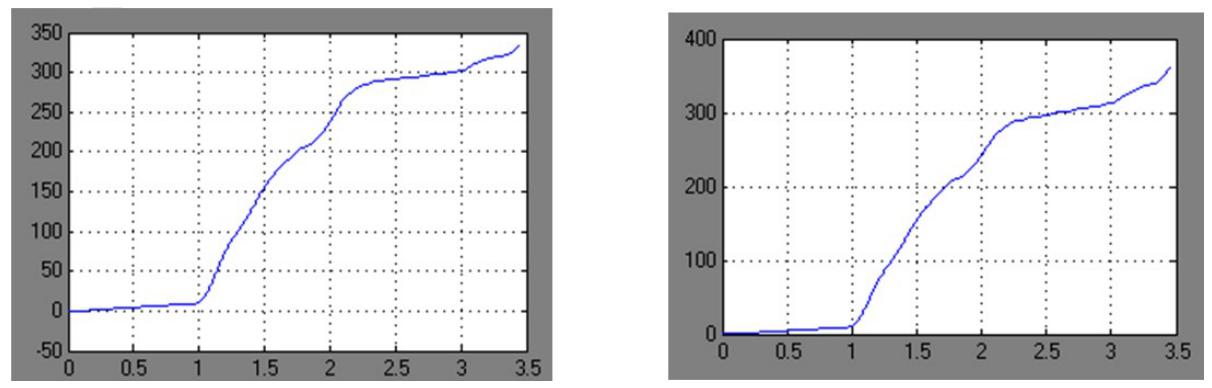

Table 1.
Fuzzy guidance rule base for the two inputs and one output.
| NB | NM | NS | ZE | PS | PM | PB | |
| PB | NB | NM | NS | ZE | PS | PM | PB |
| PM | NM | NM | NS | ZE | PS | PM | PM |
| PS | NS | NS | ZE | ZE | ZE | PS | PS |
| ZE | ZE | ZE | ZE | ZE | ZE | ZE | ZE |
| NS | PS | PS | ZE | ZE | ZE | NS | NS |
| NM | PM | PM | PS | ZE | NS | NM | NM |
| NB | PB | PM | PS | ZE | NS | NM | NB |
Disclaimer/Publisher’s Note: The statements, opinions and data contained in all publications are solely those of the individual author(s) and contributor(s) and not of MDPI and/or the editor(s). MDPI and/or the editor(s) disclaim responsibility for any injury to people or property resulting from any ideas, methods, instructions or products referred to in the content. |
© 2026 by the authors. Licensee MDPI, Basel, Switzerland. This article is an open access article distributed under the terms and conditions of the Creative Commons Attribution (CC BY) license (http://creativecommons.org/licenses/by/4.0/).
Copyright: This open access article is published under a Creative Commons CC BY 4.0 license, which permit the free download, distribution, and reuse, provided that the author and preprint are cited in any reuse.