
Submitted:
14 August 2026
Posted:
18 August 2026
You are already at the latest version
Preprints on COVID-19 and SARS-CoV-2
Abstract
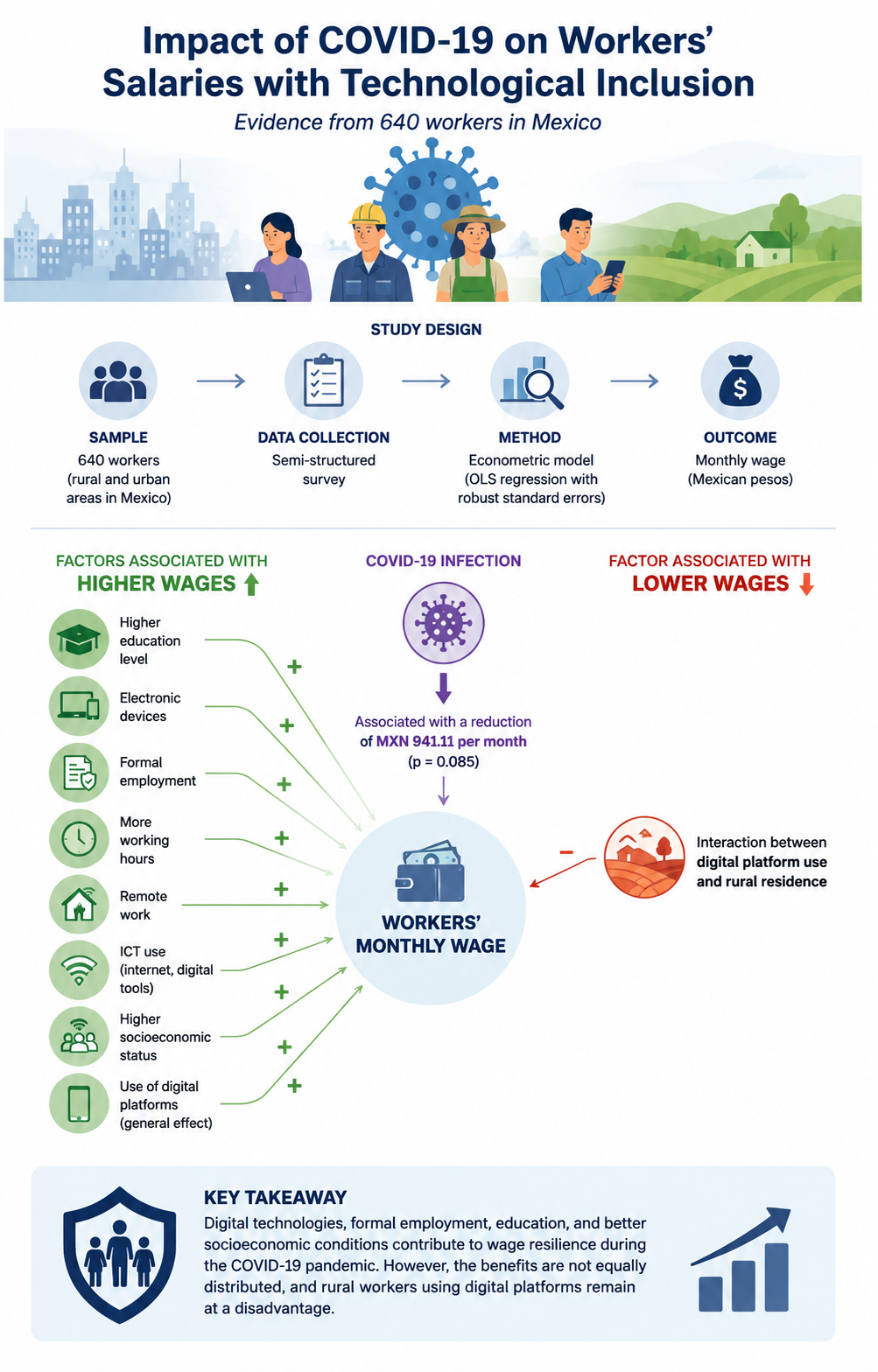
The COVID-19 pandemic disrupted labor markets and intensified existing wage inequalities, particularly among vulnerable workers and populations with limited access to digital resources. This study analyzes the impact of COVID-19 on workers’ wages in Mexico and examines the role of socioeconomic, educational, employment, and information and communication technology (ICT) factors. A quantitative, non-experimental study was conducted with a sample of 640 workers from rural and urban areas in Mexico. An econometric model was estimated using Ordinary Least Squares regression with heteroskedasticity-robust standard errors. The results show that COVID-19 infection was associated with a monthly wage reduction of MXN 941.11, although this effect was statistically marginal (p = 0.085). Age, educational attainment, electronic devices, formal employment, working hours, remote work, household head’s education, ICT use, socioeconomic status, and digital platform use showed positive associations with wages. However, the interaction between digital platform use and rural residence had a significant negative effect on wages. The findings suggest that digital technologies can contribute to wage resilience, but their benefits are unevenly distributed. Strengthening digital infrastructure and promoting formal employment may help reduce labor vulnerability and rural–urban wage disparities.
Keywords:
income
; Mexican workers
; COVID-19
; rural
; ICT
1. Introduction
The COVID-19 pandemic has severely impacted social and economic sustainability worldwide [1] in numerous ways, ranging from fatalities to disruptions in business operations and the workforce, leading to unemployment ([2], particularly among young adults [3], as well as reduced wages for workers [4]. Consequently, the International Labour Organization (ILO) has projected a slow labor market recovery and emphasized the need to focus on rural areas [5]. Meanwhile, Mexico has experienced low wages and high rates of labor informality [6], alongside a decline in employment [7]. This situation is concerning for Mexico, given the ongoing objective of supporting the poor and improving employment conditions and wages for workers.
It is important to consider that crises of any kind, such as the 2008 economic crisis and the COVID-19 pandemic, have impacted employment [8,9], resulting in immediate and medium-term social and economic consequences [10]. Telework offers a solution to this issue, as individuals with digital skills can work remotely and are less likely to be adversely affected by the pandemic [11]. Consequently, it is important to analyze the impact of COVID-19 on workers' wages in the context of information and communication technologies. Furthermore, there is a need to improve workers' wages and reduce wage inequality [12], given that young people and those with less work experience were the most affected by the pandemic [13].
Despite the existence of fair wages [14] and the ongoing effort to improve employment compensation [15], data from [16] indicate that the majority of the Mexican population earns between one and two minimum wages, set at 172.87 Mexican pesos per day in 2022, for their work. To understand this wage situation, various authors have analyzed and categorized the contributing factors as follows: 1) Sociodemographic factors, including age, sex, and economic income [17], socioeconomic status [18], and educational attainment[19,20]; 2) Work environment conditions, such as rural location [21], informality [12], and the length of the workday [22]; and 3) Technological aspects, focusing primarily on remote work [23] and the use of ICT in the workplace [24].
Wage inequality is linked to workers' skills [25], an area where digital skills come into play. However, no prior research appears to have jointly analyzed all the variables examined here to assess workers' wages during the COVID-19 pandemic. Consequently, this study seeks to understand the interaction between human capital and the technology shock triggered by the pandemic. This research aims to contribute by specifically examining the impact of COVID-19 on workers' wages, alongside the effects of variables such as age, education level, access to work-related computing equipment, formal employment status, working hours, remote work arrangements, the household head's education level, ICT usage, and socioeconomic status. Furthermore, this study is significant for its inclusion of regional analysis and its focus on the most vulnerable communities, specifically, rural regions.
The objective of this research was to analyze the impact of COVID-19 on the wages of workers in Mexico, incorporating other worker-related variables, such as age, education level, rural or urban location, electronic devices for work activities, formal employment, working hours, remote work, the household head's education level, ICT usage, and socioeconomic status, as well as the combined interaction of electronic devices and formal employment among rural workers.
The research questions posed are: Did the COVID-19 pandemic affect workers' wages? Were rural communities the most affected in terms of wages? What technological and social factors supported workers' wages? Answers to these questions will be addressed in the discussion of the results.
The hypotheses proposed were as follows: 1) COVID-19 negatively affected workers' wages; 2) workers in rural areas saw their wages affected; and 3) the variables, age, education level, computer equipment for work activities, formal employment, working hours, remote work, the household head's education level, ICT usage, and socioeconomic status, positively influence workers' wages.
1.1. Review of Scientific Literature: Wage Determinants and the Impact of COVID-19
This section presents research findings regarding the impact of COVID-19 in Mexico on workers' wages, alongside other factors such as education level, residence in rural areas, employment formality (analyzed through the lens of informality), working hours, remote work, ICT usage, and socioeconomic status. The subsequent sections analyze the impact on workers by incorporating the theoretical perspective of human capital.
1.2. The COVID-19 Pandemic as a Factor of Economic Impact in Mexico
The COVID-19 pandemic impacted Mexico's economy; according to the National Survey of Occupation and Employment, the first quarter of 2020 saw a contraction in income among low-income individuals and a rise in poverty within this group. Furthermore, the proportion of the population with income below the extreme poverty line rose from 35% of the total population in early 2020 to a record high of 45% (Monroy-Gómez, 2021).
Similarly, in Mexico, the 20–39 and 40–59 age groups accounted for 76% of confirmed COVID-19 cases; these groups were the most economically and professionally active and were unable to heed "stay-at-home" campaigns or comply with the suspension of work activities. Furthermore, some informal businesses were forced to close, leaving many employees without income, as these businesses lacked the technological infrastructure to implement remote work [26].
Although rural populations worldwide were the most affected, 36,000 cases of COVID-19 were recorded among this demographic in Mexico between March 2020 and September 2021; the risk of death for this group was 52% higher than for the urban population, regardless of age, sex, access to health services, number of chronic conditions, or obesity, indicating an increased vulnerability among rural populations during the pandemic [27].
This indicates that the pandemic did not occur in isolation but directly affected wages and caused unemployment; furthermore, it increased extreme poverty, as the virus forced the suspension of "non-essential" activities, leading to a contraction of the labor market and heightened vulnerability for individuals already earning low wages, such as those in the informal sector. Consequently, COVID-19 infection is included in the model as a factor that alters workers' wages.
1.3. Salary Level Outlook
It is necessary to consider that human capital is linked to capabilities acquired through formal and informal education, both at school and at home, as well as through training, experience, and labor market mobility; in this way, human capital generates economic growth [28]. This is where labor productivity involving the use of information technologies comes into play; consequently, this study presents an econometric model for predicting wages based on human capital variables, such as education and certain digital skills.
Furthermore, the COVID-19 pandemic impacted life worldwide, ranging from loss of life to economic activity, as many businesses shut down, either partially or permanently, and the labor market saw job losses and wage reductions. The pandemic led to a curtailment of "non-essential" activities, resulting in dramatic effects on economies and their labor markets [29]. In addition to low wages, there was a significant rise in informal employment and high rates of underemployment [6]. Domestic workers across 14 Latin American countries were particularly affected, facing layoffs or work suspensions without access to social protection, compounded by the fact that they earn wages below their country's average [30].
Given the prevalence of low wages resulting from the COVID-19 pandemic, and in alignment with Sustainable Development Goal 8, which advocates for decent work and fair wages [14], it is crucial to analyze the factors that positively or negatively influence workers' wages in order to address the challenges posed by the health crisis or other risks. Consequently, it is important to implement social and economic policies that protect workers from precarious employment, ensuring access to social security, dignified working hours, and fair wages to support their families. This research is justified by the fact that Mexico has a very high percentage of people who are vulnerable regarding wages and social security.
Meanwhile, during the pandemic, governments in countries such as Denmark, Italy, and the United Kingdom supported employees of formal businesses that had suspended operations by covering the majority of their wages [31]. Similarly, Mexico provided support by granting one million micro-loans of 25,000 pesos to micro-enterprises [32]; this assistance was crucial for sustaining businesses and maintaining workers' wages during the COVID-19 pandemic. However, many business owners operating in the informal sector were unable to access this support, placing them at a disadvantage compared to formal enterprises.
Regarding the economically active population in Mexico, earnings during the COVID-19 pandemic fell into the following categories based on the minimum wage (valued at 172.87 Mexican pesos per day): 1) 1 minimum wage – 17.5 million people; 2) 1 to 2 minimum wages – 19.4 million people; 3) 2 to 3 minimum wages – 5.6 million people; 4) 3 to 5 minimum wages – 2.2 million people; and 5) more than 5 minimum wages – 0.9 million people [16]. These data indicate that the majority of workers earned between 1 and 2 minimum wages. Consequently, it is important to analyze factors related to the pandemic and other variables, particularly ICT-driven innovation, which has been steadily increasing, especially during the pandemic, to understand the determinants of wages and consider public policies that could be implemented to address potential risks in Mexico.
Regarding COVID-19 in Mexico, certain sociodemographic factors, such as gender, age, and income, were associated with depressive symptoms during the health crisis, alongside stress and anxiety levels [17]. Similarly, unemployment, educational attainment, and suspected COVID-19 infection were social determinants of suicidal ideation during the pandemic [20]. Therefore, beyond these psychological aspects, low wages, and the general challenges workers faced during the COVID-19 era, it is important to examine the specific case of workers who contracted the virus.
Wage levels are based on sociodemographic and human capital factors; regarding education, workers with higher levels of schooling experience a greater impact on their perceived emotional well-being [19], as education facilitates access to formal employment [33]. However, age must be taken into account, as older adults with lower levels of education face difficulties in accessing formal jobs. Furthermore, older men living in rural communities face a greater need to work, given higher poverty rates and a lack of additional income sources [34]. Similarly, younger workers and those with lower levels of education also encountered difficulties in the labor market during the pandemic [11].
Regarding the rural sector, the ILO for Latin America noted a slow labor market recovery compared to urban areas, suggesting a need to focus on rural communities, particularly their productive processes [5], given that rural residents face economic challenges and inadequate digital infrastructure relative to urban areas [35].
Thus, it is important to analyze employment in rural communities with high poverty levels, as poverty was a significant factor in the spread of COVID-19; impoverished individuals had a more limited capacity to self-isolate and needed to continue working in order to survive [21].
Furthermore, workers who were already vulnerable in the labor market saw their vulnerability increase as a result of the pandemic; consequently, labor market inequalities deepened for women, young people, those with lower levels of education, low-wage earners, and workers with temporary or informal contracts [29]. The lower wages earned by working women, in turn, affect their households' food security [36].
Meanwhile, an analysis of the 2019 and 2020 Salary and Wage Survey in Malaysia, based on a sample of 29,627 individuals, found that vulnerable groups, specifically younger and older workers, experienced a sharper decline in wages during the COVID-19 pandemic. Because younger workers often lack the skills demanded by the labor market, they are far more exposed to economic shocks due to their inherent vulnerabilities [37].
In Mexico, the labor informality rate stands at 44% [16]; furthermore, informal employment became increasingly precarious during the COVID-19 pandemic, and its recovery is expected to be very slow, making economic reactivation necessary [12].
It is important to note that the majority of businesses in Mexico are small enterprises; specifically, 95.4% are "micro-enterprises" and 3.6% are small businesses. Furthermore, the labor market is characterized by a high rate of informality, with 57% of workers employed in the informal economy, which prevents them from accessing social security schemes [38]. Informal workers also experienced longer recovery times following COVID-19 infection due to a lack of access to healthcare services [2]. Likewise, they faced higher levels of unemployment, affecting 170% of informal workers, a situation also linked to low wages and poor working conditions [39].
Similarly, a study conducted in Mexico in June 2020, during the pandemic, found no relationship between informality and age, education level, or working hours [40]. Likewise, a study in Mexico City that analyzed informality using statistical data from public repositories via a probit model, incorporating variables such as education level, weekly working hours, and monthly salary, found that age and working hours were not statistically significant and thus did not influence informality; conversely, education level was found to have a negative impact on informality [41].
In Mexico, 15 million people work more than 48 hours a week [16]; however, it is worth noting that workers facing long hours, heavy responsibilities and tasks, and a requirement to be available 24 hours a day suffer a productivity disadvantage [42]. Furthermore, it should be considered that, in remote work arrangements, the hours worked often exceed those of a standard office schedule [22].
Regarding compensation for hours worked in other countries, there was support for workers; for instance, in Austria, Germany, and New Zealand, employees received their full wages even when working fewer hours, as the employer paid for the hours actually worked, while the government covered the unworked hours during the COVID-19 pandemic [31].
1.4. The Digital Economy During the Pandemic
Globalization has driven the adoption of online work. Consequently, working from home emerged as an innovative strategy during the COVID-19 pandemic, helping to foster a sense of organizational belonging while reducing employee stress and commuting time [23]. Online work also yielded positive economic outcomes[42]. Thus, working from home can be an excellent work arrangement, provided the employee experiences physical and mental well-being in their remote role [19]. Since the pandemic, various companies have adopted this model, as it allows them to maximize resources and achieve better results [43].
On the other hand, while it was widely considered that Mexico was not prepared for remote work, this arrangement proved to be one of the benefits most appreciated by Mexican workers; it allowed them to avoid commuting to the office, thereby saving time and sparing them the associated hassles and travel expenses [44]. At the same time, the majority of workers used their personal computers or laptops, as companies did not provide the necessary work equipment [45], a situation that disadvantaged the workers, who had to purchase their own computing equipment out of their own salaries.
In the academic sphere, this sector pioneered the implementation of remote work, as teachers were the first to face the need to convert their homes into offices and carry out their professional duties from there [46]. Naturally, it must be noted that most teachers were not digitally prepared to teach classes, nor did they have spaces in their homes set up for online instruction, let alone the necessary equipment, meaning they had to use their own salaries to purchase computers, modify their homes, and pay for internet service.
One advantage of working from home is that it serves as a key factor in employee retention for Generation “Y” [47]. This arrangement is mutually beneficial for both this generation and companies capable of conducting operations online, as it fosters a positive organizational climate while enabling cost savings for the business.
In the healthcare sector, the COVID-19 pandemic brought significant challenges and changes to medical workplaces. Healthcare workers not on the front lines were often permitted to work from home; however, they experienced inconsistent feelings regarding productivity, often perceiving themselves as less productive compared to their hospital-based counterparts, who felt highly productive [48].
It is also necessary to implement specific strategies regarding the transition to remote work, as this shift has generated additional costs for employees, such as purchasing computers and monitors and contracting internet and telecommunications services and has required dedicated home workspaces where they can work undisturbed for long periods. Such spaces are unavailable to a significant portion of the workforce living in small houses or tiny, shared apartments [49]; furthermore, the employee most often bears the brunt of these expenses out of their own salary.
Similarly, companies utilizing cutting-edge smart technology can enhance their competitiveness and lay the groundwork for long-term growth and market leadership; indeed, the COVID-19 pandemic created opportunities to leverage emerging technologies [24]. Likewise, smartphone usage enabled Facebook to serve as an efficient medium for providing social support and information to the general public during the pandemic, particularly to hospitalized women in the perinatal period who feared infection [50]. Consequently, there is a need to strengthen human capital regarding digital skills, as the pandemic accelerated digitalization, paving the way for a digital economy characterized by increased online commerce [51].
An analysis of ICT reveals that working from home served as a strategy for economic resilience, ensuring that workers with digital skills were the least affected in terms of their earnings; furthermore, ICTs enabled business continuity, helping companies remain in the market, improve competitiveness, maintain employee salary levels, and protect staff from COVID-19 infection.
Regarding socioeconomic status, it was found that individuals from higher socioeconomic backgrounds demonstrated greater resilience in facing the pandemic; this was due to their access to better workspaces, featuring good lighting and superior internet connectivity, which facilitated more favorable conditions for remote work [18]. Conversely, in Mexico, individuals from lower socioeconomic backgrounds were compelled to abandon their studies to secure employment and earn a wage, thereby highlighting employment-related inequality [52].
In Aragon, Spain, low-wage employees living in economically depressed areas also predominated; these were the workers who lost their jobs, received minimum social integration income, or ceased to receive unemployment benefits. Consequently, these workers faced a higher probability of COVID-19 infection compared to those earning €18,000 or more per year [53]. Therefore, a comprehensive paradigm shift is required, grounded in adequate and equitable funding that addresses economic inequalities, to ensure decent work, sustainable development, and gender equality in rural communities [30]. Furthermore, Indigenous people working in agriculture faced economic disadvantages, such as lower wages and unfavorable working conditions compared to non-Indigenous workers, due to factors related to language and culture [54].
1.5. Impact of the Pandemic on Rural Areas
The economic rescue policy was insufficient to address the needs of the rural population, compounded by the fact that this rural area received little direct investment and infrastructure support for commercial and export-oriented agriculture; therefore, broad participation involving the government, academia, the business sector, and rural society is required to strengthen the development of the rural sector [55].
The rural population was devastated by limited access to food, affordable jobs, infrastructure, and transportation; these unfavorable conditions hindered access to markets and the rural tourism sector, resulting in a depressed economy for rural Oaxaca.
Similarly, it was identified that women in Mexico experienced a reduction in wages during the 2020 pandemic due to unpaid work involving caregiving and household chores; consequently, there is a need to implement public policies that support women's better integration into the labor market [56].
In Mexico, the gender wage gap narrowed between the beginning and end of 2020, falling from 11.1% in the first quarter to 8.8% in the fourth, while women lost twice as many jobs as men because they held non-essential positions and roles that could not be performed from home; furthermore, female-dominated occupations pay less simply because they are performed by women [56].
2. Materials and Methods
2.1. Research Design
The study was quantitative and non-experimental, employing predictive analysis; a semi-structured survey yielding numerical data was conducted to develop an econometric model and determine the impact of socio-educational and technological variables on workers' wages during the COVID-19 pandemic.
2.2. Participants
Individuals were randomly selected from rural areas in the Mixteca region of Oaxaca, specifically the municipalities of Tepelmeme Villa de Morelos, Concepción Buenavista, and San Miguel Tequixtepec, and from urban areas; the selection included those who were employed in 2022, regardless of whether they had subsequently lost their jobs. The sample size calculation was based on the 2022 employed population of 60,586,757 [16]. A sample size of 385 was determined using a 95% confidence level and a 5% margin of error. Ultimately, the sample size used in this research consisted of 640 workers from Mexico, spanning both rural and urban communities.
2.3. Research Instrument
A semi-structured survey was conducted, comprising the following sections: 1) general information, 2) employment data during the COVID-19 pandemic, and 3) technology, specifically regarding electronic devices, ICT usage, and digital platforms. Based on theory concerning wages during the COVID-19 era, the variables presented in Figure 1 were analyzed. Workers' wages served as the dependent variable, given that the objective was to analyze the factors influencing wage behavior and the impact of COVID-19 on wages, while also considering other social and economic variables. These variables are also described in Table 1.
2.4. Data Analysis
Data cleaning was performed, and the correlation between the independent variables and salary was analyzed to examine their relationship. Subsequently, the impact of COVID-19 on salary was analyzed; upon observing the independence of the COVID-19 variables, it was decided to include the remaining variables to determine the impact of COVID-19 in conjunction with other variables.
2.5. Econometric Model
The econometric model proposed in this study is formulated as a wage function incorporating the study variables; it is represented by Equation 1 and includes the variables described in Table 1, as well as the following variable interactions: 1) Digital platforms and Rural location, and 2) Digital platforms and Formal employment. This model was estimated using Ordinary Least Squares (OLS) regression with a correction for heteroscedasticity in Stata software (version 16), utilizing dummy variables to improve the model's fit. Tests for functional independence were conducted between the COVID-19 infection variable and the other independent variables to measure the pandemic's impact on wages. Subsequently, the relationship between the COVID-19 variable and wages was evaluated; upon finding it to be significant and consistent with the expected sign, the remaining variables were included in the model. Finally, tests for residuals and multicollinearity were performed, yielding satisfactory results.
3. Results
This section presents the descriptive results of the data, as well as the results of the econometric model indicating the impact of COVID-19 on workers' wages.
3.1. Descriptive Results
Figure 2 presents a box plot showing the distribution of monthly salaries, denominated in Mexican pesos, for the individuals in the sample. The box represents the Interquartile Range (IQR), containing the central 50% of the data; the horizontal line within the box indicates the median, while the 'x' mark identifies the arithmetic mean of $11,058 pesos. The whiskers extend to the minimum ($500) and maximum ($28,000) values reported. The span of these whiskers and the position of the mean relative to the median confirm positive skewness and high income variability, thereby providing a technical justification for using regression with robust standard errors to ensure the validity of the inferences.
3.2. Econometric Model Results
Table 3 presents the results of the econometric model for the dependent variable "Wage," which is validated by the F-test. Most coefficients are positive; however, negative coefficients also appear, specifically for workers infected with COVID-19 and those using digital platforms in rural areas.
According to the results from Table 3 of the econometric model, the impact of COVID-19 on the wages of Mexican workers was negative; specifically, COVID-19 reduced monthly wages by $941.11 pesos, although the effect was statistically marginal (p = 0.085). Additionally, for every year of age, the monthly wage increased by $1,670.01. Regarding technology, the use of electronic devices at work, working from home, and the use of ICT were associated with wage increases of $911.27, $1,620.05, and $1,532.24, respectively. In terms of employment status, formal employment was associated with a wage increase of $3,176.73, while working one additional hour per day raised wages by $621.67; the education level of the head of the household also had a positive influence ($31.93), and socioeconomic status was closely linked to workers' wages ($15.41).
Furthermore, the model indicates that the use of digital platforms in urban areas increases wages by $7,172, whereas for workers using such platforms in rural areas, there is a negative effect of $18,088.09; consequently, the net effect of digital platforms in rural areas is that shown in Equation 3.
The assumptions of linear regression were met, such as the absence of multicollinearity, given that the average collinearity of the variables was 1.67. Regarding the assumption of heteroscedasticity, the "robust" command was used to correct for it. Furthermore, the model satisfies the assumption of residual normality. Regarding model specification, a p-value of 0.0000 was obtained, indicating a well-specified model.
4. Discussion
The COVID-19 pandemic reduced wages in Mexico by 941.11 Mexican pesos; this aligns with findings by Soares and Berg [29], who reported a negative wage change of 0.11, as well as with analyses showing lower wages [12] and job losses [57]. Regarding age and education, both factors were associated with wage increases, 167.01 and 243.81 pesos, respectively, indicating that higher age and education levels correlate with higher wages. This aligns with World Bank research across 40 countries showing that the COVID-19 pandemic disproportionately affected women, young people, and those with lower levels of education [58]; notably, in Mexico, women holding master's degrees saw wage increases [59], although others argue that education can act as a barrier to formal employment [33]. However, wage income is lower in rural areas, where educational attainment tends to be lower [60]. Similarly, while age has a positive impact on wages in this econometric model, with a mean age of 33 years, it is important to consider that both older individuals and young people face difficulties in accessing formal employment.
Furthermore, a distinction between salaried and non-salaried (informal) workers during the COVID-19 crisis reveals that those in formal employment experienced wage increases; consequently, it is advisable to encourage formal employment and discourage informality. This is illustrated by the case of Bogotá, Colombia, where the earnings of informal street vendors fell by 48% [61]. Therefore, public policies should be implemented in Mexico to incentivize the formalization of employment.
Furthermore, regarding vulnerable individuals residing in rural communities in Mexico who use digital platforms, this study’s results indicate that the real value of their wages declined by 10,915.16 pesos. This finding aligns with De et al. [60] and Subramaniam et al. [37], reflecting the significant gap between rural and urban wage levels; rural workers often lack employment contracts, which increases their economic vulnerability (Li et al., 2023). Research indicates that wage disparities exist based on racial background, with Indigenous workers facing disadvantageous wage conditions [60]. Consequently, the government should promote stronger public policies to support these workers, given the ILO's assessment that their post-pandemic recovery is expected to be slow [5,60].
Regarding technological aspects, specifically 1) electronic devices, 2) working from home, and 3) the use of ICT, these factors positively influenced wages by 911.27, 1620.50, and 1532.24, respectively. These variables are interconnected; working from home, using electronic devices (such as laptops or tablets), and utilizing ICT played a crucial combined role during the pandemic by facilitating social distancing and minimizing interpersonal contact, which fostered a positive economic effect. This occurred alongside the economic stimulus provided by online shopping [24] and the ability to communicate while avoiding physical contact and maintaining safe distances. It is also important to consider that digital technology can create new opportunities for individuals living in rural communities [62]. The results suggest that technological infrastructure can serve as a catalyst in rural areas, given that a lack of ICT exacerbated the actual impact of COVID-19 on wages. Furthermore, the combination of socioeconomic status and ICT usage for remote work leads to better working conditions [18], as well as increased worker motivation and productivity [63].
5. Conclusions
Based on the econometric model results regarding wage analysis among workers during the COVID-19 pandemic, the following conclusions are drawn: 1) The COVID-19 pandemic severely impacted employee wages in Mexico, causing a reduction of 941.11 Mexican pesos; 2) Workers residing in rural communities also saw their wages negatively affected, experiencing a real-term loss of 10,915.16 Mexican pesos; 3) Information and Communication Technologies (ICT) had a positive impact on employment; the use of electronic devices, remote work (home office), and ICT tools contributed to wage increases of 911.27, 1,620.50, and 1,532.24 pesos, respectively; 4) Age and education levels also contributed to higher wages; however, given that the average age in this study was 33, the sample should be expanded to analyze both younger and older workers; 5) Formal employment had a positive impact on wages, leading to an increase of 3,176.73 pesos; consequently, the government should implement public policies to reduce informal employment and incentivize the transition to the formal sector, enabling companies to provide social security and stable wages; 6) The government should formulate public policies, leveraging ICT, that provide workers with greater support to increase their wages and ensure protection against future pandemics or occupational risks. This research is particularly relevant due to its regional analysis and inclusion of the most vulnerable communities, specifically, rural areas.
Regarding digital infrastructure in rural communities, the finding of a negative impact of 10,915.16 pesos on rural workers who use digital platforms indicates that technology alone is not enough; therefore, the government needs to formulate an economic recovery policy that fosters investment in telecommunications infrastructure to ensure that digitalization helps address the rural-urban wage gap.
A limitation of this research is the importance of considering a regional factor, which may offer greater opportunities for future research involving the analysis of georeferenced data.
Author Contributions
Conceptualization, Martha Jiménez and Humberto Rios; methodology, Martha Jiménez and Ingrid A. Hernández; software, Martha Jiménez and Pilar Gómez; validation, Martha Jiménez; formal analysis, Martha Jiménez; investigation, Martha Jiménez, Pilar Gómez, Ingrid A. Hernández, and Humberto Rios; resources, Martha Jiménez; data curation, Martha Jiménez, Pilar Gómez, Ingrid A. Hernández.; writing—original draft preparation, Martha Jiménez; writing—review and editing, Martha Jiménez; visualization Martha Jiménez; supervision, Martha Jiménez; project administration, Martha Jiménez; funding acquisition, Martha Jiménez. All authors have read and agreed to the published version of the manuscript.
Funding
This research was funded by Instituto Politécnico Nacional, grant number SIP20260587 and The APC was funded by Instituto Politécnico Nacional.
Institutional Review Board Statement
Not applicable for studies not involving humans or animals.
Informed Consent Statement
Informed consent was obtained from all subjects involved in the study.
Data Availability Statement
Conflicts of Interest
The authors declare no conflicts of interest. The funders had no role in the design of the study; in the collection, analyses, or interpretation of data; in the writing of the manuscript; or in the decision to publish the results.
Abbreviations
The following abbreviations are used in this manuscript:
| COVID-19 | Coronavirus Disease 2019 |
| ICT | Information and communication technology |
| MXN | Mexican Peso |
| ILO | International Labour Organization |
References
- Alomari, E.; Katib, I.; Albeshri, A.; Mehmood, R. COVID-19: Detecting Government Pandemic Measures and Public Concerns from Twitter Arabic Data Using Distributed Machine Learning. Int. J. Environ. Res. Public. Health 2021, 18, 282. [Google Scholar] [CrossRef] [PubMed]
- Acevedo, I.; Castellani, F.; Lotti, G.; Székely, M. Informality in the Time of COVID-19 in Latin America: Implications and Policy Options. PLoS ONE 2021, 16, e0261277. [Google Scholar] [CrossRef] [PubMed]
- Li, L.; Serido, J.; Vosylis, R.; Sorgente, A.; Lep, Ž.; Zhang, Y.; Fonseca, G.; Crespo, C.; Relvas, A.P.; Zupančič, M.; et al. Employment Disruption and Wellbeing Among Young Adults: A Cross-National Study of Perceived Impact of the COVID-19 Lockdown. J. Happiness Stud. 2023, 24, 991–1012. [Google Scholar] [CrossRef] [PubMed]
- Salas, C.; Quintana, L.; Mendoza, M.Á.; Valdivia, M. Distribución del ingreso laboral y la pobreza en México durante la pandemia de la Covid-19. Escenarios e impactos potenciales. El Trimest. Económico 2020, 87, 929–962. [Google Scholar] [CrossRef]
- Organización Internacional del Trabajo PANORAMA LABORAL 2022 América Latina y el Caribe; Peru, 2022.
- Casado Izquierdo, J.M. De Crisis Sanitaria a Crisis Económica y Laboral: Patrones Espaciales Del Impacto de La COVID-19 En El Empleo Formal de México. Investig. Geográficas 2021. [Google Scholar] [CrossRef]
- Martínez Martínez, A. Impacto de la COVID-19 en la producción, empleo y digitalización de empresas en Guanajuato: una primera aproximación. Nova Sci. 2021, 13. [Google Scholar] [CrossRef]
- Dancausa Millán, M.G.; Millán Vázquez De La Torre, M.G.; Hernández Rojas, R.; Jimber Del Río, J.A. The Spanish Labor Market: A Gender Approach. Int. J. Environ. Res. Public. Health 2021, 18, 2742. [Google Scholar] [CrossRef] [PubMed]
- Rubio Ugalde, G.J.; Razo Zamora, L.A.; Loredo Castillo, L.A. Universidad Autónoma de queretaro (UAQ) Impact of Jóvenes Construyendo el Futuro on youth unemployment in Mexico. Política Cult. 2022, 109–134. [Google Scholar] [CrossRef]
- Bucacos, E.; Carballo, P.; Mello, M.; Ponce, J. Policy Responses to COVID-19 in Uruguay. Lat. Am. J. Cent. Bank. 2023, 4, 100085. [Google Scholar] [CrossRef]
- Beland, L.-P.; Brodeur, A.; Wright, T. The Short-Term Economic Consequences of COVID-19: Exposure to Disease, Remote Work and Government Response. PLoS ONE 2023, 18, e0270341. [Google Scholar] [CrossRef] [PubMed]
- Ortiz Lazcano, D.A.; Rodríguez Esparza, L.J. Índice de Vulnerabilidad al Desempleo en México: efectos de la pandemia por covid-19. Econ. Soc. Territ. 2022, 309–338. [Google Scholar] [CrossRef]
- Osuna-Gomez, D. The Impact of the COVID-19 Pandemic on Post-Great Recession Entrants: Evidence from Mexico. Labour Econ. 2023, 81, 102337. [Google Scholar] [CrossRef]
- Souza-Mosqueda, E.L.; Moreno-Reynaga, M.; Hermosillo-Tejeda, L.E. concepto de trabajo decente: el caso de México antes y después de la pandemia por la Covid-19. DIXI 2023, 25, 1–21. [Google Scholar] [CrossRef]
- Teixeira, F. Responses of Workers’ Organizations to the COVID-19 Crisis: Intersectional Approaches of Domestic Workers in Mexico. Gend. Work Organ. 2025, 32, 673–691. [Google Scholar] [CrossRef]
- INEGI Indicadores de Ocupación y Empleo.
- Trujillo-Hernández, P.E.; Gómez-Melasio, D.A.; Lara-Reyes, B.J.; Medina-Fernández, I.A.; Hernández-Martínez, E.K. Asociación Entre Características Sociodemográficas, Síntomas Depresivos, Estrés y Ansiedad En Tiempos de La COVID-19. Enferm. Glob. 2021, 20, 1–25. [Google Scholar] [CrossRef]
- Jaimes Torres, M.; Aguilera Portillo, M.; Cuerdo-Vilches, T.; Oteiza, I.; Navas-Martín, M.Á. Habitability, Resilience, and Satisfaction in Mexican Homes to COVID-19 Pandemic. Int. J. Environ. Res. Public. Health 2021, 18, 6993. [Google Scholar] [CrossRef] [PubMed]
- Alvarez-Torres, F.J.; Schiuma, G. Measuring the Impact of Remote Working Adaptation on Employees’ Well-Being during COVID-19: Insights for Innovation Management Environments. Eur. J. Innov. Manag. 2024, 27, 608–627. [Google Scholar] [CrossRef]
- Gómez-García, J.A.; Rivera-Rivera, L.; Astudillo-García, C.I.; Castillo-Castillo, L.E.; Morales-Chainé, S.; Tejadilla-Orozco, D.I. Determinantes sociales asociados con ideación suicida durante la pandemia por Covid-19 en México. Salud Pública México 2023, 65, 1–9. [Google Scholar] [CrossRef] [PubMed]
- Bargain, O.; Aminjonov, U. Poverty and COVID-19 in Africa and Latin America. World Dev. 2021, 142, 105422. [Google Scholar] [CrossRef] [PubMed]
- Belostecinic, G.; Mogoș, R.I.; Popescu, M.L.; Burlacu, S.; Rădulescu, C.V.; Bodislav, D.A.; Bran, F.; Oancea-Negescu, M.D. Teleworking—An Economic and Social Impact during COVID-19 Pandemic: A Data Mining Analysis. Int. J. Environ. Res. Public. Health 2021, 19, 298. [Google Scholar] [CrossRef] [PubMed]
- Azizi, M.R.; Atlasi, R.; Ziapour, A.; Abbas, J.; Naemi, R. Innovative Human Resource Management Strategies during the COVID-19 Pandemic: A Systematic Narrative Review Approach. Heliyon 2021, 7, e07233. [Google Scholar] [CrossRef] [PubMed]
- Tomić, D.; Vizinger, K. Effects of Remote Business During the Covid-19 Pandemic - A Literature Review. Am. J. Econ. Bus. Innov. 2023, 2, 1–13. [Google Scholar] [CrossRef]
- Garza Acevedo, B.E.; Quintana Romero, L. Paradigma económico 2014; pp. 33–48.
- Padilla-Santamaría, F.; Maya-Franco, L.; Ferman-Cano, F. COVID-19 en México: Panorama Epidemiológico. 2020. [Google Scholar] [CrossRef]
- Novak, B.; Hernández Flores, J.A. A Year and a Half into the Pandemic in Mexico: Evidence of Differences in COVID-19 Mortality between Indigenous and Non-Indigenous Populations Continues to Accumulate. Altern. Int. J. Indig. Peoples 2022, 18, 613–624. [Google Scholar] [CrossRef] [PubMed]
- Mincer, J. Human Capital and Economic Growth. Econ. Educ. Rev. 1984, 3, 195–205. [Google Scholar] [CrossRef]
- Soares, S.; Berg, J. The Labour Market Fallout of COVID-19: Who Endures, Who Doesn’t and What Are the Implications for Inequality. Int. Labour Rev. 2022, 161, 5–28. [Google Scholar] [CrossRef] [PubMed]
- Acciari, L.; Del Carmen Britez, J.; Del Carmen Morales Pérez, A. Right to Health, Right to Live: Domestic Workers Facing the COVID-19 Crisis in Latin America. Gend. Dev. 2021, 29, 11–33. [Google Scholar] [CrossRef]
- Carranza, E.; Farole, T.; Gentilini, U.; Morgandi, M.; Packard, T.; Santos, I.; Weber, M. Managing the Employment Impacts of the COVID-19 Crisis: Policy Options for Relief and Restructuring. [PubMed]
- Gobierno de México Ante La Pandemia Del Coronavirus, Fortalece Gobierno Federal Apoyo a Pequeños Negocios. Available online: https://www.gob.mx/se/articulos/ante-la-pandemia-del-coronavirus-fortalece-gobierno-federal-apoyo-a-pequenos-negocios.
- Palacios Duarte, P.D.; Saavedra García, M.L. El Efecto de La Pandemia COVID-19 En El Empleo Informal En Las Empresas de Menor Dimensión. Paradig. Económico 2023, 15, 41. [Google Scholar] [CrossRef]
- Castillo Aroca, A.; Zapata, S.; Córdoba, M.E.; Castillo Javier, I.J. Estatus Laboral de Los Adultos Mayores En América Latina Durante 2016-2020. Una Discusión Sobre El Impacto de La Pandemia Por La Covid-19. Cienc. Soc. 2023, 48, 69–90. [Google Scholar] [CrossRef]
- INEGI Encuesta Nacional Sobre Disponibilidad y Uso de Tecnologías de La Información En Los Hogares (ENDUTIH). 2022. [PubMed]
- De Haro Mota, R.; Ortiz-Jiménez, M.A.; Blas-Yañez, S. Factorial Effects Contributing to Food Security in Mexico during COVID-19 Context. J. Agric. Food Res. 2024, 15, 100999. [Google Scholar] [CrossRef]
- Subramaniam, T.; O’Brien, M.; Mansor, N. COVID-19 and Wages and Salaries Dynamics in Malaysia: A Blessing in Disguise? Indian J. Labour Econ. 2024, 67, 373–388. [Google Scholar] [CrossRef]
- Sánchez-Castañeda, A.; Hernández Ramírez, J.P. COVID-19 and Labour Law: Mexico. Ital. Labour Law E-J. 2020, Vol 13, No 1S (2020): Special Issue: Covid19 and Labour Law. A Global Review. [CrossRef] [PubMed]
- Maurizio, R.; Monsalvo, A.P.; Catania, M.S.; Martinez, S. Short-Term Labour Transitions and Informality during the COVID-19 Pandemic in Latin America. J. Labour Mark. Res. 2023, 57, 15. [Google Scholar] [CrossRef] [PubMed]
- Ovando-Aldana, W.; Rivera-Rojo, C.R.; Salgado-Vega, M.C. Características del empleo informal en México, 2005 y 2020. Papeles Poblac. 2021, 27, 147–184. [Google Scholar] [CrossRef]
- Reyes-Cortés, J.; Valencia-Romero, R. Instituto Politécnico Nacional-Escuela Superior de Economía Discriminación Salarial en el Sector Informal de la Ciudad de México durante el COVID-19. Análisis Económico 2023, 38, 163–180. [Google Scholar] [CrossRef]
- Sandoval-Reyes, J.; Idrovo-Carlier, S.; Duque-Oliva, E.J. Remote Work, Work Stress, and Work–Life during Pandemic Times: A Latin America Situation. Int. J. Environ. Res. Public. Health 2021, 18, 7069. [Google Scholar] [CrossRef] [PubMed]
- Valdez-Juárez, L.E.; Castillo-Vergara, M.; Ramos-Escobar, E.A. Innovative Business Strategies in the Face of COVID-19: An Approach to Open Innovation of SMEs in the Sonora Region of Mexico. J. Open Innov. Technol. Mark. Complex. 2022, 8, 47. [Google Scholar] [CrossRef]
- Rodríguez, S.; Valle, A.; Piñeiro, I.; Rodríguez-Llorente, C.; Guerrero, E.; Martins, L. Sociodemographic Characteristics and Stress of People from Spain Confined by COVID-19. Eur. J. Investig. Health Psychol. Educ. 2020, 10, 1095–1105. [Google Scholar] [CrossRef] [PubMed]
- Rojas Flores, G. Home Office y Vida En Tiempos de COVID-19 En México. Interconectando Saberes 2022, 1–14. [Google Scholar] [CrossRef]
- Hernández Gracia, T.J.; Duana Avila, D.; Gazca Herrera, L.A.; Torres Flórez, D. Competencias Digitales de Docentes Universitarios En La Era Del Covid-19: El Caso de Una Institución Educativa Del Centro de México. Cuad. Latinoam. Adm. 2022, 18. [Google Scholar] [CrossRef]
- Martínez Valdez, R.I.; Segovia Romo, A.; Pérez Martínez, K.S. El Impacto Del Home Office y El Balance de Vida y Trabajo En La Retención de Personal de La Generación Y Durante El Covid-19. Vinculatégica 2022, 7. [Google Scholar] [CrossRef]
- Trojak, R.M.; Lenger, M.; Birner, A.; Maget, A.; Dalkner, N.; Lang, J.N.; Fellendorf, F.T.; Ratzenhofer, M.; Schönthaler, E.M.D.; Fleischmann, E.; et al. Impact of the COVID-19 Pandemic on Productivity of Workers in the Health Sector between Working in a Hospital and from Home. J. Clin. Med. 2023, 12, 5129. [Google Scholar] [CrossRef] [PubMed]
- Araújo, T.M.D.; Lua, I. O Trabalho Mudou-Se Para Casa: Trabalho Remoto No Contexto Da Pandemia de COVID-19. Rev. Bras. Saúde Ocup. 2021, 46, e27. [Google Scholar] [CrossRef]
- Lara, Ma.A.; Navarrete, L.; Medina, E.; Patiño, P.; Tiburcio, M. Impact of Facebook on Social Support and Emotional Wellbeing in Perinatal Women during Three Waves of the COVID-19 Pandemic in Mexico: A Descriptive Qualitative Study. Int. J. Environ. Res. Public. Health 2023, 20, 2472. [Google Scholar] [CrossRef] [PubMed]
- Gamero, J.; Pérez, J. Panorama Laboral en tiempos de la COVID-19. [CrossRef]
- Suárez-Meaney, T.; Chatziioannou, I.; López, H.D.R.; Chias-Becerril, L.; Bakogiannis, E. The Role of COVID-19 in Molding the Economy and Social Inequity of Mexican Households. Soc. Sci. 2023, 12, 558. [Google Scholar] [CrossRef]
- Aguilar-Palacio, I.; Maldonado, L.; Malo, S.; Sánchez-Recio, R.; Marcos-Campos, I.; Magallón-Botaya, R.; Rabanaque, M.J. COVID-19 Inequalities: Individual and Area Socioeconomic Factors (Aragón, Spain). Int. J. Environ. Res. Public. Health 2021, 18, 6607. [Google Scholar] [CrossRef] [PubMed]
- Stephen, L. Vulnerabilities and Collective Care: Indigenous Guatemalan and Mexican Farmworkers in Diaspora Confronting COVID-19 in the Western United States. Mex. Stud. Mex. 2023, 39, 117–144. [Google Scholar] [CrossRef]
- Vilaboa-Arroniz, J.; Platas-Rosado, D.E.; Zetina-Córdoba, P. El Reto Del Sector Rural de México Ante La Covid-19. Rev. Mex. Cienc. Políticas Soc. 2021, 66. [Google Scholar] [CrossRef]
- Kuri Alonso, I.; Grijalva Monteverde, G. COVID-19 CRISIS Tracking Gender Inequalities between Women and Men in the Mexican Labor Market. In The Economics of Women and Work in the Global Economy; Routledge: London, 2022; ISBN 978-1-003-19831-4. [Google Scholar]
- Chakravorty, B.; Bhatiya, A.Y.; Imbert, C.; Lohnert, M.; Panda, P.; Rathelot, R. Impact of the COVID-19 Crisis on India’s Rural Youth: Evidence from a Panel Survey and an Experiment. World Dev. 2023, 168, 106242. [Google Scholar] [CrossRef]
- Kugler, M.; Viollaz, M.; Duque, D.; Gaddis, I.; Newhouse, D.; Palacios-Lopez, A.; Weber, M. How Did the COVID-19 Crisis Affect Different Types of Workers in the Developing World? World Dev. 2023, 170, 106331. [Google Scholar] [CrossRef] [PubMed]
- Contreras Cueva, A.B.; Macias Alvarez, P.; González Robles, N.M. Income Inequality for Employees with Higher Education During the Pandemic. Rev. Vértice Univ. 2023. [Google Scholar] [CrossRef]
- De La Luz Tovar, C.; Pineda Salazar, S.I. Análisis regional de la discriminación salarial de los trabajadores indígenas en México. Nóesis Rev. Cienc. Soc. 2023, 32, 42–72. [Google Scholar] [CrossRef]
- Romero-Michel, J.C.; Mokay-Ramírez, K.A.; Delgado-Machuca, M.; Delgado-Enciso, J.; Aurelien-Cabezas, N.S.; Tiburcio-Jimenez, D.; Meza-Robles, C.; Delgado-Enciso, O.G.; Guzman Esquivel, J.; Zaizar-Fregoso, S.A.; et al. Health and Economic Measures in Response to the COVID-19 Pandemic- Effect on Street Vendors. J. Infect. Dev. Ctries. 2021, 15, 198–203. [Google Scholar] [CrossRef] [PubMed]
- Kiviaho, A.; Einolander, J. Digital Transformation, Well-Being and Shrinking Communities: Narrowing the Divides between Urban and Rural. Heliyon 2023, 9, e18801. [Google Scholar] [CrossRef] [PubMed]
- Lashitew, A.A. When Businesses Go Digital: The Role of CEO Attributes in Technology Adoption and Utilization during the COVID-19 Pandemic. Technol. Forecast. Soc. Change 2023, 189, 122324. [Google Scholar] [CrossRef] [PubMed]
Figure 1.
Study variables related to workers' wages. Source: Prepared by the author.
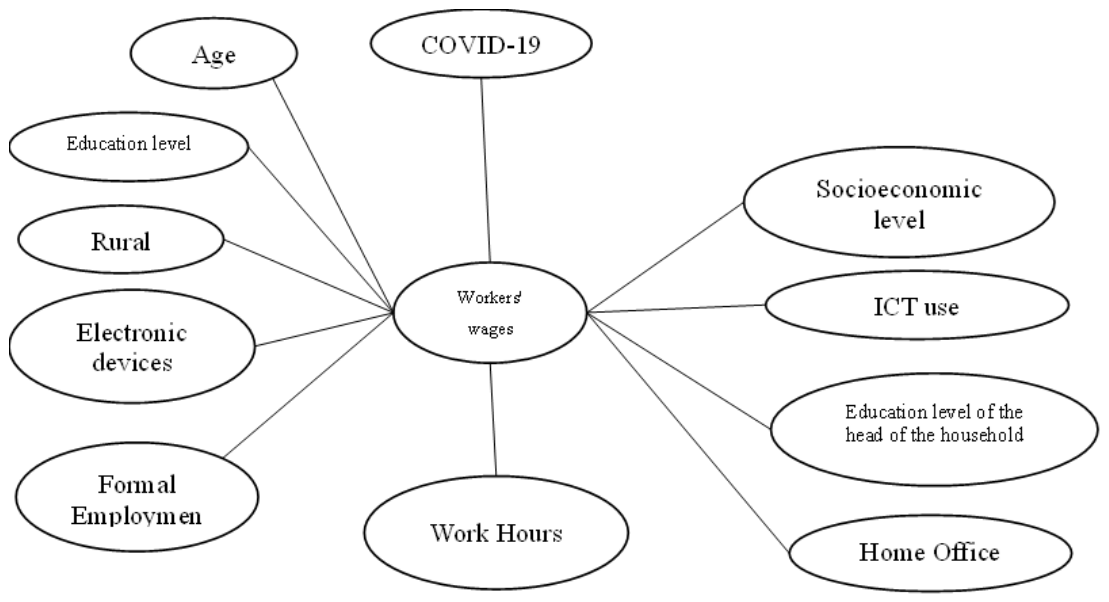
Figure 2.
Workers' wages. Source: Prepared by the author.
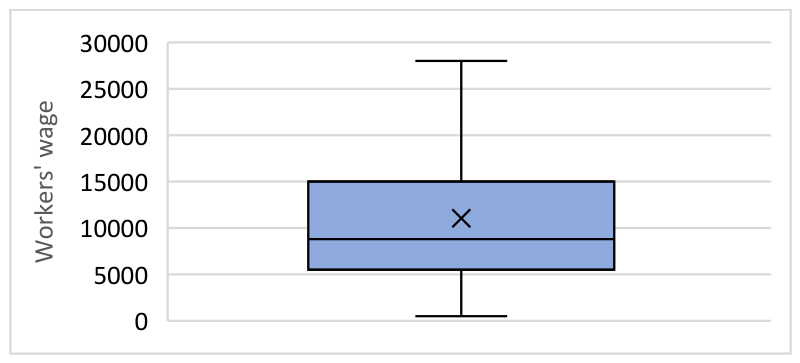
Figure 3.
Workers infected with COVID-19, Yes=1, No =0. Source: Prepared by the author.
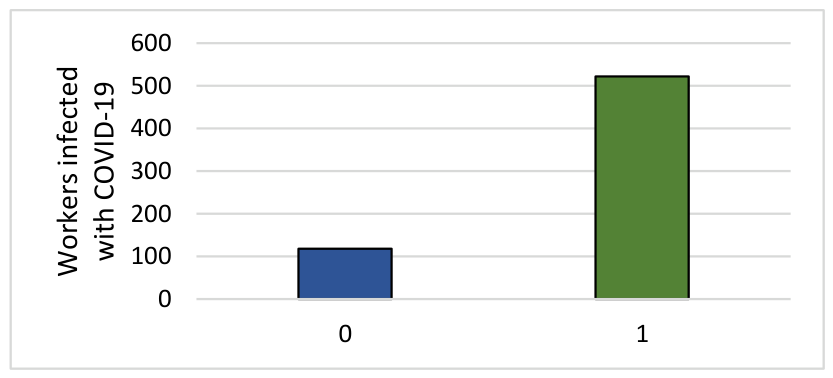

Table 1.
Description of study variables related to COVID-19.
| Variables | Description |
|---|---|
| Salary (Y) | It is the total monthly monetary retribution derived from the labor activity that the workers received in times of COVID-19, which is in Mexican pesos. Variable dependent |
| COVID-19 (X1) | These are the workers who contracted the COVID-19 virus, identified as infected = 1, not infected = 0. Independent variable. |
| Age (X2) | It is the age of the workers in completed years. Independent variable. |
| Education level(X3) | It is the workers' level of education, measured in years of schooling. Independent variable. |
| Rural (X4) | This is the area where the workers reside. Rural = 1, Urban = 0. Independent variable. |
| Electronic devices (X5) | It is the amount of computing equipment, such as tablets, laptops, computers, and mobile phones, that a worker has available to perform their work activities during the COVID-19 pandemic. |
| Formal Employment (X6) | These are workers with formal employment, where formal = 1 and informal = 0. Independent variable. Formal employment was considered to be defined by access to benefits and social security arising from the employment relationship, whereas informal employment refers to workers in unregistered economic units or those lacking social security [16]. |
| Work hours (X7) | They are the number of hours that an employee works. Independent variable |
| Home Office (X8) | These are employees who telecommute or work from home via online platforms; 1 = Works from home, 0 = Does not work from home. Independent variable. |
| Education level of the head of household (X9) |
It is the head of household's level of schooling, measured in the number of years of school attendance. Independent variable. |
| Use of ICT (X10) | These are workers who use software or applications on their electronic devices; this constitutes a continuous variable, as it was calculated by summing the primary software, such as word processors, spreadsheets, and others. |
| Socioeconomic status (X11) |
It is the socioeconomic status index based on the statistical model of the Mexican Association of Market Research Agencies, an organization that establishes quality standards and socioeconomic levels in Mexico. |
| Digital Platforms (X12) | It includes the aggregate of digital work platforms such as Facebook, Mercado Libre, Amazon, Instagram, TikTok, Uber, and WhatsApp. |
| (Digital Platforms -X12)*(Rural – X4) | It is the interaction of digital platforms with people living in rural areas. |
| (Formal employment -X6)*(Rural- X4) | It is the interaction of formal employment with people living in rural areas. |
Source: Prepared by the author.
Table 2.
Key statistics for the study variables.
| Variable | Average | Std. Dev. | Min | Max |
|---|---|---|---|---|
| Workers’ wages | 9607.156 | 7920.662 | 0 | 28000 |
| COVID-19 | 0.815625 | 0.388093 | 0 | 1 |
| Age | 33.41875 | 12.9149 | 14 | 76 |
| Educational level | 13.15625 | 3.501034 | 0 | 18 |
| Rural | 0.3984375 | 0.4899593 | 0 | 1 |
| Electronic Devices | 1.4 | 0.8406719 | 0 | 2 |
| Formal Employment | 0.6296875 | 0.483266 | 0 | 1 |
| Work Hours | 7.385937 | 3.44818 | 0 | 13 |
| Home Office | 0.3953125 | 0.4893001 | 0 | 1 |
| Education level of the head of the household | 33.89688 | 22.90981 | 0 | 85 |
| ICT use | 0.6890625 | 0.4632393 | 0 | 1 |
| Socioeconomic status | 154.4859 | 52.80332 | 8 | 300 |
| Digital Platforms | 0.15625 | 0.4304072 | 0 | 3 |
Source: Prepared by the author.
Table 3.
Model results. Dependent variable: Workers’ wages.
| Workers’ wages | Coef. | t | P>t | |
|---|---|---|---|---|
| COVID-19 | -941.11 | -1.73 | 0.085 | * |
| Age | 167.01 | 7.62 | 0.000 | *** |
| Education Level | 243.81 | 2.14 | 0.033 | ** |
| Rural | 1256.42 | 2.33 | 0.02 | ** |
| Electronic Devices | 911.27 | 2.81 | 0.005 | *** |
| Formal employment | 3176.73 | 5.8 | 0.000 | *** |
| Work hours | 621.67 | 8.91 | 0.000 | *** |
| Home Office | 1620.50 | 3.07 | 0.002 | *** |
| Education level of the head of the household | 31.93 | 2.09 | 0.037 | ** |
| ICT use | 1532.24 | 2.8 | 0.005 | *** |
| Socioeconomic status | 15.61 | 2.31 | 0.021 | ** |
| Digital Platforms | 7172.13 | 2.32 | 0.021 | ** |
| (Digital Platforms) * (Rural) | -18088.09 | -5.62 | 0.000 | *** |
| (Digital Platforms) *(Formal employment) | 4904.96 | 0.69 | 0.492 | |
| cons | -12043.58 | -7.58 | 0.000 | *** |
| Prob >F = 0.000 R2= 0.612 n= 640 |
The results are represented in Equation 2, shown below.
Disclaimer/Publisher’s Note: The statements, opinions and data contained in all publications are solely those of the individual author(s) and contributor(s) and not of MDPI and/or the editor(s). MDPI and/or the editor(s) disclaim responsibility for any injury to people or property resulting from any ideas, methods, instructions or products referred to in the content. |
© 2026 by the authors. Licensee MDPI, Basel, Switzerland. This article is an open access article distributed under the terms and conditions of the Creative Commons Attribution (CC BY) license (http://creativecommons.org/licenses/by/4.0/).
Copyright: This open access article is published under a Creative Commons CC BY 4.0 license, which permit the free download, distribution, and reuse, provided that the author and preprint are cited in any reuse.