

Submitted:
14 August 2026
Posted:
17 August 2026
You are already at the latest version
Abstract
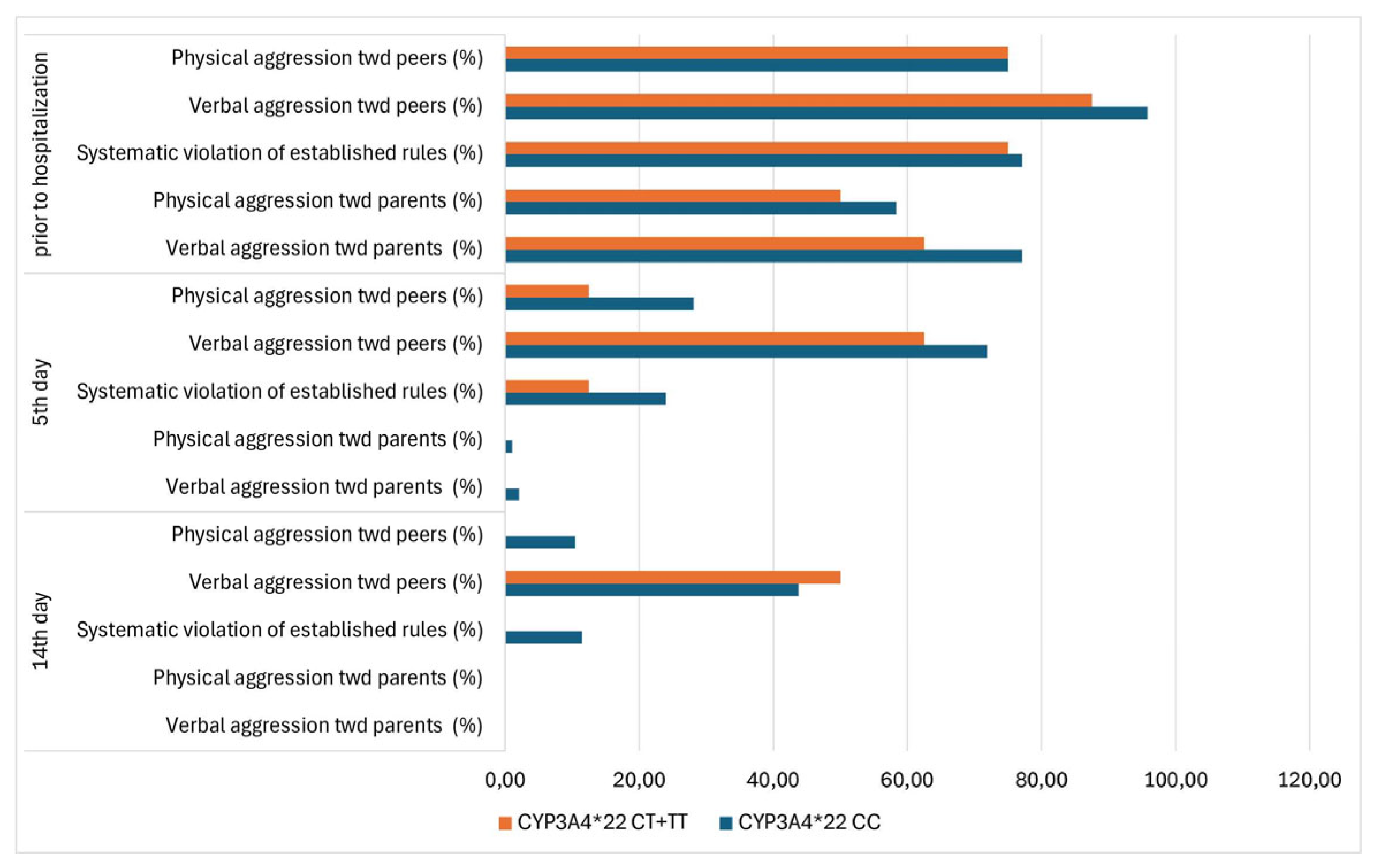
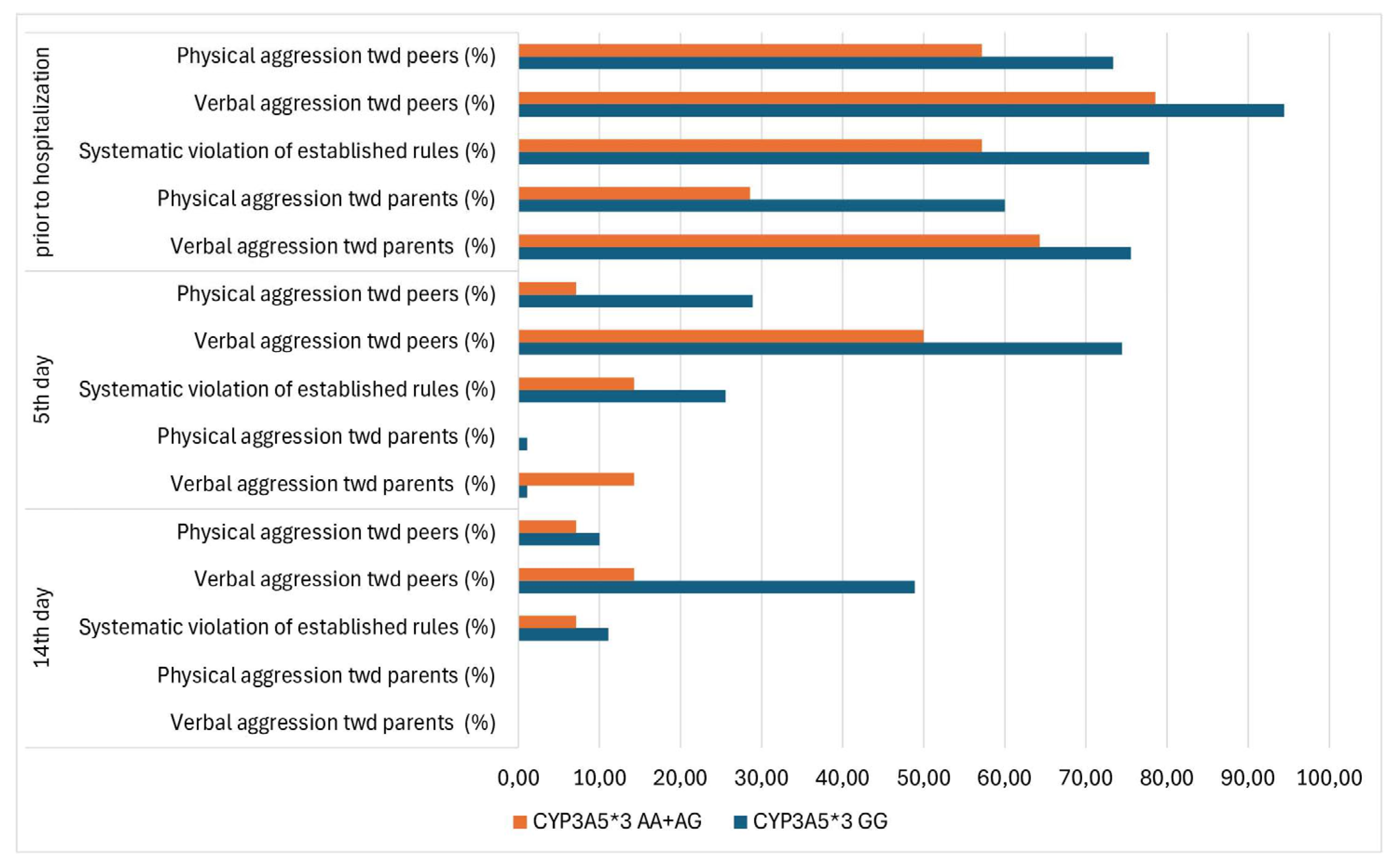
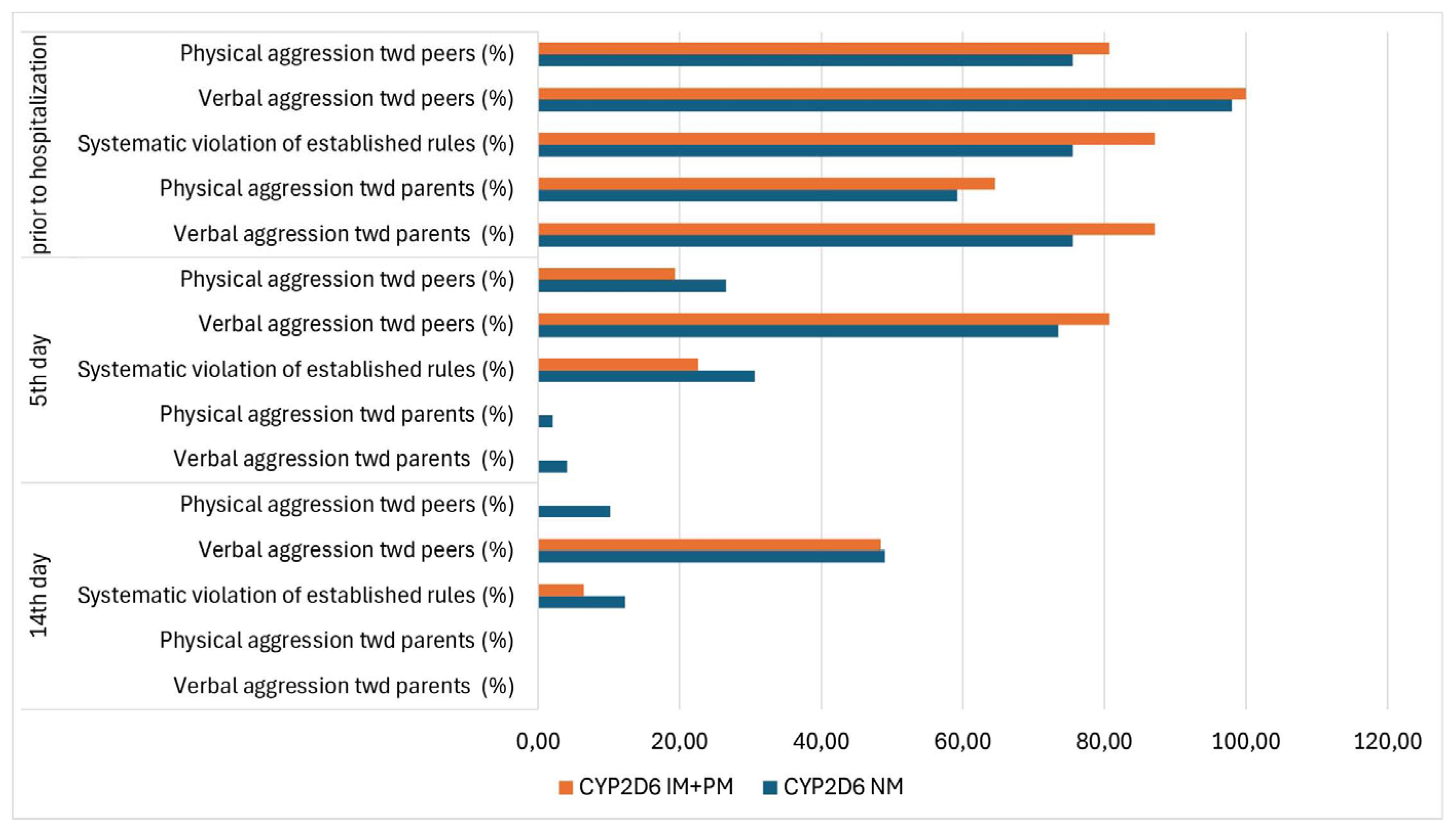
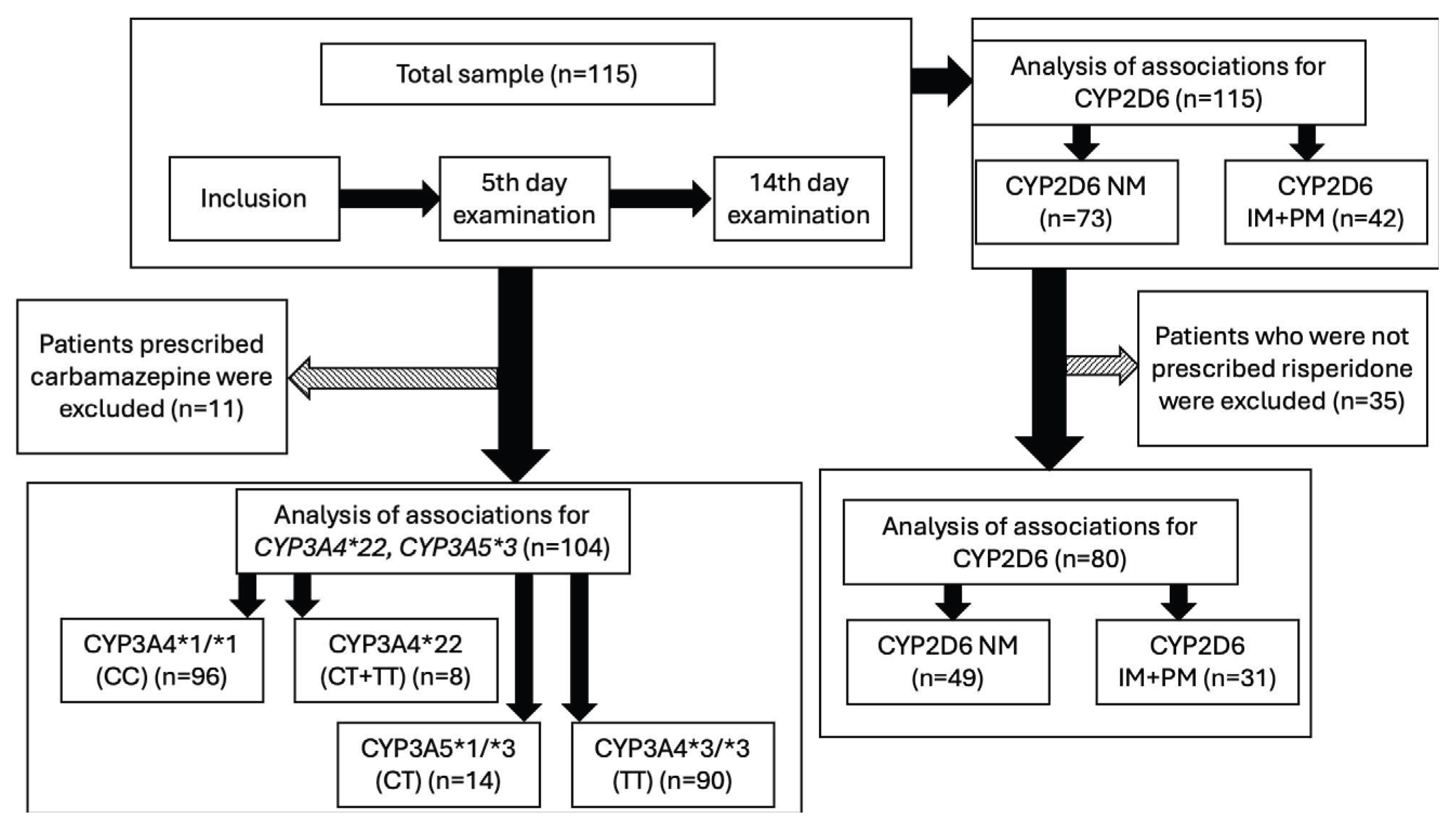
Objectives. To identify associations between CYP3A4*22 CYP3A5*3 genotypes, CYP2D6 phenotype and the effectiveness and safety of antipsychotics in neurotypically developed boys with conduct disorders. Methods: The study included neurotypically developed boys aged 7–12 years who were hospitalized for conduct disorders. All patients were prescribed an antipsychotic. Patient follow-up lasted 14 days. Treatment effectiveness was assessed using a clinical aggression assessment (checklist) and the CGI-S, CGI-I, and CGAS scales. Safety was assessed using the UKU SERS and SAS scales. Patients were examined upon enrollment in the study, on day 5, and on day 14. All patients were genotyped for the CYP3A4*22 (rs35599367, C>T), CYP3A5*3 (rs776746, 6986T>C) CYP2D6*3 (rs35742686), CYP2D6*4 (G1846A, rs3892097), CYP2D6*6 (rs5030655), CYP2D6*10 (C100T, rs1065852), CYP2D6*41 (rs28371725) loci. CYP2D6 metabolism type was determined based on genotyping results, and patients were divided into two subgroups: those with normal metabolism (PM) and those with intermediate or poor metabolism (IM+PM). Results: Patients taking carbamazepine (n=11) were excluded from the analysis of associations between treatment outcomes and the CYP3A4*22 and CYP3A5*3 polymorphisms. The analysis of associations between treatment outcomes and CYP2D6 metabolism type was conducted in two stages: the overall sample and a subsample of patients who were prescribed risperidone (n=80). No significant associations were found between carrier status of the CYP3A4*22 and CYP3A5*3 polymorphisms and treatment effectiveness parameters. Analysis of the overall sample did not reveal any significant associations between CYP2D6 metabolism subtypes and the effectiveness parameters of drug therapy. Analysis of patients receiving risperidone revealed one statistically significant association: patients with CYP2D6 IM+PM reported headaches more frequently (16.1% vs 2%; p=0,03). Carrier status of the CYP3A4*22 polymorphism was significantly associated with asthenia and lethargy on day 5 (50% vs. 9.4%; p=0.008). Conclusion: Our study identified only a few significant associations between the CYP3A4*22 polymorphism, CYP2D6 slow metabolism, and patients’ reports of adverse reactions. Further research is needed to identify pharmacogenetic predictors of the efficacy and safety of antipsychotics in neurotypical children with conduct disorders.
Keywords:
1. Introduction
2. Results
2.1. Sample description
2.2. Analysis of treatment effictiveness based on CYP3A4*22 and CYP3A5*3 genotypes
2.3. Analysis of treatment safety based on CYP3A4*22 and CYP3A5*3 genotypes
2.4. Analysis of treatment effictiveness based on CYP2D6 metabolism
2.5. Analysis of treatment safety based on CYP2D6 metabolism
3. Discussion
4. Materials and Methods
4.1. Study sample
- ○
- verbal aggression toward parents,
- ○
- verbal aggression toward peers,
- ○
- physical aggression toward parents,
- ○
- physical aggression toward peers,
- ○
- repeated violations of established rules.
- UKU Side Effects Rating Scale (UKU SERS) [43]. We used the scale as a checklist, noting only the presence or absence of symptoms, without taking into account the severity of the ADR. This scale includes four subscales: “Mental Disorders,” “Neurological Disorders,” “Autonomic Nervous System Disorders,” and “Other Disorders”. However, we were unable to calculate the UKU SERS score because we assessed only the number of ADR reports. This was due to a limitation of the sample: it was difficult for children aged 7–12 to assess the severity of ADRs, and we sought to avoid misleading results.
- The Simpson-Angus Scale for Assessing Extrapyramidal Adverse Reactions (SAS) [44]. The result is a total score that determines the severity of the patient’s extrapyramidal symptoms.
4.2. Analysis of Pharmacotherapy
4.3. Genotyping
4.4. Statistical analysis of the results
5. Conclusions
Supplementary Materials
Author Contributions
Funding
Institutional Review Board Statement
Informed Consent Statement
Data Availability Statement
Conflicts of Interest
References
- Beunk, L.; Nijenhuis, M.; Soree, B.; de Boer-Veger, N.J.; Buunk, A.M.; Guchelaar, H.J.; et al. Dutch Pharmacogenetics Working Group (DPWG) guideline for the gene-drug interaction between CYP2D6, CYP3A4 and CYP1A2 and antipsychotics. Eur. J. Hum. Genet EJHG 2024, 32, 278–85. [Google Scholar] [CrossRef] [PubMed]
- Bousman, C.A.; Bengesser, S.A.; Aitchison, K.J.; Amare, A.T.; Aschauer, H.; Baune, B.T.; et al. Review and Consensus on Pharmacogenomic Testing in Psychiatry. Pharmacopsychiatry 2021, 54, 5–17. [Google Scholar] [CrossRef] [PubMed]
- Milosavljević, F.; Bukvić, N.; Pavlović, Z.; Miljević, Č.; Pešić, V.; Molden, E.; et al. Association of CYP2C19 and CYP2D6 Poor and Intermediate Metabolizer Status with Antidepressant and Antipsychotic Exposure: A Systematic Review and Meta-analysis. JAMA Psychiatry 2021, 78, 270–80. [Google Scholar] [CrossRef] [PubMed]
- Fitzpatrick, S.E.; Antony, I.; Nurmi, E.L.; Fernandez, T.V.; Chung, W.K.; Brownstein, C.A.; et al. Review: Child Psychiatry in the Era of Genomics: The Promise of Translational Genetics Research for the Clinic. JAACAP Open 2025, 3, 157–70. [Google Scholar] [CrossRef] [PubMed]
- Maruf, A.A.; Stein, K.; Arnold, P.D.; Aitchison, K.J.; Müller, D.J.; Bousman, C. CYP2D6 and Antipsychotic Treatment Outcomes in Children and Youth: A Systematic Review. J. Child Adolesc. Psychopharmacol. 2020, 31, 33–45. [Google Scholar] [CrossRef] [PubMed]
- Rossow, K.M.; Oshikoya, K.A.; Aka, I.T.; Maxwell-Horn, A.C.; Roden, D.M.; Van Driest, S.L. Evidence for Pharmacogenomic Effects on Risperidone Outcomes in Pediatrics. J. Dev. Behav. Pediatr. JDBP 2021, 42, 205–12. [Google Scholar] [CrossRef] [PubMed]
- Kloosterboer, S.M.; de Winter, B.C.M.; Reichart, C.G.; Kouijzer, M.E.J.; de Kroon, M.M.J.; van Daalen, E.; et al. Risperidone plasma concentrations are associated with side effects and effectiveness in children and adolescents with autism spectrum disorder. Br. J. Clin. Pharmacol. 2021, 87, 1069–81. [Google Scholar] [CrossRef] [PubMed]
- Gras, C.; Piras, M.; Ranjbar, S.; Grosu, C.; Girardin, F.R.; Vandenberghe, F.; et al. Influence of CYP2D6 Genotypes and Phenotypes on the Plasma Levels and Clinical Response to Aripiprazole. Schizophr. Bull. 2026, 52, sbaf076. [Google Scholar] [CrossRef] [PubMed]
- Hermans, R.A.; Sassen, S.D.T.; Kloosterboer, S.M.; Reichart, C.G.; Kouijzer, M.E.J.; de Kroon, M.M.J.; et al. Towards precision dosing of aripiprazole in children and adolescents with autism spectrum disorder: Linking blood levels to weight gain and effectiveness. Br. J. Clin. Pharmacol. 2023, 89, 3026–36. [Google Scholar] [CrossRef] [PubMed]
- Shilbayeh, S.A.R.; Adeen, I.S.; Ghanem, E.H.; Aljurayb, H.; Aldilaijan, K.E.; AlDosari, F.; et al. Exploratory focused pharmacogenetic testing reveals novel markers associated with risperidone pharmacokinetics in Saudi children with autism. Front Pharmacol. 2024, 15. [Google Scholar] [CrossRef] [PubMed]
- Werk, A.N.; Cascorbi, I. Functional gene variants of CYP3A4. Clin. Pharmacol. Ther. 2014, 1–9. [Google Scholar] [CrossRef] [PubMed]
- Wang, D.; Guo, Y.; Wrighton, S.A.; Cooke, G.E.; Sadee, W. Intronic polymorphism in CYP3A4 affects hepatic expression and response to statin drugs. Pharmacogenomics J. 2011, 11, 274–86. [Google Scholar] [CrossRef] [PubMed]
- Rodriguez-Antona, C.; Savieo, J.L.; Lauschke, V.M.; Sangkuhl, K.; Drögemöller, B.I.; Wang, D.; et al. PharmVar GeneFocus: CYP3A5. Clin. Pharmacol. Ther. 2022, 112, 1159–1159. [Google Scholar] [CrossRef] [PubMed]
- Zanger, U.M.; Schwab, M. Cytochrome P450 enzymes in drug metabolism: regulation of gene expression, enzyme activities, and impact of genetic variation. Pharmacol. Ther. 2013, 138, 103–41. [Google Scholar] [CrossRef] [PubMed]
- Lin, Y.S. Co-Regulation of CYP3A4 and CYP3A5 and Contribution to Hepatic and Intestinal Midazolam Metabolism. Mol. Pharmacol. 2002, 62, 162–72. [Google Scholar] [CrossRef] [PubMed]
- Aoyama, T.; Yamano, S.; Waxman, D.J.; Lapenson, D.P.; Meyer, U.A.; Fischer, V.; et al. Cytochrome P-450 hPCN3, a novel cytochrome P-450 IIIA gene product that is differentially expressed in adult human liver. cDNA and deduced amino acid sequence and distinct specificities of cDNA-expressed hPCN1 and hPCN3 for the metabolism of steroid hormones and cyclosporine. J. Biol. Chem. 1989, 264, 10388–95. [Google Scholar] [PubMed]
- Fukasawa, T.; Suzuki, A.; Otani, K. Effects of genetic polymorphism of cytochrome P450 enzymes on the pharmacokinetics of benzodiazepines. J. Clin. Pharm. Ther. 2007, 32, 333–41. [Google Scholar] [CrossRef] [PubMed]
- Birdwell, K.A.; Decker, B.; Barbarino, J.M.; Peterson, J.F.; Stein, C.M.; Sadee, W.; et al. Clinical Pharmacogenetics Implementation Consortium (CPIC) Guidelines for CYP3A5 Genotype and Tacrolimus Dosing. Clin. Pharmacol. Ther. 2015, 98, 19–24. [Google Scholar] [CrossRef] [PubMed]
- Chauhan, P.M.; Hemani, R.J.; Solanki, N.D.; Shete, N.B.; Gang, S.D.; Konnur, A.M.; et al. A systematic review and meta-analysis recite the efficacy of Tacrolimus treatment in renal transplant patients in association with genetic variants of CYP3A5 gene. Am. J. Clin. Exp. Urol. 2023, 11, 275–275. [Google Scholar] [PubMed]
- Brazeau, D.; Attwood, K.; Cooper, L.M.; Gray, V.; Chang, S.; Chen, S.; et al. Association of Metabolic Genotype Composite CYP3A5*3 and CYP3A4*1B to Tacrolimus Pharmacokinetics in Stable Black and White Kidney Transplant Recipients. Clin. Transl. Sci. 2025, 18, e70370–e70370. [Google Scholar] [CrossRef] [PubMed]
- Hjorth, C.F.; Damkier, P.; Stage, T.B.; Feddersen, S.; Hamilton-Dutoit, S.; Ejlertsen, B.; et al. The impact of single nucleotide polymorphisms on return-to-work after taxane-based chemotherapy in breast cancer. Cancer Chemother. Pharmacol. 2023, 91, 157–65. [Google Scholar] [CrossRef] [PubMed]
- Attia, H.R.M.; Kamel, M.M.; Ayoub, D.F.; Abd El-Aziz, S.H.; Abdel Wahed, M.M.; El-Fattah, S.N.A.; et al. CYP2C8 rs11572080 and CYP3A4 rs2740574 risk genotypes in paclitaxel-treated premenopausal breast cancer patients. Sci. Rep. 2024, 14. [Google Scholar] [CrossRef] [PubMed]
- Skryabin, V.Y.; Franck, J.; Lauschke, V.M.; Zastrozhin, M.S.; Shipitsyn, V.V.; Bryun, E.A.; et al. CYP3A4*22 and CYP3A5*3 impact efficacy and safety of diazepam in patients with alcohol withdrawal syndrome. Nord J. Psychiatry 2023, 77, 73–6. [Google Scholar] [CrossRef] [PubMed]
- Zastrozhin, M.S.; Skryabin, V.Y.; Smirnov, V.V.; Petukhov, A.E.; Pankratenko, E.P.; Zastrozhina, A.K.; et al. Effects of plasma concentration of micro-RNA Mir-27b and CYP3A4*22 on equilibrium concentration of alprazolam in patients with anxiety disorders comorbid with alcohol use disorder. Gene 2020, 739. [Google Scholar] [CrossRef] [PubMed]
- Flores-Pérez, C.; Castillejos-López, M.; de, J.; Chávez-Pacheco, J.L.; Dávila-Borja, V.M.; Flores-Pérez, J.; Zárate-Castañón, P.; et al. The rs776746 variant of CYP3A5 is associated with intravenous midazolam plasma levels and higher clearance in critically ill Mexican paediatric patients. J. Clin. Pharm. Ther. 2021, 46, 633–9. [Google Scholar] [CrossRef] [PubMed]
- Riffi, R.; Boughrara, W.; Chentouf, A.; Ilias, W.; Brahim, N.M.T.; Berrebbah, A.A.; et al. Pharmacogenetics of Carbamazepine: A Systematic Review on CYP3A4 and CYP3A5 Polymorphisms. CNS Neurol. Disord. Drug Targets 2024, 23, 1463–73. [Google Scholar] [CrossRef] [PubMed]
- van der Weide, K.; van der Weide, J. The influence of the CYP3A4*22 polymorphism on serum concentration of quetiapine in psychiatric patients. J. Clin. Psychopharmacol. 2014, 34, 256–60. [Google Scholar] [CrossRef] [PubMed]
- Hiemke, C.; Bergemann, N.; Clement, H.W.; Conca, A.; Deckert, J.; Domschke, K.; et al. Consensus Guidelines for Therapeutic Drug Monitoring in Neuropsychopharmacology: Update 2017. Pharmacopsychiatry 2018, 51, 9–62. [Google Scholar] [CrossRef] [PubMed]
- Lin, M.; Zhang, Y.; Lv, D.; Xu, N.; Yang, X.; Liu, X.; et al. The impact of CYP3A5*3 on oral quetiapine: A population pharmacokinetic model in Chinese bipolar disorder patients. J. Affect Disord. 2024, 351, 309–13. [Google Scholar] [CrossRef] [PubMed]
- Zhao, Y.; Hao, Y.; Wang, Z.; Liu, S.; Yuan, S.; Zhou, C.; et al. Effect of CYP3A5*3 genotype on exposure and efficacy of quetiapine: A retrospective, cohort study. J. Affect Disord. 2025, 370, 134–9. [Google Scholar] [CrossRef] [PubMed]
- Solhaug, V.; Tveito, M.; Waade, R.B.; Høiseth, G.; Molden, E.; Smith, R.L. Impact of age, sex and cytochrome P450 genotype on quetiapine and N-desalkylquetiapine serum concentrations: A study based on real-world data from 8118 patients. Br. J. Clin. Pharmacol. 2023, 89, 3503–11. [Google Scholar] [CrossRef] [PubMed]
- Ragia, G.; Dahl, M.-L.; Manolopoulos, V. Influence of CYP3A5 polymorphism on the pharmacokinetics of psychiatric drugs. Curr. Drug Metab. 2016, 17, 227–36. [Google Scholar] [CrossRef] [PubMed]
- Zastrozhin, M.S.; Grishina, E.A.; Ryzhikova, K.A.; Smirnov, V.V.; Savchenko, L.M.; Bryun, E.A.; et al. The influence of CYP3A5 polymorphisms on haloperidol treatment in patients with alcohol addiction. Pharmacogenomics Pers. Med. 2017, 11, 1–5. [Google Scholar] [CrossRef] [PubMed]
- Ivashchenko, D.V.; et al. Impact of CYP3A5, CYP2C9, CYP2C19, and CYP2D6 Polymorphisms on Phenazepam Safety in Patients with Alcohol Withdrawal Syndrome. Vestn. RAMN 2018, 73, 206–16, (In Russ.). [Google Scholar] [CrossRef]
- Ivashchenko, D.V.; et al. Associations of CYP3A5 rs776746 genetic polymorphism with phenazepam safety in patients which suffers from alcohol withdrawal syndrome. Narkologiia 2017, 16, 36–47, (In Russ.). [Google Scholar]
- Scandlyn, M.J.; Stuart, E.C.; Rosengren, R.J. Sex-specific differences in CYP450 isoforms in humans. Expert Opin. Drug Metab. Toxicol. 2008, 4, 413–24. [Google Scholar] [CrossRef] [PubMed]
- Sramek, J.J.; Cutler, N.R. The impact of gender on antidepressants. Curr. Top. Behav. Neurosci. 2011, 8, 231–49. [Google Scholar] [CrossRef] [PubMed]
- Kobayashi, K.; Abe, C.; Endo, M.; Kazuki, Y.; Oshimura, M.; Chiba, K. Gender Difference of Hepatic and Intestinal CYP3A4 in CYP3AHumanized Mice Generated by a Human Chromosome-engineering Technique. Drug Metab. Lett. 2017, 11. [Google Scholar] [CrossRef] [PubMed]
- Ivashchenko, D.V.; Che, M.D.; Shimanov, P.V.; Kondrateva, R.V.; Shubin, A.V.; Aysin, F.R.; et al. Associations of CYP3A4*22 and CYP3A5*3 with the effectiveness and safety of therapy for conduct disorder in children. Meditsinskiy Sov. Med. Counc. 2025, 253–61. [Google Scholar] [CrossRef]
- Shaffer, D.; Gould, M.S.; Brasic, J.; Ambrosini, P.; Fisher, P.; Bird, H.; et al. A Children’s Global Assessment Scale (CGAS). Arch. Gen. Psychiatry 1983, 40, 1228–1228. [Google Scholar] [CrossRef] [PubMed]
- Busner, J.; Targum, S.D. The clinical global impressions scale: applying a research tool in clinical practice. Psychiatry Edgmont Pa Townsh. 2007, 4, 28–37. [Google Scholar]
- Keith Conners, C.; Sitarenios, G.; Parker, J.D.A.; Epstein, J.N. The revised Conners’ Parent Rating Scale (CPRS-R): factor structure, reliability, and criterion validity. J. Abnorm Child Psychol. 1998, 26, 257–68. [Google Scholar] [CrossRef] [PubMed]
- Lingjaerde, O.; Ahlfors, U.G.; Bech, P.; Dencker, S.J.; Elgen, K. The UKU side effect rating scale. A new comprehensive rating scale for psychotropic drugs and a cross-sectional study of side effects in neuroleptic-treated patients. Acta Psychiatr. Scand. Suppl. 1987, 334, 1–100. [Google Scholar] [CrossRef] [PubMed]
- Simpson, G.M.; Angus, J.W. A rating scale for extrapyramidal side effects. Acta Psychiatr. Scand. Suppl. 1970, 212, 11–9. [Google Scholar] [CrossRef] [PubMed]
- Danivas, V.; Venkatasubramanian, G. Current perspectives on chlorpromazine equivalents: Comparing apples and oranges! Indian J. Psychiatry 2013, 55, 207–8. [Google Scholar] [CrossRef] [PubMed]
- Xu, Y.; Zhou, Y.; Hayashi, M.; Shou, M.; Skiles, G.L. Simulation of clinical drug-drug interactions from hepatocyte CYP3A4 induction data and its potential utility in trial designs. Drug Metab. Dispos. Biol. Fate Chem. 2011, 39, 1139–48. [Google Scholar] [CrossRef] [PubMed]
- Beunk, L.; Nijenhuis, M.; Soree, B.; De Boer-Veger, N.J.; Buunk, A.-M.; Guchelaar, H.J.; et al. Dutch Pharmacogenetics Working Group (DPWG) guideline for the gene-drug interaction between CYP2D6, CYP3A4 and CYP1A2 and antipsychotics. Eur. J. Hum. Genet. 2024, 32, 278–85. [Google Scholar] [CrossRef] [PubMed]
- Liu, M.; Hernandez, S.; Aquilante, C.L.; Deininger, K.M.; Lindenfeld, J.; Schlendorf, K.H.; et al. Composite CYP3A (CYP3A4 and CYP3A5) phenotypes and influence on tacrolimus dose adjusted concentrations in adult heart transplant recipients. Pharmacogenomics J. 2024, 24. [Google Scholar] [CrossRef] [PubMed]
- Hardy-Weinberg Calc. https://www.had2know.org/academics/hardy-weinberg-equilibrium-calculator-2-alleles.html. Hardy Weinb Equilib Online Calc.
- Scorcella, C.; Domizi, R.; Amoroso, S.; Carsetti, A.; Casarotta, E.; Castaldo, P.; et al. Pharmacogenetics in critical care: association between CYP3A5 rs776746 A/G genotype and acetaminophen response in sepsis and septic shock. BMC Anesthesiol. 2023, 23. [Google Scholar] [CrossRef] [PubMed]
- Shilbayeh, S.A.R.; Adeen, I.S.; Alhazmi, A.S.; Aljurayb, H.; Altokhais, R.S.; Alhowaish, N.; et al. The polymorphisms of candidate pharmacokinetic and pharmacodynamic genes and their pharmacogenetic impacts on the effectiveness of risperidone maintenance therapy among Saudi children with autism. Eur. J. Clin. Pharmacol. 2024, 80, 869–90. [Google Scholar] [CrossRef] [PubMed]
- Fang, J.; Bourin, M.; Baker, G.B. Metabolism of risperidone to 9-hydroxyrisperidone by human cytochromes P450 2D6 and 3A4. Naunyn Schmiedebergs Arch. Pharmacol. 1999, 359, 147–51. [Google Scholar] [CrossRef] [PubMed]
- De Jonge, H.; De Loor, H.; Verbeke, K.; Vanrenterghem, Y.; Kuypers, D.R.J. Impact of CYP3A5 genotype on tacrolimus versus midazolam clearance in renal transplant recipients: new insights in CYP3A5-mediated drug metabolism. Pharmacogenomics 2013, 14, 1467–80. [Google Scholar] [CrossRef] [PubMed]
- Rafaniello, C.; Sessa, M.; Bernardi, F.F.; Pozzi, M.; Cheli, S.; Cattaneo, D.; et al. The predictive value of ABCB1, ABCG2, CYP3A4/5 and CYP2D6 polymorphisms for risperidone and aripiprazole plasma concentrations and the occurrence of adverse drug reactions. Pharmacogenomics J. 2018, 18, 422–30. [Google Scholar] [CrossRef] [PubMed]
- Biswas, M.; Vanwong, N.; Sukasem, C. Pharmacogenomics in clinical practice to prevent risperidone-induced hyperprolactinemia in autism spectrum disorder. Pharmacogenomics 2022, 23, 493–503. [Google Scholar] [CrossRef] [PubMed]
- Alvarez, A.; Bote, V.; Lamborena, C.; Medina, R.; Serra-Llovich, A.; Hervas, A.; et al. Review of pharmacogenomics of psychiatric comorbidities in autism spectrum disorder. Pharmacogenomics 2023, 24, 781–91. [Google Scholar] [CrossRef] [PubMed]
- Varney, L.; Murtough, S.; Cotic, M.; Abidoph, R.; Chan, L.; Saadullah Khani, N.; et al. Effect of CYP1A2, CYP2D6, and CYP3A4 Variation on Antipsychotic Treatment Outcomes. Pharmaceuticals 2025, 18, 892. [Google Scholar] [CrossRef] [PubMed]
- Gerlach, S.; Maruf, A.A.; Shaheen, S.M.; McCloud, R.; Heintz, M.; McAusland, L.; et al. Prevalence Estimates of Cytochrome P450 Phenoconversion in Youth Receiving Pharmacotherapy for Mental Health Conditions. Clin. Pharmacol. Ther. 2025, 117, 670–5. [Google Scholar] [CrossRef] [PubMed]
- Ali, S.; Aygun, C.; Bahcecioglu, I.H. Phenoconversion and in vivo phenotyping of hepatic cytochrome P450: Implications in predictive precision medicine and personalized therapy. Hepatol. Forum 2025, 6, 121–8. [Google Scholar] [CrossRef] [PubMed]
- Bousman, C.A.; Stevenson, J.M.; Ramsey, L.B.; Sangkuhl, K.; Hicks, J.K.; Strawn, J.R.; et al. Clinical Pharmacogenetics Implementation Consortium (CPIC) Guideline for CYP2D6, CYP2C19, CYP2B6, SLC6A4, and HTR2A Genotypes and Serotonin Reuptake Inhibitor Antidepressants. Clin. Pharmacol. Ther. 2023, 114, 51–68. [Google Scholar] [CrossRef] [PubMed]
- Brown, J.T.; Campo-Soria, C.; Bishop, J.R. Current strategies for predicting side effects from second generation antipsychotics in youth. Expert Opin. Drug Metab. Toxicol. 2021, 17, 655–64. [Google Scholar] [CrossRef] [PubMed]
- Merino D, Fernandez A, Gérard AO, Ben Othman N, Rocher F, Askenazy F, et al. Adverse Drug Reactions of Olanzapine, Clozapine and Loxapine in Children and Youth: A Systematic Pharmacogenetic Review. Pharm Basel Switz. 2022;15. [CrossRef] [PubMed]
- Prows, C.A.; Nick, T.G.; Saldaña, S.N.; Pathak, S.; Liu, C.; Zhang, K.; et al. Drug-metabolizing enzyme genotypes and aggressive behavior treatment response in hospitalized pediatric psychiatric patients. J. Child Adolesc. Psychopharmacol. 2009, 19, 385–94. [Google Scholar] [CrossRef] [PubMed]
- Thümmler, S.; Dor, E.; David, R.; Leali, G.; Battista, M.; David, A.; et al. Pharmacoresistant Severe Mental Health Disorders in Children and Adolescents: Functional Abnormalities of Cytochrome P450 2D6. Front Psychiatry 2018, 9, 2–2. [Google Scholar] [CrossRef] [PubMed]
- Ivashchenko, D.V.; Buromskaya, N.I.; Shimanov, P.V.; Shevchenko, Y.S.; Sychev, D.A. Exploring Risk Factors for Adverse Reactions in Children with an Acute Psychotic Episode Using the Global Trigger Tool: Does Age Matter? J. Child Adolesc. Psychopharmacol. 2024, 34, 319–26. [Google Scholar] [CrossRef] [PubMed]
- Rashed, A.N.; Wong, I.C.K.; Cranswick, N.; Tomlin, S.; Rascher, W.; Neubert, A. Risk factors associated with adverse drug reactions in hospitalised children: international multicentre study. Eur. J. Clin. Pharmacol. 2012, 68, 801–10. [Google Scholar] [CrossRef] [PubMed]
- Ji, H.-H.; Song, L.; Xiao, J.-W.; Guo, Y.-X.; Wei, P.; Tang, T.-T.; et al. Adverse drug events in Chinese pediatric inpatients and associated risk factors: a retrospective review using the Global Trigger Tool. Sci. Rep. 2018, 8, 2573–2573. [Google Scholar] [CrossRef] [PubMed]
- Thiesen, S.; Conroy, E.J.; Bellis, J.R.; Bracken, L.E.; Mannix, H.L.; Bird, K.A.; et al. Incidence, characteristics and risk factors of adverse drug reactions in hospitalized children—a prospective observational cohort study of 6,601 admissions. BMC Med. 2013, 11, 237–237. [Google Scholar] [CrossRef] [PubMed]
- Safer, D.J.; Zito, J.M. Treatment-emergent adverse events from selective serotonin reuptake inhibitors by age group: children versus adolescents. J. Child Adolesc. Psychopharmacol. 2006, 16, 159–69. [Google Scholar] [CrossRef] [PubMed]
- T’jollyn, H.; Snoeys, J.; Vermeulen, A.; Michelet, R.; Cuyckens, F.; Mannens, G.; et al. Physiologically Based Pharmacokinetic Predictions of Tramadol Exposure Throughout Pediatric Life: an Analysis of the Different Clearance Contributors with Emphasis on CYP2D6 Maturation. AAPS J. 2015, 17, 1376–87. [Google Scholar] [CrossRef] [PubMed]
Disclaimer/Publisher’s Note: The statements, opinions and data contained in all publications are solely those of the individual author(s) and contributor(s) and not of MDPI and/or the editor(s). MDPI and/or the editor(s) disclaim responsibility for any injury to people or property resulting from any ideas, methods, instructions or products referred to in the content. |
© 2026 by the authors. Licensee MDPI, Basel, Switzerland. This article is an open access article distributed under the terms and conditions of the Creative Commons Attribution (CC BY) license (http://creativecommons.org/licenses/by/4.0/).