

Submitted:
15 August 2026
Posted:
17 August 2026
You are already at the latest version
Abstract
Background: Nicotine has been proposed as a potential therapeutic agent in Parkinson's disease (PD) based on epidemiologic and preclinical evidence, but clinical findings remain inconsistent. This systematic review and meta-analysis evaluated the efficacy and safety of nicotine-based interventions in PD. Methods: Randomized controlled trials comparing nicotine-based interventions with placebo or control in patients with PD were systematically reviewed. Outcomes included motor severity, activities of daily living, quality of life (QoL), levodopa equivalent daily dose (LEDD), and adverse events. Random-effects meta-analyses were performed, and certainty of evidence was evaluated using the GRADE framework (PROSPERO CRD420261442440). Results: Six randomized trials involving 389 participants were included. Nicotine did not significantly improve motor outcomes (SMD −0.16, 95% CI −0.76 to 0.43), activities of daily living (MD −0.65, 95% CI −1.77 to 0.47), or LEDD (MD −114.40 mg/day, 95% CI −258.82 to 30.02). A small but significant improvement in QoL was observed (SMD −0.26, 95% CI −0.44 to −0.07). Serious adverse events were not significantly increased (RR 1.39, 95% CI 0.56-3.49), whereas overall adverse events were more common with nicotine (RR 1.51, 95% CI 1.23-1.86), particularly gastrointestinal symptoms. Substantial heterogeneity was present for motor outcomes and LEDD. Conclusions: Current evidence does not support the routine use of nicotine as symptomatic therapy for PD. Although a modest improvement in QoL was observed, it was accompanied by a higher burden of adverse events and no significant benefit in motor outcomes. Larger, adequately powered trials are needed.
Keywords:
Parkinson’s disease
; nicotine
; nicotinic acetylcholine receptors
; neuroprotection
; disease modification
; neuroinflammation
; gut-brain axis
; quality of life
; adverse events
; levodopa equivalent daily dose
1. Introduction
Parkinson’s disease (PD) is a progressive neurodegenerative disorder and one of the fastest-growing neurological conditions worldwide [1]. Clinically, it is characterized by cardinal motor features, including bradykinesia, rigidity, and resting tremor. However, its clinical burden extends well beyond motor dysfunction, encompassing a wide spectrum of non-motor manifestations that severely impair patients’ quality of life (QoL) [2]. Despite major advances in symptomatic therapeutics, achieving unequivocal disease modification or neuroprotection remains an elusive goal. This challenge is highlighted by historical trial failures of agents such as high-dose Coenzyme Q10 [3] and recent, complex phase 3 evaluations of exenatide [4]. Consequently, identifying disease-modifying therapies remains a major priority in PD research.
Interest in nicotine as a potential therapeutic agent stems from its interaction with nicotinic acetylcholine receptors. These receptors may modulate dopaminergic signaling and help preserve the functional integrity of nigrostriatal projections [5,6]. This translational rationale is further reinforced by a long-recognized inverse association between cigarette smoking and PD risk, validated across large-scale cohorts [7]. However, the biological and clinical interpretation of this relationship remains complex. Epidemiological correlation cannot be simplistically equated with definitive evidence of clinical benefit from isolated nicotine intervention. This discrepancy warrants deeper exploration of potential reverse causation artifacts or unmeasured premorbid personality traits [8].
Despite these mechanistic and epidemiological signals, clinical translation has been highly inconsistent. Recent high-profile clinical trials, including long-term evaluations of transdermal nicotine patches in early PD [9] and investigations exploring a nicotine-rich diet [10], have failed to demonstrate convincing clinical benefit or evidence of disease modification. Furthermore, while a comprehensive meta-analysis in 2025 reported no compelling overall motor benefit across consolidated trials [11], significant ambiguity remains regarding secondary parameters and formulation-dependent tolerability profiles. Existing syntheses have not fully resolved these secondary outcomes or the detailed adverse-event profile across different nicotine formulations. Therefore, an updated and comprehensive evaluation of the efficacy and safety of nicotine-based interventions is warranted. The present systematic review and meta-analysis synthesize evidence from randomized controlled trials to assess the effects of nicotine on motor symptoms, activities of daily living, quality of life, levodopa requirements, and treatment-related adverse events in individuals with PD.
2. Methodology
Unless otherwise specified, all stages of study screening, data extraction, risk-of-bias assessment, and certainty-of-evidence evaluation were performed independently by two reviewers (J.P.R. and T.A.). Disagreements were resolved through discussion and consensus, with consultation of a third reviewer (O.A.) when necessary.
2.1. Primary and Secondary Outcomes
The primary outcome was the effect of nicotine on motor severity in PD, assessed using the Movement Disorder Society–Unified Parkinson’s Disease Rating Scale (MDS-UPDRS) Part III or an equivalent validated motor scale. Secondary efficacy outcomes included activities of daily living measured using MDS-UPDRS Part II, changes in levodopa equivalent daily dose (LEDD), and health-related QoL assessed using the Parkinson’s Disease Questionnaire-39 (PDQ-39) or its abbreviated version, the Parkinson’s Disease Questionnaire-8 (PDQ-8). Safety outcomes included serious adverse events (SAEs) and non-serious adverse events, which were categorized as gastrointestinal, neurologic, cardiovascular/autonomic, or dermatologic events.
2.2. Literature Search Strategy
This systematic review and meta-analysis was registered in PROSPERO (CRD420261442440) and conducted in accordance with the Preferred Reporting Items for Systematic Reviews and Meta-Analyses (PRISMA) 2020 guidelines (Table S1)[12]. A systematic literature search was performed in PubMed/MEDLINE, Embase, and the Cochrane Library from database inception through June 2026 to identify randomized controlled trials (RCTs) evaluating nicotine-based interventions in PD. The search strategy combined controlled vocabulary terms (e.g., MeSH and Emtree terms) and free-text keywords related to PD, nicotine, nicotine patch, transdermal nicotine, oral nicotine, randomization, placebo, and clinical trials. The complete search strategies for all databases are presented in Table S2. Reference lists of relevant articles were also screened to identify additional eligible studies.
2.3. Inclusion and Exclusion Criteria
Eligible studies were randomized controlled trials (RCTs) conducted in human participants with PD that evaluated any nicotine-based intervention, including oral, transdermal, or dietary formulations, compared with placebo, standard care, or other control interventions. Studies were required to report extractable data for at least one efficacy outcome (e.g., motor symptoms, activities of daily living, QoL, or levodopa equivalent daily dose [LEDD]) or for at least one safety outcome. Post hoc analyses from randomized, placebo-controlled trials were considered eligible when the randomized treatment allocation was preserved and extractable outcome data were available.
No restrictions were imposed on publication date or language. Database searches were conducted from inception through June 2026. Narrative reviews, systematic reviews, genetic studies, pharmacokinetic studies, case reports, case series, conference abstracts lacking sufficient data, animal studies, and studies that did not evaluate the therapeutic effects of nicotine in PD were excluded. Only studies providing sufficient data for quantitative or qualitative synthesis were included.
2.4. Data Extraction
Extracted variables included study characteristics, sample size, participant demographics (age and sex), Hoehn and Yahr (H&Y) stage, diagnostic criteria for PD, intervention and comparator characteristics, nicotine dose, treatment duration, and reported efficacy and safety outcomes.
For subgroup analyses, treatment duration was categorized a priori as short-term (<12 weeks), medium-term (12–40 weeks), and long-term (>40 weeks). Continuous outcomes were extracted as means and standard deviations and were analyzed using mean differences (MDs) or standardized mean differences (SMDs), as appropriate. Dichotomous outcomes, including adverse events, were extracted as event counts and analyzed using risk ratios (RRs). When multiple follow-up time points from the same intervention group were analyzed, comparisons were treated as separate observations and interpreted cautiously because statistical independence could not be assumed. Any discrepancies in data extraction were resolved through discussion and review of the original publication.
When efficacy and safety datasets differed within a study, efficacy outcomes were extracted from participants with available outcome data, whereas safety outcomes were analyzed across all participants with reported adverse-event data. Also, in studies with multiple eligible intervention arms sharing a single control group, the control group was divided proportionally across comparisons, in accordance with Cochrane recommendations [13].
2.5. Risk of Bias and Certainty of Evidence Assessment
Methodological quality and risk of bias were assessed using the Cochrane Risk of Bias 2 (RoB 2) tool [14]. The following domains were evaluated: bias arising from the randomization process, bias due to deviations from intended interventions, bias resulting from missing outcome data, bias in outcome measurement, and bias in the selection of the reported result. Each domain was judged as having a low risk of bias, some concerns, or a high risk of bias, and an overall risk-of-bias judgment was assigned for each study according to the RoB 2 guidance. The certainty of evidence for each outcome was assessed using the Grading of Recommendations Assessment, Development and Evaluation (GRADE) framework. Evidence from randomized controlled trials was initially considered to be of high certainty and was downgraded according to the domains of risk of bias, inconsistency, indirectness, imprecision, and publication bias [15].
2.6. Statistical Analysis
Continuous outcomes were synthesized using mean differences (MDs) when studies reported outcomes on the same scale (e.g., LEDD and MDS-UPDRS-II) and standardized mean differences (SMDs) when different scales assessed a common construct (e.g., motor outcomes and QoL measures). Dichotomous outcomes were analyzed using risk ratios (RRs). All effect estimates were reported with 95% confidence intervals (CIs).
Meta-analyses were performed using random-effects models because substantial clinical and methodological heterogeneity was anticipated across studies owing to differences in nicotine formulation (oral, transdermal, and dietary), dosage, treatment duration, participant characteristics, and outcome measures. For dichotomous outcomes, pooled estimates were calculated using the Mantel–Haenszel method, whereas inverse-variance weighting was applied for continuous outcomes. Between-study variance (τ²) was estimated using the restricted maximum-likelihood (REML) method. Confidence intervals for τ² and τ were calculated using the Jackson approach.
Statistical heterogeneity was assessed using Cochran’s Q test and quantified with the I² statistic, with values of approximately 25%, 50%, and 75% representing low, moderate, and high heterogeneity, respectively [13]. To evaluate the expected range of treatment effects in future studies, random-effects prediction intervals were calculated whenever sufficient studies were available.
Pre-specified subgroup analyses were conducted according to treatment duration: short-term (<12 weeks), medium-term (12–40 weeks), and long-term (>40 weeks). Differences between subgroups were formally assessed using the χ² test for subgroup interaction. To further explore sources of heterogeneity and identify influential studies, Baujat plots were generated to display each study’s contribution to overall heterogeneity and its influence on the pooled effect estimate [16]. For studies reporting zero events in one or both treatment arms, a continuity correction of 0.5 was applied to each cell of the corresponding 2 × 2 contingency table. Studies without extractable outcome data were excluded from the relevant outcome-specific analyses. Given the limited number of studies available for most outcomes (<10), formal assessments of publication bias using funnel plots or regression-based methods were not performed, as such analyses are unreliable under these circumstances [17]. As an additional sensitivity analysis, multilevel random-effects meta-analysis was performed to account for non-independence arising from multiple follow-up assessments reported within the same study [18]. Results were compared with the primary analysis and with analyses restricted to the longest available follow-up.
All statistical analyses were conducted using R version 3.6.1 (R Foundation for Statistical Computing, Vienna, Austria) with the packages meta and metafor [19]. Statistical significance was defined as a two-sided p-value < 0.05. In addition, forest plots were generated using GraphPad Prism (version 10.4.1; GraphPad Software, Boston, MA, USA) for visualization of pooled estimates [20].
Some studies reported outcome data at multiple follow-up time points. When published data did not permit calculation of within-study correlations, these follow-up assessments were analyzed as separate comparisons. Because repeated measurements were drawn from the same randomized cohort, statistical independence could not be assumed, and the corresponding results should be interpreted with caution.
3. Results
3.1. Study Selection
A total of 72 records were identified through database searching, including 36 from PubMed/MEDLINE, 28 from Embase, and 8 from the Cochrane Library (Figure 1). Before screening, 24 records were removed: 13 duplicates, 10 records excluded through clinical trial filtering, and 1 record removed for other reasons. Consequently, 48 records underwent title and abstract screening. No records were excluded during title and abstract screening because the search strategy was highly specific for randomized nicotine interventions in PD. Consequently, all 48 reports underwent full-text eligibility assessment. During full-text review, 42 reports were excluded because they were unrelated to nicotine and PD (n = 16), narrative reviews (n = 11), genetic studies (n = 5), systematic reviews (n = 5), or pharmacokinetic studies (n = 5). Ultimately, six studies met the eligibility criteria and were included in the qualitative and quantitative synthesis.
3.2. Study Characteristics
Six randomized controlled trials comprising 389 participants were included in the review, with 203 participants allocated to nicotine-based interventions and 186 to placebo or control groups (Table 1) [9,10,21,22,23,24]. Quantitative efficacy analyses included 384 participants because outcome data were unavailable for 8 participants in Lieberman et al. The studies varied considerably in participant characteristics, disease severity, diagnostic criteria, intervention type, nicotine dose, and follow-up duration. Most trials enrolled predominantly male participants and included patients with mild-to-moderate PD, typically corresponding to Hoehn and Yahr stages 1–3. PD diagnosis was generally based on established clinical criteria, including idiopathic PD and UK Brain Bank criteria. The nicotine-rich dietary intervention trial by Lorvand Amiri et al. did not report Hoehn and Yahr staging [10].
The included studies were conducted in the United States, Germany, France, and Iran and evaluated a range of nicotine delivery systems, including nicotine chewing gum, oral nicotine (nicotine bitartrate), transdermal nicotine patches, and a nicotine-supplemented dietary intervention. Specifically, the included studies were Clemens et al., Vieregge et al., Villafañe et al., Lieberman et al., Oertel et al., and Lorvand Amiri et al. [9,10,21,22,23,24].
Treatment duration ranged from an acute exposure lasting 4.5 hours to long-term interventions extending up to 60 weeks. Nicotine exposure also varied substantially across studies, ranging from low-dose oral administration (6 mg/day) and dietary nicotine supplementation (20 μg/day) to high-dose transdermal nicotine therapy (up to 90 mg/day). Outcome measures included motor severity, activities of daily living, QoL, gait- and fall-related metrics, levodopa-equivalent daily dose, biomarkers, and adverse events. This diversity in intervention strategies and outcome assessment contributed to the clinical heterogeneity observed across the included trials.
3.3. Quality Assessment
The Cochrane Risk of Bias 2 (RoB 2) framework was applied to all six included studies. Overall, one study was judged to be at low risk of bias, four studies were classified as having some concerns, and one study was rated as having a high risk of bias. Specifically, Lieberman et al. was assessed as having a low overall risk of bias [24], whereas Clemens et al., Vieregge et al., Villafañe et al., and Lorvand Amiri et al. were judged to have some concerns [10,21,22,23]. Oertel et al. was rated as high risk of bias due primarily to substantial missing outcome data [9]. Detailed domain-level and overall risk-of-bias assessments are presented in Figure 2 and Figure S1.
3.4. Meta-Analysis
3.4.1. Motor Outcomes
Seven comparisons derived from six randomized controlled trials (389 unique participants) were available for the motor outcome analysis (Figure 3)(Figure S2) [9,10,21,22,23,24]. One trial contributed two follow-up comparisons, resulting in a greater number of comparisons than the included studies. These comparisons arose from repeated assessments of the same participant cohort and therefore should not be interpreted as independent study populations. Overall, nicotine did not confer a significant improvement in motor severity compared with placebo (SMD −0.16, 95% CI −0.76 to 0.43; Z = −0.54, p = 0.59), with a wide prediction interval (−2.26 to 1.93), indicating substantial uncertainty in the expected effect of future studies. Considerable heterogeneity was observed across trials (τ2 = 0.57; χ2 = 40.11, df = 6, p < 0.001; I2 = 85%). Prediction intervals should be interpreted cautiously given the limited number of contributing studies.
In subgroup analyses by treatment duration, short-term interventions (<12 weeks; two studies) demonstrated no effect (SMD 0.04, 95% CI −0.64 to 0.71; Z = 0.10, p = 0.92; I2 = 60%). Medium-term interventions (12–40 weeks; three studies) similarly showed no significant motor benefit (SMD −0.71, 95% CI −1.99 to 0.56; Z = −1.09, p = 0.27) and exhibited marked heterogeneity (I2 = 90%). In contrast, long-term treatment (>40 weeks; two follow-up comparisons derived from a single trial) was associated with a statistically significant worsening in motor outcomes (SMD 0.38, 95% CI 0.16 to 0.60; Z = 3.35, p < 0.001), with no detected heterogeneity (I2 = 0%). However, formal testing did not demonstrate a significant difference between duration-based subgroups (χ2 = 3.44, df = 2, p = 0.18), indicating that the apparent long-term worsening should be interpreted cautiously in the context of overall inconsistency and limited trial numbers.
Leave-one-out sensitivity analyses demonstrated that the overall findings were robust to sequential exclusion of individual studies (Table S3). The pooled effect estimate remained nonsignificant in all analyses. Heterogeneity remained high after omission of most studies (I² range, 85.6%–87.5%). However, exclusion of Lorvand Amiri et al. substantially reduced heterogeneity (I² = 28.7%) [10], indicating that this trial was the primary contributor to between-study variability. Despite this reduction in heterogeneity, the overall conclusion that nicotine does not confer a significant motor benefit remained unchanged.
3.4.2. LEDD
Three comparisons derived from a single RCT (40 participants overall; 20 nicotine and 20 placebo) evaluated changes in LEDD. Notably, all LEDD data originated from a single randomized controlled trial, with multiple treatment-duration comparisons contributing to the analysis. Overall, nicotine was not associated with a statistically significant reduction in LEDD compared with placebo (MD −114.40 mg/day, 95% CI −258.82 to 30.02; Z = −1.55, p = 0.12), with a very wide prediction interval (−1779.65 to 1550.85 mg/day), reflecting substantial uncertainty in the expected effect of future studies. Considerable heterogeneity was present (τ² = 11,746.97; χ² = 7.50, df = 2, p = 0.02; I² = 73%).
In subgroup analyses, medium-term treatment (12–40 weeks; two comparisons) showed no significant change in LEDD (MD −65.64 mg/day, 95% CI −230.44 to 99.15; Z = −0.78, p = 0.43) and demonstrated substantial heterogeneity (I² = 74%). In contrast, the long-term comparison (>40 weeks) showed a significant reduction in LEDD favoring nicotine (MD −231.40 mg/day, 95% CI −392.83 to −69.97), although this finding was based on a single comparison. Formal testing revealed no statistically significant difference between duration-based subgroups (χ² = 1.98, df = 1, p = 0.16). Because all available LEDD data originated from a single randomized controlled trial, formal leave-one-out sensitivity analyses were not possible (Table S3); therefore, these findings should be interpreted with caution.
3.4.3. QoL
For MDS-UPDRS-II, four comparisons were available. Overall, nicotine did not significantly improve functional disability compared with placebo (MD −0.65, 95% CI −1.77 to 0.47; Z = −1.14, p = 0.25), with a wide prediction interval (−3.11 to 1.81). There was no evidence of statistical heterogeneity (χ2 = 1.28, df = 3, p = 0.73; I2 = 0%). Subgroup analyses by treatment duration similarly demonstrated no significant effects for medium-term treatment (MD −0.90, 95% CI −2.44 to 0.64; Z = −1.14, p = 0.25; I2 = 0%), nor in individual long-term (MD −0.80, 95% CI −3.04 to 1.44) or short-term comparisons (MD 0.10, 95% CI −2.26 to 2.46). No subgroup differences were observed (χ2 = 0.51, df = 2, p = 0.78). Leave-one-out sensitivity analyses for MDS-UPDRS II demonstrated that heterogeneity remained absent across all analyses (I² = 0%). Sequential removal of individual comparisons did not materially alter the pooled estimate or its interpretation (Table S3). These findings indicate that the absence of a significant effect of nicotine on activities of daily living is robust and not driven by any single comparison.
In contrast, when health-related QoL was evaluated using PDQ-39 or PDQ-8, nicotine was associated with a small but statistically significant improvement favoring active treatment (SMD −0.26, 95% CI −0.44 to −0.07; Z = −2.70, p = 0.007). Between-study heterogeneity was negligible (χ2 = 2.35, df = 4, p = 0.67; I2 = 0%), and the prediction interval was relatively narrow (−0.56 to 0.05). Medium-term treatment showed a nonsignificant trend toward benefit (SMD −0.36, 95% CI −0.80 to 0.08; Z = −1.59, p = 0.11; I2 = 0%), whereas long-term treatment demonstrated a statistically significant improvement in QoL (SMD −0.24, 95% CI −0.44 to −0.03; Z = −2.24, p = 0.03; I2 = 0%). However, formal testing did not reveal significant differences between duration-based subgroups (χ2 = 0.24, df = 1, p = 0.62). Leave-one-out sensitivity analyses demonstrated that the beneficial effect of nicotine on QoL remained statistically significant after sequentially excluding each comparison (Table S3). The pooled standardized mean difference ranged from −0.32 to −0.23, and heterogeneity remained absent across all analyses (I² = 0%). These findings indicate that the observed improvement in QoL was robust and was not driven by any single comparison.
3.4.4. Safety Outcomes
Across RCTs evaluating nicotine exposure in PD, SAEs were uncommon and did not differ significantly between nicotine and control groups (Table S4). Pooled analysis demonstrated no statistically significant increase in SAEs with nicotine (RR 1.39, 95% CI 0.56–3.49; I2 = 0%), despite wide confidence intervals driven by low event rates and zero-event studies. Notably, SAEs were largely confined to high-dose transdermal nicotine trials, particularly Villafañe et al. and Oertel et al. [9,23], and consisted mainly of autonomic and cardiovascular complications (e.g., syncope, orthostatic hypotension), whereas no SAEs were reported in short-term nicotine gum, oral nicotine (NC001), or dietary nicotine studies. These findings raise the possibility that serious adverse events may be related to dose and duration of exposure, although available data are insufficient to establish this relationship.
In contrast, non-SAEs were consistently more frequent with nicotine, with a pooled relative risk of 1.51 (95% CI 1.23–1.86; I2= 30%). This signal was primarily driven by gastrointestinal adverse events, which showed the most robust and homogeneous association with nicotine (RR 3.48, 95% CI 1.85–6.53; I2= 0%), particularly nausea (RR 3.37, 95% CI 1.68–6.74) and vomiting (RR 5.49, 95% CI 1.27–23.63). Neurologic symptoms (dizziness, headache, sleep disturbance) and dermatologic reactions were also more common, though estimates were imprecise and variably influenced by formulation. Importantly, dietary nicotine at microgram doses showed no detectable safety signal across all adverse-event categories, consistent with a potential exposure-dependent toxicity pattern. Overall, these data indicate that while nicotine does not materially increase serious adverse events, it is associated with a predictable, dose-dependent burden of mild-to-moderate adverse effects, which should be carefully weighed against any potential therapeutic benefit in PD.
3.5. Sensitivity Analysis
3.5.1. Sensitivity Analysis Longest Follow-Up
To evaluate the potential impact of including multiple follow-up assessments from the same trial, a sensitivity analysis was performed in which only the longest available follow-up from each study was retained (Table S5). The results were consistent with the primary analyses. For motor outcomes, the pooled effect remained nonsignificant (SMD −0.28, 95% CI −0.98 to 0.41; I² = 85.6%). Similarly, no significant effects were observed for activities of daily living (MD −0.37, 95% CI −2.00 to 1.25; I² = 0%). The improvement in QoL remained statistically significant (SMD −0.30, 95% CI −0.58 to −0.02; I² = 0%). For LEDD, only a single long-term comparison remained available, demonstrating a reduction favoring nicotine (MD −231.40 mg/day, 95% CI −392.83 to −69.97); however, no pooled analysis was possible because all LEDD data originated from a single trial. Overall, these findings suggest that inclusion of multiple follow-up comparisons did not materially influence the study conclusions.
3.5.2. Multilevel Sensitivity Analysis
To further evaluate the impact of within-study dependence arising from repeated follow-up assessments, multilevel meta-analytic models were fitted (Table S6). Effect estimates were similar to those obtained in both the primary analyses and the sensitivity analyses restricted to the longest available follow-up. Nicotine was not associated with significant improvements in motor outcomes, activities of daily living, or LEDD. The small improvement in quality of life persisted across all analytical approaches. Overall, these findings suggest that inclusion of multiple follow-up assessments did not materially affect the magnitude, direction, or interpretation of the pooled treatment effects.
3.6. Certainty of Evidence
According to the GRADE framework, the certainty of evidence ranged from very low to moderate (Table 2). Evidence for motor outcomes was rated as low certainty because of serious inconsistency and imprecision. Evidence for activities of daily living, QoL, and any adverse events was rated as moderate certainty. Evidence for LEDD was rated as very low certainty owing to substantial heterogeneity, imprecision, and the fact that all available data originated from a single trial. Evidence regarding serious adverse events was rated as low certainty because of low event rates and wide confidence intervals. Overall, the certainty of evidence was limited by small sample sizes, methodological concerns in several studies, and inconsistency across trials. No outcome was supported by high-certainty evidence.
4. Discussion
4.1. Principal Findings
This systematic review and meta-analysis synthesized evidence from six randomized controlled trials involving 389 participants to evaluate the efficacy and safety of nicotine-based interventions in PD. Overall, nicotine did not significantly improve motor severity, functional disability, or levodopa equivalent daily dose requirements. Although nicotine was associated with a statistically significant improvement in quality of life, the magnitude of benefit was small (SMD −0.26) and may not meet accepted thresholds for clinical relevance. Importantly, this improvement occurred without measurable benefits in motor function, activities of daily living, or medication requirements, raising questions about its practical significance for patients.
Importantly, nicotine was associated with a significantly higher frequency of adverse events, especially gastrointestinal symptoms such as nausea and vomiting. Therefore, these findings do not support the routine clinical use of nicotine as a symptomatic therapy for PD. According to the GRADE framework, the certainty of the evidence ranged from very low to moderate, with the strongest evidence for activities of daily living, QoL, and any adverse events. Importantly, sensitivity analyses demonstrated that the main findings were robust to the exclusion of individual studies, including those contributing most strongly to between-study heterogeneity. Additional sensitivity analyses restricted to the longest follow-up assessment from each study yielded results consistent with the primary analyses for motor outcomes, activities of daily living, and QoL, supporting the robustness of the overall conclusions despite the inclusion of repeated follow-up comparisons in the main analyses.
4.2. Comparison with Previous Literature
Our findings are broadly consistent with the existing clinical literature evaluating nicotine in PD. Most randomized trials have failed to demonstrate meaningful improvements in motor outcomes despite a strong biological rationale and encouraging epidemiological observations. In particular, our results closely align with those of Liang et al., whose meta-analysis of five RCTs involving 346 participants found no significant benefits for motor symptoms, activities of daily living, cognition, or overall QoL [11]. The addition of recently published evidence in the present study yielded a small but statistically significant improvement in QoL that was not observed in the meta-analysis by Liang et al. However, the magnitude of this effect was modest (SMD −0.26); its clinical significance remains uncertain, and no corresponding benefits were observed for motor outcomes, activities of daily living, or levodopa requirements. Therefore, the overall conclusions regarding the limited clinical utility of nicotine remain largely unchanged.
The discrepancy between clinical trial results and epidemiological observations remains noteworthy. Multiple observational studies have reported an inverse association between cigarette smoking and PD risk [7,25]. However, this association should not be interpreted as direct evidence of a therapeutic effect of nicotine. Alternative explanations include reverse causation, whereby prodromal dopaminergic dysfunction influences smoking behavior, as well as premorbid personality traits associated with both reduced smoking propensity and increased PD susceptibility [8,26,27,28,29]. Consequently, the epidemiological “smoking paradox” may not accurately reflect the clinical efficacy of nicotine administration in patients with established disease.
Recent genetic epidemiology studies further highlight the complexity of interpreting the relationship between nicotine exposure and neurodegenerative disorders. Using multivariable Mendelian randomization to disentangle the effects of nicotine from those of non-nicotine tobacco constituents, Wang et al. found evidence suggesting that nicotine exposure may exert differential effects across neurodegenerative phenotypes, including protective associations with tremor-related outcomes, whereas non-nicotine tobacco constituents contributed to adverse neurological outcomes in certain populations [30]. These findings support the notion that observations linking smoking behavior to PD risk cannot be attributed solely to nicotine and may reflect a complex interaction among nicotine, other tobacco-derived compounds, and disease-specific biological pathways. Moreover, the divergence between genetic epidemiological findings and clinical trial results underscores the difficulty of translating putative neuroprotective mechanisms into meaningful therapeutic benefits for patients with established PD.
In a recent phytochemical investigation of Nicotiana tabacum, Zang et al. identified multiple bioactive constituents with potential neuroprotective properties, including compounds exhibiting antioxidant activity, selective monoamine oxidase-B inhibition, and protection against 6-hydroxydopamine-induced neuronal injury independent of nicotine exposure [31]. These findings support the hypothesis that tobacco-derived neuroprotective effects may involve a complex mixture of biologically active compounds rather than nicotine alone. Consequently, epidemiological observations linking tobacco use to lower PD risk may not be fully reproduced through isolated nicotine administration, which could partially explain the discrepancy between observational studies and RCTs.
4.3. Potential Mechanisms
Although randomized trials have generally failed to demonstrate meaningful clinical benefits, an expanding body of experimental evidence suggests that nicotine may influence multiple pathways implicated in PD pathogenesis. Beyond its direct effects on nicotinic acetylcholine receptors, nicotine has been reported to modulate neuroinflammation, neurotrophic signaling, oxidative stress, autophagy, mitochondrial function, gut-brain communication, metabolic homeostasis, and neuronal circuit activity. Collectively, these findings provide a biological rationale for nicotine-based interventions and may help explain the longstanding epidemiological association between tobacco exposure and reduced PD risk.
4.3.1. Neuroinflammation and Neurotrophic Signaling
The absence of a clear motor benefit in humans contrasts with preclinical studies suggesting that nicotine may exert neuroprotective and symptomatic effects. For example, Xie et al. demonstrated that nicotine reduced levodopa-induced dyskinesia in experimental models of PD [32]. Similarly, mechanistic studies have implicated nicotinic acetylcholine receptors (nAChRs), particularly α4β2 and α7 receptor subtypes, in the modulation of dopaminergic neurotransmission, neuroinflammation, synaptic plasticity, and neuronal survival [5,6,33]. In primary mesencephalic cultures, both nicotine and the α7 nicotinic acetylcholine receptor positive allosteric modulator PNU-120596 reduced inflammation-induced dopaminergic neurotoxicity, whereas PNU-120596 additionally suppressed microglial activation, inducible nitric oxide synthase expression, and STAT1 phosphorylation [34]. Interestingly, these anti-inflammatory effects appeared to occur independently of classical α7 receptor-mediated signaling, suggesting the existence of alternative mechanisms through which nicotinic modulation may influence neuroinflammatory responses [34]. Consistent with this observation, Wei et al. demonstrated that nicotine ameliorated MPTP-induced olfactory dysfunction and dopaminergic injury in multiple brain regions, including the olfactory bulb, striatum, and substantia nigra, while suppressing microglial activation and reducing neuroinflammation through inhibition of the cGAS/TBK1/STING and MAPK signaling pathways [35].
Zhgenti et al. demonstrated that nicotine attenuated dopaminergic neurodegeneration, preserved tyrosine hydroxylase-positive neurons, and reduced multiple markers of oxidative stress and mitochondrial dysfunction [36]. Mechanistically, nicotine restored brain-derived neurotrophic factor (BDNF) expression and reversed MPTP-induced suppression of the PI3K/AKT/Nrf2 signaling cascade, resulting in enhanced antioxidant defenses and reduced pro-apoptotic signaling [36]. Ex vivo experiments further suggested that nicotine-induced upregulation of BDNF was mediated through α7 nicotinic acetylcholine receptor activation [36]. These observations are also consistent with findings from simpler experimental systems. In a Caenorhabditis elegans model of Parkinsonism, nicotine reduced intracellular reactive oxygen species, improved mitochondrial membrane potential and ATP production, and upregulated stress-response and mitochondrial maintenance pathways involved in antioxidant defense and cellular resilience [37]. Also, these experimental findings are supported by computational analyses suggesting that nicotine may influence multiple PD-related molecular networks, including BDNF, TNF, IL6, oxidative stress pathways, and dopamine-related signaling, further highlighting the pleiotropic nature of nicotine’s proposed neuroprotective effects [38,39].
4.3.2. Cellular Protection, Autophagy, and Mitochondrial Function
Emerging evidence also suggests that nicotine may exert protective effects beyond dopaminergic neurons by modulating astrocyte survival and αSyn-related toxicity [40]. In a recent experimental study, Soares et al. demonstrated that nicotine protected human astrocytic cells overexpressing mutant A53T αSyn from aminochrome-induced cytotoxicity, reducing apoptotic signaling and enhancing cellular resistance to oxidative stress [41]. Aminochrome, a toxic dopamine oxidation product implicated in PD pathogenesis, promotes αSyn oligomerization, astrocyte dysfunction, and cell death. Nicotine treatment improved cell viability and was associated with increased acidic organelles, suggesting a potential role in intracellular degradation pathways and proteostasis [41]. These findings broaden the biological rationale for nicotine-based interventions by indicating that potential protective effects may involve both neuronal and glial mechanisms relevant to PD pathogenesis.
Although nicotine has frequently been proposed as a neuroprotective or disease-modifying intervention, the randomized trials included in this review primarily assessed symptomatic clinical outcomes. Consequently, the present analysis cannot determine whether nicotine influences the underlying neurodegenerative process or disease progression.
Zhao et al. demonstrated that nicotine attenuated rotenone-induced neurodegeneration by promoting autophagic clearance of the gasdermin E N-terminal fragment (GSDME-N), a mediator of mitochondrial dysfunction and early neuritic damage [42]. Nicotine-enhanced autophagic flux reduced mitochondrial accumulation of GSDME-N, preserved mitochondrial membrane potential, decreased reactive oxygen species production, and prevented neurite retraction in both cellular and animal models of PD [42].
In an MPTP mouse model of PD, Liu et al. demonstrated that both S-nicotine and R-nicotine attenuated motor deficits, reduced nigrostriatal dopaminergic neuronal loss, and suppressed neuroinflammatory responses, although S-nicotine exhibited greater potency and efficacy at lower doses [43]. Notably, S-nicotine was associated with preservation of intestinal barrier integrity and remodeling of gut microbial communities, including enrichment of Akkermansia, a genus increasingly implicated in gut-brain interactions and neurodegenerative disorders [43]. Correlation analyses further linked microbial changes with improvements in motor function, reduced inflammation, and enhanced intestinal integrity [43]. Additional mechanistic insights have recently emerged from spatial metabolomics studies. Using an MPTP-induced rat model of PD, Xu et al. demonstrated that nicotine broadly reversed region-specific metabolic disturbances associated with neurodegeneration [44]. Nicotine restored dopamine-related metabolites within the striatum and midbrain, normalized γ-aminobutyric acid and serotonin signaling in other affected brain regions, and attenuated metabolic signatures of mitochondrial dysfunction by reducing AMP accumulation and restoring glutathione levels [44]. Furthermore, pathway analyses identified glycerophospholipid metabolism as a common regulatory pathway across multiple brain regions, suggesting that restoration of membrane lipid homeostasis may represent an important component of nicotine-mediated neuroprotection [44]. Consistent with these findings, Zhgenti et al. demonstrated that nicotine improved energetic metabolism in the substantia nigra of MPTP-treated mice by enhancing ATP production, restoring mitochondrial enzyme activity, and correcting MPTP-induced bioenergetic deficits [45]. These effects were associated with activation of the PI3K-AKT-mTOR pathway, further supporting a role for nicotine in the modulation of mitochondrial function and cellular energy homeostasis [45]. Moreover, consistent with these observations, metabolomic and mass spectrometry imaging analyses have shown that nicotine exposure induces widespread alterations in brain metabolism, particularly affecting amino acid, lipid, nucleotide, and energy-related pathways, with prominent effects in the cortex, striatum, hippocampus, and thalamus [46].
4.3.3. Systems-Level Mechanisms
Ni et al. demonstrated that nicotine improved motor function and reduced nigral αSyn accumulation in both sexes, but the underlying biological responses differed substantially between males and females [47]. Females exhibited greater improvements in gastrointestinal pathology, suppression of intestinal inflammation, reductions in circulating αSyn levels, and more extensive metabolic reprogramming, whereas males showed more pronounced recovery in balance-related motor parameters [47]. Nicotine also induced sex-specific alterations in gut microbial composition and microbiota-associated metabolites, particularly indole-related pathways [47].
Chen et al. reported that chronic oral nicotine reduced spontaneous pacemaking activity, burst propensity, and dendritic calcium-associated excitability in substantia nigra pars compacta dopaminergic neurons, while also inducing subregion-specific plasticity in pedunculopontine nucleus cholinergic neurons [48]. Because excessive calcium influx and autonomous pacemaking activity have been implicated in the selective vulnerability of nigral dopaminergic neurons, these adaptations could theoretically reduce cellular stress and promote resilience to neurodegeneration. Chen et al. therefore proposed that nicotine-induced remodeling of nigrostriatal and brainstem cholinergic circuits may represent an additional mechanism contributing to the epidemiological association between nicotine exposure and reduced PD risk [48].
The mechanistic landscape emerging from recent preclinical studies indicates that nicotine may influence multiple interconnected pathways involved in PD pathogenesis. The principal biological mechanisms proposed in experimental models are summarized in Table 3 [35,36,37,38,41,42,43,44,45,46,47,48,49]. Notably, these mechanisms converge on several major pathogenic processes implicated in PD, including neuroinflammation, mitochondrial dysfunction, oxidative stress, impaired proteostasis, and gut-brain axis dysregulation, reinforcing the biological plausibility of nicotinic modulation despite the absence of consistent clinical efficacy.
4.4. Why Have Clinical Trials Failed?
Despite increasingly sophisticated experimental evidence supporting multiple neuroprotective actions of nicotine, these biological effects have not translated into consistent clinical benefits in randomized trials (Figure 4) [5,6,8,22,26,27,28,29,32,33,50,51,52,53] (Table 4) [8,9,22,26,27,30,31,32,35,36,37,41,42,43,44,45,50,51,52,53]. Several factors may account for this discrepancy. Most clinical studies enrolled patients with established PD, a stage at which substantial nigrostriatal degeneration has already occurred, potentially limiting opportunities for neuroprotective interventions to meaningfully alter disease trajectories [50]. In addition, epidemiological observations linking smoking to reduced PD risk may primarily reflect exposures occurring decades before symptom onset, suggesting that nicotine-based interventions may be more effective during prodromal or preclinical stages than after diagnosis [8,26,27,50]. Considerable heterogeneity in nicotine formulation, dosage, treatment duration, and pharmacokinetic exposure may also have resulted in inconsistent target engagement across studies [22,51,52,53]. Furthermore, nicotine may not be the sole biologically active component responsible for the inverse association between tobacco exposure and PD risk, raising the possibility that isolated nicotine administration incompletely reproduces the biological effects of tobacco-derived compounds [30,31].
Taken together, these observations suggest that the negative findings of clinical trials should not necessarily be interpreted as evidence of biological inactivity, but rather as reflecting the considerable challenges involved in translating preclinical neuroprotective mechanisms into measurable clinical benefits in patients with established PD.
4.5. Clinical Implications
The present findings have important implications for both clinical practice and future therapeutic development in PD. Despite a compelling biological rationale and extensive preclinical evidence supporting neuroprotective effects, nicotine-based interventions did not demonstrate meaningful benefits in motor severity, activities of daily living, or levodopa requirements. Although a statistically significant improvement in QoL was observed, the magnitude of this effect was small (SMD = −0.26) and is unlikely to represent a clinically important improvement for most patients. Importantly, this modest benefit was not accompanied by measurable improvements in core disease manifestations, limiting its practical relevance.
From a benefit-risk perspective, the current evidence does not support the routine use of nicotine as a symptomatic treatment for PD. While serious adverse events were not significantly increased, nicotine was consistently associated with a higher frequency of non-serious adverse events, particularly gastrointestinal symptoms such as nausea and vomiting. These adverse effects may be especially problematic in older patients with PD, in whom treatment tolerability and medication adherence are critical determinants of long-term therapeutic success. Furthermore, the observed increase in adverse events occurred in the absence of corresponding improvements in clinically meaningful motor outcomes, resulting in an overall unfavorable benefit-risk profile.
The findings also have implications for the interpretation of the long-recognized inverse association between smoking and PD risk. Our results suggest that epidemiological observations should not be viewed as evidence supporting nicotine replacement therapy in patients with established PD. Rather, the discrepancy between epidemiological, experimental, and clinical findings indicates that the relationship between nicotine exposure and PD is biologically complex and may involve factors beyond nicotine itself, including timing of exposure, disease stage, and interactions with other tobacco-derived constituents.
Consequently, nicotine should currently be regarded as an investigational rather than therapeutic intervention for PD. Its use is best restricted to clinical research settings, where mechanistic hypotheses can be evaluated using biomarker-driven and disease-stage-specific approaches. Future studies should focus on identifying patient populations most likely to benefit, including prodromal or biomarker-defined cohorts, as well as on the development of more selective nicotinic receptor modulators and related compounds that may retain potential neuroprotective properties while minimizing adverse effects.
4.6. Strengths and Limitations
The current review represents the most comprehensive synthesis of randomized evidence currently available, incorporates recently published trials not included in earlier meta-analyses, evaluates both efficacy and safety outcomes, applies GRADE methodology, explores heterogeneity through subgroup and Baujat analyses, and performs multiple sensitivity analyses to address potential dependence arising from repeated follow-up assessments.
Several limitations should be considered when interpreting these findings. The evidence base was small, comprising only six RCTs with a limited total sample size, which reduces statistical power and the precision of pooled estimates. In addition, substantial heterogeneity was observed for motor outcomes and LEDD, likely reflecting differences in disease stage, nicotine formulation, dose intensity, treatment duration, and participant characteristics. Some outcomes were reported by only a subset of studies, and LEDD in particular was derived from a single trial, which limits confidence in that estimate. Methodological certainty was also constrained by study quality. Most trials were judged to have concerns in at least one RoB 2 domain, and one study was rated as high risk due to substantial missing outcome data.
Several outcomes included repeated follow-up assessments derived from the same randomized cohort, which may introduce dependency among effect sizes and potentially overestimate precision. To address this limitation, we performed both multilevel meta-analysis and sensitivity analyses restricted to the longest available follow-up. Because these approaches yielded results consistent with the primary analyses, we consider the risk of materially biased conclusions to be low; however, residual dependence cannot be completely excluded. Finally, most included trials were designed to assess symptomatic benefit rather than disease modification, so the absence of clear clinical efficacy should not be interpreted as definitive evidence against a potential neuroprotective effect. Overall, these results should be interpreted cautiously until larger, well-designed, biomarker-informed RCTs become available.
5. Future Directions
Future investigations should move beyond broad symptomatic evaluations in established PD and instead focus on biologically enriched populations at risk of disease progression or phenoconversion. The absence of meaningful symptomatic benefits in the present meta-analysis does not necessarily exclude the possibility that nicotinic modulation could influence earlier stages of disease pathogenesis. Prodromal or biomarker-defined high-risk cohorts [54], including individuals with REM sleep behavior disorder, hyposmia, pathogenic genetic variants, abnormal dopamine transporter imaging, or positive αSyn biomarkers, may provide a more appropriate window for evaluating whether nicotine or nicotinic receptor modulation can alter disease trajectories before substantial nigrostriatal degeneration has occurred [55,56,57]. In this setting, biomarker-based stratification could reduce biological heterogeneity, improve trial efficiency, and facilitate identification of responsive patient subgroups [6].
Future RCTs should be multicenter, double-blind, placebo-controlled, and adequately powered, with objective confirmation of nicotine exposure through plasma or urine cotinine measurements. Given the potential influence of formulation-dependent pharmacokinetics, future studies should directly compare oral, transdermal, inhaled, and dietary nicotine delivery systems while incorporating standardized dose-escalation protocols designed to optimize tolerability and target engagement. Outcome assessment should extend beyond traditional motor scales to include gait dysfunction, freezing of gait, dyskinesia, activities of daily living, quality of life, cognition, sleep, autonomic function, and objective digital biomarkers. Incorporation of imaging, fluid biomarkers, and αSyn-related measures may further help distinguish symptomatic effects from potential disease-modifying activity.
The growing understanding of nicotine’s biological effects also suggests that future development efforts should move beyond nicotine itself. Selective nicotinic acetylcholine receptor agonists, positive allosteric modulators, and structurally related nicotinic alkaloids may provide more favorable therapeutic indices while minimizing adverse effects. In particular, selective targeting of α4β2 and α7 nicotinic acetylcholine receptor subtypes may allow exploitation of anti-inflammatory, neurotrophic, and neuroprotective pathways while reducing systemic toxicity and dependence-related concerns [6,33].
Naturally occurring nicotinic alkaloids have also emerged as promising candidates. For example, anatabine, a nicotine analogue with anti-inflammatory, neuroprotective, and immunomodulatory properties, exhibits lower activity at α4β2 nicotinic acetylcholine receptors, potentially reducing addictive liability while retaining beneficial biological effects [49]. Similarly, experimental studies have demonstrated that nicotine, anatabine, and anabasine each induce adaptive mitochondrial responses, including enhanced mitochondrial turnover, remodeling of mitochondrial architecture, and activation of pathways involved in mitochondrial biogenesis and cellular resilience [58]. The observation that these compounds partially reversed rotenone-induced abnormalities suggests that future therapeutic development may benefit from exploring tobacco-derived alkaloids as a broader pharmacological class rather than focusing exclusively on nicotine itself [58].
6. Conclusion
In conclusion, current evidence from RCTs does not support the routine use of nicotine-based interventions for the symptomatic treatment of PD. Although a small improvement in quality of life was observed, nicotine did not provide significant benefits for motor severity, activities of daily living, or levodopa requirements, and its use was associated with an increased burden of adverse events, particularly gastrointestinal symptoms. The marked discrepancy between encouraging epidemiological observations, extensive preclinical evidence, and largely negative clinical trial results underscores the substantial translational gap that currently exists in this field. While nicotine and related compounds continue to demonstrate potentially relevant biological effects across multiple pathways implicated in PD pathogenesis, including neuroinflammation, neurotrophic signaling, autophagy, mitochondrial function, and gut-brain communication, these mechanisms have yet to translate into clinically meaningful benefits in patients with established disease. Consequently, nicotine should presently be regarded as an investigational rather than therapeutic strategy for PD, and future research should focus on biomarker-defined and prodromal populations, improved target-engagement measures, and the development of more selective nicotinic modulators with improved efficacy and tolerability profiles.
Supplementary Materials
The following supporting information can be downloaded at the website of this paper posted on Preprints.org, Table S1: PRISMA Checklist; Table S2: Search Strategy; Table S3: Sensitivity Analysis; Table S4: Safety Outcomes; Table S5: Sensitivity Analysis Using the Longest Follow-up; Table S6: Sensitivity Analyses Assessing the Impact of Repeated Follow-up Assessments; Figure S1: Traffic-light plot of risk-of-bias assessment for individual studies; Figure S2: Baujat plot showing each study’s contribution to overall heterogeneity and its influence on the pooled effect estimate in the meta-analysis.
Author Contributions
Conceptualization, J.P.R.; methodology, J.P.R., T.A., and O.A.; software, J.P.R.; validation, J.P.R., T.A., and O.A.; formal analysis, J.P.R.; investigation, J.P.R., T.A., and O.A.; resources, J.P.R.; data curation, J.P.R., T.A., and O.A.; writing—original draft preparation, J.P.R.; writing—review and editing, J.P.R., T.A., O.A., and A.L.F.C.; visualization, J.P.R.; supervision, A.L.F.C.; project administration, J.P.R.; funding acquisition, none. All authors have read and agreed to the published version of the manuscript.
Funding
This research received no external funding.
Institutional Review Board Statement
Not applicable.
Informed Consent Statement
Not applicable.
Data Availability Statement
The datasets generated for the meta-analysis are available from the corresponding author upon reasonable request. All source data were extracted from published articles and publicly available trial registry records.
Acknowledgments
None.
Conflicts of Interest
The authors declare no conflicts of interest.:
Abbreviations
The following abbreviations are used in this manuscript:
| LEDD | Levodopa equivalent daily dose |
| MDS-UPDRS | Movement Disorder Society - Unified Parkinson’s Disease Rating Scale |
| PD | Parkinson’s disease |
| QoL | Quality of life |
| RCT | Randomized controlled trial |
| RR | Risk ratio |
| SAE | Serious adverse event |
| αSyn | α-synuclein |
References
- Bloem, B.R.; Okun, M.S.; Klein, C. Parkinson’s Disease. Lancet 2021, 397, 2284–2303. [Google Scholar] [CrossRef] [PubMed]
- Armstrong, M.J.; Okun, M.S. Diagnosis and Treatment of Parkinson Disease: A Review. JAMA 2020, 323, 548–560. [Google Scholar] [CrossRef] [PubMed]
- Beal, M.F.; Oakes, D.; Shoulson, I.; Henchcliffe, C.; Galpern, W.R.; Haas, R.; Juncos, J.L.; Nutt, J.G.; Voss, T.S.; Ravina, B.; et al. A Randomized Clinical Trial of High-Dosage Coenzyme Q10 in Early Parkinson Disease: No Evidence of Benefit. JAMA Neurol. 2014, 71, 543–552. [Google Scholar] [CrossRef] [PubMed]
- Vijiaratnam, N.; Girges, C.; Auld, G.; McComish, R.; King, A.; Skene, S.S.; Hibbert, S.; Wong, A.; Melander, S.; Gibson, R.; et al. Exenatide Once a Week versus Placebo as a Potential Disease-Modifying Treatment for People with Parkinson’s Disease in the UK: A Phase 3, Multicentre, Double-Blind, Parallel-Group, Randomised, Placebo-Controlled Trial. Lancet 2025, 405, 627–636. [Google Scholar] [CrossRef] [PubMed]
- Quik, M.; O’Leary, K.; Tanner, C.M. Nicotine and Parkinson’s Disease: Implications for Therapy. Mov. Disord. 2008, 23, 1641–1652. [Google Scholar] [CrossRef] [PubMed]
- Lin, X.; Li, Q.; Pu, M.; Dong, H.; Zhang, Q. Significance of Nicotine and Nicotinic Acetylcholine Receptors in Parkinson’s Disease. Front Aging Neurosci. 2025, 17, 1535310. [Google Scholar] [CrossRef] [PubMed]
- Mappin-Kasirer, B.; Pan, H.; Lewington, S.; Kizza, J.; Gray, R.; Clarke, R.; Peto, R. Tobacco Smoking and the Risk of Parkinson Disease: A 65-Year Follow-up of 30,000 Male British Doctors. Neurology 2020, 94, e2132–e2138. [Google Scholar] [CrossRef] [PubMed]
- Rose, K.N.; Schwarzschild, M.A.; Gomperts, S.N. Clearing the Smoke: What Protects Smokers from Parkinson’s Disease? Mov. Disord. 2024, 39, 267–272. [Google Scholar] [CrossRef] [PubMed]
- Oertel, W.H.; Müller, H.-H.; Unger, M.M.; Schade-Brittinger, C.; Balthasar, K.; Articus, K.; Brinkman, M.; Venuto, C.S.; Tracik, F.; Eberling, J.; et al. Transdermal Nicotine Treatment and Progression of Early Parkinson’s Disease. NEJM Evid. 2023, 2, EVIDoa2200311. [Google Scholar] [CrossRef] [PubMed]
- Lorvand Amiri, H.; Hassan Javanbakht, M.; Mohammad Baghbanian, S.; Parsaeian, M. The Effect of a Nicotine-Rich Diet with/without Redistribution of Dietary Protein on Motor Indices in Patients with Parkinson’s Disease: A Randomized Clinical Trial. J. Clin. Neurosci. 2024, 129, 110845. [Google Scholar] [CrossRef] [PubMed]
- Liang, C.-H.; Huang, T.-W.; Chiu, W.-T.; Chung, C.-C.; Hong, C.-T. Nicotine Therapy for Parkinson’s Disease: A Meta-Analysis of Randomized Controlled Trials. Biomedicines 2025, 13. [Google Scholar] [CrossRef] [PubMed]
- Page, M.J.; McKenzie, J.E.; Bossuyt, P.M.; Boutron, I.; Hoffmann, T.C.; Mulrow, C.D.; Shamseer, L.; Tetzlaff, J.M.; Akl, E.A.; Brennan, S.E.; et al. The PRISMA 2020 Statement: An Updated Guideline for Reporting Systematic Reviews. BMJ 2021, 372, n71. [Google Scholar] [CrossRef] [PubMed]
- Cumpston, M.; Li, T.; Page, M.J.; Chandler, J.; Welch, V.A.; Higgins, J.P.; Thomas, J. Updated Guidance for Trusted Systematic Reviews: A New Edition of the Cochrane Handbook for Systematic Reviews of Interventions. Cochrane Database Syst. Rev. 2019, 10, ED000142. [Google Scholar] [CrossRef] [PubMed]
- Sterne, J.A.C.; Savović, J.; Page, M.J.; Elbers, R.G.; Blencowe, N.S.; Boutron, I.; Cates, C.J.; Cheng, H.-Y.; Corbett, M.S.; Eldridge, S.M.; et al. RoB 2: A Revised Tool for Assessing Risk of Bias in Randomised Trials. BMJ 2019, 366, l4898. [Google Scholar] [CrossRef] [PubMed]
- Zhang, Y.; Akl, E.A.; Schünemann, H.J. Using Systematic Reviews in Guideline Development: The GRADE Approach. Res. Synth. Methods 2019, 10. [Google Scholar] [CrossRef] [PubMed]
- Baujat, B.; Mahé, C.; Pignon, J.-P.; Hill, C. A Graphical Method for Exploring Heterogeneity in Meta-Analyses: Application to a Meta-Analysis of 65 Trials. Stat. Med. 2002, 21, 2641–2652. [Google Scholar] [CrossRef] [PubMed]
- Sterne, J.A.; Gavaghan, D.; Egger, M. Publication and Related Bias in Meta-Analysis: Power of Statistical Tests and Prevalence in the Literature. J. Clin. Epidemiol. 2000, 53, 1119–1129. [Google Scholar] [CrossRef] [PubMed]
- Finch, W.H.; Bolin, J.E.; Kelley, K. Multilevel Modeling Using R; Chapman and Hall/CRC, 2019; ISBN 1-351-06226-3. [Google Scholar]
- Viechtbauer, W. Conducting Meta-Analyses in R with the Metafor Package. J. Stat. Softw. 2010, 36, 1–48. [Google Scholar]
- Swift, M.L. GraphPad Prism, Data Analysis, and Scientific Graphing. J. Chem. Inf. Comput. Sci. 1997, 37, 411–412. [Google Scholar] [CrossRef]
- Clemens, P.; Baron, J.A.; Coffey, D.; Reeves, A. The Short-Term Effect of Nicotine Chewing Gum in Patients with Parkinson’s Disease. Psychopharmacology (Berl) 1995, 117, 253–256. [Google Scholar] [CrossRef] [PubMed]
- Vieregge, A.; Sieberer, M.; Jacobs, H.; Hagenah, J.M.; Vieregge, P. Transdermal Nicotine in PD: A Randomized, Double-Blind, Placebo-Controlled Study. Neurology 2001, 57, 1032–1035. [Google Scholar] [CrossRef] [PubMed]
- Villafane, G.; Thiriez, C.; Audureau, E.; Straczek, C.; Kerschen, P.; Cormier-Dequaire, F.; Van Der Gucht, A.; Gurruchaga, J.-M.; Quéré-Carne, M.; Evangelista, E.; et al. High-Dose Transdermal Nicotine in Parkinson’s Disease Patients: A Randomized, Open-Label, Blinded-Endpoint Evaluation Phase 2 Study. Eur. J. Neurol. 2018, 25, 120–127. [Google Scholar] [CrossRef] [PubMed]
- Lieberman, A.; Lockhart, T.E.; Olson, M.C.; Smith Hussain, V.A.; Frames, C.W.; Sadreddin, A.; McCauley, M.; Ludington, E. Nicotine Bitartrate Reduces Falls and Freezing of Gait in Parkinson Disease: A Reanalysis. Front Neurol. 2019, 10, 424. [Google Scholar] [CrossRef] [PubMed]
- Li, X.; Li, W.; Liu, G.; Shen, X.; Tang, Y. Association between Cigarette Smoking and Parkinson’s Disease: A Meta-Analysis. Arch. Gerontol. Geriatr. 2015, 61, 510–516. [Google Scholar] [CrossRef] [PubMed]
- Noyce, A.J.; Lees, A.J.; Schrag, A.-E. The Prediagnostic Phase of Parkinson’s Disease. J. Neurol. Neurosurg. Psychiatry 2016, 87, 871–878. [Google Scholar] [CrossRef] [PubMed]
- Heinzel, S.; Berg, D.; Gasser, T.; Chen, H.; Yao, C.; Postuma, R.B. Update of the MDS Research Criteria for Prodromal Parkinson’s Disease. Mov. Disord. 2019, 34, 1464–1470. [Google Scholar] [CrossRef] [PubMed]
- Sieurin, J.; Gustavsson, P.; Weibull, C.E.; Feldman, A.L.; Petzinger, G.M.; Gatz, M.; Pedersen, N.L.; Wirdefeldt, K. Personality Traits and the Risk for Parkinson Disease: A Prospective Study. Eur. J. Epidemiol. 2016, 31, 169–175. [Google Scholar] [CrossRef] [PubMed]
- Paulson, G.W.; Dadmehr, N. Is There a Premorbid Personality Typical for Parkinson’s Disease? Neurology 1991, 41, 73–76. [Google Scholar] [CrossRef] [PubMed]
- Wang, T.; Wu, M.; Liang, L.; Pei, L.; Wang, D. Nicotine Versus Non-Nicotine Constituents in Neurodegenerative Risk: Evidence from Multivariable Mendelian Randomization. Curr. Neuropharmacol. 2026. [Google Scholar] [CrossRef] [PubMed]
- Zang, H.-J.; Bai, X.-L.; Sui, X.-Y.; Zhai, X.-R.; Wang, Y.-C.; Xin, Z.-Q.; Yin, Q.-Y.; Hao, X.-J.; Wang, Y.-H.; Liao, X.; et al. Neuroprotective Effects of Chemical Constituents from Nicotiana Tabacum L. in Parkinson’s Disease. Nat. Prod. Bioprospect 2025, 15, 67. [Google Scholar] [CrossRef] [PubMed]
- Xie, C.-L.; Pan, J.-L.; Zhang, S.-F.; Gan, J.; Liu, Z.-G. Effect of Nicotine on L-Dopa-Induced Dyskinesia in Animal Models of Parkinson’s Disease: A Systematic Review and Meta-Analysis. Neurol. Sci. 2014, 35, 653–662. [Google Scholar] [CrossRef] [PubMed]
- Kumari, N.; Cooke, L.E.; Olsen, A.L. Proposed Mechanisms of Neuroprotection for Nicotine in Parkinson’s Disease. J. Park. Dis. 2025, 15, 1121–1146. [Google Scholar] [CrossRef] [PubMed]
- Izumi, Y.; Niwa, K.; Kamei, Y.; Akaike, A.; Koyama, Y.; Kume, T. PNU-120596, an A7 Nicotinic Acetylcholine Receptor Positive Allosteric Modulator, Attenuates Microglial Activation and Protects Dopaminergic Neurons from Inflammatory Injury Independently of Canonical A7 Nicotinic Acetylcholine Receptor Signaling. Eur. J. Pharmacol. 2026, 1031, 179180. [Google Scholar] [CrossRef] [PubMed]
- Wei, J.; Wang, L.; Wang, D.; Chen, W.; Guo, L.; Ren, M.; Guo, F.; Ruan, S.; Hu, H.; Zheng, Y.; et al. Capsaicin and Nicotine Alleviate MPTP Induced Olfactory Dysfunction by Suppressing cGAS/TBK1/STING and MAPK Mediated Neuroinflammation. npj Park. Dis. 2025, 11, 285. [Google Scholar] [CrossRef] [PubMed]
- Zhgenti, N.; Bakuradze, E.; Bibilashvili, O.; Koshoridze, N. The Role of BDNF/PI3K/AKT/Nrf2 Signaling in Nicotine’s Protective Effects against MPTP-Induced Parkinson’s Disease. Neurosci. Lett. 2025, 868, 138412. [Google Scholar] [CrossRef] [PubMed]
- Ullah, I.; Uddin, S.; Xin, W.; Li, H. Therapeutic Potential of Nicotine in Modulating Oxidative and Mitochondrial Pathways in a C. Elegans Parkinson’s Disease Model. Free Radic. Res. 2025, 59, 716–733. [Google Scholar] [CrossRef] [PubMed]
- Nguyen, H.D. In Silico Analysis of Nicotine’s Molecular Targets in Parkinson’s Disease. Xenobiotica 2025, 55, 397–423. [Google Scholar] [CrossRef] [PubMed]
- Tusar, M.T.T.; Munna, M.M.R.; Ahmed, M.H.; Rahman, M.M.; Fatema, K.; Islam, K.M.; Ali, M.S. Integrative Network Pharmacology, Molecular Docking, and Dynamics Simulation Guided Discovery of Anethole, Carvacrol, Carnosol, Nicotine, and Paeonol as Potential Therapeutics for Parkinson’s Disease. Cell Biochem Biophys. 2025, 83, 4623–4650. [Google Scholar] [CrossRef] [PubMed]
- Pitton Rissardo, J.; McGarry, A.; Shi, Y.; Fornari Caprara, A.L.; Kannarkat, G.T. Alpha-Synuclein Neurobiology in Parkinson’s Disease: A Comprehensive Review of Its Role, Mechanisms, and Therapeutic Perspectives. Brain Sci. 2025, 15. [Google Scholar] [CrossRef] [PubMed]
- Soares, É.N.; Bartolomeo, C.S.; Nicoliche, T.; Lima, I.S.; de Oliveira, L.M.G.; de Jesus Ferrolho, G.; Oliveira, R.B.; Stilhano, R.S.; Costa, S.L.; Tizabi, Y.; et al. Nicotine Protects Astrocytes Expressing Alpha-Synuclein against Aminochrome Cytotoxicity: Implications for Parkinson’s Disease. 2026.
- Zhao, J.; Qiu, S.; Guo, A.; Huang, H.; Wang, W.; Zhang, J. GSDME-N-Induced Mitochondrial Neurotoxicity in Early Neurodegeneration Was Suppressed by Nicotine via Enhancing Autophagic Flux. J. Transl. Med. 2025, 23, 1202. [Google Scholar] [CrossRef] [PubMed]
- Liu, R.; Ma, Y.; Li, Y.; Gao, X.; Wang, S.; Xu, L.; Liu, G.; Chen, H.; Ji, M.; Hou, H. Stereoselective Effects of Nicotine Enantiomers on the Gut-Brain Axis and Neuroinflammation in a Mouse Model of Parkinson’s Disease. Front Aging Neurosci. 2026, 18, 1823372. [Google Scholar] [CrossRef] [PubMed]
- Xu, L.; Li, Q.; Zhu, M.; Wang, G.; Wang, H.; Han, S.; Fu, Y.; Chen, H.; Hou, H. Exploring In Situ Neuroprotective Mechanisms of Nicotine in an MPTP-Induced Parkinson’s Disease Rat Model Using Spatial Metabolomics. Front Cell Dev. Biol. 2026, 14, 1818201. [Google Scholar] [CrossRef] [PubMed]
- Zhgenti, N.; Bibilashvili, O.; Shengelia, M.; Burjanadze, G.; Koshoridze, M.; Davitashvili, E.; Koshoridze, N. Effect of Nicotine on the Energy Metabolism of Substantia Nigra Cells in MPTP-Induced Parkinson’s Disease. Iran. J. Basic Med. Sci. 2025, 28, 1417–1427. [Google Scholar] [CrossRef] [PubMed]
- Guo, L.-L.; Zhang, C.; Huang, Y.-J.; Liu, X.-Y.; Liu, D.-S.; Long, T.; Sun, J.-H.; Liu, S.-F.; Li, Z.-H.; Wang, J.-Z.; et al. Effects of nicotine exposure on endogenous metabolites in mouse brain based on metabolomics and mass spectrometry imaging. Se Pu 2025, 43, 363–371. [Google Scholar] [CrossRef] [PubMed]
- Ni, Z.; Wang, G.; Li, Q.; Wu, X.; Song, Z.; Yu, H.; Yu, P.; Chen, Y.; Li, L.; Chen, H.; et al. Sex-Specific Metabolic and Microbial Remodeling in a Rotenone-Induced Rat Model of Parkinson’s Disease Following Nicotine Administration. Biol. Sex. Differ. 2026, 17. [Google Scholar] [CrossRef] [PubMed]
- Chen, R.Y.-T.; Hosseini, H.; Hall, S.; Zhang, S.; Evans, R. Chronic Nicotine Reduces Nigral Dopaminergic Activity and Remodels Pedunculopontine Cholinergic Subpopulations. 2026. [CrossRef] [PubMed]
- Guo, X.; Li, Y.; Liu, C.; Fu, Y.; Gao, N. Anatabine: A Substitute for the Medicinal Activity of Nicotine. Eur. J. Pharmacol. 2026, 1014, 178537. [Google Scholar] [CrossRef] [PubMed]
- Kordower, J.H.; Olanow, C.W.; Dodiya, H.B.; Chu, Y.; Beach, T.G.; Adler, C.H.; Halliday, G.M.; Bartus, R.T. Disease Duration and the Integrity of the Nigrostriatal System in Parkinson’s Disease. Brain 2013, 136, 2419–2431. [Google Scholar] [CrossRef] [PubMed]
- Fant, R.V.; Henningfield, J.E.; Shiffman, S.; Strahs, K.R.; Reitberg, D.P. A Pharmacokinetic Crossover Study to Compare the Absorption Characteristics of Three Transdermal Nicotine Patches. Pharmacol. Biochem Behav. 2000, 67, 479–482. [Google Scholar] [CrossRef] [PubMed]
- Lindson, N.; Chepkin, S.C.; Ye, W.; Fanshawe, T.R.; Bullen, C.; Hartmann-Boyce, J. Different Doses, Durations and Modes of Delivery of Nicotine Replacement Therapy for Smoking Cessation. Cochrane Database Syst. Rev. 2019, 4, CD013308. [Google Scholar] [CrossRef] [PubMed]
- Dautzenberg, B.; Levi, A.; Adler, M.; Gaillard, R. Transdermal Nicotine in Non-Smokers: A Systematic Review to Design COVID-19 Clinical Trials. Respir. Med. Res. 2021, 80, 100844. [Google Scholar] [CrossRef] [PubMed]
- Rissardo, J.P.; Caprara, A.L.F. A Narrative Review on Biochemical Markers and Emerging Treatments in Prodromal Synucleinopathies. Clin. Pract. 2025, 15. [Google Scholar] [CrossRef] [PubMed]
- Marek, K.; Chowdhury, S.; Siderowf, A.; Lasch, S.; Coffey, C.S.; Caspell-Garcia, C.; Simuni, T.; Jennings, D.; Tanner, C.M.; Trojanowski, J.Q.; et al. The Parkinson’s Progression Markers Initiative (PPMI) - Establishing a PD Biomarker Cohort. Ann. Clin. Transl. Neurol. 2018, 5, 1460–1477. [Google Scholar] [CrossRef] [PubMed]
- Crotty, G.F.; Ayer, S.J.; Schwarzschild, M.A. Designing the First Trials for Parkinson’s Prevention. J. Park. Dis. 2024, 14, S381–S393. [Google Scholar] [CrossRef] [PubMed]
- Bouhadoun, S.; Delva, A.; Schwarzschild, M.A.; Postuma, R.B. Preparing for Parkinson’s Disease Prevention Trials: Current Progress and Future Directions. J. Park. Dis. 2026, 16, 55–66. [Google Scholar] [CrossRef] [PubMed]
- Malińska, D.; Drabik, K.; Michalska, B.; Walczak, J.; Partyka, M.; Prill, M.; Szymański, J.; Patalas-Krawczyk, P.; Piecyk, K.; Duszyński, J.; et al. Reorganization of Mitochondrial Function and Architecture in Response to Plant-Derived Alkaloids: Anatabine, Anabasine, and Nicotine, Investigated in SH-SY5Y Cells and in a Cellular Model of Parkinson’s Disease. CNS Neurosci. Ther. 2025, 31, e70571. [Google Scholar] [CrossRef] [PubMed]
Figure 1.
PRISMA flowchart for the identification of included studies.
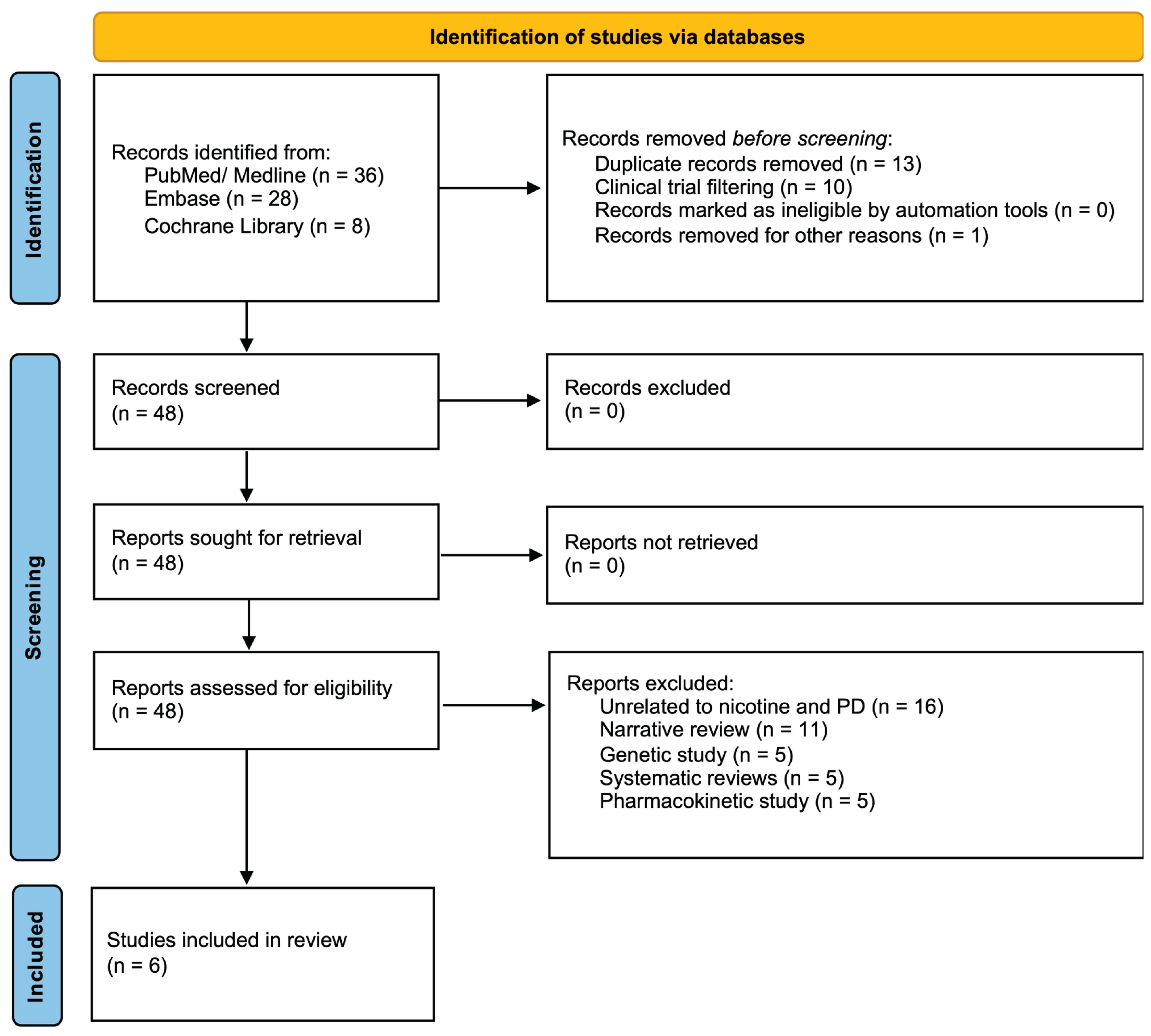
Figure 2.
Quality assessment of included studies using the Cochrane Risk of Bias tool.
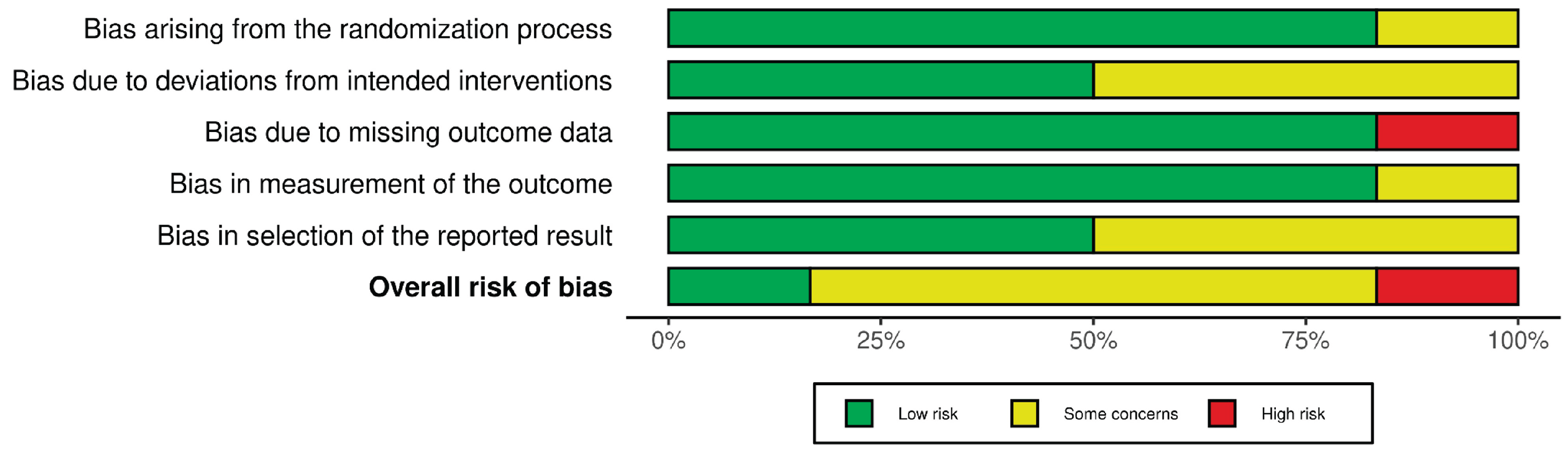
Figure 3.
Motor outcomes. Forest plot of SMDs comparing nicotine versus placebo on motor severity in PD. Random-effects models were used. Diamonds indicate pooled effects; horizontal lines denote 95% confidence intervals. References: [9,10,21,22,23,24].
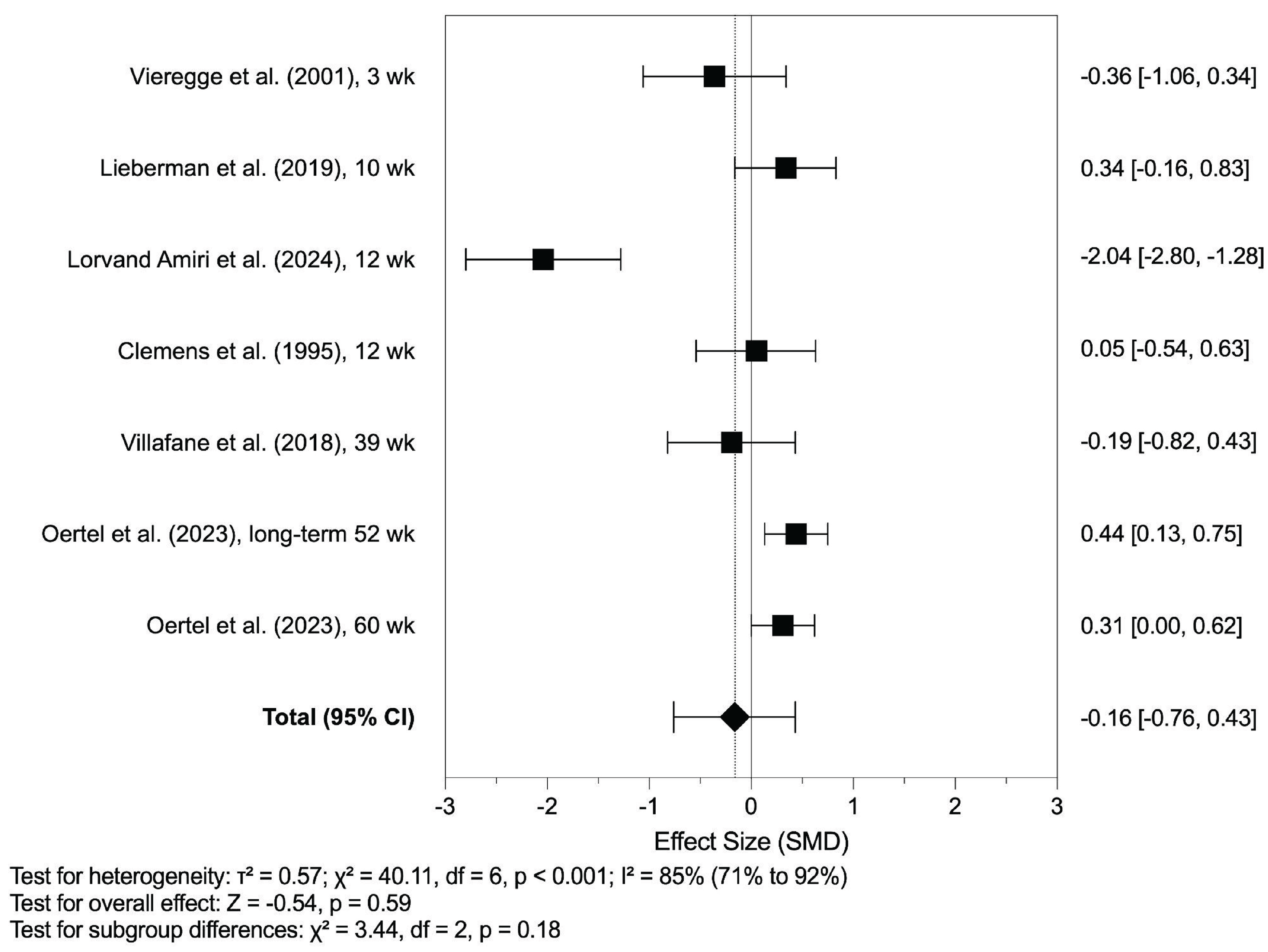
Figure 4.
Mechanistic pathways versus translational barriers of nicotine therapy in PD. The diagram contrasts preclinical evidence of nicotine’s neuroprotective and symptomatic efficacy (left) with the primary clinical and epidemiological confounders limiting its successful translation in human trials (right). References: [5,6,8,22,26,27,28,29,32,33,50,51,52,53].
Figure 4.
Mechanistic pathways versus translational barriers of nicotine therapy in PD. The diagram contrasts preclinical evidence of nicotine’s neuroprotective and symptomatic efficacy (left) with the primary clinical and epidemiological confounders limiting its successful translation in human trials (right). References: [5,6,8,22,26,27,28,29,32,33,50,51,52,53].
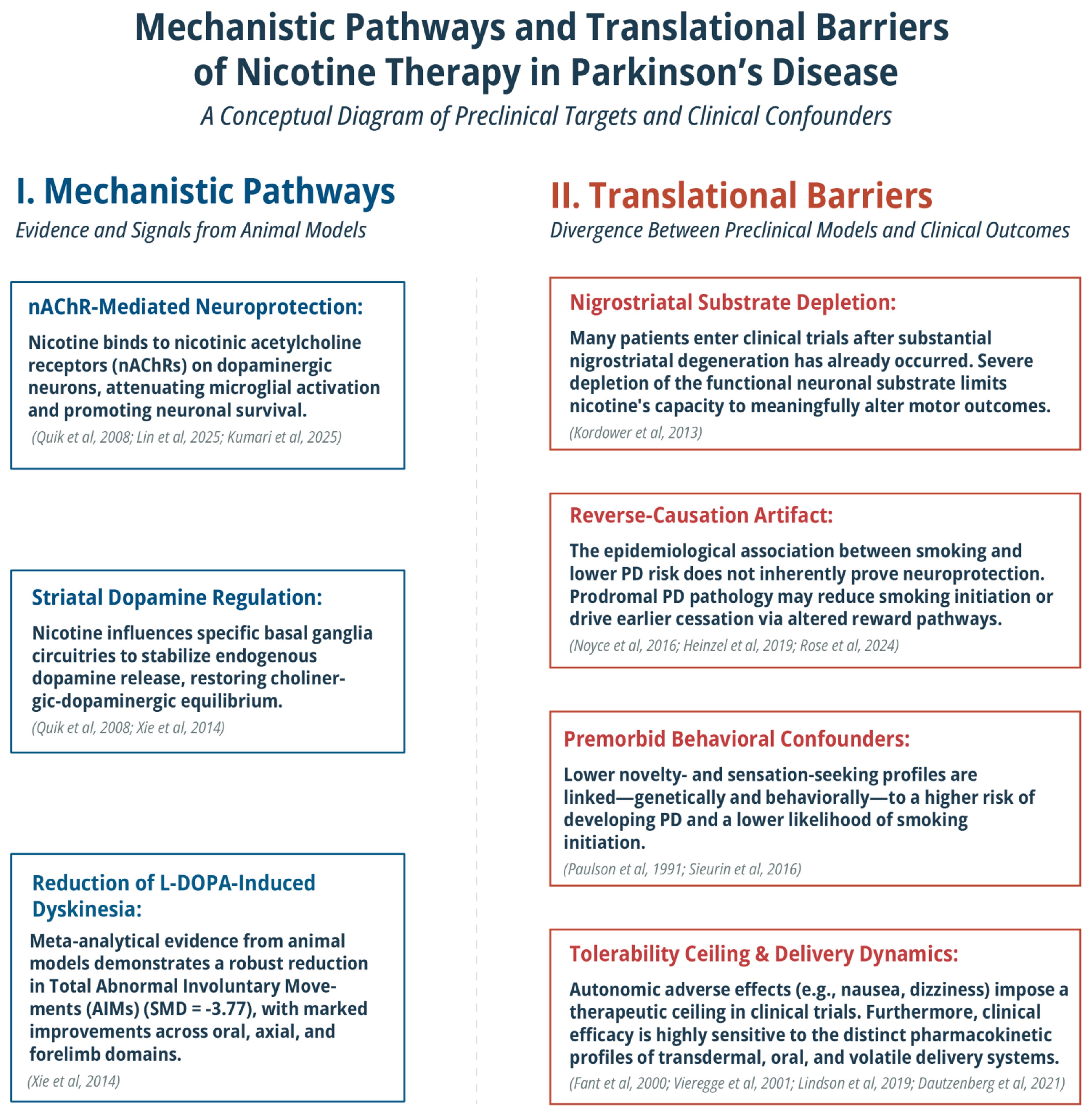

Table 1.
Characteristics of the studies included in the meta-analysis.
| Reference | Country & Design | Sample size (total / groups) |
Age (mean ± SD) |
Sex, Male (%) |
Baseline H&Y stage | Intervention vs. comparator | Study duration & outcomes | |
|---|---|---|---|---|---|---|---|---|
| Clemens et al. (1995) [21] |
|
Nicotine (25) | I: 60.5 ± 10.2 | I: 80% |
Stages 1–3 |
Nicotine chewing gum (2 mg, 3 pieces separated by 2 hours) |
|
|
| Placebo (23) | C: 59.6 ± 8.4 | C: 70% |
Appearance- and taste-matching placebo gum | |||||
| Vieregge et al. (2001) [22] |
|
Nicotine (16) | I: 67.0 ± 6.8 |
I: 88% |
Stages 2–3 | TD patches in escalating doses (17.5 mg wk 1, then 35 mg 2–3 wk) |
|
|
| Placebo (16) | C: 66.0 ± 7.5 | C: 50% | Matching placebo | |||||
| Villafañe et al. (2018) [23] |
|
Nicotine (20) | I: 58.0 ± 8.4 | I: 60% | Stages 2–3 | High-dose TD nicotine patches (escalating up to 90 mg/day) as an add-on |
|
|
| Control (20) | C: 56.9 ± 6.3 | C: 70% | Untreated control group | |||||
| Lieberman et al. (2019)a [24] |
|
Nicotine (30) | I: 68.1 ± 8.3 | I: 40% | Stages 2–4 | Oral nicotine capsules (NC001 - nicotine bitartrate dihydrate) in escalating doses (4–24 mg/day) |
|
|
| Placebo (27) | C: 65.5 ± 7.2 | C: 56% | Matching placebo | |||||
| Oertel et al. (2023) [9] |
|
Nicotine (79) | I: 61.0 ± 9.5 |
I: 64% |
Stages 1–2 |
TD nicotine patches in escalating doses up to 28 mg/24h |
|
|
| Placebo (83) | C: 61.0 ± 10.3 | C: 72% | Matching placebo patches | |||||
| Lorvand Amiri et al. (2024) [10] |
|
Nicotine (15) |
I: 61.5 ± 8.3 | I: 53% |
Not reported | Nicotine-supplemented diet (20 µg/day) + isocaloric standard diet |
|
|
| Nicotine + protein (15) |
I: 63.9 ± 7.5 | I: 60% |
Nicotine-supplemented diet (20 µg/day) + isocaloric standard diet + dietary protein redistribution | |||||
| Control (15) | C: 60.0 ± 7.2 | C: 46% | Matching placebo | |||||
| Abbreviations: C, control/placebo; H&Y, Hoehn and Yahr; I, intervention; M, male; MDS, Movement Disorder Society; RCT, randomized controlled trial; TD, transdermal; UPDRS, Unified Parkinson’s Disease Rating Scale; wk, week. Note: a. Lieberman et al. (2019) [24] was a multicenter randomized, double-blind, placebo-controlled trial conducted across 12 sites in the United States. The study randomized 65 participants (35 nicotine, 30 placebo). Efficacy outcome data were available for 57 participants (30 nicotine, 27 placebo) and were used in quantitative efficacy analyses, whereas safety analyses included all randomized participants. The published report represented a secondary analysis focused on falls and freezing of gait outcomes. | ||||||||
Table 2.
Summary of Findings and GRADE Certainty Assessment.
| Outcome | Effect (95% CI post-intervention) | Participants (studies/ comparisons) | GRADE | Comments |
|---|---|---|---|---|
| Motor outcomes | SMD −0.16 (−0.76 to 0.43) |
n = 389 (6 / 7) |
Low ⊕⊕◯◯ | Downgraded for serious inconsistency (I2 = 85%) and serious imprecision (CI includes both potential benefit and harm). |
| Activities of daily living | MD −0.65 (−1.77 to 0.47) |
n = 282 (2 / 4) |
Moderate ⊕⊕⊕◯ | Downgraded for serious imprecision because the CI includes both benefit and no effect. |
| Quality of life | SMD −0.26 (−0.44 to −0.07) |
n = 344 (2 / 5) |
Moderate ⊕⊕⊕◯ | Downgraded for serious imprecision because the total sample size was limited and confidence in the estimate was constrained by the small number of studies |
| LEDD | MD −114.40 mg/day (−258.82 to 30.02) |
n = 40 (1 / 3) |
Very Low ⊕◯◯◯ | Downgraded for serious inconsistency (I2 = 73%), serious imprecision, and indirectness because all data originated from a single trial. |
| Serious adverse events | RR 1.39 (0.56–3.49) |
n = 389 (6 / 6) |
Low ⊕⊕◯◯ | Downgraded for serious imprecision due to low event rates and wide CI and for risk of bias concerns. |
| Any adverse events | RR 1.51 (1.23–1.86) |
n = 389 (6 / 6) |
Moderate ⊕⊕⊕◯ | Downgraded for study limitations because most studies had some concerns or high risk of bias. |
| GI adverse events | RR 3.48 (1.85–6.53) |
n = 389 (6 / 6) |
Moderate ⊕⊕⊕◯ | Downgraded for study limitations; effect estimate was consistent across studies (I2 = 0%). |
| Abbreviations: CI, confidence interval; GI, gastrointestinal; GRADE, Grading of Recommendations Assessment, Development and Evaluation; LEDD, levodopa equivalent daily dose; MD, mean difference; MDS-UPDRS, Movement Disorder Society–Unified Parkinson’s Disease Rating Scale; PDQ, Parkinson’s Disease Questionnaire; RR, risk ratio; SMD, standardized mean difference. Note: a. Values in the Participants column are presented as participants (studies/comparisons). Multiple comparisons could originate from the same study because different follow-up time points were analyzed separately; b. Six studies contributed seven comparisons because the Oertel et al. trial provided outcome data at two follow-up time points. | ||||
Table 3.
Proposed Neuroprotective Mechanisms of Nicotine in PD.
| Mechanistic domain | Experimental model | Principal findings | Putative biological effect | References |
|---|---|---|---|---|
| Neuroinflammation | Primary mesencephalic cultures; MPTP mouse model | Reduced microglial activation, decreased iNOS and STAT1 signaling, suppression of cGAS/TBK1/STING and MAPK pathways | Attenuation of neuroinflammatory injury and dopaminergic neuron loss | [34,35] |
| Neurotrophic and antioxidant signaling | MPTP mouse model | Restoration of BDNF expression and activation of PI3K/AKT/Nrf2 signaling | Enhanced antioxidant defenses and anti-apoptotic signaling | [36,45] |
| Oxidative stress and mitochondrial resilience | C. elegans PD model; in silico analyses | Reduced ROS accumulation, improved ATP production and mitochondrial membrane potential, activation of stress-response pathways | Increased resistance to oxidative and mitochondrial injury | [37,38] |
| Astrocyte protection and αSyn toxicity | Human astrocytic A53T αSyn model | Protection against aminochrome-induced cytotoxicity and enhanced cellular survival | Reduced αSyn-associated glial dysfunction | [41] |
| Autophagy and proteostasis | Rotenone-induced cellular and mouse models | Enhanced autophagic clearance of GSDME-N and preservation of mitochondrial integrity | Improved protein quality control and neuronal resilience | [42] |
| Gut-brain axis modulation | MPTP mouse model | Preservation of intestinal barrier integrity, microbiota remodeling, and enrichment of Akkermansia | Reduced peripheral inflammation and enhanced gut-brain communication | [43] |
| Metabolic remodeling | MPTP rat model; nicotine-exposed mice | Restoration of dopamine-related metabolites, neurotransmitter balance, and lipid metabolism | Improved bioenergetics and cellular homeostasis | [44,46,49] |
| Mitochondrial bioenergetics | MPTP mouse model | Increased ATP production, correction of bioenergetic deficits, activation of PI3K-AKT-mTOR signaling | Enhanced cellular energy metabolism | [36,45] |
| Sex-specific responses | Rotenone-induced rat model | Differential microbiota remodeling, metabolic reprogramming, and motor responses between sexes | Potential sex-dependent therapeutic effects | [47] |
| Circuit-level plasticity | Chronic nicotine mouse model | Reduced spontaneous pacemaking, burst firing, and calcium-associated excitability in nigral neurons | Reduced cellular stress and selective neuronal vulnerability | [48] |
Table 4.
Potential Explanations for the Failure of Nicotine to Demonstrate Consistent Clinical Benefit in PD.
Table 4.
Potential Explanations for the Failure of Nicotine to Demonstrate Consistent Clinical Benefit in PD.
| Translational challenge | Supporting evidence | Biological/ methodological basis |
Translational impact | References |
|---|---|---|---|---|
| Advanced disease stage at enrollment | Most RCTs enrolled patients with clinically established PD | Extensive nigrostriatal degeneration may already be present when treatment is initiated | Reduced opportunity for neuroprotective therapies to modify disease progression | [9,50] |
| Timing of intervention | Epidemiological protection may reflect exposures occurring decades before diagnosis | Neurodegeneration begins during prodromal stages before motor symptoms emerge | Intervention after diagnosis may be initiated too late | [8,26,27] |
| Exposure heterogeneity | Different formulations, doses, durations, and delivery methods were used across studies | Variable pharmacokinetics and receptor exposure | Inconsistent target engagement and variable clinical responses | [22,51,52,53] |
| Nicotine may not be the only protective component | Tobacco contains multiple potentially neuroactive constituents | Antioxidant, MAO-B inhibitory, and neuroprotective effects may not be nicotine-dependent | Nicotine alone may not reproduce epidemiological observations | [30,31] |
| Selective rather than global biological effects | Experimental studies show effects on inflammation, mitochondria, autophagy, dyskinesia, and the gut-brain axis | Biological changes may affect specific pathways rather than overall disability | Limited impact on global motor scales | [34,35,36,42,43,44,45] |
| Biological heterogeneity | Sex-specific metabolic and microbiome responses have been reported | Different patient subgroups may respond differently to nicotine exposure | Treatment effects may be diluted in unselected populations | [47] |
| Translational limitations of preclinical models | Strong efficacy reported in cellular and animal studies | Experimental systems incompletely replicate human PD | Overestimation of clinical benefit | [33,41,42,43,44,48] |
| Tolerability limitations | Increased gastrointestinal and other adverse events observed in RCTs | Nausea, vomiting, dizziness, and other adverse effects may impair adherence | Reduced treatment persistence and cumulative exposure | [9,21,22,23,24] |
Disclaimer/Publisher’s Note: The statements, opinions and data contained in all publications are solely those of the individual author(s) and contributor(s) and not of MDPI and/or the editor(s). MDPI and/or the editor(s) disclaim responsibility for any injury to people or property resulting from any ideas, methods, instructions or products referred to in the content. |
© 2026 by the authors. Licensee MDPI, Basel, Switzerland. This article is an open access article distributed under the terms and conditions of the Creative Commons Attribution (CC BY) license (http://creativecommons.org/licenses/by/4.0/).
Copyright: This open access article is published under a Creative Commons CC BY 4.0 license, which permit the free download, distribution, and reuse, provided that the author and preprint are cited in any reuse.