
Submitted:
14 August 2026
Posted:
17 August 2026
You are already at the latest version
Abstract
Background: Delayed cord clamping (DCC) is currently recommended for all newborns and provides well-established benefits including improved hemoglobin, reduced incidence of intraventricular hemorrhage and necrotizing enterocolitis, particularly in preterm infants. However, consistent implementation in clinical settings remains a challenge. This quality improvement (QI) initiative aimed to increase adherence to DCC practices at AUBMC. Aims: To improve the adherence rate of DCC at AUBMC using a QI methodology. The aim was to increase the rate of DCC from 42% to 80%% within one year of implementation. Methods: This QI project used Plan-Do-Study-Act (PDSA) cycles to implement structured interventions between January 2024 and March 2025. A key diagram was developed that highlighted areas for improvement including staff education, lack of timers, and inconsistent documentation. Several interventions were implemented including installation of timers in delivery suites, targeted educational sessions (for OB-GYN residents, NICU fellows, and pediatric residents), and monitoring of documentation in the electronic health record (EHR). Baseline rate of DCC was calculated from the HER for a year prior to the project. Rates of DCC were tracked for every newborn and plotted on a monthly basis using a run chart. Basic characteristics were collected including gestational age, mode of delivery and Apgar score. The primary outcome was the percentage of eligible deliveries with documented DCC, and the secondary outcomes included duration of DCC and neonatal parameters such as Apgar scores, resuscitation needs, need for phototherapy, and need for transfer to NICU. Results: From January 2024 to March 2025, 1,082 deliveries were recorded. DCC adherence increased from a baseline median of 42.25% (Jan–Feb 2024) to 67.05% (Jan–Feb 2025) following implementation of QI interventions, achieving a peak of 67.05% median adherence across the final two-month period. Educational interventions and EHR enhancements correlated with sustained improvement. The comparative analysis revealed that maternal and neonatal characteristics were similar between the DCC and non-DCC groups, with the exception of a statistically significant difference in APGAR scores (DCC group had higher APGAR scores at 1 minute; p < 0.05). No significant increase in adverse neonatal outcomes such as NICU admissions or the need for phototherapy was observed. Conclusion: A structured, multidisciplinary QI intervention improved DCC adherence at AUBMC without adverse neonatal outcomes. Integration of timers, EHR modifications, and targeted education were effective and sustainable strategies. Future cycles will focus on sustaining >80% adherence and addressing barriers to implementation in emergency and high-risk deliveries.
Keywords:
delayed cord clamping
; quality improvement
; Plan-Do-Study-Act
; neonatal care
; placental transfusion
; implementation science
1. Introduction
Delayed cord clamping (DCC) involves postponing the clamping of the umbilical cord for at least 30 seconds to several minutes after birth. Since the mid of the 20th century, DCC has been used more frequently in obstetric and neonatal care, and recently many medical facilities have adopted it as part of routine practice. Practices may vary, with some facilities implementing DCC routinely for all births, while others restricting it to term newborns. It is important to distinguish between delayed umbilical cord clamping and milking of the cord, which refers to expression of blood from the umbilical cord. At birth, a regular umbilical cord holds around 60-80 ml of blood. If all the blood in the umbilical cord entered the baby, it would add around 20% to the baby’s blood supply. [1]
In January 2017, the American College of Obstetrics and Gynecology (ACOG) recommended a delay in umbilical cord clamping for 30–60 seconds in vigorous preterm and term infants. [2] The 2021 Textbook of Neonatal Resuscitation 8th edition recommended umbilical cord clamping at 60 seconds for most vigorous term and preterm newborns. [3] DCC is recommended for improved maternal and infant health and nutrition outcomes. Late cord clamping (performed approximately 1–3 min after birth) is recommended for all births, while initiating simultaneous essential neonatal care. Early umbilical cord clamping (less than 1 min after birth) is not recommended unless the neonate is asphyxiated and needs to be moved immediately for resuscitation [4]. For basic neonatal resuscitation, if there is experience in providing effective positive-pressure ventilation without cutting the umbilical cord, ventilation can be initiated before cutting the cord. [4] The benefits of delayed cord clamping (DCC) are evident for both mother and child. The infant's blood volume can rise by as much as 40% after the procedure, and this leads to better iron storage over the first 12 months of life, which may improve developmental outcomes. DCC in preterm neonates is associated with increased hemoglobin and hematocrit levels with a corresponding decreased need for red blood cell transfusions. [5] In particular, DCC appears to confer a decreased mortality rate, improved cardiovascular stability and decreased requirement for inotropes and potentially an association with lower risk of intraventricular hemorrhage and reduced risk of necrotizing enterocolitis. [6] In addition, DCC also promotes parental contact and bonding with their infant while in the delivery room. [7] By providing DCC at birth, the baby is stabilized next to his mother, allowing her to see, touch and, in suitable situations, hold her premature infant before taking him to the NICU. This is in keeping with the principles of family integrated care.
A Cochrane review including 738 infants have evaluated the effects of DCC in preterm neonates born predominantly in high-income countries. [8] Outcomes studied among preterm infants included risk of mortality, incidence of necrotizing enterocolitis and intraventricular hemorrhage, need for blood transfusions for anemia or hypotension, and hyperbilirubinemia. There was no difference in risk of mortality between preterm infants with delayed or early umbilical cord clamping. Preterm infants with delayed umbilical cord clamping had a lower risk of necrotizing enterocolitis (5 trials, 241 infants) and intraventricular hemorrhage (10 trials, 539 infants). In the same Cochrane review, seven randomized trials (392 infants) looked at the need for blood transfusions for anemia or hypotension among preterm infants; on average, there was approximately a 39% reduction in the need for blood transfusion with delayed umbilical cord clamping. Delayed-clamped infants had significantly higher peak bilirubin concentrations as compared to early-clamped infants, in the seven trials (320 infants) reporting this outcome. [8]
Because of this established and increasing evidence to support DCC at birth, multiple health care organizations now promote DCC as standard newborn care. the American Academy of Pediatrics, [10] the American College of Obstetricians and Gynecologists, [11] the Cochrane collaboration, [8] the Royal College of Obstetricians and Gynecologists, [12] and the World Health Organization, [4] all recommend delayed cord clamping as standard practice for term and preterm infants at delivery.
Against this background, this quality improvement project aimed to increase DCC adherence at AUBMC from a baseline median of 42.25% to 80% within one year. Secondary objectives were to increase the mean DCC duration to at least 60 seconds and improve DCC knowledge among nursing and medical staff and parents within the same period. A key driver diagram (Figure 1) was developed to guide the intervention.
2. Methodology
The improvement project on delayed cord clamping (DCC) at AUBMC is designed as a structured initiative aimed at enhancing the practice of DCC in the delivery suite. This project began in January 2024, with a primary objective to increase the rate of DCC to 80% within six months and to ensure the DCC timing is optimized to a minimum of 60 seconds. Additionally, the project aims to improve the knowledge of nursing, medical staff, and parents regarding the benefits of DCC within the same timeframe.
The delivery suite at AUBMC has around 800 deliveries annually. Initially, over a 2 month period, all deliveries will be tracked to determine the percentage of deliveries with umbilical cord clamping and the timing of DCC when performed. These deliveries will be witnessed by Neonatology fellows who will document this in a data collection sheet. After determining the current (baseline) DCC rate, a multidisciplinary team will be formed including a neonatology fellow, ob/gyn resident, and nursing. The team convenes every month to review data, assess progress, and introduce new measures to enhance the process. The methodology employed is the Plan-Do-Study-Act (PDSA) cycle, which allows for continuous iteration and refinement of interventions based on real-time feedback. The target participants for this project include pregnant women undergoing deliveries, obstetricians, Ob/Gyn residents, nurses involved in deliveries (both normal vaginal and cesarean), pediatric residents rotating in the NICU and normal nursery, and parents of the newborns. To facilitate the implementation of DCC, non-ratcheted cord clamps and warming tables are ensured in each delivery, a timer is utilized during deliveries to accurately measure and document the duration of DCC, ensuring consistency in practice.
The project includes a robust educational component targeting both staff and parents. Before implementation, a baseline evaluation through several questions about DCC procedure, benefits and possible complications is conducted to assess the knowledge and performance of nurses and residents regarding DCC. Awareness sessions are then organized to educate them on the short- and long-term benefits of DCC through lectures, hands-on activities, and discussions. As part of these sessions, Neonatology fellows will provide lectures to all pediatric residents involved in newborn care during deliveries (1 session already done in January and another session will be done in February), while an OB/GYN resident will conduct a separate session for all OB/GYN residents (accomplished in 23 January 2025). Following these sessions, a post-evaluation assessment will be conducted to determine whether a refresher session is needed.
In addition to education, standardized protocols based on evidence-based guidelines are developed and shared through handouts, and flyers within the delivery suite. A formatted poster highlighting DCC awareness and benefits will be placed in the delivery rooms and on the obstetrics floor to raise awareness among both parents and staff. To ensure these practices become routine, DCC and its duration are integrated as a mandatory component in the delivery summary and attendance notes within the EPIC system, embedding them into clinical documentation. DCC documentation is actively tracked, with data being plotted on a monthly basis to monitor progress and identify areas for improvement.
The project incorporates a structured approach to ensure the successful implementation and sustainability of DCC practices including a standardized data collection sheet created to systematically record DCC practices, including the duration and compliance rates. In addition, a monthly report on DCC rates is generated and shared with the medical team to provide feedback, identify trends, and reinforce adherence. A pre-assessment of DCC rates is conducted over a two month period to establish a baseline for evaluation. Then, the acting plans follow the initial PDSA cycle beginning with the distribution of educational materials and the implementation of key interventions, including equipment provision, awareness sessions, and enhanced documentation. Based on the post-intervention findings, adjustments are made, and subsequent cycles are initiated to close identified gaps and further improve DCC rates and timing.
The quality improvement (QI) project aimed at enhancing delayed cord clamping (DCC) practices relies on both process measures and balancing measures to ensure successful implementation while minimizing potential risks. Process measures assess key steps in the adoption of DCC, including the rate of implementation by tracking the percentage of eligible births where DCC is successfully performed, documentation accuracy to ensure consistent recording of cord clamping times, and staff training by post evaluation assessment to evaluate adherence to established protocols. Meanwhile, balancing measures monitor potential unintended consequences, particularly neonatal outcomes. Neonatal factors such as Apgar scores, the need for resuscitation, NICU admission, or need for phototherapy are carefully monitored to ensure DCC does not negatively impact newborn health. Additionally, neonatal temperature regulation is monitored at admission, as hypothermia can be a concern with delayed cord clamping. By integrating these measures, the QI project ensures that DCC implementation is both effective and safe, optimizing benefits for newborns while maintaining maternal well-being.
3. DCC Protocol
- (1)
- Start timer at delivery after the infant is out
- (2)
- Receive in warm blanket and wrap in clear wrap for infant gestational age <32 weeks
- (3)
- For C-section: place infant in warm sterile drape/ towel
- (4)
- Wipe head and face and bulb suction mouth
- (5)
- Place baby hat when possible
- (6)
- Place the newborn at or below the level of the placenta to facilitate gravitational transfer of blood.
- (7)
-
Delay cord clamping for at least 60 seconds to 3 minutes after birth, or until pulsations cease
- -
- If vaginal: Hold supine, place at level of perineum without cord tension during delayed cord clamping.
- -
- If C-section: Hold supine, place between the thigh without cord tension during delayed cord clamping.
- (8)
- Assess cord pulsations to ensure continued placental circulation.
- (9)
- Assess maternal-fetal status and conditions that may affect the feasibility or safety of DCC, such as maternal hemorrhage, fetal distress, or congenital anomalies.
- (10)
- Monitor for signs of neonatal distress or complications during DCC and be prepared to initiate appropriate interventions if necessary.
- (11)
- Document the timing and duration of DCC, including any deviations from the protocol, in the newborn's medical record.
- (12)
- Fill the DCC checklist ( attached below)
This protocol provides a structured framework for implementing delayed cord clamping practices in obstetric and neonatal care settings, with a focus on promoting standardized and evidence-based care for newborns.
N.B: Modify DCC approach as necessary based on individual patient needs and clinical circumstances.
DCC Checklist
| Name: | ||
| MRN: | ||
| Time of Delivery: | ||
| Gestational Age: | ||
| Date: | ||
| Gender: | ||
| Room temperature between 22-25C | Yes | No |
| Plastic thermal wrap | Yes | No |
| Appropriate clamp | Yes | No |
| Timer person Present | Yes | No |
| DCC discussed before birth | Yes | No |
| Team informed about DCC before | Yes | No |
| Any contraindications, | Yes | No |
| If Yes, precise which: | ||
| Time duration of DCC | Yes | No |
| If DCC less than 60s indicate reason: | ||
| Baby hat DCC sticker | Yes | No |
| Position at level of placenta | Yes | No |
| If No, precise where: | ||
| Warm sterile blankets for C-section | Yes | No |
| Extra gowns for NICU team if needed | Yes | No |
| Any neonatal resuscitation performed | Yes | No |
| with the umbilical cord intact | ||
| If Yes, which type of resuscitation: | ||
| DCC documented on EPIC | Yes | No |
4. Results
Characteristics of deliveries with and without DCC are presented in Table 1.
Table 2 shows the month-by-month distribution of DCC adherence across 1,082 deliveries at AUBMC from January 2024 to March 2025. Monthly delivery volume ranged from 46 to 85. The number of deliveries in which DCC was performed varied from 22 (27.2%) in May 2024 to 42 (66.7%) in February 2025. Baseline adherence in January and February 2024 was 44.2% and 40.3%, respectively. A multidisciplinary Plan-Do-Study-Act (PDSA) initiative began in September 2024.
During the first PDSA cycle, key-driver analysis identified four implementation domains: standardized workflow, staff education and awareness, documentation, and real-time feedback. The project team introduced delivery-room timers, a standardized DCC protocol and checklist, a dedicated DCC field in the electronic health record (EHR), and educational sessions for obstetric and pediatric trainees. Mean knowledge scores rose from 6.8 to 9.2 among postgraduate year-1 (PGY-1) residents, from 7.4 to 9.6 among PGY-2 residents, and from 8.5 to 9.5 among PGY-3 residents. (Figure 2)
Monthly DCC adherence increased after October 2024 (Figure 3). The median adherence rate was 42.25% during the January-February 2024 baseline period and 67.05% during January-February 2025. Adherence reached 67.4% in January 2025 and 66.7% in February 2025 before decreasing to 51.5% in March 2025.
Reported operational barriers were inconsistent timer coverage, variable protocol awareness, provider hesitancy, incomplete EHR documentation, and parental concerns. Balancing measures showed no corresponding increase as DCC adherence improved (Figure 4): NICU admissions remained below 20%, and phototherapy need remained below 5% throughout the intervention period.
5. Interpretation
The increase in documented DCC adherence from a baseline median of 42.25% to 67.05% after implementation of the QI package suggests that standardized workflows, visible timing support, EHR changes, and targeted education can improve uptake in a busy delivery setting. However, the project did not reach its prespecified 80% target, and the decrease in March 2025 indicates that the improvement was not yet fully stable.
No safety signal was detected in the monitored balancing measures: NICU admissions and phototherapy need did not increase as DCC adherence improved. The rise in resident knowledge scores also supports the educational component of the intervention. Persistent gaps in timer coverage, onboarding, provider acceptance, and documentation likely contributed to the remaining variability and to failure to reach the 80% goal.
These findings should be interpreted in light of the project's limitations. This was a single-center, before-and-after QI initiative without a concurrent control group. Adherence estimates depended partly on EHR documentation, and follow-up was limited to the first PDSA cycle. The temporal association between the intervention package and improved adherence therefore does not establish causality or demonstrate long-term sustainability.
Sustaining and extending the improvement will require reliable timing support across all shifts, incorporation of DCC protocols into mandatory staff orientation, designation of a DCC champion or supervisor, automated EHR prompts, and educational materials for expectant parents. Continued audit and feedback, followed by additional PDSA cycles, will be needed to determine whether adherence can exceed and remain above 80%.
6. Conclusions
This quality improvement project provides a compelling example of how structured, evidence-based interventions can enhance the implementation of recommended clinical practices such asdelayed cord clamping within a hospital setting. Despite the well-established benefits of DCC in both term and preterm neonates, its routine application remains inconsistent across many institutions due to a variety of logistical, cultural, and operational barriers. By employing the Plan-Do-Study-Act (PDSA) methodology, this initiative was able to systematically identify key driversof practice gaps, introduce targeted interventions, and measure progress over time through both process and outcome metrics. Core strategies included the introduction of standardized protocols and checklists, installation of timers in delivery rooms, optimization of electronic health record templates to improve documentation, and focused educational sessions tailored to both obstetric and pediatric teams. These efforts collectively contributed to a meaningful increase in DCC adherence, demonstrating that with proper structure and interdisciplinary collaboration, significant improvements can be realized even in settings with complex workflows and high patient volumes. Importantly, the observed improvement in DCC practice did not lead to an increase in adverse neonatal outcomes, as evidenced by consistent tracking of balancing measures such as NICU admissions and the need for phototherapy. These findings reinforce the safety of DCC and support its broader implementation across various delivery contexts.
Sustaining and advancing these gains will require ongoing education, routine feedback loops, stronger integration of DCC protocols into hospital onboarding procedures, and system-level enhancements such as automated prompts or checklists in the EHR. Additionally, addressing parental education and promoting team accountability are essential components for long-term adoption and trust. Ultimately, this initiative demonstrates that quality improvement is not a one-time effort but a continuous cycle of evaluation, intervention, and refinement. The success of this project not only validates the QI framework used but also serves as a model for other healthcare institutions aiming to improve adherence to guideline-based care. Delayed cord clamping, as a low-cost, high-impact intervention, represents an ideal target for such efforts, and this experience reinforces its feasibility, safety, and potential for integration into standard practice when supported by a committed, multidisciplinary team and data-driven improvement strategies.
7. Future Directions
Future PDSA cycles should prioritize consistent timer availability across all delivery rooms and shifts, mandatory DCC training during staff onboarding with periodic refresher sessions, automated EHR prompts and required documentation fields, standardized antenatal counseling, and designation of unit-based DCC champions. Reasons for omitting DCC or performing it for less than 60 seconds should be recorded prospectively, and monthly audit-and-feedback reports should be shared with obstetric, neonatal, anesthesia, and nursing teams.
Longer follow-up should assess whether adherence reaches and remains above the 80% target and whether gains persist through staff turnover. Future analyses should stratify adherence and balancing measures by gestational age, mode and urgency of delivery, clinical team, and shift, while validating EHR-documented clamping times against direct observation or automated timestamps in a sample. Where feasible, multicenter implementation or a concurrent comparison group would improve generalizability and strengthen causal inference.
Author Contributions
Conceptualization, M.H.; methodology, M.H.; software, M.H.; validation, M.H.; S.AS., and H.H.; formal analysis, M.H.; investigation, M.H.; resources, S.AS., H.H.; data curation, M.H.; writing—original draft preparation, M.H.; writing—review and editing, M.H.; visualization, S.AS., H.H.; supervision, M.H.; project administration, M.H.; funding acquisition, S.AS., H.H.; All authors have read and agreed to the published version of the manuscript.
Funding
This research received no external funding.
Institutional Review Board Statement
This will be a quality improvement project that is implementing an already proven practice change that is recommended by several medical societies. There are no ethical conflicts and approval from the Quality Advisory Committee at AUBMC will be secured prior to initiating the project.
Informed Consent Statement
Not applicable.
Data Availability Statement
The original contributions presented in this study are included in the article. Further inquiries can be directed to the corresponding author(s).
Conflicts of Interest
The authors declare no conflict of interest.
References
- Katheria AC, Lakshminrusimha S, Rabe H, McAdams R, Mercer JS. Placental transfusion: a review. J Perinatol. 2017 Feb;37(2):105-111. Epub 2016 Sep 22. PMID: 27654493; PMCID: PMC5290307. [CrossRef]
- Delayed umbilical cord clamping after birth. Committee Opinion No. 684. American College of Obstetricians and Gynecologists. Obstet Gynecol. 2017;129:e5–e1.
- American Academy of Pediatrics and American Heart Association; Editor: Gary M. Weiner, MD, FAAP; Associate editor: Jeanette Zaichkin, RN, MN, NNP-BC.
- WHO recommendations for the prevention and treatment of postpartum haemorrhage. Geneva: World Health Organization; 2012 (http://apps.who.int/iris/bitstream/10665/75411/1/9789241548502_eng.pdf?ua=1, accessed 16 June 2014).
- KC A, Rana N, Målqvist M, Jarawka Ranneberg L, Subedi K, Andersson O. Effects of Delayed Umbilical Cord Clamping vs Early Clamping on Anemia in Infants at 8 and 12 Months: A Randomized Clinical Trial. JAMA Pediatr. 2017;171(3):264–270. [CrossRef]
- Fogarty M, Osborn DA, Askie L, Seidler AL, Hunter K, Lui K, Simes J, Tarnow-Mordi W. Delayed vs early umbilical cord clamping for preterm infants: a systematic review and meta-analysis. Am J Obstet Gynecol. 2018 Jan;218(1):1-18. Epub 2017 Oct 30. PMID: 29097178. [CrossRef]
- Dinç T, Kanbur A. The effect of delayed umbilical cord clamping on the infant's beta-endorphin level, mother-infant attachment and breastfeeding. Eur J Obstet Gynecol Reprod Biol. 2023 Jun;285:187-192. Epub 2023 May 2. PMID: 37148645. [CrossRef]
- Rabe H, Diaz-Rossello JL, Duley L, Dowswell T. Effect of timing of umbilical cord clamping and other strategies to influence placental transfusion at preterm birth on maternal and infant outcomes. Cochrane Database Syst Rev. 2012 Aug 15;(8):CD003248. Update in: Cochrane Database Syst Rev. 2019 Sep 17;9:CD003248. PMID: 22895933. [CrossRef]
- McDonald SJ, Middleton P, Dowswell T, Morris PS. Effect of timing of umbilical cord clamping of term infants on maternal and neonatal outcomes. Cochrane Database Syst Rev. 2013;(7):CD004074. [CrossRef]
- Delayed Umbilical Cord Clamping After Birth. Pediatrics. 2017 Jun;139(6):e20170957. PMID: 28562299. [CrossRef]
- The American College of Obstetricians and Gynaecologists. Committee opinion. Delayed umbilical cord clamping after birth. Obstet Gynecol. 2017;129(1):1.
- Royal College of Obstetrics and Gynecology (RCOG). Clamping of the umbilical cord and placental transfusion. Scientific Impact Paper No 14. February 2015. Available at:https://www.rcog.org.uk/media/ahppgoek/sip-14.pdf.
Figure 1.
Key driver diagram for achieving delayed cord clamping for at least 60 seconds in 80% of eligible deliveries within one year.
Figure 1.
Key driver diagram for achieving delayed cord clamping for at least 60 seconds in 80% of eligible deliveries within one year.
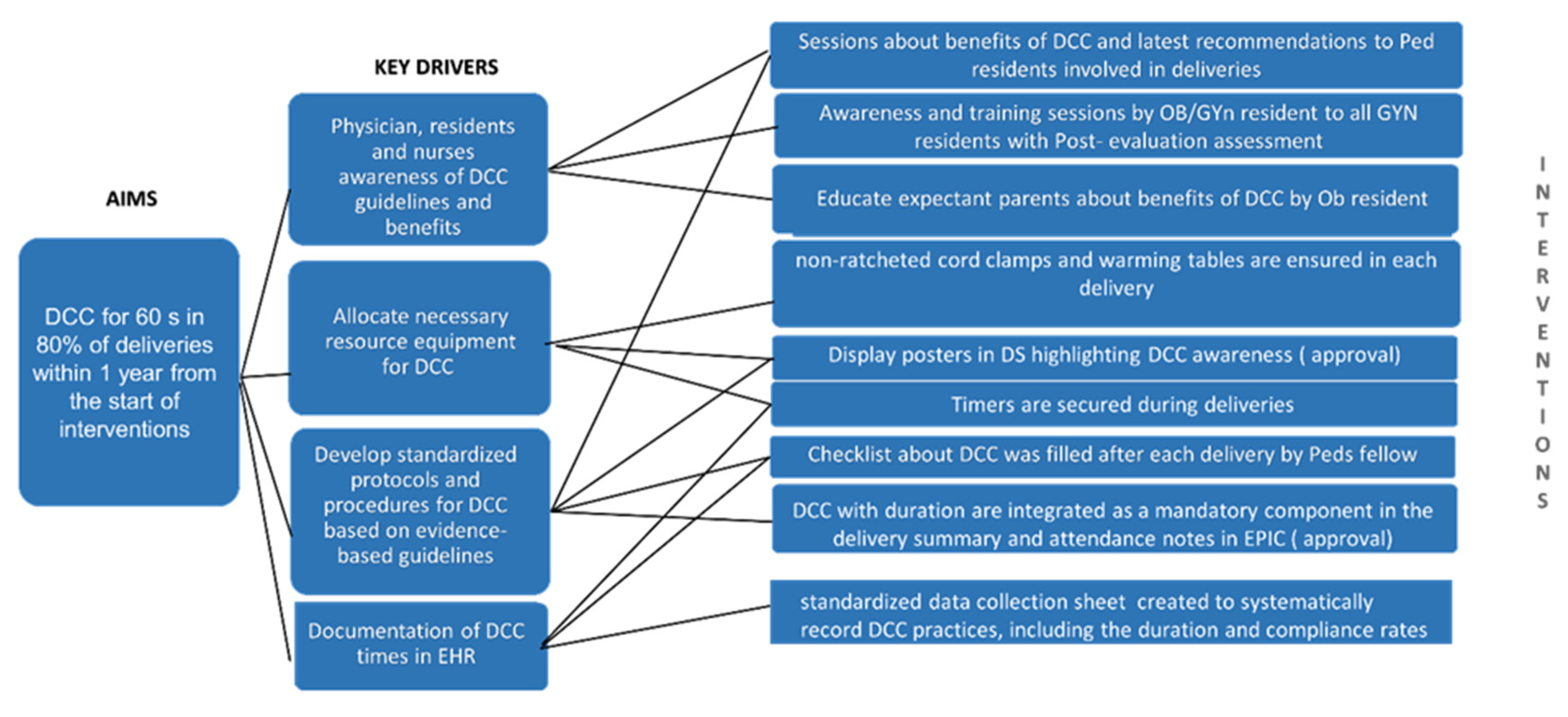
Figure 2.
Resident knowledge assessment scores before and after the educational intervention, by postgraduate year.
Figure 2.
Resident knowledge assessment scores before and after the educational intervention, by postgraduate year.
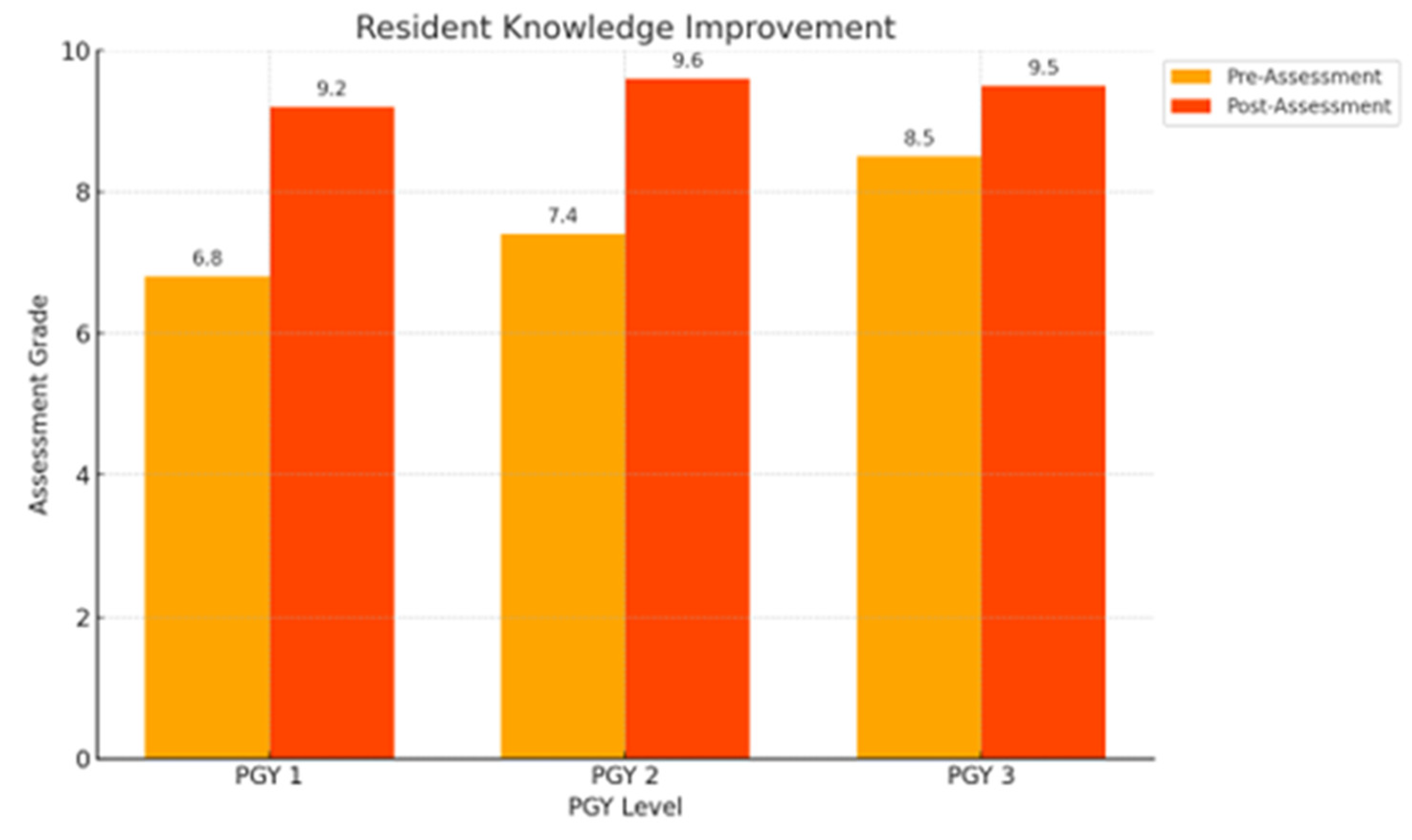
Figure 3.
Monthly delayed cord clamping adherence at AUBMC and timing of Plan-Do-Study-Act interventions, January 2024–March 2025.
Figure 3.
Monthly delayed cord clamping adherence at AUBMC and timing of Plan-Do-Study-Act interventions, January 2024–March 2025.
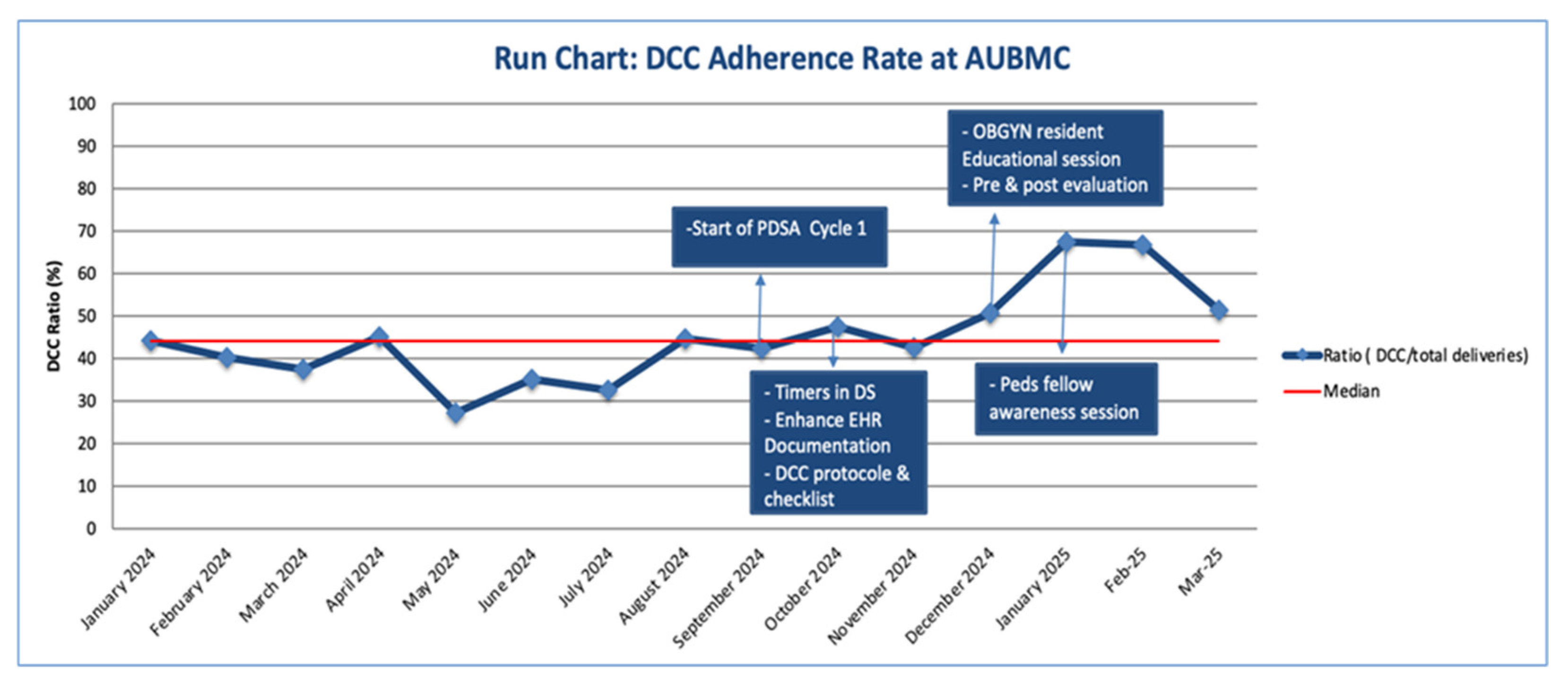
Figure 4.
Monthly delayed cord clamping adherence, neonatal intensive care unit admissions, and phototherapy need, January 2024–March 2025.
Figure 4.
Monthly delayed cord clamping adherence, neonatal intensive care unit admissions, and phototherapy need, January 2024–March 2025.
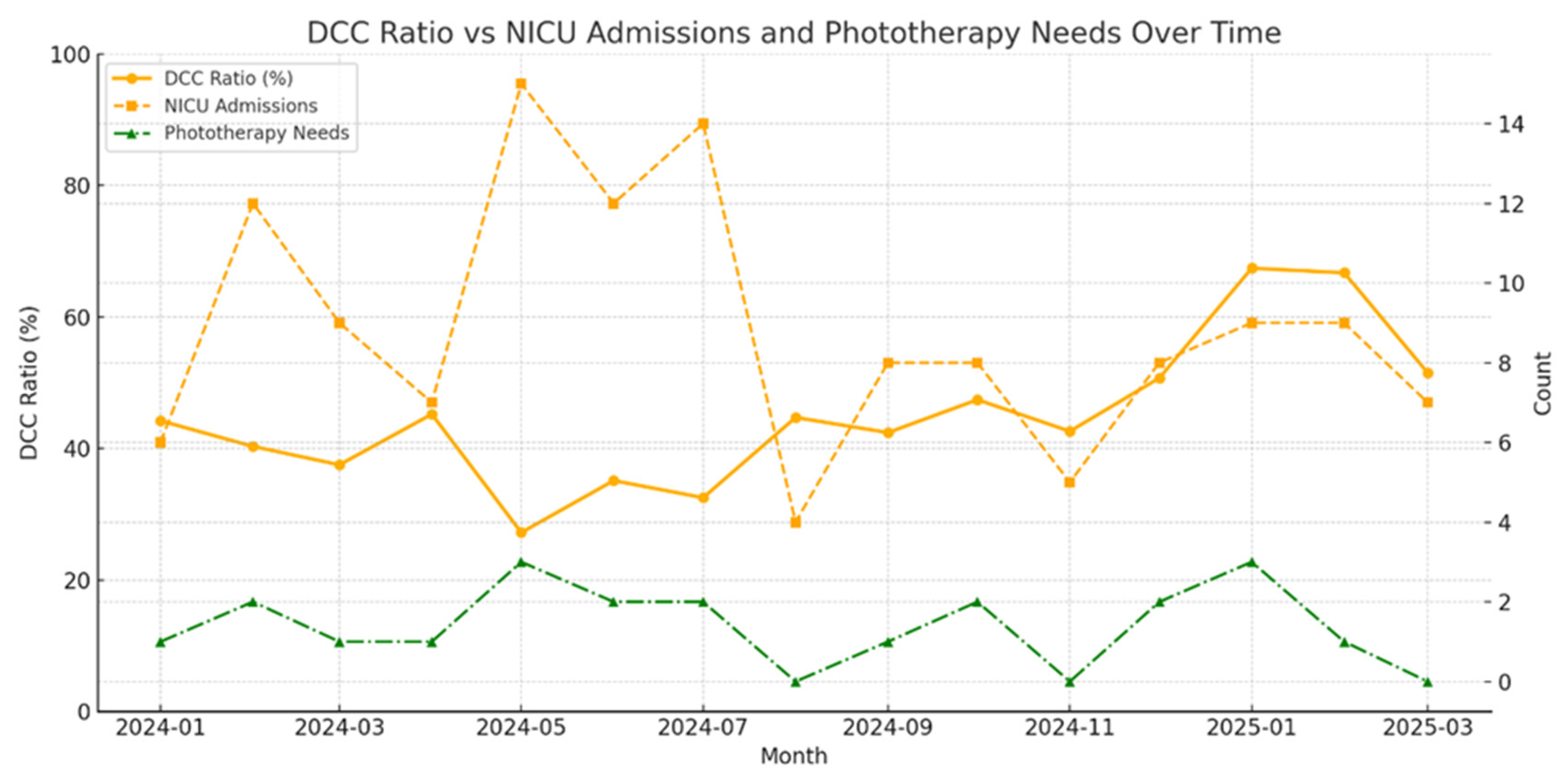

Table 1.
Characteristics of deliveries according to delayed cord clamping status.
| Characteristic | DCC Group | No-DCC Group |
| Gestational age | ||
| Late preterm (34–<37 weeks) | 6.7 | 14.8 |
| Early term (37–<39 weeks) | 18.3 | 16.0 |
| Term (≥39 weeks) | 75.0 | 67.9 |
| Type of delivery | ||
| Normal vaginal delivery | 44.2 | 24.7 |
| Elective cesarean section | 51.0 | 64.2 |
| Urgent cesarean section | 4.8 | 11.1 |
| Mean Apgar score at 1 min | 7.69 | 7.14 |
| Need for resuscitation | 6.7 | 6.2 |
| Presence of timer personnel | 15.4 | 7.4 |
| Presence of thermal wrap | 94.2 | 98.8 |
Note: DCC, delayed cord clamping. Values are percentages except mean Apgar score at 1 min.
Table 2.
Monthly delayed cord clamping adherence at AUBMC, January 2024–March 2025.
| Month | DCC, n | No DCC, n | Total Deliveries, n | DCC Adherence (%) |
| Jan 2024 | 34 | 43 | 77 | 44.2 |
| Feb 2024 | 25 | 37 | 62 | 40.3 |
| Mar 2024 | 21 | 35 | 56 | 37.5 |
| Apr 2024 | 28 | 34 | 62 | 45.2 |
| May 2024 | 22 | 59 | 81 | 27.2 |
| Jun 2024 | 26 | 48 | 74 | 35.1 |
| Jul 2024 | 26 | 54 | 80 | 32.5 |
| Aug 2024 | 34 | 42 | 76 | 44.7 |
| Sep 2024 | 36 | 49 | 85 | 42.4 |
| Oct 2024 | 37 | 41 | 78 | 47.4 |
| Nov 2024 | 20 | 27 | 47 | 42.6 |
| Dec 2024 | 35 | 34 | 69 | 50.7 |
| Jan 2025 | 31 | 15 | 46 | 67.4 |
| Feb 2025 | 42 | 21 | 63 | 66.7 |
| Mar 2025 | 34 | 32 | 66 | 51.5 |
Disclaimer/Publisher’s Note: The statements, opinions and data contained in all publications are solely those of the individual author(s) and contributor(s) and not of MDPI and/or the editor(s). MDPI and/or the editor(s) disclaim responsibility for any injury to people or property resulting from any ideas, methods, instructions or products referred to in the content. |
© 2026 by the authors. Licensee MDPI, Basel, Switzerland. This article is an open access article distributed under the terms and conditions of the Creative Commons Attribution (CC BY) license (http://creativecommons.org/licenses/by/4.0/).
Copyright: This open access article is published under a Creative Commons CC BY 4.0 license, which permit the free download, distribution, and reuse, provided that the author and preprint are cited in any reuse.